The Japanese military assault on the Marco Polo Bridge on 7 July 1937 precipitated a full-scale escalation of the Second Sino-Japanese War. As hostilities intensified, waves of Chinese intellectuals migrated southward seeking sanctuary. In December 1938, while in southwest China, Xu Beihong recorded in his diary:
In June 1938, in the midst of our country’s fierce fight against the dreadful Japanese, I had received a warm and sincere correspondence from Dr. Otto, a German physician based in Guangzhou. He relayed the utmost admiration of the German Consul General…By August, my friend Chen Gongbo came to visit, and we discussed the matter of [a potential] exhibition in Singapore. The efforts of the overseas Chinese towards saving the country had been surging forth vigorously in every major city [in Southeast Asia] and there was no lack of people making generous donations. While I had [originally] intended to donate proceeds from the three paintings [purchased by Dr. Otto] to the government, I suddenly realised that if I [instead] used these proceeds as travel funds for a long-distance trip, they would have much greater impact. [Around this time] Mr. Tan Yunshan had recently returned from India, bringing with him a letter from the great poet [Rabindranath] Tagore.Footnote 1
The letter, as described by Xu Beihong, conveyed both heartfelt gratitude for the artworks Xu had presented to the Sino-Indian Cultural Association and extended a timely invitation for him to organise an exhibition in India. This offer arrived at a pivotal juncture in China’s wartime struggles, prompting Xu’s decision to transport his paintings abroad. His subsequent multi-year journey through Southeast and then South Asia began on 9 January 1939 with Singapore as his first port of call. Xu’s ties to Singapore dated back to his student years in France from 1919, when financial constraints had compelled him to seek patronage from overseas Chinese communities. Zhao Songnan, the Chinese Consul General in Paris, introduced him to Huang Menggui, a Chinese Singaporean merchant. Through support from the Huang family and prominent figures like Tan Kah Kee, Xu Beihong was able to travel to Singapore multiple times, painting portraits for local Chinese elites and raising funds for his studies in Europe.Footnote 2 However, his 1939 return assumed more profound historical significance. Responding to the mobilisation of the Chinese diaspora to support their embattled homeland, Xu worked with his Singaporean connections to transform art exhibitions into powerful fundraising campaigns for China’s war effort.
The years 1939 to 1942 marked one of the most prolific phases in Xu Beihong’s career. His exhibitions in Singapore and Malaya yielded sales of some 400–500 paintings, and he gifted another 200 works to the brothers Huang Menggui and Huang Manshi. Meanwhile, he produced over 300 additional pieces in Singapore for a forthcoming US exhibition.Footnote 3 This extraordinary output has convinced many experts that Singapore possesses the largest repository of Xu’s art outside mainland China, a fact which stands testament to the war years’ impact on his artistic legacy.Footnote 4
As one of the most influential figures in the history of modern Chinese art, Xu Beihong occupies a central position in discourses on twentieth-century Chinese artistic reform. Prevailing scholarship has largely adopted a binary Western — Chinese and Modernity — Tradition frameworks to interpret Xu Beihong’s work, resulting in inadequate attention to his wartime sojourns in South and Southeast Asia. Throughout this period, Xu Beihong was not accompanied by any family members. With neither his daily journal nor any memoirs by his wives to which to refer, scholars have compensated for this lacuna by collecting his letters, painting colophons, newspaper articles, exhibition catalogues and other materials from his friends in Singapore to gain insight into this period.Footnote 5 Current research thus remains disproportionately focused on the biographical specifics of Xu’s wartime experience, rarely attempting a broader contextual analysis. As there is a letter by Xu Beihong to his children that states, ‘I wish to fulfil my patriotic duty by selling paintings in Nanyang and donating the proceeds to our nation,’Footnote 6 there has been a surge of studies on his fundraising activities.Footnote 7 However, we should pay note to the fact that academics have conventionally labelled Xu’s three-year sojourn between 1939 and 1942 his Nanyang period, a Southeast Asia-centric designation imbued with nationalist overtones that effectively marginalises his transformative year in India, where cultural exchange rather than relief work constituted his primary engagement. This conceptual flattening erases the nuanced intercultural dynamics that shaped Xu’s wartime experience.
The historiography of modern Chinese painting during the Second World War has predominantly been undertaken within a nation-state paradigm. The outbreak of war effectively silenced earlier twentieth-century debates concerning Western artistic influence and modernist developments, giving way to a large-scale exodus of artists. Conventional scholarship has configured this exodus narrative as the artist’s flight to Southwestern and western regions of China, prioritising the production of anti-Japanese propaganda, satirical cartoons, woodcuts and ethnographic depictions of minority groups along the way. Michael Sullivan’s seminal survey of twentieth-century Chinese art typifies this approach by subsuming wartime artistic production under the rubric of ‘The Flight to the West.’ Notably, Xu Beihong’s extensive travels to South and Southeast Asia are merely mentioned in passing and largely excluded from the narrative.Footnote 8 The territorialisation of Chinese art within a physical geography that is so pervasive in art historical scholarship has relegated Xu’s overseas wartime activities, along with other artists’ transnational diasporic experiences, to isolated case studies rather than integrating them into broader narratives of Chinese modern art. This epistemological limitation has obscured the complex cultural dynamics inherent in these transnational movements and their reciprocal impacts on both host societies and the Chinese art world — a critical lacuna in assessing figures like Xu Beihong, whose legacy continues to shape global Asian art discourse.Footnote 9
The study of early twentieth-century South and Southeast Asian art has witnessed notable progress through the rediscovery of overlooked artists and marginalised artistic communities.Footnote 10 However, the field continues to privilege investigations into decolonisation and national art construction during revolutionary periods, all the while maintaining a nationalist orientation.Footnote 11 Scholarship concentrates chiefly on two significant epochs: the prewar era and the peak of postwar decolonisation and independence movements. The interim wartime period, usually reductively characterised as tumultuous and artistically stagnant, has yet to receive the closer examination it merits.
In recent decades, the surge of global history approaches has prompted historians to step beyond the conventional nation-state framework and regional narratives to foreground explorations of connectedness, interaction and comparison.Footnote 12 A substantial body of wartime history research has emphasised the importance of examining not only military campaigns and civilian casualties in the case of a particular nation, but also the fuller picture of large-scale transnational migration and interconnections brought about by war.Footnote 13 Among the most consequential was the wartime influx of displaced populations, particularly those from previously marginalised groups such as army deserters, smugglers and opera troupes, whose integration had a lasting influence on the reshaping of political and cultural landscape of local societies.Footnote 14 However, these approaches have yet to be fruitfully incorporated into fine arts discourse. Despite the increasing focus on regional studies over the nationalist paradigm, current discussions of twentieth-century Asian art remain constrained by regional particularism. Research on modern South and Southeast Asian art typically centres on how art from a specific nation or region interacted — mostly through bilateral exchanges — with other artistic traditions. For example, when examining the Bengal School and modern art movement in twentieth-century India, scholarly attention has frequently been directed towards the interactions between Indian artists and their East Asian counterparts, such as Japanese artists Okakura Kakuzō, Yokoyama Taikan and Hishida Shunsō.Footnote 15 Similarly, studies on twentieth-century Southeast Asian art also tend to emphasise localised adaptation of Western or Chinese influence. These studies have inadvertently isolated nations or regions as distinct entities, obscuring the complex multilateral networks and transregional dynamics that fundamentally shaped these movements. Xu Beihong’s case exemplifies this oversight — his cross-border trajectories and artistic encounters remain conspicuously absent from comparative analyses.
This study attempts to reconsider Xu Beihong’s 1939–42 sojourn across South and Southeast Asia from a comparative perspective. Through methodical scrutiny of Xu’s correspondence, manuscripts, artworks and painting colophons — supplemented by newly discovered primary sources including interviews with the descendants of Indian overseas Chinese acquainted with Xu Beihong and the Indian study memoirs of his student Chang Xiufeng — this research delves into previously neglected aspects, such as Xu Beihong’s everyday linguistic practices, social networks, stylistic differences across the two regions, contrasting cultural perceptions and local impact. By juxtaposing his experiences in South and Southeast Asia during the Second World War, this study exposes the limitations of nationalist and bilateral frameworks for understanding intra-Asian artistic exchange at this complex historical juncture. The investigation further traces the enduring distinction made by Chinese literati between refinement (ya) and vulgarity (su) and its intrinsic underpinning of depictions of Southeast Asia as a cultural desert, while also illuminating the power dynamics within overseas Chinese communities which was being revitalised by the influx of a new wave of Chinese literati migrating to Southeast Asia during the Second World War. The hierarchical notions held by Chinese literati overseas, along with their perspectives on the newly settled land — substantially distinct from Western perspectives on the differentiation between South and Southeast Asia — played a significant role in reshaping the region’s cultural landscape leading up to decolonisation. This transformative process unearths an oft-overlooked deeper stratum of hierarchical inequality that complicates prevailing narratives of resistance and solidarity.
Soundscapes: Everyday linguistic practices and the sonic environment
While Tagore’s invitation supplied the initial motivation for Xu Beihong’s trip, it was the dual prospect of wartime fundraising in Southeast Asia and the enthusiastic reception by his close associates Huang Manshi and Menggui that ultimately determined the choice of Singapore as his first destination. From 1939 to 1942, Xu Beihong’s sojourn comprised three major phases. First was his stay in Singapore from 9 January 1939 to 18 November 1939; second, his visit to Tagore’s Visva-Bharati University in Santiniketan and several other Indian cities between 18 November 1939 and 13 December 1940; and third, successive trips to Kuala Lumpur, Ipoh and Penang from 13 December 1940 to 6 January 1942 to hold exhibitions.
To gain a comprehensive understanding of Xu’s daily encounters across different cultural contexts, sensory experiences — particularly auditory perceptions and linguistic interactions — provide a critical analytical lens. These aural and verbal dimensions fundamentally shaped his emotional responses and adaptive strategies in new cultural environments. The field of soundscape studies primarily centres around technical aspects like acoustics, psychoacoustics, electroacoustics and aural pattern perception,Footnote 16 while cultural-historical approaches examine how language environments create distinct soundscapes with unique psychological and emotional dimensions. For instance, studies of revolutionary communication in twentieth-century China have identified the critical role of dialect–Mandarin distinctions in ideological propagation.Footnote 17 However, these perspectives are frequently disregarded in prior scholarly investigations into Xu Beihong’s cross-cultural sojourns. Although French had served as his secondary language during his studies in Paris, Xu’s growing connections with Singapore’s Chinese community — particularly through the Huang brothers — enabled a return to Chinese as his primary communicative medium. A revealing anecdote from his Singapore sojourn provides valuable insight into Xu’s everyday linguistic practices: in December 1941, the day after Japanese forces bombed Singapore, Xu Beihong was unexpectedly arrested by a Malay policeman while walking down the street. Though unable to understand Malay, Xu realised he had been mistaken for a Japanese. At the brink of being hauled to detention centre, a British police officer arrived onto the scene. At first, communication faltered due to language barriers — Xu Beihong spoke neither English nor Malay, while the officer understood neither Chinese nor French. In a stroke of quick thinking, Xu presented his name card, which displayed his details in Chinese, English and French. Upon realising they had accidentally attempted to detain the celebrated Chinese artist who had painted the Governor-General’s portrait at Victoria Hall, they are reported to have released him at once, apologised profusely and invited Xu to the police office for tea. To memorialise the encounter, Xu promptly sketched the Malay policeman. The British police officer apologised once more and asked for the drawing as a keepsake.Footnote 18
As Xu Beihong’s sojourn in Southeast Asia drew to a close in December 1941, it is evident from his encounters that he faced considerable difficulty when communicating in English. This suggests that Xu Beihong did not rely on English for daily interactions in Singapore. During his time there, Xu resided in Jiangxia Hall, a compound house located at Geylang Lane 25, which belonged to the Huang clan association.Footnote 19 This residence featured various amenities, including a serene courtyard and a studio. It also housed the remarkable collections of Chinese calligraphy, paintings and fans owned by Huang Manshi, as well as the over 1,000 masterpieces of modern Chinese art Xu Beihong had brought with him from China. Serving as Xu’s primary social space, Jiangxia Hall maintained a cultural and linguistic ambiance similar to that of China. Since the late nineteenth century, Singapore, with its increasingly vibrant Chinese literati culture, close-knit Chinese diaspora community and robust economic foundation, had emerged as a burgeoning Southeast Asian hub for artistic production, attracting a diverse array of literati and artists from mainland China, Hong Kong and even Korea and Japan, who sought to generate wealth and advance professionally within Singapore’s stable, flourishing milieu. Esteemed figures such as Wei Zhusheng, Chen Youlan, Gao Jianfu, Shen Yibin, Ong Schan Tchow, and the Japanese literati Tawa Ryoshu and Hirachi Torika, and Korean calligrapher Yun Kye-sok made Singapore as their base and frequently travelled to neighbouring regions to hold exhibitions and expand their social networks.Footnote 20
In contrast, life in India proved markedly different experience for Xu Beihong. In a letter to his friend Wang Shaoling dated 12 May 1940, Xu discusses his recent efforts to learn English while confessing, ‘Although I recognise some English words, I remain unable to communicate effectively.’Footnote 21 This endeavour likely stemmed from his awareness of the challenges posed by an unfamiliar linguistic environment. Under British colonial rule, English functioned as the lingua franca of daily life. Xu’s admission of his limited proficiency in English suggests that, upon arrival in India in November 1939, he likely relied on a translator to mediate his cultural and artistic exchanges with Indian intellectuals. Thus, it stands to reason that the language barrier created significant obstacles in Xu’s daily life throughout much of his stay in India. Xu Beihong’s distinct encounters in South and Southeast Asia, particularly within the context of daily language practices and his aural surroundings, provide critical insight into the underlying anxiety he expressed in a letter to Shu Xincheng before leaving Singapore for India: ‘When I arrive in India, I will undoubtedly feel displaced and lonely, so please write to me more often.’Footnote 22 Singapore’s Sinophone circles and Jiangxia Hall’s immersive environment — with its Chinese-style architecture and the Huang family’s distinguished collection of Chinese art — had effectively cultivated a sense of homeland-like familiarity. This stood in stark relief to his impending Indian sojourn, where neither linguistic nor material comforts would buffer cultural alienation.
Social networks, sojourn motives and artistic practice
Throughout his Southeast Asian period, Xu Beihong’s social orbit centred intensely on fundraising networks within overseas Chinese communities. His enduring friendship with the Huang brothers saw Huang Manshi actively mobilising local elites to propel Xu’s initiatives. Huang articulated a compelling rationale for patronage, positing that:
One hundred years from now, all figures with wealth and prestige will be gone and forgotten. All one can do is commission portraits by renowned artists. When future generations study famous paintings, they will simultaneously seek out information on the person who is depicted in the painting. Isn’t this letting your reputation echo down the generations alongside a masterpiece!Footnote 23
Such publicity strategies proved exceptionally effective, drawing substantial commissions from overseas Chinese merchants and Singaporean elites for portrait paintings by Xu Beihong. As a result, the fundraising in Singapore yielded remarkable economic results.
As well as the Huang brothers, Xu Beihong had previously established connections within Singapore’s commercial elite, notably with Lim Loh (alias Lim Chee Gee) and his son, Lim Bo Seng.Footnote 24 As the owner of construction and biscuit manufacturing ventures, Lim Loh contributed considerably to the cityscape of Singapore during its early development, spearheading the construction of numerous noteworthy edifices, including the Victoria Memorial Hall. Lim Bo Seng, the son of Lim Loh, later rose to prominence as the president of the Singapore Construction Business Union. Xu’s network extended to other mercantile leaders across sectors. When Xu returned to Singapore in 1939, Lim Bo Seng, Chuang Hui Chuan, Lee Kong Chian were now established pillars of the Singaporean commercial community. Their support formed the backbone of the subsequent organisation of Xu Beihong’s exhibition and the mobilisation of fundraising.Footnote 25 During this period, the formation of the Xu Beihong Exhibition Organising Committee, led by Lim Boon Keng, assembled more than 20 members, all of whom were influential magnates in Singapore. To bolster Xu Beihong’s reputation in Singapore, Lim Bo Seng introduced Xu to Sir Shenton Thomas, the British Governor of the Straits Settlements in Singapore, and extended an invitation to Sir Thomas to attend the opening of Xu Beihong’s exhibition. Xu’s prestige was cemented by his commission to paint Sir Thomas’s portrait, which, upon its display at Victoria Hall, drew widespread recognition across Singapore. A pivotal strategy employed by the committee was the issuance of Honorary Vouchers for Donation to enhance fundraising efforts. Under this scheme, benefactors contributing 100 Straits dollars received one of Xu Beihong’s paintings, while those donating 200 Straits dollars could also commission a personalised painting. This incentivised mechanism proved highly effective: by the end of the exhibition, Xu Beihong had raised a total of 15,398 dollars in donations.Footnote 26 These funds were subsequently remitted to Guangxi Province through Tan Kah Kee’s Relief Committee of Nanyang Overseas Chinese for China’s Refugees (commonly known as the China Refugee Relief Fund).Footnote 27
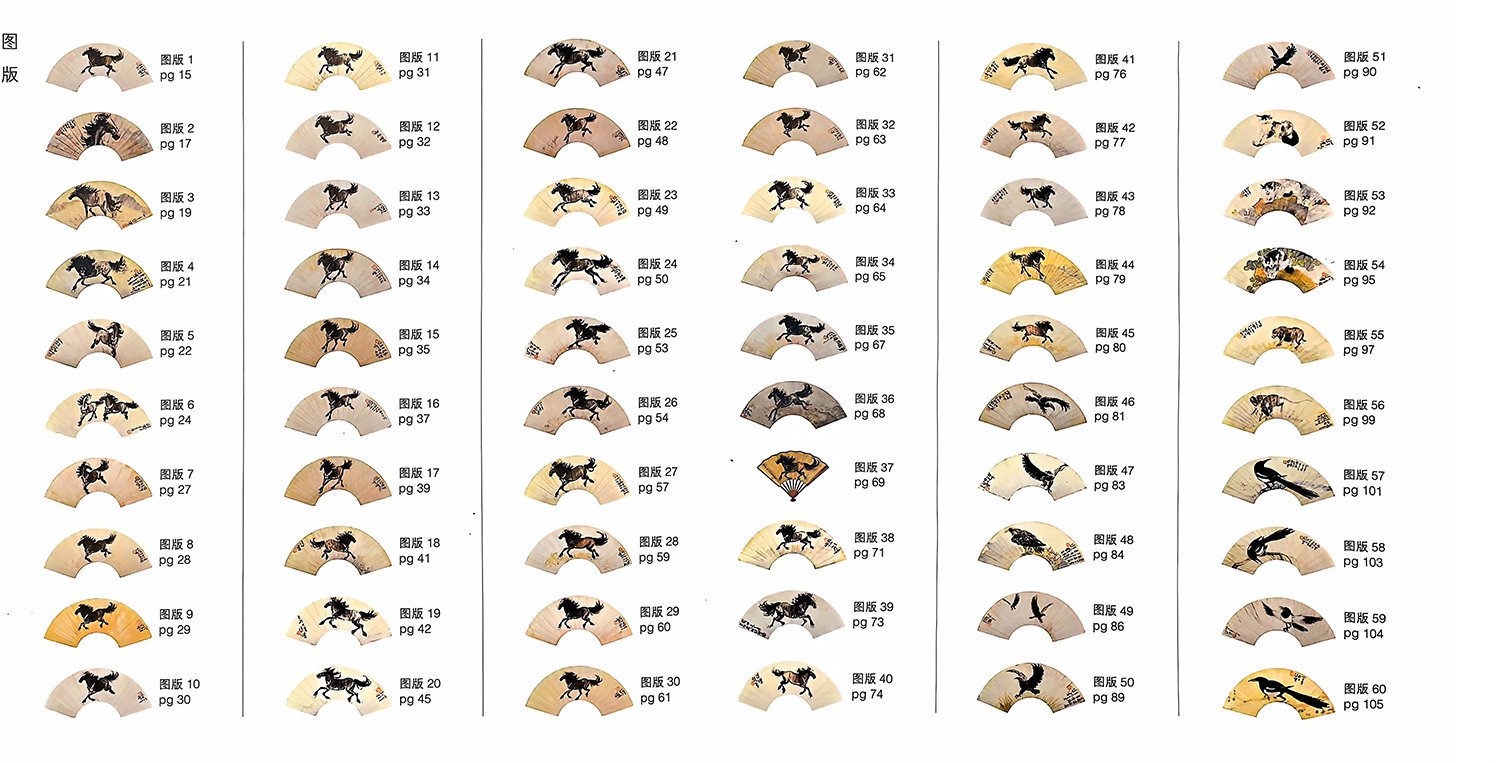
However, it is evident from the various activities that the majority of individuals in Singapore who purchased paintings were not primarily driven by aesthetic appreciation. Instead, they placed value on the social significance of the Chinese master’s paintings and the imperative of supporting the war effort for their beleaguered motherland. Consequently, these paintings often catered to the tastes and preferences of the patrons. For instance, while Xu Beihong rarely painted fans throughout his life, he produced a large series of fan paintings (Figure 1). Many of these works were created especially for Huang Manshi, whose enthusiasm for fans was well-known.Footnote 28
The predominance of overseas Chinese among purchasers significantly influenced the thematic content of Xu Beihong’s Southeast Asian oeuvre, which primarily featured conventional Chinese motifs such as flowers, birds and horses. These works characteristically employed a stylised aesthetic with fluid contours and swift, calligraphic brushstrokes. Xu’s technical mastery enabled him to conjure remarkably lifelike representations using minimal yet expressive strokes. This efficient pictorial approach proved particularly advantageous when it came to meeting the pressing demands of the kind of rapid production such fundraising activities necessitated. Concerning his talent for horses, in a revealing exchange with Shi Yinzuo, manager of Zhong Hua Bookstore in Singapore, Xu Beihong admitted, ‘While I paint horses principally due to their popular appeal, my sparrow compositions afford me the greater artistic satisfaction.’Footnote 29
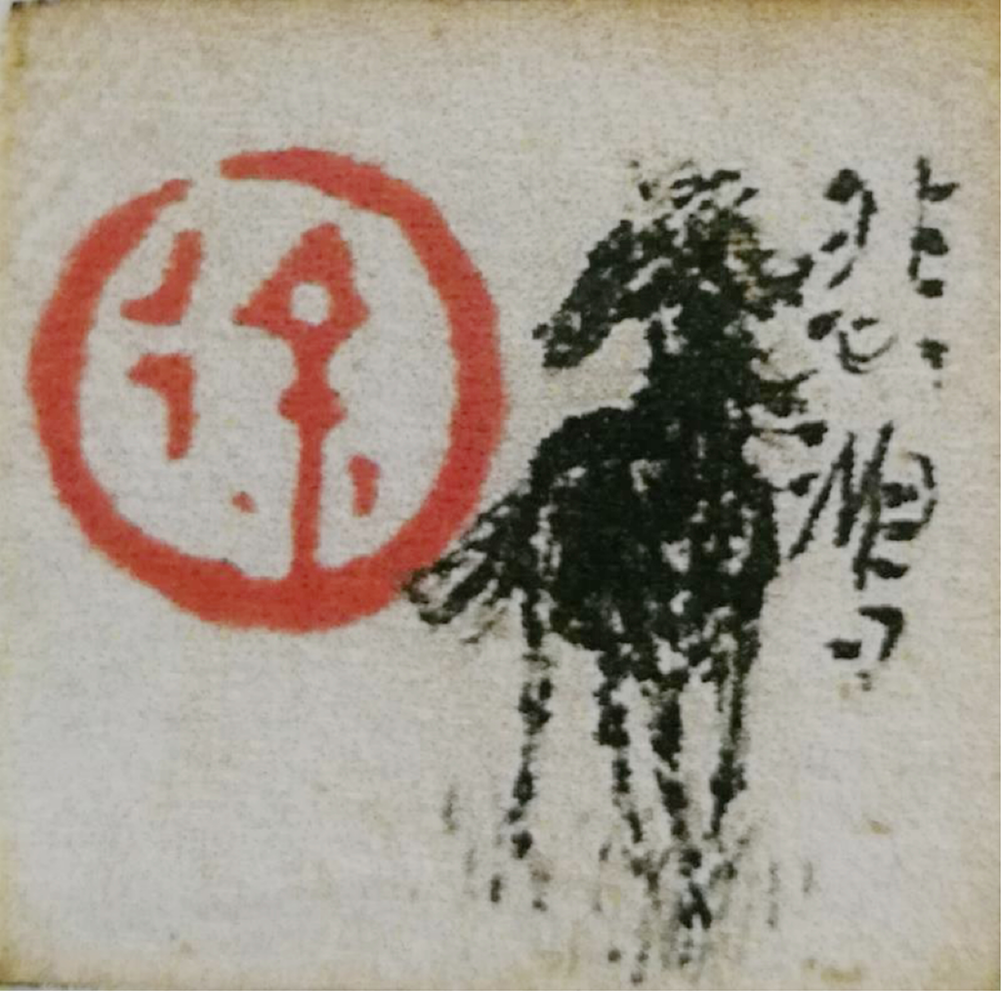
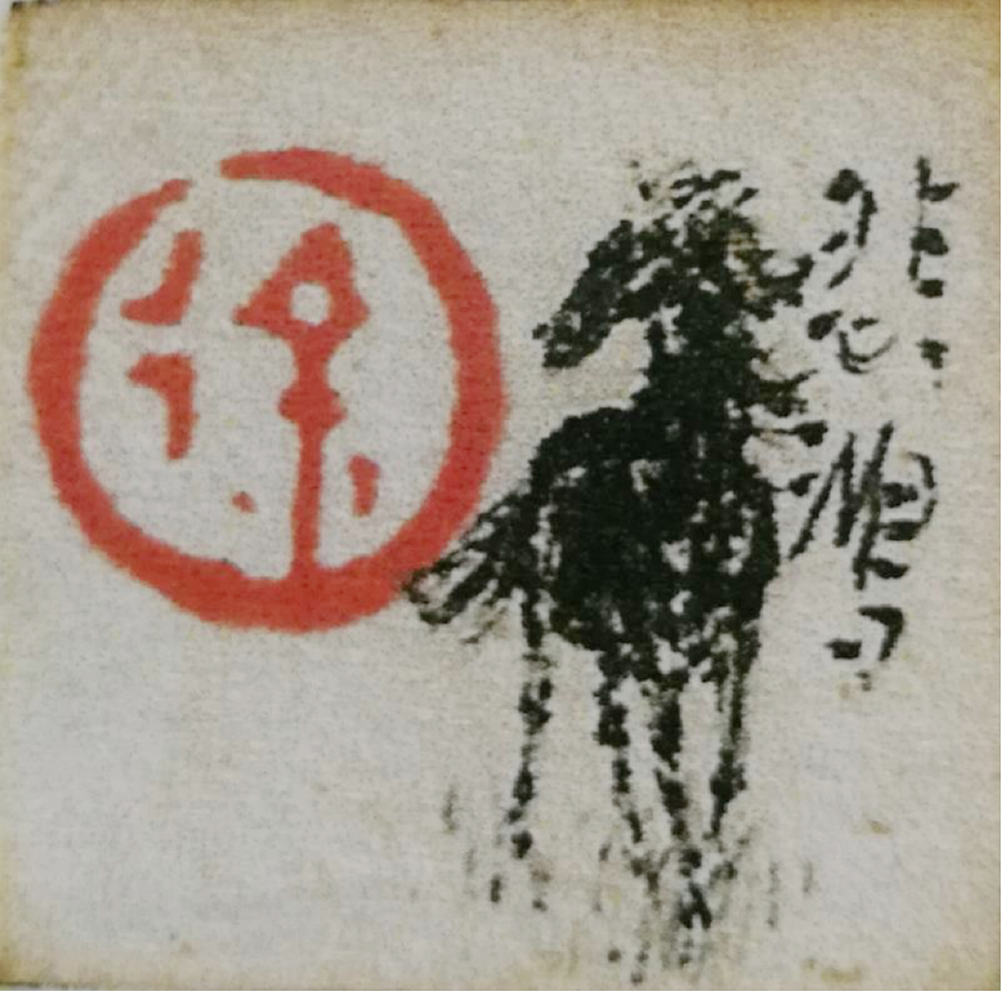
Another notable feature of Xu Beihong’s Southeast Asian period works is their generally diminutive scale, with many pieces measuring merely 10 to 20 centimetres square and some as small as three centimetres square (Figure 2). While this compact scale may partially reflect the spatial constraints of Xu Beihong’s studio at Jiangxia Hall, it also speaks to the social etiquette surrounding these artworks. When it comes to requests for paintings from acquaintances that do not involve payment, it is typically more convenient to ask for smaller, less time-consuming works. A telling example in this regard was Robert Kuok’s request for Xu Beihong to casually paint in a small notebook of his.Footnote 30
The remarkable success of Xu Beihong’s fundraising campaign in Singapore can be largely attributed to the well-established network of Chinese merchants based in Singapore. Thanks to their promotion, Xu Beihong’s inaugural exhibition in 1939 received an estimated 30,000 visits (out of a Singaporean population of 600,000).Footnote 31 This stood in marked contrast to the situation in India, as observed by Xu himself: ‘While Calcutta has more than 5,000 overseas Chinese, and even several dozen families that are well-off, there are none whose maximum capital exceeds 600,000 [rupees], which is a long cry from to Singapore’s imposing magnificence.’Footnote 32 In interviews with descendants of Ma Zhucai, one of the wealthiest Chinese merchants in India, who once hosted Xu Beihong, it was recalled that upon the recommendation of a friend, Xu went on a retreat to Darjeeling and visited Kalimpong’s vibrant Chinese community. During his stay, Xu Beihong presented the Ma family with a painting, but did not bring up the matter of fundraising.Footnote 33
Table of Contents from Beihong’s Fan Painting: The Liuhonglou Collection, 2013

Figure 1 Long description
A catalog-style illustration page shows many small semicircle fan images arranged in several vertical columns. Each fan contains a different brush-style scene or motif, including birds, flowering branches, plants and landscape elements such as hills and trees. A short text label in Chinese characters appears near each fan. The labels are placed beside the fans and repeat for every entry. The overall layout is a reference sheet of fan designs, with consistent spacing and alignment from top to bottom across the columns.
Xu Beihong, ‘Standing Horse,’ painted in Singapore (3.1 cm × 3.1 cm). Photograph by Dengfeng. Image reproduced with the permission of the owner
As mentioned above, Xu Beihong’s visit to India was in response to the invitation of Rabindranath Tagore, who had expressed the hope that Xu’s activities would facilitate Sino-Indian cultural exchange. Throughout his sojourn, Xu primarily interacted with Indian artists and intellectuals. In preparation for this significant cultural mission, he carefully packed ‘seven to eight crates full to the brim with Chinese and foreign paintings representing both the historical and contemporary periods.’Footnote 34 This assemblage included not only his own works but also valuable items and numerous masterpieces by acclaimed modern Chinese artists such as Qi Baishi and Fu Baoshi. Particularly significant was the inclusion of the ancient masterpiece The Scroll of Eighty-Seven Immortals, which Xu Beihong had purchased in Hong Kong in 1937 at considerable expense. Hailed by Xu as a national treasure, this scroll was transported to India for presentation to the Indian art world.Footnote 35
Xu Beihong arrived in Calcutta on 29 November 1939. A grand welcoming ceremony was subsequently hosted by Rabindranath Tagore at Santiniketan on 14 December, attended by an unprecedented gathering of over one hundred guests. Among the distinguished attendees were Tagore’s chief secretary Anil Chanda, Dean of the Fine Arts Academy Nandalal Bose, Director of the Chinese Institute Tan Yunshan, and numerous professors together with their spouses.Footnote 36 In a letter to his friend in Singapore, Xu recounts his experience and the profound respect with which he was treated during his stay in India. He further details plans for a public exhibition in Calcutta scheduled for late January 1940, alongside preparations for a special exhibition commemorating the centenary of Chinese artist Ren Bonian’s birth — an initiative designed to elevate international recognition for Ren’s oeuvre.Footnote 37 In his effort to enrich Indian audiences’ appreciation of Chinese art, Xu Beihong also brought along hundreds of Chinese painting catalogues and requested his friend Shu Xincheng, the chief editor of the Zhong Hua Book Company in China, to continue sending new albums to India. He later intended to donate all these catalogues to the library of the Fine Arts Academy of Visva-Bharati University.Footnote 38
According to the accounts of Ba Zhou, a Chinese student then staying in Santiniketan, Xu Beihong’s first Indian exhibition was inaugurated at Visva-Bharati University on December 23, 1939 — a mere nine days after his welcome ceremony and timed to coincide with celebrations for the University’s 39th anniversary. Rabindranath Tagore presided over the opening ceremony, and formally designated Xu as an emissary to India representing China’s illustrious cultural heritage. The Nobel laureate’s speech highlighted China and India as two great civilisations with profound philosophical legacies which were both undergoing a moment of rebirth. He positioned Xu Beihong’s visit as delivering both aesthetic and spiritual armament for India’s resistance against the yoke of Western colonialism.Footnote 39
While at the Visva-Bharati University, Xu Beihong had the chance to explore its extensive collections of Indian fine arts, spanning from the ancient to contemporary period, including copies of Ajanta mural paintings and artworks by several prominent figures from India’s modern art scene, such as Abanindranath Tagore, Nandalal Bose and Mukul Dey, the principal of the Government School of Art, and other senior students from the school. Xu even expressed the desire to write a monograph titled The Art of India.Footnote 40 During his sojourn, Xu Beihong embarked on multiple journeys to explore the rich local Buddhist artistic heritage,Footnote 41 frequently riding Indian horses along the way. The majesty and strength of these horses left a profound impression on him, inspiring greater vigour in the calligraphic strokes of his horse paintings.Footnote 42 Xu also spent three months in the Darjeeling Himalayas, where he devoted himself entirely to painting and completed nearly 100 works in both Chinese and Western styles.Footnote 43
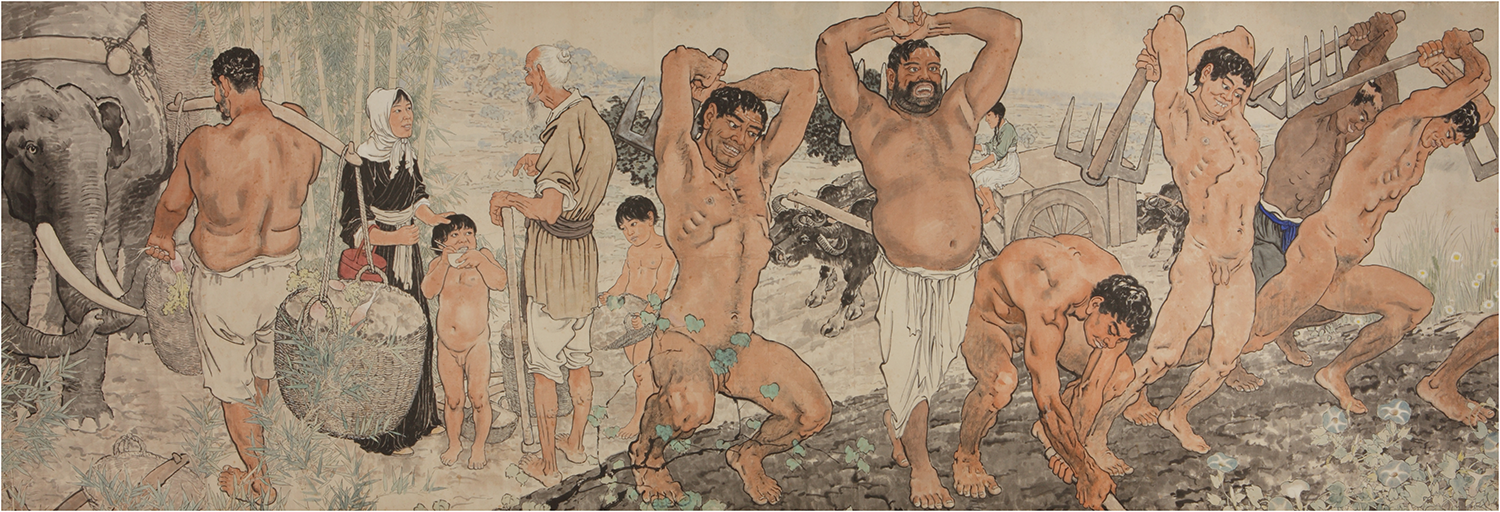
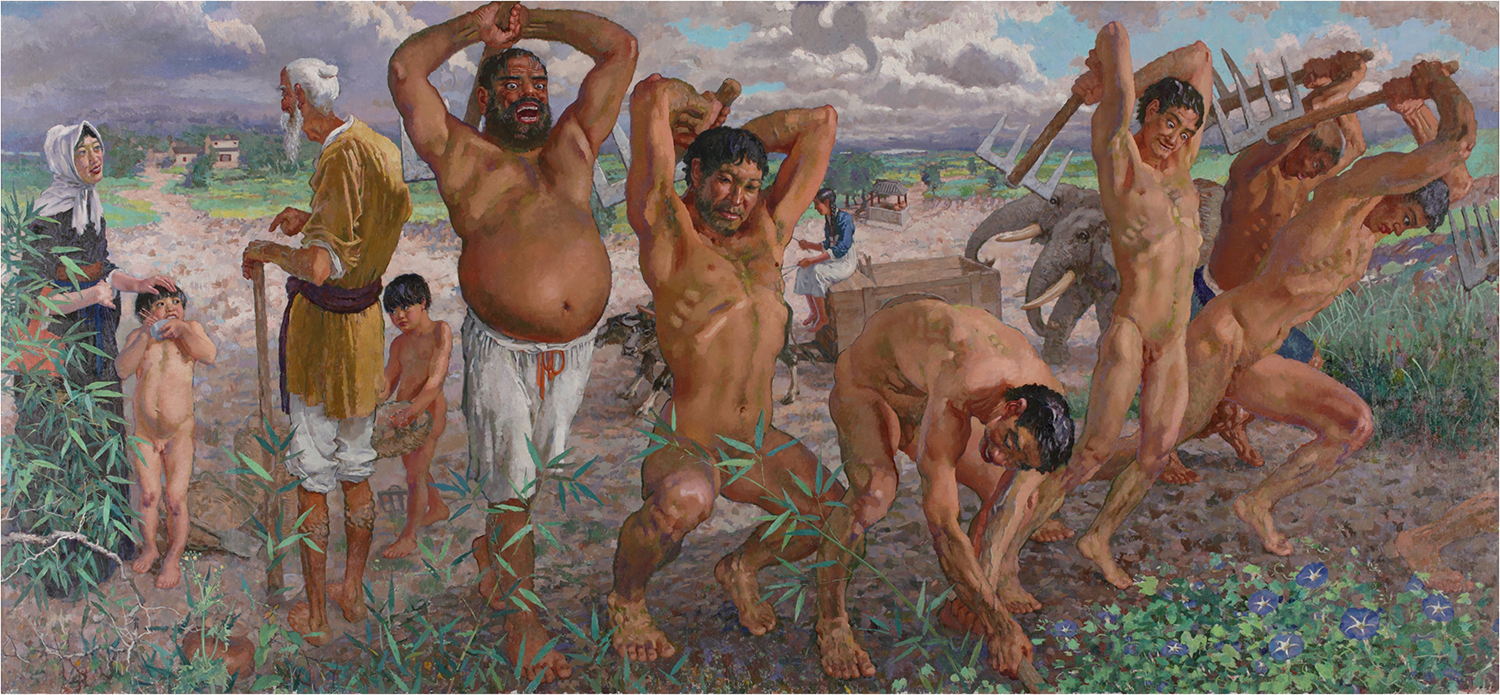
Xu Beihong’s Indian sojourn was a period of grand ambitions realised on canvas, distinguished most notably by his creation of monumental-scale works. Among these, his two interpretations of The Foolish Man Who Moved the Mountains parable — one in traditional Chinese ink (Figure 3), the other in Western oils (Figure 4) — are particularly significant. Measuring 144 cm × 421 cm and 210 cm × 460 cm respectively, these monumental works present a striking contrast with the generally smaller-scale social request paintings produced during his time in Southeast Asia: the largest of his works from India has 10,733 times the surface area of the smallest work painted in Singapore.
Xu Beihong, The Foolish Man Who Moved the Mountains, Chinese ink painting, 1940 (144 cm × 421 cm). In the collection of Xu Beihong Memorial Museum. Image provided courtesy of the Xu Beihong Family
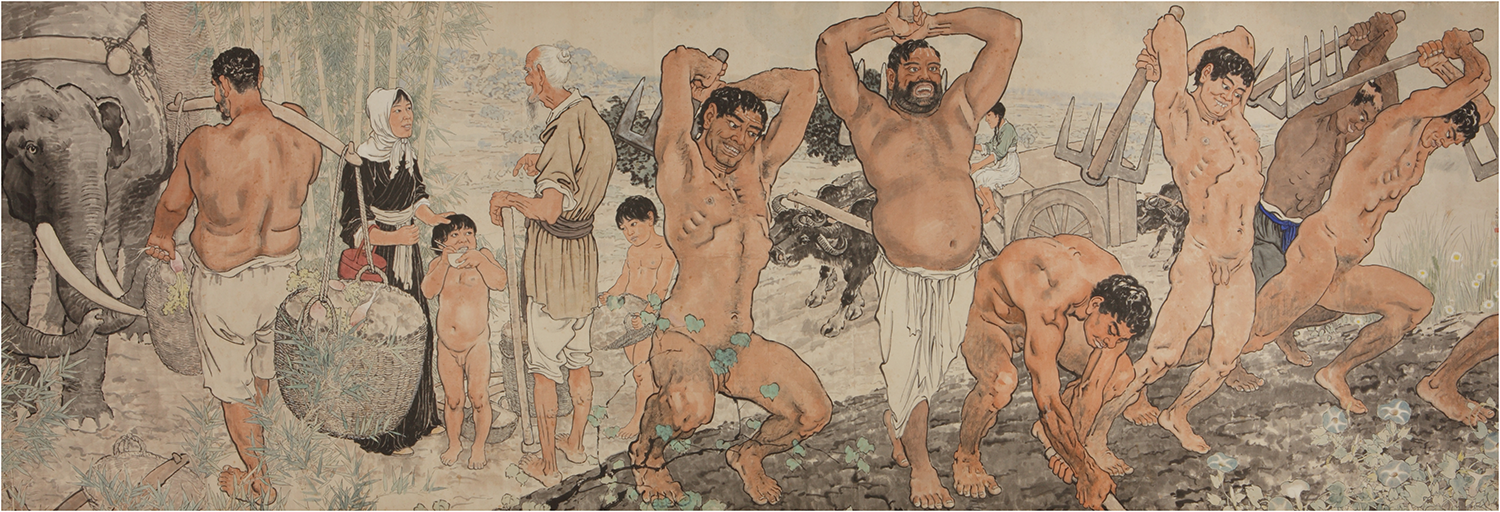
Figure 3 Long description
The painting shows a group of men engaged in the laborious task of moving large rocks. The men are muscular and appear to be exerting significant effort, with some lifting rocks and others using tools. An elephant is visible in the background, adding to the scene's sense of scale and effort. The men are dressed minimally, emphasizing their physicality and the nature of their work. The painting captures a moment of collective endeavor, illustrating themes of strength and determination.
Xu Beihong, The Foolish Man Who Moved the Mountains, oil painting, 1940. 210 cm × 460 cm. In the collection of Xu Beihong Memorial Museum. Image provided courtesy of the Xu Beihong Family
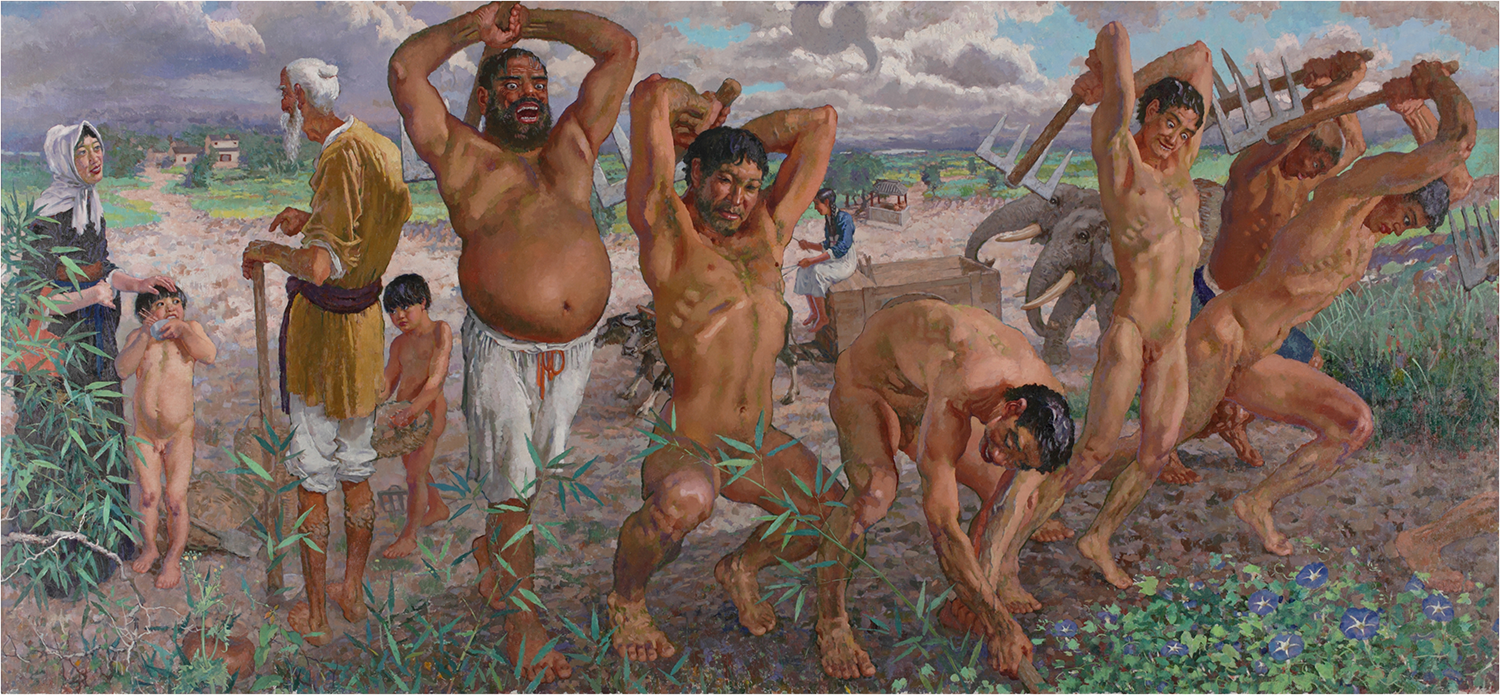
Figure 4 Long description
The painting shows a group of people in a rural setting. Several men are depicted working in a field, with their bodies in various poses suggesting physical labor. A child stands near them, observing the scene. In the background, a woman is seen watching the men, holding a stick. The landscape includes fields and distant hills, with a cloudy sky overhead. The scene captures a moment of communal effort and interaction in a natural environment.
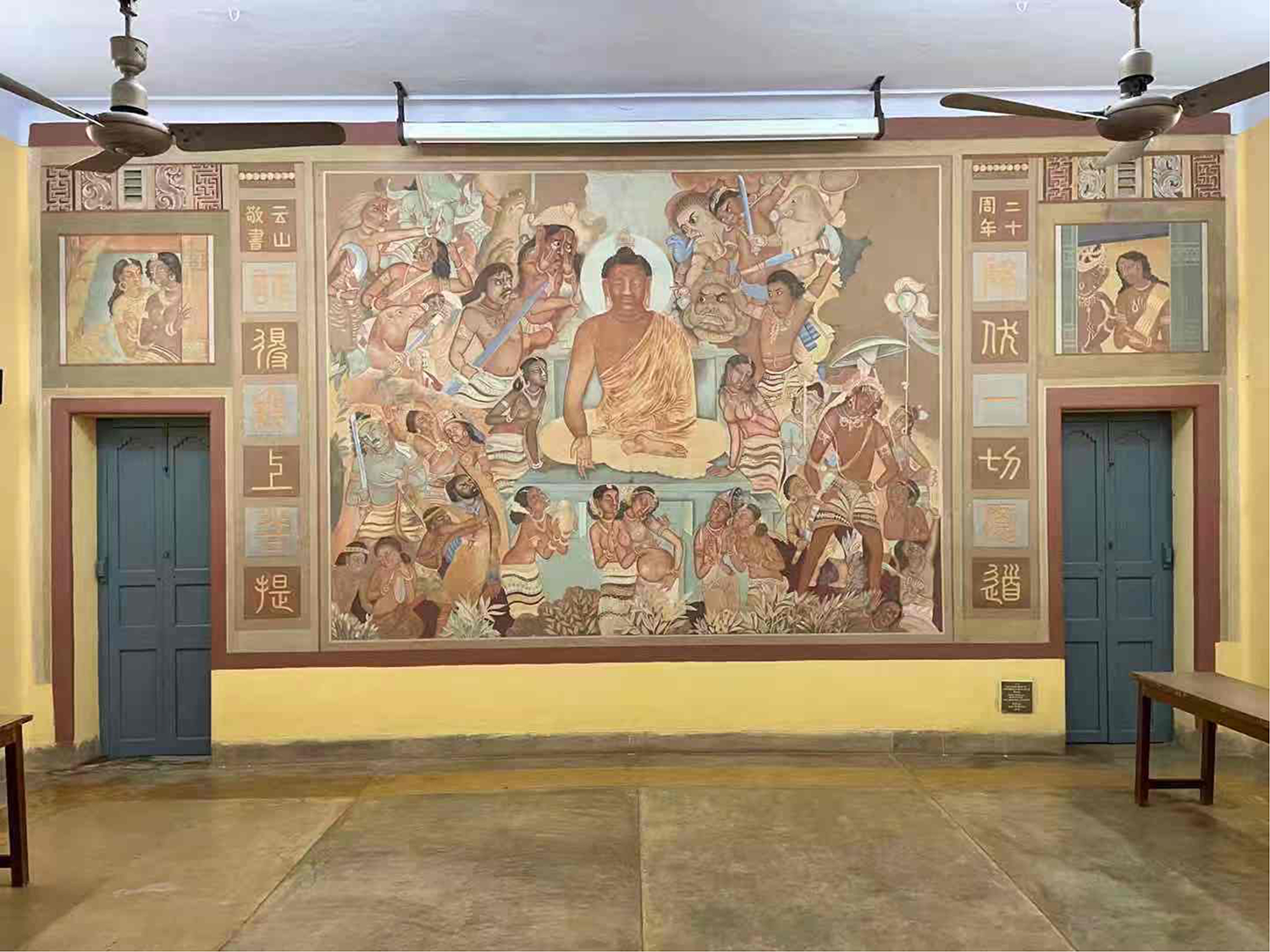
Such grand-scale creations aligned conceptually with the cultural project of the Bengal School of Art, led by Abanindranath Tagore, Nandalal Bose and Rabindranath Tagore. Their movement embodies the rise of Asianism within the broader historical context of the early twentieth century, and sought to illustrate Asia’s cultural solidarity against Western colonialism through imposing visual statements. Towards this revival of Indian national art, the Bengal School started out by drawing inspiration from small-scale Mughal miniatures; however, upon Tagore’s return from Japan, where he had been profoundly impressed by Japanese large screen paintings, he became convinced that contemporary Indian art must transcend its small-scale roots and seek creative energy from monumental mural traditions.Footnote 44 Despite Tagore’s subsequent disillusionment with Japan following its 1937 invasion of China,Footnote 45 the paradigm of monumental painting persisted among Bengal School practitioners. Nandalal Bose and others ultimately translated this vision into the expansive murals that adorn Cheena Bhavana (Figure 5) — the very locale in which Xu Beihong undertook his Indian residency.
Cheena Bhavana, Visva-Bharati University. Photograph by Devdip Ganguli
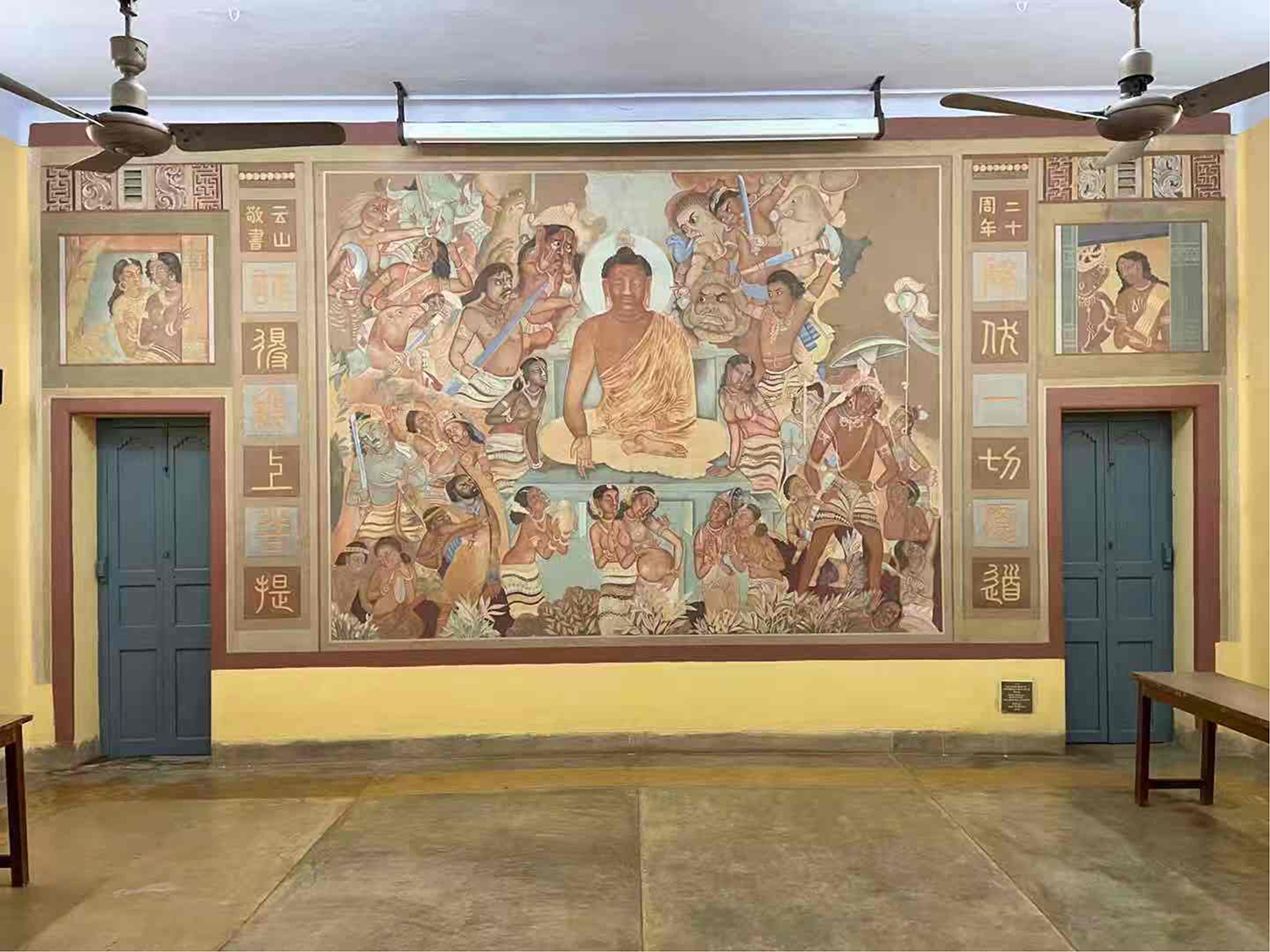
Figure 5 Long description
A large mural is displayed on a wall, featuring a central seated figure surrounded by numerous individuals engaged in various activities. The mural is flanked by two blue doors on either side. The artwork includes intricate details and is framed by decorative borders with text and smaller images. The setting appears to be an indoor space with a tiled floor and ceiling fans.
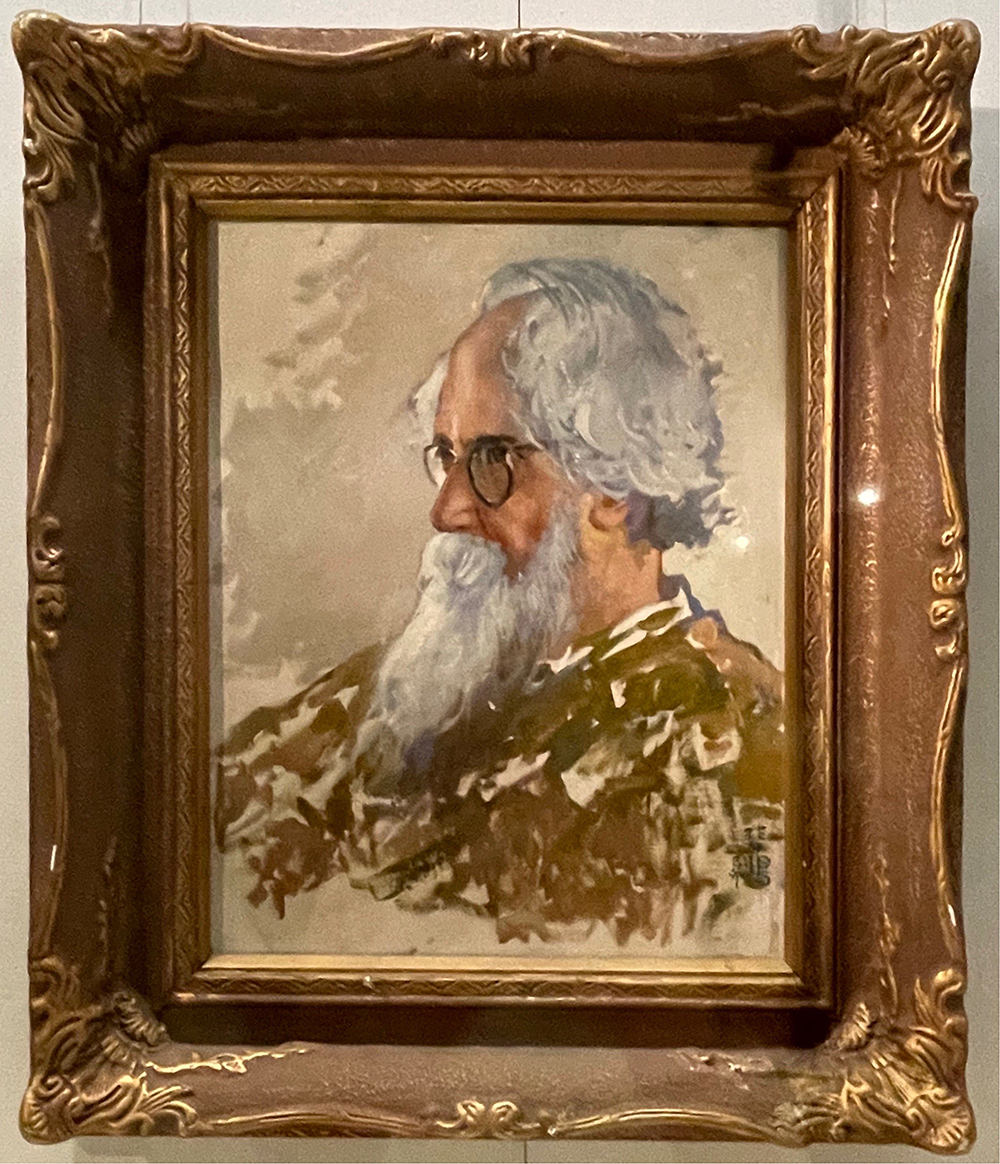
While in India, Xu Beihong produced over 10 portraits of Rabindranath Tagore (e.g. Figure 6) and Mahatma Gandhi. These works are thought to have been imbued with further cultural significance in the form of inscriptions by both Tagore and Nandalal Bose.Footnote 46 Beyond these formal portraits, Xu poured considerable effort into depicting everyday Indian life through numerous sketches that captured music classes, student activities, street scenes, as well as distinctive elements of the local environment such as silk cotton flowers and elephants.
Xu Beihong, Portrait of Tagore, 1939. In the collection of Xu Beihong Memorial Museum. Image provided courtesy of the Xu Beihong Family. Photograph by the author

Figure 6 Long description
This photograph showing a framed portrait painting with an ornate gold frame. The painting depicts a head-and-shoulders view of a figure with gray hair and a beard, turned slightly to one side. The central area is blurred, obscuring specific facial details. The frame features intricate detailing along its edges. The artwork appears to be hung on a wall, suggesting an indoor setting. The overall mood of the painting is formal.
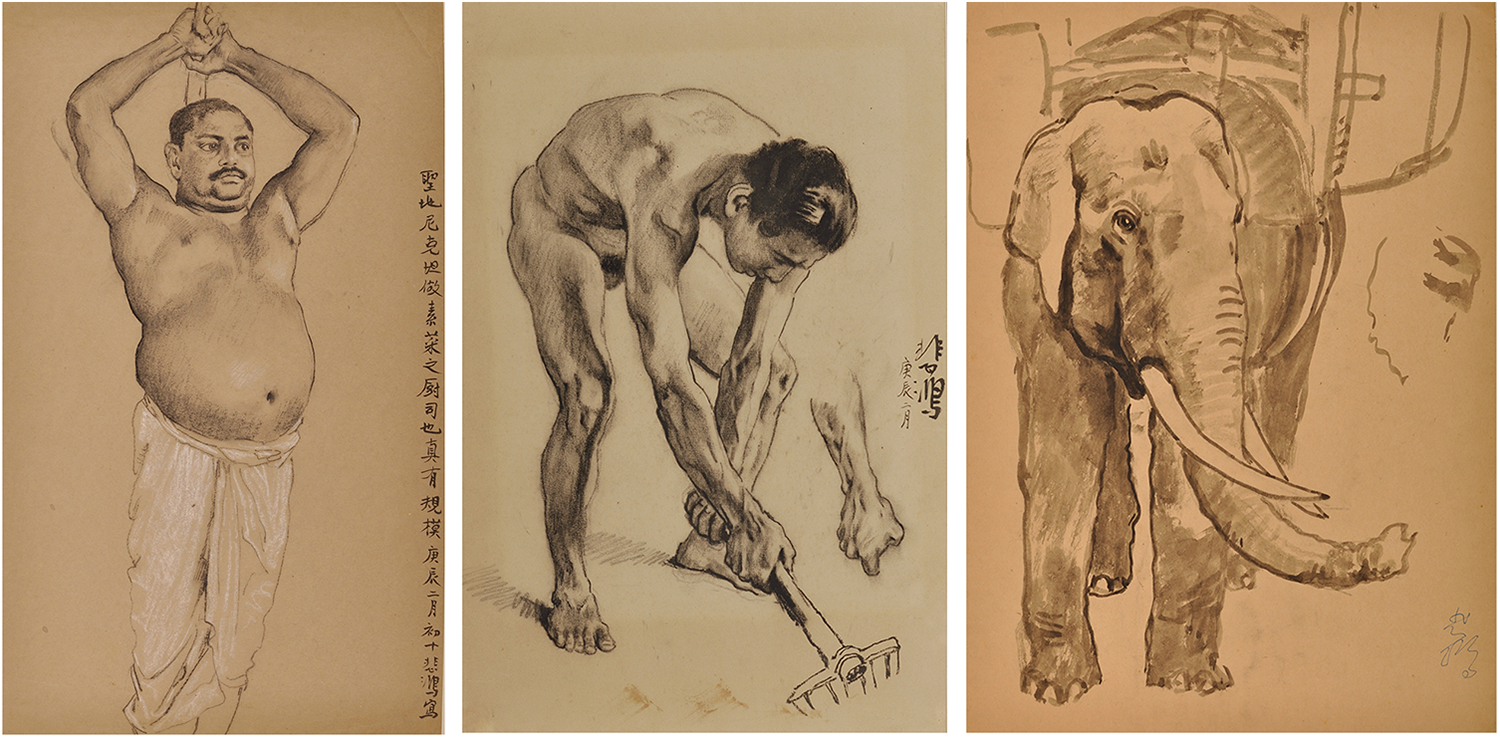
In The Foolish Man Who Moved the Mountains, the central figure wielding a hoe was actually based on an Indian cook from Santiniketan, of whom Xu Beihong made multiple preparatory sketches.Footnote 47 Several secondary figures likewise found their models among Visva-Bharati University’s staff and students, while the elephant depicted at the left margin of the ink painting version directly reflected zoological observations made in India (Figure 7). In a breakthrough move — though not one unprecedented in his oeuvre — Xu incorporated nude male figures into this traditional Chinese-themed painting, contending their inclusion as essential for muscular verisimilitude and forceful expression.Footnote 48 Stylistically, these works exhibited greater refinement in both contour and textural rendering compared to the social request paintings produced during his Southeast Asian period.Footnote 49
Xu Beihong’s sketches in India. In the collection of Xu Beihong Memorial Museum. Image provided courtesy of the Xu Beihong Family. The inscription on the first sketch on the left reads, ‘Sanitiniketan’s vegetarian cook. A man of scale. Sketch by Beihong on the tenth day of February 1940’
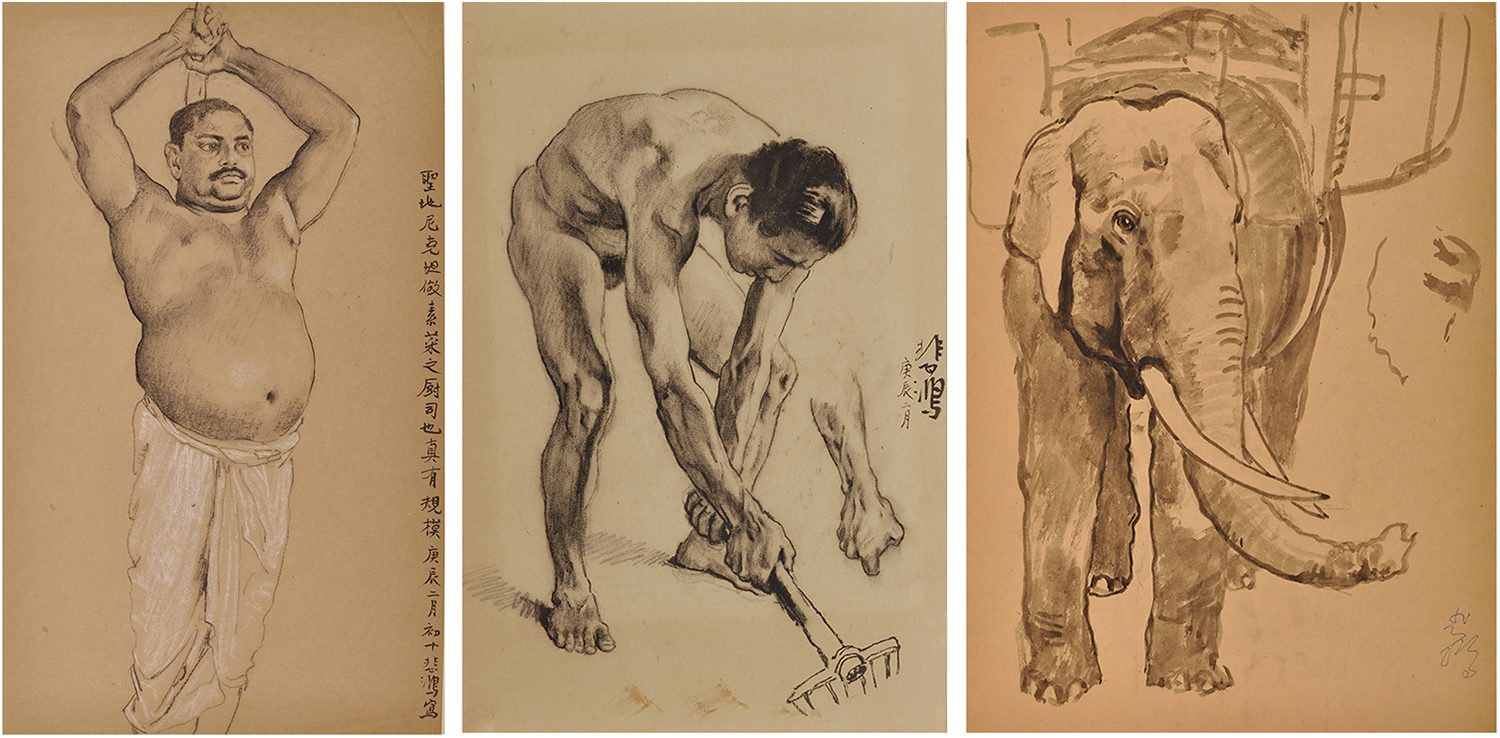
Figure 7 Long description
The first sketch depicts a man with raised arms, wearing traditional attire. The second sketch shows a man bending forward, using a hoe, with visible muscular detail. The third sketch features an elephant, drawn with attention to its texture and form. Each sketch is detailed, capturing distinct poses and characteristics.
The confluence and the barren land: Diverging perceptions of South and Southeast Asia
While in Singapore, Xu Beihong divulged his thoughts to his friend Ma Jun in a letter, saying, ‘The level of culture in Nanyang is relatively low.’Footnote 50 He observed that the majority of Chinese there were primarily engaged in business activities, and lacked cultural and artistic cultivation. In response, Xu Beihong took active measures to mentor emerging artists in the region. His most notable mentee was Lee Man Fong, the nephew of Xu’s Indonesian Chinese friend, who later became a prominent artist in Indonesia, appointed by President Sukarno as artist-consultant to the presidential palace and as supervisor of its painting collection, also serving as the editor of the important publication Paintings and Statues from the Collection of President Sukarno of the Republic of Indonesia. Footnote 51 Xu Beihong’s pedagogical influence also extended to Tchang Ju Chi and Hsu Chun Lin, both of whom went on to lead the Society of Chinese Artists (SOCA) as president. Notably, Hsu Chun Lin was also art editor at the Singapore Daily. Footnote 52 Xu Beihong’s arrival proved pivotal to the development of the SOCA. Having received substantial support from them for his 1939 relief fundraising exhibition, Xu reciprocated as curator by incorporating works by select SOCA members into the exhibition — both as an act of gratitude and a strategy to amplify the association’s visibility. Throughout his extended stay of nearly nine months in Singapore, Xu Beihong cultivated an intellectual milieu within the SOCA, imparting technical painting knowledge and significantly enriching the artistic discourse within the association.
On 2 November 1939, as Xu Beihong was about to depart for India, the SOCA convened a farewell gathering in honour of his contributions. Hsu Chun Lin, speaking on behalf of the association, expressed his profound appreciation of Xu, acknowledging his role in elevating Singapore’s fine arts scene. Xu, in response, drew upon his memory and observation:
I came to Singapore more than 10 years ago. At that time, though it did not have the appearance of a desert, it could still be described as a tropical wasteland—where was the art to speak of? That things have changed in that respect is the result of the hard work of my fellow artists. Today, we have the Society of Chinese Artists and the ability to host annual exhibitions.Footnote 53
The perception of Southeast Asia as a cultural wasteland was not unique to Xu Beihong. As early as 1927, an advertisement for an art school in the Xin guomin ribao sought to entice applicants by presenting life in Nanyang as lacking cultural enrichment, dry and dreary, bereft of artistic advocacy, all backdropped by the suffocating stillness of the equator.Footnote 54 That same year, Qin Bai published an article titled ‘A Sigh in the Coconut Grove’ in the Nanyang Siang Pau. He observed that while Westerners and Japanese in Singapore frequently held art appreciation gatherings, the Chinese community seemed to display a relatively superficial level of interest in and sensitivity to art, something that he found disheartening.Footnote 55 This narrative of cultural deprivation was further reinforced in 1930 when Tchang Ju Chi, writing in Lat Pau’s supplement ‘Yeh-Hui,’ depicted the contemporary art scene as ‘a desert, so barren and arid,’ but expressing hope for its revitalisation.Footnote 56 Xu Beihong arrived in 1939 with his perception of the region’s cultural landscape likely shaped by these earlier yearnings, only to himself become the living answer to this collective thirst — the long-awaited wellspring in the imagined artistic desert.
Xu Beihong also played an instrumental role in guiding affluent Chinese merchants and emerging collectors in Southeast Asia in their pursuit of Chinese art. He connected them with acclaimed artists in China to acquire artworks and build their collections, while teaching them the ways of connoisseurship. Notably, he mentored Huang Manshi and Tan Tsze Chor — later renowned for possessing the largest and most valuable private art collection in Southeast Asia — in selecting a large number of masterpieces by Qi Baishi and Ren Bonian.Footnote 57 These efforts by Xu profoundly influenced the aesthetic sensibilities of an entire generation of overseas Chinese collectors in Southeast Asia.
Unlike his engagements abroad in other places like France and India, where he passionately devoted himself to the study of local artistic traditions, thus assuming more of a receptive role, Xu Beihong’s position during his sojourn in Southeast Asia could be compared to that of a teacher. His artistic activities, predominantly situated within the Chinese-speaking community, centred on interactions with individuals with shared Chinese cultural heritage. This period witnessed a marked proliferation of his calligraphic works and discussions on seals, both artforms employing Chinese characters as the medium. He produced a substantial corpus of inscribed plaques, forewords and poems for his Chinese friends.Footnote 58 This familiar Chinese environment rendered Southeast Asia less of an ‘other’ compared to other regions he encountered. Yet, it was precisely this cultural comfort zone that enabled Xu, together with other prominent Chinese intellectuals then active in Southeast Asia, to maintain a sense of cultural and aesthetic superiority. This helped foster a collective view of Southeast Asia, particularly its local Chinese communities, as a sort of cultural desert, lacking in tradition and artistic education.
However, when it came to the cultural landscape of India, Xu Beihong’s expressed attitude was profoundly different. Addressing the distinguished gathering at Tagore’s 1939 welcome ceremony, he reflected:
The relationship between the Chinese and Indian peoples has always been based on the spirit of non-utilitarianism and mutual assistance. According to the traditional manner, whenever one pays a visit, it is proper to bring something along [as a gift], and also proper to take something back. With individuals like Professor Tan Yunshan before us as a model, I need not list the philosophers of antiquity. However, India’s lofty, profound, erudite, and vast culture needs very little from the likes of me. Therefore, my personal hope is to take something back with me.Footnote 59
Contemporary scholarship on Xu Beihong’s Indian sojourn has primarily drawn upon his personal accounts, including his speech at the welcome ceremony, travel writings and his condolences for Tagore following his passing. Further sources for this body of research are Xu Beihong’s paintings from this period, many of which carry inscriptions containing detailed information on his encounters in India. Yet crucial materials remain conspicuously absent from these discussions. Following his return from India, Xu Beihong continued to engage in activities aimed at fostering Sino-Indian cultural exchange, most notably by advising his student Chang Xiufeng, from the National Central University’s Fine Arts Department, to pursue artistic training at Visva-Bharati University. Scholars of modern Chinese art had previously been unaware of this twentieth-century Chinese painter who studied abroad in South Asia, with academic attention traditionally focusing on those who studied in Europe and Japan. In recent years, following the increased publicity of a series of Chang Xiufeng’s paintings, manuscripts and letters, a lost history of artistic exchange between China and India has been rediscovered.Footnote 60 Chang’s case sheds light on our understanding of Xu Beihong’s divergent perspectives on South and Southeast Asia.
In 1947, Chang Xiufeng gained admission to Visva-Bharati University through Xu Beihong’s personal recommendation, having studied with Xu in wartime Chongqing. Chang reflected, ‘This was suggested by my teacher Xu Beihong, who had once visited India to make sketches and practise painting. He told me that India was a confluence of Greek, Egyptian, Persian, Indian, and Chinese culture, and that there I would be able see for myself how these places were artistically related by blood. He expressed his hope that I would do as the Tang monk Xuanzang once had and embark on a ‘journey to the Western skies to retrieve the artistic scriptures. And so I went to India.’Footnote 61 Chang further elaborated, ‘In terms of art, Beihong ascribed particular significance to linework, saying that when it came to Asian art, there was nothing to it but for the lines. He applied this to his teaching methods: instead of [first] demanding students to draw plaster casts and live models, they would move straight onto sketching scenery in the great outdoors and people going about their daily lives. That was the Indian way of [teaching] painting.’Footnote 62 This echoes Xu Beihong’s remarks at Tagore’s reception in 1939: ‘my personal hope is to bring something back with me.’
While in India, Xu Beihong’s engagement with Indian art went far beyond painting. He toured local museums, explored ancient Buddhist caves and sculptures, and attended music classes in Santiniketan. He was impressed by Tagore’s teaching philosophy, which integrated music, dance, painting and sculpture. He additionally praised the elegance of the traditional attire of Indian women.Footnote 63 His journey took him as far as Kashmir, which he eloquently described as ‘Paradise on Earth.’Footnote 64 Amidst Darjeeling’s misty peaks, Xu’s prolific output included multiple renderings of the Himalayas, which he celebrated in both pigment and prose as surpassing Athenian landscapes in their sublime perfection.Footnote 65 Despite his nearly year-long stay, he conveyed in a letter to a friend, ‘In terms of work environment, India is the best.’Footnote 66 Unfortunately, pressing responsibilities at home compelled him to return sooner than he had desired. Returning to Singapore, Xu also acquired a volume of photographs titled India and China: A Photographic Study, reflecting his lasting interest in Sino-Indian intercultural dialogue.Footnote 67
Between refinement and vulgarity: power dynamics and an overlooked internal hierarchy
In Southeast Asia, once regarded as culturally barren, a large portion of the Chinese population comprised illiterate labourers. Since the late nineteenth century, there had been a gradual influx of intellectuals and artists from mainland China and Hong Kong who either sojourned or settled in this region. These intellectual migrants engaged in various professions, such as managing newspapers, selling calligraphy and paintings, inscribing signboards for local shops, and engravings seals.Footnote 68 Being traditionally educated, most of the Chinese literati possessed expertise in literature, calligraphy, painting and seal engraving, upon which they later relied to earn a living in a foreign land and to finance their travels through Southeast Asia. To amplify the visibility of their artworks and expand patronage networks, many posted advertisements in local newspapers, strategically targeting potential buyers.Footnote 69 However, to the eyes of such Chinese literati, the buyer’s identity, class and social status were of considerable importance, as their client base would substantially impact their public image and professional reputation, hence they were highly selective. Some artists inflated pricing to deter lower-status buyers,Footnote 70 while others sought to enhance perceived value through luxurious materials like gold-embellished paper or silken mounts.Footnote 71 A few artists even boldly articulated their expectations for potential buyers in their advertisements, as seen in the calligrapher Deng Jiarang’s statement in Thien Nam Shin Pao: ‘[The calligrapher] neither accepts poor quality paper for calligraphy purposes nor entertains requests for work intended as a gift for a prostitute.’Footnote 72 Therefore, these refined works of calligraphy, painting, and seals were specifically tailored to appeal to wealthy elites to the exclusion of the lower classes of society. They later became prized possessions of the emerging merchant class, who adorned their homes in a style drawn from refined Chinese literati culture, one example thereof being the very Jiangxia Hall where Xu Beihong sojourned.
Within traditional Chinese literati culture, the distinction between refinement and vulgarity has been a perennial concern in artistic discourse. The literati sought to accentuate their refined taste and status through the employment of sophisticated motifs, literary allusions, exquisite items of stationery and particular painting and calligraphy techniques. However, as soon as any of these refined artistic expressions began to be emulated by the masses, the risk of devolving into vulgarity emerged. Consequently, the literati endeavoured to explore alternative forms of artistic expression that could preserve their sense of distinction from the general populace.Footnote 73 Since the Ming and Qing dynasties, this cultural dichotomy had undergone progressive involution alongside the expanding art market. As the academic focus shifted from philosophy to philology during the Ming–Qing transition, the exploration, collection and examination of ancient Chinese scripts — particularly the seal and clerical scripts from archaeological antiquities such as bronzes and stelae — became a primary scholarly pursuit within the literati community.Footnote 74 In the realm of calligraphy, the study and imitation of the archaistic and unadorned style of the scripts found on ancient bronzes and stelae, later known as the Stele School, gradually emerged as the dominant paradigm. Now, a proficient calligrapher was expected not only to demonstrate exceptional mastery of calligraphic skills but also to possess deep scholarly erudition. As a result, the bar for distinction darted to unprecedented heights.
Part of the thriving cultural milieu of late Qing China was brought to Southeast Asia with the southward migration of literati during the late nineteenth century. They employed stele-style scripts to inscribe plaques for local stores and introduced the art of seal-carving to Southeast Asia. This gradually elevated the prominence of seals as an important form of authentication in the region, used for both personal and commercial purposes. Seals were engraved not only in Chinese but also in English, Malay and Indian languages, demonstrating the widespread adoption of Chinese-style seals in a multilingual and multiethnic society.Footnote 75 Meanwhile, these migrants introduced masterpieces of Chinese calligraphy and model works in newspapers in the hope of promoting appreciation for the culture of their homeland. For many Chinese artists, calligraphy is considered the core of Chinese art and hence a prerequisite for painting. Full mastery of calligraphy requires a profound understanding of Chinese scripts, philosophy and history. Therefore, to foster the promotion of Chinese art in Southeast Asia, it was imperative to prioritise education on Chinese culture.
Following the outbreak of the Second World War, Xu Beihong, along with other Chinese intellectuals migrating to Southeast Asia, placed even greater emphasis on this point. While acknowledging Chinese painting’s relative inaccessibility — its full appreciation requiring complete literary and poetic eruditionFootnote 76 — in private correspondence Xu consistently emphasised the indispensability of historical study and a calligraphic foundation to artistic practice.Footnote 77 This view was reinforced by writer Yu Dafu, a key figure in Xu Beihong’s Southeast Asian intellectual circle. Yu posited that artistic progress was fundamentally contingent upon a broad education, contending that Chinese characters represented the world’s most beautiful and culturally rich form of writing and that overseas Chinese must make a concerted effort to master the Chinese language.Footnote 78 He argued that it was the loss of control at the top level during the Republic of China period that had given rise to conflicts among warlords, which in turn provided an opportunity for Japanese invaders. ‘The principal cause of this unstable solidarity is the inability to unify language and script,’ Yu asserted, ‘language and script are the very soul of our motherland, and to support it, we must first uphold its written language.’Footnote 79
This new wave of literati migrants differed markedly from their predecessors during the late nineteenth century, who had primarily come from the Guangdong and Fujian regions to Southeast Asia to earn a living by selling paintings and calligraphy. Many of these recent arrivals were already figures of some renown in China, such as He Xiangning, Xu Beihong, Liu Haisu and Yu Dafu, all of whom were leaders in their respective fields. Their presence led to grander visions and missions, advocating for the solidarity of the overseas Chinese community within a broader context to protect their motherland during the crisis of war.
It is noteworthy that at this point in history, mainland China had already witnessed the transformational New Culture Movement and Chinese Character Revolution, which aimed to overturn Confucian orthodoxy and traditional elite culture paradigms. The once-valued refined literati arts, previously cultivated as markers of cultural distinction, thereby faced vehement criticism. However, when these New Culture-influenced intellectuals migrated to Southeast Asia, their stance underwent subtle shifts. Confronted with what they perceived to be a culturally barren landscape, there were virtually no old entrenched cultural traditions to challenge. Instead, it was seen as a place urgently in need of knowledgeable Chinese intellectuals to sow the seeds of Chinese culture, spread the sophisticated Chinese language, and promote comprehensive education and appreciation of art among the overseas Chinese. Although Yu Dafu once expressed that intellectuals should avoid an arrogant sense of superiority, and noted that Southeast Asia held considerable potential for a development process that was free from the shackles of traditional culture, he, like Xu Beihong and others, still perceived this land as deficient in cultural sophistication, and thus in need of enlightenment from the luminous Chinese culture.Footnote 80 Something that deserves particular attention is that, despite his significant influence as a writer during the May Fourth New Literature Movement, most of Yu Dafu’s literary creations after settling in Southeast Asia were classical poetry, representing a personal preference he openly acknowledged.Footnote 81 Similarly, while in Southeast Asia, Xu Beihong composed many old-style poems to inscribe on his Chinese paintings.
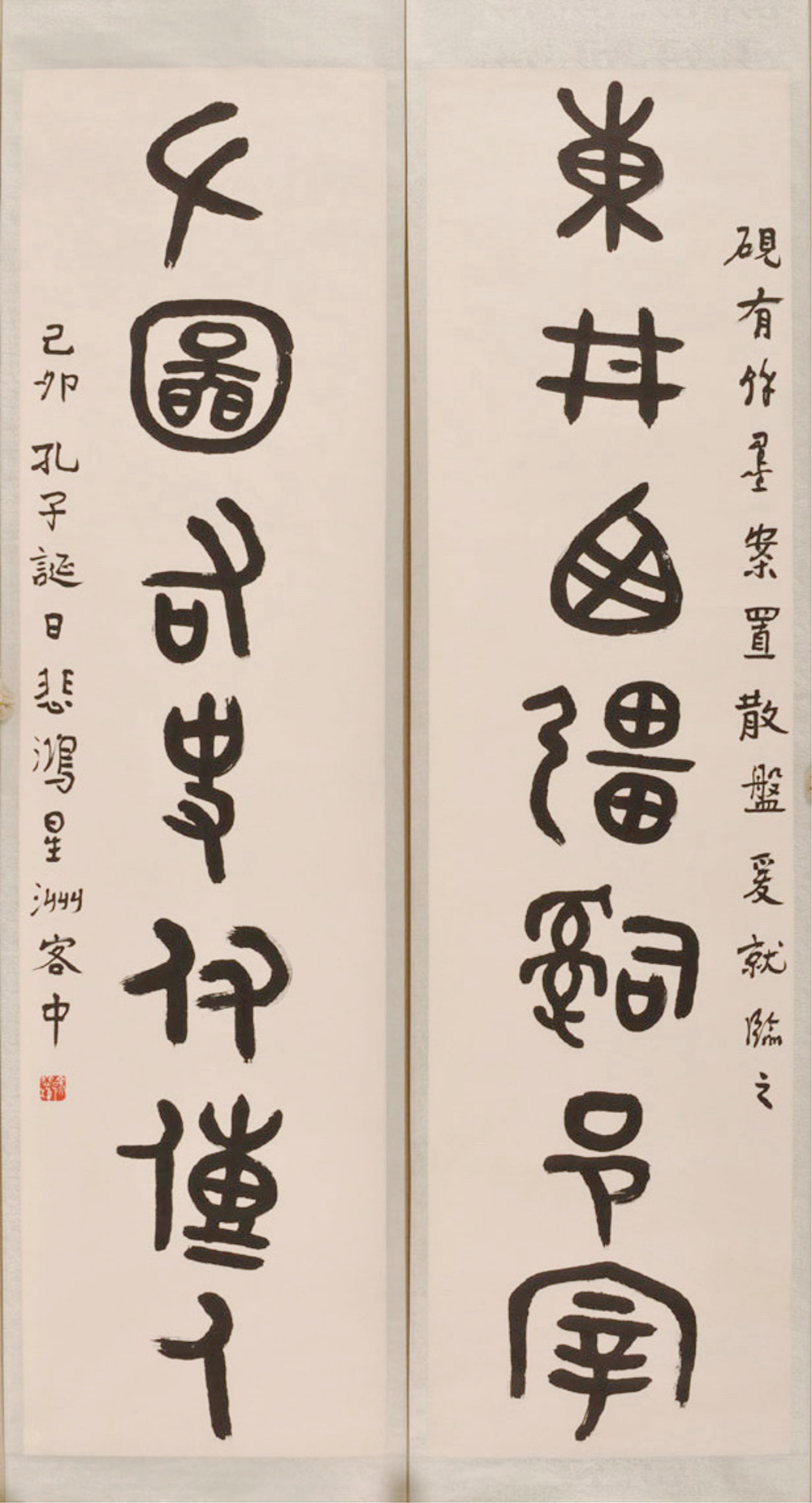
The revolutionary ideals of Chinese intellectuals were softened by a mission to preserve and promote Chinese culture during the war upon their arrival in Southeast Asia. Within fine arts circles, local reformist artists primarily contested the uncritical adoption of Western techniques and advocated for realism, rather than criticising classical Chinese art.Footnote 82 When Xu Beihong arrived in India, this tendency was further reinforced with the support of Indian nationalist artists. Rabindranath Tagore, advocating Sino-Indian solidarity against Western imperialism, poetically framed Chinese culture’s survival as dependent on maintaining the radiance of its essential traditions within the ‘great festival of lamps of world culture.’Footnote 83 This anti-imperialist discourse, shared by Tagore and other prominent figures like Subhas Chandra Bose who condemned Japanese militarism, elevated refined Chinese art to both a repository of classical civilisation and a foundation for nationalist resurgence.Footnote 84 The symbolic significance of traditional Chinese aesthetics was materially manifested at Visva-Bharati University’s Cheena Bhavana, Institute of Chinese Language and Culture, co-founded by Tagore and Tan Yunshan, where architectural inscriptions and institutional mottos employed seal script. This deliberate choice, echoing Xu Beihong’s own seal script creations in Southeast Asia (Figure 8), epitomises the literati’s scholarly erudition, albeit being somewhat challenging to read.
Xu Beihong, Couplets in large seal script. In the collection of Xu Beihong Memorial Museum. Image provided courtesy of the Xu Beihong Family

Figure 8 Long description
The image shows two vertical scrolls with Chinese calligraphy in large seal script. The right scroll contains the characters: '東井多福卯早開', with smaller text on the side reading: '現有作星繁置敷聖愛成績之'. The left scroll displays: '天圓地方卯慎行', with smaller text: '己卯孔子誕日星洲寫於海中'. A red seal stamp is visible at the bottom. The scrolls are organized with large central characters and smaller vertical inscriptions along one edge, written in Chinese, with a formal and traditional tone.
Xu Beihong strategically aligned his artistic production with those cultural preferences held by Southeast Asia’s Chinese merchant class and elite, creating a substantial corpus of works rooted in traditional Chinese themes — especially content derived from Confucian classics.Footnote 85 Parallel to this, he mentored younger artists and emerging collectors to foster their appreciation for more sophisticated Chinese art traditions. As a result, the distinction between refinement and vulgarity was not overturned by revolutionary or modernist ideas in Southeast Asia; if anything, it became even more deeply ingrained in the minds of many later generations of artists.Footnote 86
During the summer of 1939, subsequent to Xu Beihong’s successful fundraising exhibition in Singapore, the Belgian vice-consul commissioned the artist to create a portrait of his girlfriend Jenny, a Guangdong-born dancer who had immigrated to Singapore to earn a living. Upon completion of the portrait, the vice-consul hosted a ceremony, inviting esteemed Chinese intellectuals and artists such as Yu Dafu, Tan Yunshan, Tchang Ju Chi and Hsu Chun Lin to attend. However, as Hsu later recounted, he felt hesitant about attending the event due to Jenny’s profession as a dancer. He believed that a master like Xu Beihong should not have employed his artistic talents to depict her.Footnote 87 Nevertheless, Chinese dancers in Singapore, despite their lowly social status, actively contributed to the war effort by organising labour unions and raising funds at shows. Yet, to Hsu, this dancer was simply not noble enough to be depicted by the hand of such a renowned master. As the local-born merchant Robert Kuok later recalled, his mother always said that during the National Salvation Movement, some of the most patriotic Chinese in Southeast Asia were those bottom-tier labourers and vendors, who donated almost all of their hard-earned wages to Tan Kah Kee’s Nanyang Federation of China Relief Fund.Footnote 88 Yet history chose to remember more prominent names, leaving these small acts of great sacrifice absent from the elite-centric narrative surrounding the overseas Chinese fundraising effort.
Conclusion
As one of the most influential artists in modern Chinese history, Xu Beihong’s sojourns in South and Southeast Asia during the Chinese War of Resistance are widely memorialised as a patriotic fundraising mission for China’s war effort. The great success of his relief fundraising exhibitions in British Malaya, along with the tremendous support and solidarity of the local Chinese community, has been deeply embedded in the narrative of patriotism, personal heroism and the collective efforts of the National Salvation Movement led by overseas Chinese in Southeast Asia. His legacy continues to be featured in local newspapers and recounted in commemorative anthologies, auctions and exhibitions even to this day. Yet this study explores those obscured dimensions of his journey through a comparative analysis of primary documents and visual materials. It has revealed significant disparities in his linguistic practices, social circles, artistic output and divergent cultural positioning toward South versus Southeast Asia.
In both British colonies — Malaya and India — the dynamics of the local communities Xu encountered were far more complex than the simplistic notions of Chinese solidarity and Asian solidarity portrayed in standard narratives. In Southeast Asia, the diversity and levels of participation among the local Chinese in the National Salvation Movement during the Second World War transcended the conventional binary focus on China-born totok and local-born peranakan Chinese. Rather than merely being a reflection of rising patriotism and nationalism, this movement was marked by deep-rooted rivalries and factionalism among different dialectal groups, political affiliations and classes, all intricately intertwined with the evolving indigenous social dynamics.Footnote 89 In South Asia, the political orientations of Indian nationalists toward the British colonial rule differed fundamentally from the attitudes prevailing among Southeast Asian Chinese communities. Moreover, the advocation of Pan-Asianism — originally united in opposition to Western imperialism — also met its demise after Japan’s invasion of China. Confronted with all these internal dynamics and complexities, Xu Beihong’s stance as an in-betweener seems more ambiguous than contradictory. Initially encouraged to go to Southeast Asia by senior Kuomintang official Chen Gongbo, Xu simultaneously maintained close friendships with communists like Yu Dafu. His Malayan networks included both totok immigrants from Fujian and Guangdong and peranakan leaders such as Lim Boon Keng and the collector Tan Tsze Chor. While ideologically aligned with Tagore’s anti-Western imperialism, Xu pragmatically cultivated mutually beneficial relationships with British colonial authorities through local Chinese merchant networks, including portrait commission for British Governor in Malaya in the name of war relief fundraising. Notwithstanding these ambiguities, as an artist, his perspective on art was unequivocal. To him, India epitomised the convergence of multiple ancient civilisations and served as a vital source for his personal artistic development; in contrast, Southeast Asia is considered a cultural desert. This divergent perception is notably distinct from the Western bias of Southeast Asia as inferior to India, whereby Southeast Asia was typically perceived as Indianised and therefore culturally and artistically subordinate.Footnote 90 Xu and many of his peers perceived Southeast Asia as an arable cultural wasteland, which was primarily an assessment of the local Chinese community.
The 1920s and 1930s witnessed the dawn of modernist movements across Southeast Asia, with Xu Beihong’s arrival in Singapore marking a transformative moment for Chinese art practices in the region. In 1936, at the inaugural art exhibition held by SOCA, none of the 165 works on display followed traditional Chinese painting techniques. However, one year after Xu’s arrival, this situation had been transformed.Footnote 91 His mentorship also helped cultivate local Chinese elites like Tan Tsze Chor and Robert Kuok into Southeast Asia’s top collectors of Chinese art, reinforcing Sinocentric cultural paradigms in British Malaya. As Liu Kang later noted, among the region’s diverse ethnic groups, Indians excelled at dance, Malays at handicrafts and the Chinese, above all, had made the greatest contributions to painting.Footnote 92 This dominance was further accentuated by Singapore’s relative advantage with regard to artistic infrastructure compared to neighbouring nations like Indonesia, Thailand, Vietnam and the Philippines.Footnote 93 The confluence of patronage by affluent Chinese, vigorous artistic activity and Xu’s guidance established Singapore as the region’s artistic epicentre, ultimately giving rise to the Nanyang style that would become integral to Singaporean cultural identity.Footnote 94 This development contrasted sharply with postwar trends elsewhere in Southeast Asia, where anti-colonial fervour inspired artists like Sudjojono to reject Western artistic conventions in favour of indigenous expressions rooted in local realities and strugglesFootnote 95 — a resistance impulse that manifested more gradually and with less intensity in Singapore.Footnote 96
Through re-examination of understudied textual and visual materials and newly uncovered primary sources, this study represents a comparative analysis of Xu Beihong’s Southeast and South Asian experiences, revealing hierarchies obscured by wartime solidarity narratives. The reassessment has brought to light profound hierarchical divisions — the civilisational asymmetry between South and Southeast Asia, the cultural distancing of mainland Chinese literati from their overseas counterparts, and the entrenched educational disparities that replicated traditional distinctions between the refined and vulgar among diaspora communities. These layered inequalities emerge as important issues that demand closer attention in any examination of the consolidation of Sinocentrism in certain regions of Southeast Asia, the marginalisation of non-elite overseas Chinese, and the involvement of each group in shaping the diverse indigenous cultural landscapes and regional cultural divergences in South and Southeast Asia in the leadup to decolonisation.