Introduction
Of the estimated 360 million people worldwide living with disabling hearing loss, two-thirds are from low-and middle-income countries, with a disproportionately high number in South-East Asia.1, 2 Nepal is ranked 157th in the United Nations Development Programme Human Development Index.Reference Malik3 This country has an extremely high prevalence of chronic suppurative otitis media (CSOM) and hearing impairment: a large, population-based survey found that 16.6 per cent and 7.4 per cent of the total population (most recently estimated at 30 million4) have hearing impairment and eardrum pathology, respectively.Reference Little, Bridges, Guragain, Friedman, Prasad and Weir5 The same study identified chronic ear infection as a major cause of hearing loss and reported that over 60 per cent of those with CSOM had never attended a health post (the first institutional point of contact for basic health services in Nepal).
Anecdotal evidence and anthropological research into shamanism, medical pluralism, cultural models of health and illness, and health-seeking behaviour in Nepal suggest that traditional beliefs and practices related to CSOM and hearing impairment persist.Reference Chand and Uprety6 There are also significant traditional and cultural influences on attitudes and beliefs surrounding one's own health and the health problems and disabilities of others. The literature on patients' knowledge, attitudes, beliefs and practices (‘KABP’) specific to CSOM and hearing impairment is extremely limited and no published study has been carried out in Nepal.
Low awareness levels and knowledge deficits regarding the aetiology, risk factors and complications of ear infection were identified in studies conducted in the USA and India.Reference Daly, Selvius and Lindgren7–Reference Rupa, Jacob and Joseph9 The attribution of otological conditions to attacks by spirits or inanimate objects was common in a traditional community in Nigeria.Reference Lasisi and Ajuwon10 The use of home remedies, including coconut oil, plant juices and salt water, has been reported in both Western and developing countries.Reference Srikanth, Isaac, Rebekah and Rupa8, Reference Curry, Mathews, Daniel, Johnson and Mansfield11 The role of traditional healers in treating hearing impairment in South Africa was described in detail by de Andrade and Ross.Reference De Andrade and Ross12 Coupled with knowledge deficits, culturally bound beliefs and practices such as these may be detrimental or represent an unexplored barrier to healthcare. A qualitative study conducted in an Aboriginal community in Australia in which CSOM and hearing impairment are particularly prevalent found that patients and their families often become resigned to chronic ear infection.Reference Jeffries-Stokes, Lehmann, Johnston, Mason, Evans, Elsbury and Wood13 Rupa et al. reported that a significant proportion of parents of children with CSOM did not seek medical attention even when it was relatively accessible.Reference Rupa, Jacob and Joseph9
Reports emphasise that an improved understanding of sociocultural factors, beliefs and behaviours may help healthcare providers to prevent and control CSOM and hearing impairment more effectively, thereby reducing the significant related morbidity and costs.
Study aims
This study aimed to investigate the knowledge, attitudes, beliefs and practices of both affected and unaffected residents of Pokhara, Nepal, regarding CSOM and hearing impairment. It specifically aimed to gauge the existing knowledge and beliefs about the aetiology, risk factors, prevention, available treatment, complications and impact on quality of life. The attitudes and practices related to care seeking, the use of home remedies and discrimination against people with hearing impairment were also explored.
Materials and methods
A descriptive, questionnaire-based study was carried out in Pokhara and a selection of nearby rural villages. Pokhara, situated in a valley south of the Annapurna mountain range, is the third largest city in Nepal (population 270,000) and serves as the headquarters of the Kaski District and the Western Development Region.14
A questionnaire adapted for individuals with CSOM or hearing impairment (i.e. affected) and those without CSOM or hearing impairment (i.e. unaffected) was devised with guidance from the literature and ENT doctors experienced in working in the region. The questionnaire was first piloted at the Western Regional Hospital, Pokhara, and then delivered face-to-face either by the researcher (in English) or, in most cases, via a local translator (in Nepali), and the responses were recorded immediately.
Participants were predominantly recruited from the ENT Department and the general Out-Patient Department waiting area at the Western Regional Hospital (a government-run hospital with minimum fees), and from four rural villages randomly selected from a list of sufficiently accessible village development committees in the Kaski District. Eligibility criteria included being at least 18 years old and able to provide consent and answer questions in Nepali or English. All participants were directly approached by the researcher and a self-reported history of CSOM or hearing impairment determined which questionnaire was completed. In the ENT Department, every eligible patient willing to participate was recruited. In the Out-Patient Department waiting area and the villages, a pragmatic quasi-random method was used to identify who should be approached and invited to participate in the absence of a sampling frame. A maximum of one eligible person per household was recruited.
A maximal sampling strategy was used because there was no available data upon which to base a sample size calculation, and the greatest possible validity and reliability would be achieved by maximising the number of participants.
Ethical approval was obtained from the Nepal Health Research Council, the International Nepal Fellowship Research Ethics Committee and the University of Birmingham Population Sciences and Humanities BMedSc Internal Ethics Review Committee. The translator was required to sign a confidentiality agreement and informed written or verbal (certified by the translator) consent was obtained from every participant.
Analysis
Data were entered into a Microsoft Office Excel 2010 (Microsoft, Redmond, Washington, USA) spreadsheet and responses to each questionnaire item were coded. Categories were not pre-determined: a conventional rather than directed approach was taken because of a lack of previous data available to inform a coding protocol and a desire to minimise the impact of the researcher. A second researcher dual coded a proportion of responses to improve the study validity.
Descriptive frequency analyses for each study group (affected and unaffected) were then completed using IBM SPSS Statistics software version 21.0 (Armonk, New York, USA) and Microsoft Excel, and was used to calculate 95 per cent confidence intervals (CIs).Reference Altman, Machin, Bryant and Gardner15 Data were pooled where appropriate and notes from the ‘any other comments’ section of the questionnaires were collated and summarised. Although not amenable to statistical analysis, much of this information was felt to complement and add context to the frequency analysis.
Results
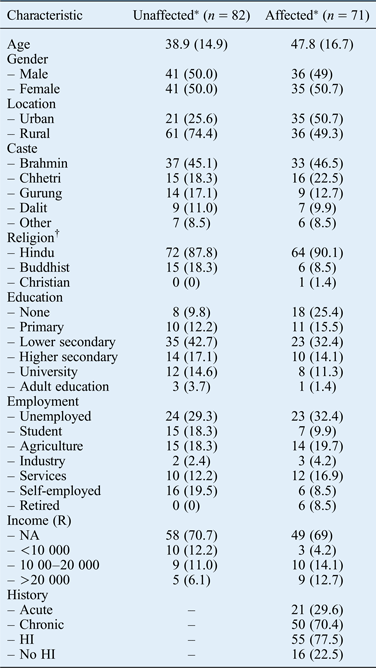
A total of 153 participants were recruited: 71 affected and 82 unaffected. Demographic data are shown in Table I. The mean age in the affected group is higher, as expected in a cohort in which many have hearing impairment. The urban population is under-represented in the unaffected group because most participants were recruited from villages. Caste demographics and religion are similar in both groups and reflect those of the general population in the Kaski District.4 A greater proportion of the affected group had never attended school and fewer participants in this group were students and self-employed. This is perhaps unsurprising because CSOM is associated with socioeconomic and educational disadvantage.Reference Crandell, Mills and Gauthier16 Most participants in both groups could not provide a monthly income figure because a high proportion were subsistence farmers or unemployed (in hindsight, an alternative measure of socioeconomic status such as the number of rooms in participants' houses may have been more appropriate). Of the affected group, 70 per cent had a chronic complaint (of at least six months' duration) and nearly 80 per cent had some degree of hearing loss.
Demographic characteristics of participants

*Mean (standard deviation) or n (%). †Some participants stated their religion to be both Hindu and Buddhist, so the total is greater than 100 per cent for this characteristic. R = rupee; HI = hearing impairment
Results were grouped by topic, with similar items from the two questionnaires being presented together. The proportion and 95 per cent CI is reported for each response. Multiple responses were given to open questions; therefore, the totals for these may be greater than 100 per cent. A short narrative summary of other relevant comments made by participants is presented after the frequency analyses.
Causes and risk factors
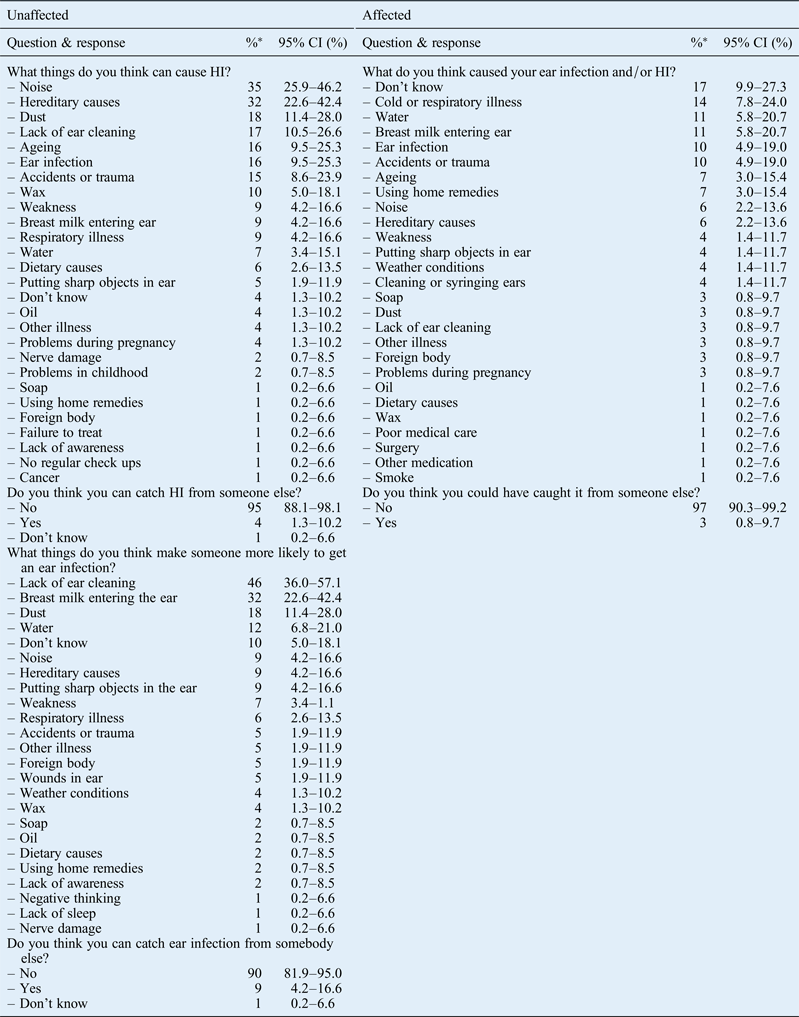
Responses to questions about the causes and risk factors for CSOM and hearing impairment are shown in Table II. Over 30 different causes of ear infection and hearing loss were recorded. Those most frequently cited in both groups were noise, hereditary causes, lack of ear cleaning, respiratory illness, ear infection, trauma, wax, and entry of dust, water and breast milk into the ear. Responses to questions about the risk factors for ear disease were similar in both groups. Only a small minority of respondents considered hearing impairment or ear infection to be contagious.
Responses to questions on the causes and risk factors of CSOM and HI*
* Multiple responses were given to open questions, so the totals may be greater than 100 per cent. CSOM = chronic suppurative otitis media; HI = hearing impairment; CI = confidence interval
Prevention
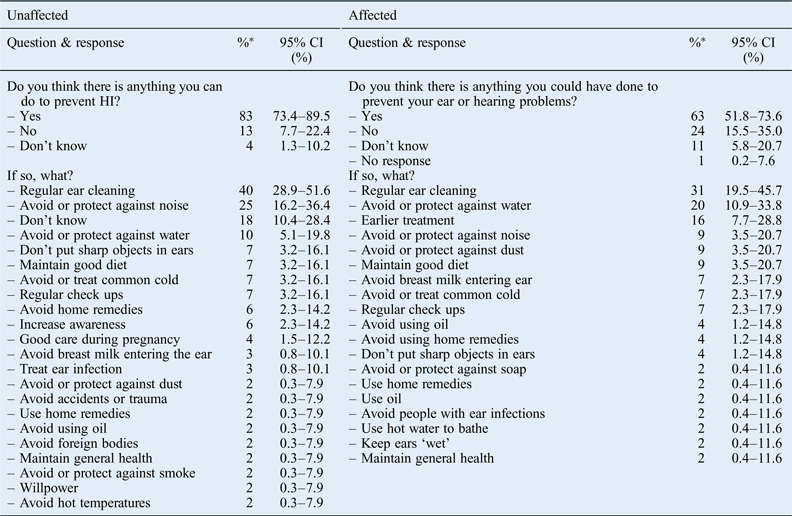
Responses to questions on the prevention of CSOM and hearing impairment are shown in Table III. A greater proportion of affected respondents considered ear problems to be unpreventable. Regular ear cleaning and protection against noise and water entering the ears were the most frequently cited methods of prevention in both groups. Nearly a fifth of the unaffected group responded with ‘don't know’.
Responses to questions on preventing CSOM and HI
*Multiple responses were given to open questions, thus totals may be greater than 100 per cent. CSOM = chronic suppurative otitis media; HI = hearing impairment; CI = confidence interval
Healthcare seeking behaviour
Nearly all unaffected participants said that they would consult a doctor if they developed hearing impairment (98 per cent; 95 per cent CI, 91.5 to 99.3 per cent) or ever had ear pain, discharge and/or tinnitus (89 per cent; 95 per cent CI, 80.4 to 94.1 per cent). Other responses included ‘clean ears’, ‘treat at home’, ‘attend a health post’, ‘don't know’, ‘change diet’ and ‘do nothing’. In all, 72 per cent (95 per cent CI, 61.4 to 80.5 per cent) of respondents said they would seek advice from somebody other than a doctor, with most of these (81 per cent; 95 per cent CI, 69.6 to 89.3 per cent) citing friends and family. Herbal medicine doctors, other people with hearing impairment, older people, books and/or internet, health post volunteers, and traditional healers were also mentioned.
Roughly two-thirds of affected participants (68 per cent; 95 per cent CI, 56.1 to 77.3 per cent) consulted a doctor immediately upon developing ear and/or hearing problems. Twenty-seven per cent (95 per cent CI, 17.9 to 38.1 per cent) consulted a doctor after a delay of more than six months, 16 per cent (95 per cent CI, 8.9 to 25.7 per cent) treated themselves at home and 11 per cent (95 per cent CI, 5.8 to 20.7 per cent) used medical shops. Other responses included ‘cleaned ears’, ‘attended a health post’, ‘attended an ear camp’ and ‘did nothing’. Sixty-three per cent (95 per cent CI, 51.8 to 73.6 per cent) sought advice from somebody other than a doctor: of these, 87 per cent (95 per cent CI, 73.8 to 93.7 per cent) consulted family and friends. Pharmacists, health post volunteers and herbal medicine doctors were also mentioned as sources of advice.
Many participants had not consulted a doctor for several years. The reasons given for this included the absence of pain and the cost and difficulty of getting a ticket for the ENT clinic. A few people described their bad experiences of using health posts including being given acid to clean their ears or having their ears cleaned by an unqualified person, which they blamed for subsequent ear problems.
Treatment
Nearly all unaffected participants (98 per cent; 95 per cent CI, 91.5 to 99.3 per cent) thought that hearing impairment could be treated. The most commonly cited treatments were medication (73 per cent; 95 per cent CI, 61.9 to 81.1 per cent), home remedies (24 per cent; 95 per cent CI, 15.8 to 34.1 per cent), surgery (16 per cent; 95 per cent CI, 9.7 to 25.8 per cent), ear cleaning (15 per cent; 95 per cent CI, 8.8 to 24.4 per cent) and hearing aids (13 per cent; 95 per cent CI, 6.9 to 21.5 per cent). Twenty per cent (95 per cent CI, 12.7 to 30.0 per cent) either did not know whether hearing impairment could be treated or referred to a nonspecific hospital treatment. Yoga, meditation, positive thinking and diet changes were also mentioned.
Nearly all participants (99 per cent; 95 per cent CI, 93.4 to 99.8 per cent) thought that ear infections could be treated. The most commonly cited treatments were medication (82 per cent; 95 per cent CI, 71.7 to 88.4 per cent), home remedies (30 per cent; 95 per cent CI, 20.8 to 40.3 per cent), surgery (10 per cent; 95 per cent CI, 5.1 to 18.3 per cent) and ear cleaning (9 per cent; 95 per cent CI, 4.2 to 16.8 per cent). Fifteen per cent (95 per cent CI, 8.7 to 24.1 per cent) did not know whether ear infections could be treated or referred to a nonspecific hospital treatment. Hearing aids, weight loss and the Valsalva manoeuvre were also mentioned.
Of those who cited home remedies as a treatment for either hearing impairment or ear infection, 36 per cent (95 per cent CI, 22.5 to 52.4 per cent) specifically mentioned oils, 31 per cent (95 per cent CI, 18.0 to 46.9 per cent) mentioned leaf paste, 22 per cent (95 per cent CI, 11.7 to 38.1 per cent) mentioned water and/or steam, 8 per cent (95 per cent CI, 2.9 to 21.8 per cent) mentioned bodily fluids and 3 per cent (95 per cent CI, 0.5 to 14.2 per cent) mentioned items of food and drink.
Most participants (95 per cent; 95 per cent CI, 88.1 to 98.1 per cent) said they would have surgery if they had ear problems and were told it might help. The reasons given for refusing surgery included fear, cost, age and hearing about others' bad experiences. Most participants (95 per cent; 95 per cent CI, 88.1 to 98.1 per cent) knew about hearing aids and 96 per cent (95 per cent CI, 89.8 to 98.7 per cent) said they would use one if they developed hearing impairment. The reasons given for not using one include the belief that hearing aids cause further hearing loss, are not effective, or are a nuisance or expensive.
Twenty-seven per cent of affected participants (95 per cent CI, 17.9 to 38.1 per cent) had received no treatment at all. Fifty-four per cent (95 per cent CI, 64.8 to 74.9 per cent) had received some form of medication, 42 per cent (95 per cent CI, 31.5 to 53.8 per cent) had used home remedies and 17 per cent (95 per cent CI, 9.9 to 27.3 per cent) had had their ears cleaned. Three people had undergone surgery. Of the participants with chronic hearing loss, 18 per cent (95 per cent CI, 9.5 to 32.0 per cent) had received a hearing aid. Of those who cited home remedies as a treatment, 60 per cent (95 per cent CI, 42.3 to 75.4 per cent) specifically mentioned leaf paste and 23 per cent (95 per cent CI, 11.8–40.9 per cent) mentioned oils. Urine and/or bodily fluids, water and/or steam, and items of food and drink were also cited (in all by 10 per cent; 95 per cent CI, 3.5 to 25.6 per cent). Thirty-eight per cent (95 per cent CI, 27.6 to 49.7 per cent) said that they knew about other treatments which they had not received. The most common reason for not accessing treatment was the ‘cost’. Other reasons included fear, treatment not being a priority and being unable to access the treatment in question.
Lots of participants knew people who had reported bad experiences with hearing aids. The belief that the loud volume of hearing aids makes hearing impairment worse was expressed by several people. One participant described having great difficulty accessing hearing aids despite being willing and able to pay. Whilst several participants expressed the view that the use of home remedies is not very common nowadays, others said they considered them to be better than or preferable to hospital treatment. Specific home remedies mentioned included aloe vera (Figure 1), tulsi (Figure 2), neem (Figure 3), ajambari (Figure 4), siengauli, simali, totte, and kanchernu leaves, human, cow, sheep and/or horse urine, sparrow blood, crushed herbs, banana paste, garlic, wine, fitkari (aluminium acetate) water, salt water, shisha water, bilb oil and mustard oil (used for cooking in Nepal).
Photograph showing Aloe vera (family Liliaceae), a xerophytic, perennial plant called ‘giukumari’ in Nepali. Used for blood purification, cooling, and treating digestive dysfunction, eye problems, the common cold and cough.
Photograph showing tulsi (Ocimum sanctum; family Labiateae), commonly known as holy basil. Used to treat cataracts, bronchitis and other bacterial infections.
Photograph showing neem (Azadiracta indica), commonly known as the leaf of the margosa tree. Used to treat skin disease, boils, ulcers, eczema and jaundice (when taken with honey).
Photograph showing ajambari (Kalanchoe pinnata; family Grassulacae).
Complications
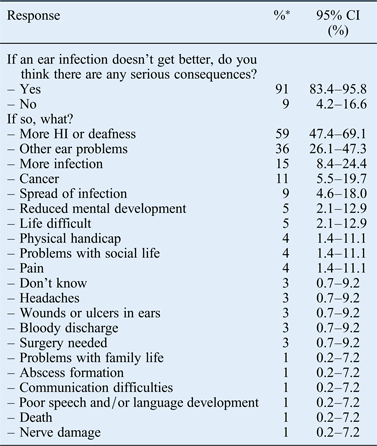
Responses to questions on the complications of ear infection for the unaffected group are shown in Table IV. The majority (90%) of respondents considered that unresolved ear infection results in serious consequences. Hearing loss (59%), other ear problems (36%), more/spread of infection (21%) and cancer (11%) were the most commonly cited consequences.
Responses to questions on the complications of ear infection
*Multiple responses were given to open questions, so totals may be greater than 100 per cent. CI = confidence interval; HI = hearing impairment
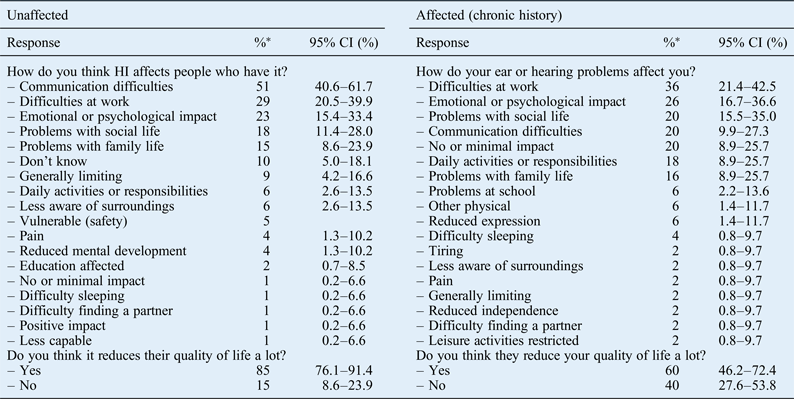
Impact on quality of life
Responses to questions on the impact of CSOM and/or hearing impairment on quality of life are shown in Table V. Communication difficulties, a negative emotional/psychological impact and problems related to work, social life, family life and daily activities were the most frequently cited effects across both groups. A lower proportion of the affected group considered that their ear problems significantly reduced their quality of life.
Responses to questions on the impact of ear disease and HI on life quality
*Multiple responses were given to open questions, thus totals may be greater than 100 per cent. HI = hearing impairment
Several participants became quite distressed when answering the questionnaire because they felt that their hearing problems had greatly limited their quality of life and found this upsetting to discuss. Some younger participants with chronic CSOM and/or hearing impairment seemed to be unhappy and lacked confidence. Conversely, many participants said that hearing impairment ‘wasn't as bad as being blind’ or that ‘ears aren't as important as eyes’ and referred to an old saying that people with hearing impairment are lucky because they don't hear any bad things.
Discrimination by society
Seventy-six per cent (95 per cent CI, 65.3 to 83.6 per cent) of unaffected participants and 70 per cent (95 per cent CI, 56.2 to 80.9 per cent) of affected participants with chronic CSOM and/or hearing impairment said that people with hearing impairment are treated differently by society. The most commonly cited forms of discrimination (for all participants) were teasing and/or name-calling (41 per cent; 95 per cent CI, 32.2 to 50.3 per cent), exclusion (26 per cent; 95 per cent CI, 19.0 to 35.3 per cent), being disliked and/or hated (24 per cent; 95 per cent CI, 16.7 to 32.4 per cent), the perception of being and/or being treated as inferior (23 per cent; 95 per cent CI, 15.9 to 31.4 per cent), and being ‘dominated’ i.e. in conversations (20 per cent; 95 per cent CI, 13.6 to 28.4 per cent). Other responses included receiving ‘irritation and/or impatience’ and being ‘talked about behind their backs’, ‘neglected’, ‘avoided’, ‘blamed for all bad things’ and ‘badly treated in general’.
Several participants commented that discrimination had been much worse in the past than it was nowadays and that all people with disabilities were discriminated against. Others had the opinion that society only treats differently those with visible problems such as discharge or those with profound deafness and not those with hearing impairment. Physical violence against people with hearing impairment was explicitly mentioned by one participant. Whilst some believed that any discrimination was due to a lack of education, others held that some people are aware of those with hearing impairment but continue to treat them badly.
Discussion
To the authors' knowledge, this is the first study conducted in Nepal to formally investigate the knowledge, attitudes, beliefs and practices specific to CSOM and hearing impairment. The results provide a valuable insight into the knowledge level and common beliefs, attitudes and practices of both the affected and unaffected population of Pokhara. Overall, the reported levels of knowledge displayed and healthcare seeking behaviour (i.e. tendency to consult a doctor) are encouraging, but some important deficits and/or false beliefs and potentially detrimental practices were identified. In addition, there was evidence that discrimination against people with hearing impairment is perceived to be significant in Nepali society.
Many responses to the open questions assessing knowledge were correct, but others were vague, demonstrated a poor understanding of concepts such as cause and prevention, and showed an incorrect understanding of the scientific background to CSOM and hearing impairment. Furthermore, important responses such as immunisation to prevent hearing impairment or the impact of hearing impairment on speech and language development were not obtained at all, and a significant proportion of respondents often answered ‘don't know’. This indicates that education in the areas of aetiology, risk factors, prevention, treatment and complications of CSOM and hearing impairment would benefit this community. However, some particularly interesting points arose from knowledge-based questions and there is much scope for further work.
One theme which emerged is an association of breastfeeding with CSOM and hearing impairment: 32 per cent of the unaffected group spontaneously mentioned breast milk as a risk factor for ear infection. It was unclear whether participants were referring to breast milk entering the eustachian tubes due to babies being fed lying down (as discouraged in some patient education posters observed in a local health centre) or simply to breastfeeding being linked to ear infection. Current evidence suggests that breastfeeding protects against ear infections regardless of the feeding position; however, it is thought that formula milk may irritate the eustachian tubes, so it is advised that bottle-fed babies are kept upright during feeding.17 It is important that this clarification is made to help promote breast feeding.
Secondly, although it was established that a high proportion of the general population believe hearing impairment to be preventable, it may be more important to determine to what extent this results in an internal locus of control regarding the prevention of CSOM and hearing impairment. A great deal of research has explored the impact of knowledge on the locus of control related to health in Western society, often referring to the Health Beliefs Model.Reference Becker18 One US study found a great discrepancy between knowledge about noise-induced hearing loss prevention and the corresponding practices.Reference Crandell, Mills and Gauthier16
Interestingly, only 13 per cent of the unaffected group spontaneously mentioned hearing aids as a treatment for hearing impairment; however, when specifically asked if they were familiar with hearing aids, nearly all participants said yes. Perhaps this merely reflects the poor availability of hearing aids: Nepal has one of the lowest rates of hearing aid use worldwide for treating its hearing-impaired population.1 In this study, only 18 per cent of participants with chronic hearing loss had received a hearing aid; this is likely to be an overestimate due to the equal urban–rural split of this study group.
A major finding of this study is that a relatively large number of people would or did use home remedies to treat ear infection and hearing loss, despite many respondents dismissing their use nowadays. Some photographs and basic information about the most commonly cited plants were provided by a local botanist (Figs 1–4), but it has proven difficult to research others.
Simali (Vitex negundo; family Verminaceae; not shown) is also used to treat hair growth, bladder problems, bronchitis, diarrhoea and toothache. Further research in this area is required because medical professionals do not currently have any evidence-based guidelines on which to base advice about which home remedies they should proscribe or recommend.Reference Kunwar, Shrestha and Bussmann19
Finally, the fact that at least 70 per cent of all participants testified that discrimination against people with hearing impairment does exist is striking but not unexpected because of reports describing the wider issue of discrimination against disabled people in Nepali society.Reference Lamichane20, Reference Thakur21
The findings of this study have much in common with the existing literature but also highlight new issues. The fact that these findings are specific to Pokhara is acknowledged but it may be reasonable to assume that they are also applicable to other areas of Nepal. This study is relevant to informing ENT care providers, including those in a specialist ear hospital currently under construction in Pokhara.22 In addition to informing training, the content of awareness programmes and tools such as patient-recorded outcome measurements, it highlights the need for further research into home remedies and to develop policy on discrimination. It also supports the value of knowledge, attitudes, beliefs and practice assessment prior to implementing new services. These data provide a useful starting point for designing a validated knowledge, attitudes, beliefs and practice questionnaire related to CSOM and hearing impairment with closed or multiple choice style questions. Saunders et al. recently described the development and evaluation of a questionnaire assessing the knowledge, attitudes and beliefs about hearing loss prevention in the USA, which could be used as a model.Reference Saunders, Dann, Griest and Frederick23
Limitations
The small sample size for each questionnaire (resulting from ethical approval delays) is a major limitation of this study that affects the generalisability of results and prevented a more sophisticated statistical analysis. In addition, it is important to acknowledge that open questions may result in an underestimation of the actual numbers of individuals who might respond in a certain way; results should be interpreted with this in mind.
Furthermore, the sampling method used introduces bias because many participants, including most of the affected group, were recruited from a hospital waiting area. It is possible that the responses to many questions differed significantly from those which may have been elicited had the entire study population been selected at random. Consequently, results are not entirely representative of people in Pokhara with a history of CSOM or hearing impairment but rather represent those who can access treatment.
• This study examined the knowledge, cultural beliefs and practices related to chronic suppurative otitis media and hearing impairment in Nepal
• Less than a quarter of participants cited ear infection as a cause of hearing impairment
• A third thought breast milk was a risk factor for ear infection, and 42 per cent had used home remedies
• Perceived discrimination against individuals with CSOM and hearing impairment is common
Similarly, resource restrictions limited the number of villages sampled and their distance from the urban centre of Pokhara, which may have also significantly affected the results. Responses may also have been affected by a social acceptability bias, for example when answering questions about home remedies or healthcare seeking behaviour or when struggling to think of an answer at all. However, it was stressed to every participant that there were no right or wrong answers and that it was perfectly acceptable to miss out a question or give a ‘don't know’ answer.
Conclusion
The results of the current study provide valuable insight into the knowledge, attitudes, beliefs and practice related to CSOM and hearing impairment in Pokhara and the surrounding area. This information may be used to inform training and service provision and forms the basis of further work.
Specific recommendations of the study are that strategies used to raise awareness should address as a priority the aetiology of hearing impairment, risk factors for ear infection, prevention of hearing impairment, available treatment for hearing impairment and ear infection (including hearing aids), and the complications of ear infection. Research into commonly used home remedies is needed to provide healthcare professionals in Nepal with evidence-based guidelines. The development of social policy aimed at reducing discrimination against those with hearing impairment (and other disabilities) is important.
A validated questionnaire to assess the knowledge, attitudes, beliefs and practices related to CSOM and hearing impairment should be developed to obtain a larger data set which would enable more extensive analysis. Such a questionnaire may be appropriate for use in other areas of Nepal and South-East Asia. It is hoped that a greater understanding of local knowledge, attitudes, beliefs and practices could help to maximise the effectiveness of in-patient and community ear services in an area with an unnecessarily large burden of preventable and treatable CSOM and hearing impairment. Further research in this area may therefore be of great interest and value.
Acknowledgements
We would like to thank E D Devkota, D Singh and their colleagues at the Western Regional Hospital, Pokhara, A and S Koirala (Pokhara University), J Gurung and R Joshi (contacts of the International Nepal Fellowship), L Roberts and J Whittaker (University of Birmingham), and all study participants. The study was supported by the Arthur Thompson Trust and the BMedSc Population Sciences and Humanities Intercalated Degree Course at the University of Birmingham.