INTRODUCTION
Palliative care encompasses a consideration of the physical, emotional, and spiritual needs of patients, and also their family members and caregivers (Gwyther & Krakauer, Reference Gwyther and Krakauer2009). As the life expectancy of people with chronic life-limiting conditions has risen, so too has the number of people requiring palliative care (World Health Organization [WHO], 2004). Patients with palliative care needs are increasingly being treated over a longer period of time and in a wider variety of settings by a range of specialist and nonspecialist healthcare professionals and informal caregivers (Skilbeck & Payne, Reference Skilbeck and Payne2005).
The requirement for good communication among patients and caregivers has been recognized by healthcare providers for some time now (Parker et al., Reference Parker, Clayton and Hancock2006; WHO, 2002). Within the literature, a broad range of outcomes has been associated with effective communication, including: improved patient and family understanding, enhanced therapeutic relationships, access to appropriate services, compliance with treatment, and improved quality of life (Epstein & Street, Reference Epstein and Street2007). Furthermore, at a societal level, effective communication is associated with more cost-efficient utilization of medical and healthcare services (Dare, Reference Dare2009).
Conversely, the potentially damaging impact of ineffective communication upon the well-being of patients with palliative care needs has also been well documented (Pollak et al., Reference Pollak, Arnold and Jeffreys2007). The pioneering work of Glaser and Strauss (Reference Glaser and Strauss1965) highlighted how avoidant interaction styles of healthcare professionals in a hospital setting can lead to isolation for the patient, and also for the carers (Seymour, Reference Seymour2001). Despite increasing awareness of the relationship between communication and clinical outcomes, examples of poor-quality and ineffective communication for patients and families with palliative care needs continue to be reported (Darzi, Reference Darzi2008). Consequently, there has been a drive to address and improve communication between healthcare professionals and patients (Dixon et al., Reference Dixon, Maddock, Wilcox and Byrne2009).
In response to these concerns, a considerable body of literature has offered insight into the communication needs and preferences of palliative care patients, their family members, and healthcare professionals (Friedrichsen et al., Reference Friedrichsen, Linholm and Milberg2011). In recent years, a number of systematic reviews have been published that have sought to identify potential barriers to effective communication and to highlight solutions. Slort et al. (Reference Slort, Schweitzer and Blankenstein2011) reviewed the quantitative and qualitative literature focusing on communication between general practitioners (GPs) and patients with palliative care needs. Their findings highlighted a number of barriers to effective communication, including a lack of time, a reluctance to discuss a patient's prognosis, and the GP not talking honestly. Facilitating factors to communication included structural factors, time, availability, and a willingness to discuss a broad range of end-of-life (EoL) issues, as well as interpersonal factors, such as the relationship with the GP, honesty, and friendliness.
The above findings have also been reported for other professional groups. For example, a systematic review of truthtelling in discussions with patients who have advanced life-limiting conditions highlighted that oncologists, specialists, and nonspecialist doctors and nurses were reluctant to discuss the issue of prognosis openly with patients (Hancock et al., Reference Hancock, Clayton and Parker2007). This reluctance was based on a belief that such conversations would create anxiety for patients and caregivers. However, Hancock and coworkers (Reference Hancock, Clayton and Parker2007) found that this assumption was not supported by studies that directly assessed the impact of disclosing/withholding such information to/from patients and their families (e.g., Gattellari et al., Reference Gattellari, Voigt and Butow2002; Tattersall et al., Reference Tattersall, Gattellari and Voigt2002). Furthermore, a review by Clayton and colleagues (Reference Clayton, Hancock and Parker2008) highlighted that fostering a sense of hope within communication was perceived to be crucial by both patients and professionals. Mixed views were reported by healthcare professionals in relation to how they should communicate when they felt patients held unrealistic expectations about the future (Clayton et al., Reference Clayton, Hancock and Parker2008).
In recognition of the need for healthcare professionals to feel more prepared to address the communication issues that can arise when working with patients with palliative care needs, healthcare services have placed greater emphasis on the production of general guidelines and manualized approaches to communication (e.g., Weiner et al., Reference Weiner, Arnold and Curtis2006). Rodin and colleagues (Reference Rodin, Zimmermann and Mayer2009) published general evidence-based guidelines that were developed from the findings of a systematic review of the patient–professional communication literature, although the authors acknowledged that patients exhibit individual and cultural variability in their communication preferences. Furthermore, despite considerable investment in courses aimed at improving the communication skills of healthcare professionals, a systematic review of the literature surrounding communication in cancer care suggested that communication skills do not reliably improve in the aftermath of such experiences (Moore et al., Reference Moore, Wilkinson and Rivera Mercado2004).
Although the literature described above provides a descriptive overview of the nature of the communication issues experienced by patients, family members, and healthcare professionals, the findings do not offer an in-depth understanding of the communication experiences of patients. In the above-cited systematic reviews, only a small proportion of the included studies utilized solely patients as participants, with the majority of data being provided by healthcare professionals alone, or through patient–caregiver and patient–professional dyads. For example, only 2 of the 22 studies included by Slort et al. (Reference Slort, Schweitzer and Blankenstein2011) employed a patient-only sample, and only 26% of the studies in Clayton et al. (Reference Clayton, Hancock and Parker2008) consisted of patient-only samples. It is also of note that, prior to publication, the clinical guidelines developed by Rodin and colleagues (Reference Rodin, Zimmermann and Mayer2009) were reviewed and validated by a panel of practitioners, but not by those who actually employed the healthcare services in question. Thus, within the literature concerning communication and palliative care, there is a dominance of the perspectives of healthcare professionals.
Although the growth of qualitative research undertaken directly from patients with palliative care needs has been comparatively slow in comparison to research for other patients with chronic illness, there has been an emergence of such literature in recent years (Swarbrick et al., Reference Swarbrick, Grinyer and Payne2011). Qualitative methods enable exploration of the areas of need identified by patients (Aspinal et al., Reference Aspinal, Addington-Hall and Hughes2003). Indeed, it has been argued that the perspectives of patients hold the most useful information needed to tailor service delivery in accordance with their needs (Small & Rhodes, Reference Small and Rhodes2000; Swarbrick et al., Reference Swarbrick, Grinyer and Payne2011).
In summary, a review of the literature has highlighted a limited understanding of the communication experiences of patients with palliative care needs as documented from their perspective. Due to the growing body of qualitative literature in this area, a systematic review of this work in the form of a meta-synthesis would enable the findings of such studies to be examined and integrated (Sandelowski & Barroso, Reference Sandelowski and Barroso2007). Meta-synthesis involves the “bringing together and breaking down of findings, examining them, discovering the essential features, and, in some way, combining phenomena into a transformed whole” (Schreiber et al., Reference Schreiber, Crooks, Stern and Morse1997, p. 314). This process enables researchers to develop new insights from existing qualitative findings, upon which clinical practice and policy can be built (Jensen & Allen, Reference Jensen and Allen1996).
The goal of our review was to gain a deeper understanding of the communication experiences of patients with palliative care needs that have been identified within the qualitative literature. An integrated understanding of patients' experiences will assist in identifying the factors that can enhance or limit the potential for effective communication to occur, and support healthcare providers in being able to address such issues.
METHODS
Data Search
A systematic search for qualitative research papers was undertaken in February of 2012. Five databases (ASSIA, CINAHL, MEDLINE, PsychArticles, and PsychINFO) were searched using the search terms [“palliative care” OR “terminal care” OR “end of life care”] AND [“experience” OR “perspective” OR “qualitative” OR “interview”] AND [“patients” OR “clients” OR “service-user”]. Searches were restricted to those written in English and published in peer-reviewed journals. The abstracts of the identified studies were read, and the entire articles were retrieved if it was apparent that the study involved qualitative interviews with individuals who were terminally ill. The reference lists of relevant review articles and identified studies were also searched by hand to identify any other studies that may have been appropriate for this review.
Inclusion and Exclusion Criteria
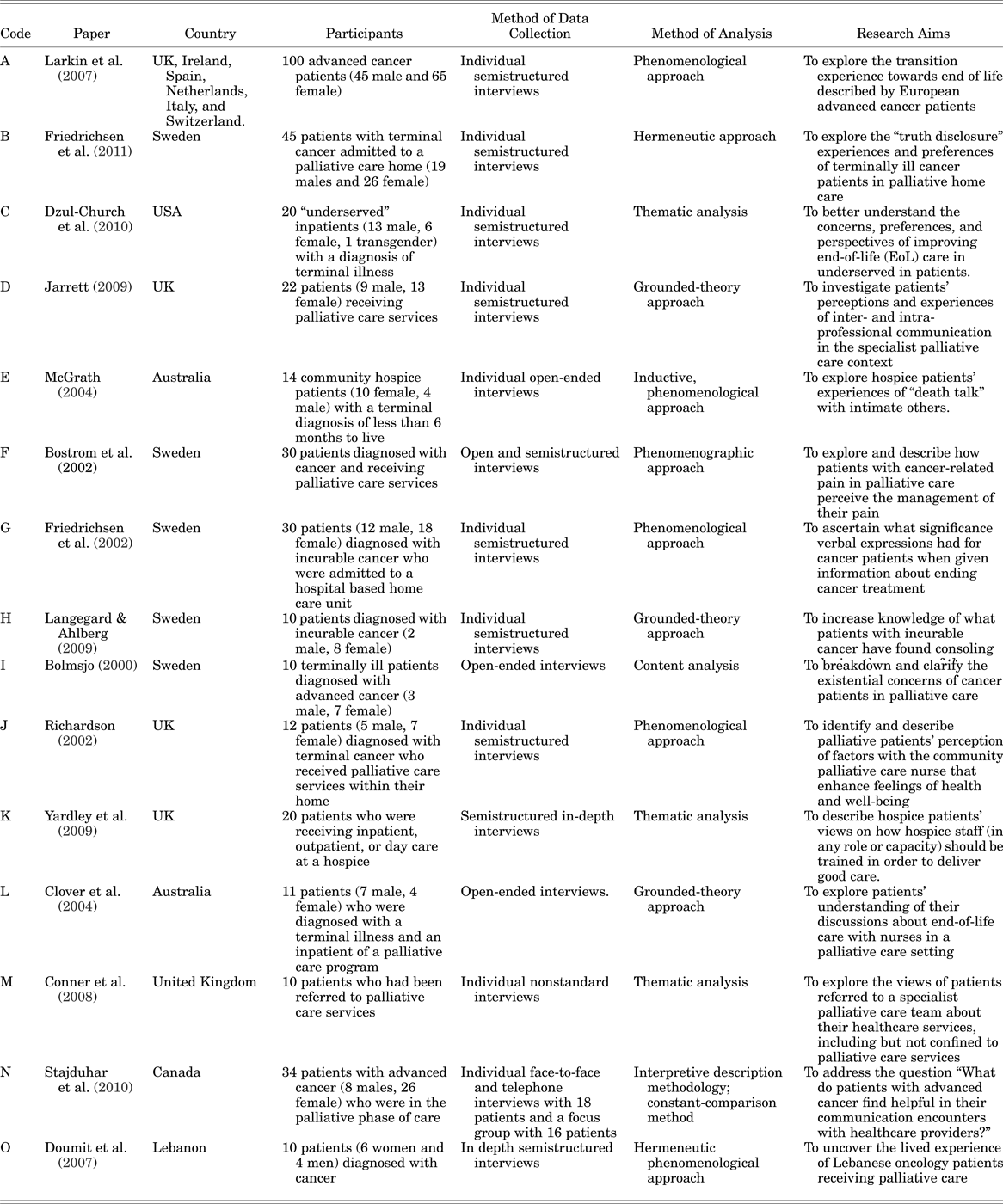
Studies were identified for inclusion if they: (a) employed qualitative methods of analysis; (b) explored first-person accounts of palliative care, with specific reference to issues of communication within the findings; and (c) included participants experiencing terminal illness who were over the age of 18. Studies were excluded if they: (a) explored accounts of communication issues in palliative care provided by family members or healthcare professionals; (b) included patients diagnosed with dementia or a learning disability that might contribute to communication difficulties; (c) interviewed participants as part of a patient–caregiver/patient–healthcare professional dyad; (d) did not identify the method of qualitative analysis employed; or (e) did not identify a communication issue within the findings. Following application of the inclusion criteria, 48 potential studies were identified. Of these, 33 were subsequently removed because they met the exclusion criteria. Summary information on the 15 studies included in the review is presented in Table 1.
Features of the studies included in the meta-synthesis

Appraisal of Quality
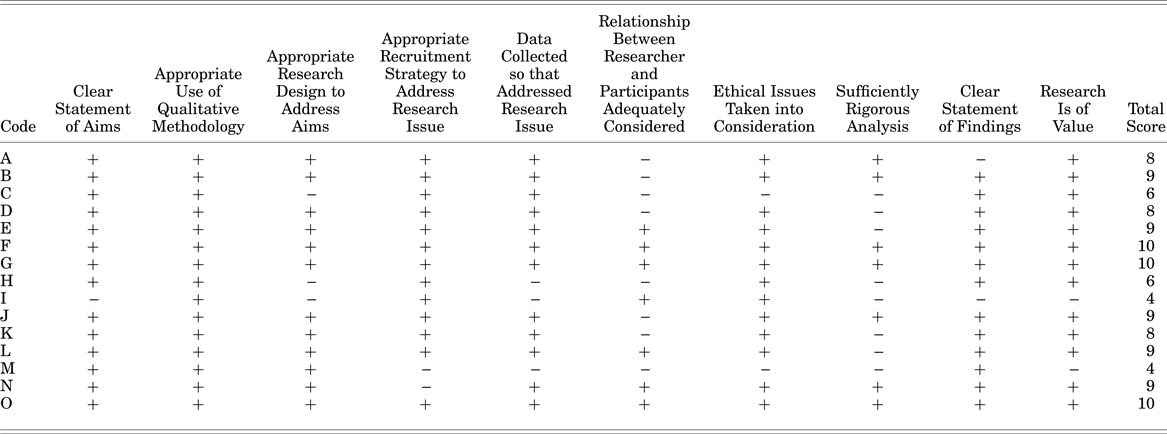
Although there is a general consensus regarding quality criteria for quantitative meta-studies, there exist broad variations in the approach to this area within qualitative research. It is argued by some that studies should not be excluded from a meta-synthesis solely on the basis of quality (Sandelowski et al., Reference Sandelowski, Docherty and Emden1997). However, despite the value of such an inclusive approach, there remains the possibility that a synthesis of methodologically poor studies will subsequently yield flawed meta-synthetic findings (Walsh & Downe, 2006). In consideration of both positions, it was decided that quality would not be employed as a basis for exclusion, but that the included studies would be subjected to a detailed quality assessment using a framework specifically developed to appraise qualitative research. This approach has been undertaken in a number of published meta-syntheses (e.g., Reid et al., Reference Reid, Sinclair and Barr2009). The Critical Appraisals Skills Programme (CASP) (Public Health Resource Unit, 2006) was employed to enable consideration of the strengths and weaknesses of each of the included studies (see Table 2). Studies were assigned a score from 0 to 10 on the basis of how well they met the criteria outlined by the CASP.
Quality appraisal of included studies using the Critical Appraisals Skills Programme (CASP) (Public Health Resource Unit, 2006)
+ indicates presence of quality marker; – indicates absence of quality marker.
Synthesis
The meta-synthesis of the included studies within this review was based upon the meta-ethnography method outlined by Noblit and Hare (Reference Noblit and Hare1988), which was adapted for health research by Britten and colleagues (Reference Britten, Campbell and Pope2002). Meta-ethnography is an inductive, interpretative process that involves the translation of studies into one another, resulting in novel interpretations and conceptual insights (Noblit & Hare, Reference Noblit and Hare1988; Malpass et al., Reference Malpass, Shaw and Sharp2009). In accordance with the proposed stages of meta-ethnography (Britten et al., Reference Britten, Campbell and Pope2002; Noblit & Hare, Reference Noblit and Hare1988), the individual studies were read and reread. For each paper, the themes relevant to the aims of the review were recorded in a table, along with supporting raw data. In addition to this, notes were made of additional ideas that emerged from reading the studies. This process of comparing and contrasting enabled clearer insight into the common and recurring concepts found across the research papers, and also of the similarities and differences occurring within them.
The final step in the analysis involved synthesizing the second-order translations to identify novel third-order constructs and present how the studies were related to each other. A line-of-argument approach emerged as the appropriate method of synthesis, given that each of the included studies focused on different aspects of patients' communication experiences. As such, these findings could usefully be brought together to construct an overarching understanding of these experiences (Thorne et al., Reference Thorne, Jensen and Kearney2004).
FINDINGS
Four overarching themes were identified as reflecting the communication experiences of patients with palliative care needs: (1) talking—facilitating and inhibiting factors; (2) the importance of humanitarian qualities within communication encounters; (3) perceptions of autonomy within communication experiences; and (4) individual differences in preferences for honesty within interactions. Each of the four meta-themes are presented and illustrated here with direct quotations from the included studies.
Talking—Facilitating and Inhibiting Factors
Eight of the included studies highlighted a variety of internal and external factors that either facilitated or inhibited patients' abilities to share their experience with others at any given time during their palliative care journey (Bostrom et al., Reference Bostrom, Sandh and Lundberg2004; Conner et al., Reference Conner, Allport and Dixon2008; Dzul-Church et al., Reference Dzul-Church, Cimino and Adler2010; Friedrichsen et al., Reference Friedrichsen, Linholm and Milberg2011; Langegard & Ahlberg, Reference Langegard and Ahlberg2009; Larkin et al., Reference Larkin, de Casterlé and Schotsman2007; McGrath, Reference McGrath2004; Yardley et al., Reference Yardley, Walshe and Parr2009).
Patients identified the psychological benefits associated with sharing their palliative care experiences with friends, family members, healthcare professionals, and other patients with palliative care needs. Such benefits included a reduction in feelings of isolation and confusion (Larkin et al., Reference Larkin, de Casterlé and Schotsman2007; McGrath, Reference McGrath2004), wider access to information (Conner et al., Reference Conner, Allport and Dixon2008), increased pain relief (Bostrom et al., Reference Bostrom, Sandh and Lundberg2004), and better social and emotional support (Dzul-Church et al., Reference Dzul-Church, Cimino and Adler2010; Larkin et al., Reference Larkin, de Casterlé and Schotsman2007; McGrath, Reference McGrath2004). Some patients felt that sharing their palliative care journey with supportive family members also served to enhance their relationship and affirm existing bonds:
Well, I'd rather talk and let all my kids know what's going on. Because my husband [who died], he tried to put it away and wouldn't let you know. And I've been up front with them. They were so hurt by my husband not telling them. (McGrath, Reference McGrath2004, p. 838)
Conversely, patients who were estranged from family members experienced strong feelings of isolation: “I'm sitting here by myself. And just like everybody else, I need the company of somebody and to have the family. I need my family, too” (Dzul-Church et al., Reference Dzul-Church, Cimino and Adler2010, p. 697).
Three studies indicated that a patient's decision to share experiences of illness with others involved a consideration of the emotional robustness of both themselves and the others (Conner et al., Reference Conner, Allport and Dixon2008; Friedrichsen et al., Reference Friedrichsen, Linholm and Milberg2011; McGrath, Reference McGrath2004): “When they talk like, that it's as though I'm gonna die any minute. I don't want to be frightened. I mean, (. . .) I've got kids” (Conner et al., Reference Conner, Allport and Dixon2008, p. 550). Patients reflected that discussions about death are not commonplace within society and could provoke negative responses from others. Therefore, for some, the sharing of their palliative care experiences was perceived to be an emotional “burden” and reminded patients of the potential for loss (Conner et al., Reference Conner, Allport and Dixon2008; Friedrichsen et al., Reference Friedrichsen, Linholm and Milberg2011; McGrath, Reference McGrath2004). As such, avoidance of such topics was perceived to be a protective strategy that enabled patients and others to retain a positive outlook (Conner et al., Reference Conner, Allport and Dixon2008; McGrath, Reference McGrath2004, p. 839): “I don't want to have to deal with her [patient's sister] volatility because I think I've got as much as I can cope with.”
Patients also experienced difficulty in finding the appropriate language for sharing their experiences with others (Bostrom et al., Reference Bostrom, Sandh and Lundberg2004; Conner et al., Reference Conner, Allport and Dixon2008; McGrath, Reference McGrath2004). These difficulties were experienced most commonly in relation to topics that could be perceived to be intangible in essence—for example, their experience of pain (Bostrom et al., Reference Bostrom, Sandh and Lundberg2004) and spiritual concerns (Conner et al., Reference Conner, Allport and Dixon2008). One patient commented on how such difficulties could be overcome through the use of communication aids such as visual analogue scales: “I have to be able to show them how much it hurt and how much it hurts now. I can't just sit and explain what it's like with words” (Bostrom et al., Reference Bostrom, Sandh and Lundberg2004, p. 414).
Additionally, a desire for “normal” interactions following a terminal diagnosis was highlighted (Larkin et al., Reference Larkin, de Casterlé and Schotsman2007; McGrath, Reference McGrath2004). Patients reported experiencing a loss of supportive relationships following a terminal diagnosis, which they perceived to be related to the emotional discomfort of others (McGrath, Reference McGrath2004, p. 837): “My best friend I haven't seen for yonks. Can't handle it. And like people I have known for 30 to 40 years [do not come round].”
Opportunities for supportive social interactions were shaped by the patient's environment. Larkin and coworkers (Reference Larkin, de Casterlé and Schotsman2007) highlighted how patients receiving end-of-life care in a hospice formed strong, positive, and lighthearted relationships through their interactions with other patients. Such experiences offered patients the opportunity to share ideas about coping and learn from each other (Yardley et al., Reference Yardley, Walshe and Parr2009): “It can be consoling to meet with others in the same situation. I had that possibility. It was my doctor who arranged that contact. Unfortunately, the patient in question died before we had time to benefit from each other” (Langegard & Ahlberg, Reference Langegard and Ahlberg2009, p. 104). Patients recognized that such benefits were balanced against the knowledge that those friendships would end in loss: “It was a privilege for me to have [name] next door. She was a wonderful person. (. . .) And when she went, I thought (. . .) I know it's horrible, but I wish she could stay” (Larkin et al., Reference Larkin, de Casterlé and Schotsman2007, p. 76).
Overall, this theme highlighted the complexity of patients' communication experiences. Interactions with others held considerable emotional benefits for patients; however, the potential for positive communication experiences were impacted by reduced social opportunities. Furthermore, patients displayed concern that voicing their experiences would create emotional distress for themselves and others by acting as a reminder of their terminal diagnosis.
The Importance of humanitarian Qualities Within Communication Encounters
More than half of the studies documented the importance of having communication experiences characterized by humane and egalitarian qualities (Bolmsjo, Reference Bolmsjo2000; Bostrom et al., Reference Bostrom, Sandh and Lundberg2004; Conner et al., Reference Conner, Allport and Dixon2008; Doumit et al., Reference Doumit, Huijer and Kelley2007; Dzul-Church et al., Reference Dzul-Church, Cimino and Adler2010; Langegard & Ahlberg, Reference Langegard and Ahlberg2009; Larkin et al., Reference Larkin, de Casterlé and Schotsman2007; Richardson, Reference Richardson2002; Stajduhar et al., Reference Stajduhar, Thorne and McGuinness2010; Yardley et al., Reference Yardley, Walshe and Parr2009). Such qualities conveyed to patients that they were being cared for as individuals: “I think every patient deserves to be treated with love and respect (. . .) think of them not that they're just kind of specimens, but that they're human beings” (Dzul-Church et al., Reference Dzul-Church, Cimino and Adler2010, p. 698).
Qualities that patients identified as communicating humanity included respect, warmth, dignity, genuineness, and a nonjudgemntal stance (Bolmsjo, Reference Bolmsjo2000; Dzul-Church et al., Reference Dzul-Church, Cimino and Adler2010; Langegard & Ahlberg, Reference Langegard and Ahlberg2009; Richardson, Reference Richardson2002; Yardley et al., Reference Yardley, Walshe and Parr2009). Patients sensed the presence of these intangible caring qualities within certain interactions and enhanced feelings of psychological well-being: “That's the difference, the real difference—we get the feeling that they really care” (Richardson, Reference Richardson2002, p. 436). Furthermore, even subtle indicators of respect, such as politeness and helpfulness, fostered security and trust in healthcare professionals and organizations: “Now with the palliative care team you can get help with everything, and it's a security that would be helpful everywhere, that everyone should get” (Bostrom et al., Reference Bostrom, Sandh and Lundberg2004, p. 416).
In terms of observable communication behaviors, patients highlighted that being listened to indicated that healthcare professionals were interested in them as individuals (Conner et al., Reference Conner, Allport and Dixon2008; Dzul-Church et al., Reference Dzul-Church, Cimino and Adler2010; Langegard & Ahlberg, Reference Langegard and Ahlberg2009; Stajduhar et al., Reference Stajduhar, Thorne and McGuinness2010). Furthermore, patients' accounts emphasized how concepts of “space,” “time,” and “opportunity” were influential in determining whether patients felt their voices were being listened to and valued in their interactions: “It is not necessary to know the person who listens well as long as he or she signals that there is time” (Langegard & Ahlberg, Reference Langegard and Ahlberg2009, p. 104). Conversely, patients felt dismissed and unvalued when a lack of time was conveyed:
When I was told that it was terminal, I hoped to hear something like, “You can get through this,” as opposed to not. You know, the sort of giving up hope and him [the doctor] thinking, “What's the point?” Because that was basically what he was saying to me was, “What's the point in you being here [at the clinic]? Why are you wasting my time?” (Stajduhar et al., Reference Stajduhar, Thorne and McGuinness2010, p. 2042)
Patients generally recognized the overriding professional agenda of their interactions with those involved in their care and the boundaries between personal and professional relationships (Conner et al., Reference Conner, Allport and Dixon2008; Langegard & Ahlberg, Reference Langegard and Ahlberg2009; Richardson, Reference Richardson2002; Stajduhar et al., Reference Stajduhar, Thorne and McGuinness2010). However, some patients perceived their relationship as being more than just a professional one: “I really look forward to every visit (. . .) I see her as a friend now, not just somebody to help me at the last stage of my life” (Richardson, Reference Richardson2002, p. 436).
Others reported that a physical connection, like a touch of the hand, or sitting down on a person's hospital bed, indicated caring (Conner et al., Reference Conner, Allport and Dixon2008; Langegard & Ahlberg, Reference Langegard and Ahlberg2009; Stajduhar et al., Reference Stajduhar, Thorne and McGuinness2010): “I started bawling, and the doctor grabbed my hand and caught me off guard. But afterwards I thought that was so nice of him because it just made me feel like, ‘He's here for me’ ” (Stajduhar et al., Reference Stajduhar, Thorne and McGuinness2010, p. 2042).
Additionally, some patients highlighted how the relatively simple action of inquiring about “feelings” had a substantially positive effect upon their perception of their relationship with a professional (Bostrom et al., Reference Bostrom, Sandh and Lundberg2004). However, for others, the communication of excessive sympathy created negative feelings and a sense of isolation: “When they pity me and when they say ‘You look much better,’ I feel that I am not normal (. . .) They make me feel that I am handicapped.” (Doumit et al., Reference Doumit, Huijer and Kelley2007, p. 313).
Patients' accounts emphasized the importance of humane interactions within the context of a healthcare system perceived as being largely preoccupied with the management of their physical symptoms. They described feeling that medical professionals perceived them to be less interesting to work with because of their terminal diagnosis: “Some of the impressions that I got was that you have a terminal illness, there's not much we can do for you, so we're not really interested” (Stajduhar et al., Reference Stajduhar, Thorne and McGuinness2010, p. 2042). For others, discharge from curative medical services led to feelings of abandonment and feelings of worthlessness: “I was very emotional because I had never thought that [name of hospital] would give up on me” (Larkin et al., Reference Larkin, de Casterlé and Schotsman2007, p. 74).
In summary, this theme draws into focus the perceived importance of humanitarian qualities within communication encounters with healthcare providers. The presence or absence of such factors were implicated in patients' perceptions of how they felt they were valued as customers of the healthcare system and, moreover, also impacted how they viewed themselves as human beings.
The Influence of Perceptions of Autonomy upon Communication Experiences
Seven studies identified how patients' perceptions of autonomy, choice, and control influenced their interactions with others (Bolmsjo, Reference Bolmsjo2000; Bostrom et al., Reference Bostrom, Sandh and Lundberg2004; Clover et al., Reference Clover, Browne and McErlain2004; Dzul-Church et al., Reference Dzul-Church, Cimino and Adler2010; Friedrichsen et al., Reference Friedrichsen, Linholm and Milberg2011; Jarrett, Reference Jarrett2009; Larkin et al., Reference Larkin, de Casterlé and Schotsman2007). Patients generally conceived the idea of taking an active role in their interactions with healthcare professionals in positive terms (Clover et al., Reference Clover, Browne and McErlain2004; Dzul-Church et al., Reference Dzul-Church, Cimino and Adler2010; Bostrom et al., Reference Bostrom, Sandh and Lundberg2004; Jarrett, Reference Jarrett2009). Taking an active part in decision making was associated with feelings of empowerment and increased positivity about treatment choices, and enabled patients to feel more in control of their care: “I think there are a lot of patients who are either not well enough to do anything about [their care] or not smart enough to do anything about [their care], don't voice their opinions, and just take it. But I'm not one to take it” (Dzul-Church et al., Reference Dzul-Church, Cimino and Adler2010).
Despite an awareness that autonomy and active involvement in decision making are “rights” within discussions at the end of life, patients identified that the decision to actively disagree with a healthcare professional was complex. For some, this was influenced by a perception that professionals knew best, even if this did not fit with their personal beliefs:
They [the nurses] said you must [eat], so I've eaten. I was just frightened of what might happen, that's all (. . .) I read a lot about it before I went on the treatment [radiotherapy] in the first place, and some people have side effects, others have different ones, depends on how you're built, (. . .) knowledge is better than mine. (Clover et al., Reference Clover, Browne and McErlain2004, p. 338)
Others did not know what areas of their care they could assert control over: “It is difficult to influence if you don't know what you should influence. You don't know what the possibilities are” (Bolmsjo, 2002) Furthermore, temporal factors influenced a patient's ability to assert their priorities and preferences for care (Friedrichsen et al., Reference Friedrichsen, Linholm and Milberg2011; Larkin et al., Reference Larkin, de Casterlé and Schotsman2007). Some patients experienced a sense of urgency during their transition to palliative care from curative services, and concerns about being perceived as “difficult” by healthcare providers prevented them from negotiating decisions about their care:
She [GP] said, “I have been able to agree on Thursday,” so I said okay. They were afraid that I refused. But that was not true. It just caught me by surprise. You are on a waiting list, so you don't think it will happen soon. Then you arrange all kinds of things. But the GP thought that I was refusing. (Larkin et al., Reference Larkin, de Casterlé and Schotsman2007, p. 75)
Conversely, for others the explicit recognition of their limited time prompted a desire to plan for the future: “If I know that it'll [the tumor] spread like wildfire, then I can tell my grandchildren that ‘now I haven't got much time left. You will have to be prepared’ ” (Friedrichsen et al., Reference Friedrichsen, Linholm and Milberg2011).
Patients' accounts also highlighted the impact of past experiences and learning. For some, prior experience of being treated negatively by “the system” engendered a belief that they had to be proactive in securing their own care, even though this was a time-consuming activity:
The consultant came in one day and I asked him, I told him I was ready to go home, and he said, yes, so I said, “Right, if that's the way you're thinking, and I'm glad that it is, could you get somebody to contact social services because at six o'clock the following morning I will have been in hospital for three weeks.” (. . .) Now, I know what you're saying: “So what?” and you might think, “So what?” but after the three-week period social services and most agencies cancel the care package and you have to be reassessed from scratch. (Jarrett, Reference Jarrett2009, p. 56)
Similarly, Dzul-Church and colleagues (2009) highlighted how patients who had experienced extreme adversity and hardship throughout their lives were able to successfully apply skills of self-reliance and resourcefulness to the healthcare context. However, others had not developed similar coping techniques and so felt powerless and unable to advocate for themselves: “Better to be thought of as a fool than to open your mouth and remove all doubt. I ain't trying to make nothing out of it” (Dzul-Church et al., 2009, p. 698).
Overall, though considerable variation in perception of autonomy was reported, this theme highlights that patients with palliative care needs experience difficulty in asserting their opinions effectively. Although active involvement in their own care was recognized as the ideal, patients often perceived themselves as being in a position of lesser knowledge or social standing and were consequently less likely to voice their opinions.
Individual Differences in Preferences for Honesty Within Interactions
Six of the included studies identified the importance of “honesty” and “openness” in the general communication experiences of patients with palliative care needs (Bolmsjo, Reference Bolmsjo2000; Bostrom et al., Reference Bostrom, Sandh and Lundberg2004; Clover et al., Reference Clover, Browne and McErlain2004; Conner et al., Reference Conner, Allport and Dixon2008; Jarrett, Reference Jarrett2009; Richardson, Reference Richardson2002). A further three studies highlighted patients' perceptions of honesty in the context of being told about their terminal diagnosis (Friedrichsen et al., Reference Friedrichsen, Strang and Carlsson2002; Reference Friedrichsen, Linholm and Milberg2011; Stajduhar et al., Reference Stajduhar, Thorne and McGuinness2010).
Honesty and openness were discussed in relation to the provision of information in the aftermath of a terminal diagnosis. Patients described wanting to know about a broad range of topics related to their individual situation, including their choices (Clover et al., Reference Clover, Browne and McErlain2004); treatment plans, including side effects and pain relief options (Bostrom et al., Reference Bostrom, Sandh and Lundberg2004); test results (Conner et al., Reference Conner, Allport and Dixon2008); and details of communication between professionals related to their care (Jarrett, Reference Jarrett2009). Patients appreciated healthcare professionals making an effort to ensure transparency in their care: “he [GP] has sometimes phoned [consultant] (. . .) He opens his phone, and he'll let [consultant] know that my husband and I are with him, and we have a three-way conversation on the phone” (Jarrett, Reference Jarrett2009).
Feelings of frustration, confusion, and embarrassment were reported in situations where patients felt information was being withheld from them (Bostrom et al., Reference Bostrom, Sandh and Lundberg2004; Conner et al., Reference Conner, Allport and Dixon2008, Jarrett, Reference Jarrett2009; Stajduhar et al., Reference Stajduhar, Thorne and McGuinness2010). For example, one patient stated how they had not been properly informed about pain relief medication: “Doctor just wrote me a prescription and told me it was a painkiller I could take when I needed. When I arrived at the chemist, they asked me for identification and told me it was morphine” (Bostrom et al., Reference Bostrom, Sandh and Lundberg2004, p. 415). Others reported that they were aware of information being shared with their family members but not directly with them: “They could have been a bit more honest with us, cause they don't tell you a lot. They just say you've got cancer, and then I don't know where it is. My wife knows where it is” (Conner et al., Reference Conner, Allport and Dixon2008, p. 549). Such experiences created feelings of dissatisfaction with healthcare professionals (Jarrett, Reference Jarrett2009) and a lack of trust, as indicated by one patient who felt she “was always wondering what they weren't telling me” (Stajduhar et al., Reference Stajduhar, Thorne and McGuinness2010, p. 2043).
Furthermore, patients indicated heightened sensitivity to the verbal and nonverbal language used by professionals in conversations about their diagnosis and/or prognosis (Doumit et al., Reference Doumit, Huijer and Kelley2007; Friedrichsen et al., Reference Friedrichsen, Strang and Carlsson2002; Stajduhar et al., Reference Stajduhar, Thorne and McGuinness2010). The powerful impact of this experience was reflected by patients' repetition of the phrase “I'll never forget” (Stajduhar et al., Reference Stajduhar, Thorne and McGuinness2010). Individual preferences for honesty within these specific contexts varied considerably. Some patients described a preference for explicit facts pertaining to their future, including a clear time limit, expected symptoms, and plans for management. These discussions removed “false expectations” (Friedrichsen et al., Reference Friedrichsen, Linholm and Milberg2011) and served to alleviate longstanding anxiety: “The only time I felt relieved is when my sister told me that I have cancer. Deep in my heart, I knew it in the beginning” (Doumit et al., Reference Doumit, Huijer and Kelley2007, p. 314). Such knowledge enabled such patients to feel more in control of their situation and to think about the potential benefits of not having to endure the side effects of strenuous curative treatments:
I still had a planned chemotherapy treatment left when we stopped. That's also such a good thing. Maybe the illness is stabilized at an acceptable level, and then you have that, instead of piling on the treatments so that you get even more side effects. (Friedrichsen et al., Reference Friedrichsen, Strang and Carlsson2002, p. 327)
Others preferred to avoid discussing the specifics of their diagnosis as a means of helping them maintain hope and positivity in their current situation: “You should not know more than you can take, so to speak. Otherwise, you can be really frightened and depressed” (Friedrichsen et al., Reference Friedrichsen, Linholm and Milberg2011). Patients who had been given a poor prognosis described how it was important to be told something positive to enable them to maintain some sense of hope:
And that's all it took, was for him [the doctor] to say, “Look, we're not God. This is what we know, and this is what I would do if it was my wife.” (. . .) It was just personal, a little more personal. (Stajduhar et al., Reference Stajduhar, Thorne and McGuinness2010, p. 2044)
In summary, this theme has highlighted how honesty is not perceived as a static concept by patients with palliative care needs. Indeed, patients' accounts have emphasized idiosyncratic preferences for honesty in relation to discussions of their terminal diagnosis and disease progression, with many patients reporting a need to retain a sense of hopefulness within such communication encounters. In the aftermath of a diagnosis, honesty can be conveyed through actions that increase the transparency of communication between healthcare professionals, and via provision of information tailored to their specific situation. Such actions served to enhance patients' perceptions of their relationships with healthcare professionals.
DISCUSSION
The aim of our review was to synthesize qualitative studies that explored the communication experiences of patients with palliative care needs. Following analysis of 15 qualitative studies, four overarching meta-themes emerged: (1) talking—facilitating and inhibiting factors; (2) the importance of humanitarian qualities within communication encounters; (3) perceptions of autonomy within communication experiences; and (4) individual differences in preferences for honesty within interactions. Overall, this review provides enhanced insight into the communication experiences of patients with palliative care needs, from which a number of clinical implications may be evinced.
First, in contrast to the majority of published literature that focused heavily on patient–professional communication (e.g., Hancock et al., Reference Hancock, Clayton and Parker2007; Slort et al., Reference Slort, Schweitzer and Blankenstein2011), this review highlighted the importance of everyday “social talk” for patients, and the limited opportunity that exists for such interactions. Communication with other patients who have palliative care needs may offer a source of emotional support that cannot be provided by family members or healthcare professionals. The beneficial impact of patient–patient communication has been endorsed by Langley-Evans and Payne (Reference Langley-Evans and Payne1997), who noted that such relationships can flourish within the context of palliative day care services, where patients together can engage in lighthearted communication about death and dying, which “permits patients to psychologically distance themselves from their own deaths while simultaneously allowing them to acknowledge their terminal condition” (p. 1097).
Therefore, it is recommended that professionals directly inquire about their patients' access to social support and activities and explore possibilities to increase this through supporting a referral to palliative day care services or other local support groups. Furthermore, healthcare professionals may wish to consider the role of voluntary befriending services or the development of a potential patient “buddy system” as a cost-effective way of enhancing patients' social opportunities. As emphasized within the current findings, however, this would require a considerable amount of a clinician's time and sensitivity to ensure that patients are provided with adequate emotional support, and it could help them manage the emotional impact of loss following the death of a patient.
This review highlighted that patients with palliative care needs place considerable value and focus upon verbal and nonverbal indicators of humanitarianism. In contrast to satisfaction surveys that present a descriptive analysis of patients' complaints (e.g., Kennett & Payne, Reference Kennett and Payne2010), these findings offer a balance of patients' positive and negative communication experiences with the professionals involved in their care. The qualities and observable behaviors identified by patients that typified humanitarian communication did not require specialist palliative care knowledge.
Such findings convey a potential cautionary note proponents of manualized communication interventions (e.g., Weiner et al., Reference Weiner, Arnold and Curtis2006) and for assumptions that having professionals attend communication skills training programs will result in greater patient satisfaction. Our review has highlighted that patients with palliative care needs value being treated like an individual, as opposed to “just another patient”; thus, it is simply not enough that professionals adopt particular communication behaviors without a careful consideration of the patient's individual situation and the impact of their life experiences (Stajduhar et al., Reference Stajduhar, Thorne and McGuinness2010).
As such, healthcare professionals may benefit from enhancing their reflective practice skills, whereby clinicians actively consider their beliefs, values, assumptions, and actions, and the impact that these may have upon their ability to relate to their patients (Doane & Varcoe, Reference Doane and Varcoe2007). Healthcare services and commissioners should create opportunities for professionals from multidisciplinary backgrounds to engage in reflective practice, and to develop skills in following the patient's agenda within interactions. There has been recent investment in the United Kingdom in training initiatives for specialist and nonspecialist healthcare professionals working with patients who have palliative care needs that focus upon the development of basic skills in cognitive behavioral therapy (CBT) (Mannix et al., Reference Mannix, Blackburn and Garland2006). In relation to the current findings, the development of specific skills in Socratic questioning should enable clinicians to explore issues from the position of “patient as expert” and allow for dominance of the patient's perspective within interactions (Sage et al., Reference Sage, Sowdon and Cholton2008).
Additionally, the current findings highlighted the disempowered status of patients with palliative care needs within the healthcare system. Although such conclusions have been drawn previously (e.g., Scott, Reference Scott1999), a synthesis of qualitative findings has revealed the complexity of this issue for this clinical population through identifying a number of factors that can impact autonomy, including: time, knowledge, family factors, and previous life experiences. Relative to other clinical populations, “speaking out” may be emotionally, physically, and spiritually beyond the capabilities of patients with palliative care needs, so that it is imperative that healthcare professionals be proactive in advocating for improved care on their behalf (Stanley, Reference Stanley and Webb2005). Feelings of powerlessness in healthcare settings are noted to result from a lack of control (Roberts et al., Reference Roberts, Krouse and Michaud1995). Providing increased access to information in a variety of formats and gentle encouragement to be involved in decision making may be small ways in which clinicians can support their patients to feel more in control of their current situations. Furthermore, direct involvement of patients in the development of information booklets and posters may be an effective way for specialist palliative care services to empower patients and promote awareness of important issues at the end of life throughout generic healthcare services.
Our findings further indicate the need for healthcare professionals to be mindful that patients may be making decisions under perceptions of time duress, based on the needs and agendas of others. In accordance with national and international strategies for improved end-of-life care (Department of Health, 2009; WHO, 2011), clinicians should avail themselves of early opportunities to discuss patients' options and document their wishes. There is evidence to suggest that advanced care planning may contribute to improved communication, higher satisfaction at the end of life, and less anxiety and depression for patients (Pautex et al., Reference Pautex, Herrmann and Zulian2008). It is therefore important that clinicians be adequately trained in completing such documentation and able to effectively explain this process to their patients. For example, the “preferred priorities of care” (PPC) document (National Health Service, 2010) employed within the United Kingdom is regarded as an example of best practice in advanced care planning (WHO, 2011); however, it is ultimately the responsibility of the patient to complete and share this information with those involved in providing their care. As such, practical and emotional support from healthcare professionals are essential in ensuring that such plans are effectively implemented.
Finally, the current findings highlight that patients' perceptions of honest communication are highly idiosyncratic and changeable in the aftermath of a terminal diagnosis. Previous literature (e.g., Hancock et al., Reference Hancock, Clayton and Parker2007; Parker et al., Reference Parker, Clayton and Hancock2006) has highlighted that patients do not want to know everything about their diagnosis and/or prognosis, but the current findings further demonstrate that withholding information from patients can be equally anxiety promoting. Moreover, it can have negative implications for how patients perceive healthcare professionals and services more generally. Furthermore, our review has highlighted how patient preferences for honesty encompass a consideration of both verbal and written communications, and also the indirect communication that occurs between professionals involved in their care. In seeking to understand the complexity of this issue, the “dual process model of coping with bereavement” (Stroebe & Schut, Reference Stroebe and Schut1999) has been applied to conversations related to terminal diagnosis (Friedrichsen et al., Reference Friedrichsen, Linholm and Milberg2011). Through this framework, both avoidance and confrontation of discussions related to a terminal prognosis are conceptualized as being adaptive strategies that can help an individual come to terms with their condition.
Clinically, these findings emphasize the need for healthcare professionals to be aware of and respect patients' changing preferences for honesty within communications related to their terminal condition at all stages of their palliative care journey. Given that a number of healthcare professionals from different services may be concurrently involved in a patient's care, it is imperative that individual clinicians take responsibility for inquiring sensitively about a patient's current level of understanding of their condition, and inquire about their preferences for how much they would like to know. In light of the current findings, it is recommended to offer patients the option of being copied on all correspondence related to their care, even if they do not want to talk about this information verbally, with the overall aim of increasing transparency and thus enhancing their trust in the healthcare system. Furthermore, in accordance with the current tendency to enhance collaboration and communication between specialist and nonspecialist services for patients with palliative care needs (NICE, 2011; WHO, 2011), the findings of our review highlight identification of a specific professional who can ensure that information pertaining to the patient's care be circulated effectively across services, and can be explained to the patient in a manner tailored to their needs.
In critiquing the current review, it was noted that the literature search strategy yielded papers from different theoretical perspectives and professional backgrounds, with considerable variation in methodology and objectives. A key strength in the amalgamation of such diverse research is that it has enabled insight into the complexity of the communication experiences of patients with palliative care needs. Although this review aimed to retrieve literature based on the views of patients diagnosed with a range of life-limiting conditions, the majority of patients included in the studies included in our review had a diagnosis of cancer. It has been noted elsewhere that the disease trajectories of life-limiting illnesses can differ considerably, which has implications for the communication experiences of individual patients (Russell & Russell, Reference Russell, Russell and Webb2007). This may have implications in terms of the generalizability of our findings across other life-limiting conditions.
This limitation may be reflective of the existing dearth of literature exploring the needs and experiences of patients with palliative care needs who do not have a diagnosis of cancer (Skilbeck & Payne, Reference Skilbeck and Payne2005). It is also important to note that those patients included in the studies were those who were able to respond to interview questions and did not have any identifiable cognitive or language impairment. In relation to the increasingly aging population and the increased likelihood of palliative care needs presenting alongside a diagnosis of dementia, further research is needed to understand the needs of those who are less able to speak out about the care they are experiencing.
CONCLUSION
This review has extended our understanding of the communication experiences of patients with palliative care needs through the systematic identification and synthesis of qualitative literature. What has emerged from this meta-synthesis is increased insight into the complexity of the overall communication experiences of this clinical population, with specific focus on issues of humanitarianism, autonomy, and honesty. The clinical implications of this review emphasize the role of healthcare professionals in ensuring that the opportunity for positive and effective communication experiences for patients be maximized.
ACKNOWLEDGMENTS
Our research was supported by a bursary awarded to Craig Murray by the Bial Foundation (reference 118/08).