Introduction
The small Australasian genus Austrella P. M. Jørg. is characterized within the Pannariaceae by its elongated, thin-walled asci that lack amyloid apical structures and by young apothecia being surrounded by an arachnoid hyphal weft that disappears gradually with age, as observed in A. brunnea (P. M. Jørg. ) P. M. Jørg. (Jørgensen Reference Jørgensen2004). However, recent collections referable to Austrella considerably extend the morphological variation and geographical range of the genus and the implications of these are discussed here.
Materials and Methods
The study is based on specimens collected during recent fieldwork on the Falkland Islands and Îles Kerguelen by the first and second authors, respectively. Apothecial characteristics were examined by light microscopy on hand-cut sections mounted in water. Thallus sections were investigated, and anatomical measurements made, in 10% KOH. Standard chemicals were used for spot-test reactions and thin-layer chromatography followed the methods of Orange et al. (Reference Orange, James and White2001).
Molecular techniques
Hand-prepared sections of the hymenium were used for direct PCR as described in Ertz et al. (Reference Ertz, Tehler, Irestedt, Frisch, Thor and van den Boom2015). The outer wall of ascomata was removed with a sterile razor blade to isolate the hymenium that was rinsed with acetone. The material was then added to a tube containing the PCR reaction mixture and amplified directly. A targeted fragment of c. 0·8 kb of the mtSSU rDNA was amplified using primers mrSSU1 and mrSSU3R (Zoller et al. Reference Zoller, Scheidegger and Sperisen1999). Both strands were sequenced by Macrogen® using amplification primers. Sequence fragments were assembled with Sequencher version 4.6 (Gene Codes Corporation, Ann Arbor, Michigan). Sequences were subjected to MegaBLAST searches (Zhang et al. Reference Zhang, Schwartz, Wagner and Miller2000; Wheeler et al. Reference Wheeler, Barrett, Benson, Bryant, Canese, Chetvernin, Church, DiCuccio, Edgar and Federhen2006) to verify their closest relatives and to detect potential contaminations.
Phylogenetic analyses
The mtSSU matrix published by Ekman et al. (Reference Ekman, Wedin, Lindblom and Jørgensen2014) and deposited under study number 14978 in the TreeBASE repository (http://www.treebase.org) was used as a template to include our two newly sequenced Austrella samples. The sequences were aligned manually using Mesquite v.3.04 (Maddison & Maddison Reference Maddison and Maddison2015). The resulting mtSSU matrix consisted of 98 sequences and 726 unambiguously aligned characters, of which 344 were variable.The best-fit model of DNA evolution TIM+I+G was chosen using the Akaike information criterion (AIC; Akaike Reference Akaike1973) as implemented in Modeltest v. 3.7 (Posada & Crandall Reference Posada and Crandall1998). Bayesian analyses were carried out using the Metropolis-coupled Markov chain Monte Carlo method (MCMCMC) in MrBayes v. 3.2.6 (Huelsenbeck & Ronquist Reference Huelsenbeck and Ronquist2001; Ronquist & Huelsenbeck Reference Ronquist and Huelsenbeck2003) on the CIPRES portal (Miller et al. Reference Miller, Pfeiffer and Schwartz2010). Analyses were run under the selected model of nucleotide substitution with six rate categories. Two parallel MCMCMC runs were performed, with each run using four independent chains and 100 000 000 generations, and sampling trees every 1000th generation. Convergence diagnostics were estimated using the PSRF (potential scale reduction factor) where values closer to 1 indicated convergence between runs (Gelman & Rubin Reference Gelman and Rubin1992), and using Tracer v. 1.6 by plotting the log-likelihood values of the sample points against generation time (Rambaut & Drummond Reference Rambaut and Drummond2007). Posterior probabilities (PP) were determined by calculating a majority-rule consensus tree generated from the 150 002 post burn-in trees of the 200 002 trees sampled by the two MCMCMC runs using the sumt option of MrBayes. In addition, a Maximum Likelihood (ML) analysis was performed on the mtSSU data set using GARLI (Zwickl Reference Zwickl2006, v. 0.951 for OSX) with default settings and a single most-likely tree was produced (lnL=−6789·802089). We used 1000 bootstrap pseudoreplicates to calculate a majority-rule consensus tree in PAUP* 4.0b10 (Swofford Reference Swofford2002) to assess the Maximum Likelihood bootstrap values (ML-bs). ML-bs≥70% and PP≥95% were considered to be significant. Phylogenetic trees were visualized using FigTree v. 1.4.2 (Rambaut Reference Rambaut2012).
Additional collections examined: Austrella cf. arachnoidea P. M. Jørg. Îles Kerguelen: Île Guillou, 49°28'57''S, 69°49'06''E, 14 m, feldfield, 2014, D. Ertz 18847 (BG, BR, MSC).
Results
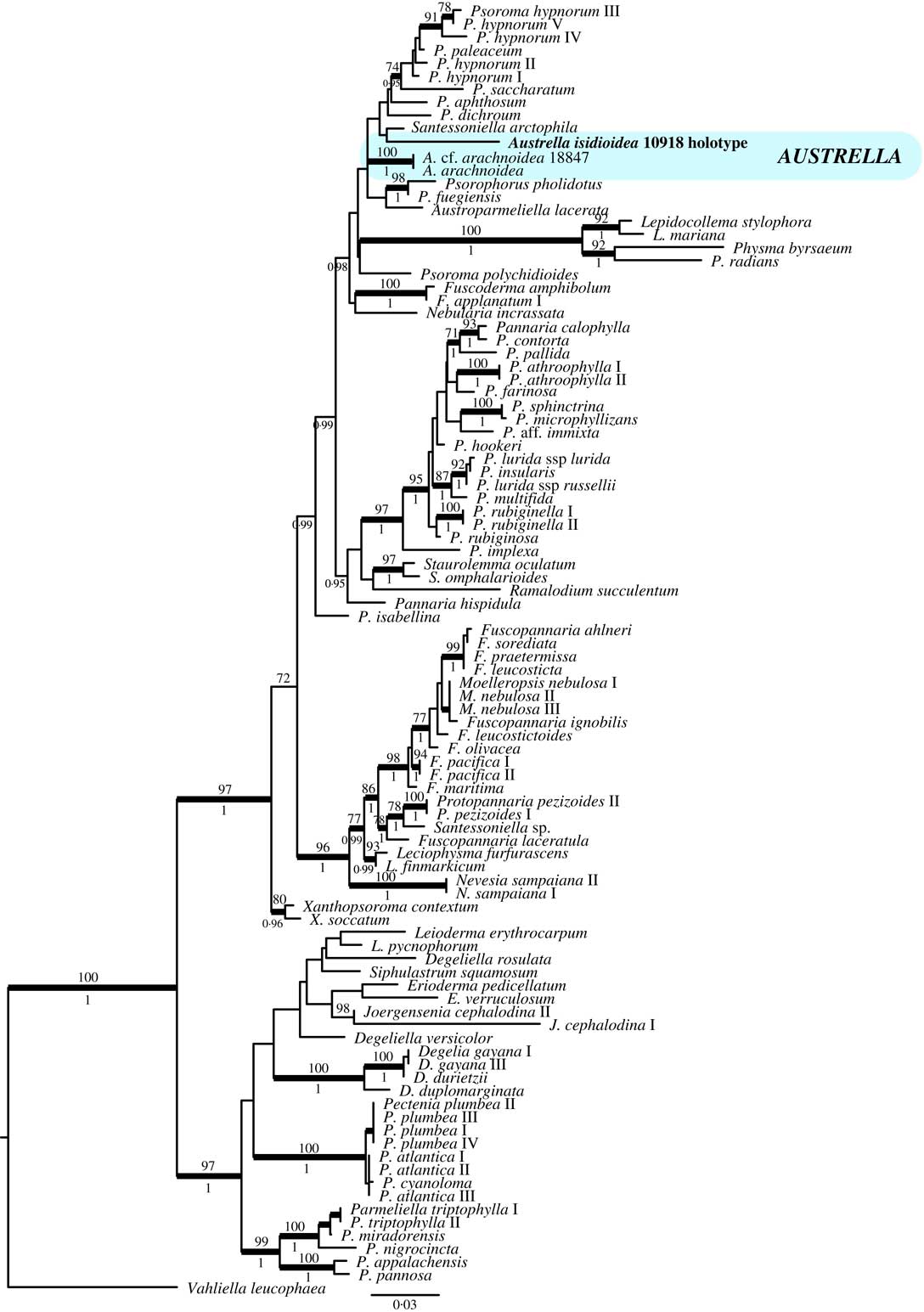
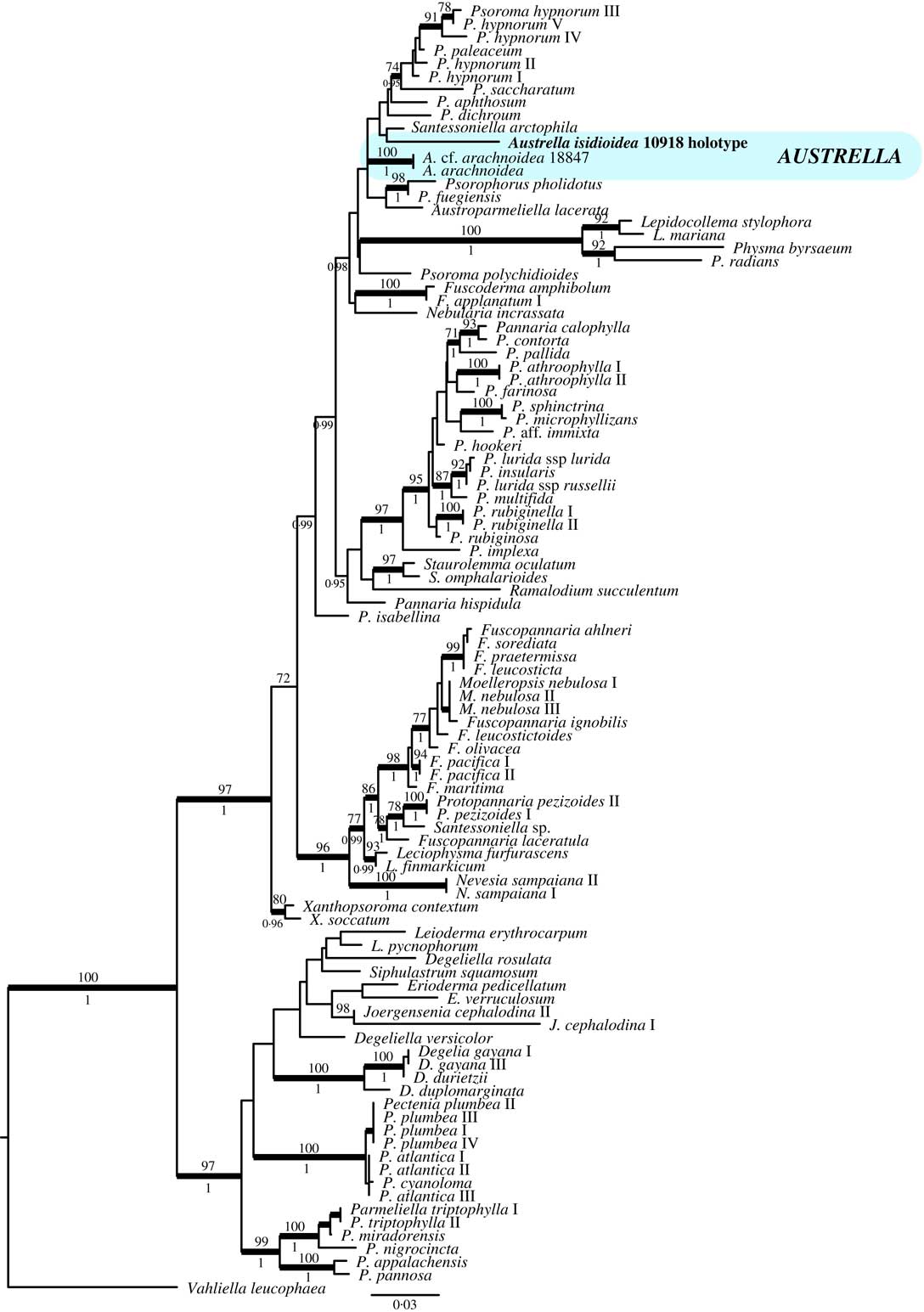
We obtained two new mtSSU sequences belonging respectively to the new species Austrella isidioidea and Austrella cf. arachnoidea (GenBank Accession numbers KY069281 and KY069280). Unfortunately, we were unable to obtain sequences for RPB1, the only other gene for which a sequence for Austrella is available in GenBank. The Bayesian tree we recovered did not contradict the ML tree topology for the strongly supported branches and hence only the ML tree is shown (Fig. 1). The new species Austrella isidioidea clusters with Santessoniella arctophila in a clade that includes Psoroma s. str. but without support, whereas A. cf. arachnoidea forms a separate branch with A. arachnoidea in a polytomy including both the Psoroma s. str. clade and another containing Psorophorus and Arctoparmeliella. Austrella cf. arachnoidea and A. isidioidea are nested within ‘Clade 2c’ of Ekman et al. (Reference Ekman, Wedin, Lindblom and Jørgensen2014), which corresponds to the clade from Nebularia incrassata to Psoroma hypnorum III in our mtSSU tree (Fig. 1). Branch support within this clade is poor, rendering generic delimitations difficult. This was already highlighted by Ekman et al. (Reference Ekman, Wedin, Lindblom and Jørgensen2014) despite the use of a three gene phylogeny.
Maximum Likelihood tree of Pannariaceae using GARLI and based on a data set of mtSSU sequences. Vahliella leucophaea in the Vahliellaceae is used as the rooting taxon. Internal branches with Maximum Likelihood bootstrap values ≥70% obtained from a GARLI analysis are considered strongly supported and shown above internal branches. Posterior probabilities ≥0·95 resulting from a Bayesian analysis are shown below internal branches. Internal branches strongly supported by both analyses are represented by thicker lines. The new species is in bold. Collecting numbers of the authors following the species names act as specimen and sequence identifiers. For clarity, support values are not shown for some short internal branches of groups not related to Austrella.
Taxonomy
Austrella isidioidea P. M. Jørg. & Fryday sp. nov.
MycoBank No.: MB 817913
Austrellae brunneae similis, sed thallo atrofusco squamulis adscententibus in parte isidoideis.Typus: Falkland Islands, West Falkland, Port Howard, Mt. Maria, Lightning Rocks, 51·619028°S, 59·601849°W, 575 m., over Andreaea sp. in recess on exposed E-facing rocks, 26 January 2015, A. M. Fryday 10918 (MSC—holotypus).
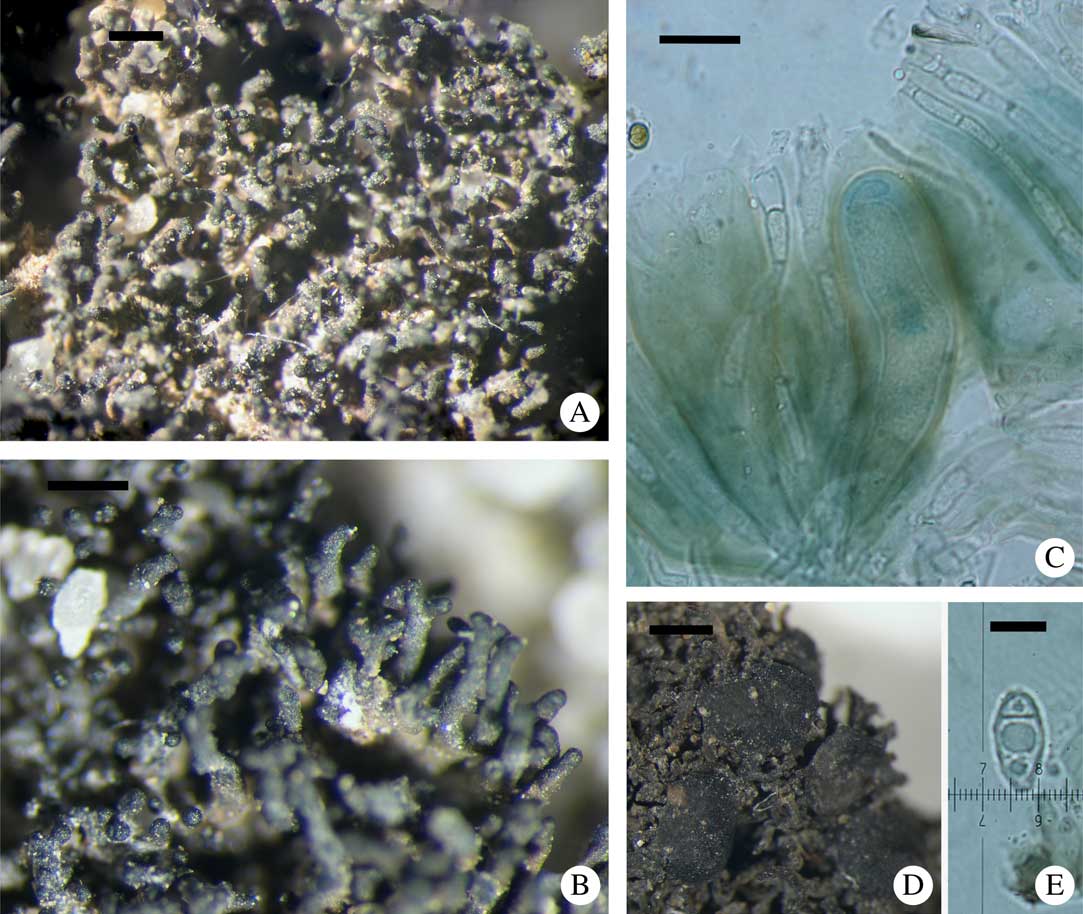
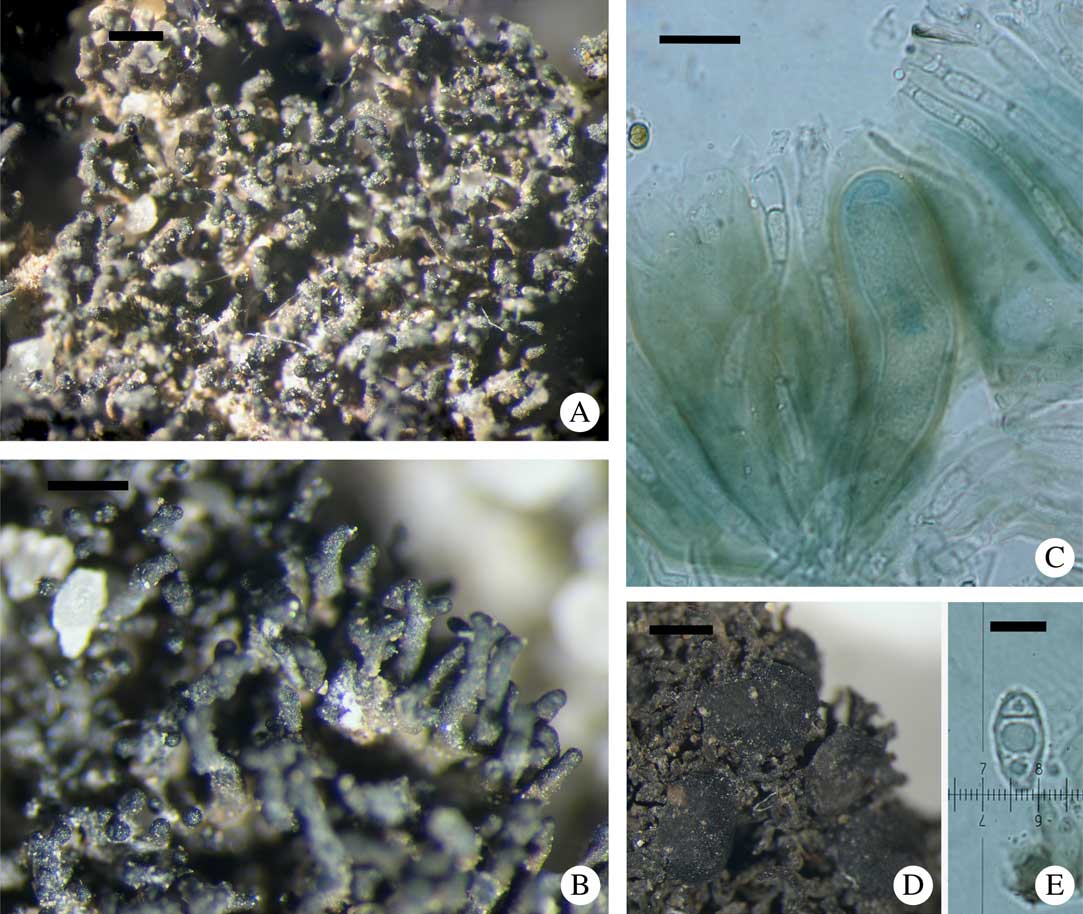
Austrella isidioidea. A, thallus; B, isidia; C, ascus; D, apothecia; E, ascospore. Note the pseudoseptum in the ascospore and the absence of apical amyloid structures in the ascus (A, Fryday 11427; B–E, Fryday 10918, holotype). Scales: A & D=1 mm; B=0·5 mm; C=25 µm; E=10 µm. In colour online.
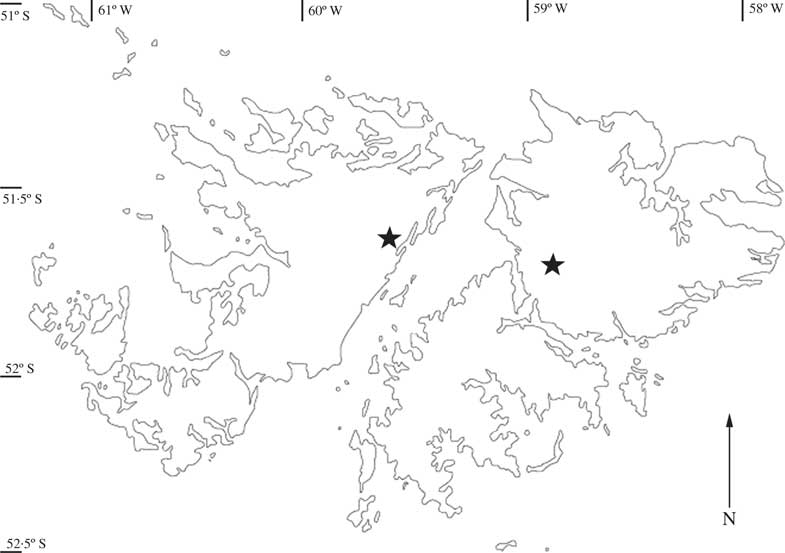
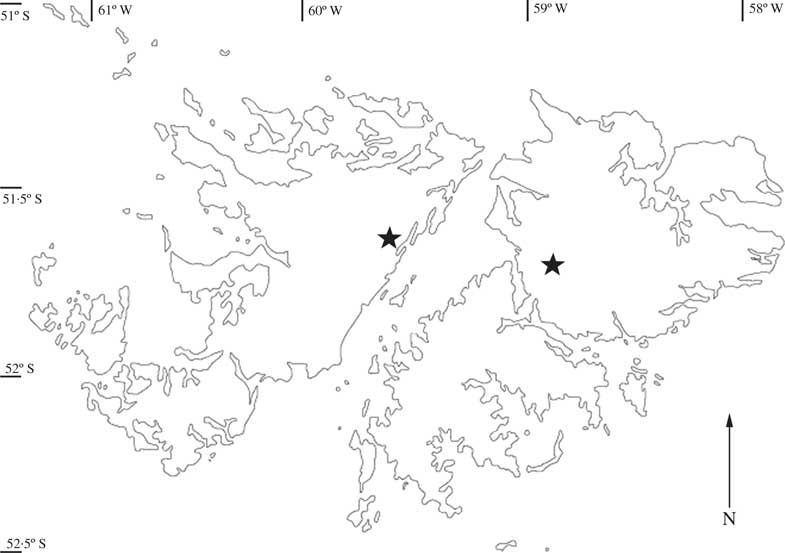
Known localities for A. isidioidea on the Falkland Islands.
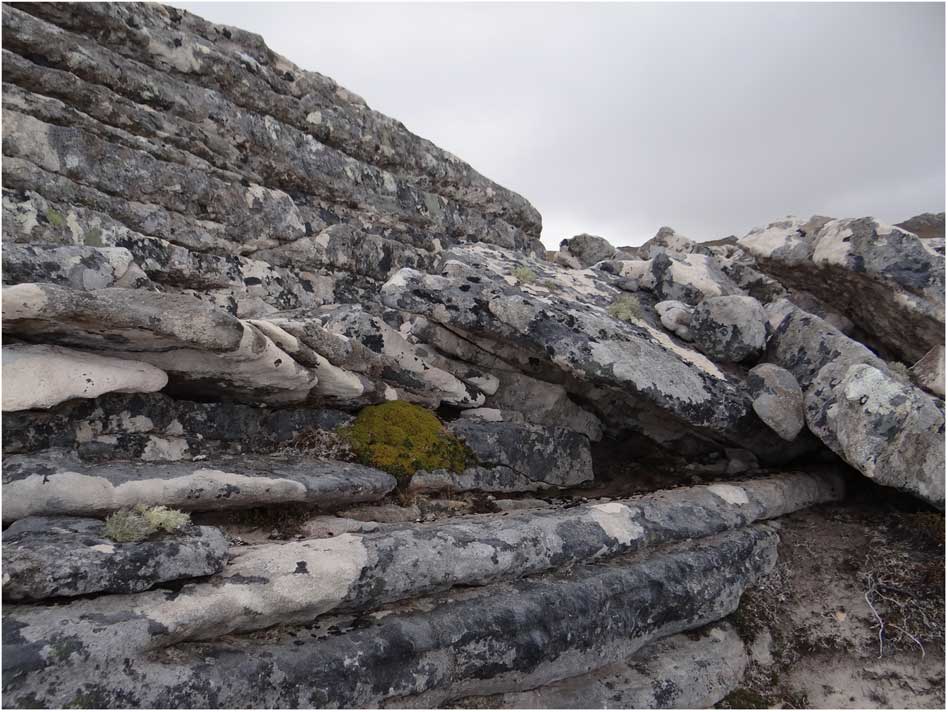
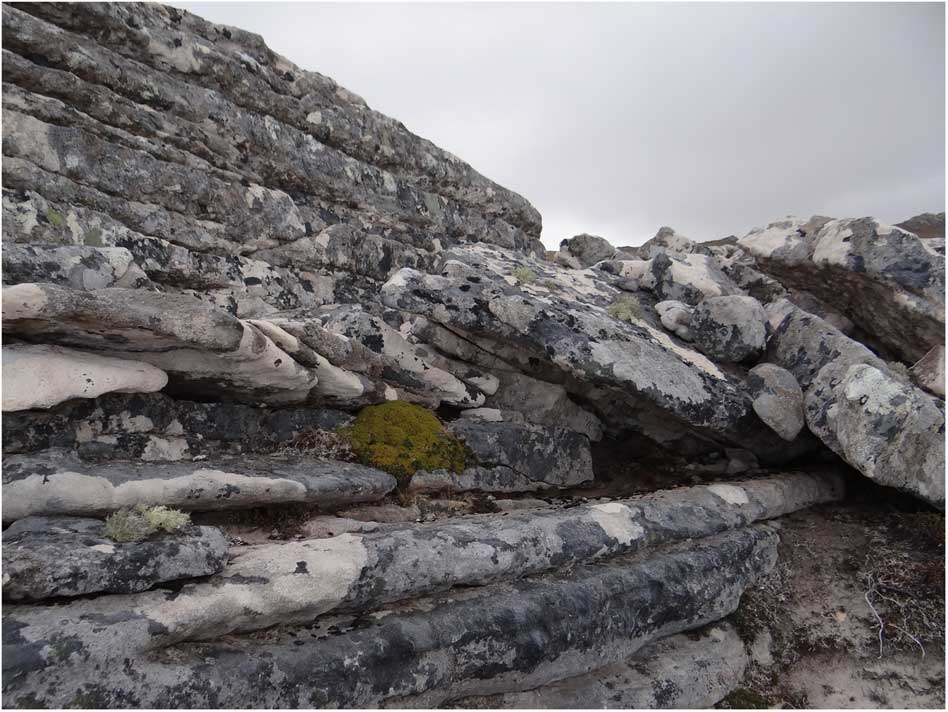
Type locality of Austrella isidioidea showing the lichen-rich rock ledges with Himanthormia lugubris (dark thalli) and several crusts including the large, conspicuous white patches of Ochrolechia antarctica. In colour online.
Thallus forming cushions up to 3 cm diam., composed of brown to dark brown, partly ascending squamules with a paler margin, becoming blackened at the apices and at spots along the edges that become raised and evolve into isidioid structures 0·1–0·2 mm thick and 0·6 mm tall; squamules finally becoming completely blackened (Fig. 2A & B). Cortex composed of a single layer of thin-walled cells. Photobiont Nostoc, in short chains enclosed in a reticulum of hyphae, individual cells 5–6 µm diam.
Apothecia fairly abundant but difficult to observe among the isidia, sessile, partly clustered, black, ≤2 mm diam. with distinct proper exciple, ≤200 µm wide (Fig. 2D). Hymenium non-amyloid, 120–150 µm high of simple, septate hyphae, apically with dark pigment. Asci to 150 µm, slender, thin-walled, I+ blue, but without apical amyloid structures (Fig. 2C); ascospores hyaline, ellipsoid, 17–19(20)×8–9(10) µm often with oil drops and occasionally appearing septate (pseudoseptate) (Fig. 2E).
Conidiomata not observed.
Chemistry. No lichen substances detected (by TLC).
Remarks. Austrella isidioidea is as yet known from only two collections from the Falkland Islands (Figs. 3 & 4). At its type locality, it grew among mosses on lichen-rich rock ledges in association with Shackletonia siphonospora (Olech & Søchting) Søchting et al., Endocena informis Cromb., Rimularia andreaeicola Fryday and Thamnolia vermicularis (Sw.) Schaer., whereas adjacent rocks supported Himantormia deusta (Hook. f.) A. Thell & Søchting, Ochrolechia antarctica (Müll. Arg.) Darb., Pertusaria macloviana Müll. Arg., Poeltidea perusta (Nyl.) Hertel & Hafellner, and Usnea aurantiacoatra (Jacq.) Bory (Fig. 4). At its only other known locality (Fryday 11427; see below for details) it occurred in a similar situation to the type collection among Andreaea sp. where it was associated with Bartlettiella fragilis D. J. Galloway & P. M. Jørg. The habit of the lichen, a dark basal thallus more or less hidden among the moss with which it grows and the squamules extending into isidia that grow up through the moss, make A. isidioidea hard to observe in the field and it is probably quite frequent in suitable habitats and may occur elsewhere in southern South America.
The gross morphology of the new species gives it a superficial resemblance to some species of Siphulastrum Müll. Arg., a genus described from the nearby Isla de los Estados, and also frequent on the Falkland Islands. However, the ‘isidia’ of Siphulastrum are densely compacted together forming an almost continuous crust, whereas in A. isidioidea they are more widely dispersed and separated. More critically, the apothecia of A. isidioidea clearly differ from those of Siphulastrum by the asci lacking amyloid apical structures, as well as the thallus lacking lichen substances (argopsin in Siphulastrum) and having thin-walled cortical cells.
Morphologically, Austrella isidioidea appears to be closest to A. brunnea (P. M. Jørg.) P. M. Jørg. from New Zealand, a species also forming cushions among bryophytes on the ground, but with flat, brown squamules and smaller, consistently non-septate ascospores.
Additional specimen examined. Falkland Islands: East Falkland: Mt. Usborne, W-facing outcrop just below summit, 51·691324°S, 58·839517°W, 610 m., over Andreaea sp. on rock ledge, 2015, Fryday 11427 (MSC).
Discussion
Systematic position of Austrella isidioidea
In the molecular analysis of Ekman et al. (Reference Ekman, Wedin, Lindblom and Jørgensen2014), Austrella arachnoidea (the type species of the genus) grouped with several other small genera or species complexes in the difficult psoromoid section (Clade 2c). Relationships in this clade, which roughly corresponds to small species assigned to the genus Psoroma, are currently unclear and in need of further investigation.
Our molecular analysis clearly places the new species in Clade 2c of Ekman et al. (Reference Ekman, Wedin, Lindblom and Jørgensen2014) although it did not form a monophyletic group with A. arachnoidea (Fig. 1). As A. isidioidea shares the distinctive ascus structure of A. arachnoidea described above, this clearly represents a challenge in deciding in which genus to place the new species: a widely circumscribed Psoroma as suggested by molecular results, or Austrella as suggested by morphology.
Of the three genes used by Ekman et al. (Reference Ekman, Wedin, Lindblom and Jørgensen2014), only sequences for the small subunit of the mitochondrial ribosomal RNA (mtSSU) and the largest subunit of RNA polymerase II (RPB1) genes were available in GenBank for A. arachnoidea. Unfortunately, we were unable to obtain sequences for RPB1, so our phylogeny is based only on the mtSSU gene and, consequently, the relative positions of the two Austrella species in our phylogenetic tree are based on a single shared gene and this, combined with the low support of the tree, places considerable doubt on the relationship revealed. We considered a constrained monophyly test but concluded that, based on such a poorly resolved clade and data, this was unlikely to solve the problem of generic delimitation.
Therefore, we decided to focus on morphological evidence and as our new species is clearly not congeneric with the type specimen of Psoroma (P. hypnorum (Vahl) Gray), and is closer to the type of Austrella (A. arachnoidea), describing it in Austrella was considered the best course of action.
Morphological variation in Austrella arachnoidea
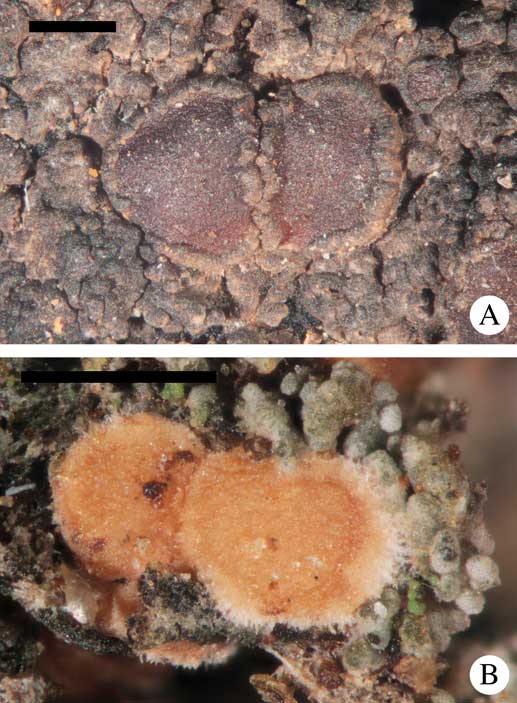
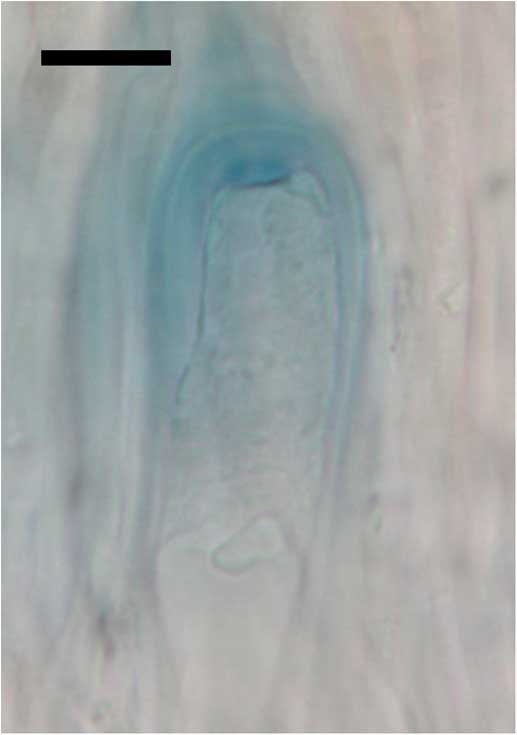
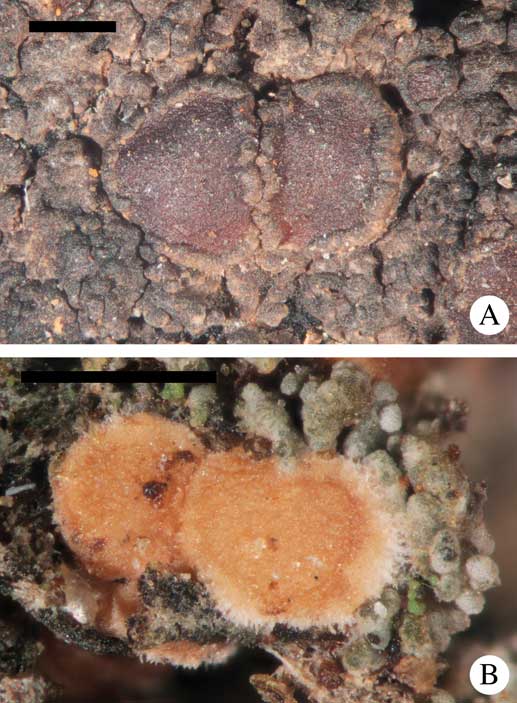
In addition to the molecular uncertainties surrounding the systematic position of Austrella, detailed examination also revealed inconsistencies in the morphological characters that have been used to characterize the genus. A collection from Îles Kerguelen (Ertz 18847; see Materials and Methods for details) had an identical mtSSU sequence to A. arachnoidea (unfortunately, the ITS of the latter was not available from GenBank for further comparison) but differed from it in gross morphology in the apothecia having a distinct, regular thalline margin (Fig. 5A), and also anatomically in some asci having a distinct KI+ blue ring structure in their apex similar to that in Psoroma (Fig. 6). However, immature apothecia on the underside of the specimen (i.e. in a shaded situation) did possess an arachnoid margin (Fig. 5B) and also had asci lacking any KI+ blue apical apparatus. The sequence data were obtained from an apothecium with a thick thalline margin. The apothecia of Austrella isidioidea were also anomalous in completely lacking an arachnoid margin, even when immature. However, the asci were typical for those of the genus, being elongated and thin-walled and completely lacking any KI+ blue apical apparatus (Fig. 2C).
Austrella cf. arachnoidea (Ertz 18847). A, apothecia on upper side with thick thalline margin; B, apothecia on underside with arachnoid margin. Scales: A & B=0·5 mm. In colour online.
Austrella cf. arachnoidea (Ertz 18847), ascus. Scale=10 µm. In colour online.
Biogeographical implications
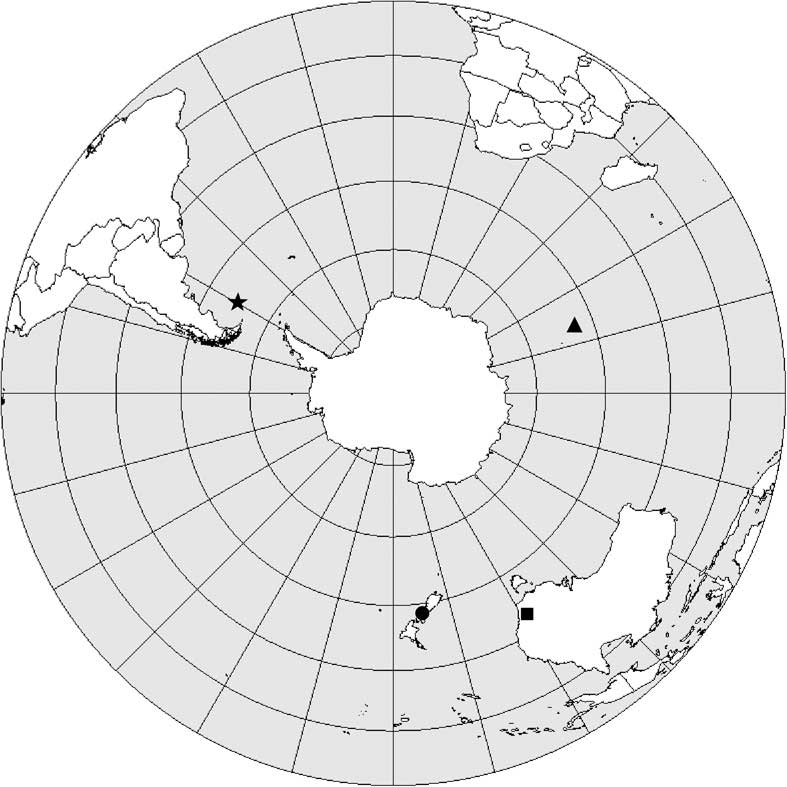
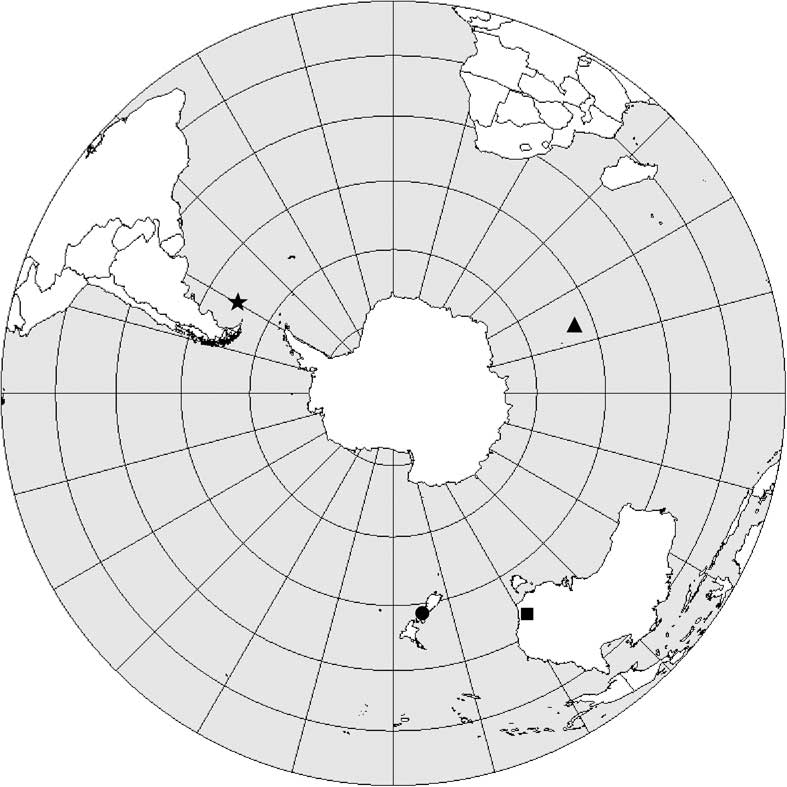
Species of the genus Austrella previously had a relatively restricted distribution, being known only from the South Island of New Zealand and SE Australia (Jørgensen Reference Jørgensen2004; Fig.7). The new records described here extend the distribution to other parts of the southern cool temperate/subantarctic zone giving the genus a typical Gondwanan distribution. This highly disjunctive pattern is well known among lichens in general, and genera of the Pannariaceae in particular (e.g. Siphulastrum, Psoromaria, Psorophorus; cf. Galloway Reference Galloway1987). However, as shown by Fryday & Coppins (Reference Fryday and Coppins2007), the Gondwana distribution pattern can be further refined into oceanic and continental Gondwanan elements with the oceanic element being restricted to SW Chile and the islands of the New Zealand Campbell Plateau, and the continental element extending from southern Chile, through Tierra del Fuego, the island groups of the southern Atlantic and Indian Oceans (including the Falkland Islands and Îles Kerguelen) to SE Australia/Tasmania and New Zealand. The oceanic element is characterized by the presence of a number of species (e.g. Lithographa olivacea Fryday, Pertusaria stellata Fryday, Steinera symptychia (Tuck.) T. Sprib. & Muggia) that are absent from other southern subpolar regions, and the absence of other conspicuous species (e.g. Poeltidea perusta (Nyl.) Hertel & Hafellner, Usnea sect. Neuropogon spp.) that are common in the continental element. The distribution of Austrella fits perfectly the continental Gondwanan distribution pattern.
Known world distribution of the genus Austrella. Key: ■ A. arachnoidea; ▲ A. cf. arachnoidea; ● A. brunnea; ⋆ A. isidioidea.
The first author thanks the UK Government for funding (via the Darwin Initiative) to visit the Falkland Islands and collect lichens, and Falklands Conservation, in particular Dafydd Crabtree for logistical support. The second author acknowledges the Fonds National de la Recherche Scientifique from Belgium (FNRS) for financial support and the Institut Polaire Français Paul-Emile Victor (IPEV - program 136 SUBANTECO, in particular Dr David Renault and Dr Maryvonne Charrier) for logistical support to visit and collect on Îles Kerguelen.