Introduction
As the population is aging in many industrialized countries, appropriate long-term care for older adults with functional and health limitations has become a major challenge for health and social protection systems (Rodríguez Mañas et al., Reference Rodríguez Mañas, García-Sánchez, Hendry, Bernabei, Roller-Wirnsberger, Gabrovec and Telo2018). Governments respond to demographic changes by restructuring their healthcare and social systems and focusing on the support of informal care (Verbakel et al., Reference Verbakel, Tamlagsrønning, Winstone, Fjær and Eikemo2017). Informal caregivers are relatives, friends, or neighbors, who take care of or look after a person in need of care. These people provide the bulk of long-term care in many countries (Barczyk and Kredler, Reference Barczyk and Kredler2019). As a consequence, supporting informal caregivers became an important topic of academic research (Estrada Fernández et al., Reference Estrada Fernández, Gil Lacruz, Gil Lacruz and Viñas López2019; Jahagirdar et al., Reference Jahagirdar, Dimitris, Strumpf, Kaufmann, Harper, Heymann and Nandi2020).
Research results show that informal caregiving for a person in need can be meaningful and rewarding (Hovland and Mallett, Reference Hovland and Mallett2021). However, it often also increases the caregiver’s perceived burden and, ultimately, has a negative influence on his/her well-being (van den Berg et al., Reference Van den Berg, Fiebig and Hall2014). Several conceptualizations of caregiver burden as a multidimensional construct have been proposed. These commonly comprise physical, emotional (psychological as well as social), and financial/work aspects that influence caregivers’ burden (Bastawrous, Reference Bastawrous2013; Chiao et al., Reference Chiao, Wu and Hsiao2015; Riffin et al., Reference Riffin, Van Ness, Wolff and Fried2019). Although there are a number of ways to capture caregivers’ burden, the dimensions of physical, emotional, and financial are generally accepted as major drivers in many countries (Chiao et al., Reference Chiao, Wu and Hsiao2015; Hastert et al., Reference Hastert, Ruterbusch, Nair, Noor, Beebe-Dimmer, Schwartz, Baird, Harper, Thompson and Schwartz2019; Lopez–Anuarbe and Kohli, Reference Lopez–Anuarbe and Kohli2019). Caregiving has a negative impact on the emotional state and physical health of informal caregivers (de Zwart et al., Reference De Zwart, Bakx and van Doorslaer2017: Stroka, Reference Stroka2014). Informal caregivers are confronted with out-of-pocket costs for care, work productivity loss and unemployment that all result in financial problems (Hastert et al., Reference Hastert, Ruterbusch, Nair, Noor, Beebe-Dimmer, Schwartz, Baird, Harper, Thompson and Schwartz2019). Maintaining their physical and mental health as well as financial security prevents high health expenditures and impoverishment.
Although burden is one of the most studied outcome measures in the context of caregiving (Bastawrous, Reference Bastawrous2013; Chiao et al., Reference Chiao, Wu and Hsiao2015), it is surprising that previous research rarely assessed all three aspects of burden simultaneously to understand how caregiving influences overall burden (Halpern et al., Reference Halpern, Fiero and Bell2017). It remains unclear whether such focus on selected burden dimensions effectively explains caregivers’ overall burden. Care might not only increase physical burden but also influence emotional and financial burden. Thus, a deeper understanding of how caregiving influences the main burden dimensions and, ultimately, overall burden is necessary to improve support services.
Previous research also assessed the influence of care domains on burden. Care domains are informal caregiver activities that satisfy the care recipient’s needs. To the best of our knowledge, there is no established categorization scheme that considers all main care domains. Instead, previous studies focused on separate care domains. Based on an extensive literature search and qualitative interviews, we, therefore, aimed to define a comprehensive set of care domains.
So, for example, researchers mentioned personal care that includes assistance with washing or going to the toilet as one of the main care domains (Halpern et al., Reference Halpern, Fiero and Bell2017, Schulz et al., Reference Schulz and Eden2016, Lamura et al., Reference Lamura, Döhner and Kofahl2008). Some studies also account for care domains that go beyond actual care. Examples are household activities and emotional support (Schulz et al., Reference Schulz and Eden2016). Emotional support also considers supervision in case of mental impairments (Chiao et al., Reference Chiao, Wu and Hsiao2015). Informal caregivers are also involved in administrative paperwork and organization of care (Lamura et al., Reference Lamura, Döhner and Kofahl2008; Schulz et al., Reference Schulz and Eden2016). Finally, caregivers perform medical care in case of chronic conditions, medical care includes giving medicine or injections (Halpern et al., Reference Halpern, Fiero and Bell2017). Following the prior research and based on expert reviews (described below), the current study simultaneously considers all major care domains:
-
1. social/emotional support (Lamura et al., Reference Lamura, Döhner and Kofahl2008; Schulz et al., Reference Schulz and Eden2016),
-
2. household assistance (Lamura et al., Reference Lamura, Döhner and Kofahl2008; Schulz et al., Reference Schulz and Eden2016; van den Berg and Spauwen, Reference Van den Berg and Spauwen2006),
-
3. personal care (Lamura et al., Reference Lamura, Döhner and Kofahl2008; Schulz et al., Reference Schulz and Eden2016; van den Berg and Spauwen, Reference Van den Berg and Spauwen2006),
-
4. support in organizational matters (Lamura et al., Reference Lamura, Döhner and Kofahl2008; Schulz et al., Reference Schulz and Eden2016),
-
5. and medical care (Schulz et al., Reference Schulz and Eden2016).
It is well known that a higher intensity of caregiving increases the caregivers’ overall burden (Chang et al., Reference Chang, Chiou and Chen2010; Cook et al., Reference Cook, Snellings and Cohen2018; Kim et al., Reference Kim, Chang, Rose and Kim2012; Lyons et al., Reference Lyons, Cauley and Fredman2015; Yu et al., Reference Yu, Wang, He, Liang and Zhou2015). The more time caregivers spend on caregiving and the higher the severity of the care recipient’s limitations, the higher their overall burden due to caregiving (Chang et al., Reference Chang, Chiou and Chen2010; Kim et al., Reference Kim, Chang, Rose and Kim2012). However, we know little about how the intensity of different care domains influences different dimensions of burden and overall burden.
Previous research that considered the influence of different care domains focused on one or few care domains (e.g. support in organizational matters) (Wolff et al., Reference Wolff, Spillman, Freedman and Kasper2016) or burden dimensions (e.g. emotional burden) (Halpern et al., Reference Halpern, Fiero and Bell2017). Only one study also considered all main care domains simultaneously (Walsh and Murphy, Reference Walsh and Murphy2019). However, their overall burden measure is based on binary data for its construct items (answers were coded 1 for yes and 0 for no) that were then summed up across all burden items to compute an overall burden measure. By implementing this approach (adding up binary evaluations), the authors implicitly assume that each of their burden items has equal influence on overall burden, which is not necessarily true. Furthermore, relying on binary data only provides a rough insight into the effect of care domains on burden. Finally, the authors did not consider the underlying burden dimensions that define overall burden. Thus, the reasons for an increase in overall burden due to a specific caregiving domain remain unclear.
In summary, there is no study that simultaneously estimates the influence of all five care domains on the three burden dimensions (emotional, physical health, and financial burden) as well as an overall perceived burden. We have conducted a large-scale survey of German caregivers. Our goal was to cover caregivers across all German regions, all social classes, and ethnic groups, as well as different types of diseases for the person in need of care.
Germany is an especially interesting case because Germany has a comprehensive support system of informal care based on long-term care (LTC) insurance and social systems (Zigante, Reference Zigante2018). LTC insurance partly covers the costs of support services in case of long-term-care needs. If the LTC insurance payments and a care recipient’s wealth are not sufficient, the state subsidizes long-term care (Riedel, Reference Riedel2017). Caregiver may choose from a wide range of services: LTC services, daily assistance services, advisory services, and care courses etc. The results of this study should be interpreted accordingly, i.e. they are specific to this social security system. But the results also provide important insight on the positive effects of such a social system. For example, burden dimensions and care domains that are crucial in other countries might be less important in the German setting. For example, much care is provided by third parties.
In summary, informal caregivers’ support is crucial from a social policy perspective. Without effective support, informal caregivers are at high risk of poverty and health problems (Wetzstein et al. Reference Wetzstein, Rommel and Lange2016). Cash benefits, paid work leaves, training, and counseling services are only some measures aimed at supporting informal caregivers. This study delivers the knowledge needed by policymakers to plan and evaluate their actions. Our aggregated view on all informal caregivers is especially useful when it is necessary to come up with decisions that will help as many informal caregivers as possible. Policymakers commonly do not develop different policy programs for numerous target groups. For example, it might be difficult to grant financial support to some caregivers while denying support to others merely based on socio-demographic criteria.
This study makes four important contributions to research and practice. First and as noted, this is the first comprehensive study to jointly consider the most relevant care domains and burden dimensions to explain overall burden. Such simultaneous assessment is important to better understand the care domains’ relative influence and is needed by policymakers to prioritize their actions. Second, we show that in Germany, the emotional burden has the highest impact on overall burden while the financial burden is less important. Thus, in a setting of a social system that already provides caregivers with substantial financial help, more financial help is not always needed. Instead, other burden dimensions evolve and policymakers should rather pay more attention to actions that reduce caregivers’ emotional burden. Third, we show that personal care itself might not be the main source of burden in the German social system. Instead, support in organizational matters turns out to be a major driver for the overall burden among German caregivers. This is an important finding since the level of bureaucracy in social and healthcare systems can set barriers for caregivers to access needed support and (compared to other care domains) reducing the bureaucracy involved with caregiving should be easier. Finally and fourth, a large-scale data set allows us to derive conclusions that are aimed to help reduce the perceived caregivers’ burden of a broad population.
Theoretical framework
A number of theoretical models assess how caregivers’ burden arises. Most of these models rely on the Pearlin Stress Model (Pearlin et al., Reference Pearlin, Mullan, Semple and Skaff1990), which considers caregivers’ burden to be primarily caused by the intensity of care provided by caregivers. Although previous models indicate a direct link between care and overall burden, they do not assess how the care dimensions contribute to the caregivers’ burden (Savundranayagam et al., Reference Savundranayagam, Montgomery and Kosloski2011, Chappell and Reid, Reference Chappell and Reid2002). We extend this research by proposing the following conceptual model (Fig. 1), which gives a deeper insight into the link between caregiving and caregivers’ burden. We expect that the five care domains influence the three burden dimensions, which, ultimately, influence overall perceived burden.
Conceptual model.

Caregiver perceived burden
The dependent variable in our model is the caregivers’ perceived overall burden. Overall burden was commonly surveyed in previous research (Chiao et al., Reference Chiao, Wu and Hsiao2015). Additionally, we survey common burden dimensions (emotional, physical, and financial/work burden) that have been considered in previous research (Bastawrous, Reference Bastawrous2013; Riffin et al., Reference Riffin, Van Ness, Wolff and Fried2019). The emotional dimension comprises caregivers’ limited private and social life and the feeling that caregiving is emotionally burdensome (Foster et al., Reference Foster, Dale and Brown2007). Physical dimension refers to physical health problems, poor self-rated health, and the feeling of physical burden (Foster et al., Reference Foster, Dale and Brown2007). Finally, the financial/work dimension comprises negative effects of caregiving on job performance and financial burden (Foster et al., Reference Foster, Dale and Brown2007).
Care domains
We consider the following five care domains that are likely to influence burden: emotional/social support, household assistance, support in organizational matters, personal, and medical care. Emotional and social support comprises talking, walking, and doing joint leisure activities with the care recipient (Schulz et al., Reference Schulz and Eden2016). Household assistance commonly includes shopping, laundry, or meal preparation (Schulz et al., Reference Schulz and Eden2016) – to the best of our knowledge, there is barely any research on the influence of household activities on burden. Third, personal care is the assistance with daily activities such as bathing, dressing, nutrition, and assistance with mobility (van den Berg and Spauwen, Reference Van den Berg and Spauwen2006). Fourth, support in organizational matters denotes activities such as making doctor appointments, ordering medicine, or speaking with health professionals (Halpern et al., Reference Halpern, Fiero and Bell2017). Finally and fifth, caregivers also provide medical care such as wound care, injections, and giving medicine (Schulz et al., Reference Schulz and Eden2016).
Materials and methods
Research design
The present study used cross-sectional data from a paper-and-pencil or online questionnaire. The survey was conducted in Germany between November 2018 and March 2019. The data is based on self-reported information provided by informal caregivers. Participation in the study was voluntary and anonymous. The study was approved by the medical ethics committee of Witten/Herdecke University (registry number 241/2017). Written informed consent was obtained from all participants.
Selection criteria
The survey included all potential caregivers, i.e. relatives, friends, or neighbors aged 18 years and older. We focus on those people who regularly take care of or look after a person in need of care. There were no restrictions based on the type of the disease, the degree of impairment of the care recipient, or the minimum duration of caregiving. Professional caregivers were excluded from the survey since we were only interested in informal caregivers.
Recruitment strategy
Our research team recruited a broad group of informal caregivers via online media such as social networks, forums, and websites. Additionally, we also used print media and published information about our survey in newspapers and magazines for family caregivers.
Access to informal caregivers was also granted by means of cooperation with institutions that operate in the field of professional care support and consulting. These include long-term care service agencies, municipal advisory service centers as well as caregiver associations. These institutions also invited informal caregivers to participate in the study. Finally, our research team visited events for informal caregivers, spread flyers, and hung out posters with information on the survey. This huge variety of recruitment channels enabled us to access hard-to-reach caregivers of a diverse variety of cultural orage groups, but also caregivers without access to the internet. Those who answered the paper-pencil version were able to send questionnaires back at no cost. Participating in the survey took about 15 minutes.
Questionnaire structure
The questionnaire starts with a warm-up task that aims at increasing the salience of important informal care elements such as care receiver-specific variables (relationship to the care recipient, living with the care recipient, etc.). Further, we surveyed the overall perceived care burden (our dependent variable) as well its respective dimensions. We also asked the respondents to evaluate the care intensity of the five care domains (Appendix A). Finally, caregivers were asked to provide demographic information (e.g. age).
Measurement
We relied on formative constructs to measure the impact of caregiving intensity on the perceived burden of the caregiver. The formative items (composite indicators) were defined based on prior research (Foster et al., Reference Foster, Dale and Brown2007; Lamura et al., Reference Lamura, Döhner and Kofahl2008; Schulz et al., Reference Schulz and Eden2016; Sheets et al., Reference Sheets, Black and Kaye2014; van den Berg and Spauwen, Reference Van den Berg and Spauwen2006) and on expert reviews (Ikart, Reference Ikart2019) with 12 experts from the field of counseling, prevention, and self-help for family caregivers. We relied on prior research as well as own qualitative research to ensure that our list of care domains and burden dimensions is exhaustive. The experts were asked to critically review the proposed set of survey items and leave open-ended comments on two main areas: first, the proposed items needed to reflect the main care domains and, second, item wording needed to be unambiguously interpretable by the respondents. The expert panel identified no new dimensions. We also pretested the questionnaire. To do so, we asked seven caregivers to answer the survey and to identify questions that were difficult to understand. Based on the experts’ and caregivers’ feedback, we were able to identify some wording problems and adjusted them.
We surveyed perceived burden and its three dimensions based on well-established scales (e.g. Foster et al., Reference Foster, Dale and Brown2007). Overall perceived burden was measured based on a single-item scale derived from the German Aging Survey (Engstler et al., Reference Engstler, Groh, Klaus, Mahne, Spuling, Wetzel and Tesch-Römer2015). Caregivers were asked to indicate their perceived burden on a 7-point Likert scale ranging from 1 (little burden) to 7 (high burden). The three dimensions of burden were each measured based on three formative items. Finally, the total perceived burden was measured based on a single-item formative item.
We asked caregivers to evaluate the intensity of the care domains on a 7-point Likert scale (1– “not intensive at all”;7 – “very intensive”).
These questions represented single-item formative questions.
Statistical analysis
To assess our conceptual model, we relied on Partial Least Squares Structural Equation Modeling (PLS-SEM). PLS is the most common SEM estimation approach in many research fields ranging from business economics (e.g. marketing), psychology, computer science, and engineering (Sarstedt et al., Reference Sarstedt, Hair and Ringle2023). PLS-SEM is still rarely used in social policy research. Thus, our paper also contributes to the growing importance of PLS-SEM.
This statistical modeling technique allows testing a network of relationships between a set of independent variables (IV; those latent constructs that explain other constructs in the model) and dependent variables (those constructs that are explained by the IVs). Then, we analyzed whether the relationships between the latent constructs were significant. For the current analysis, a 5% significance level was used. We relied on SmartPLS (with 5,000 bootstrap-subsamples) to test our theoretical framework (Ringle et al., Reference Ringle, Wende and Becker2015).
Assessment of the items
As noted, we measured the three burden dimensions based on a formative multi-item scale (3 items for each construct). Those items that do not significantly influence their respective formative construct and that are of little importance should be eliminated (Ringle et al., Reference Ringle, Wende and Becker2015). As a consequence, we eliminated one item of physical burden. Thus, perceived, physical burden was measured based on two formative items.
We also assessed potential multicollinearity issues based on the VIF. All values ranged between 1.462 and 2.061 and were thus below the threshold value of 5 (Hair Jr et al., Reference Wolff, Spillman, Freedman and Kasper2016).
Results
Sample
A total number of 1.434 informal caregivers completed the survey. Two cases were identified as abnormal and excluded from the data (a parent and an adult child of the same age). Furthermore, we observed three cases of paid care that do not quality for this study since we focus on informal care. These five cases were eliminated. The final sample consisted of 1.429 informal caregivers.
Informal caregivers were predominantly women (81.3%) with a mean age of 54 years. 73.2% of caregivers were married or living with a partner, and 29.2% had at least one child under 18 years old living in their own household. Most informal caregivers were born in Germany (95.5%). Caregivers were caring for their partners (29.1%). The majority were sons or daughters caring for their parents (52.5%). About half of our respondents (54.6%) were living with the care recipient. 28.9% completed higher education, and about half were employed (50.9%). These socio-demographic characteristics are comparable to representative data on the German caregiver population (Wetzstein et al. Reference Wetzstein, Rommel and Lange2016). For a more detailed sample description, see Table 1.
Sample Characteristics

SD – standard deviation.
Model Estimation
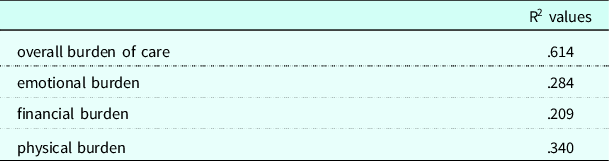
Table 2 provides an overview of the R2 values (the share of explained variance). All values are at a high level, also when accounting for heterogeneity (Raithel, Sarstedt, Scharf, & Schwaiger Reference Raithel, Sarstedt, Scharf and Schwaiger2012).
Coefficients of determination

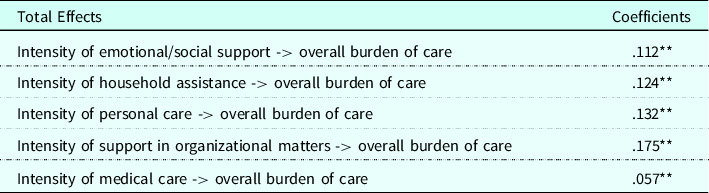
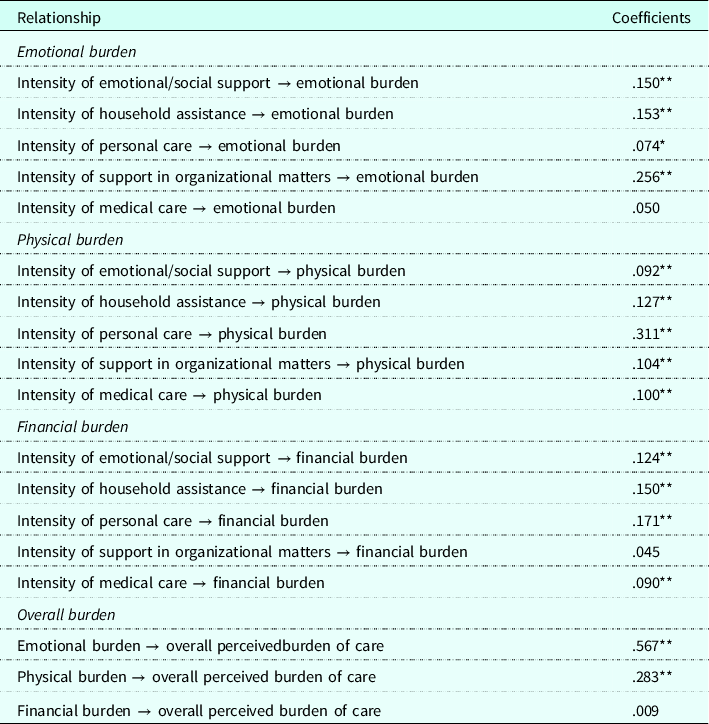
Table 3 presents the total effects of the five care domains on the overall perceived burden, and Table 4 provides an overview of our estimated coefficients. Both tables show standardized regression coefficients, i.e. they can be interpreted as each item’s relative contribution to a respective formative construct (Hair Jr et al., Reference Wolff, Spillman, Freedman and Kasper2016).
Total Effects

Note: **p < 0.01
Estimated Coefficients

Note: **p<0.01; *p<0.05;
Main results. In the first step, we aimed to understand how the five care domains influence the overall perceived burden of informal caregivers (Table 3). We observed that all five care domains increased caregivers’ overall perceived burden (all p-values indicated significant relationships). However, the intensity of medical care (coeff = .057) had the lowest impact. The second remarkable insight is that support in organizational matters (coeff = .175) had the highest impact on the overall care burden. The three remaining care domains had an intermediate influence on the overall burden. Table 4 offers a more detailed explanation of the underlying effects.
For emotional burden, we observed that the intensity of medical care did not have a significant impact on caregivers’ emotional state. In contrast, a higher degree of support for organizational matters is the main driver for perceived emotional burden. Emotional/social support (such as conversations with the care recipient) and household assistance had less impact on caregivers’ emotional state. Finally, a higher intensity of personal care had even less influence on the caregivers’ emotional burden.
Personal care is the main factor that drives caregivers’ perceived physical burden. Its impact was about three times as high as the other factors’ influence. The four care domains also influenced perceived physical burden.
Our results also indicate that personal care, household assistance, and emotional/social support had a substantial influence on the perceived financial burden.
Furthermore, we assessed the impact of the three burden dimensions on the overall perceived burden of care. Our results indicate that overall burden was mainly influenced by perceived emotional burden (coeff = .567). Moreover, physical (health burden’s coeff = .283) also had a significant impact on overall care burden. However, financial burden did not significantly influence overall burden (coeff = .009, p-value=.641).
Robustness checks – Permutation tests. Finally, we tested the robustness of our estimates by accounting for the following respondent-specific factors: relationship between caregiver and care recipient, time for care, living with the care recipient, gender of the care recipient, gender of the caregiver, income, the age of the care recipient and the age of the caregiver.
For each of these factors, we defined two groups (e.g. low vs. high – based on the median values). We relied on a permutation test to analyze the differences between the two respective groups (see Appendix A). We tested 240 relationships (8 factors * 2 groups per factor * 15 relationships per group) and thus 120 comparisons). Only eleven (i.e. less than 10%) of these paired comparisons were significant. Thus, we conclude that effect sizes (between the two groups of the 8 factors) differ only for a few constructs.
Robustness checks – the importance of the burden dimensions. Concerning the burden domains, we observe that the order of importance (i.e. of the total effects) is identical for all 16 groups (8 factors * 2 groups per factor = 16 groups). The emotional burden always had the highest impact on the overall burden, and the physical burden was the second highest. Financial burden did not have a significant influence on the overall burden in any of the 16 groups.
Robustness checks – the importance of the care domains. We also tested the robustness of the total effects concerning the five care domains. To do so, we focused on the order of the factors’ respective impact on the overall burden. We observed that support in organizational matters was the most influential care domain in 14 of the 16 groups (see total effects in Appendix A). This care domain was the second most important in one group. Support in organizational matters was less important in only one group – it ranked in 4th place for male caregivers.
In contrast, medical care was the least important in 13 groups and the second least important care domain in two other groups. Moreover, for twelve groups, medical care had no significant influence on the overall burden. Only one group rated medical care at an intermediate level.
In total, our results at the aggregate level were highly robust. There were no differences concerning the burden dimensions and only a few differences concerning the care domains. However, there is one exception to this finding: male caregivers’ evaluations differed substantially as organizational matters were less important to them.
Discussion
Our main goal was to understand the importance of main drivers of informal caregivers’ overall perceived burden. We, therefore, identified five care domains and three burden dimensions based on an extensive literature review as well as expert reviews. A quantitative study based on a unique data set enabled us to assess how these care domains influence the burden dimensions and ultimately, the overall perceived burden. The data set was unique since we relied on a large-scale data set that covers a wide variety of care contexts that might influence informal caregivers’ burden. Below, we derive recommendations for policymakers that aim at helping a large variety of informal care providers.
Other studies often addressed specific subgroups of informal caregivers, such as spouse and adult children (Savundranayagam et al., Reference Savundranayagam, Montgomery and Kosloski2011) or caregivers of cancer patients (Halpern et al., Reference Halpern, Fiero and Bell2017). These studies are more insightful for specific contexts but lack generalizability. The latter was the focus of this research.
Before deriving implications from our research, it is important to remember that any study’s results are specific to the social system of the respective country. As such, the results of any study are context-specific and not transferable to those countries whose social system differs substantially. The same applies to our practical implications, which should be interpreted accordingly. However, the theoretical framework could be used in any context.
Theoretical Implications
Prior studies on this topic addressed a sub-set of care domains (Savundranayagam et al., Reference Savundranayagam, Montgomery and Kosloski2011; Wolff et al., Reference Wolff, Spillman, Freedman and Kasper2016) or burden dimensions (Halpern et al. Reference Halpern, Fiero and Bell2017) when assessing the influence on the overall burden. However, since they only considered selected care domains, policy makers cannot derive the relative importance of different care domains on overall burden. Omitting important variables is likely to bias the results. For example, focusing on a subset of factors that influence an outcome variable may result in inflated estimates (Klarmann and Feurer, Reference Klarmann and Feurer2018). To date, only Walsh and Murphy (Reference Walsh and Murphy2019) also considered a similarly comprehensive set of care domains and different burden dimensions. However, this study relied on binary data on care domains which provide only coarse insight.
Furthermore, none of the studies considered the effect of different burden dimensions that mediate these relationships between care domains and overall burden. The current study, therefore, extends previous research by simultaneously examining the relationship between care domains, burden dimensions, and overall burden. This enabled us to understand the relative influence of these factors on overall burden.
Concerning the five care domains, we observed substantial differences. For example, intensity of support in organizational matters influenced overall care burden three times as much as intensity of medical care. This finding is in line with Walsh and Murphy, Reference Walsh and Murphy2019, who found that support in organizational matters has a higher effect on burden than medical care. However, they did not consider the remaining three care dimensions.
Furthermore, previous studies sometimes did not consider any of the three burden dimensions and focused solely on the overall perceived burden (Hoang et al., Reference Hoang, Green and Bonner2019; Savundranayagam et al., Reference Savundranayagam, Montgomery and Kosloski2011). However, the influence of the care domains remained a ‘black box’ since these researchers were unable to explain the underlying mechanisms that drive overall perceived burden (Halpern et al., Reference Halpern, Fiero and Bell2017). Other researchers at least considered some burden dimensions, showing, for example, that managing medical care is emotionally burdensome (Halpern et al., Reference Halpern, Fiero and Bell2017). These studies enable researchers to – at least partially – understand why specific care domains influence overall perceived burden. However, since previous research only considered the burden dimensions selectively, their relative influence remained unknown.
The current study simultaneously assessed the three burden dimensions (emotional, physical, and financial burden) to better understand their relative impact on the overall perceived level of burden that allowed us to better understand the relative impact of care domains and burden dimensions.
Practical Implications
Simultaneously considering all five care domains as well as the three burden dimensions has important practical implications for German policymakers and countries with a comparable social system. Our results help policymakers and public managers to prioritize burden dimensions as well as care domains.
We suggest that practitioners and policymakers should pay more attention to emotional burden since it is the primary source of the caregivers’ overall burden (even when accounting for caregiver and care receiver heterogeneity). Our findings suggest that German municipalities and healthcare insurance companies should adjust their current practices. Currently, they only focus preventive actions; they should be augmented by help concerning organizational matters.
For German caregivers, we do not observe any significant influence of financial burden. Even when accounting for heterogeneity, the relationship between financial burden and overall burden remained non-significant. Thus, our results suggest that the current level of financial support provides sufficient help for caregivers. These results also propose that the impact of financial burden on overall burden, which has a substantial impact in other countries (Hastert et al., Reference Hastert, Ruterbusch, Nair, Noor, Beebe-Dimmer, Schwartz, Baird, Harper, Thompson and Schwartz2019; Stroka, Reference Stroka2014) can be reduced by adjusting the social system. Germany might be a role model in this respect.
As further contribution, we specify the relative impact of the five care domains on overall perceived burden. Our results show that care itself might not be the main source of burden. Instead, support in organizational matters turned out to be a major driver for female caregivers’ burden. Female caregivers mainly struggle with bureaucracy and care management. However, this factor was less influential for male caregivers. Since most caregivers are female, support in organizational matters is the factor with the highest impact in our sample but also in Germany since caregivers are predominantly female (Wetzstein et al. Reference Wetzstein, Rommel and Lange2016). This high importance of organizational matters on burden is in line with previous research in the USA and Europe (Halpern et al., Reference Halpern, Fiero and Bell2017; Milliken et al., Reference Milliken, Mahoney, Mahoney, Mignosa, Rodriguez, Cuchetti and Inoue2019). However, while previous research identified ‘support in organizational matters’ as an important factor that influences overall burden, we underlined its importance by quantifying its relative influence compared to other care domains. Policy makers should therefore reduce bureaucracy. This might be especially helpful for health care and social systems as in Germany, where support services are delivered from different health, long-term nursing, accident, and pension insurance companies, local authorities, and private providers. There is no clear coordination between the two public bodies LTC insurances and local governments, which leads to overlapping and difficulties (Longo and Notarnicola, Reference Longo and Notarnicola2018). This highly fragmented system makes it hard for caregivers to navigate in the wide range of services, providers, and regulations. Case management might be a highly effective support intervention, since it helps at overcoming bureaucracy and guides caregivers through the process of care organization (Balard et al., Reference Balard, Gely-Nargeot, Corvol, Saint-Jean and Somme2016).
Finally, medical care turned out to be the least important care dimension for most groups and was never perceived to have a substantial impact on the overall burden. This is in contrast to previous research that identified medical care as a significant driver of burden (Halpern et al, Reference Halpern, Fiero and Bell2017; Hoang et al, Reference Hoang, Green and Bonner2019). Again, these differences demonstrate that a social system that secures access to medical services by professional care providers reduces and even eliminates the impact of medical care on the caregiver burden.
Limitations
Our study also has some limitations. First and foremost, future research should replicate our findings in countries that differ systematically with respect to the social security system. Potential differences can be used to demonstrate bottlenecks or advantages of other social systems. Second, our goal was to derive generalizable results concerning the care domains and burden dimensions on overall burden. Such insight is important to policy makers that need to make decisions that aim at helping a broad variety of caregivers. However, the influence of these factors might differ depending on the specific illness and symptoms of the care recipient or the nature of the relationship between the caregiver and the care recipient.
Conclusions
We investigated the influence of five central care domains and three burden dimensions on the perceived overall care burden. Our analysis identified support in organizational matters as a focal driver for emotional burden. Emotional burden had the highest influence on the caregivers’ overall perceived burden. We suggest that policymakers should focus on reducing bureaucracy in the German social system, which should have the highest impact on reducing caregivers’ overall burden. More importantly, our results suggest that a social security system can successfully reduce or even eliminate burden on caregivers that is caused by financial burden or medical care.
Supplementary material
The supplementary material for this article can be found at https://doi.org/10.1017/S0047279423000302
Acknowledgements
We would like to thank all informal caregivers and gatekeepers for supporting our survey.
Funding
This study was supported by grants from the Ministry of Labor, Health and Social Affairs of North Rhine-Westphalia (Germany) and long-term care funds (grant number: 34.04.01-62-4856). The funding bodies had no influence on the study design, the data collection, analysis, and interpretation of data, nor in writing the manuscript.
Competing interests
The authors declare none.