Introduction
Species such as anemones, that are susceptible to desiccation and dislodgement, often aggregate for protection. However, this creates competitive living environments where individuals contend for food and space (Hanski & Ranta, Reference Hanski and Ranta1983; Firth et al., Reference Firth, Schofield, White, Skov and Hawkins2014). For example, the British intertidal sea anemone Metridium senile lives in close-knit groups of the same genetic clones, and shares captured food within its community. Nevertheless, it will only engage in aggressive intraspecific competition with genetically different clones (Purcell & Kitting, Reference Purcell and Kitting1982; Wood, Reference Wood2005). Similarly, the sea anemone Anemonia viridis can be found in clusters, yet will only engage in intraspecific competition for space after rapid reproduction occurs, with younger anemones outcompeting older ones (Chintiroglou & Koukouras, Reference Chintiroglou and Koukouras1992). Aggressive competition that involves acrorhagi (fighting with nematocyst-armed tentacles that are separate to feeding tentacles) in sea anemones is considered to be more related to intraspecific competition for space than the usual roles of prey capture or predator defence in other aquatic organisms (Francis, Reference Francis1973; Bartosz et al., Reference Bartosz, Finkelshtein, Przygodzki, Bsor, Nesher, Sher and Zlotkin2008).
Body size of most organisms is usually significantly linked with the ability to win aggressive encounters (Brace et al., Reference Brace, Pavey and Quicke1979; Just & Morris, Reference Just and Morris2003). Indeed, body size in sea anemones is directly linked to habitat quality (Sebens, Reference Sebens1982; Werner & Gilliam, Reference Werner and Gilliam1984; Wolcott & Gaylord, Reference Wolcott and Gaylord2002), whereby habitats with more environmental stress and less prey contain smaller sea anemones (Sebens, Reference Sebens1982; Wolcott & Gaylord, Reference Wolcott and Gaylord2002). This suggests that although a large body size is beneficial in competitive environments, size is limited by food acquisition, where anemones in aggregations essentially have to ‘share’ the food source (Sebens, Reference Sebens1987). Moreover, as intraspecific fighting only occurs in certain situations, a small body size in clustered anemones may be a necessary trade-off compared with food acquisition (Sebens, Reference Sebens1982).
In addition, the pH of the surrounding environment affects intracellular pH (pHi) which is crucial for controlling metabolic functions in sea anemones (Venn et al., Reference Venn, Tambutté, Lotto, Zoccola, Allemand and Tambutté2009; Gibbin & Davy, Reference Gibbin and Davy2014). Therefore, during aggressive encounters, damage inflicted on an opponent can be more or less severe, depending on the pH of the surrounding environment. For example, the haemolytic activity of Actinia equina reaches its optimum at pH 8.8 (Maček & Lebez, Reference Maček and Lebez1981). However, the relationship between pH and body size in British populations warrants further investigation.
The sea anemone A. equina is an ecologically important invertebrate, due to its high abundance, extensive range and great resilience (Haylor et al., Reference Haylor, Thorpe and Carter1984). Found in the intertidal zone, it inhabits a large geographic range including the Atlantic, Mediterranean Sea, Japan and South Africa (Haylor et al., Reference Haylor, Thorpe and Carter1984; Chomsky et al., Reference Chomsky, Douek, Chadwick, Dubinsky and Rinkevich2009; Gadelha et al., Reference Gadelha, Morgado and Soares2012). Abundance, colouration, reproductive strategies and distribution of this species have been known to vary geographically which has caused years of taxonomic debate as to whether geographic separation has resulted in different species, making it a focus for studies on different populations globally (Chomsky et al., Reference Chomsky, Douek, Chadwick, Dubinsky and Rinkevich2009). Despite the many studies that have been conducted on this species, there has been little research into the relationship between body size and distribution. The UK A. equina populations have a broad basal diameter, up to 50 mm, that enables the anemone to attach itself to substrate, and reproduce asexually, ejecting numerous polyps onto nearby substrata (Wood, Reference Wood2005; Chomsky et al., Reference Chomsky, Douek, Chadwick, Dubinsky and Rinkevich2009; Briffa & Greenaway, Reference Briffa and Greenaway2011). Due to the small size, high abundance and reproductive methods of A. equina, intertidal habitats such as rock pools contain clustered aggregations (Chomsky et al., Reference Chomsky, Douek, Chadwick, Dubinsky and Rinkevich2009), creating intraspecific competition. This differs to populations of A. equina in the Mediterranean which reproduce sexually, grow larger and are less abundant (Chomsky et al., Reference Chomsky, Douek, Chadwick, Dubinsky and Rinkevich2009), yet little research has been conducted on factors affecting anemone size.
The aims of this non-invasive study are to establish whether aggregation, distance to closest neighbour, submergence and pH have a significant effect on body size in A. equina in its natural habitat. Considering the species’ behaviour and ecology, it is predicted that solitary anemones will be larger than those in clustered aggregations as they do not have to share food, submerged anemones will be larger than emergent anemones as they have greater access to food, and rock pools of higher pH will contain larger anemones as they are capable of inflicting more damage in a contest.
Materials and methods
Study sites
Five sites were chosen at random along the Yorkshire coast, picked from destinations that were known to have A. equina populations. Sites investigated were Runswick Bay (NZ 81209 16250), Robin Hoods Bay (NZ 95453 04776), Scalby Ness Rocks (TA 03793 90953), Old Quay Rocks (TA 13148 81424) and South Landing (TA 22926 69113). All sites were open to access by the public.
Methodology
Transects were conducted at all sites between August and September 2016, to determine the number and size of A. equina at each location. Five transects were carried out at each of the five different sites, totalling 25 transects across the sites. Each transect was repeated three times over the course of 5 weeks as anemones are partially sessile and conditions such as strong wind could severely affect visibility in submerged rock pools. Transects were 10 m in length and 2 m wide, perpendicular to the sea, and conducted during low tide. During each transect, A. equina were searched for on top of, beneath and in the crevices of the rockpools. When an anemone was found within the transect, the basal diameter of the individual was measured to the nearest mm, using a Mitutoyo 530 312 Vernier calliper. Distance between anemones was measured in cm using a measuring tape. The solitary/clustered status of the anemone was also recorded: an anemone was considered to be clustered if it was less than 5 cm away from its nearest neighbour and solitary if not. Information on whether anemones were either exposed (on emergent rock) or submerged (in a rock pool) at low tide was also collected. Anemones were defined as submerged if completely covered or more than half of the body was submerged and tentacles were showing. Tentacle status (displayed or not displayed) was also recorded. The pH of the water surrounding the submerged anemones was measured using a Hanna HI-98130 pH meter at the same time of day for each replication.
Statistical analyses
The effect of both aggregation status (solitary or clustered) and shore placement (submerged or emergent at low tide) on the size of anemone was investigated using a Poisson regression model with aggregation status and shore placement as categorical predictors of size. Interactions between the terms were also included in the model. The effect of pH on the size of submerged anemones only was assessed by producing a further Poisson regression model, with pH as a continuous predictor of size. The effect of distance to nearest neighbour on the size of anemone was assessed by producing a final Poisson regression model, with nearest neighbour distance as a continuous predictor of size.
To determine under what circumstances tentacles were more likely to be displayed, a binary logistic regression was undertaken using pH, size of anemone and distance to nearest neighbour as continuous predictors, and aggregation status (clustered or solitary) as a categorical predictor. Interactions between the terms were also included in the model. Insignificant terms and interactions were removed via a stepwise backwards elimination. All data were analysed using Minitab version 17.3.1.
Results
A total of 562 anemones were measured across all sites, comprising 210 (37%) clustered and 352 (63%) solitary anemones. Exactly half of the anemones were found submerged in rock pools at low tide. Of all anemones found on emergent rock, 41% were clustered, the remaining 59% solitary. Whereas of those submerged in rock pools, only 33% were clustered, the remaining 67% solitary.
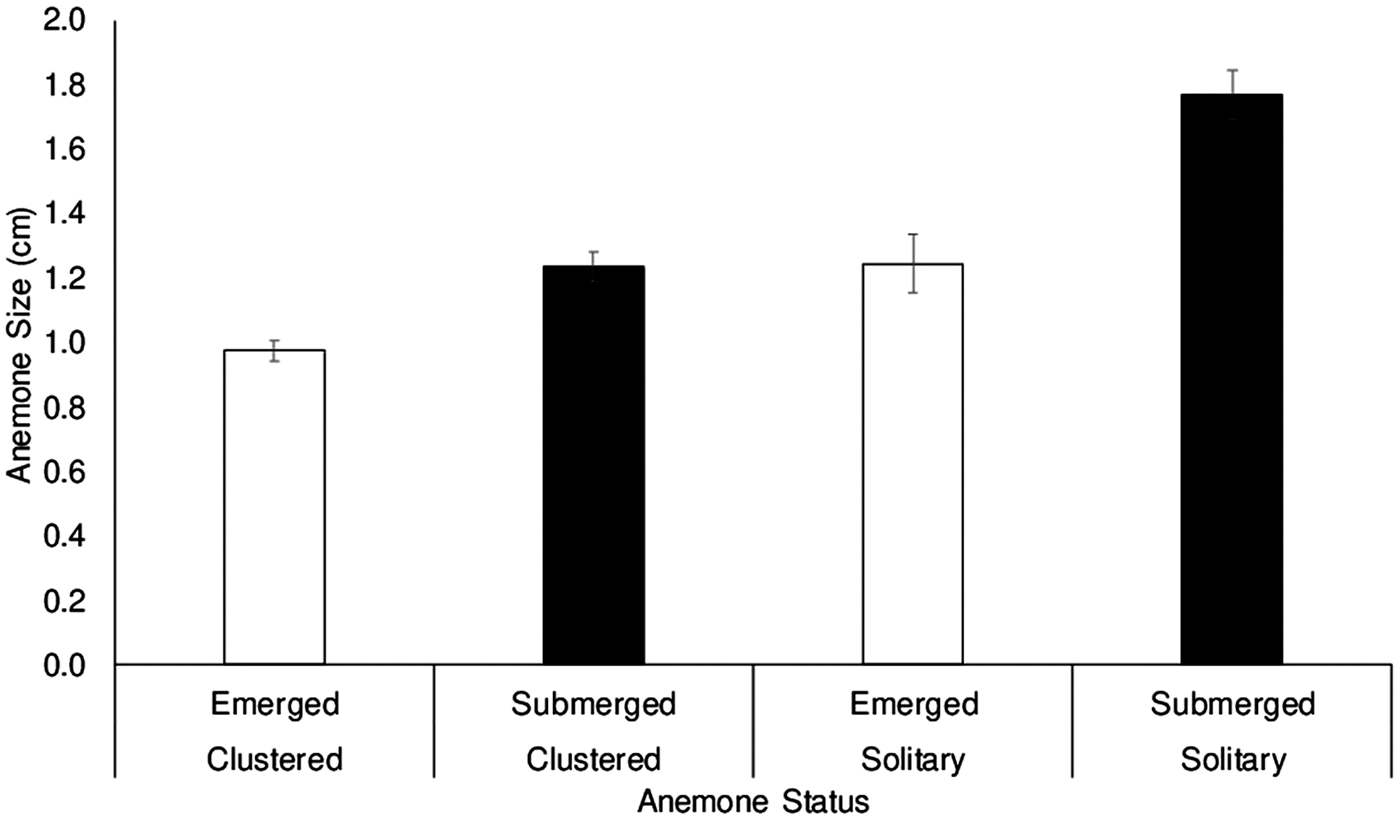
Findings from the first Poisson regression model revealed that solitary anemones were significantly larger than clustered anemones (χ21,559 = 9.14, P < 0.003) and anemones found submerged in rock pools at low tide were significantly larger than those found on emergent rock (χ21,559 = 8.25, P = 0.003) (Figure 1). There was no significant interaction between the terms.
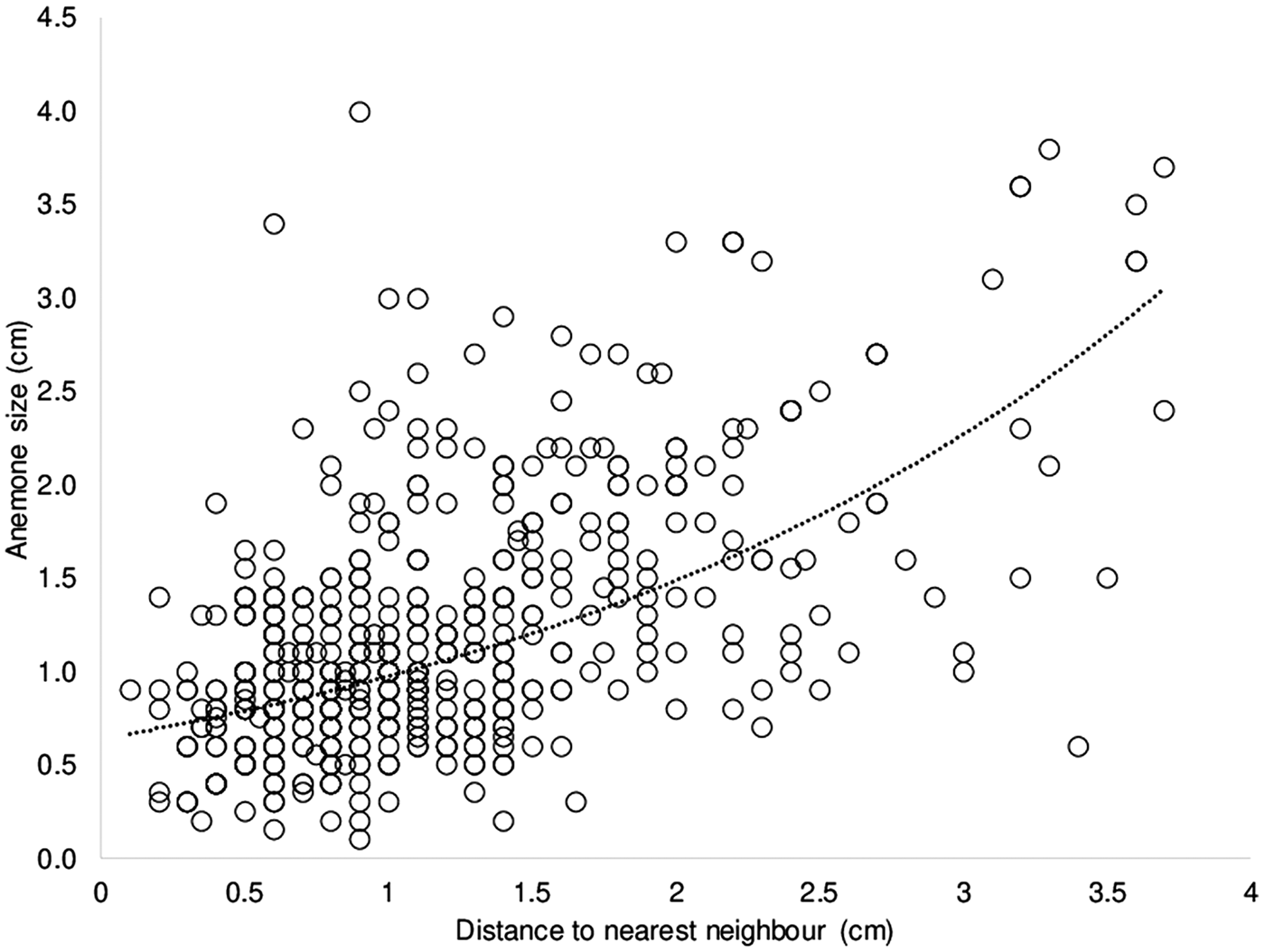
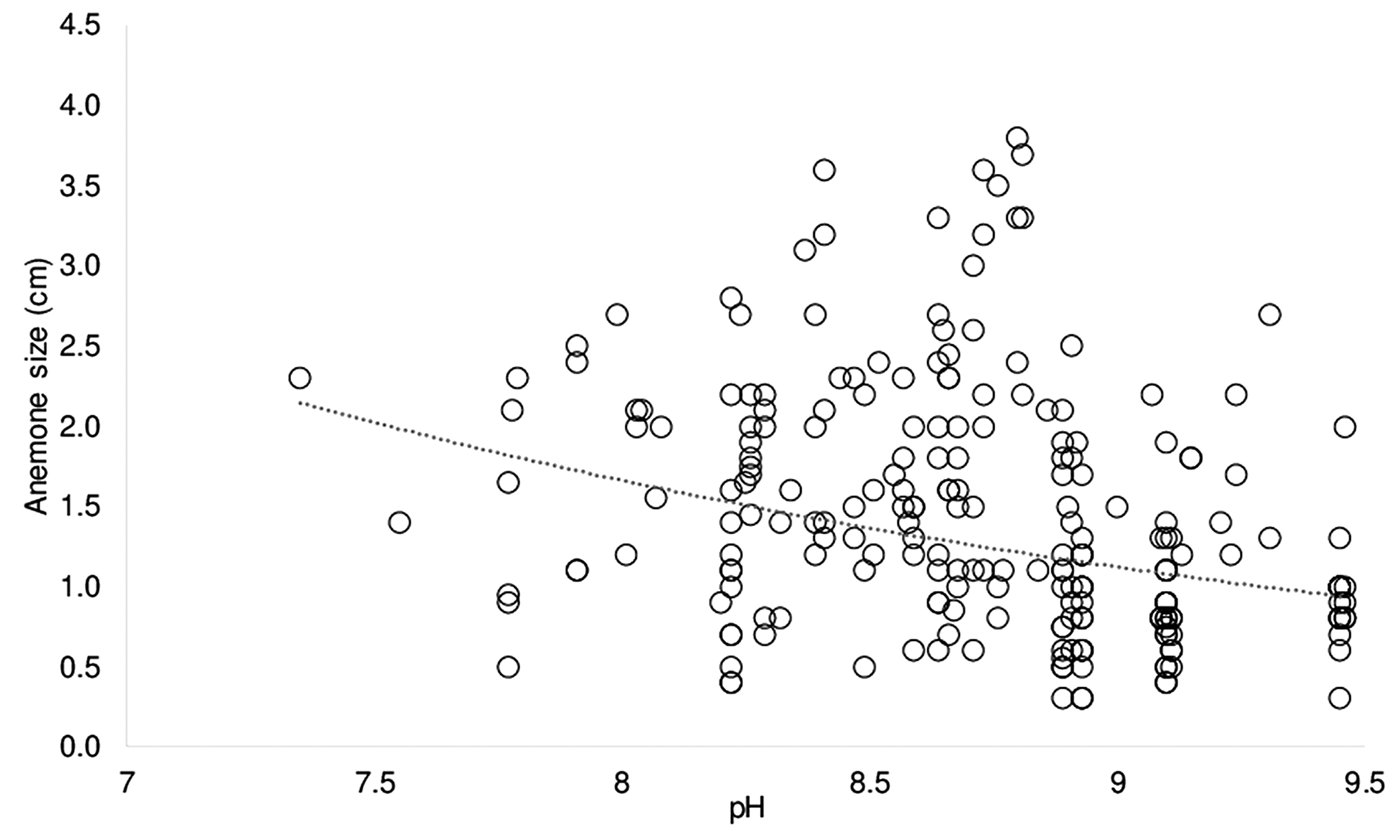
Mean (±1 SE) anemone size in relation to aggregation status (clustered or solitary) and shore placement (emerged or submerged). There was a significant positive effect of distance to nearest neighbour on anemone size (χ21,539 = 12.85, P < 0.001; Figure 2) where an increase in distance to nearest neighbour showed an increase in size. In addition, there was a significant negative effect of pH on anemone size (χ21,231 = 8.41, P = 0.004; Figure 3) where an increase in pH showed a decrease in size. pH ranged from 7.35–9.46.

Discussion
The close proximity of British A. equina, due to its asexual reproductive methods of ejecting young polyps onto nearby substrata (Orr et al., Reference Orr, Thorpe and Carter1982; Brace & Quicke, Reference Brace and Quicke1986), was apparent throughout this study as 37% of all anemones measured were found in clustered aggregations. Findings showed that there was a significant difference in aggregation status in relation to body size (Figure 1), where solitary anemones were around 0.6 cm larger than clustered anemones. This finding is consistent with that of Chomsky et al. (Reference Chomsky, Douek, Chadwick, Dubinsky and Rinkevich2009) who note that in populations where density is higher, anemones tend to be smaller. Findings also showed that larger anemones were more distanced from their closest neighbour (Figure 2). Indeed, the association between size and aggregation may potentially be due to intraspecific competition for resources and space as A. equina is an aggressive species that often participates in contests for dominance against other anemones and its relatives (Bartosz et al., Reference Bartosz, Finkelshtein, Przygodzki, Bsor, Nesher, Sher and Zlotkin2008; Foster & Briffa, Reference Foster and Briffa2014). For example, Rudin & Briffa (Reference Rudin and Briffa2011) discovered that body size was the primary determinant of assessing whether to engage in an aggressive encounter, with larger weapon size of nematocyst as the determining factor of the victor once engaged in fighting. Larger anemones are therefore less likely to be challenged or engaged in an encounter, hence one explanation for why larger anemones were significantly more solitary in this study. Consequently, larger anemones are able to access more and larger food sources (Brace et al., Reference Brace, Pavey and Quicke1979; Robinson et al., Reference Robinson, Porter, Grocott and Harrison2009; Rudin & Briffa, Reference Rudin and Briffa2011). However, the exact relationship between anemone size and aggregation needs further investigation as it is unclear whether large anemones are solitary because they have increased fighting ability, or whether solitary anemones are large because they have better access to food, or a combination of the two.
The effect of distance to nearest neighbour on size of A. equina (χ21,539 = 12.85, P < 0.001). Dotted line represents fitted trend line.

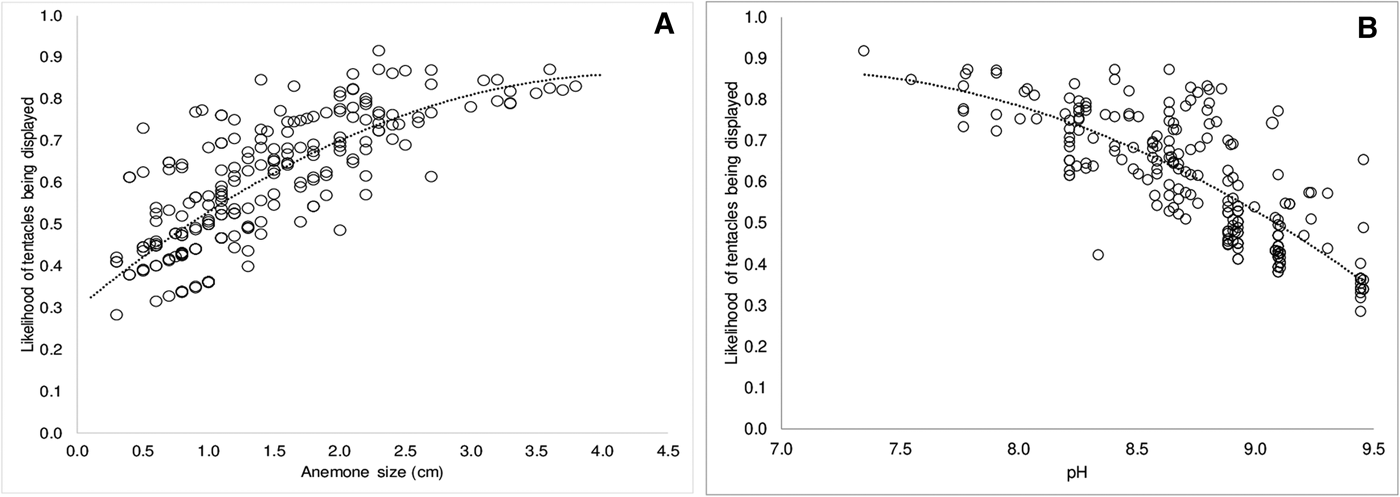
Submerged habitats were found to contain significantly larger anemones than those in emergent habitats (Figure 1). Again, this finding can be explained partly in terms of food resources as submerged habitats, in the form of rock pools, are home to a larger diversity of prey organisms, such as the mussel Mytilus edulis, crustaceans and fish eggs, allowing the anemone to feed frequently and attain a large body size (Goss-Custard et al., Reference Goss-Custard, Jones, Kitching and Norton1979; Shick, Reference Shick1991; Davenport et al., Reference Davenport, Moloney and Kelly2011). This supports the findings that larger submerged anemones were significantly more likely to show their tentacles than smaller anemones (Figure 4A). Conversely, emergent habitats are associated with lower food resources, as anemones will not feed for risk of desiccation (Sebens, Reference Sebens1987; Chomsky et al., Reference Chomsky, Kamenir, Hyams, Dubinsky and Chadwick-Furman2004). In addition, emergent habitats are subjected to harsh conditions such as increased temperature, wind exposure and potential dislodgement via tidal movement (Navarro & Ortega, Reference Navarro and Ortega1984; Shick, Reference Shick1991; Tomanek & Helmuth, Reference Tomanek and Helmuth2002) that many intertidal species cannot tolerate at low tide (Sebens, Reference Sebens1982; Wolcott & Gaylord, Reference Wolcott and Gaylord2002). For example, anemones have been found to shrink in higher temperatures as they are unable to balance energy input and metabolic requirements (Chomsky et al., Reference Chomsky, Kamenir, Hyams, Dubinsky and Chadwick-Furman2004). Consequently, the size of the anemones may reflect a trade-off between the benefits of aggregating in exposed environments and the costs of competition for a reduced food resource. Alternatively, A. equina may feed in a similar manner to Metridium senile, where smaller anemones feed in areas of high velocity, in contrast to larger anemones that feed more efficiently in slower flow conditions (Shick, Reference Shick1991; Anthony, Reference Anthony1997). This may be directly linked to the size of the anemone's tenticular surface area, as larger prey may be more common in rock pools in contrast to smaller nutrients that are found in high velocity areas (Sebens, Reference Sebens1981; Anthony, Reference Anthony1997). Nevertheless, this indicates that shore placement can be an important factor determining body size as smaller anemones found on emergent rock would experience the high velocity of the incoming tide, whereas the larger anemones that were found submerged in rock pools would remain somewhat sheltered.
The effect of pH on size of A. equina (χ21,231 = 8.41, P = 0.004). Optimum pH for effectiveness of toxin = 8.8 (Maček & Lebez, Reference Maček and Lebez1981). Dotted line represents fitted trend. Findings from the binary regression on the likelihood of displaying tentacles revealed that there was no significant effect of aggregation status or distance to nearest neighbour, and no significant interactions between any of the terms. However, there was a significant positive effect of size (χ21,223 = 6.40, P = 0.011) and a significant negative effect of pH (χ21,223 = 9.55, P = 0.002), whereby larger anemones situated in pools with a lower pH were more likely to show tentacles (Figure 4).

The effect of (A) anemone size and (B) pH on the likelihood of tentacles being displayed in A. equina (a: χ21,223 = 6.40, P = 0.011; b: χ21,223 = 9.55, P = 0.002). Dotted lines represent fitted trend lines.

A significant negative regression showed that smaller anemones were more likely to be found in rock pools of a higher pH than larger anemones (Figure 3), despite initial predictions that larger anemones would be found in areas of higher pH due to their probable greater fighting ability (Rudin & Briffa, Reference Rudin and Briffa2011). When attacking another organism with its stinging nematocysts, haemolytic activity from the toxin in A. equina has an optimum pH of 8.8 (Maček & Lebez, Reference Maček and Lebez1981). Smaller anemones that were found in a higher pH content may prefer these habitats as they are found in large aggregations and may have to engage in aggressive encounters for territory more frequently than larger anemones. As these pools have a higher pH, their attacks will be more damaging due to the haemolytic activity having a more alkaline optimum pH (Maček & Lebez, Reference Maček and Lebez1981). However, although smaller anemones were found in rock pools with a higher pH, there was a significant negative effect of pH on the likelihood of displaying tentacles (Figure 4B). This suggests that despite close proximity in an environment where fighting could cause more damage, anemones were not displaying aggressive behaviour. Alternatively, higher pH can be linked to shallower water with less wave exposure (Middelboe & Hansen, Reference Middelboe and Hansen2007) providing a reduced area for obtaining prey items and a consequent small size in anemone. Therefore, smaller A. equina may reside in environments with a higher pH as a trade-off between a lower habitat quality but a reduced frequency of aggressive encounters and interspecific competition for resources. Many factors modify pH in rock pools, such as the rates of respiration and photosynthesis (Newcomb et al., Reference Newcomb, Challener, Gilmore, Guenther and Rickards2011), therefore smaller body size in submerged pools may also be determined by competition with other organisms such as neighbouring invertebrates and algae. Further investigation into rock pool pH should incorporate depth of pool, measure potential food availability and establish which organisms reside within the pool to determine how habitat quality differs between pools containing larger anemones and why.
Conclusion
The findings of this preliminary study show aggregation status, neighbour distance, shore placement and pH all influence size in A. equina. Larger anemones adopted a solitary lifestyle on rocks that stayed permanently submerged in water of a low pH. These habitats appear to contain more favourable conditions such as greater access to food. Conversely, smaller anemones resided in harsher conditions, perhaps trading-off the advantages of size for less interspecific competition.
Financial support
This study was supported by Nottingham Trent University. This research did not receive any specific grant from funding agencies in the public, commercial or not-for-profit sectors.