The ability to deal with stressful situations is an important developmental task for children (Compas, Connor-Smith, Saltzman, Harding Thomsen, & Wadsworth, Reference Compas, Connor-Smith, Saltzman, Harding Thomsen and Wadsworth2001; Muris, Meesters, Merckelbach, Sermon, & Zwakhalen, Reference Muris, Meesters, Merckelbach, Sermon and Zwakhalen1998). In addition to normative (e.g., entering school) and negative life events (e.g., parental separation), dealing with daily hassles (e.g., interpersonal conflicts and taking an exam) is important and poses challenges to a child's development. An inadequate stress response can have an impact on the development and maintenance of psychiatric disorders (de Kloet, Joëls, & Holsboer, Reference de Kloet, Joëls and Holsboer2005; Susman, Reference Susman2006). In this study, we analyzed the endocrinological and subjective stress responses of 8- to 14-year-old children with internalizing (i.e., depressive disorders and anxiety disorders) compared with externalizing disorders (i.e., oppositional defiant disorders and conduct disorders) and healthy control children after a social stress test.
Endocrinological Stress Response
One of the biological systems that has been in the focus of stress-related research is the hypothalamus–pituitary–adrenal (HPA) axis, with cortisol as its primary hormonal product. The HPA axis is part of the body's interconnected set of physiological systems for managing physical, cognitive, and psychosocial stress (see Gunnar & Quevedo, Reference Gunnar and Quevedo2007, for a detailed description of the neurobiological stress reaction). To cope effectively with these challenges, one must have the ability to flexibly adjust one's regulatory activity to the arousal set point that is most advantageous for a certain context (Hastings et al., Reference Hastings, Shirtcliff, Klimes-Dougan, Allison, Derose, Kendziora and Zahn-Waxler2011). Repeated stress over time, however, might lead to less flexible physiological systems with a consistently high or low arousal level. This so-called allostatic load leaves the individual vulnerable to pathology (Juster, McEwen, & Lupien, Reference Juster, McEwen and Lupien2010; McEwen, Reference McEwen1998) and less able to adapt his or her physiological functions to new or different environmental challenges.
Endocrinological Stress Response in Individuals With Psychiatric Disorders
Individuals with internalizing or externalizing disorders often display dysregulated cortisol responses, such as cortisol levels that show a smaller increase in response to a stressor or that show a slower recovery after the removal of a stressor (Ayer et al., Reference Ayer, Greaves-Lord, Althoff, Hudziak, Dieleman, Verhulst and van der Ende2013; Burke, Davis, Otte, & Mohr, Reference Burke, Davis, Otte and Mohr2005; Chida & Hamer, Reference Chida and Hamer2008; Chrousos, Reference Chrousos2009). In studies on the endocrinological stress processes of individuals with internalizing disorders, the hyperreactivity of cortisol (elevated and prolonged cortisol secretion) has received the vast majority of research attention. There is a great deal of evidence for the hyperreactivity of cortisol to acute psychological stress in depressed individuals (see meta-analyses by Lopez-Duran, Kovacs, & George, Reference Lopez-Duran, Kovacs and George2009; Stetler & Miller, Reference Stetler and Miller2011). In a study by Rao, Hammen, Ortitz, Chen, and Poland (Reference Rao, Hammen, Ortiz, Chen and Poland2008), for example, depressed adolescents showed more elevated and prolonged cortisol secretion in response to the Trier Social Stress Test for Children (TSST-C; Buske-Kirschbaum et al., Reference Buske-Kirschbaum, Jobst, Wustmans, Kirschbaum, Rauh and Hellhammer1997) compared with healthy control subjects. Furthermore, similar findings of an elevated cortisol response to a psychosocial stressor were shown in a study on prepubertal children with social phobia as compared with healthy controls (van West, Claes, Sulon, & Deboutte, Reference van West, Claes, Sulon and Deboutte2008). Overall, these findings indicate that this form of dysregulation of the HPA axis may be a phenomenon that is present in different internalizing disorders. However, the findings have been inconsistent. More recent studies with adults as well as with adolescents have also found that a reduced cortisol response (hyporeactivity) following a psychosocial stressor was associated with depressive and anxiety symptoms (Booij, Bouma, de Jonge, Ormel, & Oldehinkel, Reference Booij, Bouma, de Jonge, Ormel and Oldehinkel2013; de Rooij, Reference de Rooij2013; Keenan et al., Reference Keenan, Hipwell, Babinski, Bortner, Henneberger, Hinze and Sapotichne2013).
For children with externalizing disorders, most studies have found a blunted cortisol response following stress compared with healthy children (e.g., Fairchild et al., Reference Fairchild, van Goozen, Stollery, Brown, Gardiner, Herbert and Goodyer2008; Hartman, Hermanns, de Jong, & Ormel, Reference Hartman, Hermanns, de Jong and Ormel2013; Maldonado, Trianes, Cortés, Moreno, & Escobar, Reference Maldonado, Trianes, Cortés, Moreno and Escobar2009; Randazzo, Dockray, & Susman, Reference Randazzo, Dockray and Susman2008; van Goozen, Matthys, Cohen-Kettenis, Buitelaar, & van Engeland, Reference van Goozen, Matthys, Cohen-Kettenis, Buitelaar and van Engeland2000; van Goozen et al., Reference van Goozen, Matthys, Cohen-Kettenis, Gispen-de Wied, Wiegant and van Engeland1998). However, in a meta-analysis on the stress-related cortisol responses of children with externalizing disorders, no robust effect was found (Alink et al., Reference Alink, van IJzendoorn, Bakermans-Kranenburg, Mesman, Juffer and Koot2008). It is interesting to note that in this meta-analysis, which used a strong stressor that included outcome uncontrollability and a social-evaluative threat, the relation between cortisol reactivity and externalizing behavior approached the level of significance. This indicates that a relation between externalizing behavior and cortisol reactivity may be found when the stressor is strong enough to elicit a stress response in the total group. In the underarousal theory, Raine (Reference Raine2002) suggested a certain mechanism that underlies the inverse relation between cortisol levels and externalizing disorders. According to this theory, children with externalizing disorders are less sensitive to stress and are less easily physiologically aroused than other children. As a result, they have low levels of anxiety and more often engage in externalizing behavior.
Developmental Influences on the Endocrinological Stress Response and Its Relationship to Psychiatric Disorders
The reactivity of the HPA axis is influenced by developmental changes during the transition from childhood to adolescence. Studies provide evidence that basal cortisol levels increase with age and sexual maturation during the adolescent years (Gunnar, Wewerka, Frenn, Long, & Griggs, Reference Gunnar, Wewerka, Frenn, Long and Griggs2009). Developmental effects were also found in stress responses of the HPA axis (Gunnar, Wewerka, et al., Reference Gunnar, Wewerka, Frenn, Long and Griggs2009; Kudielka, Buske-Kirschbaum, Hellhammer, & Kirschbaum, Reference Kudielka, Buske-Kirschbaum, Hellhammer and Kirschbaum2004; Stroud et al., Reference Stroud, Foster, Papandonatos, Handwerger, Granger, Kivlighan and Niaura2009), although results are inconsistent. In their study of normative developmental changes in the HPA axis in 9- to 15-year-olds, Gunnar, Wewerka, et al. (Reference Gunnar, Wewerka, Frenn, Long and Griggs2009) found that cortisol stress reactivity showed only a slight positive correlation with sexual maturation. Besides, the authors found gender-specific effects around age 13, with a more pronounced increase in cortisol stress response in girls than in boys.
Heightened physiological stress responses in typically developing adolescents may facilitate their adaptation to the new challenges of adolescence and adulthood (Gunnar, Wewerka, et al., Reference Gunnar, Wewerka, Frenn, Long and Griggs2009). However, puberty is also a key period for the onset of mood and anxiety psychopathology, and in vulnerable adolescents, pubertal changes may partially account for enhanced susceptibility to psychopathology during this phase (Angold, Costello, & Worthman, Reference Angold, Costello and Worthman1998; Costello, Copeland, & Angold, Reference Costello, Copeland and Angold2016; Reardon, Leen-Feldner, & Hayward Reference Reardon, Leen-Feldner and Hayward2009). Among individuals with depression, cortisol levels seem to increase with age, with the largest rate of increase between childhood/adolescence (mean age in studies = 12.7 years, range = 8.9–17.9 years) and adulthood (see meta-analysis by Stetler & Miller, Reference Stetler and Miller2011). As a consequence, differences in cortisol release between depressed and healthy subjects were found to be significantly smaller during childhood/adolescence compared with differences in cortisol release during middle or older adulthood (Stetler & Miller, Reference Stetler and Miller2011). An association between depression and elevated cortisol levels has been found in both (adult) men and women. Moreover, blunted cortisol reactivity to a stressor was reported for prepubertal dysphoric youth, contrary to exaggerated cortisol reactivity to a stressor in postpubertal dysphoric adolescents (Hankin, Badanes, Abela, & Watamura, Reference Hankin, Badanes, Abela and Watamura2010). Colich, Kircanski, Foland-Ross, and Gotlib (Reference Colich, Kircanski, Foland-Ross and Gotlib2015) also found that pubertal stage moderated the effects of cortisol stress reactivity on the development of major depressive disorder (MDD) in girls. Specifically, the onset of MDD was predicted by cortisol hyporeactivity in girls who were in an earlier pubertal stage (Tanner stage ≤ 2), but by cortisol hyperreactivity in girls who were in a later pubertal stage (Tanner stage ≥ 3.5). Among individuals with externalizing problems, Alink et al. (Reference Alink, van IJzendoorn, Bakermans-Kranenburg, Mesman, Juffer and Koot2008) found that the association between stress-related cortisol response and externalizing disorders did not differ according to age.
It is also known that the stress response of the HPA axis is influenced by some other factors, including the severity and persistence of psychopathology (Burke et al., Reference Burke, Davis, Otte and Mohr2005; Chida & Hamer, Reference Chida and Hamer2008; Kudielka, Hellhammer, & Wüst, Reference Kudielka, Hellhammer and Wüst2009). For example, Booij et al. (Reference Booij, Bouma, de Jonge, Ormel and Oldehinkel2013) reported that the stress response changed from hyper- to hyporeactivity of cortisol when the depressive problems lasted for a longer period of time. This finding is also supported by Ayer et al. (Reference Ayer, Greaves-Lord, Althoff, Hudziak, Dieleman, Verhulst and van der Ende2013), who found a relation between blunted cortisol responses to stress and a persistent dysregulation profile in youth. This profile consists of clinically elevated scores on the anxious-depressed and aggressive behavior, as well as attention problems scales of the Child Behavior Checklist (Achenbach, Reference Achenbach1991). Blunted stress reactivity has also been proposed to be a result of exposure to chronic stress (Fries, Hesse, Hellhammer, & Hellhammer, Reference Fries, Hesse, Hellhammer and Hellhammer2005).
Subjective Stress Response
Thus far, studies on experimentally induced stress have focused primarily on indicators of the biological stress reaction (i.e., measured by heart rate, blood pressure, and cortisol levels) and have largely neglected stress-related cognitive–emotional responses (Brosschot, Gerin, & Thayer, Reference Brosschot, Gerin and Thayer2006). Two of the rare studies that included multiple stress response levels found a heightened self-reported anxiety in children and adults with social phobia compared with healthy controls before, during, and after the TSST-C, but no significant difference in their cortisol response (adults: Klumbies, Braeuer, Hoyer, & Kirschbaum, Reference Klumbies, Braeuer, Hoyer and Kirschbaum2014; children: Krämer et al., Reference Krämer, Seefeldt, Heinrichs, Tuschen-Caffier, Schmitz, Wolf and Blechert2012). In addition, another study on a sample of 8- to 12-year-old children from the general population found that the relation between perceived arousal and anxiety symptoms was stronger than the relation between perceived arousal and depressive problems. By contrast, only depressive problems but not anxiety problems were significantly related to the cortisol measures. Thereby, children with higher rates of depressive problems showed a flattened cortisol response to the stress task (Dieleman, van der Ende, Verhulst, & Huizink, Reference Dieleman, van der Ende, Verhulst and Huizink2010). In male adolescents with early-onset conduct disorders, Fairchild et al. (Reference Fairchild, van Goozen, Stollery, Brown, Gardiner, Herbert and Goodyer2008) found lower levels of reported fear and worry under psychosocial stress compared to healthy controls. Perceived arousal during TSST-C does not seem to be age dependent (Stroud et al., Reference Stroud, Foster, Papandonatos, Handwerger, Granger, Kivlighan and Niaura2009; Gunnar, Wewerka, et al., Reference Gunnar, Wewerka, Frenn, Long and Griggs2009).
There is controversy in the literature about the association between subjective and physiological stress response measures (Quas, Hong, Alkon, & Boyce, Reference Quas, Hong, Alkon and Boyce2000). Gunnar, Wewerka, et al. (Reference Gunnar, Wewerka, Frenn, Long and Griggs2009) found a concordance between perceived arousal and cortisol reactivity in response to the TSST, whereas others have documented a discrepancy between the two (Fairchild et al., Reference Fairchild, van Goozen, Stollery, Brown, Gardiner, Herbert and Goodyer2008; van Goozen et al., Reference van Goozen, Matthys, Cohen-Kettenis, Buitelaar and van Engeland2000) or even no association (Dielemann et al., Reference Dieleman, van der Ende, Verhulst and Huizink2010). Fairchild et al. (Reference Fairchild, van Goozen, Stollery, Brown, Gardiner, Herbert and Goodyer2008), as well as researchers from other fields (Gunnar, Brodersen, Nachmias, Buss, & Rigatuso, Reference Gunnar, Brodersen, Nachmias, Buss and Rigatuso1996; Kircanski, Waugh, Camacho, & Gotlib, Reference Kircanski, Waugh, Camacho and Gotlib2016), suggested a weaker coordination between subjectively experienced and physiological arousal in individuals with psychiatric disorders.
A further important aspect of the stress-related cognitive–emotional response involves perseverative cognitions, which have been defined as “the repeated or chronic activation of the cognitive representation of one or more psychological stressors” (Brosschot et al., Reference Brosschot, Gerin and Thayer2006, p. 114; see also the review by Watkins, Reference Watkins2008). Perseverative cognitions are hypothesized to prolong the immediate psychological and biological responses to life events and daily stressors. Thus, the body's systems that are associated with stress (e.g., the cardiovascular, HPA, and immune systems) become chronically activated and more susceptible to the development of disease (the perseverative cognition hypothesis; Brosschot et al., Reference Brosschot, Gerin and Thayer2006; Schwartz et al., Reference Schwartz, Gerin, Davidson, Pickering, Brosschot, Thayer and Linden2003). Perseverative cognitions seem to increase with higher age and pubertal status (Jose & Brown, Reference Jose and Brown2008; Rood, Roelofs, Bögels, & Meesters, Reference Rood, Roelofs, Bögels and Alloy2010) and are primarily implicated in a vulnerability to depression and anxiety (Watkins, Reference Watkins2008). Schmitz, Krämer, Blechert, and Tuschen-Caffier (Reference Schmitz, Krämer, Blechert and Tuschen-Caffier2010) reported that children with social phobia reported more negative thoughts than healthy controls 2.5 hr after the TSST-C. A strong positive relation between perseverative cognitions (stress-reactive rumination) and depressive symptoms was found by Rood, Roelofs, Bögels, and Meesters (Reference Rood, Roelofs, Bögels and Meesters2012) in a large nonclinical sample of children and adolescents. Studies in adults using social-evaluative stressor tasks showed that stress-related state rumination predicted greater cortisol reactivity or delayed recovery (see review of Zoccola & Dickerson, Reference Zoccola and Dickerson2012). In a study investigating the association between rumination and cortisol levels after a laboratory stressor in a clinical adolescent sample, Stewart, Mazurka, Bond, Wynne-Edwards, and Harkness (Reference Stewart, Mazurka, Bond, Wynne-Edwards and Harkness2013) reported that trait rumination in response to depressed mood was associated with prolonged cortisol secretion only in depressed adolescents. No such relation was found in the healthy control group. In contrast, Rudolph, Troop-Gordon, and Granger (Reference Rudolph, Troop-Gordon and Granger2011) found no association between stress-related state rumination in 9-year-old children and their cortisol reactivity in response to a laboratory-based social challenge task. In sum, existing studies have rarely addressed both endocrinological and cognitive–emotional stress responses in the context of a stress task, and therefore they present an inconclusive picture of children with depressive and anxiety disorders.
The Current Study
In the present study, we investigated stress-induced cortisol and subjective responses (subjectively experienced arousal, and immediate and delayed thoughts) in preadolescents and young adolescents (8 to 14 years old) with internalizing disorders (without externalizing comorbidity) in comparison to those with externalizing disorders (without internalizing comorbidity) and healthy controls.
Because our main study interest was in internalizing disorders, and since data about endocrinological and cognitive–emotional stress responses in children with internalizing disorders are sparse and inconclusive, we focused on this spectrum of disorders and analyzed children with a depressive disorder separately from children with pure anxiety disorders (i.e., pure anxiety disorders without depression) in order to better understand the impact on the stress response of each type of disorder. Children with depressive disorders often suffer from high levels of anxiety symptoms or disorders (Kessler, Chiu, Demler, Merikangas, & Walters, Reference Kessler, Chiu, Demler, Merikangas and Walters2005). Empirical findings and theory that discuss anxiety disorders as precursors of depressive disorders suggest that anxiety symptoms could be part of a depressive syndrome in children (Crick & Zahn-Waxler, Reference Crick and Zahn-Waxler2003). A study by von Klitzing et al. (Reference von Klitzing, White, Otto, Fuchs, Egger and Klein2014) also showed that comorbid depression and anxiety symptom clusters lead to far higher levels of impairment compared to pure anxiety disorders. In composing our group of children with a depressive disorder, we decided to group together children with a pure depressive disorder and those with co-occurring depressive and anxiety disorders.
We expected a dysregulation of the HPA axis in response to the TSST-C in children with depressive and pure anxiety disorders compared with healthy controls. Due to the inconsistent cortisol-related results on internalizing disorders, we did not formulate specific hypotheses. In line with Beck's (Reference Beck1967) depression model and the empirical findings of Rood et al. (Reference Rood, Roelofs, Bögels and Meesters2012), we hypothesized that depressed children would rate their own performance more poorly immediately after the TSST-C and report more stressor-related negative thoughts 1 hr after the stress test than would healthy controls. Subjectively experienced arousal might also be higher in these children than in healthy controls; however, the literature is inconsistent here. In line with findings by Dieleman et al. (Reference Dieleman, van der Ende, Verhulst and Huizink2010) and Krämer et al. (Reference Krämer, Seefeldt, Heinrichs, Tuschen-Caffier, Schmitz, Wolf and Blechert2012), we hypothesized that subjectively experienced arousal would be higher in children with pure anxiety disorders than in healthy controls. In accordance with Schmitz et al. (Reference Schmitz, Krämer, Blechert and Tuschen-Caffier2010) we also expected more stress-related negative thoughts in the pure anxiety group than in the healthy control group, but we think that this is a more prominent feature in children with depressive disorders.
In children with an externalizing disorder, we expected a blunted cortisol reaction following the TSST-C. According to the theoretical implications of Raine (Reference Raine2002) and the work of Fairchild et al. (Reference Fairchild, van Goozen, Stollery, Brown, Gardiner, Herbert and Goodyer2008), we expected a lower level of subjectively experienced arousal in children with externalizing disorders than in healthy controls. As there is no literature on TSST-C-related cognitive responses in externalizing children, we did not formulate specific hypotheses on these aspects for this group of children.
In line with Fairchild et al. (Reference Fairchild, van Goozen, Stollery, Brown, Gardiner, Herbert and Goodyer2008) and Kircanski, Waugh, et al. (Reference Kircanski, LeMoult, Ordaz and Gotlib2016), we expected to see a discrepancy between subjectively experienced arousal and cortisol reactivity in children with psychiatric disorders, and a concordance between the two in the healthy control group. Based on the perseverative cognition hypothesis (Brosschot et al., Reference Brosschot, Gerin and Thayer2006; Zoccola & Dickerson, Reference Zoccola and Dickerson2012), we expected to observe a general association between negative thoughts and cortisol.
Finally, we explored whether cortisol reactions or subjective stress responses would specifically predict the assignment to each of the diagnostic groups and whether interactions between cortisol and subjective stress responses would serve as predictors of psychiatric disorders. Due to our cross-sectional design, the statistical predictions do not imply any direction of effect.
We tested associations of study variables with age, pubertal status, and gender, and controlled for these variables in case of significant associations.
Method
Participants
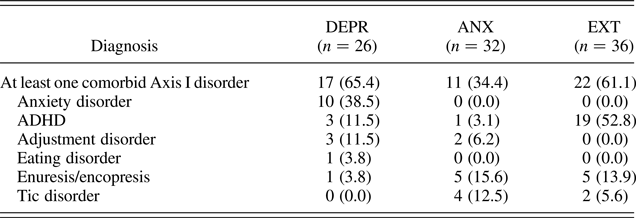
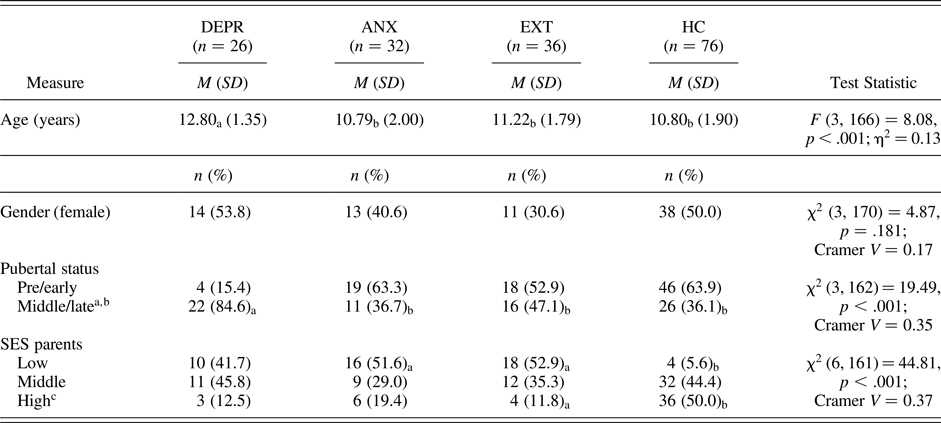
Our sample consisted of 170 children (44.7% female; age: M = 11.18 years; SD = 1.94) and their parents, who participated in a longitudinal cohort study on depressive disorders from childhood to adulthood (Quante et al., Reference Quante, Hesse, Döhnert, Fuchs, Hirsch, Sergeyev and Kiess2012). In the majority of cases, mothers were the informants on symptoms and diagnoses (n = 146, 86%). Other informants were the biological or social father (n = 14, 8%), both parents (n = 8, 5%) and the grandparents (n = 2, 1 %). The selection criteria for this study were the presence of a depressive disorder (DEPR group: pure depressive disorder [n = 16] or depressive disorder and anxiety disorder [n = 10], but without a comorbid externalizing disorder; n DEPR = 26), at least one anxiety disorder (ANX group: anxiety disorders without a comorbid externalizing disorder, n ANX = 32), or an externalizing disorder (EXT group: conduct disorder [n = 7] or oppositional defiant disorder [n = 29] without a comorbid internalizing disorder, n EXT = 36). With respect to the externalizing spectrum, we focused on children with an oppositional defiant disorder or conduct disorder. We grouped both types of disorders together, because of the very small sample size of children with conduct disorder (see Table 1 for frequencies of comorbid psychiatric disorders within each group). A healthy control group (n = 76) was also recruited. Children in the healthy control group showed no psychiatric disorders and had a total difficulties score (Strengths and Difficulties Questionnaire; Goodman, Reference Goodman1997) that was within the normal range according to parent and child ratings. Within our control group, we matched boys and girls by age and parental socioeconomic status (SES). Further inclusion criteria for all participants were fluency in German, an IQ higher than 80 confirmed by the Culture Fair Intelligence Test—Revised Version (Weiss, Reference Weiss2006), and no concurrent endocrine diseases or concomitant administration of glucocorticoid medications. The study protocol was reviewed and approved by the Ethics Committee of the University Hospital of Leipzig. Informed consent was obtained from the parents, and assent was obtained from the children after the procedure had been explained. The investigation was carried out in accordance with the latest version of the Declaration of Helsinki. Sample characteristics and group differences in age, gender, pubertal status, and parental SES are shown in Table 2. To measure parental SES, we used a multidimensional index score (Lange et al., Reference Lange, Kamtsiuris, Lange, Schaffrath, Stolzenberg and Lampert2007). The score is the sum of three components: education and occupational qualification, occupational status, and net income. According to cut-offs presented by the KiGGS study group (Lange et al., Reference Lange, Kamtsiuris, Lange, Schaffrath, Stolzenberg and Lampert2007), SES was divided into three categories: low, intermediate, and high. The highest score of the two parents was used as the index for the SES of the family.
Frequencies of comorbid psychiatric disorders with at least one present diagnosis in the relevant category (% within subsamples)

Note: DEPR, depression group; ANX, anxiety group; EXT, externalizing disorder group; ADHD, attention-deficit/hyperactivity disorder.
Demographic and psychometric measures for the diagnostic groups
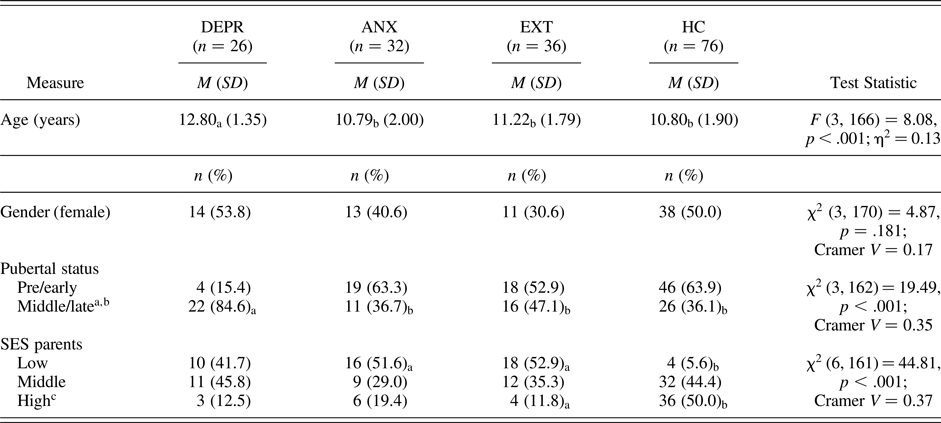
Note: DEPR, depression group; ANX, anxiety group; EXT, externalizing disorder group; HC, healthy control group; n, frequency; SES, socioeconomic status. Different subscript letters indicate number/frequency of significant group differences found in post hoc analyses (Games-Howell).
aPre/early = Tanner ≤ II, middle/late = Tanner ≥ III.
bMissing data: n = 8.
cMissing data: n = 9.
Procedure
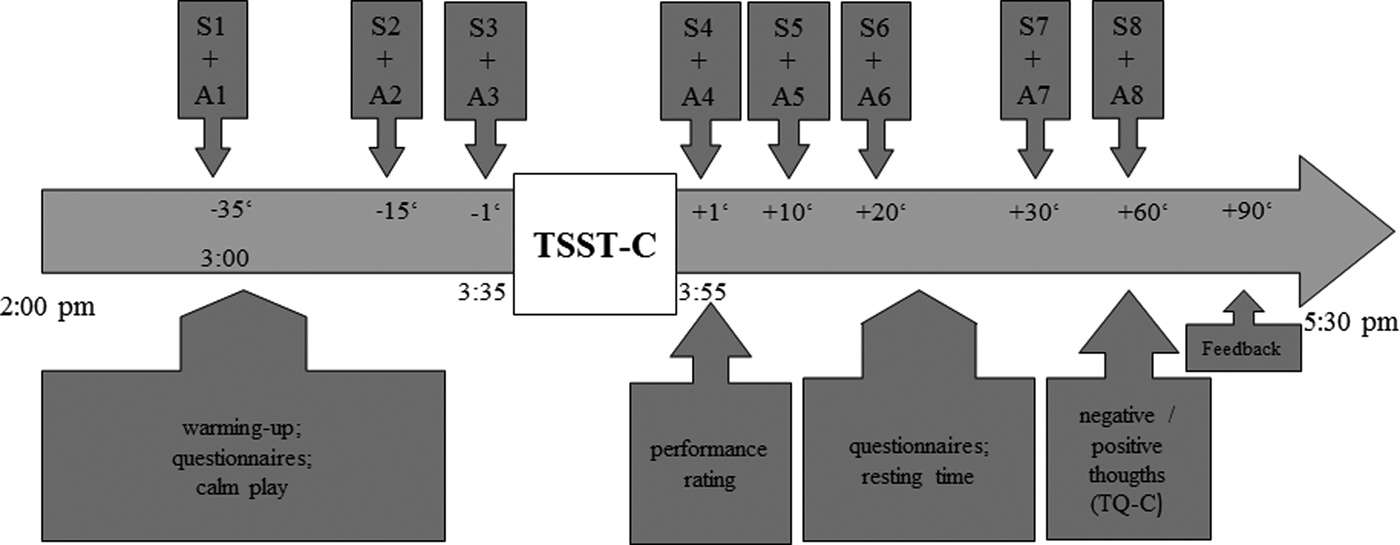
We invited the parents and children to attend two sessions at our research center. During their first testing session, the children and parents completed different questionnaires, for example, on anamnestic data (only parents) or children's symptoms and pubertal status (only children). Children were also tested for their IQ. Trained undergraduate and graduate psychologists, residents in training for child and adolescent psychiatry, and child psychiatrists conducted a diagnostic interview with at least one parent (or legal guardian) to obtain a child's categorical diagnosis. Children meeting the above-mentioned inclusion criteria were invited to take part in a second testing session. We administered the TSST-C embedded in a 3.5-hr afternoon session, which lasted from 2:00 p.m. to 5:30 p.m. for all participants. The session consisted of different questionnaires, calm play, and resting time before and after the TSST-C (which took place from 3:35 p.m. to approximately 3:55 p.m.) as well as a debriefing and positive feedback at the end of the session. Figure 1 provides an overview of the testing procedure.
Testing procedure including the Trier Social Stress Test for Children (TSST-C) during the afternoon session. S1–8, saliva samples 1–8; A1–8, subjective arousal ratings 1–8; TQC, Thoughts Questionnaire for Children.

Measures
Categorical assessment of psychiatric disorders
The German Version of the Kiddie Schedule for Affective Disorders and Schizophrenia for School Aged Children—Present and Lifetime Version (K-SADS-PL; Delmo, Weiffenbch, Gabriel, Stadler, & Poustka, Reference Delmo, Weiffenbach, Gabriel, Stadler and Poustka2001; based on the K-SADS-PL by Kaufman, Birmaher, Brent, Rao, & Ryan; Reference Kaufman, Birmaher, Brent, Rao and Ryan1996; and revised according to the K-SADS-PL 2009 Working Draft, Axelson et al., Reference Axelson, Birmaher, Zelazny, Kaufman, Gill and Brent2009) was administered to at least one parent. The K-SADS-PL is an internationally well-known and widely used semistructured diagnostic interview to assess current and lifetime psychopathology in children and adolescents according to the DSM-IV-TR (American Psychiatric Association, 2000; Sass, Wittchen, Zaudig, & Houben, Reference Sass, Wittchen, Zaudig and Houben2003). The interrater reliability (10% double-rated interview audiotapes) was adequate with κ = 0.76.
Psychosocial stress test
TSST-C (Buske-Kirschbaum et al., Reference Buske-Kirschbaum, Jobst, Wustmans, Kirschbaum, Rauh and Hellhammer1997) is a well-established standardized laboratory stressor (Gunnar, Talge, & Herrera, Reference Gunnar, Talge and Herrera2009). The investigator accompanies the child to the TSST-C room where the “scientific committee” is already waiting (consisting of two unknown persons wearing lab coats). The investigator explains the testing procedure and reads the beginning of the story that the child should continue to tell during the testing phase. After this introduction, the investigator leaves the room, and the child has 5 min to prepare his/her story. After that, the “scientific committee” asks the child to step in front of the microphone and tell his/her story facing the camera. The speech task lasts 5 min, followed by a 5-min arithmetic task (e.g., counting backward from 758 in increments of 7). At the end of the TSST-C, the scientific committee explains that they will review the tape and provide feedback later. The child leaves the room and is escorted back to the main testing room by the investigator waiting outside of the TSST-C room.
This TSST-C protocol is aimed at inducing stress through the challenging tasks, the lack of nonverbal or positive verbal feedback, the videotaping of the session, and the standardized procedure in a sterile environment. Furthermore, participants receive negative feedback if their story ends before the 5-min session is over (after a 15-s waiting period: “You have more time, please continue your story”). The arithmetic task is chosen in accordance with the age of the participants and changed to a more challenging one if the participant does not make any mistakes. Every mistake is followed by the same standardized negative feedback (“That was a mistake, please start over from the beginning”; for a detailed description, see Buske-Kirschbaum et al., Reference Buske-Kirschbaum, Jobst, Wustmans, Kirschbaum, Rauh and Hellhammer1997). The TSST-C is well suited to elicit stress as it meets the criteria of social evaluation, lack of controllability, and unpredictability described by Dickerson and Kemeny (Reference Dickerson and Kemeny2004) in their review. Furthermore, Zoccola and Dickerson (Reference Zoccola and Dickerson2012) showed that a stressor characterized by this kind of social-evaluative threat elicits more rumination than a stressor without this social-evaluative component. This result persisted from 3 to 5 days after the stressor in their study.
Salivary biomarkers
We collected saliva eight times (T1–T8) at –35 (T1), –15 (T2), and –1 (T3) min before the TSST-C and +1 (T4), +10 (T5), +20 (T6), +30 (T7), and +60 (T8) min after the TSST-C. We collected the saliva samples with the Salivette® for Cortisol (Sarstedt, Nümbrecht, Germany). Collected saliva was centrifuged and aliquoted for the measurement of cortisol activity. Eating was prohibited for 30 min prior to sampling. Samples were stored at –80 °C until the measurement of the analytes. In contrast to earlier studies, which mostly used immunoassay as the analytic method for measuring salivary cortisol, we measured cortisol with liquid chromatography tandem mass spectrometry. Even though immunoassay and liquid chromatography tandem mass spectrometry are largely comparable in the interpretation of salivary cortisol dynamics in stress research, the immunoassay method revealed restricted accuracy in the measurement range below 5 nmol/l (Bae et al., Reference Bae, Gaudl, Jaeger, Stadelmann, Hiemisch, Kiess and Kratzsch2015). For a detailed description of the analytic method, see Bae et al. (Reference Bae, Gaudl, Jaeger, Stadelmann, Hiemisch, Kiess and Kratzsch2015). We log transformed all cortisol values. As suggested by Pruessner, Kirschbaum, Meinlschmid, and Hellhammer (Reference Pruessner, Kirschbaum, Meinlschmid and Hellhammer2003), we calculated two reactivity indices: the area under the curve with respect to ground (AUCg) as an index of the total reactivity of the biomarker (sum of trapezoidal areas from time points T3 to T8) and the area under the curve with respect to increase (AUCi) as an index of the magnitude of change in the total reactivity of the biomarker caused by the stressor (AUCg – [value at time point T3 × 80]).Footnote 1 We included the cortisol values only from time points T3 to T8 because of their relation to the stressor. At time points T1 and T2, children did not yet know about the upcoming stress task in detail.
Subjectively experienced arousal
Children rated their arousal eight times (T1–T8) at –35 (T1), –15 (T2), and –1 (T3) min before the TSST-C and +1 (T4), +10 (T5), +20 (T6), +30 (T7), and +60 (T8) min after the TSST-C on a 10-point Likert scale ranging from 1 (not at all aroused) to 10 (very aroused). The rating that occurred immediately after the TSST-C (T4) consisted of two ratings instead of one, separately focusing on the speech task (AROUSstory) and the arithmetic task (AROUScalc). Parallel to the cortisol measures, we calculated the mean of the arousal ratings from T3 to T8 (i.e., T3, T4 AROUSstory, T4 AROUScalc, T5, T6, T7, and T8 were averaged to create AROUSmean).
Perceived performance
One minute after the TSST-C (T4), we asked the children to rate their performance in the speech task (PERFspeech: “How well did you tell the story?”), as well as in the arithmetic task (PERFcalc “How well did you calculate?”) using German school grades on a scale ranging from 1 (best) to 6 (worst). To ease the interpretation of our results, we recoded the scale so that higher values indicated a better performance (i.e., 1 = worst to 6 = best). PERFspeech was significantly negatively associated with negative feedback from the scientific committee during the speech task (r = –.22, p = .005). PERFcalc was not significantly associated with the negative feedback during the arithmetic task (r = .14, p = .086). We averaged the performance ratings across the two tasks (PERFmean: mean of PERFspeech and PERFcalc). Negative feedback during the tasks was not significantly associated with PERFmean (r = .12 for negative feedbackcalc; r = .13 for negative feedbackspeech; ps > .05).
Postevent processing (PEP)
One hour after the TSST-C ended, the children completed the Thoughts Questionnaire for Children (Schmitz et al., Reference Schmitz, Krämer, Blechert and Tuschen-Caffier2010), a child-adapted version of the Thoughts Questionnaire (Edwards, Rapee, & Franklin, Reference Edwards, Rapee and Franklin2003). The questionnaire comprises eight items about positive and eight items about negative thoughts the child might have had about the stressor (“How often did you think: I performed well”; “… the scientists did not like me”). All items were rated on a 6-point Likert scale ranging from 1 (not at all) to 6 (very often). All items about positive thoughts were added together to create a total sum score for positive thoughts (PEPpositive). All negative thought items were summed to create a total sum score for negative thoughts (PEPnegative). The two subscales for positive and negative PEP have a maximum score of 48 each. Cronbach α indicated high internal consistency for both the positive and the negative PEP scales (α = 0.89 and 0.88, respectively) in the current sample. There was a significant negative correlation between the two subscales (r = –.22, p < .01).
Pubertal status
Children and adolescents rated their pubertal status according to schematic pictures of the five tanner stages (Morris & Udry, Reference Morris and Udry1980). Ratings of genital hair growth and size of breasts/testicles were combined into a general rating (mean score) and dichotomized according to Rapkin, Tsao, Turk, Anderson, and Zeltzer's (Reference Rapkin, Tsao, Turk, Anderson and Zeltzer2006) criteria. Tanner Stages I and II describe a prepubertal and early pubertal status, whereas Tanner Stages III and IV describe middle to late pubertal status. Interrater reliability between self-ratings and professional ratings was tested in a child psychiatric sample of 50 children and adolescents between the ages of 8 to 15 years. The correlation between the self and professional ratings was high (Spearman correlation coefficient genital hair growth: r = .81, size of breasts/testicles: r = .85). Age and self-rated pubertal status (mean score) were significantly positively associated (r = .75, p < .001).
Data analytic strategy
To analyze the data, we used the statistical software IBM SPSS Statistics 23. For descriptive analyses, differences concerning age, pubertal status, gender, and SES between the four diagnostic groups were analyzed with an analysis of variance (ANOVA) for age and Pearson chi-square tests for pubertal status, gender, and SES. To analyze the bivariate associations between cortisol and the subjective stress response parameters, we calculated Pearson correlation coefficients (r). To analyze the effects of age, pubertal status, and gender concerning stress response parameters, we computed multivariate analyses of variance (MANOVAs). To answer our research questions about differences in single cortisol and subjective stress response parameters in the diagnostic groups, we calculated univariate ANOVAs with single stress-response parameters (cortisol levels, subjectively experienced arousal, performance ratings, and postevent processing) as dependent variables and age and gender as control variables.
To analyze the predictive value of cortisol and subjective stress responses on the diagnostic groups, we calculated multinomial regression analyses. The diagnostic groups were the dependent variable with the healthy control (HC) group as the reference group; the cortisol response (AUCg/AUCi), the subjectively experienced arousal (AROUSmean), and the postevent processing (PEPnegative/PEPpositive) were the potential predictors of the diagnostic groups. In this regard, the statistical predictions do not imply any direction of effect, because of our cross-sectional design.
Due to high collinearity between children's self-rated performance (PERFmean) and their postevent processing (PEPnegative), we excluded PERFmean from the analyses. Moreover, due to the high correlation between AUCg and AUCi, we performed separate multinomial regression analyses with the two cortisol parameters. In all analyses, we controlled for gender, age, and pubertal status. Because of the collinearity of the latter two, we performed analyses with either age or pubertal status. Because the results of these analyses were similar, we chose to present the analyses with age as a control variable. Finally, we analyzed interaction effects between cortisol and subjective stress response parameters on psychiatric disorders by including Cortisol × Subjective Stress Response interaction terms into the above-mentioned regression analyses. Components of the interaction term (cortisol [AUCg, AUCi] and subjective stress response measures (AROUSmean, PEPnegative, PEPpositive) centered on their means to reduce collinearity and facilitate the interpretation of interactions (Kraemer & Blasey, Reference Kraemer and Blasey2004). Significance was set at p < .05. When post hoc tests were required, we used the Games–Howell procedure. As effect size measures, we used partial eta-squared (ηp2) for the ANOVAs and Cramer V for the chi-square tests.
To disentangle possible differences between children with a pure depressive disorder (pureDEPR) and children with depressive and anxiety disorders (DEPR_ANX), we calculated additional multiple regression analyses and differentiated between pureDEPR and DEPR_ANX. Because of the small sample sizes, we present the results of these analyses as exploratory analyses.
Results
Participant characteristics
Table 2 shows demographic and psychometric measures for the diagnostic groups. Children in the DEPR group were significantly older and had significantly more often a middle/high pubertal status than the children in the other three diagnostic groups (ANX, EXT, and HC). The SES of the parents differed significantly across the diagnostic groups with significantly more families with a low status in the ANX and EXT groups compared with the HC group and significantly more families with a high status in the HC group compared with the EXT group. No gender differences were found across the four diagnostic groups.
Bivariate associations between cortisol and subjective TSST-C-response parameters
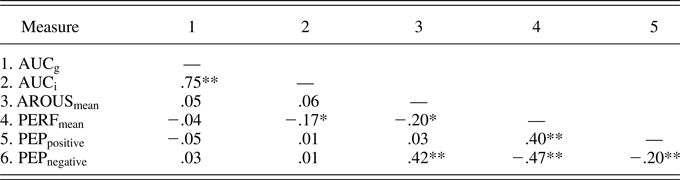
The results of the correlation analyses are shown in Table 3. We found no significant correlation between cortisol and the subjective stress response parameters, except one significant negative correlation between an increase in cortisol and children's performance rating immediately after the TSST-C (r = –.17, p < .05). That is, the higher the cortisol increase was, the worse the children's performance rating was. Separate correlation analyses within the subgroup of children with a psychiatric disorder and the subgroup of healthy controls did not show any significant associations between cortisol and subjective stress response measures (all ps > .05). In addition, we found a significant positive correlation between the two cortisol stress parameters, that is, between the total amount of cortisol (AUCg) and the cortisol increase (AUCi; r = .75, p < .01). For the subjective stress parameters, we found that children's subjectively experienced arousal was significantly negatively correlated with children's performance rating immediately after the TSST-C (r = –.196, p < .05) and significantly positively correlated with their negative thoughts 1 hr later (r = .42, p < .01). Further, children's performance rating immediately after the TSST-C was significantly negatively correlated with negative thoughts (r = –.47, p < .01) and significantly positively correlated with positive thoughts 1 hr after the TSST-C (r = .397, p < .01). Finally, positive and negative thoughts were significantly negatively correlated (r = –.20, p < .01).
Bivariate correlations (Pearson) between cortisol and subjective TSST-C response parameters (total sample)
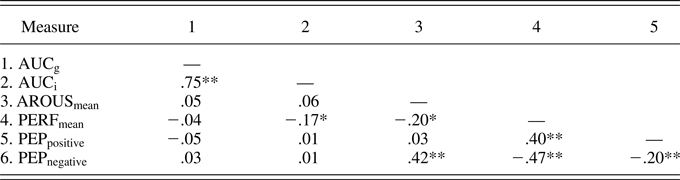
Note: TSST-C, Trier Social Stress Test for Children; AUCg, area under the curve with respect to ground; AUCi, area under the curve with respect to increase; AROUSmean, mean subjectively experienced arousal; PERFmean, mean performance ratings; PEPpositive/PEPnegative, positive/negative postevent processing.
*p < .05. **p < .01.
Associations of stress-related parameters with confounding variables (gender, age, pubertal status)
To analyze gender differences in the total sample, we computed a MANOVA with all TSST-C measures (AUCg, AUCi, AROUSmean, PERFmean, PEPpositive, PEPnegative) as dependent variables. The multivariate results showed a significant effect of gender (Wilks λ = 0.91, p = .034, ηp2 = 0.09). According to the univariate results, this significant effect was due to AUCg and negative thoughts. Girls showed significantly higher values of AUCg than boys (girls: M = 34.87, SD = 12.90; boys: M = 30.72, SD = 9.90), F (1, 144) = 4.77, p = .031, ηp2 = 0.03. Moreover, girls showed significantly higher ratings on the negative thought items than boys (PEPnegative: girls: M = 20.56, SD = 10.97; boys: M = 16.07, SD = 11.65), F (1, 144) = 5.65, p = .019, ηp2 = 0.04. We found no significant gender differences concerning AUCi, subjectively experienced arousal, performance ratings, and positive thoughts (all ps > .05).
To analyze differences due to pubertal status, we again computed a MANOVA with all TSST-C measures as dependent variables. The multivariate result showed a significant effect of pubertal status (Wilks λ = 0.90, p = .023, ηp2 = 0.10). According to the univariate results, this significant effect was due to children's performance rating as well as their positive and negative thoughts. Ratings of negative thought items were higher in children with a higher pubertal level (pre/early: M = 16.27, SD = 11.91; middle/late: M = 20.29, SD = 11.06), F (1, 138) = 4.25, p = .041, ηp2 = 0.03. By contrast, performance ratings (pre/early: M = 3.46, SD = 1.11; middle/late: M = 2.84, SD = 1.08), F (1, 138) = 11.22, p = .001, ηp2 = 0.08, and ratings of positive thought items (pre/early: M = 8.87, SD = 8.98; middle/late: M = 5.03, SD = 5.54), F (1, 138) = 8.91, p = .003, ηp2 = 0.06, were lower in children with a higher pubertal level. Cortisol response and subjectively experienced arousal did not differ by children's pubertal status (both ps > .05).
To analyze the effects of age (dimensional variable) on all TSST-C measures, a MANOVA was again calculated. The multivariate result showed a significant effect of age (Wilks λ = 0.88, p = .005, ηp2 = 0.12). According to the univariate results, this significant effect was due to children's performance ratings and their positive thoughts. Performance ratings (B = –0.16), F (1, 144) = 13.13, p = .001, ηp2 = 0.08, as well as ratings of positive thought items (B = –1.12), F (1, 144) = 12.92, p = .001, ηp2 = 0.08, were lower in older children. Cortisol response (AUCg and AUCi), subjectively experienced arousal, and negative thoughts did not differ by children's age (all ps > .05).
Age, pubertal status, and gender turned out to be significantly associated with different study variables. Because of the high correlation between age and pubertal status, we used only age and gender as covariates in the following multivariate analyses.
Cortisol response, subjectively experienced arousal, performance ratings, and PEP in the diagnostic groups
Cortisol response
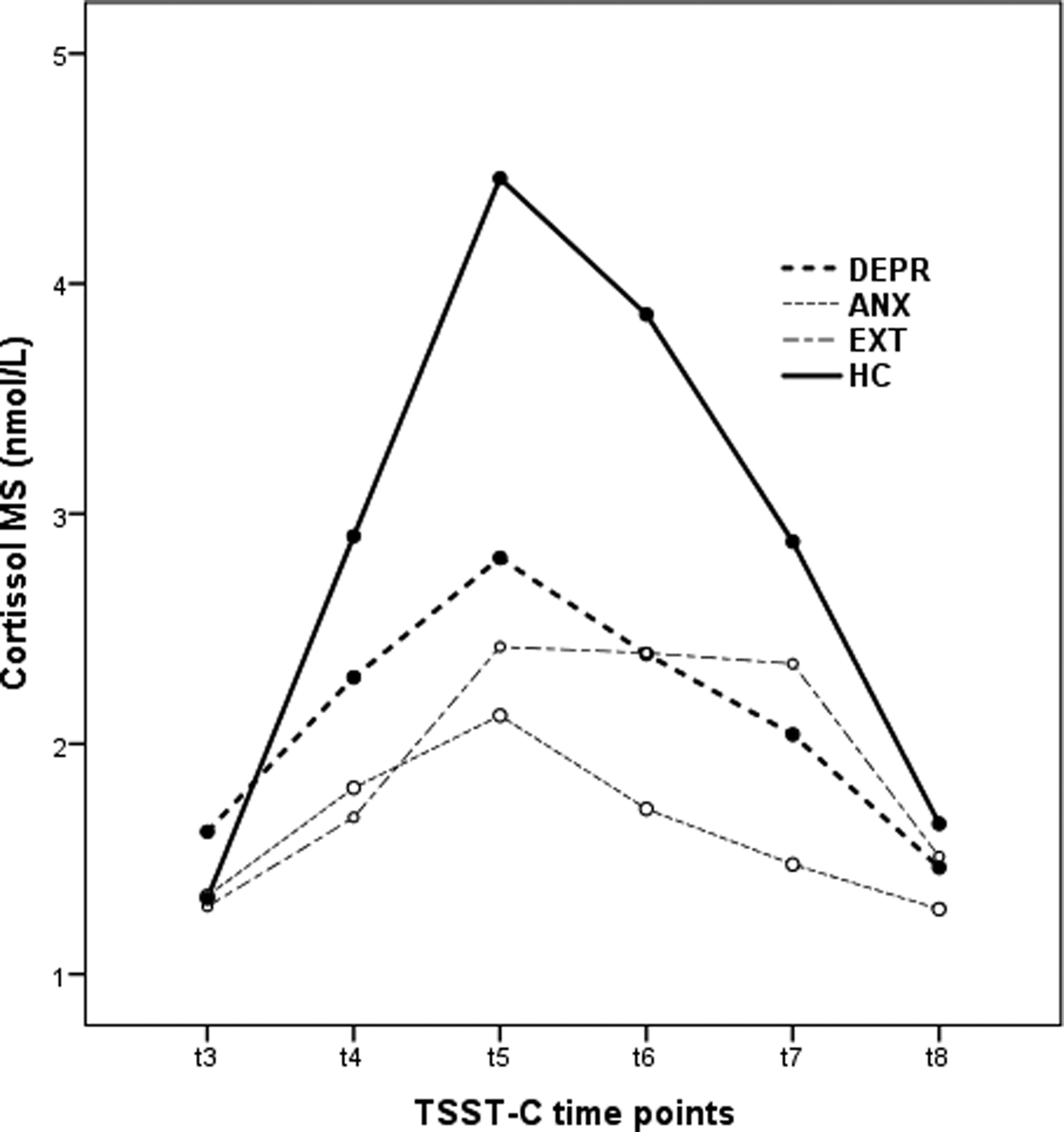
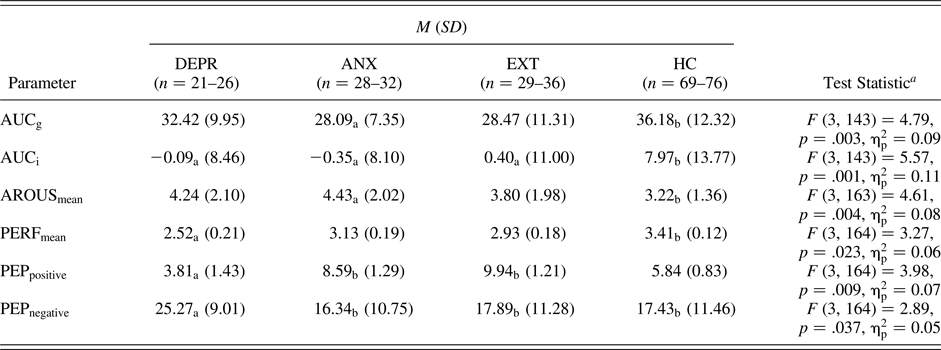
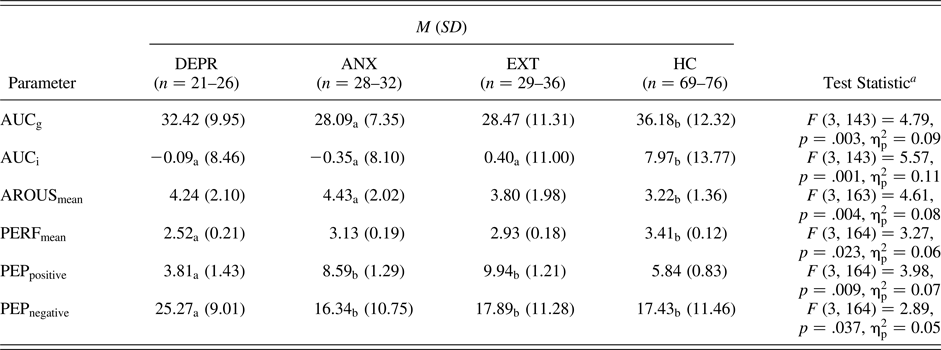
The patterns of the cortisol-level responses (original cortisol values) before and after the TSST-C are shown in Figure 2 for all four diagnostic groups (DEPR, ANX, EXT, and HC). We calculated ANOVAs with AUCg and AUCi (Table 4). A 4 × 2, Group × Gender ANOVA with age as a continuous control variable and AUCg as the dependent variable yielded a significant main effect of group, F (3, 143) = 4.79, p = .003, ηp2 = 0.09. Post hoc tests revealed significantly lower total cortisol levels in the ANX (p = .001) and EXT groups (p = .031) compared with the HC group. Gender, F (1, 141) = 2.89, p = .091, and age, F (1, 141) = 0.135, p = .714, were not significant variables.
Cortisol responses before and after the Trier Social Stress Test for Children (TSST-C) in the four diagnostic groups. DEPR, depression group; ANX, anxiety group; EXT, externalizing disorder group; HC, healthy control group; TSST-C time points: t 3 = −1 min before the TSST-C; t 4 = +1 min, t 5 = +10 min, t 6 = +20 min, t 7 = +30 min, and t 8 = +60 min after the TSST-C.

Group differences in cortisol and subjective TSST-C response parameters between the diagnostic groups
Note: TSST-C, Trier Social Stress Test for Children; DEPR, depression group; ANX, anxiety group; EXT, externalizing disorder group; HC, healthy control group; AUCg, area under the curve with respect to ground; AUCi, area under the curve with respect to increase; AROUSmean, mean subjectively experienced arousal; PERFmean, mean performance ratings; PEPpositive/PEPnegative, positive/negative postevent processing. Different subscript letters indicate number/frequency of significant group differences found in post hoc analyses (Games–Howell).
aAnalysis of variance, controlled for age and gender.
An ANOVA with AUCi as the dependent variable yielded a significant main effect of group, too, F (3, 143) = 5.57, p = .001, ηp2 = 0.11. Post hoc tests revealed significantly lower cortisol increases in all three disorder groups compared with the HC group, all ps < .05. Again, gender, F (1, 141) = 0.510, p = .476, and age, F (1, 141) = 0.388, p = .534, were not significant variables.
Subjectively experienced arousal (AROUSmean)
A 4 × 2, Group × Gender ANOVA with age as a continuous control variable and AROUSmean as the dependent variable (Table 4) yielded a significant main effect of group, F (3, 163) = 4.61, p = .004, ηp2 = 0.08. Post hoc tests revealed significantly higher subjectively experienced arousal with respect to the TSST-C in children in the ANX group compared with the HC group (p = .016). Gender, F (1, 163) = .012, p = .915, and age, F (1, 163) = .242, p = .624, were not significant variables.
Performance rating (PERFmean)
A 4 × 2, Group × Gender ANOVA with age as a continuous control variable and PERFmean as the dependent variable (Table 4) showed a significant main effect of group, F (3, 164) = 3.27, p = .023, ηp2 = 0.06. Post hoc tests revealed significantly lower scores in the DEPR group compared with the HC group (p = .006). Moreover, we found a significant main effect of age, F (1, 164) = 4.62, p = .033, ηp2 = 0.03, with lower PERFmean scores in older children. Gender was not a significant variable, F (1, 164) = 2.86, p = .093.
PEP (PEPpositive/PEPnegative)
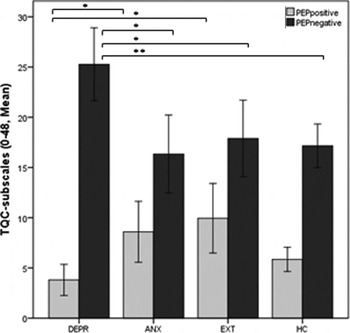
Negative and positive PEP for all four diagnostic groups (DEPR, ANX, EXT, and HC) are shown in Figure 3. A 4 × 2, Group × Gender ANOVA with age as a continuous control variable and PEPpositive as the dependent variable yielded a significant main effect of group, F (3, 164) = 3.98, p = .009, ηp2 = 0.07. Post hoc tests revealed significantly lower PEPpositive scores in the DEPR group compared with the ANX (p = .030) and EXT (p = .010) groups. Moreover, we found a significant main effect of age, F (1, 164) = 11.42, p = .001, ηp2 = 0.07, with lower PEPpositive scores in older children. Gender was not a significant variable, F (1, 164) = 0.000, p = .992.
Positive and negative postevent processing 1 hr after the Trier Social Stress Test for Children (TSST-C) in the four diagnostic groups. TQC, Thoughts Questionnaire for Children; PEPpositive/PEPnegative, positive/negative postevent processing; DEPR, depression group; ANX, anxiety group; EXT, externalizing disorder group; HC, healthy control group. Significant group differences found in post hoc analyses (Games-Howell): *p < .05, **p < .01.

An ANOVA with PEPnegative as the dependent variable yielded a significant main effect of group, too, F (3, 164) = 2.89, p = .037, ηp2 = 0.05. Post hoc tests revealed significantly higher PEPnegative scores in the DEPR group compared with the other three diagnostic groups (all ps < .05). Moreover, we found a significant main effect of gender, F (1, 164) = 4.74, p = .031, ηp2 = 0.03, with higher PEPnegative scores in girls. Age was not a significant variable, F (1, 164) = 0.300, p = .585.
Multinomial regression analyses
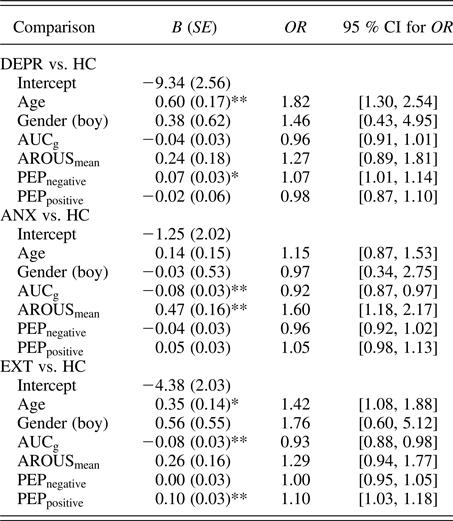
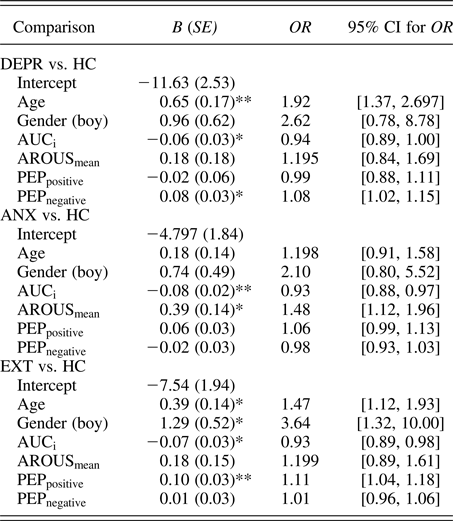
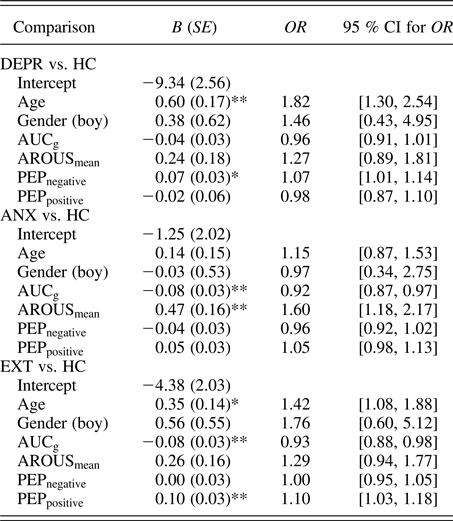
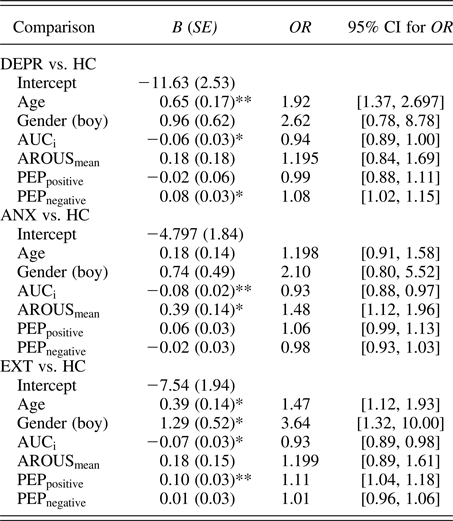
To analyze the associations of cortisol and subjective stress responses with the diagnostic groups, we calculated multinomial regression analysesFootnote 2 (see Tables 5 and 6).
Multinomial regression analysis with AUCg as cortisol parameter
Note: AUCg, area under the curve with respect to ground; DEPR, depression group; HC, healthy control group; AROUSmean, mean subjectively experienced arousal; PEPpositive/PEPnegative, positive/negative postevent processing; ANX, anxiety group; EXT, externalizing disorder group. n = 162; R 2 = .378 (Cox & Snell); R 2 = .411 (Nagelkerke); model χ2 (18) = 69.38; p < .01.
*p < .05. **p < .01.
Multinomial regression analysis with AUCi as cortisol parameter
Note: AUCi, area under the curve with respect to increase; DEPR, depression group; HC, healthy control group; AROUSmean, mean subjectively experienced arousal; PEPpositive/PEPnegative, positive/negative postevent processing; ANX, anxiety group; EXT, externalizing disorder group. n = 162; R 2 = .376 (Cox & Snell); R 2 = .415 (Nagelkerke); model χ2 (18) = 79.83, p < .0.
*p < .05. **p < .01.
Depressive disorder
Analyses with AUCg as a cortisol predictor showed that higher PEPnegative, Wald χ2 (1) = 5.16, p = .023, odds ratio (OR) = 1.07, and higher age, Wald χ2 (1) = 12.23, p = .000, OR = 1.82, significantly predicted membership in the depressive disorder group versus the healthy control group. AUCg did not predict depressive disorders (see Table 5). Analyses with AUCi (see Table 6) showed that lower AUCi, Wald χ2 (1) = 4.33, p = .037, OR = 0.94; higher PEPnegative, Wald χ2 (1) = 6.93, p = .008, OR = 1.88; and higher age, Wald χ2 (1) = 14.38, p = .000, OR = 1.92, significantly predicted membership in the depressive disorder group. AROUSmean, PEPpositive, and gender were not significant predictors of a depressive disorder in any of the analyses.
Anxiety disorder
Analyses with AUCg as a cortisol predictor showed that lower AUCg, Wald χ2 (1) = 9.22, p = .002, OR = 0.92, as well as higher AROUSmean, Wald χ2 (1) = 8.93, p = .003, OR = 1.60, significantly predicted membership in the anxiety disorder group versus the healthy control group (see Table 5). Analyses with AUCi as a cortisol predictor (see Table 6) also showed that lower AUCi, Wald χ2 (1) = 9.77, p = .002, OR = 0.93, and higher AROUSmean, Wald χ2 (1) = 7.38, p = .007, OR = 1.48, were significant predictors. PEPnegative, PEPpositive, gender, and age did not predict membership in the anxiety group in any of the analyses.
Externalizing disorder
Analyses with AUCg showed that lower AUCg, Wald χ2 (1) = 7.81, p = .005, OR = 0.93, higher PEPpositive, Wald χ2 (1) = 8.63, p = .003, OR = 1.10, and higher age, Wald χ2 (1) = 6.12, p = .013, OR = 1.42, significantly predicted membership in the externalizing disorder group versus the healthy control group (see Table 5). Analyses with AUCi (see Table 6) also showed that lower AUCi, Wald χ2 (1) = 8.00, p = .005, OR = 0.93, higher PEPpositive, Wald χ2 (1) = 10.46, p = .001, OR = 1.12, higher age, Wald χ2 (1) = 7.61, p = .006, OR = 1.47, and male gender, Wald χ2 (1) = 6.25, p = .012, OR = 3.64, were predictive of externalizing disorders. AROUSmean and PEPnegative did not predict membership in the externalizing disorder group in any of the analyses.
Interaction effects between cortisol and subjective stress response parameters as predictors of psychiatric disorders
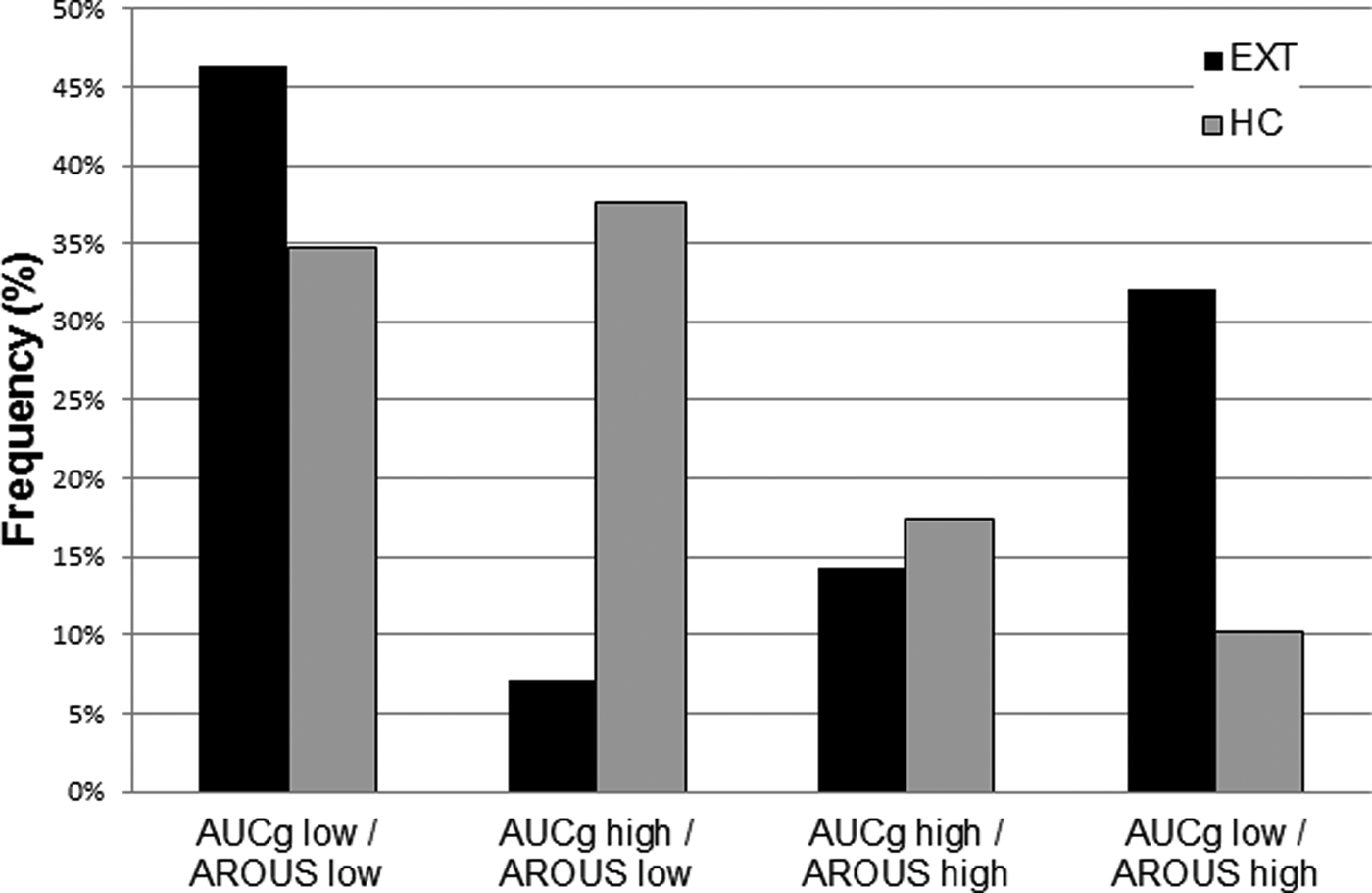
We analyzed the predictive value of the interaction between cortisol and subjective stress response measures in the diagnostic groups by adding AUCg or AUCi × AROUSmean /× PEPnegative /× PEPpositive interaction terms into the above-mentioned regression analyses. For depressive disorders, the main effects of predictors in the regression analyses remained the same after inclusion of the interaction terms. None of the interaction terms were significant predictors. For anxiety disorders, higher positive cognitions turned out to be an additional significant predictor in the analysis with AUCg, Wald χ2 (1) = 4.23, p = .040, OR = 1.08 (in addition to the significant predictors AUCg, AUCi, and subjectively experienced arousal). None of the interaction terms significantly predicted membership of the anxiety disorder group. For externalizing disorders, the main effects of predictors in the regression analysis with AUCi remained the same. In the analysis with AUCg, the main effect of positive cognitions was no longer significant after inclusion of the interaction effects. Instead, the interaction effect of AUCg × AROUSmean turned out to be a significant predictor of externalizing disorders, Wald χ2 (1) = 4.76, p = .029, OR = 1.03. To illustrate this interaction effect, we dichotomized AUCg and AROUSmean at the mean. Figure 4 shows that the combination low AUCg/high subjectively experienced arousal occurred significantly more often in children with externalizing disorders, whereas the combination high AUCg/low subjectively experienced arousal occurred significantly less often in children with externalizing disorders.
Interaction between AUCg and subjectively experienced arousal in children with externalizing disorders and healthy controls. AUCg, area under the curve with respect to ground, dichotomized: low ≤ mean/high > mean; AROUS, mean subjectively experienced arousal, dichotomized: low ≤ mean/high > mean; EXT, externalizing disorder group; HC, healthy control group. Significant group differences found in post hoc analyses (standardized residuals): *p < .05.

Explorative analyses of the subgroups pureDEPR versus DEPR_ANX
For pureDEPR, higher PEPnegative turned out to be the only predictor, analysis with AUCg: Wald χ2 (1) = 6.97, p = .008, OR = 1.10; analysis with AUCi: Wald χ2 (1) = 6.43, p = .011, OR = 1.10. For DEPR_ANX, lower AUCi, Wald χ2 (1) = 4.81, p = .028, OR = 0.87, and higher AROUSmean, analysis with AUCg: Wald χ2 (1) = 3.95, p = .046, OR = 1.66; analysis with AUCi: Wald χ2 (1) = 3.95, p = 1.82, OR = 0.87, were significant predictors.
Discussion
Our results indicate that both cortisol and cognitive–emotional responses to a standardized stress test are associated with children's depressive, anxiety, or externalizing disorders. Children with depressive, anxiety, or externalizing disorders all exhibited a lower increase in cortisol after the stress test as compared with healthy controls, and those with anxiety or externalizing disorders also showed a reduction in the total release of cortisol. Moreover, children in the different disorder groups exhibited different patterns of subjective stress reactions when compared with the healthy control group: the depressed children rated their test performance lower and showed higher ratings of negative thoughts 1 hr after the test, whereas the children with an externalizing disorder showed higher ratings of positive thoughts. By contrast, the anxious children did not differ from their healthy counterparts with respect to their long-term thoughts, but they reported more arousal before and after the task.
When analyzing the association between endocrinological and subjective stress reactions in the total sample, we found a small negative correlation between the increase in cortisol (AUCi) and children's performance rating but not with other subjective parameters. Children who showed a greater increase in cortisol during the TSST-C gave lower ratings of their performance during the stress test. When analyzing the association between endocrinological and subjective stress reactions within the group with psychiatric disorders and within the healthy control group separately, we found no significant associations. This is in contrast to our hypotheses and contradicts earlier studies, which found a discrepancy between subjectively experienced arousal and physiological stress responses in psychiatric groups, but a concordance in healthy controls (Fairchild et al., Reference Fairchild, van Goozen, Stollery, Brown, Gardiner, Herbert and Goodyer2008; Kircanski, Waugh, et al., Reference Kircanski, Waugh, Camacho and Gotlib2016). However, Dieleman et al. (Reference Dieleman, van der Ende, Verhulst and Huizink2010) also found that 8- to 12-year-old children's perceived arousal after a stress test was not significantly correlated with their cortisol responses.
In contrast to findings on the association between stress-related state rumination and cortisol reactivity in adults (Zoccola & Dickerson, Reference Zoccola and Dickerson2012), we found no significant association between stress-related negative thoughts and cortisol in our study. Our result is in line with findings in a child sample by Rudolph et al. (Reference Rudolph, Troop-Gordon and Granger2011). Moreover, most interaction effects between the subjective and endocrinological stress reaction were not associated with diagnostic groups, with one exception (see description below on results concerning externalizing disorders). A discordance of subjective and endocrinological stress reactions might be characteristic for the age group of our study. Even though we found a small interdependency in the total sample, we were not able to determine whether endocrinological and subjective stress reactions (subjectively experienced arousal and thoughts) are independent from each other or not. Perhaps we were simply not able to detect the existing interrelations with the measures we used. It is possible that the cortisol stress response represents a stable trait, whereas the cognitive–emotional responses, as measured in our study, represent state aspects. This idea is supported by the findings of a study by van West et al. (Reference van West, Claes, Sulon and Deboutte2008) in which trait but not state anxiety was associated with higher HPA axis activity. Moreover, trait rumination in response to depressed mood was found to be associated with delayed poststressor cortisol recovery in depressed adolescents (Stewart et al., Reference Stewart, Mazurka, Bond, Wynne-Edwards and Harkness2013). In conrtast, it might also be the case that cortisol and the assessed cognitive–emotional responses were not found to be associated, because we assessed explicitly perceived cognitive–emotional stress reactions, whereas physiological (e.g., cortisol) measures represent more cognitive–emotional stress reactions below the threshold of explicit awareness.
In line with our hypothesis, we found a dysregulated cortisol response in preadolescents and young adolescents with depressive, anxiety, or externalizing disorders compared with healthy controls. Children with psychiatric disorders showed a significantly smaller increase in cortisol after the stress condition, and those with anxiety or externalizing disorders also showed a smaller total release of cortisol. So far, the literature on children with internalizing disorders has revealed inconsistent findings on their stress-related cortisol response. Some studies found a stress-related hyperreactivity of cortisol (Lopez-Duran et al., Reference Lopez-Duran, Kovacs and George2009; Rao et al., Reference Rao, Hammen, Ortiz, Chen and Poland2008; van West et al., Reference van West, Claes, Sulon and Deboutte2008), whereas other studies found a hyporeactivity of cortisol in children with internalizing disorders (Ayer et al., Reference Ayer, Greaves-Lord, Althoff, Hudziak, Dieleman, Verhulst and van der Ende2013; de Rooij, Reference de Rooij2013). These contradictory results might be due to developmental effects on cortisol reactivity. Developmental changes during the transition from middle childhood to adolescence were found to be associated with alterations in physiological stress response systems (e.g., Gunnar, Wewerka, et al., Reference Gunnar, Wewerka, Frenn, Long and Griggs2009; Stroud et al., Reference Stroud, Foster, Papandonatos, Handwerger, Granger, Kivlighan and Niaura2009). However, in contrast to developmental effects on basal cortisol levels, effects of age and pubertal status on stress-related cortisol reactivity were not reported consistently (Gunnar, Wewerka, et al., Reference Gunnar, Wewerka, Frenn, Long and Griggs2009). In our study, cortisol responses (AUCg and AUCi) did not differ according to children's pubertal status or age. Even though we had quite a wide age range, most of our participants had an early to middle pubertal status (Tanner stadium I–II, 79% of the sample). Our result corresponds with the results of Gunnar, Wewerka, et al. (Reference Gunnar, Wewerka, Frenn, Long and Griggs2009), who found no significant effects of sexual maturation on cortisol reactivity. Instead, in the total sample, we found a significant gender effect that indicated a higher total cortisol release (AUCg) in girls than in boys. This finding is in line with results reported in a review on this topic (Gunnar, Talge, et al., Reference Gunnar, Talge and Herrera2009). Even though we did not find significant gender differences concerning our diagnostic groups, the higher cortisol reactivity in girls might indicate on their vulnerability for internalizing disorders (Gunnar, Wewerka, et al., Reference Gunnar, Wewerka, Frenn, Long and Griggs2009).
Previous studies provide evidence that blunted cortisol reactivity was related to a dysphoric state in prepubertal youth (Hankin et al., Reference Hankin, Badanes, Abela and Watamura2010) and predicted the onset of MDD in girls who were at an earlier stage of puberty (Tanner stage ≤ 2; Colich et al., Reference Colich, Kircanski, Foland-Ross and Gotlib2015). To our knowledge, there is no study of the developmental profile of cortisol stress reactivity in children and adolescents with anxiety disorders. However, in line with studies of depressive disorders, the blunted cortisol reactivity in children with anxiety disorders in our findings might be due to the high proportion of prepubertal to early pubertal children (Tanner stadium I–II) in this group. In contrast, the blunted cortisol reaction we found in the depression group seems to contradict earlier findings on developmental effects by Hankin et al. (Reference Hankin, Badanes, Abela and Watamura2010) and Colich et al. (Reference Colich, Kircanski, Foland-Ross and Gotlib2015), as our depression group mainly included adolescents with Tanner stadium III–IV (and only one adolescent with Tanner stadium V). It is possible that a hyperreactivity of cortisol can only be detected in postpubertal youth.
In contrast, our results might also be influenced by the chronicity of the disorder. Booij et al. (Reference Booij, Bouma, de Jonge, Ormel and Oldehinkel2013), for example, reported that the stress response changed from cortisol hyper- to hyporeactivity as depressive problems continued for a longer period of time. According to Petrowski, Wintermann, Schaarschmidt, Bornstein, and Kirschbaum (Reference Petrowski, Wintermann, Schaarschmidt, Bornstein and Kirschbaum2013), who found reduced cortisol in patients with panic disorder, the hyporeactivity might be due to a habituation effect. In line with this idea, Gunnar and Vazquez (Reference Gunnar and Vazquez2001) argued in their review that hyporeactivity might be an adaptive reaction that follows from the frequent experience of stressors. Recent studies have shown that exposure to stressful life events and chronic stress are associated with blunted cortisol stress reactions (Fries et al., Reference Fries, Hesse, Hellhammer and Hellhammer2005; Jaffee et al., Reference Jaffee, McFarquhar, Stevens, Ouellet-Morin, Melhuish and Belsky2015).
In line with earlier studies (e.g., Hartman et al., Reference Hartman, Hermanns, de Jong and Ormel2013; Randazzo et al., Reference Randazzo, Dockray and Susman2008), we found a blunted cortisol stress response in children with an externalizing disorder. Our findings are in line with the underarousal theory for externalizing disorders (Raine, Reference Raine2002), which suggests that chronic underactivation of the HPA axis and the adrenergic nervous system promotes a fearless personality and drives individuals to seek stimuli that will reduce the uncomfortable state. The interplay between cortisol reactivity and subjectively experienced arousal seemed to be associated with externalizing disorders. Low AUCg combined with high subjectively experienced arousal were associated with a significantly higher risk of externalizing disorders. The finding is contrary to our theoretical expectations. A closer look at further characteristics of this specific group of children as well as their future development is needed to understand this finding.
Partly in line with our hypothesis and in line with previous findings of Dieleman et al. (Reference Dieleman, van der Ende, Verhulst and Huizink2010) and Krämer et al. (Reference Krämer, Seefeldt, Heinrichs, Tuschen-Caffier, Schmitz, Wolf and Blechert2012), we found that children with at least one anxiety disorder were significantly more aroused by the TSST-C than healthy controls. No significant differences were found between healthy controls and children with a depressive or externalizing disorder. This difference in the mean of children's subjectively experienced arousal in children with anxiety disorders was based on the ratings that were given after the TSST-C. These children mainly seem to have difficulties downregulating their arousal after experiencing the stressor. Thus, our result might reflect that anxious children have trouble withdrawing their attention from negative stimuli (Gotlib & Joormann, Reference Gotlib and Joormann2010; Mathews & MacLeod, Reference Mathews and MacLeod2005). According to previous findings (e.g., Stroud et al., Reference Stroud, Foster, Papandonatos, Handwerger, Granger, Kivlighan and Niaura2009), subjectively experienced arousal did not change with age.
In partial agreement with our hypothesis and with the known tendency of children with depressive disorders to engage in negative self-evaluation (Beck, Reference Beck1967; de Raedt & Koster, Reference de Raedt and Koster2010; Sass et al., Reference Sass, Wittchen, Zaudig and Houben2003), we found that children with a depressive disorder, but not those with anxiety disorders, gave significantly lower performance ratings (mean rating speech/calculation) than healthy controls. Thereby, the performance ratings were not affected by the amount of negative feedback given by the “scientific committee” during the stress test. Performance ratings were instead associated with age and pubertal status, showing that children gave worse ratings of their performance with growing age and pubertal status. This result is in accordance with findings on children's decreasing evaluations of scholastic competence between childhood and adolescence (Harter & Whitesell, Reference Harter and Whitesell2003; Stadelmann et al., Reference Stadelmann, Grunewald, Gibbels, Jaeger, Matuschek, Weis and Döhnert2017).
Again, partly in line with our hypothesis, we found that children with a depressive disorder, but not those with an anxiety disorder, reported significantly more negative thoughts than healthy controls 1 hr after the TSST-C. Our results support findings on adults with a depressive disorder, who tended to engage in postevent negative thoughts about a stressor (so-called stress-reactive rumination; Alloy et al., Reference Alloy, Abramson, Hogan, Whitehouse, Rose, Robinson and Lapkin2000; Robinson & Alloy, Reference Robinson and Alloy2003). However, our study did not replicate the results of Schmitz et al. (Reference Schmitz, Krämer, Blechert and Tuschen-Caffier2010), who found significantly higher stress-related negative thoughts in children with social phobia as well.
Furthermore, negative thoughts were affected by gender, age, and pubertal status. We found that girls showed higher ratings of negative thoughts than boys. Similar effects were reported by Johnson and Whisman (Reference Johnson and Whisman2013), who found more rumination in women than in men. In our study, negative thought ratings also increased with higher age and pubertal status. These findings are in line with the results of a study by Rood et al. (Reference Rood, Roelofs, Bögels and Alloy2010), who found a slight increase in stress-reactive rumination with age in a nonclinical sample of 10- to 18-year-olds. In addition, children's negative thoughts were connected to their own performance ratings immediately after the stress test (t 4) and their subjectively experienced arousal before and after the TSST-C (mean of ratings t 3 to t 8; both correlations: medium-sized effects). Higher subjectively experienced arousal and worse performance ratings went along with more negative thoughts.
In general, our findings on disorder-specific associations of subjectively experienced arousal and negative thoughts indicate that the pathophysiological processes of depressive and anxiety disorders are different. Our exploratory analyses of pure depressive disorders versus co-occurring depressive and anxiety disorders showed that postevent negative thoughts were associated only with pure depressive disorders, but not with co-occurring depressive and anxiety disorders. In contrast, subjectively experienced arousal and cortisol reactivity were associated with co-occurring depressive and anxiety disorders. These stress response characteristics we have also found in pure anxiety disorders. Thus, the result maybe indicates a dominance of anxiety disorders in co-occurring depressive and anxiety disorders (Kircanski, LeMoult, Ordaz, & Gotlib, Reference Kircanski, LeMoult, Ordaz and Gotlib2016). This is partly in line with Young, Abelson, and Cameron (Reference Young, Abelson and Cameron2004), who found that cortisol was a significant predictor of co-occurring depressive and anxiety disorders, but not of pure depression. Considering the high comorbidity of depressive and anxiety disorders (Kessler et al., Reference Kessler, Chiu, Demler, Merikangas and Walters2005), the results of our exploratory analyses thus indicate the need to consider different pathophysiological processes in children with co-occurring depressive and anxiety disorders. In a recent review, Kircanski, LeMoult, et al. (Reference Kircanski, LeMoult, Ordaz and Gotlib2016) discuss the very inconsistent findings on psychobiological profiles of co-occurring depression and anxiety in adults as a problem of diagnostic categories. The authors recommend a dimensional approach to capture the unique, shared, and interactive features of depressive and anxiety symptom dimensions.
All children showed significantly higher ratings of negative than positive thoughts 1 hr after the TSST-C. It is interesting that the children with externalizing disorders gave the highest ratings of positive thoughts compared with the children in the other diagnostic groups. In the multinomial regression analyses, positive thoughts turned out to be specifically associated with externalizing disorders and (although less robust) for anxiety disorders as well. Maybe these positive postevent thoughts are an expression of a specific coping strategy employed by children with an externalizing disorder or anxiety disorders, which might be related to a contraphobic attitude or to a narcissistic self-concept (Barry, Frick, & Killian, Reference Barry, Frick and Killian2003; Ha, Petersen, & Sharp, Reference Ha, Petersen and Sharp2008). In a study by Barry et al. (Reference Barry, Frick and Killian2003), the maladaptive dimension of narcissism, which encompasses entitlement (e.g., “I want the world to think that I am something special”), exploitativeness (e.g., “I can make anybody believe anything I want them to”), and exhibitionism (e.g., “I like to be the center of attention”) was associated with lower self-esteem and externalizing problems.
Our study has a number of strengths. It is among the first to investigate endocrinological and subjective stress-related responses in children with different psychiatric disorders and in healthy children. To investigate this, we used an ecologically valid stress induction procedure (Dickerson & Kemeny, Reference Dickerson and Kemeny2004). Children were in preadolescence and early adolescence, a time in which they face a large number of changes, as well as growing demands from their environment. To define our diagnostic groups, we used a parental diagnostic interview (K-SADS-PL; Delmo et al., Reference Delmo, Weiffenbach, Gabriel, Stadler and Poustka2001). Out of a larger mixed sample of children (i.e., involving both clinical and community children) with all kinds of comorbid disorders (Quante et al., Reference Quante, Hesse, Döhnert, Fuchs, Hirsch, Sergeyev and Kiess2012), we selected diagnostic groups of depressive disorders, anxiety disorders, and externalizing disorders, as well as a healthy control group. This enabled us to investigate disorder-specific stress-related maladaptive response characteristics of children in a challenging period of life.
However, our study also has to be considered in light of some limitations. In the diagnostic interviews, it was usually mothers who were the informants about children's psychiatric disorders. Unfortunately, we were not able to conduct interviews with the children or other informants (e.g., teachers and psychiatrists). For the assessment of internalizing disorders in particular, children's self-reports would have been relevant because these disorders, unlike externalizing disorders, are characterized by symptoms that involve the individuals’ thoughts and emotions (Kovacs & Devlin, Reference Kovacs and Devlin1998; Sass et al., Reference Sass, Wittchen, Zaudig and Houben2003). Moreover, multi-informant reports are known to be more reliable (Kraemer et al., Reference Kraemer, Measelle, Ablow, Essex, Boyce and Kupfer2003). However, our results represent associations between children's stress responses following a laboratory stressor and their mental health that encompass independent endocrinological and subjective measures that were based on different informants (parent and child) and methods.
The consideration of (gender-specific) developmental influences on endocrinological and subjective stress reactions, as well as on psychiatric disorders, is of great importance. This is also emphasized by findings of Gunnar, Wewerka, et al. (Reference Gunnar, Wewerka, Frenn, Long and Griggs2009) on a more pronounced increase in cortisol stress response in girls around age 13 in contrast to boys. In our analyses, we controlled for age and gender and found significant age effects on depressive and externalizing disorders and significant gender effects on total cortisol release (AUCg) and negative thoughts. However, due to the small sample sizes of the diagnostic groups, we were not able to analyze the moderating effects of pubertal status, age, or gender. A developmental approach to psychopathology suggests that a longitudinal analysis of the moderating effects of age, pubertal status, and gender is needed to disentangle their developmental influence and thereby fully understand the impact of stress responses on the course of psychiatric disorders between childhood and adulthood.
Moreover, we reported analyses in which we exclusively controlled for child-related factors and refrained from controlling for other variables, such as the parental SES (Rajmil et al., Reference Rajmil, Herdman, Ravens-Sieberer, Erhart and Alonso2014), parental psychopathology (LeMoult et al., Reference LeMoult, Ordaz, Kircanski, Singh and Gotlib2015), the chronicity of disorders (e.g., Boij et al., Reference Booij, Bouma, de Jonge, Ormel and Oldehinkel2013) or chronic stress (Fries et al., Reference Fries, Hesse, Hellhammer and Hellhammer2005), which have also been reported to influence the development of psychiatric disorders as well as the stress response of children. In addition, future research should look closely at children with co-occurring disorders (e.g., pure depressive disorders vs. comorbid depressive and anxiety disorders), as we assume that these children might show different stress responses.
In our study, we found a significant interaction effect between AUCg and subjectively experienced arousal in predicting externalizing disorders. This finding should be regarded as preliminary due to low statistical power. To promote a fine-grained understanding of how endocrinological and cognitive–emotional factors work together in the developmental course of different psychiatric disorders, longitudinal analyses of moderating and mediating effects within larger samples are needed.
From a clinical point of view, our results indicate that stress management is an important part of the prevention and therapy of psychiatric disorders in children. Specifically, our findings underpin therapeutic approaches that take into account developmentally relevant stress factors and stress-related thoughts to help children disengage from negative stress-related thoughts and emotions.