


INTRODUCTION
Scholars of the U.S. Congress have long recognized the importance of its committees as the center stage of the legislative process. A number of theories, both normative and positive, have therefore been developed to rationalize them and assess their welfare impact. These theories have emphasized the importance of legislative committees not only in the legislative process but also in preserving the balance of power between the House and the Senate and even in imposing party discipline.Footnote 1
One of the most influential theories of legislative committees is the informational theory, first proposed by Gilligan and Krehbiel (Reference Gilligan and Krehbiel1987, Reference Gilligan and Krehbiel1989). At its core, there is the idea that lawmakers are ignorant of the key variables affecting policy outcomes and that legislative committees may help by providing information on these variables. The informational theory provides a formal framework to study why committees, though having conflicts of interest, have incentives to perform this function. Most importantly, the theory provides a framework to understand the impacts of legislative procedural rules on the effectiveness of the legislative process: it explains why it may be optimal to have the same bill referred by multiple committee members and why it may be optimal to adopt restrictive rules that delegate power to the committees.
Despite the theoretical success of the informational theory, empirical research on legislative rules has been limited. Two approaches have been attempted. First, the informational theory has been justified with historical arguments and case studies (Krehbiel Reference Krehbiel1990). Second, there have been attempts to evaluate some indirect but testable implications of the theory. In particular, researchers have studied the extent to which committees are formed by preferences outliers since it is predicted that such committees may not be able to convey information properly (e.g., Weingast and Marshall Reference Weingast and Marshall1988; Krehbiel Reference Krehbiel1991; Londregan and Snyder Reference Londregan and Snyder1994; Poole and Rosenthal Reference Poole and Rosenthal1991). Other researchers have studied the relationship between the presence of restrictive rules and the composition of committees since in some versions of the theory, more restrictive rules are predicted to be associated with committee specializations, heterogeneity of preferences within committees, and less extreme biases (e.g., Dion and Huber Reference Dion and Huber1997; Krehbiel Reference Krehbiel1997a, Reference Krehbiel1997b; Sinclair Reference Sinclair1994). None of these attempts, however, directly examine the behavioral implications of the informational theory. What makes it difficult to directly test the theory is that behavior can be properly evaluated only with the knowledge of individuals’ private information: field data are typically not sufficiently rich nor even available.
The lack of direct behavioral evidence is problematic. First, existing empirical findings present conflicting evidence, and thus they are not fully conclusive on the validity of the theoretical predictions. Second, the existing evidence is not sufficiently detailed to contribute to a better understanding of some important open theoretical questions. Informational theories are typically associated with multiple equilibria: while some predictions are common to all equilibria, other equally important predictions are not. A key question in studying legislative committees is whether restrictive rules can facilitate the informational role of the committees. The answer to this question, however, depends on which equilibrium is selected and is therefore unanswerable by theory alone.
In this paper, we make the first experimental attempt to gain insight into the informational role of legislative committees. Using a laboratory experiment, we test the predictions of the seminal works by Gilligan and Krehbiel (Reference Gilligan and Krehbiel1989), who first propose the informational theory for heterogenous committees, and by Krishna and Morgan (Reference Krishna and Morgan2001), who further develop on Gilligan and Krehbiel’s (Reference Gilligan and Krehbiel1989) framework. In their models, policies are chosen by the median voter of a legislature, who is uninformed about the state of the world. Two legislative committee members with heterogeneous preferences observe the state and each send a recommendation or a potentially binding proposal to the legislature. Committee members have biases of the same magnitude but of opposite signs: relative to the legislature’s ideal policy, one committee prefers a higher policy and the other a lower policy.
Our experiment implements two legislative rules first studied by Gilligan and Krehbiel (Reference Gilligan and Krehbiel1989) for heterogeneous committees. Under the open rule, the legislature listens to the committee members’ recommendations and is free to choose any policy. Under the closed rule, the legislature can only choose between the policy proposed by a committee member and an exogenously given status quo policy; the other informed committee member sends a speech that, however, has only an informational role. As a benchmark, we also consider a baseline open rule with one committee member (the homogeneous committee), a case previously studied by Crawford and Sobel (Reference Crawford and Sobel1982) and Gilligan and Krehbiel (Reference Gilligan and Krehbiel1987). For each of these rules, we consider two preference treatments: one in which there is a large misalignment of preferences between the legislature and the committee members (high bias) and one in which there is a small misalignment (low bias).Footnote 2
Our experiment provides clear evidence that, even in the presence of conflicts of interest, the informed committee members help improve the legislature’s decision by providing useful information, as predicted by the informational theory. Perhaps more importantly, our experiment provides a first close look at which features underlying the informational theory are supported by laboratory evidence, and which features are more problematic, and thus in need of further theoretical work.
The first prediction of the informational theory that our data speak to is the outlier principle, which involves comparisons within each legislative rule: under both the open and the closed rules, more extreme preferences of the committee members reduce the extent of information transmission. While this principle appears intuitive and has been highlighted in the literature (Krehbiel Reference Krehbiel1991), it is controversial from a theoretical point of view. The existence of equilibria featuring the outlier principle is first proved by Gilligan and Krehbiel (Reference Gilligan and Krehbiel1989). With different selections of equilibria, Krishna and Morgan (Reference Krishna and Morgan2001) show that more informative equilibria exist: for the open rule, they construct a fully revealing equilibrium under which the outlier principle does not hold. Our data support Gilligan and Krehbiel (Reference Gilligan and Krehbiel1989): under both legislative rules, we find that an increase in the committee members’ biases results in a statistically significant decrease in the legislature’s payoff.
The second set of predictions that our data speak to involves comparisons between the legislative rules, what we may call the restrictive-rule principle and the distributional principle. Gilligan and Krehbiel (Reference Gilligan and Krehbiel1989) define two measures of inefficiency: informational inefficiency, which is measured by the residual variance in the equilibrium outcome, and the distributional inefficiency, which is measured by the divergence between the expected outcome and the legislature’s ideal policy.Footnote 3 A key finding in Gilligan and Krehbiel (Reference Gilligan and Krehbiel1989) is that, compared to the open rule, the closed rule is more informationally efficient (the restrictive-rule principle) but less distributionally efficient (the distributional principle). Krishna and Morgan (Reference Krishna and Morgan2001) have questioned this finding too, highlighting that these results are not a feature of all equilibria: there exists at least one equilibrium under the open rule that is more informationally efficient than any equilibrium under the closed rule, and there are equilibria under the closed rule that achieve the maximal possible distributional efficiency. Our experimental evidence clearly supports Gilligan and Krehbiel’s (Reference Gilligan and Krehbiel1989) distributional principle. Regarding the restrictive-rule principle, however, we do not find evidence that the closed rule is more informationally efficient than the open rule. Overall, we find that the distributional principle dominates the restrictive-rule principle and so the legislature’s payoff is higher under the open rule than under the closed rule.
It is intuitive to expect that with multiple informed committee members sending recommendations to the legislature, we should obtain more informed decisions since increasing the number of experts should not hurt even if they are biased: a conjecture that we call the heterogeneity principle. This property is, however, not supported by our data: for both levels of bias, we do not find any statistically significant difference in the legislature’s welfare between the open rule with two members and that with one member. This surprising result is due to an interesting behavioral phenomenon that has not been previously documented and that we call the confusion effect. In an open rule scenario with one committee member, when the legislature receives the recommendation, the recommendation tends to be followed. Since a committee member’s recommendation is typically correlated with the true state, this leads the legislature to avoid “bad” mistakes, i.e., not to correct for large shocks in the state variable. In an open rule scenario with two committee members, when the legislature receives two conflicting recommendations, the legislature tends to “freeze” and ignore both of them. This leads to situations in which the policy incorporates no information about the environment. This phenomenon is indeed consistent with the way Gilligan and Krehbiel (Reference Gilligan and Krehbiel1987) construct out-of-equilibrium behavior, but it goes well beyond explaining how beliefs are constructed out of equilibrium since it seems prevalent on the equilibrium path.
We will begin by reviewing the related literature. We then present the theoretical framework and discuss the main predictions of the informational theory, followed by a description of the experimental design and procedures. We next report findings from our main experimental treatments and then the robustness treatments, after which we conclude.
LITERATURE REVIEW
In the literature on legislative committees, we can distinguish four leading theories: the informational theory, the distributive theory, the majority-party cartel theory, and the bicameral rivalry theory.Footnote 4 The informational theory sees committees as institutional arrangements through which information is aggregated either within committees in a unidimensional policy environment (Gilligan and Krehbiel Reference Gilligan and Krehbiel1987; Reference Gilligan and Krehbiel1989; Krishna and Morgan Reference Krishna and Morgan2001), which is the environment we consider, or from different committees in a multidimensional policy environment (Battaglini Reference Battaglini2002; Reference Battaglini2004). The distributive theory instead sees legislative committees as an institutional tool for the allocation of resources in congress (e.g., Shepsle and Weingast Reference Shepsle and Weingast1995; Weingast and Marshall Reference Weingast and Marshall1988). Redistribution often requires commitment in order to maintain “promises”; allocating powerful positions in a committee is a way to assure such commitment power and make promises in bargaining credible. In the majority-party theory, legislative committees are an institutional tool through which party leadership imposes discipline: appointments of party loyalists to committees are not only a way for parties to control the legislative agenda but also a reward system to promote congressmen who are orthodox to the party line (e.g., Cox and McCubbins Reference Cox and McCubbins1994). Finally, in the bicameral rival theory, committees help to protect congress from outside influences through generating “hurdles” that make it difficult for outsiders to maneuver a bill through the legislature by buying off legislators’ consent with campaign contributions or bribes (e.g., Diermeier and Myerson Reference Diermeier and Myerson1999).
A significant empirical literature study has been devoted to comparing these theories. Our work differs from previous work in two ways. First, previous research has focused on comparing different theories of very different natures, such as the informational and the distributive. In our work, we focus on the informational theory. We test the predictions of Gilligan and Krehbiel (Reference Gilligan and Krehbiel1989) and compare its insights with subsequent work focusing on how information aggregation occurs in the U.S. Congress. Second, as mentioned above, previous works testing the informational theory do not aim at directly studying the behavioral implications of the theory, rather, at testing indirect hypotheses. To our knowledge, our paper is the first experimental test of Gilligan and Krehbiel (Reference Gilligan and Krehbiel1989) and more generally of models of communication comparing the open and the closed rules.
Our study also contributes to the experimental literature on communication games. The focus of this literature has been on games with one sender and one receiver communicating in a unidimensional environment. Examples include Dickhaut, McCabe, and Mukherji (Reference Dickhaut, McCabe and Mukherji1995), Blume, Dejong, Kim, and Sprinkle (Reference Blume, DeJong, Kim and Sprinkle1998; Reference Blume, DeJong, Kim and Sprinkle2001), Gneezy (Reference Gneezy2005), Cai and Wang (Reference Cai and Wang2006), Sánchez-Pagés and Vorsatz (Reference Sánchez-Pagés and Vorsatz2007; Reference Sánchez-Pagés and Vorsatz2009), and Wang, Spezio, and Camerer (Reference Wang, Spezio and Camerer2010). Besides their focus on the one-sender environments, these experiments also differ from ours in that they do not study how communication changes between the open and the closed rules. A common finding of this literature is overcommunication, in which the observed communication is more informative than is predicted by the most informative equilibria of the underlying game. We also observe overcommunication in our one-sender benchmark treatments, and the observation affects our evaluation of the heterogeneity principle.
A handful of recent studies depart from the one-sender-one-receiver environment. Motivated by Battaglini (Reference Battaglini2002), Lai, Lim, and Wang (Reference Lai, Lim and Wang2015) and Vespa and Wilson (Reference Vespa and Wilson2016) conduct experiments on two-sender games with multidimensional state spaces. In contrast to our negative finding on the heterogeneity principle, Lai, Lim, and Wang (Reference Lai, Lim and Wang2015) find in a simple multidimensional setting that receivers make more informed decisions with two senders than with one. Vespa and Wilson (Reference Vespa and Wilson2016) find that senders exaggerate in the direction of their biases, a feature that is also observed in our data. Since the logic of multidimensional cheap-talk games is very different from the logic of their unidimensional counterparts, the findings in these papers are otherwise not directly comparable to ours. Moreover, these studies do not study how communication is affected by the different legislative rules, which is the main focus of our paper.
The two-sender game studied by Minozzi and Woon (Reference Minozzi and Woon2016), which also features a unidimensional state space, is perhaps closest to our environment. They obtain evidence that receivers average senders’ exaggerating messages, a finding that is also obtained by us. Their setting differs from ours in that there is an additional dimension of private information about the senders’ biases. Most importantly, as with the papers discussed above, Minozzi and Woon (Reference Minozzi and Woon2016) also do not study how communication changes with different legislative rules.Footnote 5
THE MODEL
The Set-Up
We sketch the model on which our experimental design is based. The model is a close variant of Gilligan and Krehbiel’s (Reference Gilligan and Krehbiel1989) model of heterogeneous committees, adapted for laboratory implementation.
There are three players, two senders (informed committee members), Sender 1 (S 1) and Sender 2 (S 2), and a receiver (the median voter of a legislature). The two senders each send a message (a recommendation or a potentially binding proposal) to the receiver. Based on the messages, the receiver (R) determines the action (the policy) to be adopted,  $a \in A \subseteq ℝ$. The senders privately observe the state of the world, θ, commonly known to be uniformly distributed on Θ = [0, 1]. The receiver is uninformed. The players’ payoffs are
 $$\eqalign{ & {U^{{S_i}}}\, = - {\left( {a - \left( {\theta + {b_i}} \right)} \right)^2},\quad i = 1,2,\quad {\rm{and}} \cr & {U^R} = - {\left( {a - \theta } \right)^2}, \cr}$$
where b 1 = b = −b 2 > 0 are parameters measuring the misaligned interests between the senders and the receiver.Footnote 6 Sender i’s ideal action is  $a_i^ * \left( \theta \right) = \theta + {b_i}$, while the receiver’s ideal action is a*(θ) = θ; for every θ ∈ [0, 1], each sender prefers the receiver to take an action that is b i higher than the receiver’s ideal action.
The timing of the game is as follows. First, nature draws and reveals θ to both senders. Second, the two senders send messages to the receiver independently and simultaneously. Third, the receiver chooses an action.
The set of available actions for the receiver varies under different legislative rules. Two rules are considered: the open rule and the closed rule. Both rules allow Sender 1 and Sender 2 to send messages, m 1 ∈ M 1 and m 2 ∈ M 2, respectively. Under the open rule, the receiver is free to choose any action a ∈ A after receiving the messages, which are recommendations. Under the closed rule, the receiver is constrained to choose from the set {m 1, SQ}, where SQ ∈ [0, 1] is an exogenously given status quo action; the receiver’s choice is therefore restricted by Sender 1’s message, a binding proposal in case the status quo is not chosen, while Sender 2’s message remains a recommendation or a pure informational speech. As a benchmark, we also consider the model of a homogeneous committee, a case of the open rule with one sender. This is equivalent to the cheap-talk model of Crawford and Sobel (Reference Crawford and Sobel1982) and, in the context of legislative rules, the model of Gilligan and Krehbiel (Reference Gilligan and Krehbiel1987).
Equilibrium Predictions
Two papers that have studied the perfect Bayesian equilibria (hereafter equilibria) of the game specified above are Gilligan and Krehbiel (Reference Gilligan and Krehbiel1989), who present the pioneering analysis, and Krishna and Morgan (Reference Krishna and Morgan2001), who present an alternative analysis based on different selections of equilibria. The informative equilibria characterized in the two papers commonly bring out some interesting features of the legislative rules. At the same time, the equilibria selected by Krishna and Morgan (Reference Krishna and Morgan2001) have different informational properties from those of Gilligan and Krehbiel (Reference Gilligan and Krehbiel1989). Their equilibria, therefore, not only serve as the theoretical benchmark of our experiment but also provide an important motivation for our study, which is to assess the empirical validity of the different equilibrium characterizations.Footnote 7
The equilibrium predictions can be divided into two groups. The first group covers the basic insights of the informational theory, which are common to the equilibria in both papers. The first result in this group is the outlier principle:
Result 1. In both Gilligan and Krehbiel (1989) and Krishna and Morgan (2001) , the receiver’s equilibrium expected payoff is nonincreasing in the bias b:
(a) Under the open rule, the receiver’s payoff is strictly decreasing in
 $b \in \left( {0,{1 \over 4}} \right]$ in Gilligan and Krehbiel (1989) and is constant for $b \in \left( {0,{1 \over 4}} \right]$ in Krishna and Morgan (2001) ; and
(b) Under the closed rule, the receiver’s payoff is strictly decreasing in
$b \in \left( {0,{1 \over 4}} \right]$ in both Gilligan and Krehbiel (1989) and Krishna and Morgan (2001) .


Table 1 summarizes the equilibrium expected payoffs under the two legislative rules for  $b \in \left( {0,{1 \over 4}} \right]$. The central question of the informational theory is how much information can be transmitted under different legislative rules. Given that information is transmitted from the informed senders to the uninformed receiver, the receiver’s payoff provides the relevant yardstick and welfare criterion to gauge information transmission outcomes.Footnote 8 Krishna and Morgan (Reference Krishna and Morgan2001) construct a fully revealing equilibrium under the open rule, in which the receiver’s payoff is at the maximal possible level of zero and is therefore independent of b. In all the other cases, information transmission is imperfect, and the receiver’s payoff varies with b.
Equilibrium Expected Payoffs for  ${\bf b} \in \left( {0,{1 \over 4}} \right]$

Note: R represents the receiver, S1 represents Sender 1, and S2 represents Sender 2.  $N\left( b \right) = \left\lceil { - {1 \over 2} + {1 \over 2}\sqrt {1 + {2 \over b}} } \right\rceil$, where ⌈z⌉ denotes the smallest integer greater than or equal to z.
Another result common to the equilibria in both papers is the heterogeneity principle: the presence of multiple senders with heterogeneous preferences allows the receiver to extract more information. In online Appendix A, we prove:
Result 2. For  $b \in \left( {0,{1 \over 4}} \right)$, compared to the case where there is only one sender under the open rule, the receiver is strictly better off when there are two senders with heterogeneous preferences (under either the open rule or the closed rule), and this is true in both Gilligan and Krehbiel (1989) and Krishna and Morgan (2001) .
The second group of predictions reveals the divergence between Gilligan and Krehbiel (Reference Gilligan and Krehbiel1989) and Krishna and Morgan (Reference Krishna and Morgan2001), which originate from different equilibrium selections, an issue that will be further discussed below. Here, we present the welfare implications of the different equilibria. Following Gilligan and Krehbiel (Reference Gilligan and Krehbiel1989), we decompose the receiver’s expected payoff into two components:
 $$E{U^R} = - \underbrace {{\rm{Var}}\left( {X\left( \theta \right)} \right)}_{{\rm{informational}}} - \underbrace {{{\left( {EX\left( \theta \right)} \right)}^2}}_{{\rm{distributional}}},$$
where X(θ) = a(θ) − θ is said to be the equilibrium outcome function.
The decomposition elucidates the comparisons of welfare by disentangling any welfare difference into differences in two measures of (in)efficiency. The first component, Var(X(θ)), represents the informational inefficiency, which is the residual volatility in the equilibrium outcome. It measures information loss caused by the strategic revelation of information and is a loss shared by all three players. The second component, (EX(θ))2, represents the distributional inefficiency, which measures the systematic deviation of the chosen action from the receiver’s ideal. It is a zero-sum loss to the receiver that is distributed as gains to the senders given their different ideal actions. Note that if the receiver observed the state, both inefficiencies would be zero, which is the most efficient case; the negative variance and squared expectation are interpreted accordingly as informational and distributional efficiencies, where a less negative number represents a higher level of efficiency.
Gilligan and Krehbiel (Reference Gilligan and Krehbiel1989) are the first to study the impacts of the legislative rules on informational and distributional efficiencies for heterogenous committees.Footnote 9 Their equilibrium analysis leads to the restrictive-rule principle and the distributional principle. We summarize these two principles together with a comparative statics on how the two efficiencies change with respect to  $b \in \left( {0,{1 \over 4}} \right]$:
Result 3. In Gilligan and Krehbiel (1989) , informational efficiency is greater under the closed rule than under the open rule (the restrictive-rule principle). Furthermore, the efficiency is decreasing in  $b \in \left( {0,{1 \over 4}} \right]$ under both rules. Distributional efficiency, on the contrary, is greater under the open rule than under the closed rule (the distributional principle): under the open rule (EX(θ)) 2 = 0 for all
 $b \in \left( {0,{1 \over 4}} \right]$, while under the closed rule (EX(θ)) 2 is positive and increasing in
 $b \in \left( {0,{1 \over 4}} \right]$.
Based on a different equilibrium selection, in which the most informative outcome that can be supported by equilibrium behavior is selected for the two legislative rules, Krishna and Morgan (Reference Krishna and Morgan2001) obtain a different welfare conclusion:
Result 4. In Krishna and Morgan (2001) , informational efficiency is greater under the open rule than under the closed rule: under the open rule, full information revelation is possible for all  $b \in \left( {0,{1 \over 4}} \right]$, while even the most informative equilibrium under the closed rule is informationally inefficient. Distributional efficiency is the same under the open and the closed rules: in both cases (EX(θ)) 2 = 0 for
 $b \in \left( {0,{1 \over 4}} \right]$.
Table 2 exemplifies Results 3 and 4 by reporting the predicted values of −Var(X(θ)), −(EX(θ))2, and the receiver’s expected payoff for b = 0.1 and b = 0.2, the two bias levels we used in the experiment. It is useful to observe that, regardless of the equilibrium characterization or bias level, there is no distributional inefficiency under the open rule, as the receiver always chooses her optimal action given the information. Note also that with a fully revealing equilibrium constructed for the open rule, Krishna and Morgan (Reference Krishna and Morgan2001) predict that the receiver’s expected payoff is higher under the open rule for both levels of bias. Gilligan and Krehbiel (Reference Gilligan and Krehbiel1989), on the other hand, predict that the open rule yields a higher receiver’s payoff only when the bias is low. These qualitative differences fuel the comparative statics for evaluating our experimental findings.
Predicted Efficiencies and Receiver’s Expected Payoff

Note: GK (Reference Gilligan and Krehbiel1989) and KM (Reference Krishna and Morgan2001) stand for, respectively, Gilligan and Krehbiel (Reference Gilligan and Krehbiel1989) and Krishna and Morgan (Reference Krishna and Morgan2001). Informational and distributional efficiencies are measured by, respectively, the negative numbers −Var(X(θ)) and −(EX(θ))2. The corresponding inefficiencies are thus measured by the absolute magnitudes of the variances and the squared expectations.
We turn to review the key difference in the equilibrium constructions of the two papers, which leads to the contrasting welfare conclusions.Footnote 10 Consider first the open rule. If the senders’ messages agree, the receiver infers that both senders are telling the truth and adopts her corresponding ideal action; when the messages disagree, beliefs cannot be derived by Bayes’ rule, and an arbitrary out-of-equilibrium belief has to be assigned. This is where the two papers differ.
Gilligan and Krehbiel (Reference Gilligan and Krehbiel1989) choose a particularly simple out-of-equilibrium belief: they essentially assume that the disagreeing messages convey no information. Consequently, the receiver’s optimal action following message disagreements is her ex-ante optimal action under the uniform prior,  ${1 \over 2}$, which is independent of the messages. The “threat” of this action is sufficient to induce the senders to reveal the state when it is sufficiently low
 $\left( {\theta \,\,\le\,\, \bar{\theta } - 2b} \right)$ or sufficiently high
 $\theta \,\,\ge\,\, \bar{\theta } + 2b$. When instead
 $\theta \in \left( {\bar{\theta } - 2b,\bar{\theta } + 2b} \right)$, no information is revealed, and the action is constant at
 ${1 \over 2}$. This equilibrium construction is illustrated in Figure 1a.
Equilibrium Action Under Open Rule

Krishna and Morgan (Reference Krishna and Morgan2001) exploit the freedom in choosing out-of-equilibrium beliefs, designing a mechanism that optimally punishes deviations. The more complex specification, in which out-of-equilibrium actions are now functions of the disagreeing messages, allows them to construct a fully revealing equilibrium, which is illustrated in Figure 1b.
Consider next the closed rule. If the senders’ messages agree with each other, the receiver follows Sender 1’s message, the proposed bill. Otherwise, the bill is rejected in favor of the status quo action. Accordingly, different specifications of out-of-equilibrium beliefs have no impact on actions in the case of disagreements. The consequential difference between Gilligan and Krehbiel (Reference Gilligan and Krehbiel1989) and Krishna and Morgan (Reference Krishna and Morgan2001) lies in what they consider to be agreements.
Gilligan and Krehbiel (Reference Gilligan and Krehbiel1989) define an agreement to exist when Sender 1’s and Sender 2’s messages differ by b, i.e., when m 1 − m 2 = b. Based on this definition, they construct an equilibrium in which Sender 1 manages to exploit his proposing power to impress a bias on the equilibrium outcome so that (EX(θ))2 > 0. While Sender 1 proposes his ideal action for a large number of states, there also exists a range,  $\left( {\bar{\theta } + b,\bar{\theta } + 3b} \right)$, for which Sender 1 proposes a “compromise bill.” From Sender 1’s perspective, the threat of disagreement from Sender 2 is particularly strong for
 $\theta \in \left( {\bar{\theta } + b,\bar{\theta } + 3b} \right)$. For these states, Sender 1 compromises, i.e., not proposing his ideal action, in order to make Sender 2 indifferent between his proposed bill and the status quo. Sender 2 supports the bill under the indifference, and the receiver adopts the bill accordingly. This equilibrium construction is illustrated in Figure 2a.
Equilibrium Action Under Closed Rule

Krishna and Morgan’s (Reference Krishna and Morgan2001) definition of agreement requires the two messages to completely coincide, i.e., m 1 − m 2 = 0. Based on this definition, they construct an equilibrium where Sender 1 cannot impress a bias on the outcome so that (EX(θ))2 = 0, which is also the case under the fully revealing equilibrium they construct for the open rule. They also show that no closed-rule equilibrium can achieve full revelation. Compromise bills are also a feature of their equilibrium, but they are proposed by Sender 1 for two disconnected, symmetric ranges of states,  $\left( {\bar{\theta } - 2b,\bar{\theta } - b} \right)$ and
 $\left( {\bar{\theta } + b,\bar{\theta } + 2b} \right)$. This equilibrium construction is illustrated in Figure 2b.
EXPERIMENTAL DESIGN AND PROCEDURES
We designed a laboratory environment that is faithful to the theoretical environment, subject to limitations imposed by the experimental software z-Tree (Fischbacher Reference Fischbacher2007). We implemented the state, the message, and the action spaces with intervals [0.00, 100.00] that contained numbers with two-decimal digits.Footnote 11 Subjects’ preferences were induced to capture the incentives of the quadratic payoffs in (1).
There were six main treatments, which are summarized in Table 3. We implemented two bias levels, b = 10 (b = 0.1 in the model) and b = 20 (b = 0.2 in the model) for each of the following legislative rules: the open rule with two senders, the closed rule with two senders, and the open rule with one sender.Footnote 12 The bias levels were chosen so that they provided reasonable variation within the realm of the theoretical predictions. A random-matching protocol was used in the main treatments. The senders in the main treatments sent messages that were points in the message spaces. We also conducted robustness treatments that used fixed matchings or interval messages.Footnote 13 A between-subject design was used in all treatments.
Main Treatments: Random Matching and Point Message

The experiment was conducted in English at The Hong Kong University of Science and Technology. A total of 320 subjects participated in the main treatments and 233 in the robustness treatments. Subjects had no prior experience in our experiment and were recruited from the undergraduate population of the university. Upon arriving at the laboratory, subjects were instructed to sit at separate computer terminals housed in the same room with partitions. Each received a copy of the experimental instructions. The instructions were read aloud using slide illustrations as an aid. In each session, subjects first participated in one practice round and then 30 official rounds.
We illustrate the instructions for treatment O-2 with b = 20.Footnote 14 At the beginning of each session, one third of the subjects were randomly assigned as Member A (Sender 1), one third as Member B (Sender 2), and one third as Member C (the receiver). These roles remained fixed throughout the session. Subjects formed groups of three with one Member A, one Member B, and one Member C.
At the beginning of each round, the computer randomly drew a two-decimal number from [0.00, 100.00]. This state variable was revealed (only) to Members A and B. Both members were presented with a line on their screen. The line extended from −20(i.e., 0 − b) to 120(i.e., 100 + b). The state variable was displayed as a green ball on the line. Also displayed was a blue ball, which indicated the member’s ideal action.Footnote 15
Members A and B then each sent a message to the paired Member C. The decisions were framed as asking them to report to Member C the state variable. Members A and B chose their messages, each represented by a two-decimal number from the interval [0.00, 100.00], by clicking on the line. A red ball was displayed on the line, which indicated the chosen message. The members could adjust their clicks. The finalized messages were then displayed simultaneously on a similar line on Member C’s screen as a green (Member A’s message) and a white (Member B’s message) ball. Member C then chose an action in two decimal places from the interval [0.00, 100.00] by clicking on the line, where a red ball was displayed indicating the action. Member C could adjust the action until the desired choice was made.
A round was concluded by Member C’s input of the action choice, after which a summary for the round was provided. For each member, the following variables were displayed numerically in a table: the state variable, the messages sent, the chosen action, the distance between the member’s ideal action and Member C’s chosen action, and the member’s earnings from the round.
We randomly selected three rounds for payments. A subject was paid the average amount of the experimental currency unit (ECU) he/she earned in the three selected rounds at an exchange rate of 10 ECU = 1 HKD.Footnote 16 A session lasted for about one and a half hours. Subjects on average earned, counting both the main and the robustness treatments, HKD$123.2 (≈US$15.8) including a show-up fee.
EXPERIMENTAL FINDINGS: MAIN TREATMENTS
We first report the observed information transmission outcomes separately for the open-rule and the closed-rule main treatments with two senders (O-2 and C-2). The outcomes are evaluated by the correlations between state and action, the receivers’ payoffs, and the two measures of efficiencies. We then compare the receivers’ payoffs and the efficiencies under the two legislative rules, in which we also bring in the findings from the one-sender treatments (O-1) for comparison. Finally, we analyze the behavior of sender-subjects and receiver-subjects in treatments O-2 and C-2.
Since we observe no systematic convergence in behavior over rounds, we use all-round data in our analysis. We employ two major empirical strategies to analyze different variables. For the correlations between state and action, we use subject-level data from the 30 rounds of decisions. Since a subject’s decisions over rounds are likely to be correlated, we use random-effects GLS regressions (implemented with feasible GLS) to account for the repeated observations. For payoffs and efficiency measures, we use session-level data and evaluate the comparative statics with nonparametric tests.
Information Transmission Outcomes: Open Rule and Closed Rule with Two Senders
Treatments O-2
Figure 3 presents the relationships between realized states and chosen actions in the open-rule treatments with two senders, O-2.Footnote 17 Two features of the data are apparent. First, there are positive correlations between state and action, which indicate that information is transmitted as predicted by the equilibria in both Gilligan and Krehbiel (Reference Gilligan and Krehbiel1989) and Krishna and Morgan (Reference Krishna and Morgan2001). Second, there is, especially for b = 20, a range of intermediate states around 50 for which the pooling action 50 is chosen, which is reminiscent of Gilligan and Krehbiel’s (Reference Gilligan and Krehbiel1989) equilibrium.
Relationship between State and Action: Treatments O-2

Table 4 reports estimation results from random-effects GLS models, which provide formal evaluations of these observations. Gilligan and Krehbiel’s (Reference Gilligan and Krehbiel1989) equilibrium predicts that the correlation between state and action decreases from  ${{3\sqrt {65} } \over {25}} = 0.9674$ for b = 10 to
 ${{\sqrt {61} } \over {5\sqrt 5 }} = 0.6985$ for b = 20. The fully revealing equilibrium of Krishna and Morgan (Reference Krishna and Morgan2001) predicts, on the other hand, that the correlation is invariant to changes in bias and equal to one. While the observed positive correlations are broadly in line with both predictions, the estimated coefficients reported in columns (1) and (3) of Table 4, in which we regress a on θ, indicate that our data are more qualitatively consistent with Gilligan and Krehbiel (Reference Gilligan and Krehbiel1989). Echoing the comparative statics, the coefficients decrease from 0.851 for b = 10 to 0.598 for b = 20 with nonoverlapping 95% confidence intervals [0.826, 0.876] and [0.560, 0.635].
Random-Effects GLS Regression: Treatments O-2

Note: The dependent variable is action a. pooling_interval is a dummy variable for θ ∈ [50 − 2b, 50 + 2b]. Standard errors are in parentheses. *** indicates significance at 0.1% level, ** significance at 1% level, and * significance at 5% level.
We further examine our data in light of a distinguishing feature of Gilligan and Krehbiel’s (Reference Gilligan and Krehbiel1989) equilibrium: the existence of a “pooling interval,” [50 − 2b, 50 + 2b], for which action 50 is chosen. Given the values of biases in our treatments, this generates the following prediction: the range of θ for which a = 50 is chosen extends from [30, 70] for b = 10 to [10, 90] for b = 20. In line with the comparative statics, Figures 3a and 3b reveal that there is a stronger cluster of actions at 50 for b = 20 than for b = 10; quantitatively, the frequencies of actions in [49.5, 50.5] are 4% for b = 10 and 10.67% for b = 20. Apart from the comparative statics, these frequencies themselves provide supplementary evidence for the pooling intervals. As a benchmark for comparison, the observed frequencies of states in [49.5, 50.5] are 1.17% for b = 10 and 0.5% for b = 20. Comparing the two sets of frequencies suggests that disproportionately many actions in a close neighborhood of 50 are chosen when the state is not close to 50, and this is true for both b = 10 and b = 20.Footnote 18
Columns (2) and (4) of Table 4 report estimation results from an extended regression model, in which we include a dummy variable for states in [50 − 2b, 50 + 2b] (pooling_interval) and an interaction term (θ × pooling_interval). For b = 20, the statistically significant coefficient of pooling_interval is 5.783 and that of θ × pooling_interval is −0.0988. Taken together, the positive and the negative signed coefficients indicate that the fitted line for states in [50 − 2b, 50 + 2b] has a greater intercept and a smaller slope compared to the fitted line for all states. This provides further evidence that the behavior for states in [50 − 2b, 50 + 2b] is qualitatively different from the rest in the direction predicted by Gilligan and Krehbiel (Reference Gilligan and Krehbiel1989). No statistically significant coefficients are obtained for b = 10.
We summarize these findings:
Finding 1. In treatments O-2, receivers’ actions are positively correlated with the state. The correlation decreases as the bias level increases, as predicted by Gilligan and Krehbiel’s (1989) equilibrium. Further in line with Gilligan and Krehbiel (1989) , there are observations of pooling action chosen for a range of intermediate states around 50, with stronger evidence for b = 20 and some evidence for b = 10.
Informational efficiency and receivers’ payoffs further differentiate the two papers in terms of their different comparative statics vis-à-vis the outlier principle.Footnote 19 Gilligan and Krehbiel (Reference Gilligan and Krehbiel1989) predict that a higher bias translates into a higher variance in the equilibrium outcome, i.e., a drop in informational efficiency, and, with no change in distributional efficiency, a lower receiver’s payoff. By contrast, Krishna and Morgan’s (Reference Krishna and Morgan2001) fully revealing equilibrium predicts that informational efficiency does not vary with the bias.
The first set of columns in Table 5 reports the observed efficiencies and receivers’ payoffs in treatments O-2. The data support Gilligan and Krehbiel’s (Reference Gilligan and Krehbiel1989) comparative statics. An increase in the bias from b = 10 to b = 20 significantly lowers the informational efficiency: the average Var(X(θ)), which measures inefficiency, increases from 93.37 to 300.77 (p = 0.0143, Mann–Whitney test).Footnote 20 It also results in a lower distributional efficiency, although the difference is not significant: the average (EX(θ))2, which measures inefficiency, increases from 1.05 when b = 10 to 6.63 when b = 20 (p = 0.1, Mann–Whitney test). Finally, the average receivers’ payoff, which is calculated as [−Var(X(θ)) − (EX(θ))2], is significantly lower when the bias is higher: the average payoff decreases from −94.92 when b = 10 to −307.4 when b = 20 (p = 0.0143, Mann–Whitney test).Footnote 21
Observed Efficiencies and Receivers’ Payoffs

Note: Informational and distributional efficiencies are measured by, respectively, the negative numbers −Var(X(θ)) and −(EX(θ))2. The corresponding inefficiencies are thus measured by the absolute magnitudes of the variances and the squared expectations. Receivers’ payoffs are calculated as [−Var(X(θ)) − (EX(θ))2].
We summarize these findings:
Finding 2. In treatments O-2, an increase in the bias from b = 10 to b = 20 leads to the following:
(a) A statistically significant decrease in receivers’ average payoff, a finding consistent with Gilligan and Krehbiel (1989) but not with Krishna and Morgan (2001) ;
(b) A statistically significant decrease in informational efficiency, a finding consistent with Gilligan and Krehbiel (1989) but not with Krishna and Morgan (2001) ; and
(c) No statistically significant change in distributional efficiency, a finding consistent with both Gilligan and Krehbiel (1989) and Krishna and Morgan (2001) .
Treatments C-2
Figure 4 presents the relationships between realized states and chosen actions in the closed-rule treatments, C-2. We first note that the observations are less noisy compared to those from O-2, which should not be surprising given that under the closed rule receivers have less freedom in their action choices, which are now binary. Three features of the data emerge from the figures. First, as predicted by both Gilligan and Krehbiel (Reference Gilligan and Krehbiel1989) and Krishna and Morgan (Reference Krishna and Morgan2001), the status quo action of 50 is chosen for intermediate states. Second, Sender 1’s ideal action is chosen for more “extreme” states, which is consistent with Gilligan and Krehbiel (Reference Gilligan and Krehbiel1989). Third, and this is not predicted by either equilibrium, there is evidence of mixing behavior for certain high states.
Relationship between State and Action: Treatments C-2

Both Gilligan and Krehbiel (Reference Gilligan and Krehbiel1989) and Krishna and Morgan (Reference Krishna and Morgan2001) predict that the status quo action is chosen for [50 − b, 50 + b]. Out of this range, their predictions start to differ. A distinguishing difference is that, for a sizable set of states outside [50 − b, 50 + b], Gilligan and Krehbiel (Reference Gilligan and Krehbiel1989) predict that Sender 1’s ideal action,  $a_1^*\left( \theta \right) = \min \left\{ {\theta + b,100} \right\}$, is chosen, whereas Krishna and Morgan (Reference Krishna and Morgan2001) predict that the receiver’s ideal action, a*(θ) = θ, is instead chosen. For b = 10, the frequencies with which the receivers take the status quo 50, Sender 1’s ideal
 $a_1^ * \left( \theta \right) \,\,\pm\,\, 0.5$, or their own ideal a*(θ) ± 0.5 are, respectively, 21.17%, 60.5%, and 3%; for b = 20, the corresponding frequencies are 44.33%, 37%, and 2.33%. While the different frequencies of the status quo across the bias levels do not differentiate the two equilibria, the drastic differences between the frequencies of Sender 1’s ideal action and of the receiver’s ideal action clearly support Gilligan and Krehbiel (Reference Gilligan and Krehbiel1989). Note also that the combined frequencies of the status quo and Sender 1’s ideal action account for more than 80% of the observations.
Distributional efficiency provides another measure that differentiates the two equilibrium characterizations with respect to their predictions on whose ideal action is chosen. Gilligan and Krehbiel (Reference Gilligan and Krehbiel1989) predict that the receiver, who often takes Sender 1’s ideal action, bears distributional inefficiency, i.e., (EX(θ))2 > 0. Krishna and Morgan (Reference Krishna and Morgan2001), on the other hand, predict that (EX(θ))2 = 0 as the receiver is able to take her ideal action. Table 5 indicates that the observed efficiencies support Gilligan and Krehbiel (Reference Gilligan and Krehbiel1989): the average (EX(θ))2 = 43.95 for b = 10 and (EX(θ))2 = 42.49 for b = 20, which are both significantly greater than 0 (p = 0.0625, the lowest possible p-value for four observations from the Wilcoxon signed-rank tests).
Comparing Figures 4a with 4c and 4b with 4d further reveals that actions are chosen for the “right” states as predicted by Gilligan and Krehbiel (Reference Gilligan and Krehbiel1989). Deviations from the prediction occur, however, for states in [60, 80] for b = 10 and for states in [75, 100] for b = 20. In both cases, mixing behavior is observed. In the former, concentrations of actions at 50 and at Sender 1’s ideal actions are observed; in the latter, concentrations of actions at 50 and 100 are observed.
Despite the unpredicted mixing behavior, our analysis so far points to Gilligan and Krehbiel’s (Reference Gilligan and Krehbiel1989) equilibrium as being able to better organize the closed-rule data. To further evaluate the precise prediction of their equilibrium, we estimate piecewise random-effects GLS models, with “breakpoints” dividing the state space [0, 100] according to the state-action relationship predicted by their equilibrium. The bold lines in Figures 4c and 4d illustrate the segments adopted in the regressions. Table 6 reports the estimation results.
Random-Effects GLS Regression: Treatments C-2

Note: The dependent variable is action a. interval_middle is a dummy variable for θ ∈ (50 − b, 50 + b]. interval_high is a dummy variable for θ ∈ (50 + b, min{50 + 3b, 95}]. interval_top is a dummy variable for θ ∈ (min{50 + 4b, 95}, 100]. Standard errors are in parentheses. *** indicates significance at 0.1% level, ** significance at 1% level, and * significance at 5% level.
The coefficients of θ and the intercept terms show the estimated relationships between state and action in the “baseline” segments, [0, 40) and (80, 90] for b = 10 and [0, 30) for b = 20. Gilligan and Krehbiel’s (Reference Gilligan and Krehbiel1989) equilibrium predicts that Sender 1’s ideal action,  $a_1^*\left( \theta \right) = \min \left\{ {\theta + b,100} \right\}$, is chosen for states in these intervals. The statistically significant estimates support the prediction. First, the estimated intercepts for b = 10 and b = 20 are, respectively, 11.11 and 21.5, which are in the neighborhoods of the biases. Second, the coefficients of θ for b = 10 and b = 20 are, respectively, 0.967 and 0.969, which are close to one. Taken together, these indicate that the fitted lines for the baseline segments start around the corresponding bias levels and have slopes close to one.
Interpretations for the segment dummies are similar to those for treatments O-2. For each segment, the coefficients indicate how the fitted line for the segment “tilts” relative to the baseline case: a positive (negative) coefficient of the dummy indicates that the fitted line has a greater (smaller) intercept, and a positive (negative) coefficient of the dummy’s interaction with the state indicates that the fitted line has a greater (smaller) slope. For brevity, we note without discussing each case in detail that column (1) in Table 6 shows that, for b = 10, the statistically significant coefficients are all signed in ways that are qualitatively consistent with Gilligan and Krehbiel’s (Reference Gilligan and Krehbiel1989) prediction about the orientations of the different segments. For b = 20, column (2) indicates, however, that statistically significant coefficients are obtained only for the middle segment. This echoes that the “anomalous” mixing behavior for higher states is more prevalent for b = 20.Footnote 22
We summarize the above findings:
Finding 3. In treatments C-2,
(a) Sender 1’s ideal action is chosen for more extreme states, θ ∈ [0, 40) ∪ (60, 100] for b = 10 and θ ∈ [0, 30) ∪ (75, 100] for b = 20;
(b) The status quo action 50 is chosen for intermediate states, θ ∈ [40, 60] for b = 10 and θ ∈ [30, 75] for b = 20; and
(c) There is evidence of mixing between Sender 1’s ideal action and the status quo for some of the extreme states, θ ∈ [60, 80] for b = 10 and θ ∈ [75, 95] for b = 20
Overall, the observed relationships between state and action and distributional efficiencies are more consistent with Gilligan and Krehbiel (Reference Gilligan and Krehbiel1989) than with Krishna and Morgan (Reference Krishna and Morgan2001), whose prediction about the receiver’s ideal action being chosen is rarely observed.
Gilligan and Krehbiel (Reference Gilligan and Krehbiel1989) and Krishna and Morgan (Reference Krishna and Morgan2001) both predict that a higher bias translates into a lower informational efficiency and a lower receiver’s payoff. Table 5 shows that these common predictions are supported: when the bias increases from b = 10 to b = 20, the average Var(X(θ)), which measures informational inefficiency, increases from 87.23 to 326, and the average receivers’ payoff decreases from −131.18 to −368.49 (p = 0.0143 in both cases, Mann–Whitney tests).
For distributional efficiency, Gilligan and Krehbiel (Reference Gilligan and Krehbiel1989) predict that a higher bias translates into a lower efficiency, whereas Krishna and Morgan (Reference Krishna and Morgan2001) predict invariance. There is no significant difference between the average E(X(θ))2 at the two bias levels, which are 43.95 for b = 10 and 42.49 for b = 20 (two-sided p = 0.8857, Mann–Whitney test). While the finding of no difference supports Krishna and Morgan’s (Reference Krishna and Morgan2001) comparative statics considered in isolation, the positive numbers are, as analyzed above, in line with Gilligan and Krehbiel (Reference Gilligan and Krehbiel1989). Especially since the former’s comparative statics rests on Sender 1’s inability to impress a bias on actions—the opposite of what we observe—the absence of difference in observed distributional efficiencies does not appear to be a finding that strongly corroborates Krishna and Morgan’s (Reference Krishna and Morgan2001) equilibrium.
We summarize these findings:
Finding 4. In treatments C-2, an increase in the bias from b = 10 to b = 20 leads to:
(a) A statistically significant decrease in receivers’ average payoff, a finding consistent with both Gilligan and Krehbiel (1989) and Krishna and Morgan (2001) ;
(b) A statistically significant decrease in informational efficiency, a finding consistent with both Gilligan and Krehbiel (1989) and Krishna and Morgan (2001) ; and
(c) No statistically significant change in distributional efficiency.
One-Sender Treatments and Welfare Comparisons
Treatments O-1
Figure 5 presents the relationships between realized states and chosen actions in the open-rule treatments with one sender, O-1. For both levels of bias, there is clear evidence of positive correlations between state and action. Some evidence of pooling exists, however, for states near the upper ends, especially for b = 20.
Relationship between State and Action: Treatments O-1

The open rule with one sender is equivalent to the one-sender cheap-talk model of Crawford and Sobel (Reference Crawford and Sobel1982). They show that in the presence of misaligned interests, all equilibria are partitional: the sender partitions the state space and partially transmits information by revealing only the element of the partition that contains the true state. While we do not observe this equilibrium property, which would be a subtle property when expected from subjects, we observe some evidence of pooling: for b = 20, there is a cluster of actions around 80 chosen for states in more or less [60, 100].
As an attempt to formally pick up this data feature, we estimate a random-effects GLS model that allows for a quadratic relationship. Columns (1) and (2) in Table 7 confirm that, for both b = 10 and b = 20, the estimated relationships between state and action are quadratic, which are also illustrated in Figure 5. To provide evidence that this is peculiar to the one-sender case, qualitatively different from the observations with two senders, we estimate the same specification for treatments O-2. Columns (3) and (4) indicate that no similar quadratic relationships are obtained in these cases.
Random-Effects GLS Regression: Treatments O-1 (and O-2 for Comparison)

Note: The dependent variable is action a. Standard errors are in parentheses. *** indicates significance at 0.1% level, ** significance at 1% level, and * significance at 5% level.
A common finding in the experimental literature on one-sender communication games is overcommunication: the observation of communication that is more informative than is predicted by the most informative equilibria of the underlying game. Given that all equilibria are partitional, our finding that state and action are, despite the quadratic relationships, positively correlated along the whole state space suggests that overcommunication also occurred in our treatments O-1.
Welfare Comparison between O-2 and O-1
The heterogeneity principle, which holds for both Gilligan and Krehbiel’s (Reference Gilligan and Krehbiel1989) and Krishna and Morgan’s (Reference Krishna and Morgan2001) equilibria, predicts that the open rule with two senders yields a higher receiver’s payoff than does its one-sender counterpart. The payoff-dominance is derived from a higher informational efficiency in the two-sender case, as there is no distributional inefficiency under any open-rule equilibrium given that the receiver chooses her optimal action given the information.
The heterogeneity principle does not hold with statistical significance under either level of bias. Table 5 shows that, for b = 10, the average receivers’ payoff is −94.42 in O-2, which is higher than the −134.12 in O-1 but without statistical significance, and, for b = 20, the payoff is −307.4 in O-2, which is again higher than the −383.08 in O-1 but without statistical significance (p ≥ 0.1 in both cases, Mann–Whitney tests).
Comparing the two measures of efficiencies further dissects the absence of payoff differences. For b = 10, both informational and distributional efficiencies are higher in O-2 than in O-1. However, only the latter is statistically significant: informational inefficiencies are 93.37 in O-2 and 124.6 in O-1 (p = 0.2429, Mann–Whitney test); distributional inefficiencies are 1.05 in O-2 and 9.52 in O-1 (p = 0.0286, Mann–Whitney test). For b = 20, informational efficiency is higher in O-2 but distributional efficiency is higher in O-1. Both differences are, however, insignificant: informational inefficiencies are 300.77 in O-2 and 377.36 in O-1, and distributional inefficiencies are 6.63 in O-2 and 5.84 in O-1 (p ≥ 0.1 in both cases, Mann–Whitney tests). Since the magnitudes of distributional efficiencies are exceedingly smaller relative to those of informational efficiencies, the statistically insignificant comparisons of the latter drive the insignificant comparisons of receivers’ payoffs. We summarize:
Finding 5. Under the open rule, having an additional sender does not significantly increase receivers’ payoffs relative to the case when there is only one sender.
An interesting phenomenon, which we call the confusion effect, may account for why having two senders does not significantly improve informational efficiency. When the two senders’ messages do not coincide, receivers may choose to ignore them due to confusion. Making their decision without relying on any information, receivers then take their ex-ante optimal action 50, as is prescribed by Gilligan and Krehbiel (Reference Gilligan and Krehbiel1989) for out-of-equilibrium behavior. On the other hand, with only one sender, receivers rarely ignore the messages, which is evident in the observed overcommunication. The confusion effect under two senders combined with the overcommunication under one sender results in no significant difference in informational efficiencies across the two cases.
The observation that receivers choose 50 more often when facing two senders than when facing one sender can be seen by comparing Figure 3 with Figure 5. To formally evaluate the difference, we estimate a random-effects probit model, regressing a dummy variable for a ∈ [49.5, 50.5] on the state and a dummy variable for treatments O-1. Table 8 shows that, for both b = 10 and b = 20, actions in a close neighborhood of 50 are less frequently obtained with one sender, although only the case for high bias is statistically significant. We summarize:
Random-Effects Probit Regression: Open-Rule Treatments

Note: The dependent variable is a dummy variable for a ∈ [49.5, 50.5]. one_sender is a dummy variable for treatments O-1. Standard errors are in parentheses. *** indicates significance at 0.1% level, ** significance at 1% level, and * significance at 5% level.
Finding 6. Under the open rule, the receiver’s ex-ante optimal action 50 is chosen more often with two senders than with one sender, indicating a reduction in information transmission with two senders.
Finding 6 suggests that there may be an implicit cost in increasing the number of senders that has not been recognized in the theoretical literature: the occurrence of disagreeing messages, recognized in the theory only as out of equilibrium, may be so prevalent in practice that it reduces welfare by inducing the receiver to shut down updating.
Welfare Comparison between C-2 and O-1
The heterogeneity principle also covers the closed rule, where both Gilligan and Krehbiel (Reference Gilligan and Krehbiel1989) and Krishna and Morgan (Reference Krishna and Morgan2001) predict that the receiver’s payoff (and informational efficiency) is lower under the open rule with one sender. They, however, differ in terms of distributional efficiency: since the Sender 1 in Gilligan and Krehbiel’s (Reference Gilligan and Krehbiel1989) equilibrium impresses a bias on action, according to them the closed rule would be less distributionally efficient than the open rule with one sender; Krishna and Morgan (Reference Krishna and Morgan2001), on the other hand, predict that they are the same.
The heterogeneity principle for the closed rule again does not hold with statistical significance. Table 5 shows that, for b = 10, the average receivers’ payoff is −131.18 in C-2, which is slightly higher than the −134.12 in O-1, and, for b = 20, the payoff is −368.49 in C-2, which is higher than the −383.08 in O-1 but without statistical significance (p ≥ 0.6571 in both cases, Mann–Whitney tests).
Distributional efficiencies are significantly higher in O-1 than in C-2, which is consistent with Gilligan and Krehbiel (Reference Gilligan and Krehbiel1989): the inefficiencies are, for b = 10, 9.52 in O-1 and 43.95 in C-2, and, for b = 20, 5.84 in O-1 and 42.49 in C-2 (p = 0.0143 in both cases, Mann–Whitney tests). The prediction common to both papers on informational efficiency is observed but without statistical significance: informational inefficiencies are, for b = 10, 87.23 in C-2 and 124.6 in O-1, and, for b = 20, 326 in C-2 and 377.36 in O-1 (p ≥ 0.2429 in both cases, Mann–Whitney tests). The insignificant dominance of informational efficiency under the closed rule is further offset by the dominance of distributional efficiency under the open rule with one sender, resulting in even smaller payoff differences than are observed in the comparison between O-2 and O-1. We summarize:
Finding 7. Receivers’ payoffs are higher under the closed rule with two senders than under the open rule with one sender, but the differences are not statistically significant.
The confusion effect also appears to be at work under the closed rule. Given that the status quo action coincides with the receiver’s ex-ante optimal action, receivers in treatments C-2 may also choose to ignore disagreeing messages and take action under the prior. Figures 4c and 4d indeed show that action 50 is chosen more often than is predicted. The status quo action is chosen for some states for which equilibria prescribe full or partial revelation, indicating that less information is transmitted than is predicted. This, together with the overcommunication observed in treatments O-1, contributes to Finding 7.
Welfare Comparison between O-2 and C-2
We conclude this subsection by addressing the choice between the open rule and the closed rule with two senders, the fundamental policy question behind the informational theory. Gilligan and Krehbiel (Reference Gilligan and Krehbiel1989) predict that the open rule is more distributionally but less informationally efficient than the closed rule. Krishna and Morgan (Reference Krishna and Morgan2001) predict that the open rule is as distributionally efficient as the closed rule but more informationally efficient. Their difference in terms of payoffs is more delicate, in which Krishna and Morgan (Reference Krishna and Morgan2001) predict that receivers’ payoffs are always higher under the open rule whereas Gilligan and Krehbiel (Reference Gilligan and Krehbiel1989) predict that this is the case only for b = 10.
Gilligan and Krehbiel’s (Reference Gilligan and Krehbiel1989) distributional principle is confirmed with clear evidence. Table 5 shows that distributional inefficiency is, for b = 10, 1.05 in O-2 and 43.95 in C-2, and, for b = 20, 6.63 in O-2 and 42.49 in C-2 (p = 0.0143 in both cases, Mann–Whitney tests). The comparisons of informational efficiencies are less clear cut and also insignificant. The closed rule is more informationally efficient for b = 10, but the opposite is observed for b = 20. Both comparisons are statistically insignificant: informational inefficiencies are, for b = 10, 93.37 in O-2 and 87.23 in C-2, and, for b = 20, 300.37 in O-2 and 326 in C-2 (p ≥ 0.1714 in both cases, Mann–Whitney tests).
As in the other cases, informational efficiencies drive the payoff comparisons. However, in the case of b = 10, the dominance of the open rule over the closed rule in distributional efficiency involves a 40-time difference, resulting in at least marginally significantly higher receivers’ payoffs under the open rule. For b = 10, the average receivers’ payoffs are −94.42 in O-2 and −131.18 in C-2 (p = 0.0571, Mann–Whitney test). For b = 20, the payoffs are −307.4 in O-2 and −368.49 in C-2 (p = 0.1714, Mann–Whitney test). The fact that the distributional-principle effect dominates the restrictive-rule-principle effect with statistical significance for the low but not the high bias weakly favors Gilligan and Krehbiel (Reference Gilligan and Krehbiel1989).
We summarize these findings:
Finding 8. Comparison of receivers’ welfare between treatments O-2 and C-2 gives the following findings:
(a) For both b = 10 and b = 20, distributional efficiency is significantly higher under the open rule than under the closed rule;
(b) For both b = 10 and b = 20, informational efficiency under the open rule is not significantly different from that under the closed rule; and
(c) Receivers’ payoffs are significantly higher under the open rule than under the closed rule only for b = 10.
Senders’ and Receivers’ Behavior in Two-Sender Treatments
We turn to the observed behavior of senders and receivers in treatments O-2 and C-2. An issue with O-2 is that the open-rule model is a cheap-talk game. Since cheap-talk messages acquire meanings only in equilibrium, we may have equilibria where the same outcome is achieved with very different messages. Nevertheless, the qualitative patterns of the observed messages, combined with receivers’ responses, should provide an informative picture about the nature of subjects’ interactions. For O-2, we therefore focus on highlighting some interesting qualitative properties in the data. The issue is relatively minor for C-2. Because the messages from Sender 1 have a binding property under the closed rule, their exogenous meanings are used in equilibrium. In this case, we compare the observed proposals more directly with the theoretical predictions.
Treatments O-2
Figure 6 presents the relationships between realized states and senders’ messages in O-2. For both levels of bias and for both senders, messages are positively correlated with the state. The two senders send different messages, where m 1 > θ > m 2 in more than 95% of the observations. The distances between m 1 and m 2 widen when b increases: the average distances are 47.66 for b = 10 and 74.7 for b = 20.
Relationship between State and Message: Treatments O-2

The positive correlations indicate that messages reveal information. The larger distances between m 1 and m 2 with a higher level of bias are qualitatively consistent with a common property of the equilibrium strategies in the two papers. Senders’ behavior does not otherwise quite resemble the strategies in either equilibrium. In our environment, a fully revealing (monotone) strategy by a sender requires him to send truthful messages. While for b = 10 there are observed cases of truthful messages by Senders 1, they disappear for b = 20, inconsistent with Krishna and Morgan’s (Reference Krishna and Morgan2001) full revelation by a sender irrespective of the bias level.Footnote 23
The fact that m 1 > θ > m 2 in almost all observations indicate that senders “exaggerate” in the directions of their biases. They, however, frequently exaggerate beyond their ideal actions,  $a_1^*\left( \theta \right) = \min \left\{ {\theta + b,100} \right\}$ for Sender 1 and
 $a_2^*\left( \theta \right) = \max \left\{ {0,\theta - b} \right\}$ for Sender 2. For b = 10, the frequencies of m 1 within
 $a_1^*\left( \theta \right) \pm 0.5$ and of m 2 within
 $a_2^*\left( \theta \right) \pm 0.5$ are, respectively, only 10.83% and 12.83%. The corresponding frequencies increase to 84.66% and 91.17% when the ranges are extended for m 1 to include up to 4b above
 $a_1^*\left( \theta \right)$ and for m 2 to include up to 4b below
 $a_2^*\left( \theta \right)$. For b = 20, the corresponding increases are from 19.67% for m 1 and 17% for m 2 to, respectively, 91.5% and 94.5% when the ranges are extended up to 3b above or below the ideal actions.
Related to this tendency to “overexaggerate” is the frequent use of boundary messages 0 and 100. Consider the benchmark where the senders recommend their ideal actions. Under our bounded spaces, we would then see message 0 sent by Senders 2 only for θ ∈ [0, b] and message 100 sent by Senders 1 only for θ ∈ [100 − b, 100]. Figure 6 reveals, however, that the boundary messages are sent more often than this. When b = 10, message 0 is sent by Senders 2 for states below 60, and message 100 is sent by Senders 1 for states above 40. When b = 20, the ranges extend to below 70 for message 0 and to above 20 for message 100. The boundary messages serve as pooling messages, which suggests that information is sometimes not transmitted for the intermediate states. This further points to inconsistency with Krishna and Morgan’s (Reference Krishna and Morgan2001) equilibrium. The loss of information for intermediate states is more consistent with Gilligan and Krehbiel (Reference Gilligan and Krehbiel1989), in which the role of the randomized messages for intermediate states in their equilibrium are served by the pooling boundary messages in the laboratory.Footnote 24
Turning to receivers’ behavior, our first observation is that the senders’ pooling behavior for intermediate states identified above is consistent with the information transmission outcome, reminiscent of Gilligan and Krehbiel’s (Reference Gilligan and Krehbiel1989) equilibrium (Finding 1 and Figure 3b).Footnote 25 The endogenous uses of messages are a particularly important issue for analyzing receivers’ behavior.Footnote 26 The aggregate behavior depicted in Figure 6 suggests that, when at least one of the senders’ messages is not a boundary message, taking an action that equals the average of Sender 1’s and Sender 2’s messages should provide a good prediction for the optimal action. On the other hand, when both messages are boundary messages, the average of the messages, i.e., 50, is consistent with a range of states.
Figure 7 presents receivers’ actions as functions of average messages. The qualitative difference between the data patterns in Figures 7a and 7b provides evidence that receivers are responding to the fact that, in the case of b = 20, a message-average of 50 is consistent with a wider range of states given that senders send boundary messages more frequently under the higher bias.
Action as a Function of Average Message: Treatments O-2

Treatments C-2
The key difference between the closed-rule equilibria in Gilligan and Krehbiel (Reference Gilligan and Krehbiel1989) and Krishna and Morgan (Reference Krishna and Morgan2001) is that, in a large number of states, Sender 1 in the former proposes his ideal action whereas that in the latter proposes the receiver’s ideal action. They also differ with respect to compromise bills. In Gilligan and Krehbiel (Reference Gilligan and Krehbiel1989), they are proposed for relatively high states; in Krishna and Morgan (Reference Krishna and Morgan2001), they are proposed for both relatively high and low states.
Figure 8 presents the relationships between realized states and senders’ messages in C-2. The data clearly favor Gilligan and Krehbiel (Reference Gilligan and Krehbiel1989). Senders 1 frequently propose their ideal action  $a_1^*\left( \theta \right) = \min \left\{ {\theta + b,100} \right\}$. The frequencies of m 1 within
 $a_1^*\left( \theta \right) \pm 0.5$ are 70.16% for b = 10 and 53.33% for b = 20. By contrast, the frequencies of m 1 within θ ± 0.5 are around 3% for both levels of bias. Deviations from proposing
 $a_1^*\left( \theta \right)$ are also observed for higher but not lower states.
Relationship between State and Message: Treatments C-2

Figure 9 presents receivers’ adoption rate of m 1. For both levels of bias, receivers adopt close to 100% of the time when m 1 < 50, reject more than 50% of the time when m 1 ∈ [50, 50 + 2b], and adopt in the majority of the cases again when m 1 > 50 + 2b. For b = 10, the adoption rate rises back to near 100% when m 1 > 90.
Receivers’ Adoption Rate of Proposals from Senders 1: Treatments C-2

The close-to-100% adoption rate happens when, for both b = 10 and b = 20, m 1 ∉ [50, min{50 + 4b, 100}]. We illustrate that this is a best response consistent with Gilligan and Krehbiel’s (Reference Gilligan and Krehbiel1989) equilibrium by examining the relevant incentive conditions. Given that Sender 1 recommends his ideal action, i.e., m 1(θ) = θ + b < 100, as is more or less observed, Senders 2 prefer m 1 over the status quo if and only if
 $$\underbrace { - {{\left( {2b} \right)}^2}}_{{\rm{from}}\;{m_1}} > \underbrace { - {{\left[ {50 - \left( {{m_1} - 2b} \right)} \right]}^2}}_{{\rm{from}}\;{\rm{the}}\;status\;quo}\quad \Leftrightarrow \quad {m_1} \,\,\notin\,\, \left[ {50,50 + 4b} \right].$$
Thus, for m 1 ∉ [50, min{50 + 4b, 100}], not only Senders 1 but Senders 2 also prefer m 1 over the status quo 50. There is therefore no incentive for them to generate disagreements. Note further that receivers adopt m 1 if and only if
 $$\underbrace { - {b^2}}_{{\rm{accepting}}\;{m_1}} > \underbrace { - {{\left[ {50 - \left( {{m_1} - b} \right)} \right]}^2}}_{{\rm{rejecting}}\;{m_1}}\quad \Leftrightarrow \quad {m_1} \,\,\notin\,\, \left[ {50,50 + 2b} \right].$$
Expecting that the two senders have no incentive to generate disagreements when m 1 ∉ [50, min{50 + 4b, 100}], receivers adopting these proposals irrespective of the speeches from Senders 2 therefore constitutes a best response.
By a similar argument, the low adoption rate for m 1 ∈ [50, 50 + 2b] can also be shown to be a best response consistent with Gilligan and Krehbiel’s (Reference Gilligan and Krehbiel1989) equilibrium. For m 1 in this range, it is impossible for the two senders to reach an agreement because their preferences are misaligned. Expecting this, receivers rejecting m 1 ∈ [50, 50 + 2b] and taking the status quo irrespective of the speeches from Senders 2 is a best response. The high adoption rate for m 1 ∈ (50 + 2b, min{50 + 4b, 100}) remains unaccounted for. As can be seen in Figure 8, however, some of the m 1 observed in this range are compromise bills closer to the status quo, which may explain their high adoption rate.Footnote 27
ROBUSTNESS TREATMENTS
We consider two treatment variations for robustness checks. The first replaces the random matchings used in the main treatments with fixed matchings (F). In our two-sender treatments, equilibrium play requires the coordination of three parties, each faces a large number of choices. A fixed-matching protocol, which provides repeated interactions with the same partners, may facilitate better convergence to an equilibrium. The second variation concerns only the closed rule, in which we replace the point messages used in the main treatments for Senders 2 with interval messages (while keeping the random matchings). The interval messages (I) are explored according to the original setup in Gilligan and Krehbiel (Reference Gilligan and Krehbiel1989).Footnote 28 The two variations result in four additional sets of treatments (each with the same two bias levels): one for the open-rule with two senders (O-2-F), one for the open-rule with one sender (O-1-F), and two for the closed-rule with two senders (C-2-F and C-2-I). A total of 233 subjects participated in these treatments.Footnote 29
Figure 10 presents the relationships between realized states and chosen actions in the six robustness treatments with two senders. The qualitative patterns of the data from the main treatments are similarly observed. Table 9 further summarizes how well Findings 1–8 are preserved in the robustness treatments. There are no qualitative changes in any of the findings; e.g., no statistically significant comparisons with opposite conclusions are obtained. There are “quantitative changes,” where the statistical significance of a result changes from significant to insignificant or vice versa.
Relationship between State and Action: Robustness Treatments with Two Senders

Comparisons of Findings between Main and Robustness Treatments

Note: “No Change” refers to the cases where all the qualitative and quantitative (in the sense of statistical significance) aspects of the main-treatment findings are preserved in the robustness treatments. “Partial Quantitative Change” refers to the cases where a subset of the comparisons or estimates supporting a particular finding changes in statistical significance in the robustness treatments.
Take Finding 7 for treatments C-2-I as an example. Table B.6 in online Appendix B and Table 5 show that, for b = 10, the average receivers’ payoff is −75 in C-2-I, which is significantly higher than the −134.12 in O-1 (p = 0.0143, Mann–Whitney test), and, for b = 20, the payoff is −351.22 in C-2-I, which is higher than the −383.08 in O-1 but without statistical significance (p = 0.1, Mann–Whitney test).Footnote 30 Note that in Finding 7, which compares the main treatments C-2 with O-1, the higher payoffs under the closed rule are not statistically significant for both levels of bias. Since only a subset of the comparisons supporting the finding changes in statistical significance for the robustness treatment (when b = 10), we characterize this as a “partial quantitative change.” We find that all quantitative changes to our findings are partial in this sense. In addition, more than half of the findings have no changes. Overall, our findings from the main treatments survive well in the robustness treatments.Footnote 31
CONCLUSION
We have provided the first experimental investigation of the informational theory of legislative committees with heterogeneous members. We have focused on two legislative rules: the open rule, in which the legislature is free to choose any action, and the closed rule, in which the legislature is restricted to choose between a committee member’s proposal and an exogenous status quo. In testing the behavioral implications of the theory, our focus has been on the comparative statics. As it is often the case with experimental evidence on theoretical models, we find heterogeneity in individual subjects’ behavior that is hard to explain using the theoretical predictions alone, where the point predictions of the model are not always accurate. Our evidence, however, shows that the theoretical model does a good job in terms of comparative statics: importantly, it can explain key aspects of how subjects’ behavior changes as we change the legislative institution from the open rule to the closed rule.
We find that, even in the presence of conflicts, legislative committee members help improve the legislature’s decisions by providing useful information. We obtain clear evidence in support of two key predictions: the outlier and the distributional principles, which concern how the legislature’s welfare varies with the committee members’ biases and with the legislative rules. While we obtain no statistically significant evidence for the restrictive-rule principle, we find that the open rule, as predicted, leads to more favorable decisions by the legislature when the members’ biases are less extreme. Overall, our findings support the comparative-static predictions of Gilligan and Krehbiel’s (Reference Gilligan and Krehbiel1989) equilibria.
SUPPLEMENTARY MATERIAL
To view supplementary material for this article, please visit https://doi.org/10.1017/S000305541800059X.
Replication materials can be found on Dataverse at: https://doi.org/10.7910/DVN/OWQNVF.

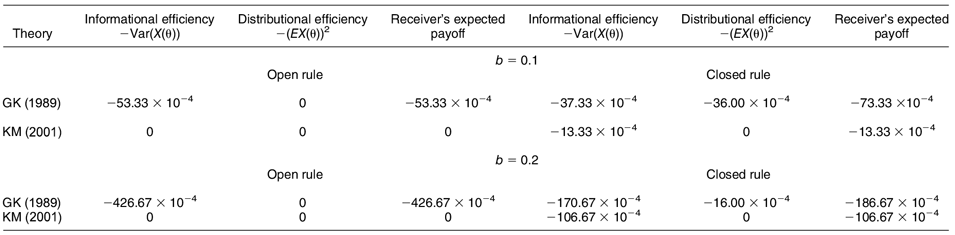
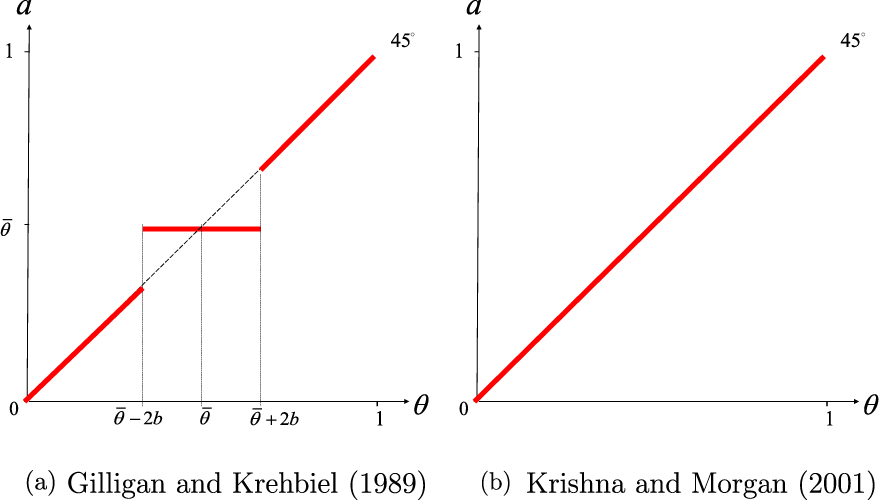
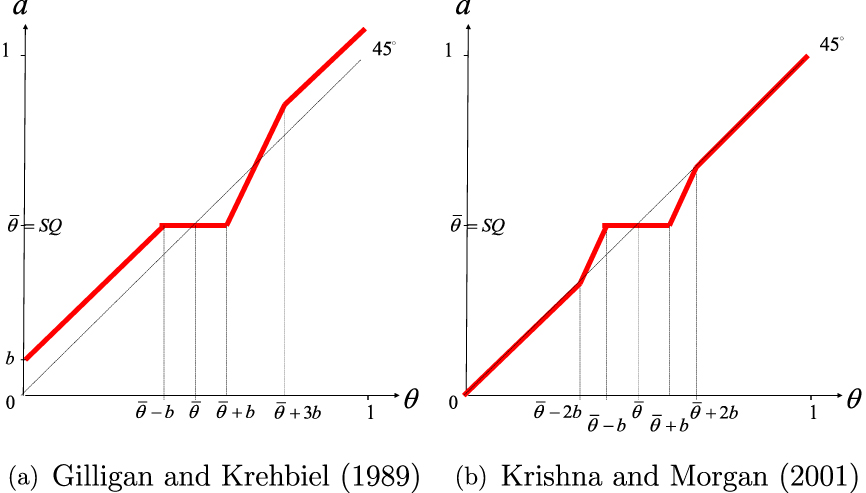
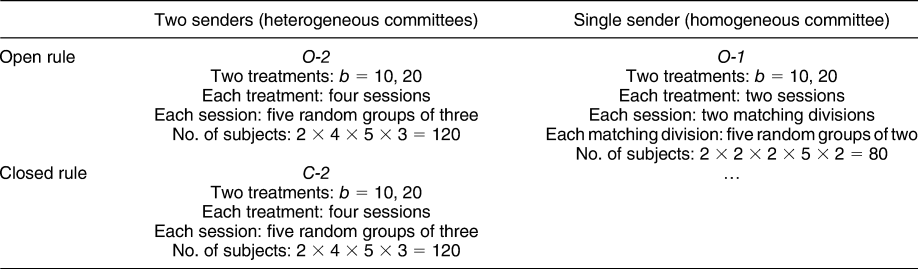
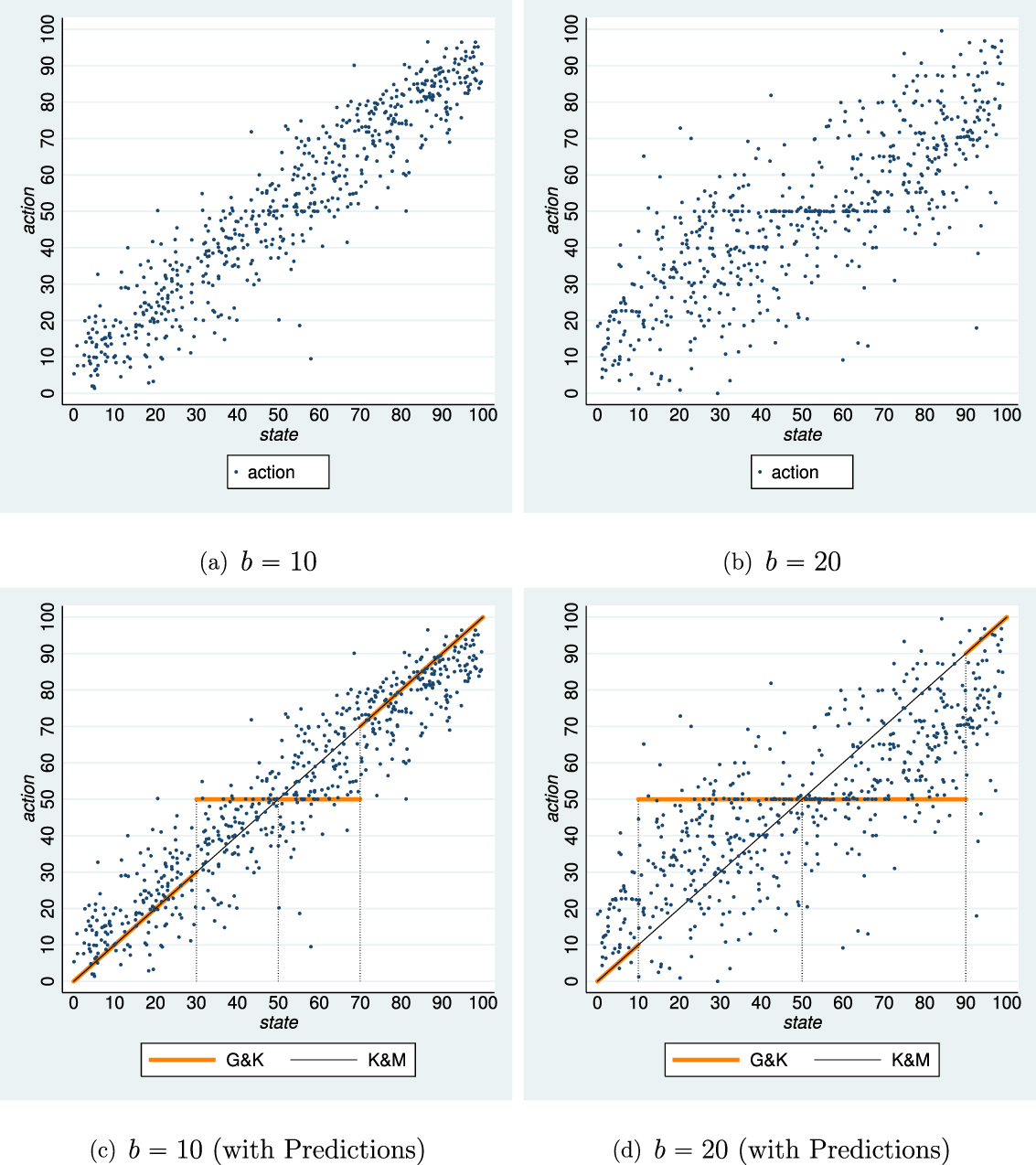
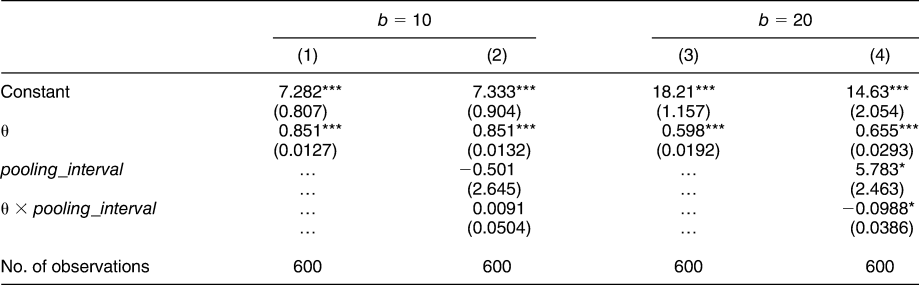
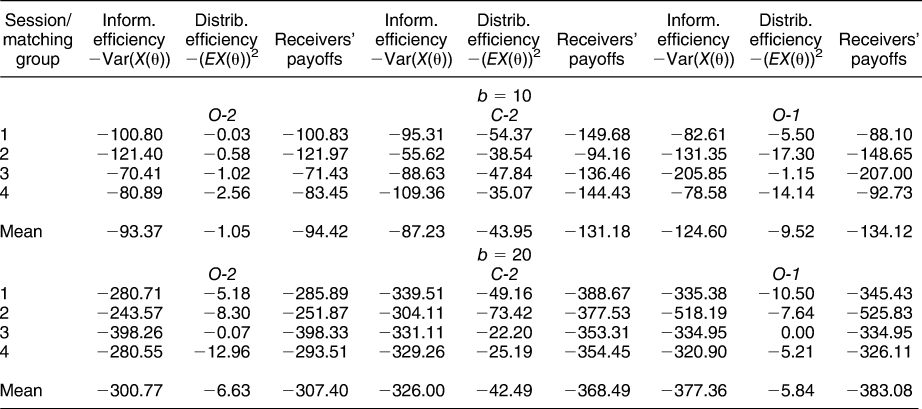
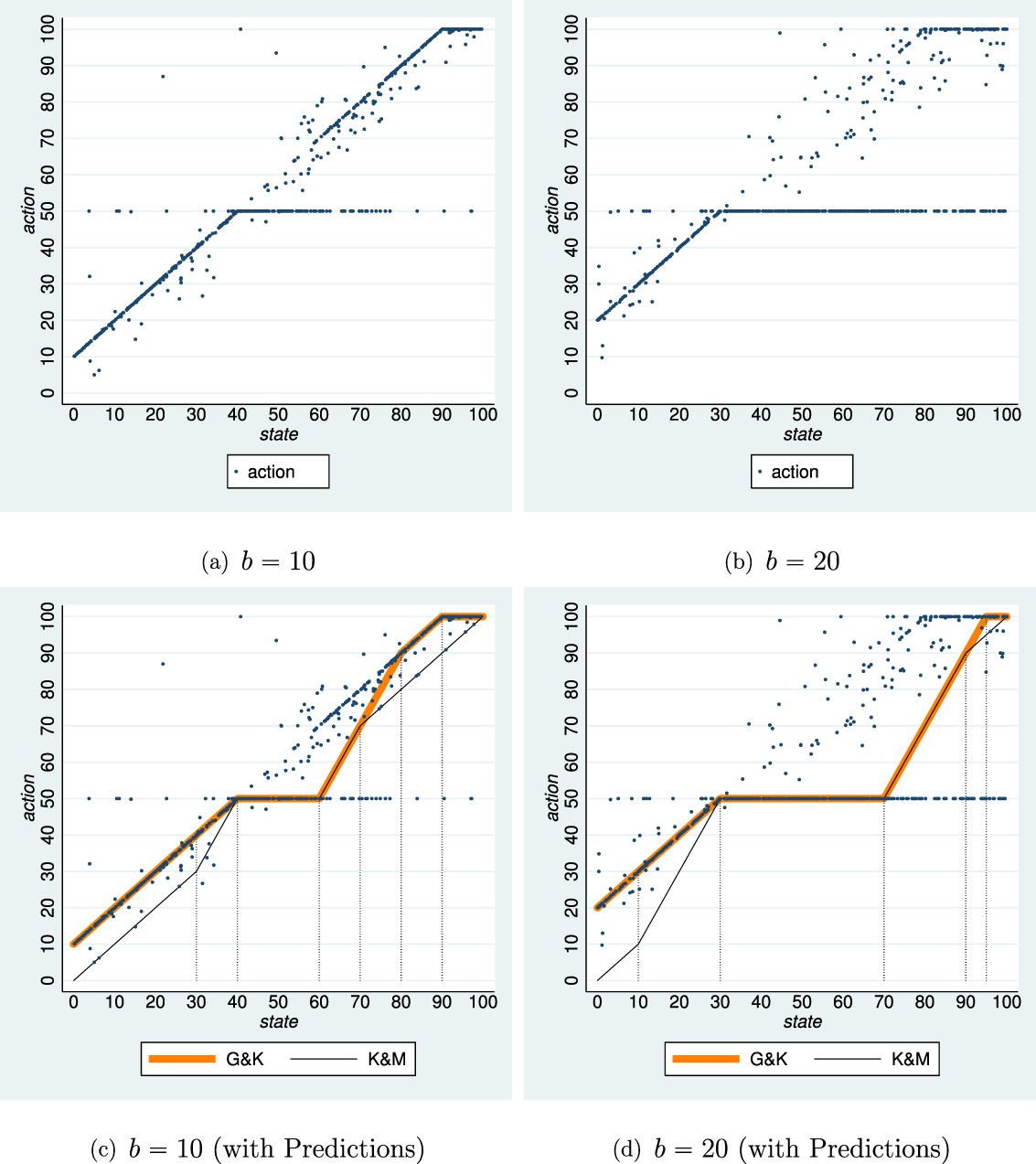
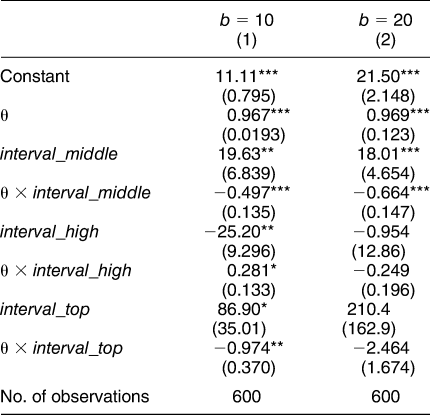
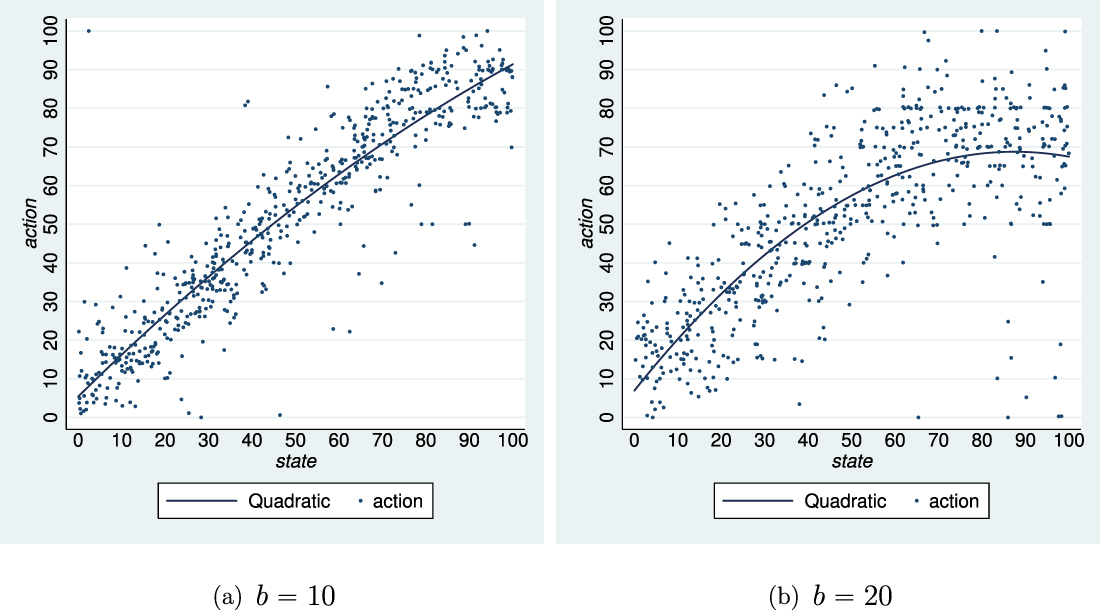
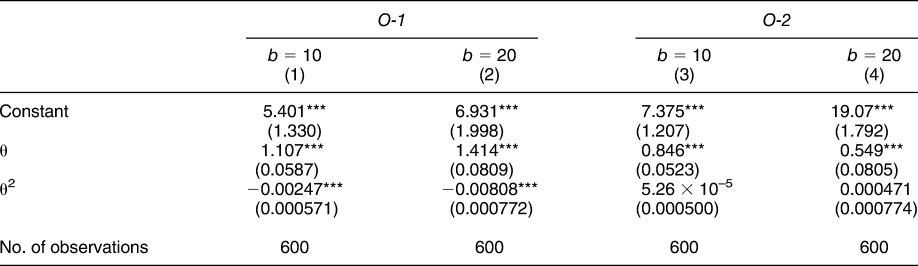
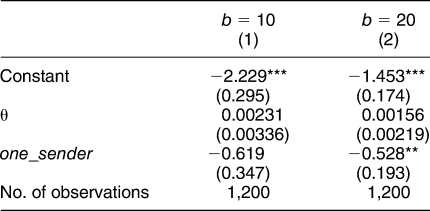
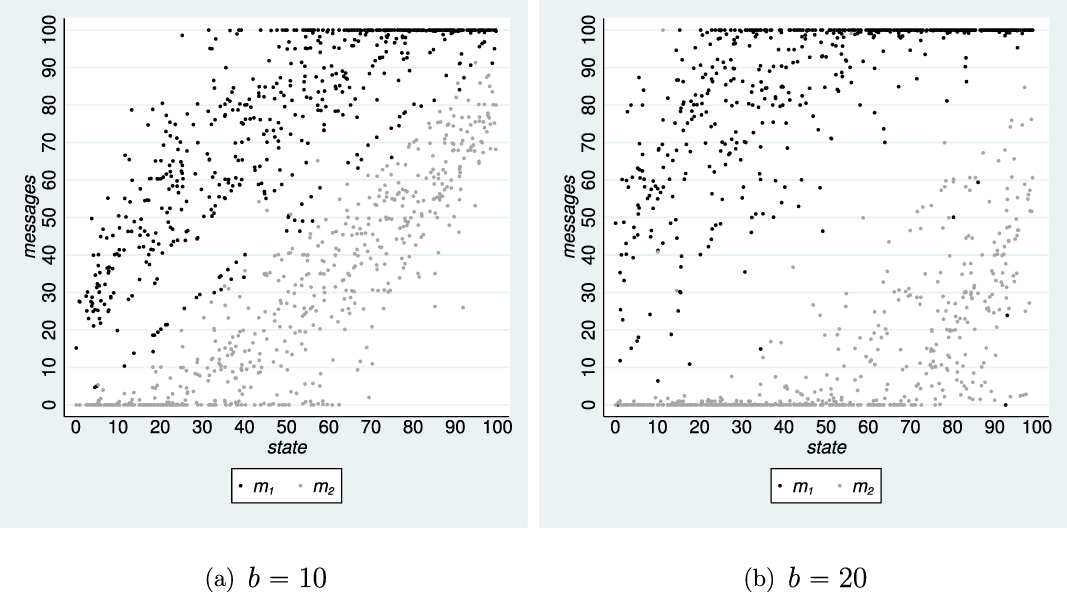
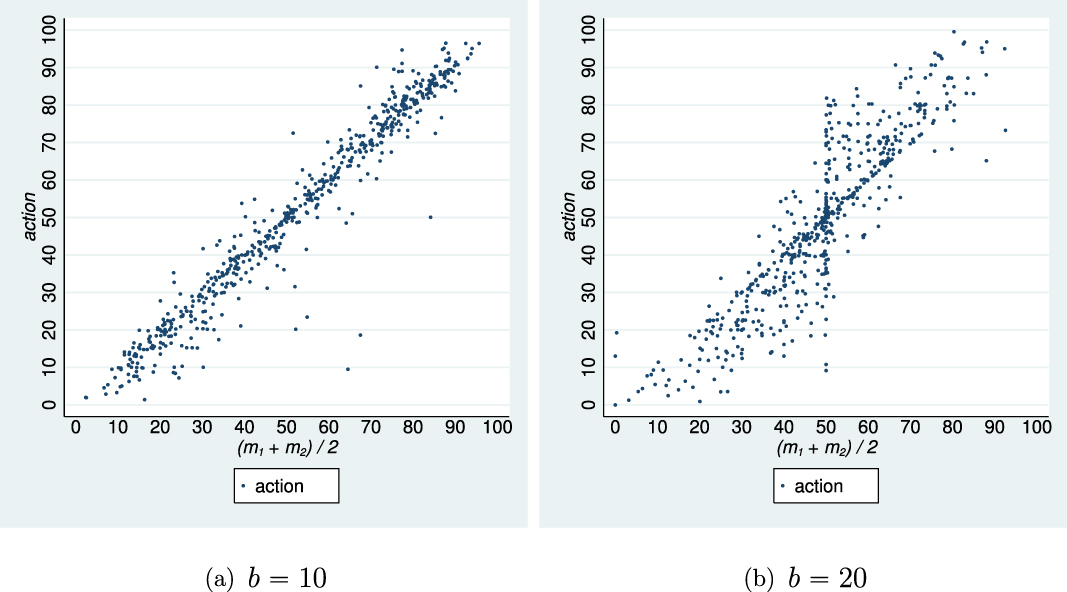
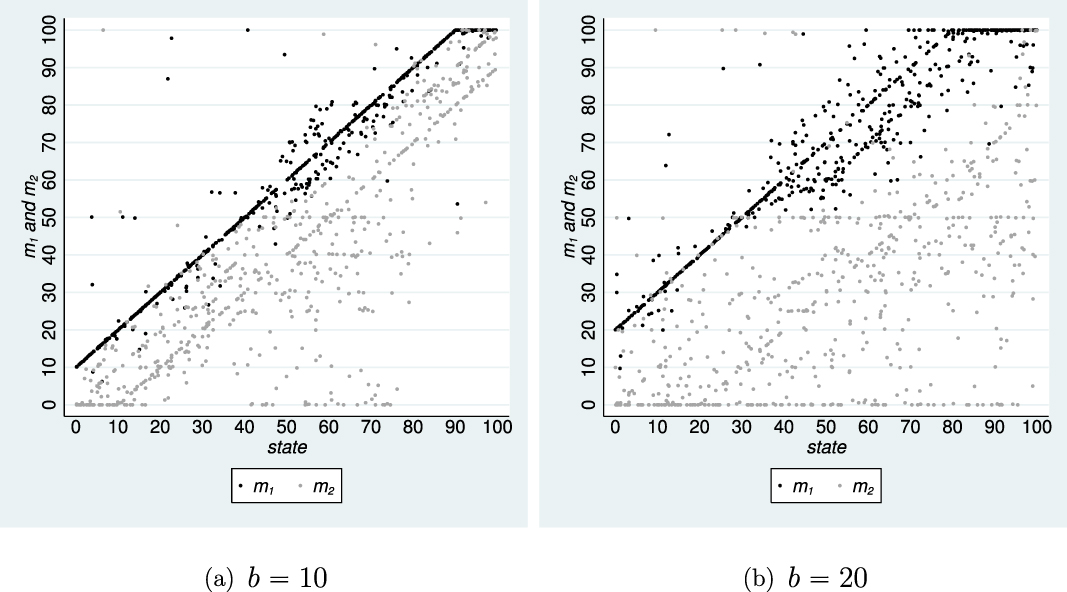
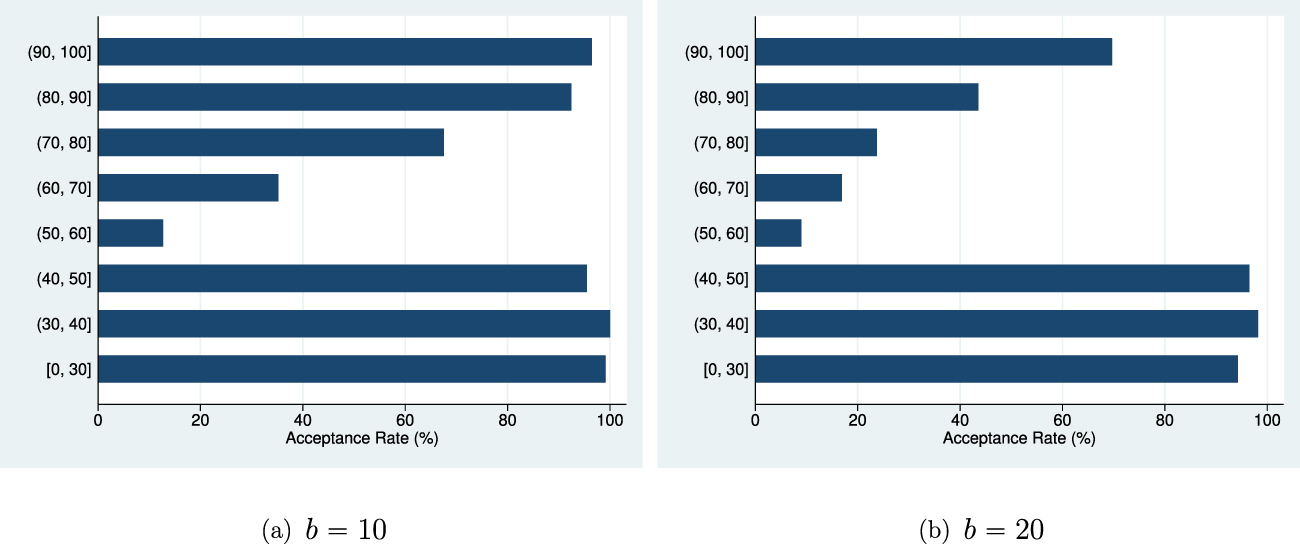
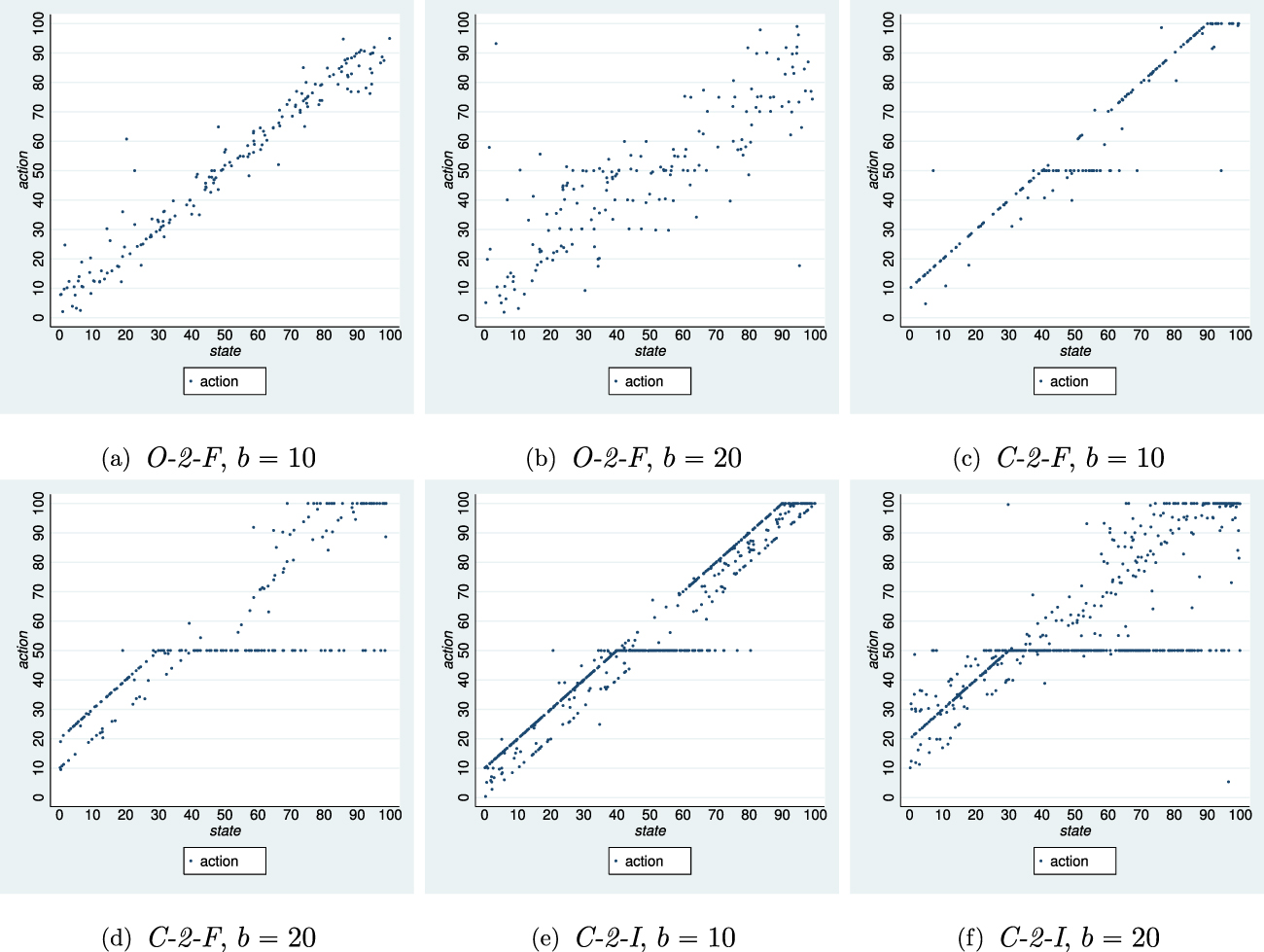
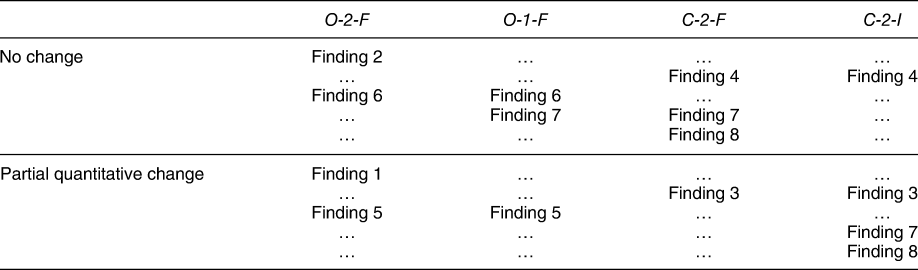




Comments
No Comments have been published for this article.