




For the 1976 Bicentennial of American Independence, St. Louis, Missouri hosted what the organizer of the event, Elizabeth Gentry Sayad, claimed to be the nation’s largest commemorative effort dedicated to the celebration and exploration of American music and the performing arts. Festivities for St. Louis’s Bicentennial Horizons of American Music and the Performing Arts—or “BHAM,” as Sayad referred to it—encompassed over 250 performances held in venues and public spaces throughout the city. BHAM showcased operas, symphonies, and religious music; microtonal and computer-based compositions; Native American music, folk, and jazz; as well as exhibitions of Black and early American music. Sayad also convened fourteen academic workshops charged with determining “A New Definition of American Music.” Through Sayad’s efforts, BHAM received nationwide press, attracted buy-in from federal-, state-, and city-level institutions, and united elements of the artistic, scholarly, and civic communities of St. Louis in what musicologist H. Wiley Hitchcock called a “two-and-a-half-week whirlwind” of musical events and academic engagement.Footnote 1
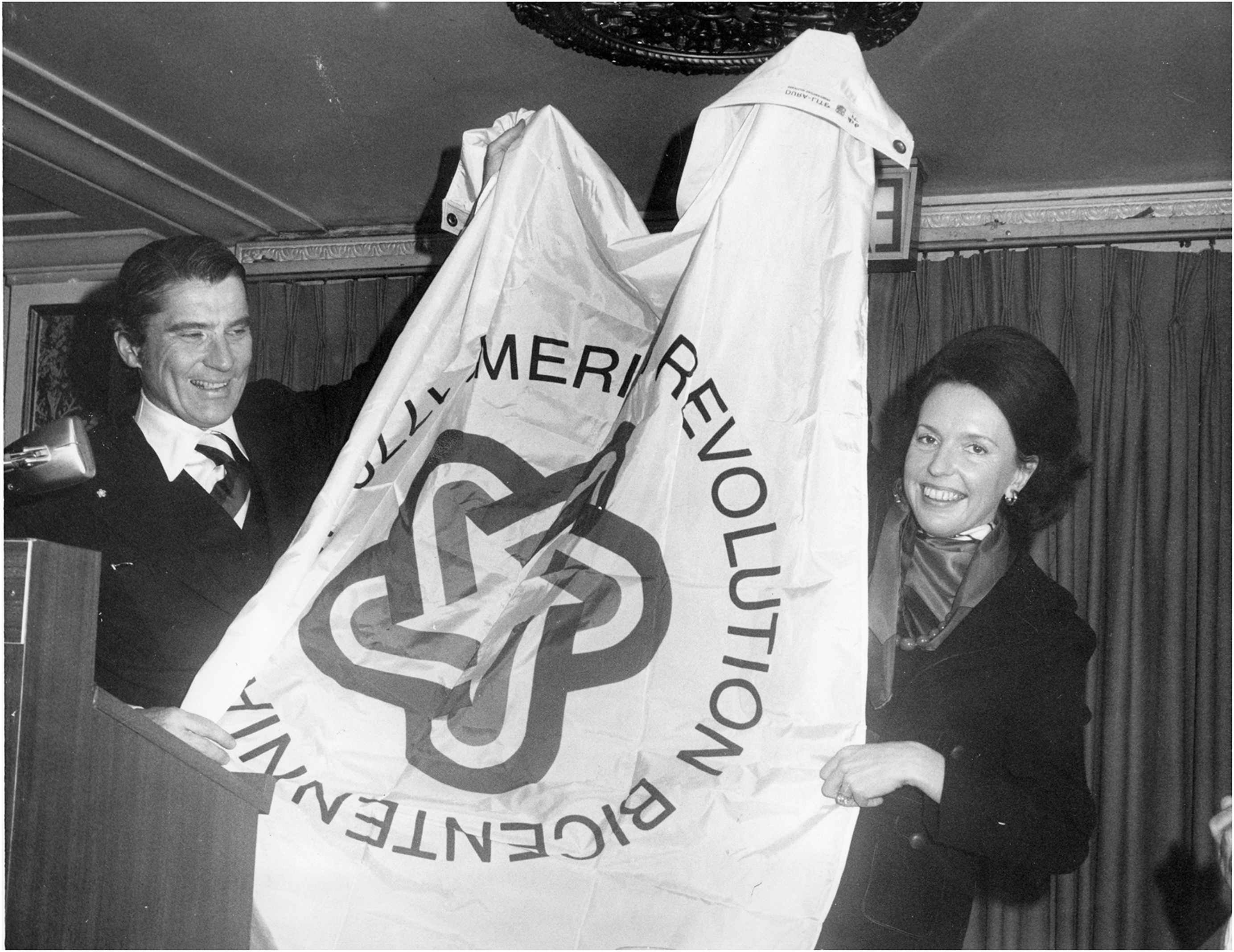
When BHAM was granted official status as a national bicentennial event, Sayad took seriously a comment from John W. Warner, director of the federal American Revolution Bicentennial Administration (ARBA), that BHAM was likely to become the national “centerpiece of the celebration” (Figure 1). Motivated by Warner’s words, Sayad raised 1.25 million dollars, anticipated that BHAM’s events would directly impact 22 million people, and planned for it to be the nation’s only “international” bicentennial arts festival (even extending a formal invitation to the Queen of England).Footnote 2 By its end, however, Frank Peters, music editor of the St. Louis Post-Dispatch, would dismiss BHAM as a piece of “conceptual art”; “a ‘festival’” Peters claimed, that “nobody could see or hear, existing only in words.”Footnote 3 BHAM’s events were plagued by poor attendance and a program that failed to capture the imagination of St. Louisans, let alone the nation or the world. Yet the significance of Sayad’s goals for BHAM is greater than the festival’s capacity to live up to her ambitions. Designing it around an affective set of experiences, Sayad approached BHAM and the bicentennial less as a nostalgic opportunity to reenact the Spirit of ’76 than as a chance to synthesize and assimilate the sounds of the nation’s past into a dynamic, forward-facing future.Footnote 4
John W. Warner, director of the ARBA, and Elizabeth Gentry Sayad display a flag with the official logo of the United States Bicentennial at an event in St. Louis. Undated [Mar. 9, 1975]. Source: Elizabeth Gentry Sayad Papers (S0476), folder 195, box 10, picture 731.18. The State Historical Society of Missouri, Columbia, MO.

Figure 1. Long description
John W. Warner, director of the American Revolution Bicentennial Administration, and Elizabeth Gentry Sayad are holding up a large flag with the official logo of the United States Bicentennial. The logo features a stylized design with the text ‘American Revolution Bicentennial’ and ‘United States of America’ around it. They are standing indoors, with Warner on the left and Sayad on the right, both smiling and appearing to be at a formal event. The background includes a podium and curtains, suggesting a ceremonial or celebratory setting.
Historians of memory and commemoration in the United States have rightly documented the efforts, and the desire, of Americans “to depoliticize the past as a means of minimizing conflict” in the present.Footnote 5 And Sayad’s vision for BHAM underscores the salience of this inclination even as it stresses the fundamental divisiveness of its aspiration—a tension scholars have traced back to the founding itself.Footnote 6 As histories of the bicentennial detail, once the American Revolution Bicentennial Commission (ARBC) was replaced with the American Revolution Bicentennial Administration (ARBA), “The role of the Federal government would be to help every American craft a bicentennial observance to suit his or her own needs.”Footnote 7 However, this “cultural pluralism” approach was never divorced from the politics of the moment: The choice of encouraging the United States to celebrate unity through difference was made in recognition of a larger sense of “decline” that permeated 1970s political culture.Footnote 8 Indeed, Sayad’s focus on music and the performing arts was of a piece with what M. J. Rymsza-Pawlowska has called the emergence of an “affective historymaking” approach to remembrance and memorialization: If we cannot feel patriotic about the present then perhaps we can forge emotional connections through patriotic feelings about the past.Footnote 9 Still, in contrast to existing treatments of the bicentennial that tend to separate accounts of federal top-down planning from grassroots engagement (and resistance), this account of Sayad’s leadership of BHAM provides a middle-out perspective. Here we see a local leader—a woman married to a man of Persian descent—seeking success through an alignment of community engagement and federal priorities, and who measured the success of their regional efforts by their levels of national and international attention.Footnote 10
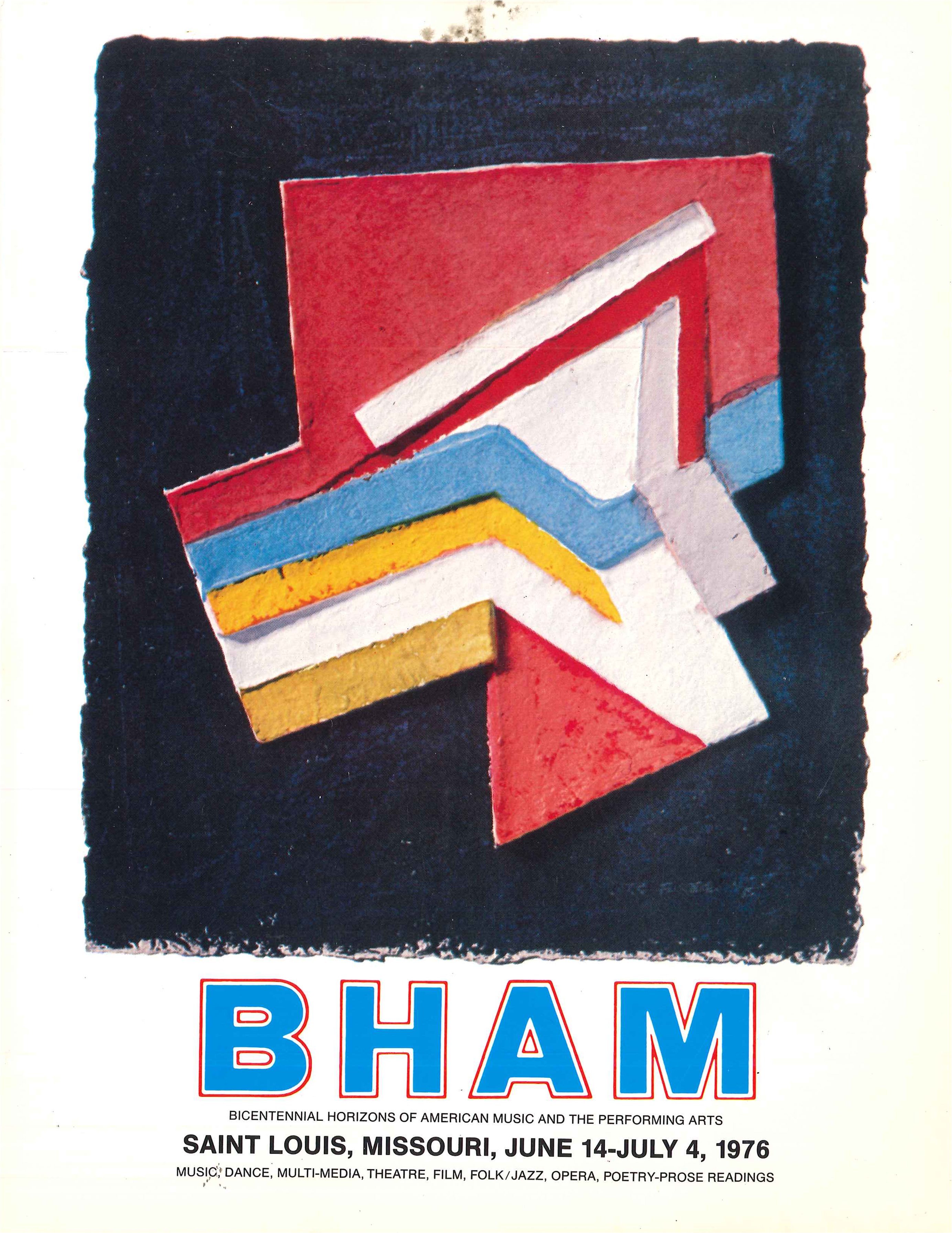
Scholarship on the bicentennial has already connected the salience of its celebrations to several interrelated fields of American history, not only public memory but also public history, histories of the family, diplomacy, and the rise of the New Right.Footnote 11 Sayad’s leadership of BHAM seemingly fits neatly into an emerging picture of the bicentennial as representative of an “ideological shift” from “integration” to “diversity,” shaped or sabotaged by the persistence of political division.Footnote 12 But Sayad did not construct BHAM out of the same reactionary reflex often associated with bicentennial commemoration. Perceptions of cultural fragmentation wrought by the civil rights era, while powerful, did not inevitably produce a backlash to diversity and change, nor a reification of Founding-era patriotism. More creative solutions were both possible and encouraged at the national level. As Laura Barraclough argues, the ARBA “explicitly embraced the language of diversity, though always within the spirit of liberal individualism, entrepreneurialism, and U.S. global power”—an approach that was, “in effect, a broad invitation to conservative multiculturalism.”Footnote 13 Sayad’s drive to produce BHAM in St. Louis was a testament to both the limits and the potential of this multicultural approach, the conservatism of which lay, most crucially, in its “attempt to legitimize the state by incorporating (and thereby pacifying) the era’s radical protest movements.”Footnote 14 At BHAM, music and the performing arts became Sayad’s vehicle for enabling Americans of all kinds to contribute their voice and heritage to a patriotically diverse and multicultural American story. The results proved as inclusive as they were hollow. Yet Sayad’s optimistic call for St. Louisans to explore the “horizons” of their future at BHAM also reflects, in a distinctly regional way, the forward-looking, creative aspirations of the national bicentennial moment (Figure 2).
Elizabeth Gentry Sayad commissioned artist Frank Stella to produce this original visual artwork for use on BHAM’s posters and program cover. Stella, a renowned practitioner of modernist art, minimalism, and abstract expressionism, suited BHAM’s future-forward orientation. However, Stella did not create the piece expressly for BHAM, selecting it from pieces he already had on hand. See Mary King, “If It Doesn’t Have Some Emotional Resonance It Is Failed Art,” St. Louis Post-Dispatch, 28 Dec., 1975, 5D. Source: Program cover image from author’s personal collection.

Imagining BHAM: Vision, Context, and Sources
Sayad invested BHAM’s bicentennial celebrations with the potential to unite Americans through their differences, to empower individuals to find and celebrate their own American story, and to show that the ability of Americans to live together differently was a mark of their revolutionary inheritance. “The adventuresome spirit of our pioneer forbearers is the legacy that inspires thousands of St. Louisans to meet the Bicentennial challenge,” Sayad declared in speeches about BHAM. “Stimulated by that frontier spirit of working together,” Sayad continued, “BHAM celebrates what may be America’s Golden Age of the Arts,” explaining, “In order to look toward the promising horizons of the future, BHAM shares the rich heritage of the past with the diverse ethnic influences and exchanges that continue to mold the character of American art forms.” BHAM may have been limited to time and place—a twenty-two-day series of events in St. Louis building up to the Fourth of July celebration. But to Sayad, its greater significance lay in the national and international impacts that its legacy would leave. “BHAM initiates a spirit of cooperation,” Sayad boasted, one that “will continue and flourish wherever the creative climate is free.”Footnote 15
At her most optimistic, Sayad predicted not only that “BHAM will be so successful … that it will become a biennial event” but “that St. Louis will become sort of a Salzburg on the Mississippi,” with the St. Louis Arch as “our Persepolis, our Notre Dame—a monument to a Dream.”Footnote 16 Rather than “focusing on Mozart and the European tradition,” however, Sayad positioned BHAM to “celebrate the best of Americana,” broadly defined.Footnote 17 Tracing the city’s past to “a French frontier colony, founded 12 yrs. before the Amer. Rev.,” Sayad promoted St. Louis as a center of cultural exchange, melding “early French fiddlers and singers of voyageur songs” with the “German choirs and bandmasters who immigrated before the Civil War” and African Americans who “gave birth to ragtime, as well as some of the greatest performers of our time—Miles Davis in jazz, Gracy Brumby and Felicia Weathers in opera.” Unlike in Philadelphia, where one of the highest-attended bicentennial events was a “Spirit of Summer ’76” stadium rock concert featuring Peter Frampton, Sayad’s community-driven vision for BHAM did not include the perceived commercialism or countercultural overtones of popular genres like rock ’n’ roll (despite Chuck Berry’s connection to St. Louis).Footnote 18 But BHAM, Sayad believed, was nevertheless poised to bring people together in a way government never could. “The Revolution wasn’t fought by people waiting in line for federal grants,” she liked to joke, because “It was not the federal government … but the American spirit with all its independence that has stimulated our grass roots effort.”Footnote 19
Commemorating the past to celebrate the future was hardly a unique feature of Sayad’s hopes for BHAM.Footnote 20 Until the postwar period, Americans had routinely been inspired as much by the future as the past, putting on grand expositions and world’s fairs to prove it.Footnote 21 Moreover, future-focused goals for commemoration had long been key to government-sponsored efforts to frame the present as the fulfillment of founding ideals.Footnote 22 Indeed, federal plans for the nation’s bicentennial initially centered on the idea of hosting a centralized “international exposition” in a city like Boston or Philadelphia, who would bid for the right to show off the promise of American ingenuity and capitalism.Footnote 23 This approach made sense to Lyndon Johnson’s presidential administration, which wished to contrast the potential of the United States with the threat of communism overseas, and Richard Nixon’s administration, which considered centralized celebrations the best way of using the bicentennial to shore up its own political interests. But the convulsive combination of the Vietnam War, Watergate, and the oil crisis along with the cumulative impact of social movements from civil rights to women’s rights and LGBTQ rights, shattered the faith many Americans had held in the future.Footnote 24 On this point, however, Sayad bucked the trend. Rather than retreat into the past, Sayad invested BHAM with a conviction that art could inspire Americans to commemorate its revolutionary origins by uniting again, two hundred years later, around the myriad possibilities of the future that lay ahead.
In doing this, Sayad’s plans were framed consistently in keeping with the ARBA’s multicultural federal organizing priorities. Since BHAM did not formally launch until 1974—considerably later than when bicentennial planning got underway in cities like Boston and Philadelphia—Sayad and BHAM avoided direct association with the ARBA’s more politicized predecessor, the ARBC, which had long attracted the ire of opposition groups like Jeremy Rifkin’s People’s Bicentennial Commission (PBC) and Vincent and Robert DeForrest’s Afro-American Bicentennial Corporation (ABC).Footnote 25 Sayad, instead, could begin BHAM in alignment with the ARBA’s goals, which included “look[ing] to the future” as well as aspirations that “The Bicentennial was to become a hometown affair” and that “The most important bicentennial undertakings would bring dissidents as well as neighbors and friends together in common purpose.”Footnote 26
Nationally, the number and diversity of the ARBA’s officially recognized bicentennial activities was immense. The ARBA reported a total of 66,484 official bicentennial projects and events, 1,655 of which occurred in Missouri compared to 1,421 in Massachusetts and 3,149 in New York (Texas topped the list with 3,979).Footnote 27 Moreover, the ARBA reported 11,739 Bicentennial Community designations of which St. Louis was one of 159 bicentennial cities with populations over 100,000.Footnote 28 The ARBA also, as John Bodnar explained, “formally sanctioned links between commemorative activity and commercial endeavors,” helping 241 American businesses contribute $38.9 million to official bicentennial programs.Footnote 29 The “American Freedom Train,” for example, which crossed the country carrying an exhibit of historical documents, was sponsored by the Prudential Insurance Company, Pepsico, General Motors, and Kraftco. And the “Bicentennial Wagon Train Pilgrimage to Pennsylvania” was initially funded through a partnership between the Commonwealth of Pennsylvania and the Gulf Oil Corporation.Footnote 30 Amid all this activity, music- and performance-related events were widespread. In 1974, U.S. News and World Report projected the bicentennial would produce at least “100 major orchestral compositions, 300 operas, and several hundred ballets.”Footnote 31 But no other comparable city-based effort centered music and performance in their commemorative planning to the degree that St. Louis did.Footnote 32
Elsewhere, New York City’s bicentennial revolved around Operation Sail ’76, a marine parade of 224 historic sailing ships from around the world that illuminated during a nighttime fireworks display on New York Harbor. Boston foregrounded historical tourism and a revitalization of the city’s urban landscape, most prominently by building the Freedom Trail and renovating Quincy Market.Footnote 33 And in Washington, DC, and Philadelphia, bicentennial festivities culminated in suites of parades and public festivities most remarkable for not attracting protests as large or violent as predicted.Footnote 34 A PBC-organized “march on Washington” that had anticipated 200,000 participants drew no more than 20,000 and the potential for “disruption and violence” that led Philadelphia mayor Frank Rizzo to call for 15,000 federal troops never materialized.Footnote 35 By comparison, it is notable that Sayad and BHAM neither confronted nor anticipated similar levels of coordinated resistance in St. Louis—a contrast Sayad would likely have attributed to BHAM’s ability to foster the combined engagement of the city’s creative, civic, and political communities all together.Footnote 36
This article draws primarily on the archival record of BHAM preserved in the Bicentennial Horizons of American Music Records and in the Elizabeth Gentry Sayad Papers housed at The State Historical Society of Missouri. The records of BHAM comprise sixty-eight folders and five volumes worth of material while Sayad’s Papers total twelve cubic feet of material across twelve archival boxes. I place particular focus on correspondence—most of which, in both collections, is to or from Sayad—but also attend to a range of other sources, such as budgets, organizational charts, programs, and advertising materials. BHAM’s records are substantial but far from comprehensive, often allowing access only to single sides of a conversation or dropping readers into an exchange without definite knowledge of what occurred before or after it.
Much of the records relate to practical matters concerning the organization of various events rather than reflections on larger questions about how BHAM’s organizers understood the relationship between their events and the bicentennial at large. However, reference to public statements and newspaper coverage helps pick up the slack. In every case, the semi-public nature of these materials, especially professional correspondence, as well as Sayad’s felicity for framing narratives of success out of less-than-straightforward realities, requires attention. The correspondence considered here, though technically private at times, is in most cases not a forthright reflection of the private thoughts and minds of its authors. Even so, sources in the records can tell us much about how Sayad hoped for BHAM to be perceived. Meanwhile, published and private writings in Sayad’s Papers and elsewhere help place Sayad’s bicentennial activities within the larger context of her engagement with commemorative work throughout her life.
The focus placed on correspondence also reflects my interest in how Sayad designed BHAM to engage with the politics of historical commemoration. Evidence of BHAM’s politics could be inferred from a close accounting of the repertoire and performance practices adopted by performers at BHAM events. Doing so, however, risks assuming a great deal of the thinking that went into all manner of choices across BHAM’s more than 250 performances (see Appendix A). In practice, the festival’s final program reflected not simply the ideological outlook of its leaders—and Sayad in particular—but also the choices, compromises, and concessions necessary to turn it into a financial and practical reality. It is also true that while Sayad was concerned with producing a diverse range of musical offerings at BHAM, many of the practicalities of putting its program together were left to the volunteers and performers whose contributions made up a significant amount of the legwork. The main exceptions were BHAM’s legacy productions—a book publication, a documentary film, and an audio recording project—all into which Sayad personally invested much time and effort herself and that thus speak, with comparative directness, to her political, civic, and personal objectives for BHAM and its festivities.
Producing BHAM: Commemorative Origins and Challenges
Elizabeth Gentry Sayad was BHAM’s leader, figurehead, chairman, and animating force. Born in 1933, Sayad was a seventh-generation Missourian whose ancestor, General Richard Gentry, was a founder, first mayor, and postmaster of Columbia, Missouri (now the site of the University of Missouri). In May 1963, his descendant, Elizabeth Foster Estes Gentry, married Homer E. Sayad, the son of Dr. Elisha E. Sayad, an American-educated Persian physician granted U.S. citizenship after serving with Teddy Roosevelt’s Rough Riders during the Spanish American War.Footnote 37 Homer Sayad, almost twenty years older than Elizabeth, was educated at the Universities of Nottingham and Cambridge, and Northwestern University, and by the time they met was the head of the St. Louis office of Haskins & Sells, which soon merged to become Deloitte Haskins & Sells in 1972.Footnote 38 Sayad used his money to become a highly active civic and philanthropic presence in St. Louis, serving as the first president of the Opera Theatre of St. Louis, the Repertory Theatre of St. Louis, and the St. Louis Arts and Education Council among other activities.Footnote 39 And it is to that life that Elizabeth Gentry Sayad—a trained concert pianist—would dedicate herself, helping to establish flagship cultural institutions in the city like the New Music Circle and the Missouri Arts Council (the second state-based arts council in the nation). Eventually, Sayad would become the only Missourian to receive both the Missouri Arts Award and the Missouri Humanities Award for her lifetime patronage of arts and culture. BHAM is not mentioned in Sayad’s achievement-filled obituary.Footnote 40
Sayad’s relationship to her family history informed much of her commemorative approach to BHAM and the bicentennial. A polished socialite and a world traveler since her youth, Sayad saw herself as both an inheritor of the revolution’s legacy and a bridge to the rest of the world. Speaking in 1987 at the 150th anniversary reenactment of the Battle of Okeechobee in Florida (where Sayad’s ancestor, Richard Gentry, died leading a regiment of Missouri volunteers in the Seminole Wars), Sayad framed the event as a chance “for our family, for Missouri, and for all of us as Americans—to relive and remember those struggles of our ancestors which pieced together the rich fabric of our complex culture.”Footnote 41 Indeed, as Sayad put it a few years later, “Nothing is more personally rewarding than bringing together synergistic forces or people for a productive collaboration.”Footnote 42 And in keeping with such goals, Sayad cast the meaning of the reenactment at Okeechobee as a pathway toward a better, more collaborative future: “What is remarkably thrilling to me personally,” Sayad specified, “is that six generations later, the Chief of the Seminole Tribe and I stand in peace on the same platform,” concluding that “Perhaps those brave men did not die in vain.”Footnote 43 That Sayad lived in a nation, and in localities within that nation, that her family had founded and shaped mattered to her. On the Gentry side, Sayad could trace her lineage directly to the Revolution itself. While Richard Gentry was a founder of Columbia, Missouri, his father, Pvt. Richard William Estes Gentry, served in the Revolutionary War and was present at the “capture” of Cornwallis at Yorktown.Footnote 44
Elizabeth’s marriage to Homer Sayad joined together, as Leigh Gerdine put it, “a very old American family … with an ancient Persian family,” regularly placing Elizabeth in the role of a cultural intermediary.Footnote 45 Sayad’s penchant for thinking internationally was forged at least as far back as 1953, when her departure to attend summer school at the University of Oxford was big enough news to make the papers in St. Louis (the movements of then-debutants like herself were fodder for the city’s social pages).Footnote 46 But it was through her connection to Homer that Elizabeth found herself greeting the Iranian ambassador, Hushang Ansary, at the opening of Powell Symphony Hall in St. Louis in 1968, accompanying him—with family in tow—on glamorous business trips to Iran and Azerbaijan in the early 1970s, where she dined in Tehran with the likes of the former president of Colombia and the U.S. ambassador to Iran before being greeted by the governor in Azerbaijan.Footnote 47
Sayad drew on her international networks most visibly when she threw the Neiman Marcus–sponsored St. Louis Bicentennial Ball in January 1976 to raise money for BHAM, attracting the attendance of ambassadors from Britain and Ireland as well as Ardeshir Zahedi, who would be the last Iranian ambassador to the United States before the Iranian Revolution, alongside consuls general from Britain and Germany, the mayor of St. Louis, Missouri Congressman James W. Symington (D-MO), who performed songs in recognition of attendees from various countries during the dessert service, then-Missouri Governor Christopher “Kit” Bond, and about 460 other paying attendees.Footnote 48 The “theme” of the ball was “to involve all of those nations who have contributed to the growth and development of this region in some manner, i.e., trade, population, cultural influence, etc.”Footnote 49 And it raised $47,000 for BHAM, even if Sayad was quick to distance the swanky gala from the grassroots endeavor she designed it to support: “If the ball looked like an expensive, exclusive party, it is not,” Sayad told the St. Louis Post-Dispatch, “The ball just looks expensive. There’s no other way to solicit the money. And everything was donated but the meat and potatoes.”Footnote 50 Sayad’s facility for such events, combined with her family history and political connections, no doubt predisposed her to ensure the “international dimension to the arts ‘melting pot’” in St. Louis was “reflected in BHAM’s tribute to the American heritage.”Footnote 51
BHAM began with big ambitions. Initially forged within the auspices of the New Music Circle—a nonprofit Sayad helped create to bring avant-garde music to St. Louis—BHAM quickly expanded to become its own entity under the umbrella of Saint Louis Spirit of ’76, the organizing body for all official bicentennial celebrations in the city. Sayad began organizing BHAM in December 1973, putting together a planning committee of representatives from collaborating institutions and enlisting the support of key political figures long before the viability of the venture was clear. At their first press conference in May 1974, Sayad declared, alongside the mayor of St. Louis, John H. Poelker, and Missouri Congressman James Symington, that BHAM will be “the first time in the cultural history of St. Louis—except for the 1904 World’s Fair—that all our leading cultural agencies have creatively joined forces for a single common purpose.” She added that, “Only the majesty of the coming historical celebration … could inspire such ‘esprit de corps.’”Footnote 52
During these early months, Sayad formed a National Advisory Committee for BHAM comprised of some of the nation’s leading composers and conductors: William Schuman, Pierre Boulez, and Steve Reich among others, which lent significant prestige to the endeavor even if most of its members contributed little beyond their name.Footnote 53 The goal, as Sayad put it, was for BHAM to have a “lasting—‘regenerative impact’ on the arts in America,” one that would be “felt through a ‘legacy’ of documentary films and recordings” as well as through an “important publication on American music expected to result from a number of university symposia” held as part of the festival.Footnote 54 This translated, in short, into the three core legacy products of the festival: a documentary film, a set of audio recordings, and a book.
BHAM’s near-term origins built on a longer-term commitment to historical commemoration, one that Sayad had long tied to the goal of springboarding the artistic life of St. Louis into a modern future. “We can’t help it if our forebearers may have preferred ‘Thirty Years of a Drunkard’s Life’ down on the levee to the plays of Sheridan and Shakespeare,” Sayad wrote in the November 1963 issue of Saint Louis Magazine, “But we can be grateful that they sang, played, and painted, giving us an enviable foundation and a ‘prepared’ public which responds with excitement to enthusiastic, creative, and disciplined leadership.”Footnote 55 In saying so, Sayad was setting the stage for the City of St. Louis’s bicentennial celebrations the following year, which her New Music Circle group marked—not by recreating the music of the past, but by commissioning a series of original symphonic bicentennial compositions.Footnote 56 Sayad grounded the approach in historical precedent: “Following the grand tradition of marking important historical dates such as the crowning of queens of England or the opening of the Suez Canal with works of new music,” Sayad wrote in a letter to the St. Louis Philharmonic Society, our “society of new music decided to commission six composers to write works for St. Louis in commemoration of its birthday.”Footnote 57 In an effort to solicit publicity for the group Sayad also posted a $100 prize for a Bicentennial Song Contest in the name of the New Music Circle.Footnote 58 Novelty and creation, in short, had long been Sayad’s established playbook for historical commemoration in St. Louis. And she proved more than capable of recruiting others to the cause. August A. Busch Jr., in his capacity as president of the St. Louis Bicentennial Corporation, justified Sayad’s songwriting competition on the grounds that “Our city’s birthday celebration will not be complete without music in the air.”Footnote 59
Sayad’s civic achievements were animated by her own performances of groundbreaking conformity. Hardly a radical, Sayad valued order and the chance to excel, socially and professionally, in ways that would unify audiences rather than confront or cause division. In 1971, after noting the political progress of Iranian women in a St. Louis Globe-Democrat article recounting her Persian travels, Sayad observed being “struck by the refreshing lack of confusion over a women’s role,” in Iran, “as compared to the less secure, less well-defined position the modern American woman sometimes finds in a more fluid family structure.”Footnote 60 Never one to draw attention to her gender (or her politics), Sayad was skilled at exploiting the expectations and limitations of women in elite sociopolitical circles. In a 1980 feature on ten of St. Louis’s most prominent “hostesses,” for example, Sayad explained that she would be happy to invite Jane Fonda and Ronald Reagan to the same party because “My function as a hostess is to maintain a neutral ground and to steer off conflicts,” adding that, “if you have everyone at the table agreeing with everyone else, that becomes very dull.”Footnote 61 While her husband, Homer Sayad, connected his civic engagement in the arts world with Republican Party politics—accepting a gubernatorial appointment as president of the St. Louis Police Board—Elizabeth took pride not in passively placing herself above partisanship, but in actively creating circumstances for collaboration and cross-fertilization.Footnote 62
Funding-wise, at the time of BHAM’s first press conference, a single $2,500 planning grant was in hand from the Arts and Education Council of Greater St. Louis, which Sayad’s husband led, and BHAM’s press release announced that applications for funds to fill out the project’s anticipated $250,000 budget were in progress.Footnote 63 However, apart from the National Parks Service, which committed $70,000, all BHAM’s other major funding applications were unsuccessful. Regardless, by July 1976, BHAM’s advertised budget would swell to almost $1,270,000, an achievement facilitated by the receipt of “in-kind funding” from the St. Louis Municipal Opera and the Mississippi River Festival, valued at $500,000 and $300,000 respectively, as well as from “universities and colleges” ($25,000), the estimated value of which together accounted for 65 percent of BHAM’s entire headline budget.Footnote 64 Of the non-in-kind funding BHAM received, almost all of it was earmarked for specific programming costs, which was attractive to sponsors and grant agencies but left little to cover general overheads or staffing.Footnote 65 All of BHAM’s administrative leadership, including Sayad, worked as volunteers and a professional producer was not hired until February 1976.Footnote 66 “I think no one begins to comprehend the energy and expertise it takes to successfully carry off what is now an ‘international’ festival of the performing arts,” Sayad complained to Mayor John Poelker in August 1975, “Boston 200 has a staff of 60. I have none.”Footnote 67 That BHAM took place at all is attributable to a long-term volunteer corps of over 600 people (rising to 1,500 once the events began) as well as the singular zeal of Sayad herself whose indefatigable energy drew in no small part from a complete refusal to accept failure.Footnote 68
From the beginning, Sayad pitched BHAM as a grassroots enterprise that would have a national impact thanks to elite connections and direction. As she put it in a New York Times profile of BHAM, “It is necessary that the idea’s origins are in the grass roots, but you can’t get anything done without help in high places.”Footnote 69 And while Sayad was a savvy operator, in this case, her emphasis on the grassroots nature of BHAM also spoke to the particular context of bicentennial commemoration in the United States in 1974. Lyndon Johnson had created the American Revolution Bicentennial Commission (ARBC) in 1966. But in January 1974, perceptions of a too-cozy relationship with big business and the Republican party had forced the Nixon administration to establish the American Revolution Bicentennial Administration (ARBA) instead. The ARBA was designed to oversee the bicentennial with a lighter touch than its predecessor: to partner with and support state, local, community, and nonprofit groups and their celebrations. According to the New York Times, the ARBA signified “a depoliticizing of the bicentennial and an emphasis on matched funding for states and cities observing the meaning of the Revolution in their own communities.”Footnote 70 The ARBA’s three main themes, inherited from the ARBC before it, were Heritage ’76 (the past), Festival USA (the present), and Horizons ’76 (the future)—and BHAM, it would appear, was perfectly placed to unite all three into a model festival that uplifted and united the American people through its music.
BHAM’s potential, then, was clear from the start and matched by Sayad’s ability to project confidence and competence in its organization. A fawning write-up on BHAM in the New York Times, published months after the event’s organization got off the ground in 1974, lent national legitimacy and visibility to Sayad’s ambitions.Footnote 71 And in 1975, Sayad could report, as St. Louis’s official delegate to the National Bicentennial Conference at Oklahoma City, that “St. Louis is … clearly in a position of national leadership.” “Small communities,” Sayad explained, “felt threatened by those cities such as St. Louis and Boston who were already well-organized.” Yet, as one of 285 bicentennial projects officially recognized by the ARBA, the uniqueness of BHAM’s plans faded over time.Footnote 72 Billed initially as the nation’s only bicentennial celebration to focus on music and the performing arts, BHAM ultimately occurred alongside the activities produced by 1,600 bicentennial grants from the National Endowment for the Arts, 23 academic conferences sponsored by the National Endowment for the Humanities, and most notably for BHAM, the ARBA–Smithsonian Institution–produced Festival of American Folklife—a summer-long celebration of American folk music on the National Mall in Washington, DC.Footnote 73 Sayad’s collaborators often had to temper her inclination to continue claiming BHAM was “the only national festival of music and the performing arts” associated with the bicentennial in light of “the one taking place all summer on the Mall in Washington.”Footnote 74
Sayad knew her plan to project a unified, post-political future through the commemoration of a diverse American past risked objections. John W. Brunner, president of Vi-Jon Laboratories, a health and beauty care company based in St. Louis, for example, was especially unimpressed after attending a meeting of the Saint Louis Spirit of ’76 Executive Finance Committee. Writing to the Saint Louis Spirit of ’76 executive director, Edwynn P. Murphy, Brunner accurately noted that, “It seems as though the bulk of the money being raised [in St. Louis] was going to be for the BHAM project” but he observed that BHAM seemed to have “no specific philosophy or goals” and complained that no one at the meeting mentioned any “theme” at all. Brunner noticed, too, that there was no effort to attract speakers who “spoke from a constructive patriotic point of view, discussing love of Country, history of the Founding Fathers” or anything “about the economic history of our Nation and the place that free enterprise has played in developing our Nation to where it is today.”
Given that St. Louis’s bicentennial organizers wished to raise “several hundred thousand dollars” for the BHAM project, Brunner wondered why no one talked about ensuring “that the National Anthem would be played before each program.” What is more, Brunner explained “I heard no one describe exactly the types of programs that were going to be offered, other than we [will] have a new ‘definition for American Music.’” The “Indian Pow-wow, Miles Davis Jazz groups, Rag Time Jazz and Blue Grass, Ethnic and Folkloric groups … I am not necessarily saying that these various musical programs do not have a place in our celebration. What I am saying is, they do not represent to me what 75% of the financial and other effort should be in a program designed to represent the 200th anniversary of our Nation.” Rather, “at this time in our Nation’s history,” Brunner suggested, “we should plan to stress the positive attributes of [the] American way of life, the great heritage that we have, discuss and hear talks about and listen to songs that are of a plain and simple patriotic nature that talk about love of country, dedication to principles of our Founding Fathers, a rededication to make this Nation ‘under God’ a better Nation than we’ve ever had before.” What was needed, Brunner concluded, was a program that would give young people “training … to honor and respect the form of government that we have, to honor and respect the Constitution, the Declaration of Independence, and the system of government and the system of free enterprise that has made this nation great.”Footnote 75 For Brunner, the idea that citizens of St. Louis would benefit from a bicentennial that encouraged the freedom of individuals to determine what the Revolution meant for themselves was hardly compelling.Footnote 76
Conservatives, however, were not BHAM’s only potential source of criticism. Writing as the chairman of BHAM, Sayad struck a noticeably defensive tone in response to a query from Bernice Mosesson, a freelance journalist working for Black Enterprise Magazine, who asked for general information about BHAM as well as specifics about whether BHAM “will employ Black people” and the potential “impact” of its activities on “the Black community.”Footnote 77 In reply, Sayad explained “that we do indeed intend to cover a great deal on the area of Black Heritage” and listed several relevant events and performances before adding that “I am certain that the Black community will relate with great pride” to both “those programs relating to Black cultural material” as well as everything else BHAM was producing from children’s performances to folkloric dance groups and Native music, “which I think, will have great appeal to everyone.” Sayad’s point, she clarified, was that “It is hard to divide BHAM up into black, white, red, or yellow segments as we are all working together in the most united effort involving every segment of the community.”Footnote 78 As far as Sayad was concerned, the predilection to place Americans into categories that determined their relationship to events like BHAM or the American Founding in general was precisely the type of thinking she believed BHAM’s bicentennial bash was designed to transcend.Footnote 79
While it is possible, then, that BHAM could have become a lightning rod for controversy, Sayad’s determination to avoid politics—consciously or not—produced a festival that could facilitate the raising of questions about what it means to be American but that demurred before serious answers could be broached. In her “Salute to the American Heritage,” published as an introductory message in BHAM’s official program, Sayad deliberately marginalized conflict to center diversity at the core of American culture and identity. “As the first European settlers attempted to carve a New World out of the wilderness,” Sayad explained, “they lacked the time as well as the tools of culture to pursue the arts.”Footnote 80 And as a result, “Their ethnic tradition mingled with those of [the] native American Indian and the imported rhythm and movement from Africa and Asia” in ways that “created the more recently defined American styles we are experiencing at BHAM.” The origins of a distinctively “complex” American style of artistic expression, Sayad claimed, lie within the combination of all the cultures involved in the process of settler colonial expansion. Beyond its attempt to position histories of enslavement and settler colonial expansion as unifying moments, Sayad’s expansive sense of what constitutes American culture ultimately had no definable endpoint. “BHAM’s rich range—from traditional style to more experimental—pays tribute to a vital and uniquely American means of expression,” Sayad proclaimed without irony or clarification.Footnote 81 Still, the goals of Sayad’s sentiments were of a piece with the federal priorities published, helpfully, on the preceding page of BHAM’s program, where President Gerald Ford wrote to remind festival participants that the history of Americans is the history of “A diverse people, drawn from all corners of the earth … joined together to fulfill the promise of democracy.”Footnote 82
On the surface, the repertoire and range of events featured in BHAM’s final program appear to realize Sayad’s vision. Though omitting most forms of contemporary popular music, the festival’s dizzying variety of activities, shown in Appendix A, encompassed—within one program—Leonard Bernstein conducting the New York Philharmonic, a Burt Bacharach show, a recital by groundbreaking Black opera star Grace Bumbry, children’s performances, a film festival, a showboat trip down the Mississippi River, Native American music and dance exhibitions, performances of music composed by Benjamin Franklin, experimental multimedia experiences, barbershop quartets, poetry readings, sea chanties, celebrations of Black music history, and scholarly workshops. However, the reality was that engaging with any single event did not tend to involve wider engagement with BHAM as a whole. Fans of the symphony did not need to consider its connection to Native American music. Those with interests in Black music history did not have to reconcile its place in a festival that also featured the Stuttgart Youth Choir and a screening of D. W. Griffith’s Birth of the Nation. Participants in a music therapy workshop did not have to apply those insights to a “Statewide Religious Music Festival” that involved over three thousand congregations across Missouri ringing their bells at the same time on the Fourth of July. In most cases, funding for BHAM’s events was program specific, entailing sponsorship of a particular event rather than the larger BHAM festival that knitted them together. And this often had the effect of presenting BHAM as an amorphous supporter of an otherwise disconnected array of artistic activities.
Occasionally, evidence of BHAM’s practical failures make it tempting to overlook the larger multicultural vision Sayad instilled into the project. The “BHAM at the Planetarium” show, for instance, which featured a video art and electronic music show called “No Single Thing” about “man’s expanding galactic awareness” reportedly attracted just “1,053 viewers in 24 performances—about 44 each” despite a grant from the American Revolution Bicentennial Commission of Missouri and financial support from the General Electric Company and the McDonnell Douglas Corporation.Footnote 83 Worse, BHAM’s “Midnight Carnivaal” on the night of July 3, described in press releases as “BHAM’s most spectacular event,” literally failed to produce any sound whatsoever. A four-hour original composition of tape-recorded music by Lejaren A. Hiller designed, effectively, to “play the city, using resonant and dry areas like a symphony orchestra uses a concert hall” as a light show illuminated the night was thwarted by faulty loudspeakers. Hiller, the composer, complained soon after the event that “This represents a year’s work, [and] a commission from the National Endowment for the Arts. I may disown the whole thing. It’s humiliating.”Footnote 84 Uncharacteristically, Sayad agreed, labeling the Midnight Carnivaal “a tragedy for the composer and for BHAM” while still pointing out that most of the estimated 80,000–100,000 attendees were happy enough sans sound.Footnote 85 Though happiness, to be sure, remains a slippery measure of success when it comes to bicentennial commemorations of the American Revolution. “A pungent whiff of marijuana smoke drifted over the crowd,” reported Sally Bixby Defty in the St. Louis Post-Dispatch, before quoting a “rapt viewer” commentating that “Man, I can really get off on this” as the event’s lasers projected images onto city walls that morphed from one shape into another.Footnote 86
Making a BHAM to Remember: Legacy Projects
Organizational hiccups aside, the fate of BHAM’s legacy projects offer a revealing distillation of the practical and conceptual challenges that confronted Sayad’s commemorative goals for the bicentennial. Take the series of academic symposiums and the resulting publication of a book touted as one of BHAM’s three core legacy projects, alongside a documentary film and a recording project. The initial vision was to draw on an anticipated powerhouse ensemble of music scholars participating in BHAM’s fourteen academic symposiums by collecting their contributions into an edited volume that would cumulatively offer a new definition of American music. It was, again, a compelling, if ambitious, goal that Sayad felt confident BHAM could support.Footnote 87 However, even the organizers of the BHAM book and symposiums admitted that their academic programming—which spanned topics from advanced compositional techniques to Black music and Native music, music therapy, musical corporations, jazz, and so on—offered little by way of a “coherent” take “on anything approaching a definitive statement towards a new definition of American music.” Peter Etzkorn, a sociology professor at the University of Missouri–St. Louis who had taken a lead role in the publication project, however, assured Sayad that such “reservations, valid as they are, do not need to disturb us” since “Of course anything being done in America today would be American.”Footnote 88
Of the fourteen workshops, only one directly addressed the definition of American music and this session was thrown together rather haphazardly. “The point of our discussion,” its moderator Arnold Perris wrote in his invitation to the composer William Schuman, “is to discuss, perhaps debate, if there are any musical aspects which characterize native American music. Are American tunes ‘ethnic’? ‘national’? or even ‘unique?’”Footnote 89 To which Schuman responded, “I will not have time to prepare a paper, but if I am in attendance I would be delighted to answer questions … on an informal and wholly extemporaneous basis.”Footnote 90 The makings of a fine time, to be sure, but not a signal statement on how Americans define their music.
Even so, Schuman subsequently did provide the only chapter in BHAM’s book publication to address the core question of what American music is. “This is an extraordinarily difficult topic to write about,” Schuman noted when drafting it, “because we are dealing more with feeling than with a measurable, scholarly investigation.”Footnote 91 And, indeed, the ARBA’s wider solution to this at a federal level—that an amorphous self-defined American quality can define its Revolutionary principles—was also at the heart of Schuman’s assessment of American music. “Americanisms” in music, Schuman argued, “spring from a complex of factors, largely of emotional recollection, for the qualities that make music identifiably American are, to a large degree if not basically, in the ear of the beholder.”Footnote 92 If enough people call music American, in other words, “then so it becomes.”Footnote 93 Yet, since many people have defined American music in different ways and for different reasons, “the inexact nature of these characteristics” makes it impossible “to pinpoint or define them in terms of universals.”Footnote 94 Schuman’s summation of his own chapter was apt: “I warned that authoritative answers would not be forthcoming, and in this regard the reader has been faithfully served.”Footnote 95 This cocktail-hour insight is the closest that anyone connected to BHAM came to articulating a new definition of American music, and its vagueness derives precisely from the fact that determining whose “feelings” about American music are more or less correct is an inescapably political thing to do, and politics was precisely what Sayad wished the bicentennial to transcend.
By the time of the book’s publication, the mere ability to complete it had become its most important measure of success. So-called “star” contributors from musicological heavyweights H. Wiley Hitchcock, Irving Lowens, and Eileen Southern to folk luminary Alan Lomax all turned down invitations to participate.Footnote 96 And securing a publisher proved difficult even with the help of Sayad’s publishing contacts in New York City. Claire Brook, music editor at W. W. Norton, justified her rejection of the project on the grounds that bicentennial interest in the book would evaporate by the time the project was completed, as well as “the fact that … the trade market” for this book, “i.e., the interested layman, the literate musical amateur … [i]t distresses me to say … [is] small and unpredictable.”Footnote 97 Eventually, Transaction Books, an academic press based out of Rutgers University, approached BHAM about their interest in the material. However, thanks to a thoroughly “critical and negative” reader report, the editor in chief at Transaction, Irving Louis Horowitz, determined that he was “unable to do anything with this” project.Footnote 98 Sayad, however, was undeterred. Three weeks later, after meeting Sayad in person at a New York City hotel, Horowitz agreed to publish the volume anyway, likely persuaded by the fact that BHAM offered the press a $15,000 subvention.Footnote 99
Many of the volume’s drawbacks derived from the multiple purposes it was intended to serve. Sayad wrote, for example, in an unused draft of the book’s preface, that, “This volume makes a fitting memento for those attending BHAM, and at the same time [is] a work unto itself, that will provide a world of pleasure and information.”Footnote 100 George McCue, the book’s editor, immediately picked up on the difficulty of pitching the text to readers as a memento, on one hand, and as a collective work of scholarship, on the other. “[F]or God’s sake, let’s not call this a ‘souvenir,’” McCue wrote in response to Sayad’s draft, “That puts it in the class of Mount Vernon picture plates and plastic Minute Man rifles.” The goal of the preface, McCue argued, should be to convince future readers in “1977, or 1980 or later” to recognize the utility of the volume. “‘BHAM’ appears 11 times in this text. BHAM, BHAM, BHAM!” McCue explained, “The initials have a good thump for this summer’s purpose, but I should think one or two references would be enough for after the fact.” McCue authored the final version of the preface himself after arguing that doing so enabled him to properly credit Sayad’s “immense role in the whole bash.”Footnote 101 And following a brief overview of BHAM’s bicentennial activities, McCue’s preface foregrounded BHAM’s academic symposiums as “The one event designed to bring the festival’s purpose into historical and philosophical focus.” Yet, since the participants at these symposiums “did not assemble all together at any one time … Their platform is this book, and their symposium takes place here, in these pages.”Footnote 102
The success of the volume as a virtual “symposium” was limited. Rita H. Mead, a charter member of the Sonneck Society and research associate for the Institute for Studies in American Music, ended her review of the book in Fontes Artis Musicae by concluding that “the publication can best be described as a small text on American music, appealing to an audience with a limited knowledge of the subject,” adding that “It is regrettable that the uniqueness of the BHAM celebration is not reflected in this ‘literary legacy.’” “Perhaps it is too much to ask,” Mead clarified, “but one would hope to have had mirrored in these pages some of the spontaneity of the workshops and the lively give-and-take between lecturer and audience … which undoubtedly took place when they met in St. Louis in 1976.”Footnote 103 Though reviewers from other disciplines were more forgiving, Mead correctly highlighted that Schuman’s “attempt to deal with [the] loose and vague spirit” of American music was “valiant” but “distressingly limp” and that the subsequent “factual surveys” of other chapters veered from “dizzying” to “ponderous” and “superficial” while “articles on black music … and American Indian music … are disappointing because of their patronizing air and at times poor writing.”Footnote 104
The anonymous reader report that had declined to recommend publication in the first place had already said as much, describing Charlotte Frisbie’s chapter on American Native music as “much too brief and lightweight,” Edward Jablonski’s piece on “Music with an American Accent” as an “awfully general and … unsatisfactory” paper that “cramps together too much undigested material,” and observing, as did Mead, that while Roy Magers’s chapter on Charles Ives had scholarly value, it was so “narrow” that its insights were better suited to a specialist venue like the Journal of Music Theory.Footnote 105 Indeed, a glance at the book’s contents page shows not only a wide span of topics but also chapters that fluctuate widely in length, from five to twenty-five pages, and no bibliography at all. As far as Sayad was concerned, however, a finished project was a good project.
BHAM’s documentary film project similarly showcases how Sayad’s future-oriented vision for the festival was intended to overcome the persistence of on-the-ground divisions. To produce the film, Sayad enlisted Charles Guggenheim, an Academy Award–winning documentary film director. Early proposals of the project anticipated an audience of 10–15 million over ten years reached through network television, public television, and syndication as well as through selling editions of the film to educational institutions and the rest of the world through the United States Information Agency.Footnote 106
The initial approach was gripping. Authors of an unattributed project description—likely Sayad with input from Guggenheim—explained that “We contemplate a film which will demonstrate how one community—St. Louis—celebrates its cultural heritage by pooling its artistic, civic, and educational resources in order to mount a festival of national significance.”Footnote 107 Rather than a prosaic record of BHAM’s performances, this would be “a dramatic study of how music and the performing arts affect the life of one community” and the lives of those within it. “[I]t will be about people whose tastes and values differ radically from class to class and neighborhood to neighborhood,” the proposal explains, “but who individually gain, through the performing arts, an added respect for themselves and for the place from which they come.” Practically, this vision meant capturing all the action behind the scenes, letting the audience see, for instance, “the head of BHAM talk[ing] to the mayor” before cutting to “an argument for the need to raise funds,” “a folk music group demand[ing] a larger hall,” and an individual artist “cloister[ed] … in a rehearsal room.” In sum, the film would show individuals of all kinds finding common purpose: “a mixture of ideas, interests, disciplines and motivations, unified by the spirit of the arts and the determination of a community to make something work.”Footnote 108
As early as July 1974, Guggenheim Productions had worked up a rough budget for the film of $125,000, a total that—importantly for a music-focused documentary—did “not include any royalties, music rights, or fees to musicians.”Footnote 109 While Sayad, like the ARBA, was keen to attract funding via sponsorship deals with major corporations from the start, Guggenheim preferred the perceived artistic integrity associated with support from government grants, the ARBA itself, or the National Endowment of the Arts (NEA).Footnote 110 When BHAM’s final shot at funding for the film from the NEA was denied, Guggenheim pulled out of what was by then a two-year collaboration. Sayad had, at that moment, been on the verge of finalizing funding for the film through a corporate sponsorship deal with Anheuser Busch, but Guggenheim chafed at the company’s requirement that the film make use of several company properties as a condition of their investment.Footnote 111 “The film that I had invisioned [sic] could not fairly fit the requirements of a commercial sponsor,” Guggenheim wrote to Sayad, explaining that “I cannot imagine (and I am not critical) that the brewery’s interest is strictly benevolent,” noting, too, that no serious resolution had been broached for the costs associated with the “crippling union restrictions” that a production of that sort would contend with.Footnote 112 The betrayal Sayad felt over Guggenheim’s decision was thinly veiled: “The Minutemen shot turncoats during the Revolution,” Sayad responded to Guggenheim, “but maybe we’ve become more civilized after 200 years.”Footnote 113 Without Guggenheim, BHAM lost Anheuser Busch’s film investment, and another entertainment firm, Communico Inc., stepped in to produce a film for BHAM at the last minute at cost.Footnote 114
The workman-like treatment Communico came up with did not attempt to live up to the artistic vision Guggenheim had planned. As Charles Freeman, an account executive at Communico, put it at the film’s St. Louis premiere, “The important thing is, this isn’t a movie, it’s a documentary, a news documentary. We’re not asking for it to be judged for its creative merits, but for the creative content that it talks about.”Footnote 115 The thirty-minute documentary, ingeniously titled St. Louis Gives a BHAM!, was first shown at a gala event in Washington, DC, where Sayad was honored for her work with BHAM, and it was subsequently screened daily in Tucker Theater beneath the St. Louis Arch between December 26 and 31, 1976.Footnote 116 A New York City premiere followed in February 1977 as well as airings on St. Louis television through to March 1977, and the Iranian government purchased a print to show in Tehran.Footnote 117
Extant copies of the film are elusive but descriptions of the final product, which Sayad claimed to have “written,” paint the picture of a blandly accessible, family-oriented highlight reel of BHAM activities. Communico’s initial proposal, for instance, recommended recruiting Hal Holbrook to use his then well-known Mark Twain persona as the film’s narrator and offered scenes such as the following, which was intended for the film’s concluding moments:
Holbrook turns to face the camera, giving a short, amusing “It reminds me of the time…”-type anecdote in the Twain style, personal and appropriate to all that has happened in St. Louis during BHAM and all that can happen to and for St. Louis in the future.
Camera then cuts to follow as Holbrook moves around to the opposite side of [a] boy, squats down next to him and picks up his own stick-and-string fishing pole and starts fishing. Holbrook gently nudges boy in a friendly manner and gestures toward the departing showboat. They both look up and begin waving … Sound effects up of crowd cheering and fireworks exploding. Camera holds on Holbrook and boy. Freeze frame. Dissolve into old-time sepia-type portrait of Holbrook and the boy. Sound effects under, music up of “Meet Me In St. Louis.” Hold tableau. Roll credits. Fade to black.Footnote 118
A later, more finalized, version of the script toned down the sentimentalism of Communico’s first proposal, if only to underline Sayad’s resolve that BHAM’s celebrations spoke to a future world united together in its commemoration of the American past. The concluding lines, recited over the song “Meet Me in St. Louis” and alongside images of the St. Louis Arch Fourth of July fireworks, reveled in BHAM’s “gift” to the American future.
BHAM – The St. Louis Spirit of ’76.
BHAM – A unique celebration of those contributions to the human spirit shared by all mankind.
BHAM – A performing arts montage which pays tribute to a vital and uniquely American means of expression.
BHAM – A celebration of the depth of feeling, the great humor and daring brashness of the American cultural heritage as we salute the promise of the next 200 years.
BHAM – St. Louis’ enduring gift to America.Footnote 119
Treacly as it was, most of the film did dedicate itself to documenting an illustrative range of BHAM performances, interspersed with interviews of several performers conducted by Sayad. Yet, the utilitarian task of preserving a record of BHAM meant that Sayad’s claims for its larger significance, which derived from the aspirations associated with Guggenheim’s production, ultimately fell short. More accurate was BHAM’s hospitality chairperson Mrs. William H. Sheffield, who said, in a genuine effort to compliment the film, that “It’s like having a super-elegant scrapbook.”Footnote 120
A partnership with the Rockefeller Foundation to produce high-fidelity recordings of BHAM performances was the last of the three legacy ventures to fall through. Sayad had long been convinced that the Rockefeller Foundation wished to record BHAM events as part of a project to create a hundred-LP anthology of American music in celebration of the bicentennial.Footnote 121 And one can imagine why Sayad might have assumed a collaboration made sense given that BHAM and the Rockefeller Foundation were each seeking to mark the bicentennial by celebrating and documenting the diverse history of American music. “There is certainly no where else in the country,” Sayad boasted of BHAM in a letter to the Rockefeller Foundation, “where any student or visitor can get such ‘in-depth’ perspective on the complex roots of American musical heritage and its direction for the future.” However, the Rockefeller Foundation’s initiative simply did not encompass recording a disparate array of live performances at BHAM or elsewhere. The point was to establish a nonprofit recording organization, New World Records, that would independently curate, produce, and freely distribute an authoritative recorded history of American music to seven thousand educational institutions throughout the country. The cost was significant—by the end of 1975, Rockefeller had already appropriated a total of $800,000 to the project—and while BHAM’s whirlwind of events may have shared similar aspirations, it did not produce the type of raw musical material that New World Records was likely to be interested in.Footnote 122 Sayad, however, was not aware of the mismatch until it was too late.
On hearing in April 1976 that the Rockefeller Foundation’s recording project had no plans to use any BHAM material, Sayad replied that she was “shocked” and “cannot imagine that the Foundation would wait two years to tell us this, and less than two months before BHAM opens, which,” Sayad pointed out, “makes recording negotiations with other companies extremely late and difficult.”Footnote 123 Sayad was “hopeful” to salvage some element of the collaboration but knew it was a longshot: “We cannot believe,” Sayad concluded, “that the possibility of the legacy of recordings would be lost at so late a date.”Footnote 124
Conclusion
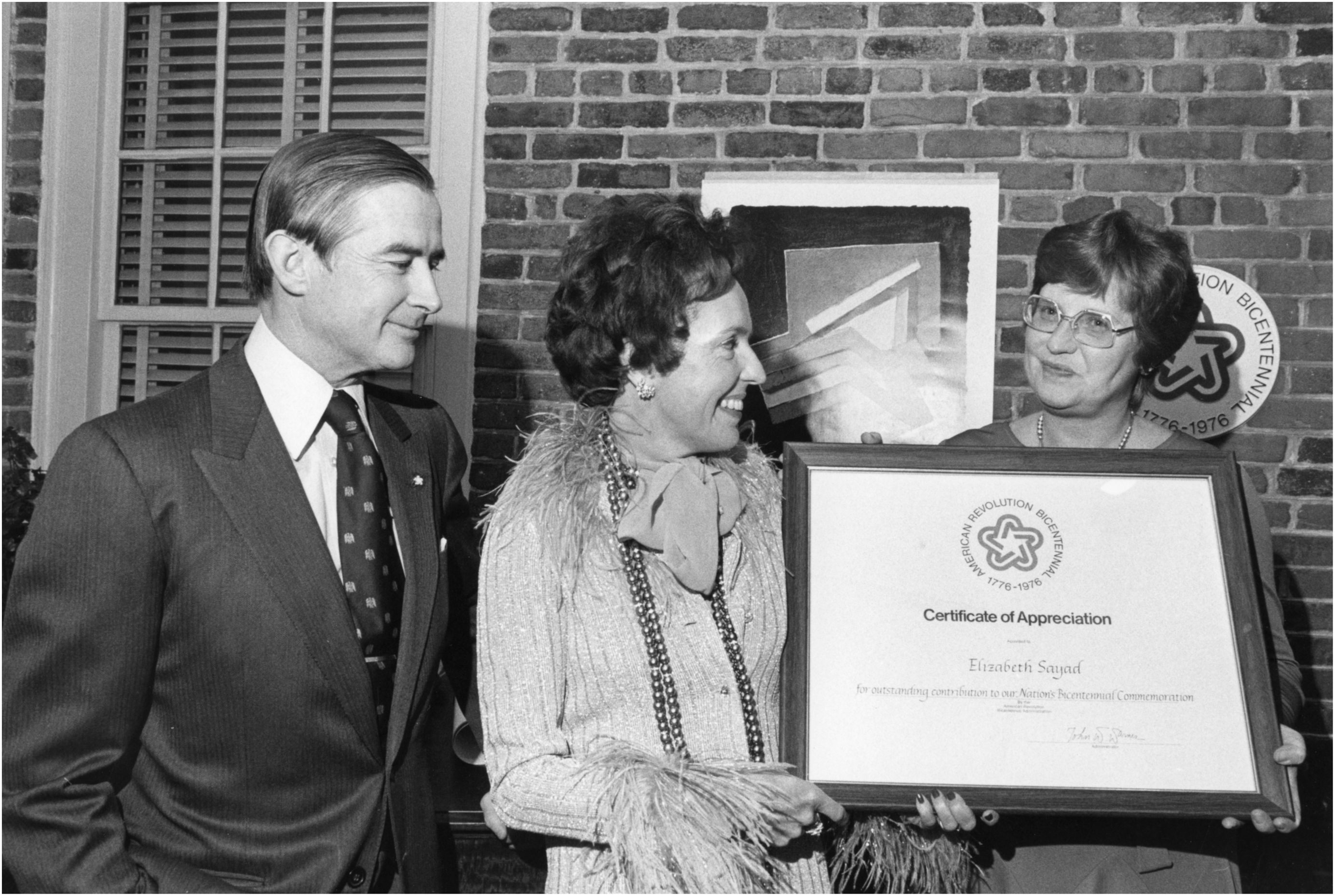
Legacy projects notwithstanding, BHAM happened. And putting on over 250 events and performances remains an achievement, even if the Rockefeller Foundation did not record it, and even if commentators quibbled that the popularity of the largest event BHAM claimed credit for—its concluding Fourth of July celebration at the St. Louis Gateway Arch—had more to do with the attractions of holiday fireworks than with any BHAM-related extras.Footnote 125 The thirty-minute documentary film of BHAM got its “gala premier” in Washington, DC, where Sayad added a “certificate of appreciation” from the ARBA to the St. Louis Globe-Democrat’s Woman of Achievement and Civic Responsibility award for 1976 and the key to the city of St. Louis (presented to her in recognition of BHAM by the mayor) (Figure 3).Footnote 126 The publication project eventually came to fruition under the title Music in American Society, 1776–1976: From Puritan Hymn to Synthesizer—language that deliberately reflected its editor’s judgment that the volume did not, in the end, try to push readers toward a new definition of American music.Footnote 127 As a coda to the festivities, BHAM’s last press releases underlined the festival’s financial capacity to raise money and break even.Footnote 128 And Sayad maintained that the real success of BHAM’s artistic commemoration of the past was the creation of a better future. “It was one thing to have a wonderful festival,” Sayad insisted to a Haskell & Sells company publication, “But the vitality that the book and the film will bring, not only to St. Louis, but also to the performing arts in America, is the most important thing BHAM contributed.”Footnote 129
Elizabeth Gentry Sayad receiving a “Certificate of Appreciation” from the ARBA in Washington, DC, 7 Dec. 1976. James W. Symington, U.S. Representative, Missouri 2nd District, Elizabeth Gentry Sayad, and Jean McKee, Acting Administrator, ARBA (L–R). Source: Elizabeth Gentry Sayad Papers (S0476), folder 199, box 10. The State Historical Society of Missouri.

Figure 3. Long description
A man in a suit and tie stands on the left, smiling. In the middle, a woman in a patterned outfit with a feathered shawl holds a framed certificate. On the right, another woman with glasses and a badge on her jacket smiles while holding the certificate. The certificate reads ‘Certificate of Appreciation’ and is awarded to Elizabeth Sayad for outstanding contributions to the American Revolution Bicentennial. Behind them, a brick wall features a framed artwork and a window with blinds.
Elizabeth Gentry Sayad is seen receiving a certificate of appreciation from the ARBA in Washington, DC. The event took place on December 7, 1976. From left to right, the individuals present are James W. Symington, US Congressman from Missouri’s 2nd District, Elizabeth Gentry Sayad, and Jean McKee, Acting Administrator of the ARBA.
In the preface to Sayad’s 1991 memoir, A Scarlet Thread, Sayad reflected that her life had “weave[d] a tapestry of contrast between old and new, formal and spontaneous, conservative and liberal”—it is a description that remains equally applicable to BHAM and the larger commemorative landscape of the bicentennial. Commemoration can have historical objectives, educational ambitions, and political purposes, but for Sayad its only legitimate goal was civic, to unite Americans who felt divided and who justified that feeling by dwelling on their differences. Theoretically speaking, however, everything and nothing are remarkably similar states of being. And by broadly celebrating every possibility of what America has been and could be at hundreds of different events, BHAM succeeded in offering everything to everyone. But Sayad’s goal to draw on the diversity of the American past to navigate the ideological diversity of the American present also speaks to a larger underappreciated strain of multicultural conservative commemoration. Sayad valued the American Revolution as a touchstone for inspiring Americans to accept themselves in the broadest sense, and, in the case of BHAM, to hear the possibility of using that acceptance as a catalyst for a more harmonious future.
In 2017, six months before her death, Sayad wrote a letter to the editor published in the St. Louis Post-Dispatch responding to the imminent announcement that St. Louis would remove and dismantle a Memorial to the Confederate Dead from Forest Park. Instead of removing the memorial, Sayad suggested “the organization of an altruistic fund equivalent to the money required to take down the monument and transport it elsewhere.” “The colorblind fund,” Sayad continued, “could take the form of educational stipends for deserving students, the addition of more police for the park, or the creation of a permanent, objective exhibit showing how divided St. Louis was during the Civil War as well as before and after.” Sayad “hope[d]” that this “solution” to the “brouhaha over the Confederate Memorial … might bond us as a metro area rather than divide us further.”Footnote 130 Though evoking different elements of the American past, Sayad saw BHAM’s celebration of the American Revolution and the preservation of Confederate memorials as two roads to the same destination: a country wherein an unconditional acceptance of its people was the measure of inclusive patriotism. The story of BHAM may underscore how attempts to forge a united future without addressing the legacies of historical conflict can struggle to produce histories worthy of commemoration. But Sayad’s vision for the festival matters as a dynamic attempt to synthesize the past into new and ever evolving horizons of what America can become.
APPENDIX A. Summary of BHAM Events, Repertoire, and Performers. Source: BHAM: Bicentennial Horizons of American Music and the Performing Arts [official program], n.p., 1976, folder 19, box 1, BHAMR.


 Open access

