



1. Introduction
For a dynamical system T on a metric space X with a metric d, in the computer simulation of the dynamical system T, a computer-generated orbit 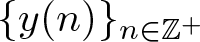 $\{y(n)\}_{n\in \mathbb{Z}^{+}}$ is usually a pseudo orbit of T, i.e.,
 $d(y(n+1),T(y(n)))\approx 0$, because of errors in the computation. Hence, in studying the dynamic behaviours of T through the computer simulation, a significant problem is whether there exists a true orbit near (in some sense) the computer-generated one. If the answer is positive, it is said that the pseudo orbit can be shadowed. If every pseudo orbit can be shadowed then the system T is said to have the shadowing property. Note that every true orbit of T is a pseudo orbit of any system
 $\widetilde{T}$ which is close to T in some sense. Hence, the shadowing property also plays an important role in the study of structural stability of dynamical systems [Reference Bowen8, Reference Katok and Hasselblatt16, Reference Palmer21, Reference Pilyugin22, Reference Walters25].
The study of shadowing dates back to 1967 when Anosov showed in [Reference Anosov2, Lemma 13.3] that for a C 1 flow T t on a d-dimensional connected closed smooth manifold M, if the flow T t is hyperbolic on M, then the flow T t has the  $(\varepsilon,\delta)$-shadowing property for periodic pseudo orbits, that is, for any fixed ɛ > 0 there is a δ > 0 such that for any periodic δ-pseudo orbit x of T t, i.e., for any C 1 map
 $y:\mathbb{R}\rightarrow M$ which is periodic and satisfies
 \begin{eqnarray*}
|y'(t)-f(y(t))|\leq \delta,
\ \ \forall \ t\in \mathbb{R},
\end{eqnarray*}
where f is the vector field corresponding to T t, there exists a true periodic orbit  $x:\mathbb{R}\rightarrow M$ of T t with the same period such that
 \begin{eqnarray*}
|x(t)-y(t)|\leq \varepsilon,
\ \ \forall \ t\in \mathbb{R}.
\end{eqnarray*}
For discrete time dynamical systems, it is given explicitly that the  $(\varepsilon,\delta)$-shadowing property holds for pseudo orbits in [Reference Sinai24] for Anosov diffeomorphisms, in [Reference Bowen7] for Axiom A diffeomorphisms and in [Reference Katok17] and [Reference Katok, Mendoza, Katok and Hasselblatt18, Theorem S.4.14, p.690 ] for nonuniformly hyperbolic diffeomorphisms. The proofs in [Reference Anosov2, Reference Bowen7, Reference Katok, Mendoza, Katok and Hasselblatt18, Reference Sinai24] are based on the theory of invariant manifolds. Analytic proofs of the
 $(\varepsilon,\delta)$-shadowing property based on the existence of bounded solutions and the theory of exponential dichotomy were given in [Reference Meyer and Sell19] by inverse function theorem and in [Reference Palmer20] by Banach fixed theorem for finite dimensional systems. For systems in infinite dimensional Banach spaces, the results of
 $(\varepsilon,\delta)$-shadowing property were proved for C 1 nonautonomous maps with hyperbolic invariant sets under some assumptions of the boundedness of the nonautonomous maps and their derivatives in some neighbourhood of the invariant sets in [Reference Chow, Lin and Palmer9] and for C 1 maps with compact hyperbolic invariant sets in [Reference Henry15]. The result [Reference Pilyugin22, Theorem 1.2.3, pp.14] implies that a C 1 diffeomorphism T in
 $\mathbb{R}^{d}$ with a compact hyperbolic invariant set Λ has the Lipschitz shadowing property for pseudo orbits in a neighbourhood M of Λ, i.e., T has the
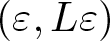 $(\varepsilon,L\varepsilon)$-shadowing property for ɛ-pseudo orbits in M for some positive constant L. We refer to [Reference Katok and Hasselblatt16, Reference Palmer21, Reference Pilyugin22] for more results about the shadowing property for both flows and diffeomorphisms with compact hyperbolic invariant sets and references therein.
The pseudo orbits considered in the above results are in a compact set or in a neighbourhood of a compact set. Without the compactness, for differential equations and difference equations in a Banach space X, there are also results about the shadowing property for pseudo orbits in the whole space X. Consider a difference equation
 \begin{equation}
x(n+1)=A(n)x(n)+f(n,x(n)),
~~~~~~~n\in J_{D},~~ x(n)\in X,
\end{equation}
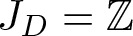
where  $J_{D}=\mathbb{Z}^{+},\mathbb{Z}^{-}$ or
 $\mathbb{Z}$, A(n) is a bounded linear operator in X for each
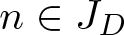 $n\in J_{D}$ and
 $f:J_{D}\times X\rightarrow X$. For Eq. (1.1) in the autonomous case, i.e.,
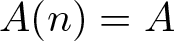 $A(n)=A$ and
 $f(n,x)=f(x)$, in 1993 Akin ([Reference Akin1, Theorem 13, pp.207-208]) proved that if A is hyperbolic, i.e., the spectrum of A is disjoint from the unit circle, and f is Lipschitz continuous with a sufficiently small Lipschitz constant then the autonomous system has the unique Lipschitz shadowing property for pseudo orbits on
 $\mathbb{Z}$ in the whole X, where the uniqueness means that for any δ-pseudo orbit
 $y:=\{y(n)\}_{n\in \mathbb{Z}}$ there exists a unique solution
 $x:=\{x(n)\}_{n\in \mathbb{Z}}$ of Eq. (1.1) ɛ-tracking y. Furthermore, it is also showed in [Reference Akin1, Theorem 13, pp.207-208] that under the same assumption Eq. (1.1) has the limit shadowing property, that is, if a δ-pseudo orbit y of Eq. (1.1) satisfies
 $\lim_{n\rightarrow +\infty}|y(n+1)-F(n,y(n))|=0$ (resp.
 $\lim_{n\rightarrow -\infty}|y(n+1)-F(n,y(n))|=0$), where
 $F(n,y(n)):=A(n)y(n)+f(n,y(n))$, then there exists a true solution x of Eq. (1.1) ɛ-shadowing y and satisfying
 \begin{eqnarray*}
\lim_{n\rightarrow\infty}|x(n)-y(n)|=0
\ \ \ {\rm (resp.}
\lim_{n\rightarrow-\infty}|x(n)-y(n)|=0
{\rm )}.
\end{eqnarray*}
A more general problem is that “for any δ-pseudo orbit y of Eq. (1.1) does the following estimate
 \begin{eqnarray}
\limsup_{n\rightarrow \pm\infty}|x(n)-y(n)|
\leq C\limsup_{n\rightarrow \pm\infty}|y(n+1)-F(n,y(n))|
\end{eqnarray}
hold for some positive constant C?”.
Recently, efforts have been done to weaken the conditions of the shadowing property for both nonautonomous differential equations and difference equations in Banach spaces. In [Reference Backes and Dragičević3], Backes and Dragičević proved that if the linear part of Eq. (1.1) has a uniform exponential trichotomy in the sense of Elaydi and Hajek ([Reference Elaydi and Hajek12]), 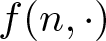 $f(n,\cdot)$ is Lipschitz continuous with the Lipschitz constant Lf independent on n, and an operator-valued mapping
 $\widehat{G}$ (see Remark 2.2) defined by the evolution operator of the linear part of Eq. (1.1) combined with a projection-valued mapping given by the projection of the trichotomy satisfies
 \begin{eqnarray}
q_{1}:=L_{f}\sup_{x:\mathbb{Z}\rightarrow X, |x(n)|\leq 1}\sup_{n\in \mathbb{Z}}|\sum_{m\in \mathbb{Z}}\widehat{G}(n,m+1)x(m+1)| \lt 1,
\end{eqnarray}
then Eq. (1.1) has the bounded shadowing property for bounded pseudo orbits. In [Reference Backes, Dragičević and Singh5], Backes, Dragičević and Singh showed that for Eq. (1.1) with invertible A(n) if 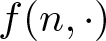 $f(n,\cdot)$ is Lipschitz continuous with the Lipschitz constant
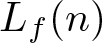 $L_{f}(n)$, and there exists an operator-valued mapping
 $\widehat{G}$ (see Remark 2.2) defined by the evolution operator of the linear part of Eq. (1.1) combined with an operator-valued mapping
 $\widehat{P}^{u}$ which may not be invariant for Eq. (1.1) such that
 \begin{eqnarray}
q_{2}:=\sup_{n\in \mathbb{Z}}\sum_{m\in \mathbb{Z}}\|\widehat{G}(n,m+1)\|L_{f}(m) \lt 1,
\end{eqnarray}
then Eq. (1.1) has the bounded shadowing property for a type of weighted pseudo orbits. A parallel result is also given in [Reference Backes, Dragičević and Singh5] for a nonautonomous differential equation
 \begin{equation}
x'=A(t)x+f(t,x),\quad x(t)\in X,
\end{equation}
whose evolution operator is invertible, where  $A:\mathbb{R}\rightarrow \mathcal{L}(X)$ is locally integrable. In [Reference Backes, Dragičević, Pituk and Singh4], Backes, Dragičević, Pituk and Singh showed that for a delay differential equation if its linear part has a dichotomy, the nonlinear term is Lipschitz continuous with a Lipschitz constant Lf independent on t and the Green function
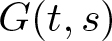 $G(t,s)$ for the dichotomy satisfies
 $\lim_{s\rightarrow +\infty}\|G(t,s)\|/\eta(s)=0$ and
 \begin{eqnarray}
L_{f}\sup_{t\in \mathbb{R}^{+}}
\frac{1}{\eta(t)}\int_{0}^{+\infty}\|G(t,s)\|\eta(s)ds \lt 1
\end{eqnarray}
for a positive and continuous function, then the delay differential equation has the η-weighted Lipschitz shadowing property for the η-weighted bounded pseudo orbits. A natural problem is: does there exist any weaker condition than the ones in [Reference Backes and Dragičević3–Reference Backes, Dragičević and Singh5] such that the system has the shadowing property?
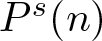
In this paper, we give a positive answer to the two problems in the above two paragraphs. More precisely, for noncompact case we prove that if the linear part of Eq. (1.1) has a dichotomy with the projection 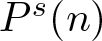 $P^{s}(n)$ and there exists an operator-valued mapping
 $\widehat{G}$ (which will be called a Green function) defined by the dichotomy combined with an operator-valued mapping
 $\widehat{P}^{u}$ satisfying
 $\mathcal{R}(\widehat{P}^{u}(n))\subset \mathcal{R}(\mathbb{I}-P^{s}(n))$ for all
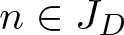 $n\in J_{D}$ such that the composition of
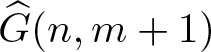 $\widehat{G}(n,m+1)$ and the nonlinear term
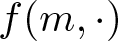 $f(m,\cdot)$ is Lipschitz continuous with the Lipschitz constant
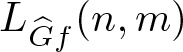 $L_{\widehat{G}f}(n,m)$ satisfying
 \begin{equation}\sup_{n\in J_D}\frac1{\eta(n)}\sum_{m\in J_D}L_{\widehat Gf}(n,m)\eta(m) \lt 1\end{equation}
then Eq. (1.1) has the η-weighted Lipschitz shadowing property for a type of weighted bounded pseudo orbits. The operator-valued mapping  $\widehat{G}$ in this paper generalizes those in [Reference Backes and Dragičević3, Reference Backes, Dragičević, Pituk and Singh4] (see Remark 2.2) and extends the framework of [Reference Backes, Dragičević and Singh5, Reference Coppel10] from invertible to non-invertible systems (see the detail just after (2.3)). The condition (1.7) is weaker than (1.4) used in [Reference Backes, Dragičević and Singh5] and the discrete version
 \begin{eqnarray}
&& \tilde{q}:=L_{f}\sup_{n\in \mathbb{Z}^{+}}\frac{1}{\eta(n)} \sum_{m\in \mathbb{Z}^{+}}\|G(n,m+1)\|\eta(m) \lt 1,
\end{eqnarray}
of the condition (1.6) used in [Reference Backes, Dragičević, Pituk and Singh4] (see Remark 2.2). Moreover, if our above condition holds by replacing  $\widehat{G}$ by the Green function G for the dichotomy, i.e.,
 $G(n,m+1)f(m,\cdot)$ is Lipschitz continuous with the Lipschitz constant
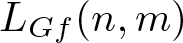 $L_{Gf}(n,m)$ satisfying (1.7) by replacing
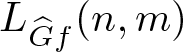 $L_{\widehat{G}f}(n,m)$ by
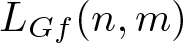 $L_{Gf}(n,m)$, and additionally the evolution operator restricted to the stable subspace (resp. unstable subspace) tends to 0 in weight η as time tends to
 $+\infty$ (resp.
 $-\infty$) then the system has the η-weighted generalized forward (resp. backward) limit shadowing property for a type of weighted bounded pseudo orbits. For the systems investigated in ([Reference Akin1, Theorem 13, pp.207-208]), the generalized limit shadowing property implies that the estimate (1.2) holds (see Remark 2.3). For compact case, we prove that if a C 1 map f in a Banach space has a compact hyperbolic set then f has both the weighted shadowing property and the generalized limit shadowing property. The main results are given in
 $\S$ 2. In
 $\S$ 3, we give the proofs of our main results. The proofs are based on two lemmas, one is an extension of Coppel’s result ([Reference Coppel10]) and Henry’s result ([Reference Henry15]) about the existence of bounded solutions, the other is a generalization of projected Gronwall’s inequality. In
 $\S$ 4, we show a class of systems which satisfies the conditions in our main results in the noncompact case and give an example which satisfies (1.7) but does not satisfy (1.4) and (1.8). In the last section, we give the parallel results for differential equations for noncompact case in brief.
2. Main results
Throughout this paper, 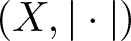 $(X,|\cdot|)$ is a Banach space, and
 $\mathcal{L}(X)$ denotes the space of bounded linear operators on X. The operator norm on
 $\mathcal{L}(X)$ will be denoted by
 $\|\cdot\|$. For any fixed
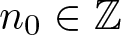 $n_{0}\in \mathbb{Z}$, let
 $\mathbb{Z}_{n_{0}}^{+}:=[n_{0},+\infty)\cap \mathbb{Z}$ and
 $\mathbb{Z}_{n_{0}}^{-}:=(-\infty, n_{0}]\cap \mathbb{Z}$. As usual,
 $\mathbb{Z}^{+}$ and
 $\mathbb{Z}^{-}$ denote
 $\mathbb{Z}_{0}^{+}$ and
 $\mathbb{Z}_{0}^{-}$ respectively. For a function
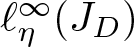
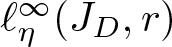
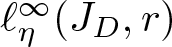
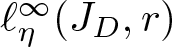
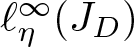
 $\eta:J_{D}\rightarrow (0,\infty)$, let
 \begin{eqnarray*}
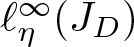
&&\ell_{\eta}^{\infty}(J_{D}):=\{x:J_{D}\rightarrow X|~\| x\|_{\ell_{\eta}^{\infty}(J_{D})}:= \sup_{n\in J_{D}}\frac{|x(n)|}{\eta(n)} \lt +\infty\}
~~{\rm and}
\\
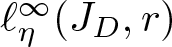
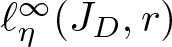
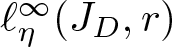
&&\ell_{\eta}^{\infty}(J_{D},r):=\{x
\in \ell_{\eta}^{\infty}(J_{D}):
\|x\|_{\ell_{\eta}^{\infty}(J_{D})}\leq r\},
\end{eqnarray*}
where  $J_{D}=\mathbb{Z}_{n_{0}}^{+},\mathbb{Z}_{n_{0}}^{-}$ or
 $\mathbb{Z}$.
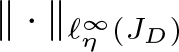 $\|\cdot\|_{\ell_{\eta}^{\infty}(J_{D})}$ is a norm of
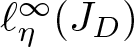 $\ell_{\eta}^{\infty}(J_{D})$ and
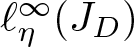 $\ell_{\eta}^{\infty}(J_{D})$ equipped with
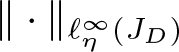 $\|\cdot\|_{\ell_{\eta}^{\infty}(J_{D})}$ is a Banach space. Let
 $J_{D,\geq}^{2}:=\{(n,m)\in J_{D}\times J_{D}:n\geq m\}$,
 $J_{D,\leq}^{2}:=\{(n,m)\in J_{D}\times J_{D}:n\leq m\}$, where
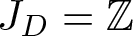 $J_{D}=\mathbb{Z}$,
 $\mathbb{Z}_{n_{0}}^{+}$, or
 $\mathbb{Z}_{n_{0}}^{-}$ for some
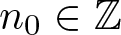 $n_{0}\in \mathbb{Z}$. For a map
 $g:J_{D}\rightarrow X$, for convenience set
 $\sum_{k=N_{1}}^{N_{2}}g(k)=0$ if
 $N_{1}, N_2\in J_{D}$ and
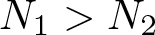 $N_{1} \gt N_{2}$.
2.1. Noncompact case
Consider the homogeneous linear difference equation
 \begin{equation}
x(n+1)=A(n)x(n),
~~~~~~~n\in J_{D},~~ x(n)\in X,
\end{equation}
where  $A(n)\in \mathcal{L}(X)$, and JD is either
 $\mathbb{Z}$,
 $\mathbb{Z}^{+}$, or
 $\mathbb{Z}^{-}$. Let
 \begin{eqnarray*}
U(n,m)=\left\{\begin{array}{ll}
A(n-1)\cdot\cdot\cdot A(m),
& n \gt m,\in J_{D},
\\
\mathbb{I},
&n = m,\in J_{D},
\end{array}
\right.
\end{eqnarray*}
where  $\mathbb{I}$ denotes the identity operator on X. Clearly,
 $U(n,m)U(m,k)=U(n,k)$ for all
 $n\ge m\ge k\in
J_{D}$ and
 $n\mapsto U(n,m)\xi$ is a solution of Eq. (2.1) for any fixed
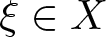 $\xi\in X$.
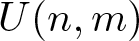 $U(n,m)$ is called the evolution operator of Eq. (2.1). Eq. (2.1) is said to have a dichotomy on JD if there exists a projection-valued mapping
 $P^{s}: J_{D}\rightarrow \mathcal{L}(X)$ such that (i)
 $P^{s}(n)U(n,m)=U(n,m)P^{s}(m)$ for
 $n\geq m\in J_{D}$, (ii) the restriction
 $U(n,m)|_{\mathcal{R}(P^{u}(m))}$ to the range
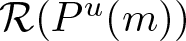 $\mathcal{R}(P^{u}(m))$ of
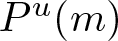 $P^{u}(m)$ is an isomorphism from
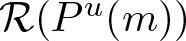 $\mathcal{R}(P^{u}(m))$ onto
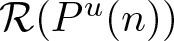 $\mathcal{R}(P^{u}(n))$ for
 $n\geq m\in J_{D}$, where
 $P^{u}(n):=\mathbb{I}-P^{s}(n)$. For a dichotomy of (2.1) with the projection
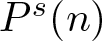 $P^{s}(n)$, let
 \begin{eqnarray}
G(n,m):=\left\{
\begin{aligned}
& U(n,m)P^{s}(m), \ \ \ \ \forall \ n\geq m\in J_{D}, \\
& -U(n,m)P^{u}(m), \ \forall \ n \lt m \in J_{D},
\end{aligned}
\right.
\end{eqnarray}
which is called the Green function for the dichotomy ([Reference Daleckij and Krein11, Reference Henry14]), where 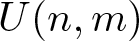 $U(n,m)$ for n < m is defined by
 $U(n,m):=(U(m,n)|_{\mathcal{R}(P^{u}(n))})^{-1}$ because of (ii).
A Green function of Eq. (2.1) can be defined more broadly when Eq. (2.1) has a dichotomy. For any two operator-valued mappings  $\widehat{P}: J_{D}\rightarrow \mathcal{L}(X)$ and
 $P: J_{D}\rightarrow \mathcal{L}(X)$,
 $\widehat{P}$ is said to be adapted to P if
 $\mathcal{R}(\widehat{P}(n))\subset \mathcal{R}(P(n))$ for all
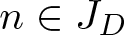 $n\in J_{D}$. For a dichotomy of Eq. (2.1) with the projection
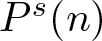 $P^{s}(n)$ and an operator-valued mapping
 $\widehat{P}^{u}: J_{D}\rightarrow \mathcal{L}(X)$ which is adapted to P u, let
 \begin{eqnarray}
\widehat{G}(n,m):=\left\{
\begin{aligned}
& U(n,m)\widehat{P}^{s}(m), \ \ \ \ \ \forall \ n\geq m\in J_{D}, \\
& -U(n,m)\widehat{P}^{u}(m), \ \forall \ n \lt m \in J_{D},
\end{aligned}
\right.
\end{eqnarray}
which is called the (generalized) Green function for the dichotomy combined with the adapted operator-valued mapping  $\widehat{P}^{u}$, where
 $\widehat{P}^{s}(m):=\mathbb{I}-\widehat{P}^{u}(m)$ and
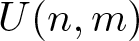 $U(n,m)$ for n < m is defined by
 $U(n,m):=(U(m,n)|_{\mathcal{R}(P^{u}(n))})^{-1}$. The Green function for the dichotomy with the projection
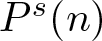 $P^{s}(n)$ combined with the projection-valued mapping P u given by
 $P^{u}(n):=\mathbb{I}-P^{s}(n)$ agrees with the Green function for the dichotomy given by (2.2). Note that in the definition of
 $\widehat{G}$,
 $\widehat{P}^{u}$ may not be invariant, i.e., the equality
 $\widehat{P}^{u}(n)U(n,m)=U(n,m)\widehat{P}^{u}(m)$ may not hold, and
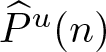 $\widehat{P}^{u}(n)$ may not be a projection. It is clear that Eq. (2.1) has a dichotomy with the projection
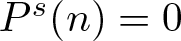 $P^{s}(n)=0$ if A(n) is invertible for all
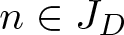 $n\in J_{D}$. Hence, the Green function defined in this manner coincides with the discrete version of the Green function defined in [Reference Coppel10, p.137] for ordinary differential equation in
 $\mathbb{R}^{n}$ and the Green function defined in [Reference Backes, Dragičević and Singh5, p.496] for Eq. (2.1) with invertible A(n) in Banach spaces. Our extension of the Green functions defined in [Reference Backes, Dragičević and Singh5, Reference Coppel10] for invertible systems to non-invertible cases was inspired by the work [Reference Backes and Dragičević3], in which a Green function is defined by an exponential trichotomy of Eq. (2.1) without the invertibility in [Reference Backes and Dragičević3, p.869]. We will show that the Green function defined by an exponential trichotomy in [Reference Backes and Dragičević3, p.869] is encompassed within the broader definition given by (2.3) in this case (see Remark 2.2).
For a Green function  $\widehat{G}$ of Eq. (2.1) given by (2.3) and a function
 $\eta:J_{D}\rightarrow (0,\infty)$, let
 $L_{\eta,\widehat{G}; \lt 1}(J_{D}\times X)$ denote the set consisting of all the mappings
 $F:J_{D}\times X\rightarrow X$ such that
 $\widehat{G}(n,m+1)F(m,\cdot)$ is Lipschitz continuous with the Lipschitz constant
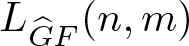 $L_{\widehat{G}F}(n,m)$, i.e.,
 \begin{eqnarray}
L_{\widehat{G}F}(n,m):=\sup_{x_{1}\neq x_{2},\in X}\frac{|\widehat{G}(n,m+1)F(m,x_{1})-\widehat{G}(n,m+1)F(m,x_{2})|}{|x_{1}-x_{2}|},
\end{eqnarray}
which is summable in m for any fixed n and satisfies
 \begin{eqnarray}
&& \theta_{1}:=\sup_{n\in J_{D}}\frac{1}{\eta(n)} \sum_{m\in J_{D}}L_{\widehat{G}F}(n,m)\eta(m) \lt 1.
\end{eqnarray}
Consider the nonlinear difference equation (1.1), where  $A(n)\in \mathcal{L}(X)$ and
 $f:J_{D}\times X\rightarrow X$, with the following hypothesis:
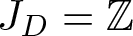
(SD) Eq. (2.1) has a dichotomy on JD with the projection
 $P^{s}(n)$, where
$J_{D}=\mathbb{Z}$,
$\mathbb{Z}^{+}$ or
$\mathbb{Z}^{-}$, and there exists a function
$\eta:J_{D}\rightarrow (0,\infty)$ and an adapted operator-valued mapping
$\widehat{P}^{u}:J_{D}\rightarrow \mathcal{L}(X)$ of P u such that the nonlinear term
$f\in L_{\eta,\widehat{G}; \lt 1}(J_{D}\times X)$, where
$\widehat{G}$ denotes the Green function for the dichotomy combined with
$\widehat{P}^{u}$.







In order to study the weighted limit shadowing of Eq. (1.1), we need the following additional assumption:
(AD) In (SD),
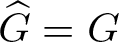
$\widehat{G}=G$, that is, the nonlinear term
$f\in L_{\eta,G; \lt 1}(J_{D}\times X)$, where G denotes the Green function for the dichotomy with the projection
$P^{s}(n)$. In addition, the Green function G satisfies
\begin{eqnarray*}
\lim_{n \rightarrow +\infty}
\frac{\|G(n,m)\|}{\eta(n)}
=0, \ \ \forall \ m\in \mathbb{Z}^{+}
\ ( {\rm resp.}
\lim_{n \rightarrow -\infty}
\frac{\|G(n,m)\|}{\eta(n)}
=0 ,\\ \forall \ m\in \mathbb{Z}^{-}).
\end{eqnarray*}

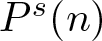

By the definition of the Green function G, the limit in (AD) implies that the evolution operator restricted to the stable subspace (resp. unstable subspace) tends to 0 in weight η as time tends to  $+\infty$ (resp.
 $-\infty$).
Before stating the main results, we need to introduce some notations and recall some concepts. For a Green function  $\widehat{G}$ of Eq. (2.1) and a function
 $\eta:J_{D}\rightarrow (0,\infty)$, let
 \begin{align}
\mathcal{B}_{\eta,\widehat{G}}(J_{D})\!:=\!
\{h:\! J_{D}\!\rightarrow\! X~|~ \theta_{\eta,\widehat{G}}(h)\!:=\!\sup_{n\in J_{D}} \frac{1}{\eta(n)}\!\sum_{m\in J_{D}}\!\!|\widehat{G}(n,m\!+\!1)h(m)| \! \lt \!\infty \},
\end{align}
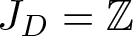
where  $\sum_{m\in J_{D}}:=\sum_{m=-\infty}^{+\infty}$ in the case
 $J_{D}=\mathbb{Z}$,
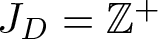
 $\sum_{m\in J_{D}}:=\sum_{m=0}^{+\infty}$ in the case
 $J_{D}=\mathbb{Z}^{+}$, and
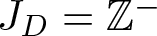
 $\sum_{m\in J_{D}}:=\sum_{m=-\infty}^{-1}$ in the case
 $J_{D}=\mathbb{Z}^{-}$. For
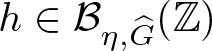 $h\in \mathcal{B}_{\eta,\widehat{G}}(\mathbb{Z})$ or
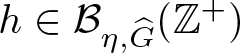 $h\in \mathcal{B}_{\eta,\widehat{G}}(\mathbb{Z}^{+})$, let
 \begin{equation}
\theta_{lim,\eta,\widehat{G}}^{+}(h):=
\limsup_{n_{0} \rightarrow +\infty} \sup_{n\geq n_{0}\geq 0}\frac{1}{\eta(n)}\sum_{m=n_{0}}^{+\infty}|\widehat{G}(n,m+1)h(m)|.
\end{equation}
For 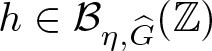 $h\in \mathcal{B}_{\eta,\widehat{G}}(\mathbb{Z})$ or
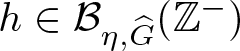 $h\in \mathcal{B}_{\eta,\widehat{G}}(\mathbb{Z}^{-})$, let
 \begin{equation}
\theta_{lim,\eta,\widehat{G}}^{-}(h):=
\limsup_{n_{0} \rightarrow -\infty} \sup_{n\leq n_{0}\leq 0}\frac{1}{\eta(n)}\sum_{m=-\infty}^{n_{0}-1}|\widehat{G}(n,m+1)h(m)|.
\end{equation}
Let
 \begin{align*}
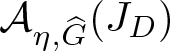
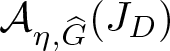
\mathcal{A}_{\eta,\widehat{G}}(J_{D}):=\{y:J_{D}\rightarrow X~|~h_{y}\in \mathcal{B}_{\eta,\widehat{G}}(J_{D})\},
\end{align*}
where
 \begin{equation}
h_{y}(n):=y(n+1)-A(n)y(n)-f(n,y(n)),
\ n\in J_{D}.
\end{equation}
For 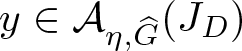 $y\in \mathcal{A}_{\eta,\widehat{G}}(J_{D})$ satisfying
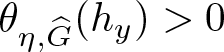 $\theta_{\eta,\widehat{G}}(h_{y}) \gt 0$, there exists some
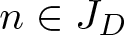 $n\in J_{D}$ such that
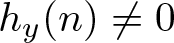 $h_{y}(n)\neq 0$. Otherwise, if
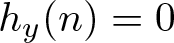 $h_{y}(n)=0$ for all
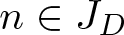 $n\in J_{D}$ then
 $\widehat{G}(n,m+1)h_{y}(m)=0$ for all
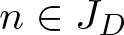 $n\in J_{D}$ since
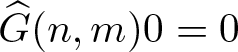 $\widehat{G}(n,m)0=0$, which implies that
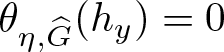 $\theta_{\eta,\widehat{G}}(h_{y})=0$. This contradicts the assumption that
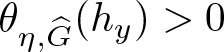 $\theta_{\eta,\widehat{G}}(h_{y}) \gt 0$. Hence
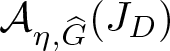
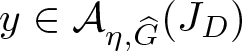 $y\in \mathcal{A}_{\eta,\widehat{G}}(J_{D})$ is a pseudo orbit of Eq. (1.1) if
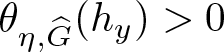 $\theta_{\eta,\widehat{G}}(h_{y}) \gt 0$, which is called a
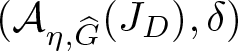
 $\mathcal{A}_{\eta,\widehat{G}}(J_{D})$-pseudo orbit of Eq. (1.1). For a constant δ > 0, a pseudo orbit y of Eq. (1.1) is said to be a
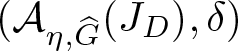 $({\mathcal A}_{\eta,\widehat G}(J_D),\delta)$-pseudo orbit of Eq. (1.1) if
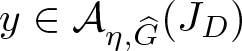 $y\in \mathcal{A}_{\eta,\widehat{G}}(J_{D})$ satisfies
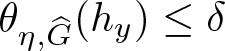 $\theta_{\eta,\widehat{G}}(h_{y})\leq \delta$. A
 $(\mathcal{A}_{\eta,\widehat{G}}(J_{D}),\delta)$-pseudo orbit y of Eq. (1.1) is said to be (resp. uniquely) η-weighted-ɛ-shadowable for Eq. (1.1) if there is a (resp. unique) solution x of Eq. (1.1) such that
 $\|y-x\|_{\ell_{\eta}^{\infty}(J_{D})}\leq \varepsilon$. Eq. (1.1) is said to have the (resp. unique) η-weighted shadowing property for
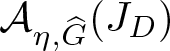 $\mathcal{A}_{\eta,\widehat{G}}(J_{D})$-pseudo orbits if for any ɛ > 0 there exists a δ > 0 such that every
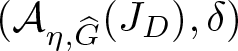 $(\mathcal{A}_{\eta,\widehat{G}}(J_{D}),\delta)$-pseudo orbit y of Eq. (1.1) is (resp. uniquely) η-weighted-ɛ-shadowable for Eq. (1.1). Eq. (1.1) is said to have the η-weighted Lipschitz shadowing property for
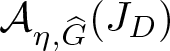 $\mathcal{A}_{\eta,\widehat{G}}(J_{D})$-pseudo orbits if the constant δ in the η-weighted shadowing property can be taken as
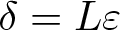 $\delta=L\varepsilon$ for a positive constant L which does not depend on ɛ. Eq. (1.1) is said to have the forward (resp. backward) η-weighted limit shadowing property for
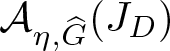 $\mathcal{A}_{\eta,\widehat{G}}(J_{D})$-pseudo orbits if Eq. (1.1) has the η-weighted shadowing property for
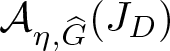 $\mathcal{A}_{\eta,\widehat{G}}(J_{D})$-pseudo orbits and for any
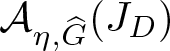 $\mathcal{A}_{\eta,\widehat{G}}(J_{D})$-pseudo orbit y satisfying
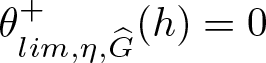 $\theta_{lim,\eta,\widehat{G}}^{+}(h)=0$ there exists a solution x of Eq. (1.1) such that
 \begin{eqnarray*}
\lim_{n \rightarrow +\infty}\frac{|y(n)-x(n)|}{\eta(n)}=0
\ \ ({\rm resp.} \
\lim_{n \rightarrow -\infty}\frac{|y(n)-x(n)|}{\eta(n)}=0
).
\end{eqnarray*}
Eq. (1.1) is said to have the generalized forward (resp. backward) η-weighted limit shadowing property for 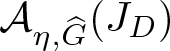 $\mathcal{A}_{\eta,\widehat{G}}(J_{D})$-pseudo orbits if Eq. (1.1) has the η-weighted shadowing property for
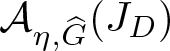 $\mathcal{A}_{\eta,\widehat{G}}(J_{D})$-pseudo orbits and for any
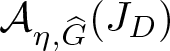 $\mathcal{A}_{\eta,\widehat{G}}(J_{D})$-pseudo orbit y there exists a solution x of Eq. (1.1) such that
 \begin{align}
&& \limsup_{n \rightarrow +\infty}\frac{|y(n)-x(n)|}{\eta(n)}\leq \Lambda \theta_{lim,\eta,\widehat{G}}^{+}(h_{y})\nonumber\\
&& ({\rm resp.} \ \limsup_{n \rightarrow -\infty}\frac{|y(n)-x(n)|}{\eta(n)}\leq \Lambda \theta_{lim,\eta,\widehat{G}}^{-}(h_{y})),
\end{align}
for a positive constant Λ independent of y and x. In the case when  $\eta\equiv 1$, we will omit the word “η-weighted”.
Now we are ready to give our main results about the shadowing property of Eq. (1.1).
Theorem 1 Consider Eq. (1.1) and suppose that (SD) holds. Then the following hold:
(1) Lipschitz shadowing: Eq. (1.1) has the η-weighted Lipschitz shadowing property for
$\mathcal{A}_{\eta,\widehat{G}}(J_{D})$-pseudo orbits with
$\delta=(1-\theta_{1})\varepsilon$, where
$J_{D}=\mathbb{Z}$,
$\mathbb{Z}^{+}$ or
$\mathbb{Z}^{-}$, and θ 1 is the constant given in (2.5). Moreover, if 0 is the only solution of Eq. (2.1) in
$\ell_{\eta}^{\infty}(J_{D})$, then Eq. (1.1) has the unique η-weighted Lipschitz shadowing property for
$\mathcal{A}_{\eta,
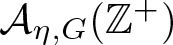
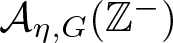
\widehat{G}}(J_{D})$-pseudo orbits,(2) Generalized limit shadowing: If the additional assumption (AD) holds, then Eq. (1.1) has the generalized forward (resp. backward) η-weighted limit shadowing property for
$\mathcal{A}_{\eta,G}(\mathbb{Z}^{+})$ (resp.
$\mathcal{A}_{\eta,G}(\mathbb{Z}^{-})$)-pseudo orbits with
$\Lambda=1/(1-\theta_{1})$, where θ 1 is the constant given in (2.5) by replacing
$\widehat{G}$ by G.





Remark 2.1. For a 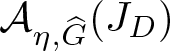 $\mathcal{A}_{\eta,\widehat{G}}(J_{D})$-pseudo orbit y, taking
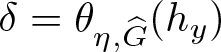 $\delta=\theta_{\eta,\widehat{G}}(h_{y})$ and
 $\varepsilon=\delta/(1-\theta_{1})$, the Lipschitz shadowing property in Theorem 1 shows that there exists a solution x of Eq. (1.1) such that
 \begin{eqnarray}
\sup_{n\in J_{D}}\frac{|y(n)-x(n)|}{\eta(n)}
\leq
\varepsilon=\frac{\delta}{1-\theta_{1}}
= \frac{\theta_{\eta,\widehat{G}}(h_{y})}{1-\theta_{1}}.
\end{eqnarray}
The result (2) in Theorem 1 shows that for any 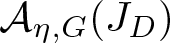 $\mathcal{A}_{\eta,G}(J_{D})$-pseudo orbit y there exists a solution x of Eq. (1.1) such that
 \begin{eqnarray}
&& \limsup_{n \rightarrow +\infty}\frac{|y(n)-x(n)|}{\eta(n)}\leq \frac{\theta_{lim,\eta,G}^{+}(h_{y})}{1-\theta_{1}}
\end{eqnarray}
 \begin{eqnarray}
&&
({\rm resp.} \
\limsup_{n \rightarrow -\infty}\frac{|y(n)-x(n)|}{\eta(n)}\leq \frac{\theta_{lim,\eta,G}^{-}(h_{y})}{1-\theta_{1}}
).
\end{eqnarray}
These imply that in the case  $\theta_{lim,\eta,G}^{+}(h_{y}) \lt \theta_{\eta,G}(h_{y})$ (resp.
 $\theta_{lim,\eta,G}^{-}(h_{y}) \lt \theta_{\eta,G}(h_{y})$), the generalized forward (resp. backward) limit shadowing property gives a better estimate of the forward (resp. backward) tracking in long time than the one given by the Lipschitz shadowing property.
Remark 2.2. The Green function  $\widehat{G}$ used in the result (1) in our Theorem 1 is more general than the one used in [Reference Backes and Dragičević3]. In [Reference Backes and Dragičević3], Eq. (2.1) is said to have an exponential trichotomy on
 $\mathbb{Z}$ in the sense of Elaydi and Hajek ([Reference Elaydi and Hajek12]) if there exists a projection-valued mapping
 $P_{i},: \mathbb{Z}\rightarrow \mathcal{L}(X)$ for
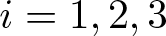 $i=1,2,3$ such that (i)
 $P_{i}(n)U(n,m)=U(n,m)P_{i}(m)$ for
 $n\geq m\in \mathbb{Z}$, (ii) the restriction
 $U(n,m)|_{\mathcal{R}(P_{i}(m))}$ for
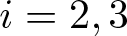 $i=2,3$ is an isomorphism from
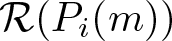 $\mathcal{R}(P_{i}(m))$ onto
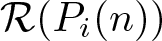 $\mathcal{R}(P_{i}(n))$ for
 $n\geq m\in \mathbb{Z}$, and (iii) there exist constants α > 0 and
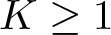 $K\geq 1$ such that
 \begin{eqnarray*}
\left\{
\begin{aligned}
& \|U(n,m)P_{1}(m)\|\leq Ke^{-\alpha(n-m)}, \ \forall \ n\geq m\in \mathbb{Z}, \\
& \|U(n,m)P_{2}(m)\|\leq
Ke^{-\alpha(m-n)}, \ \forall \ n\leq m \in \mathbb{Z},
\\
& \|U(n,m)P_{3}(m)\|\leq
Ke^{-\alpha|m-n|}, \ \ \forall \ n, m \in \mathbb{Z}.
\end{aligned}
\right.
\end{eqnarray*}
It is clear that in this case Eq. (2.1) has a dichotomy on  $\mathbb{Z}$ with the projection
 $P^{s}(n):=P_{1}(n)$ and the projection-valued mapping
 $\widehat{P}^{u}$ given by
 \begin{eqnarray*}
\widehat{P}^{u}(n):= \left\{
\begin{aligned}
& P_{2}(n), \ \ \ \ \ \ \ \ \ \ \ \forall \ n\geq 0, \in \mathbb{Z}, \\
& P_{2}(n)+P_{3}(n), \ \forall \ n \lt 0, \in \mathbb{Z},
\end{aligned}
\right.
\end{eqnarray*}
is adapted to  $P^{u}:=\mathbb{I}-P^{s}=P_{2}+P_{3}$. Hence, the operator-valued mapping
 $\widehat{G}$ given in [Reference Backes and Dragičević3, p.869] is the Green function
 $\widehat{G}$ for the dichotomy with the projection
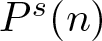 $P^{s}(n)$ combined with the projection-valued mapping
 $\widehat{P}^{u}$. Then, Backes and Dragičević proved that if Eq. (2.1) has an exponential trichotomy on
 $\mathbb{Z}$ and the nonlinear term
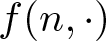 $f(n,\cdot)$ of Eq. (1.1) is Lipschitz continuous with the Lipschitz constant Lf such that (1.3) holds, then for any pseudo orbit y in
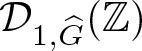 $\mathcal{D}_{1,\widehat{G}}(\mathbb{Z})$, there exists a solution x of Eq. (1.1) such that
 \begin{eqnarray*}
|y(n)-x(n)|
\leq \frac{\sup_{n\in \mathbb{Z}}\sum_{m\in \mathbb{Z}}\|\widehat{G}(n,m+1)\||h_{y}(m)|}{1-q_{1}},
\ \forall \ n\in \mathbb{Z},
\end{eqnarray*}
where hy is given by (2.9), q 1 is the constant given in (1.3) and 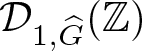 $\mathcal{D}_{1,\widehat{G}}(\mathbb{Z})$ denotes the set consisting of all the mappings
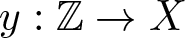 $y:\mathbb{Z}\rightarrow X$ such that
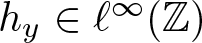 $h_{y}\in \ell^{\infty}(\mathbb{Z})$. The Lipschitz shadowing in some other admissible Banach sequence space is also studied in [Reference Backes and Dragičević3] under the same assumptions. Unlike in [Reference Backes and Dragičević3], the
 $\widehat{P}^{u}$ in the definition of the Green functions
 $\widehat{G}$ used in [Reference Backes, Dragičević and Singh5] for invertible systems and in the result (1) in our Theorem 1 for non-invertible systems may not be a projection-valued mapping. Consider Eq. (1.1) under the assumption that Eq. (2.1) has an exponential trichotomy on
 $\mathbb{Z}$, the conditions on the Green function
 $\widehat{G}$ and the nonlinear term
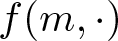 $f(m,\cdot)$ in [Reference Backes and Dragičević3] and those in the result (1) in our Theorem 1 do not imply each other, because the Lipschitz continuity of
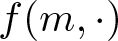 $f(m,\cdot)$ in [Reference Backes and Dragičević3] implies that
 $\widehat{G}(n,m+1)f(m,\cdot)$ is Lipchitz with the Lipschitz constant
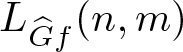 $L_{\widehat{G}f}(n,m)$ satisfying
 $L_{\widehat{G}f}(n,m)\leq \|\widehat{G}(n,m+1)\|L_{f}$, but (1.3) and (2.5) do not imply each other.
Compared with the results in [Reference Backes, Dragičević and Singh5] and the discrete version of the result in [Reference Backes, Dragičević, Pituk and Singh4], the result (1) in our Theorem 1 shows that there is a larger class of pseudo orbits which can be shadowed under a weaker condition. For Eq. (1.1) with invertible  $A(n)\in \mathcal{L}(X)$, the operator-valued mapping
 $\widehat{G}$ given in [Reference Backes, Dragičević and Singh5, p.496] is the Green function
 $\widehat{G}$ for the dichotomy with the projection
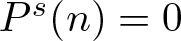 $P^{s}(n)=0$ combined with an operator-valued mapping
 $\widehat{P}^{u}$, since
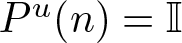 $P^{u}(n)=\mathbb{I}$ and every operator-valued mapping
 $\widehat{P}^{u}$ is adapted to P u. In [Reference Backes, Dragičević and Singh5], considering Eq. (1.1) with invertible
 $A(n)\in \mathcal{L}(X)$, Backes, Dragičević and Singh proved that if there exists a Green function
 $\widehat{G}$ for the dichotomy with the projection
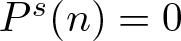 $P^{s}(n)=0$ combined with an operator-valued mapping
 $\widehat{P}^{u}$, and the nonlinear term
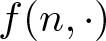 $f(n,\cdot)$ is Lipschitz continuous with the Lipschitz constant
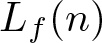 $L_{f}(n)$ such that (1.4) holds, then for any pseudo orbit y in
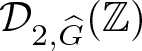 $\mathcal{D}_{2,\widehat{G}}(\mathbb{Z})$, there exists a solution x of Eq. (1.1) such that
 \begin{eqnarray*}
|y(n)-x(n)|
\leq \frac{\sup_{n\in \mathbb{Z}}\sum_{m\in \mathbb{Z}}\|\widehat{G}(n,m+1)\||h_{y}(m)|}{1-q_{2}},
\ \forall \ n\in \mathbb{Z},
\end{eqnarray*}
where hy is given by (2.9), q is the constant given in (1.4) and 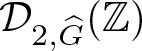 $\mathcal{D}_{2,\widehat{G}}(\mathbb{Z})$ denotes the set consisting of all the mappings
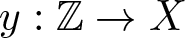 $y:\mathbb{Z}\rightarrow X$ such that
 \begin{eqnarray*}
\sup_{n\in \mathbb{Z}}\sum_{m\in \mathbb{Z}}\|\widehat{G}(n,m+1)\||h_{y}(m)| \lt +\infty.
\end{eqnarray*}
The unique shadowing property is also proved in [Reference Backes, Dragičević and Singh5] with the additional assumption that 0 is the only bounded solution of Eq. (2.1) on  $\mathbb{Z}$. The Lipschitz continuity of
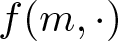 $f(m,\cdot)$ implies that
 $\widehat{G}(n,m+1)f(m,\cdot)$ is Lipchitz with the Lipschitz constant
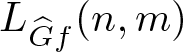 $L_{\widehat{G}f}(n,m)$ satisfying
 $L_{\widehat{G}f}(n,m)\leq \|\widehat{G}(n,m+1)\|L_{f}(n)$. Hence, the condition (1.4) implies that the (SD) holds. Thus, under the same assumptions in [Reference Backes, Dragičević and Singh5], the result (1) in our Theorem 1 implies that for any pseudo orbit y in
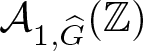 $\mathcal{A}_{1,\widehat{G}}(\mathbb{Z})$ there exists a solution x of Eq. (1.1) such that
 \begin{eqnarray*}
|y(n)-x(n)|
\leq
\frac{\sup_{n\in \mathbb{Z}}\sum_{m\in \mathbb{Z}}|\widehat{G}(n,m+1)h_{y}(m)|}{1-\theta_{1}},
\ \forall \ n\in \mathbb{Z},
\end{eqnarray*}
since θ 1 given in (2.5) for η = 1 satisfies 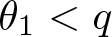 $\theta_{1} \lt q$. It is clear that for
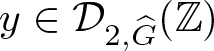 $y\in \mathcal{D}_{2,\widehat{G}}(\mathbb{Z})$,
 \begin{eqnarray*}
\sum_{m\in \mathbb{Z}}|\widehat{G}(n,m+1)h_{y}(m)|
\leq \sum_{m\in \mathbb{Z}}\|\widehat{G}(n,m+1)\||h_{y}(m)|,
\end{eqnarray*}
which implies that
 \begin{equation*} \mathcal{D}_{2,\widehat{G}}(\mathbb{Z})\subset \mathcal{A}_{1,G}(\mathbb{Z}).\end{equation*}
Hence, under the same assumptions in [Reference Backes, Dragičević and Singh5], the result (1) in Theorem 1 shows that Eq. (2.1) has the shadowing property for pseudo orbits in the larger class 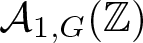 $\mathcal{A}_{1,G}(\mathbb{Z})$.
The discrete version of the result in [Reference Backes, Dragičević, Pituk and Singh4] is following. Consider Eq. (1.1) and suppose that Eq. (2.1) has a dichotomy on  $\mathbb{Z}^{+}$, the nonlinear term
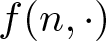 $f(n,\cdot)$ is Lipschitz continuous with the Lipschitz constant Lf independent on n, and there exists
 $\eta:\mathbb{Z}^{+}\rightarrow (0,+\infty)$ such that (1.8) holds in which G is the Green function for the dichotomy. Then for any pseudo orbit y in
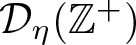 $\mathcal{D}_{\eta}(\mathbb{Z}^{+})$ Eq. (1.1) has a solution x such that
 \begin{eqnarray*}
\frac{|y(n)-x(n)|}{\eta(n)}\leq
\frac{\sup_{n\in \mathbb{Z}^{+}}\frac{|h_{y}(n)|}{\eta(n)}\sup_{n\in \mathbb{Z}^{+}}\frac{1}{\eta(n)} \sum_{m\in \mathbb{Z}^{+}}\|G(n,m+1)\|\eta(m)}{1-\tilde{q}},
\end{eqnarray*}
for all 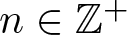 $n\in \mathbb{Z}^{+}$, where hy is given by (2.9),
 $\tilde{q}$ is the constant given in (1.8) and
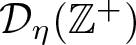 $\mathcal{D}_{\eta}(\mathbb{Z}^{+})$ denotes the set consisting of all the mappings
 $y:\mathbb{Z}^{+}\rightarrow X$ such that
 $h_{y}(m)\in \ell_{\eta}^{\infty}(\mathbb{Z}^{+})$. Note that the Lipschitz continuity of
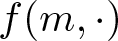 $f(m,\cdot)$ implies that
 $G(n,m+1)f(m,\cdot)$ is Lipschitz continuous with the Lipschitz constant
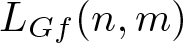 $L_{Gf}(n,m)$ satisfying
 $L_{Gf}(n,m)\leq \|G(n,m+1)\|L_{f}$. Hence, the condition (1.8) implies that the (SD) holds. Hence, under the same assumptions of the discrete version of [Reference Backes, Dragičević, Pituk and Singh4], the result (1) in our Theorem 1 implies that for any pseudo orbit y in
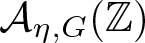 $\mathcal{A}_{\eta,G}(\mathbb{Z})$ there exists a solution x of Eq. (1.1) such that
 \begin{eqnarray*}
\frac{|y(n)-x(n)|}{\eta(n)}
\leq
\frac{\sup_{n\in \mathbb{Z}^{+}} \frac{1}{\eta(n)}\!\sum_{m\in \mathbb{Z}^{+}}\!\!|G(n,m\!+\!1)h_{y}(m)|}{1-\theta_{1}},
\ \forall \ n\in \mathbb{Z},
\end{eqnarray*}
since θ 1 given in (2.5) by replacing  $\widehat{G}$ by G satisfies
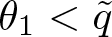 $\theta_{1} \lt \tilde{q}$. It is clear that for
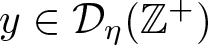 $y\in \mathcal{D}_{\eta}(\mathbb{Z}^{+})$,
 \begin{eqnarray*}
&&\sup_{n\in \mathbb{Z}^{+}} \frac{1}{\eta(n)}\!\sum_{m\in \mathbb{Z}^{+}}\!\!|G(n,m\!+\!1)h_{y}(m)|
\\
&\leq&
\sup_{n\in \mathbb{Z}^{+}}\frac{|h_{y}(n)|}{\eta(n)}\sup_{n\in \mathbb{Z}^{+}}\frac{1}{\eta(n)} \sum_{m\in \mathbb{Z}^{+}}\|G(n,m+1)\|\eta(m),
\end{eqnarray*}
which together with (1.8) implies that
 \begin{equation*}\mathcal{D}_{\eta}(\mathbb{Z}^{+})\subset \mathcal{A}_{\eta,G}(\mathbb{Z}^{+}).\end{equation*}
Hence, under the same assumption, the result (1) in Theorem 1 shows that Eq. (1.1) has the shadowing property for pseudo orbits in the larger class 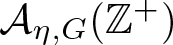 $\mathcal{A}_{\eta,G}(\mathbb{Z}^{+})$.
We have shown in the above two paragraphs that both the condition (1.4) in [Reference Backes, Dragičević and Singh5] and the condition (1.8) in the discrete version of the result in [Reference Backes, Dragičević, Pituk and Singh4] imply that the assumption (SD) in our Theorem 1 holds. Example 4.1 in  $\S$ 4 satisfies the assumption (SD) but does not satisfy the conditions (1.4) and (1.8). Hence, the assumption (SD) is weaker than the conditions (1.4) and (1.8).
Remark 2.3. The autonomous system investigated in [Reference Akin1, Theorem 13, pp.207-208] satisfies that A is hyperbolic and the nonlinear term is Lispchitz. The assumption that A is hyperbolic implies that the linear part of Eq. (1.1) has an exponential dichotomy. Our result (2) in Theorem 1 actually implies that (1.2) holds. In fact, consider Eq. (1.1) and suppose that its linear part has an exponential dichotomy on  $\mathbb{Z}$, i.e., Eq. (2.1) has a dichotomy and the Green function
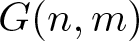 $G(n,m)$ for the dichotomy satisfies
 \begin{eqnarray*}
\|G(n,m)\|\le Ke^{-\alpha|n-m|},
\ \forall \ n,m\in \mathbb{Z}
\end{eqnarray*}
for some positive constants α and 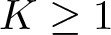 $K\geq 1$, and its nonlinear term
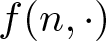 $f(n,\cdot)$ is Lipschitz continuous with the Lipschitz constant Lf independent on n satisfying
 $L_{f} \lt K^{-1}(1-e^{-\alpha})/(1+e^{-\alpha})$. It is clear that
 $G(n,m+1)f(m,\cdot)$ is Lipschitz. Note that
 \begin{eqnarray*}
L_{Gf}(n,m)&=&\sup_{x_{1}\neq x_{2},\in X}\frac{|G(n,m+1)f(m,x_{1})-G(n,m+1)f(m,x_{2})|}{|x_{1}-x_{2}|}
\\
&\leq&
\sup_{x_{1}\neq x_{2},\in X}\frac{\|G(n,m+1)\|~|f(m,x_{1})-f(m,x_{2})|}{|x_{1}-x_{2}|}
\\
&\leq&
KL_{f}e^{-\alpha|n-m-1|},
\forall\ n,m\in \mathbb{Z}.
\end{eqnarray*}
Taking  $\eta\equiv1$, we see that (2.5) holds since
 \begin{eqnarray*}
\theta_{1}=\sup_{n\in \mathbb{Z}}\sum_{m\in \mathbb{Z}}L_{GF}(n,m)
\leq \sup_{n\in \mathbb{Z}}\sum_{m\in \mathbb{Z}}KL_{f}e^{-\alpha|n-m-1|}
\leq
KL_{f}\frac{1+e^{-\alpha}}{1-e^{-\alpha}} \lt 1.
\end{eqnarray*}
Hence, the condition (SD) in Theorem 1 holds in this case. It is clear that
 \begin{eqnarray*}
\lim_{n \rightarrow +\infty}
\|G(n,m)\|
=0, \ \ \forall \ m\in \mathbb{Z}^{+},
{\rm and}
\lim_{n \rightarrow -\infty}
\|G(n,m)\|
=0 , \ \ \forall \ m\in \mathbb{Z}^{-}.
\end{eqnarray*}
Hence, the additional assumption (AD) holds in this case. Thus, both the results (1) and (2) hold for  $\eta\equiv 1$. In this case, one can check that
 $\ell_{1}^{\infty}(\mathbb{Z})\subseteq \mathcal{B}_{\eta,G}(J_{D})$ and hence a
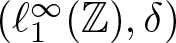 $(\ell_{1}^{\infty}(\mathbb{Z}),\delta)$-pseudo orbit is a
 $(\mathcal{A}_{\eta,G}(J_{D}),\delta)$-pseudo orbit. Hence, Eq. (1.1) has the Lipschitz shadowing property. Concretely, it follows form (2.11) that Eq. (1.1) has the
 $(\varepsilon,(1-\theta_{1})\varepsilon)$-shadowing property. Moreover, it follows from (2.12) and (2.13) that for any δ-pseudo orbit y of Eq. (1.1) there exists a true orbit x of Eq. (1.1) such that
 \begin{align*}
& \limsup_{n \rightarrow +\infty}|y(n)-x(n)|\leq \frac{K(1+e^{-\alpha})}{(1-\theta_{1})(1-e^{-\alpha})}\limsup_{n \rightarrow +\infty}|y(n+1)-F(n,y(n))|
\\
& \quad ({\rm resp.} \
\limsup_{n \rightarrow -\infty}|y(n)-x(n)|\leq \frac{K(1+e^{-\alpha})}{(1-\theta_{1})(1-e^{-\alpha})}\limsup_{n \rightarrow -\infty}|y(n+1)-F(n,y(n))|
),
\end{align*}
where  $F(n,z):=A(n)z+f(n,z)$, since
 \begin{align*}
\theta_{lim,\eta,G}^{+}(h_{y})&=
\limsup_{n_{0} \rightarrow +\infty} \sup_{n\geq n_{0}\geq 0}\sum_{m=n_{0}}^{+\infty}|G(n,m+1)(y(m+1)-F(m,y(m)))|
\\
& \leq
\limsup_{n_{0} \rightarrow +\infty} \sup_{n\geq n_{0}\geq 0}\sum_{m=n_{0}}^{+\infty}\|G(n,m+1)\||y(m+1)-F(m,y(m))|
\\
&\leq
\limsup_{n_{0} \rightarrow +\infty} \sup_{n\geq n_{0}\geq 0}\sum_{m=n_{0}}^{+\infty}Ke^{-\alpha|n-m-1|}\sup_{m\geq n_{0}}|y(m+1)-F(m,y(m))|
\\
&=
K\frac{1+e^{-\alpha}}{1-e^{-\alpha}} \limsup_{m \rightarrow +\infty}|y(m+1)-F(m,y(m))|,
\end{align*}
and similarly
 \begin{equation}
\theta_{lim,\eta,G}^{-}(h_{y})\leq
K\frac{1+e^{-\alpha}}{1-e^{-\alpha}} \limsup_{m \rightarrow -\infty}|y(m+1)-F(m,y(m))|.
\end{equation}
Thus, (1.2) holds. (1.2) implies that the system has the limit shadowing property. This is the reason why we say a system has the generalized limit shadowing property if the system has the  $(\varepsilon,\delta)$-shadowing property and (1.2) holds.
2.2. Compact case
Let V be an open set in X and  $T:V\rightarrow X$ be a C 1 map. A set
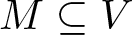 $M\subseteq V$ is said to be a hyperbolic invariant set ([Reference Henry15]) of T if
 $T(M)=M$,
 $T|_{M}$ is injective and the variational equation of T along any orbit
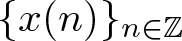 $\{x(n)\}_{n\in \mathbb{Z}}$ has a uniform exponential dichotomy with the exponent α and bound K, i.e., the linear homogeneous equation (2.1) with
 $A_{x}(n)=D(T(x(n)))$ has a dichotomy with the projection
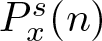 $P_{x}^{s}(n)$ on
 $\mathbb{Z}$ and the Green function satisfies
 \begin{eqnarray*}
\|G_{x}(n,m)\|\leq Ke^{-\alpha|n-m|},
\ \ \forall \ n,m\in \mathbb{Z},
\end{eqnarray*}
in which both α and K are positive constants independent of the orbit x. This definition is equivalent to the usual definition of hyperbolicity in [Reference Katok and Hasselblatt16] (see a proof in [Reference Henry15, Lemma 2.2]).
For any fixed  $\eta:\mathbb{Z}\rightarrow (0,1]$, a pseudo orbit
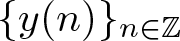 $\{y(n)\}_{n\in \mathbb{Z}}$ is said to be a η-weighted pseudo orbit of T if
 $\sup_{n\in \mathbb{Z}}|y(n+1)-T(y(n))|/\eta(n) \lt +\infty$. The second result concerns the weighted shadowing property and the limit weighted shadowing property of a C 1 map T with a compact hyperbolic invariant set for weighted pseudo orbits.
Theorem 2 Consider a C 1 map  $T:V\rightarrow X$ with a compact hyperbolic invariant set
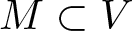 $M\subset V$ with the exponent α, where V is an open set in X. Then for any fixed constant
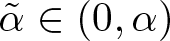 $\tilde{\alpha}\in (0,\alpha)$ the following hold:
(1) Lipschitz shadowing: T has the unique η-weighted Lipschitz shadowing property for η-weighted pseudo orbits on
$\mathbb{Z}$, where
$\eta:\mathbb{Z}\rightarrow (0,1]$ is any fixed function satisfying
(2.15)\begin{eqnarray}
\sup_{n\in \mathbb{Z}} \frac{1}{\eta(n)}\sum_{m\in \mathbb{Z}}e^{-\tilde{\alpha}|n-m-1|}\eta(m) \lt \infty.
\end{eqnarray}(2) Generalized limit shadowing: T has the generalized η-weighted limit shadowing property for η-weighted pseudo orbits on
$\mathbb{Z}$, where
$\eta:\mathbb{Z}\rightarrow (0,1]$ is any fixed function satisfying both (2.15) and
(2.16)\begin{eqnarray}
\lim_{n\rightarrow \pm\infty}
\frac{e^{-\tilde{\alpha}|n-m-1|}}{\eta(n)}=0
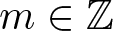
\end{eqnarray}for any fixed
$m\in \mathbb{Z}$.






The Lipschitz shadowing property of Theorem 2 in the case when  $\eta\equiv 1$ is given in [Reference Henry15].
3. Proofs of main results
In this section, we give the proofs of the main results.
3.1. Proof of Theorem 1
In this subsection, we prove Theorem 1. The proof of Theorem 1 is based on a lemma about the existence of weighted bounded solutions for a nonlinear difference equation, which is a generalization of Coppel’s result in [Reference Coppel10, Theorem 4, p.137] and Henry’s result in [Reference Henry15, Lemma 2.3].
Proof of Theorem 1
For a pseudo orbit y of Eq. (1.1) in 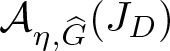 $\mathcal{A}_{\eta,\widehat{G}}(J_{D})$, let hy be the mapping given by (2.9), i.e.,
 \begin{equation*}
h_{y}(n):=y(n+1)-A(n)y(n)-f(n,y(n)),
\ \forall\ n\in J_{D}.
\end{equation*}
We claim that Eq. (1.1) has a solution x which tracks y in 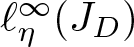 $\ell_{\eta}^\infty(J_{D})$, i.e.,
 $x-y\in \ell_{\eta}^\infty(J_{D})$, if and only if the following equation
 \begin{eqnarray}
z(n+1)=A(n)z(n)+g_{y}(n,z(n))-h_{y}(n),
\end{eqnarray}
has a solution in 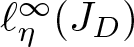 $\ell_{\eta}^\infty(J_{D})$, where
 \begin{equation*}g_{y}(n,z):=f(n,y+z)-f(n,y).\end{equation*}
In fact, if x is a solution of Eq. (1.1) which tracks y in 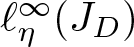 $\ell_{\eta}^\infty(J_{D})$, then
 $z:=x-y$ is a solution of Eq. (3.1) in
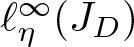 $\ell_{\eta}^\infty(J_{D})$, since y is a solution of the equation
 \begin{eqnarray*}
y(n+1)=A(n)y(n)+f(n,y(n))+h_{y}(n).
\end{eqnarray*}
Conversely, if Eq. (3.1) has a solution z in 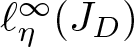 $\ell_{\eta}^\infty(J_{D})$, then
 $x:=y+z$ is a solution of Eq. (1.1) which tracks y in
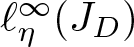 $\ell_{\eta}^\infty(J_{D})$. This proves the claim. By this claim, we get that Eq. (1.1) has the (unique) shadowing property for pseudo orbit
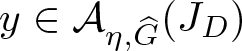 $y\in \mathcal{A}_{\eta,\widehat{G}}(J_{D})$ if and only if Eq. (3.1) has a (resp. unique ) solution in
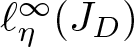 $\ell_{\eta}^\infty(J_{D})$.
In order to study the existence and the uniqueness of the solution of Eq. (3.1) in 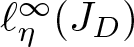 $\ell_{\eta}^\infty(J_{D})$, we prove a generalization of Coppel’s result in [Reference Coppel10, Theorem 4, p.137] and Henry’s result in [Reference Henry15, Lemma 2.3], which is of independent interest. Since we will also use this generalization to study the limit shadowing on a compact hyperbolic set, we need to consider a difference equation which is only defined locally. For a constant r > 0 and a function
 $\eta:J_{D}\rightarrow (0,\infty)$, let
 \begin{eqnarray*}
O_{r,\eta}(J_{D}\times X):=\{
(n,x)\in J_{D}\times X:
|x|\leq r\eta(n)
\}.
\end{eqnarray*}
For a Green function  $\widehat{G}$ of Eq. (1.1), let
 $L_{\eta,\widehat{G}; \lt 1}(O_{r,\eta}(J_{D}\times X))$ denote the set consisting of all the continuous mappings
 $F:O_{r,\eta}(J_{D}\times X)\rightarrow X$ such that
 $\widehat{G}(n,m+1)F(m,\cdot)$ is Lipschitz continuous with the Lipschitz constant
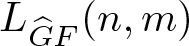 $L_{\widehat{G}F}(n,m)$ which is summable in m for any fixed n and satisfies (2.5). The set
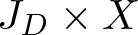 $J_{D}\times X$ can be treated as the case
 $O_{r,\eta}(J_{D}\times X)$ for
 $r=+\infty$. Hence, for convenience, we say (SD) holds for
 $g\in L_{\eta,\widehat{G}; \lt 1}(O_{r,\eta}(J_{D}\times X))$ if (SD) holds by replacing f and
 $L_{\eta,\widehat{G}; \lt 1}(J_{D}\times X)$ by g and
 $L_{\eta,\widehat{G}; \lt 1}(O_{r,\eta}(J_{D}\times X))$, respectively. Now we are ready to give this lemma.
Lemma 3.1. Consider the difference equation
 \begin{equation}
x(n+1)=A(n)x(n)+g(n,x(n))+h(n),\quad x(n)\in X,
\end{equation}
where  $g:O_{r,\eta}(J_{D}\times X)\rightarrow X$ and
 $h:J_{D}\rightarrow X$. Suppose that (SD) holds for
 $g\in L_{\eta,\widehat{G}; \lt 1}(O_{r,\eta}(J_{D}\times X))$, and additionally
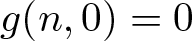 $g(n,0)=0$ for all
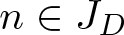 $n\in J_{D}$. Then for any
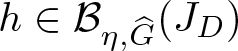 $h\in \mathcal{B}_{\eta,\widehat{G}}(J_{D})$ with
 $\theta_{\eta,\widehat{G}}(h)\leq(1-\theta_{1})r$ in the case when
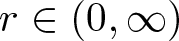 $r\in (0,\infty)$, Eq. (3.2) has a solution x in
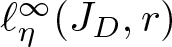 $\ell_{\eta}^\infty(J_{D},r)$ such that
 \begin{eqnarray}
\sup_{n\in J_{D}}\|x\|_{\ell_{\eta}^\infty(J_{D})}\leq
\frac{\theta_{\eta,\widehat{G}}(h)}{1-\theta_{1}},
\end{eqnarray}
where 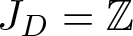 $J_{D}=\mathbb{Z}$,
 $\mathbb{Z}^{+}$ or
 $\mathbb{Z}^{-}$, and θ 1 is the constant given in (2.5). Moreover,
(1) if 0 is the only solution of Eq. (2.1) in
$\ell_{\eta}^\infty(J_{D})$, then the solution x of Eq. (3.2) in
$\ell_{\eta}^\infty(J_{D},r)$ is unique.(2) If the additional assumption (AD) holds for
$g\in L_{\eta,G; \lt 1}(O_{r,\eta}(J_{D}\times X))$, then Eq. (3.2) has a solution x in
$\ell_{\eta}^\infty(J_{D},r)$ such that
\begin{eqnarray*}
\limsup_{n \rightarrow +\infty}\frac{|x(n)|}{\eta(n)}\leq \frac{\theta_{lim,\eta,G}^{+}(h)}{1-\theta_{1}}
\ \ ({\rm resp.}
\ \
\limsup_{n \rightarrow -\infty}\frac{|x(n)|}{\eta(n)}\leq \frac{\theta_{lim,\eta,G}^{-}(h)}{1-\theta_{1}}),
\end{eqnarray*}where θ 1 is the constant given in (2.5) by replacing
$\widehat{G}$ by G.



We first use Lemma 3.1 to study Eq. (3.1), but leave the proof of Lemma 3.1 at the end of the proof of Theorem 1. It is clear that 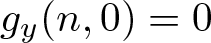 $g_{y}(n,0)=0$. For
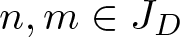 $n, m\in J_{D}$,
 \begin{eqnarray*}
&&|\widehat{G}(n,m+1)(g_{y}(m,z_{1})-g_{y}(m,z_{2}))|
\\
&=&|\widehat{G}(n,m+1)(f(m,y+z_{1})-f(m,y+z_{2}))|
\\
&\leq& L_{\widehat{G}f}(n,m)|z_{1}-z_{2}|,
\ \forall \ z_{1},z_{2}\in X,
\end{eqnarray*}
since by (SD) the mapping  $\widehat{G}(n,m+1)f(m,\cdot)$ is Lipschitz continuous with the Lipschitz constant
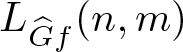 $L_{\widehat{G}f}(n,m)$. It follows that
 $g_{y}\in L_{\eta,\widehat{G}; \lt 1}(J_{D}\times X)$. Hence, (SD) also holds for
 $g_{y}\in L_{\eta,\widehat{G}; \lt 1}(J_{D}\times X)$. Thus, by Lemma 3.1 we get that Eq. (3.1) has a solution zy in
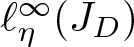 $\ell_{\eta}^\infty(J_{D})$ which satisfies
 \begin{eqnarray*}
\sup_{n\in J_{D}}\|z_{y}\|_{\ell_{\eta}^\infty(J_{D})}\leq
\frac{\theta_{\eta,\widehat{G}}(h_{y})}{1-\theta_{1}},
\end{eqnarray*}
since  $\theta_{\eta,\widehat{G}}(-h_{y})=\theta_{\eta,\widehat{G}}(h_{y})$. Let
 $x:=y+z_{y}$. By the claim in the above paragraph we get that x is a solution of Eq. (1.1) which tracks y in
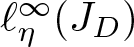 $\ell_{\eta}^\infty(J_{D})$. Note that x satisfies (2.11), since
 \begin{eqnarray*}
|y(n)-x(n)|= \eta(n)\frac{ |z_{y}(n)|}{\eta(n)}\leq \eta(n)\|z_{y}\|_{\ell_{\eta}^\infty(J_{D})}\leq \frac{\theta_{\eta,\widehat{G}}(h_{y})\eta(n)}{1-\theta_{1}}, \forall \ n\in J_{D}.
\end{eqnarray*}
This proves the η-weighted Lipschitz shadowing property for 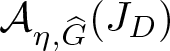 $\mathcal{A}_{\eta,\widehat{G}}(J_{D})$-pseudo orbits for Eq. (1.1). Moreover, if 0 is the only solution of Eq. (2.1) in
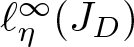 $\ell_{\eta}^\infty(J_{D})$, by Lemma 3.1 Eq. (3.1) has a unique solution in
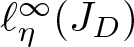 $\ell_{\eta}^\infty(J_{D})$. This proves the unique η-weighted Lipschitz shadowing property in the result (1) of Theorem 1. If the additional assumption (AD) holds, by Lemma 3.1 Eq. (3.1) has a solution zy in
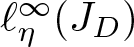 $\ell_{\eta}^\infty(J_{D})$ which satisfies
 \begin{eqnarray*}
\limsup_{n \rightarrow +\infty}\frac{|z_{y}(n)|}{\eta(n)}\leq \frac{\theta_{lim,\eta,G}^{+}(h_{y})}{1-\theta_{1}}
\ \ ({\rm resp.}
\ \
\limsup_{n \rightarrow -\infty}\frac{|z_{y}(n)|}{\eta(n)}\leq \frac{\theta_{lim,\eta,G}^{-}(h_{y})}{1-\theta_{1}}),
\end{eqnarray*}
where we used  $\theta_{lim,\eta,G}^{+}(-h_{y})=\theta_{lim,\eta,G}^{+}(h_{y})$ and
 $\theta_{lim,\eta,G}^{-}(-h_{y})=\theta_{lim,\eta,G}^{-}(h_{y})$. Hence, (2.10) holds, since
 $z_{y}=x-y$ and x is the solution of Eq. (1.5). This proves the generalized forward (resp. backward) η-weighted limit shadowing property in the result (2) for Eq. (1.1) in Theorem 1.
In order to complete the proof of Theorem 1, it suffices to prove Lemma 3.1.
Proof of Lemma 3.1
We first consider the case when 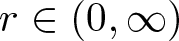 $r\in (0,\infty)$. For a fixed
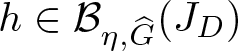 $h\in \mathcal{B}_{\eta,\widehat{G}}(J_{D})$ satisfying
 $\theta_{\eta,\widehat{G}}(h)\leq (1-\theta_{1})r$, define a mapping
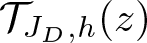
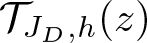
 $\mathcal{T}_{J_{D},h}$ on
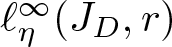 $\ell_{\eta}^{\infty}(J_{D},r)$ by
 \begin{eqnarray*}
(\mathcal{T}_{J_{D},h}(z))(n):=
\sum_{m\in J_{D}}\widehat{G}(n,m+1)(g(m,z(m))+ h(m)),
\end{eqnarray*}
for all 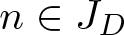 $n\in J_{D}$ and
 $z\in \ell_{\eta}^{\infty}(J_{D},r)$. For
 $z\in \ell_{\eta}^{\infty}(J_{D},r)$, it follows from (2.5) and (2.6) that
 \begin{align}
|(\mathcal{T}_{J_{D},h}(z))(n)| &= |\sum_{m\in J_{D}}\widehat{G}(n,m+1)(g(m,z(m))+h(m))|\nonumber \\
&\leq |\sum_{m\in J_{D}}\widehat{G}(n,m+1)g(m,z(m))| +|\sum_{m\in J_{D}}\widehat{G}(n,m+1)h(m)| \nonumber \\
&\leq \theta_{1}\eta(n)\|z\|_{\ell_{\eta}^{\infty}(J_{D})} +\theta_{\eta,\widehat{G}}(h)\eta(n),
\end{align}
since 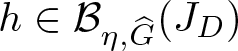 $h\in \mathcal{B}_{\eta,\widehat{G}}(J_{D})$ and
 \begin{align*}
\sum_{m\in J_{D}}|\widehat{G}(n,m+1)g(m,z(m))|
&=
\sum_{m\in J_{D}}|\widehat{G}(n,m+1)(g(m,z(m))-g(m,0))|
\nonumber\\
&\leq\sum_{m\in J_{D}}L_{\widehat{G}g}(n,m)|z(m)|
\nonumber\\
&\leq\sum_{m\in J_{D}}L_{\widehat{G}g}(n,m)\eta(m)\|z\|_{\ell_{\eta}^{\infty}(J_{D})}
\nonumber\\
&=
\eta(n)\frac{1}{\eta(n)} \sum_{m\in J_{D}}L_{\widehat{G}g}(n,m)\eta(m)\|z\|_{\ell_{\eta}^{\infty}(J_{D})}
\nonumber\\
&\leq
\eta(n)\sup_{n\in J_{D}}\frac{1}{\eta(n)} \sum_{m\in J_{D}}L_{\widehat{G}g}(n,m)\eta(m)\|z\|_{\ell_{\eta}^{\infty}(J_{D})}
\nonumber\\
&\leq
\theta_{1}\eta(n)\|z\|_{\ell_{\eta}^{\infty}(J_{D})}.
\nonumber
\end{align*}
This implies that
 \begin{eqnarray*}
\|(\mathcal{T}_{J_{D},h}(z))\|_{\ell_{\eta}^{\infty}(J_{D})}
\leq
\theta_{1}\|z\|_{\ell_{\eta}^{\infty}(J_{D})} +\theta_{\eta,\widehat{G}}(h)
\leq r,
\end{eqnarray*}
since 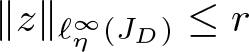 $\|z\|_{\ell_{\eta}^{\infty}(J_{D})}\leq r$ and
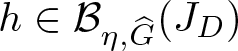 $h\in \mathcal{B}_{\eta,\widehat{G}}(J_{D})$ satisfies
 $\theta_{\eta,\widehat{G}}(h)\leq (1-\theta_{1})r$. Hence,
 $\mathcal{T}_{J_D,h}$ is well defined and
 $\mathcal{T}_{J_{D},h}(\ell_{\eta}^{\infty}(J_{D},r))
\subseteq \ell_{\eta}^{\infty}(J_{D},r)$. Furthermore, for any
 $z_{1},z_{2}\in \ell_{\eta}^{\infty}(J_{D},r)$, from (2.5) we have
 \begin{eqnarray*}
&&
|(\mathcal{T}_{J_{D},h}(z_{1}))(n)-(\mathcal{T}_{J_{D},h}(z_{2}))(n)|
\\
&=&
|\sum_{m\in J_{D}}\widehat{G}(n,m+1)(g(m,z_{1}(m))-g(m,z_{2}(m)))|
\\
&\leq&
\sum_{m\in J_{D}}|\widehat{G}(n,m+1)(g(m,z_{1}(m))-g(m,z_{2}(m)))|
\\
&\leq&
\sum_{m\in J_{D}}L_{\widehat{G}g}(n,m+1) |z_{1}(m)-z_{2}(m)|
\\
&\leq&
\sum_{m\in J_{D}}L_{\widehat{G}g}(n,m+1)\eta(m)
\|z_{1}-z_{2}\|_{\ell_{\eta}^{\infty}(J_{D})}
\\
&\leq&
\theta_{1}\eta(n)
\|z_{1}-z_{2}\|_{\ell_{\eta}^{\infty}(J_{D})},
\ \forall \ n\in J_{D}.
\end{eqnarray*}
This implies that
 \begin{eqnarray*}
\|\mathcal{T}_{J_{D},h}(z_{1})-\mathcal{T}_{J_{D},h}(z_{2})\|_{\ell_{\eta}^{\infty}(J_{D})}
\leq
\theta_{1} \|z_{1}-z_{2}\|_{\ell_{\eta}^{\infty}(J_{D})}.
\end{eqnarray*}
It follows that  $\mathcal{T}_{J_{D},h}$ is a contraction in
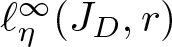 $\ell_{\eta}^{\infty}(J_{D},r)$ since
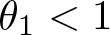 $\theta_{1} \lt 1$. By the Contraction Mapping Principle,
 $\mathcal{T}_{J_{D},h}$ has a unique fixed point in
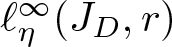 $\ell_{\eta}^{\infty}(J_{D},r)$, since
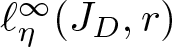 $\ell_{\eta}^{\infty}(J_{D},r)$ is a closed subset of the Banach space
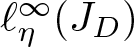 $\ell_{\eta}^{\infty}(J_{D})$.
Let xh denote the unique fixed point of  $\mathcal{T}_{J_{D},h}$. We claim that xh is a solution of Eq. (3.2). In fact,
 \begin{equation}
x_{h}(n)
=(\mathcal{T}_{J_{D},h}(x_{h}))(n)
=
\sum_{m\in J_{D}}\widehat{G}(n,m+1)F_{h,x_{h}}(m),
\ \forall \ n\in J_{D},
\end{equation}
where  $F_{h,x_{h}}(m):=g(m,x_{h}(m))+h(m)$ for
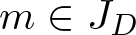 $m\in J_{D}$. Hence, for any fixed
 $n\geq n_{0}\in J_{D}$,
 \begin{align*}
& U(n,n_{0})x_{h}(n_{0})\nonumber\\
&= U(n,n_{0})
\{
\sum_{m\in J_{D}\cap\mathbb{Z}_{n_{0}-1}^{-}}U(n_{0},m+1)\widehat{P}^{s}(m+1)F_{h,x_{h}}(m)
\nonumber\\
&\quad -\sum_{m\in J_{D}\cap\mathbb{Z}_{n_{0}}^{+}}U(n_{0},m+1)\widehat{P}^{u}(m+1)F_{h,x_{h}}(m)
\}
\nonumber\\
&= \sum_{m\in J_{D}\cap\mathbb{Z}_{n_{0}-1}^{-}}\!\!\!\!U(n,m\!+\!1)\widehat{P}^{s}(m\!+\!1)F_{h,x_{h}}(m) \nonumber\\
&\quad -\sum_{m\in J_{D}\cap\mathbb{Z}_{n_{0}}^{+}}\!\!\!\!U(n,m\!+\!1)\widehat{P}^{u}(m\!+\!1)F_{h,x_{h}}(m)
\end{align*}
 \begin{align}
&= \sum_{m\in J_{D}\cap\mathbb{Z}_{n-1}^{-}}\!\!U(n,m\!+\!1)\widehat{P}^{s}(m\!+\!1)F_{h,x_{h}}(m)\nonumber\\
&\quad - \sum_{m=n_{0}}^{n-1}\!\!U(n,m\!+\!1)\widehat{P}^{s}(m\!+\!1)F_{h,x_{h}}(m)
\nonumber\\
&
\quad -\sum_{m=n_{0}}^{n-1}\!\!U(n,m\!+\!1)\widehat{P}^{u}(m\!+\!1)F_{h,x_{h}}(m)\nonumber\\
&\quad -\sum_{m\in J_{D}\cap\mathbb{Z}_{n}^{+}}\!\!U(n,m\!+\!1)\widehat{P}^{u}(m\!+\!1)F_{h,x_{h}}(m)
\nonumber\\
&= z_{h}(n)-\sum_{m=n_{0}}^{n-1}U(n,m+1)F_{h,x_{h}}(m),
\end{align}
that is,
 \begin{eqnarray*}
x_{h}(n)=U(n,n_{0})x_{h}(n_{0})
+\sum_{m=n_{0}}^{n-1}U(n,m+1)F_{h,x_{h}}(m),
\end{eqnarray*}
since  $\mathcal{R}(\widehat{P}^{u}(n))\subset \mathcal{R}(P^{u}(n))$ for
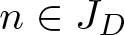 $n\in J_{D}$, and for any fixed
 $n\geq n_{0}\in J_{D}$
 \begin{eqnarray*}
&&U(n,n_{0})U(n_{0},m+1)\widehat{P}^{u}(m+1)
\\
&=&U(n,n_{0})(U(m+1,n_{0})|_{\mathcal{R}(P^{u}(n_{0}))})^{-1}P^{u}(m+1)\widehat{P}^{u}(m+1)
\\
&=&U(n,m+1)P^{u}(m+1)\widehat{P}^{u}(m+1)
\\
&=&U(n,m+1)\widehat{P}^{u}(m+1)
,\ \ \ m\in [n_{0},n-1]\cap\mathbb{Z}_{n_{0}}^{+},
\\
&&U(n,n_{0})U(n_{0},m+1)\widehat{P}^{u}(m+1)
\\
&=&U(n,n_{0})(U(m+1,n_{0})|_{\mathcal{R}(P^{u}(n_{0}))})^{-1}P^{u}(m+1)\widehat{P}^{u}(m+1)
\\
&=&(U(m+1,n)|_{\mathcal{R}(P^{u}(n))})^{-1}P^{u}(m+1)\widehat{P}^{u}(m+1)
\\
&=&U(n,m+1)\widehat{P}^{u}(m+1),
\ \ \ m\in J_{D}\cap\mathbb{Z}_{n}^{+}.
\end{eqnarray*}
It follows that xh is a solution of Eq. (3.2) in 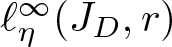 $\ell_{\eta}^{\infty}(J_{D},r)$. This proves the claim. Moreover, noting that
 $x_{h}=\mathcal{T}_{J_{D},h}(x_{h})$, by (3.4) we get that
 \begin{eqnarray*}
|x_{h}(n)|=|(\mathcal{T}_{J_{D},h}(x_{h}))(n)| \leq \theta_{1}\eta(n)|x_{h}|_{\ell_{\eta}^{\infty}(J_{D})} +\theta_{\eta,\widehat{G}}(h)\eta(n).
\end{eqnarray*}
This together with the assumption that 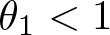 $\theta_{1} \lt 1$ implies that
 \begin{eqnarray}
\|x_{h}\|_{\ell_{\eta}^{\infty}(J_{D})}\leq \frac{\theta_{\eta,\widehat{G}}(h)}{1-\theta_{1}}.
\end{eqnarray}
Hence, Eq. (3.2) with 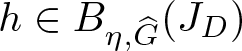 $h\in B_{\eta,\widehat{G}}(J_{D})$ satisfying
 $\theta_{\eta,\widehat{G}}(h)\leq (1-\theta_{1})r$ has a solution x in
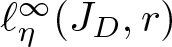 $\ell_{\eta}^{\infty}(J_{D},r)$ which satisfies (3.3).
Moreover, consider Eq. (3.2) with the additional assumption that 0 is the only solution of Eq. (2.1) in 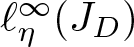 $\ell_{\eta}^{\infty}(J_{D})$. Suppose that there exists a
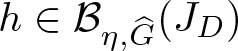 $h\in \mathcal{B}_{\eta,\widehat{G}}(J_{D})$ satisfying
 $\theta_{\eta,\widehat{G}}(h)\leq (1-\theta_{1})r$ such that Eq. (3.2) has two solutions xh and yh in
 $\ell_{\eta}^{\infty}(J_{D},r)$. We claim that both xh and yh are fixed points of
 $\mathcal{T}_{J_{D},h}$. In fact, for any fixed
 $z\in \ell_{\eta}^{\infty}(J_{D},r)$, it follows from (3.4) that
 $\mathcal{T}_{J_{D},h}(z)\in \ell_{\eta}^{\infty}(J_{D},r)$. By the definition of
 $\mathcal{T}_{J_{D},h}$, similarly to (3.6), one can check that
 $\mathcal{T}_{J_{D},h}(z)$ satisfies
 \begin{eqnarray*}
U(n,n_{0}) \mathcal{T}_{J_{D},h}(z)(n_{0})
=\mathcal{T}_{J_{D},h}(z)(n)
-\sum_{m=n_{0}}^{n-1}U(n,m+1)(g(m,z(m))+h(m)),
\end{eqnarray*}
for all  $n\geq n_{0}\in J_{D}$. This implies that
 $\mathcal{T}_{J_{D},h}(z)$ is a solution of the following nonhomogeneous equation
 \begin{eqnarray*}
x(n+1)=A(n)x(n)+g(n,z(n))+h(n),
\end{eqnarray*}
in 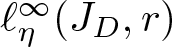 $\ell_{\eta}^{\infty}(J_{D},r)$. By replacing z by xh, we get that
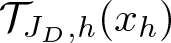 $\mathcal{T}_{J_{D},h}(x_{h})$ is a solution of the following nonhomogeneous equation
 \begin{eqnarray}
x(n+1)=A(n)x(n)+g(n,x_{h}(n))+h(n),
\end{eqnarray}
in 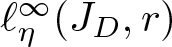 $\ell_{\eta}^{\infty}(J_{D},r)$. Note that xh is a solution of Eq. (3.2) in
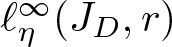 $\ell_{\eta}^{\infty}(J_{D},r)$, i.e.,
 \begin{eqnarray*}
x_{h}(n+1)=A(n)x_{h}(n)+g(n,x_{h}(n))+h(n).
\end{eqnarray*}
This together with (3.8) implies that  $\mathcal{T}_{J_{D},h}(x_{h})-x_{h}$ is a solution of the homogenous linear equation (2.1) in
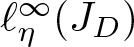 $\ell_{\eta}^{\infty}(J_{D})$. By the assumption that 0 is the only solution of Eq. (2.1) in
 $\ell_{\eta}^{\infty}(J_{D})$, we get that
 $\mathcal{T}_{J_{D},h}(x_{h})=x_{h}$, i.e., xh is a fixed point of
 $\mathcal{T}_{J_{D},h}$ in
 $\ell_{\eta}^{\infty}(J_{D},r)$. Replacing xh by yh, one can check that yh is also a fixed point of
 $\mathcal{T}_{J_{D},h}$ in
 $\ell_{\eta}^{\infty}(J_{D},r)$. This proves the claim. We have proved that
 $\mathcal{T}_{J_{D},h}$ is a contraction mapping in
 $\ell_{\eta}^{\infty}(J_{D},r)$. This together with the claim implies that
 $y_{h}=x_{h}$. Hence, the solution x of Eq. (3.2) in
 $\ell_{\eta}^{\infty}(J_{D},r)$ is unique. This proves the result (1) of Lemma 3.1.
Consider the result (2) of Lemma 3.1 in the cases 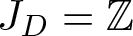 $J_{D}=\mathbb{Z}$ and
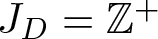 $J_{D}=\mathbb{Z}^{+}$. Under the additional assumption (AD), the result (1) of Lemma 3.1 holds by replacing
 $\widehat{G}$ by G. For a fixed
 $h\in \mathcal{B}_{\eta,G}(J_{D})$ satisfying
 $\theta_{\eta,G}(h)\leq (1-\theta_{1})r$, by (1) of Lemma 3.1, Eq. (3.2) has a solution xh in
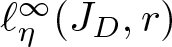 $\ell_{\eta}^{\infty}(J_{D},r)$ which satisfies (3.5) by replacing
 $\widehat{G}$ by G. For any fixed
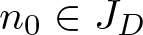 $n_{0}\in J_{D}$,
 \begin{align}
P^{s}(n_{0})x_{h}(n_{0})
&= P^{s}(n_{0})\{\sum_{m\in J_{D}\cap\mathbb{Z}_{n_{0}-1}^{-}}U(n_{0},m+1)P^{s}(m+1)F_{h,x_{h}}(m)\nonumber\\
&\quad -\sum_{m\in J_{D}\cap\mathbb{Z}_{n_{0}}^{+}}U(n_{0},m+1)P^{u}(m+1)F_{h,x_{h}}(m)\}
\nonumber\\
&= \sum_{m\in J_{D}\cap\mathbb{Z}_{n_{0}-1}^{-}}U(n_{0},m+1)P^{s}(m+1)F_{h,x_{h}}(m),
\end{align}
where  $F_{h,x_{h}}(m):=g(m,x_{h}(m))+h(m)$, since for
 $m\in J_{D}\cap\mathbb{Z}_{n_{0}}^{-}$,
 \begin{eqnarray*}
P^{s}(n_{0})U(n_{0},m+1)P^{s}(m+1)&=&U(n_{0},m+1)P^{s}(m+1)P^{s}(m+1)
\\
&=&U(n_{0},m+1)P^{s}(m+1),
\\
P^{s}(n_{0})U(n_{0},m+1)P^{u}(m+1)
&=&P^{s}(n_{0})P^{u}(n_{0})U(n_{0},m+1)P^{u}(n_{0})=0.
\end{eqnarray*}
Hence, for  $n\in J_{D}\cap\mathbb{Z}_{n_{0}}^{+}$,
 \begin{align}
x_{h}(n)
&=\sum_{m\in J_{D}\cap\mathbb{Z}_{n-1}^{-}}U(n,m+1)P^{s}(m+1)F_{h,x_{h}}(m)\nonumber\\
&\quad -\sum_{m\in J_{D}\cap\mathbb{Z}_{n}^{+}}U(n,m+1)P^{u}(m+1)F_{h,x_{h}}(m)
\nonumber \\
&=
U(n,n_{0})P^{s}(n_{0})\sum_{m\in J_{D}\cap\mathbb{Z}_{n_{0}-1}^{-}}U(n_{0},m+1)P^{s}(m+1)F_{h,x_{h}}(m)
\nonumber\\ &\quad +\sum_{m=n_{0}}^{n-1}U(n,m+1)P^{s}(m+1)F_{h,x_{h}}(m)
\nonumber\\ &\quad -\sum_{m\in J_{D}\cap\mathbb{Z}_{n}^{+}}U(n,m+1)P^{u}(m+1)F_{h,x_{h}}(m)
\nonumber\\
&=
U(n,n_{0})P^{s}(n_{0})x_{h}(n_{0})
+\sum_{m=n_{0}}^{+\infty}G(n,m+1)F_{h,x_{h}}(m),
\end{align}
since for  $n\geq n_{0}\geq m+1$,
 \begin{eqnarray*}
&&U(n,n_{0})P^{s}(n_{0})U(n_{0},m+1)P^{s}(m+1)
\\
&=&U(n,n_{0})U(n_{0},m+1)P^{s}(m+1)P^{s}(m+1)
\\
&=&U(n,m+1)P^{s}(m+1).
\end{eqnarray*}
By (AD), for any fixed 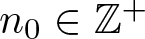 $n_{0}\in \mathbb{Z}^{+}$ and for any
 $n\in J_{D}\cap\mathbb{Z}_{n_{0}}^{+}$,
 \begin{align*}
|x_{h}(n)|
&\leq
\|U(n,n_{0})P^{s}(n_{0})\||x_{h}(n_{0})|
+|\sum_{m=n_{0}}^{+\infty}G(n,m+1)h(m)|
\\
&\quad
+\sum_{m=n_{0}}^{+\infty}|G(n,m+1)(g(m,x_{h}(m))-g(m,0))|
\\
&\leq
\|U(n,n_{0})P^{s}(n_{0})\||x_{h}(n_{0})|
+\sum_{m=n_{0}}^{+\infty}|G(n,m+1)h(m)|
\\
&\quad
+\sum_{m=n_{0}}^{+\infty}L_{Gg}(n,m+1)|x_{h}(m)|,
\end{align*}
where we used that 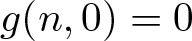 $g(n,0)=0$. By (2.7), for any fixed
 $\varepsilon\in (0,\theta_{lim,\eta,G}^{+}(h))$ there exists
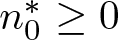 $n_{0}^{*}\ge 0$ such that for any
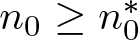 $n_{0}\geq n_{0}^{*}$,
 \begin{eqnarray*}
\frac{\sum_{m=n_{0}}^{+\infty}|G(n,m+1)h(m)|}{\eta(n)} \lt \theta_{lim,\eta,G}^{+}(h)+\varepsilon, \ \forall~ n\geq n_{0}.
\end{eqnarray*}
It follows that for any fixed 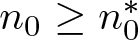 $n_{0}\geq n_{0}^{*}$,
 \begin{align}
|\tilde{x}_{h}(n)|
&\leq \theta_{lim,\eta,G}^{+}(h)+\varepsilon
+\frac{\theta_{\eta,G}(h)\eta(n_{0})\|U(n,n_{0})P^{s}(n_{0})\|}{(1-\theta_{1})\eta(n)}\nonumber\\
&\quad
+\sum_{m=n_{0}}^{+\infty}\tilde{L}_{Gg}(n,m+1)|\tilde{x}_{h}(m)|,
\ \forall~ n\geq n_{0},
\end{align}
where
 \begin{equation}
\tilde{x}_{h}(n):=\frac{x_{h}(n)}{\eta(n)},
\ \ \
\tilde{L}_{Gg}(n,m):=\frac{\eta(m)L_{Gg}(n,m)}{\eta(n)},
\end{equation}
since  $|x_{h}(n_{0})|\leq \eta(n_{0})\|x_{h}\|_{\ell_{\eta}^{\infty}(J_{D})}$ and by (3.7)
 $|\tilde{x}_{h}(n)|\leq \|x_{h}\|_{\ell_{\eta}^{\infty}(J_{D})}\leq \theta_{\eta,G}(h)/(1-\theta_{1})$ for
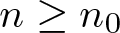 $n\geq n_{0}$. In order to get a further estimate for
 $\tilde{x}_{h}(n)$ from (3.11), we need the following lemma about a projected discrete Gronwall’s inequality, which is a finer version of [Reference Hale13, Lemma 6.2, p.110] and [Reference Zhou and Zhang26, Lemma 1, p.933] in a special case.
Lemma 3.2. Suppose that  $c\geq 0$ is a constant,
 $\sigma:J_{D}\mapsto \mathbb{R}^{+}$,
 $\varphi:
J_{D}\times J_{D} \mapsto \mathbb{R}^{+}$ and
 $u:J_{D}\mapsto \mathbb{R}^{+}$ is a bounded function which satisfies
 \begin{align}
\ u(n)&\leq c+\sigma(n)+\sum_{m=n_{0}}^{+\infty}\varphi(n,m)u(m), ~~ n\ge n_0,\nonumber\\
({\rm resp.}\ \
u(n)&\leq c+\sigma(n)+\sum_{m=-\infty}^{n_{0}-1}\varphi(n,m)u(m), ~~\quad n\le n_0),
\end{align}
where 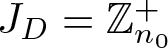 $J_{D}=\mathbb{Z}_{n_{0}}^{+}$ for a constant
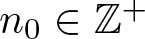 $n_{0}\in \mathbb{Z}^{+}$ (resp.
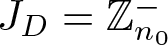 $J_{D}=\mathbb{Z}_{n_{0}}^{-}$ for a constant
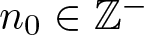 $n_{0}\in \mathbb{Z}^{-}$). If
 $\lim_{n\rightarrow +\infty}\sigma(n)=0$ (resp.
 $\lim_{n\rightarrow -\infty}\sigma(n)=0$),
 $\lim_{n \rightarrow +\infty}\varphi_{1}(n,m)=0$ (resp.
 $\lim_{n \rightarrow -\infty}\varphi(n,m)=0$) for any fixed
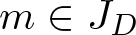 $m\in J_{D}$, and
 \begin{eqnarray*}
\eta:=\sup_{n\geq n_{0}}\sum_{m=n_{0}}^{+\infty}\varphi(n,m) \lt 1
\ \ ({\rm resp.}\ \
\eta:=\sup_{n\leq n_{0}}\sum_{m=-\infty}^{n_{0}-1}\varphi_{1}(n,m) \lt 1
),
\end{eqnarray*}
then
 \begin{eqnarray*}
u(n)\leq \frac{c}{1-\eta}+v(n),
\ \forall \ n\in J_{D},
\end{eqnarray*}
for some  $v:J_{D}\rightarrow\mathbb{R}^{+}$ which satisfies
 $\lim_{n \rightarrow +\infty}v(n)=0$ (resp.
 $\lim_{n \rightarrow -\infty}v(n)=0$).
Proof of Lemma 3.2
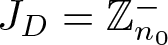
We only prove the case when 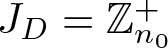 $J_{D}=\mathbb{Z}_{n_{0}}^{+}$ since the proof of the case when
 $J_{D}=\mathbb{Z}_{n_{0}}^{-}$ is similar. Let u be an arbitrary bounded continuous solution of (3.13) on
 $\mathbb{Z}_{n_{0}}^{+}$. Define
 \begin{eqnarray*}
v(n):=\max\{u(n)-\frac{c}{1-\eta},0\}, \ \forall \ n\in \mathbb{Z}_{n_{0}}^{+},
\end{eqnarray*}
which is bounded and nonnegative, since u is bounded. By [Reference Zhou and Zhang26, Lemma 1, p.933], we get that
 \begin{eqnarray}
v(n)\leq \sigma(n)+\sum_{m=n_{0}}^{\infty}\varphi(n,m)v(m), ~~\quad n\ge n_0.
\end{eqnarray}
In order to complete the proof, we only need to check that  $\lim_{n \rightarrow +\infty}v(n)=0$. Let
 $\gamma = \limsup_{n \rightarrow \infty}v(n)$. Then
 $\gamma\geq 0$ is finite because v is bounded and nonnegative. For a reduction to absurdity, assume that γ > 0. Then
 $\limsup_{n \rightarrow \infty}v(n) \lt \gamma/\zeta $ for any fixed
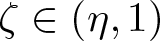 $\zeta \in (\eta, 1)$. This implies that there exists a
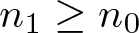 $n_{1} \geq n_{0}$ such that
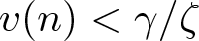 $v(n) \lt {\gamma}/{\zeta}$ for all
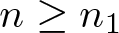 $n \geq n_{1}$ (refer to [Reference Rudin23, Theorem 3.17, p.56]). It follows from (3.14) that, for
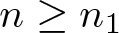 $n\geq n_{1}$,
 \begin{eqnarray}
v(n) &\!\leq&\! \sigma(n)+\sum_{m=n_{0}}^{n_{1}-1}\varphi(n,m)v(m)
+\frac{\gamma}{\zeta}\{\sum_{m=n_{1}}^{+\infty}\varphi(n,m)\}\nonumber\\
&\!\leq&\! \sigma(n)+\sum_{m=n_{0}}^{n_{1}-1}\varphi(n,m)v(m) +\frac{\gamma
\eta}{\zeta}.
\end{eqnarray}
Applying  $\limsup_{n \rightarrow +\infty}$ to both sides of (3.15), by the assumptions that
 $\lim_{n\rightarrow +\infty}\sigma(n)=0$,
 $\lim_{n \rightarrow +\infty}\varphi(n,m)=0$ for any fixed
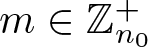 $m\in \mathbb{Z}_{n_{0}}^{+}$, we get that
 \begin{eqnarray*}
\gamma \leq \frac{\gamma
\eta}{\zeta} \lt \gamma,
\end{eqnarray*}
a contradiction. Therefore, γ = 0, that is, 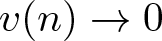 $v(n)\rightarrow 0$ as
 $n \rightarrow +\infty$. This implies that the result holds since
 \begin{eqnarray*}
u(n)-v(n)\leq \frac{c}{1-\eta}, \quad \forall n\geq n_{0}.
\end{eqnarray*}
This completes the proof of Lemma 3.2.
Now we continue the proof of Lemma 3.1. Consider the inequality (3.11). Since 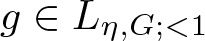 $g\in L_{\eta,G; \lt 1}$, it follows that
 \begin{eqnarray*}
\sum_{m=n_{0}}^{+\infty}\tilde{L}_{Gg}(n,m)\leq \theta_{1} \lt 1.
\end{eqnarray*}
It follows from (AD) that
 \begin{eqnarray*}
\lim_{n \rightarrow +\infty}\frac{\theta_{\eta,G}(h)\eta(n_{0})\|U(n,n_{0})P^{s}(n_{0})\|}{(1-\theta_{1})\eta(n)}
=0
\end{eqnarray*}
for any fixed 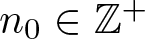 $n_{0}\in \mathbb{Z}^{+}$, and
 \begin{eqnarray*}
\lim_{n \rightarrow +\infty} \tilde{L}_{Gg}(n,m)=0
\end{eqnarray*}
for any fixed 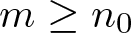 $m\geq n_{0}$, since by the definition of
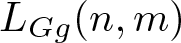 $L_{Gg}(n,m)$ in (2.4)
 \begin{eqnarray*}
\tilde{L}_{Gg}(n,m)
=\frac{\eta(m)L_{Gg}(n,m)}{\eta(n)}
&\leq&
\frac{\eta(m)\|U(n,k)P^{s}(k)\|L_{G,g}(k,m)}{\eta(n)}
\\
&=&
\frac{\eta(k)\|U(n,k)P^{s}(k)\|}{\eta(n)}
\frac{\eta(m)L_{G,g}(k,m)}{\eta(k)}
\\
&=&
\frac{\eta(k)\|U(n,k)P^{s}(k)\|}{\eta(n)}
\tilde{L}_{Gg}(k,m),
\end{eqnarray*}
for  $n\geq k\geq m\geq n_{0}$. Hence, applying Lemma 3.2 to (3.11), i.e., (3.13) for
 $u(n)=|\tilde{x}_{h}(n)|$,
 $c=\theta_{lim,\eta,G}^{+}(h)+\varepsilon$,
 $\sigma(n)=(\theta_{\eta,G}(h)\eta(n_{0})\|U(n,n_{0})P^{s}(n_{0})\|)/\{(1-\theta_{1})\eta(n)\}$ and
 $\varphi(n,m)=\tilde{L}_{Gg}(n,m+1)$, we get that there exists a
 $\varsigma_{n_{0}}:\mathbb{Z}^{+}\rightarrow\mathbb{R}^{+}$ which satisfies
 $\lim_{n \rightarrow +\infty}\varsigma_{n_{0}}(n)=0$ such that
 \begin{eqnarray*}
|\tilde{x}_{h}(n)|\leq \frac{\theta_{lim,\eta,G}^{+}(h)+\varepsilon}{1-\theta_{1}}+\varsigma_{n_{0}}(n),
\ \forall \ n\geq n_{0}.
\end{eqnarray*}
Applying  $\limsup_{n \rightarrow +\infty}$ to both sides of the above inequality, we get that
 \begin{eqnarray*}
\limsup_{n \rightarrow +\infty}|\tilde{x}_{h}(n)|\leq \frac{\theta_{lim,\eta,G}^{+}(h)+\varepsilon}{1-\theta_{1}}.
\end{eqnarray*}
By the arbitrariness of ɛ > 0, it follows that
 \begin{eqnarray*}
\limsup_{n \rightarrow +\infty}|\tilde{x}_{h}(n)|\leq \frac{\theta_{lim,\eta,G}^{+}(h)}{1-\theta_{1}}.
\end{eqnarray*}
This proves the case when  $n\rightarrow +\infty$ in the result (2) of Lemma 3.1. We only outline the proof of the case when
 $n\rightarrow -\infty$ in the result (2) of Lemma 3.1, since the proof of this case is similar to the case when
 $n\rightarrow +\infty$. In the cases
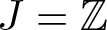 $J=\mathbb{Z}$ and
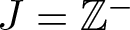 $J=\mathbb{Z}^{-}$, for a fixed
 $h\in \mathcal{B}_{\eta,G}(J_{D})$, Eq. (3.2) has a solution xh in
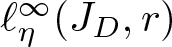 $\ell_{\eta}^{\infty}(J_{D},r)$ which satisfies (3.5). Similarly to (3.9) and (3.10), one can check that for any fixed
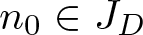 $n_{0}\in J_{D}$
 \begin{eqnarray*}
P^{u}(n_{0})x_{h}(n_{0})
=
-\sum_{m\in J_{D}\cap\mathbb{Z}_{n_{0}}^{+}}U(n_{0},m+1)P^{u}(m+1)F_{h,x_{h}}(m),
\end{eqnarray*}
and for  $n\in J_{D}\cap\mathbb{Z}_{n_{0}}^{-}$,
 \begin{eqnarray*}
x_{h}(n)
=
U(n,n_{0})P^{u}(n_{0})x_{h}(n_{0})
+\sum_{m=-\infty}^{n_{0}-1}G(n,m+1)F_{h,x_{h}}(m).
\end{eqnarray*}
By (SD) and (2.8), similarly to (3.11), one can get that for any fixed  $\varepsilon\in (0,\theta_{lim,\eta,G}^{-}(h))$ there exists
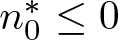 $n_{0}^{*}\le 0$ such that for any fixed
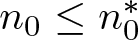 $n_{0}\leq n_{0}^{*}$,
 \begin{align*}
\ |\tilde{x}_{h}(n)|
&\leq
\theta_{lim,\eta,G}^{-}(h)+\varepsilon
+\frac{\theta_{\eta,G}(h)\eta(n_{0})\|U(n,n_{0})P^{u}(n_{0})\|}{(1-\theta_{1})\eta(n)}
\\
&\quad
+\sum_{m=-\infty}^{n_{0}-1}\tilde{L}_{Gg}(n,m\!+\!1)|\tilde{x}_{h}(m)|,
\ \forall\ n\leq n_{0},
\nonumber
\end{align*}
where  $\tilde{x}_{h}(n)$ and
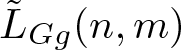 $\tilde{L}_{Gg}(n,m)$ are given by (3.12). Similarly, by the assumption (AD) one can check that this inequality satisfies all the conditions in Lemma 3.2. Similarly to the proof of the case when
 $n\rightarrow +\infty$, one can get that
 \begin{eqnarray*}
\limsup_{n \rightarrow -\infty}|\tilde{x}_{h}(n)|\leq \frac{\theta_{lim,\eta,G}^{-}(h)}{1-\theta_{1}}.
\end{eqnarray*}
This proves the result (2) of Lemma 3.1. This completes the proof of Lemma 3.1 in the case when 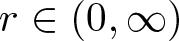 $r\in (0,\infty)$.
In the case when  $r=\infty$, note that g is defined on
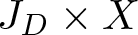 $J_{D}\times X$. Hence, in the above proof, we can take
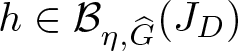 $h\in \mathcal{B}_{\eta,\widehat{G}}(J_{D})$ without any restriction and consider the mapping
 $\mathcal{T}_{J_{D},h}$ on the whole space
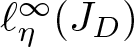 $\ell_{\eta}^{\infty}(J_{D})$. Thus, replacing “
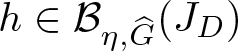 $h\in \mathcal{B}_{\eta,\widehat{G}}(J_{D})$ satisfying
 $\theta_{\eta,\widehat{G}}(h)\leq (1-\theta_{1})r$” and
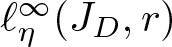 $\ell_{\eta}^{\infty}(J_{D},r)$ by “
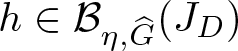 $h\in \mathcal{B}_{\eta,\widehat{G}}(J_{D})$ “and
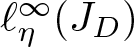 $\ell_{\eta}^{\infty}(J_{D})$ in the above proof of the result (1) and replacing “
 $h\in \mathcal{B}_{\eta,G}(J_{D})$ satisfying
 $\theta_{\eta,G}(h)\leq (1-\theta_{1})r$” and
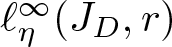 $\ell_{\eta}^{\infty}(J_{D},r)$ by “
 $h\in \mathcal{B}_{\eta,G}(J_{D})$ “and
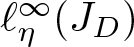 $\ell_{\eta}^{\infty}(J_{D})$ in the above proof of the result (2), respectively, we get that the conclusion holds in the case when
 $r=\infty$. This completes the proof of Lemma 3.1.
Since Lemma 3.1 is true, the proof of Theorem 1 is completed.
Remark 3.1. Lemma 3.1 is an extension of Coppel’s result ([Reference Coppel10]) and Henry’s result ([Reference Henry15]). For the case when  $r=\infty$,
 $\eta\equiv 1$, A(n) in Eq. (2.1) is invertible and the Green function
 $\widehat{G}$ defined by the dichotomy of Eq. (2.1) with the projection
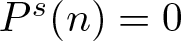 $P^{s}(n)=0$ combined with a projection-valued mapping
 $\widehat{P}^{u}$ (may not be invariant) satisfies
 $\sum_{m=-\infty}^{+\infty}\|\widehat{G}(n,m)\|\leq K$ for some positive constant K, the result about existence of a unique bounded solution stated in the result (1) of Lemma 3.1 is the discrete version of Coppel’s result [Reference Coppel10, Theorem 4, p.137]. For a uniform exponential dichotomy, the norm of the Green function is also summable, i.e.,
 $\sum_{m=-\infty}^{+\infty}\|G(n,m)\|\leq K$ for some positive constant K. Hence, for the case when
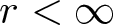 $r \lt \infty$,
 $\eta\equiv 1$ and Eq. (2.1) has a uniform exponential dichotomy on
 $\mathbb{Z}$, the result about existence of a unique bounded solution stated in the result (1) of Lemma 3.1 is Henry’s result [Reference Henry15, Lemma 2.3]. The result (2) of Lemma 3.1 is not given in both [Reference Coppel10, Theorem 4, p.137] and [Reference Henry15, Lemma 2.3]. Notice that the assumption (SD) in Lemma 3.1 contains the case that Eq. (2.1) has a dichotomy with different growth rates and the norm of Green function is not summable (see example 4.1).
3.2. Proof of Theorem 2
In this subsection, we use Lemma 3.1 in the case when 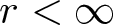 $r \lt \infty$ to prove Theorem 2.
Proof of Theorem 2
For a δ η-weighted pseudo orbit  $y:=\{y(n)\}_{n\in \mathbb{Z}}\subset M$ of T, let
 \begin{equation}
h_{y}(n)=y(n+1)-T(y(n)),
\ \forall\ n\in J_{D}.
\end{equation}
Similarly to the proof of the first claim at the beginning of the proof of Theorem 1, one can check that T has an orbit  $x:=\{x(n)\}_{n\in \mathbb{Z}}\subset V$ which tracks y in η-weighted norm, i.e.,
 $x-y\in \ell_{\eta}^\infty(J_{D})$, if and only if the following equation
 \begin{eqnarray}
z(n+1)=DT(y(n))z(n)+g_{y}(n,z(n))-h_{y}(n),
\end{eqnarray}
has a solution in 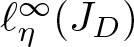 $\ell_{\eta}^\infty(J_{D})$, where
 \begin{equation*}g_{y}(n,z):=T(y(n)+z)-T(y(n))-DT(y(n))z.\end{equation*}
In order to use Lemma 3.1 to prove Theorem 2, we need the following lemma, which is actually proved in [Reference Henry15, pp.395-396].
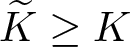
Lemma 3.3. Let α and K be the exponent and the bound of the hyperbolicity of T on M. For any fixed 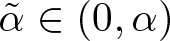 $\tilde{\alpha}\in (0,\alpha)$ and
 $\widetilde{K}\geq K$, there exists a
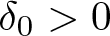 $\delta_{0} \gt 0$ such that for any fixed
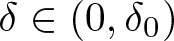 $\delta\in (0,\delta_{0})$, the variational equation of T along any δ-pseudo orbit
 $\{y(n)\}_{n\in \mathbb{Z}}\subset M$, i.e.,
 \begin{eqnarray}
x(n+1)=DT(y(n))x(n),
\end{eqnarray}
has an exponential dichotomy on  $\mathbb{Z}$ with the exponent
 $\tilde{\alpha}$ and bound
 $\tilde{K}$.
Since V is open and M is compact, there exists a 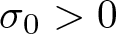 $\sigma_{0} \gt 0$ such that
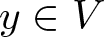 $y\in V$ for all
 $|y-x| \lt \sigma_{0}$ and
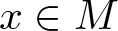 $x\in M$. By the compactness of M and the continuity of DT, one can check that for arbitrary ρ > 0 there exists a
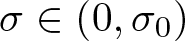 $\sigma\in (0,\sigma_{0})$ such that
 \begin{eqnarray*}
\|DT(y)-DT(x)\|\leq \rho,
\ \ \forall \ x\in M, |y-x| \lt \sigma.
\end{eqnarray*}
Hence, the following function
 \begin{eqnarray*}
\chi_{DT}(\sigma):=\sup_{x\in M, |y-x| \lt \sigma}\|DT(y)-DT(x)\|,
\end{eqnarray*}
is well defined for sufficiently small nonnegative σ. It is clear that χDT is increasing and  $\lim_{\sigma\rightarrow 0+}\chi_{DT}(\sigma)=0$. For any fixed
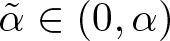 $\tilde{\alpha}\in (0,\alpha)$,
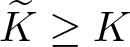 $\widetilde{K}\geq K$, and
 $\eta:\mathbb{Z}\rightarrow (0,1]$ satisfying
 \begin{eqnarray*}
C_{\eta}:=\sup_{n\in \mathbb{Z}} \frac{1}{\eta(n)}\sum_{m\in \mathbb{Z}}e^{-\tilde{\alpha}|n-m-1|}\eta(m) \lt \infty,
\end{eqnarray*}
take ɛ > 0 sufficiently small such that
 \begin{eqnarray*}
\tilde{\theta}_{1}:=\widetilde{K}\chi_{DT}(\varepsilon)\sup_{n\in \mathbb{Z}} \frac{1}{\eta(n)}\sum_{m\in \mathbb{Z}}e^{-\tilde{\alpha}|n-m-1|}\eta(m) \lt 1.
\end{eqnarray*}
Note that any η-weighted δ-pseudo orbit y of T is also a δ-pseudo orbit of T, since  $\eta(n)\in (0,1]$ and
 \begin{eqnarray}
|y(n)|=\eta(n)\frac{|y(n)|}{\eta(n)}
\leq
\eta(n)\sup_{n\in\mathbb{Z}}\frac{|y(n)|}{\eta(n)}
\leq \delta \eta(n)\leq \delta,
\ \forall \ n\in \mathbb{Z}.
\end{eqnarray}
Hence, by Lemma 3.3, we get that for ɛ sufficiently small, the linear equation (3.18) has an exponential dichotomy with the exponent  $\tilde{\alpha}$ and the bound
 $\widetilde{K}$ for any η-weighted
 $(1-\theta)\varepsilon/(\widetilde{K}C_{\eta})$-pseudo orbit
 $y:=\{y(n)\}_{n\in \mathbb{Z}}\subset M$ for
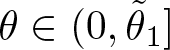 $\theta\in (0,\tilde{\theta}_{1}]$. Hence, the assumption of the dichotomy for the linear part in Lemma 3.1 holds. Note that for any η-weighted
 $(1-\theta)\varepsilon/(\widetilde{K}C_{\eta})$-pseudo orbit y,
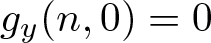 $g_{y}(n,0)=0$ for all
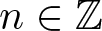 $n\in \mathbb{Z}$ and
 \begin{eqnarray*}
&&|g_{y}(n,z_{1})-g_{y}(n,z_{2})|
\\
&=&|T(y(n)+z_{1})-T(y(n)+z_{2})-DT(y(n))(z_{1}-z_{2})|
\\
&=&|\int_{0}^{1}DT(y(n)+\tau z_{1}+(1-\tau)z_{2})d\tau(z_{1}-z_{2})-DT(y(n))(z_{1}-z_{2})|
\\
&\leq&
\chi_{DT}(\varepsilon)|z_{1}-z_{2}|,
\end{eqnarray*}
for all 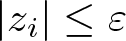 $|z_{i}|\leq \varepsilon$,
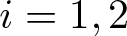 $i=1,2$, since
 \begin{eqnarray*}
\|DT(y(n)+\tau z_{1}+(1-\tau)z_{2})-DT(y(n))\|
\leq
\chi_{DT}(\varepsilon),
\ \forall\ \tau\in [0,1].
\end{eqnarray*}
Let 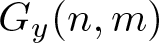 $G_{y}(n,m)$ denote the Green function of the Eq. (3.18) corresponding to the exponential dichotomy. It follows that
 \begin{eqnarray*}
&&|G_{y}(n,m+1)g_{y}(m,z_{1})-G_{y}(n,m+1)g_{y}(m,z_{2})|
\\
&\leq&
\|G_{y}(n,m+1)\||g_{y}(m,z_{1})-g_{y}(m,z_{2})|
\\
&\leq&
\|G_{y}(n,m+1)\|\chi_{DT}(\varepsilon)|z_{1}-z_{2}|,
\end{eqnarray*}
for all 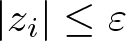 $|z_{i}|\leq \varepsilon$,
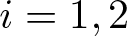 $i=1,2$, that is,
 $G_{y}(n,m+1)g_{y}(m,\cdot)$ is Lipschitz continuous with the Lipschitz constant
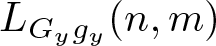 $L_{G_{y}g_{y}}(n,m)$ which is less than or equal to
 $\|G_{y}(n,m+1)\|\chi_{DT}(\varepsilon)$ for any fixed
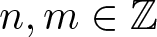 $n,m\in \mathbb{Z}$. This implies that
 \begin{eqnarray*}
\theta_{1}&=&\sup_{n\in \mathbb{Z}}
\frac{1}{\eta(n)}\sum_{m\in \mathbb{Z}}L_{G_{y}g_{y}}(n,m)\eta(m)
\\
&\leq&\sup_{n\in \mathbb{Z}}
\frac{1}{\eta(n)}\sum_{m\in \mathbb{Z}}\widetilde{K}e^{-\tilde{\alpha}|n-m-1|}\chi_{DT}(\varepsilon)\eta(m)
=\tilde{\theta}_{1} \lt 1,
\end{eqnarray*}
since  $\|G_{y}(n,m)\|\leq \widetilde{K}e^{-\tilde{\alpha}|n-m-1|}$. Hence, the assumption for the nonlinear term in Lemma 3.1 holds. For any η-weighted
 $(1-\theta_{1})\varepsilon/(\widetilde{K}C_{\eta})$-pseudo orbit
 $y:=\{y(n)\}_{n\in \mathbb{Z}}\subset M$, the term hy defined in (3.16) satisfies
 \begin{eqnarray*}
\theta_{\eta,G_{y}}(-h_{y})
&:=&\sup_{n\in \mathbb{Z}} \frac{1}{\eta(n)}\sum_{m\in \mathbb{Z}}|G(n,m+1)h_{y}(m)|
\\
&\leq&
\sup_{n\in \mathbb{Z}} \frac{1}{\eta(n)}\sum_{m\in \mathbb{Z}}\|G(n,m+1)\||h_{y}(m)|
\\
&\leq&
\sup_{n\in \mathbb{Z}} \frac{1}{\eta(n)}\sum_{m\in \mathbb{Z}}\widetilde{K}e^{-\tilde{\alpha}|n-m-1|}|h_{y}(m)|
\\
&\leq&
\sup_{n\in \mathbb{Z}} \frac{1}{\eta(n)}\sum_{m\in \mathbb{Z}}\widetilde{K}e^{-\tilde{\alpha}|n-m-1|}\eta(m)\|h_{y}\|_{\ell_{\eta}^\infty(\mathbb{Z})}
\\
&\leq&
\widetilde{K}C_{\eta}\|h_{y}\|_{\ell_{\eta}^\infty(\mathbb{Z})}
\\
&\leq&
\widetilde{K}C_{\eta}
\frac{(1-\theta_{1})\varepsilon}{\widetilde{K}C_{\eta}}
= (1-\theta_{1})\varepsilon.
\end{eqnarray*}
Applying Lemma 3.1 in the case when  $r=\varepsilon$ to Eq. (3.17) , we get that Eq. (3.17) has a solution
 $z:=\{z(n)\}_{n\in \mathbb{Z}}$ in
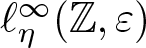 $\ell_{\eta}^\infty(\mathbb{Z},\varepsilon)$ such that
 \begin{eqnarray*}
\sup_{n\in \mathbb{Z}}\|z\|_{\ell_{\eta}^\infty(\mathbb{Z})}\leq
\frac{\theta_{\eta,G_{y}}(-h_{y})}{1-\theta_{1}}
\leq \varepsilon.
\end{eqnarray*}
Hence, T has an orbit  $\{x(n)\}_{n\in \mathbb{Z}}\subset V$ defined by
 $x(n):=y(n)+z(n)$ which η-weighted-ɛ tracks the pseudo orbit
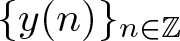 $\{y(n)\}_{n\in \mathbb{Z}}$. Thus, T has the η-weighted Lipschitz shadowing property for η-weighted pseudo orbits with
 $\delta=(1-\theta_{1})\varepsilon/(\widetilde{K}C_{\eta})$. Since the variational equation (3.18) of T along the
 $(1-\theta)\varepsilon/(\widetilde{K}C_{\eta})$-pseudo orbit
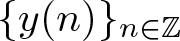 $\{y(n)\}_{n\in \mathbb{Z}}$ has an exponential dichotomy on
 $\mathbb{Z}$, the zero solution is the only bounded solution of Eq. (3.18) on
 $\mathbb{Z}$. This together with (3.19) implies that 0 is the only solution of Eq. (3.18) in
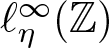 $\ell_{\eta}^\infty(\mathbb{Z})$ on
 $\mathbb{Z}$, since
 $\eta(n)\in (0,1]$ and any η-bounded sequence is bounded on
 $\mathbb{Z}$. Hence, T has the η-weighted unique Lipschitz shadowing property.
Moreover, additionally if η satisfies
 \begin{eqnarray*}
\lim_{n\rightarrow \pm\infty}
\frac{e^{-\tilde{\alpha}|n-m-1|}}{\eta(n)}=0,
\end{eqnarray*}
it follows that
 \begin{eqnarray*}
\lim_{n\rightarrow \pm\infty}\frac{\|G_{y}(n,m)\|}{\eta(n)}=0,
\end{eqnarray*}
since  $\|G_{y}(n,m)\|\leq \widetilde{K}e^{-\tilde{\alpha}|n-m-1|}$. Hence, the additional assumption (AD) also holds. By the result (2) of Lemma 3.1, we get that the η-bounded solution
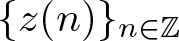 $\{z(n)\}_{n\in \mathbb{Z}}$ of Eq. (3.17) satisfies
 \begin{eqnarray*}
\limsup_{n \rightarrow +\infty}\frac{|z(n)|}{\eta(n)}\leq \frac{\theta_{lim,\eta,G_{y}}^{+}(h_{y})}{1-\theta_{1}}
\ \ {\rm and}
\ \
\limsup_{n \rightarrow -\infty}\frac{|z(n)|}{\eta(n)}\leq \frac{\theta_{lim,\eta,G_{y}}^{-}(h_{y})}{1-\theta_{1}}.
\end{eqnarray*}
This implies that T has the forward and backward η-weighted generalized limit shadowing property for η-weighted pseudo orbits with η satisfying both (2.15) and (2.16). This completes the proof of Theorem 2.
4. Corollary and example
In this section, we apply Theorem 1 to Eq. (1.1) whose linear part has a dichotomy with some growth rates, and give a concrete example which satisfies Theorem 1.
Eq. (1.1) is said to have an (a, b)-dichotomy on JD ([Reference Bento and Silva6]) if Eq. (1.1) has a dichotomy with the projection 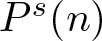 $P^{s}(n)$ on JD and there exist functions
 $a:J_{D,\geq}^{2}\rightarrow (0,+\infty)$ and
 $b:J_{D,\leq}^{2}\rightarrow (0,+\infty)$ such that
 \begin{eqnarray*}
\left\{
\begin{aligned}
&\left\Vert U(n,m)P^{s}(n)\right\rVert\leq a(n,m),
\,\,\, \forall\ n\geq m\in J_{D},\nonumber
\\
&\left\Vert U(n,m)P^{u}(n)\right\rVert\leq b(n,m),
\,\,\, \forall\ n\leq m\in J_{D},\nonumber
\end{aligned}
\right.
\end{eqnarray*}
where  $J_{D}=\mathbb{Z}_{n_{0}}^{+},\mathbb{Z}_{n_{0}}^{-}$ or
 $\mathbb{Z}$. For a Lipschitz function
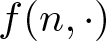 $f(n,\cdot)$ and a projection P(n), we use
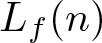 $L_{f}(n)$ and
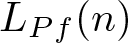 $L_{Pf}(n)$ to denote the Lipschitz constants of
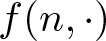 $f(n,\cdot)$ and
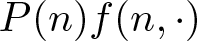 $P(n)f(n,\cdot)$, respectively.
Corollary 1. Consider Eq. (1.1), and suppose that Eq. (2.1) has an (a, b)-dichotomy on JD with the projection 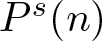 $P^{s}(n)$, where
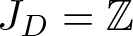 $J_{D}=\mathbb{Z}$,
 $\mathbb{Z}^{+}$ or
 $\mathbb{Z}^{-}$, and
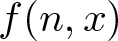 $f(n,x)$ is Lipschitz in x. Let
 $L_{\nu}(n):=\min\{L_{f}(n),L_{P^{\nu}f}(n)\}$, for
 $\nu=s,u$ and
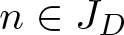 $n\in J_{D}$. Assume
 \begin{eqnarray}
\!\!\! \theta_{3}\!:=\!\sup_{n\in J_{D}} \{\!\sum_{m\in J_{D}\cap\mathbb{Z}_{n-1}^{-}}\!\!a(n,m+1)L_{s}(m)\!+\!\sum_{m\in J_{D}\cap\mathbb{Z}_{n}^{+}}\!\!b(n,m+1)L_{u}(m)\}\! \lt \!1.
\end{eqnarray}
Let  $\rho_{\nu}:J_{D}\rightarrow (0,\infty)$ be functions,
 $\nu=s,u$, such that
 \begin{eqnarray}
\!\!\! \theta_{4}\!:=\!
\sup_{n\in J_{D}} \{\sum_{m\in J_{D}\cap\mathbb{Z}_{n-1}^{-}}\!\!a(n,m\!+\!1)\rho_{s}(m)\!+\!\sum_{m\in J_{D}\cap\mathbb{Z}_{n}^{+}}\!\!b(n,m\!+\!1)\rho_{u}(m)\}
\! \lt \!\infty.
\end{eqnarray}
Then for any pseudo orbit  $y:J_{D}\rightarrow X$ of Eq. (1.1) satisfying
 \begin{eqnarray}
\left\{
\begin{aligned}
& |P^{s}(n+1)(y(n+1)-A(n)y(n)-f(n,y(n)))|\leq \rho_{s}(n)
\\
& |P^{u}(n+1)(y(n+1)-A(n)y(n)-f(n,y(n)))|\leq \rho_{u}(n)
\end{aligned}
\right.
\end{eqnarray}
for any 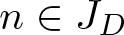 $n\in J_{D}$, Eq. (1.1) has a true orbit x which tracks y and satisfies
 \begin{eqnarray}
|y(n)-x(n)|\leq \frac{\theta_{4}}{1-\theta_{3}},
\ \forall \ n\in J_{D}.
\end{eqnarray}
Additionally, in the case 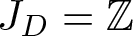 $J_{D}=\mathbb{Z}$ if the following
 \begin{eqnarray}
\left\{
\begin{aligned}
& \lim_{n\rightarrow +\infty}a(n,0)=0,\ \ \lim_{n\rightarrow -\infty}a(0,n)=0,\\
& \lim_{n\rightarrow +\infty}b(0,n)=0,\ \ \lim_{n\rightarrow -\infty}b(n,0)=0,\\
\end{aligned}
\right.
\end{eqnarray}
hold, then the true orbit x which tracks y and satisfies (4.4) is unique.
Note that if (4.1) holds, then (4.2) holds for any fixed function ρν satisfying  $\rho_{\nu}(n)\leq \kappa L_{\nu}(n)$ for
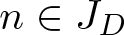 $n\in J_{D}$,
 $\nu=s,u$ and any fixed positive constant κ.
Proof of Corollary 1
By the (a, b)-dichotomy, for any  $n \gt m\in J_{D}$,
 \begin{eqnarray*}
&& |G(n,m+1)(f(m,x_{1})-f(m,x_{2}))|
\\
&=& |U(n,m+1)P^{s}(m+1)P^{s}(m+1)(f(m,x_{1})-f(m,x_{2}))|
\\
&\leq& \|U(n,m+1)P^{s}(m+1)\||P^{s}(m+1)(f(m,x_{1})-f(m,x_{2}))|
\\
&\leq& \|U(n,m+1)P^{s}(m+1)\||P^{s}(m+1)(f(m,x_{1})-f(m,x_{2}))|
\\
&\leq& a(n,m+1)L_{s}(m)|x_{1}-x_{2}|.
\end{eqnarray*}
Similarly, for any  $n\leq m\in J_{D}$,
 \begin{eqnarray*}
|G(n,m+1)(f(m,x_{1})-f(m,x_{2}))|
\leq b(n,m+1)
L_{u}(m)|x_{1}-x_{2}|.
\end{eqnarray*}
It follows that
 \begin{equation*}\theta_1:=\sup_{n\in J_D}\sum_{m\in J_D}L_{Gf}(n,m)\leq\theta_3 \lt 1.\end{equation*}
This implies that  $f\in L_{1,G; \lt 1}(J_{D}\times X)$. Hence, the condition (SD) holds. By Theorem 1 we can get that Eq. (2.1) has the Lipschitz shadowing property for
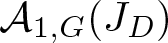 $\mathcal{A}_{1,G}(J_{D})$-pseudo orbits with
 $\delta=(1-\theta_{3})\varepsilon$, since
 $(1-\theta_{3})\varepsilon \lt (1-\theta_{1})\varepsilon$. Let
 \begin{align*}
\mathcal{V}_{\rho_{1},\rho_{2},G}(J_{D}):=\{y:J_{D}\rightarrow X~|~y~{\rm satisfies}~(4.3)\}.
\end{align*}
For any  $y\in \mathcal{V}_{\rho_{1},\rho_{2},G}(J_{D})$,
 \begin{eqnarray*}
|G(n,m\!+\!1)h_{y}(m)|
&\leq& \|U(n,m+1)P^{s}(m+1)\||P^{s}(m+1)h_{y}(m)|
\\
&\leq& a(n,m+1)\rho_{s}(m),
\ \forall \ n \gt m\in J_{D},
\\
|G(n,m\!+\!1)h_{y}(m)|
&\leq& \|U(n,m+1)P^{s}(m+1)\||P^{s}(m+1)h_{y}(m)|
\\
&\leq& b(n,m+1)\rho_{u}(m),
\ \forall \ n\leq m\in J_{D},
\end{eqnarray*}
which together with (4.2) implies that  $y\in \mathcal{A}_{\eta,G}(J_{D})$ and
 $\theta_{\eta,G}(h_{y})\leq \theta_{4}$, where
 $h_{y}(n):=y(n+1)-A(n)y(n)-f(n,y(n))$. Hence,
 $\mathcal{V}_{\rho_{1},\rho_{2},G}(J_{D})\subseteq \mathcal{A}_{1,G}(J_{D})$. Thus, Eq. (2.1) has the Lipschitz shadowing property for
 $\mathcal{V}_{\rho_{1},\rho_{2},G}(J_{D})$-pseudo orbits with
 $\delta=(1-\theta_{3})\varepsilon$. For a
 $\mathcal{V}_{\rho_{1},\rho_{2},G}(J_{D})$-pseudo orbit y, taking
 $\delta=\theta_{\eta,G}(h_{y})$, the Lipschitz shadowing property in Theorem 1 shows that there exists a solution x of Eq. (1.1) which tracks y and satisfies
 \begin{eqnarray*}
\sup_{n\in J_{D}}\frac{|y(n)-x(n)|}{\eta(n)}
\leq
\varepsilon=\frac{\delta}{1-\theta_{3}}
= \frac{\theta_{\eta,G}(h_{y})}{1-\theta_{3}}
\leq
\frac{\theta_{4}}{1-\theta_{3}}.
\end{eqnarray*}
This implies that (4.4) holds.
In the case when 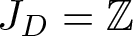 $J_{D}=\mathbb{Z}$, under the additional condition (4.5), in order to prove the uniqueness of the tracking orbit, we need the following lemma.
Lemma 4.1. Suppose that Eq. (2.1) has a dichotomy on  $\mathbb{Z}$ with the projection
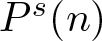 $P^{s}(n)$, and
 \begin{eqnarray}
\left\{
\begin{aligned}
& \lim_{n\rightarrow +\infty}\|U(n,0)P^{s}(0)\|=0,\ \ \lim_{n\rightarrow -\infty}\|U(0,n)P^{s}(n)\|=0,\\
& \lim_{n\rightarrow +\infty}\|U(0,n)P^{u}(n)\|=0,\ \ \lim_{n\rightarrow -\infty}\|U(n,0)P^{u}(0)\|=0.\\
\end{aligned}
\right.
\end{eqnarray}
Then 0 is the unique bounded solution of Eq. (2.1) on  $\mathbb{Z}$.
Proof of Lemma 4.1
The mapping  $U(n,m)|_{\mathcal{R}(P^{u}(m))}:
\mathcal{R}(P^{u}(m))\rightarrow \mathcal{R}(P^{u}(n))$ for
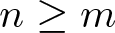 $n\geq m$ is invertible. By the dichotomy, for any
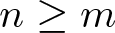 $n\geq m$,
 $\xi\in \mathcal{R}(P^{u}(m))$
 \begin{eqnarray*}
|\xi|=|P^{u}(m)\xi|=|U(m,n)P^{u}(n)U(n,m)\xi|\leq \|U(m,n)P^{u}(n)\||U(n,m)\xi|,
\end{eqnarray*}
since  $U(n,m)P^{u}(m)=P^{u}(n)U(n,m)$. This implies that
 \begin{eqnarray*}
\|U(n,m)|_{\mathcal{R}(P^{u}(m))}\|\geq \frac{1}{\|U(m,n)P^{u}(n)\|},
\ \forall \ n\geq m.
\end{eqnarray*}
Let x be a nontrivial bounded solution of Eq. (2.1) on  $\mathbb{Z}$. Then, at least one of
 $\xi^{s}:=P^{s}(0)x(0)$ and
 $\xi^{u}:=P^{u}(0)x(0)$ is not 0. In the case
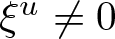 $\xi^{u}\neq 0$, it follows that
 \begin{eqnarray*}
|x(n)|\geq |U(n,0)\xi^{u}|-|U(n,0)\xi^{s}|
\geq \frac{1}{\|U(0,n)P^{u}(n)\|}|\xi^{u}|-
\|U(n,0)P^{s}(0)\||\xi^{s}|.
\end{eqnarray*}
Taking  $\limsup_{n\rightarrow +\infty}$ on both sides of the above inequality and using (4.6), we get that
 \begin{eqnarray*}
\limsup_{n\rightarrow +\infty}|x(n)|\geq \limsup_{n\rightarrow +\infty}\frac{1}{\|U(0,n)P^{u}(n)\|}|\xi^{u}|-\limsup_{n\rightarrow +\infty} \|U(n,0)P^{s}(0)\||\xi^{s}|=\infty.
\end{eqnarray*}
This is a contradiction with  $\limsup_{n\rightarrow +\infty}|x(n)| \lt \infty$, since x is bounded on
 $\mathbb{R}$. Hence,
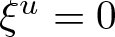 $\xi^{u}=0$. In the case
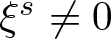 $\xi^{s}\neq 0$, let
 $x^{s}(n):=P^{s}(n)x(n)$,
 $x^{u}(n):=P^{u}(n)x(n)$. By the dichotomy of Eq. (2.1), for any
 $n\leq 0$,
 \begin{eqnarray*}
&& |\xi^{s}|=|U(0,n)x^{s}(n)|\leq
\|U(0,n)P^{s}(n)\| |x^{s}(n)|,
\\
&& |x^{u}(n)|=|U(n,0)\xi^{u}|\leq
\|U(n,0)P^{u}(0)\||\xi^{u}|.
\end{eqnarray*}
Hence,
 \begin{eqnarray*}
|x(n)|\geq |x^{s}(n)|-|x^{u}(n)|\geq
\frac{1}{ \|U(0,n)P^{s}(n)\|}|\xi^{s}|-\|U(n,0)P^{u}(0)\||\xi^{u}|.
\end{eqnarray*}
Taking  $\limsup_{n\rightarrow -\infty}$ on both sides of the above inequality and using (4.6), we get that
 \begin{eqnarray*}
\limsup_{n\rightarrow -\infty}|x(n)|\geq
\limsup_{n\rightarrow -\infty}\frac{1}{\|U(0,n)P^{s}(n)\|}|\xi^{s}|-\limsup_{n\rightarrow -\infty}\|U(n,0)P^{u}(0)\||\xi^{u}|
=\infty.
\end{eqnarray*}
This is also a contradiction with the boundedness of x on  $\mathbb{R}$. Hence,
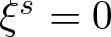 $\xi^{s}=0$. Thus, 0 is the unique bounded solution of Eq. (2.1) on
 $\mathbb{Z}$. The proof of Lemma 4.1 is completed.
By (4.5) and lemma 4.1, 0 is the unique bounded solution of Eq. (2.1) on  $\mathbb{Z}$. Thus, the result (1) of Theorem 1 holds for
 $\eta\equiv 1$, the proof of corollary 1 is completed.
The following example satisfies Theorem 1 but does not satisfy the condition (1.4) in [Reference Backes, Dragičević and Singh5] and the condition (1.8) in the discrete version of the result in [Reference Backes, Dragičević, Pituk and Singh4].
Example 4.1. For 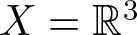 $X=\mathbb{R}^{3}$, consider the nonautonomous equation (1.1) on
 $\mathbb{Z}^+$ in which A(n) and
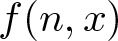 $f(n,x)$ are given as following
 \begin{equation}
A(n)=\begin{pmatrix}
&1 & 1 & 0\\
&0 & 1 & 0 \\
&0 & 0 & e^{-\beta}\\
\end{pmatrix},
\ \ \
f(n,x)=\begin{pmatrix}
\frac{\varepsilon \sin x_{2}}{(n+2)^{3}} \\
\frac{\varepsilon \cos x_{3}}{(n+2)^{3}} \\
\varepsilon \sin x_{1} \\
\end{pmatrix},
\end{equation}
where β is a positive constant,  $x=(x_{1},x_{2},x_{3})^{T}$. Note that
 \begin{equation*}
U(n,m)=A^{n-m}=\begin{pmatrix}
&1 & n-m & 0\\
&0 & 1 & 0 \\
&0 &0 & e^{-\beta (n-m)}\\
\end{pmatrix}
\end{equation*}
for all 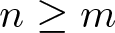 $n\geq m$. Let
 $P^{s}(n):={\rm diag}\{0,0,1\}$ and
 $P^{u}(n):=I-P^{s}(n)$. One can check that
 \begin{eqnarray*}
\|G(n,m)\|= \left\{
\begin{aligned}
e^{-\beta(n-m)},
\,\,\, \forall \ n\geq m,\in\mathbb{Z}^+,\nonumber
\\
1+m-n,
\,\,\, \forall \ n\leq m,\in\mathbb{Z}^+.\nonumber
\end{aligned}
\right.
\end{eqnarray*}
Hence, (2.1) has an (a, b)-dichotomy with the projection 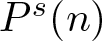 $P^{s}(n)$, where
 $a(n,m)=e^{-\beta(n-m)}$ for
 $n\geq m\in \mathbb{Z}^+$ and
 $b(n,m)=1+m-n$ for
 $n\leq m\in \mathbb{Z}^+$. For any
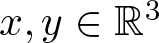 $x,y\in \mathbb{R}^{3}$ and
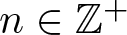 $n\in \mathbb{Z}^+$, we have
 \begin{eqnarray*}
L_{P^{s}f}(n)&=&\sup_{x\ne y,\in \mathbb{R}^{3}} \frac{| P^{s}(n+1)(f(n,x)-f(n,y))|}{|x-y|}
=
\varepsilon,
\nonumber
\\
L_{P^{u}f}(n)&=&\sup_{x\ne y,\in \mathbb{R}^{3}} \frac{| P^{u}(n+1)(f(n,x)-f(n,y))|}{|x-y|}
= \frac{\varepsilon}{(n+2)^{3}}.
\nonumber
\end{eqnarray*}
Moreover, for  $n\geq3$,
 \begin{eqnarray*}
\sum_{m=0}^{n-1}e^{-\beta(n-m-1)}L_{P^{s}f}(m)
= \sum_{m=0}^{n-1}\varepsilon e^{-\beta (n-m-1)}\leq\frac{\varepsilon(1+e^{-\beta})}{1-e^{-\beta}},
\end{eqnarray*}
and for  $n\geq 0$
 \begin{eqnarray*}
\sum_{m=n}^{\infty}(1+m+1-n)L_{P^{u}f}(m)
=
\sum_{m=n}^{\infty}\frac{\varepsilon (m-n+2)}{(m+2)^{3}}\leq \varepsilon\sum_{m=n}^{\infty}\frac{1}{(m+2)^{2}} \lt \varepsilon. \end{eqnarray*}
Thus, for sufficiently small ɛ
 \begin{equation*}
\theta_{3}:=\sup_{n\in \mathbb{Z}^+}\{\sum_{m=0}^{n-1}e^{-\beta(n-m-1)}L_{P^{s}f}(m)+\sum_{m=n}^{\infty}(1+m+1-n)L_{P^{u}f}(m)\} \lt 1.
\end{equation*}
Hence, all the conditions in Corollary 1 hold. Let  $\rho_{\nu}:\mathbb{Z}^{+}\rightarrow \mathbb{R}^{3}$,
 $\nu=s,u$, denote any functions satisfying
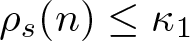 $\rho_{s}(n)\leq \kappa_{1}$ and
 $\rho_{u}(n)\leq \kappa_{2}/(n+2)^{3}$ for
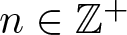 $n\in \mathbb{Z}^{+}$, where κ 1 and κ 2 are positive constants. It follows from Corollary 1 that Eq. (1.1) with A(n) and
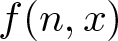 $f(n,x)$ given by (4.7) has the Lipschitz shadowing property for
 $\mathcal{V}_{\rho_{1},\rho_{2},G}(J_{D})$-pseudo orbits with
 $\delta=(1-\theta_{3})\varepsilon$.
Notice that for 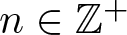 $n\in \mathbb{Z}^{+}$
 \begin{eqnarray*}
L_{f}(n)&=&\sup_{x,y\in \mathbb{R}^{3},x\ne y} \frac{| f(n,x)-f(n,y)|}{|x-y|}
=
\varepsilon.
\nonumber
\end{eqnarray*}
Since  $\sum_{m=n}^{\infty}(1+m+1-n)$ is not summable, it follows that
 $\sum_{m\in \mathbb{Z}}\|G(n,m+1)\|L_{f}(m)
$ is not summable. Hence, Eq. (1.1) with A(n) and
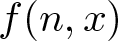 $f(n,x)$ given by (4.7) does not satisfy the condition (1.4) and the condition (1.8).
5. Corresponding result for differential equations
In this section, we give a corresponding result for differential equation (1.5) in the Banach space X. There are some different types of pseudo orbits for differential equations ([Reference Palmer21, Reference Pilyugin22]). Motivated by investigation of the shadowing of C 1 pseudo periodic solutions in [Reference Anosov2, Lemma 13.3, p.106] for an autonomous differential equation on a d-dimensional connected closed smooth manifold M, we will restricted to the type of the pseudo orbits which are C 1 and satisfy an equation with some errors in some sense.
For any fixed 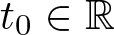 $t_{0}\in \mathbb{R}$, let
 $\mathbb{R}_{t_{0}}^{+}:=[t_{0},+\infty)$ and
 $\mathbb{R}_{t_{0}}^{-}:=(-\infty, t_{0}]$. As usual,
 $\mathbb{R}^{+}$ and
 $\mathbb{R}^{-}$ denote
 $\mathbb{R}_{0}^{+}$ and
 $\mathbb{R}_{0}^{-}$ respectively. For a continuous function
 $\eta:J\rightarrow (0,\infty)$, let
 \begin{eqnarray*}
C_{\eta}(J):=\{x:J\rightarrow X|~x\mbox{is continuous and}~\|x\|_{C_{\eta}(J)}:= \sup_{t\in J}\frac{|x(t)|}{\eta(t)} \lt +\infty\},
\end{eqnarray*}
where 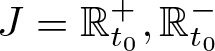 $J=\mathbb{R}_{t_{0}}^{+},\mathbb{R}_{t_{0}}^{-}$ or
 $\mathbb{R}$.
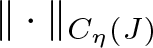 $\|\cdot\|_{C_{\eta}(J)}$ is a norm of
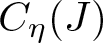 $C_{\eta}(J)$ and
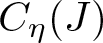 $C_{\eta}(J)$ equipped with
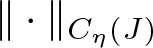 $\|\cdot\|_{C_{\eta}(J)}$ is a Banach space.
Suppose that A(t) for  $t\in J$ is a linear operator on the Banach space X. Consider the linear differential equation
 \begin{eqnarray}
\frac{dx}{dt}=A(t)x, \ x(t)\in X,
\end{eqnarray}
where  $t\mapsto A(t)-A_{0}\in \mathcal{L}(X)$ is locally Hölder continuous and
 $-A_{0}$ is a sectorial operator.
Let 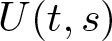 $U(t,s)$ denote the solution operator of Eq. (5.1), which is linear and usually called the evolution operator of Eq. (5.1) ([Reference Henry14]). Eq. (5.1) is said to have a dichotomy on J if there exists a strongly continuous projection-valued mapping
 $P^{s}: J\rightarrow \mathcal{L}(X)$ such that (i)
 $P^{s}(t)U(t,s)=U(t,s)P^{s}(s)$ for
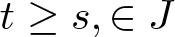 $t\geq s,\in J$, (ii) the restriction
 $U(t,s)|_{\mathcal{R}(P^{u}(s))}$ to the range
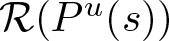 $\mathcal{R}(P^{u}(s))$ of
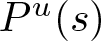 $P^{u}(s)$ is an isomorphism from
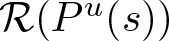 $\mathcal{R}(P^{u}(s))$ onto
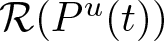 $\mathcal{R}(P^{u}(t))$ for
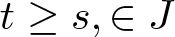 $t\geq s,\in J$, where
 $P^{u}(t):=\mathbb{I}-P^{s}(t)$. Let
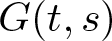 $G(t,s)$ denote the Green function corresponding to the dichotomy, i.e.,
 \begin{eqnarray*}
G(t,s)=\left\{
\begin{aligned}
& U(t,s)P^{s}(s), \ \ \ \ \forall \ t\geq s\in J, \\
& -U(t,s)P^{u}(s), \ \forall \ t \lt s \in J,
\end{aligned}
\right.
\end{eqnarray*}
where 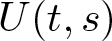 $U(t,s)$ for t < s is defined by
 $U(t,s):=(U(s,t)|_{\mathcal{R}(P^{u}(t))})^{-1}$ because of (ii).
For any two operator-valued mappings  $\widehat{P}: J\rightarrow \mathcal{L}(X)$ and
 $P: J\rightarrow \mathcal{L}(X)$,
 $\widehat{P}$ is said to be adapted to P if
 $\mathcal{R}(\widehat{P}(t))\subset \mathcal{R}(P(t))$ for all
 $t\in J$. For a dichotomy of Eq. (5.1) with the projection
 $P^{s}(t)$ and an operator-valued mapping
 $\widehat{P}^{u}: J\rightarrow \mathcal{L}(X)$ which is adapted to P u, let
 \begin{eqnarray}
\widehat{G}(t,s):=\left\{
\begin{aligned}
& U(t,s)\widehat{P}^{s}(s), \ \ \ \ \ \forall \ t\geq s\in J, \\
& -U(t,s)\widehat{P}^{u}(s), \ \forall \ t \lt s \in J,
\end{aligned}
\right.
\end{eqnarray}
which is called the (generalized) Green function for the dichotomy combined with the adapted operator-valued mapping  $\widehat{P}^{u}$, where
 $\widehat{P}^{s}(t):=\mathbb{I}-\widehat{P}^{u}(t)$ and
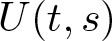 $U(t,s)$ for t < s is defined by
 $U(t,s):=(U(s,t)|_{\mathcal{R}(P^{u}(t))})^{-1}$. As noted following (2.3), the Green function
 $\widehat{G}$ for a dichotomy with the projection
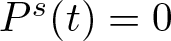 $P^{s}(t)=0$ combined with an operator-valued mapping
 $\widehat{P}^{u}$ coincides with the Green function defined in [Reference Coppel10, p.137] for ordinary differential equation in
 $\mathbb{R}^{n}$ and the Green function defined in [Reference Backes, Dragičević and Singh5, p.487] for Eq. (5.1) with invertible evolution operator.
For a Green function  $\widehat{G}$ of Eq. (5.1) defined in (5.2) and a continuous function
 $\eta:J\rightarrow (0,\infty)$, let
 $L_{\eta,\widehat{G}; \lt 1}(J\times X)$ denote the set consisting of all the continuous mapping
 $F:J\times X\rightarrow X$ such that
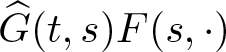 $\widehat{G}(t,s)F(s,\cdot)$ is Lipschitz continuous with the Lipschitz constant
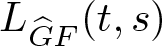 $L_{\widehat{G}F}(t,s)$, i.e.,
 \begin{eqnarray*}
L_{\widehat{G}F}(t,s):=\sup_{x_{1}\neq x_{2},\in X}\frac{|\widehat{G}(t,s)F(s,x_{1})-\widehat{G}(t,s)F(s,x_{2})|}{|x_{1}-x_{2}|},
\end{eqnarray*}
which is integrable in s for any fixed t and
 \begin{eqnarray}
&& \theta_{1}:=\sup_{t\in J}\frac{1}{\eta(t)} \int_{J}L_{\widehat{G}F}(t,s)\eta(s)ds \lt 1.
\end{eqnarray}
Consider Eq. (1.5) with the following hypothesis:
(SC) Suppose that Eq. (5.1) has a dichotomy on J with the projection
$P^{s}(t)$, where
$J=\mathbb{R}$,
$\mathbb{R}^{+}$, or
$\mathbb{R}^{-}$, and there exists a function
$\eta:J\rightarrow (0,\infty)$ and an adapted operator-valued mapping
$\widehat{P}^{u}:J\rightarrow \mathcal{L}(X)$ of P u such that the nonlinear term
$f\in L_{\eta,\widehat{G}; \lt 1}(J\times X)$, where
$\widehat{G}$ denotes the Green function for the dichotomy combined with
$\widehat{P}^{u}$.

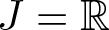







In order to study the weighted limit shadowing, we need the following additional assumption
(AC) In (SC),
$\widehat{G}=G$, that is, the nonlinear term
$f\in L_{\eta,G; \lt 1}(J_{D}\times X)$, where G denotes the Green function for the dichotomy with the projection
$P^{s}(t)$. In addition, the Green function G satisfies
\begin{eqnarray*}
\lim_{t \rightarrow +\infty}
\frac{\|G(t,s)\|}{\eta(t)}
=0, \forall \ s\in \mathbb{R}^{+},
~ ( {\rm resp.}
\lim_{t \rightarrow -\infty}
\frac{\|G(t,s)\|}{\eta(t)}
=0, \forall \ s\in \mathbb{R}^{-}).
\end{eqnarray*}
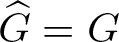



For a Green function  $\widehat{G}$ of Eq. (5.1) and a continuous function
 $\eta:J\rightarrow (0,\infty)$, let
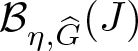 $\mathcal{B}_{\eta,\widehat{G}}(J)$ denote the set consisting of all the continuous mappings
 $h:J\rightarrow X$ such that the mapping
 $t\rightarrow \int_{J}|\widehat{G}(t,s)h(s)|ds$ belongs to
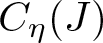 $C_{\eta}(J)$, i.e.,
 \begin{eqnarray*}
\ \ \ \theta_{\eta,\widehat{G}}(h):=\sup_{t\in J} \frac{1}{\eta(t)}\int_{J}|\widehat{G}(t,s)h(s)|ds \lt \infty,
\end{eqnarray*}
where 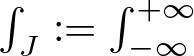 $\int_{J}:=\int_{-\infty}^{+\infty}$ in the case
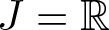 $J=\mathbb{R}$,
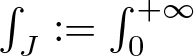 $\int_{J}:=\int_{0}^{+\infty}$ in the case
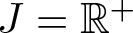 $J=\mathbb{R}^{+}$, and
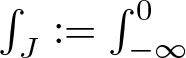 $\int_{J}:=\int_{-\infty}^{0}$ in the case
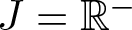 $J=\mathbb{R}^{-}$. For
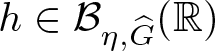 $h\in \mathcal{B}_{\eta,\widehat{G}}(\mathbb{R})$ or
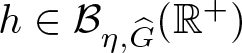 $h\in \mathcal{B}_{\eta,\widehat{G}}(\mathbb{R}^{+})$, let
 \begin{equation*}
\theta_{lim,\eta,\widehat{G}}^{+}(h):=
\limsup_{t_{0} \rightarrow +\infty} \sup_{t\geq t_{0}\geq 0}\frac{1}{\eta(t)}\int_{t_{0}}^{+\infty}|\widehat{G}t,s)h(s)|ds.
\end{equation*}
For 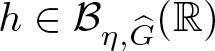 $h\in \mathcal{B}_{\eta,\widehat{G}}(\mathbb{R})$ or
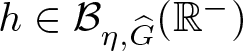 $h\in \mathcal{B}_{\eta,\widehat{G}}(\mathbb{R}^{-})$, let
 \begin{equation*}
\theta_{lim,\eta,\widehat{G}}^{-}(h):=
\limsup_{t_{0} \rightarrow -\infty} \sup_{t\leq t_{0}\leq 0}\frac{1}{\eta(t)}\int_{-\infty}^{t_{0}}|\widehat{G}(t,s)h(s)|ds.
\end{equation*}
For a C 1 mapping 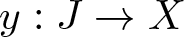 $y: J\rightarrow X$, let
 \begin{equation*}
h_{y}(t)=y'-A(t)y-f(t,y),
\ \forall\ t\in J.
\end{equation*}
Let 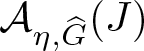 $\mathcal{A}_{\eta,\widehat{G}}(J)$ denote the set consisting of all the C 1 mapping
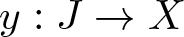 $y:J\rightarrow X$ such that
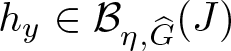 $h_{y}\in \mathcal{B}_{\eta,\widehat{G}}(J)$. It is clear that
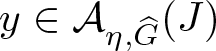 $y\in \mathcal{A}_{\eta,\widehat{G}}(J)$ is a pseudo orbit of Eq. (1.1) if
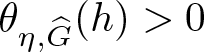 $\theta_{\eta,\widehat{G}}(h) \gt 0$, which is called a
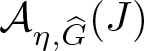 $\mathcal{A}_{\eta,\widehat{G}}(J)$-pseudo orbit of Eq. (1.5). For a constant δ > 0, a pseudo orbit y of Eq. (1.5) is said to be
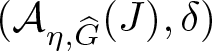 $({\mathcal A}_{\eta,\widehat G}(J),\delta)$-pseudo orbit of Eq. (1.5) if
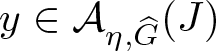 $y\in \mathcal{A}_{\eta,\widehat{G}}(J)$ satisfies
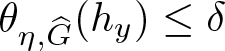 $\theta_{\eta,\widehat{G}}(h_{y})\leq \delta$. A
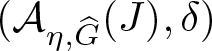 $(\mathcal{A}_{\eta,\widehat{G}}(J),\delta)$-pseudo orbit y of Eq. (1.5) is said to be (resp. uniquely) η-weighted-ɛ-shadowable for Eq. (1.5) if there is a (resp. unique) solution x of Eq. (1.5) such that
 $\|y-x\|_{C_{\eta}(J)}\leq \varepsilon$. Eq. (1.5) is said to have the (resp. unique) η-weighted shadowing property for
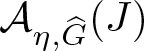 $\mathcal{A}_{\eta,\widehat{G}}(J)$-pseudo orbits if for any ɛ > 0 there exists a δ > 0 such that every
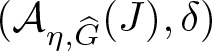 $(\mathcal{A}_{\eta,\widehat{G}}(J),\delta)$-pseudo orbit y of Eq. (1.5) is (resp. uniquely) η-weighted-ɛ-shadowable for Eq. (1.5). Eq. (1.5) is said to have the η-weighted Lipschitz shadowing property for
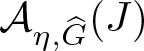 $\mathcal{A}_{\eta,\widehat{G}}(J)$-pseudo orbits if the constant δ in the η-weighted shadowing property can be taken as
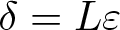 $\delta=L\varepsilon$ for a positive constant L. Eq. (1.5) is said to have the forward (resp. backward) η-weighted limit shadowing property for
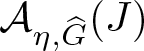 $\mathcal{A}_{\eta,\widehat{G}}(J)$-pseudo orbits if Eq. (1.5) has the η-weighted shadowing property for
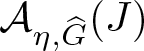 $\mathcal{A}_{\eta,\widehat{G}}(J)$-pseudo orbits and for any
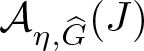 $\mathcal{A}_{\eta,\widehat{G}}(J)$-pseudo orbit y satisfying
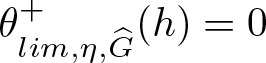 $\theta_{lim,\eta,\widehat{G}}^{+}(h)=0$ there exists a solution x of Eq. (1.5) such that
 \begin{eqnarray*}
\lim_{t \rightarrow +\infty}\frac{|y(t)-x(t)|}{\eta(t)}=0
\ \ ({\rm resp.} \
\lim_{t \rightarrow -\infty}\frac{|y(t)-x(t)|}{\eta(t)}=0
).
\end{eqnarray*}
Eq. (1.5) is said to have the generalized forward (resp. backward) η-weighted limit shadowing property for 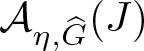 $\mathcal{A}_{\eta,\widehat{G}}(J)$-pseudo orbits if Eq. (1.5) has the η-weighted shadowing property for
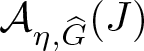 $\mathcal{A}_{\eta,\widehat{G}}(J)$-pseudo orbits and for any
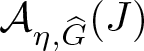 $\mathcal{A}_{\eta,\widehat{G}}(J)$-pseudo orbit y there exists a solution x of Eq. (1.5) such that
 \begin{eqnarray*}
&& \limsup_{t \rightarrow +\infty}\frac{|y(t)-x(t)|}{\eta(t)}\leq \Lambda \theta_{lim,\eta,\widehat{G}}^{+}(h_{y})
\\
&& ({\rm resp.} \
\limsup_{t \rightarrow -\infty}\frac{|y(t)-x(t)|}{\eta(t)}\leq \Lambda \theta_{lim,\eta,\widehat{G}}^{-}(h_{y})
),
\end{eqnarray*}
for a positive constant Λ independent of y and x.
Now we are ready to give the corresponding result about the shadowing of pseudo orbits for differential equations.
Theorem 3 Consider Eq. (1.5) and suppose that (SC) holds. Then the following hold:
(1) Lipschitz Shadowing: Eq. (1.5) has the η-weighted Lipschitz shadowing property for
${\mathcal A}_{\eta,\widehat G}(J)$-pseudo orbits with
$\delta=(1-\theta_{1})\varepsilon$, where
$J=\mathbb{R}$,
$\mathbb{R}^{+}$, or
$\mathbb{R}^{-}$, and θ 1 is the constant given in (5.3). If 0 is the only solution of Eq. (5.1) in
$C_{\eta}(J)$, then Eq. (1.5) has the unique η-weighted Lipschitz shadowing property for
${\mathcal A}_{\eta,\widehat G}(J)$-pseudo orbits.(2) Generalized limit shadowing: If the additional assumption (AC) holds, then Eq. (1.5) has the generalized forward (resp. backward) η-weighted limit shadowing property for
$\mathcal{A}_{\eta,G}(\mathbb{R}^{+})$ (resp.
$\mathcal{A}_{\eta,G}(\mathbb{R}^{-})$)-pseudo orbits with
$\Lambda=1/(1-\theta_{1})$, where θ 1 is the constant given in (5.3) by replacing
$\widehat{G}$ by G.
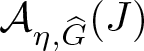

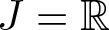


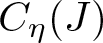
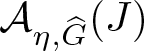
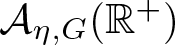
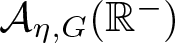


Similarly to the proof of Theorem 1, Theorem 3 follows from a generalization of Coppel’s result in [Reference Coppel10, Theorem 4, p.137] in the next lemma and a generalization of projected Gronwall’s inequality in Lemma 5.2.
Lemma 5.1. Consider
 \begin{equation}
x'=A(t)x+g(t,x)+h(t),\quad x\in X,
\end{equation}
where  $g:J\times X\rightarrow X$ and
 $h:J\rightarrow X$ are continuous. Suppose that (SC) holds for g, and additionally
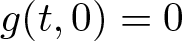 $g(t,0)=0$ for all
 $t\in J$. Then the following hold:
(1) For any
$h\in \mathcal{B}_{\eta,\widehat{G}}(J)$ Eq. (5.4) has solution x in
$C_{\eta}(J)$ such that
\begin{eqnarray*}
\sup_{t\in J}\|x\|_{C_{\eta}(J)}\leq
\frac{\theta_{\eta,\widehat{G}}(h)}{1-\theta_{1}},
\end{eqnarray*}where
$J=\mathbb{R}$,
$\mathbb{R}^{+}$ or
$\mathbb{R}^{-}$, and θ 1 is the constant given in (5.3). If 0 is the only solution of Eq. (5.1) in
$C_{\eta}(J)$, then the solution x of Eq. (5.4) in
$C_{\eta}(J)$ is unique.(2) If the additional assumption (AC) holds for g, then for any
$h\in \mathcal{B}_{\eta,G}(J)$ Eq. (5.4) has solution x in
$C_{\eta}(J)$ such that
\begin{eqnarray*}
\limsup_{t \rightarrow +\infty}\frac{|x(t)|}{\eta(t)}\leq \frac{\theta_{lim,\eta,G}^{+}(h)}{1-\theta_{1}}
\ \ ({\rm resp.}
\ \
\limsup_{t \rightarrow -\infty}\frac{|x(t)|}{\eta(t)}\leq \frac{\theta_{lim,\eta,G}^{-}(h)}{1-\theta_{1}}),
\end{eqnarray*}where θ 1 is the constant given in (5.3) by replacing
$\widehat{G}$ by G.
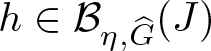
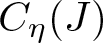

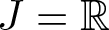


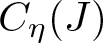
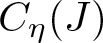

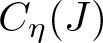


Remark 5.1. Consider Eq. (5.4) on  $\mathbb{R}^{d}$. In [Reference Coppel10, Theorem 4, p.137], it is showed that if Eq. (5.1) has a Green function
 $\widehat{G}$ satisfying
 \begin{eqnarray*}
\int_{-\infty}^{+\infty}\|\widehat{G}(t,s)\|ds\leq K,
\end{eqnarray*}
for some positive constant K, 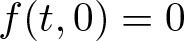 $f(t,0)=0$, f is Lipschitz on the second variable with the Lipschitz constant γ such that
 $\gamma K \lt 1$, and h is bounded, then Eq. (5.4) has a unique bounded solution xh on
 $\mathbb{R}$ which satisfies
 \begin{equation*}\sup_{t\in \mathbb{R}}|x_{h}(t)|\leq \frac{K\sup_{t\in \mathbb{R}}|h(t)|}{1-\gamma K}.\end{equation*}
The result (1) of our Lemma 5.1 extends this result to the infinite-dimensional case in which the evolution operator may not be invertible. The condition (AC) in Lemma 5.1 contains the case in which the Green function  $\widehat{G}$ is not integrable, such as, the Green function for a nonuniform ordinary dichotomy with the bound K(s) in which K is not integrable. Hence, we also extend Coppel’s result to the case for weighted bounded solution under a weaker condition.
In order to prove the result (2) in Lemma 5.1, we need the following lemma about a generalization of a projected Gronwall’s inequality.
Lemma 5.2. Suppose that  $c\geq 0$ is a constant,
 $\sigma: J\mapsto \mathbb{R}^{+}$,
 $\varphi:
J\times J\mapsto \mathbb{R}^{+}$, and
 $u:J\mapsto \mathbb{R}^{+}$ is a bounded continuous function which satisfies
 \begin{eqnarray*}
u(t)&\leq& c+\sigma(t)+\int_{J}\varphi(t,s)u(s)ds, ~~\quad t\in J,
\end{eqnarray*}
where 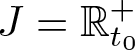 $J=\mathbb{R}_{t_{0}}^{+}$ for a constant
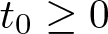 $t_{0}\geq 0$ or
 $\mathbb{R}_{t_{0}}^{-}$ for a constant
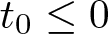 $t_{0}\leq 0$. If
 $\lim_{t\rightarrow +\infty}\sigma(t)=0$ (resp.
 $\lim_{t\rightarrow -\infty}\sigma(t)=0$), and
 $\lim_{t \rightarrow +\infty}\varphi(t,s)=0$ uniformly in s on any compact set of
 $\mathbb{R}_{t_{0}}^{+}$ (resp.
 $\lim_{t \rightarrow -\infty}\varphi(t,s)=0$ uniformly in s on any compact set of
 $ \mathbb{R}_{t_{0}}^{-}$), and
 \begin{equation*}\eta:=\sup_{t\in J}\int_{J}\varphi(t,s)ds \lt 1,\end{equation*}
then
 \begin{eqnarray*}
u(t)\leq \frac{c}{1-\eta}+v(t),
\ \forall \ t\in J,
\end{eqnarray*}
for some  $v:J\rightarrow\mathbb{R}^{+}$ which satisfies
 $\lim_{t \rightarrow +\infty}v(t)=0$ (resp.
 $\lim_{t \rightarrow -\infty}v(t)=0$).
The proofs of Lemma 5.1 and Lemma 5.2 are similar to the ones of Lemma 3.1 and Lemma 3.2, respectively. Hence, we omit them.
Acknowledgements
L. Z. (Corresponding author) was supported by NSFC #12571182, #12171337.



