Implications
A number of different mitigation strategies are being investigated for reducing methane emissions from livestock, including the development of vaccines that specifically target the methane-producing methanogens in the rumen. Previous studies on vaccinating ruminants against the rumen-dwelling organisms Streptococcus bovis and Lactobacillus spp. have demonstrated the feasibility of vaccinating animals to produce salivary antibodies that neutralise the activity of these microbes in the rumen (Shu et al., 1999, Reference Shu, Hillard, Bindon, Duan, Xu, Bird, Rowe, Oddy and Gill2000a, Reference Shu, Bir, Gill, Duan, Xu, Hiliard and Rowe2000b and 2001; Gill et al., Reference Gill, Shu and Leng2000). Owing to the complexity of the rumen microbiota and diversity of methanogens in the rumen, an effective vaccine for reducing methane emissions from ruminants will need to target a wide range of methanogens in the rumen among an even more diverse assemblage of bacteria, fungi and protozoa. This paper reviews the progress towards developing an anti-methanogen vaccine.
Introduction
A range of different strategies are being investigated to reduce methane emissions from farmed ruminants (reviewed by Martin et al., Reference Martin, Morgavi and Doreau2010; Buddle et al., Reference Buddle, Denis, Attwood, Altermann, Janssen, Ronimus, Pinares-Patiño, Muetzel and Wedlock2011; Clark, Reference Clark2013). Vaccination of ruminants against rumen methanogens has the potential to reduce methane emissions by decreasing the number or activity of methanogens in the rumen. Vaccines are generally cost-effective and using them would be particularly attractive for sheep and cattle extensively grazed on pasture in countries such as New Zealand. Ruminants produce large quantities of saliva each day. It is estimated that sheep generate 1 to 3 rumen volumes of saliva each day, whereas daily cattle produce 1.5 to 2.5 rumen volumes (Kay, Reference Kay1960; Bailey, Reference Bailey1961). As saliva is swallowed and enters the rumen, it provides an ideal vehicle to deliver anti-methanogen antibodies continuously to the rumen. Animals would be vaccinated to stimulate production of specific salivary antibodies against rumen methanogen and delivery of antibodies to the rumen should result in impairment of methanogen function and their ability to produce methane.
The development of a vaccine will require identifying proteins that are crucial for methanogen growth and survival in the rumen environment. There is considerable diversity in ruminal methanogen populations (described below), and an effective anti-methanogen vaccine will need to include vaccine antigens cross-reactive for a wide range of methanogens and that cover all dominant groups in the rumen. The rumen is considered immunologically inactive and the anti-microbial effect of antibodies binding to antigenic structures on the surface of rumen methanogens would not be enhanced via activation of complement because of the absence of the complement system in the rumen. An effective vaccine will need to induce sufficiently high levels of antibodies in the saliva of vaccinated animals to ensure that adequate levels of antibodies are available to bind to specific targets on the ruminal methanogens and impair their function. Although the entry of saliva into the rumen of vaccinated animals will provide a constant replenishment of anti-methanogen antibodies in the rumen, these antibodies will need to persist long enough within the rumen environment to interact effectively with their intended targets on methanogens. The stability of antibodies in the rumen may not be a limitation, as studies have suggested that antibodies can persist for up to 8 h in the rumen (Williams et al., Reference Williams, Rea, Popovski, Pimm, Williams, Toovey, Skillman and Wright2008). It is usually observed, and understood from theory, that inhibiting methane formation will increase ruminal propionate production at the expense of acetate and hydrogen. This is because higher ruminal hydrogen concentrations inhibit hydrogen-forming-pathways, and thus microbes forming propionate become more competitive (Janssen, Reference Janssen2010). A shift to propionate formation is energetically more valuable to the host (Ørskov and Ryle, Reference Ørskov and Ryle1990), and therefore reducing methane production using an anti-methanogen vaccine has the potential to increase animal productivity.
Overview of rumen ecology/methanogens
There is a large diversity in the methanogen populations within the rumen and this has important implications for developing a vaccine. The great majority of methanogens in the rumen belong to four orders: Methanobacteriales, Methanomicrobiales, Methanosarcinales and a newly recognised order phylogenetically close to the non-methanogenic Thermoplasmatales. This latter group has been designated Rumen Cluster C (RCC), Thermoplasmatales-affiliated lineage C (TALC), or ‘Methanoplasmatales’ (Paul et al., Reference Paul, Nonoh, Mikulski and Brune2012). Rumen-inhabiting members of the Methanobacteriales, Methanomicrobiales and Methanosarcinales have been studied for 50 years (Beijer, Reference Beijer1952; Smith and Hungate, Reference Smith and Hungate1958; Paynter and Hungate, Reference Paynter and Hungate1968), and these groups seem to be made up entirely of methanogens. The novel order, RCC/TALC, was suspected to display a methanogenic physiology, but only a few isolates have been obtained (Paul et al., Reference Paul, Nonoh, Mikulski and Brune2012; M. Morrison, personal communication; J. Jeyanathan, R. Ronimus, and P. H. Janssen, unpublished). At present, the general assumption is that methane formation is a universal trait of the RCC/TALC group.
Rumen methanogens in the order Methanobacteriales fall into three major genera: Methanobrevibacter, Methanobacterium and Methanosphaera. Methanobrevibacter is nearly always the dominant genus in the rumen, and typically is the source of over half to nearly all of the 16S rRNA gene sequences detected in rumen samples. The rumen contains perhaps eight or more species of this genus (Janssen and Kirs, Reference Janssen and Kirs2008; Jeyanathan et al., Reference Jeyanathan, Kirs, Ronimus, Hoskin and Janssen2011). Members of the species Methanobrevibacter smithii, a human gut methanogen, seem to be almost completely absent. The major species groups are affiliated with Methanobrevibacter ruminantium and Methanobrevibacter olleyae plus some as-yet unnamed species, in the M. ruminantium clade, and a second group affiliated with Methanobrevibacter gottschalkii, Methanobrevibacter thaueri, Methanobrevibacter millerae, plus some as-yet unnamed species, in the M. gottschalkii clade (Janssen and Kirs, Reference Janssen and Kirs2008). Members of other Methanobrevibacter species are much rarer. The known species of Methanobrevibacter all use hydrogen and sometimes formate to generate methane. Members of the genus Methanobacterium have a similar physiology to members of Methanobrevibacter. Methanobacterium spp. are abundant in low turnover sediments and anoxic digesters where the volatile fatty acid end-products of the primary fermentation are degraded further to methane and carbon dioxide (although not by Methanobacterium spp.). In contrast, Methanobrevibacter spp. are found in high turnover gut systems where volatile fatty acids are not degraded further. This is perhaps why Methanobacterium spp. are rare in the rumen, although the underlying basis for this niche differentiation is not yet clear. All of these hydrogenotrophic methanogens convert four moles of hydrogen to one mole of methane.
Multiple species of Methanosphaera spp. occur in the rumen (Jeyanathan et al., Reference Jeyanathan, Kirs, Ronimus, Hoskin and Janssen2011). The known species of this genus are methylotrophs that metabolise hydrogen plus methanol (and other methyl compounds) to methane (Miller and Wolin, Reference Miller and Wolin1985; Biavati et al., Reference Biavati, Vasta and Ferry1988). They produce one mole of methane from one mole of hydrogen and one mole of methanol, and their abundance in the rumen is probably limited by the availability of their methyl compound co-substrates.
Methanomicrobium spp. are members of the order Methanomicrobiales that appear to be abundant in certain rumens (Yanagita et al., Reference Yanagita, Kamagata, Kawaharasaki, Suzuki, Nakamura and Minato2000; Tajima et al., Reference Tajima, Nagamine, Matsui, Nakamura and Aminov2001; Shin et al., Reference Shin, Choi, Lim, Hong, An, Cho, Kim, An, Kang, Lee, Kim and Yun2004; Chaudhary et al., Reference Chaudhary, Sirohi and Saxena2012), although the basis of their apparent dominance over Methanobrevibacter spp. in those cases is not known. Methanomicrobium mobile is a hydrogenotrophic methanogen (Paynter and Hungate, Reference Paynter and Hungate1968) that should compete directly with Methanobrevibacter spp. Other members of the order Methanomicrobiales are detected or isolated occasionally, but are never abundant (Janssen and Kirs, Reference Janssen and Kirs2008; Kim et al., Reference Kim, Morrison and Yu2011; Chaudhary et al., Reference Chaudhary, Sirohi and Saxena2012).
Members of a third order, Methanosarcinales, also occur in the rumen, but are reported in much lower numbers except under some special circumstances when rumen turnover rates are very low (Rowe et al., Reference Rowe, Loughnan, Nolan and Leng1979). Members of the genus Methanosarcina are capable of growth with and methane formation from hydrogen, methyl compounds and acetate. They are generalists that do not seem able to compete with the more specialised methanogens in the rumen for hydrogen and methyl compounds, and rumen turnover rates are generally too high to allow them to grow as aceticlastic methanogens (Janssen, Reference Janssen2010). Methanimicrococcus spp. are more abundant than Methanosarcina spp. but are generally not a major group (Janssen and Kirs, Reference Janssen and Kirs2008). Members of this genus also appear to convert hydrogen plus methyl compounds to methane (Sprenger et al., Reference Sprenger, van Belzen, Rosenberg, Hackstein and Keltjens2000).
The little that is known about members of Methanoplasmatales indicates that they too are methylotrophic methanogens, also metabolising hydrogen plus methyl compounds to methane in the same stoichiometry as Methanosphaera (Paul et al., Reference Paul, Nonoh, Mikulski and Brune2012; J. Jeyanathan, R. Ronimus and P. H. Janssen, unpublished data). Their abundance is also likely to be limited by methyl compound availability.
Phenotypically, the abundant rumen methanogens fall into two broad groups: hydrogenotrophic methanogens and hydrogen-requiring methylotrophic methanogens. Hydrogenotrophic methanogens convert hydrogen and sometimes formate to methane, and belong to the genera Methanobrevibacter, Methanomicrobium and Methanobacterium. The hydrogen-requiring methylotrophic methanogens belong to the genera Methanosphaera, Methanimicrococcus and to the as-yet poorly studied ‘Methanoplasmatales’. Therefore, strategies targeting ruminal methanogens using a vaccine need to take into account the phylogenetic and physiological diversity over the four different orders, which will mean that there may be different target components and also antigenic variation. However, if some groups have obligate requirements for methyl compounds, they are unlikely to proliferate into vacated niche space when hydrogenotrophic methanogens are inhibited. This means that targeting only the latter could be a valid approach for a significant methane knockdown. For this strategy to be successful, it will be important to understand the range of physiologies in the Methanoplasmatales, and understand why Methanomicrobium spp. are dominant in some rumens while Methanobrevibacter are dominant in others, whereas Methanobacterium does not seem to be abundant at all (at least when the others are present).
Historical studies on vaccination against rumen-dwelling organisms
Vaccines targeting S. bovis and Lactobacillus
Overgrowth of lactic acid-producing commensal bacteria in the rumen, predominantly S. bovis and acid-tolerant Lactobacillus spp., is responsible for ruminal acidosis. This problem can occur when ruminants consume fermentable carbohydrates in sufficiently high quantities leading to non-physiological accumulation of acids in the rumen and reduction of pH (Nagaraja and Titgemeyer, Reference Nagaraja and Titgemeyer2007). Lactic acidosis is often associated with grain feeding in feedlot cattle and can adversely affect animal production, presenting a major economic loss to livestock production. In some cases the condition can be fatal (Braun et al., Reference Braun, Rihs and Schefer1992). One intervention strategy that has been explored is vaccinating animals against the major aetiological agents of acute acidosis, S. bovis and Lactobacillus spp. Successful vaccination strategies have been reported for both S. bovis (Gill et al., Reference Gill, Shu and Leng2000; Shu et al., Reference Shu, Gill, Leng and Rowe2000a and Reference Shu, Hillard, Bindon, Duan, Xu, Bird, Rowe, Oddy and Gill2000b; Shu et al., Reference Shu, Bir, Gill, Duan, Xu, Hiliard and Rowe2001) and Lactobacillus (Shu et al., Reference Shu, Gill, Hennessy, Leng, Bird and Rowe1999; Shu et al., Reference Shu, Hillard, Bindon, Duan, Xu, Bird, Rowe, Oddy and Gill2000b).
Vaccination of cattle with a mixture of S. bovis strain Sb-5 and Lactobacillus sp. strain LB-27 increased the levels of both anti-S. bovis and anti-Lactobacillus antibodies in saliva (Shu et al., Reference Shu, Gill, Hennessy, Leng, Bird and Rowe1999). Vaccinated animals had higher feed intake, reduced ruminal lactate concentrations and lower numbers of S. bovis and Lactobacillus organisms in the rumen compared with non-vaccinated control animals. In a sheep vaccine trial, animals were vaccinated with either live or formalin-killed S. bovis strain Sb-5 with or without adjuvants and then challenged by a sudden switch from forage to a grain-based diet. Higher rumen pH, lower l-lactate concentrations and less severe diarrhoea were observed in vaccinated animals compared with control animals (Gill et al., Reference Gill, Shu and Leng2000). The vaccines, in particular the live vaccine, induced significant anti-S. bovis antibody responses in serum, saliva and rumen fluid. A similar reduction in clinical manifestation of lactic acidosis was observed in a separate trial following the vaccination of sheep with a live adjuvanted S. bovis strain Sb-5 vaccine (Shu et al., Reference Shu, Gill, Leng and Rowe2000a). In each of these successful vaccine trials, reduction in the growth of S. bovis and Lactobacillus spp. occurred via production of anti-microbial antibodies in the saliva of the vaccinated animals. These antibodies entered the rumen and presumably interacted with specific targets on the surface of these organisms. The successful vaccination of ruminants against these rumen-dwelling organisms has provided encouragement that a vaccination strategy can be developed to reduce methanogen activity in the rumen, as an anti-methanogen vaccine would operate by a similar immunological mechanism, namely, induction of specific neutralising antibodies to methanogens delivered to the rumen via the saliva.
Vaccines targeting methanogens
Early studies in animals have shown that methanogens contain immunogenic components. Rabbits and mice vaccinated with methanogens produced antibodies to methanogen antigens (Conway de Macario et al., Reference Conway de Macario, Macario and Wolin1982 and Reference Conway de Macario, König, Macario and Kandler1984). An in vitro study has provided evidence that antibodies can reduce methane production by methanogens. High levels of avian (IgY) anti-methanogen antibodies were produced against cell preparations of methanogens, and addition of these antibodies to ruminal fluid in vitro resulted in a transient reduction of methane production from the cultures (Cook et al., Reference Cook, Maiti, Chaves, Benchaar, Beauchemin and McAllister2008). Similarly, antisera from sheep vaccinated with sub-cellular fractions of M. ruminantium M1 inhibited methane formation by pure cultures of that species (Wedlock et al., Reference Wedlock, Pedersen, Denis, Dey, Janssen and Buddle2010).
Vaccine trials using methanogen vaccines prepared from whole methanogen cells have been conducted. In an Australian study, vaccination of sheep with a vaccine comprising whole-cell preparations from three methanogen strains (1Y, AK-87 and ZA-10) belonging to the genus Methanobrevibacter resulted in a modest 7.7% reduction of methane emissions (g CH4/kg dry matter intake; Wright et al., Reference Wright, Kennedy, O'Neill, Toovey, Popovski, Rea, Pimm and Klein2004). A similar vaccine was used in a New Zealand study, but in that trial there was no significant reduction in methane emissions (Leslie et al., Reference Leslie, Aspin and Clark2008). The authors of the initial Australian study subsequently discovered that <20% of the different species of methanogens detected in the sheep were closely related to the methanogen strains used in the vaccine (Wright et al., Reference Wright, Toovey and Pimm2006; Williams et al., Reference Williams, Popovski, Rea, Skillman, Toovey, Northwood and Wright2009). A further vaccination trial was conducted in sheep using a more targeted vaccine based on the different species of methanogens found to be present in the animals (Williams et al., Reference Williams, Popovski, Rea, Skillman, Toovey, Northwood and Wright2009). The vaccine consisted of a mixture of five methanogens: Methanobrevibacter spp. strains 1Y and AK-87, M. millerae ZA-10, Methanomicrobium mobile BP and Methanosphaera stadtmanae MCB-3, estimated to represent more than 52% of the species present in the rumen of local sheep. Although the vaccine induced specific antibody responses in both serum and saliva, and may have changed the methanogen population in the rumen, vaccination of the animals with this whole cell-based vaccine did not reduce their methane emissions.
Vaccines targeting protozoa
Reducing or eliminating protozoa could be another option for the mitigation of methane emissions from ruminants (Hegarty, Reference Hegarty1999; Hegarty et al., Reference Hegarty, Bird, Vanselow and Woodgate2008) and this may be achieved by vaccinating animals. Methanogens associated with protozoa may shift the fermentation of the latter to produce more hydrogen and hence methane formation, and so the presence of protozoa may increase ruminal methane formation. Williams et al. (Reference Williams, Rea, Popovski, Pimm, Williams, Toovey, Skillman and Wright2008) reported a vaccination trial in sheep using either whole fixed Entodinium or mixed rumen protozoal cells. Administration of these vaccines induced specific antibody responses in blood and saliva, but there was no significant decrease in protozoal numbers following vaccination. The authors suggested that the levels of antibody may have been insufficient for the vaccine to be effective and a more targeted approach through selecting specific proteins, as antigens could induce more effective levels of antibody compared with vaccinating with the crude mixture of antigens present in the whole cell preparations. A targeted approach would also be applicable for developing an anti-methanogen vaccine.
Recent studies on the development of vaccines against methanogens
Methanogen fractions
The equivocal results obtained in the earlier trials of methanogen vaccines highlighted the difficulty of producing effective vaccines to reduce methane emissions in ruminants based on whole cell preparations. This type of vaccine is less likely to produce antibodies that are cross-reactive in a range of methanogens and thus may not result in a reduction of methanogen growth. Our strategy has been to develop vaccines on the basis of selecting appropriate antigenic targets from methanogens, in particular membrane-associated and surface-exposed proteins.
Our initial studies used sub-cellular fractions prepared from M. ruminantium M1, which is representative of one of the main groups of methanogens found in the rumen (see above). Antisera were generated in sheep against these fractions and the ability of these antisera to inhibit methanogen growth and production of methane by in vitro pure cultures of M. ruminantium M1 was determined. Antisera against two of these M. ruminantium M1 fractions, a cytoplasmic fraction and a fraction prepared by extracting cell wall-derived proteins, reduced microbial growth and methane production (Wedlock et al., Reference Wedlock, Pedersen, Denis, Dey, Janssen and Buddle2010). The results suggested that these fractions contained proteins that were immunogenic and had essential cellular functions that could be disrupted via interaction with antibodies. Analysis of the proteins in these fractions by SDS-PAGE showed they contained a large repertoire of proteins with a diverse molecular weight range. Efforts were made to identify the more strongly immunogenic proteins in the fractions and assess their suitability for a vaccine. The proteins in these fractions and also similar fractions prepared from other methanogens such as Methanobrevibacter sp. SM9 were separated by two-dimensional gel electrophoresis and immunogenic proteins identified by Western blotting with sheep antisera specifically produced against the fractions. A number of these immunogenic proteins were identified by liquid chromatography mass spectrometry methods. The majority of the proteins identified in the fractions were intracellular enzymes, for example, methyl-coenzyme M reductase (D. N. Wedlock et al., unpublished data). However, intracellular proteins would be unsuitable as vaccine antigens owing to their inaccessibility for antibody binding. A new approach for producing methanogen fractions used a method adapted from a procedure described by Francoleon et al. (Reference Francoleon, Boontheung, Yang, Kim, Ytterberg, Denny, Denny, Loo, Gunsalus and Ogorzalek Loo2009) and produced fractions that contain a higher proportion of membrane-associated proteins (D. Shu et al., unpublished observations). This involved biotinylating surface-exposed proteins on intact methanogen cell and then isolating them via their affinity to streptavidin.
Subunit vaccines
Although analysis of the proteins in immunogenic fractions may help identify potential vaccine targets, the fractions themselves would not be practical for use as a vaccine. Ruminant methanogens are difficult organisms to culture in vitro. To produce a cost-effective and practical anti-methane vaccine, it will be necessary to identify critical antigenic components of the methanogens, proteins that are crucial for methanogen growth, methanogenesis or other important cellular functions and that are cross-reactive for a range of ruminal methanogens.
The ability to sequence a genome provides access to an organism's entire antigenic repertoire. As a result, genomics has catalysed a shift in modern vaccine development towards sequence-based ‘reverse vaccinology’ approaches. These use high-throughput in silico screening of an organism to identify genes that encode proteins with the attributes of a good vaccine target. Furthermore, the increasing availability of genome sequences has led to the development of additional strategies for vaccine target discovery such as comparative genomics. Genome sequencing of rumen methanogens is providing insights into the processes that underpin their cellular biology and ecological functions, and is also helping to identify novel vaccine candidates (Attwood et al., Reference Attwood, Altermann, Kelly, Leahy, Zhang and Morrison2011). Sequence-based bioinformatic analysis of M. ruminantium M1, the first rumen methanogen to have its genome sequenced (Leahy et al., Reference Leahy, Kelly, Altermann, Ronimus, Yeoman, Pacheco, Li, Kong, McTavish, Sang, Lambie, Janssen, Dey and Attwood2010), has already led to the identification of a number of potential vaccine targets that are undergoing evaluation. To date, two of these targets look promising, and sheep have been vaccinated with a prototype vaccine comprising a mixture of these targets, as described below in the section on antibody responses to antigenic methanogen fractions and selected proteins.
Now, with several rumen methanogen genome sequencing projects either completed or underway (described in more detail by Leahy et al., 2013), comparative genomics can be used for vaccine discovery. Vaccine targets are characteristically limited to proteins exposed on the cell surface, and bioinformatic tools can be used to analyse the genome sequences of rumen methanogens to identify transmembrane helices or signal peptides that indicate a cell membrane or cell surface location. For example, M. ruminantium M1 is predicted to encode over 500 such genes. In ‘reverse vaccinology’ studies of other microbes, these genes would be expressed and tested for immunogenicity. However, rumen methanogens are difficult organisms to culture in vitro, and their slow growth, low cell yields and the absence of genetic tools for rumen methanogens make the expression of such a large number of genes difficult. As a result, like many other ‘reverse vaccinology’ studies, identification of vaccine targets for rumen methanogens has progressed to involve both a pan-genome and comparative genomics approach. This allows a comprehensive analysis of the total gene repertoire of rumen methanogens and a more refined approach to identify core vaccine targets that are conserved across all rumen methanogens or within species of methanogens. The knowledge gained from detailed metabolic profiles of rumen methanogen genomes, in combination with results from a variety of different bioinformatic analyses and thorough literature examinations, ensures a robust ranking of potential vaccine targets, maximising the likelihood of success.
The authors have established a pipeline for evaluating potential vaccine candidates predicted by bioinformatic analysis of methanogen genomes as described above or identified through empirical procedures such as Western blot analysis performed on methanogen fractions. Potential vaccine antigens are evaluated by producing them as recombinant proteins in Escherichia coli, expressing either the entire protein or selected extracellular domains based on bioinformatic predictions of protein topology. For some proteins, potential immunogenic epitopes within the predicted extracellular domains are identified for synthesis of short peptides. Sheep are vaccinated with candidate proteins or peptides, and the ability of antisera to inhibit methanogen growth and production of methane in vitro pure cultures of methanogens is determined (Wedlock et al., Reference Wedlock, Pedersen, Denis, Dey, Janssen and Buddle2010). To date, 30 potential vaccine candidates have been tested and this systematic approach to selecting and testing potential vaccine antigens has led to the identification of promising specific vaccine targets (GT2 and SecE, described further below). Antibodies generated against these targets inhibited methanogen growth and production of methane in in vitro cultures of methanogens.
Adjuvants and route of vaccination
A critical requirement for an effective vaccination strategy based on delivery of anti-methanogen antibodies to the rumen via saliva will be the induction of sufficiently high levels of salivary antibodies to reduce methanogen activity in the rumen. Although live vaccines can induce strong immune responses when administered alone, adjuvants are required to boost the immune responses to subunit vaccine antigens such as recombinant proteins (Aucouturier et al., Reference Aucouturier, Dupuis and Ganne2001; Wedlock et al., Reference Wedlock, Keen, Aldwell, Andersen and Buddle2002; Thomson and Staats, Reference Thomson and Staats2011). An effective anti-methanogen vaccine based on a few selected proteins will require formulation of the antigens with an adjuvant system that promotes the production of high levels of salivary antibody.
The influence of adjuvant on antibody response to vaccine antigens has been illustrated in the studies on vaccination of sheep and cattle against S. bovis and Lactobacillus spp. Antibody responses to S. bovis in sheep vaccinated with S. bovis prepared with practical adjuvants, Freund's incomplete adjuvant (FIA), Quil A, dextran sulphate, Alum or Gerbu were compared with responses to the S. bovis formulated with Freund's complete adjuvant (FCA), a very potent adjuvant that produces unacceptable vaccination site reactions (Shu et al., Reference Shu, Bir, Gill, Duan, Xu, Hiliard and Rowe2001). Although the highest serum and salivary antibody responses were induced by FCA, both FIA and QuilA were effective at inducing high levels of antibody responses to S. bovis and could be used in a practical vaccine (Shu et al., Reference Shu, Bir, Gill, Duan, Xu, Hiliard and Rowe2001). In cattle trials, the adjuvants FCA, QuilA, alum and dextran sulphate combined with mineral oil were all effective at inducing high levels of long-lasting serum anti-S. bovis and anti-Lactobacillus IgG concentrations, although the authors concluded that dextran may have been the most effective adjuvant (Shu et al., Reference Shu, Hillard, Bindon, Duan, Xu, Bird, Rowe, Oddy and Gill2000b).
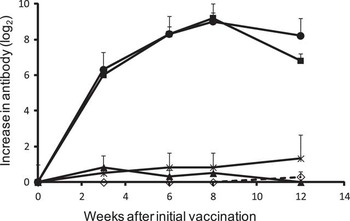
We have tested different adjuvants in sheep using the model antigen tetanus toxoid (TT). Adjuvants that promoted strong antibody responses to TT would then be tested with methanogen fractions and ultimately with more refined sub-unit-type vaccines. The strongest systemic antibody responses generated against TT were observed in animals subcutaneously vaccinated with TT mixed with saponin (a compound from quillaja bark that acts as a surfactant and used in the vaccine at 5 mg/dose). Weaker systemic antibody responses were observed in animals vaccinated with TT and the adjuvants alum (aluminium hydroxide gel, Sigma-Aldrich, St-Louis, MO, USA), an oil-in-water adjuvant, Emulsigen (MVP laboratories, Omaha, NE, USA) or a mixture of Emulsigen and muramyl dipeptide microparticles (Innate Immunotherapeutics, Auckland, New Zealand). The efficacy of saponin was confirmed in a second trial in sheep, and both saponin and Montanide ISA61VG (Seppic) promoted strong antibody responses to TT in blood (Figure 1) and saliva (data not shown).
Mean (±s.e.) serum IgG responses in sheep (n = 6) vaccinated subcutaneously or by a mucosal route (intranasal) with the model antigen tetanus toxoid (TT) formulated with different adjuvants. ◊, Non-vaccinated; ▪, TT/saponin (5 mg/dose; subcutaneous); ●, TT/Montanide ISA 61 VG (60% w/w; subcutaneous);  $$$$
, TT/Montanide IMS 1312 (50% w/w; intranasal); ▴, TT/Montanide Gel 01 PR (20% w/w; intranasal). Sheep were vaccinated at 0, 3 and 6 weeks. Each vaccine contained 0.1 mg TT formulated with adjuvant. Antibody responses were determined by ELISA using twofold doubling dilutions of sera with an initial dilution of 1 : 200.

Although the parenteral route of vaccination would be practical for use in livestock, oral vaccination may be an alternative route of vaccine delivery compatible with standard animal husbandry practices such as drenching. Mucosal delivery of vaccine could potentially induce higher levels of salivary antibody compared with parenteral vaccination. In the same adjuvant trial, sheep were administered TT by a mucosal route of vaccination, using adjuvants suitable for intranasal delivery of antigens, Montanide IMS 1312 and Montanide Gel 01. Administration of these TT and adjuvant preparations by instillation into the nasal nares of the sheep produced minimal antibody responses compared with delivery of vaccines by the subcutaneous route (Figure 1). However, intranasal vaccination in sheep may not be an optimal mucosal route of delivery of vaccines, as nasal delivery of a non-infective ISCOMATRIX® influenza vaccine did not induce primary immune responses in the lymph nodes draining the nasal cavity, suggesting that local immune responses in the lymph nodes draining the nasal cavity are relatively weak (Vujanic et al., Reference Vujanic, Sutton, Snibson, Yen and Scheerlinck2012). Other mucosal routes such as intra-pulmonary may be more effective. Different routes of vaccination of sheep with S. bovis vaccine were compared for effectiveness in reducing lactic acidosis in sheep (Shu et al., Reference Shu, Gill, Leng and Rowe2000a). Animals were primed by either the intramuscular (IM) or intraperitoneal (IP) routes and boosted by vaccination via either IM or an oral route. The authors concluded that priming by the IM route was more effective at reducing the risk of lactic acidosis compared with administering the initial vaccination by the intranasal route.
Antibody responses to antigenic methanogen fractions and selected proteins
The antibody responses to methanogen antigens have been evaluated in sheep using crude antigenic fractions and selected antigens. In the first trial, a group of sheep (n = 8) was vaccinated subcutaneously with the cytoplasmic fraction from M. ruminantium M1 mixed with saponin, a second group (n = 8) was vaccinated with the cell wall-derived protein fraction from M. ruminantium M1 in saponin, whereas a third (control) group (n = 8) was unvaccinated. Vaccinated sheep produced strong systemic (1000-fold increase in antibody titre post-vaccination compared with pre-vaccination) antibody responses to the complex mixture of proteins contained in these crude preparations (N. Wedlock, unpublished data). Vaccination with these antigens also promoted salivary antibody responses, although antibody titres in saliva were lower than corresponding antibody titres in sera. An encouraging observation was that all the vaccinated animals responded to the vaccine and vaccination induced antibody responses to the fractions in both blood and saliva.
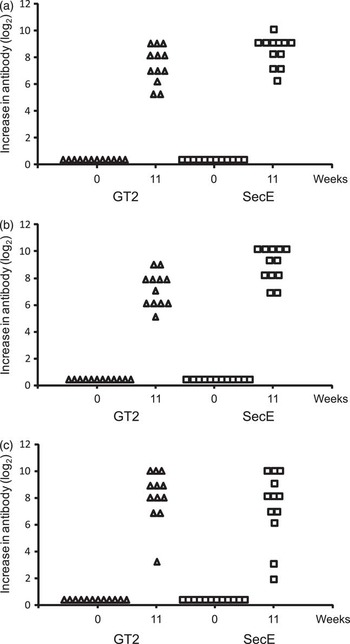
In a second recent trial, sheep were vaccinated with a more refined vaccine, which contained two different antigenic targets. These surface-associated proteins had been identified as potential vaccine antigens by bioinformatic analysis of methanogen genomes. For one of the targets, a cell wall biosynthesis glycosyl transferase from M. ruminantium M1 (GT2, mru_2175), the extracellular domain of the protein, was expressed as a recombinant protein in E. coli, whereas for the other target (preprotein translocase subunit SecE) synthetic peptides corresponding to the predicted extracellular domain were produced. The vaccine contained a mixture of seven different peptides; each peptide synthesised using the amino acid sequences of the predicted extracellular domain of SecE from M. ruminantium M1 (mru_0482) and six other methanogen species. Sheep (n = 12) were vaccinated intramuscularly with mixture of the vaccine antigens combined with saponin (5 mg/dose) and revaccinated twice 3 weeks apart. A control group (n = 12) was unvaccinated. Vaccination with the prototype vaccine produced specific antibody responses to both GT2 and SecE in all the vaccinated animals (Figure 2). In addition, antibodies to GT2 were also detected in the faeces from some of the animals following vaccination.
IgG responses in sheep (n = 12) vaccinated with two different candidate antigens (GT2 (recombinant protein) and SecE (a mixture of seven KLH-conjugated peptides)). (a) serum; (b) saliva; (c) rumen fluid. Antibody responses are shown pre-vaccination and at 11 weeks after the initial vaccination. Each data point represents the antibody titre of an animal. Sheep were vaccinated intramuscularly with 0.10 mg protein and 0.35 mg peptide (0.05 mg of each peptide) mixed with saponin, at 0, 3 and 6 weeks. Blood, saliva and rumen content were collected and antibody levels determined by ELISA using twofold doubling dilutions with an initial dilution of 1 : 200 for serum and 1 : 2 for saliva and rumen contents.

A second requirement for the successful delivery of neutralising antibody via the saliva is that the antibody needs to persist in the rumen environment long enough to bind to the protein targets on the surface of the methanogens and interfere with the function of the proteins to impair methane production. A recent study has shown that antibodies generated against rumen protozoa can remain active for up to 8 h (Williams et al., Reference Williams, Rea, Popovski, Pimm, Williams, Toovey, Skillman and Wright2008). However, little is known about the resistance of different classes of antibodies, such as IgG and IgA, to degradation by proteases and peptidases present in the hydrolytic environment of the rumen and how long these antibodies will remain biologically active. Current studies are aimed towards gaining a better understanding of longevity of different classes of antibody in the rumen, and whether a vaccine will need to preferentially promote production of a particular class of antibody such as IgA.
Future prospects
Methanogen proteins have been shown to be immunogenic in ruminants, and sheep vaccinated with selected proteins produce specific systemic and salivary antibodies to these proteins. A successful vaccine will need to be effective against all the major groups of methanogens in the rumen, and there remain considerable challenges to producing a successful vaccine for reducing the activity of ruminal methanogens to achieve a reduction in methane emissions. Knowledge of the genomes of an increasing range of rumen methanogens will be invaluable for identifying universal targets for a vaccine. The efficacy of prototype vaccines will need to be evaluated in animal vaccination trials, most likely in sheep and then confirmed in cattle. The effect of vaccination on ruminal methanogens can be determined by microbial profiling (Kittelmann et al., Reference Kittelmann, Seedorf, Walters, Clemente, Knight, Gordon and Janssen2013) and methane emissions measured in respiration chambers (Pinares-Patino et al., Reference Pinares-Patino, Lassey, Martin, Molano, Fernandez, MacLean, Sandoval, Luo and Clark2011). Early vaccination trials in sheep to reduce methane emissions have used animals that were 2 years of age or older, and the more recent vaccination trials in sheep described in this paper were conducted on animals 3 to 5 months old. These sheep would be expected to have an established population of methanogens in their rumen. Vaccination of neonates may be more efficacious than vaccinating adults, as antibody delivered into the rumen of young animals via the saliva could interfere with the establishment of methanogens in the rumen. Reducing methanogen activity by a vaccination strategy will need to take into consideration possible accumulation of H2 in the rumen. It may be necessary to develop strategies such as supplementation with exogenous H2-utilising acetogenic bacteria if endogenous homoacetogens do not utilise the higher levels of H2. However, the rumen fermentation may switch to one that produces less H2 and is less affected by H2 accumulation (Janssen, Reference Janssen2010). In common with a number of other methane mitigation strategies, the effect of reducing the activity of methanogens through a vaccination strategy on animal productivity will need careful evaluation.
Acknowledgements
Excellent technical support was provided by Justine Jacobs, Gina Petersen, Tania Wilson and Debjit Dey. The studies on methane mitigation in New Zealand were funded under contract by the Pastoral Greenhouse Gas Research Consortium (PGgRc) and through funding from New Zealand Agricultural Greenhouse Gases Research Centre and from the Ministry for Primary Industries as part of its support for the Global Research Alliance on Agricultural Greenhouse Gases (GRA). The Montanide adjuvants, Montanide ISA 61VG and Gel 01, were a kind gift from Seppic, and tetanus toxoid was kindly supplied by Pfizer.
This paper was published as part of a supplement to animal, publication of which was supported by the Greenhouse Gases & Animal Agriculture Conference 2013. The papers included in this supplement were invited by the Guest Editors and have undergone the standard journal formal review process. They may be cited. The Guest Editors appointed to this supplement are R. J. Dewhurst, D. R. Chadwick, E. Charmley, N. M. Holden, D. A. Kenny, G. Lanigan, D. Moran, C. J. Newbold, P. O'Kiely, and T. Yan. The Guest Editors declare no conflict of interest.