Introduction
Free and unimpaired decision-making is thought to be a necessary condition for self-governance and autonomy, concepts which are particularly important to people diagnosed with psychotic disorders such as schizophrenia (Stovell et al., Reference Stovell, Wearden, Morrison and Hutton2016), and are regarded as integral to their definitions of recovery (Law and Morrison, Reference Law and Morrison2014). However recent meta-analyses have confirmed those receiving inpatient care are often judged to lack capacity to make their own decisions about treatment (Wang et al., Reference Wang, Wang, Ungvari, Ng, Wu, Wang and Xiang2017), and that they generally make decisions based on less evidence than non-clinical individuals or people with non-psychotic mental health problems (Dudley et al., Reference Dudley, Taylor, Wickham and Hutton2016). Effective interventions to support their decision-making are required [Larkin and Hutton, Reference Larkin and Hutton2017; National Institute for Health and Social Care Excellence (NICE), 2018], however, to develop these, we first need to understand what factors help or hinder it.
To aid this, Larkin and Hutton recently conducted a systematic review and meta-analysis of 23 studies, and found that lower treatment decision-making capacity (‘capacity’) in psychosis is associated with greater psychotic symptom severity, fewer years of education, and lower verbal cognitive functioning, as well as lower insight, metacognitive ability, and anxiety (Larkin and Hutton, Reference Larkin and Hutton2017). They also found preliminary evidence that provision of inpatient care (including antipsychotic treatment), information-simplification, shared decision-making and metacognitive training were each associated with improvements in capacity over time. However, to develop a comprehensive theory of impaired capacity in psychosis, we need to establish what factors are specifically related to treatment decision-making in this group, and which affect their ability to make decisions generally. This, and the identification of other potential moderators of capacity requires examination of the broader literature on decision-making in psychosis.
Decision-making is a complex process, and depends on the adequate operation of various cognitive, emotional and social factors. It is influenced by working memory capacity, intelligence, and information-processing heuristics, as well as external factors such as the quality of available decision-relevant information. According to Damasio's ‘somatic marker hypothesis’, it also depends on a preserved ability to encode, store and retrieve emotion-stimuli associations (Damasio et al., Reference Damasio, Everitt and Bishop1996). This is thought to enable a person to quickly learn whether a particular stimulus involves risk or reward, and reactivation of these associations, when faced with similar stimuli, serves to implicitly influence conscious deliberation and choice. Disruption to these cognitive-emotional processes can be measured using the Iowa Gambling Task (IGT), with poor performance being evident in those who perform normally on other tests of intellectual and cognitive functioning yet have poor ‘real-world’ decision-making (Bechara et al., Reference Bechara, Damasio, Damasio and Anderson1994). For this reason, it is also regarded as a useful laboratory measure of practical decision-making ability (Buelow and Suhr, Reference Buelow and Suhr2009; Must et al., Reference Must, Horvath, Nemeth and Janka2013), and the performance of people with psychosis on this task has now been studied extensively.
The IGT involves presenting participants with four decks of cards, who are then informed they will win or lose varying amounts of money with each card they choose and that their goal is to use their selections to win as much money as possible. Two decks provide small rewards and small losses but provide a greater overall reward if selected frequently, whereas the remaining two involve higher reward and higher losses, and incur an overall loss if favoured. Those who learn this and adjust their decision-making appropriately are likely to win more money than those who do not. Drawing on Buseymeyer and Stout (Reference Buseymeyer and Stout2002) expectancy-valence (EV) model, Yechiam et al. found that poor performance on the IGT may involve difficulties in paying appropriate attention to either rewards or losses, difficulty learning or remembering past decision outcomes, or erratic responding (e.g. poor task engagement), depending on the underlying disorder (Buseymeyer and Stout, Reference Buseymeyer and Stout2002; Yechiam et al., Reference Yechiam, Busemeyer, Stout and Bechara2005). Unlike assessments of capacity, IGT performance does not depend on structured or unstructured clinical judgement, making it less susceptible to variance in clinician beliefs about illness and treatment, or variance in the working alliance between patients and clinicians. On the other hand, both IGT performance and capacity judgements depend on a person's general ability to appreciate, understand and reason with decision-relevant information and both require a person to form and recall memories of the cognitive and emotional consequences of past decisions. In psychosis, having treatment decision-making capacity may often depend upon a preserved ability to form and recall memories of the costs and benefits of antipsychotic medication or inpatient care.
There are now dozens of studies of IGT performance in non-affective psychosis (‘psychosis’), however many are relatively small and therefore lack statistical power to detect clinically or theoretically relevant relationships. Although the IGT does not measure all processes involved in decision-making or all types of decision-making, using meta-analysis to quantify the performance of people with psychosis on this task, and the factors which influence it, could overcome the power limitations of individual studies and deepen our understanding of what could be done to support their decision-making. Although Mukherjee and Kable (Reference Mukherjee and Kable2014) performed a wide-ranging meta-analysis of IGT performance across various mental health conditions, only 14 psychosis samples were included, and no analysis of the correlates of their decision-making was performed (Mukherjee and Kable, Reference Mukherjee and Kable2014). The aim of the current review and meta-analysis is therefore to provide a definitive assessment of IGT decision-making performance in psychosis and the factors that may influence it, taking into account study and outcome quality.
Methods
Protocol registration
The review protocol was registered in advance with the International Prospective Register of Systematic Reviews (PROSPERO), registration number CRD42016041241. Subsequent modifications are detailed in the online supplement.
Search strategy
Electronic databases (PsychINFO, MEDLINE, EMBASE and Web of Science) were searched in June 2016 and March 2018 using the search terms (psychosis OR schizo*) AND (decision making) AND (gambling task OR risk* task OR gains task). Title lists from both searches were screened, and the full-text reports of remaining articles were reviewed. The reference lists of relevant review articles were hand-searched. Two independent reviewers, overseen by a third, conducted the searches in parallel.
Study selection and inclusion
Published and unpublished English-language studies were eligible for inclusion if they reported usable cross-sectional or longitudinal data on the relationship between psychosis and decision-making as measured by the Iowa or Cambridge Gambling Tasks (CGT) (Bechara et al., Reference Bechara, Damasio, Damasio and Anderson1994; Rogers et al., Reference Rogers, Everitt, Baldacchino, Blackshaw, Swainson, Wynne, Baker, Hunter, Carthy, Booker, London, Deakin, Sahakian and Robbins1999), and if at least 50% participants in at least one group in the study had a diagnosis of non-affective psychosis (i.e. schizophrenia or schizophrenia-spectrum disorder, but not bipolar disorder).
Outcomes
We used IGT or CGT performance data to measure decision-making ability. The IGT, as described above, requires participants to complete five blocks of 20 trials, during which they are asked to maximise their financial gain. Both the IGT and CGT incorporate similar points-based or financial rewards and similar probabilistic learning parameters, and both require participants to consider the likelihood and magnitude of reward v. punishment. We compared the decision-making performance of participants with psychosis to healthy individuals and individuals with non-psychotic mental health problems. We examined group differences in performance according to antipsychotic type (second v. the first generation), and group differences in the three parameters of the EV model of IGT performance (attention to gains, memory for recent outcomes, choice-consistency). We also examined the integrity of sample matching on IQ, gender and years of education, and within-group associations between decision-making and positive symptoms, negative symptoms, general symptoms, overall symptoms, working memory, executive functioning, IQ, years of education, antipsychotic dose (chlorpromazine equivalents), emotion (anxiety and depression), social outcomes and awareness of decision-making.
Meta-regression
Meta-regression was used to investigate whether group differences in decision-making performance were moderated by type of outcome extracted (IGT v. CGT; position in data extraction hierarchy), stage of illness (early psychosis v. chronic), proportion with schizophrenia, overall psychotic symptom severity, dose and type of antipsychotic, and group differences in depression, years of education, IQ and gender.
Data extraction
We decided in advance that the most representative measure of ‘good’ decision making on the IGT was the number of selections from advantageous decks. Data from the final three blocks (trials 41–100) were preferred, given evidence that blocks 1 and 2 should be regarded as a practice phase (Matsuzawa et al., Reference Matsuzawa, Shirayama, Niitsu, Hashimoto and Iyo2015), however, if only overall data on blocks 1–5 were reported, then we used this. When only mean scores for the individual advantageous decks were reported, we calculated the mean of means. If this data were not reported, we used the ‘net score’, which is the number of selections from disadvantageous blocks subtracted from the number of selections from advantageous blocks. If no card choice information was provided, overall monetary gain or points accumulated throughout the task were used.
For meta-analyses of group differences, mean scores and standard deviations (s.d.) per group were extracted. Where there were two or more similar groups (e.g. psychosis non-smokers and psychosis smokers), these were combined using the Cochrane Handbook recommended procedures (Higgins and Green, Reference Higgins and Green2011). Where multiple mean scores were reported for one group (i.e. mean scores per block in the IGT) a simple average was computed. When only graphical representations of mean scores were provided, these were measured using Digitizeit software (http://www.digitizeit.de). Standard errors, confidence intervals (CI) or p values were converted to s.d. or effect sizes where required, again using Cochrane Handbook equations. Overall symptom ratings were converted to PANSS total scores where appropriate, using conversion charts (Leucht et al., Reference Leucht, Rothe, Davis and Engel2013; Samara et al., Reference Samara, Engel, Millier, Kandenwein, Toumi and Leucht2014). Correlation coefficients were extracted or computed from available data.
Assessment of study and outcome quality
In line with previous meta-analyses of observational studies (Taylor et al., Reference Taylor, Hutton and Wood2015; Dudley et al., Reference Dudley, Taylor, Wickham and Hutton2016; Larkin and Hutton, Reference Larkin and Hutton2017), an adapted version of the Agency for Healthcare Research and Quality (AHRQ) tool was used to assess study quality. This measures a number of quality domains, including participant selection, matching of groups and use of a priori power calculations. Two researchers completed the assessment blind to overall results, and discrepancies were arbitrated by a third. The overall quality of each outcome, whether high, moderate, low or very low, was assessed using an adapted version of the Grading of Recommendations Assessment, Development and Evaluation (GRADE) approach (Guyatt et al., Reference Guyatt, Oxman, Vist, Kunz, Falck-Ytter, Alonso-Coello and Schünemann2008). For univariate moderator analyses, we based our quality assessments on precision and risk of ecological bias, and for multivariate analyses, we also assessed whether the conditional effect (or non-effect) of a moderator was likely to be an artefact of selective reporting of another variable.
Analysis
All analyses were conducted using Comprehensive Meta-Analysis Version 3.3.07, when at least three studies reported usable data. A DerSimonian and Laird (Reference DerSimonian and Laird1986) random-effects meta-analysis model was used (DerSimonian and Laird, Reference DerSimonian and Laird1986), since fixed-effects assumptions were unlikely to hold (Borenstein et al., Reference Borenstein, Hedges, Higgins and Rothstein2009; Riley et al., Reference Riley, Higgins and Deeks2011). For group differences and within-group correlations, pooled Hedges's g and Pearson's r were computed, respectively, along with 95% CI and p values. Both were interpreted in line with Cohen's (Reference Cohen1988) established conventions (Hedges's g; small = 0.2, moderate = 0.5, large = 0.8; Pearson's r; small = 0.10, moderate = 0.30, large = 0.50) (Cohen, Reference Cohen1988). p Values less than 0.05 were interpreted as significant, but estimates close to this were downgraded for imprecision. Heterogeneity was assessed using the I 2 statistic, and compared with thresholds specified in the Cochrane Handbook (<40% low; 75–100% considerable) (Higgins and Green, Reference Higgins and Green2011). For analyses with at least 10 studies, the risk of publication bias was assessed using funnel plots, Egger's test (Egger et al., Reference Egger, Davey Smith, Schneider and Minder1997) and the random-effects trim-and-fill procedure (Duval et al., Reference Duval, Tweedie, Taylor and Tweedie2000).
Results
Study selection
As shown in the PRISMA diagram (Fig. 1), the search returned 7072 results of which 6970 were excluded on the basis of title or abstract. The full-text papers of 102 articles were examined, and a further 52 studies were excluded, mainly because an eligible decision-making task was not used. The remaining 50 studies provided data for 51 samples. Of these, 47 samples from 46 studies were included in the meta-analysis of differences in decision making performance between people with psychosis and healthy individuals. The rest were included in at least one other meta-analysis or reported individually. A table of included study characteristics and a list of excluded studies are provided in the online supplement.
PRISMA flow-chart detailing study selection.

Quality assessment
In most studies, diagnoses were confirmed using DSM-IV (k = 44) or ICD-10 criteria (k = 3), with only three unclear or relying on chart diagnoses alone. There were relatively few instances of missing data. Although studies often reported attempting to match groups on demographic variables, participants with psychosis had significantly lower IQ than healthy individuals (k = 31, −7.39 IQ points, 95% CI −9.23 to −5.55), had spent less time in education (k = 38, −1.6 years, 95% CI −1.98 to −1.25) and were 13% more likely to be male (k = 39, relative risk of being male = 1.13, 95% CI 1.05–1.21). Few studies provided pre-specified power calculations to justify their sample size, meaning there was a risk of results influencing decisions about recruitment discontinuation. Many used convenience samples, but few (k = 2) used masked raters (Whitney et al., Reference Whitney, Fastenau, Evans and Lysaker2004; Crespo-Facorro et al., Reference Crespo-Facorro, Rodríguez-Sánchez, Pérez-Iglesias, Mata, Ayesa, Ramirez-Bonilla, Martínez-Garcia and Vázquez-Barquero2009). For these reasons, all meta-analytical estimates were downgraded for quality (see online supplement for AHRQ assessments and Table 1 for GRADE ratings).
Results of meta-analyses

Statistically significant findings (p<0.05) are highlighted in bold.
CI, Confidence interval; GRADE, Grading of Recommendations, Assessment, Development, and Evaluations; g, Hedges's g; WMD, Weighted mean difference; RR, Relative risk; RD, Risk difference; FGA, First-generation antipsychotic; SGA, Second-generation antipsychotic.
Meta-analytical outcomes
Decision-making performance: psychosis v. healthy individuals
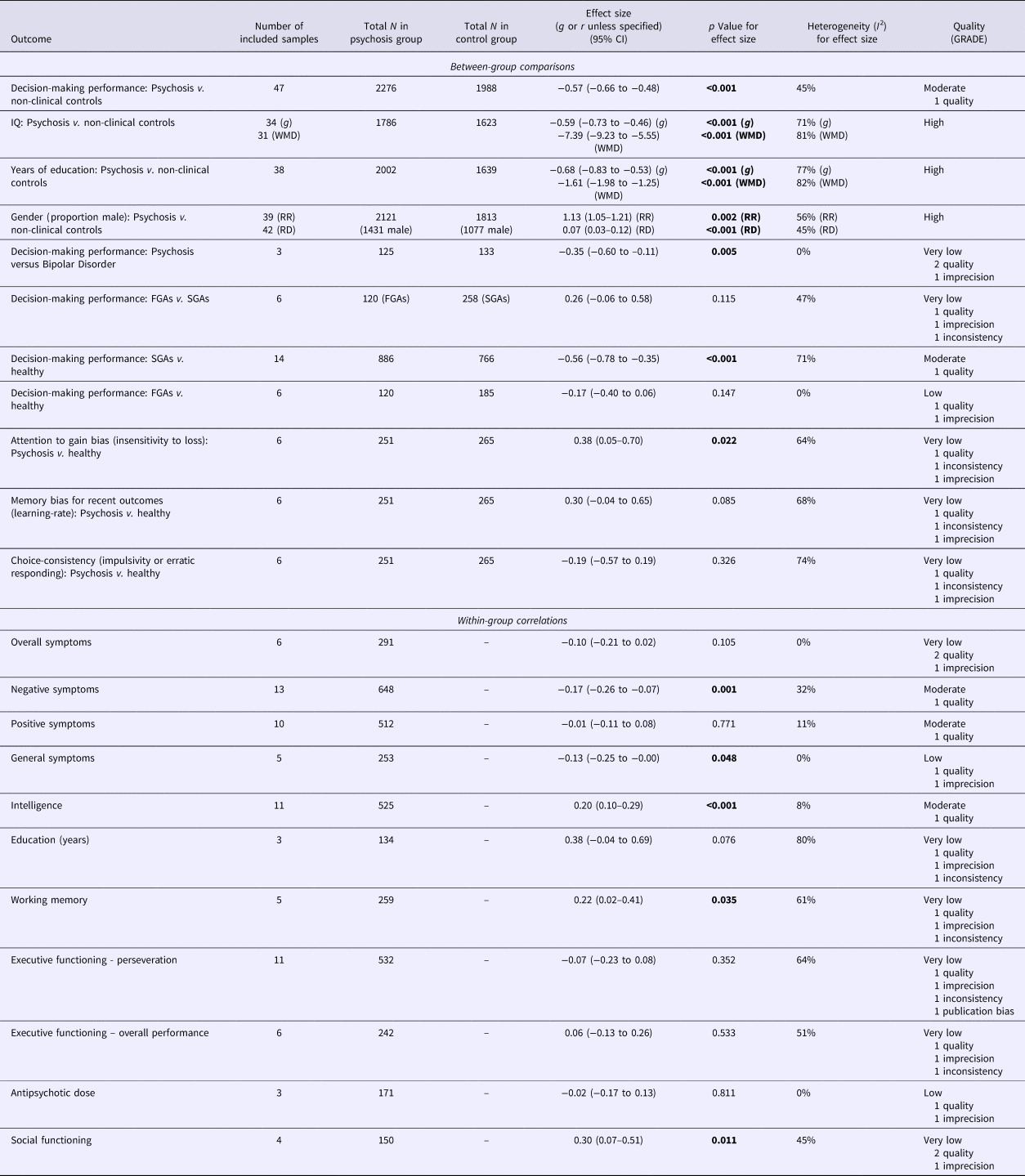
A meta-analysis of 47 comparisons from 46 studies (N psychosis = 2276, N non-clinical = 1988; Total N = 4264) found that people with psychosis had moderately impaired decision-making ability compared with non-clinical individuals (g = −0.57, 95% CI −0.66 to −0.48; I 2 45%; moderate quality; Table 1; Fig. 2). Funnel plots suggested a minor risk of publication bias, but Egger's test was not significant (B = 0.10, s.e. = 0.57, p = 0.867) and trim-and-fill analysis did not change the estimate (adjusted g = −0.53, 95% CI −0.62 to −0.44).
Decision-making performance: psychosis v. other clinical groups
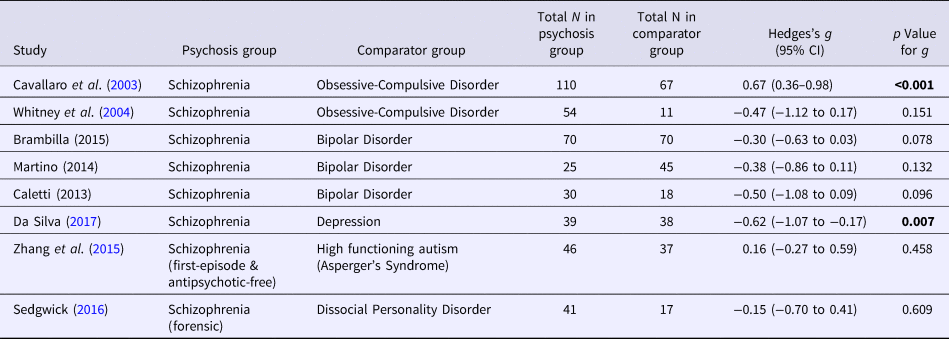
Eight studies compared people with psychosis to other clinical groups (Table 2). Very low-quality evidence suggested they had lower decision-making performance than people with bipolar disorder (k = 3, N = 258, g = −0.35, 95% CI −0.60 to −0.11, I 2 0%). Very low-quality evidence from single studies suggested their decision-making performance was significantly lower than people with depression (Da Silva, Reference Da Silva2017), and similar to people diagnosed with either high-functioning autism (Zhang et al., Reference Zhang, Tang, Dong, Ji, Tao, Liang, Chen, Wu and Wang2015) or dissocial personality disorder (Sedgwick, Reference Sedgwick2016). Their performance compared with people with obsessive-compulsive disorder was non-significantly lower in one study (Whitney et al., Reference Whitney, Fastenau, Evans and Lysaker2004), but significantly better in another (Cavallaro et al., Reference Cavallaro, Cavedini, Mistretta, Bassi, Angelone, Ubbiali and Bellodi2003).
Decision-making performance: Psychosis v. healthy individuals.

Decision-making performance: Psychosis v. non-psychosis mental health problems in individual studies

CI, Confidence interval; g, Hedges's g.
EV model parameters
Six studies reported EV parameter data. Participants with psychosis were significantly more likely than healthy individuals to value rewards over losses (k = 6, N = 516, g = 0.38, 95% CI 0.05–0.70, I 2 64%). There was trend-level evidence that they were more likely to base decisions on recent rather than past outcomes (k = 6, N = 516, g = 0.30, 95% CI −0.04 to 0.65, I 2 68%) but no evidence that they responded more erratically (k = 6, N = 516, g = −0.19, 95% CI −0.57 to 0.19, I 2 74%). All estimates were very low quality.
Task type & outcome
Decision-making performance did not differ according to whether the IGT or CGT was used (k = 47, Q = 0.00, p = 0.999, R 2 = 0%; moderate), however it did vary according to the type of data selected (k = 47, Q = 20.86, p < 0.001, R 2 = 77%; high). Use of block 3–5 or block 1–5 data did not affect estimates, but net-derived estimates appeared to be significantly larger than non-net. However, because the moderator analysis was unaffected by replacing all non-net estimates with net estimates but retaining their original categorisation (i.e. new net estimates stayed in their original non-net grouping) (k = 46, Q = 21.55, p < 0.001, R 2 = 78%), this was unlikely to explain these results. The moderator analysis also remained significant after removing studies reporting the least or second-least preferred data (k = 41, Q = 10.78, p = 0.013, R 2 = 58%).
Stage of psychosis & proportion diagnosed with schizophrenia
No association was found between decision-making performance and either the proportion of participants diagnosed with schizophrenia (k = 43, Q = 1.64, p = 0.200, R 2 = 18%; low) or stage of illness (early psychosis v. chronic) (k = 47, Q = 0.56, p = 0.459, R 2 = 5%; moderate), although only four early-psychosis samples were found.
Psychotic symptoms
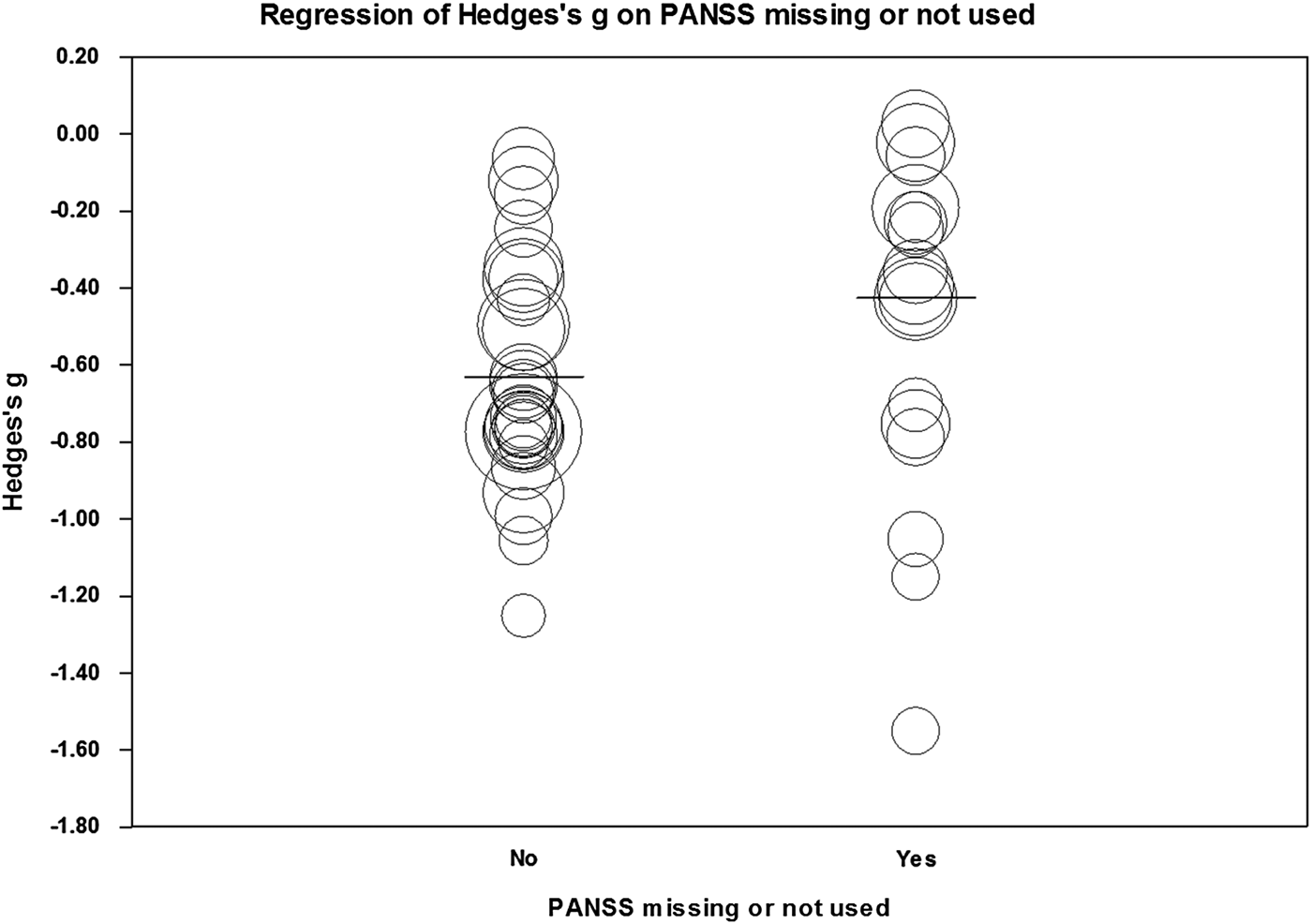
No association between overall psychotic symptoms and decision-making was observed (k = 6, r = −0.10, 95% CI −0.21 to 0.02, I 2 = 0%; very low quality), and PANSS total scores did not moderate group differences in decision-making, whether entered as a continuous (k = 29, Q = 0.01, p = 0.925, R 2 = 3%; moderate) or categorical variable, using empirically-derived thresholds for symptom severity (Leucht et al., Reference Leucht, Kane, Kissling, Hamann, Etschel and Engel2005) (k = 30, Q = 0.14, p = 0.932, R 2 = 0%; moderate). Studies not reporting overall symptom data reported significantly smaller decision-making impairments (k = 47, Q = 5.81, p = 0.016, R 2 = 43%; high; Fig. 3). The estimates for studies providing and not providing this data were −0.65 (k = 30, 95% −0.72, −0.58), and −0.41 (k = 17, 95% CI −0.52 to −0.29), respectively.
Reporting of PANSS total scores and estimates of decision-making impairment in psychosis: Meta-regression bubble-plot.

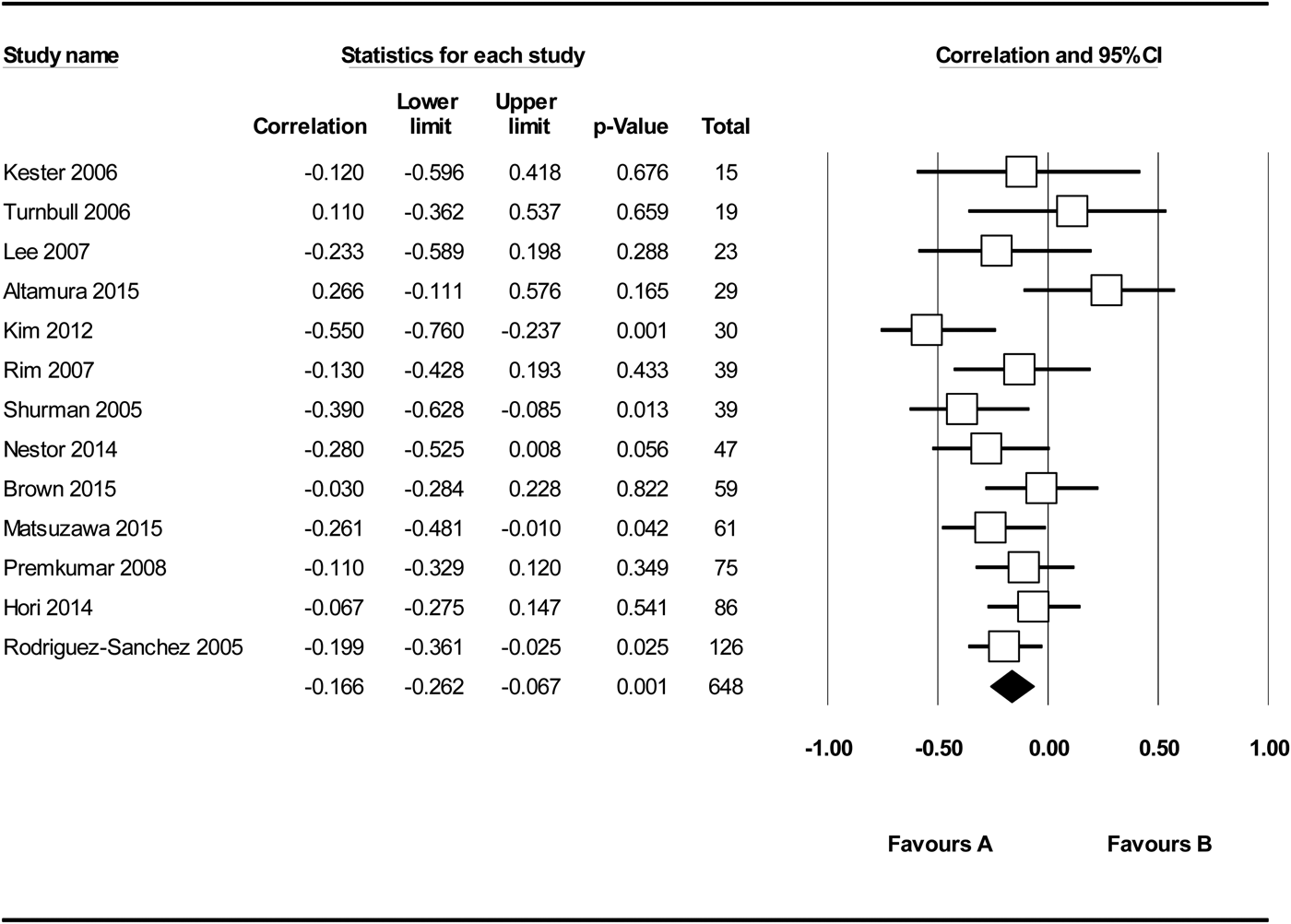
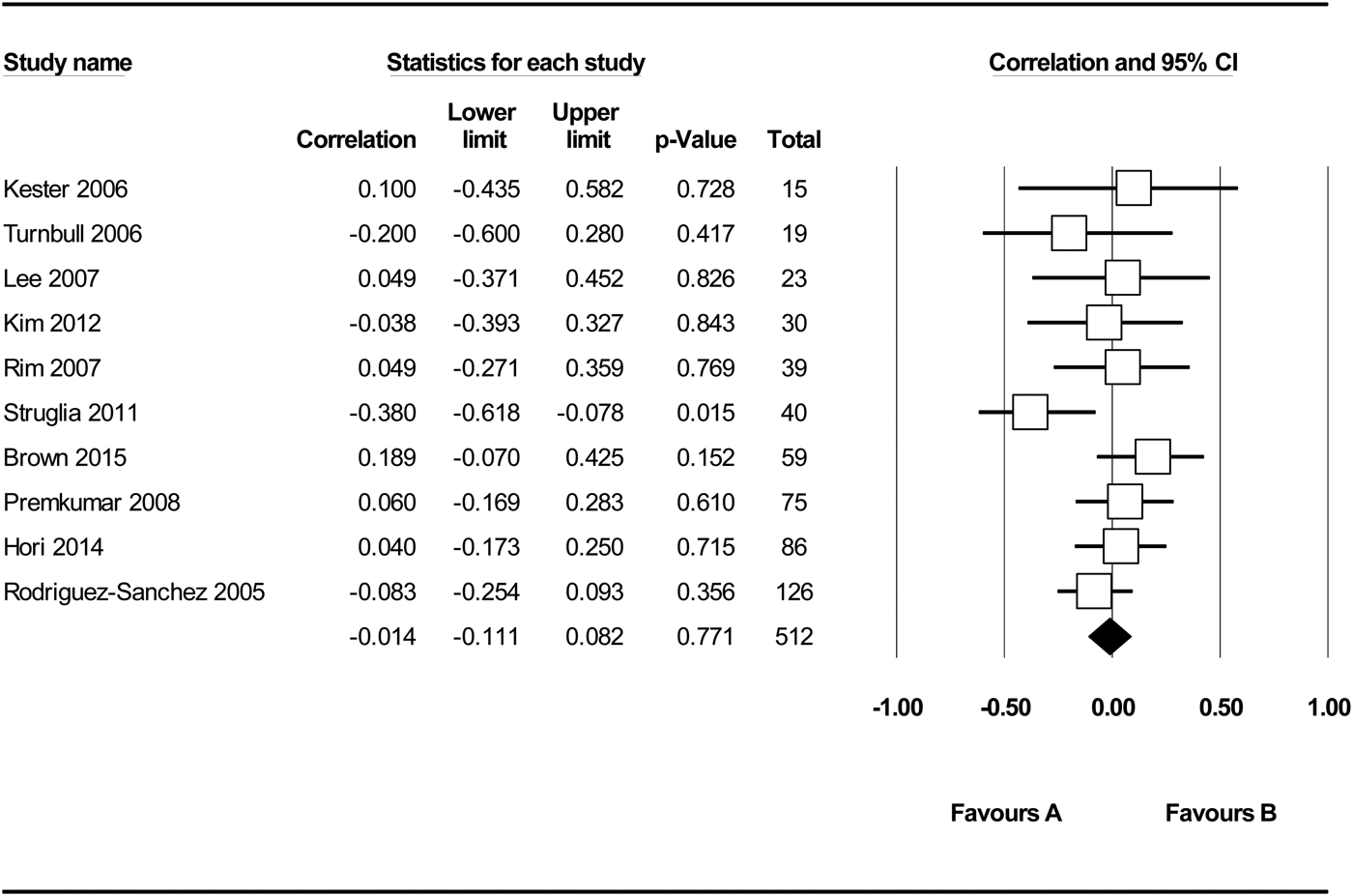
Within the psychosis groups, decision-making performance had a small-moderate inverse association with negative symptoms (k = 13, N = 648, r = −0.17, 95% CI −0.26 to −0.07, I 2 32%; moderate; Fig. 4), a small association with general symptoms (k = 5, N = 169, r = −0.13, 95% −0.25, −0.00, I 2 = 0%; low) and no association with positive symptoms (k = 10, N = 512, r = −0.01, 95% CI −0.11 to 0.08; moderate; Fig. 5). One small longitudinal study did not find that improvements in overall (N = 25; r = 0.17, 95% CI −0.24 to 0.53), negative (r = 0.19, 95% −0.23 to 0.54), positive (r = 0.18, 95% −0.23 to 0.54) or general symptoms (r = 0.15, 95% −0.26 to 0.52) were significantly associated with improvements in decision-making performance (Premkumar et al., Reference Premkumar, Peters, Fannon, Anilkumar, Kuipers and Kumari2011).
Negative symptoms and decision-making performance: Forest-plot.

Positive symptoms and decision-making performance: Forest-plot.

Anxiety & depression
Differences in depression between healthy and psychosis groups were a significant moderator of decision-making performance in six studies (k = 6, Q = 6.41, p = 0.01, R 2 = 100%; low), and one study reported a significant association between poorer IGT performance and previous suicide attempts (N = 50, r = 0.36, 95% CI 0.10–0.59) (Adan et al., Reference Adan, Capella, Prat, Forero, Lopez-Vera and Navarro2017). However, no significant relationship between depression severity and performance was found by Hori et al. (Reference Hori, Yoshimura, Katsuki, Atake and Nakamura2014) (last three blocks combined; N = 86, r = −0.16, 95% −0.36 to 0.05) or Yip et al. (Reference Yip, Sacco, George and Potenza2009) (N = 42, r = 0.05, 95% CI −0.26 to 0.35) (Yip et al., Reference Yip, Sacco, George and Potenza2009; Hori et al., Reference Hori, Yoshimura, Katsuki, Atake and Nakamura2014). In addition, Da Silva (Reference Da Silva2017) found that participants with psychosis and moderate depression had significantly lower IGT scores than non-psychotic participants with moderate depression (N = 77, g = −0.62, 95% CI −1.07 to −0.17) and Premkumar et al. (Reference Premkumar, Peters, Fannon, Anilkumar, Kuipers and Kumari2011) reported no improvement in decision-making performance (N = 40, g = −0.15, 95% CI −0.76 to 0.47, p = 0.644) despite significant improvements in depression (N = 40, g = −0.68, 95% −1.3 to −0.05, p = 0.035) (Premkumar et al., Reference Premkumar, Peters, Fannon, Anilkumar, Kuipers and Kumari2011; Da Silva, Reference Da Silva2017). Brown et al. (Reference Brown, Hack, Gold, Carpenter, Fischer, Prentice and Waltz2015) reported a non-significant small negative correlation between anxiety and overall money earned on the IGT (N = 59, r = −0.25, 95% CI −0.48 to 0.00), whereas Newman (Reference Newman2008) reported a moderate and significant positive correlation between worry and IGT performance (N = 70, r = 0.29, 95% CI 0.06–0.49) (Newman, Reference Newman2008; Brown et al., Reference Brown, Hack, Gold, Carpenter, Fischer, Prentice and Waltz2015). Participants in Highet (Reference Highet2014) did not have impaired decision-making compared with healthy individuals (N = 56, g = −0.07, 95% −0.58 to 0.45), despite being moderately anxious (Highet, Reference Highet2014).
Intelligence, education and gender
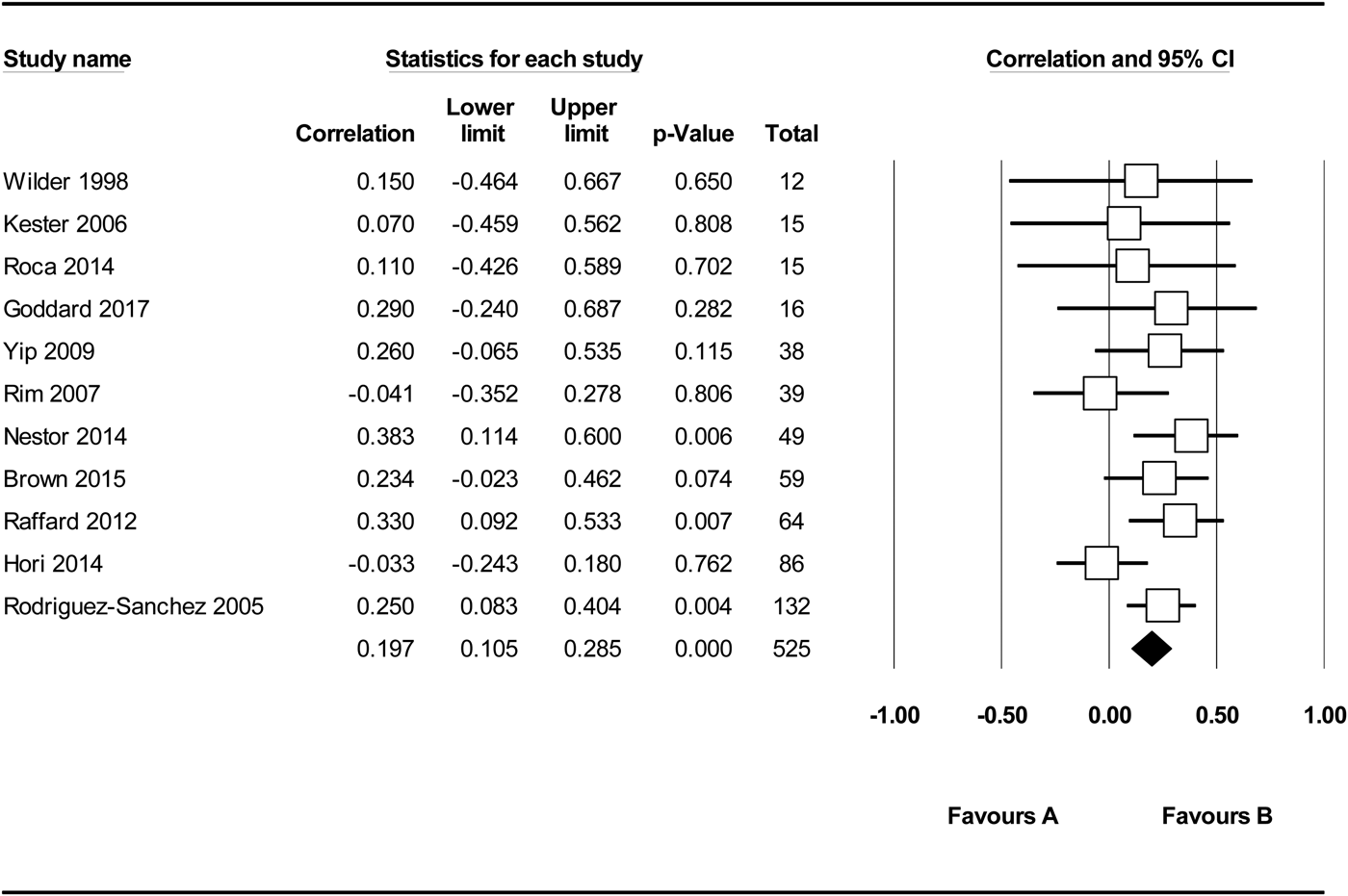
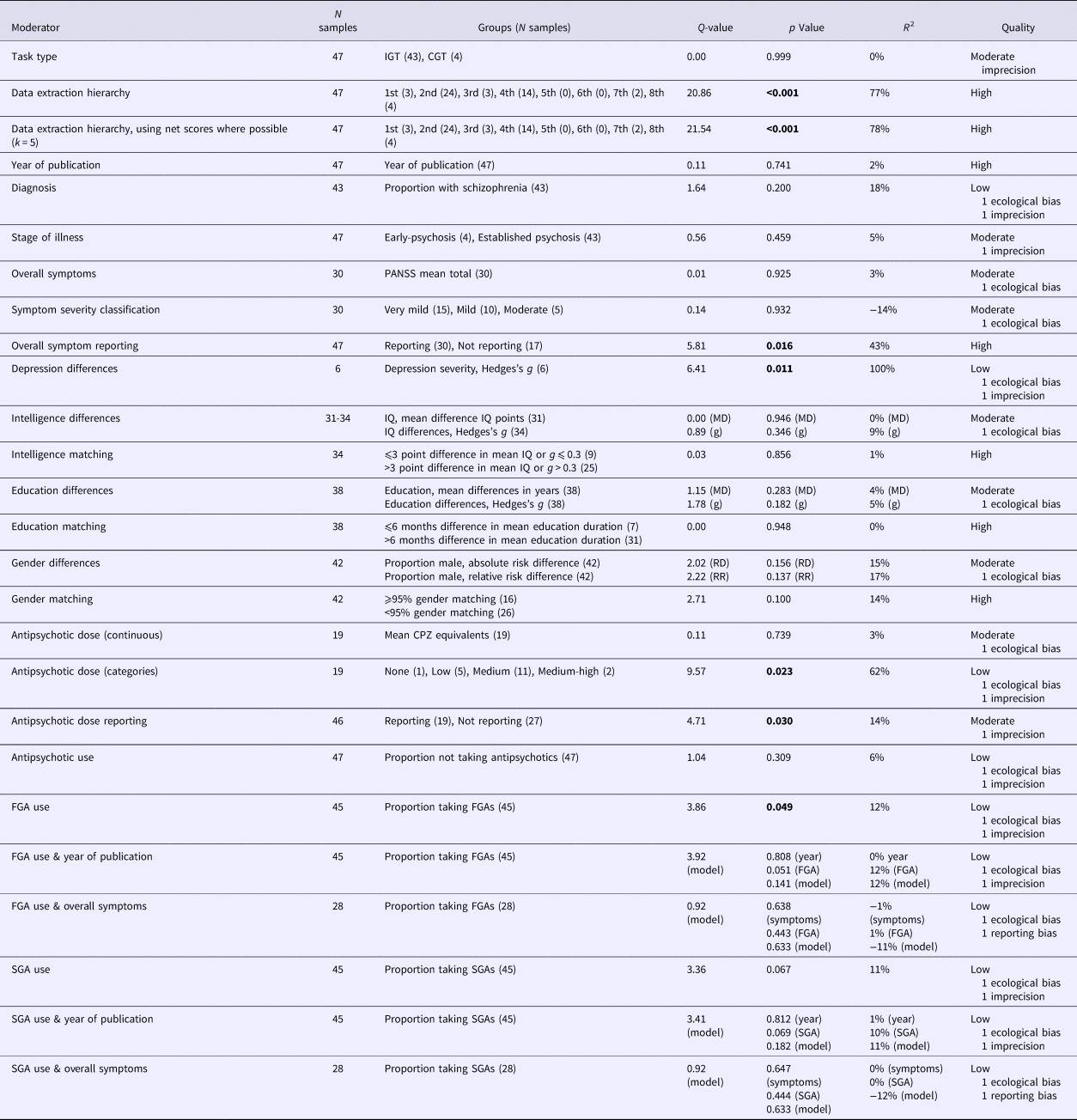
Decision-making performance was significantly associated with IQ within the psychosis groups (k = 11, N = 525, r = 0.20, 95% CI 0.29–0.10, I 2 = 8%; moderate; Fig. 6) but not education (k = 3, N = 134, r = 0.38, 95% CI −0.04 to 0.69, I 2 = 80%; very low quality), although the latter was based on heterogeneous data from three small studies. Group differences in decision-making were not moderated by differences in either IQ (k = 34, Q = 0.89, p = 0.346, R 2 = 9%; moderate), education (k = 38, Q = 1.78, p = 0.182, R 2 = 5%; moderate), gender (k = 42, Q = 2.02, p = 0.156, R 2 15%; moderate) or matching of these variables (see Table 3).
IQ and decision-making performance: Forest-plot.

Meta-regression analyses of potential moderators of group differences in decision-making performance

IGT, Iowa Gambling Task; CGT, Cambridge Gambling Task; PANSS, Positive and Negative Syndrome Scale; MD, Mean difference; g, Hedges's g; RD, Risk difference; RR, Relative risk; CPZ, Chlorpromazine; FGA, First-generation antipsychotic; SGA, Second-generation antipsychotic.
Working memory & executive functioning
Decision-making was significantly associated with working memory (k = 5, N = 259, r = 0.22, 95% CI 0.02–0.41, I 2 61%; very low quality), but not executive functioning ability (k = 6, N = 242, r = 0.06, 95% CI −0.13 to 0.26, I 2 = 51%; very low quality) or perseveration (k = 11, N = 532, r = −0.07, 95% CI −0.23 to 0.08, I 2 = 64%; very low quality). However all estimates were inconsistent and imprecise, and there was some evidence of publication bias affecting the latter. Trim-and-fill analyses led to the imputation of three small studies, and the revised estimate suggested the possibility of a significant inverse relationship (r = −0.19, 95% CI −0.33 to −0.03).
Antipsychotic medication dose
Limited but consistent evidence from three studies did not find an association between current antipsychotic dose and decision-making (N = 171, r = −0.02, 95% CI −0.17 to 0.13, I 2 = 0%; low quality) and mean antipsychotic dose (chlorpromazine equivalents) did not moderate group differences in decision-making performance (k = 19, Q = 0.11, p = 0.74, R 2 = 3%; moderate). However, dose as a categorical variable (none, low, medium, medium-high) did moderate estimates (k = 19, Q = 9.57, p = 0.023, R 2 = 62%; low). Participants in low dose studies had a non-significant and small impairment in decision-making performance (k = 5, g = −0.19, 95% CI −0.44 to 0.06), whereas significant impairments were observed in medium-dose studies (k = 11, g = −0.52, 95% CI −0.67 to −0.37), medium-high dose studies (k = 2, g = −0.58, 95% CI −0.92 to −0.24) and an antipsychotic-free study (k = 1, g = −0.77, 95% CI −1.27 to −0.28). Only 11 studies reported both dose and symptom data and multicollinearity meant we could not examine their combined effects in multivariate analysis.
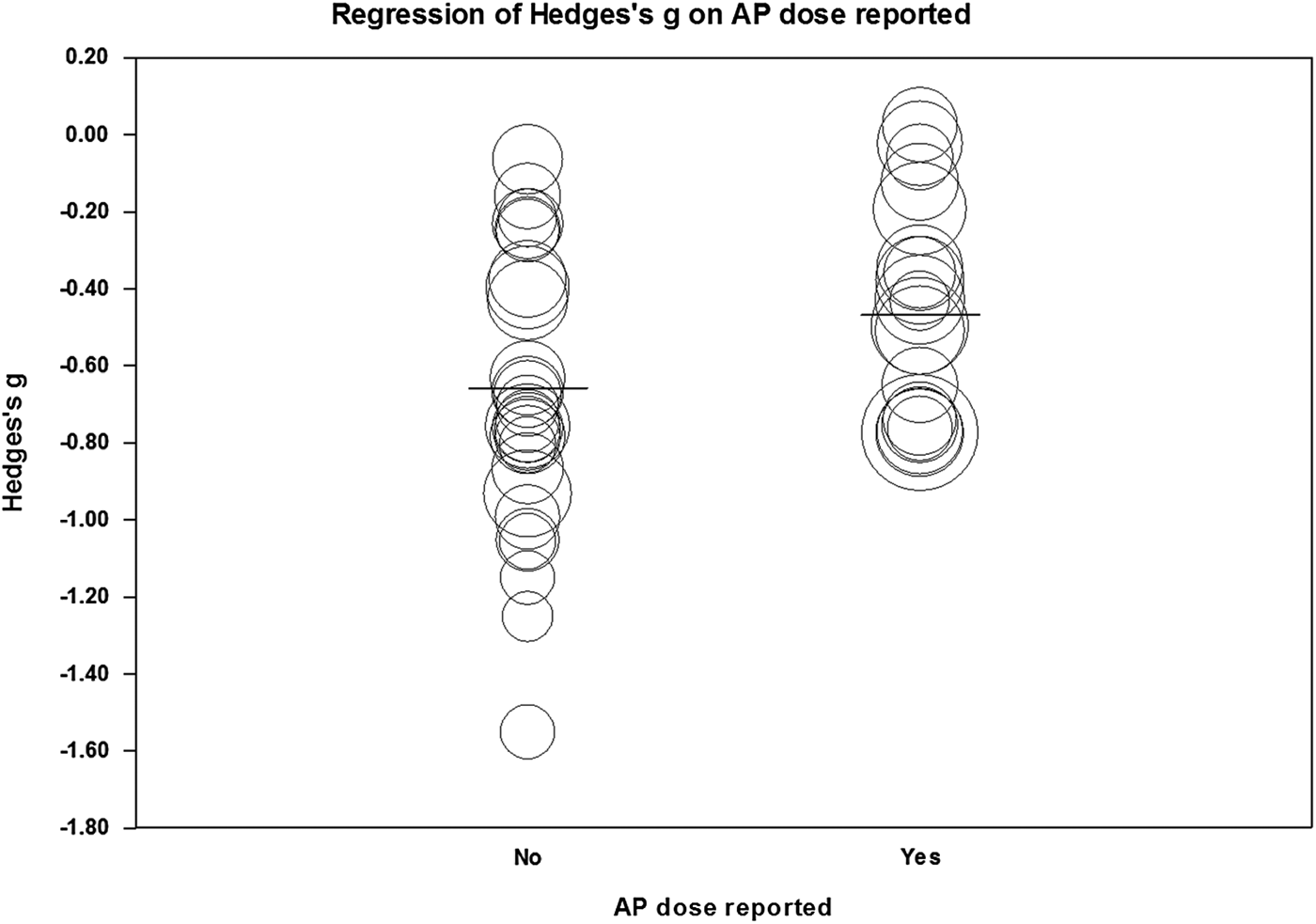
Reporting of the dose was a significant moderator (k = 46, Q = 4.71, p = 0.030, R 2 = 13%; moderate; Fig. 7). The estimates for studies reporting and not reporting dose were −0.47 (k = 19, 95% CI −0.59 to −0.34) and −0.66 (k = 27, 95% CI −0.78 to −0.53), respectively. The proportion of participants who were antipsychotic-free did not moderate estimates (k = 47, Q = 1.04, p = 0.309, R 2 = 6%; low), however, this was below 100% in only four studies.
Reporting of antipsychotic (AP) dose and estimates of decision-making impairment in psychosis: Meta-regression bubble-plot.

Antipsychotic medication type
Participants taking second-generation antipsychotic (SGAs) did not have significantly reduced decision-making performance compared with those taking first-generation antipsychotic (FGAs) (FGAs v. SGAs; k = 6, g = 0.26, 95% CI −0.06 to 0.58, I 2 = 47%; very low quality), unless the single randomised controlled trial (RCT) was excluded (FGAs v. SGAs; k = 5, g = 0.36, 95% CI 0.68–0.04, I 2 = 32%). Compared with healthy individuals, those taking SGAs alone had a moderate impairment in decision-making (k = 14, g = −0.56, 95% CI −0.78 to −0.35, I 2 = 71%; moderate-quality), which was unaffected by excluding the single RCT (k = 13, g = −0.61, 95% CI −0.82 to −0.41, I 2 = 66%). Those taking FGAs alone did not differ from healthy individuals in their decision-making performance (k = 6, g = −0.17, 95% CI −0.40 to 0.06, I 2 = 0%; low quality) and excluding the single RCT also did not affect this (k = 5, g = −0.19, −0.45 to 0.08, I 2 = 0%).
The antipsychotic-free study (Zhang et al., Reference Zhang, Tang, Dong, Ji, Tao, Liang, Chen, Wu and Wang2015) was excluded from all moderator analyses of FGA and SGA use, and we divided studies into separate comparisons when decision-making performance according to antipsychotic type was provided (i.e. the control sample was divided equally between these new comparisons, as recommended by the Cochrane Handbook). The proportion of participants taking FGAs was a significant yet imprecise moderator of decision-making performance across the studies, with greater use associated with lower mean impairment (k = 45, Q = 3.86, p = 0.049, R 2 = 12%; low), and the proportion of participants taking SGAs had a non-significant but equally imprecise effect, with greater use non-significantly associated with greater impairment (k = 45, Q = 3.36, p = 0.067, R 2 = 11%; low). To test whether these findings reflect people with greater decision-making impairment being more likely to be prescribed SGAs when they were first introduced, we controlled for year of publication, but this had no effect. Neither association remained after controlling for PANSS total scores, but this was also the case when we did not control for PANSS total scores but did limit the univariate analysis to studies which reported both variables. Thus, it was not controlling for symptoms that removed the associations, but some other feature of the 28 samples for which both predictors were available.
Social outcomes
Limited evidence from four studies suggested there was a moderate association between IGT performance and social functioning (N = 150; r = 0.37, 95% CI 0.07–0.51, I 2 45%; very low quality). One study reported a small-moderate positive correlation between IGT performance and self-reported childhood abuse (N = 70; r = 0.24, 95% CI 0.01–0.48), but not interpersonal victimisation (N = 70; r = 0.07, 95% CI −0.17 to 0.30) (Newman, Reference Newman2008). No association between decision-making and the social cognition domain of facial affect recognition was observed in another (N = 39; −0.12, 95% CI −0.42 to 0.20) (Lee et al., Reference Lee, Lee, Kweon, Lee and Lee2009).
Awareness and insight
Large positive correlations between performance and participants’ subjective awareness of which decks were good and bad were reported by two studies [N = 25; r = 0.74, 95% CI 0.49–0.88 (Cella et al., Reference Cella, Dymond, Cooper and Turnbull2012); N = 19; r = 0.66, 95% CI 0.29–0.86 (Evans, Bowman and Turnbull, Reference Evans, Bowman and Turnbull2005; Turnbull et al., Reference Turnbull, Evans, Kemish, Park and Bowman2006)]. One study did not show a relationship with lower insight into illness (N = 64; r = −0.18, 95% CI −0.41 to 0.06) (Raffard et al., Reference Raffard, Capdevielle, Gely-Nargeot, Attal, Baillard, Del-Monte, Mimoun, Boulenger and Bayard2011).
Discussion
Does psychosis involve impaired decision-making, and is this specific to psychosis?
Our primary aims were to establish whether people with psychosis demonstrate reduced decision-making performance on the Iowa and Cambridge Gambling Tasks, each of which are thought to measure the degree to which a person can use emotional information to successfully guide their decision-making during uncertainty, and to determine the magnitude, specificity and correlates of any observed impairment. The meta-analysis of data from over 4200 participants confirmed that people with psychosis do have moderately lower decision-making ability than healthy individuals, with the heterogeneity in this estimate relating to the size of the effect rather than its presence. However the Hedges's g estimate of −0.57 corresponds to a Cohen's U 3 of 72%, which implies that 28% of people with psychosis are likely to have average or above-average performance on this task.
Although very low-quality evidence from three studies suggested decision-making was somewhat poorer in non-affective psychosis than in bipolar disorder, few studies included non-psychotic clinical control groups. However, meta-analyses of various non-psychotic populations have reported impairments of comparable or greater magnitude to those we observed here. These range from moderate impairments in people with mood disorders who have attempted suicide (k = 10, g = −0.65, 95% CI −1.03 to −0.27) (Richard-Devantoy et al., Reference Richard-Devantoy, Berlim and Jollant2014) and people with alcohol dependence (k = 16, d = −0.58, 95% CI −0.90 to −0.27) (Kovács et al., Reference Kovács, Richman, Janka, Maraz and Andó2017) to moderate-large in eating disorders (anorexia k = 16, g = −0.72, 95% CI −0.53 to −0.92; bulimia k = 9, g = −0.62, 95% CI −0.31 to −0.93) (Guillaume et al., Reference Guillaume, Gorwood, Jollant, Van Den Eynde, Courtet and Richard-Devantoy2015) to large in non-clinical obesity (k = 6, d = −0.83, 95% CI 1.34 to −0.33) (Rotge et al., Reference Rotge, Poitou, Fossati, Aron-Wisnewsky and Oppert2017) and gambling disorder (k = 7, d = −1.03, 95% CI −1.56 to −0.51) (Kovács et al., Reference Kovács, Richman, Janka, Maraz and Andó2017). However non-suicidal patients with mood disorders appear to have at best a small decrement in their performance (k = 10, g = −0.24, 95% CI −0.53 to 0.05) (Richard-Devantoy et al., Reference Richard-Devantoy, Berlim and Jollant2014). Thus, impaired IGT performance is unlikely to be a specific characteristic of psychosis, but may instead affect a range of clinical groups.
What factors help or hinder decision-making in psychosis?
The most reliable correlates of decision-making performance in psychosis (negative symptoms, IQ) were small-moderate in magnitude, whereas less reliable estimates ranged from small (general symptoms), to moderate (social functioning) to large (awareness of emotional responses). If shown to be causal, these factors should be taken into account when designing or adapting decision-support interventions with this group. For example, cognitive remediation therapy, which is already known to improve working memory, negative symptoms and social functioning in psychosis, could be adapted to include strategies to improve metacognitive awareness of decision-relevant information and aspects of cognitive processing which might affect this (Cella et al., Reference Cella, Reeder and Wykes2015).
Few studies have examined or reported data on the role of emotional distress. However Newman's (Reference Newman2008) finding of a positive correlation between worry and decision-making is consistent with emerging evidence elsewhere that greater anxiety in psychosis may be associated with better capacity to make decisions about treatment (Capdevielle et al., Reference Capdevielle, Raffard, Bayard, Garcia, Baciu, Bouzigues and Boulenger2009; Raffard et al., Reference Raffard, Fond, Brittner, Bortolon, Macgregor, Boulenger, Gely-Nargeot and Capdevielle2013; Larkin and Hutton, Reference Larkin and Hutton2017). However the decision-making performance of participants with psychosis was lower in studies where they were more depressed than healthy individuals, and other evidence suggests experimentally induced acute stress has a small-moderate negative effect on IGT decision-making in healthy individuals (Starcke and Brand, Reference Starcke and Brand2016).
We found no evidence that stage of illness, the proportion of people diagnosed with schizophrenia, positive symptoms, or overall symptom severity accounted for variance in decision-making performance. However some 38% of studies did not report overall symptom data and, compared with those that did, they reported significantly greater impairments in decision-making. The absence of a correlation between IGT performance and positive symptoms was consistent and the 95% CI excluded any significant associations. This was unexpected, given previous meta-analytical work has found that the presence of delusions in psychosis is associated with a small-moderate increase in the ‘jumping to conclusions’ (JTC) data-gathering bias (Dudley et al., Reference Dudley, Taylor, Wickham and Hutton2016), and that greater overall symptom severity is significantly associated with reduced treatment decision-making capacity (Larkin and Hutton, Reference Larkin and Hutton2017). Theoretically, if positive symptoms are partly caused by aberrant salience, we might also expect this to disrupt decision-making performance in some way (Howes and Murray, Reference Howes and Murray2014). Although many of the participants in the IGT studies fell within the ‘very mild’ to ‘mild’ categories of overall symptom severity, these findings do suggest that clinicians should not assume that positive symptom severities are a cause or consequence of impaired decision-making ability, and further research is required to investigate the relationship between relevant correlates of positive symptoms (i.e. impaired capacity, JTC bias, aberrant salience) and decision-making ability.
Working memory was correlated with decision-making performance, but executive functioning was not. Notwithstanding the risk of publication bias, these findings are consistent with the view that the IGT measures processes which are distinct from those assessed by traditional measures of executive functioning, such as the Wisconsin Card Sorting Task, as proposed by Bechara et al. (Reference Bechara, Damasio, Damasio and Anderson1994). However Yechiam et al. later proposed that reduced performance on the IGT may be caused by greater attention to rewards or losses (a ‘motivation’ parameter), problems in learning or remembering the consequences of past decisions (a ‘learning-rate’ parameter) or erratic and inconsistent decision-making, perhaps due to boredom or disinterest (a ‘choice-sensitivity’ parameter), with different disorders evidencing distinct patterns of impairment (Yechiam et al., Reference Yechiam, Busemeyer, Stout and Bechara2005). We found some evidence that people with psychosis do pay more attention to rewards than losses, relative to healthy individuals. Although it remains unclear whether they also have a greater preference for recent rather than past outcomes, there was no clear evidence that they engage in erratic or random responding.
Taken together, one possible explanation for our findings is that negative symptoms, which include anhedonia and affective blunting, reduce sensitivity to loss whereas working memory problems contribute to a diminished ability to remember decision-relevant information (Premkumar et al., Reference Premkumar, Fannon, Kuipers, Simmons, Frangou and Kumari2008), something which may be exacerbated by lower intellectual capacity. This would be consistent with the findings that both working memory and IQ are associated with poorer decision-making, as well as Cella et al. (Reference Cella, Dymond, Cooper and Turnbull2012) finding that reduced emotional responding to decks is associated with greater inattention to loss, which in turn is associated with poorer IGT performance (Cella et al., Reference Cella, Dymond, Cooper and Turnbull2012). It may also account for Newman's finding that greater worry, which may involve heightened attention to loss, was associated with better IGT performance (Newman, Reference Newman2008). It may be that negative symptoms, poor ‘metacognitive’ awareness of emotional responses and poor memory each serve to disrupt access to the somatic marker system which Damasio has argued is central to effective decision-making (Damasio et al., Reference Damasio, Everitt and Bishop1996). However, we predict that both very low (i.e. anhedonia, affective blunting) and very high levels of emotion (i.e. emotional disorder) are likely to disrupt this process, albeit in different ways depending on the emotion involved. It is possible that a degree of worry and anxiety may be useful for increasing sensitivity to loss, but that acute levels of negative affect consume cognitive resources and motivation (Wells and Matthews, Reference Wells and Matthews1996). Evidence on the effects of acute stress on decision-making in healthy individuals is consistent with this (Starcke and Brand, Reference Starcke and Brand2016), as are the results of our meta-regression suggesting that decision-making performance was worse when the severity of depressed mood in the psychosis group was between 1 and 3 s.d. greater than healthy individuals.
Does antipsychotic medication help or hinder decision-making in psychosis?
Our analysis of both antipsychotic dose and type was complicated by poor reporting. On the one hand, within-group data from three studies did not reveal a correlation between dose and decision-making, and dose did not account for variance in decision-making performance when analysed as a continuous variable in meta-regression. On the other hand, decision-making impairments were absent in low dose studies, whereas moderate impairments were observed in medium, medium-high dose studies, and a single antipsychotic-free study, suggesting a possible curvilinear relationship. However given decision-making performance was significantly worse in the 60% of studies which did not report dose, there is considerable uncertainty about the true relationship. We also note that, although Zhang et al. (Reference Zhang, Tang, Dong, Ji, Tao, Liang, Chen, Wu and Wang2015) found a large impairment in IGT performance in antipsychotic-free first episode patients (Zhang et al., Reference Zhang, Tang, Dong, Ji, Tao, Liang, Chen, Wu and Wang2015), an as-yet unavailable study reported that 26 antipsychotic-free first-episode patients performed normally in comparison with 19 healthy individuals before being prescribed antipsychotics, but a month after beginning antipsychotic treatment their performance relative to the same individuals was impaired (Bradford, Reference Bradford2015).
Decision-making impairments were also absent when those receiving FGAs alone were compared directly with healthy individuals, and a greater proportion of FGA monotherapy use was also associated with reduced decision-making impairment across the studies. One explanation for these findings is that participants who maintained their FGA monotherapy after SGAs were introduced already had relatively preserved decision-making performance, and were, therefore, less likely to switch to combination or SGA treatment to seek improvement. Supporting this, Crespo-Facorro et al. (Reference Crespo-Facorro, Rodríguez-Sánchez, Pérez-Iglesias, Mata, Ayesa, Ramirez-Bonilla, Martínez-Garcia and Vázquez-Barquero2009) randomised participants with first-episode psychosis to either FGA or SGA monotherapy and, after 2.5 months of treatment, neither group performed below healthy individuals (Crespo-Facorro et al., Reference Crespo-Facorro, Rodríguez-Sánchez, Pérez-Iglesias, Mata, Ayesa, Ramirez-Bonilla, Martínez-Garcia and Vázquez-Barquero2009). Although scores at 12-months suggest the FGA group, contrary to the SGA and healthy control groups, had failed to improve in their performance, these figures contained data from 40% of participants who had switched to receiving SGAs, and no difference between the FGA and SGA groups was apparent in a per-protocol analysis excluding these participants. In addition, a small study by Bark et al., which we could not include in our meta-analyses because of unavailable variance data, compared the IGT performance of eight patients diagnosed with catatonic schizophrenia, 19 diagnosed with paranoid schizophrenia and 26 healthy individuals (Bark et al., Reference Bark, Dieckmann, Bogerts and Northoff2005). Only the catatonic group had impaired IGT performance, however, both psychosis groups were on low doses of typical antipsychotic medication.
Taken together, the above findings suggest it would be prudent to conduct further RCTs of the effect of high v. low antipsychotic medication dose and FGAs v. SGAs on decision-making ability in psychosis, also examining the potential consequences for treatment decision-making capacity. Further observational research is unlikely to resolve these issues, and if antipsychotic dose and type does alter decision-making – whether positively or negatively – this would have important clinical and legal implications, particularly for those with psychosis who currently have little choice over their treatment.
Recommendations for future research
We conducted this review primarily to help us develop our theoretical model of the factors that help or hinder treatment decision-making capacity (‘capacity’) in psychosis. There are obviously significant differences between decision-making performance on the IGT and capacity, however, we note that clinical judgements of capacity appear to be much more affected by overall psychotic symptom severity than objective ratings of decision-making performance (Larkin and Hutton, Reference Larkin and Hutton2017). Although overall symptoms have a moderate to large correlation with capacity (Larkin and Hutton, Reference Larkin and Hutton2017), no clear relationship with IGT performance was found. Whether patient and clinician beliefs about illness, treatment, and insight, not measured by the IGT, drive these differences is unclear. Whether judgements of capacity can be enhanced by administration of measures such as the IGT is also a matter for further research, but one that could have significant implications.
To aid with the development of interventions to support people with psychosis to make their own decisions, including decisions about treatment, we encourage researchers to routinely examine and report data on the effect of anxiety, depression and antipsychotic dose, and we recommend research on the potential relationship between psychosis-specific cognitive biases and decision-making, as well as longitudinal studies to prospectively examine risk factors for impaired decision-making in this group. However, to enable causal inference, researchers should consider conducting single-blind randomised experimental ‘interventionist-causal’ studies (Kendler and Campbell, Reference Kendler and Campbell2009), where the effect of manipulating psychological, social or biological mechanisms on decision making is assessed directly.
Limitations
We pre-registered our review (Stewart et al., Reference Stewart, Moher and Shekelle2012) but to increase its usefulness we expanded its scope and assessed a number of additional outcomes. Meta-analyses of observational studies do not allow determination of cause and effect, but they can assess indicators of causality, such as the size, consistency, and specificity of an association (Bradford-Hill, Reference Bradford-Hill1965), and they allow important gaps in our knowledge to be identified. We urge caution in the interpretation of some of our meta-regression estimates, particularly those which had low power, were affected by selective reporting or had an increased risk of ecological bias, where between-study associations can diverge from within-study associations (Thompson and Higgins, Reference Thompson and Higgins2002).
Conclusion
People with non-affective psychosis appear to make less effective decisions than healthy individuals when this is assessed using the IGT or CGT. However, the moderate difficulties they have are comparable with those observed in other clinical groups, which casts doubt on their specificity. Nonetheless, clinicians seeking to support decision-making in this group should consider the potential role of negative symptoms, general symptoms, lower IQ, lower working memory, poorer social functioning and reduced awareness of emotional responses to decision-relevant information. The effect of high-dose antipsychotic treatment on decision-making should also be assessed. However this, and the contribution of emotional disorders, requires further research.
Supplementary material
The supplementary material for this article can be found at https://doi.org/10.1017/S0033291718002660.
Acknowledgements
We would like to express our gratitude to anonymous reviewers for their important contributions to refining and improving this work. This research received no specific grant from any funding agency, commercial or not-for-profit sectors.
Conflict of interest
Authors SS, AW, VB, CP and PM report no competing or conflictual interests. PH has been a co-investigator on research grants from the National Institute of Health Research to evaluate the efficacy of cognitive therapy for people with psychosis who are not taking antipsychotic medication and is a member of the committee which developed National Institute for Clinical and Social Care Excellence (NICE) guidelines on supporting decision-making for people who may lack mental capacity (Decision-Making and Mental Capacity; GID-NG10009).