The term HongKar (奉教) has a unique meaning to the Teochews of the Singapore-Malaya region (新马). Lim Hong Seng, an interpreter in the police courts of the Straits Settlements, published a Handbook of the Swatow Vernacular in 1886. In his handbook, Lim translated the term HongKar as an umbrella term referring to Christians, whereas Catholics were referred to as Thien-tsu-ka (天主教) as they still are today.Footnote 1 However, the term HongKar has since evolved to refer to the Catholic faith after the twentieth century, particularly in the Singapore-Malaya region. In my interviews with both lay and ordained Teochew-Catholics in Singapore, as well as with Protestants, it was established understanding that HongKar-Nang referred exclusively to Catholics.Footnote 2
Another commonly heard term during these interviews is Kaki-Nang (自己人). Singaporean Teochews generally use Kaki-Nang to mean one’s own people’, expressing belonging to the same community. Interestingly, Teochew-Catholics identified each other as HongKar-Nang, but not Kaki-Nang. This distinction between HongKar-Nang and Kaki-Nang illustrates a disassociation across parish-based communities, despite them all being Teochew-Catholics. There is an incongruency in both notions of community, where a fellow Teochew-Catholic would be excluded from being one’s own people, despite hailing from the same Guangdong Province in China and believing in the same Catholic faith. What, then, stratifies these communities, producing this disassociation: HongKar-Nang, but not Kaki-Nang?
Wang Gungwu suggests localisation as a possible explanation, within the context of problematising diasporic studies. Responding to Laurent Malvezin’s definition of diaspora as ‘a large social group which is self-centred and which derives its strength not from the individuals but from its cohesion’, Wang explains:
Of course, diaspora also has such a connotation, but it is assumed that all the overseas Chinese are involved and that there is a cohesion. Such a view is very misleading. The fact is that the Chinese, wherever they go, are easily influenced by their environment. They adapt to new circumstances and thus become very different from other groups of Chinese living elsewhere. I don’t see much cohesion.Footnote 3
Later in the interview, Wang explains this localisation in terms of nation states.
Look at the Chinese who have gone to the Philippines. They are very different from the Chinese who settled in Thailand. Both are very different from those who left for Brazil, Argentina, or the United States. Each of them had to find ways and means to adjust accordingly.Footnote 4
Wang’s localisation thesis would hence apply to Singaporean Chinese in general, homogenising across dialect groups and religions. Such a view is reiterated by Leander Seah on a regional level: ‘Instead of Nanyang as a whole, localisation now meant specifically the Singapore-Malay(sia) 新马 Xinma component of Southeast Asia.’Footnote 5
Yet, I contend that the formation of HongKar communities allows us to raise questions regarding this localisation of overseas Chinese communities via nation states and regions. By tracing the beginning and development of three Chinese Catholic communities in Singapore, I expose problems in understanding localisation solely as either a geographically constrained phenomenon or a cultural one. While the Chinese Catholics in Singapore could be considered a local community in the mid-nineteenth century, anchored at a single parish in Singapore Town, by the turn of the twentieth century the Chinese Catholic label had become a trans-local one. Chinese Catholics had begun forming different dialect enclaves in separate parts of Singapore independent of the parish in Singapore Town. Is Singapore the locale, or are these parishes considered the geographic locales within which localisation occurred? Culturally, the variances across dialect parishes arose not because of cultural conflicts nor adoption of local culture. Instead, the process of coping with distinct historical forces produced the differences in the traditions of each locale. These parishes within Singapore island geographically downscale Wang’s elsewhere as referring to a single nation-state while concomitantly exemplifying his assertion that Chinese adapt to new circumstances.
While agreeing that the Chinese were adaptable and their culture was malleable for survival in a local environment, I note that Catholic connections served as a strong form of cultural and social cohesion across different groups of Chinese Catholics. Moreover, the vagueness of living elsewhere is problematic in not specifying what is meant by local. Singapore could be understood as being a single overseas Chinese community, but the emergence of enclaves with specific dialects, religions, and social classes warrants the view that Singapore was made up of numerous locales. In other words, an analysis of Teochew-Catholics in Singapore highlights many overseas Chinese communities localised in Singapore.
Examining the historical circumstances that these Chinese Catholics had to contend with emphasises process over product. This approach differs from majority of the scholarly literature that overwhelmingly concentrates on the end products of the localisation process, arguing for mixed cultures and practices which evidence localisation. For instance, Ien Ang notes that diasporic communities often end up with ‘hybrid cultural forms borne out of a productive and creative syncretism.’Footnote 6 Other scholars pay more attention to sociocultural factors such as marriage and language in localisation for the Chinese Peranakans, Chinese mestizo, and Chinese in Thailand. Here, localisation meant acculturation, which as Tan Chee-Beng explains, ‘arises from sociocultural adjustment to a dominant cultural environment.’Footnote 7 These interpretations of the localisation of overseas Chinese communities are reasonable. However, they falsely assume that there is an endpoint to the process, implying completion or risking a teleological approach in viewing localisation as an inevitable process of adjusting to a dominant indigenous cultural environment.
The case of Chinese Catholic communities in Singapore dissents from Tan’s conclusion of localisation based on the Chinese adoption of a dominant social culture. Instead, I claim that the shaping of cultures and traditions specific to each locale’s experiences should be understood as only a part of the localisation process, instead of its entirety. I argue that these shared experiences at a particular locale were crucial in developing a HongKar communal identity specific to each location. The formation of HongKar communities should therefore be understood as the accumulation of shared experiences of coping with migrant life.
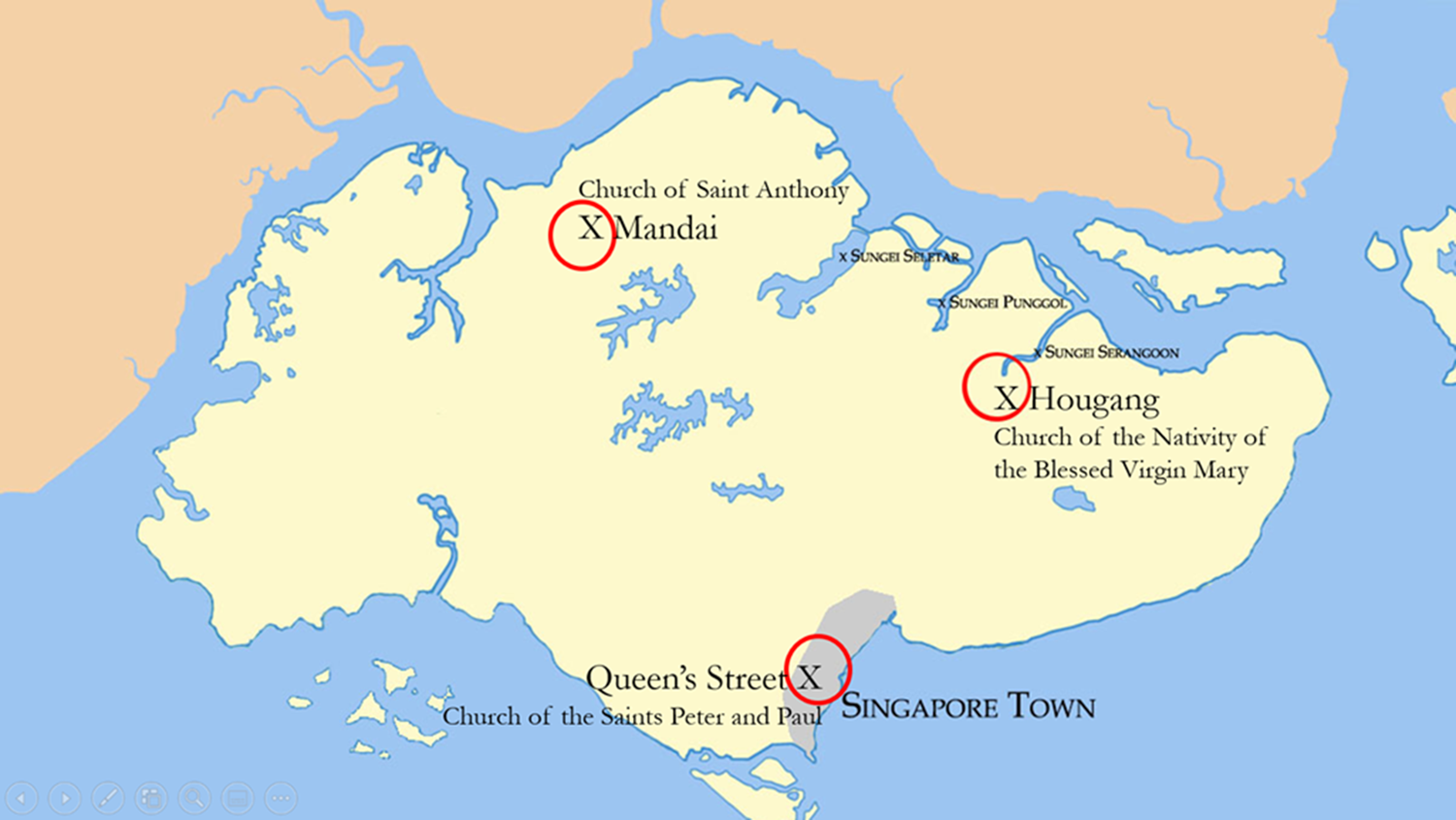
This paper explores the different ways in which Catholicism helped the Teochew-Catholics to cope with the relocation process, and how the extent of assistance transcended the purview of religious beliefs. Catholicism increasingly permeated the daily lives of their parishioners, ingraining Catholic cultures and traditions into Teochew ones and resulting in the hybridity that scholars have called localisation. Comparing these three Teochew-Catholic parishes in Singapore, I demonstrate localisation as a process of community building through the accumulation of shared experiences: the Church of Saints Peter and Paul, The Church of the Nativity of the Blessed Virgin Mary (Nativity Church) and The Church of Saint Anthony (see Figure 1). Teochew migrants in these three parishes all actively interacted with, and responded to, the mediums of coping with migration offered by Catholicism. The dynamics of their interactions became the basis of common experiences and, overtime, solidified into distinctive traditions that have shaped their communal identities.
Locations of the Three Teochew-Catholic Parishes in Singapore (Map of Singapore from wikicommons, edited and annotated by the Author)

Figure 1 Long description
The map of Singapore highlights three Teochew-Catholic parishes. Mandai is marked with a circle and labeled 'Church of Saint Anthony.' Hougang is indicated with a circle and labeled 'Church of the Nativity of the Blessed Virgin Mary.' Queen's Street is marked with a circle and labeled 'Church of the Saints Peter and Paul.' Each location is clearly annotated on the map, showing their geographical distribution across Singapore.
The history of the HongKar-Nang presents a slice of Singapore’s narrative and transition from a migrant society to a local one. HongKar experiences, of close intra-community and inter-community interactions, reiterate the need for scholars to study Singapore not as part of a Chinese diaspora, but rather as a local community. Singapore developed along unique circumstances, including a strong presence of the Catholic Church despite its status as a British colony. The British colonised Singapore for financial exploits as a strategic trading post rather than in the name of Anglican proselytisation. Singapore’s fame as a land of opportunities due to its location also resulted in a plural society, with various groups seeking to better their lives by sojourning to the island. Along with those seeking business opportunities came the missionaries against the backdrop of the globalisation of Christianity. In Singapore, the British adopted a laissez-faire approach to the governance of religion and employed a policy of ethnic segregation to maintain political stability as a necessity for trade. It is within this distinct historical context that the HongKar communities emerge.
A case for studying Hongkar-Nang
The HongKar-Nang bridge two disparate scholarly fields — the history of the overseas Chinese in Singapore and the history of Catholicism. Works on overseas Chinese networks in Singapore surprisingly omit the Catholic perspective.Footnote 8 Again, Wang Gungwu aptly explains this phenomenon:
A Christian can only be Christian if he or she rejects all other identities. It is all or nothing. Once you are a convert, you must reject all your past. That kind of attitude and language is the Christian way. The problem is that it doesn’t apply to China. As you know among the Chinese, people have different religions simultaneously. They go to a Buddhist temple for certain things and a Daoist temple for other things. If you tell them to be a Christian, they are willing to, provided the Christians would allow them to be Buddhist and Daoist at the same time. But you can’t. Actually, it is one of the reasons why most of the Chinese do not convert to Christianity, because of its exclusive nature. It goes against the Chinese culture to be exclusively something. The Christian priests find the Chinese who still want to worship their ancestors and still believe in their “fengshui” and superstition are not sincere. But the Chinese could believe in Jesus Christ and remain all that they were before that!Footnote 9
Logically speaking, Teochew-Catholicism should not exist because of the incompatibilities between Catholic monotheism and Chinese polytheism. However, many overseas Chinese did convert and embrace Catholicism, which significantly affected their migration and localisation experiences. They were no longer just overseas Chinese, but overseas Chinese Catholics. The affiliations and connections of the universal Catholic Church add layers of complexity in understanding overseas Chinese networks. The Teochew-Catholic communities in Singapore are a hallmark example. The Teochews came to Singapore under a myriad of circumstances — some due to centuries of migration patterns, others due to business or as refugees of war. For the purposes of this analysis, and to reiterate the differences in historical circumstances and experiences, I categorise the Teochews into three groups: sojourners who expect to live in Singapore temporarily, migrants who intend to stay in Singapore in the long-term, and refugees who were forced to settle in Singapore. Nevertheless, while the Teochews had existing clan, village, and association networks to enable various forms of migration, the Teochew-Catholics had additional missionary networks and religious connections which further facilitated this process. These Teochew-Catholics encountered Catholicism in different contexts; the French Missionaries converted some of them in China, while others were converted in Singapore through the migration and localising experiences.
There are no official numbers for the size of the community. However, the latest population census of Singapore conducted in 2020 indicates that there were 583,963 Teochews, maintaining its roughly one-fifth proportion of 3,006,769 Chinese in Singapore.Footnote 10 The census also indicated that there were 242,681 Catholics in Singapore, of which 184,158 were Chinese (about 75 per cent).Footnote 11 The census does not indicate how many of the 184,158 Chinese Catholics were Teochew. However, academic exercises of Clare Tan and Sally Low have indicated that places like Hougang formerly comprised 70 per cent Teochew-Catholics in the 1970s.Footnote 12 Similarly, Mandai was formerly home to a Teochew-Catholic village, exemplifying the presence of various Teochew-Catholic enclaves in Singapore. The Teochew-Catholics also have had significant impact on the history of Catholicism in Singapore. Both of Singapore’s local Archbishops are HongKar-Nang, as are a large majority of the ordained religious.Footnote 13 Before the coronavirus pandemic, the Teochew Mass was the only Mass celebrated in Singapore weekly in a Chinese dialect.
Despite the significance of Chinese Catholics in Singapore, scholars of overseas Chinese tend to examine processes of localisation within the backdrop of traditional Chinese religion. Localisation is framed in terms of the changes and continuities with Chinese culture in Mainland China. Jamie Mackie points out that the earliest sojourners in Southeast Asia ‘carried with them Taoist and Buddhist values more than Confucian ones — but above all the “values of trade”’.Footnote 14 Similarly, Kenneth Dean has empirically illustrated how ‘several Daoist ritual altars were established in Singapore to pass on these localised ritual traditions’.Footnote 15 Yet, my research suggests that Catholicism can also be understood as a Chinese religion that was imported to Singapore from China.
Methodologically, I augment ecclesiastical histories using sociocultural historical analysis to elucidate the construction and development of HongKar communities. Such approaches complement the traditional use of missionary archives with oral history, analysing both letters and interviews as cultural artefacts providing insights into the worldviews of the Teochew-Catholics. The history of these parish-based communities departs from ecclesiastical histories like Eugene Wijeysingha’s work, which documents the spread of Catholicism in Singapore through the agency of missionaries and the Church.Footnote 16 The comparative juxtaposition assimilates the approaches of Clement Liew and Clare Tan, interjecting Amy Stanley’s approach of global-microhistory, to provide further insights on the localisation of overseas Chinese communities in Singapore.Footnote 17
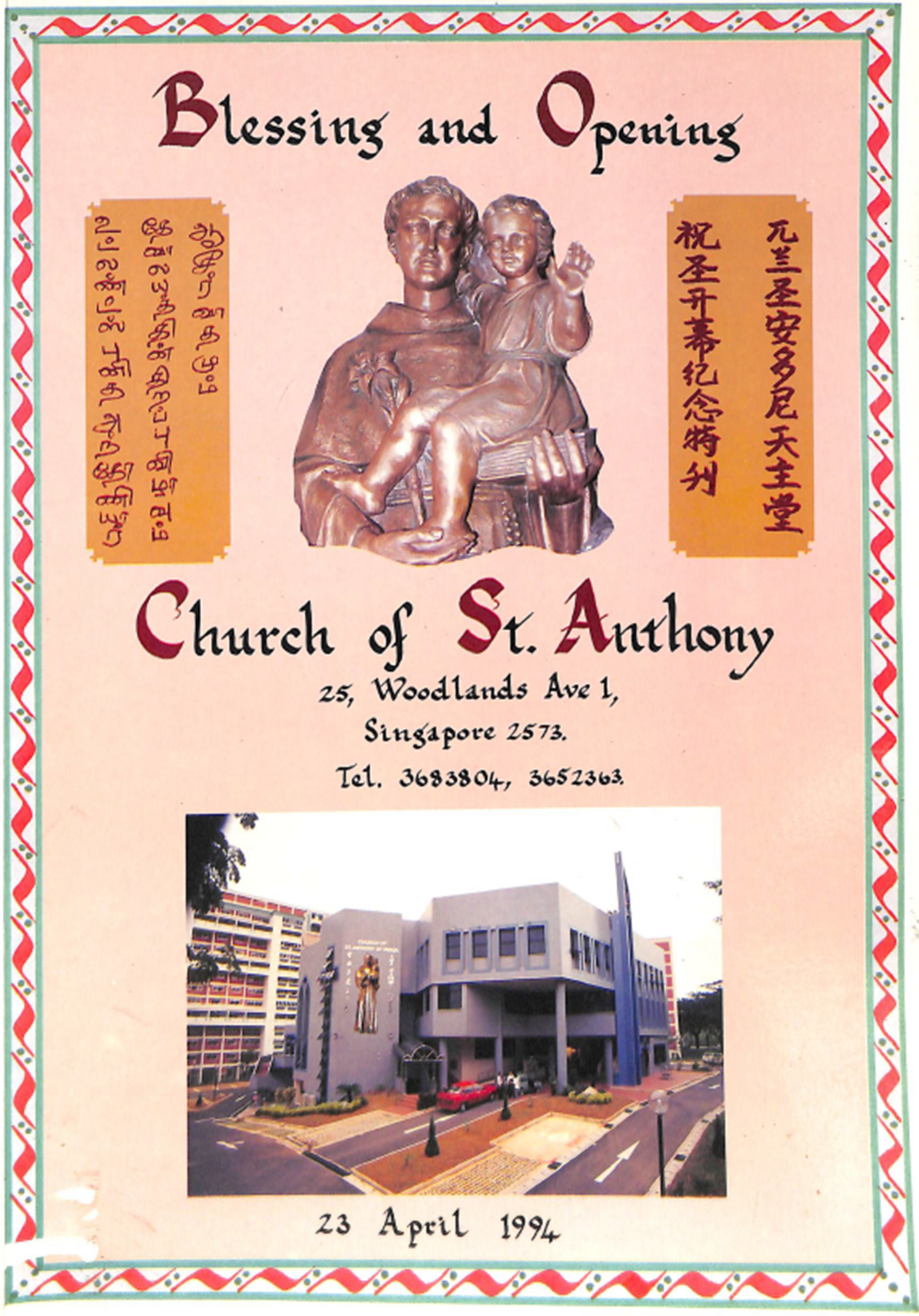
The complexity of community formation necessitates a plethora of sources. Ecclesiastical sources were used with gratitude towards the Chancery of the Roman Catholic Archdiocese of Singapore. The private church archives stored at the chancery contain baptismal records and documents from the handbooks of parish priests. Such ecclesiastical sources provide first-hand information about the lives of community members. The baptismal records were useful in statistical analysis despite the Personal Data Protection Act (PDPA) that disallows me from citing personal details. For instance, these statistics corroborate trends in conversion rates with historical factors and map out the proximity to the parish within which its congregation resided. Commemorative sources are also vital in delineating the emergence of HongKar traditions and cultures. For instance, the coffee-table magazines of churches often document the memorialisation of their early communities and their histories. Souvenir magazines often mark the end of a historical epoch defined by the community. Typically, they denote the anniversaries of the founding of the parish or new milestones in the community. For example, a magazine was published in conjunction with the opening of the Church of St. Anthony at its new premises in Woodlands.Footnote 18 The magazine aimed to preserve the parish’s heritage at Mandai while engaging with a new community dynamic in a new location. Most importantly, such magazines contain letters of congratulations from former priests of the parish that again serve as cultural artefacts in understanding the changes in the impressions of the parish-based community.
Oral histories are of paramount importance in studying communities without much written histories. Interviews with both HongKar-Nang and non-members of these communities embody advantages and value that could not easily be compensated with text-based archival sources alone. These interviews span across three collections — from the Catholic Chancery, the National Archives of Singapore, and my own personal collection of 50 oral history interviews conducted in English, Mandarin, and the Teochew dialect. These oral sources uniquely exemplify the rationalising processes of the community in negotiating cultural dilemmas. I analyse these interviews to access the memories of shared traditions and worldviews. Such oral histories, like any other commemorative source, are undoubtedly problematic when used as factual sources because of gaps in memories and biases. Nevertheless, these sources are highly valued in evidencing collective memories as cornerstones for the construction of communities.
Used together, these sources present the opportunity to analyse the formation of distinct and uniquely Singaporean communities, resisting assertions of a Chinese diaspora as well as Greater China. The sources illustrate how discourses of overseas Chinese networks often fall short in explaining the phenomenon of Singaporean communities’ formation. Therefore, we should turn to historical forces, a series of actors, and responses to larger events in global history, that cumulatively forged experiences particular to Singapore.
Saints Peter and Paul — Parish of Teochew merchants
That the Church of Saints Peter and Paul was built in 1870 evidences a significant number of Chinese Catholics in Singapore. The church is memoralised as the ‘Seat of Chinese Catholics in Singapore’.Footnote 19 In 1832, the French Mission Étrangères de Paris (MEP) established a mission field in Singapore.Footnote 20 According to Liew, this ‘heralded the beginning of an effort to sow the seeds of a Chinese Catholic community in Singapore’.Footnote 21 The MEP followed an evangelical strategy of having converts propagate their new religion to their fellow Chinese, and early missionary letters single out the Chinese ethnic group as possessing a particular trait — these Chinese ‘will catechise themselves without fear’.Footnote 22 It was this Chinese Catholic community that contributed to the costs of building the first chapel in the early 1830s to serve their pastoral needs.Footnote 23 However, conversion attempts by the MEP also detached the Chinese converts from their traditional Chinese cultures and led to tensions with Chinese secret societies.Footnote 24 These tensions culminated in the Anti-Catholic Riots in 1851 where the secret society members attacked Chinese Catholics and their properties, lasting for five days. The attacks targeted and solidified a cultural community of Chinese Catholics as distinct from their non-Catholic counterparts.
As this cultural community grew, it began to fragment. The 1897 Compte-Rendu notes the growth of the Chinese Catholic community, but acknowledges that these Catholics ‘needed a division along dialectic lines’.Footnote 25 The report comprises a humorous anecdote: ‘all the Chinese far from speak the same dialect; an instruction for one group is Hebrew to another group.’Footnote 26 This anecdote underscores the construction of different dialect-based communities in the minds of the European missionaries. To the European missionaries, each community was distinct and had to be instructed differently. The subsequent priests of Saints Peter and Paul took charge of different dialect groups. Fr. Vignol, who was its parish priest from 1885 to 1905, concentrated on the Teochews and the Hokkiens, leaving his assistant, Fr. Gazeau, to care for the Cantonese and Hakka Catholics.Footnote 27 By 1904, the Compte-Rendu highlights seven different dialects of Chinese spoken in Fr. Gazeau’s parish.Footnote 28
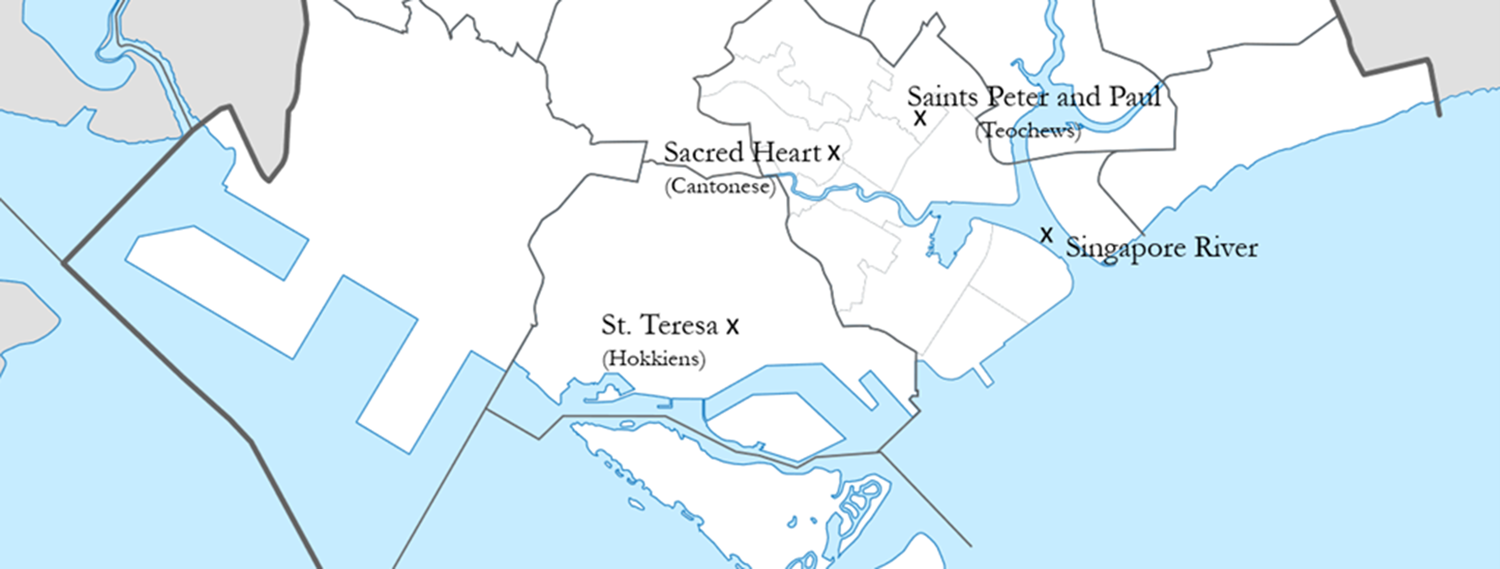
Difficulties in keeping unity are pointed out amidst further stratification within the Chinese community. The French missionaries reported nuances between China-born Chinese, Singapore-born Chinese with traditional Chinese cultures retained and Straits-born Chinese.Footnote 29 The lack of unity ended up in a divided Church, and a divided community. The Church of the Sacred Heart was then established by Fr. Gazeau in 1910, specially catering to the Hakka and Cantonese Catholics.Footnote 30 Similarly, the Hokkien community would eventually move to their own enclave, the Church of St Teresa, in 1928 (see Figure 2).Footnote 31 ‘The idea of building the church [of the Sacred Heart] to serve the needs of the Chinese — especially the Hakka and Cantonese dialect-speaking groups — had been discussed for two years.’Footnote 32 Only the Teochew-Catholic community remained at Saints Peter and Paul. These offshoot churches were remembered in the parish’s centenary magazine as ‘daughter churches’.Footnote 33 The fragmentation process was therefore not an acrimonious one. Instead, the virtual exhibition of the Catholic Archdiocese notes that ‘Many of the wealthier Teochews of the parish contributed generously to the building of other churches that were established for the other dialect groups’.Footnote 34 Arguably, these wealthier Teochews merely paid to preserve their dialect group’s influence in the parish. Nevertheless, these acts of philanthropy indicate the economic and social profile of the community that remained, while also hinting at broader Chinese Catholic cohesion across parishes and dialect groups. One could stereotype Saints Peter and Paul as a parish of wealthy Teochew merchants; still, we should recognise that such stereotypes are homogenising and should be nuanced to reflect the realities on the ground. Nevertheless, factors like business needs, mobility and philanthropy became defining aspects of the Teochew-Catholic experience through the avenues offered by the parish.
Present Locations of the Dialect-based Churches in Singapore Town (Map of Singapore from wikicommons, edited and annotated by the Author)

Figure 2 Long description
A thematic location map titled “Present Locations of the Dialect-based Churches in Singapore Town.” Church locations are indicated by an “X” symbol next to each church name. Labeled churches are “Sacred Heart X,” “Saints Peter and Paul X,” and “St. Teresa X (Hokkien).” The label “Singapore River” appears on the right side of the map. The “Sacred Heart X” label is placed in the upper-left area of the mapped land. “Saints Peter and Paul X” is placed near the upper central area. “St. Teresa X (Hokkien)” is placed toward the lower-left area near the coastline. No legend, scale bar, or compass rose is visible.
Tracing the history of the Teochew-Catholics in the Singapore Town municipality is tricky as only a small Teochew community remains in the parish. However, an examination of the Teochew migrants in Singapore Town provides us with some insights. Teochews migrated to Singapore in red bow junks soon after the first sailing ship arrived from Amoy in 1821.Footnote 35 With the opening of Shantou as a treaty port in 1860, and the arrival of steamships, even more Teochews migrated to Singapore in a bid to gue heng (过番 seek their prosperity abroad).Footnote 36 Poor economic conditions, political instability, and social unrest in the Qing Empire further attracted these Chinese to business opportunities in the new capital of the Straits Settlements.Footnote 37
Even if these Teochew-Catholics were not initially wealthy, many individuals eventually capitalised on the business opportunities offered by the Church, amassing substantial fortunes. They later returned as patrons of the Chinese Church in Singapore. An example is Jacob Low Kiok Chiang. Born in 1843 at Shantou, Low was one of two sons sent by their Catholic family to Singapore, due to dire financial circumstances. As a 16-year-old in 1859, he arrived in Singapore and worked as a cook and clerical assistant for the MEP at Oxley Road. During his employment, the MEP residing priest Fr. Patria ‘recognised promise in Low’ and advised him to relocate to Siam to start a business venture.Footnote 38 Low’s family acknowledges that the Church ‘extended a generous loan to Low in order for him to see the plan through.’Footnote 39 As Low’s business prospered in Siam, his gratitude to the Church was seen through his generous donations. Low’s company is credited for the three large stained-glass windows behind the church altar at Saints Peter and Paul, as well as the building of Sacred Heart Church.Footnote 40
The establishment of the Chinese Catholic Action in 1911 further evidences the economic profile of the community. This association was a medium for lay Catholics to participate actively in Church. Teochews at Saints Peter and Paul helmed the association, aiming to boost the morale of Chinese, promote Chinese education and raise funds for the Church.Footnote 41 The society is often acknowledged in newspapers for the condolence wreaths sent to the funerals of notable Chinese Catholics.Footnote 42 That the families of the deceased could afford to publish such acknowledgements in an English newspaper speaks to their socio-economic status. Clearly, the Chinese Catholic Action was a philanthropic association set up by the Church for the well-to-do businessmen to concurrently further both Chinese and Catholic causes.
However, it would be oversimplistic to present the Teochew-Catholic community merely as a conglomeration of rich philanthropists. Nuclear families were also central to the congregation. For example, David Wee Cheng Soon was born, raised, and married in the parish. His children and foster children were parishioners of the church.Footnote 43 Similarly, Dominic Tan remembers how his mother was drawn to the church and brought her whole family to attend Mass there. This attraction arose because the MEP priests based at the church ‘spoke very good Teochew dialect and that was [her] mother tongue’.Footnote 44 Tan lived a distance away at Havelock Road, but his mother, ‘surprised that the first White priest she met in the church compound could converse with her in the Teochew dialect’, insisted on going there.Footnote 45
The frequent house visits and outreaches to the community sustained the congregation for generations. Lawrence Seet, the sacristan (lay religious caretaker) for the parish, proudly acclaims that his great-grandfather was a Catechist there for 42 years, birthing Fr. Michael Seet, Singapore’s first locally born Chinese priest. Seet’s grandfather was the church sacristan from 15 years of age and passed on the mantle to his children and grandchild.Footnote 46
What, then, led to the decline of this Teochew-Catholic community? Fr. John Chua, a former parish priest and a Teochew-Catholic himself, explains that the redevelopment of Singapore Town dispersed the Teochew core that had amassed around the parish.Footnote 47 Most of the areas inhabited by the Teochews were designated as spaces for the Central Business District. This acquisition of land by the government for redevelopment, compounded with housing problems in Singapore Town, displaced many Teochew-Catholics to the outlying areas, diluting their concentration in the city. Lim How Seng argues that ‘the Teochew’s demographic distribution affected unity within the dialect group…. There was no large concentration of Teochews in the urban areas to form associations.’Footnote 48 Based on Lim’s analysis, and the sources from Saints Peters and Paul, it appears that the rich Teochew-Catholics, by virtue of their differing mercantile occupations, did not cluster together within the parish. Unity within the urban Teochew-Catholics was scarce due to a few factors, such as the lack of dwellings close to the parish, the individualistic character of sojourners, and the ephemeral nature of their businesses. The HongKar community, built based on business and philanthropy, was increasingly diluted due to the lack of interaction between the nuclear families formed around the parishes. The muted Teochew-Catholic community still based at the parish comprises of second and third generation Teochews who were displaced due to the redevelopment but return to the parish due to their familial attachments.Footnote 49 An exception is the Seet family, who were given a house at the side of the parish, and remain there to this day. It is important to note that no mention of the HongKar community was made in the centenary souvenir magazine.Footnote 50
Ostensibly, the Teochew-Catholic merchants who frequented the church prioritised their businesses and nuclear families over the parish. Acts of philanthropy and participation in the Chinese Catholic Action were the shared experiences of these businessmen. To them, the cultural homogeneity and unity amongst Teochew-Catholics was not their main purpose at the locale, and therefore not central to their encounters there. This is in stark contrast to another community of Teochew-Catholic migrants in the countryside.
Nativity Church — anchored at the back harbour of Singapore
The Teochews who put down roots in Hougang, located at the north-eastern part of Singapore, mostly migrated as Catholics with large families. The MEP missionaries capitalised on these socio-economic traits and provided a variety of ways for them to cope with their migration process. Utilising a monopoly of mission land, the Church ingrained Catholicism into the daily lives of these Teochews. The local experiences of these HongKar-Nang revolved around daily interactions with the larger community, a rural lifestyle, and the practice of strong Teochew-Catholic family traditions. These shared experiences within the family and within the Church were part of a Teochew-Catholic rhythm of life, the creation and permeation of which evidences the localisation process and the creation of a communal identity.Footnote 51
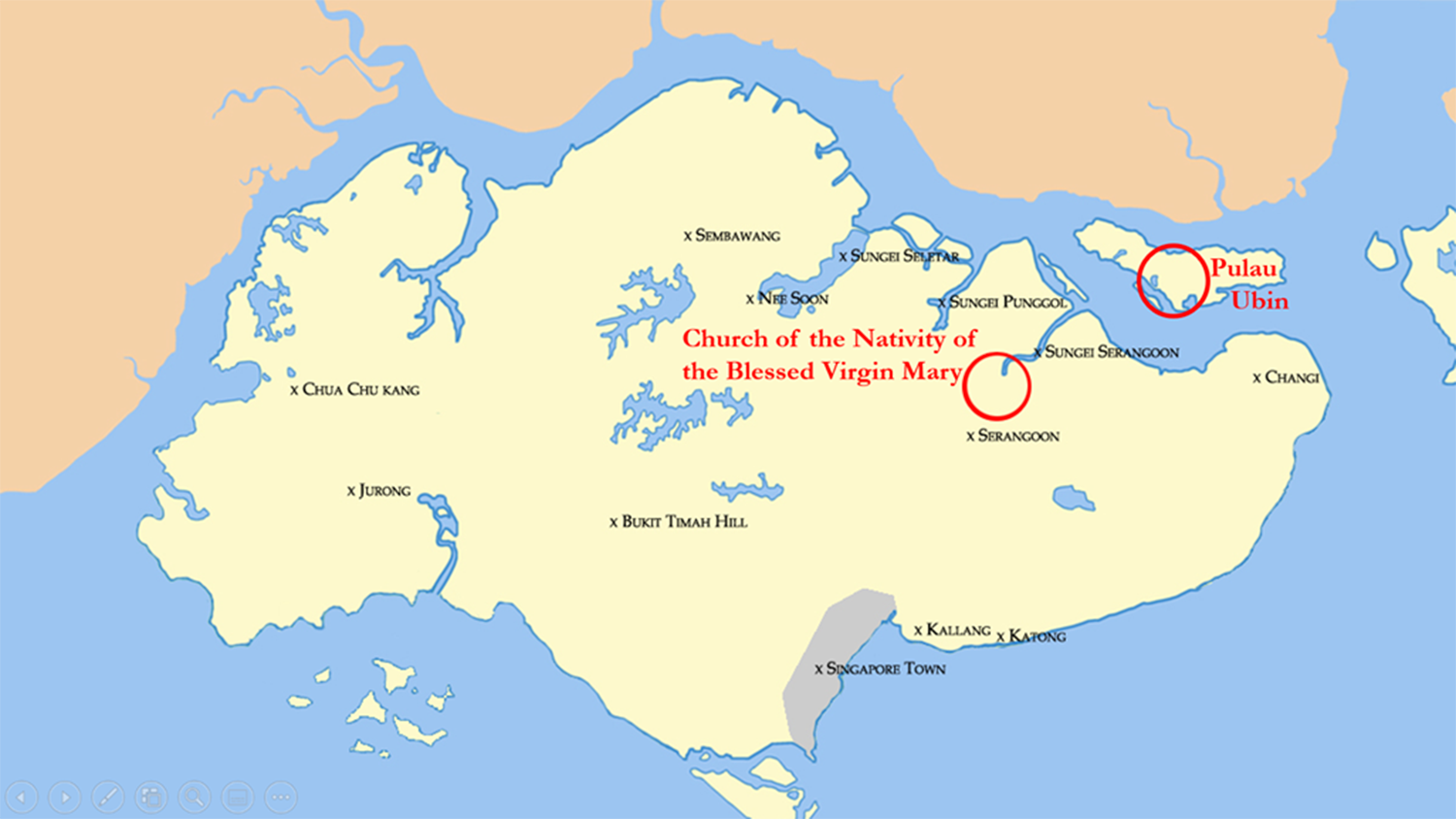
The origins of this community precede the one at Saints Peter and Paul. Lim Guan Hock explains that ‘when Raffles arrived in Singapore in 1819, there were already 20 local gambier plantations on the island with planters from the Riau Islands where gambier plantation had started as early as the 1730s’.Footnote 52 The Serangoon River was one of the places where these Teochew cultivators from Riau put down roots, forming an agricultural outpost. By 1827, this outpost was substantial enough that a road was needed to connect the port along the Singapore River to the northeast. Hence, Singapore’s oldest trunk road, Serangoon Road, was laid that year.Footnote 53 The decision to terminate the road at Sungei Serangoon further suggests the presence of a community of farmer-fishermen in the vicinity. In British documents, this spot was known as the Serangoon Harbour. However, to the local community, it was known as Au Kang (hougang 后港), Teochew for back harbour.Footnote 54 Part of this Teochew community in Hougang had migrated from the Riau Islands via Pulau Ubin (See Figure 3). Pulau Ubin’s collective history also attests to ‘a few fishermen [who] owned sampans or speedboats that enabled them to freely travel to areas like Hougang and Punggol.’Footnote 55 With the mobility of these Teochew fishermen, it is unsurprising that some decided to put down roots in Hougang.
Pulau Ubin and Nativity Church (Map of Singapore from wikicommons, edited and annotated by the Author)

Figure 3 Long description
The map of Singapore highlights two specific locations: Pulau Ubin and the Church of the Nativity of the Blessed Virgin Mary. Pulau Ubin is marked on the northeastern side of the map, while the Church of the Nativity of the Blessed Virgin Mary is indicated in the central region. Other labeled areas include Choa Chu Kang, Bukit Timah Hill, Jurong, Clementi, Queenstown, Bukit Merah, Sentosa, Marina South and Changi. The map provides a general layout of Singapore's geography, with key landmarks and regions annotated for reference.
Fishing and agriculture were popular occupations among the Hougang Teochews from the onset. An 1848 survey by John T. Thomson highlights the presence of some Chinese in Serangoon who were ‘principally engaged as gambier planters’.Footnote 56 By 1855, The Straits Times reported that How Kang had 18 gambier clearings with 37 coolies producing 1,084 piculs of gambier.Footnote 57 The religious affiliations of these coolies are unknown. However the French Mission sent Fr. Ambrose Maistre to the area in 1852 to tend to the handful of farmers and fishermen, indicating that some of these Teochews were already Catholics.Footnote 58 Seah Eu Chin’s 1848 General Sketch of the Numbers, Tribes and Advocations of the Chinese in Singapore further corroborates the popularity of fishing and agriculture as occupations among the Teochews anchored at Hougang.Footnote 59 This fishermen heritage would later be a hallmark of the Teochew community at Hougang, who were remembered for their ability to tell the breed and freshness of a fish with one look.Footnote 60
The trends of migration and the pre-ecclesiastical history of the locale explain how Nativity Church administered to a predominantly Teochew enclave at Hougang. The parish archives show that many of these Teochews were converted in Shantou and utilised the MEP networks for the migration process. In 1857, Fr. Maistre had purchased 40 hectares of land from the British East India Company near the harbour and established a small chapel named St. Mary’s Church.Footnote 61 The Non-Catholic Hougang Teochews soon converted due to the Church’s effective use of mission land to defray the costs of the relocation process. The extensive influence of the church in the life experiences of the Teochew-Catholics manifested itself in three forms: livelihood, schools, and families.
The Church effectively sustained the livelihood of its parishioners by renting out its mission land at cheap rates for Teochew-Catholics to live and farm on. This made Catholicism appealing to the migrants who had yet to convert, and to the Teochew-Catholics from Shantou who subsequently chose to join their counterparts in Hougang. Immediately after the church obtained the mission land, there was a corresponding spike in the number of baptisms.
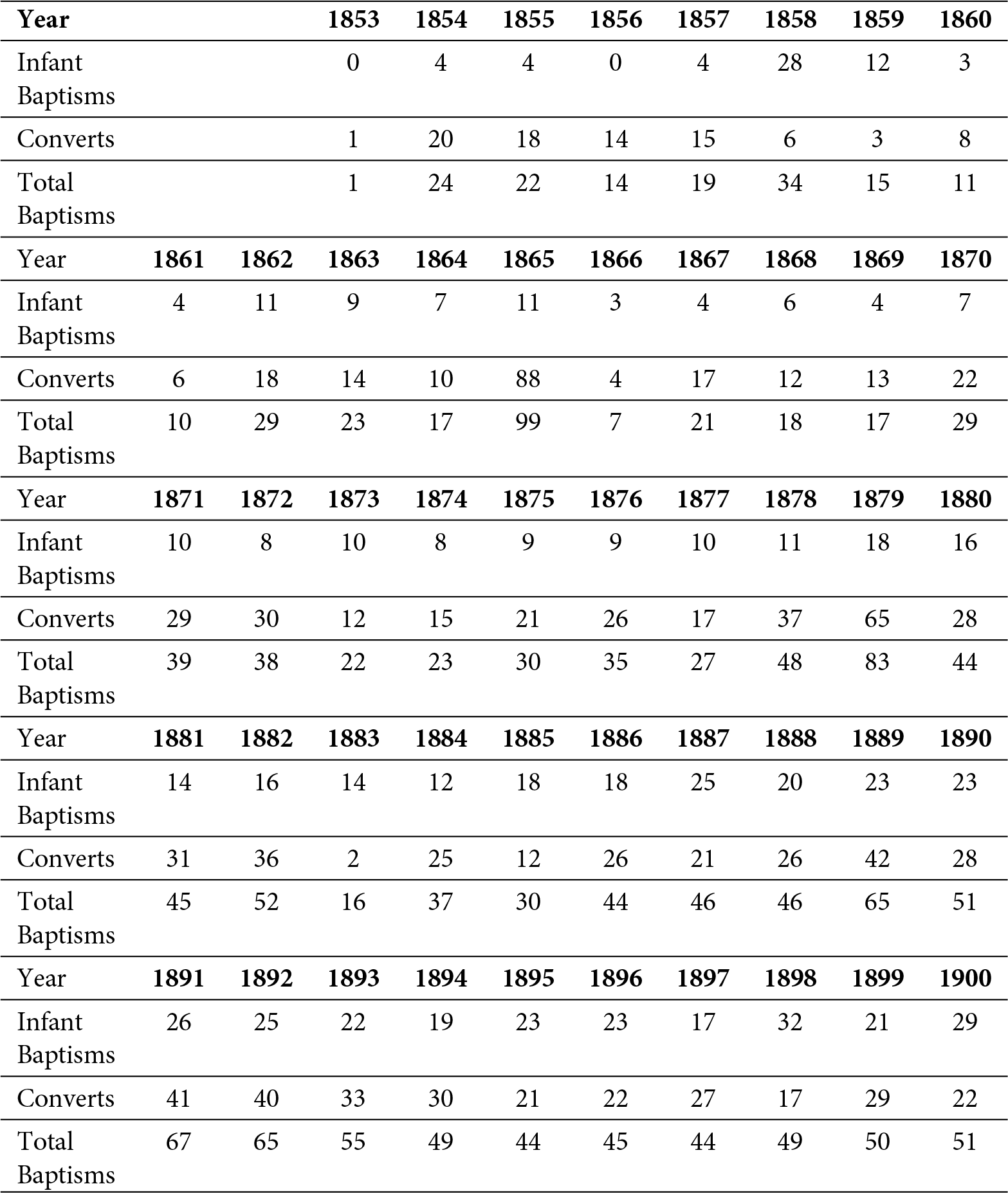
Table 1 shows a definite increase in the number of baptisms into the Teochew-Catholic community after mission land was purchased. From just 19 baptisms in 1857, the number almost doubles to 34 baptisms in 1858. Notably, in 1858 there was a dramatic seven-fold increase in the number of baptised infants, which indicates a rise in the number of families settling down in the villages surrounding the church due to cheaper rent offered to Catholics.
Number of Baptisms in Nativity Church 1853–1900Footnote 62

Table 1 Long description
Annual counts of infant baptisms, convert baptisms, and total baptisms are listed for Nativity Church from 1853 through 1900. Totals are very low in the early 1850s, ranging from 1 to 24, with infant baptisms often at or near zero. The highest total occurs in 1865 with 99 baptisms, largely due to 88 converts alongside 11 infant baptisms. After that spike, totals generally fall back into the teens and twenties through the late 1860s, then climb in the 1870s, reaching another high point of 83 in 1879, again mainly from converts at 65. In the 1880s, totals are commonly in the 30s to 50s, with a low of 16 in 1883 when converts drop to 2. During the 1890s, totals are relatively steady, mostly between 44 and 67, while infant baptisms trend upward compared with earlier decades, often in the low to high 20s. Across most years, convert baptisms make up the larger share of the total, so changes in converts drive the biggest swings in overall baptisms.
The influence of the Church extended beyond the religious sphere. Catholic influences increased in the 1920s when the MEP missionaries set up a fish market, later known as the Kangkar (gangjiao 港脚) Fishery.Footnote 63 Kangkar, meaning the foot of the harbour, reiterates the importance of the fishing profession to the Teochews of Hougang. Clearly permeating the livelihoods of the community, this fishery was set up and run by the mission.Footnote 64 However, the fishery was not exclusive to the Teochew-Catholics. Malay fishermen also earned their living through the Kangkar fishery.Footnote 65
Clearly, the Church transcended its pastoral duties and became the patron-provider for the community.Footnote 66 The MEP founded four schools within close proximities on mission land, serving the education needs of the community. Poorer Catholic families in the early twentieth century would often approach the parish priest for financial help, and he would pay the school fees for the children.Footnote 67 In 1926, the Saint Joseph’s Dying Aid Association was established to provide bereavement and charitable aid to families of the seriously ill and dying Catholics.Footnote 68 The Church positioned itself as the means through which Teochew-Catholics could cope with the stresses of migrating with large families and the poverty it entailed. Attending mission schools and participating in Church activities became central to the Teochew-Catholic experience in Hougang.
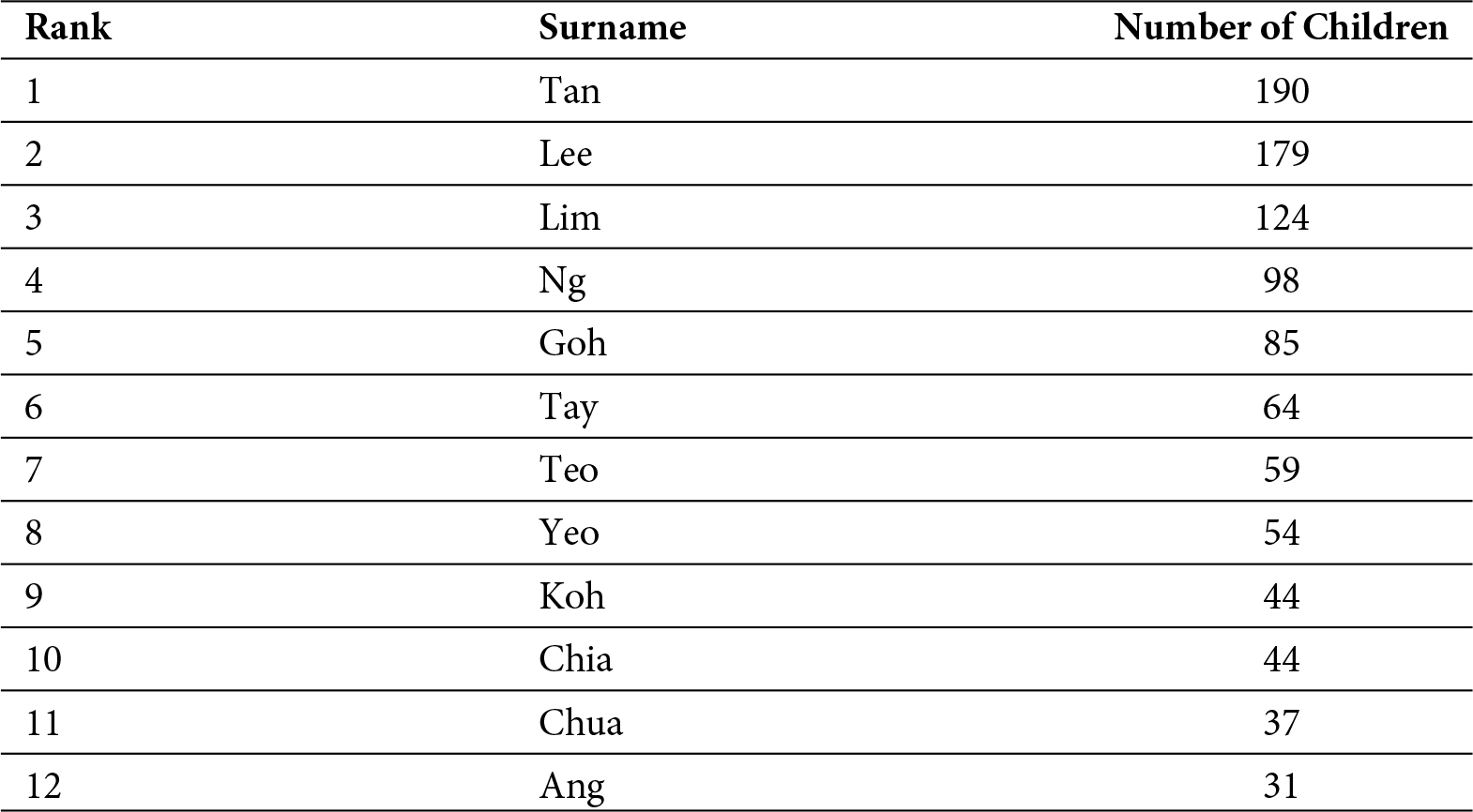
Table 2 summarises the index of the church from 1951 to 1956, containing the 12 highest surnames of children baptised within 6 years living within one kilometre of the church.
Table 2 also shows the concentration of Teochews in Hougang. Fewer than 10 out of 1869 entries in this Baptism register had non-Teochew surnames.Footnote 69 Furthermore, the larger families based in Hougang had more children to offer to the religious life, since the agricultural family business could be continued by their many siblings. Unsurprisingly, the parish at Hougang produced the greatest number of priests and religious vocations in Singapore.
Surnames of Children Baptised in Hougang
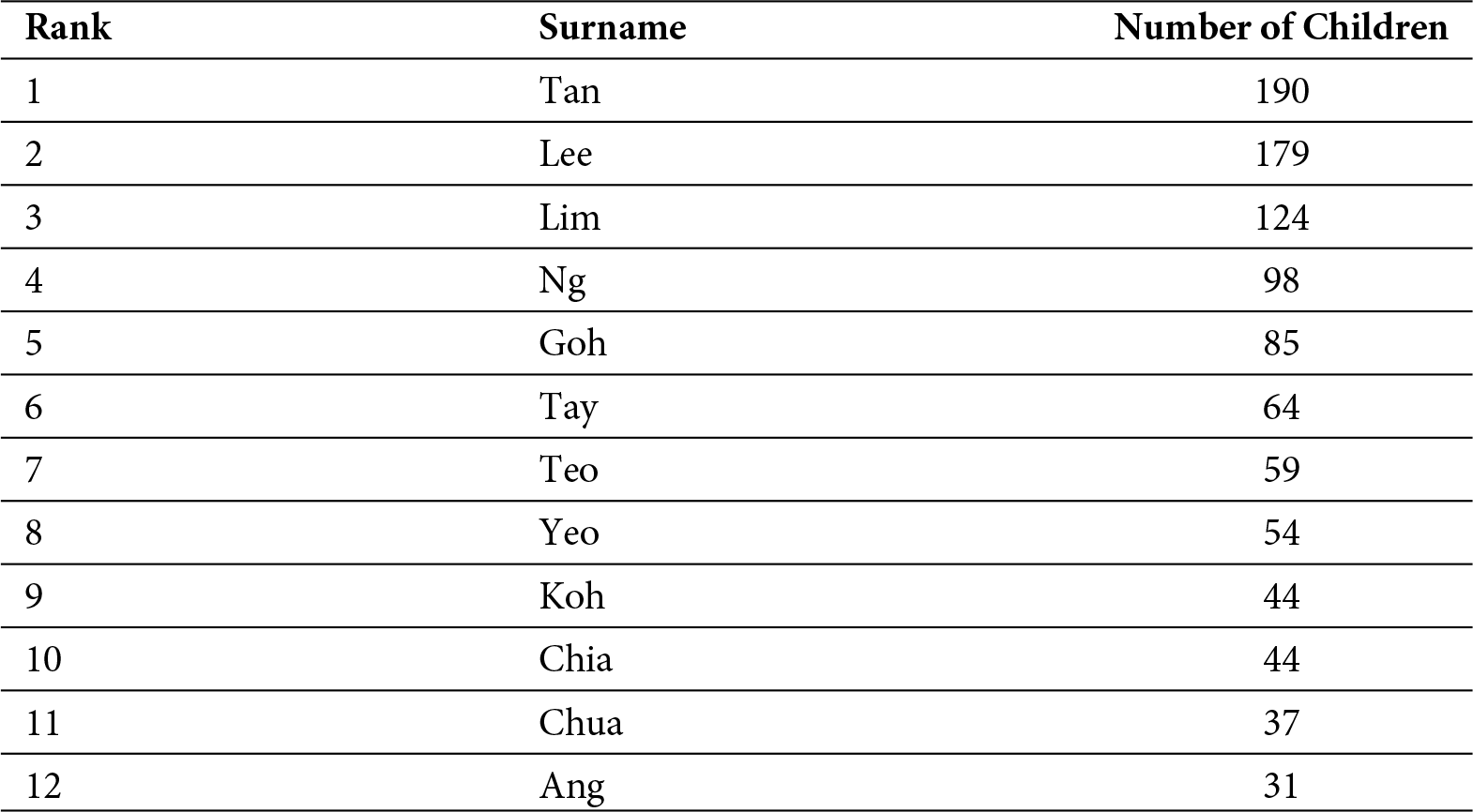
Table 2 Long description
The table ranks surnames of children baptised in Hougang by the number of children recorded for each surname. Tan has the highest count at 190, narrowly ahead of Lee at 179, with Lim third at 124. Mid-ranked surnames include Ng with 98 and Goh with 85, followed by Tay with 64, Teo with 59, and Yeo with 54. The lowest counts listed are Ang with 31 and Chua with 37. Koh and Chia are tied with 44 each. Overall, counts decline steadily from the top ranks to the bottom, with a noticeable drop after the top three surnames. The figures reflect only the baptised children included in this dataset and may not represent surname frequencies in the wider Hougang population.
This HongKar community challenges understandings of localisation as the adoption of local culture since there was no dominant culture in rural Hougang to begin with. Instead, the community had agency to determine which Teochew-Catholic traditions were particular to their locale. In this negotiation process, there were both changes and continuities. For instance, the Teochew meditations of the Stations of the Cross, a series of prayers contemplating the events leading to the crucifixion of Jesus, was remembered as an invention particular to the location. The MEP parish priest from 1920 to 1935, Fr. Edouard Becharas, translated the meditations from their Latin origins into Teochew.Footnote 70 Presently, the tradition of reciting the Stations of the Cross in Teochew remains a lived tradition of the community at Hougang during the liturgical season of Lent. Becheras became the parish priest of Saints Peter and Paul from 1935 till his death in 1957. While Fr. Augustine Tay says that the translation of the Stations of the Cross happened during Becheras’ tenure at Nativity, it is unclear if the Teochew translation was used at Saints Peter and Paul.
Alongside these new cultural inventions were continuities from a Shantou brand of Catholicism. For instance, Tay maintains that the Teochew way of praying the Rosary by singing/chanting was imported from Shantou, and never changed in its tune or intonation.Footnote 71 However, the practice of reciting the Rosary as a family devotion was developed within the locale. Probably due to the patronage of the Blessed Virgin Mary in their parish, the family recitation of the Teochew Rosary was hallmark to the HongKar experiences in Hougang. Many interviewed members of the congregation further ascribe Hougang’s unusual production of the highest number of clergies in Singapore to the community’s fervent praying of the Teochew Rosary. Tay remembers how ‘the moment the sun sets, and you take a walk around the villages near the church, you can hear different families singing different parts of the Rosary litany’.Footnote 72 These recited prayers were circulated orally within the community, with the family as its basic unit. For a community educated in English or Mandarin at the mission schools, members learned Teochew prayers by repeating after elders in the family and taking part in large, extended family gatherings for Rosary devotions. This practice often became part of their familial traditions. The experiences of learning to recite these prayers are also crucial in the forging of communal consciousness and identity. In essence, while the MEP missionaries formally promoted certain devotions and continuities amongst the Teochew-Catholics in Hougang, the coproduction of the HongKar experiences in Hougang cannot be understated. The local dynamics — large extended families living in close proximity — often shape these devotions in diverse ways. While missionaries might have advocated for some sense of continuity in practices, it was local, Teochew-Catholic agency that determined which practices to retain, and the various aspects to modify.
The use of Teochew in church liturgy and prayers was further encouraged in 1965 with the end of the Second Vatican Council. Hoping to encourage the participation of lay peoples, the language of worship changed from Latin to local vernaculars. After 1965, Nativity Church offered Masses in English, Mandarin and Teochew until the coronavirus pandemic in 2020.Footnote 73 The introduction and participation of Teochew liturgy served as another rallying point for the Teochew-Catholics of Hougang. The shared experience of attending Teochew services together as a family became a shared tradition within families while also reinforcing the communal identity.Footnote 74 The church was always packed during the Teochew Mass despite being held at 6am.Footnote 75
Furthermore, unique historical forces shaped the common HongKar experiences in Hougang. Large extended families underwent the same rites of passage, from living on mission land and making a livelihood through the help of the church, to participating in school events, to religious prayers and processions within the extended family. These experiences, made possible by the Church, were particular to the locale, and they facilitated the formation of a location-based HongKar identity. The HongKar legacy was so strong that many traditions have survived the relocation policies of the Singapore government and the decline of dialect cultures in Singapore. Even though large-scale family traditions ceased with relocation, the Teochew-Catholic rhythm continued through the advocacy of the church. In 2005 The Catholic News published an article remembering Nativity Church as ‘The Teochew Parish’. The article, together with another article in The Straits Times, announced that Nativity Church had been gazetted as a National Monument because it was a site that was ‘closely associated with the social life and activities of people, organisations and institutions that have an impact on the community and nation’.Footnote 76 Nativity joined Saints Peter and Paul, which was gazetted in 2003.Footnote 77 Nevertheless, of the three churches in comparison, only Nativity would be remembered for its Teochew-Catholic community which persisted, albeit in an attenuated way.
Church of Saint Anthony — Forced poverty in Mandai
The most dramatic form of coping mechanisms offered by the Church occurred in Mandai, where survival of the Teochew-Catholics was literally at stake. In comparison to the other two communities, the Teochew-Catholics who eventually became the pioneers of the Church of Saint Anthony experienced a completely different set of historical circumstances. These Teochews were refugees that were forced to flee The Republic of China due to the persecution of Communists. On the fiftieth anniversary (golden jubilee) of the establishment of the community, the Apostolic Visitor for Overseas Chinese, Bishop Carlo van Melckebeke, wrote his congratulations to the community in their commemorative magazine. He asked:
I wonder how many of you are left to remember the ‘long march’ in the 1920s, when a whole group of Teochew people came to Singapore in search of a place where they could practice their religion in peace and make a living undisturbed and without fear for the future of their children.Footnote 78
Indeed, the long march reference to the Red Army’s retreat hints at the reluctance of this community to depart from their hometown. Bishop Melckebeke’s reference, however, seems inappropriate because the Teochew-Catholic community was forced out of their village by the Red Army’s attacks. Moreover, unlike the atheist Communists who formed the Red Army, these Teochew-Catholics were persecuted for their religious inclinations. And, unlike the willing sojourners and migrants in the other two parishes, this community was forced to seek refuge in Singapore and relied extensively on the avenues provided by the church for their survival.
These Teochew-Catholics hailed from the village of PekNay (baileng cun白冷村) in HuiLai County, Guangdong. PekNay is a phonetic name for ‘village of Bethlehem’, which hints at the religiosity of the villagers there. Cyprian Lim’s family history, which traces his maternal roots to China, depicts PekNay as a Catholic stronghold since the early 1700s.Footnote 79
The Communist attack on PekNay was covered extensively in Singapore. The Straits Times reported on 29 March 1928 that PekNay was ‘one of the richest villages in China. For that reason, it was marked out by the Reds for destruction, and eventually they attacked it.’Footnote 80 The Teochews Catholics fled the village on 27 January 1928. They left for Shantou, undertaking a few days’ journey on foot.Footnote 81 The Catholic Church in Shantou received the several hundred villagers in February. The MEP Bishop of Shantou hence appealed for relief and assistance abroad, and his MEP counterpart Bishop Marie Barillon of Malacca was the first to respond that Singapore would take those familiesFootnote 82. On 27 March 1928, The Straits Times reported a ‘Sudden Descent on Singapore’:
This is the fourth batch of refugees to arrive in Singapore from the same district, all of whom are Roman Catholic converts. The first batch arrived here on February 4 and consisted of 90 people, the second on February 18 and numbered 375, the third on February 25 of whom there were 40, and as we have seen, the fourth yesterday (numbering 275). And the end is not yet, as there is another batch of about 300 waiting at Swatow to be sent to the Straits, while there is a constant stream of the same class crowding into the Roman Catholic Mission at that port.Footnote 83
The speed at which the refugees flowed through these missionary networks resulted in its description as a sudden descent’. Within three weeks, the MEP had managed to facilitate the relocation of most of the villagers from PekNay. The same report documents Fr. Stephen Lee’s opinion on the matter: ‘Father Lee says that this is a great strain on the local Church. Singapore has been converted into a veritable dumping ground.’Footnote 84 Later, other Teochew-Catholic refugees similarly travelled to Shantou seeking protection from the Communists, following the precedent set by the PekNay Catholics in using the Church’s connections as an avenue for coping with persecution.
Furthermore, these Teochew-Catholic refugees were reported as ‘absolutely destitute’.Footnote 85 Apart from their long march out of PekNay, poverty would be another key component in the shared experiences of this community. The commemorative magazine documenting the golden jubilee of this community also emphasises their state of penury: ‘Having to run for their lives, the refugees on arrival at Singapore were penniless and their livelihood became an urgent problem.’Footnote 86 Their distressing state of impoverishment is also evidenced by Nanyang Siang Pao’s appeal letters, published on 13 February 1928 and later 10 April 1928, which asked for donations for these refugees.Footnote 87 The Chinese newspapers differed from the English newspapers in portraying the plights of these refugees. These Chinese newspapers highlighted the atrocities experienced by the refugees from the first-person perspective, attempting to gain donations for the relief efforts of the refugees. Fortunately, The Straits Times reported that the number of refugees in dire need of assistance dwindled because some of these refugees joined their relatives in Malacca, Malaya.Footnote 88 Others were claimed by family and friends, with the remainder cared for by ‘Catholic families’.Footnote 89 Hence, while the local newspapers reported thousands of refugees coming from Shantou, only 150 destitute Teochew-Catholics from PekNay ended up in Mandai, without family nor connections in Singapore.
The Church cared for and resettled these refugees through the actions of David Wee and Fr. Stephen Lee. Wee, a rich philanthropist parishioner of Saints Peter and Paul, played a crucial role in employing most of the PekNay refugees in his construction company. He also supplied them regularly with basic necessities and offered them temporary lodging.Footnote 90 Fr. Lee submitted 49 applications for land to the British Government. Finally, 100 acres of land in Mandai was given to house these refugees.Footnote 91 Sr. Theresa Lee recalls that each of the 20 families was given 1.5 acres of land for $15, to be paid to the church when they had reaped the fruits of their labour.Footnote 92 The problem was that the dense jungle terrain at Mandai required copious amounts of work to clear for farming, and these refugees had to labour immensely for their survival. Since the land was completely occupied by Catholics, the village earned the name Hong Kar Sua (fengjiao shan 奉教山), meaning Catholic Hill or Catholic Village in Teochew.Footnote 93
The Church continued to develop Hong Kar Sua in sustained attempts to settle the refugees. In 1931 Fr. Stephen Lee undertook the construction of an attap chapel within the Catholic Village and dedicated it to Saint Anthony.Footnote 94 As the community grew, an attap house named the Hall of Learning was erected to teach Catechism to young children. Eventually, this Hall of Learning was converted to Cheng Chi School (zengzhi xuexiao 增志学校), reflecting the growth of the community.Footnote 95 By 1960, the Chapel of Saint Anthony became the Church of Saint Anthony, with Fr. Joachim Teng as its first parish priest.Footnote 96
Three distinct characteristics of this Teochew-Catholic community emerge from the above outline of their history and the coping avenues provided by the Church. The first is their immense poverty as refugees. The common experience of poverty and toiling for their survival became a trademark experience of the community. The Church paid for all the expenses of constructing the chapel and the school; and the road adjacent to the village was named after Fr. Lee.Footnote 97 Other HongKar philanthropists like Lee Kheng Seng paid quit rent to the government on behalf of the villagers without telling them.Footnote 98 Most importantly, Fr. Lee chose Saint Anthony of Padua to be their patron saint, because he was known for his special devotion to the poor.Footnote 99 Even Fr. Teng recalls beginning his ministry in Mandai in 1949 as being ‘among the simple folks of China — typical Chinese manners and customs prevailed — full of respect for the elders, though poor yet very contented with life.’Footnote 100 However, this simplicity that Fr. Teng recounts was not carried over from China. The sudden poverty had meant that more extravagant traditions and customs were omitted for pragmatic reasons.
Second, unlike the extended families living in Hougang, the Catholic Village of Mandai comprised of broken Teochew-Catholic families. Some of the villagers lost family members during the attack on PekNay, while others died en route to Shantou and Singapore. Cyprian Lim, who traced his maternal roots to PekNay, recalls that ‘people of different surnames and Lees belonging to other families clung to my Lee family, saying they were relatives.’Footnote 101 This memory illustrates the lack of familial ties in the early Mandai community.
The eventual decline of the Mandai community can be attributed to relocation and resettlement. In 1977 when the community celebrated their golden jubilee, traces of their Teochew-Catholic heritage were still evident from the way they wrote their history. The souvenir magazine still used the traditional Teochew Chinese way of noting dates and times: ‘on the 5th day of the 1st Month of Teng Mau, refugees reached Swatow and appealed to the Bishop of Swatow for relief.’Footnote 102 However, Fr. Teng laments the loss of the Mandai Teochew-Catholic community:
Today with the advancement of the world in general, the descendants of the refugees from Hui Lai and Pegney have caught up with rapidity and success… most of the younger generation have left the quiet and nature reserve to the noisy city where they contract the modern way of life. They can hardly be recognised as the sons and daughters of the simple and hardworking parents who came to Singapore 50 years ago.Footnote 103
Teng addresses the outward migration of the younger generation of the community. Perhaps not wanting to be disadvantaged by their poverty, they left the Catholic Village to pursue success beyond their community.
The remnants of the community were dealt a finishing blow by government resettlement policies. The Catholic Village was taken over by the Singapore government in phases phases and is today a part of the Singapore Zoological Gardens as well as the Singapore Armed Forces military camp.Footnote 104 In 1994, the Church of Saint Anthony was moved from Mandai to Woodlands where the Teochew-Catholics were joined by new communities. For instance, the cover of the souvenir magazine published in commemoration of the new church’s opening comprised of both Chinese and Tamil text (see Figure 4). The letters to the new parish at the front of the magazine were published in three languages: Chinese, English and then Tamil. With the loss of their young to modernity, their Catholic Village to resettlement, and the dilution of their community due to multiculturalism, the community faded into history.
Cover page of Church of St. Anthony’s Souvenir Magazine (image reproduced with permission from The Chancery of the Roman Catholic Archdiocese of Singapore)

Figure 4 Long description
The poster announces the 'Blessing and Opening' of the Church of St. Anthony. It features a large image of a religious statue in a Madonna-and-child style and a smaller photo of the church building. The text is organized with the headline 'Blessing and Opening' at the top, followed by 'Church of St. Anthony' centered below. The address '25, Woodlands Ave 1, Singapore 7388' and phone numbers 'Tel. 3638304, 3638203' are listed beneath the church name. The date '23 April 1994' is at the bottom. Decorative borders and vertical panels with Chinese calligraphy are present, indicating a formal church event announcement.
The moving of the church from Mandai to Woodlands also evidences a change in the strategies of the Catholic Church in an era of decolonisation. Instead of catering to various dialect and language groups, parishes were established and relocated to New Towns developed by the Housing Development Board to cover a wider expense of territory. At present, the Archdiocese of Singapore is divided into five territorial districts: City, Serangoon, North, East and West. Paralleling the multiculturalism promoted by the Singapore government in its nation building attempts, the Church correspondingly integrated Catholics of different races into parishes like St. Anthony.
Indeed, the words of Fr. Cyprian Huc (parish priest of the Church of St. Anthony from 1966 to 1982) seem to ring true: ‘the Catholics of Mandai have been associated to the great changes that occurred in the island of Singapore.’Footnote 105 This community was glued together by circumstances. This glue was the common experiences of suffering and subsequent attachment to the Catholic Village at Mandai. When such adhesives were removed, the HongKar community ceased to exist. In Woodlands, there only exists a minority of parishioners who trace their roots back to the Catholic Village in Mandai. This HongKar community reiterates the importance of geography in the localisation process. The community was intrinsically defined by its location, and the immense toils it took to establish the parish. In this example, the experiences of coping with refugeeism at the locale defined the community. The community was localised in the sense that it had adapted to the circumstances in Singapore, becoming drastically different from their PekNay origins. Their poverty and the devastation of their village also broke the connection to their homeland, necessitating a differentiation from the PekNay Catholic traditions that were predicated on a rich Catholic business stronghold.
Communal comparisons
These three parishes were undoubtedly HongKar Churches. They were HongKar in the sense that they concurrently practiced Catholic and Teochew traditions in a unique blend that best befitted their occupations, socio-economic statuses, and needs at each locale. The experiences of different coping avenues provided by the Church resulted in cultural nuances across these parishes.
There were obvious differences amongst the three communities in dealing with death. The cheap mission land afforded Nativity Church the luxury of having a cemetery next to the parish, and the Chinese practice of tomb sweeping was easily maintained. Praying for the deceased in front of their graves during death anniversaries and on All Soul’s Day was not uncommon, with Teochew prayers recited and even food offerings presented in front of Western-styled tombstones.Footnote 106 This practice was also echoed in PekNay, where Catholic Villagers observe All Soul’s Day on November 2 in a similar fashion to how their non-Christian counterparts observe Ching Ming.Footnote 107 Known as Memorial Day of the Departed, the villagers go up the hills to clean the graves and honour those who have gone before them. White candles are lit, and prayers are said before the sprinkling of holy water on the gravestones.Footnote 108 This practice was not sustained by the PekNay refugees in Mandai, who were torn from their family members and had no access to the graves of their deceased.Footnote 109 Similarly, the transient nature of businessmen in Singapore Town, and the lack of a cemetery close by, meant that Teochew businessmen offered requiem Masses for the dead instead of practicing tomb sweeping. These businessmen could afford to publish announcements for these requiem Masses in local newspapers.Footnote 110 In contrast, notices for requiem Masses at Nativity or St. Anthony’s were substantially fewer.
In a similar vein, the maintenance of Teochew practices relating to marriage would have been dependent on the nature of the community involved. The Teochew-Catholics at Nativity Church, being farmers and fishermen, for instance, would have the financial means to sustain the Teochew tradition of the Chua Lou Goei (dailu ji 带路鸡) where a rooster and a hen would be given to the groom by the bride’s parents.Footnote 111 These chickens would be placed under the nuptial bed to determine the gender of the first born. This practice was less commonplace in Singapore Town where there was a lack of space, and in Mandai where the community did not splurge on such luxuries.Footnote 112
Furthermore, there were obvious differences in religious devotion. Advocating for God’s blessings upon the poor, the Mandai Teochew-Catholics had special prayers to Saint Anthony. A video commemorating 25 years of the Church of Saint Anthony in Woodlands, posted by the church on 26 July 2019, features the recollections of Agatha Chua and Clement Loh. Chua and Loh proudly state that the 8pm prayer of dedication to Saint Anthony every Tuesday is a tradition that has not changed since their time at Mandai. Again, this would have resulted in a different experience from the community in Hougang, who emphasised the daily family Rosary prayer since their community devoted themselves to the Virgin Mary. There are no such special prayers to Saints Peter and by the community at Queen’s Street that have been reported in published sources. Instead, they manifested a zeal for evangelisation by their works of philanthropy and outreach; a zeal that was advocated by both the church’s patron saints.
The differences in status and finances could also account for the number of religious vocations across locales, as compared in Table 3.Footnote 113
Priestly and Religious Vocations across Three Parishes as at 2012

Table 3 Long description
The table reports counts of priestly vocations and nuns for three parishes as of 2012. Nativity has the highest numbers in both categories, with 27 priestly vocations and 50 nuns. Saints Peter and Paul reports 7 priestly vocations and 7 nuns. Saint Anthony has the lowest priestly vocations at 1, and reports 6 nuns. Across all three parishes, nuns outnumber priestly vocations in Nativity and Saint Anthony, while the two counts are equal in Saints Peter and Paul. These figures are simple counts for a single point in time and do not indicate changes over time or reasons for differences between parishes.
In this case, the large extended families and the availability of land and resources in Hougang allowed parents the opportunity to gift one of their many children to the church.Footnote 114 In contrast, the following deductions can be made about the other two parishes to explain the relative lack of religious vocations. In the parish of Saints Peter and Paul, children — in a relatively smaller nuclear family — were ostensibly much more needed to inherit a merchant family’s business. Every child was important, and this likely superseded desires for their children to give their lives to the church. Similarly, parents in the smaller and poorer community in Mandai needed their children to continue their agricultural livelihood, and thus prioritised their assistance in farming the land over gifting them to religious orders.
Nevertheless, it would be remiss to think of these parishes as entirely separate, especially because their Catholic affiliations allowed for inter-parish contacts and exposure to different cultures. Ironically, these interactions, through the common medium of Catholicism, solidified their distinct communal identities. For instance, the overall jurisdiction of the MEP over the parishes of Singapore produced some form of commonality across these three parishes. The MEP missionary priests were rotated across parishes. Frs. Becheras and Paris were at the Church of Saints Peter and Paul and Nativity Church during some of their stays in Singapore.Footnote 115 Both priests were fondly remembered for their fluency in the Teochew dialect and knowledge of Teochew traditions. This meant that the sermons of the Mass conducted at these parishes were preached in Teochew. However, their familiarity with Teochew traditions predisposed them to be arbitrators of the localisation process, producing new HongKar traditions at each locale as seen in the previous section. When faced with the conflicts between Teochew and Catholic traditions specific to each community, these priests would have adjudicated on the appropriateness of Teochew traditions to the Catholic teachings. Later, the rotation of locally ordained priests resulted in the same phenomenon. Frs. Augustine Tay and Joachim Teng were both born and raised at Nativity Church, but eventually rotated to St. Anthony’s Church as part of their pastoral duties and furthered the localisation process. Tay even emphatically claims that ‘the people of Mandai were a different breed of Teochew-Catholics [than him]’ and treated them as such.Footnote 116
Conclusions: Kaki-nang?
We use this phrase, ‘Teochew nang, kaki nang’ (“When you are Teochew, you are one of us”)—it captures the reality of everyday life—all of us Teochew feel that we are one community.Footnote 117
George Quek, Chairperson of the Singapore Teochew Poit Ip Huay Kuan, uses this phrase coined by Teochews to express their solidarity overseas. This is especially since his organisation is a federation of eight different Teochew clans striving to embody unity amidst diversity. Yet there are layers of irony behind the phrase’s alleged unity. For one, even the writing of the word ka is contentious. The written Chinese translation of the phrase uses the word 自 as in 自己人 (ziji ren), meaning one’s own people, which is the prevailing understanding of the phrase in Singapore. However, in an interview on a Shantou documentary 潮州人说: 潮州话 (chaozhouren shuo: chaozhou hua), Lin Lunlun, a former professor of Chinese language and literature, offers two other transliterations. The first is 胶己人 (jiaoji ren), meaning people glued together and the second is 家己人 (jiaji ren) people of one family. All three words are pronounced with the same intonation and have the same effect of emphasising commonality amongst Teochews. However, there are slight nuances in the meaning, depending on which word is used. Quek’s translation follows the written Chinese version, which has the effect of emphasising inherent oneness. In contrast, using the word 胶 seems to imply some external circumstance that forced unity amongst its entities. Lin, however, argues that it should be written in the third sense: 家. This use of the word arguably emphasises a common origin or ancestor that unites different members of a larger Teochew family.
For a concluding analysis of these three parishes, this notion of Kaki-Nang parallels the commonalities and nuances of Teochew-Catholics against the localisation processes of overseas Chinese communities. Indeed, all three communities identified themselves, and were identified by others as Teochew-Catholics. This identification on a generic level — hailing from Teochew land, speaking Teochew while baptised into the Catholic faith — would cut across all three communities. However, their experiences in coping with relocation were as different as the contentions behind the meaning of Kaki-Nang. The Catholic Towkays and their comparatively isolated nuclear families can be understood as Kaki-Nang (ziji de ren 自己的人), which can also be translated as people alone. In comparison, the Teochew-Catholic rhythm meant that the Teochew-Catholics of Hougang not only saw each other as a spiritual family, but that many of them were from the same bloodline. Moreover, the encouragement of intra-religious marriages meant that most of this Teochew-Catholic family in Hougang really became Kaki-Nang in the sense of related family members: 家己人. Lastly, the Teochew-Catholics at Mandai were glued together by circumstances, reiterating the third form of understanding Kaki-Nang: 胶己人. Therefore, while these three communities were made of Teochew-Nang; Kaki-Nang, the experiences that bound them together were vastly different. They underwent different localisation processes and therefore had variants of Teochew-Catholic traditions.
How then, do these HongKar parishes stack up against Wang Gungwu’s localisation thesis? First, these communities reaffirm Wang’s claim that overseas Chinese adapted to new circumstances and became different from each other. However, while Wang’s localisation thesis targets transnational Chinese communities in arguing against diaspora, his notion of Chinese living elsewhere can be applied in an intranational analysis.Footnote 118 Within Singapore itself there is evidence of three different variants of Teochew-Catholics. Elsewhere in this case problematizes the vagueness of the geographical aspect of localisation. The local can be taken to mean Singapore, but in Catholicism can be narrowly scoped to mean the parish and its boundaries. Similarly, the cultural aspect of localisation fails to account for these three communities, which were localised in the absence of another dominant culture.
Furthermore, these Teochew-Catholic communities deviate from and yet reaffirm Wang Gungwu’s assertion that there is minimal cohesion across overseas Chinese communities. Wang claims this minimal cohesion in response to the problems of the term diaspora, which he felt had ‘the connotation of being a large cohesive social group’.Footnote 119 These HongKar parishes, no doubt, were all distinct overseas Chinese communities with their own experiences, practices, and cultures. However, Catholicism acted as a medium for connecting and fostering cohesion across these communities in the same way that Chinese traditions and beliefs connected overseas Chinese groups in Southeast Asia. While Catholicism inadvertently consolidates these parishes into a large cohesive social group of Teochew-Catholics, Wang’s claim of minimal cohesion still seems to ring true. Despite their Catholic commonalities, the HongKar-Nang across locations were not Kaki-Nang. Agnes Chan aptly points out that, HongKar-Nang, Hougang-Nang chai si Kaki-Nang (fengjiaoren, hougangren cashi zijiren 奉教人,后港人才是自己人), meaning that she only considered Teochew-Catholics who lived in Hougang as part of her community.Footnote 120
The histories of these Kaki-Nang(s) invite a reconsideration of our understandings of identity and community formation by advancing an experience-based model of localisation that asserts an ongoing, contingent process. This interpretation of localisation disrupts homogenising views of the diaspora studies and avoids teleological assumptions of cultural hybridity by advocating for an ongoing, contingent process shaped by the specific historical experiences, and can be extended comparatively to other religions and communities in Southeast Asia. These comparative microhistories of Teochew-Catholics in Singapore evidence varying experiences of migration — sojourning, settlement, and refuge — and present a microcosm of the experiences of other social groups and solitaries in the region and invite further analysis. Moreover, the understanding of localisation as a co-constructive, dialectical, process of negotiation is not, and should not, be limited to the relationship between missionaries and Teochew-Catholics. Might scholars reassess the contributions of experiences in the making of other linguistically defined communities and communal spaces, and–by extension–studying other processes of community formations in Southeast Asia? How might diverse experiences be used to include or exclude peoples from being considered as Kaki-Nang in other Southeast Asian communities?