Introduction
Fetal alcohol spectrum disorder (FASD) is the term used to describe the impacts associated with prenatal alcohol exposure (PAE). FASD is a lifelong disability, where individuals can experience challenges across a wide range of areas, including learning, memory, attention, motor skills, communication and social skills. Importantly, as stated in the recent Canada FASD Research Network policy action paper to standardise the definition of FASD: ‘Each individual with FASD is unique and has areas of both strengths and challenges’ (p. 3).Reference Harding, Flannigan and McFarlane1 Traditionally, research has focused more on the neurodevelopmental outcomes associated with PAE.Reference Mattson, Bernes and Doyle2 However, more recently, there has been increasing clinical research attention regarding the potential effects on other organs and systems of the body.
The critical influence of the maternal uterine environment on the future health of offspring is known as the Developmental Origins of Health and Disease (DOHaD) hypothesis,Reference Barker3 a more recent term for what was characterised the ‘Fetal Origins of Adult Disease’ in the 1990s.Reference Hales, Barker and Clark4 The DOHaD hypothesis recognises that exposure to certain environmental influences during critical periods of development may have short- and long-term consequences for an individual’s health.Reference Mandy and Nyirenda5 The potential clinical implications of the DOHaD hypothesis for individuals with FASD were highlighted at the 7th International FASD Conference by a panel of young adults with FASD, who stated that rather than describing FASD as a brain-based disorder, it should be considered a ‘whole-body disorder’.Reference Himmelreich, Lutke and Travis6 This conference also inspired the publication of a mini-review, which highlighted that in preclinical models, even low to moderate PAE could programme chronic disease outcomes in offspring.Reference Sarman7 Furthermore, a previous systematic review and meta-analysis of comorbid conditions that have been documented with FASD found that two of the most prevalent health-related conditions were congenital malformations and chronic otitis media.Reference Popova, Lange and Shield8
Subsequently, we have undertaken a recent series of systematic reviews that have summarised all the available preclinical and clinical literature regarding the potential chronic health impacts of PAE.Reference Reid, Moritz and Akison9–Reference Akison, Moritz and Reid12 There was evidence from the preclinical studies that PAE was associated with: poor metabolic health (e.g., elevated blood glucose and insulin resistance);Reference Akison, Reid, Wyllie and Moritz11 cardiovascular problems (e.g., hypertension and cardiac dysfunction);Reference Reid, Akison, Hoy and Moritz10 renal dysfunction (e.g., impaired electrolyte excretion);Reference Reid, Akison, Hoy and Moritz10 and immune-related outcomes (e.g., increased risk for atopic diseases and infections).Reference Reid, Moritz and Akison9 However, there was a lack of clinical research, with only 5 out of 128 studies across all 4 reviews including individuals with a diagnosis of FASD. A subsequent studyReference Cook, Lynch and Coles13 found that compared to the national average, children and adolescents (aged 8–17 years) with FASD experienced higher rates of hypertension. Additionally, FASD status significantly predicted hypertension, after controlling for age, sex, ethnicity, medication use and obesity.
Given the increasing interest regarding the broad range of potential physical health impacts of PAE, the current study aimed to undertake a survey of caregiver-reported health concerns. The overarching objective of the current study was to provide a comprehensive overview from a global perspective of potential health issues, which could then be used to inform future direct health assessments of children with FASD. First, we compared the rates of reported health conditions in children with FASD to available prevalence data in the general population. Second, given there may be a range of contextual factors influencing physical health status, including exposure to adverse childhood experiences and involvement with the out-of-home care system,Reference Price, Cook, Norgate and Mukherjee14 we aimed to undertake an exploratory analysis investigating potential child and family predictors for adverse health outcomes for children with FASD.
Method
Participants and recruitment
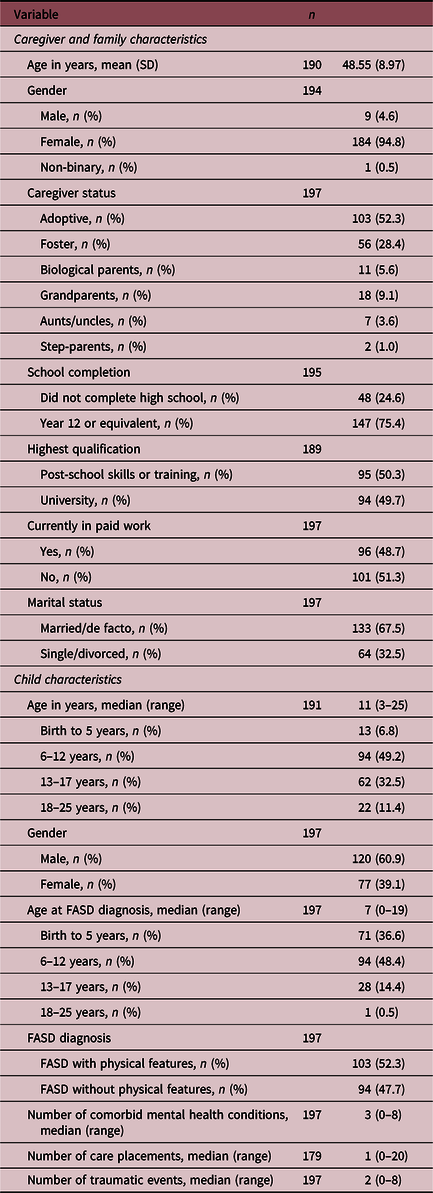
One hundred and ninety-seven caregivers of children with FASD were included in the current study. Caregivers were from Australia (40.2%), United States (27.7%), New Zealand (15.2%), Canada (13.6%), United Kingdom/Europe (2.1%) and South Africa (1.1%). Further demographic characteristics are shown in Table 1. Caregivers were recruited online via FASD-related organisations. Sixty-four relevant organisations were contacted via email or social media and provided with a flyer regarding the research study. Information about the study was then distributed on the organisation’s websites, social media and/or included in their newsletters. Caregivers were invited to participate in an online survey if they cared for a child who had received an FASD diagnosis. Caregivers were instructed to complete the survey about their child who had an FASD diagnosis, and that the researchers were interested in collecting information regarding their child’s health and wellbeing. Caregivers were provided with an email address at the start of the survey that they could contact if they had any questions or difficulties with completing the survey. Study data were collected from May 2018 to June 2019 and managed using REDCap electronic data capture tools hosted at The University of Queensland.Reference Harris, Taylor, Thielke, Payne, Gonzalez and Conde15 The study was approved by the Children’s Health Queensland Hospital and Health Service Human Research Ethics Committee and the University of Queensland Human Research Ethics Committee.
Demographic characteristics of the sample

Note: FASD = fetal alcohol spectrum disorder; SD = standard deviation.
aFASD with the physical features included children diagnosed with: fetal alcohol syndrome (FAS), partial fetal alcohol syndrome (pFAS) or FASD with the three sentinel facial features. FASD without the physical features included children diagnosed with: neurobehavioural disorder, static encephalopathy or FASD without the three sentinel facial features.
Questionnaire
Demographic data included caregiver and child gender and age, country of residence, caregiver status (e.g., biological, adoptive, extended family), any comorbid behavioural and mental health conditions in the children, number of care placements and traumatic events children had experienced, and information pertaining to current family factors (e.g., caregiver qualifications and employment status). Caregivers were asked to provide their child’s FASD diagnosis, with multiple choice options provided that included each of the most commonly utilised diagnostic criteria available worldwide. An ‘unsure’ option was also provided. To provide further validation regarding the FASD diagnosis, caregivers were also asked to provide the doctor’s name and corresponding clinic.
Health data were collected regarding a wide range of conditions. Questions in the current survey were based on the Australian National Health Survey 2017–201816 and were informed by a previous survey undertaken by a group of young adults with FASD.Reference Himmelreich, Lutke and Travis6 Caregivers in the current study were asked to report by selecting ‘Yes’ or ‘No’ to whether their child had been diagnosed as having a range of particular health problems, as reported by a health professional (e.g., ‘Has a health professional ever told you that your child has any heart problems?’). If yes, caregivers were provided a space to list any health problems their child had been diagnosed with. Caregivers were also asked to report on health conditions regularly experienced by their children (e.g., ‘Has your child experienced any chronic infections?’). Again, first selecting ‘Yes’ or ‘No’ and then listing any conditions. Body mass index (BMI; kg/m2) was calculated using caregiver-reported child height and weight and transformed to percentiles using the 2000 Center for Disease Control age- and sex-adjusted growth reference.Reference Kuczmarski, Ogden and Grummer-Strawn17 BMI percentiles were then classified as underweight (<5th percentile), healthy weight (5th to <85th percentile), overweight (≥85% to <95th percentile) or obese (≥95th percentile).Reference Barlow18
Data analysis
Descriptive statistics were reported as means and standard deviations (SD) for normally distributed continuous data or medians and ranges for non-normally distributed data. Normality was assessed using a Shapiro–Wilk test. Categorical variables were presented as frequencies and percentages. Two hundred and nine caregivers completed the survey; however; nine caregivers were removed as they reported ‘unsure’ or did not respond to the question regarding FASD diagnosis, resulting in the final total of 197 who were included in the current study. Data were additionally checked to ensure there were no duplicate responses, of which none were identified. One-sample binomial tests were used to compare proportions of persons reporting each health condition between the current FASD sample and population data from Australia where available. Prevalence rates were drawn from the National Health Survey 2017–201816 and are reported for persons aged 0–24 years. This data set was chosen as it is also caregiver-reported, the majority of the participants in the current study were Australian, the health conditions reported in the Australian Health Survey were the most comprehensive and the age range of participants was most consistent with the current study compared to other publically available caregiver-reported data sets. The National Health Survey was conducted in all states and territories of Australia via face-to-face interviews. Approximately 16,400 private dwellings were sampled and within each, one adult and one child were randomly selected for inclusion in the survey. The overall response rate was 76.1%.16
Univariate linear regression was conducted to explore potential relationships between a range of child and family factors and total number of caregiver-reported diagnosed health problems (without a priori hypothesis). All potential predictors that reached significance in the univariate model (at p < 0.05) or approached significance (p < 0.2) were included in a stepwise multiple linear regression, using forward selection. Variables approaching significance were included as they could be significantly contributing to the outcome in combination with other variables, but not significant on their own. All variables listed in Table 1 and country of residence (the four largest groups i.e., Australia, New Zealand, United States and Canada) were considered as potential predictors. All assumptions for the model were tested and validated. All analyses were performed using IBM SPSS Statistics (version 22, IBM, Armonk, NY), and p-values were two-tailed, with p < 0.05 considered statistically significant.
Results
Reported health conditions and comparisons with national prevalence data
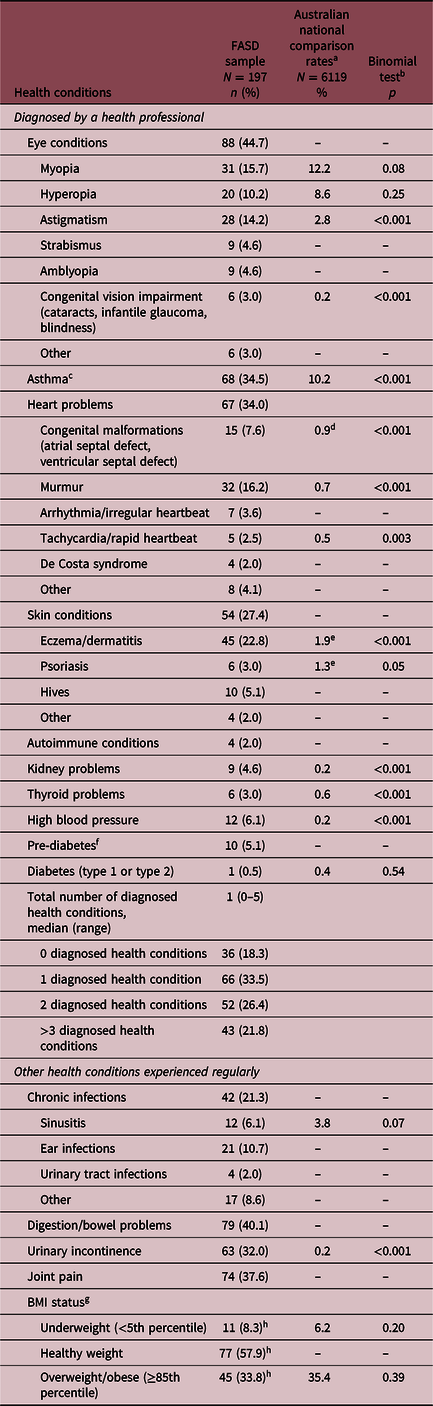
Table 2 presents the proportion of children with reported health conditions in the FASD sample and comparisons with population data from Australia. The most commonly reported health conditions diagnosed by a health professional were eye conditions (44.7%), asthma (34.5%), heart conditions (34.0%) and skin conditions (27.4%). Other caregiver-reported health conditions regularly experienced included problems with digestion and/or bowels (40.1%), joint pain (37.6%) and urinary incontinence (32.0%). The median number of diagnosed health conditions per child was 1 (0–5).
Proportion of children with health conditions in the FASD sample and comparisons with national prevalence data from Australia
Note: FASD = fetal alcohol spectrum disorder.
a Australian Bureau of Statistics (2018).
b One-sample binomial tests were used to compare proportions of persons reporting each health condition between the current FASD sample and population data from Australia where available.
c Proportion represents any diagnosis of asthma during the lifetime
d Proportion includes any congenital malformations, deformations and chromosomal abnormalities.
e Proportion represents a long-term condition that has lasted or expected to last for at least 6 months.
f ‘pre-diagnosis’ of diabetes, higher than normal blood glucose levels
g Barlow (2007).
h n for BMI status in FASD sample = 133.
The one-sample binomial tests indicated that the proportion of children with diagnosed health conditions including asthma; heart problems including congenital heart malformations, heart murmurs and tachycardia; kidney problems; thyroid problems; high blood pressure; skin conditions including dermatitis and psoriasis; and eye problems including astigmatism and congenital vision impairments in the FASD sample were significantly higher than the proportion of children in the Australian population (Table 2). Other health conditions regularly experienced by the FASD sample at a significantly higher rate than in the Australian population were chronic sinusitis and urinary incontinence (Table 2). There were no differences between the FASD sample and the Australian population in reports of diabetes; eye problems including myopia and hyperopia; and BMI status (Table 2).
See Supplementary Table 1 for an overview of the available international data comparisons. The only national data available for other countries was lifetime rates of asthma, underweight or overweight/obese, diabetes and high blood pressure. Generally, rates of these available data were similar across countries. The current sample reported significantly higher rates of asthma compared to the United States and Canada and significantly higher rates of high blood pressure, compared to New Zealand.
Child and family predictors of the number of diagnosed health conditions
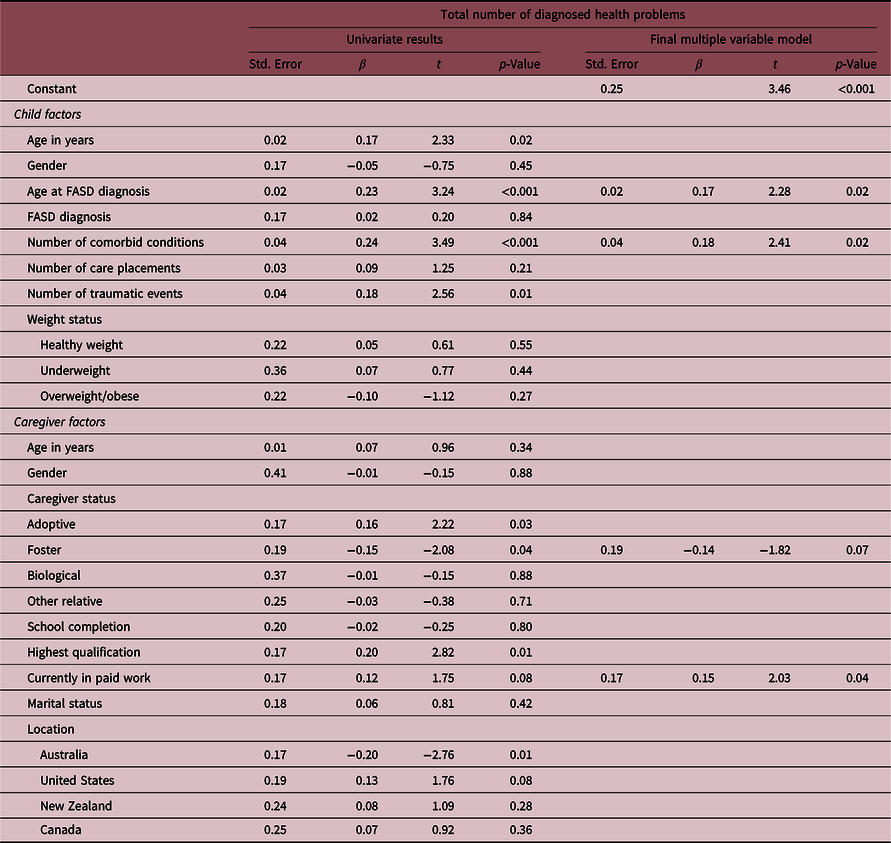
Table 3 presents the results of the univariate regression analysis and the final model selected from the stepwise regression analysis. All potential predictors were independently tested using univariate linear regression and variables that were significant or for which p < 0.2 were included in the stepwise linear regression. The final model selected to predict the number of diagnosed health problems included three variables (F (4, 170) = 5.94, p ≤ 0.001; adjusted R 2 = 0.10): child age at FASD diagnosis, comorbid behavioural and mental health conditions and primary caregiver employment status. Children who were older when they received the FASD diagnosis (β = 0.17, t = 2.28, p = 0.02) had a greater number of comorbid behavioural and mental health conditions (β = 0.18, t = 2.41, p = 0.02) or had a primary caregiver who was currently in paid work (β = 0.15, t = 2.03, p = 0.04) were reported to have a greater number of diagnosed health conditions.
Univariate and final multiple variable regression results from the stepwise approach
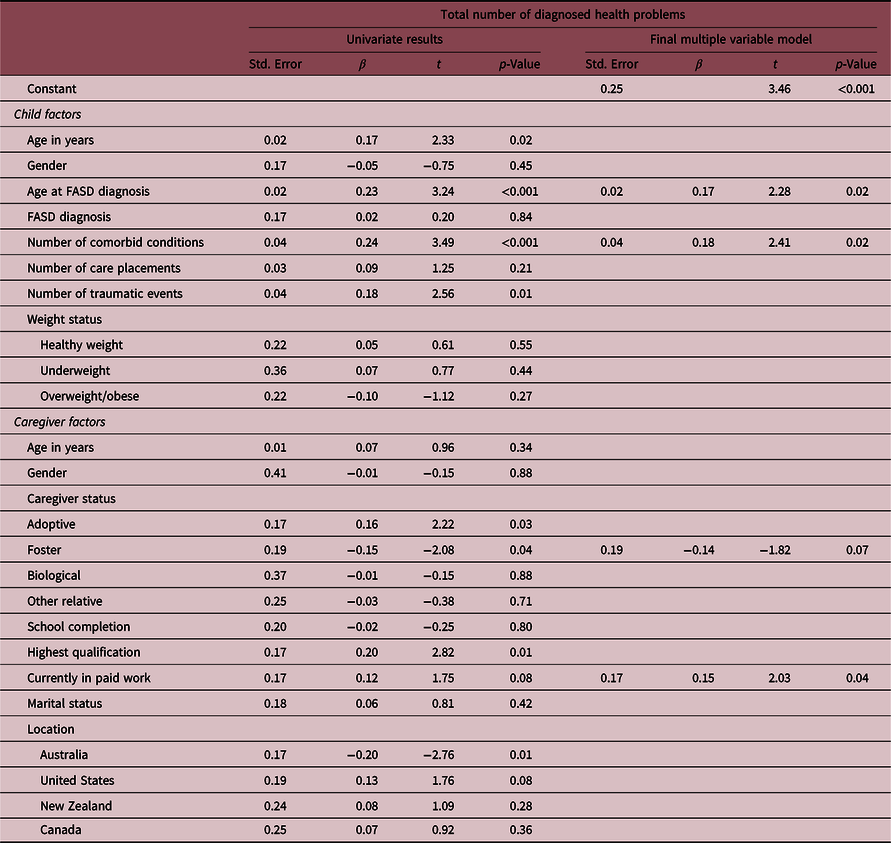
Note: The variables included in the final model were selected using step-wise regression. Std. Error = standard error; β = standardised regression coefficient; FASD = fetal alcohol spectrum disorder.
Discussion
The current study aimed to undertake an international survey of caregiver-reported health problems for children diagnosed with FASD. Overall, results indicated that children with FASD in this sample were more likely to be diagnosed with a wide range of health conditions compared to prevalence data from the general population. Additionally, there were three independent predictors of the number of caregiver-reported diagnosed health problems: age when the child was diagnosed with FASD, number of comorbid behavioural and mental health conditions, and having a caregiver who was currently in paid work.
The most common clinically diagnosed health conditions, as reported by caregivers, were eye-related conditions. This included myopia, hyperopia, astigmatism, strabismus, amblyopia and congenital vision impairments. Congenital vision impairments and stigmatisms were reported to occur at a higher prevalence in the current sample of children with FASD compared to the available prevalence estimates from the general population. The results of the current study are consistent with a previous study comparing children with fetal alcohol syndrome to typically developing children, where higher incidences of amblyopia, hyperopia and astigmatism were also found.Reference Gummel and Ygge19 A number of previous studies were summarised by Popova et al.,Reference Popova, Lange and Shield8 where it was also found that visual impairments were more prevalent compared to the general population. Given the high prevalence of eye conditions in the current sample, and the consistency of these findings with previous research, this warrants recommendations to ensure children with FASD are provided with eye specialist referrals and monitoring. Notably, one possible mechanism for the development of eye-related problems in children with FASD is the potential for PAE to lead to vitamin A/retinoic acid (RA) deficiency.Reference Petrelli, Bendelac, Hicks and Fainsod20 RA is an important signalling molecule that plays a key role in embryonic development of a number of organs, including sensory organs such as the eye.Reference Cvekl and Wang21
Two other commonly diagnosed health problems were skin conditions (i.e., eczema/dermatitis, psoriasis and hives) and asthma, with both occurring at higher rates in the current sample compared to the general population. Seven previous studies have investigated the potential for PAE to increase the risk of eczema or atopic dermatitis, with mixed findings.Reference Reid, Moritz and Akison9 Similarly, five previous studies investigated the potential for PAE to increase the risk for asthma, with none of these studies finding a significant relationship.Reference Reid, Moritz and Akison9 However, none of these previous studies examining atopy or asthma included children diagnosed with FASD. The current study also found higher rates of reported chronic sinusitis and ear infections in children with FASD compared to general prevalence estimates, again consistent with previous research indicating that children with PAE or FASD can be at increased risk of infections.Reference Popova, Lange and Shield8,Reference Reid, Moritz and Akison9 There has been extensive preclinical research documenting that PAE can alter immune functioning, through disrupting the balance of pro- and anti-inflammatory cytokines. However, no clinical studies exploring cytokine levels in children with FASD have been published. Notably, altered immune functioning has been identified as a hallmark feature of many chronic diseases, including type 2 diabetes and obesity.Reference Rubinow and Rubinow22 It has been suggested that inflammation contributes to the initiation and progression of chronic diseases.Reference Rubinow and Rubinow22 Consequently, it may be that children with FASD present with symptoms of immune dysfunction first, which may then lead to higher rates of chronic diseases later in life. Further research, including direct health assessments and longitudinal follow-up is required to investigate these possibilities for children with FASD.
Heart conditions were also highly reported by caregivers of children with FASD. This included congenital malformations, heart murmurs, arrhythmia, tachycardia and De Costa syndrome. All conditions with documented prevalence data for the general population were reported at significantly higher rates in the current sample. Numerous previous studies have documented a high prevalence of congenital heart conditions for children with PAE or FASD.Reference Popova, Lange and Shield8 Additionally, high blood pressure had a significantly higher prevalence in the current sample of children with FASD compared to the prevalence reported in the Australian National Health Survey data. This finding was consistent with a recent study,Reference Cook, Lynch and Coles13 which also found a higher prevalence of hypertension in a sample of children and adolescents with FASD compared to United States national health data. Caregivers in the current study also reported higher rates of kidney problems for children with FASD in the current sample, compared to national prevalence data. Clinical studies investigating kidney problems in children with FASD are currently limited.Reference Reid, Akison, Hoy and Moritz10 It is interesting to note that both the heartReference Perl and Waxman23 and kidneyReference Gray, Cullen‐McEwen, Bertram and Moritz24 require suitable amounts of RA for development and this may be a common pathway contributing to some of the physical health problems following PAE.
Although only occurring in 3.0% of the current sample, thyroid problems were reported to be more prevalent compared to the general population. Only one previous clinical study could be identified that investigated thyroid functioning, which was in infants with PAE. This study reported that infant thyroxine levels were not influenced by PAE.Reference Hannigan, Martier and Naber25 However, there have been numerous preclinical studies that have documented impacts on thyroid functioning following PAE.Reference Ceccanti, De Nicolo and Mancinelli26 Given that thyroid dysfunction can be associated with mood disorders, this area may warrant further consideration for individuals with FASD.
Additionally, caregivers in the current sample reported that their child or young person was experiencing high rates of urinary incontinence. There has only been one previous study investigating incontinence in children with FASD, which found that 20% of children aged 6–10 years were experiencing nocturnal and daytime urinary and faecal incontinence.Reference Roozen, Olivier and Niemczyk27 The current study did not differentiate between different types of urinary incontinence (i.e., nocturnal or daytime), whereas Roozen et al.Reference Roozen, Olivier and Niemczyk27 found that the most common type experienced by children was nocturnal enuresis. One of the potential underlying mechanisms for urinary incontinence is polyuria (i.e., excessive production of urine), which has been identified in a small cohort of children with FASD and a number of preclinical studies.Reference Reid, Akison, Hoy and Moritz10 This functional change could suggest impairments in kidney development and a number of preclinical studies have demonstrated that prenatal alcohol may directly impact kidney development.Reference Reid, Akison, Hoy and Moritz10 However, urinary incontinence could also be related to sensory processing, which ‘refers to the ability of the central nervous system to interpret sensory information’ (p. 881).Reference Cupelli, Escallier, Galambos, Xiang and Franco28 More specifically, this could be a difficulty with sensory registration, for example, alterations in perceptions of bladder fullness or failure to recognise wetness. This is an important area for future research as increased understanding regarding the potential causes of urinary incontinence is required to facilitate the development of effective treatments, which are vital considering the wide-ranging impacts of the condition on quality of life for children and families.Reference Collis, Kennedy‐Behr and Kearney29
The current study identified three independent predictors for the total number of health problems reported by caregivers. First, children being diagnosed with FASD at an older age was found to be associated with caregivers reporting more health problems, irrespective of current age. This could be related to children who are able to access early FASD assessment services are also able to access early and/or ongoing general healthcare services and/or other general health activities, which could be preventing some health problems from developing. Alternatively, it could be that for children who have more physical health problems that this is the primary focus of care initially and FASD is not considered as a possibility until later. Further research is required to investigate this outcome in more detail. Either way, this finding supports the importance of access to timely FASD assessment and diagnostic services. Second, having a primary caregiver in paid work was found to be related to caregivers reporting an increased number of diagnosed health problems. This could be related to these caregivers having more resources to enable access to health services, which could then result in children being diagnosed more frequently with the reported health conditions. Or alternatively, this could be related to caregivers requiring increased financial support to adequately meet the health needs of their children. Further research is required to determine what underlies the relationship between number of health conditions and caregiver employment status.
The final independent predictor was the number of comorbid behavioural or mental health conditions a child was also diagnosed with. Previous researchReference Ohrnberger, Fichera and Sutton30 has documented strong links between mental and physical health outcomes and thus, it is not surprising that we have found a relationship between these two outcomes in the current study. The current findings of increased comorbidity being associated with increased health problems is also consistent with research from other clinical areas that indicates increased rates of comorbid conditions are associated with poorer health outcomes.Reference Valderas, Starfield, Sibbald, Salisbury and Roland31 However, it is important to take into consideration that overall the final model in the current study only predicted 10% of the variance in the total number of diagnosed health conditions. Therefore, further research is required to elucidate other important predictors of physical health outcomes for children and young people with FASD. Importantly, there are a range of other caregiver, family and environmental factors that could be related to physical health outcomes for children with FASD. For example, socio-economic status, social support networks, education and the physical environment. Given the significant variability regarding physical health and developmental outcomes for children with FASD, which could be influenced by a wide range of factors, (including genetic and epigenetic changesReference Cobben, Krzyzewska and Venema32), this makes precision medicine a promising approach for diagnostic, prognostic and treatment decisions for individuals with FASD. Researchers have suggested that improved use of biomarkers, omics data and artificial intelligence will accelerate the implementation of precision medicine practices.Reference Seyhan and Carini33
Considering the lifelong nature, comorbidities and complex interactions with the family/social environment that can be experienced by individuals with FASD, it may be helpful to conceptualise FASD as a chronic whole-body condition.Reference Reid and Moritz34 This could enable a more integrated care approach across the range of disciplines that can help improve functioning and quality of life for children with FASD and their families. For example, Schaink et al.Reference Schaink, Kuluski and Lyons35 have developed a complexity framework to help improve service delivery and outcomes for patients with complex chronic conditions. This framework considers five health domains (social capital, medical/physical health, health and social exposures, demographics and mental health). The application of a more holistic and coordinated care approach for individuals with FASD may lead to more effective outcomes.
Strengths, limitations and future directions
To the authors’ knowledge, this is the first study to undertake a worldwide survey of caregivers of children diagnosed with FASD across a wide range of health conditions. However, limitations include that the current study was based on data collected from an online survey of caregivers who self-selected to participate. Consequently, caregivers who nominated to participate may have been more likely to have a child with health problems and therefore, this may have resulted in increased rates documented in the current sample. Also, data in the current study are based on caregiver report, and therefore the accuracy of these results may be compromised compared to direct clinical assessments. Future research that can undertake direct health assessments of children with FASD is required to validate the current caregiver-reported results.
Furthermore, the current study utilised comparison prevalence data from Australia; however, caregivers from multiple countries participated in the current study. Therefore, differences in the prevalence rates of various health conditions across countries may influence the current comparisons between the FASD group and the general population. The Australian prevalence data were collected using face-to-face interviews compared to the current survey-based study, potentially affecting reporting rates between studies. Future research, using direct health assessments, should include recruitment of non-PAE-exposed comparison groups (e.g., typically developing and other children with other neurodevelopmental conditions) to further validate the current study’s findings. Comparing rates of health problems in children with other neurodevelopmental conditions would be of interest, given these clinical groups may also be at increased risk of experiencing health problems. For example, previous research has documented higher rates of overweight and obesity in children with developmental disabilitiesReference De, Small and Baur36 and higher rates of respiratory, food and skin allergies in children with ASD.Reference Gurney, McPeeters and Davis37
Although some information was available regarding caregiver and child-related variables in the current study, future research would benefit from a more detailed examination of potential predictors of health outcomes. For instance, it would be helpful to consider the length of time a child had been in their caregivers’ care, as this may impact their level of knowledge regarding the child’s health history. Detailed information regarding socio-economic status is also needed, as this is likely to be an important predictor of health outcomes for individuals with FASD. As with any research presently undertaken in the FASD field, the results are limited by the current lack of standardisation regarding FASD assessment and diagnosis, which impacts the accuracy and ability to compare results in relation to diagnostic outcomes.Reference Brown, Bland, Jonsson and Greenshaw38 Future research is urgently needed to enable a unified international approach to the diagnosis of FASD. This has the potential to significantly advance the FASD field, in terms of both research direction and, most importantly clinical service provision.
Conclusions
The current study provides a snapshot of the health problems reported by caregivers of children with FASD and is a useful starting point for developing hypotheses and future research into the potential links between PAE and chronic health conditions. Caregivers reported that their children were experiencing a wide range of health problems, which included eye-related conditions, skin conditions (i.e., eczema/dermatitis, psoriasis and hives) and asthma. These conditions, along with many others, were reported to be occurring at higher rates compared to national prevalence data. The current study also identified a number of predictors of increased health problems as reported by caregivers, which included age of diagnosis, comorbid mental health conditions and caregiver employment status.
Overall, the findings emphasise the importance of clinicians undertaking comprehensive physical health evaluations for children and adolescents with FASD, particularly at key developmental time points, to ensure that any health conditions or risk factors are identified and addressed as early as possible. Given the wide range of health conditions, comorbidities and complexities experienced by individuals with FASD, a more holistic and integrated care approach is urgently needed. The current study also provides the impetus for future larger multi-site international studies that include direct assessment of health outcomes for children, adolescents and adults with FASD. Future research could benefit from partnering with caregivers and young people/adults with FASD, to help inform the development and implementation of physical health assessments as part of routine clinical care across a range of healthcare settings.
Supplementary material
To view supplementary material for this article, please visit https://doi.org/10.1017/S2040174420000537
Acknowledgements
The authors would like to thank all the organisations who forwarded the study to members of their groups and the caregivers who completed the survey. Without your support, this research would not be possible.
Financial support
The National Health and Medical Research Council for support of KMM.
Conflicts of Interest
The authors have no conflicts of interest to declare.
Ethical standards
The authors assert that all procedures contributing to this work comply with the ethical standards of the relevant national guidelines on human experimentation (Australian National Health and Medical Research Council) and with the Helsinki Declaration of 1975, as revised in 2008 and have been approved by the institutional committees (Children’s Health Queensland and the University of Queensland).