Introduction
Shortening of the pulse width of the electroconvulsive (ECT) stimulus is a very significant development in ECT treatment technique. The majority of randomised controlled trials and other studies have shown substantially reduced cognitive impairment when an ultrabrief pulse width of approximately 0.3 milliseconds (ms) was used compared with a brief pulse width (1.0–2.0 ms) (Loo et al., Reference Loo, Sheehan, Pigot and Lyndon2007; Loo et al., Reference Loo, Sainsbury, Sheehan and Lyndon2008; Sackeim et al., Reference Sackeim, Prudic, Nobler, Fitzsimons, Lisanby, Payne, Berman, Brakemeier, Perera and Devanand2008; Mayur et al., Reference Mayur, Byth and Harris2013; Loo et al., Reference Loo, Katalinic, Smith, Ingram, Dowling, Martin, Addison, Hadzi-Pavlovic, Simpson and Schwitzer2014). However, studies also suggest that efficacy may be reduced, with lower response and remission rates, slower speed of improvement and greater number of treatments required (Loo et al., Reference Loo, Garfield, Katalinic, Schweitzer and Hadzi-Pavlovic2013, Reference Loo, Katalinic, Smith, Ingram, Dowling, Martin, Addison, Hadzi-Pavlovic, Simpson and Schwitzer2014; Spanns et al., Reference Spanns, Verwijk, Comijs, Kok, Sienaert, Bouckaert, Fannes, Vandepoel, Scherder, Stek and Kho2013; Tor et al., Reference Tor, Bautovich, Wang, Martin, Harvey and Loo2015).
Most of the research to date has focussed on right unilateral (RUL) ECT, with only two studies examining the use of an ultrabrief pulse width with bilateral ECT (Sackeim et al., Reference Sackeim, Prudic, Nobler, Fitzsimons, Lisanby, Payne, Berman, Brakemeier, Perera and Devanand2008; Sienaert et al., Reference Sienaert, Vansteelandt, Demyttenaere and Peuskens2009). In the only randomised controlled trial examining brief and ultrabrief pulse bilateral ECT, Sackeim et al, found that the efficacy of bitemporal ECT was reduced when the pulse width was shortened to 0.3 ms (Sackeim et al., Reference Sackeim, Prudic, Nobler, Fitzsimons, Lisanby, Payne, Berman, Brakemeier, Perera and Devanand2008). Further, ultrabrief pulse bitemporal ECT was also less effective than ultrabrief pulse RUL ECT despite causing more cognitive impairment (i.e. longer time to reorientation, reduced global cognitive functioning, anterograde and retrograde memory), suggesting that there was no advantage in using an ultrabrief pulse with bitemporal ECT electrode placement. In contrast, Sienaert et al, compared ultrabrief pulse bifrontal ECT with ultrabrief pulse RUL ECT, finding similar efficacy and cognitive outcomes (Sienaert et al., Reference Sienaert, Vansteelandt, Demyttenaere and Peuskens2009, Reference Sienaert, Vansteelandt, Demyttenaere and Peuskens2010). Thus, the effects of lowering the pulse width to the ultrabrief range with bilateral forms of ECT are as yet unclear, and represent an important focus for research, given the prevailing use of bilateral (particularly bitemporal) ECT in many countries (van Waarde et al., Reference van Waarde, Verwey, van den Broek and van der Mast2009). Further, the use of ultrabrief pulse bilateral forms of ECT is emerging in clinical practice, despite the limited evidence base (Galvez et al., Reference Galvez, Li, Oxley, Waite, De Felice, Hadzi-Pavlovic, Kumar, Page, Hooke and Loo2016).
In this double-blind, randomised controlled trial, ultrabrief pulse bitemporal ECT dosed at 3 times seizure threshold was compared with brief pulse bitemporal ECT dosed at 1.5 times seizure threshold. Three times seizure threshold was chosen to increase the relative dosage compared to Sackeim et al. (Reference Sackeim, Prudic, Nobler, Fitzsimons, Lisanby, Payne, Berman, Brakemeier, Perera and Devanand2008) who used 2.5 times seizure threshold with ultrabrief pulse bitemporal ECT and found poorer efficacy compared to brief pulse (1.5 ms) bitemporal ECT. The study aimed to test if, when given at a higher relative dosage level, ultrabrief pulse bitemporal ECT would result in comparable efficacy while having fewer cognitive side effects compared to brief pulse bitemporal ECT.
Material and methods
Study design
Depressed inpatients from Wesley Hospital, The Melbourne Clinic, St George Hospital and the Northside Clinic who were prescribed bitemporal ECT by their treating psychiatrists were assessed for trial inclusion from April 2009 to January 2013. Written informed consent was obtained from all participants, and the trial was approved by the Human Research Ethics Committees of the University of New South Wales, The Melbourne Clinic, South Eastern Sydney Illawarra Health and The Northside Group. The trial followed a prospective, double-blind, parallel group design. The trial reported here is part of a larger RCT examining brief and ultrabrief pulsewidth in both unilateral and bilateral ECT. Patients were first clinically assigned by their own treating psychiatrists to receive unilateral or bitemporal ECT, then patients who consented for the RCT were randomised to receive ECT with an ultrabrief or brief pulse width. For the larger RCT, both the unilateral and bilateral cohorts were originally powered to have 45 participants per condition (i.e. 90 for unilateral and 90 for bilateral ECT) for the primary cognitive outcome to show an estimated clinically meaningful effect size difference between conditions of 0.6 (power = 80%, α = 0.05). The results of the unilateral cohort of the RCT, where the expected sample size target was reached, have previously been reported (Loo et al., Reference Loo, Katalinic, Smith, Ingram, Dowling, Martin, Addison, Hadzi-Pavlovic, Simpson and Schwitzer2014). Here we report the results of the bitemporal cohort of the RCT. For this cohort, however, the anticipated sample size was not reached due to a lower prescribing rate of bitemporal relative to unilateral ECT in Australia (Chanpattana, Reference Chanpattana2007). As such, the current study was underpowered but nevertheless contributes useful proof-of-concept data.
Using a computer-generated random number sequence, the trial statistician generated a treatment allocation list such that, stratified by trial site, participants were randomly assigned in a 1:1 ratio to receive bitemporal ECT given with a brief pulse width ECT (1.0 ms) or ultrabrief pulse width ECT (0.3 ms; though at doses of >500 milliCoulombs, pulse width had to be increased (range 0.4–0.7 ms) in order to achieve higher absolute electrical doses because of ECT machine settings. This applied to one participant). A research team member at each site allocated participants sequentially to the randomisation list and wrote the code for the allocated treatment condition on each participant's ECT treatment sheet, so that participants, their treating psychiatrists, research staff and clinical staff other than the psychiatrist administering ECT were blind to treatment assignment. The document showing the treatment corresponding to the assigned codes was kept in a locked cupboard in the ECT suite, accessible only by the psychiatrist administering ECT. The primary outcome was percentage consistency scores on the Columbia Autobiographical Memory Interview – Short Form (AMI-SF: McElhiney et al., Reference McElhiney, Moody and Sackeim2001) at the end of the acute ECT course. The secondary outcome was change in Montgomery-Asberg Depression Rating Scale (MADRS; Montogmery and Asberg, Reference Montgomery and Asberg1979) scores from baseline to the end of the acute ECT course. All participants remained under the care of their own treating psychiatrist during the trial period, so decisions concerning the number of ECT treatments received and concurrent medications were determined clinically by that psychiatrist.
Participants
Psychiatric inpatients were recruited with the following inclusion criteria: aged ⩾18 years; DSM-IV Major Depressive Episode; and MADRS score ⩾25. Exclusion criteria were: diagnosis of schizophrenia, schizoaffective disorder, or rapid cycling bipolar disorder; ECT in the last 3 months; drug or alcohol abuse or dependence in the last 6 months; past or current neurological illness or injury; score ⩾24 on Mini Mental State Examination (Folstein et al., Reference Folstein, Folstein and McHugh1975); or not educated or working in an English language setting (to ensure validity of neuropsychological testing).
The intention-to-treat (ITT) sample comprised all participants who received at least one ECT treatment and had at least one post-baseline rating.
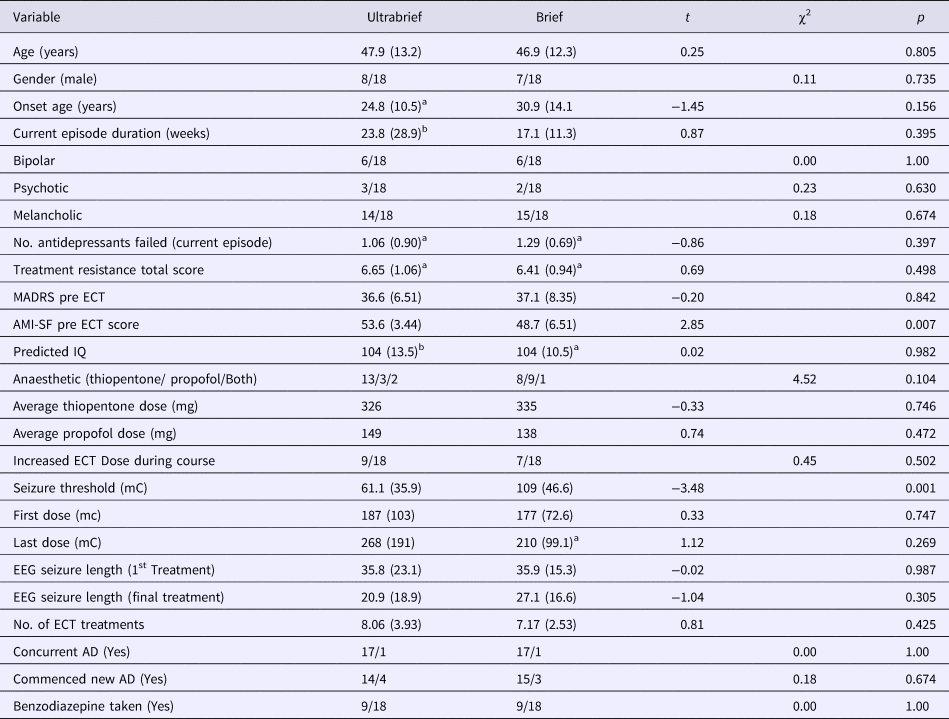
Clinical and demographic details were collected by a research psychologist at baseline using the Mini International Neuropsychiatric Interview (MINI; Sheehan et al., Reference Sheehan, Lecrubier, Sheehan, Amorim, Janavs, Weiller, Herqueta, Baker and Dunbar1998) and information from the psychiatrist interview (Table 1).
Demographic, clinical and ECT treatment data for the two treatment groups showing numbers of subjects or means (s.d.)

Notes: AMI-SF, Autobiographical Memory Interview- Short Form; MADRS, Montgomery-Åsberg Depression Rating Scale; mc: milliCoulombs; AD, antidepressant medication.
a N = 17.
b N = 16.
ECT
Bitemporal ECT was administered three times a week using a Mecta Spectrum 5000Q ECT machine (Mecta Corp., Lake Oswego, OR, USA; at the Wesley Hospital, St George Hospital and Northside Clinic), or a Thymatron System IV machine (Somatics, Lake Bluff, IL, USA; at The Melbourne Clinic). ECT was dosed relative to seizure threshold, which was established using a titration method during the first session. Brief pulse ECT was administered at 1.5 times seizure threshold and ultrabrief pulse ECT was administered at 3 times seizure threshold. Participants were re-titrated at their seventh treatment, and ECT dose was adjusted as necessary to maintain dosing at the correct suprathreshold levels.
Anaesthesia
Participants received either intravenous thiopentone (3–5 mg/kg) or propofol (1–2 mg/kg) for anaesthetic induction over the treatment course. Succinylcholine (1 mg/kg) was given for muscle relaxation.
Cognitive outcomes
A trained research psychologist blinded to treatment assignment assessed cognitive outcomes prior to the ECT course, after the sixth ECT, 1–3 days after the last ECT, and at one and six months follow up. The cognitive battery consisted of: the AMI-SF (primary outcome), Orientation (9-item questionnaire to assess orientation to person (name, age, date of birth), place (hospital, suburb) and time (day, date, month, year), Global Subjective Rating of Memory (GSRM; McCall et al., Reference McCall, Farah, Reboussin and Colenda1995), Medical College of Georgia Complex Figure (MCG CFT; Meador et al., Reference Meador, Moore, Nichols, Abney, Taylor, Zamrini and Loring1993), Hopkins Verbal Learning Test (HVLT; Benedict et al., Reference Benedict, Schretlen, Groninger and Brandt1998), Controlled Oral Word Association Test (COWAT; Strauss et al., Reference Strauss, Sherman and Spreen2006), Symbol Digit Modalities Test (SDMT; Smith, Reference Smith1991), and Woodcock Johnson Cross-Out Test (Woodcock and Johnson, Reference Woodcock and Johnson1989). The AMI-SF was chosen as the primary outcome due to its sensitivity to the effects of different ECT treatment parameters (Sackeim, Reference Sackeim2014), though its limitations have also been discussed (Semkovska and McLoughlin, Reference Semkovska and McLoughlin2012). Alternate forms of the MCG CFT, HVLT, and SDMT were used at subsequent test sessions to minimise practice effects. As an indicator of premorbid intellectual function, the Wechsler Test of Adult Reading Test (WTAR; Wechsler, Reference Wechsler2001) was administered at baseline.
At the third and sixth ECT treatments, participants also underwent brief tests to assess acute effects after ECT. Firstly, they were tested on time to reorientation at 5 min intervals for up to 60 min using a 5 item scale (Sobin et al., Reference Rey1995). Secondly, once reoriented they were tested on recall of six words learned 5–10 min prior to ECT treatment, and recognition of eight faces learned 5–10 min prior to ECT treatment. Three different forms were developed for the study for both tasks. Stimuli were taken from the Rey Auditory Verbal Learning Task (Rey, Reference Rey1964) and Wechsler Memory Scale – Third Edition (Wechsler, Reference Wechsler1997), respectively.
Mood outcomes
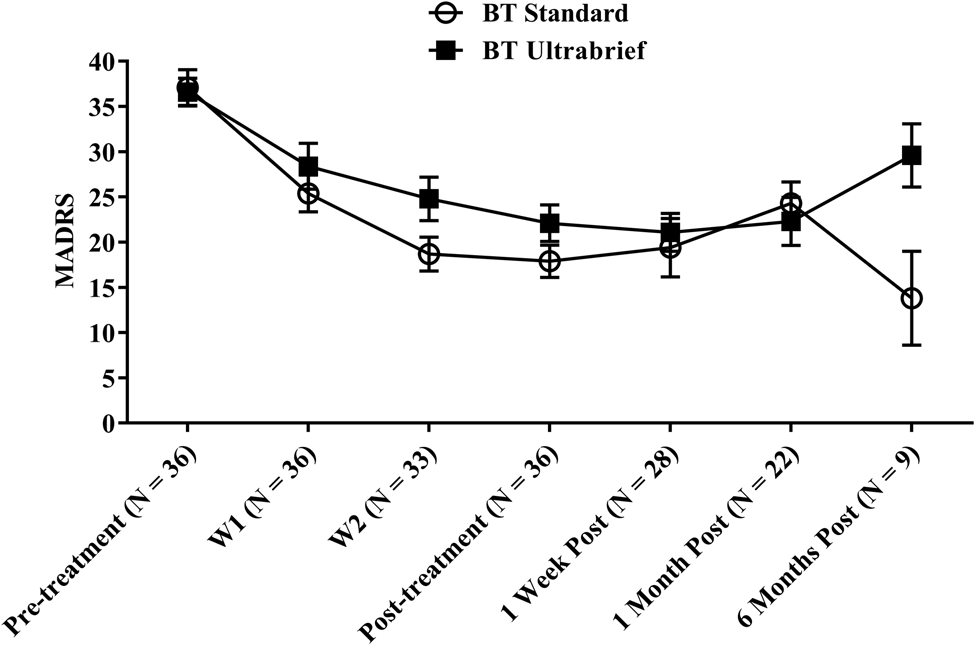
Mood was assessed by a trained research psychologist, blinded to treatment assignment, using the MADRS prior to the first ECT treatment, and then weekly after every three ECT treatments until the course ended. Referring psychiatrists did not have access to the mood ratings. Response was defined as ⩾50% improvement in MADRS scores over the treatment course and remission was defined if the MADRS score was ⩽10 at post-treatment. The MADRS was also administered at one-week, one-month, and six months follow up.
Analysis
Differences between the ultrabrief pulse width group and the brief pulse width group in clinical and demographic features at baseline were examined using independent samples t tests for continuous variables and χ2 tests for categorical variables.
For cognitive outcomes, baseline differences between conditions in years of education and predicted premorbid IQ were further examined using independent sample t tests. ITT analyses were conducted to examine the effect of condition on neuropsychological and mood outcomes across the acute ECT treatment period. Performance on the primary outcome measure was examined using a mixed effects repeated measures analysis (MERM) analysis with Time (post 6 ECT and end of treatment) as the repeated factor, Condition (ultrabrief and brief pulse width) a between subject factor, and Time by Condition as the interaction effect. Subject and Study Site were included as random factors. The number of ECT treatments in the acute treatment period and total score of the MADRS at the relevant time points were included as covariates. A MERM analysis was chosen to allow for the inclusion of data from participants with missing data at random over the acute treatment period. The MERM analysis was repeated for the other cognitive outcomes though additionally including pre-treatment performance in the model. Acute word recall and recognition of faces at the third and sixth ECT treatments were analysed using ANCOVAs controlling for pre-ECT immediate word recall and face recognition. Finally, time to orientation at the third and sixth ECT treatments was analysed using ANOVAs. Analyses of cognitive battery scores and analyses of acute cognitive effects after an ECT session were adjusted for multiple comparisons using Holm's method (Holm, Reference Holm1979).
Between group differences in mood outcomes over the ECT course were analysed using a MERM model of MADRS scores for baseline, Week 1, Week 2, and after the final ECT, controlling for appropriate covariates (described below). This analysis was then repeated including only MADRS scores for baseline, Week 1 and Week 2 to examine for differences in speed of response. Covariates were selected based on their predictive utility in Pearson Correlations or univariate analyses of Variance (ANOVAs) with raw change in MADRS scores from baseline to after the final ECT as the dependent variable. Variables assessed were: age, number of ECT treatments, number of adequate antidepressant courses failed in the current episode, whether participants were taking a benzodiazepine during their ECT course, commencement of a new antidepressant medication during the ECT course, treatment resistance total score on the Maudsley scale (Fekadu et al., Reference Fekadu, Wooderson, Markopoulou and Cleare2009), polarity of depression and presence of melancholic features. Variables were included as covariates if they demonstrated predictive significance in these univariate analyses at a p < 0.1 level, or if they showed significant differences between the groups at baseline at a p < 0.1 level. Following this, the presence of melancholic features satisfied these criteria and was included as a covariate. The proportion of responders (⩾50% improvement in MADRS scores over the ECT course) and remitters in each group were compared using chi-square tests. All statistical analyses were two-tailed using α = 0.05 unless otherwise specified.
Results
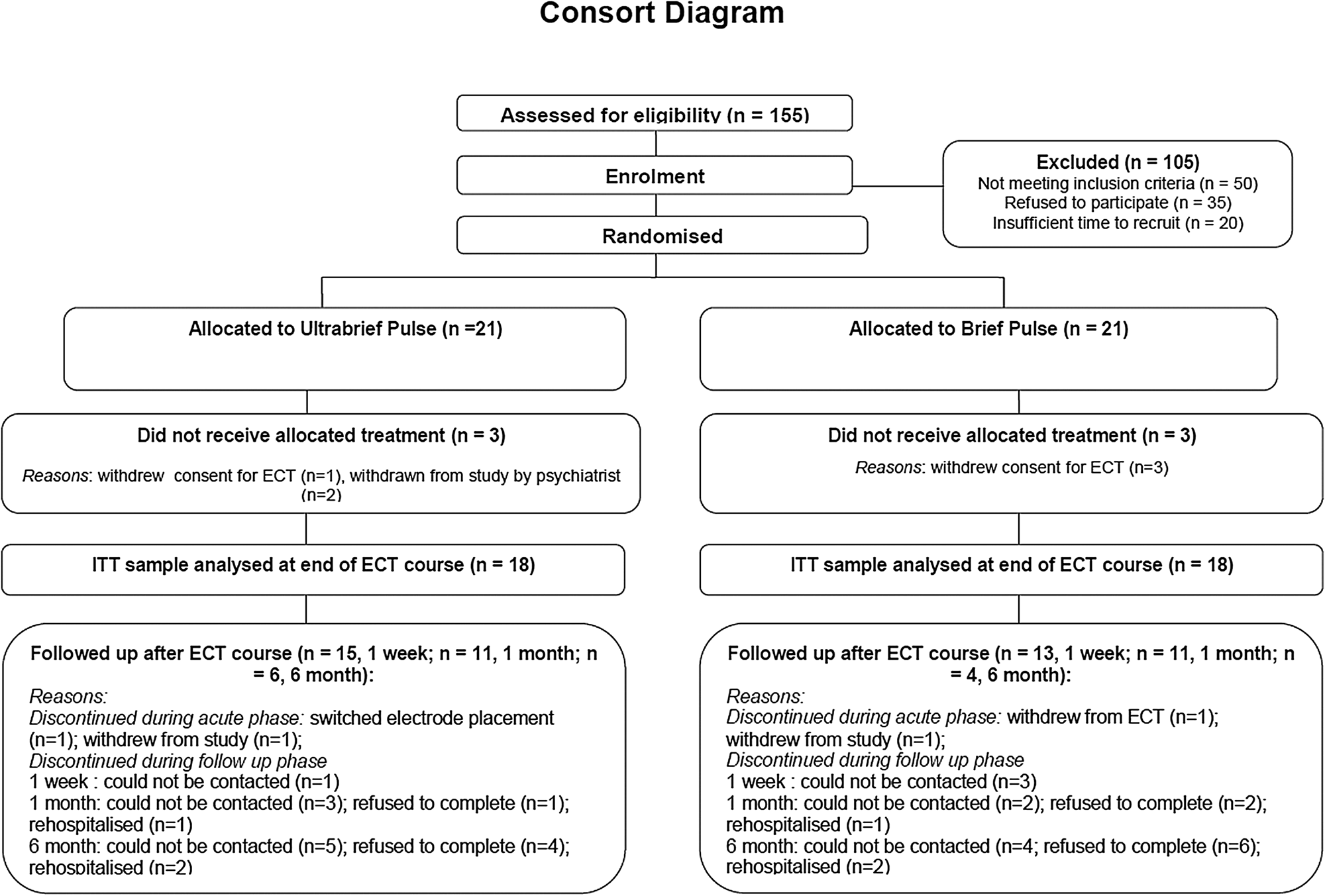
Forty two participants were recruited and randomised to receive bitemporal ECT. Following randomisation, 6 participants withdrew their consent for ECT, leaving 36 with a post baseline assessment for the ITT analysis (Fig. 1). Participants in the two treatment groups did not differ significantly in baseline clinical and demographic characteristics or in ECT treatment parameters, except for the brief pulse ECT group having a significantly higher seizure threshold (see Table 1). Participants in both groups had mild to moderate severity treatment resistance according to the Maudsley Staging Method (Fekadu et al., Reference Fekadu, Donocik and Cleare2018).
CONSORT flow chart.

Cognitive outcomes
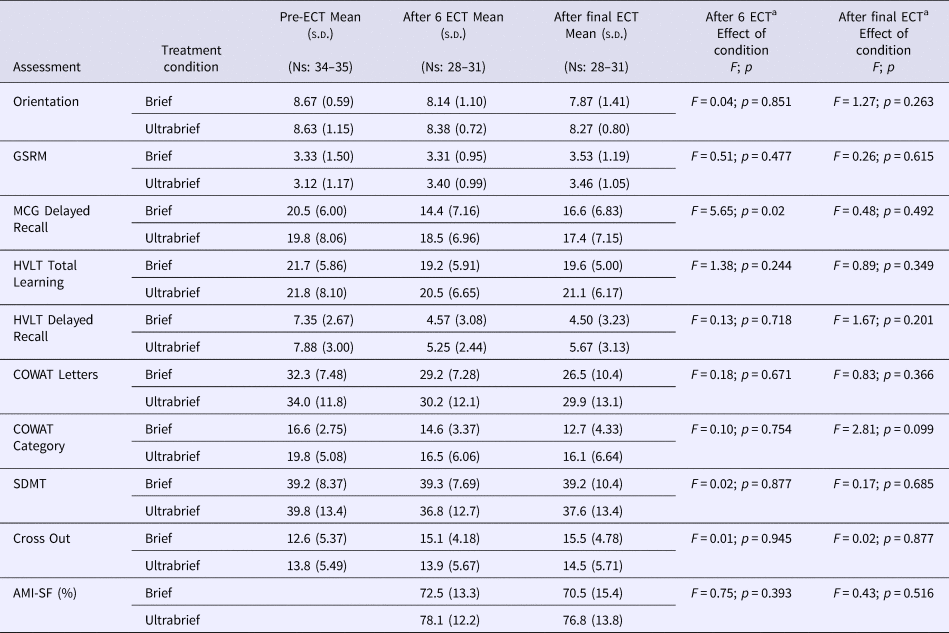
For the primary outcome (AMI-SF), the main effects of Time [F (1,12.4) = 0.57, p = 0.466], Condition [F (1,31.2) = 0.78, p = 0.385] and Time by Condition interaction [F (1,12.4) = 0.22, p = 0.651] were not statistically significant. To control for the baseline difference in AMI-SF raw scores, a further analysis was done using Analysis of Covariance (ANCOVA) with the end of treatment AMI-SF raw score as the dependent variable, Condition as the independent variable, and baseline AMI-SF raw score, Study site, number of ECT treatments in the acute treatment period and MADRS total score at end of treatment as covariates. This analysis also found no significant difference between conditions at end of treatment for the AMI-SF raw score after controlling for the baseline score [F (1,25) = 0.96, p = 0.336]. The ultrabrief pulse group had higher scores on MCG delayed recall after 6 ECT, but the difference was not significant after correction for multiple comparisons. No significant differences were found between conditions for other tests assessing change in cognitive function over the ECT course (see Table 2). The data from the follow-up assessments is shown in online Supplementary Table S1.
Cognitive test scores for the two treatment groups (means and standard deviations)

Notes: GSRM, Global Subjective Rating of Memory; MCG, Medical College of Georgia Complex Figure Test; HVLT, Hopkins Verbal Learning Tests; COWAT, Controlled Word Association Test; SDMT, Symbol Digit Modalities Test; AMI-SF, Autobiographical Memory Interview- Short Form.
a Results from univariate analyses of estimated marginal means calculated from MERM analyses.
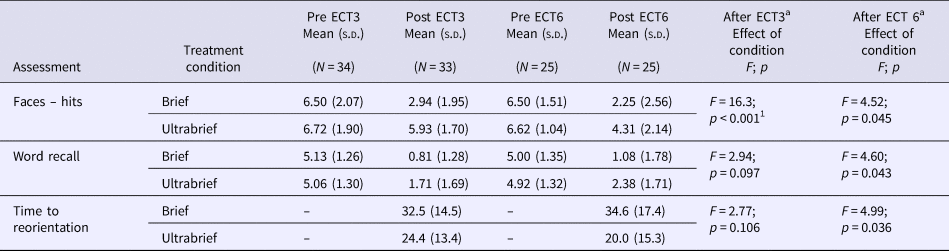
Table 3 summarises the acute cognitive outcome data. Participants who received ultrabrief pulse ECT performed significantly better on the faces recognition task. The ultrabrief pulse group also had better scores on word recall and time to reorientation but differences were not significant after correction for multiple comparisons. No other outcomes were significantly different between groups.
Acute battery scores for the two treatment groups (means and standard deviations)

a ANCOVA controlling for score at pre-ECT3 or pre-ECT6.
1ANCOVA significant at p < 0.05 after correcting for multiple comparisons using Holm's procedure.
Mood outcomes
Mean MADRS scores over the study are shown in Fig. 2. Across the ECT treatment period, there was a significant main effect of Time [F (3,99.3) = 41.6, p < 0.001], though both the main effect of Condition [F(1,32.8) = 2.61, p = 0.116] and the Time by Condition interaction effect [F(3,99.3) = 1.40, p = 0.247] were not statistically significant. When this analysis was repeated including only scores at baseline and weeks 1 and 2 (i.e. to examine speed of response), similarly there was a significant main effect of Time [F(2,65.8) = 38.2, p < 0.001] and both the main effect of Condition [F(1,32.9) = 2.67, p = 0.142] and Time by Condition interaction effect [F(2,65.8) = 1.93, p = 0.153] were not statistically significant. There were no significant differences in the proportion of responders (6/18 ultrabrief pulse, 11/18 brief; χ2 = 2.79, p = 0.095) or remitters (2/18 ultrabrief pulse, 4/18 brief); χ2 = 0.80, p = 0.371) between Conditions.
Mood outcomes for both conditions across the study. MADRS is Montgomery-Asberg Depression Rating Scale.

Discussion
The introduction of ultrabrief pulse-width stimulation is one of the most important advances in electroconvulsive therapy in the last 50 years (Sackeim et al., Reference Sackeim, Prudic, Nobler, Fitzsimons, Lisanby, Payne, Berman, Brakemeier, Perera and Devanand2008). Clinical trials with right unilateral brief v. ultrabrief pulse ECT have shown that there may be a slight reduction in efficacy, including a slightly slower speed of response, which is offset by significantly reduced cognitive side effects, resulting in overall superior treatment outcomes (Loo et al., Reference Loo, Garfield, Katalinic, Schweitzer and Hadzi-Pavlovic2013; Tor et al., Reference Tor, Bautovich, Wang, Martin, Harvey and Loo2015). In a similar proof of concept study with RUL ECT, using doses of brief and ultrabrief pulse ECT at levels designed to achieve equivalent efficacy (brief pulse RUL at 5 times seizure threshold, ultrabrief pulse RUL at 8 times seizure threshold), efficacy was not significantly different but there were some cognitive advantages for ultrabrief pulse stimulation (Loo et al., Reference Loo, Katalinic, Smith, Ingram, Dowling, Martin, Addison, Hadzi-Pavlovic, Simpson and Schwitzer2014). This proof of concept study with bitemporal ECT used the same design, with ultrabrief and brief pulse bitemporal ECT dosed at different levels predicted to result in similar efficacy.
The only other randomised controlled trial assessing brief v. ultrabrief pulse bilateral (bitemporal) ECT (Sackeim et al., Reference Sackeim, Prudic, Nobler, Fitzsimons, Lisanby, Payne, Berman, Brakemeier, Perera and Devanand2008) found lower efficacy when ultrabrief pulse bitemporal ECT was dosed at the same level as brief pulse bitemporal ECT. In contrast, this study found that dosing ultrabrief pulse bitemporal ECT at three times seizure threshold resulted in similar efficacy to brief pulse bitemporal ECT dosed at 1.5 times seizure threshold. This study, however, was not powered to examine differences in efficacy. Further, the Sackeim et al. (Reference Sackeim, Prudic, Nobler, Fitzsimons, Lisanby, Payne, Berman, Brakemeier, Perera and Devanand2008) study differed in several other key respects, including that participants were unmedicated. Overall, there was minimal difference in cognitive outcomes, which were mostly non-significant, or did not survive correction for multiple comparisons. For acute cognitive outcomes measured immediately following treatment, a significant advantage for ultrabrief pulse ECT was found on a test of non-verbal retrograde memory, and there was also an advantage for the ultrabrief pulse condition for time to reorientation, although the latter failed to survive correction for multiple comparisons. Shorter time to reorientation after ECT has relevance for predicting retrograde amnesia for autobiographical information (Sobin et al., Reference Sobin, Sackeim, Prudic, Devanand, Moody and McElhiney1995; Martin et al., Reference Martin, Galvez and Loo2015), considered the most critical adverse effect of ECT (Sackeim, Reference Sackeim2014). While the study failed to show a significant difference between conditions for this outcome specifically, numerical advantages favouring the ultrabrief pulse condition were observed across all assessment time points, including follow-ups. The most parsimonious explanation for the lack of significant effects is therefore lack of power. After controlling for baseline differences, examination of the effect size between conditions for the AMI-SF at end treatment (Cohen's d = 0.67) indicated that a sample size of 72 would be required to detect such a difference with power of 80%. Overall, these results provide some preliminary evidence consistent with our prior RCT of unilateral ultrabrief pulse v. brief pulse ECT, i.e. that when dosing is adjusted to attain similar efficacy, ultrabrief pulse stimulation may result in some cognitive advantages, though this requires confirmation using a larger sample for bitemporal ECT.
The remission and response rates in this study are relatively low for patients treated with ECT, though this does not affect the overall aim of the study, which was to compare outcomes of brief and ultrabrief pulse bitemporal ECT in a randomised trial. Nevertheless, this may limit generalisability of the efficacy findings. Several factors may account for the low responsivity to ECT treatment. First, it likely reflects the sample selected for treatment with bitemporal ECT. In Australia, bitemporal ECT is not typically used as first line ECT but only for those who are the most severely treatment resistant, including patients who have failed to respond to treatment with right unilateral ECT in prior episodes of depression (NSW Health, 2011). Second, the study included a low proportion of participants with current psychotic features (14%). The presence of psychotic features has been consistently shown to be a strong predictor of responsivity to both brief and ultrabrief pulse forms of ECT (Coryell and Zimmerman, Reference Coryell and Zimmerman1984; Hickie et al., Reference Hickie, Mason, Parker and Brodaty1996; Petrides et al., Reference Petrides, Fink, Husain, Knapp, Rush, Mueller, Rummans, O'Connor, Rasmussen, Bernstein, Biggs, Bailine and Kellner2001; Birkenhager et al., Reference Birkenhager, Pluijms and Lucius2003; Loo et al., Reference Loo, Mahon, Katalinic, Lyndon and Hadzi-Pavlovic2011). This factor is likely to account for the relatively high efficacy of ultrabrief pulse bifrontal ECT found in the trial by Sienaert and colleagues (Sienaert et al., Reference Sienaert, Vansteelandt, Demyttenaere and Peuskens2009). In their randomised trial, the ultrabrief pulse bifrontal treatment group included a high proportion of patients with psychotic subtype of depression (41%, compared to 13% in the RUL group in that study). This is the most likely reason accounting for the good response rate to ultrabrief pulse bifrontal ECT at 1.5 times seizure threshold, in contrast to the relatively lower efficacy found for ultrabrief pulse bitemporal ECT (at 2.5 times seizure threshold) in the Sackeim et al. (Reference Sackeim, Prudic, Nobler, Fitzsimons, Lisanby, Payne, Berman, Brakemeier, Perera and Devanand2008) study and for ultrabrief pulse bitemporal ECT (at 3 times seizure threshold) in this study.
The main limitation of this study is the small sample size, which thereby limited power to detect potential differences in cognitive and efficacy outcomes. This reflects the difficulty of recruiting patients for studies of bitemporal ECT in Australia. Nevertheless, the study makes an important contribution as one of only two randomised controlled studies comparing bilateral brief and ultrabrief pulse ECT. The numbers studied with ultrabrief pulse bitemporal ECT in this trial (N = 18) are small but contribute to a limited evidence base of RCTs involving ultrabrief pulse bilateral ECT (ultrabrief pulse samples: N = 23, Sackeim et al., Reference Sackeim, Prudic, Nobler, Fitzsimons, Lisanby, Payne, Berman, Brakemeier, Perera and Devanand2008; N = 32, Sienaert et al., Reference Sienaert, Vansteelandt, Demyttenaere and Peuskens2010). The low remission rate in this study reflects the prescription of bitemporal ECT in Australia for the most highly treatment resistant patients, an important consideration in terms of the generalisability of these results.
Results of this study suggest that there may be cognitive advantages for ultrabrief pulse bitemporal ECT, given at the higher dose level required for efficacy. The study, however, was underpowered to definitively examine this issue and this possibility should be examined in larger and more representative samples. Clinicians considering the use of ultrabrief pulse bitemporal ECT should be aware that dosage relative to seizure threshold needs to be substantially increased to attain comparable efficacy to brief pulse bitemporal ECT, and that the extent of cognitive advantage for ultrabrief pulse bitemporal ECT requires further examination at these increased dose levels.
Supplementary material
The supplementary material for this article can be found at https://doi.org/10.1017/S0033291719000989
Author ORCIDs
Donel Martin, 0000-0002-8452-0390.
Acknowledgements
The authors wish to acknowledge the late Prof Isaac Schweitzer, who co-led the study with Prof Loo, and Deirdre Smith for her work on the study.
Financial support
This work was funded by an Australian National Health and Medical Research Council (NHMRC) project grant (ID 568678).
Conflict of interest
None.
Ethical standards
The authors assert that all procedures contributing to this work comply with the ethical standards of the relevant national and institutional committees on human experimentation and with the Helsinki Declaration of 1975, as revised in 2008.