Introduction
The behaviour of poultry directly influences physiology that is related to the better welfare of the flock. Economic production requires high feed conversion efficiency for good growth or egg production. Apart from nutrition and genetics, the rearing system is one of the important factors which can influence production performance in poultry (Wattanachant et al., Reference WATTANACHANT, SUWANAPUGDEE, SUKSATHIT and MONGKOL2002; Od-Ton et al., Reference OD-TON, WATTANACHANT and WATTANASIT2004; Wattanachant and Wattanachant, Reference WATTANACHANT and WATTANACHANT2007).
Being a major environmental stimulus, light (intensity, photoperiod and wavelength) affects bird activity, behaviour, physiology, immunity, performance and has long been used to alleviate mortality issues related to metabolic diseases (Lewis and Morris, Reference LEWIS and MORRIS1998; Morris, Reference MORRIS2004; Olanrewaju et al., Reference OLANREWAJU, THAXTON, DOZIER, PURSWELL, ROUSH and BRANTON2006). The impact of various intensities and wavelengths of light on performance of poultry has been extensively studied by many researchers since the 1950s (Barrott and Pringle, Reference BARROTT and PRINGLE1951; Cherry and Barwick, Reference CHERRY and BARWICK1962; Classen and Riddell, Reference CLASSEN and RIDDELL1989; Buyse et al., Reference BUYSE, KUHN and DECUYPERE1996; Manser, Reference MANSER1996). Growth and the reproductive performance of avian species respond to light energy in a variety of ways. Scheideler (Reference SCHEIDELER1990) stated that light causes stimulation in the internal organs and initiates hormone release. Olanrewaju et al. (Reference OLANREWAJU, THAXTON, DOZIER, PURSWELL, ROUSH and BRANTON2006) stated that, under light, the bird shows an increase in physical activity which can stimulate bone development, thereby improving leg health.
Several types of lighting systems, such as incandescent, fluorescent, compact fluorescent, fluorescent tube lighting and high intensity discharge lighting have all been used in commercial poultry housing. Recently, light emitting diode (LED) lamps have been of growing interest in poultry operations because of their high energy efficiency (Huber-Eicher et al., Reference HUBER-EICHER, SUTER and SPRING-STAHLI2013), long operating life, availability in different wavelengths (Craford, Reference CRAFORD1985), low electricity consumption and low rearing cost (Rozenboim et al., Reference ROZENBOIM, ZILBERMAN and GVARYAHU1998). The LED is not a new device and has been used in other areas of research for many years including plant behaviour (Okamoto et al., Reference OKAMOTO, YANAGI, TANAKITA, HIGUCHI, USHIDA and WATANABE1996), the eradication of mosquitoes (Mann et al., Reference MANN, PHILLIP and BUTLER2009), enhancement of the cell growth mechanism (Whelan et al., 2001) and repair of bone defects (Pinheiro et al., Reference PINHEIRO, SOARES, BARBOSA, RAMALHO and DOS SANTOS2012). The effect of the monochromatic light produced by LED bulbs on performance and meat and egg quality of different poultry species has now been investigated on a large scale. Rozenboim et al. (Reference ROZENBOIM, BIRAN, UNI, ROBINZON and HALVEY1999a; Reference ROZENBOIM, ROBINZON and ROSENSTRAUCH1999b; Reference ROZENBOIM, BIRAN, CHAISEHA, YAHAV, ROSENSTRAUCH, SKLAN and HALEVY2004) and Karakaya et al. (Reference KARAKAYA, PARLAT, YILMAZ, YILDIRIM and OZALP2009) reported that although the LED bulb is available in a range of different colours, there are conflicting reports on the impact of different light colours on bird's performance. Considering the role of the LED in the modern poultry industry, this review has been geared up to mainly focus on 1) comparing the benefits of LED over other conventional light sources and 2) its role on bird welfare, behaviour and growth performance.
Understanding the basics of light
Visible light is a part of the electromagnetic spectrum, which ranges from radio waves to gamma rays. Electromagnetic radiation waves, as their names implies, are the fluctuations of electric and magnetic fields, which can transport energy from one location to another and thus are responsible for the sense of sight (CIE, 1987). Visible light has a wavelength in the range of about 380 nm to 740 nm - between the invisible infrared (with longer wavelengths) and the invisible ultraviolet (with shorter wavelengths). The primary properties of visible light are intensity, propagation direction, frequency or wavelength spectrum and polarisation.
It has been experimentally found that visible light always speeds up in vacuum. The atoms emit and absorb light at characteristic energies. This produces ‘emission lines’ in the spectrum of each atom. Emissions can be spontaneous, as in LED, gas discharge lamps (such as neon lamps and mercury-vapour lamps) and ignited gas, e.g. sodium in a gas flame emits characteristics yellow light. Emissions can be stimulated, as in a laser or a microwave MASER. Deceleration of a free charged particle, such as an electron, can produce visible radiation. Natural sources produce electromagnetic radiation across the spectrum, and technology can manipulate a broad range of wavelengths of the light receptors. Colour categories and physical specifications are associated with objects, materials, light sources, etc. based on their physical properties such as light absorption, reflection, or emission spectra.
Light and poultry welfare
Welfare is mainly associated with an animal's behavioural needs and is considered to be an integral part of an ideal rearing system (Broom and Johnson, Reference BROOM and JOHNSON1993). The lighting programme can lead to potential concerns for Reference ESTEVEZpoultry welfare, and simple manipulation in light components (i.e. intensity, photoperiod and wavelength) can be beneficial (Manser, Reference MANSER1996).
Aggressiveness is a serious issue in poultry rearing and various studies are being carried out to find a solution. The mode of aggression in birds can be reduced by the use low light intensities to curtail welfare concerns (Sherwin, Reference SHERWIN1998). Reduced weight gains and increased aggression can result when broilers are kept under light intensities of more than 150 lux (L) (Buyse et al., Reference BUYSE, KUHN and DECUYPERE1996). Jurisdictions have established regulations in relation to light intensity, for example the European Union legislated the use of at least 20 L of light intensity for broiler production after the initial brooding phase (Council of the European Communities, 2007).
With regard to photoperiod, the use of either an increasing or intermittent lighting programme can improve the welfare of turkeys or broilers compared to birds raised on constant light photoperiods. In the past, 24 hour continuous light was believed to be advantageous as birds can eat 24 hours a day. However, later it was established that continuous light is associated with less activity in birds and eye damage (Manser, Reference MANSER1996), metabolic disorders (Buyse et al., Reference BUYSE, KUHN and DECUYPERE1996), disturbed sleep and stress (Gordon, Reference GORDON1994). In turkeys, constant light resulted in leg disorders and metabolic diseases (Classen et al., Reference CLASSEN, RIDDELL, ROBINSON, SHAND and MCCURDY1994). Intermittent light programmes, which involve short periods of light and dark throughout the day, are effective in reducing these problems (Buyse et al., Reference BUYSE, KUHN and DECUYPERE1996). However, birds raised on such (intermittent) programmes tended to have variable meat and fat pad yields (Buyse et al., Reference BUYSE, KUHN and DECUYPERE1996). These strategies may result in leg disorders if the programme is used throughout the entire growing cycle in turkeys (Nixey, Reference NIXEY1994). Wavelength has an impact on bird welfare. Manser (Reference MANSER1996) stated that broiler aggression is highest in red light, and lowest in blue light, and reduced activity was found in turkeys when exposed to blue light versus white, green or red light (Manser, Reference MANSER1996).
Recent research has indicated that light source may have an effect on leg disorders, with the use of fluorescent lighting showing a lower incidence of the problem as compared to incandescent bulbs (Lewis and Morris, Reference LEWIS and MORRIS1998). Additionally, the sexual maturity of laying hens, but not broiler breeders, may be delayed when incandescent bulbs are used in the barn (Lewis and Morris, Reference LEWIS and MORRIS1998). The introduction of LEDs in poultry can provide welfare benefits to poultry flocks and avoid many of the stress or health problems that have been linked to failings of traditional lighting (Hunt, Reference HUNT2009).
In a case study by Hunt (Reference HUNT2009), the use of LEDs in poultry houses resulted in a positive response in terms of bird behaviour. Birds were calmer and less prone to feather pecking and aggression when reared under LEDs. Chicks were able to locate their food source much more rapidly, leading to an increase in body weight compared to those reared in conventionally lit sheds, and mortality was reduced by 0.5%. In a recent study by Mendes et al. (Reference MENDES, PAIXÃO, RESTELATTO, MORELLO, JORGE DE MOURA and POSSENTI2013), when birds were exposed to LED lighting they gave better performance than birds under the compact fluorescent light (CFL). Seven-day-old male chicks presented better feed conversion under LED illumination than did males of the same age under CFL. In the same experiment, while studying the colour preference of broilers, greater feed consumption at 21, 28, and 35 d of age was found when the broilers were exposed to white LED lighting.
LEDs in poultry performance
Lighting is an essential part of the physical environment and a powerful exogenous factor, which controls many physiological and behavioural processes in poultry. Globally, chickens are reared in a variety of production systems, including outdoor enclosures that utilise natural climatic conditions. Smaller production houses can have little control over light sources, however large, homogeneous houses allow more precise control of light intensity, duration, and colour. Increased environmental complexity in poultry rearing facilities is recognised as a means to achieve productivity goals and to resolve welfare concerns (Newberry, Reference NEWBERRY1995; Wemelsfelder and Birke, Reference WEMELSFELDER and BIRKE1997; Mench, Reference MENCH1998).
Intensity; the first trait of light, can play a role in behavioural differences and birds may respond to a brighter light for these particular issues (Davis et al., Reference DAVIS, PRESCOTT, SAVORY and WATHES1999). Generally, brighter light will foster increased activity, while lower intensities are effective in controlling aggressive acts that can lead to cannibalism. Producers regularly use modern control systems to increase light intensity for short periods during grow-out and thereby reduce skeletal and metabolic disorders. It is advisable to install dimmable lights in all poultry production facilities in order to achieve the desired light intensity.
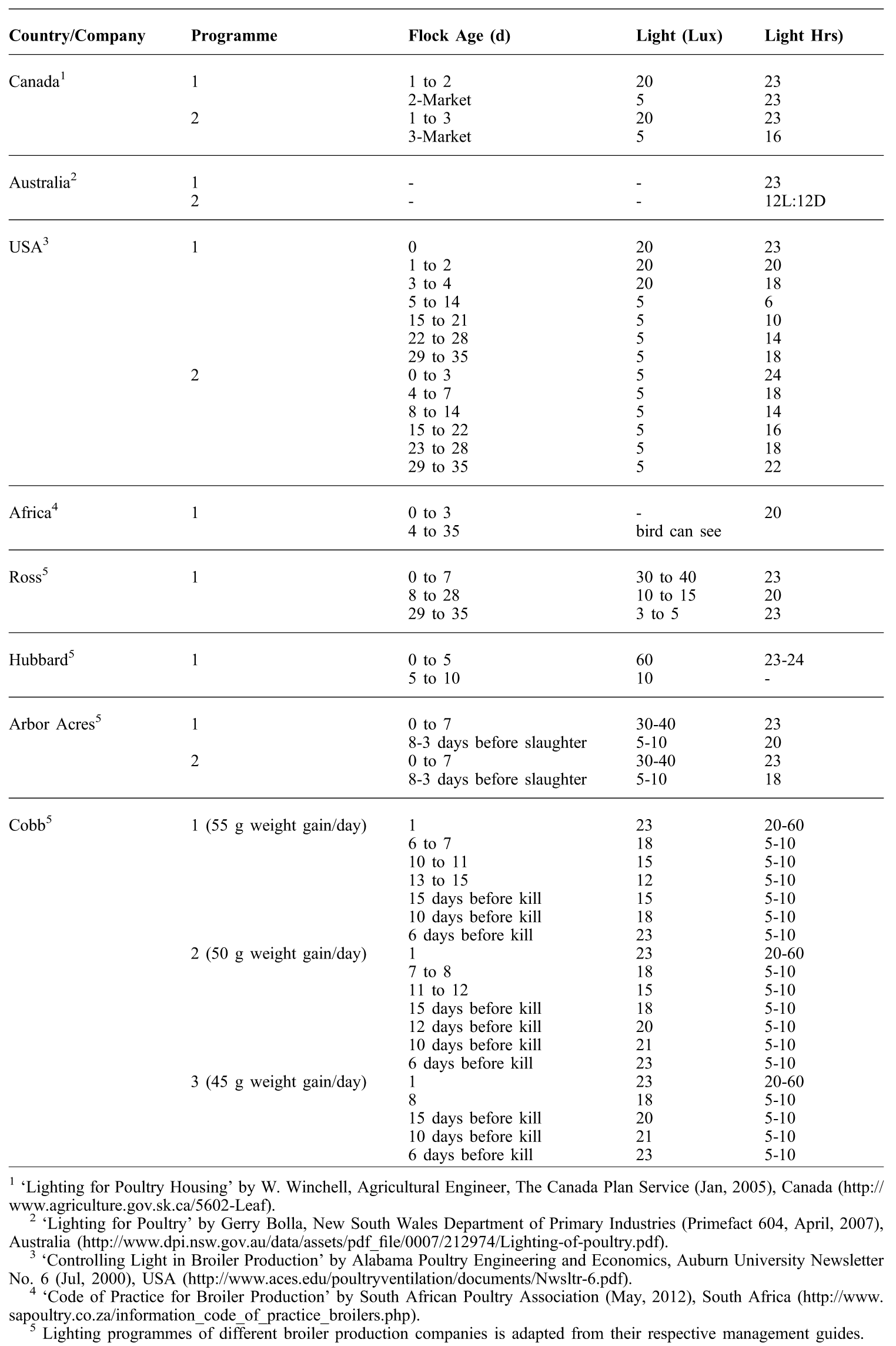
Light duration, i.e. photoperiod, is the second major aspect of light that alters performance. Most studies involving light management have focused on this factor. Different photoperiodic regimes have been applied and tested over the years and have been shown to improve broiler welfare with conventional near-continuous lighting (Gordon, Reference GORDON1994). Duration is largely dependent upon the age of birds and housing type. Moreover, the pattern of changing day length influences the performance of the birds. In broilers, several different light regimens have been devised to help improve skeletal development through feed intake. In the laying hen, increasing natural day light accelerates sexual maturity of growing pullets and stimulates egg production during the laying period. Decreasing day length has been shown to retard sexual maturity of growing pullets and restrain egg production. It has been found that pullets reared at a constant 16 hour day will mature at about the same age as those reared at a constant 8 hour day. The birds in the 16 hour programme will have received more total light, but are experiencing the same lighting pattern as those in the 8 hour programme, that is, a constant-light pattern (Bolla, Reference BOLLA2007). Table 1 represents the recommendations of various government and private authorities regarding light intensity and duration depending on the age and physiological state of the flock.
Light colour is the third major aspect of light. It is dictated by wavelength and it exerts variable effects on poultry performance. Light of different wavelengths (400 to 700 nm) has varying stimulatory effects on the retina and can result in behavioural changes that will affect the growth and development of birds (Lewis and Morris, Reference LEWIS and MORRIS2000). Due to the difference in the perception of light spectra of different light colours by the cone cells of retina, colours may be defined and quantified by the degree to which they stimulate these cells.
Lighting programmes in different countries and production guides for different age groups of broilers.

1 ‘Lighting for Poultry Housing’ by W. Winchell, Agricultural Engineer, The Canada Plan Service (Jan, 2005), Canada (http://www.agriculture.gov.sk.ca/5602-Leaf).
2 ‘Lighting for Poultry’ by Gerry Bolla, New South Wales Department of Primary Industries (Primefact 604, April, 2007), Australia (http://www.dpi.nsw.gov.au/data/assets/pdf_file/0007/212974/Lighting-of-poultry.pdf).
3 ‘Controlling Light in Broiler Production’ by Alabama Poultry Engineering and Economics, Auburn University Newsletter No. 6 (Jul, 2000), USA (http://www.aces.edu/poultryventilation/documents/Nwsltr-6.pdf).
4 ‘Code of Practice for Broiler Production’ by South African Poultry Association (May, 2012), South Africa (http://www.sapoultry.co.za/information_code_of_practice_broilers.php).
5 Lighting programmes of different broiler production companies is adapted from their respective management guides.
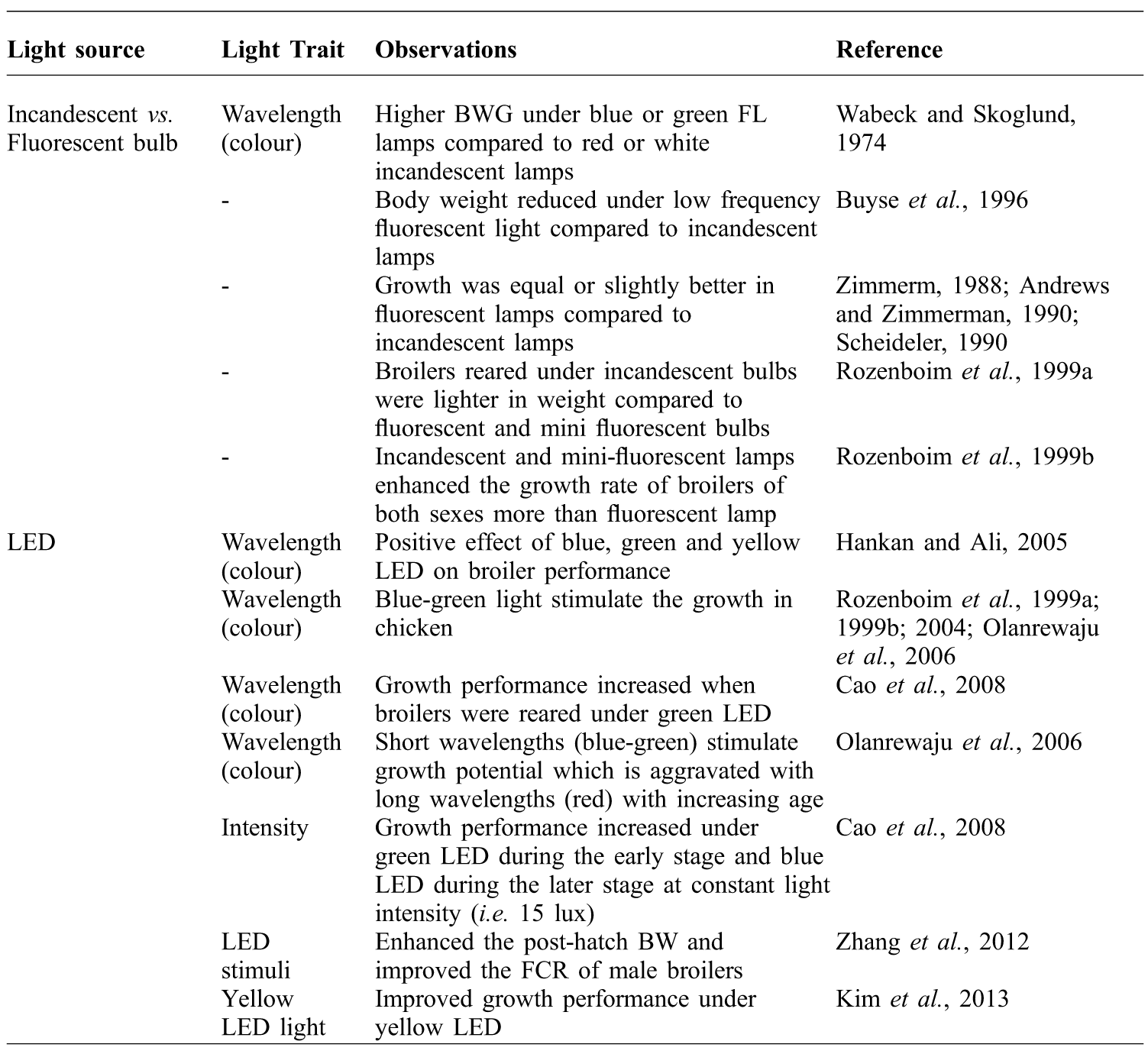
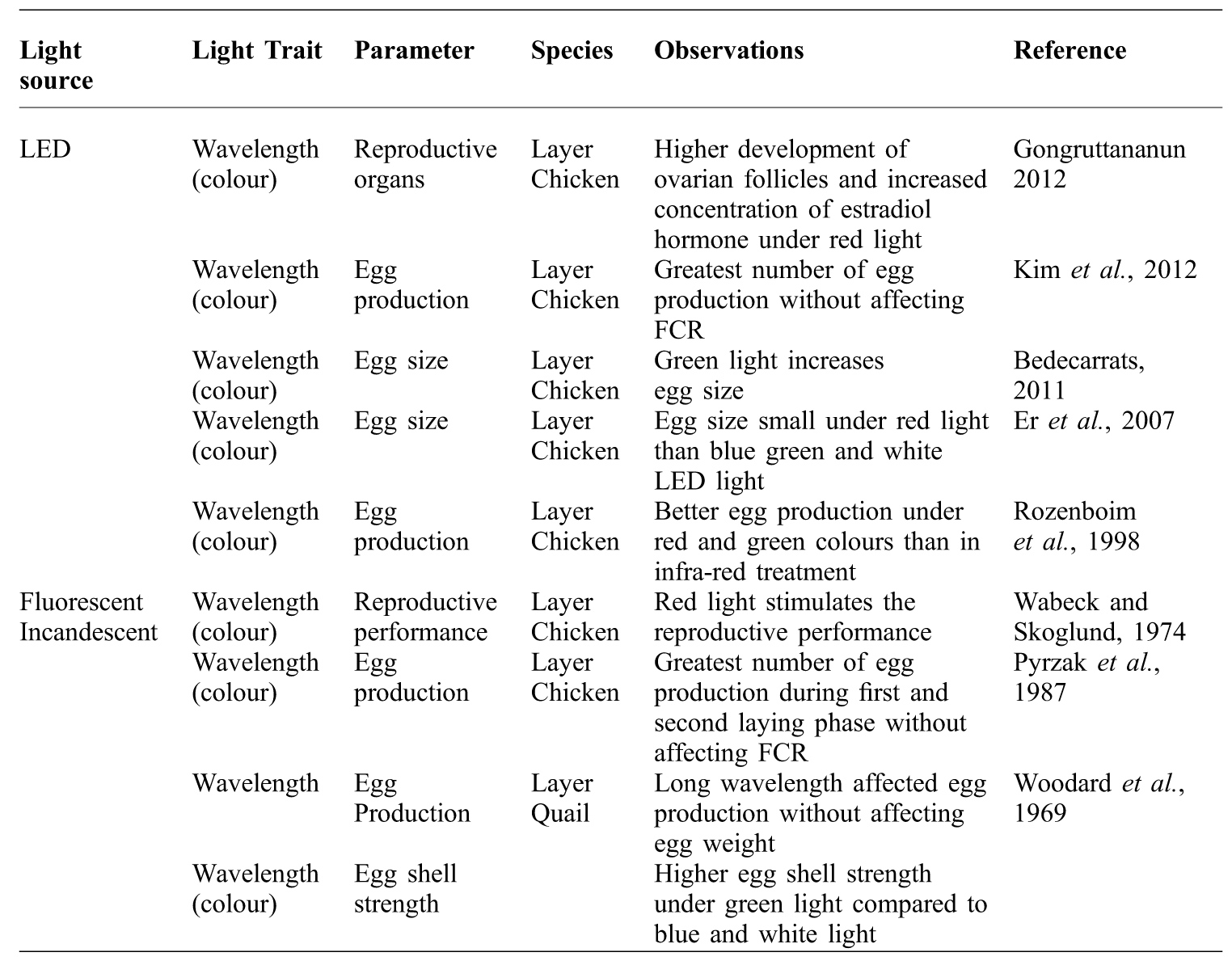
Studies have been conducted on blue, green, red, white and yellow LED lamps to find out the suitable lighting environment for improved performance of the birds. It has been noted that the blue LEDs have a calming effect on birds, whereas red LEDs increase feather pecking and cannibalism. Moreover, a combination of blue-green LED stimulates growth in chickens whereas orange-red stimulates reproduction (Rozenboim et al., Reference ROZENBOIM, BIRAN, UNI, ROBINZON and HALVEY1999a; Reference ROZENBOIM, ROBINZON and ROSENSTRAUCH1999b; Reference ROZENBOIM, BIRAN, CHAISEHA, YAHAV, ROSENSTRAUCH, SKLAN and HALEVY2004). Some reports have shown the influence of LED colour and intensity on immune response in broilers (Nelson and Blom, Reference NELSON and BLOM1994; Demas and Nelson, Reference DEMAS and NELSON1996; Zulkifli et al., Reference ZULKIFLI, RASEDED, SAYAADAH and MORMA1998; Xie et al., Reference XIE, WANG, DONG, CAO, WANG, CHEN and CHEN2008). It can be suggested that by using a proper combination of these factors (i.e. duration, intensity and colour) the desired production targets can be achieved with less cost on a long term basis. A summary of the impact of light on performance in broilers and layers can be seen in Tables 2 and 3.
Growth of broilers under different light sources.
Impact of LED light on laying performance in poultry.
Light, bird behaviour and physiology
Light is integral to sight, including both visual acuity and colour discrimination (Manser, Reference MANSER1996). It allows the bird to establish rhythmicity and synchronise many essential functions, including body temperature and various metabolic steps that facilitate feeding and digestion. Of equal importance, light stimulates secretory patterns of several hormones that control, in large part, growth, maturation, and reproduction.
Vision is important in bird behaviour and welfare and poultry have highly specialised visual systems and the majority of their behaviour is mediated by vision (Prescott et al., Reference PRESCOTT, WATHES and JARVIS2003). The intensity of light has connections with avian behaviour (Alvino et al., Reference ALVINO, ARCHER and MENCH2009) while the colour of light is linked to explorative behaviour (Huber-Eicher et al., Reference HUBER-EICHER, SUTER and SPRING-STAHLI2013). The eye of the chicken appears to be more sensitive to a broader spectrum of light, as compared to humans. Furthermore chickens can see ultraviolet and infrared, which is due to their flying ability and natural food sources, which makes them highly vision dependent creatures. In 1911, Von Frisch first reported evidence for the existence of deep brain photoreceptors that mediate skin colour changes in minnows (Phoxinus laevis). Subsequently, Benoit (Reference BENOIT1935) demonstrated that blind ducks showed normal testicular growth in response to a long-day stimulus, whereas a black cap placed on the duck's head inhibited this response.
Birds have four to five types of photo reactive pigments associated with cone cells that are responsible for photopic colour vision, while humans have only three pigments (Yoshizawa, Reference YOSHIZAWA1992). The major pigment isolated from the retina are scotopic or rhodopsin. Light is captured by retinal photoreceptors of the bird's eye that send nerve impulses to the brain through photosensitive cells (extra-retinal photoreceptor). The brain then coordinates the stimulus to stimulate the pituitary gland to secrete the necessary hormones for ovulation (Banerjee, Reference BANERJEE1992; Lewis and Morris, Reference LEWIS and MORRIS2000). Two main hormones, serotonin and melatonin are involved in this pathway. These hormones affect other endocrine functions and diurnal patterns that include locomotor activity, deep body temperature, migration and seasonal breeding (Mellor, Reference MELLOR2001). It is known that the pineal gland of the chick is directly sensitive to light (Deguchi, Reference DEGUCHI1979; Bernard et al., Reference BERNARD, KLEIN and ZATZ1997) and the two of the oscillators, the pineal gland and retina, secrete melatonin in a diurnal rhythm (Oishi et al., Reference OISHI, YAMAO, KONDO, HAIDA, MASUDA and TAMOTSU2001).
Maddocks et al. (Reference MADDOCKS, CUTHILL, GOLDSMITH and SHERWIN2001) conducted a trial to investigate the effect of UV wavelengths on broiler chicks and found consistently higher basal corticosterone levels in birds housed under UV-deficient lighting, indicating higher stress levels. Zhang et al. (Reference ZHANG, ZHENG-XIANG, XIN-YING, AI-LIAN and BAO-MING2006) suggested that UV light can improve skeletal tissue (bone weights) because it stimulates and increases muscle growth and the absorption of calcium and phosphorus via vitamin D. UV light increases fertility in broiler breeders (Lewis and Gous, Reference LEWIS and GOUS2009), and has been used for sanitation purposes in hatching eggs (Coufal et al., Reference COUFAL, CHAVEZ, KNAPE and CAREY2003). From the infra-red perspective, McCluskey and Arscott (Reference MCCLUSKEY and ARSCOTT1967) found that chicks raised under IR light had enlarged eyes compared to those raised under incandescent lighting as a compensatory reaction.
Recently the behaviour of laying hens was investigated under green, red and white LED (Huber-Eicher et al., Reference HUBER-EICHER, SUTER and SPRING-STAHLI2013). The birds tended to spend more time feeding under red and white LED as compared to green LED. The birds showed highly aggressive behaviour under red, intermediate under green and least under white LED.
LEDs versus conventional lighting sources
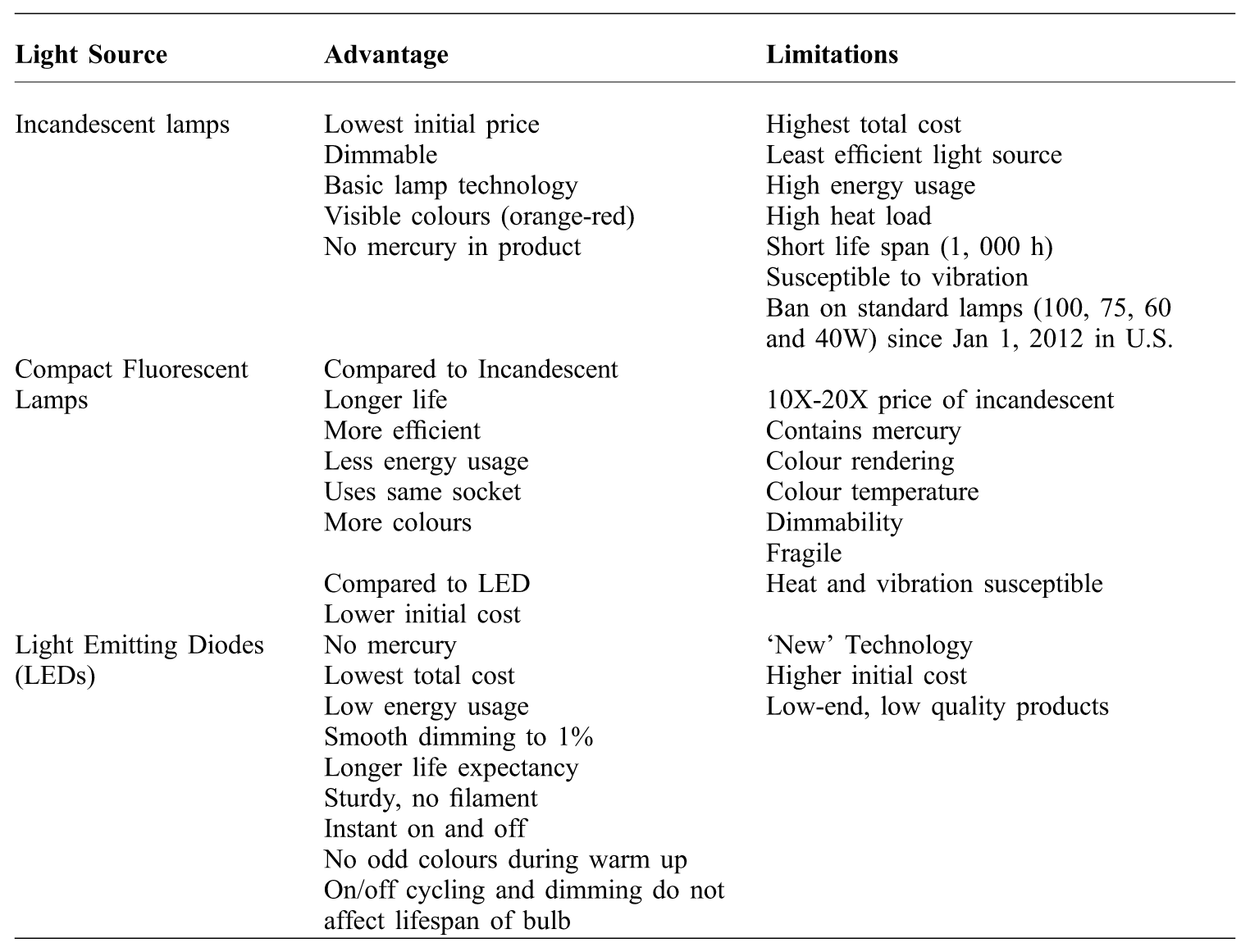
Poultry producers require light sources which are operational for longer periods and with greater efficiency. Traditional lighting sources used in the poultry industry were incandescent and fluorescent bulbs. The expense of lighting in a poultry barn with 60-watt incandescent bulbs can be as much as 30-40% of the commercial operating cost (US $100-$250 per flock or barn, depending on barn size and flock age to market). Therefore, lighting amelioration should not only be beneficial for the birds, but also energy efficient to minimise cost. Incandescent lamps are about 5% efficient in converting energy to light, the rest being wasted as heat energy. Incandescent lights also attract flies and other insects, and are quickly coated with dirt that further reduces the amount of available light. They have a relatively short-rated life compared to other lighting types., e.g. a 100 W, 1,000 hour (standard rated lamp) could be expected to last 63 days at 16 hr/day.
CFL is used in poultry as a replacement source as it is more energy efficient and long lasting, producing up to 4-5 times the number of lumens per watt and with 10-15 times the life of incandescent lamps (Lewis and Morris, Reference LEWIS and MORRIS1998). This can save as much as 60% of lighting costs compared to incandescent bulbs. However, at commercial levels, CFL bulbs showed high failure rates due to the bulbs sensitivity to power fluctuations on farm. In CFL, the second common problem is dirt accumulation on the spiral that reduces bulb lumen light output, plus the bulb naturally loses light output overtime (lamp lumen depreciation, LLD). Furthermore mercury in CFL can create food safety concerns in intensive animal rearing situations.
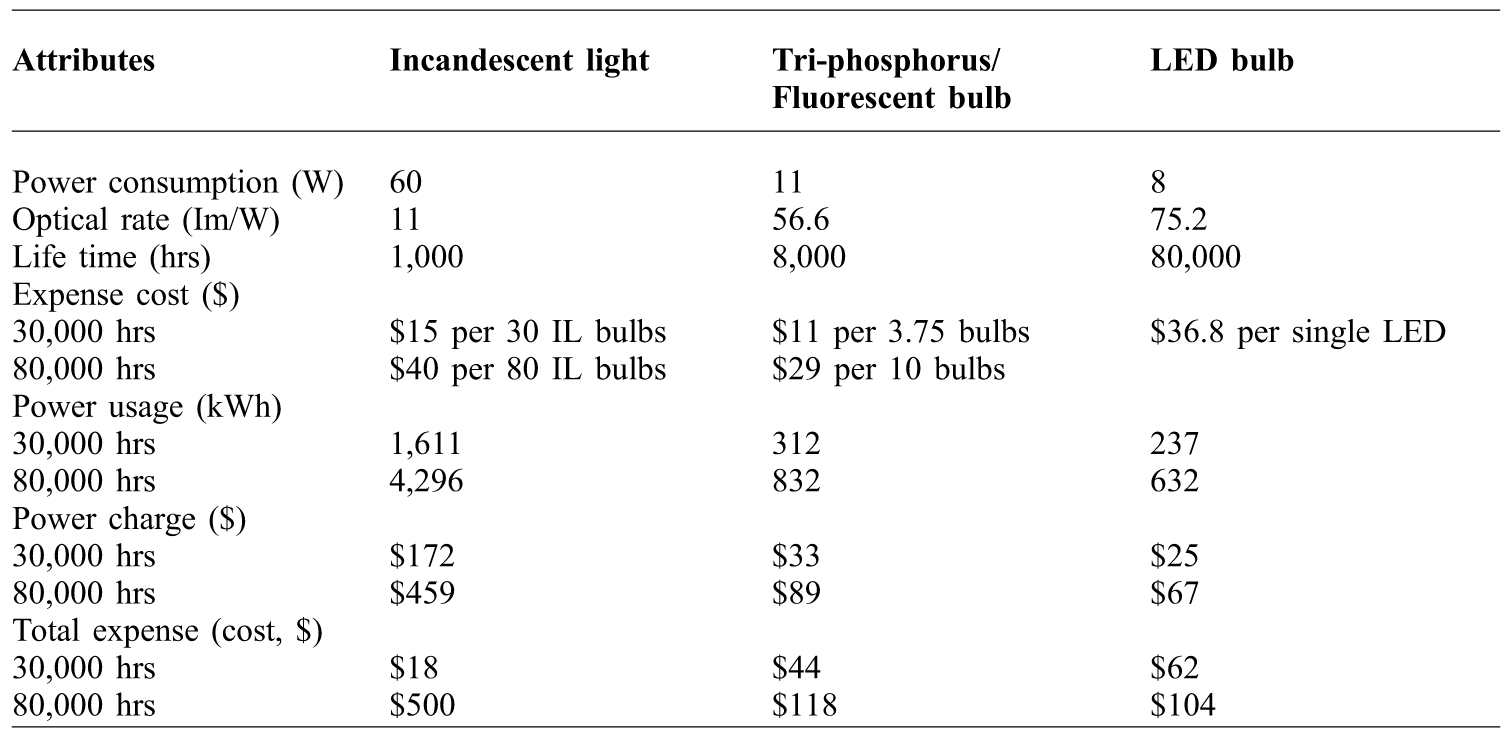
The LED is a solid-state device (P-N Junction semiconductor) that converts electrical energy directly into light through a process called electroluminescence. The use of LEDs in poultry farming has several advantages over conventionally used incandescent and fluorescent bulbs. The advantages of LEDs include; 1) it is environmental friendly-energy efficient with 1/5th of the power consumption of incandescent lamps; 2) it contains no mercury; 3) it has a low energy usage and on/off cycling and dimming do not affect lifespan; 4) LEDs last 80,000 to 100,000 hours compared to the typical incandescent bulbs at 1,000 hour or 8,000 hours for fluorescent lamps, saving labour costs; 5) The LED is available in multi colours and gives immediate responses and no warmup is required; 6) LED bulbs are smaller and are protected by a hard plastic shell, making them less susceptible to damage; 7) The energy efficiency of LED lamps can be very high (75 lumens/W) and if the technology can be adapted to barn environments, it is expected that LED lighting systems will provide large on-farm energy savings in the future. Detailed comparisons of LED bulbs with incandescent light and tri-phosphorus bulbs (or fluorescent bulb) are presented in Tables 4 and 5.
Comparison of different lighting devices with LED bulbs.
This table is a field study conducted by Poultry Science Division, National Institute of Animal Science, Republic of Korea (Year 2012-2013) under a project entitled ‘Application and improvement of LED for poultry housing’ (Unpublished data).It is a field study conducted by National Institute of Animal Science, Republic of Korea, in the year 2012-2013 under a project on Application and Improvement of LED for Poultry Housing (Unpublished data).It is a field study conducted by National Institute of Animal Science, Republic of Korea, in the year 2012-2013 under a project on Application and Improvement of LED for Poultry Housing (Unpublished data).It is a field study conducted by National Institute of Animal Science, Republic of Korea, in the year 2012-2013 under a project on Application and Improvement of LED for Poultry Housing (Unpublished data).It is a field study conducted by National Institute of Animal Science, Republic of Korea, in the year 2012-2013 under a project on Application and Improvement of LED for Poultry Housing (Unpublished data).
Comparative analysis of the advantage and limitations of the different light sources in poultry farms.
Conclusions
Lighting in poultry houses is of considerable importance after other factors such as genetics and nutrition. Light intensity, duration and wavelength are the major light traits which profoundly impact bird production, welfare, physiology and thus the overall economics of poultry production. LEDs have many beneficial characteristics over other conventional lighting devices for the use on poultry farms. The use of continuous light (>20 L) as compared to intermittent light is associated with abnormal behaviour and aggression of birds and causes welfare concerns. Due to variations in observations from various reports there is a need to understand the physiology of the bird's eye to understand the selection and retention module of different wavelengths on physiological processes. LEDs could help to explore the bird's response in different light ranges for cost effective and sustainable poultry production. However, more research needs to be conducted on this aspect to standardise the light emitting diode intensity, duration and wavelength/colour.