Introduction
Research plays a vital role in advancing knowledge, achieving better clinical outcomes and improving the quality of patient care.Reference Nepogodiev, Adisa, Abantanga, Ademuyiwa, Chakrabortee and Ghosh1 It forms the cornerstone of evidence-based medicine and provides clinicians with the ability to make informed decisions about the care of individual patients.Reference Filho2,Reference Bhangu, Lawani, Ng-Kamstra, Wang, Chan and Futaba3 Research and innovation also drive operative training, resulting in techniques which are less invasive and more effective.4 Furthermore, it reduces surgical complication rates, length of hospital stay and patient mortality.Reference Nepogodiev, Adisa, Abantanga, Ademuyiwa, Chakrabortee and Ghosh1,5,Reference Archer, Odeh, Ereidge, Salem, Jones and Gardner6
The development of research competency is encouraged from the early years of training and has been identified by the Joint Committee for Surgical Training as a key requirement for the successful completion of training.7 The Intercollegiate Surgical Curriculum, which sets out a framework for surgical training in the UK, recognises that in order to obtain a Certificate of Completion of Training, a trainee must ‘understand critical appraisal skills, acquire knowledge of research organisation and funding sources, contribute to the development of local or national clinical guidelines and demonstrate the ability to write a scientific paper’.7 The ‘Certification Guidelines for Otolaryngology’ published by the Joint Committee for Surgical Training specifically state that trainees are required to demonstrate evidence that they have been an ‘author of two peer-reviewed publications from research or literature review (but not including single case reports) performed during higher surgical training (ST3 onwards) published (or accepted for publication) in an indexed journal’.8
During higher surgical training, the number of articles required to be submitted by a trainee in each year of their training varies between deaneries. In the West Midlands deanery, for example, trainees at the specialty trainee year 4 level and above are required to submit two papers to indexed journals per year. Other training regions require only one yearly submission, whereas others still do not specify any annual targets at all. Given these regional variations, there is a perceived paucity of awareness among trainees of how their individual performance compares with that of their peers. More available information in this area would help trainees and their educational supervisors when it comes to designing personal development plans at the beginning of each training year. Furthermore, these data would also be useful when it comes to preparing for job applications. An awareness of the average number of publications that a typical trainee from specialty trainee year 8 will have achieved prior to their consultant interview will be invaluable in guiding trainees in their career planning to ensure that they remain competitive.
The primary aim of this study was to determine the number of academic papers that have been submitted or published by ENT specialty trainees in the UK at each level of higher surgical training. The secondary aim was to examine the impact of undertaking a doctoral degree or being in less than full-time training on publication success.
Materials and methods
Study design
In line with previous guidance on the conduct and reporting of survey research, a 13-item questionnaire was developed by the authors. This was divided into two broad sections. Part one collected information on demographics and the academic background of participants. Part two consisted of questions relating to the number of peer-reviewed publications that trainees submitted and attained during higher surgical training years (specialty trainee years 3 to 8; Appendix 1).
The survey was initially piloted on a focus group of five ENT specialty trainees. As a direct result of this primary review, the wording and content of the questionnaire was altered for clarity and ease of understanding. The study was then disseminated across the UK to ENT higher surgical trainees via email, social media and direct messaging, through each of the regional training programme directors and Association of Otolaryngologists in Training regional representatives. After six weeks, the survey was closed, and the data were analysed.
Setting
The questionnaire was created on Google Sheets, a web-based platform (https://www.google.co.uk/sheets/about/). It was distributed via email between May and June 2020 to ENT specialty trainees based in the United Kingdom. Responses were anonymised for the purpose of maintaining confidentiality and data were saved on a secure password-protected platform prior to analysis.
Participants
All ENT specialty registrars in approved training programmes within each training deanery across the UK were invited to take part in this online survey. Doctors in non-training posts were not included in the analysis.
In order to generate accurate numbers on response rates, the total number of trainees in each region was confirmed by the regional training programme directors in all 15 deaneries. These figures were not previously in the public domain prior to the time of publication.
Statistical methods
Data are represented as means, and the number of publications is rounded to the nearest whole number for ease of comparison. Data analysis was conducted using Prism 8 statistical software (GraphPad Software, San Diego, USA). An unpaired t-test was used where comparisons of mean numbers between groups were made. Response rates and percentages presented are based on comparison with the trainee numbers provided by regional training programme directors.
Results
Demographic data
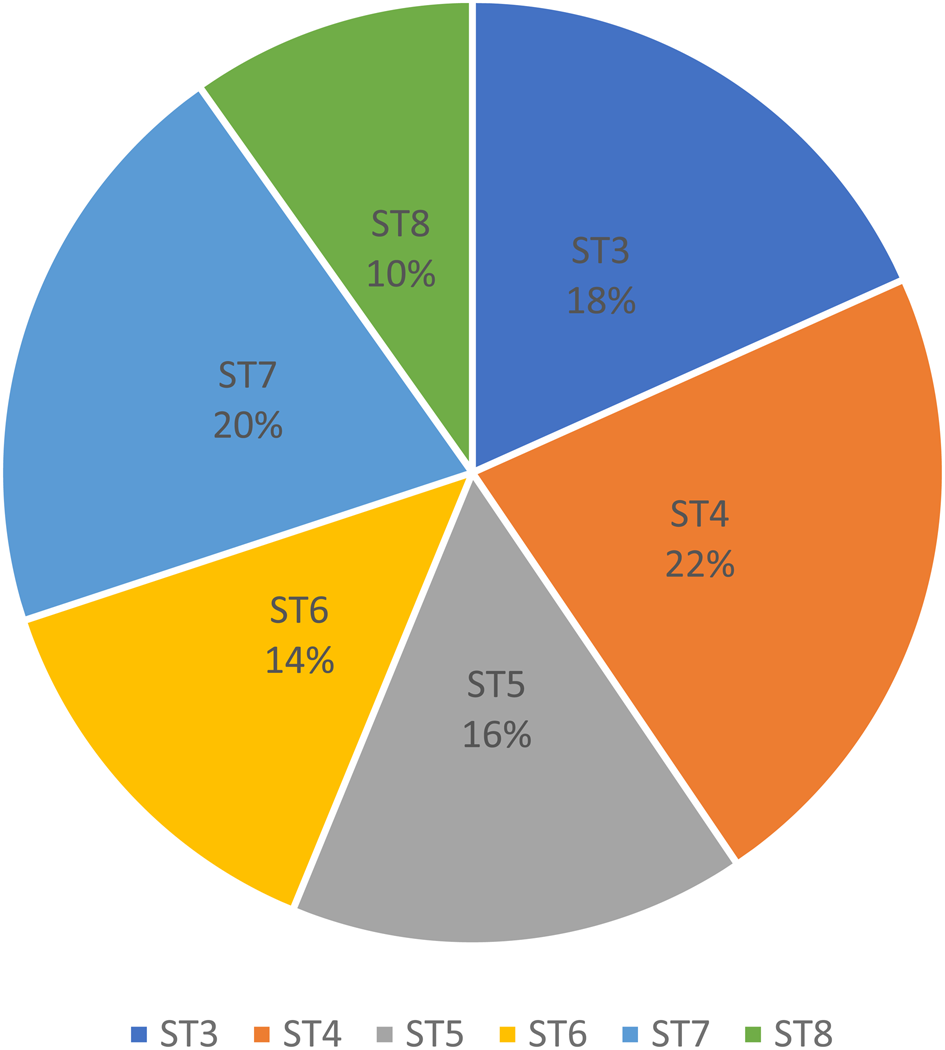
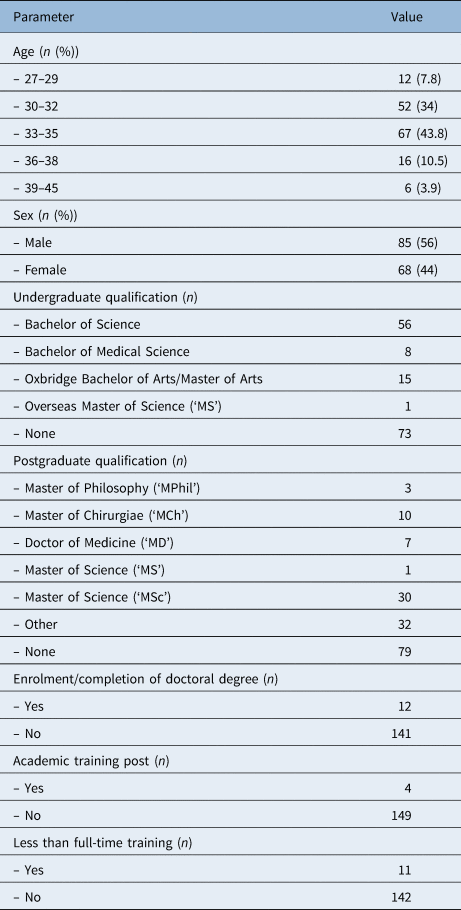
Registrars from all 15 training deaneries within the UK took part in the study. Out of 329 trainees who were invited to take part, 153 completed the survey, giving a response rate of 46.5 per cent. Eighty-five (55.6 per cent) of the respondents were male and 68 (44.4 per cent) were female (Table 1). Twenty-eight trainees were at the specialty trainee year 3 level (18 per cent), 34 were at specialty trainee year 4 (22 per cent), 24 were at specialty trainee year 5 (16 per cent), 34 were at specialty trainee year 6 (14 per cent), 31 were at specialty trainee year 7 (20 per cent) and 15 were in their last year of training (specialty trainee year 8; 10 per cent; Figure 1)
Stage of training of survey respondents. ST = specialty trainee

Demographic information of survey respondents

Four trainees were in a dedicated academic post (2.6 per cent), and the remaining 97.4 per cent of respondents were in a standard training programme. At the time of the survey, 11 trainees were in less than full-time training (7.2 per cent). Regarding their academic backgrounds, 81 respondents (52.9 per cent) reported that they had obtained an additional undergraduate degree, 74 trainees (48.4 per cent) had achieved a postgraduate qualification and 12 (7.8 per cent) respondents had either obtained or were working towards achieving a doctoral degree (Table 1).
Experience in academic publication
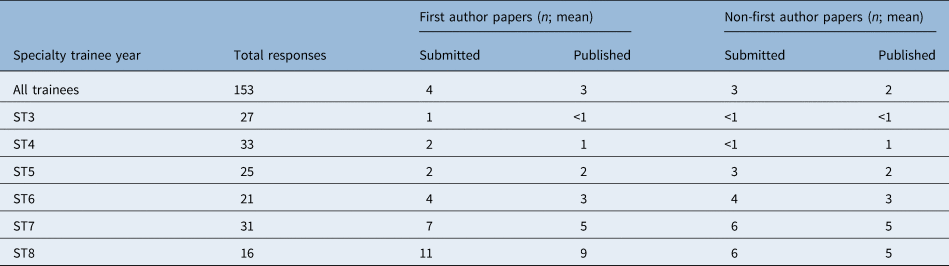
Across the entire cohort of responses including trainees from all years, the mean number of accepted and published first author papers or book chapters was three and for non-first author publications the mean number was two (Table 2).
Mean number of submitted and published peer-reviewed papers

ST = specialty trainee
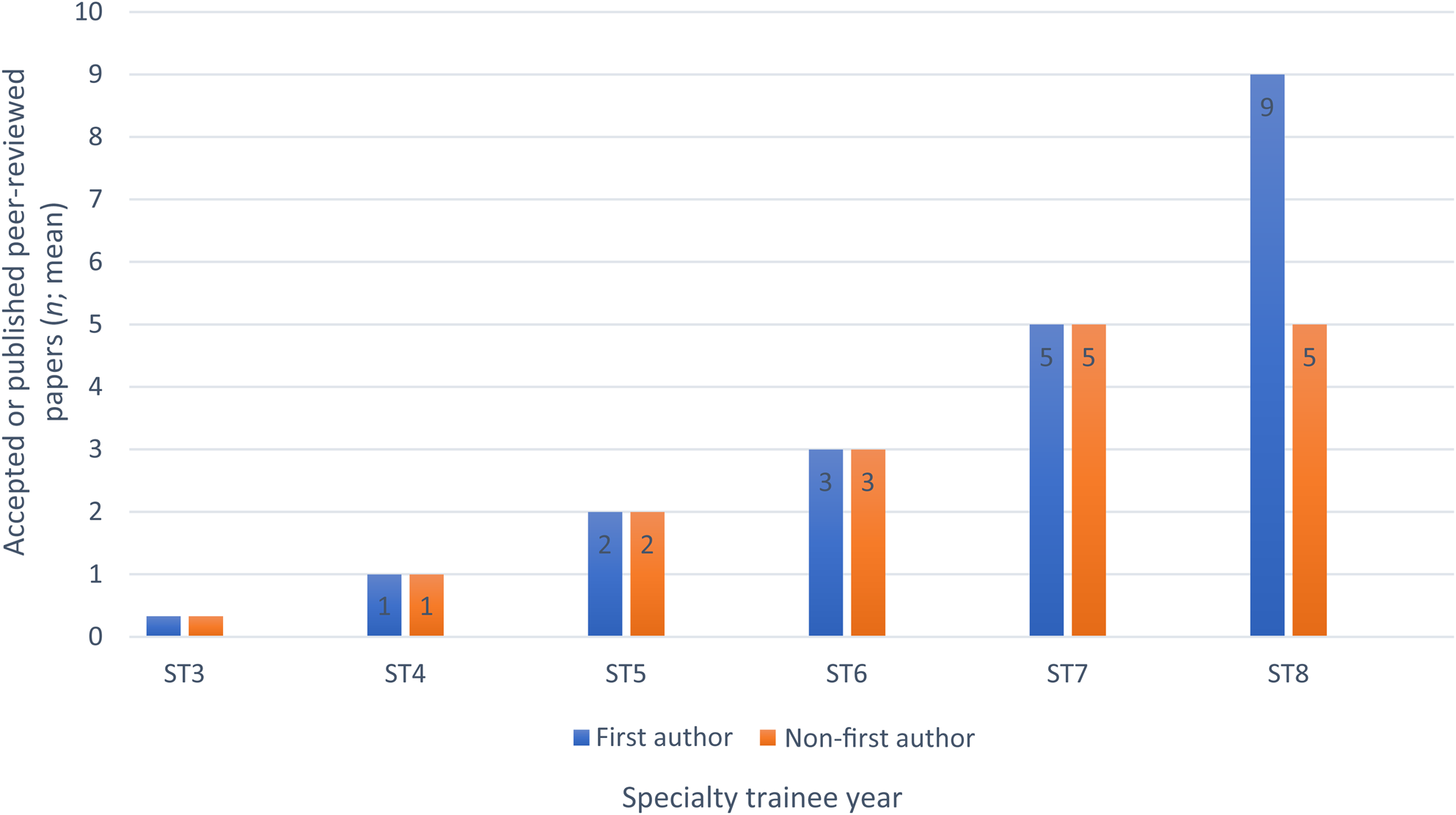
When subgroup analysis was undertaken by dividing responses into training year, the mean number of submitted or published papers demonstrated an upward trend associated with each training year from less than 1 at specialty trainee year 3 to 9 at specialty trainee year 8. The mean number of non-first author published papers showed a similar trend, with a mean of 5 successful publications by specialty trainee year 7 (Table 2 and Figure 2). Overall, the success of trainees with publication of submitted works were 76 per cent and 77 per cent as first author and non-first author, respectively.
Mean number of accepted or published peer-reviewed papers according to training stage. ST = specialty trainee

The range of successful publication reported in this study for higher surgical trainees was significant, with 13 individuals (8.4 per cent) having publication rates above the mean of 9. Two individuals reported 20 authorships to their name at the time of this survey. It is likely that these represent trainees who wish to pursue careers in medical research through medical schools or tertiary centres.
When considering the impact of training pathway on academic publication numbers, it was important to compare these subgroups to a baseline publication level. Therefore, a baseline comparison was created by removing responses from trainees in less than full-time training, doctoral and academic training posts. This figure represented the mean for a trainee progressing from specialty trainee year 3 to specialty trainee year 8 without deviation from the standard training pathway. This figure was three for the first author group and two for non-first author group.
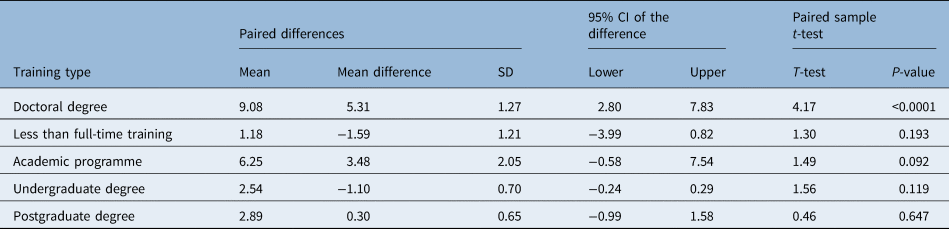
Comparison of this baseline group with those undertaking alternative training pathways (academic training post, doctoral degrees and less than full-time training) demonstrated that a doctoral degree subgroup produced a mean of 9 first author publications, 5.31 more than the baseline rate (p < 0.0001). Similarly, academic training posts produced 3.48 more publications (p = 0.092). Less than full-time training as well as having an additional undergraduate degree were associated with a lower number of successful first author publications at 1.59 and 1.1, respectively. However, neither of these results were statistically significant (Table 3).
Mean and standard deviation of paired differences between academic and training backgrounds and subgroup without doctoral degree on normal training pathway

CI = confidence interval; SD = standard deviation
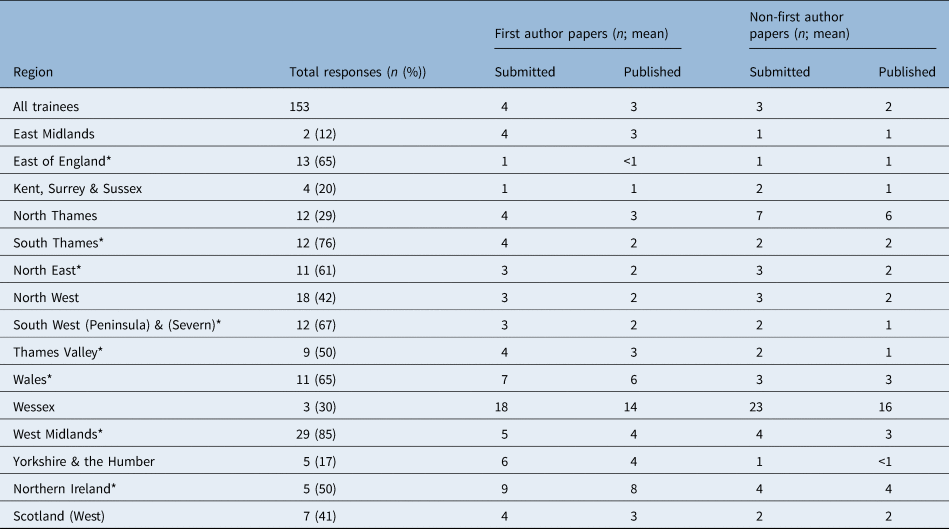
Interregional comparison is limited in this study because of the variability in response rate (12–85 per cent; Table 4). A minimal regional response rate of 50 per cent was set prior to any comparative analysis and those regions who did not achieve this were not considered in this section. We have found that a total of 8 out of the 15 regions had response rates of more than 50 per cent (i.e. the East of England, South Thames, North East, South West, Thames Valley, West Midlands, Wales and Northern Ireland). Significant inter-regional variation was observed amongst our responders, from less than one and up to eight published papers across all years (Table 4). Among the deaneries where there was a sufficient response rate, participants from Northern Ireland and Wales were found to produce the highest mean number of peer-reviewed publications when they were a first author, producing eight and six papers, respectively.
Response rates according to deanery and inter-regional variations

*Regions that had response rates of more than 50 per cent
Discussion
Although some other aspects of publication patterns have been investigated previously in the field of otolaryngology,Reference Roy, Sankar, Hughes, Jones and Fenton10,Reference Coelho, Edelmayer and Fenton11 to our knowledge, this is the first study to investigate the experiences among ENT trainees in the UK when it comes to success in academic publication. The data provide an objective assessment of the number of papers published by ENT trainees. It is the authors’ hope that this data will be helpful in informing and guiding junior trainees, educational supervisors and training programme directors when considering the level of research engagement required in order to successfully obtain a Certificate of Completion of Training. Considering that research competency is a core requirement in consultant job interviews, we also hope that our survey can provide a valuable insight for those who want to gauge their publication rate and progression and compare it to their fellow trainees.
The data from this study demonstrate that, on average, specialty trainee year 8 trainees achieve a higher number of academic publications than is currently required in order to successfully obtain a Certificate of Completion of Training as set by Joint Committee for Surgical Training guidelines.8 Given the challenges and competitive nature of publication in peer-reviewed journals, this is an encouraging statistic for our specialty.
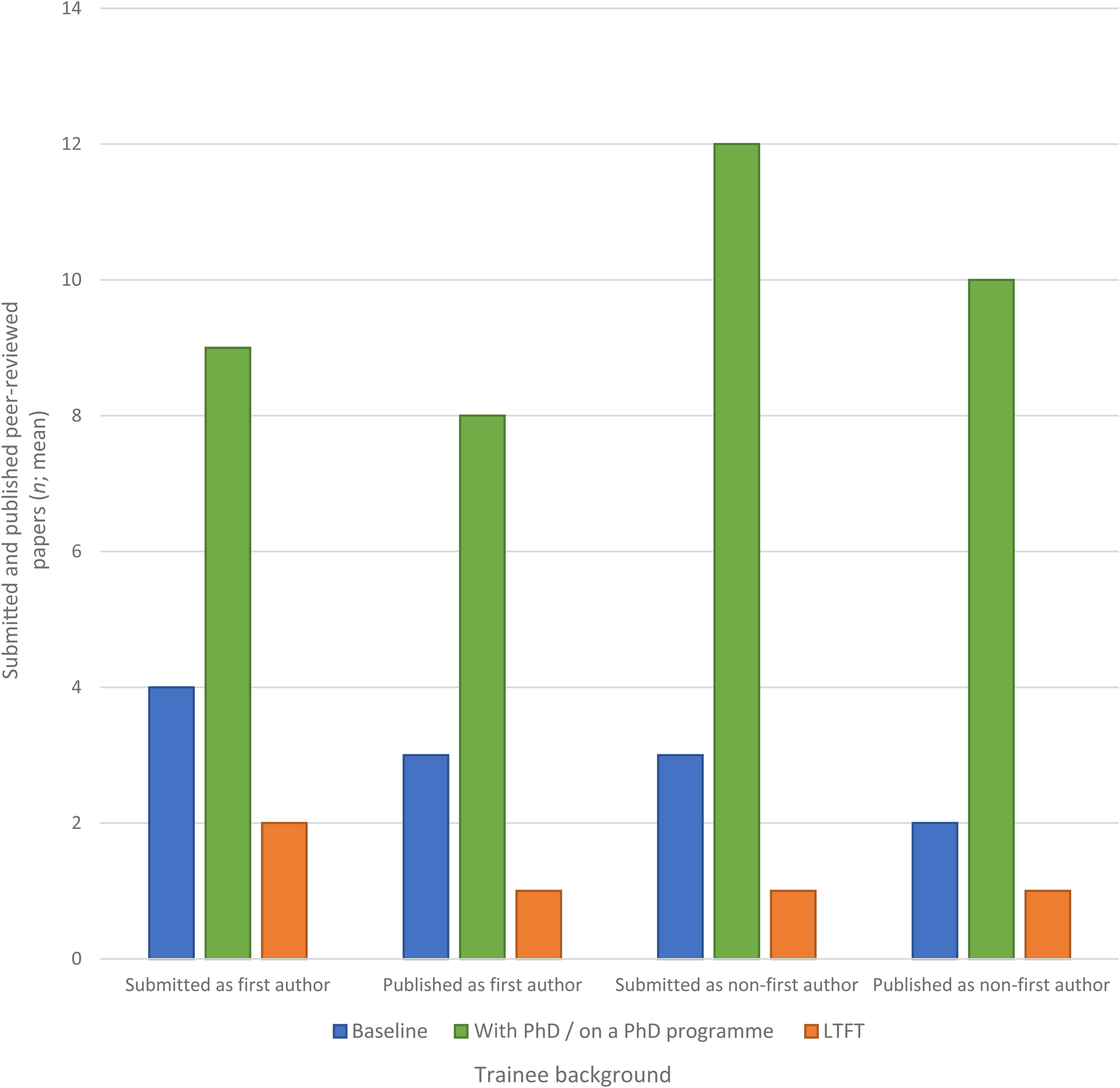
In relation to identifying the impact of different training paths and academic backgrounds, the mean number of successful first and second author publications was higher for the academic and research-based doctoral degree trainees as can be expected by the very nature of these training types (although statistical significance was only demonstrated within the doctoral group). In addition, these trainees are more likely to be academically minded and to be working within a network of consultants and clinicians who are proactive in the leading research, thus providing the infrastructure for increased opportunity and generation of new data. No statistical difference in publication rate was demonstrated in the less than full-time training subgroup, although the overall mean was lower (Figure 3).
Mean number of submitted and published peer-reviewed papers according to academic and training backgrounds. PhD = Doctor of Philosophy; LTFT = less than full-time training

Significant interregional variation was observed in our responses. This variation can be attributed to the local policies set by each individual deanery regarding the number of paper submissions required to progress through each stage of training.
Limitations and future studies
This study reports the mean number of publications by the ENT trainees who engaged with the study and therefore the conclusions with regards to the total population of ENT trainees may be somewhat limited. It could raise questions regarding the responses and characteristics of trainees who have not engaged with the survey. It is possible that those who did not participate may have had different experiences with research or may have had concerns over identifiability following publication of results. Although our survey was anonymous, trainees from regions with a smaller number of registrars may have been worried about their privacy and therefore less inclined to participate.
• The development of research competency is identified as a key requirement for the successful completion of training
• All ENT trainees are required to demonstrate evidence of two peer-reviewed publications during surgical training in order to obtain a Certificate of Completion of Training
• A cross-sectional survey was designed to determine the average number of academic papers submitted and published by ENT specialty trainees
• One hundred and fifty-three ENT specialty trainees took part in the survey giving a national response rate of 46.5 per cent
• Participants demonstrated a higher average number of academic publications than is currently required to successfully obtain a Certificate of Completion of Training
• The average number of papers published by trainees has been affected by the academic background and nature of the training
In addition, the survey was sent out during the coronavirus disease 2019 (Covid-19) pandemic lockdown period when a high number of research questionnaires were in circulation resulting in ‘response burnout’, ‘survey fatigue’ and a possibly reduced level of engagement as a result. The wide variation in response rate between training year and deanery is a probable confounder, and therefore any conclusions drawn should be done with caution.
To address and minimise non-responder bias, trainees in each region were contacted through multiple channels (i.e. training programme directors, Association of Otolaryngologists in Training regional representatives and trainee representatives). This was done at least twice over the course of the survey period. This resulted in a positive engagement rate (46.5 per cent).
To the best of our knowledge, the survey has been completed accurately and honestly by all respondents; therefore, conclusions drawn are valid based on the responses collected.
When comparing interregional levels of publication, care should also be taken because the total number of trainees varies between each region, as does the total number in each year of training. This will affect the mean results, especially if the number of responders is low from any single region. Additionally, the pattern of engagement in this project from trainees at different stages of training (specialty trainee year 3–8 level) was not uniform across all deaneries. This makes it more difficult to draw any firm conclusions between year-to-year variations.
Lastly, this is a cross-sectional snapshot survey that collected data at a single point in time. The survey is not able to tell us about the trend in real time or measure changes over time, and publication rates are likely to fluctuate. Indeed, some global events, such as the Covid-19 pandemic is likely to affect research behaviour of trainees. It may be possible to conduct another survey following this current pandemic to examine this change over time.
Conclusion
This cross-sectional survey provides an objective means of identifying patterns in academic publication amongst ENT trainees during their higher surgical training. Participants' average number of published papers was higher than the number currently required for the Certificate of Completion of Training. This is particularly true for senior trainees who reach their Certificate of Completion of Training with nine first author peer-reviewed publications on average. It is hoped that these results can aid when formulating trainee personal development plans at the beginning of each training year and act as a guide for trainees in their academic planning to ensure that they remain competitive at the consultant interview stage.
Acknowledgements
We would like to thank all the trainees who participated in this survey and the training programme directors and trainee representatives who have helped to disseminate it.
Competing interests
None declared
Appendix 1. Questionnaire
Part 1
1. What is your age?
2. What is your sex?
3. What is your stage of training?
4. What is your training deanery?
5. Are you in an academic training post?
6. Are you in less than full-time training?
7. How many of the following undergraduate qualifications do you have?
BSc | BMedSci | Oxbridge BA/MA | Overseas MS | Other | None
8. How many of the following postgraduate qualifications do you have or are you currently working towards? MPhil | MCh | MD | MS | MSc | Other | None
9. Do you have or are you currently working towards a PhD?
Part 2
10. In your higher surgical training, how many first author peer-reviewed papers or first author book chapters have you SUBMITTED in total?
11. In your higher surgical training, how many first author peer-reviewed papers or first author book chapters have you had ACCEPTED or PUBLISHED in total?
12. In your higher surgical training, how many non-first author peer-reviewed papers or book chapters, excluding collaborative projects, have you SUBMITTED in total?
13. In your higher surgical training, how many non-first author peer reviewed papers or first author book chapters, excluding collaborative projects, have you had ACCEPTED or PUBLISHED?
N.B. Definition of peer-reviewed publication: manuscripts – excluding case reports, letters and abstracts – which are evaluated by at least one subject specialist in addition to the editor before being accepted for publication. The paper must have a PubMed ID (PMID) number or equivalence. An ISSN on its own is not equivalent to PMID number. Definition of higher surgical training: the period of specialty training from ST3 – ST8.