Why did industrial capitalism develop first in Western Europe and not in India, despite India being, by some benchmarks, the workshop of the early modern world? This article attempts to answer that question. The attempt is a partial one, and deals with only one component of a fuller answer, namely preconditions for the growth of useful knowledge, or knowledge that could lead to increased efficiency in the production of mass-consumed and -produced goods and services. Were these conditions substantially different in Western Europe and India on the eve of modern economic growth?
In a world integrated by trade, technological choices tend to be explained by difference in factor endowments and import-substitution strategies. It has been argued, for example, that India in the eighteenth century faced a higher cost of capital and lower cost of labour relative to Western Europe, which would make the choice of capital-intensive techniques inappropriate in India.Footnote 1 It has also been suggested that Britain in the eighteenth century improved capability in the manufacture of cotton textiles by emulating Indian advances, aided by protectionist means.Footnote 2 But factor costs do not offer a compelling explanation for technological divergence. Consider the following example. Despite India being the world's principal source for fine cloths, nearly all of the innovations that led the hand-loom conceptually closer to the power-loom – the fly shuttle, the drop-box and the jacquard, the frames and beams – were invented in Europe. Neither the process of invention nor the attachments themselves were particularly capital intensive. And the inventions occurred in too varied contexts of time, place, and market to be explained by import substitution, let alone protective tariffs. Another example is iron and steel. India had larger endowments of iron and coal than did early modern Britain; factor endowments are therefore unlikely to explain why Britain developed earlier in metallurgy.
The article argues that examples such as these suggest a difference in the manner in which artisanal knowledge was constructed and shared. Industriousness and creativity were widely distributed resources in the early modern world. But the kind of creativity that led to significant changes in capital goods was not widely distributed. Experimentation on capital goods required the union of complementary skills. Developing a new loom, for example, would ordinarily need the combination of three kinds of skill: weaving, carpentry, and casting. The cost of developing new equipment therefore depended on the cost of learning complementary skills. These costs, in turn, depended on the nature of the knowledge community. Much useful knowledge before the age of technical schools was controlled by collectives such as guild, caste, family, and commune. In the case of a professional guild, entry into the knowledge community was, in principle, a market good. In the case of a caste or community, entry was conditional on social conventions and moral codes, and could not be purchased. Through this difference, the knowledge community implied variable levels of transaction costs in useful knowledge, and thus variable propensities to experiment on capital goods.
The rest of the article has five sections. The section below considers how technological divergence has been addressed in the history of science and technology. The next section surveys technology in medieval India, suggesting that diffusion and transmission of knowledge occurred on an extensive scale in Indian industry, and yet few instances involved innovation in tools, equipment, and material. The third section argues that this feature of Indian technology can be explained with reference to the institutional setting. The fourth illustrates the consequences of this proposition for world history with two comparative case-studies on textiles and iron-making. The last section concludes.
Historiography
Systematic interest in science and technology of the non-West is a modern phenomenon, and has proceeded largely by projecting backward and outward interpretations of the rise of the West. Seen from the perspective of the historical scholarship on India, available answers to the questions posed above can be divided into three classes, all influenced by interpretations of the effects of colonial rule on economic change in the region.
One of these proposes that endogenous progression of useful knowledge was hindered by ‘blockages, brakes, or traps’ of a cultural or political kind.Footnote 3 Artisans lacked a ‘scientific attitude’, and merchants lacked freedom. Max Weber stressed attitudes to knowing, suggesting that Europe progressed because the Enlightenment had idealized rationality, whereas the ‘theology of Hinduism did not encourage the growth of rational thought’.Footnote 4 And Karl Marx stressed despotic rules, which were a consequence of social fragmentation and which suppressed merchant capital and mercantilism.Footnote 5 These views had antecedents in an earlier discourse on colonial policy, when James Mill suggested that Indian society, under the weight of despotism, had been inert for a long time.Footnote 6 The village subsisted in a state of equilibrium and did not need to develop the stock of knowledge. Mill influenced Thomas Macaulay, legal advisor to the government of India, who argued, in 1835, that the goal of colonial education should be to make ‘useful knowledge’ accessible to Indians then devoid of such knowledge.Footnote 7
Few historians would accept today that economic outcomes can be explained by timeless orders such as rationality or religion. Jack Goody shows that the signifiers of reasoning discovered in Western thought were also present in non-Western literate traditions;Footnote 8 while M. D. Morris questions the notion of Hinduism that informs Weberian reading of Indian entrepreneurship.Footnote 9 Despotism has proved a more resilient idea. The writings of the Aligarh School, for example, suggest that surplus extraction by the Mughal state left commerce and industry too dependent on elite consumption. Commerce developed ‘without showing much trace of the emergence of industrial capital’.Footnote 10 Recent revisionism casts doubt on these conceptions of the Mughal state, but the verdict on technology is still awaited.Footnote 11
A second and more diverse set of writings on science and technology considers colonialism to be a more powerful agent in knowledge-making than cultural distinctions between the East and the West. Partly in reaction to the Eurocentric views of Marx and Weber, a strand within nationalist historiography claims that Indian society before colonial rule was, in scientific, technological, and educational attainments, equal to that of Europe if not better, and that colonialism destroyed scientific knowledge and mass education.Footnote 12 The nationalistic agenda in science history has involved useful cataloguing of pre-colonial knowledge but has also left many questions unanswered. Whether technological obsolescence owed anything to political factors or to economic ones and how useful the knowledge that disappeared had been are open questions. Within this perspective, the point about destruction of Indian capability has often rested on claims about pre-colonial levels of education. The early nineteenth-century level of mass literacy in India, according to one historian, ‘favourably compares with any country in the world’.Footnote 13 It is implied that a robust tradition died as the result of colonial agency of the kind initiated by Macaulay's ‘minute’. These claims, however, are not well founded.Footnote 14
From the early 1990s, historians of science working on Indian subjects began to move beyond the choice between Eurocentrism and Indocentrism, focusing instead upon the dynamics of interaction between local and global knowledge. In this third view, the identification of modern science with a geographical region is problematic, because similar ideas spring up in many places, ideas travel, and what we understand today to be uniquely Western can be shown to have non-Western roots. Modern knowledge is the product of an encounter between the local and the global, as Joseph Needham argued.Footnote 15 Traditional and local knowledge did not become obsolete in nineteenth-century India but influenced the making of new knowledge.Footnote 16
This research programme blends into a position that considers knowledge-making to be a political process. Western science had political authority behind it and manipulated knowledge to serve political ends: ‘Science, modernization and domination all marched together.’Footnote 17 Even when there was no deliberate annihilation, there was still a reduction in the status of indigenous science. Indian scientists faced a politically constituted filter in deciding the contents of research and teaching. They chose Western science, not because it worked better or was easier to learn but because they were employed by universities and laboratories that had made the decision for them. Colonialism formalized the teaching of science, hegemonized Western science, and pushed local knowledge to the margin.Footnote 18 Research conducted within this paradigm has paid more attention to science than technology, and to administrative practices than utilitarian choices made by producers and consumers. It is not clear, on the other hand, that private technological decisions can be understood sufficiently in political terms.
A different kind of colonialism-centred narrative of technology can be found in the scholarship that has explored the link between colonialism and development. This historiography, too, pays a great deal of attention to the diffusion of technologies that were, in Daniel Headrick's words, ‘useful to the imperialists’.Footnote 19 The narrative is informed by the assumption that ‘western science was, above all, a purveyor of solutions to the needs of imperial governments’.Footnote 20 Such a foundation again denies technological choices made by Indian producers and consumers a sufficiently important and independent role in knowledge-making.Footnote 21
If we wish to understand technological choices made by peasants, artisans, merchants, and consumers, the most relevant considerations should be the relative capability of the alternatives that they faced or of the options that they saw as alternatives, and the social and political milieu in which private decisions on technology occurred. The crucial ingredient in that milieu was not colonial rule but the collectives or peer groups that settled issues of innovation, learning, and information exchange. In order to bring these actors back into the narrative of knowledge-making, we need to consider the social institutions that governed technological choices.
Modern economic theories of innovation do consider the profit motive to be less important and the institutional setting more important to innovation than once believed. This turn brings economic theories of innovation closer to social theories of embedded technical change. In analytical accounts of industrialization in Europe, the emphasis on institutions derives from a belief that the early stages of industrialization were distinguished by a propensity of ideas to spill over from traditional contexts into new ones, and a tendency of different kinds of expertise to come together and reinforce each other. Such a belief raises the question, how does knowledge pass on? S. R. Epstein showed that the medieval craft guild in Europe, by transferring skills through apprenticeships and travelling artisans, fostered innovation.Footnote 22 The patents system of England could potentially promote spillovers by making knowledge a market good, if an expensive one.Footnote 23 For the late nineteenth century, Robert Allen has stressed the role of competing firms sharing information on new techniques.Footnote 24 Joel Mokyr suggests that the main factor in the growth of useful knowledge in modern times has been the co-evolution of practical and theoretical knowledge, or of technology and its epistemic basis, a movement attributed to the growth of a public sphere, including the diffusion of printed books.Footnote 25 Margaret Jacob locates inventive activity in the context of a cultural and epistemological revolution, especially in the relations between science and technology in early modern Europe, and suggests that a specifically English brand of popular science bridged these realms for the urban elite.Footnote 26
The shared ground between these ideas is the facility, perhaps increasing facility, with which knowledge travelled, science entered mass education, and science became useful. On these points, pre-colonial India would seem to represent a very different world. Here, technology existed as tacit knowledge of artisan communities, and the evidence of partnership between diverse skills was rare. Scientific knowledge was often documented, but remained restricted within scholastic circles. The usual medium, palm-leaf manuscript, was unsuitable for wide circulation. There was no sign of an endogenous convergence between the worlds of scientists and artisans, ordinarily separated by barriers of literacy and caste. I read these points of contrast to mean that the social and cultural context did matter to the transaction cost of knowledge and, in turn, to the potentiality of an industrial system to create new tools.
I begin with a consideration of medieval and late-medieval technology in India. The next section makes three points. There are many examples of borrowing and absorption of new knowledge in the pre-colonial period. Instances of changes in tools and equipment, however, are rare. Meanwhile, state formation was an important driver behind the more well-known instances of technological change.
Medieval India
There was much diffusion of technologies between 1200 and 1800 CE in India. Important instances include the Persian wheel, gunpowder and artillery, a draw-loom, new-world crops, navigation equipment, and mapmaking techniques, possibly in that chronological order. Alexander's invasion enabled ‘the transmission of Mediterranean techniques to India. The Ghorian conquests were associated with the introduction of the Persian wheel, the spinning wheel, paper manufacture, and sericulture.’Footnote 27 The use of cannons and muskets became established through a series of exchanges and experiments during the fifteenth century.Footnote 28 The history of these innovations reveals the presence of two processes that shaped technological choices throughout this period: state formation and artisan resettlement.
The agrarian surplus collected as taxes in Mughal India was exchanged for commodities manufactured in the major towns. The court and the noblemen consumed a vast quantity of craft goods, and maintained factories, or ‘karkhanas’. ‘[The] palace-fortress ... and mansions of the great nobles ... dominated the urban economy’.Footnote 29 Merchant capital was mainly involved with the disposal of the agrarian surplus and luxury goods within limited circuits of exchange.
States needed taxes and weapons, and needed to legitimize their rule by means of gifts, conspicuous consumption, and sponsorship of temples and mosques. Pre-colonial courts therefore held experts in a variety of practical fields in high honour. The Mughal aristocracy sponsored, through pensions or gifts, ‘scholars, poets, theologians, physicians, painters, musicians, and dancers’, and accountants.Footnote 30 The Timurid ruler Babar, who founded the empire, was keen on cross-cultural exchange, having himself straddled different cultures. His grandson Akbar was a sponsor of the practical arts. But the intellectual life of Mughal India was not only the making of individual kings. The ‘tripartite Muslim Asia’ consisting of Iran, Turan or Central Asia, and Hindustan, was bound together by a common elite culture, which allowed systematic and regular flow of talents and ideas within it.Footnote 31 The Sultanate and Mughal courts of India received scholars from Persia, Egypt, Central Asia, and, more rarely, the Maghrib. One major reason for such movement was the need for legal scholars to run the judicial system. Through this conduit flowed in a great deal of useful, and not a little useless, knowledge. Akbar's court gathered a large number of scholars together. In some cases, three kinds of expertise–theology, medicine, and eccentric inventive genius – combined in one person.Footnote 32 Inventive activity in this sphere was biased towards amusing toys or military utility, as the inventions of the Persian scholar Fathullah Shirazi illustrated.
Commercially useful knowledge was, by and large, left to the domain of master artisans. A second conduit, therefore, was the migration of artisans. Migration of experts and master artisans was at times induced by famine, trade, military campaigns, the attraction of protected urban settlements, and the spread of religion. But the more long-standing influence on migration was direct or indirect patronage offered to skilled artisans to induce them to settle in the capital cities. The dynamics was common to medieval India and medieval Europe, with the difference that, in Europe, commercial and industrial towns were not necessarily oriented to local consumption.Footnote 33 Vijaya Ramaswamy suggests that epigraphic records point at the construction of a draw-loom in Vijayanagar. We do not have sufficient description of the loom to fit this fact with Irfan Habib's opinion that the known north-Indian looms of the early nineteenth century ‘lacked any features of the draw-loom’.Footnote 34 In any case, evidence suggests that the loom was invented by weavers, and a charter gave monopoly right of its usage to one community of weavers.Footnote 35 The master artisans who were at the top of the skill ladder in the cities of Mughal India or in Vijayanagar were usually suppliers of goods to the ruling class. In turn, the artisans received protection. Sponsorship of artisan guilds occurred on a narrower scale. Instances of sponsorship that we do come across usually involved social collectives rather than professions. In South India, an additional sponsor of the artisan was the temple, though temple power and state power were usually indistinguishable. Temple towns, by means of territorial segmentation that set the professions apart, strengthened the sectarian character of guilds.
Between 1600 and 1650, two other conduits of knowledge exchange became important: the Indian Ocean trade and the Jesuit missionaries in the Mughal court. These channels brought into India systems of cartography and new navigational instruments. Through these routes, two new-world crops, tobacco and maize, were introduced from the Americas, and sericulture expanded in Bengal. In navigation, instruments such as telescopes and compasses had been unknown in seventeenth-century India. The heaviest Indian ships were made with little iron, which made these unsuitable for long hauls. In this sphere, European technology induced significant adaptation, learning, and improvement, one of the outcomes of which was a shipbuilding complex in Coromandel.Footnote 36
Mapmaking is another sphere in which technological change proceeded by means of contact between indigenous and Western practices.Footnote 37 From 1700, cadastral surveys borrowed from Western techniques of representing space. Encountering this new interest, the Jesuit visitors to the Mughal court found the globe a particularly successful gift. A wide range of new goods were introduced to India in the seventeenth century through European contact. These goods included glassware such as telescopes and spectacles, mechanical clocks, and swords. Artillery, seamanship, and naval warfare techniques evoked particular admiration. These goods were purchased by officials and governors of port cities such as Surat, sent to Agra and Lahore from these towns, and, in some cases, their local manufacture was sponsored.Footnote 38
Despite the important role of state formation, technology of craft production interested neither the kings nor the urban classes to any serious extent.Footnote 39 Royal sponsorship rarely touched the subject of practical knowledge. That courtly priorities remained distant from commercially useful knowledge is illustrated particularly well with astronomical research. Astrolabes were a field of interest and patronage in India; yet, the observatories constructed by noblemen were too large in scale to be used in navigation. Until European ships became common in the Indian Ocean, the use of portable navigational instruments was rare in Indian ships.
Only in one field of production was there concentration of state energy – water.Footnote 40 In nearly all medieval cities, there is evidence of sophisticated systems of lifting and channelling water to supply the palace complex and sometimes ordinary residents (Fatehpur Sikri and Vijayanagar, among numerous examples), construction of large tanks (Hauz Khas in Delhi, tanks in Vijayanagar), and construction of canals (in or near Delhi by Alauddin Khalji, the Multan governor Ghazi Malik, the holy man and jurist Shaikh Shibabuddin al-Khurasani, all in the fourteenth century, and in Gaud, the sixteenth-century capital of Bengal).Footnote 41 To Akbar, Abul Fazl attributed the popularization of two pieces of water management: the cooling of water and the Persian wheel.Footnote 42 The most systematic of such initiatives was taken by Firuz Shah Tughlaq (1351–88), who embarked on a network of canals by harnessing the perennial tributaries of the Indus in Punjab and the Ganges–Jamuna system near Delhi. This major network connected the Sutlej with a canal taken out of Jamuna. The 200-mile-long canal passed Sirhind and Ropar towns, and sustained Hisar, a city that the Sultan had founded. The depth and width of these canals allowed navigation.
Even as capital cities were abandoned, the canals sometimes survived for the positive externalities that they carried. The Firuzshahi projects, though meant to sustain new townships, were also used for irrigation. Firuz Shah was pleasantly surprised to discover that the canals could, in fact, make some money for him by way of irrigation tax.Footnote 43 The canals were inundation canals: that is, they received adequate, sometimes more than adequate, water when the rivers were flooded during monsoons, but dried up during the winter months. That being said, William Moreland's negative assessment of these works was probably overdrawn. Contemporary reports suggest that the canals enabled diversification into water-intensive and winter crops such as wheat, gram, and sugar cane in the present-day Haryana. More importantly, ‘the presence of the canals made the construction of wells in the region easy’, illustrating a complementary relationship between canals (large volumes of water) and wells (controlled application of water) that was a potent factor in the colonial and postcolonial ‘green revolutions’ in northern India.Footnote 44
Reflecting, then, climatic constraints, dependence on land tax, and the character of the cities, state priority concentrated on tropical water management, consumer goods, and some forms of urban construction. If we exclude these fields, definite information on artisanal technology remains scarce. Whereas court chronicles were not seriously interested in technology, alternative documentation was lacking, possibly because the making of tools did not exist as a well-developed commercial activity. When serious documentation of artisan techniques began, from the first century of Indo-European trade, this feature became a point of attention.
Institutions
Before the end of the nineteenth century, craft technology in the South Asia region tended to display several distinctive characteristics that need to be understood in their mutual relation. First, the makers of final goods to a large extent fashioned the tools and equipment that they used. Second, most producing communities, and certainly the elite artisan castes, were engaged in the production of final goods rather than intermediate goods. Third, labour intensity was exceptionally high. Fourth, so too was the level of development of craftsmanship. And fifth, all knowledge was tacit: documentation of artisanal technique in any serious sense was a colonial innovation.
When such documentation began, many observers took notice of these characteristics – vertical integration, final-good bias, labour intensity, refinement, and the prevalence of tacit knowledge. An authoritative work on the economy of Bengal produced in the early nineteenth century stated, ‘[T]he want of capital in manufactures and agriculture prevents the division of labour. Every manufacturer and every artist working, on his own account, conducts the whole process of his art from the formation of his tools to the sale of his production.’Footnote 45 The author also commented on the counterpart tendency, ‘the readiness with which the Indian can turn from his usual occupation to another branch of the same act’. The pit loom commonly used by weavers included few parts that required a skilled carpenter. The sugar miller and oil presser, likewise, managed with locally gathered wood and stone. Iron smelting was done in the simplest furnace possible. Textile manufacture and agriculture, the two occupations that engaged possibly three-quarters of the economically active population, were characterized by ‘the extremely sparing use of metal’.Footnote 46 In agriculture, even though the iron ploughshare was not unknown, the use of metal tools was rare.Footnote 47 In turn, the skills that we would today identify mainly with the production of intermediate goods – metallurgy or carpentry – were aimed at the production of a final good. The highest attainment of the carpenter was in carvings upon temples and merchant homes. The elite branch of the metal crafts produced swords and cannons.
Manufacturing and agricultural techniques were extremely labour intensive by contemporary European standards. The Persian water wheel was made of wood, rope, and earthen pots until the late nineteenth century and consequently more intensive in animal and human power than its metal counterpart. Irrigation apart, attempts to use the water wheel as a labour-saving device was much rarer in India than in medieval Europe. Grain milling, sugar-cane crushing, and oil pressing were done, until modern times, with human and bullock power. Forges were operated entirely by human power.
And yet, crafts in India were noted for craftsmanship. Indian artisans were pioneers in the manufacture of swords known in the 1700s as Damascus steel. The crude assembly of a few sticks of roughly hewn wood making up the horizontal loom evoked respect among Europeans for the dexterity of the artisan, who seemed to compensate for the crudeness of the implement by superior skill, a highly evolved sense of colour and design, and extensive knowledge of dyeing, material, and techniques. Finally, the knowledge tradition was almost wholly an oral one, a feature that dismayed the early compiler of directories: ‘As their knowledge of the arts is never communicated by writing nor printing nor their experience reduced to general laws by theory the difficulty of information is again increased’.Footnote 48
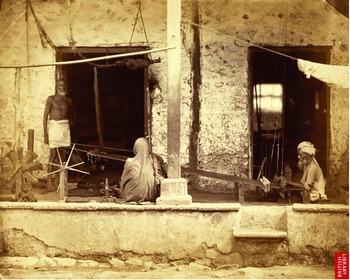
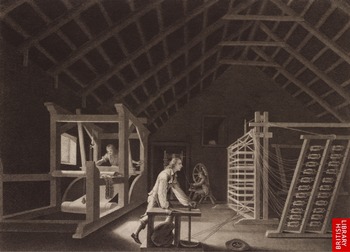
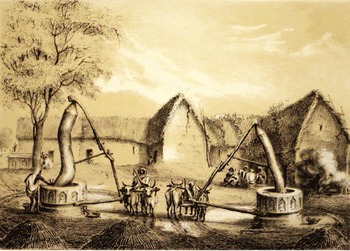
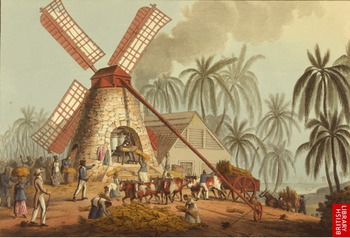
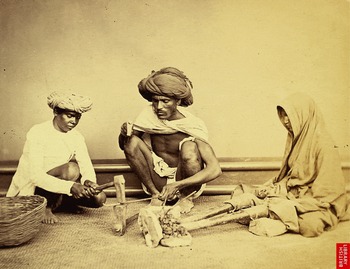
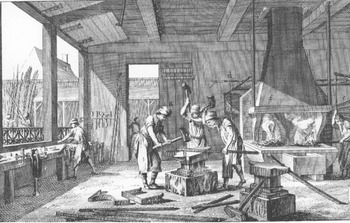
Figures 1–6 present three sets of pictures on manufacturing sites from India and Europe (in one instance, the transplantation of the European windmill to the tropics), which illustrate, if only in an approximate and tentative way, the average difference in scale, in complexity of tools, and in capital and energy intensity between the two manufacturing traditions. Of these characteristics, economic historians have found only labour intensity of sufficient interest for discussion. Labour intensity tends to be explained by relative factor costs. However, recent scholarship has opened up the question of relative prices and wages.Footnote 49 We cannot say whether or not the early modern Indian labourer was necessarily cheap, at least in the deltaic and coastal areas where agriculture was relatively developed. It is possible that, even if wages were similar, the existence of forced labour encouraged labour-intensive production in India.Footnote 50 But exploitation cannot be generalized beyond particular contexts. The world of manufacturing was fragmented: artisans employed by the courts, and their counterparts engaged by the great temples, enjoyed high status, backed up at times by legislation protecting their status.
Sari weaving, western India, c.1873 (photographer: Shivashankar Narayan). © British Library Board. All Rights Reserved.

Linen weaving and warping, eighteenth-century Ireland (artist: W. Hincks). © British Library Board. All Rights Reserved.

Sugar mill in Bilaspur, c.1840. From Fanny Parkes, Wanderings of a pilgrim, in search of the picturesque, during four-and-twenty years in the East, vol. 2, London: Pelham Richardson, 1850, p. 457.

Sugar mill in Antigua, early nineteenth century (artist: William Clark). © British Library Board. All Rights Reserved.

Blacksmith at work (studio reconstruction), c.1873 (photographer unknown). © British Library Board. All Rights Reserved.

s
Blacksmith's shop in early eighteenth-century Europe. From Denis Diderot, A Diderot pictorial encyclopedia of trades and industry: manufacturing and the technical arts in plates, selected from L'Encyclopédie; ou, dictionnaire raisonné des sciences, des arts et des métiers, New York: Dover, 1959, Plate 165 I.

The principal difficulty with explaining technological trajectories by means of factor supplies is that the approach overlooks the institutional context. We do need to account for labour intensity, but together with vertical integration, final-demand orientation, weakness of capital and intermediate goods, and tacit knowledge. Factor endowments cannot do this job. For a simple example showing that it cannot, consider that, no matter the cost of labour, wind, coal, and iron were abundantly available in the South Asia region. Why did this manufacturing tradition use so little wind, coal, and iron? For a convincing answer to the question, we cannot simply infer factor costs, but observe how the knowledge about these factors was produced, shared, and applied.
I hypothesize that the specialized production of capital goods demands partnership between complementary skills. Equally, in the presence of significant barriers to transactions between complementary skills, artisans are likely to develop self-reliance in capital goods as a strategy. Sustained over a long period of time, such practices would reproduce the complex of characteristics I have associated with early modern India. Each artisan community would have a comparative advantage in the production of a consumer good. Makers of final goods would need to integrate construction of equipment, tools, and processing of materials as far as possible. Industries would need to simplify materials and construction, and substitute capital for labour.
In early modern India and Western Europe, artisanal skills were controlled by collectives. In continental Europe, the collectives were usually town-based craft and merchant guilds. The collective we encounter in South Asia consisted of kinsmen. They populated an industrial system that carried strong barriers to recruitment of apprentices from outside the kin group. These barriers could be and were overcome but it was not an easy matter to overcome them. Recruitment and training of apprentices were sometimes biased towards members of the extended kin group throughout the early modern world; but India and Europe did not represent equivalent situations for that reason. The collectives in India were moral communities. Recruitment of apprentices was framed within a moral and social order that included notions of difference (or commonality), hierarchy, and pollution.Footnote 51 A prescriptive rule about selection of apprentices from among extended kin usually implied a rule prohibiting selection of apprentices from outside kin groups. The two principal features of such a collective – sharing rules about marriage (or belonging in a jati (community)), and sharing rules about professional choices – were present in most notions of caste. But caste was not the only informal collective in India that shared these characteristics. The business model that combined occupation with marriage and righteous conduct could be found across religious borders. In any case, the interdependence between significant and sustained social intercourse and industrial education may have allowed for a high quality of apprenticeship and consequently much refinement of craftsmanship. The integration of training with kinship also limited the need for documentation and representation of techniques, hence the prevalence of tacit knowledge.
In the two comparative case studies below, I show that insular knowledge institutions were indeed usual in India, and that knowledge spillovers were consequently limited. I also show that early modern Europe was characterized by extensive knowledge spillovers and a technological trajectory that was distinct from the Indian one. The divergence was visible from the eighteenth century, possibly from much earlier. The point of emphasis in the textile example is demand for manufactured tools from final goods makers. The point of emphasis in the iron example is the linkage between metallurgy and tool-making.
Textiles and iron in India and Europe
Descriptions of production and exchange of tools are hard to find in sources on the Indian artisan. We have a reasonably accurate snapshot for the beginning of the nineteenth century, however. If the situation that then obtained is projected a hundred years backward, a weaver in the eighteenth century located anywhere in the subcontinent would find it impossible to hire a specialist carpenter or blacksmith equipped with the skills and instruments needed to make a complete frame loom. Not because such skill did not exist, but because those who possessed superior skills in carpentry were already engaged in woodcarving, and their counterparts in iron engaged in polishing swords, and both would have considered it beneath their status to make tools and implements for the weaver. The weaver would have to be happy with the capability the generic carpenter could offer, which did not amount to much more than making or repairing shuttles.
Scattered remarks from the beginning of the nineteenth century suggest that, in handloom weaving, weavers assembled the horizontal loom from parts made by the local carpenter or made the loom themselves. Of the cotton carpet loom in the Bombay Presidency, one observer wrote, ‘that a mechanism can be made from materials which can be picked up here and there by mere searching about the workshop, and that the same should be capable of repair by equally inexpensive methods, seem to be the two essential features of every piece of plant in a native workshop’.Footnote 52 Figure 1 seems to confirm this statement. The message reappears in many other contexts: for example, in woollen knotted carpet manufacture, which required a much larger frame, ‘the loom is the most simply and cheaply made from two heavy upright wooden, stone or masonry posts’.Footnote 53 It is not clear that such frames required a definite form of craft skill at all. Beyond a stray remark that ‘the blacksmith is called upon to supply spindles’ in silk reeling and spinning, we have no evidence of a transaction between the blacksmith and the textile artisan either.Footnote 54
The ‘clumsy’, ‘primitive’, and ‘simply constructed’ pit loom had a remarkably long career because the weaver had full control of the construction and maintenance of the machine.Footnote 55 Successful innovations needed to meet this condition. Thus, the fly shuttle became a success in the second quarter of the twentieth century because ways could be found to fit the fly shuttle into the pit loom. A range of frame looms became available for use in the early 1900s but their diffusion proved extremely slow. As late as 1950, the limited use of frame looms in weaver households was attributed to the difficulty of repair by the local carpenter. The Japanese loom was rejected in the Punjab for being dependent on cast-iron parts. Significantly, the new looms were either made in weaving schools or sold by English firms such as Hattersley and Shaw Wallace. These organizations and the very market for looms were new developments.
We do know about a few complete looms of artisan origin. All were made by weavers rather than any class of specialist loom-makers. The three most important draw-looms of late nineteenth-century vintage – the Koshti Kalyan of Poona, a Sourashtra loom of Madura, and the baluchari loom designed by the legendary Dubraj of Murshidabad – were made by weavers who were either prominent community leaders or, like Dubraj, an outcast who dabbled in everything. These looms had little demonstration effect outside the community and locality (although one was patented), and were indirectly helped by the development of carpentry and metallurgy as complementary urban skills. Notwithstanding these developments, we do not see any tendency of a skilled weaver trying to become a loom-maker on a commercial scale. Sporadic attempts at such moves in the late nineteenth century were harshly dealt with by fellow castemen.Footnote 56 Skilled weaving castes were notably conservative about mixing professions and, except in north-eastern India, peasant-weavers were rare. In the temple towns of southern India, prominent weaving communities considered themselves to be immigrants and nurtured the sense of distinctiveness from local society, which seemed to cement intra-community cooperation. These practices of insularity extended to apprenticeship and partnership.Footnote 57
If textiles in India carried little backward linkage with tool-making, seventeenth-century Lancashire presents a stark contrast. A century before ‘the era of invention’, textile machinery was an established industry in Lancashire. While in spinning, Indian and English standards did not diverge to a significant extent until the mid-eighteenth century, the English loom on average was ‘more strongly and perfectly constructed’, used wooden frames and metal fittings such as iron screws, nuts, bolts, and gears, and required a large number of complementary skills (Figure 2 shows the interior of a linen-weaving factory for an example).Footnote 58 The earliest looms came with the Flemish immigrants: these were large and heavy looms that required specialist skills for assembly. Knitting frames included several hundred needles and a metal frame. ‘Turners’ or makers of looms were consistently in great demand. A market in ready-made parts came into existence in the seventeenth century, while the metal-products industry ‘began almost simultaneously with that of the textile industry’.Footnote 59 ‘Inventors’ of course made their own machines, usually working in secrecy. So did the more demanding of the master weavers. But their projects were made possible by the existence of a trade in parts, tools, and complementary skills. Building on this foundation, the inventors represented or achieved the convergence of distinct expertise. John Wyatt of the partnership that first employed rollers for spinning was a carpenter and a gun-barrel forger. Thomas Highs, the inventor of the spinning jenny, was a Lancashire reed-maker. These pioneers, like James Hargreaves, were hands-on craftsmen with wide-ranging skills, unlike their late eighteenth-century counterparts, who were often designers who coordinated between wide-ranging skills.
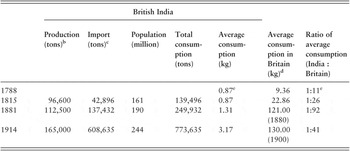
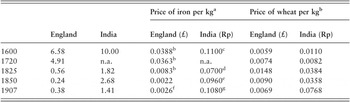
The iron study takes us to the domain of intermediate goods. In 1800, iron ore reserves in Great Britain did not exceed a few hundred million tons. Iron ore reserves in India exceeded 10 billion tons. If factor endowments had a proportional effect on usage, average consumption of iron in India should have been many times that of the average in Britain. In fact, British consumption was ninety-two times the Indian in 1881, the disparity having begun before the Industrial Revolution, and closing only from the end of the nineteenth century (see Table 1). The rarity of iron usage in India was directly linked to the significantly higher cost of iron there. The spread in relative prices increased in the late eighteenth century, even before modern methods of steel production came into vogue (see Table 2). The high prices cannot be fully explained by carriage cost of ores to the major points of consumption. The principal deposit, the Singhbhum-Mayurbhanj mountain range in Chota Nagpur, was not more than 150 miles away from the towns in deltaic Bengal. Extensive smelting was carried on in regions bordering Chota Nagpur and containing ore deposits – Birbhum, for example, which was easily accessible from the coast. The high prices were, in fact, due to the knowledge organization in India.
Consumption of iron, 1788–1915a

Notes:
a Consumption from existing stock is ignored.
b In deriving these estimates, I make three assumptions: (a) between 1815 and 1881, population in the region equivalent to British India increased at 0.25% per year; (b) the proportion of ironworkers in the total workforce was 0.6% in 1815 (same as in 1881); and (c) it took four domestic ironworkers to produce one ton of iron in a year.
c Import data from Parliamentary Papers, 1820 (258), An account of all goods exported from Great Britain to the East Indies and China(I assume India takes all of the iron); and Statistical abstract relating to British India, from 1876–7 to 1885–6 (Table 87), and from 1910–11 to 1919–1920 (Table 136).
d Abbott P. Usher, ‘The industrialization of modern Britain’, Technology and Culture, 1, 2, 1960, pp. 109–27.
e Assuming Indian consumption was constant between 1788 and 1815.
Quantity of grain (kg) required to purchase 1 kg of iron
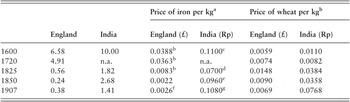
Notes & Sources:
a Iron manufactures (1600, 1720); pig iron for England (1825, 1850, 1907); bloom for India (1825, 1850, 1907).
b Source: http://gpih.ucdavis.edu/Datafilelist.htm (consulted 27 August 2008). 1825 figure is average over 1824–6. I take 1 wheat bushel to equal 27 kg.
c A picket-peg of 1 lb weight cost the Mughal imperial court the equivalent of 10 lbs of wheat: W. H. Moreland, India at the death of Akbar: an economic study, London: Macmillan, 1920, p. 150.
d Near a mine in central India, iron cost Rs 1.75 per maund in 1825: Dharampal, Indian science and technology, p. 237. 1 maund is taken to equal 25 kg.
e Workshops in Birbhum in the 1850s reported a cost of production of Rs 2.4 per maund (25 kg) for bar or ‘mature’ iron: Thomas Oldham's report on iron smelting in Eastern India, cited in Arnab Majumdar, Birbhum: Itihas o sanskriti (Birbhum: history and culture), Calcutta: Ashadeep, 2006, p. 121.
f Average of foundry pig iron for 1906–13, from Robert C. Allen, ‘International competition in iron and steel, 1850–1913’, Journal of Economic History, 39, 4, 1979, pp. 911–37.
g Market price of bar iron made by smelters in the forests of the Santal Parganas (Rs 4 per maund of 37 kg): Watson, Iron and steel, p. 40. This price is identical with the market price of bar iron made by the Dhavads of Konkan in western India c.1900 (Rs 0.5 for a 10 lb bar, or Rs 0.11 per kg): W. V. Scudamore, Monograph on iron and steel work (Bombay Presidency), Bombay: Government Press, 1900, p. 6.
The singular feature of the industry was that the knowledge of iron-making remained confined to communities that were rooted near the ores. The indigenous smelting industry was almost universally a local craft pursued by semi-nomadic tribes. These groups were miners, smelters, and smiths, and the knowledge of smelting did not travel far from the hills and forests where the ore deposits were found. John Percy's contemporary classic on metallurgy, which described iron-making in western India, stated that ‘in districts where this kind of furnace is in operation, there is usually no division of labour, the same family collecting the ore, burning the charcoal, making the iron, and immediately afterwards working it up into such articles as may be required by the villagers’.Footnote 60 Communities that received some attention from latter-day ethnographers were the Ghadi Loharias of Gujarat, the Lohars of North and Central India, and the more loosely constituted Agarias of Central India. When interviewed in the 1960s, older members of the blacksmith branch of the Loharias, who were then urban and mainly used scrap metal, could recall the times when they had been nomadic smelters; the link became weaker in the twentieth century. Conversely, in the 1910s, the Agaria smelters ‘move about from village to village with an anvil, a hammer and tongs, and building a small furnace under a tree, make and repair iron implements for the villagers’.Footnote 61 Despite the close association with peasants, and the occasional foray into cultivation, the Agarias felt considerable ‘guilt’ about leaving their traditional craft to join agriculture.Footnote 62 The process was so simple and so portable that every peasant in the iron-rich areas understood it well. And yet they never tried to make iron on their own, ‘for if any person were to attempt to manufacture it at his house, he would be liable to be deprived of his caste’.Footnote 63
The method of production was exceedingly simple. A band of a dozen or so men mined on the surface of a small area, set up a furnace, and, when the wood fuel was exhausted in that area, moved away to a different location. The ore was roasted and crushed, and the pieces reduced in a cylindrical, clay-lined, charcoal-fired shaft furnace usually fitted with a bamboo tuyère (nozzle through which the blast was forced). According to archaeologists, the furnace derived its origin from copper smelting, and had remained largely unchanged through two thousand years. The furnace worked at relatively low heat (possibly 1100–1200 °C) and produced a spongy mass. The resultant iron was either immediately hammered or, in the usual case, reheated and hammered in an open hearth to shed the remaining slag and produce low-carbon wrought iron. In Birbhum, the smelting and refining were done by different castes.
The whole process occurred on a very small scale by European standards. The typical output of one round of smelting in a forest furnace was about 5 kg of crude iron. The best estimate of annual output would not perhaps exceed 1–2 tons. In 1838, six permanent furnaces in western India produced an annual output of 100 tons, but these represented the upper end of the average scale. For a benchmark, in the 1630s, an average furnace in the Midlands or Yorkshire was expected to make 350–400 tons of pig iron annually.Footnote 64 The reduction of the ores was extremely energy intensive. In seventeenth-century England, the average quantity of charcoal used was 2.5 loads per ton of pig iron.Footnote 65 Taking a load to measure approximately 15 cwt of charcoal, we get a charcoal–iron ratio of 1.9 : 1. In the forests of Chota Nagpur, the ratio was about 5.3 : 1. According to one estimate, the traditional furnace yielded 15% of the weight of the ore as finished metal.Footnote 66 In some places, the furnace was good for not more than two or three charges, because the front of the furnace needed to be removed each time to retrieve the iron within. Therefore, ‘much time is wasted and fuel lost from cooling of the furnace’.Footnote 67
By comparison with wrought iron, casting occurred in India to a very limited extent. Most ancient iron products were weapons and made of wrought iron. Archaeological evidence suggests that iron was extensively used in ancient India, although average consumption cannot be precisely measured.Footnote 68 The evidence also shows that per capita iron usage increased in locations nearer the mines, and that casting was unknown. The products that were elsewhere made with thick casting, such as cannons, were made by welding together blooms of metal. Casting remained rare until the seventeenth century, when the Dutch traders sponsored casting of ship parts in some locations on the south-eastern coast. Beyond these limited or exceptional commercial uses, the contact between metallurgy and high commerce was confined to swords, muskets, cannon barrels, and other objects allied to military demand.Footnote 69
If cast iron was rare, steel was discovered earlier in India. The source of Indian reputation in metallurgy was crucible steel, also known as wootz and Damascus steel, which originated in India. The crucible steel required a high-temperature furnace. But it did not require a substantially larger furnace or a different knowledge base than that represented by wrought iron. Rather than steel-making as such, it was the special raw material – that is, iron ore with traces of ‘impurities’, principally vanadium – that led to Indian advances in steel.Footnote 70 Damascus steel began to become rare from about 1700, when these ores started running out in south India. Between Francis Buchanan Hamilton's notes, describing the crucible steel technology as it could be found in the 1820s, and the late nineteenth century, when experts again sought living evidence of that technology, smelters and smiths had forgotten the process.Footnote 71 Apart from the scarcity of ores, there was another reason for the extinction. This special branch of the industry was entirely sustained by demand for swords. The sword maker significantly extended the resource advantage by exercising an extraordinary degree of engraving skill. In the late nineteenth century, there were few buyers for such articles.
If we ignore the sword-maker, smelting and smithying were usually integrated. The smelters also worked as blacksmiths based in large villages or towns, using the open-hearth furnace and fabricating tools from scrap.Footnote 72 The ubiquitous open-hearth furnaces that the rural blacksmiths used did not melt ores but worked with blooms or, more usually, with scrap metal. Iron pieces were heated in an open hearth and forged or forge-welded to make the final product (Figure 5 shows a studio-recreated version of the generic work). Most large agricultural villages had access to such forges. Another characteristic was connected with the backward integration of smelting with mining – the underdevelopment of mining technology. The iron mines, for example, were of an average depth of 5–20 feet and, when a sufficiently rich portion of the vein was obtained with pick and shovel, were abandoned for another. Evidence of extensive long-distance trade in ores, scraps, or metals remains rare. No radical change in mining techniques took place in the centuries before the Industrial Revolution.
When European iron began to enter India on a large scale, from the mid nineteenth century, the local industry became obsolete without any visible sign of adaptation or resistance. Throughout the late nineteenth century, iron and hardware were the most important imports after cotton textiles and railway materials. The capability of indigenous knowledge was narrow, being confined to weapons, utensils, and agricultural implements. Its scale was uneconomical. Processes were vertically integrated, which resulted in little development or depth in mining technology on the one hand and metal crafts on the other. Small-scale charcoal iron-making was simply not a useful knowledge.Footnote 73 That a manufacturing tradition such as this survived so long points to the economic power of consumers who were prepared to pay the high prices for its output. When these markets disappeared, new markets firmly shut their doors to indigenous iron.
In the nineteenth century, Indians consumed iron in greater quantity and variety than before (see Table 1). While the proportion of import in total consumption increased from 32% in 1815 to 79% in 1914, the dramatic growth of consumption reflected the fact that imports did not only replace domestic industry but also stimulated it. For example, cutlery, which had been a semi-specialized urban branch of smithy, quickly switched over to Swedish and Sheffield steels, strengthening its own craft skills and yet cutting off ties with indigenous smelting.Footnote 74 Rural blacksmiths procured their anvils from England. Finer branches of wood-carving used a considerable number of small iron tools, and even a hand-driven lathe. About 1900, the larger of these tools, as well as the steel parts of the chisels and mallets, were ‘made of English steel, many by the carver himself’.Footnote 75 Gun-makers of Monghyr continued to make damascened barrels but used English plates, dies, and taps, tools they had seen at work in the ordnance factories, and a mysterious polishing liquid called ‘English mixture’.Footnote 76
The wholesale shift to imports can be explained by differences between Indian and European iron-making that go back to the seventeenth century, if not earlier. There were three specific points of difference. The European industry enjoyed considerable economies of scale, was driven by equipment demand and thus could access economies of scope, and involved a more open knowledge community. Not only in the England of the seventeenth century, but also in contemporary Sweden and Germany, iron-making occurred in much larger workshops than in India. The larger average scale points to a significant intermediate and capital goods market for ironware. Relatively large-scale factories, run on commercial principles, had emerged in Europe before India. Factories use larger equipment, especially in the production of motive power. The use of water power was common in grain mills and forges in England and continental Europe in the middle ages. From the twelfth century, windmills were beginning to be used for such purposes in Europe. Water and wind enabled the use of heavier machines, in turn encouraging the substitution of wood by metal, and soft metals by iron. If we follow Abbott Usher's characterization of nineteenth-century industrial technology as ‘the capacity to work with great precision in the hard metals in the production of mechanisms utilizing or producing power’, the distinctive feature of the Industrial Revolution was ‘a progressive and convergent synthesis’ between iron-making and prime mover mechanisms.Footnote 77 The convergence occurred in the late eighteenth century, with such innovations as the shift from wooden bellows to cast-iron cylinders in coke-burning furnaces. The prehistory of developments such as these involved slow, yet interdependent, progressions in iron manufacture and the use of power in agriculture and industry.
Equipment demand required iron-making to be diversified from early on. Castings were common in agriculture:Footnote 78 the bronze-cast Archimedean screw, operated with water power, is an example. The reverberatory furnace, rolling mills, and the scale of the forging shops indicated the need to supply customized tools. The development in puddling early in the second half of the eighteenth century was a response to the requirements of casting. The revolutionary effect of these changes can be seen in per capita production of pig iron, which increased from 11 kg in 1788 to 68 kg in 1840, when steel-making was still decades away. From the seventeenth century in Europe, industrial innovation increasingly used three fields of knowledge in a mutually reinforcing way – metallurgy, water and wind power, and the crankshaft–flywheel combination to generate rotary motion. Wider use of the crankshaft and flywheel, precursor to the development of the locomotive, required the flywheel to be made of metal. The makers of engines demanded cylinders that required fault-free thin castings, which in turn led to improvements in the blast furnace.
In many parts of Europe, recruitment of apprentices was kinship-based: a comparative history of iron-making calls this system ‘dynastic organization of labour’.Footnote 79 But the organization of labour did not have much influence on the organization of knowledge. These were porous collectives. Barriers to entry into apprenticeship for individuals outside kin groups were considerably weaker than in India. Otherwise it would be hard to explain the larger scale of enterprise in the English industry. Individuals from one place could learn a craft in another: the inventor of the coke-burning furnace, Abraham Darby, for example, was trained in Holland. Groups were mobile. Capital was opportunistic, as the examples of German ironworks sponsored by landowners, and Swedish ones set up by peasant households, suggest.Footnote 80 Even when family members dominated apprenticeship, as in Sweden, knowledge of techniques tended to be institutionalized in professional associations. Such associations carried out both overt and secret enquiries about best practice. Useful knowledge, in other words, could be purchased; and, because it could be purchased, intersection between skills was possible. Many prominent figures of the Industrial Revolution had had mixed training and a background in another craft from that in which they made a contribution. Within iron-making, Darby combined advances in iron-casting technology with the expertise of brass founders. Henry Cort was the son of a builder and himself an agent in the Royal Navy. John Wilkinson was a smelter, a machine tool maker, and supplier of the cylinders that made the steam engine possible. Benjamin Huntsman started as a locksmith and ended as a steel-maker.Footnote 81
To restate the conclusions of the study of iron-making in terms of the arguments of the article, the best ironmasters of eighteenth-century India produced cannons when the best ironmasters in England produced cylinders. The cannon served a final demand; the cylinder served an intermediate demand. The former was a traditional artefact and did not need close collaboration between the buyer and the supplier. The latter was a new good; and required ironmasters to retrain or acquire skills from other contexts. It was also an intermediate good, and depended for its successful application upon collaboration between the ironmaster and the tool-maker. These two characteristics – a free-entry training system and collaboration between ironmaster and tool-maker – are largely missing from descriptions of the traditional iron-making communities in nineteenth-century India.
Conclusion
In 1700, industry in Europe and Asia was characterized by artisanal technology and collective organization of knowledge. And yet the eighteenth century revealed a divergence on the capability of capital goods production. This article has attempted to explain this difference in institutional terms.
Innovation on tools, machines, and materials, I have argued, gained from inter-industry transaction in know-how. The scope of such transaction remained limited in India. Whereas useful knowledge was a club good in all regions, the entry into the clubs could not be purchased in India. Knowledge was embodied in the memory of families that did not interact much with families possessing potentially complementary skills. In pre-modern times, knowledge passed on most effectively when master artisans moved from one network to another. In India, teaching and learning of skills, and migration of artisans, depended too narrowly on rules of social intercourse and, consequently, transplantation of individuals from one professional network to another was rare. Crafts tended to simplify tools and develop craftsmanship instead. Tool-making and material processing on a commercial scale became marginal traditions. By contrast, barriers to exchange were considerably weaker in western Europe, and what collective control on knowledge there was had largely dissipated in seventeenth-century England. Well before the nineteenth century, artisan and merchant guilds, guilds of scholars or universities, laws of association, printed books, a level of literacy above that of South Asia, and a master–apprentice tradition that was relatively open, had made knowledge more of a traded good and a public good in Europe.
The nineteenth century brought mixed results for Indian traditional industry. In the mercantilist state that the East India Company established, sponsorship of knowledge became disconnected from elite consumption and connected with commerce. One of the more famous outcomes of this shift was the botanical surveys of Francis Buchanan Hamilton, ushering in an era of printed directories, organized surveys, and a search for profitable products and techniques.Footnote 82 As the nineteenth century progressed, Western contact weakened the hold of communities on useful knowledge, made technology more of a public good supplied in universities and technical schools, and also made technology more of a market good, embodied in tradable machinery.
If these developments reduced barriers to knowledge transaction, they also spelled death for a large part of the old tradition. Many artisans changed jobs or lost jobs in the nineteenth century. The process of decline, which historians call de-industrialization and somewhat misleadingly associate with cotton textiles, was in fact concentrated in intermediate goods such as processing of fibres and metals. At the beginning of the nineteenth century, makers of final goods in most branches of artisan industry were quietly casting off their association with indigenous inputs. Local materials were substituted wherever possible, from cotton yarn to silk, wool, metals, and dyes. Innovations concentrated in craftsmanship.Footnote 83 In each consumer industry, on the other hand, free trade exposed the poor quality and high cost of indigenous inputs. Knowledge of intermediate good production had fallen too far behind the times. Those who had formerly specialized in industries such as iron-making found their products without buyers, their knowledge obsolete, and their ways of working incapable of adaptation.