Introduction
Poly(epichlorohydrin-co-ethylene oxide) (ECO) is a random copolymer of epichlorohydrin and ethylene oxide with a preferential head-to-tail sequence. ECO has attracted much interest from academic research and industry due to its outstanding combination of properties, including heat resistance, fuel and oil resistance, ozone resistance, and a low glass transition temperature (–41°C). These properties lead to its being used in many consumer and engineering applications. However, vulcanized forms of ECO commonly become softer due to thermal oxidative aging. This limits the applications of ECO where good thermal durability is required. Nowadays researchers are interested in developing its thermally stable composites based on the thermal degradation mechanism of ECO.
Using pyrolysis-gas chromatography-mass spectrometry, Soto-Oviedo et al. (Reference Soto-Oviedo, Lehrle, Parsons and De Paoli2003) investigated the thermal degradation mechanism of ECO. Later experimental results suggested that HCl is one of the pyrolysis products (Bumbudsanpharoke et al. Reference Bumbudsanpharoke, Lee, Choi, Park, Kim and Ko2017). The depolymerization of macroradicals formed by cleavage of C–C and C–O bonds and hydrogen abstraction from a carbon atom adjacent to a C–O bond is proposed as one of the most important processes in thermal degradation. Further research work indicated that aging is carried out as a two-stage process. In the first stage, HCl was released due to auto-oxidation; in the second stage, HCl accelerated the cleavage of C–O bonds.
Montmorillonite (Mnt) is a smectite clay mineral and a hydrophilic mineral, which possesses a 2-to-1 layered structure. Layers comprise an octahedral and two tetrahedral sheets (Ho et al. Reference Ho, Briber and Glinka2003). Each layer (~1 nm thick) is separated from the next by an interlayer containing cations (Na+, K+, Ca2+...) which balance the excess negative charge created by a natural substitution of some of the atoms forming the crystal (Joly et al. Reference Joly, Garnaud, Ollitrault and Bokobza2002).
Montmorillonite can be used to flocculate black liquor (BL), which is one of the main by-products of the pulp and paper industry; it contains dissolved lignin and is considered to be a major source of pollution (Pokhrel & Viraraghavan Reference Pokhrel and Viraraghavan2004). This is because the external surface of montmorillonite has exposed aluminum atoms and can adsorb a substance containing a reactive group like hydroxyl, such as in lignin. The incorporation of Mnt into polymers could enhance the properties of composites such as mechanical and thermal stability, as well as aging properties due to the clay platelet structure and morphology in matrices (Gilman Reference Gilman1999). However, in most cases, Mnt must be modified organically to obtain good dispersion throughout the composites as this is considered the most important factor for obtaining full enhancement. The efficiency of a clay mineral as a barrier filler is determined by the degree of its dispersion throughout the polymer matrix. In general, a clay mineral needs to be modified organically by alkyl or polymeric ammonium salts in the interlayer (Akelah et al. Reference Akelah, El-Deen, Hiltner, Baer and Moet1995; Becker et al. Reference Becker, Varley and Simon2004; Chen et al. Reference Chen, Peng and Su2008, Reference Chen, Zang and Su2009; Zang et al. Reference Zang, Xu, Liu, Qiu and Su2009) or be adsorbed by polymers such as lignin on the side or surfaces (Theng Reference Theng1982). However, over recent decades lignin has found more valuable applications because of its special properties such as strong intra-molecular interactions, processing ability, stabilizing effect, reinforcing effect, and biodegradability (Lora & Glasser Reference Lora and Glasser2002). Liao et al. (Reference Liao, Wang and Su2012) prepared a Mnt/lignin complex (CLM) by co-precipitating BL and Mnt and incorporating this complex into acrylonitrile-butadiene rubber (NBR). The properties of CLM/NBR composites were improved significantly due to the good dispersion of Mnt. To simplify the preparation process, Cao et al. (Reference Cao and Liao2013) prepared the Mnt/lignin filler (BL-Mnt) by dehydration of a mixture of Mnt and BL and applied it in the preparation of NBR composites. Experimental results indicated that this BL-Mnt complex could be an effective reinforcing agent in rubber with cost-saving and environmental benefits.
In the present study, the BL-Mnt complex was used in the preparation of ECO composites (Khajehpour et al. Reference Khajehpour, Gelves and Sundararaj2015). The object of the work was to determine how the use of BL-Mnt in the preparation of ECO composites affected the mechanical and thermal properties of epichlorohydrin rubber.
Experimental
Materials
ECO (C-65, chlorine content 24–28 wt.%) was purchased from Wuhan Organic Industry Co., Ltd (Wuhan, China). Calcium Mnt (Ca-Mnt, CEC 90 meq/100 g) was obtained from Zhejiang Fenghong Montmorillonite Chemicals Co., Ltd (Hangzhou, China). BL (20 wt.% lignin) was provided by Hongjiang Wanyuan Chemicals Co., Ltd (Huaihua, China). High-abrasion furnace black (N330) was purchased from Feihu Co., Ltd (Shaoyang, China). 2,3-Dimercapto-6-methylquinoxaline (BFL-K01) was supplied by Shenzhen Bofulong New Materials Research Center (Shenzhen, China). All other rubber ingredients including stearic acid, calcium hydroxide, tetrahydrofuran (THF), etc., were of analytical grade.
Preparation of BL-Mnt Complexes
A typical process for the preparation of BL-Mnt complexes was as follows: 100 g of pristine Ca-Mnt was dispersed in 1000 mL of distilled water for 24 h at room temperature, and then mixed with BL at a mass ratio of Mnt to lignin of 1:1. Subsequently, the pH of this mixture was adjusted to 7 with H2SO4 solution (1.8 mol/L). Then, this mixture was ball-milled at a speed of 150 rpm for 3 h. The BL-Mnt complexes were obtained by drying in an oven at 60°C until the proportion of water in the BL-Mnt complexes was ~50%. The complex obtained was labeled as BL-Mnt.
Preparation of ECO/BL-Mnt Composites
The ECO/BL-Mnt composites were prepared by mechanical mixing on an open two-roll mill. First, rubber was mixed with BL-Mnt complex at 100°C for 3 h on an open two-roll mill to evaporate the water in the mixture. The other additives were added individually after the mixture and the rollers were cooled to room temperature. Then the final mixture was placed in a sample holder at 23°C for 24 h according to GB/T 2941-2006 (Rubber-General procedures for preparing and conditioning test pieces for physical test methods). Finally, the mixture was compression-molded at 170°C under a pressure of 10 MPa for the optimum cure times (T 90) leading to the vulcanizate. The composites obtained were labeled as ECO/BL-Mnt-X or ECO/N330-X, where X represents the loading of BL-Mnt (dried weight) or N330.
Characterization
The curing parameters were obtained using a moving Die Rheometer (Tianyuan, China). X-ray diffraction measurements were carried out using a Bruker-D8 instrument (Karlsruhe, Germany) at a scan rate of 0.5°2θ/min over a scan range of 3 to 10°2θ using monochromatic CuKα radiation. Transmission electron microscopy analysis was performed using a Tecnai F20 instrument (FEI, Hillsboro, Oregon, USA) under an accelerating voltage of 200 kV and bright field illumination. The ultra-thin sections of the samples were prepared by ultramicrotomy (Leica Ultracut UCT, Wetzlar, Germany) at –100°C with a thickness of ~100 nm. Differential scanning calorimetry experiments were performed using a Netzsch 200F3 instrument (Hanau, Bavaria, Germany) to measure the glass transition temperature (T g). The scans were carried out from –80 to 130°C under a flowing nitrogen atmosphere at a heating rate of 10°C/min. Thermo-gravimetric analysis (TGA) was carried out using a Netzsch STA409PC instrument (Hanau, Bavaria, Germany) at a heating rate of 20°C/min over a temperature range of 30 to 700°C in an air atmosphere with an initial weight of ~ 10 mg for each sample. Thermal oxidative aging of the samples was carried out in an air-circulating oven for 72 h at 100°C according to GB/T 3512-2001. The tensile properties of the composites were measured using a Kexin WDW3020 electronic universal testing machine (Changchun, China) at a strain rate of 500 mm per minute at 25 ± 2°C. The Shore A hardness (ISO, 2016, 2018) of the samples was measured using a Huayin LX-A Durometer (Laizhou, China) according to GB/T 6031-1998. Crosslinking density was determined on the basis of the rapid solvent-swelling measurements by application of the Flory–Rhener equation (Flory Reference Flory1953). Swelling tests of rubber vulcanizates in THF were carried out at 25°C for 72 h, and the data used were the average of five determinations.
Results and Discussions
Morphology Study
XRD Measurements
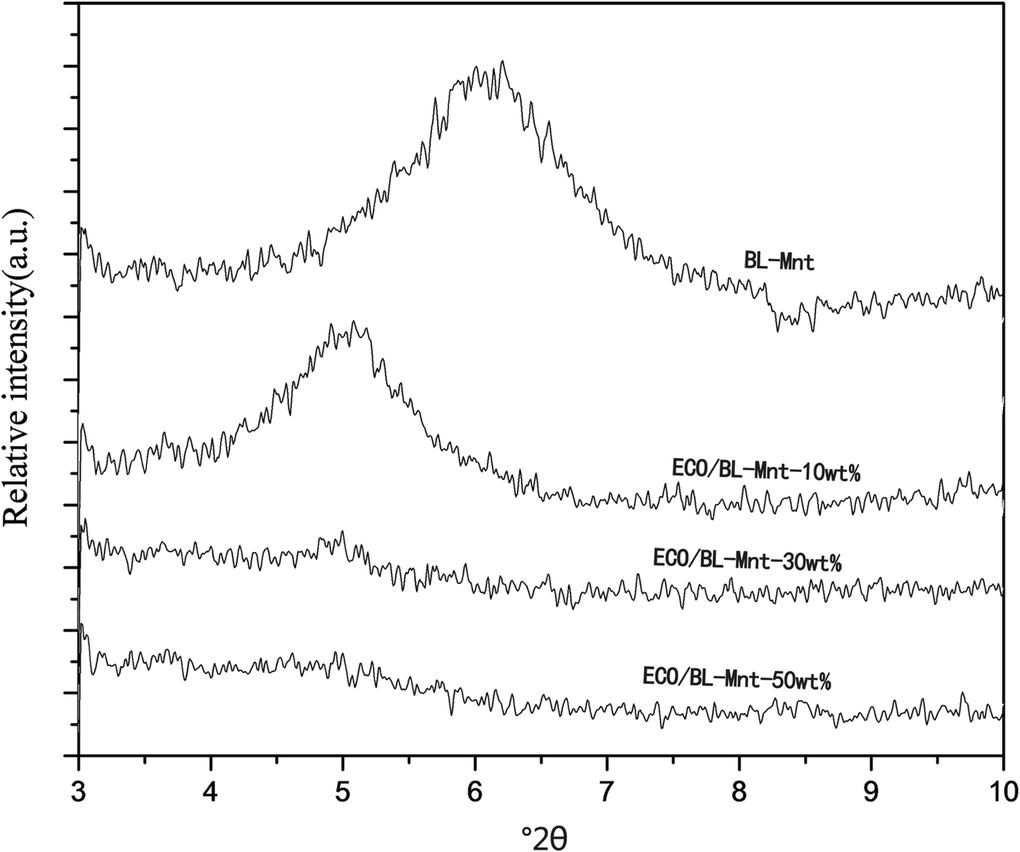
X-ray diffraction was used to measure changes in the d spacing of the clay during preparation of ECO/BL-Mnt composites at various loadings of BL-Mnt (Fig. 1). A peak occurred at 6.12°2θ corresponding to a d spacing of 1.44 nm in an XRD trace of the Mnt (Fig. 1, trace a) used in this experiment. From traces b and c, no reflection peak is obvious in the WAXD pattern of ECO/BL-Mnt-10 and ECO/BL-Mnt-30, indicating that the structure was nearly exfoliated or the interlayer space of intercalated structures was quite large (Lu et al. Reference Lu, Li, Yu, Tian, Zhang and Mai2007). The absence of peaks may, however, have been caused by steric effects in the samples or lack of sensitivity of the apparatus. TEM measurements were made to elucidate this phenomenon further. For sample ECO/BL-Mnt-50, a basal spacing of 1.75 nm (obviously larger than the 1.44 nm of the initial basal spacing of BL-Mnt) indicated that Mnt was further intercalated by ECO (Lu et al. Reference Lu, Li, Yu, Tian, Zhang and Mai2007).
XRD traces obtained from: BL-Mnt; ECO/BL-Mnt-10 wt.%; ECO/BL-Mnt-30 wt.%; ECO/BL-Mnt-50 wt.%

Transmission Electron Microscopy
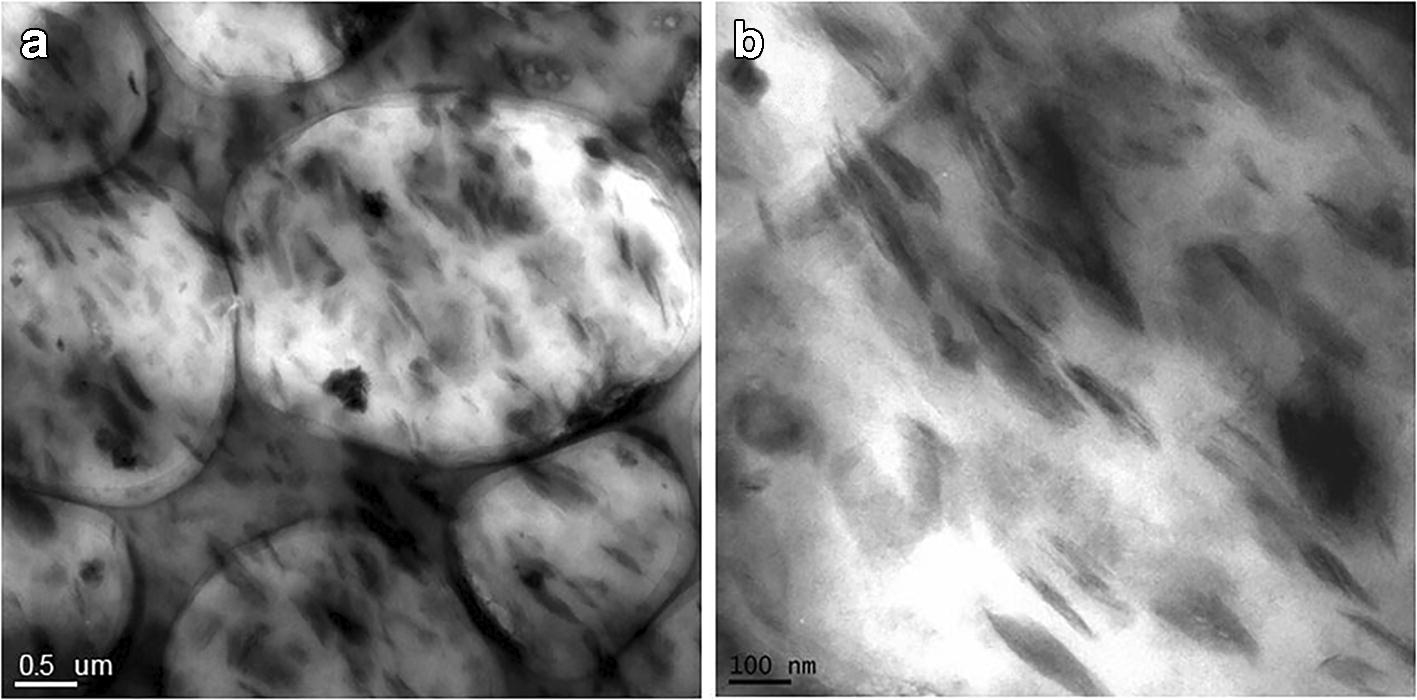
The TEM technique was used to observe the dispersion of BL-Mnt throughout the ECO matrix. A typical low-magnification TEM image of a composite (Fig. 2a) revealed that dispersion of the clay was good throughout the ECO/BL-Mnt composite. However, the clays were not exfoliated and the size of most of the particles was ~0.2 μm, as shown by high-magnification TEM (Fig. 2b).
TEM images of ECO/BL-Mnt-30 composite at (a) low magnification, and (b) high magnification

Thermal Properties
The Glass Transition Temperature of the Composites
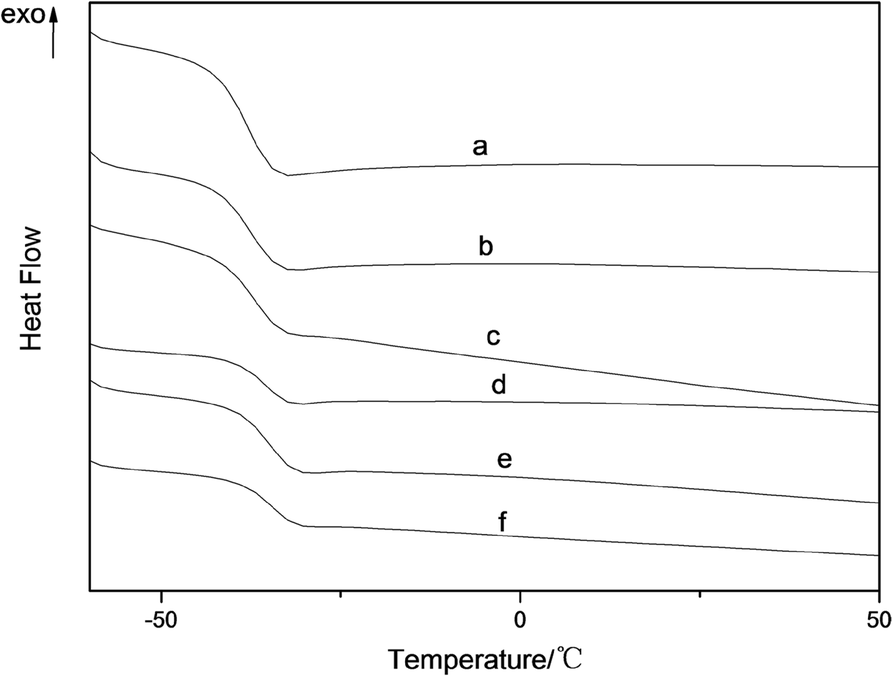
Experimental DSC measurements (Fig. 3) provided thermograms of neat ECO and ECO/BL-Mnt composites having different loadings of BL-Mnt. A single glass transition around –37°C was observed for all samples. This value for T g, which is attributed to the glass transition temperature of ECO, increased as the loading of BL-Mnt increased. These peak shifts may be the result of restricted mobility of the rubber chains within or on the clay layers, thus giving evidence of the intercalated/exfoliated nature of the rubber/clay nanocomposite (Lopez-Manchado et al. Reference Lopez-Manchado, Herrero and Arroyo2003).
DSC traces obtained from: (a) ECO, (b) ECO/BL-Mnt-10 wt.%, (c) ECO/BL-Mnt-30 wt.%, (d) ECO/BL-Mnt-50 wt.%, (e) ECO/BL-Mnt-70 wt.%, and (f) ECO/BL-Mnt-90 wt.%

Thermal Stability of the Composites
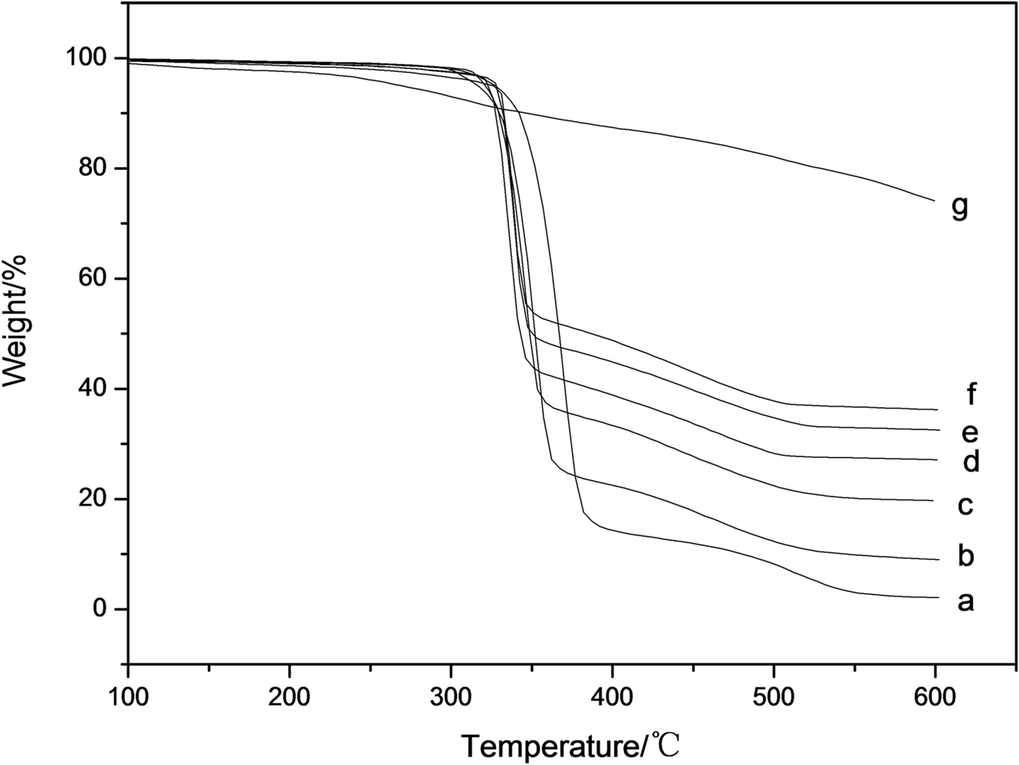
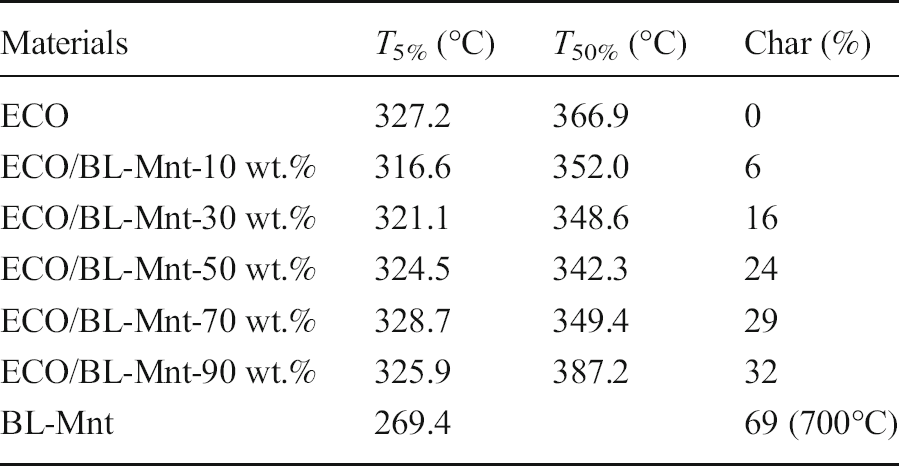
The thermal stabilities of the pure ECO and ECO/BL-Mnt vulcanizates at different BL-Mnt loadings were assessed by TGA (Fig. 4 and Table 1), and revealed the 5% weight loss temperature (T 5%, the temperature at which degradation began) and the 50 wt.% weight loss temperature (T 50%, the degradation temperature), and the char content (residual weight percent at 700°C). The T 5% of the ECO/BL-Mnt was lower than that of pure ECO due to the low decomposition temperature of lignin, hemicellulose, and xylose. The T 50% of the ECO/BL-Mnt decreased initially and then increased as the loading of BL-Mnt increased. At smaller loadings of BL-Mnt, weight loss from ECO composites was due mostly to the release of HCl from ECO auto-oxidation and chemicals from the cleavage of C–O bonds in ECO (Wu Reference Yang1973). BL-Mnt accelerated the degradation of ECO at high temperature, and barrier capability played no important role when loadings were <70 wt.% (Hwang et al. Reference Hwang, Wei and Wu2004). As the BL-Mnt loading increased to 70 wt.%, degradation of the BL-Mnt played an important role in contributing to the increasing T 50% of the ECO/BL-Mnt.
TGA traces obtained from: (a) ECO, (b) ECO/BL-Mnt-10 wt.%, (c) ECO/BL-Mnt-30 wt.%, (d) ECO/BL-Mnt-50 wt.%, (e) ECO/BL-Mnt-70 wt.%, (f) ECO/BL-Mnt-90 wt.%, and (g) BL-Mnt

TGA Analysis of Pure ECO and ECO Composites

Thermo-oxidative Aging of the Composites
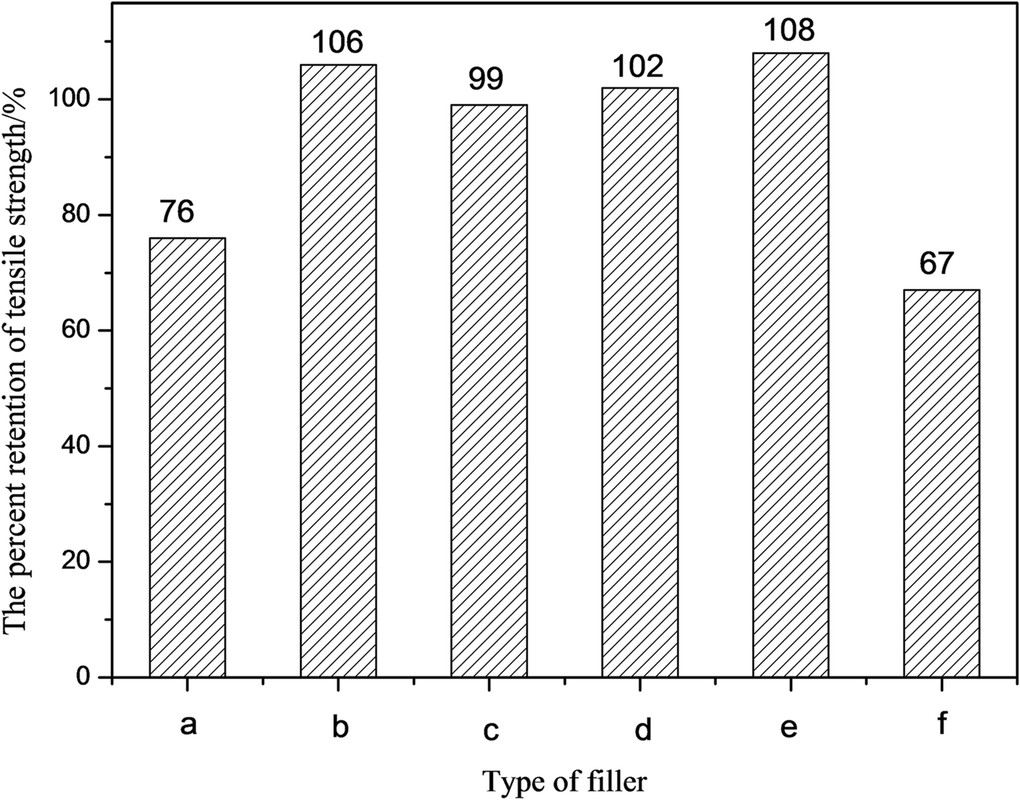
The effect of thermo-oxidative aging on the properties of rubber is considered widely to be primarily important for industrial applications in air at high temperature. In the present study, the thermal oxidative aging property of ECO composites was evaluated by the percent retention of tensile strength. For samples aged for 72 h at 100oC in air, the percent retention of tensile strength obtained from ECO/BL-Mnt was greater than that of ECO/N330 (Fig. 5). The retention of tensile strength of ECO/BL-Mnt composites at loadings of 10, 30, 50, 70, and 90 wt.% were 76, 106, 99, 102, and 108%, respectively, which demonstrated that BL-Mnt complexes could improve the thermo-oxidative aging property of ECO rubber. This improvement could be explained by the clay (with its high surface-to-volume ratios) acting as a barrier for the diffusion of oxygen from the outer surface into the interior of the rubber product; thus slowing the aging process (Sanchez-Garcia et al. Reference Sanchez-Garcia, Gimenez and Lagaron2008).
The percent retention of tensile strength of ECO composites obtained from: (a) ECO/BL-Mnt-10 wt.%, (b) ECO/BL-Mnt-30wt%, (c) ECO/BL-Mnt-50 wt.%, (d) ECO/BL-Mnt-70 wt.%, (e) ECO/BL-Mnt-90 wt.%, and (f) ECO/N330-50 wt.%

Crosslinking Density
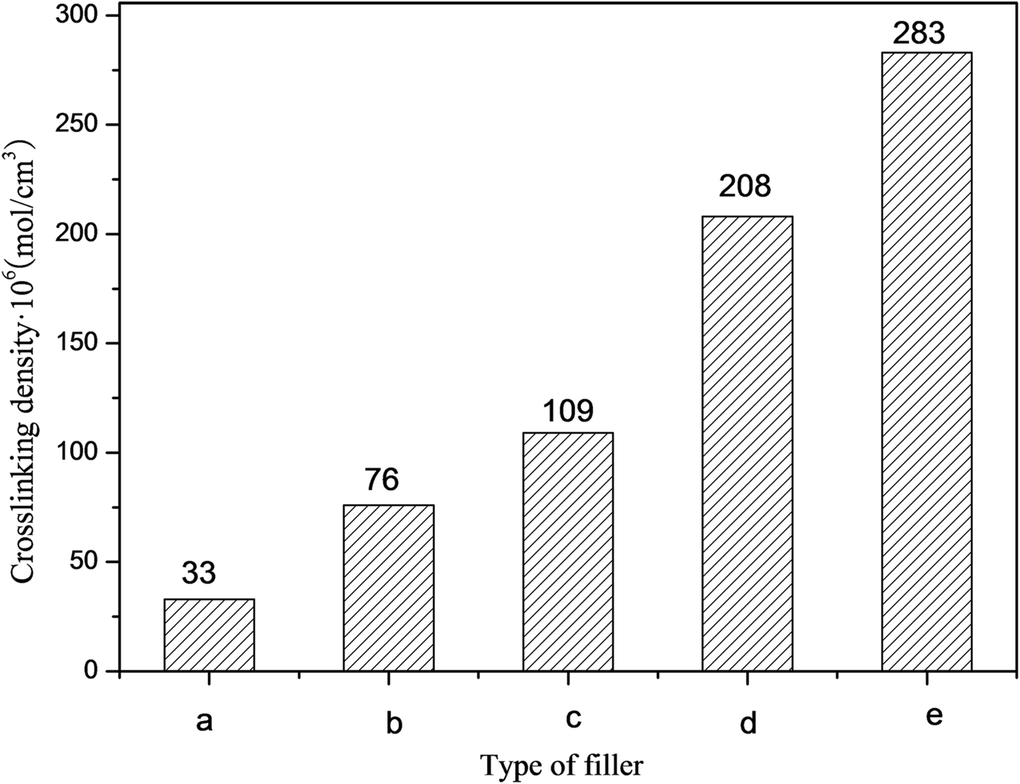
The swelling data were utilized to determine the molecular weight between two crosslinks (Mc) by applying the Flory–Rehner equation (Flory Reference Flory1953). Crosslinking densities for BL-Mnt at different loadings in the composite blends (Fig. 6) increased with increasing BL-Mnt content. This was attributed to good dispersion of the clay throughout the ECO/BL-Mnt composites, as shown by the TEM image, which enhanced the boundary strength between BL-Mnt and ECO. These results agree with the 100% modulus, indicating good compatibility between the BL-Mnt and the elastomer.
Crosslinking densities obtained from ECO composites: (a) ECO/BL-Mnt-10 wt.%, (b) ECO/BL-Mnt-30 wt.%, (c) ECO/BL-Mnt-50 wt.%, (d) ECO/BL-Mnt-70 wt.%, and (e) ECO/BL-Mnt-90 wt.%

Mechanical Properties
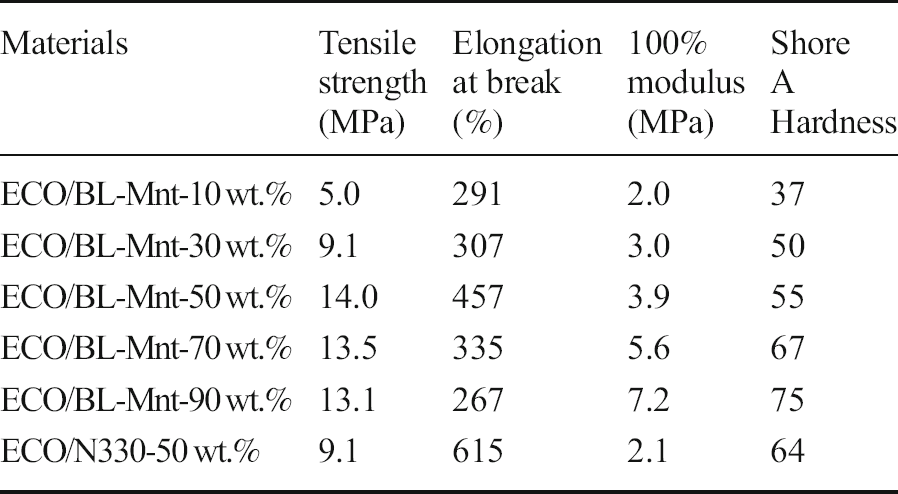
Mechanical properties, including tensile strength, elongation at break, 100% modulus, and Shore A hardness, of ECO/BL-Mnt composites (Table 2) revealed that the tensile strength and elongation at break increased initially and then decreased with increasing loading of BL-Mnt, while the increase in 100% modulus and shore A hardness of ECO/BL-Mnt composites were proportional to the loading of BL-Mnt. As the crosslinking density increased, modulus and Shore A hardness increased. Tensile strength increase initially and then decreased (Yang Reference Yang2009).
Mechanical properties of ECO composites

Conclusion
ECO/BL-Mnt composites, prepared by the mechanical mixing process, comprised filler particles that were well dispersed. The tensile strength, elongation at break, and 100% modulus of rubber composite were 14.0 MPa, 457%, and 3.9 MPa, respectively, at a 50% loading of BL-Mnt. The retention of tensile strength was 99% after thermal oxidative aging in an air-circulating oven for 72 h at 100°C. ECO/BL-Mnt composites with good mechanical properties and thermo-oxidative aging properties were obtained. The addition of BL-Mnt into ECO rubber blends brought about a significant improvement, which was attributed to good dispersion and interfacial compatibility. Thermo-oxidative aging properties of the ECO vulcanizates were also improved with the addition of BL-Mnt, indicating that BL-Mnt will be a promising filler for ECO rubber composites.