Il est ce qu'on appelle un pur “Milésien”: Irlandais et Catholique de vieille souche; de cette Irlande qui sent quelques affinités avec l'Espagne, la France et l'Italie, mais pour qui l'Angleterre est un pays étranger.
He is what we call a pure “Milesian”: Irish and Catholic of old stock, from the Ireland that benefits from some affinities with Spain, France, and Italy, but for whom England is a strange land.
—Valery Larbaud on James JoyceFootnote 1Exotic images of distant lands punctuate Leopold Bloom's thoughts as he wanders through Dublin on 16 June 1904: turbans, carpet shops, shadowy mosques, damsels with dulcimers, camels. Spanning a familiar literary and cultural territory—the Biblical lands, the mythical Persia of the Arabian Nights, the magical world of the popular pantomime Turko the Terrible—Bloom's reveries extend into Spain. In episode 4, “Calypso,” a newspaper ad selling citrus plots for a Zionist colony in Turkish-ruled Palestine transports Bloom to an imagined Eastern paradise, a land of plenty that encompasses “Spain, Gibraltar, Mediterranean, the Levant” (Joyce, Ulysses 4.211–12).Footnote 2 Hailing from Gibraltar, Bloom's wife, Molly, is inextricable from his stereotypical Orient. When Bloom claims that “she has the Spanish type,” he means her “Moorish” features and “passionate temperament,” apparent in her “dark, regular brunette, black” complexion, and her adulterous behavior, which he attributes to climate—to the “blood of the sun” and, elsewhere, to the “blood of the south” (16.879, 13.969, 16.871, 16.879, 16.889–90, 13.969). His thoughts exemplify what Edward Said famously termed Orientalism—that powerful repertoire of images that Europeans, starting in the eighteenth century, have used to categorize North Africa, East Asia, and South Asia. Bloom reels off Orientalist clichés but also alters their scope to include Spain, a European country he sees as a link between otherwise separate places: Dublin and the Mediterranean, Ireland and the Levant.
Using Bloom's imagined itinerary as a road map, I propose new ways of reading Joyce's approach to nationality that take account of, yet move beyond, postcolonial paradigms. Postcolonial readings of Joyce's fiction have dispelled the notion that he was simply a European high modernist, an exiled aesthete, aloof from his national context.Footnote 3 Attention to his Irishness has connected him to anticolonialism elsewhere—from South Asia to South Africa—but overlooked the margin-to-margin connections beyond the colonial world that Bloom's references to Gibraltar and Spain evoke.Footnote 4 Mark Wollaeger cautions us about these approaches, in which “Joyce the God of Modernism becomes Joyce the Patron Saint of the Colonized, and the seemingly easy fit between Joyce and the postcolonial ends up being as much a liability as an opportunity” (70). Similarly, Derek Attridge and Marjorie Howes note that Joyce's texts undermine the “structure of opposition” between metropolis and colony and propose that he is a “semicolonial” rather than a postcolonial writer. While recognizing the relevance of Ireland's colonial history to his work, they argue that his position is “not reducible to a simple anti-colonialism” any more than it supports “colonial organizations and methods” (Introduction 3). In this reading, Joyce's linguistic and stylistic mash-ups connote, among other things, Ireland's indeterminacy as an occupied territory and a formal part of the metropolis after the Act of Union with Great Britain in 1801. Dublin, Joyce wrote in a 1905 letter to his brother, was both “a capital for thousands of years” and “the ‘second’ city of the British Empire” (qtd. in Ellmann 208). “Second” can be understood as both next in authority, as in the imperial government's second-in-command rank, and subordinate or inferior in position, as a colony. The Irish capital challenged neat binaries, just as the boundary-crossing narrative of Ulysses uses plays on words like second and puns—double entendres—that invite readers to look for correspondence in difference, resemblance in disparity. Inspired by this dynamic process, the semicolonial model confutes the metropole-colony dichotomy but maintains colonial power relations as its domain; that is, it distorts the metanarrative of domination and oppression but does not effectively move beyond or change it. This essay turns instead to Orientalized images of Spain in Ulysses not to scramble the relationship between center and margin but rather to look beyond that relationship and show how Joyce's iconoclastic elaboration of national identity stretches across cultures and languages that cannot be contained by a (post)colonial framework. My approach therefore pushes the boundaries of transperipheral comparison to expand and complicate postcolonial and semicolonial readings of Joyce and, more broadly, the scope and function of the discourse of Orientalism, especially when applied to European nations like Spain and Ireland.Footnote 5
Building on previous examinations of Spain in the novel, Gayle Rogers claims that “Joyce connects Ireland and Spain primarily through their shared history of disconnection from European culture at the hands of the British empire” (78).Footnote 6 Rogers alludes to the long history of British stereotypes that cast the Irish and Spaniards, despite their white skin, as more Asian or African than European. Before Alexandre Dumas quipped in the nineteenth century that Africa begins at the Pyrenees, Elizabethans contrasted their Protestant virtues, cohesive sense of national identity, and imperial destiny with Spain's Afro-Muslim heritage and Catholic intolerance.Footnote 7 As England feared an internal Catholic rebellion aided by Spanish intervention, particularly in the Armada year (1588), these anxieties spilled over into the neighboring island. Edmund Spenser's A View of the Present State of Ireland (1633) shows how anti-Spanish typologies were extended to Ireland. Spenser maintains that the Irish “came out of Spain” (41), inheriting horseback riding and housekeeping, dress and grooming habits that were still in use among the “Mahometans” in “Barbary” and Africa (61). Spenser is drawing on a legend first recorded in the eleventh-century Book of Invasions, according to which the Milesians, or sons of Míl Espaine (from the Latin Miles Hispaniae, “Soldier of Hispania”), moved from their native Scythia to Egypt, thence to Greece and Spain, eventually sailing north to take possession of Ireland in 1300 BCE.Footnote 8 This tale, which Joyce knew well, sustained Orientalizing images of Ireland that persisted well beyond the Elizabethan age, though they often acquired more benevolent undertones. In the nineteenth century, the Irish poets Thomas Moore and James Clarence Mangan inverted the stereotype to celebrate its premodern charm and evoke distinctive versions of national identity. Citing theories that link the origins of the Irish language and people to the Near East, Mangan noted in the preface to his “Literae Orientales” articles and pseudo-translations that “every Irishman is an Arab.” Oriental and Celtic at once, Mangan's Irishman is, as David Lloyd puts it, “less removed from untamed natural origins than the civilized European” (Nationalism 124).
Joyce was certainly aware of the equation of Ireland and Orient. He praised Mangan for his conflation of images of East and West and alluded to his and Moore's poetry in Ulysses.Footnote 9 Joyce was also aware that this equation incorporated Spain. The popular Araby bazaar held in Dublin in 1894, which inspired one of Joyce's stories in Dubliners (Ellmann 40), featured several Spanish-themed sites and entertainments that added to the Oriental atmosphere. Visitors could enjoy the tableau vivant Españita: A Spanish Restaurant on a Fête Day, gaze at a reproduction of the Alhambra palace, and ramble through the bazaar's main hall, which the local press described as “a city like Algeria or Granada” (“Araby”).Footnote 10 On each side of the main hall were rows of stage-set buildings with ground-floor stalls, some of which were organized by regional committees. The southern Spanish city of Algeciras was the theme of the Galway stall (Araby 31), an association that evoked not shallow exoticism but real and imagined historical connections between Ireland, Spain, and the ancient Mediterranean of the Milesian legend. Galway, the birthplace of Joyce's wife, Nora Barnacle, was known as the “Spanish City” of Ireland. An important port with close trade ties with Spain during the sixteenth century, it was supposedly settled by Armada castaways who were welcomed by the native population because of what Joyce calls in a 1912 essay “the long friendship between Spain and Ireland” (“Mirage” 201)—a friendship that was based on shared anti-British sentiments and the fabled Milesian ancestry.
Joyce found further confirmation of the Irish-Spanish-Oriental connection in his sources for Molly Bloom's background in Gibraltar, just opposite the port of Algeciras and facing the Mediterranean sea and the coast of Morocco.Footnote 11 A “neutral ground between the hat and the turban,” Spain can only afford, according to Richard Ford's A Hand-book for Travellers in Spain (1845), “a Bedouin Oriental existence” (119). Another source, Henry George O'Shea's Guide to Spain and Portugal (1889), indicates that, especially in Andalusia in the south, the legacy of seven centuries of Islamic rule is as evident in the idleness and backwardness of the people as it is in the whitewashed buildings and hidden courtyards: “with them all is gay, light, wit, love, dolce far niente.” They are, O'Shea concludes, “the Irish . . . of Spain” (16). Ford's and O'Shea's Orientalist image-making caters to their readership's taste for the exotic; it satisfies its readers’ bourgeois curiosity about far-off territories still untouched by capitalist modernity while inflating their sense of superiority as a result. Though reformulated, the stereotype retains its function as barrier: antithetical to the Protestant work ethic, the Irish and Spaniards are confined in antimodern enclaves and removed from Western civilization and progress, epitomized by Britain.
Reversing this focus, Joyce's Ulysses deploys Orientalized images of Spain in a way that recalls the Galway stall at the Araby bazaar. The exhibit evoked ancient origin myths and transnational alliances that, via Spain, symbolically separated Ireland from celebrations of British rule on the Royal Dublin Society showground where the bazaar was held, such as the “Empire” theater and the tableau vivant Britain and Her Colonies (Araby 61). Joyce's intent is similar: not just to underline a “shared history of disconnection” from the imperial center, as Rogers notes, but to suggest a margin-to-margin connection beyond the colonial world and the hierarchies that sustain it. What Ford and O'Shea see as Oriental atavism is for Joyce the foundation of a transnational imaginary that eludes colonial and postcolonial narratives. According to Gregory Castle, the “paradoxical and contradictory socio-historical condition” that conjoins what is deemed archaic with modernizing and emancipatory impulses “exists not only in post-colonial territories . . . but also in underdeveloped parts of Europe, like parts of Spain and southern Italy” (100), where a strong Afro-Muslim heritage has been traditionally perceived as the cause of material backwardness. The imaginative links Joyce establishes between Spain and Ireland elaborate on this shared marginality and present Irishness not as a mere opposite of Englishness or a divided, semicolonial condition but as a node in a web that stretches across other cultures, languages, and historical periods to expand our sense of where and how modern Irish identity unfolds.Footnote 12
In articulating this intersection, Joyce's novel alters the scope and function of Said's formulation of Orientalism. Contrary to Said's view, Joyce's idea of Orient as applied to Spain does not exactly match “the scope of empire” (Said, Orientalism 104), nor does it carry forward “the binary typology of advanced and backward (or subject) races” (206). Gibraltar was a Spanish territory ceded to Britain in 1713, and Spain was deemed a “dying nation” in 1898 by the English statesman Lord Salisbury (“Primrose League”), but it would be historically inaccurate to say that Spain was a colonial margin when Joyce wrote Ulysses. Though not a colony, Spain, once a European world empire, was “thrown out of Europe by the Dutch, the French, and the English, and finally by the Americans,” as the historian Mark Thurner puts it. Thurner adds that following “the provincializing of the world's first ‘Europe’—chiefly ‘Spain,’” another “‘Europe’ took Spain's (and Portugal's) place—the modern northwestern Europe of the Enlightenment and modernity, history, and capitalism” (14). The difference between these two Europes was often coded in Orientalist terms and grouped Ireland with the “first ‘Europe,’” as O'Shea shows. In Ulysses, Joyce transforms this displaced, Orientalized geopolitical space into a site of potentiality where Ireland is not trapped in an oppositional relationship with Britain as its “other.” In this sense, Joyce's is a “minor” Orientalism.
For Gilles Deleuze and Félix Guattari, minor does not mean lesser in importance or significance but rather involves a reformulation of a hegemonic discourse from a marginalized position to “break forms, encourage ruptures and new sproutings” (Deleuze and Guattari 28). Such a model explains Joyce's vexed relationship with the English language and literary tradition, both of which he distorts, reshapes, and ultimately frees from standard usage and established genres in Ulysses and, most pointedly, Finnegans Wake. Living, as Deleuze and Guattari put it, in “a language that is not [his] own,” Joyce struggled with inherited forms of expression, which were often felt as modes of oppression. Recall Stephen Dedalus's musings in A Portrait of the Artist as a Young Man (1916) during a conversation with an English dean of studies at his college: “The language in which we are speaking is his before it is mine. . . . His language, so familiar and so foreign, will always be for me an acquired speech. I have not made or accepted its words. My voice holds them at bay. My soul frets in the shadow of his language” (189). Displeased and disgruntled by Irish exceptionalism and the Gaelic revival of his day, Joyce responds to the constrictions of speech and identity imposed on him by embracing this alien linguistic legacy irreverently to “tear a minor literature away from its own language, allowing it to challenge the language and making it follow a sober revolutionary path” (Deleuze and Guattari 19). Like other “minor” writers such as Franz Kafka, a Czech Jew who writes in German, and Samuel Beckett, a fellow Irishman, Joyce proceeds in his own unique manner. Where Kafka and Beckett strip language of symbolic and cultural sense and push it “to the point of sobriety,” Joyce's linguistic and cultural mixtures create “all sorts of worldwide reterritorializations” (19). A specific example can be found, as Marilyn Reizbaum points out, in the “Oxen of the Sun” episode in Ulysses. Here the embryonic development of the English language and the canon of English literature, from the Anglo-Saxon period to the twentieth century, devolves into the closing “lingual pyrotechnics” of slang and ethnic dialects (Reizbaum 181), which disrupts standard language usage and decentralizes the lineage of literary tradition.
A similar process explains what I call Joyce's “minor” Orientalism. He repurposes a discourse of colonial domination to “tear [it] away” from its stereotypical language of fixity and control. Although previous studies have emphasized Joyce's resistance to the binary typologies that frame the colonial encounter, they still operate within the colonizer-colonized oppositions they wish to disrupt. To say that Joyce is a postcolonial or semicolonial writer recognizes the historical underpinnings of his aesthetic innovations and his iconoclastic response to colonial power but defines his work through dualistic terms bound to British imperialism and its aftermath. Seen as a way out of this bind, Joyce's engagement with Spain indicates that it is no longer a question of unsettling Orientalist or colonial antagonisms but rather of challenging and replacing the type of enunciation that remains trapped in oppositional dynamics and their scope. In order to fully capture this critical move, the term minor needs revising, as Françoise Lionnet and Shu-mei Shih point out. Deleuze and Guattari often conflate minor with marginalized and minority in the context of sociological minority status and emphasize binary relationships within and against dominant languages and cultures. In contrast, Lionnet and Shih detach minority cultures from vertical models of opposition to “look sideways to lateral networks” across national, ethnic, and cultural boundaries in colonial, postcolonial, and neocolonial spaces (1). By focusing on how Joyce's Orientalism pivots on Spain, this essay decouples his work from the colonizer-colonized paradigm and thinks “the minor transnationally,” as Lionnet and Shih suggest: not against “a dominant discourse” but through “the relationship among different margins” that while enmeshed in colonial dynamics are not necessarily bound to each other by direct imperial rule (2; emphasis added).Footnote 13
Thus understood, Joyce's Orientalism both contributes to and challenges the nationalist versions of Irish Orientalism that developed during the nineteenth and early twentieth centuries. With the country in the throes of its struggle for independence but still a British territory, interest in the Orient was fueled either by the hope of joining the imperial administration in faraway outposts or by nationalist efforts to redefine Ireland through association with the East instead of Britain. As Joseph Lennon explains, “Irish Orientalism developed both imperial and anticolonial strains, mirroring the Irish population in their participation in and resistance to the British Empire” (123). The anticolonial strain, nurtured by such writers as Lady Morgan, James Clarence Mangan, W. B. Yeats, and James Cousins, helped “imagine and actualize cross-colonial ties and decolonizing narratives around the world,” from India to South Africa (Lennon xvii).Footnote 14 I contend that by revisiting the interrelations between Ireland and Spain, Joyce expands the perimeter of Irish Orientalism beyond colonial relations and its function beyond domination and resistance. In Ulysses, reformulated Spanish and Orientalist clichés engender new fluid identities that contest ethnocentric considerations of Irish self-determination and postcolonial sovereignty after 1922, the year the Irish Free State was established and the novel was published. For Joyce, the efforts to free Ireland from Britain culminated in what he sarcastically called “the devil era” (Finnegans Wake 473), alluding to Éamon de Valera, who served several times as head of the new independent state and worked to institutionalize conservative cultural and social policies that many deemed a continuation of, rather than a break with, colonial structures. Ireland, Declan Kiberd writes, was “patented as not-England,” a country rooted in a reactive nationalism that was “the very antithesis” but also the perfect counterpart of the imperial regime it sought to replace (9). For instance, Irish patriots found in the Irish language, the Dáil, the Taoiseach, and hurling the Gaelic equivalents of the English language, the Parliament, the prime minister, and hockey. The result was “an apophatic construct which was as teasing to the mind as the notion of a horse as a wheelless car” (Kiberd 151).
In Ulysses, Joyce imagines an alternative to the worn tale of colonizer and colonized that haunted Ireland before and after political independence. Specifically, Bloom's and Molly's ethnic hybridity and their thoughts about distant lands spanning “Spain, Gibraltar, Mediterranean, the Levant” expand Ireland's history of subjection and resistance to British rule, displacing this history onto peripheral, exoticized, yet not necessarily colonized spaces. This jagged geography fictionalizes the rich ambiguities and apparent contradictions that Joyce raises in his famous Trieste lecture, “Ireland, Island of Saints and Sages” (1907), to debunk exclusive notions of Irish nationality and their antithetical relation to imperial control.Footnote 15 The 1904 Dublin of Ulysses points proleptically to the 1907 of this lecture—which showed how Joyce had abandoned his earlier anti-Irish stance in Stephen Hero and Dubliners and “had succumbed to his nation at last” (Ellmann 255)—and ultimately to the possibilities that opened for Ireland in 1922. As Dublin is crisscrossed by Gibraltar's Muslim Wall and the nearby Spanish garrison towns of Algeciras and San Roque, the city becomes a multinational and multiethnic hub, rather than just Ireland's capital and “the ‘second’ city of the British Empire.” As in the Algeciras-themed Galway stall, Orientalism in Ulysses is neither imperial fiction nor anticolonial counternarrative but a transperipheral point of encounter that escapes colonial, postcolonial, and even semicolonial paradigms and the dichotomy between foreign oppression and native resistance.
Disorientations
Commentators have noted that Bloom, an Irish Jew of Hungarian descent, is both Orientalizing and Orientalized.Footnote 16 A “consumer and product/propagator” of Orientalism and other racist stereotypes, he remains, as Vincent Cheng points out, “skeptical of such images and sensitive to the cultural processes by which they are erected” (176).Footnote 17 However, focusing on Bloom's insider-outsider dilemma may miss Joyce's wider Orientalist strategy. Bloom's skepticism breaks down yet does not point beyond the us-versus-them logic of nationalism and colonialism that Joyce censured—what he called “the old pap of racial hatred” (Letter to Stanislaus Joyce 111). As Brian Caraher provocatively suggests, recognizing the constructed or fictionalized nature of Bloom's Orientalist fantasies is just half the story. A manifestation of the need to “hear tales from, and bear the touch of ‘the other,’” who may be one's spouse or neighbor, these fantasies are the flip side of “social and historical nightmares driven by ethnic segregation, mono-cultural zealotry, religious intolerance, and aggressive nationalism” (Caraher 139). As Caraher suggests, Joyce's goal in Ulysses is akin to Said's in Culture and Imperialism: to replace “the binary oppositions dear to the nationalist and imperialist enterprise” with “alignments made across borders, types, nations, and essences” that make the “static notion of identity” more expansive and porous, less monolithic and deterministic (Said, Culture xxi). But as I will argue, the Orientalist fantasies in Ulysses also broaden Said's perspective by extending those alignments across locations that, while marginalized and Orientalized, fall outside strict colonial or postcolonial borders. Spain and Gibraltar constitute such locations in Ulysses.Footnote 18
At first, they seem just an extension of the fuzzy “[s]omewhere in the east” of Bloom's fantasies (Joyce, Ulysses 4.84). The principal nexus is Molly, born in Gibraltar to Major Brian Tweedy, an officer in the Royal Dublin Fusiliers, and Lunita Laredo, presumably a Spaniard of Jewish descent (18.1184). Seeing Molly's “Spanish type” as mainly Orientalist stereotype, Bloom grafts her birthplace, character, and body onto his dreams about distant exotic locations. For instance, the city he imagines in “Calypso” was likely inspired by his wife's recollections of Gibraltar, with “the sentry in front of the governors house,” “the Spanish girls laughing in their shawls and their tall combs,” and “those handsome Moors all in white and turbans like kings asking you to sit down in their bit of a shop” (18.1585–94). Correspondingly, Bloom is greeted at the gate by a version of his father-in-law: “sentry there, old ranker too, old Tweedy's big moustaches”; he walks through carpet shops and mosques, and as night falls on the crooked maze of streets, the “sky, moon, violet, colour of Molly's new garters” blend (4.87–97). In true Orientalist fashion, Bloom weaves the erotic and the exotic; Molly's sensual body is a trip to an imagined paradise. A similar association is inspired by the jingling of the bedstead quoits, first mentioned in “Calypso” and recurring throughout the day, as Bloom ponders Molly's affair with her manager, Blazes Boylan. Believing that the bed came “[a]ll the way from Gibraltar” (4.60), Bloom connects his wife's birthplace and sexual promiscuity. By his calculation, Boylan is one of twenty-five men who have joined Molly between the sheets (17.2132). Inverting the meaning of its Homeric archetype, the monogamous bed of Odysseus and Penelope, Molly's Gibraltarian bed is less marital space than harem. Here she has uninhibited sex and idles away the hours in contemplative silence, much like the odalisques romanticized in the Orientalist art of fin-de-siècle Europe.
Bloom's allusions to his wife's singing repertoire further frame her Spanishness in Orientalist terms. In “Sirens,” Bloom reminisces about their first meeting and evokes how he turned the pages for her as she sang “Waiting.”Footnote 19 The memory of her heaving bosom, sensual voice, and “Spanishy eyes” is associated with two other songs, “In Old Madrid” and “The Shade of the Palm,” from the light opera Floradora (1899): “First I saw. She thanked me. Why did she me? Fate. Spanishy eyes. Under a peartree alone patio this hour in old Madrid one side in shadow Dolores shedolores. At me. Luring. Ah, alluring” (11.732–34). In quick succession, the theme of mutual longing in an idyllic setting in “Waiting” becomes a story of lost love in “old Madrid,” a city that then morphs into the South Sea island in Floradora. Joyce draws from the refrain of “The Shade of the Palm,” an English lord's pledge of love to Idolores, the Carmen-like heroine, to cast Molly as a promiscuous Eastern temptress and Madrid and, by extension, Spain as remote exotic locales:
Oh Idolores, Queen of the Eastern seas! Fair one of Eden, look to the West for me, My star will be shining, love, when you're in the moonlight calm, So be waiting for me by the Eastern sea, in the shade of the shelt'ring palm. (qtd. in Bowen 162)
Bloom's musical juxtapositions ease into Molly's transfiguration as “a handsome woman in Turkish costume” in “Circe” (Joyce, Ulysses 15.296–353). Dramatizing his previous night's dream, in which Molly “had red slippers on. Turkish. Wore the breeches” (13.1240–41), Bloom now sees her in a “white yashmak, violet in the night,” an allusion that evokes the night sky over the gated city in “Calypso,” a version of Gibraltar (15.335). The scene closes with a disdainful Molly humming the duet from Wolfgang Amadeus Mozart's Don Giovanni—a song of seduction and betrayal set in southern Spain that will be included in the program for her upcoming concert tour, organized by Boylan (15.351).
Read more closely, however, Bloom's conception of Spain and Gibraltar escapes his heavy reliance on Orientalist clichés. His perception of Molly's Spanishness has the inauthentic ring of the “[k]ind of stuff you read” (4.99) but it also evokes his own multifaceted Irishness. For Bloom, Spain is both mirage and mirror: it inspires voluptuous fantasies and reflects his ambivalent concept of identity. Molly playfully suggests this association when she Hispanicizes his name as “Don Poldo de la Flora” (18.1428), and Bloom deepens the connection in “Eumaeus,” when, in conversation with Stephen Dedalus, he moves quite predictably from his climatological theory about the passionate Spanish temperament to his wife's nationality: “My wife is, to speak, Spanish, half that is. Point of fact she could actually claim Spanish nationality if she wanted, having been born in (technically) Spain, i.e. Gibraltar” (16.876–79). His hesitant equation of Spain and Gibraltar carries significant anti-British sentiment, but he defines Molly's nationality by contiguity rather than conflict. A similar tense coexistence defines his own affiliations. His Jewish roots, like Molly's Spanish origin, make him “an exotic tree” from his “native orient” (14.937–40), but he identifies as Irish, thus disrupting one-to-one associations between ethnicity, nationality, and place of birth. Asked by the xenophobic, anti-Semitic Citizen in “Cyclops” about his nation, he responds, “Ireland. . . . I was born here. Ireland” (12.1431). A Dubliner born in a British colony in the Iberian Peninsula to Irish and Jewish-Spanish parents, Molly mirrors Bloom's own ambiguities while performing the balancing act inherent in his apparently tautological definition of a nation in “Cyclops”: “the same people living in the same place . . . [o]r also living in different places” (12.1422–28).
A seesaw of identification and disavowal, Molly's affiliations attain full meaning only in contested dialogue. Unlike the Citizen, she is quite content that the Rock was “grabbed by the foe of mankind” (12.1249) and has no patience for the Spanish patriotism of the cantankerous Mrs. Rubio, the Tweedys’ housekeeper in Gibraltar (18.750). She also scorns the loose morals of the Spanish women in and around Gibraltar—she recalls an “Andalusian singing her Manola” wearing no underwear (18.441)—and thinks that the romantic exoticism of “In Old Madrid” is just “stuff silly women believe” (18.736). Despite her pro-British sympathies and anti-Spanish prejudices, Molly's recollections of Gibraltar in “Penelope” are punctuated by phrases from the very song she rebukes, and she often identifies with the stereotype of the passionate Spaniard, even thinking that she is “a little like that dirty bitch in that Spanish photo” that Bloom keeps, in which a “nude señorita” performs oral sex on a bullfighter (18.563–64, 17.1809–11).
If her Spanish self-fashioning both enriches and complicates her identity, it also suggests Irish-Spanish connections that reinforce Orientalist formulas but circumvent colonial and nationalist dichotomies. As she daydreams about an erotic relationship with Stephen Dedalus, Bloom's houseguest in the early hours of 17 June, she tries out her Spanish—“como esta usted muy bien gracias y usted” (18.1471–72)—and imagines herself teaching him the language; after all, “Dedalus,” she wonders, is “like those names in Gibraltar Delapaz Delagracia they had the devils queer names” (18.1463–64).Footnote 20 Appropriately, Stephen has already established multiple associations with Spain throughout the day. During his early morning walk on Sandymount Strand in “Proteus,” he imagines that the Irish sand is mixed with driftwood from the “lost Armada,” the Spanish imperial fleet sent to invade England in 1588 but defeated, then destroyed by fierce storms off the western coast of Ireland (3.149). As noted above, Joyce wrote elsewhere that the “peasants of County Galway, recalling the long friendship between Spain and Ireland, hid the fugitives from the revenge of the English garrison and gave holy burial to the shipwrecked dead” (“Mirage” 201). Invoking this alliance, Stephen describes Kevin Egan, a “wild goose” based on the exiled Irish soldier Joseph Casey, as wearing shirts with “Spanish tassels” (Joyce, Ulysses 3.230, 15.4498). Spanish-Irish ties resurface in “Circe,” when an inebriated Stephen views his defiant attitude toward two enraged English officers as the tricks of a torero waving a “[g]reen rag to a bull” (15.4498). This dense metaphor plays on the association of Ireland and green, England and red, and the personification of England as John Bull. At the same time, it invokes such historical moments as the failed Armada invasion and the 1601 Spanish occupation of the Irish port of Kinsale in support of an Irish Catholic uprising against England.Footnote 21 Stephen's Spanish connection is therefore enmeshed in colonial and imperial relations of power that gravitate around Britain.
Molly extends the Spanish-Irish nexus beyond the history of anti-British struggle that Stephen evokes. In her late-night fantasy in “Penelope,” she pictures herself as Stephen's wife “in Spain with him half awake without a Gods notion where he is dos huevos estrellados senor Lord the cracked things come into my head” (18.1486–87). These “cracked things”—eggs, images—recall Stephen's symbol for Irish art, “the cracked lookingglass of a servant” (1.146), but they hardly reflect a binary colonial fracture. Altering the signifying trajectory of Stephen's statement and references to Spain, Molly's shifting positionalities along a Spanish-Irish axis extricate Irish distinctiveness from the purview of British imperialism. Together with Stephen—the self-conscious young Irish artist in search of an identity for himself and his country—she imagines a cross-generational, transnational connection that deterritorializes singular notions of nationality into “different places” that do not necessarily revolve around an imperial center.
Bloom paves the way for this “minor” transnational relationship in “Eumeaus,” when he shows Stephen a photograph and indecorously invites him to admire Molly and her “Spanish type” in a revealing evening dress near a piano “on the rest [music stand] of which was In Old Madrid” (16.1425–32). In her dream, Molly assumes the assigned role of wife but then challenges and redefines it. If Spain seems a suitable place to play wife to Stephen, then the appropriate outfit must include a translucent morning gown and red slippers “like those Turks with the fez used to sell” (18.1495). The slippers reinforce her Orientalist characterization as a Spanish odalisque, intersecting with Bloom's and Stephen's parallel dreams about her in Eastern locales.Footnote 22 She is the “You will see who” to whom a mysterious Oriental figure (Bloom) leads Stephen in his prophetic dream in “Proteus.” In circling back to these dreams, “Penelope” prompts readers to rethink the function and interpretive possibilities of Spanish and Orientalist stereotypes. As in Molly's reformulation of Stephen's Irish-Spanish connections, this is a return with a difference. It invites us to repurpose Orientalism to imagine along with Molly affiliations that loop in and out of national, colonial, and imperial boundaries. No sooner is one crossed than it leads to the next, making it impossible to determine where her identity begins and where it ends. Through this disorientation, Joyce fleshes out Bloom's deterritorialized definition of a nation, counterpoising nativist and imperialist models based on borders, exclusion, and difference with a “minor” nationality in which Irish, Spanish, and British are tangled in productively unresolved tension.
Adulterating Orientalism
The motif of adultery underlying Molly and Stephen's imagined relationship further strains singular notions of identity. As Lloyd explains, a pervasive principle of adulteration “undermines the stable formation of legitimate and authentic identities” in the novel (Anomalous States 109). In “Eumaeus,” Bloom's ruminations on adultery meander through clichés about Molly's hot southern blood, the possibility of a matrimonial triangle involving Stephen, and the Home Rule leader Charles Stewart Parnell's messy affair with Kitty O'Shea, which led to his political downfall: “Just bears out what I was saying,” he tells Stephen, “about blood and the sun. And, if I don't greatly mistake she was Spanish too” (Joyce, Ulysses 16.1411–13). His false attribution of Spanish nationality to O'Shea embeds the stereotype in a critique of Irish nationalism that intersects with the Orientalist Irish-Spanish entanglements dramatized by Molly, Bloom, and Stephen. If late-nineteenth- and early-twentieth-century nativists embraced ethnic purity and cultural insularity, Joyce shows how Irish culture and history developed from, not despite, promiscuous mixing.
This point is clearly made in the lecture “Ireland: Island of Saints and Sages,” which counterpoises a multiethnic and transnational idea of Ireland to the Gaelic patriotism of Joyce's contemporaries, notably D. P. Moran, Patrick Pearse, and Daniel Corkery. A precursor to Ulysses, the 1907 Trieste lecture does not reject national distinctiveness and self-determination wholesale, just its blind prejudices against foreign influences. Read together, the lecture and the novel illuminate Joyce's re-creation of the “multiple versions of belonging that existed in Trieste” (McCourt, “Trieste” 234), a polyglot and multiethnic city commonly known as la porta d'oriente, or the gateway to the East. They also capture his “minor” reformulation of Orientalism as a framework that asserts identity as a question of both/and, not either/or—of contiguity and amalgamation rather than conflict and opposition.
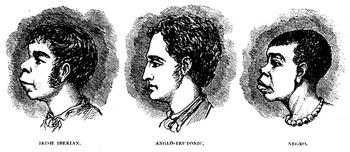
Drawing on the eleventh-century Book of Invasions and the spurious linguistic theories of Charles Vallancey, Joyce simultaneously Orientalizes and Hispanicizes Ireland's origin myth. The Irish language, he affirms, is “eastern in origin” and can be traced back to the Phoenicians, who also brought their Egyptian religion and civilization, later known as Druidism, from Levantine shores (“Ireland” 110). This Phoenician ancestry intersects with the ancient Milesian migration from Spain and correlates with the imagined geography that Joyce found in Victor Bérard's Les Phéniciens et l’Odyssée (1902–03), which states that the Odyssey is a Greek work about a Phoenician traveler, a notion that inspired the wanderings of the Semitic Ulysses, Leopold Bloom.Footnote 23 Elizabeth Butler Cullingford argues that Joyce's Phoenician-Semitic and Egyptian-African genealogies invoke anti-Irish racism only to invert its function. “Milesian Spain,” she writes, “provides the crucial link in the genealogy that derives the Irish from the African Negroes” (145). Commenting on the illustration reproduced in figure 1, she notes how earlier British stereotypes that “blackened” Ireland through Spain were invoked in the nineteenth and early twentieth centuries to contrast the perceived similarities of “Irish Iberian” and “Negro” skull shapes to the “higher” “Anglo-Teutonic.” According to Butler Cullingford, Joyce's Orientalism reclaims these Spanish and African associations not to recover a lost ethnic origin but to reorder cultural and historical narratives: first, the Spanish-African nexus debunks the Celtic nationalist notion of Ireland's cultural and ethnic insularity; second, it establishes links with an ancient, wide-ranging world that contest the imperialist idea of “Ireland as West Britain” (138). In both cases, Orientalist analogies and genealogies broaden the parameters of identity but still operate within the dualistic terms that sustain nativism and imperialism. No matter how diverse and diffuse, Joyce's Orientalism is still “other” to the “self” of nation and empire.
Frontispiece from Ireland from One or Two Neglected Points of View, by H. Strickland Constable (Liberty Review Publishing Company, 1899).

In the Trieste lecture Joyce offers a third option based on interrelation and reciprocity rather than antithesis. He writes about the ninth-century Irish saint Sedulius the Younger, who was sent to Spain to settle a religious dispute but was not welcomed by the local priests because he was “a foreigner. To this Sedulius replied that, as he was Irish and of the old Milesian race, he was, in fact, of Spanish origin, an argument his opponents found so persuasive that they let him install himself in the bishop's palace in Oreto” (“Ireland” 112).Footnote 24 Sedulius exemplifies the international affiliations of Joyce's Triestine audience while embodying a porous Irishness that appropriates Orientalist myths, not (or perhaps not only) to resist dominant narratives of nation and empire, but to replace their polarities with simultaneity—with at least “two thinks at a time” as Joyce says in Finnegans Wake (583).
Ulysses further elaborates on this simultaneity through the ambiguities attributed to Molly's birthplace. Unwittingly, Simon Dedalus's suggestion in “Sirens” that Molly is not Irish enough illustrates the idea of Ireland Joyce articulates in the 1907 lecture, later encapsulated in Bloom's definition of nation:
—What's this her name was? A buxom lassy, Marion . . .?
—Tweedy.
—Yes. Is she alive?
—And kicking.
—She was the daughter of . . .
—Daughter of the regiment.
—Yes, begad. I remember the old drummajor.
Mr Dedalus struck, whizzed, lit, puffed savoury puff after
—Irish? I don't know, faith. Is she, Simon?
Puff after stiff, a puff, strong, savoury, crackling.
—Buccinator muscle is . . . What? . . . a bit rusty. . . O, she is . . . My Irish Molly, O.
He puffed a pungent plumy blast.
—From the rock of Gibraltar . . . all the way. (Ulysses 11.502–15)
Simon Dedalus's snide remarks about Molly's birthplace and her loyalist and imperialist sympathies as a “daughter of the regiment” are meant to cast doubt on her Irish roots, sarcastically undercutting his allusion to the ballad “Irish Molly O.” In this anonymous song, Molly, the “primrose of Ireland,” is forbidden by her father to “wed a foreigner” (Gifford and Seidman 299–300). Simon Dedalus's musical allusion acts as a filter, separating what belongs from what does not in a pure and unadulterated patrilineal lineage, what Lloyd calls “the principal organizing metaphor of Irish nationalism” (Anomalous States 105).
With characteristic irony, Joyce invites us to conjoin what Simon Dedalus puts asunder, bringing together Molly's Irish-Spanish background, upbringing in a British colony, and pro-imperialist leanings to infuse Irishness with diverse, sometimes conflicting, meanings that cannot be contained by the either-or logic of colonial and nationalist identities. Even as Simon Dedalus and the other men at the bar try to pin down Molly's identity—Irish or other—they expose the fallacy of a singular logic inhering in either position. Their combination of desire (“My Irish Molly”) and exclusion (“Daughter of the regiment”) exposes how there is no space or positionality that is not or cannot be deterritorialized. In this light, the sentence “From the rock of Gibraltar . . . all the way” demands more than “two thinks at a time.” It repeats almost verbatim Bloom's remarks about the exotic provenance of his adulterous wife and her bed (Joyce, Ulysses 4.60), and the sexual innuendo of “all the way” is perhaps not lost on Simon Dedalus, who can be imagined winking and nodding at his male audience as he talks about women and puffs his cigar. Restating Molly's foreign origin and exotic qualities, the line is meant to challenge her Irishness. Instead, it resonates with the geographic course of the Milesians/Phoenicians and the Orientalist myth that allows Joyce to turn xenophobia toward acceptance, division toward coexistence, collision toward collusion. Like Sedulius and against Simon Dedalus, Molly shows that to be Irish “all the way” one may hail from “different places”—from Gibraltar as well as Dublin. These minor transnational connections, like the double entendres that evoke them, exist interstitially, escaping center-margin dichotomies as well as any sort of pluralism that may flatten out Irish ambivalence toward notions of native origin, national territory, and Orientalist difference.
Remappings
Molly's evocation of Gibraltar throughout “Penelope” spatializes this jagged identity. More than just an exotic locale or a synecdoche of British imperialism (Bazargan 119), Gibraltar is, in her monologue, a firmly situated space that stages dynamic historical and geographic connections among Dublin, “Spain . . . , [the] Mediterranean, [and] the Levant.” Mixing Mediterranean memories and more recent Dublin experiences, Molly muses:
I love to see a regiment pass in review the first time I saw the Spanish cavalry at La Roque it was lovely after looking across the bay from Algeciras all the lights of the rock like fireflies or those sham battles on the 15 acres the Black Watch with their kilts in time at the march past the 10th hussars the prince of Wales own lancers O the lancers theyre grand or the Dublins that won Tugela his father made money over selling the horses for the cavalry. (Joyce, Ulysses 18.397–403)
Molly's mind displaces her present in 1904 Dublin onto Gibraltar and the southern Spanish towns of Algeciras and San Roque, which she mistakenly calls “La Roque.” Of course, Molly's interest in conjuring up these alignments grows out of erotic desire, not geopolitical awareness. And yet, her attraction to men in uniform reveals interlocking histories of military conflict, invasion, and rebellion. We glimpse Spain's skirmishes against Britain around Gibraltar, the Boer War raging in the Tugela River valley in South Africa, and the “15 acres” in Dublin's Phoenix Park, an area for British military parades and the site of the 1882 political assassinations of imperial officers by Irish revolutionaries known as the Invincibles. Joyce is quite deliberate in simultaneously invoking and suppressing explicit historical information. The effect, which Wai Chee Dimock appropriately calls the “Calypso effect” (from the Greek to cover, to conceal), “sacrifices sharpness of resolution in order to preserve the uncrystallized condition of possibility prior to it” (63). When Molly mentions troops deployed across the globe, Joyce juxtaposes places and populations otherwise separated by time, physical and political boundaries, cultural and ideological divisions, and war.
Cóilín Parsons has examined references in Ulysses to the Anglo-Boer War and South Africa to show how the novel “enters into dialogue with the colonial world outside Dublin” (68).Footnote 25 Molly's recollections of Gibraltar expand and complicate this framework, broadening its scale by conflating competing histories and geographies within and beyond the colonial world. From Henry Field's Gibraltar (1888), Joyce learned that Spanish refugees who fled Gibraltar after the British takeover in 1704 settled in San Roque and Algeciras, which soon became headquarters of Spanish cavalry and infantry regiments. He also knew that this area (San Roque, Algeciras, Gibraltar), which Molly roams freely in her mind, admiring parading soldiers and the Rock's twinkling lights, endured grueling sieges laid by the British garrison. But Joyce goes beyond his sources to embed this geography of conflict in wider and deeper contexts that ultimately decenter colonial and imperial fault lines. Hidden in plain sight, references, etymologies, and genealogies thread through Algeciras and San Roque and widen Molly's mental map.
Contributing to the mythical itinerary linking Ireland and the East, both towns were important trading posts under the Phoenicians, a historical fact that supported ancient origin myths in the popular imagination. An 1884 note in the widely read The Irish Monthly informed potential visitors that they would be able to “ramble through streets” once “trodden by the remote Phoenician ancestors of our Milesian forefathers” (Fallon 606). Furthermore, Algeciras, the theme of the Galway stall at the 1894 Araby bazaar in Dublin and “the exact vis-a-vis of Gibraltar” (Fallon 604), was a point of entry for the eighth-century Muslim invaders of Iberia, who, according to legend, were ushered in by a Christian king bent on retaliating against his kin. This self-betrayal recalls the English invasion of Ireland in 1166, when, to regain his authority, a native king requested help from Henry II. “The strangers, says the citizen” in “Cyclops,” were “[o]ur own fault. We let them come in. We brought them in” (Joyce, Ulysses 12.1156–58). The etymology of Algeciras intensifies the association. The Gibraltar Directory Joyce consulted includes its derivation from the Arabic Al-Jazira al-Khadra: “the name, signifying ‘the Green Island,’ is still preserved in the island opposite, ‘La Isla Verde’” (27). It clearly evokes Ireland's common epithet “the Emerald Isle” and the wearing of the green for which the rebels of 1798 were hanged. San Roque and Algeciras thus multiply the vantage points from which Molly's Dublin can be observed, suggesting Oriental-Spanish-Irish relations that complicate and ultimately transcend a simple opposition of colonizer and colonized.
This spatiotemporal layering is analogous to Molly's fluid identity and further reflected in the symbolic interpenetration of Dublin's and Gibraltar's landmarks and monuments in “Penelope” and elsewhere in Ulysses. If Field saw “the figure of a lion couchant—a true British lion not unlike those in Trafalgar Square in London” (4) in the Rock of Gibraltar, Joyce sees Dublin and its environs. In the closing pages of Ulysses, Molly's mind races from Gibraltar's Muslim Wall, the scene of her first kiss with the English lieutenant Harry Mulvey, to Howth Hill, where Bloom proposed to her. The identification strengthens Ireland's association with Spain within a tangle of competing yet interdependent histories and identities. John Drinkwater's A History of the Late Siege of Gibraltar (1785), a book Joyce consulted as he was drafting “Penelope” in 1921, suggests that “Moorish Wall” is a misleading name for a sixteenth-century structure built on Islamic ruins at the height of the Spanish Empire and subsequently used as a British fortification (28).Footnote 26 Joyce must have delighted in the misnomer, relishing the irony that the divisive wall in fact conjoined antagonistic ethnicities across time while always permitting “an unbounded view of the Mediterranean”—a maritime horizon where West meets East and territorial demarcations blur. Analogously, Molly's erotic gaze contributes to Joyce's “Calypso effect” and blurs historical conflicts, turning a border fortification, built and ruined and built again by different armies, into a portal to a wide-open geography that crisscrosses but is not contained by the arc between Dublin and London.
Other passages develop the coordinates Dublin, “Spain, Gibraltar, Mediterranean, the Levant.” In “Nausicaa,” Bloom gazes at Howth sixteen years after his proposal, waxes nostalgic about that happy occasion, and laments that someone else is now lying in bed with his wife: “He gets the plums, and I the plumstones” (Joyce, Ulysses 13.1098–99). The image contrasts sharply with the “seedcake warm and chewed” that young Molly pushed from her mouth to his as they lay on Howth Hill the day of their engagement (8.907). Seeds and pits leave a symbolic trail connecting the Muslim Wall and Howth to Nelson's Pillar in the very center of Dublin. The so-called “statue of the onehandled adulterer” (7.1018) is the setting of Stephen Dedalus's “Parable of the Plums,” a puzzling story about two elderly ladies who climb the phallic pillar and proceed to eat a handful of ripe plums, spitting the stones between the railings onto the street below. The pattern connecting plums and plumstones to adultery now encompasses imperial power and colonial subjection, represented here by the sterile and ultimately pointless interaction between the feeble spinsters and the British erection. The tale casts ironic light on the political union of Britain and Ireland and mocks the admiral's victory over the combined fleets of France and Spain in the Battle of Trafalgar (1805) off the southwest coast of Spain, not far from Gibraltar. To nationalists like Professor McHugh in “Aeolus,” who believe that the Irish “are the liege subjects of the catholic chivalry of Europe that foundered at Trafalgar,” the monument is an insult (7.565–66). But colonial power relations and imperial rivalries do not exhaust the pillar's metaphoric charge. By inserting it into a symbolic axis with the Muslim Wall and Howth, Joyce links the Irish capital to London, of course, but also to Gibraltar, Spain, and the ancient Mediterranean world. This jagged and fragmented textual space encourages a parallax view of Dublin, the imperial center, and south and east.
Joyce once told Frank Budgen that if “Dublin one day suddenly disappeared from Earth, it could be restored out of my book” (Budgen 69). As blueprint and map, Ulysses comingles material and symbolic spaces that position Dublin as “the ‘second’ city of the British Empire” and an epicenter of anticolonial struggle, but also as part of a transcultural network spanning “Spain, Gibraltar, Mediterranean, the Levant” where hybrid characters don the Orientalist mask to replace fixed identities with a sort of relatedness that dispenses with crippling oppositions and antagonisms, whether nationalist or imperialist. This “minor” Orientalism pivots on Spain to weave transnational ties that complement and complicate Said's discourse as well as postcolonial approaches to Joyce's work. Joyce's Spain is no more authentic than the exotic Oriental locales he found in Ford, O'Shea, and Field; it is the “kind of stuff you read” but possesses what Fredric Jameson calls “historicity,” or the “lived possibility of experiencing history in some active way” (21). As such, Spain's ambivalent status as Orientalized nation, occupied territory (Gibraltar), and former world empire, along with its real and imagined links with Ireland, allows Joyce to actively remap Irish distinctiveness and tear it away from “the old pap of racial hatred” that nurtures the myth of a unified national narrative and the colonial binaries of domination and subordination, oppression and resistance, native and foreign, East and West.