





Impact statement
This mixed-method, multi-site feasibility study provides insights into how to integrate meaningful lived experience into primary mental health care training in low-resource settings to help reduce healthcare workers’ mental health-related stigma. Across seven sites in five Low-and-middle-income countries (LMICs) (China, Ethiopia, India, Nepal and Tunisia), the RESHAPE intervention (combining PWLE photo narratives with aspirational figures in primary healthcare workers’ training) was feasible and acceptable when appropriate preparatory support, ethical safeguards and logistical arrangements were in place.
Findings highlight practical strategies for implementing the intervention, including cultivating PWLE readiness through training in safe disclosure and distress management, adapting training intensity to fit the local context and tailoring caregiver involvement to sociocultural norms. The pre-post and follow-up pilot data also suggest the possibility of an intervention to reduce stigma among providers. The trends from quantitative findings indicate improvement in social distance and clinical competencies. The qualitative findings explain the patterns by documenting shifts in empathy, reduced fear-based assumptions and greater confidence in communicating and counselling patients. Together, the data strengthen the rationale that contact-based stigma reduction in primary care settings is most effective when it goes beyond information delivery to include structured, supported social contact with PWLEs. This study offers a transferable model of embedding lived experiences within diverse training platforms in different contexts, while clearly identifying context-specific barriers (hierarchy, workforce shortages, scheduling and COVID-19 disruptions), thus advancing global mental health implementation science. The findings inform scale-up by outlining conditions required to maximise impact and minimise harm for PWLE involvement. If tested adequately in powered trials, this approach has the potential to reduce stigma within primary care systems, thereby strengthening the quality of care and improving the services users’ experiences.
Introduction
Over the past fifteen years, significant efforts and investments have been made to improve access to mental health services by integrating them into primary healthcare systems (Patel et al., Reference Patel, Saxena, Lund, Thornicroft, Baingana, Bolton, Chisholm, Collins, Cooper, Eaton, Herrman, Herzallah, Huang, Jordans, Kleinman, Medina-Mora, Morgan, Niaz, Omigbodun, Prince, Rahman, Saraceno, Sarkar, de Silva, Singh, Stein, Sunkel and UnÜtzer2018). Task-sharing approaches such as the WHO Mental Health Gap Action Program (mhGAP) are prime examples, being implemented in more than 100 countries (World Health Organization, 2021; Brohan et al., Reference Brohan, Chowdhary, Dua, Barbui, Thornicroft, Kestel, Ali, Assanangkornchai, Brodaty, Carli, el Chammay, Chang, Collins, Cuijpers, Dowrick, Eaton, Ferri, Fortes, Hengartner, Humayun, Jette, de Vries, Medina-Mora, Murthy, Nadera, Newton, Njenga, Omigbodun, Rahimi-Movaghar, Rahman, Fortunato dos Santos, Saxena, Vijayakumar, Wang, Wattanavitukul, Yewnetu, Carswell, Chatterjee, Fatima, Fleischmann, Gray, Hanlon, Hanna, Krupchanka, Malik, van Ommeren, Poznyak, Seeher, Servili, Weissbecker, Baingana, Alfonzo Bello, Bruni, Jorge dos Santos Ferreira Borges Bigot, Dorji, Vandendyck, Lazeri, Monteiro, Rani, Saeed, e Souza, Ameyan, Baltag, Branca, Cappello, Cometto, Dalil, Gabrielli, Huttner, Jaramillo, Khan, King, Krech, Roebbel, Tran and Sumi2024). These task-sharing approaches are intended to reduce the substantial treatment gaps that persist in mental healthcare between the burden of mental health conditions and access to services in LMICs (World Health Organization, 2021). Nevertheless, the large-scale benefits of such initiatives, particularly to improve detection rates and patient outcomes, remain uncertain when implemented outside a research context (Kohrt et al., Reference Kohrt, Gurung, Singh, Rai, Neupane, Turner, Platt, Sun, Gautam, Luitel and Jordans2025a).
Low detection of mental health conditions among trained primary care providers (PCPs) raises concerns about the quality and effectiveness of mental health integration into primary care. While this may reflect several system-level barriers, stigma among PCPs has been widely recognised as a significant barrier to the integration of mental health services into primary healthcare, particularly in LMICs (Thornicroft et al., Reference Thornicroft, Sunkel, Aliev, Baker, Brohan, El Chammay, Davies, Demissie, Duncan and Fekadu2022). The negative stereotypes, attitudes and behaviours of PCPs can compromise the quality of care and contribute to poor patient outcomes (Heim et al., Reference Heim, Kohrt, Koschorke, Milenova and Thornicroft2020). PCPs may perceive People with Lived Experiences of mental health conditions (PWLEs) as burdensome to treat, time-consuming, untreatable or potentially violent (Kohrt et al., Reference Kohrt, Turner, Rai, Bhardwaj, Sikkema, Adelekun, Dhakal, Luitel, Lund, Patel and Jordans2020). Such perceptions can result in PWLEs feeling devalued, misunderstood or excluded from shared decision-making regarding their care. Ultimately, this may erode patients’ trust in the healthcare system, adversely affecting their access and adherence to care (Knaak et al., Reference Knaak, Mantler and Szeto2017).
In recent years, there has been growing recognition of the critical role PWLEs play in strengthening mental health systems (Thornicroft et al., Reference Thornicroft, Sunkel, Aliev, Baker, Brohan, El Chammay, Davies, Demissie, Duncan and Fekadu2022). The Lancet Commission on Ending Stigma and Discrimination in Mental Health emphasised involving PWLEs in all aspects of stigma interventions, highlighting social contact as a particularly effective strategy for reducing stigma and promoting behaviour change (Thornicroft et al., Reference Thornicroft, Sunkel, Aliev, Baker, Brohan, El Chammay, Davies, Demissie, Duncan and Fekadu2022). In primary healthcare, collaborating with PWLEs in PCP training can enhance providers’ understanding of PWLEs’ and caregivers’ priorities and experiences, fostering more person-centred approaches to care (Kaiser et al., Reference Kaiser, Gurung, Rai, Bhardwaj, Dhakal, Cafaro, Sikkema, Lund, Patel, Jordans, Luitel and Kohrt2022). Nevertheless, stigma processes and what matters most to PCPs and PWLEs are shaped by local cultural contexts (Gurung et al., Reference Gurung, Poudyal, Wang, Neupane, Bhattarai, Wahid, Aryal, Heim, Gronholm, Thornicroft and Kohrt2022). Therefore, contact-based strategies effective in one setting may not be feasible or appropriate in other healthcare systems or cultural contexts.
To address the need for contextualised evidence, this study assessed the feasibility and acceptability of implementing a PWLE-involved contact-based intervention across diverse global and cultural settings, and generated pilot evidence of effectiveness in improving PCPs’ stigma-related knowledge, attitudes and competencies. The study was conducted within the International Study of Discrimination and Stigma Outcomes (INDIGO) partnership programme (Gronholm et al., Reference Gronholm, Bakolis, Cherian, Davies, Evans-Lacko, Girma, Gurung, Hanlon, Hanna, Henderson, Kohrt, Lempp, Li, Loganathan, Maulik, Ma, Ouali, Romeo, Rüsch, Semrau, Taylor Salisbury, Votruba, Wahid, Zhang and Thornicroft2023) to develop and test culturally adapted, multi-level interventions to address stigma at the community (INDIGO-Local) (Semrau et al., Reference Semrau, Gronholm, Eaton, Maulik, Ayele, Bakolis, Mendon, Bhattarai, Brohan, Cherian, Daniel, Girma, Gurung, Hailemariam, Hanlon, Healey, Kallakuri, Li, Loganathan, Ma, Ma, Metsahel, Ouali, Yaziji, Zgueb, Zhang, Zhang, Thornicroft and Votruba2024), primary care (INDIGO-Primary) (Gurung et al., Reference Gurung, Kohrt, Wahid, Bhattarai, Acharya, Askri, Ayele, Bakolis, Cherian, Daniel, Gautam, Girma, Gronholm, Hanlon, Kallakuri, Ketema, Lempp, Li, Loganathan, Ma, Magar, Maulik, Mendon, Metsahel, Nacef, Neupane, Ouali, Zgueb, Zhang and Thornicroft2023) and specialist service (INDIGO-READ) levels (Henderson et al., Reference Henderson, Ouali, Bakolis, Berbeche, Bhattarai, Brohan, Cherian, Girma, Gronholm, Gurung, Hanlon, Kallakuri, Kaur, Ketema, Lempp, Li, Loganathan, Maulik, Mendon, Mulatu, Ma, Romeo, Venkatesh, Zgueb, Zhang and Thornicroft2022). This study reports findings from the implementation and pilot evaluation of stigma-reduction outcomes from the INDIGO-Primary study, conducted across seven sites in five LMICs under the INDIGO partnership programme.
Methods
Intervention and settings
The INDIGO-Primary study was implemented in China (Beijing, Guangzhou), Ethiopia (Sodo District of Gurage zone), India (Bengaluru, Delhi NCR), Nepal (Syangja District) and Tunisia (town of Testour). These sites represent diverse geographic, socio-economic, cultural and health system contexts. Further details regarding each site and its primary healthcare contexts are provided in the INDIGO-Primary protocol paper (Gurung et al., Reference Gurung, Kohrt, Wahid, Bhattarai, Acharya, Askri, Ayele, Bakolis, Cherian, Daniel, Gautam, Girma, Gronholm, Hanlon, Kallakuri, Ketema, Lempp, Li, Loganathan, Ma, Magar, Maulik, Mendon, Metsahel, Nacef, Neupane, Ouali, Zgueb, Zhang and Thornicroft2023).
The intervention adapted and piloted by the seven implementing sites as part of the INDIGO-Primary study was RESHAPE (Reducing Stigma among HealthcAre ProvidErs) (Kohrt et al., Reference Kohrt, Turner, Rai, Bhardwaj, Sikkema, Adelekun, Dhakal, Luitel, Lund, Patel and Jordans2020; Rai et al., Reference Rai, Gurung and Kohrt2023). RESHAPE enhances conventional mental health training for PCPs by incorporating structured social contact using PhotoVoice recovery narratives, testimony from “aspirational figures,” and myth-busting components. These components are summarised in Table 1 and described in detail in the protocol paper (Gurung et al., Reference Gurung, Kohrt, Wahid, Bhattarai, Acharya, Askri, Ayele, Bakolis, Cherian, Daniel, Gautam, Girma, Gronholm, Hanlon, Kallakuri, Ketema, Lempp, Li, Loganathan, Ma, Magar, Maulik, Mendon, Metsahel, Nacef, Neupane, Ouali, Zgueb, Zhang and Thornicroft2023). Although the RESHAPE intervention was integrated into existing or adapted mental health training programmes for PCPs, the structure and duration of the standard training varied across settings based on local health policies and available resources. For example, in Nepal and Ethiopia, the intervention was integrated into government-endorsed mhGAP training (World Health Organization, 2023), while at the Beijing and Guangzhou sites, the intervention was incorporated into brief training sessions specifically run for the INDIGO-Primary study. At the Delhi NCR, Bengaluru and Tunisia sites, the study team incorporated the intervention into adapted forms of mhGAP training. There was also variation across sites in the number of PWLEs involved (ranging from 1 to 4), aspirational figures (ranging from 1 to 3) and the duration of contact (ranging from 20 min to 3 h). The site-level implementation features of the RESHAPE intervention are summarised in Table 2. The sites adapted the content, delivery methods, duration and intensity of PWLE, aspirational figure and PCP training (described in the published protocol) while retaining the core RESHAPE ingredients: the PWLE PhotoVoice recovery narrative/social contact, locally adapted myth-busting and aspirational figure involvement where feasible.
Summary of RESHAPE intervention components

Table 1. Long description
The table consists of two columns titled Intervention component and Description.
* Row 1: Photovoice recovery narrative. Description: P W L Es and caregivers undergo Photovoice training to share recovery stories through photographs. They co-facilitate mental health training for primary healthcare workers to reduce stigma through social contact.
* Row 2: Aspirational figure testimony. Description: Respected primary healthcare workers act as role models. They share testimonies about providing mental health care, focusing on changes in personal attitudes and overcoming barriers to service provision to bridge the gap between P W L Es and P C Ps.
* Row 3: Myth-busting exercise. Description: Eight common mental health myths specific to the local context are addressed. Aspirational figures present these as myths versus facts during training sessions for primary healthcare workers.
Site-level implementation features of INDIGO-Primary

Table 2. Long description
The table consists of 10 columns and 7 site rows.
Columns include:
1. Site.
2. Primary care providers P C P s trained.
3. Mental health training duration or type.
4. P W L E’s photovoice recovery narrative.
5. Myth-busting.
6. Aspirational figures.
7. Number of P W L E recovery narrative incorporated.
8. Approx time of P W L E contact during training.
9. Number of Aspirational figure narrative incorporated.
10. Informal contact with P W L E s outside the training context.
Data by Site:
- Beijing, China: Community mental health workers; 1.5 days (9 h) stigma training; 2 P W L E narratives; 40 min contact; 3 aspirational narratives.
- Guangzhou, China: Physicians, G P, nurses, psychotherapists, social workers; 12 h refresher; 4 P W L E narratives; 30 min contact; 1 aspirational narrative; includes informal contact (marked X).
- Sodo, Ethiopia: Health officer, nurses; 5 days (30 h) mhGAP training; 1 P W L E narrative; 3 h contact; 2 aspirational narratives.
- Bengaluru, India: Medical officers, nurses, pharmacist; 2 days (12 h) mhGAP training; includes aspirational figures (marked X); 2 P W L E narratives; 1 h contact; N A for aspirational narratives.
- Delhi N C R, India: Medical officers; 3 h depression/suicide training; 2 P W L E narratives; 1 h contact; 1 aspirational narrative.
- Syangja, Nepal: Auxiliary health workers and assistants; 6 days (42 h) mhGAP training; 4 P W L E narratives; 3 h contact; 3 aspirational narratives.
- Testour, Tunisia: Clinical nurse, pharmacist, doctor, technician; 3 days (18 h) mhGAP training; 1 P W L E narrative; 2 h contact; 1 aspirational narrative.
Note: The symbol “✓” signifies the intervention component was implemented in the site while the symbol “X” signifies that the intervention component was not implemented.
Study design
This pilot feasibility study used a pre-post study design (Bowen et al., Reference Bowen, Kreuter, Spring, Cofta-Woerpel, Linnan, Weiner, Bakken, Kaplan, Squiers, Fabrizio and Fernandez2009). Stigma attitudes and PCPs’ competency were assessed immediately before and after training, with a 3-month follow-up where feasible; Guangzhou and Ethiopia could not conduct follow-up due to COVID-19 restrictions. Qualitative interviews with PWLEs were conducted immediately after photovoice training, and interviews with aspirational figures and PCPs were conducted at post-test (in Ethiopia and Guangzhou) or at follow-up (at all other sites).
Ethics approval was obtained from King’s College London and each site’s local ethical review boards (see ethics section at the end). All participants (PWLEs, PCPs, aspirational figures and trainers) received study information and provided written informed consent. No minors were involved in the study.
Participants and recruitment
The PCPs were recruited using purposive sampling by the implementing institutions in each site: Peking University Sixth Hospital in Beijing, Affiliated Brain Hospital of Guangzhou Medical University in Guangzhou; Addis Ababa University in Ethiopia; National Institute of Mental Health and Neurosciences in Bengaluru; The George Institute for Global Health India in Delhi NCR; Transcultural Psychosocial Organisation Nepal in Nepal and Razi Hospital/University of Tunis El Manar in Tunisia (Teddlie and Yu, Reference Teddlie and Yu2007). Site sample sizes were determined by feasibility/availability (ranging from 2 PCPs in Delhi-NCR to 43 in Guangzhou), totalling 135 PCPs across seven sites. Qualitative interviews included 45 PWLEs/caregivers, 14 aspirational figures, 64 PCPs and 10 trainers across sites.
Measures
Pre-, post- and follow-up (where feasible) data assessed changes in PCPs’ (i) stigma-related knowledge, (ii) stigma attitudes and (iii) clinical competency of primary healthcare providers. Knowledge was measured using the 12-item Mental Health Knowledge Scale (MAKS) (Evans-Lacko et al., Reference Evans-Lacko, Little, Meltzer, Rose, Rhydderch, Henderson and Thornicroft2010). Explicit stigma attitudes were measured using the Reported and Intended Behaviour Scale (RIBS) (Evans-Lacko et al., Reference Evans-Lacko, Rose, Little, Flach, Rhydderch, Henderson and Thornicroft2011) and the Social Distance Scale (SDS) (Bogardus, Reference Bogardus1925). MAKS, RIBS and SDS were collected on paper and entered into the RedCap database (Harris et al., Reference Harris, Taylor, Minor, Elliott, Fernandez, O’Neal, McLeod, Delacqua, Delacqua, Kirby and Duda2019) by local researchers. Clinical competency was assessed using the 15-item Enhancing Assessment of Common Therapeutic Factors (ENACT) tool (Kohrt et al., Reference Kohrt, Pedersen, Schafer, Carswell, Rupp, Jordans, West, Akellot, Collins, Contreras, Galea, Gebrekristos, Mathai, Metz, Morina, Mwenge, Steen, Willhoite, van Ommeren, Underhill, Akhtar, Bryant, Concepcion, el Marsi, Elnasseh, Hemmo, Kasujja, Manolova, Maslovskiy, Mbwayo, Moran, Munthali-Mulemba, Mutamba, Mutavi, Raji, Rangel, Sangraula, Sepulveda, Tol, van t’Hof and Yurtaev2025b) in the Ensuring Quality in Psychosocial and Mental Health Care (EQUIP) platform (WHO and UNICEF, 2021). All measures used in the study underwent transcultural translation and adaptation at each site (Daniel et al., Reference Daniel, Kallakuri, Gronholm, Wahid, Kohrt, Thornicroft and Maulik2024). Due to feasibility constraints, SDS was not collected in Tunisia, and ENACT was collected only in Beijing, Nepal and Tunisia. The COVID-19 restrictions, the lack of resources (e.g., training role-players for ENACT) and PCP availability were challenges that prevented sites from collecting all the data.
A qualitative interview guide was developed by implementation leads (DG and BK) tailored to participant groups (PWLEs involved in photovoice, aspirational figures, PCPs and trainers/programme implementers) and covered experiences of involvement, barriers/facilitators, perceived usefulness and recommendations to improve feasibility. The guides were adapted and translated locally. Interviews (ranging from 15 min to 1 h) were audio-recorded, transcribed and translated into English by bilingual site-researchers.
Data analysis
MAKS, RIBS, SDS and ENACT outcomes were analysed in Stata 14 (StataCorp, 2015). Means and standard deviations were calculated by site and pooled across sites at each time point; scores with 95% confidence intervals were plotted to examine trends. No inferential testing was conducted, given the feasibility-driven sample sizes.
For qualitative interviews, thematic analysis was conducted (Braun and Clarke, Reference Braun and Clarke2006). Site researchers coded data deductively in NVIVO 12 or Dedoose using a priori themes (e.g., experiences, feasibility, barriers, facilitators, perceived effectiveness and recommendations of recruiting and training PWLEs, aspirational figures and PCPs) developed by intervention leads. The a priori framework was developed from the study aims, intervention components and feasibility/acceptability domains, while allowing site researchers to identify emergent themes. Theme clarification and resolution of coding discrepancies were supported by intervention and site leads, while interpretations were led by local site teams and triangulated across participant groups. Intervention leads synthesised findings across sites with the a priori thematic structure.
Results
The demographic characteristics of PCPs are described in Supplementary File 1. The results section describes mixed-methods findings on feasibility, acceptability and impact of the intervention.
Qualitative findings on the feasibility and acceptability of implementation in different settings
Overall, the intervention was found to be feasible and acceptable across sites, although experiences varied by context, particularly in the recruitment process, training delivery, fidelity to core components of the intervention and resource and time demands.
Recruitment of PWLEs and aspirational figures
Recruitment was feasible but required context-specific adaptations. In Tunisia and Beijing, psychiatrists with a longstanding rapport with patients facilitated PWLE recruitment. In Guangzhou, social workers played crucial roles in recruiting and encouraging participation, with one trainer noting, “use of familiar social workers to contact participants reduced refusal rates” (Photovoice trainer, Guangzhou). Both sites in China used WeChat (a popular social media and messaging app) to contact and recruit participants, whereas Ethiopia and Nepal relied on phone contact and home visits.
PWLEs reported initial reluctance to participate in multiple sites. This was especially pronounced in Delhi NCR and Nepal due to fears of stigma, misunderstandings or distrust of the programme’s aims and benefits, as well as difficulty scheduling time out of their daily lives. Family resistance was reported in both the Indian sites and Nepal. PWLEs from these sites did not want to attend the training without a caregiver. The implementation teams in these sites, therefore, invited a caregiver/family member to attend the training to improve engagement. On the contrary, in Tunisia, caregivers had to be deliberately excluded from sessions based on PWLE preference: “There was no caregivers’ involvement… the majority of PWLEs prefer to participate without a caregiver present.” (Trainer, Tunisia). In Bengaluru, transparent communication and community engagement supported PWLE recruitment. However, the cultural and logistical barriers prevented the Bengaluru site from recruiting aspirational figures. The team from Bengaluru noted that attitudes of fellow PCPs might not be favourable towards learning from colleagues from the same position, highlighting the hierarchical nature of learning roles. They also emphasised the time constraints and the PCPs’ limited availability to participate in the intervention as aspirational figures. Additional barriers to recruitment of PWLEs included weather conditions (in Tunisia) and geographical and transportation challenges (notably in Ethiopia and Nepal). A PWLE from Ethiopia stated, “We were happy to be part of this training, but it was a little bit difficult for us to travel long miles to be on time for the training, especially when the appointments are on consecutive days.”
These logistical barriers, along with the hesitancy to disclose publicly, meant implementers often needed to engage a larger pool of PWLEs to recruit a limited number for the photovoice training, anticipating that an even smaller proportion would ultimately participate in the training sessions for PCPs. Mitigation strategies included travel and participation compensation, caregiver involvement when preferred, setting expectations beforehand and allowing PWLEs to join photovoice training without committing to facilitating PCP training.
Training of PWLEs and aspirational figures
Photovoice and aspirational figure trainings were feasible and acceptable, with context-driven adaptations to format, content and duration. While core sessions of the training for PWLE (such as introductions to photovoice methods, processes, writing recovery narratives, addressing stigma and myth-busting, distress management and safe disclosure) were delivered by all sites, sessions such as instructions on taking quality photos and practice sessions were cut short in some sites based on the context and need.
Trainers reported that a modular, phased structure helped sustain engagement without overwhelming participants. Reflective and participatory components (e.g., myth-busting games, stigma discussions and role-plays on disclosure-readiness) played a key role in encouraging PWLEs to explore their lived experiences. Trainers in Bengaluru and Nepal specifically noted that these were “moments of both discomfort and breakthrough” (Trainer, Bengaluru). PWLEs and caregivers credited the trainer with helping them gain new knowledge and overcome fear and hesitation, particularly in areas such as public speaking and personal disclosure. One PWLE participant in Tunisia shared, “The trainers helped us so much. I never thought I could talk about my illness in this way. I thought it would be very hard, but through the training, I found it beneficial and easy.” The PWLEs valued learning new skills and finding creative ways to use photographs to structure and share recovery stories, which also bolstered their sense of empowerment. A PWLE from Nepal jokingly shared, “I can now show-off to my grandson and grab his camera to take his pictures.” Although there were some concerns regarding confidentiality while sharing pictures, a PWLE from Guangzhou mentioned how not having the requirement to show faces helped them feel comfortable: “The strategy of not involving faces in the image content was effective in protecting privacy.”
Similar to recruitment barriers, the PWLEs disclosed several barriers to continued participation in the training, including fear of stigma from family and community, as well as logistical challenges such as transportation and conflicting personal schedules. In Ethiopia, prevailing spiritual beliefs about mental illness affected initial attendance as disclosed by a PWLE: “People discouraged us from attending the training, saying that mental health issues could only be healed by God.” However, PWLEs who persisted in their participation demonstrated internal motivation. They expressed surprise and pride at their ability to take pictures to create their recovery stories and present them to the audience. A PWLE in Beijing voiced their overall positive experience as, “I feel that I still have the wish and desire to share my [recovery] experience. I would like to share it, because there were fewer chances before to share it…So it’s quite a good feeling to be able to share it with everyone in such an opportunity.” Acceptability was also linked to the perceived emotional and social impact of the training. In Bengaluru, a PWLE highlighted how their involvement transformed and reshaped their identity. “The person who used to call me [stigmatising] names now calls me ‘Sir.’ That’s enough for me.” In Nepal and Beijing, PWLEs highlighted how involvement in the photovoice training improved their social functioning and relationships, including communications at home and reduction in household tensions related to living with mental health conditions. “My home environment is improving. We are talking, relaxing… [there are] fewer fights” (PWLE, Nepal).
Aspirational-figure trainings were shorter (2–3 sessions), but scheduling remained difficult due to workload and the limited number of PCPs providing mental healthcare at their facilities. Some sites, such as Beijing, therefore had to switch the training offline: “Sometimes I was busy with work. Because I was busy, sometimes it had an impact (conflict) on the training schedule. Hence, this kind of offline training is quite good” (Aspirational figure, Beijing). Despite the barriers, most aspirational figures found the training useful and were therefore willing to participate in the intervention. An aspirational figure in Nepal stated, “It is also an opportunity to recognise someone’s work. It motivates other health workers. It is an attempt to reduce mental health stigma from our side. So, I would recommend this [to other health workers].”
Involvement of PWLEs and aspirational figures in PCPs’ training
Across sites, PWLEs and aspirational figures were actively engaged in delivering PCP training. Although the frequency and mode of involvement varied across sites, all participant groups (PWLEs, aspirational figures, trainers) reported that such involvement was feasible and acceptable. PWLE participation ranged from 1 in Tunisia (selected for readiness) to 4 in Ethiopia and Nepal, reflecting longer PCP trainings and efforts to align lived experiences with priority conditions addressed in the training (psychosis, anxiety, depression, alcohol use disorder). A common concern of PWLEs was the emotional burden of disclosure, particularly when PCPs asked intrusive questions, as shared by a PWLE from Beijing: “It’s about answering questions that you don’t want to answer, relatively private questions, like why you have the illness, when you’re going to get married, have children, and so on.” PWLEs reported feeling supported by trainer presence and rehearsal during photovoice training, which strengthened boundary-setting and comfort with selective disclosure. The sites also reported that logistical arrangements and advance planning, such as travel support, flexible scheduling and coordination with PWLEs/caregivers, facilitated their involvement during the PCP trainings.
Acceptability of PWLE involvement in training was uniformly high among PCPs, who described sessions as meaningful and memorable. PCPs noted that hearing directly from PWLEs highlighted patients’ everyday challenges often overlooked in clinical care. A PCP from Tunisia shared: “It would be more interesting if all trainings were like this one because when you involve a person with lived experience, you learn more about mental illness, more than any theoretical lessons, I think.” Acceptance of aspirational figures was more variable across sites. In sites like Nepal, Delhi NCR, Beijing and Guangzhou, the involvement of aspirational figures was appreciated, as shared by a PCP from Nepal: “By hearing about them treating patients at the health post, it motivated me in a way. If they can treat the patients, why not us?” A PCP from Beijing acknowledged that there were numerous challenges in providing mental health services in the community, and listening to the aspirational figure made them feel like they were “comrades in the same trench.” However, Ethiopia and Bengaluru found it challenging to integrate aspirational figures into training due to cultural factors (a hierarchical culture in which colleagues from the same position are not viewed as inspiring) and structural constraints (limited staff, scheduling issues). In Tunisia, some PCPs appreciated myth-busting content but felt the aspirational narratives were not relatable. A PCP shared: “I don’t think that I can relate to their experience because it’s nothing like [that] in reality.”
Benefits/impacts of the intervention on PCPs
The perceived benefits of the RESHAPE intervention, as reflected in both qualitative interviews and quantitative assessments of PCPs, are summarised below.
Qualitative findings: Reflections on the impact of the intervention
Across sites, PCPs reported improved understanding of PWLEs’ symptoms, lived experiences and recovery trajectories. Many PCPs described being better able to recognise signs they had previously misunderstood and noted that PhotoVoice narratives enriched their understanding beyond textbook descriptions. A PCP from Nepal noted, “Patients shared their experiences of what they faced throughout the stage, from being ill to well, including their symptoms and improvement. I felt better and learned a lot because of them… [Due to their involvement] I can now identify mental health patients in the community.”
PCPs also described attitudinal shifts, noting that hearing directly from PWLEs challenged their preconceptions and judgmental attitudes (e.g., PWLEs are dangerous or incurable). A PCP in Ethiopia reported increased empathy after realising how social contexts shape mental illness and recovery. Similar sentiment and changes were also noted by a PCP from Beijing, who shared their experience of interactions with a PWLE in the training and outside: “I even chatted with him when I took a taxi. I accidentally bumped into him… I used to think they were just hard to communicate with, and many of them seemed really scary to me. But after interacting with them more, I realised that many of them were more objects of compassion. My perception of them has changed a lot. I used to think they were very dangerous, but now I feel that most of them have painful memories from the past and so need our compassion.”
Regarding behaviour and clinical practices, PCPs across multiple settings reported increased confidence in their ability to communicate effectively with patients, particularly in listening, counselling and demonstrating empathy. PCPs also emphasised the role of caregivers/families in the recovery. A PCP from Bengaluru reported: “They trained us so well that we should not just do counselling for only patients; we should give counselling to the family also. It is difficult for a mental health patient to recover if he/she is not getting support. I have done family counselling, people counselling, and follow-ups.” Another PCP from Beijing shared how they became careful while interacting with patients with mental health conditions after the training: “I became more careful with my words, worrying that some words may annoy them. I would have concerns for fear of demotivating them.”
Quantitative findings: Impact on mental health stigma, knowledge, attitudes and competence
Changes in stigma knowledge and attitude among PCPs, pre-post and at follow-up, using employed scales, are described below, while changes in competency are described in Supplementary File 2.
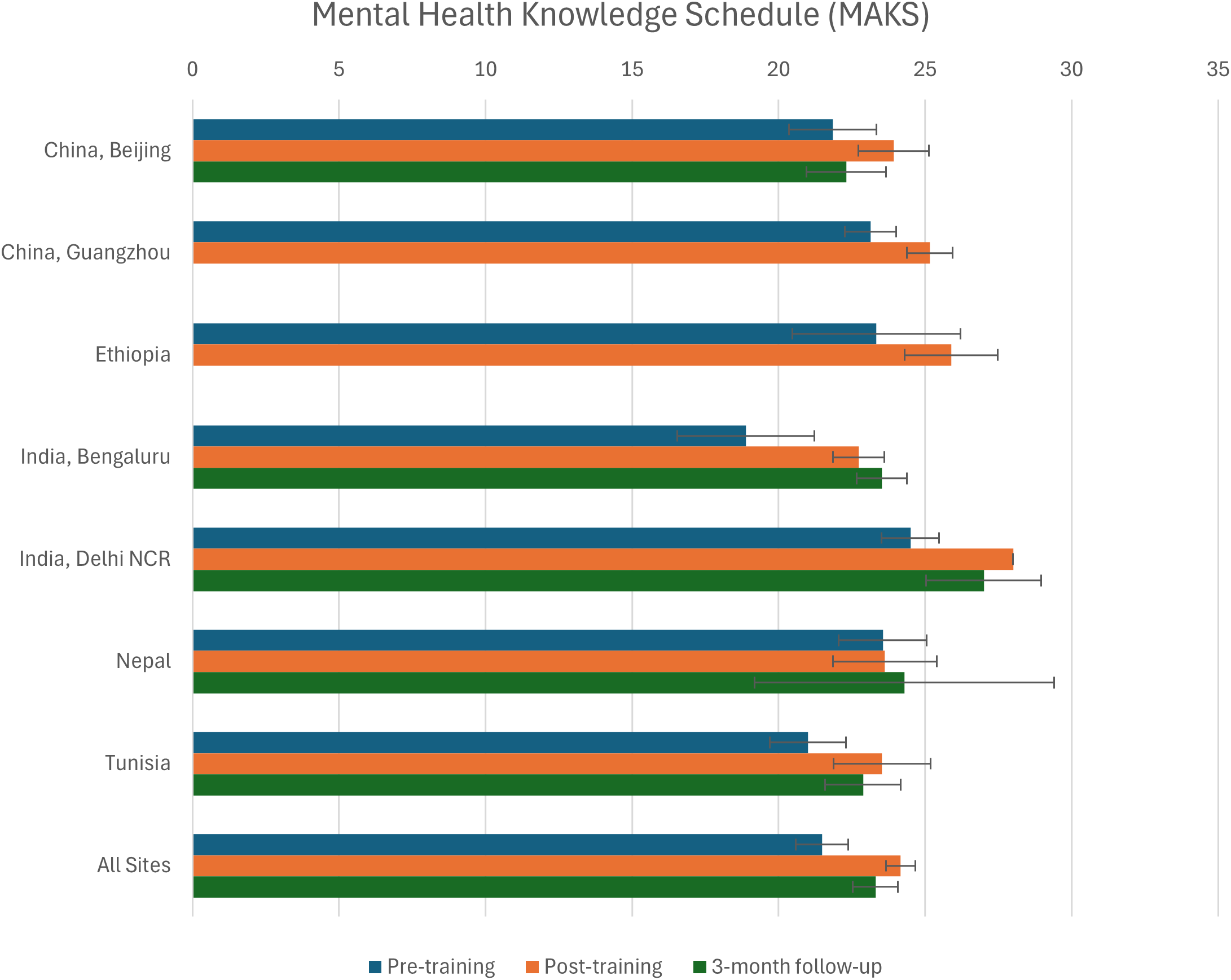
Figure 1 shows the change in stigma-related knowledge among PCPs, as measured by MAKS. Across all sites, the mean MAKS score increased from 21.45 (SE = 0.45, 95% CI: 20.59–22.37) before training to 24.17 (SE = 0.26; 95% CI: 20.59–22.37) immediately after training, with a slight decline to 23.30 (SE = 0.39, 95% CI: 22.53–24.08) at the 3-month follow-up.
Mental health knowledge schedule.

Figure 1. Long description
A horizontal bar chart with an X-axis representing scores from 0 to 35 and a Y-axis listing locations. Each location has three bars: blue for Pre-training, orange for Post-training, and green for 3-month follow-up. Error bars indicate variability.
* China, Beijing: Pre-training 22, Post-training 24, 3-month follow-up 22.5.
* China, Guangzhou: Pre-training 23, Post-training 25, 3-month follow-up data is missing.
* Ethiopia: Pre-training 23, Post-training 26, 3-month follow-up data is missing.
* India, Bengaluru: Pre-training 19, Post-training 23, 3-month follow-up 23.5.
* India, Delhi N C R: Pre-training 24.5, Post-training 28, 3-month follow-up 27.
* Nepal: Pre-training 23.5, Post-training 23.5, 3-month follow-up 24.5.
* Tunisia: Pre-training 21, Post-training 23.5, 3-month follow-up 23.
* All Sites: Pre-training 21.5, Post-training 24, 3-month follow-up 23.5.
Overall, scores show an increase from pre-training to post-training across all sites, with slight decreases or stabilization at the 3-month follow-up.
Willingness to engage with people experiencing mental health conditions
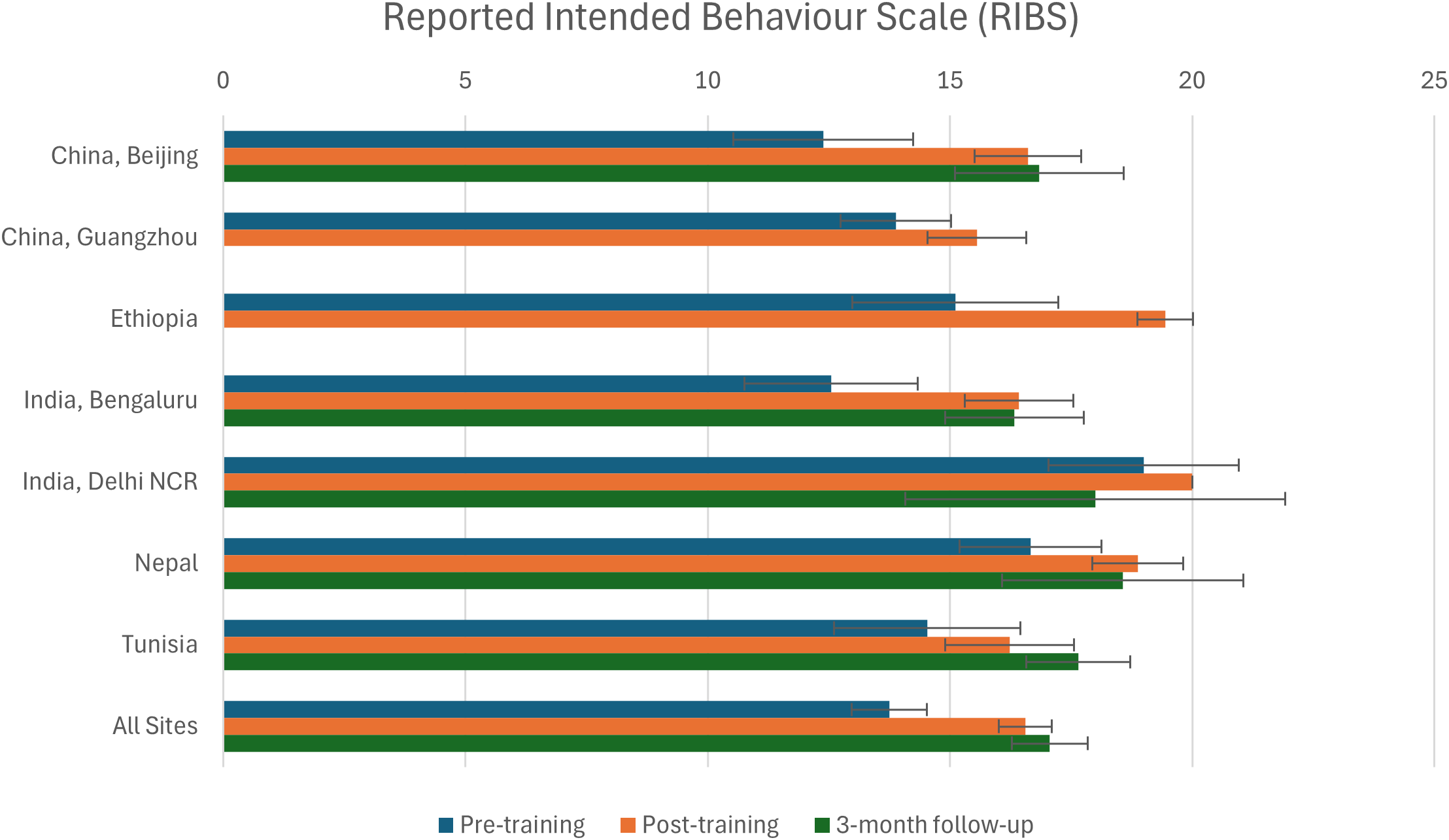
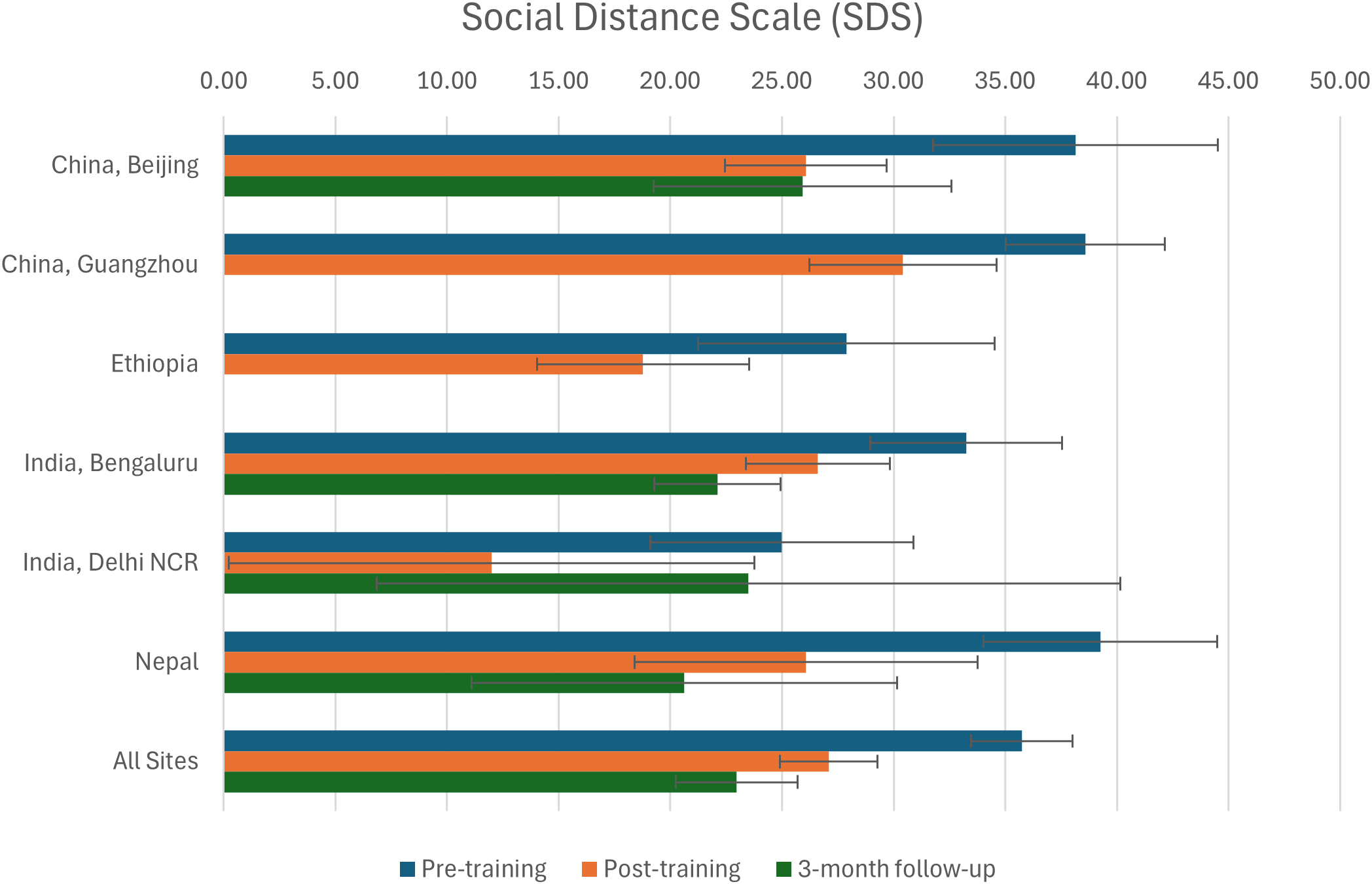
The PCPs’ willingness to engage in social contact was explored through RIBS (in all sites) and SDS (in all sites except Tunisia), as shown in Figures 2 and 3, respectively. Across all sites, PCPs demonstrated significant improvements in reported and intended behaviour towards people with mental health conditions following training. The mean RIBS score increased from 13.75 (SE = 0.39, 95% CI: 12.98–14.52) at pre-training to 16.55 (SE = 0.28, 95% CI: 16.00–17.10) post-training, with a further increase to 17.06 (SE = 0.40, 95% CI: 16.27–17.84) at the 3-month follow-up. This increase in RIBS score reflects greater improvements in positive intended behaviours of PCPs towards PWLEs. Site-specific trends showed marked improvements in China (Beijing), Ethiopia and India (Bengaluru), where post-training gains ranged from 3.9 to 4.3 points and were largely sustained at follow-up. Tunisia and Nepal exhibited more modest increases, with Tunisia showing a steady rise from 14.53 to 17.65 over time.
Reported intended behaviour scale.

Figure 2. Long description
The horizontal bar chart displays the Reported Intended Behaviour Scale (R I B S) scores. The X-axis represents the score from 0 to 25. The Y-axis lists eight categories: China, Beijing; China, Guangzhou; Ethiopia; India, Bengaluru; India, Delhi N C R; Nepal; Tunisia; and All Sites. Each category has three bars: blue for Pre-training, orange for Post-training, and green for 3-month follow-up. Error bars indicate variability for each data point.
* China, Beijing: Pre-training is approximately 12.5, Post-training is 16.5, and 3-month follow-up is 17.
* China, Guangzhou: Pre-training is 13.5, Post-training is 15. No 3-month follow-up data is shown.
* Ethiopia: Pre-training is 15, Post-training is 19.5. No 3-month follow-up data is shown.
* India, Bengaluru: Pre-training is 12.5, Post-training is 16.5, and 3-month follow-up is 16.3.
* India, Delhi N C R: Pre-training is 19, Post-training is 20, and 3-month follow-up is 18.
* Nepal: Pre-training is 16.8, Post-training is 18.8, and 3-month follow-up is 18.5.
* Tunisia: Pre-training is 14.5, Post-training is 16.2, and 3-month follow-up is 17.5.
* All Sites: Pre-training is 13.8, Post-training is 16.5, and 3-month follow-up is 17.2.
A legend at the bottom identifies the colors: blue for Pre-training, orange for Post-training, and green for 3-month follow-up.
Social distance scale.

Figure 3. Long description
A horizontal bar chart with an x-axis at the top ranging from 0.00 to 50.00 in increments of 5.00. The y-axis lists seven categories from top to bottom: China, Beijing; China, Guangzhou; Ethiopia; India, Bengaluru; India, Delhi N C R; Nepal; and All Sites. A legend at the bottom identifies three time points: Pre-training (blue), Post-training (orange), and 3-month follow-up (green). Each bar includes a horizontal error bar representing variability.
* China, Beijing: Pre-training is approximately 38, Post-training is 26, and 3-month follow-up is 26.
* China, Guangzhou: Pre-training is approximately 39 and Post-training is 30. No 3-month follow-up bar is present.
* Ethiopia: Pre-training is approximately 28 and Post-training is 19. No 3-month follow-up bar is present.
* India, Bengaluru: Pre-training is approximately 33, Post-training is 27, and 3-month follow-up is 22.
* India, Delhi N C R: Pre-training is approximately 25, Post-training is 12, and 3-month follow-up is 24.
* Nepal: Pre-training is approximately 39, Post-training is 26, and 3-month follow-up is 21.
* All Sites: Pre-training is approximately 36, Post-training is 27, and 3-month follow-up is 23.
Across all categories, the blue Pre-training bars consistently show the highest S D S scores, while Post-training and 3-month follow-up bars show a general decrease in scores.
A similar pattern was also seen in the willingness to engage with PWLE, measured with the SDS. The SDS mean scores declined from 35.75 (SE = 1.16, 95% CI: 33.48–38.02) at baseline to 27.09 (SE = 1.11, 95% CI: 24.91–29.27) post-training, and further to 22.97 (SE = 1.39, 95% CI: 20.25–25.69) at 3-month follow-up. This suggests lower social distance after training, i.e., greater willingness to interact with PWLE. At the site level, substantial reductions were observed in China (Beijing), Nepal and Ethiopia, each demonstrating large post-training declines sustained or further reduced at follow-up. India (Bengaluru) also showed a steady decrease from 33.24 to 22.11 across the three time points. Notably, India (Delhi NCR) exhibited the largest immediate drop (from 25.00 to 12.00), but scores rebounded at follow-up (23.50), likely reflecting response variability.
Patterns of behaviour as measured by ENACT were found to be positive among the sites that implemented ENACT (Beijing, Nepal and Tunisia). The findings show improvements in provider clinical competencies in foundational helping skills, as evidenced by reductions in harmful behaviours and increases in helpful behaviours. Details of the findings in the three sites can be seen in Supplementary File 2.
Discussion
This mixed-methods, proof-of-concept study assessed the feasibility, acceptability and pilot effectiveness of an intervention to reduce mental health stigma among PCPs across seven LMIC sites. Findings suggest that PWLE-led social contact within PCP training was feasible and acceptable across sites and may be beneficial for stigma reduction, while aspirational figure involvement showed more variable feasibility and acceptability depending on local hierarchies, workforce constraints and perceived relatability. This aligns with a prior pilot cluster-randomised controlled trial of RESHAPE in Nepal, which showed the added benefit of PWLE involvement beyond mhGAP-based training for PCPs (Kohrt et al., Reference Kohrt, Jordans, Turner, Rai, Gurung, Dhakal, Bhardwaj, Lamichhane, Singla, Lund, Patel, Luitel and Sikkema2021).
PWLEs’ and aspirational figure involvement
Involving PWLEs and their photo-narratives was feasible and acceptable across sites when adequate preparation and support were provided. Preparation should include training in storytelling, distress management and safe disclosure, which can enhance confidence and reduce self-stigma (Rai et al., Reference Rai, Gurung and Kohrt2023). Role-plays and structured sessions addressing self-stigma and fears of disclosure were particularly important for ethical and meaningful involvement. The training process itself appeared to have a therapeutic benefit for PWLEs, enhancing personal healing, social support and self-worth, underscoring the importance of ongoing logistical and emotional support (Abayneh et al., Reference Abayneh, Lempp, Rai, Girma, Getachew, Alem, Kohrt and Hanlon2022; Girma et al., Reference Girma, Ayele, Hanlon, Gronholm, Gurung, Fekadu, Thornicroft and Kohrt2025). Although many PWLEs initially expressed reluctance to participate in the photovoice training, they reported valuing these elements upon completion. These findings suggest implementers should not assume PWLE readiness. Rather, readiness should be cultivated through structured logistical and psychosocial support. Tailoring the content and duration of the training may be necessary to achieve PWLE involvement in different cultural contexts and settings. Across sites, the training duration varied, depending on PWLEs’ readiness. Prior experiences of similar engagement and advocacy work, stage of recovery, types of mental health conditions and experience in the use of a camera may have affected the readiness of PWLEs in different sites. While shorter training models may improve scalability in some settings, training duration should be determined by contextual and ethical considerations rather than efficiency alone. In this study, shorter PWLE preparation in some sites reflected differences in participants’ starting points, prior experience, education, disclosure readiness, medical hierarchies and safety and well-being needs. Future research should evaluate the minimum safe and effective training dose while retaining core social-contact components and safeguards.
Caregivers’ involvement also varied across sites, reflecting contextual differences in the perceived role of family in the recovery process. In settings such as Nepal and Delhi NCR, caregivers were recognised as key stakeholders and decision-makers in PWLE recovery, and their involvement was deemed vital. This approach aligns with the existing literature, which identifies caregiver engagement as a “best practice” to facilitate meaningful PWLE involvement (Rai et al., Reference Rai, Gurung, Kaiser, Sikkema, Dhakal, Bhardwaj, Tergesen and Kohrt2018). However, in Tunisia, both implementers and PWLEs deliberately chose to exclude caregivers, citing concerns that their presence might inhibit PWLEs’ openness and self-expression.
Aspirational figures can complement PWLE involvement by providing the “role-model” effects for PCPs (Kohrt et al., Reference Kohrt, Turner, Rai, Bhardwaj, Sikkema, Adelekun, Dhakal, Luitel, Lund, Patel and Jordans2020). Their inclusion was positively received in Nepal and China, where identifying the respected PCP was relatively straightforward. However, acceptability depended on cultural norms around hierarchy and perceived relatability. In Bengaluru, aspirational figures were excluded due to rigid medical and cultural hierarchies, while in Tunisia, an aspirational figure from a tertiary facility elicited mixed responses, with some PCPs finding the experience misaligned with primary care realities. “Relatability” depends on how much participants identify with their experiences and the context in which they occur. If the role models feel too distant (e.g., due to differences in status, expertise, positioning or location), the motivational impact may be reduced (Morgenroth et al., Reference Morgenroth, Ryan and Peters2015). In hierarchical cultures, status and positions are important determining factors for “role models,” creating barriers to the selection of role models who are both respected and relatable. Hence, reframing the concept of aspirational figures as “peer-models” may help foster stronger relatability even in hierarchical cultures. In Nepal and China, where the inclusion of aspirational figures was accepted and impactful, the findings suggest it was mainly due to relatability, creating a sense of “if they can do it, so can I.” Therefore, due to feasibility challenges in involving aspirational figures, future studies should use clear selection criteria, identify locally relatable role models early and consider flexible or recorded formats when in-person involvement is not feasible.
Integration into the PCP training
The intervention integrated well into diverse training platforms, including 1–3-day selected mhGAP modules (Delhi NCR, Bengaluru and Tunisia), 5–6-day government-adapted mhGAP trainings (Nepal and Ethiopia) and custom mental health trainings (Beijing and Guangzhou). This suggests intervention’s transferability across heterogeneous LMIC primary care systems. Site variations in training duration, number of PWLEs/aspirational figures involved and PCPs cadres likely contributed to variations in outcomes. Delhi NCR showed higher baseline knowledge and lower stigmatising attitudes, potentially reflecting the type of cadre (medical doctor) or prior exposure to mental health/stigma trainings. Nepal and Tunisia had lower baseline scores but showed larger improvements, consistent with evidence that stigma-reduction gains are often greatest where baseline stigma is highest (Thornicroft et al., Reference Thornicroft, Sunkel, Aliev, Baker, Brohan, El Chammay, Davies, Demissie, Duncan and Fekadu2022). These differences underscore the need to tailor implementation to existing infrastructure, cultural norms and provider needs.
Across measures, improvements were greater and more sustained for social distance and intended behaviour (RIBS and SDS), and clinical competency (ENACT) than stigma knowledge (MAKS). While MAKS increased post-training, the gains attenuated over time, possibly because MAKS includes content not emphasised in PCP trainings (e.g., bipolar disorder, obsessive-compulsive disorder). By contrast, improvements in RIBS and SDS persisted at follow-up, indicating sustained changes in empathy and willingness to engage with PWLEs. Although further research with larger samples is required to better understand these patterns, the findings are consistent with qualitative accounts of shifts from fear to compassion by PCPs. To strengthen and maintain effects, refresher sessions, ongoing supervision and increased “dosage” of contact with PWLEs may be beneficial. Regular supervision and refresher training have been shown to be vital for reinforcing and sustaining the knowledge, attitudes and skills acquired during initial mental health training (Heim et al., Reference Heim, Kohrt, Koschorke, Milenova and Thornicroft2020; Kohrt et al., Reference Kohrt, Gurung, Singh, Rai, Neupane, Turner, Platt, Sun, Gautam, Luitel and Jordans2025a).
Limitations and implications for scale-up
Despite encouraging trends, limitations of the study include small feasibility-driven samples across sites, heterogeneity (in intervention components, duration and numbers) and the absence of a control group, restricting causal inference and comparisons with standard PCP training. Site-specific trends and findings with small samples (e.g., Delhi NCR, n = 2) should be interpreted cautiously. The 3-month follow-up period may not adequately capture the longer-term sustainability of attitudinal and behavioural change. Additionally, implementation barriers caused by the COVID-19 pandemic (including altered training delivery and missing follow-up at some sites) further limited cross-site comparability. PWLE condition, demographic characteristics and level of stigma may have influenced recruitment, readiness, disclosure and engagement in the intervention. Although these issues were explored qualitatively, baseline internalised or experienced stigma among PWLEs was not quantitatively assessed as a potential moderator of PCP outcomes. Future studies could potentially examine how PWLE characteristics and stigma shape participation and the effectiveness of contact-based training.
Nevertheless, the results support the feasibility, acceptability and potential value of embedding lived-experience components of PWLEs and (where appropriate) aspirational/peer models within mental health training for non-specialist health workers in low-resource settings. By foregrounding person-centred recovery and what matters to PWLEs, the intervention may contribute to meaningful stigma reduction and improved quality of care. Given the encouraging findings of this feasibility pilot study, the next step should be to establish the intervention’s effectiveness and cost-effectiveness in these settings. If positive effects on stigma and patient outcomes are identified, embedding the RESHAPE intervention into national mental health training programmes may enhance stigma-reduction efforts and improve the quality of care delivered by non-specialist PCPs. To ensure sustainability and minimise risk of harm, scale-up should include robust logistical and psychosocial support for PWLEs and routine follow-up or refresher mechanisms for PCPs.
Conclusion
This study provides promising evidence that the inclusion of lived experience through photovoice and aspirational health workers can be feasibly and meaningfully integrated into mental health training for PCPs across diverse LMIC settings. Such inclusion has the potential for improvements in stigma-related knowledge, attitudes and clinical competencies, with strong potential effects on desirability to social distance and behavioural outcomes. Our findings highlight the importance of experiential, context-sensitive and recovery-oriented contact-based approaches to reducing stigma and building capacity in global mental health. To achieve such a goal, investments are necessary to ensure PWLE safety and care, including logistical and psychosocial support. Future controlled and cost-effectiveness studies are required to assess the long-term effectiveness and scalability of the intervention.
Open peer review
To view the open peer review materials for this article, please visit http://doi.org/10.1017/gmh.2026.10280.
Supplementary material
The supplementary material for this article can be found at http://doi.org/10.1017/gmh.2026.10280.
Data availability statement
Since exploratory data analyses by the site investigators are ongoing, individual de-identified participant data will be made available for researchers interested in undertaking meta-analyses or ongoing research by application to the Principal Investigator (C.H.) and/or senior statistician I.B., in line with our institutional policies, from the date of publication for five years. Data files shared in this way may not then be shared with others.
Acknowledgements
Our valued Indigo colleague and friend, Dr. Eshetu Girma, sadly passed away before the publication of this manuscript. Dr. Girma led the Indigo-Ethiopia research team and the Ethiopia-based work that contributed to this publication. His career was dedicated to understanding and addressing mental health stigma in Ethiopia and standing in solidarity with people affected by mental health conditions. He will be missed, and his loss is keenly felt by colleagues in Ethiopia and across the Indigo consortium. May his soul rest in peace. We would also like to acknowledge all individuals and groups with lived experience at each site who were involved in implementing the intervention.
Author contribution
DG and BAK designed, implemented, supervised, analysed and wrote the initial draft of the study. IB and EB provided statistical support. SSW, GT, PCG, ClH, ChH and HL helped conceptualise and supervise the project. BA, KB, AC, MD, AM, EG, SK, JL, SL, NM, YM, PKM, GM, UO, BS, YZ, WZ and XZ were involved in implementation, data collection, site-specific analysis and interpretation of findings. All authors critically reviewed the draft and provided inputs.
Funding statement
GT and PCG are supported by the UK Medical Research Council (UKRI) for the Indigo Partnership (MR/R023697/1) award. DG and BAK are supported by the U.S. National Institutes of Health (R01MH120649). GT is supported by the National Institute for Health and Care Research (NIHR) Applied Research Collaboration South London (NIHR ARC South London) at King’s College Hospital NHS Foundation Trust. The views expressed are those of the author(s) and not necessarily those of the NIHR or the Department of Health and Social Care. The funders had no role in study design, data collection and analysis, decision to publish or preparation of the manuscript. PKM is partly funded by UK Medical Research Council (UKRI) for the Indigo Partnership (MR/R023697/1) award, Adolescents’ Resilience and Treatment nEeds for Mental health in Indian Slums (ARTEMIS) funded by UKRI/MRC Grant no: MR/S023224/1 and SMART Mental Health, NHMRC/ GACD grant APP1143911. MD is partly funded by UK Medical Research Council (UKRI) for the Indigo Partnership (MR/R023697/1) award and SMART Mental Health, NHMRC/ GACD grant APP1143911. HL received support by UKRCI Medical Research Council (MR/S001255/1); Medical Research Council (MR/R023697/1).
Competing interests
None.
Ethics and approvals
The ethics approval for the overall study was received from King’s College London (PNM Research Ethics Subcommittee HR-19/20–17,252), while each site also received approval from its respective ethical review board: Beijing – Ethics Committee of Peking University Sixth Hospital (NO: 2020–2074); Guangzhou – The IRB of Affiliated Brain Hospital of Guangzhou Medical University, (2020, NO.045); Bengaluru – The institute ethics committee of National Institute of Mental Health and Neurosciences (ref: No. NIMHANS/26th IEC (BEH.SC.DIV.)/2020–2021); Delhi – The George Institute Ethics Committee, (No. 18/2020); Ethiopia – Addis Ababa University, College of Health Sciences IRB (072/19/SPH); Nepal – Nepal Health Research Council (355/2021) and Tunisia – Razi Hospital IRB (RPA 10/2022).




 Open access


Comments
29 January 2026
To:
Editors in Chief, Cambridge Prism Global Mental Health
Prof Judy Bass, Johns Hopkins University
Dr Dixon Chibanda, Friendship Bench Zimbabwe
Dear Drs:
My colleagues and I are submitting a manuscript titled “Feasibility, acceptability and pilot effectiveness of a social-contact-based intervention to reduce mental health-related stigma among primary care providers in China, Ethiopia, India, Nepal, and Tunisia: Findings from a multi-site pre-post study” for your consideration for review and publication in Cambridge Prism Global Mental Health. The study explores the barriers, facilitators, and pilot-effectiveness of a PhotoVoice method for collaborating with a lived-experience group, which has been described at length in the Cambridge Prisms Global Mental Health Publication titled “The photovoice method for collaborating with people with lived experience of mental health conditions to strengthen mental health services”.
This study provides insights from seven sites in five low-and middle-income countries into how to integrate meaningful lived experience into primary mental healthcare training to help reduce healthcare workers’ mental health-related stigma. The findings highlight practical strategies for implementing the intervention, including the need for cultivating lived experience readiness, adapting training to fit local contexts, and tailoring caregiver involvement to socio-cultural norms. The pre-post and follow-up pilot data suggest improvement in stigma attitudes and competencies of the primary healthcare workers, and the qualitative findings document shifts in empathy, reduced fear-based assumptions, and greater confidence in communicating with patients.
We believe this manuscript aligns with the journal’s objective of advancing knowledge in global mental health by addressing stigma among primary healthcare providers through meaningful collaboration with people with lived experience. Hence, we request your kind consideration for the review and publication of our manuscript in your valued journal. We declare that this study has not been submitted elsewhere for publication. All the authors have approved the manuscript for submission, and there are no competing interests.
Sincerely,
Dristy Gurung (Corresponding author)
Postdoctoral Associate
Center for Global Mental Health Equity
George Washington University
Washington DC, USA