Diabetes Mellitus (DM) is a chronic endocrine-metabolic disorder, manifesting high rates of hyperglycemia in association with deficient insulin production or resistance to insulin. The nosological classification of DM includes type 1 (lack of insulin production due to the self-immune destruction of β cells in the pancreas’s islets of Langerhans), type 2 (deficient insulin production and functionality) and Gestational (temporary metabolic disorder related to pregnancy).
DM prevalence is high, with an estimated 347 million persons affected worldwide (Danaei et al., Reference Danaei, Finucane, Lu, Singh, Cowan, Paciorek and Ezzati2011). The World Health Organization (WHO) predicts that this pathology will become the seventh greatest cause of death by the year 2030 (World Health Organization, 2010).
The prevalence of DM in Spain has been placed at 13.8% of the adult population (over age 18). This percentage can be broken down into 7.8% for cases of diagnosed DM2 (type 2 DM), and 6% of the Spanish population that is unaware that they suffer from diabetes (CIBERDEM, 2013). At the same time, as much as 30% of the population may present a variety of disorders related to glucose metabolism (Soriguer et al., Reference Soriguer, Goday, Bosch-Comas, Bordiú, Calle-Pascual, Carmena and Vendrell2012).
DM has a substantial impact on public health. The added cost to health care is high, not only because of DM’s high prevalence and chronic nature, but also because of other disorders that may accompany it. DM has been linked notably to a variety of psychiatric and neurodegenerative disorders (Biessels, Deary, & Ryan, Reference Biessels, Deary and Ryan2008). Also verified is its etiopathogenic importance in triggering cerebrovascular pathology and its status as a risk factor for cognitive impairment and dementia (Allen, Frier, & Strachan, Reference Allen, Frier and Strachan2004; Cukierman, Gerstein, & Williamson, Reference Cukierman, Gerstein and Williamson2005), heightened when accompanied by other variables such as high blood pressure (Obisesan, Reference Obisesan2009), age (Obisesan et al., Reference Obisesan, Obisesan, Martins, Alamgir, Bond, Maxwell and Gillum2008), obesity (Whitmer, Gunderson, Quesenberry, Zhou, & Yaffe, Reference Whitmer, Gunderson, Quesenberry, Zhou and Yaffe2007), depression (Katon et al., Reference Katon, Lin, Williams, Ciechanowski, Heckbert, Ludman and Von Korff2010), hyperglycemia (Cukierman-Yaffe, Reference Cukierman-Yaffe2009), dyslipidemia or hypercholesterolemia (Bruce et al., Reference Bruce, Davis, Casey, Starkstein, Clarnette, Almeida and Davis2008). The risk of decline in intellectual functioning is further increased in the case of low educational level or male gender (Mejía-Arango & Zúñiga-Gil, Reference Mejía-Arango and Zúñiga-Gil2011).
DM is therefore a predisposing factor for cognitive impairment, one element in a multifactorial etiology, where the determining mechanisms are not precisely understood. Based on prospective epidemiological studies, there seems to be from 1.5 to 3 times increased risk of dementia in diabetic subjects when compared to controls, ratified in the Honolulu Asia Aging Study (Kalmijn et al., Reference Kalmijn, Foley, White, Burchfiel, Curb, Peteovitch and Launer2000), the Kungsholmen project (Xu, Qiu, Wahlin,, Winblad, & Fratiglioni, Reference Xu, Qiu, Wahlin, Winblad and Fratiglioni2004) and the Rotterdam Study (Ott et al., Reference Ott, Stolk, van Harskamp, Po, Hofman and Breteler1999).
Along with the usual theories that explain neurological alterations as produced by the concomitant factors cited above – age, obesity, depression, etc. –there are also hypotheses that justify DM-generated cognitive impairment, based on alteration in insulin secretion, glucose intolerance or insulin resistance (Rönnemaa et al., Reference Rönnemaa, Zethelius, Sundelöf, Sundström, Degerman-Gunnarsson, Berne and Kilander2008).
Recent research has been able to outline DM’s underlying neurobiological mechanisms, such as its negative effects on hippocampal neurogenesis, dendritic remodeling and increased apoptosis. These result in problems with learning and emotional control (Ho, Sommers, & Lucki, Reference Ho, Sommers and Lucki2013), and from a neuro-physiological perspective, cognitive impairment has been linked to alterations in the amplitude of low-frequency fluctuations in several areas of the brain, in proportion to the severity – in degree and constancy – of the level of hyperglycemia (Xia et al., Reference Xia, Wang, Sun, Bai, Zhou, Yang and Yuan2013). From a more genetic focus, there is apparent evidence of the role of polymorphism linked to an insulin-degrading enzyme (rs6583817) in DM2 patients, affecting their executive cognitive performance (McFall et al., Reference McFall, Wiebe, Vergote, Westaway, Jhamandas and Dixon2013).
Taking another research perspective, we note a lack of studies that perform neuropsychological assessments and focus strictly on the use of cognitive tests, studies that seek to analyze and inquire further into a possible relationship between DM and cognitive performance (decline and/or preservation). In principle, the scientific literature reports certain results that would relate DM to processing speed disorders (Jacobson, et al., Reference Jacobson, Musen, Ryan, Silvers, Cleary, Waberski and Harth2007; Manschot et al., Reference Manschot, Brands, van der Grond, Kessels, Algra, Kappelle and Biessels2006; van Harten et al., Reference van Harten, Oosterman, Muslimovic, van Loon, Scheltens and Weinstein2007). Furthermore, we find disorders in executive functions (Spauwen et al., Reference Spauwen, Köhler, Verhey, Stehouwer and van Boxtel2013; van den Berg, de Craen, Biessels, Gussekloo, & Westendorp, Reference van den Berg, De Craen, Biessels, Gussekloo and Westendorp2006; van Harten et al., Reference van Harten, Oosterman, Muslimovic, van Loon, Scheltens and Weinstein2007), memory (Akisaki et al., Reference Akisaki, Sakurai, Takata, Umegaki, Araki, Mizuno and Ito2006; Manschot et al., Reference Manschot, Brands, van der Grond, Kessels, Algra, Kappelle and Biessels2006), specifically working memory (Sommerfield, Deary, & Frier, Reference Sommerfield, Deary and Frier2004) and declarative memory (Bruehl et al., Reference Bruehl, Rueger, Dziobek, Sweat, Tirsi, Javier and Convit2007), in different samples of diabetic adults, as well as attention deficit (van Harten et al., Reference van Harten, Oosterman, Muslimovic, van Loon, Scheltens and Weinstein2007) and verbal fluency deficit in a sample of diabetic women (Bruehl et al., Reference Bruehl, Rueger, Dziobek, Sweat, Tirsi, Javier and Convit2007). Insulin resistance has also been related to poorer performance on frontal tests in studies with healthy subjects (Knopman, Mosley, Catellier, & Sharrett, Reference Knopman, Mosley, Catellier and Sharrett2005).
The objective of our study is to analyze the possible influence of different variables on cognitive functioning in patients with DM. On one hand, we study the influence of clinical factors that often accompany this pathology (hypercholesterolemia, high blood pressure, obesity, etc.), and on the other hand, we consider the possible effect of sociodemographic factors (age, gender, educational level, physical exercise), both in terms of cognitive decline and cognitive preservation (neuroprotection). Next, in light of the dearth of research on the different cognitive impact of different types of diabetic pathology and their respective treatments (Type 1 vs. Type 2 DM), we compare the results obtained from insulin-dependent subjects to results from other diabetics, who in this case had only been prescribed the use of oral anti-diabetic medication.
For this purpose, we rely on the application of different neuropsychological tests and interpretation of their results, thereby assessing certain cognitive processes, most notably information processing speed and different executive functions such as attention, operational memory and inhibitory capacity or resistance to interference. Recall that executive functions encompass the most sophisticated mental capacities (Lezak, Reference Lezak1982; Luria, Reference Luria, Vinken and Bruyn1969) and that, together with processing speed as mentioned above, they present greater susceptibility to aging (Diamond, Reference Diamond, Stuss and Knight2002) and to decline brought on from multiple brain disorders (West, Reference West2000).
Methods
Participants
The patient sample was drawn from the Tres Mares Hospital (Cantabria, Spain), located in a town with high DM incidence. The 59 patients who participated (females = 33 and males = 26) were between 50 and 85 years of age (M = 70.98; SD = 10.24), with diagnoses of type 1 (N = 14; 23.70 %) or type 2 (N = 45; 76.30 %) diabetes; treatment of the pathology covered a mean period of 8.71 years (SD = 5.85).
The inclusion criteria were (1) explicit, voluntary acceptance of participation in the study, (2) a diagnosis of DM, and (3) age 50 or above. Two exclusion criteria were applied: (1) a score of 24 or lower on the screening tool Mini-Mental State Examination (MMSE), based on the cutoff indicated in the test instructions for possible dementia (Folstein, Folstein, & McHugh, Reference Folstein, Folstein and McHugh1975); and (2) existence of sensory and/or motor alterations that might hinder adequate test execution.
Procedures
Prior to administering the cognitive tests, we obtained explicit acceptance from the candidates who wished to participate, through their informed consent. Medical records of the selected patients were then collected, and data relative to the pertinent clinical variables was compiled. Next, ad hoc interviews were conducted in order to obtain data on the patients’ sociodemographic variables, such as years of schooling or their level of physical exercise. All phases of the analysis process were carried out by a single examiner who was trained on the different tests and belonged to the research group.
Predictors
The different variables examined appear in Figure 1. This chart shows the sociodemographic and clinical variables as a function of their ability to impact cognition, whether as potential neuroprotectors (exercise and education) or as risk factors. For the latter, we consider basically those elements that, together with DM, make up the so-called metabolic syndrome. In addition, we analyze the possible influence of the type of DM and number of years in treatment to date. We consider in turn any possible effect from the “gender” factor, even though, as of today, the different studies seem to show no clear positive or negative gender-related influence.
Relational chart of clinical and sociodemographic variables considered in the analyses.

The sample presented the following clinical and sociodemographic profile: 17 were diagnosed with depression (28.8%), 41 with high blood pressure (69.5%), with 34 hypercholesterolemia (57.6%), 21 with cardiopathy (35.6%). Additionally, the sample was divided in terms of Body Mass Index (BMI), according to World Health Organization parameters: 21 (35.6%) had normal body weight (BMI 18.50–24.99), 27(45.8%) were overweight (BMI >25.00) and 11(18.6%) obese (BMI > 30.00). Regarding factors with a potentially beneficial effect, the sample showed a mean of 9.05 years of schooling (SD = 2.03; Range = 6–17), and three groups were distinguished in terms of physical exercise: 15 as “no exercise” (22.4%), 27 “sporadic exercise” (40.3%) and 25 had an “exercise habit” (37.3%). The “no exercise” group stated that they practically never exercise, other than what is required for daily activities; “sporadic exercisers” occasionally exercise but not systematically; and the final group (“exercise habit”) practices exercise on a daily basis for up to 2 hours or more.
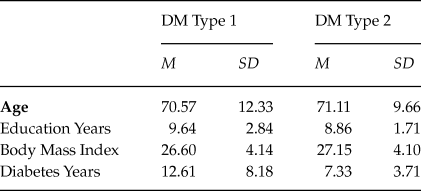
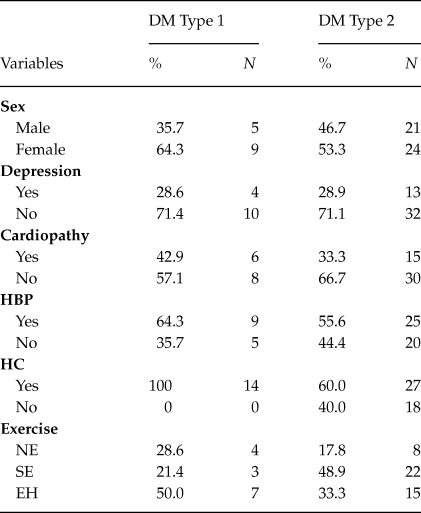
Separating our sample according to the type of diabetes represented, Tables 1 and 2 show results obtained for the different clinical and sociodemographic factors. The only divergence is seen in years of suffering and treatment of the disease, obviously in favor of patients with Type 1 DM, with its early appearance and diagnosis. Aside from this, it is remarkable that all the subjects with Type 1 DM had high blood pressure, in contrast to those in the Type 2 sample.
Clinical and sociodemographic (continuous) variables as a function of type of diabetes

Clinical and sociodemographic (categorical and dichotomous) variables as a function of type of diabetes

Note: HC = Hypercholesterolemia; HBP = High Blood Pressure; NE = No Exercise; SE = Sporadic Execise; EH = Exercise Habit.
The similarity and uniformity of the context of the cognitive assessment, and of the sample itself, help to avoid any distortion in our results. The subjects are all from the same local area, users of one local healthcare center (not hospitalized), and were assessed in the course of a routine visit, in all cases examined by the same assessor.
Neuropsychological Tests
The following tests were selected and administered in their original procedural design:
The Mini-Mental State Examination (MMSE), a screening test, in its Folstein et al. version (1975). A number of tests are performed per questions and instructions given by the assessor. This test evaluates processes such as space and time orientation, registration, attention, calculation, recall, language, complex commands.
The Stroop Interference Test, Golden version (Golden, Reference Golden1994). Three pictures are presented consecutively, where subjects are asked to read the names of colors printed in black type (Word subtest), then to name the font color of several x’s (Color subtest), and finally to name the font color of color names, without regard to the meaning of word shown, which in all cases differs from the respective font color (Word/Color subtest). After instructing the subject to do the test as quickly as possible, a count is taken of the number of words read in 45 seconds; errors are not penalized per se, but since the subject must correct each error, the final time obtained is impacted by any mistakes. This test measures processing speed, attentional capacity and executive function (resistance to interference).
Subtest A from the Trail Making Test (TMT), a subtest of Halstead-Reitan’s neuropsychologicalbattery. Subjects must connect 25 numbers that are randomly distributed around a single page, linking them in ascending order; the assessment focuses on the time used for correct execution. Attention, psycho-motor skill, sequencing and processing speed are measured (Reitan & Wolfson, Reference Reitan and Wolfson1985).
The Wechsler Adults Intelligence Scale (WAIS), using the subtests Digit Span Forward, Digit Span Backward, and Letter-Number Sequencing. The Digit Span Forward task consists of repeating a series of numbers with increasing difficulty, since one more number is added in each new trial, in the order given orally by the assessor, and heard audibly by the subject being assessed. Analogously, the Digit Span Backward task presents the same procedure as the prior test, except that the subject must repeat the numbers in the opposite order to how they are presented. These tests primarily assess attention span and immediate auditory memory. Finally the Letter-Number Sequencing subtest consists of listening to a list of mixed numbers and letters, which the subject must reorder (numbers in ascending order and letters in alphabetical order). This test assesses attention and resistance to distraction, immediate auditory memory and working memory (Wechsler, Reference Wechsler2008).
Statistical Analyses
Using this approach, a cross sectional study was carried out with the sample described above, and correlational analysis was defined, taking into account both the sociodemographic data and the test results. The statistical package for the social sciences, SPSS (v. 19), was used.
Results
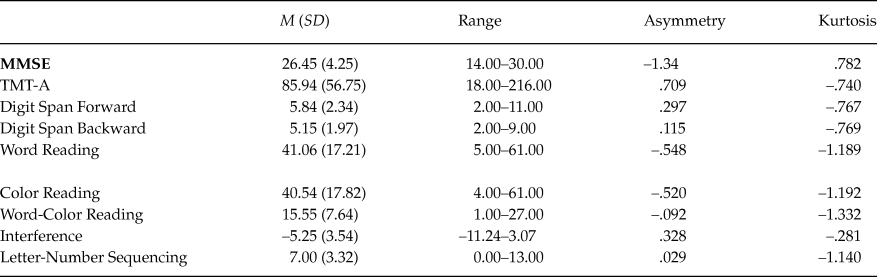
Table 3 shows our sample’s performance on the different neuropsychological tests, as data expressed in descriptive statistics.
Main statistics from the results obtained on the cognitive tests

Note: Trail Making Test –TMT- (score in seconds).
Linear regression was used to analyze how the variables of age, gender, years of schooling, type of Diabetes, years with Diabetes, physical exercise, body mass index, cardiopathy, high blood pressure, hypercholesterolemia and depression are related to the different measurements of cognitive performance.
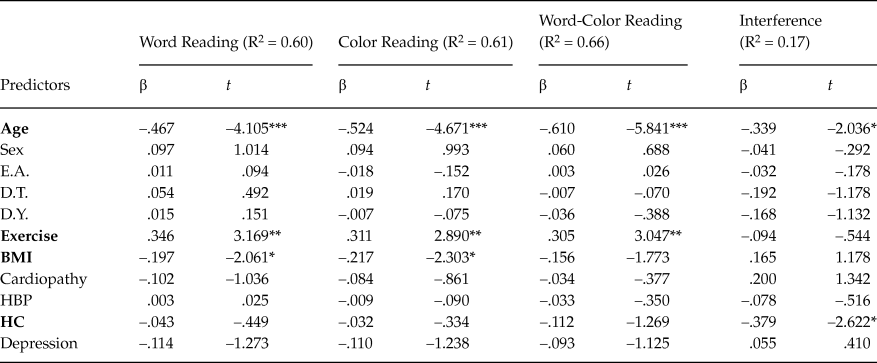
In Table 4, older age is associated with poorer performance on the Stroop test, especially on the Word/Color subtest. By contrast, lower body weight (BMI) and fundamentally, greater levels of physically exercise, are predictors of better performance on the Stroop test, with the exception of the interference subtest.
Linear regression models for the three measures of the Stroop test

Note: The predictive value of the model, given as an adjusted square correlation value, is shown in parentheses.
*p < .05; **p < .01; ***p < .001.
E.A. = Education Years; D.T. = Diabetes Type; D.Y. = Diabetes Years; BMI = Body Mass Index; HC = Hypercholesterolemia; HBP = High Blood Pressure.
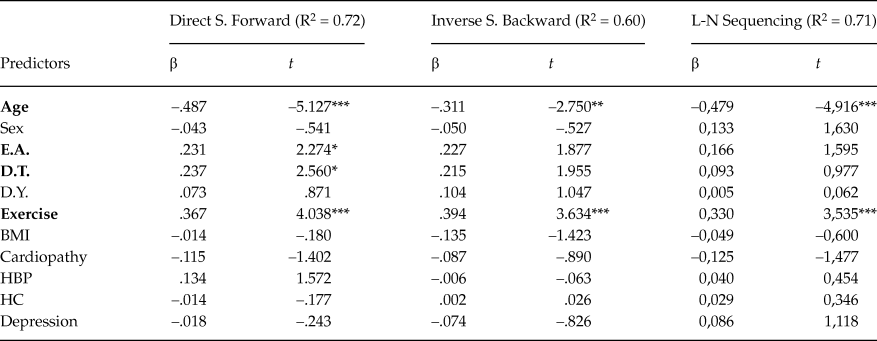
In Table 5, we see how the WAIS scores (Digit Span Forward, Digit Span Backward and Letter-Number Sequencing) also drop off sharply with age. By contrast, higher levels of physical exercise are associated with better cognitive performance, as does years of schooling. Type 2 diabetics tend to obtain slightly better results than type 1 diabetics (see Digit Span Forward).
Linear regression models for the direct and inverse Digits scales and the letters and numbers subtest of the WAIS

Note: *p < .05; **p < .01; ***p < .001.
E.A. = Education Years; D.T. = Diabetes Type; D.Y. = Diabetes Years; BMI = Body Mass Index; HC = Hypercholesterolemia; HBP = High Blood Pressure; L-N Sequencing = Letter-Number Sequencing.
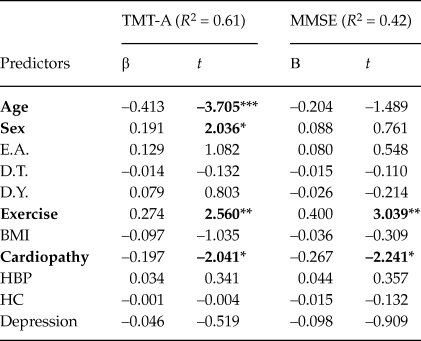
Table 6 presents results from the two tests that are especially sensitive to processes of dementia. While age is a key predictive variable in the TMT-A, this is less true (levels do not reach statistical significance) for the MMSE; this can be explained by the relationship between TMT and Stroop measurements (the latter being strongly affected by age). One novelty with respect to attentional performance tests is that cardiopathy appears as a predictor of poorer execution on dementia indicators, especially on the MMSE. Finally, exercise appears again as an important variable in preventing cognitive impairment.
Linear regression models for the dementia-specific neuropsychological assessments TMT-A and MMSE

Note: The predictive value of each model, given as an adjusted square correlation value, is shown in parentheses.
*p < .05; **p < 0.01; ***p < .001.
E.A. = Education Years; D.T. = Diabetes Type; D.Y. = Diabetes Years; BMI = Body Mass Index; HC = Hypercholesterolemia; HBP = High Blood Pressure.
Discussion
The aim of the present study was to investigate the neurocognitive state of diabetic patients, specifically through the study of processing speed and executive functioning, and taking into consideration several associated variables. To be precise, we studied the incidence of clinical factors linked to DM as well as the patients’ sociodemographic variables.
First, in the range of clinical signs pertaining to vascular pathologies, our study revealed significant results. Most notable are the findings between cardiopathy and the MMSE and TMT-B tests. As we know, the former test offers dementia screening, while the latter is noted for its sensitivity in detecting early processes thereof (Shindo et al., Reference Shindo, Terada, Sato, Ikeda, Nagao, Oshima and Uchitomi2013); therefore, based on our data, we can hypothesize a possible relationship between the DM patient suffering from cardiopathy and a risk of cognitive impairment. Moreover, our results reveal the relationship between cardiopathy and signs of established cognitive impairment (or dementia), based on its relationship to MMSE results, regardless of age (Joosten et al., Reference Joosten, van Eersel, Gansevoort, Bilo, Slaets and Izaks2013). This data would be consistent with postulating the existence of possible signs of vascular dementia as an etiopathogenesis that accounts for such cognitive impairment. And with good reason: Despite the fact that DM and its accompanying clinical factors are associated with the risk of other types of neurodegenerative disorders (e.g. Alzheimer’s; Arvanitakis, Wilson, Bienias, Evans, & Bennet, Reference Arvanitakis, Wilson, Bienias, Evans and Bennet2004), a large percentage of prospective studies point out its particular connection with risk for vascular dementia (Acee, Reference Acee2012). This link seems to stem from the association between diabetes and the metabolic and hemodynamic disorders that cause macro and microvascular damage, altering blood flow to the brain and vascular reactivity. This postulated consistency between our results and the possible existence of cerebrovascular disease would also be reinforced by the cognitive parameters that we have collected, given that vascular dementia is especially characterized by attentional and executive alterations (Graham, Emery, & Hodges, Reference Graham, Emery and Hodges2005). This data calls for further comparative studies that use protocols addressing other cognitive functions, thereby supplying further empirical arguments to help clarify this question.
Hypercholesterolemia showed an inverse relationship to ability to resist interference. On one hand, this clinical sign goes further into the cardiovascular point mentioned above, since hypercholesterolemia is one of the most important risk factors within this spectrum of vascular pathology (Cai et al., Reference Cai, Li, Zhang, Mo, Mai and Zhou2013). This finding is consistent with the important function of lipids within the nervous system, something that research has testified to for years (Beisiegel & Spector, Reference Beisiegel and Spector2001). We know that about 20% of total body cholesterol is found in the brain, specifically in the neurogliocyte membranes, which provide structural and metabolic support to the neurons. But the study of a relationship between lipids and the nervous system was triggered by the discovery of a connection between isoform *4 of apolipoprotein (Apo) E and Alzheimer’s disease (Jarvik et al., Reference Jarvik, Wijsman, Kukull, Schellenberg, Yu and Larson1995). Inquiring further into its neurodegenerative potential, several studies have associated hypercholesterolemia with a dementia diagnosis (Hughes et al., Reference Hughes, Lopez, Evans, Kamboh, Williamson, Klunk and Kuller2014); it has even been described as a predictive risk factor of mild cognitive impairment as well as Alzheimer’s disease, regardless of other genetic or associated comorbid factors (Toro et al., Reference Toro, Degen, Pierer, Gustafson, Schröder and Schönknecht2014).
Next, we did not find statistically significant results between cognitive performance and high blood pressure, even though the figures tend towards decline. According to previous studies, high blood pressure would be associated with general cognitive impairment (Obisesan et al., Reference Obisesan, Obisesan, Martins, Alamgir, Bond, Maxwell and Gillum2008), which at more advanced ages becomes more notorious in alterations in attention, processing speed and executive function (Reitz, Tang, Manly, Mayeux, & Luchsinger, Reference Reitz, Tang, Manly, Mayeux and Luchsinger2007). On the other hand, as a recent study shows, it seems that this tendency toward cognitive decline and dementia does not appear necessarily, but only in those subjects with a certain propensity toward dementia already (Wysocki et al., Reference Wysocki, Luo, Schmeidler, Dahlman, Lesser, Grossman and Beeri2012).
When analyzing the possible influence of clinical and comorbid factors, we found a significant, inverse relationship between Body Mass Index (BMI) and cognitive performance, specifically as an alteration in sustained attention and processing speed. This finding agrees with other studies that allude to low global cognitive performance (Jeong, Nam, Son, Son, & Cho, Reference Jeong, Nam, Son, Son and Cho2005), and specifically executive performance (Gunstad et al., Reference Gunstad, Paul, Cohen, Tate, Spitznagel and Gordon2007). Moreover, obesity has been suggested as an independent risk factor for developing dementia, and that BMI follows an inverted U pattern in relation to risk for dementia (Beydoun, Beydoun, & Wang, Reference Beydoun, Beydoun and Wang2008). Obesity during middle age (40–45 years) has been shown to have a substantial connection with increased risk of dementia 30 years later. Thus, persons with a BMI indicating obesity (30 or more), had a 75% greater possibility of developing dementia as compared to those who had a normal BMI (18.5 to 24.9; Whitmer, Gunderson, Barrett-Connor, Quesenberry, & Yaffe, Reference Whitmer, Gunderson, Barrett-Connor, Quesenberry and Yaffe2005). Elsewhere, BMI has been related to a reduction in total volume of the brain (Ward, Carlsson, Trivedi, Sager, & Johnson, Reference Ward, Carlsson, Trivedi, Sager and Johnson2005), especially with a decrease in frontal lobe areas (Pannacciulli et al., Reference Pannacciulli, Del Parigi, Che, Le, Reiman and Tataranni2006); a correlation has been described between this index and low levels of N-acetyl-aspartate and choline, mainly in gray and white matter of the frontal lobe (Gazdzinski, Kornak, Weine, & Meyerhoff, Reference Gazdzinski, Kornak, Weine and Meyerhoff2008). The negative effect of obesity on the brain and on cognition can be explained through a number of etiopathogenetic mechanisms; for the purposes of our study, we would highlight resistance to insulin and oxidative stress, as well as inflammatory processes and vascular alterations (Freeman, Haley-Zitlin, Rosenberger, & Granholm, Reference Freeman, Haley-Zitlin, Rosenberger and Granholm2014). Furthermore, in a particularly large cohort study, a greater risk for neurodegeneration was found in connection with visceral fat, more than with subcutaneous fat. Visceral fat seems to be metabolically more active, being associated with substantial production of adipocytokines, and more importantly in our view, to greater insulin insensitivity (Whitmer et al., Reference Whitmer, Gustafson, Barrett-Connor, Haan, Gunderson and Yaffe2008).
Based on the results of our study, we find a difference in cognitive performance according to the type of diabetes and its treatment, specifically in regard to sustained attention and processing speed. This data point is consistent with results from a prior study, where a greater tendency toward dementia was seen in the insulin-dependent patients (Ryan & Geckle, Reference Ryan and Geckle2000). More specifically, given that hypertension comorbidity is the only factor that differentiates our Type 1 DM sample from the Type 2 sample, percentage wise, this result could be interpreted in the terms posed by Reitz et al. (Reference Reitz, Tang, Manly, Mayeux and Luchsinger2007), who attributes attention and processing speed disorders to hypertension. However, this distinction between types of diabetes is not observed on most tests, where similar results are found for patients treated with insulin and patients on oral hypoglycemics. Similarly, years of treatment for diabetes (a variable that possibly overlaps with diabetes type, due to the early appearance of type 1 or insulin-dependent diabetes) was not found to be a factor that impacts performance. These results emphasize the importance of the actual condition that is shared by both types of diabetics, regardless of the therapeutic (especially the pharmacological) treatment. Not surprisingly, experimental models developed with type 1 and type 2 DM showed clearly evident negative repercussions from both hyperglycemia and hypoglycemia, as well as the neurological anomalies present in both subtypes, substantiated in negative impact on hippocampal neurogenesis, alterations in dendritic remodeling and increased apoptosis (Ho et al., Reference Ho, Sommers and Lucki2013).
Regarding possible influence detected from sociodemographic variables, we observed a gender difference. In our study, women present poorer cognitive performance than men on the TMT-A test, which, as we noted earlier, is able to detect nascent processes of dementia. The data have not yet established a supposed tendency toward dementia in diabetics according to gender, as there are studies that show greater risk in men (Mejía-Arango & Zúñiga-Gil, Reference Mejía-Arango and Zúñiga-Gil2011) or a lack of gender difference (Ott et al., Reference Ott, Stolk, van Harskamp, Po, Hofman and Breteler1999), while other research studies would justify a greater impact of DM on women, based on sociological, educational, economic, psychological and behavioral factors, in countries with similar socioeconomic characteristics to the context of the present study (Dasgupta, Khan, & Ross, Reference Dasgupta, Khan and Ross2010; De Melo, de Sa, & Gucciardi, Reference De Melo, de Sa and Gucciardi2013).
As could be expected from a long tradition of neurological studies (Haninen et al., Reference Haninen, Koivisto, Reinikainen, Vanhanen, Helkala, Soininen and Riekkinen1996), we obtained a direct relationship between greater age and greater deficiency on cognitive tests, in our case dealing exclusively with a sample of diabetic patients. For this investigation, this functional impairment is more justifiable due to the predominance of executive functions and processing speed in our assessment protocol, these cognitive abilities being especially susceptible to the passing of years (Ardila & Rosselli, Reference Ardila and Rosselli2007). Specifically, the executive decline noted here seems to be reinforced, from the neuroanatomical perspective, by the so-called “frontal lobe theory of aging” (West, Reference West1996), as this specific region is significantly involved in such functions (Gioia, Isquith, Guy, & Kenworthy, Reference Gioia, Isquith, Guy and Kenworthy2000). This fact is clearly visible in the results from Letter-Number Sequencing, as well as in the Stroop interference scores, since these place greater demands on executive functioning. Although a tendency toward functional decline was found on the MMSE, it did not reach levels of statistical significance, the sensitivity of this test being more oriented to the appearance of dementia. This fact seems to be justified since age in itself is not a cause of dementia; the impairment is produced where aging acts in conjunction with another pathology, such as cardiopathy or diabetes (Ravona-Springer et al., Reference Ravona-Springer, Luo, Schmeidler, Wysocki, Lesser, Rapp and Beeri2011). Our data confirms precisely this assumption, since the clinical factors discussed (e.g. cardiopathy) do not appear here as isolated entities, but as comorbid pathology with diabetes, given that our study sample is entirely composed of diabetic patients.
Regarding influence from the patients’ academic level (measured as years of schooling), we can observe a significant direct correlation with attention span. This could suggest a possible beneficial effect, and prompts us to inquire further into a positive influence from education that mitigates the risk of dementia in diabetic patients. This result is consistent with prior studies that address DM as one metabolic pathology (Mejía-Arango & Zúñiga-Gil, Reference Mejía-Arango and Zúñiga-Gil2011); elsewhere, studies from other spheres also confirm this benefit in different types of neurodegenerative pathology. All this has given academic or cultural education a high-value status within the concept of “cognitive reserve” (Andel, Vigen, Mack, Clark, & Gatz, Reference Andel, Vigen, Mack, Clark and Gatz2006). This has been explained through neural mechanisms that generate a cognitive brain remnant, whether through neurobiological events (brain size, number of neurons, synaptic density and abundance of interconnections), or through other phenomena such as using cognitive resources from preexisting processing or compensatory cognitive resources, triggering activation of new neural networks. In this manner, adequate cognitive stimulation (Nithianantharaiah & Hannan, Reference Nithianantharaiah and Hannan2011) seems to be behind this neural remnant that would equip a person with the ability to minimize the effects of age-related neurological disorders, as well as any damage from brain pathology, offering protection against the clinical development of the symptoms or signs typical of neurocognitive disease and dementia (Fratiglioni & Wang, Reference Fratiglioni and Wang2007). From another perspective, one cannot overlook the effect of education in providing more information, and therefore, better and healthier lifestyle habits, which are especially important in relation to pathologies like DM (Trujillo & Fleisher, Reference Trujillo and Fleisher2013).
Next, our study showed aerobic physical exercise as the most important guideline for neuroprotection, evident from its direct relationship to all the cognitive processes that were analyzed. This data point corroborates the benefit found in many preceding studies that focus on whether the practice of physical exercise has any positive impact on cognition (Smith et al., Reference Smith, Blumenthal, Hoffman, Cooper, Strauman, Welsh-Bohmer and Sherwood2010), and more specifically, within the aging process of persons with or without cognitive impairment (for a review, Franco-Martín, Parra-Vidales, González-Palau, Bernate-Navarro, & Solis, Reference Franco-Martín, Parra-Vidales, González-Palau, Bernate-Navarro and Solis2013). In another review that deals only with diabetic pathology, the advantages of establishing physical exercise guidelines are reaffirmed, and the importance of physical exercise is emphasized not only from a preventive perspective but also directly in a therapeutic role (Sanz, Gautier, & Hanaire, Reference Sanz, Gautier and Hanaire2010,). Moreover, an empirical study using a population over age 57 ratified the positive effective produced by aerobic exercise on prediabetic or Type 2 DM subjects (Baker et al., Reference Baker, Frank, Foster-Schubert, Green, Wilkinson, McTiernan and Craft2010). In our study, the benefit increases in proportion to frequency of practice, consistently with other studies that testify to this phenomenon (Subirats-Bayego, Subirats-Vila, & Soteras-Martínez, Reference Subirats-Bayego, Subirats-Vila and Soteras-Martínez2012). This beneficial effect of exercise seems to be based on biomolecular mechanisms and underlying neural mechanisms. Specifically, the effects of exercise and its benefits come about through changes in the neuroplasticity of the hippocampus (which also impacts APOE ε4), through production of brain-derived neurotrophic factor (BDNF), regulation of brain levels of β amyloid, and interaction with the Klotho gene (aging suppressor) through fibroblast growth factor and type 1 insulin-like growth factor (IGF-1); these in turn can lead to several neurovascular structures being affected, along with glial cells such as astrocytes and microglia (Foster, Rosenblatt, & Kuljiš, Reference Foster, Rosenblatt and Kuljiš2011). All this would justify the neural and cognitive benefits that result from physical exercise in patients with diabetic pathology.
Based on our analysis that focuses on certain cognitive functions, we propose future research that incorporates a global neuropsychological protocol, in order to detect possible differences as a function of specific cognitive processes, and thereby construct better hypothetical profiles of cognitive decline in diabetics. In any case, our emphasis on executive functions and processing speed contributes valuable information toward a more adequate understanding of the risk of dementia and receding quality of life in diabetic patients, since we analyzed cognitive processes with unique importance in more sophisticated, global mental functioning – processes that are the most susceptible to the aging process and are highlighted in numerous studies as the most affected functions. On the other hand, our correlation-based study would be well complemented by other experimental and longitudinal studies. Nonetheless, our design met our fundamental objective, allowing inferences to be drawn based on the effect of factors associated with diabetes and present in the de facto diabetic population. Thus, any appearance of clinical variables–cardiopathy, high blood pressure, obesity, etc.— constituted comorbidity, just as the sociodemographic variables could be analyzed with respect to a homogenous sample of diabetes sufferers. In any case, we consider it advantageous for the sample to be expanded in further studies, so as to optimize its statistical goodness and the consequential inferential consistency. We also see benefit from future studies of different drugs that are prescribed for diabetic patients, taking into account their specific mechanisms of action as well as the long-term effect as measured by the time they have been administered. On the other hand, in order to carry out a more exhaustive analysis of each participant, it would be helpful to know their personal parameters of fasting blood glucose and glycosylated hemoglobin levels. Furthermore, this cognitive-related data should be contrasted to biomolecular and neuroimaging results, in order to more accurately define the associated genetic and anatomic-functional structure, and thereby draw the appropriate implications for neurological clinical practice. In this regard, we consider it vital to inquire into the mechanisms that are linked to both cognitive stimulation and to aerobic physical exercise, in order to obtain a stronger empirical foundation that reinforces its therapeutic role.
Our results have analyzed clinical and demographic variables that are found in diabetic patients, inquiring into their functionality as risk factors or beneficial elements with respect to cognitive impairment and/or dementia. Our objective was to contribute more data to enhance our understanding of and neurological intervention in an ever-growing sector of the population, expanding due to greater longevity as well as to the introduction and establishment of unhealthy lifestyle habits. More adequate control of the factors involved in the neurology of this disease would result in more effective healthcare, and more importantly, enhance the quality of life of these particular patients.