




Non-communicable diseases are the leading causes of morbidity and mortality, accounting for 75 % of non-pandemic-related global deaths(1). Unhealthy dietary patterns are recognised as a significant risk factor for non-communicable disease-related morbidity and mortality, and poor diet quality is associated with increased risks of obesity, type 2 diabetes, CVD and certain cancers, including colorectal, liver and pancreatic cancer(Reference Stubbendorff, Sonestedt and Ramne2–4). Poor and imbalanced diets have been associated with approximately one in five deaths globally, equivalent to around 11 million deaths annually(Reference Springmann, Wiebe and Mason-D’Croz5,Reference Afshin, Sur and Fay6) .
In England, 64 % of adults are estimated to be overweight or living with obesity, increasing their risk of multiple long-term conditions(7,8) . Obesity is estimated to cost the National Health Service (NHS) over £11·4 billion annually, with wider societal costs of £74·3 billion(9). Despite the clear need for nutritional interventions, UK primary healthcare faces significant challenges, including workforce shortages, funding constraints and difficulties accessing services, necessitating a shift towards more proactive care models(Reference Johnston and MacConnachie10). Furthermore, general practitioners typically receive limited training in nutrition(Reference Ganis and Christides11), and dietitians are rarely available in primary care, leaving a critical gap in accessible dietary guidance.
Pharmacy practice, particularly community pharmacy, represents a potential setting to expand nutrition support, as pharmacists’ roles are evolving from predominantly dispensing medicines to delivering patient-centred care and prescribing(Reference Almontashiri12). In England, approximately 1·2 million visits are made to community pharmacies every day for a variety of health-related reasons(Reference Rutter and Barnes13), including minor ailments, chronic disease support, health screenings and vaccinations(Reference Alshehri, Cheema and Yahyouche14–16). These frequent interactions provide opportunities to support behaviour change and prevention.
Health promotion is already embedded within community pharmacy through the Healthy Living Pharmacy framework, which serves as an organisational development framework aiming to support opportunistic healthy lifestyle advice(17). Key groups include patients receiving prescriptions who appear to have diabetes, be at risk of CHD, smoke or be overweight(18,19) . Patients with chronic conditions often have ongoing contact with community pharmacies, creating scope to support secondary prevention and broader primary prevention efforts(Reference Root and Varney20). However, despite the importance of nutrition in chronic disease prevention and management, nutrition care remains an underutilised component of pharmacy practice.
Previous studies suggest that while pharmacists generally recognise the importance of nutrition in health promotion and disease prevention, there are notable gaps in confidence and knowledge. A survey in Northern Ireland found that although most community pharmacists believed nutrition plays a key role in reducing the global burden of disease, 74 % (n 122) were not confident in providing advice to patients with diabetes(Reference Douglas, McCarthy and McCotter21), with similar findings reported in a cross-sectional study in Egypt(Reference Medhat, Sabry and Ashoush22).
In the UK, recent evidence on the role of pharmacy professionals in nutrition and diet-related health remains limited. Earlier UK research assessed community pharmacists’ knowledge of dietary recommendations and their practical application(Reference Macdiarmid, Gatenby and Mason23); however, there remains a gap in understanding how pharmacy professionals currently provide nutrition advice, how confident and prepared they feel and what support they need to strengthen this role.
This study aimed to explore UK pharmacy professionals’ perspectives on nutrition in pharmacy practice; identify current approaches to nutrition counselling and key topics discussed; and examine perceived barriers, facilitators and resource needs to inform the development of a practical nutrition toolkit for pharmacy practice. Although community pharmacy provides an important public-facing context for nutrition support, this study included pharmacy professionals from multiple UK practice settings to capture wider perspectives on nutrition-related roles, needs and opportunities.
Methods
Study design
This study employed a mixed-methods cross-sectional survey design to collect both quantitative (close-ended) and qualitative (open-ended) data. The quantitative data aimed to describe the knowledge, attitudes and practices of pharmacy professionals towards nutrition counselling and dietary advice provision, while the qualitative responses offered greater insight into participants’ perspectives.
Study questionnaire
The design of the survey questionnaire was based on a literature review of previous research that applied nutrition questionnaires for community pharmacists(Reference Douglas, McCarthy and McCotter21,Reference Medhat, Sabry and Ashoush22) and refined through discussion with the research team (including a clinical pharmacist) and piloting.
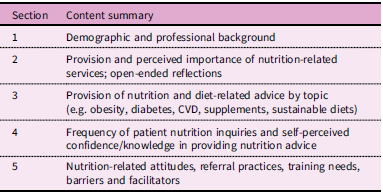
The survey, consisting of five thematic sections (Table 1), was administered using Qualtrics and consisted of thirty-five questions, incorporating multiple-choice questions, single-choice questions, Likert scale and open-ended questions. The survey explored knowledge, attitudes and practices of pharmacy professionals regarding nutrition consultations and diet-related health promotion in their practices. For the purpose of this survey, ‘nutrition and diet-related advice’ referred to brief advice, information provision, signposting or counselling related to dietary behaviours, healthy eating, dietary supplements, weight management, nutrition in long-term conditions and nutrition-related health promotion. It did not refer to specialist dietetic assessment or individualised medical nutrition therapy.
Overview of survey sections and content

Table 1. Long description
A table titled Overview of survey sections and content. The table has two columns: Section and Content summary. The table has five rows. Row 1: Section 1, Demographic and professional background. Row 2: Section 2, Provision and perceived importance of nutrition-related services; open-ended reflections. Row 3: Section 3, Provision of nutrition and diet-related advice by topic (e.g. obesity, diabetes, CVD, supplements, sustainable diets). Row 4: Section 4, Frequency of patient nutrition inquiries and self-perceived confidence/knowledge in providing nutrition advice. Row 5: Section 5, Nutrition-related attitudes, referral practices, training needs, barriers and facilitators.
‘Nutrition-related services’ referred to pharmacy services or activities with dietary, lifestyle or nutrition-related components, including hypertension management, health checks, diabetes prevention programmes, weight management services, healthy lifestyle or healthy eating campaigns and signposting/referral to local nutrition services.
The draft version was reviewed and pilot-tested with pharmacists from different backgrounds (n 5), including community pharmacists, academic pharmacists and senior staff from the International Pharmaceutical Federation. Pilot testing ensured clarity, design and readability of the questionnaire, and refinements were made based on feedback.
Participant recruitment
Inclusion criteria included being a practising pharmacy professional in any UK pharmacy-related setting and aged 18 years or above. Pharmacy professionals from community, hospital, general practice, academia, industry and other pharmacy-related roles were eligible, as the study sought to capture broad perspectives on nutrition advice, service provision and training needs across pharmacy practice. While the survey was open to participants globally, only responses from those practising in the UK were included in the analysis to ensure contextual relevance.
Participants were recruited in March 2023 through digital platforms, primarily LinkedIn and Twitter/X, and email newsletters of UK professional pharmacy organisations. Snowball sampling was used by asking recipients to forward the survey link to eligible pharmacy colleagues. The survey remained open for 3 months.
As this study aimed to provide exploratory insights into pharmacy professionals’ perspectives and practices regarding nutrition care, no formal sample size calculation was conducted. The final sample was considered sufficient to support descriptive and exploratory analysis of key trends and themes across the targeted professional group.
Ethics approval
The study protocol received ethics approval from the UCL Research Ethics Committee (ref 24591/001). All participants provided informed consent before beginning the survey, and responses were collected anonymously to ensure confidentiality.
Data analysis
Quantitative data analysis was carried out using Statistical Package for Social Science version 29 (IBM SPSS, London, UK). Descriptive statistics were generated for all categorical variables and reported as frequencies and percentages. Figures were produced using Microsoft Excel version 16·86, and qualitative thematic visuals were generated in Canva (Canva Pty Ltd., Sydney, Australia).
Statistical tests
To examine the relationship between pharmacy professionals’ perceived importance and knowledge of nutrition-related services and their provision in practice, cross-tabulations and chi-square tests of independence were conducted. Likert scale responses for importance and knowledge were recoded into fewer categories to enable meaningful comparisons. Linear-by-linear trend tests were used to examine whether higher perceived knowledge or importance was associated with greater provision of advice and services.
Qualitative analysis
Open-text responses were analysed using reflexive thematic analysis, informed by Braun and Clarke’s approach(Reference Braun and Clarke24). NVivo qualitative data analysis software was used to facilitate data management and analysis (NVivo version 14 Plus). The analysis began with repeated reading of responses to develop familiarity with the dataset. Codes were then generated inductively to capture key ideas within participants’ comments, before being compared, refined and organised into broader themes and subthemes. Rather than applying a predefined coding framework, the analysis remained data-led and interpretive. Emerging themes and interpretations were discussed within the research team, and the final thematic framework was agreed through this iterative process.
Results
Of the 249 pharmacy professionals who completed the survey, twenty-nine were excluded (practising outside the UK), leaving 220 responses for analysis. Most respondents completed the quantitative items, whereas completion of open-text responses was more variable. Where numbers are <220, this is specified in the results. As such, missing data were minimal and limited to qualitative responses, with no impact on the variables included in the quantitative analysis. Throughout the Results, N denotes the total number of respondents included in a given analysis or question, while n denotes subgroup or category counts.
Participant demographics
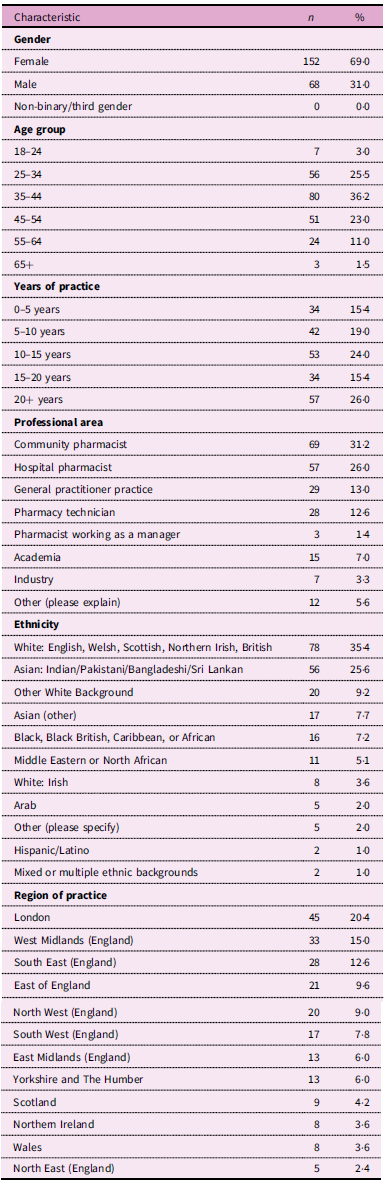
From the 220 respondents, the majority were female (69·0 %) and most were aged 25 to 44 years (61·7 %). Participants represented a range of ethnic backgrounds, with the largest groups identifying as White (35·4 %) and South Asian (25·6 %). Respondents practised across various UK regions, with the highest proportions from London (20·4 %) and West Midlands (15·0 %). Pharmacy professionals had a broad range of years of experience and professional roles, with the largest groups working in community pharmacy (31·2 %) and hospital pharmacy (26·0 %) settings. A small proportion (5·6 %) reported roles outside traditional pharmacy settings, including public health, integrated care and private practice (Table 2).
Summary of participant demographics (N 220)

Table 2. Long description
A table summarizing participant demographics including gender, age group, years of practice, professional area, ethnicity, and region of practice. The table has 16 rows and 3 columns. Column headers are Characteristic, n, and %. Row 1: Gender, Female, 152, 69.0. Row 2: Gender, Male, 68, 31.0. Row 3: Gender, Non-binary/third gender, 0, 0.0. Row 4: Age group, 18-24, 7, 3.0. Row 5: Age group, 25-34, 56, 25.5. Row 6: Age group, 35-44, 80, 36.2. Row 7: Age group, 45-54, 51, 23.0. Row 8: Age group, 55-64, 24, 11.0. Row 9: Age group, 65+, 3, 1.5. Row 10: Years of practice, 0-5 years, 34, 15.4. Row 11: Years of practice, 5-10 years, 42, 19.0. Row 12: Years of practice, 10-15 years, 53, 24.0. Row 13: Years of practice, 15-20 years, 34, 15.4. Row 14: Years of practice, 20+ years, 57, 26.0. Row 15: Professional area, Community pharmacist, 69, 31.2. Row 16: Professional area, Hospital pharmacist, 57, 26.0. Row 17: Professional area, General practitioner practice, 29, 13.0. Row 18: Professional area, Pharmacy technician, 28, 12.6. Row 19: Professional area, Pharmacist working as a manager, 3, 1.4. Row 20: Professional area, Academia, 15, 7.0. Row 21: Professional area, Industry, 7, 3.3. Row 22: Professional area, Other (please explain), 12, 5.6. Row 23: Ethnicity, White: English, Welsh, Scottish, Northern Irish, British, 78, 35.4. Row 24: Ethnicity, Asian: Indian/Pakistani/Bangladeshi/Sri Lankan, 56, 25.6. Row 25: Ethnicity, Other White Background, 20, 9.2. Row 26: Ethnicity, Asian (other), 17, 7.7. Row 27: Ethnicity, Black, Black British, Caribbean, or African, 16, 7.2. Row 28: Ethnicity, Middle Eastern or North African, 11, 5.1. Row 29: Ethnicity, White: Irish, 8, 3.6. Row 30: Ethnicity, Arab, 5, 2.0. Row 31: Ethnicity, Other (please specify), 5, 2.0. Row 32: Ethnicity, Hispanic/Latino, 2, 1.0. Row 33: Ethnicity, Mixed or multiple ethnic backgrounds, 2, 1.0. Row 34: Region of practice, London, 45, 20.4. Row 35: Region of practice, West Midlands (England), 33, 15.0. Row 36: Region of practice, South East (England), 28, 12.6. Row 37: Region of practice, East of England, 21, 9.6. Row 38: Region of practice, North West (England), 20, 9.0. Row 39: Region of practice, South West (England), 17, 7.8. Row 40: Region of practice, East Midlands (England), 13, 6.0. Row 41: Region of practice, Yorkshire and The Humber, 13, 6.0. Row 42: Region of practice, Scotland, 9, 4.2. Row 43: Region of practice, Northern Ireland, 8, 3.6. Row 44: Region of practice, Wales, 8, 3.6. Row 45: Region of practice, North East (England), 5, 2.4.
Nutrition and diet-related advice provided to patients
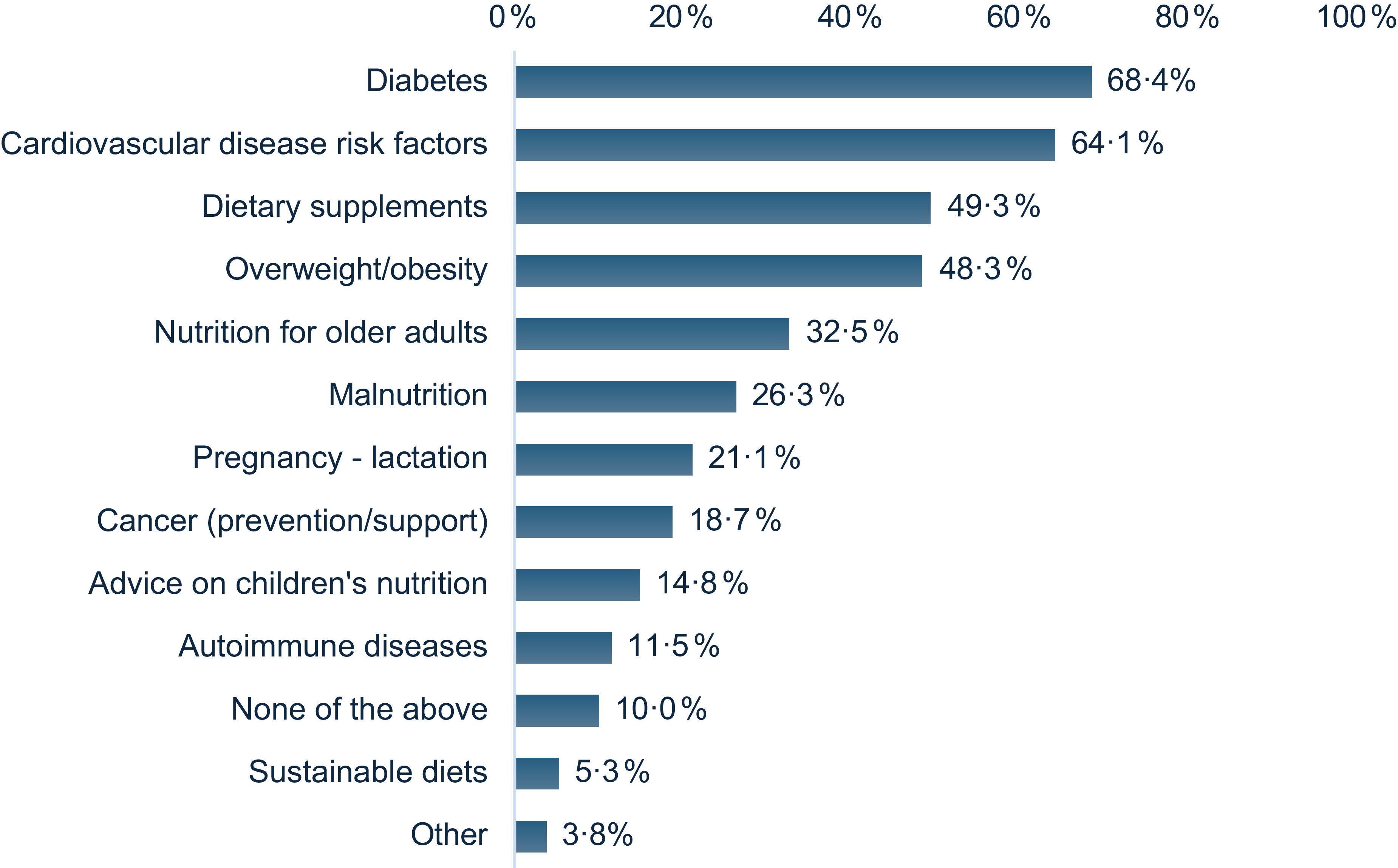
Participants reported providing nutrition and diet-related advice to patients across a range of topics (Figure 1). Advice was most frequently reported for diabetes (68·4 %, n 150) and CVD risk factors (64·1 %, n 141), followed by dietary supplements and overweight/obesity. Nutrition advice for older adults, malnutrition and sustainable diets was less commonly reported, with sustainable diets reported least often (5·3 %, n 12).
Common health conditions for which participants reported provided nutrition advice on (N 220). Multiple responses were permitted; therefore, percentages may not total 100 %.

Provision of nutrition-related health services in the practice
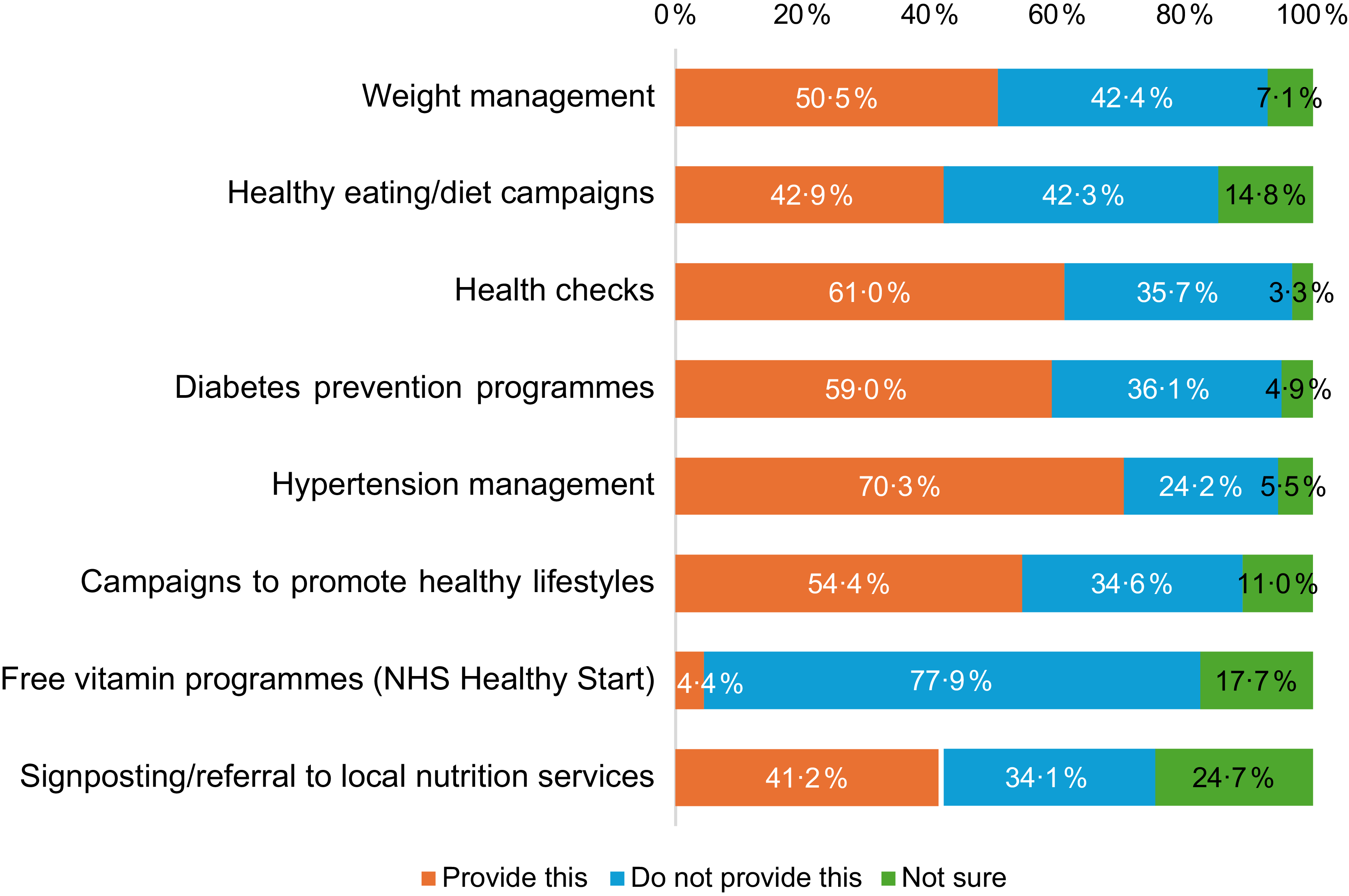
Provision of nutrition-related health services was variable (Figure 2). Hypertension management was the most commonly reported service (70·3 %, n 155), followed by health checks (e.g. NHS Health Checks) and diabetes prevention programmes (e.g. NHS Healthier You). Over half of respondents also reported involvement in healthy lifestyle campaigns (e.g. NHS Better Health) and weight management services. Healthy eating or diet-related campaigns and signposting/referral to local nutrition services were reported less frequently, while free vitamin programmes (e.g. NHS Healthy Start Scheme) were rarely reported (4·4 %, n 10).
Provision of nutrition-related services in pharmacy practice (N 220).

Perceived importance of nutrition services
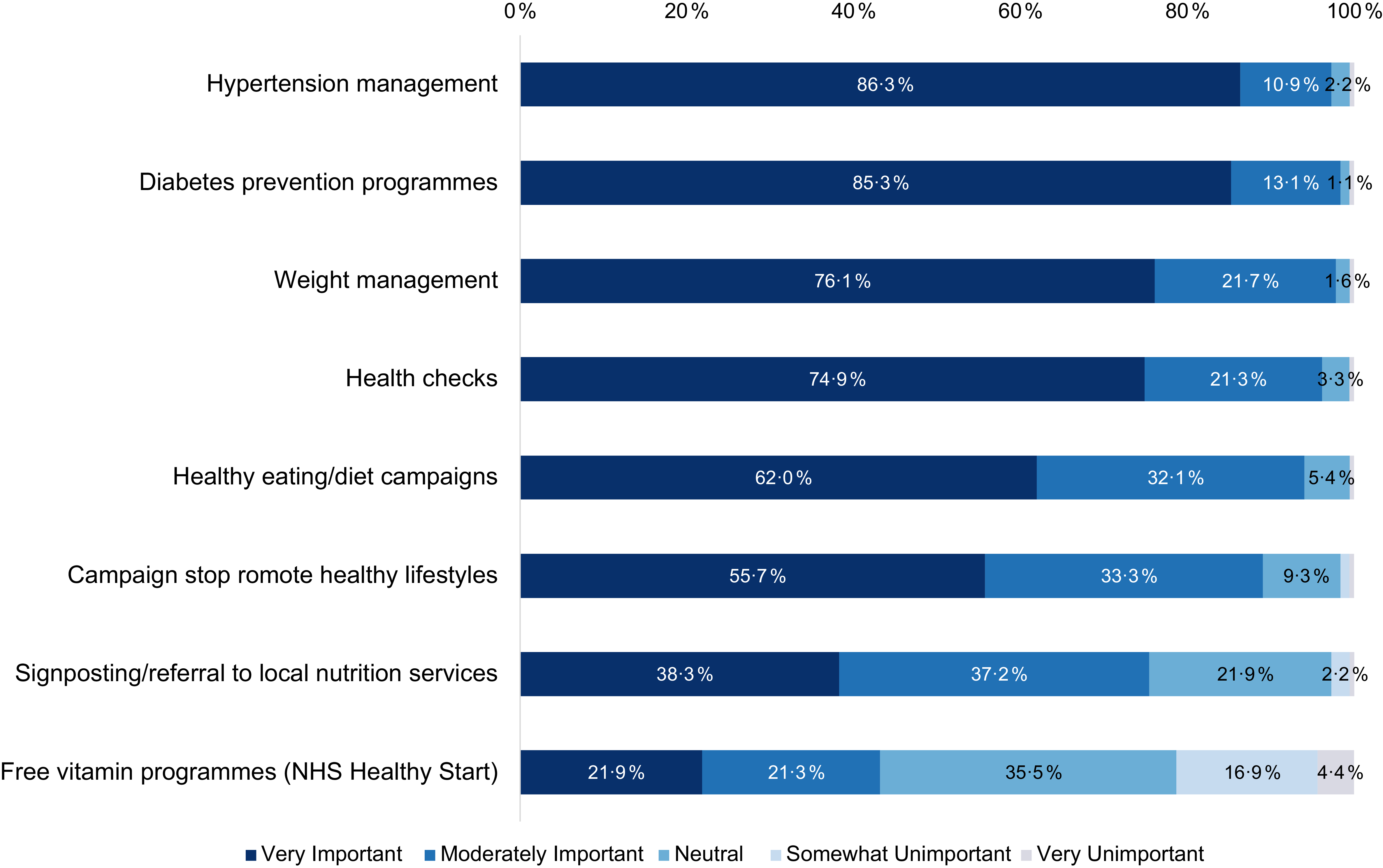
Participants were asked to rate the importance of various health services with nutrition and diet-related components using a five-point Likert scale (Figure 3). Hypertension management (86·3 %, n 190) and diabetes prevention programmes (85·3 %, n 188) were most frequently rated as very important, followed by weight management and health checks. Additionally, over half of the participants rated healthy eating and diet campaigns, as well as campaigns to promote healthy lifestyles, as very important services. In contrast, signposting/referral to local nutrition services and free vitamin programmes received lower ‘very important’ ratings than other services. Free vitamin programmes were rated very important least often (21·9 %, n 48), with a notable proportion of participants remaining neutral about their relevance to population health.
Perceived importance of providing nutrition-related services (N 220).

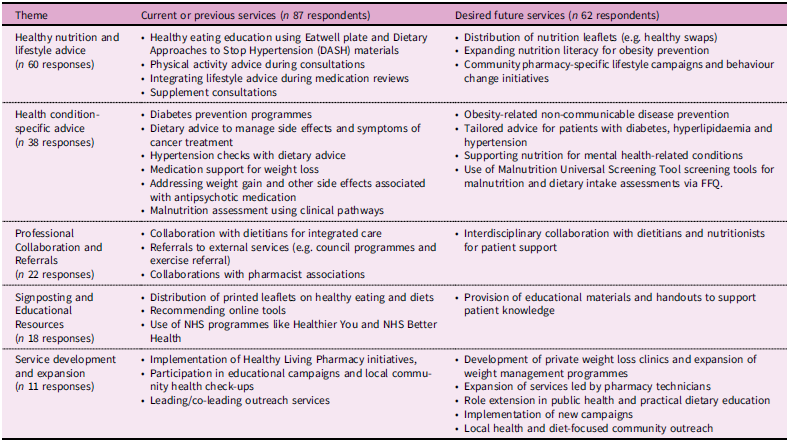
Furthermore, open-text questions explored whether participants provided any additional nutrition and diet-related services in their practice and whether they have offered such services in the past or plan to offer them in the future (Table 3).
Self-reported nutrition and diet-related services in pharmacy practice: current, previous and desired future services (N 149)

Table 3. Long description
A table with six rows and five columns comparing current or previous services and desired future services across different themes in pharmacy practice. The themes include Healthy nutrition and lifestyle advice, Health condition-specific advice, Professional Collaboration and Referrals, Signposting and Educational Resources, and Service development and expansion. Each theme lists the number of responses and specific services under current or previous services and desired future services. For example, under Healthy nutrition and lifestyle advice, current services include healthy eating education using Eatwell plate and Dietary Approaches to Stop Hypertension materials, while desired future services include distribution of nutrition leaflets and expanding nutrition literacy for obesity prevention.
Note. N denotes the total number of respondents who answered the relevant open-text question or section, while n denotes subgroup or category counts. Column-level n values refer to respondents, while theme-level n values refer to coded responses. As individual responses could address more than one theme, category counts do not sum to the total N.
Nutritional assessment
Respondents reported varying levels of involvement in delivering nutritional assessment methods within their practice. In this survey, nutritional assessment methods included anthropometric measurements, dietary assessment tools, clinical assessment methods such as malnutrition screening and laboratory or point-of-care testing relevant to nutrition-related risk factors. Laboratory or point-of-care testing, such as tests linked to cardiometabolic risk monitoring, was the most commonly reported assessment-related activity (78·8 %, n 173), followed by anthropometric measurements (70·6 %, n 155). In contrast, 67·7 % (n 149) of participants did not conduct clinical assessments for identifying malnutrition, and 70·2 % (n 154) did not conduct routine dietary assessments.
Provision of assessment methods broadly aligned with pharmacists’ perceived importance. Laboratory or point-of-care testing was perceived as the most important, with 79·1 % (n 174) of respondents rating it as ‘very important’. Nutrition screening tools such as those used to identify malnutrition, nutrient deficiencies or clinical nutrition risk were rated as very important by 55·5 % (n 122), whilst anthropometric measurements were rated as very important by 51·1 % (n 112). Dietary assessment tools were rated as very important by 45·1 % (n 99). A small proportion of respondents regarded any assessment method as unimportant, with very few selecting ‘somewhat unimportant’ or ‘very unimportant’ across all assessment types.
Frequency of receiving nutrition inquiries
Participants most frequently received inquiries about dietary supplements (57·6 %, n 127 ‘often’) and disease-specific nutrition advice (48·3 %, n 106). General healthy eating and weight management were commonly raised at a ‘sometimes’ level (56·4 %, n 124; and 45·4 %, n 100). Micronutrient deficiencies were less frequent (39·0 %, n 86 ‘sometimes’), though 30·8 % (n 68) reported ‘often’ being asked. Environmentally sustainable diets were least discussed, with 49·1 % (n 108) reporting ‘rarely’, and ‘always’ responses were minimal across all topics.
Self-perceived knowledge levels
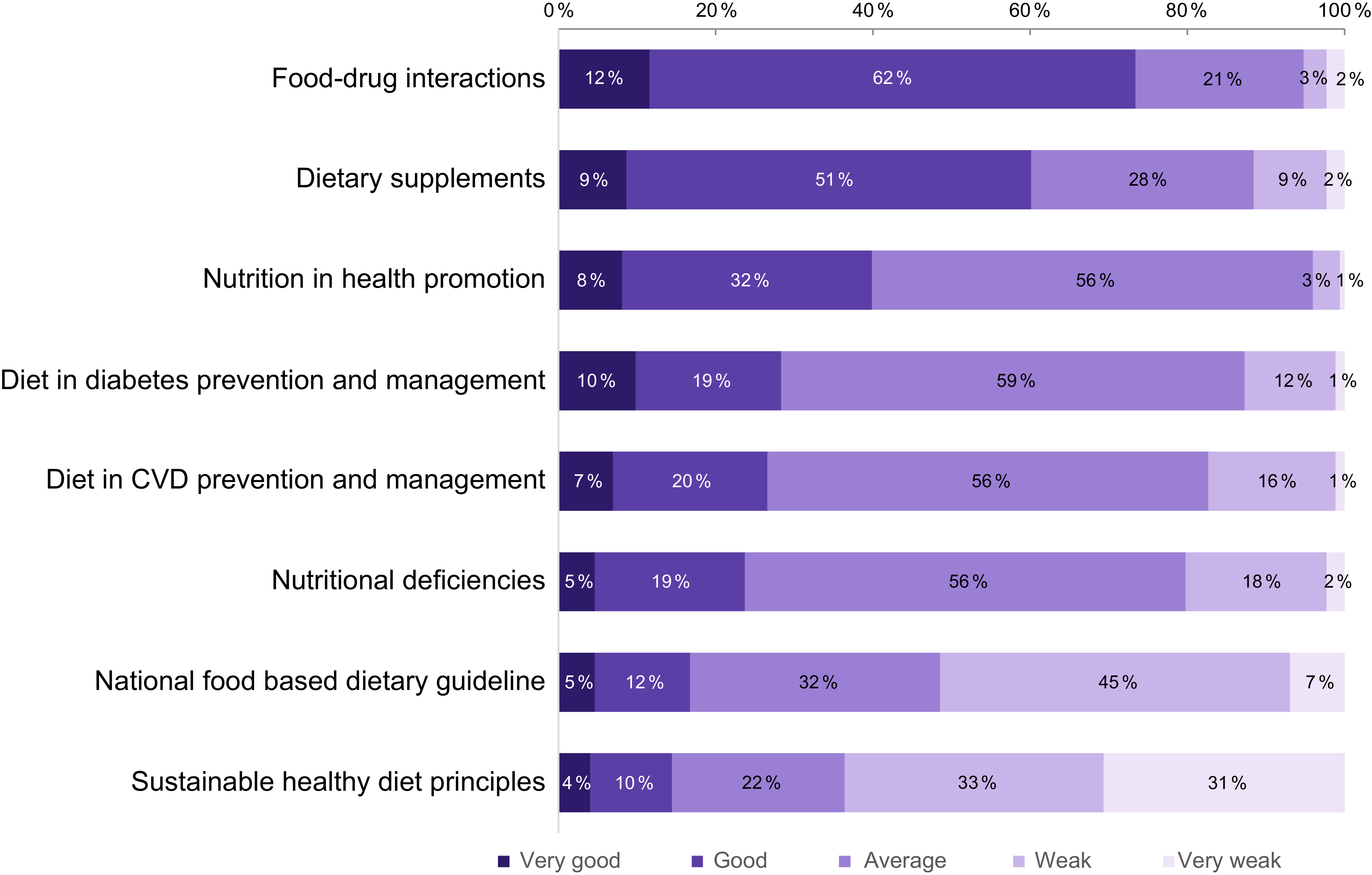
Participants were asked to rate their knowledge across various nutrition and diet-related topics using a five-point Likert scale ranging from ‘very weak’ to ‘very good’ (Figure 4). Few participants rated their knowledge in any area as ‘very good’.
Self-perceived knowledge level ratings on nutrition-related topics, shown as percentages (N 220).

Food–drug interactions were most frequently rated as ‘good’ (62 %, n 136), followed by dietary supplements (51 %, n 112). In contrast, knowledge of nutrition in health promotion, diet in diabetes prevention and management, diet in CVD prevention and management, and nutritional deficiencies was most commonly rated as ‘average’. Lower self-rated knowledge was reported for national food-based dietary guidelines, such as the UK Eatwell Guide, and sustainable healthy diet principles. Sustainable healthy diet principles had the highest combined proportion of ‘weak’ and ‘very weak’ responses (64 %, n 141), representing the lowest-rated knowledge area overall.
Association between perceived knowledge and provision of nutrition advice
Pearson’s chi-squared tests were used to examine associations between pharmacy professionals’ self-rated knowledge in nutrition-related areas and their reported provision of related dietary advice. All predictor variables were measured on a 3-point ordinal scale (1 = Weak, 2 = Average, 3 = Good), created by collapsing the original 5-point scale (‘Very Weak’ to ‘Very Good’) due to low cell counts in the extreme categories. This approach reduced data sparsity and ensured that the assumptions underlying chi-square tests were adequately met. Statistical significance was determined at a two-tailed threshold of p < 0·05, and linear-by-linear trend tests were included to assess whether increasing levels of perceived knowledge were associated with a higher likelihood of providing advice.
Significant associations were observed in several domains. Higher perceived knowledge was significantly associated with the provision of diabetes advice (p = 0·015), with a significant linear trend indicating increased advice provision with higher knowledge levels (trend p = 0·004). A similar pattern was found for overweight/obesity (p < 0·001, trend p < 0·001), CVD (p = 0·014, trend p = 0·012) and malnutrition (p = 0·009, trend p = 0·003), all showing significant linear trends suggesting a greater likelihood of advice provision with increasing knowledge. In contrast, no significant association was found for dietary supplements (p = 0·25, trend p = 0·63), indicating that other factors may influence advice provision in this area.
Association between perceived importance and provision of nutrition-related services
Perceived importance was also collapsed into a 3-point scale, and associations between perceived importance of services and their reported provision were assessed using Pearson’s chi-square tests and linear-by-linear trend tests. Significant associations were observed for hypertension services (p = 0·001) and anthropometric methods (p = 0·004), both supported by significant linear trends (trend p < 0·001 and p = 0·001, respectively), indicating that higher perceived importance was associated with higher levels of service provision. Although the association for diabetes services was not statistically significant (p = 0·13), a significant linear trend was observed (trend p = 0·04). A similar trend-level association was found for dietary assessment methods (p = 0·05, trend p = 0·014). No significant associations were found for healthy lifestyle campaigns, weight management, clinical assessment methods or laboratory/point-of-care tests (all p > 0·05).
Training needs
The majority, 65·3 % (n 144), indicated that nutrition training is essential and should be integrated within the pharmacist’s roles. A further 22·0 % (n 48) stated that such training would be beneficial only if there are plans to deliver nutrition-related services in practice; otherwise, they did not consider it essential. Only 1·2 % (n 3) of respondents felt that nutrition training is not necessary for pharmacy professionals, and 5·2 % (n 11) were undecided.
Barriers and facilitators to the implementation of nutrition services
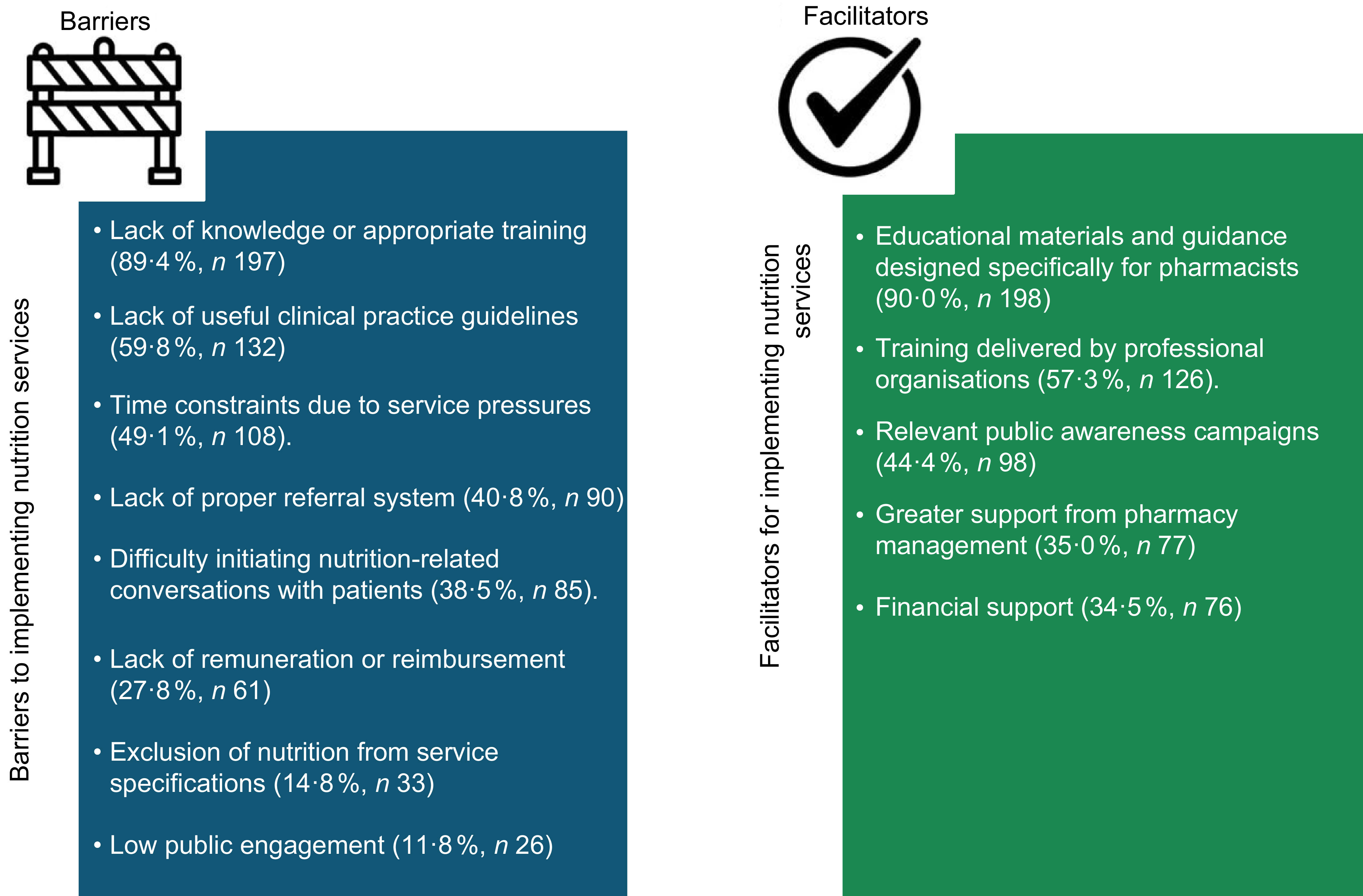
Participants identified barriers and facilitators to delivering nutrition-related services through a multiple-choice question with an open-text option (Figure 5). The most reported obstacles included gaps in knowledge or training, lack of practical guidelines, time pressures and the absence of referral pathways. Financial and organisational constraints, difficulties initiating nutrition-related conversations, competing priorities such as medication reviews, dispensing and minor ailments and lack of personal interest in nutrition were also noted.
Barriers and facilitators to delivering nutrition-related services in pharmacy settings (N 220). Multiple responses were permitted; therefore, percentages may not total 100 %.

Facilitators focused largely on capacity-building, with respondents emphasising the need for pharmacist-specific educational materials, formal training opportunities and broader public awareness campaigns. Organisational enablers, such as management support and financial incentives, were also perceived as important for enhancing service integration (Figure 5).
Thematic analysis of perceived roles and future ambitions in nutrition
Thematic analysis was carried out for the free-text question: ‘Reflecting on your role as a pharmacy professional, what is your perspective on providing nutrition advice and promoting healthy diets? What would be helpful for implementing nutrition services in your pharmacy practice?’ (N 108).
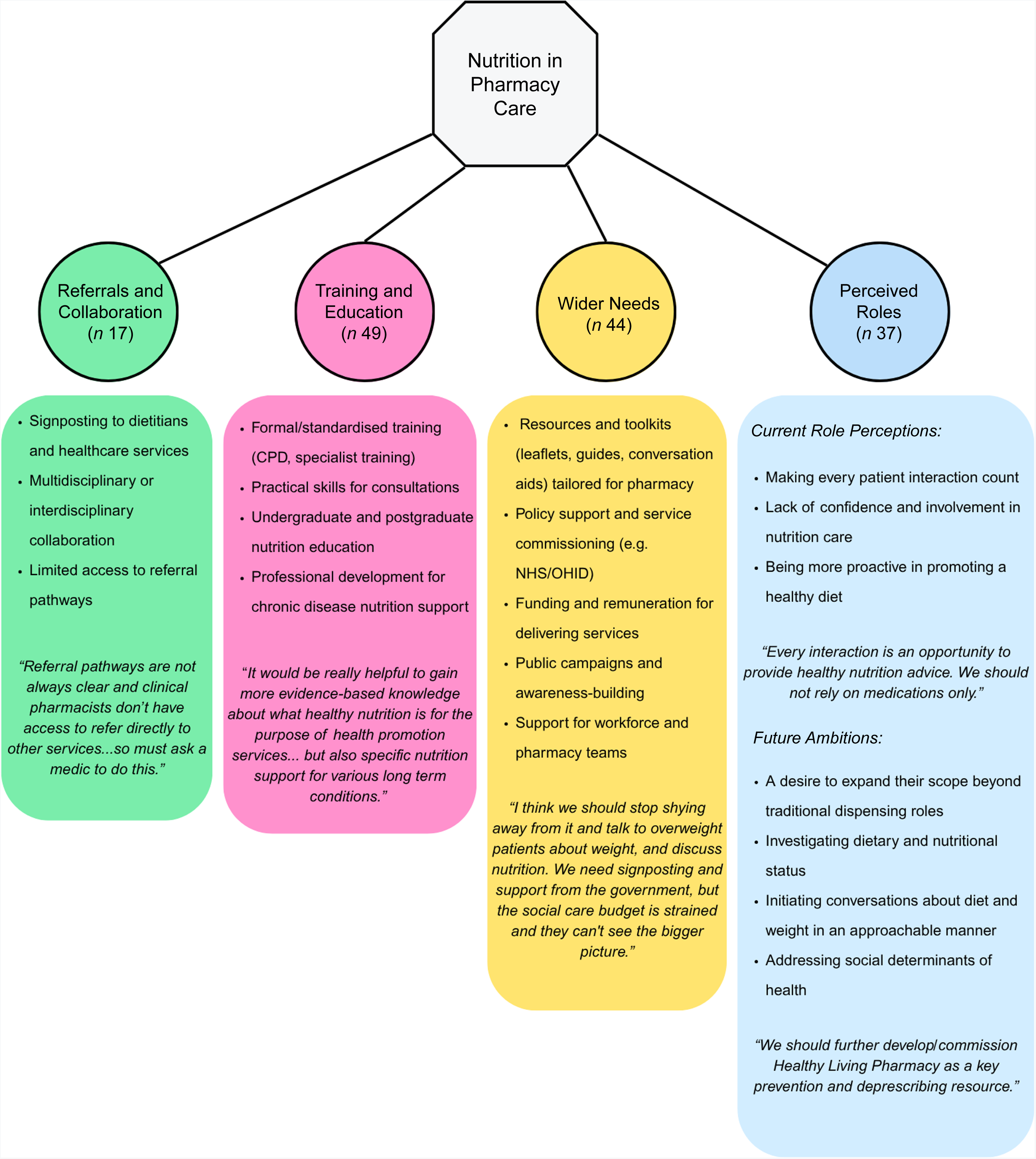
The thematic framework developed consists of four main themes: ‘Referrals and Collaboration’ (n 17), ‘Training and education needs’ (n 49), ‘Wider needs’ (n 44), and ‘Perceived Roles’ (n 37), each with multiple subthemes and supporting quotes (Figure 6). As responses were often multifaceted, they were coded under more than one theme where relevant; therefore, coded instances exceeded the number of individual responses.
Thematic framework of pharmacy professionals’ perceived roles and future ambitions in nutrition, based on open-text responses (N 108). Theme-level n values indicate the number of coded responses within each theme; individual responses could be coded under more than one theme.

Respondents emphasised integrated care, including interdisciplinary work with dietitians and referral pathways. Training needs were frequently cited, with participants reporting limited nutrition education and low confidence in providing advice, particularly for chronic disease nutrition support. Wider system-level enablers included formal service commissioning, public awareness, toolkits and policy support. ‘Perceived roles’ captured current practice and future aspirations, including integrating nutrition advice into medicine reviews, patient counselling and preventive care.
Brief open-text comments further illustrated these themes. Participants described the need to ‘work in collaboration with dietitians and nutritionists’, but also noted that ‘referral pathways are not always clear’. Training needs were reflected in comments such as ‘nutritional training is historic and limited’ and calls for ‘more training and resources specifically designed for pharmacists’. Wider implementation needs included ‘useful guidance, frameworks’ and ‘a conversation toolkit’, while perceived roles were linked to holistic care, including addressing diet and lifestyle during medication reviews.
Discussion
This study explored UK pharmacy professionals’ current practices, perceived knowledge, attitudes, as well as their perceived roles and future needs in relation to nutrition support within pharmacy practice.
Patterns of nutrition advice provision across topics
The findings highlight that nutrition advice was primarily provided for diabetes (68·4 %) and CVD risk factors (64·1 %), followed by dietary supplements (49·3 %) and the management of overweight and obesity (48·3 %). These findings should be interpreted as reflecting self-reported nutrition and diet-related advice within pharmacy practice, which may include both lifestyle-focused discussions and medication-adjacent conversations, such as dietary considerations in diabetes, cardiovascular risk management, supplement use and medicine–food interactions. In contrast, only 26·3 % of respondents reported offering advice on malnutrition, suggesting it may be a less prioritised area. Yet, addressing malnutrition remains critically important, particularly given the growing recognition of the double burden of malnutrition, in which undernutrition and overweight/obesity coexist, often driven by poor dietary quality(Reference Popkin, Corvalan and Grummer-Strawn25). Malnutrition can affect individuals with chronic conditions, as well as the elderly, where it may lead to frailty and significantly impair quality of life(Reference Lartey, Meerman and Wijesinha-Bettoni26).
A similar pattern of low engagement was observed for sustainable diets, with only 5·3 % of respondents providing related advice. This is highly relevant given the increasing emphasis on sustainable diets in UK policy and global food systems agendas(27). Although healthcare professionals are encouraged to advocate for sustainable food practices, support community engagement and contribute to NHS net-zero goals(Reference Prosen, Lekše and Ličen28), our findings suggest limited engagement from pharmacy professionals. Limited awareness, training and pharmacy-specific resources, alongside structural barriers such as time pressures and lack of implementation tools, likely contribute to this gap(Reference Kotcher, Maibach and Miller29)
Opportunities for nutrition support within existing pharmacy services
Over half of respondents also reported involvement in campaigns promoting healthy lifestyles, while fewer were engaged in healthy diet campaigns or referrals to local nutrition services. The Healthy Living Pharmacy framework provides a platform for integrating such services into routine community pharmacy practice. Accredited pharmacies are encouraged to adopt a health and well-being ethos by participating in public health campaigns throughout the year(17). Campaigns aimed at promoting healthy dietary choices and weight management are among the areas in which community pharmacists can engage when delivering initiatives(30,31) . Despite this structural opportunity, the results suggest limited engagement in nutrition-specific campaigns or referrals, indicating a gap between the potential and actual implementation of nutrition promotion within pharmacy settings.
Although participants recognised the importance of nutrition services for population health, this did not consistently translate into structured delivery, highlighting the need to address system-level, professional and practical barriers to evidence-based nutrition care.
·Patient-initiated nutrition inquiries in pharmacy practice
Beyond service provision, our study explored patient-initiated nutrition inquiries in pharmacy practice. Food and dietary supplements were the most frequently asked-about topic (57·6 %), followed by disease-specific nutrition (48·3 %), while healthy eating, weight management and micronutrient deficiencies were common but less frequent. These findings align with an observational study conducted in 136 community pharmacies in Belgium, where pharmacy interns documented over 1000 food and nutrition inquiries. Like our results, food supplements were the most frequent topic (38 %), followed by healthy eating (11 %) and weight loss (9 %)(Reference Tommelein, De Boevre and Vanhie32). This consistency across settings underscores the prominence of supplement-related questions and reinforces the need to strengthen competencies in this area.
Training, resources and system-level support for nutrition integration
While participants reported greater confidence in their knowledge of specific areas such as food–drug interactions (62 %) and dietary supplements (51 %), self-rated knowledge in other key domains was more limited. The majority rated their understanding of nutrition in health promotion, disease-specific nutrition for diabetes and CVD, and nutritional deficiencies as only ‘average’ (56 %). Notably, familiarity with national dietary guidelines and sustainable healthy diet principles was particularly low, highlighting gaps in foundational nutrition knowledge.
Our findings underscore the need for targeted training, resources and integration of nutrition education into pharmacy curricula to strengthen pharmacists’ knowledge in areas such as nutritional deficiencies, chronic disease-related nutrition care and dietary guidelines. Notably, higher self-rated knowledge was associated with greater provision of advice on specific conditions, suggesting that improved competence may better equip professionals to engage in nutrition conversations and conduct dietary assessments.
However, knowledge alone may not drive practice change. A systematic review of qualitative studies reported that barriers such as lack of reliable information, time constraints, limited regulation and unclear role definitions can hinder pharmacists’ counselling on dietary and herbal supplements even when baseline knowledge is present(Reference Ng, Tahir and Dhaliwal33). Similarly, participants in this study reported time pressures, existing workloads, limited referral pathways and competing priorities, including medication reviews, dispensing and minor ailments, as barriers to engaging with nutrition services. While additional responsibilities, such as nutrition counselling, may enhance the pharmacist’s role in public health, participants also indicated that they were already working at or beyond the limits of their current capacity, as noted in open-text comments.
Similar to the findings of Douglas et al.(Reference Douglas, McCarthy and McCotter21) which explored nutrition practices and the impact of a training programme for community pharmacists in Ireland, the respondents demonstrated inadequacy in nutrition education while having positive attitudes toward their professional role in nutrition and public health. That study identified older adults, pregnant women and children as the groups most likely to seek advice, primarily about supplements, highlighting a platform for increasing awareness of nutrition practices(Reference Douglas, McCarthy and McCotter21). Meanwhile, our study identified overweight/obesity, diabetes and CVD (including risk factors) as the primary areas in which nutrition advice is sought and provided. Thus, our findings highlight an opportunity to integrate nutrition conversations for patients with chronic diseases who are on prescriptions or at risk of developing chronic diseases. Nutrition conversations may also be considered alongside medication therapy management, particularly for patients with long-term conditions such as diabetes, hypertension and CVD, where medicines use, dietary behaviours, monitoring and lifestyle risk factors are interconnected. Medication therapy management highlights structured medication review, patient education, follow-up and collaboration with other healthcare professionals(Reference De Oliveira, Brummel and Miller34). These principles may support brief dietary advice within medicines-related consultations, while reinforcing the need for role boundaries, appropriate training and referral pathways when specialist nutrition care is required.
Practical infrastructure is also needed to support effective, time-efficient nutrition counselling in pharmacy settings. Mai et al. demonstrated this through the CARE guide, a four-step, patient-centred framework (Categorise, Assess, Recommend, Empower) developed collaboratively by pharmacists, dietitians and academics to improve nutritional supplement counselling(Reference Mai, See and Tan35). The authors envisioned an integrated and multidisciplinary nutrition care model within pharmacy, to deliver person-centred care, with an emphasis on dietitians partnering with pharmacists in patient consultations. Our findings reinforce the value of such frameworks and care guides and highlight the need for similar structured approaches tailored to broader nutrition topics, beyond supplementation.
A pharmacy-specific toolkit could help standardise delivery across chronic disease management and lifestyle support, reducing variability in practice.
Interprofessional collaboration also emerged as a key need. Prior research shows that pharmacists and allied health professionals consider clear referral pathways essential for improving access to evidence-based dietary advice, yet shortages of dietitians and uncertainty about professional roles often hinder referrals(Reference McClinchy, Williams and Gordon36). Our qualitative findings echo this, with participants emphasising the importance of structured collaboration with dietitians and clearer pathways to ensure consistent, appropriate nutrition guidance in pharmacy practice. Strengthening pharmacist–dietitian collaboration is therefore a key strategy. A pilot study in Japan demonstrated that joint work between pharmacists and dietitians working in pharmacies can significantly improve dietary habits and glycaemic control among patients with type 2 diabetes(Reference Shoji, Sakane and Ito37). Similarly, a recent focus group study reported barriers to collaboration, including limited awareness of dietetic services, uncertainty about patient interest, discomfort discussing diet-related issues and the need to demonstrate organisational value. Pharmacists expressed a strong preference for universal referral tools and technology-enabled communication systems to streamline referrals and reduce patient loss to follow-up(Reference Hough, Knight and Meade38).
The Global Nutrition Report also underscores that integrating nutrition care into universally available health services, alongside strengthening workforce capacity in nutrition, is essential for delivering equitable, cost-effective improvements in population health(39). Building nutrition competencies among all core groups of healthcare professionals can enhance patient outcomes and help address the global shortage of nutrition support. While not intended to replace specialist dietetic care, integrating basic nutrition support into routine healthcare interactions can provide valuable entry points for initiating dietary guidance and early intervention(Reference Eyemienbai, Logue and McMonagle40). Recent guidance from the European Society for Clinical Nutrition and Metabolism reinforces this direction, proposing a roadmap to empower primary care professionals in clinical nutrition through improved awareness of disease- and age-related malnutrition, enhanced nutrition skills, better access to dietitians, multidisciplinary care and clearer referral pathways(Reference Krznarić, Vranešić Bender and Blaž Kovač41). These priorities strongly align with our study’s findings, which highlight the potential for pharmacists to contribute more actively to nutrition care, provided that interprofessional collaboration and system-level enablers are in place.
Taken together, our findings show that although pharmacy professionals are providing nutrition advice and selected services for key non-communicable disease-related areas, provision remains inconsistent and shaped by both individual-level factors and broader structural barriers, underscoring the need for targeted training and system-level support to enable consistent, evidence-based nutrition care across pharmacy practice, particularly in community pharmacy settings where public-facing health promotion opportunities are greatest.
Limitations
This study has several limitations. First, all data were self-reported, which may introduce recall or self-assessment bias, leading to over- or underestimation of nutrition knowledge and service provision. Second, the sample (N 220) is not fully representative of the UK pharmacy workforce. Recruitment through professional networks and online platforms may have limited diversity, and individuals with a stronger interest in nutrition may have been more likely to respond, introducing response bias.
Implications for practice, policy and further research
For practice, this study highlights the need to integrate structured nutrition education into pharmacy training and ongoing professional development. Tailored resources, including pharmacy-specific toolkits and electronic referral pathways, are also needed to support efficient dietary assessment and appropriate nutrition advice. Importantly, our findings underscore the need to raise awareness among pharmacy teams, policymakers and system leaders about the role of nutrition care in preventing and managing chronic diseases and in enhancing population health and well-being.
For policy, addressing broader system-level barriers, establishing formal pharmacist–dietitian collaboration and developing new services with appropriate financial support would further facilitate the integration of nutrition care into UK pharmacy practice. This approach aligns with the UK Government’s 10-Year Health Plan for England, which emphasises a shift from hospital to community care, digitalisation of health services and a transition from sickness to prevention, with a particular focus on tackling obesity(42).
For research, future studies could focus on developing practical nutrition resources and toolkits tailored to pharmacy settings, exploring collaborative pharmacist–dietitian models and testing the feasibility and impact of nutrition services in pharmacy settings.
Conclusions
Our findings provide insights into the current landscape of nutrition-related advice and services in UK pharmacy practice, as well as the perspectives of pharmacy professionals in this area. Quantitative findings indicate that nutrition advice and services provision are mainly focused on relevant topics for non-communicable diseases, but this was not universal. Although pharmacy professionals recognised the importance of nutrition in chronic disease prevention, management and population health, their involvement was constrained by practical barriers, limited training, knowledge gaps, lack of pharmacy-specific resources and unclear referral pathways. Addressing these challenges through targeted education, resource and service development, and interprofessional collaboration could enable pharmacists to contribute more effectively to integrated, patient-centred nutrition care.
Supplementary material
For supplementary material/s referred to in this article, please visit https://doi.org/10.1017/S1368980026103358
Acknowledgements
The authors gratefully acknowledge the guidance and support provided by Professor Michael Heinrich, Dr Rachael Frost and Dr Sukvinder Kaur Bhamra and the academic environment of the UCL that contributed to the development of this work.
Authorship
Gizem Acar led the study conception, methodology, data collection and analysis, and wrote the full manuscript. Rachael Frost, Sukvinder Kaur Bhamra and Michael Heinrich contributed to refining the study design, supported interpretation of results and provided substantive feedback on manuscript revisions. All authors approved the final manuscript.
Financial support
This work was supported by the UK Food Systems Centre for Doctoral Training, funded through the Transforming UK Food Systems Strategic Priorities Fund Programme managed by UK Research and Innovation [grant number BB/V011391/1].
Competing interests
None.
Ethics of human subject participation
This study was conducted according to the guidelines laid down in the Declaration of Helsinki, and all procedures involving research study participants were approved by the UCL Research Ethics Committee. Written informed consent was obtained from all subjects.


 Open access

