Introduction
Agriculture and livestock are highlights of the Brazilian economy and accounted for 5.1% of all final products and services produced in Brazil in 2018 (IBGE, 2019). In addition, these sectors have a major social impact, generating approximately 9.0 million jobs in the Brazilian labour market (IBGE, 2019). Beef and milk production systems are important components of livestock activity. In 2018, in Brazil, 31.9 million cattle were slaughtered, resulting in the production of 7.68 million tons of cattle carcasses, while dairy farms produced 24.45 billion litres of milk (IBGE, 2019).
Cattle rearing in extensive pasture-based systems has been widely adopted by Brazilian ranchers, which favours the constant occurrence of parasitic diseases caused by nematodes. Gastrointestinal nematodiosis represents one of the obstacles to the development of Brazilian cattle production, causing financial losses of around $ 7.11 billion/year, which are a reflection of the costs of veterinary treatments, decreased production, growth retardation and death of animals (Grisi et al., Reference Grisi, Leite, Martins, Barros, Andreotti, Cançado, León, Pereira and Villela2014).
The large-scale use of synthetic anthelmintics has reduced the efficacy of these drugs by driving the development of resistant parasites (Fazzio et al., Reference Fazzio, Sánchez, Streitenberger, Galvan, Giudici and Gimeno2014; Gasbarre, Reference Gasbarre2014). Thus, the development of complementary methods for the control of bovine gastrointestinal parasitic nematodes is essential. The use of nematophagous fungi represents an effective method for controlling parasitic nematodes and enables animal products to be free of undesirable chemical residues.
Biological control by the use of nematophagous fungi complements the strategies for control of intestinal nematodiosis of cattle. Dispersion of fungal structures (mycelia, conidia and chlamydospores) directly into faeces, where eggs hatch and larvae become infective (L3), is one of the ways used to establish biological control of bovine gastrointestinal parasitic nematodes (Paz-Silva et al., Reference Paz-Silva, Francisco, Valero-Coss, Cortinasa, Sánchez, Francisco, Arias, Suárez, López-Arellano, Sánchez-Andrade and Mendoza-de-Gives2011). The incorporation of fungal structures in sodium alginate pellets and their inclusion in the diet has provided a convenient route for administration of the fungi to cattle (Silva et al., Reference Silva, Braga, Borges, de Oliveira, Lima, Guimarães and Araújo2014). After passing through the gastrointestinal tract, fungi colonize the faeces, forming traps that capture and destroy parasite nematode infective larvae (Braga and Araújo, Reference Braga and Araújo2014).
The fungus Pochonia chlamydosporia predates nematode eggs through appressory structures, which promote mechanical and enzymatic action of egg penetration (Braga et al., Reference Braga, Araújo, Campos, Silva, Araujo, Carvalho, Corrêa and Pereira2008) and has larvicidal action on gastrointestinal parasitic nematodes of cattle (Vieira et al., Reference Vieira, Oliveira, Campos and Araújo2019). The fungus Arthrobotrys cladodes produces traps that promote the adhesion, immobilization, penetration and destruction of nematode larvae (Oliveira et al., Reference Oliveira, Carvalho, Vieira, Campos, Freitas, Araujo, Braga and Araújo2018a).
The nematophagous fungi P. chlamydosporia and A. cladodes, when grown together under laboratory conditions, do not show growth incompatibility and the combined use of these fungi has shown higher nematicidal activity against nematode infecting larvae than when used alone (Vieira et al., Reference Vieira, Oliveira, Campos and Araújo2019). However, there are no reports in the literature of the combined use of P. chlamydosporia and A. cladodes fungi in the biological control of parasitic nematodes under field conditions. The aim of this study was to evaluate the effectiveness of the fungi A. cladodes and P. chlamydosporia, alone and in association, in the biological control of gastrointestinal parasitic nematodes of cattle grazed extensively in Brazilian pastures.
Material and methods
Fungi
Nematophagous fungi A. cladodes var. macroides (CG719 isolate) and P. chlamydosporia (VC4 isolate) used in this study are part of the collection of the Parasitology Laboratory of the Veterinary Department of the Federal University of Viçosa, where they are kept at 4°C in the dark in test tubes containing 2% corn meal agar (2% CMA).
Pelleted formulations containing nematophagus fungi
Mycelia from fungi grown in GPY (glucose, peptone and yeast extract) liquid medium were used to make pelleted sodium alginate formulations according to the technique described by Walker and Connick (Reference Walker and Connick1983), modified by Lackey et al. (Reference Lackey, Muldoon and Jaffe1993). Four types of pellets were produced: pellets containing only A. cladodes, pellets containing only P. chlamydosporia, pellets containing A. cladodes and P. chlamydosporia grown together and pellets without fungus (control group).
In vivo experiment
The experiment was carried out at a farm located near the city of Abre Campo, state of Minas Gerais, southeastern Brazil, latitude 20° 18′ 04″ S, longitude 42° 28′ 39″ W and lasted for 12 months (February 2018 to January 2019).
Twenty-four Holstein × Zebu crossbred bovine females, averaging nine months of age, with a mean body weight of 150 kg, were drawn from a larger group with a common history of grazing together and anthelmintic treatment. The calves were previously treated with the albendazole anthelmintic (AGEBENDAZOL®) subcutaneously, at the single dosage of 7.5 mg kg−1 body weight. Twenty-one days after the single anthelmintic treatment the animals were confirmed to have zero eggs per gram (EPG) in their faeces by the technique described by Gordon and Whitlock (Reference Gordon and Whitlock1939) and modified by Lima (Reference Lima1989).
The animals were randomly divided into four groups of six animals and allocated in independent paddocks, each presenting an area of 6.0 ha with Brachiaria brizantha pasture, naturally infested with nematode larvae by previous grazing history of young and adult animals. At the start of the trial, pasture samples were collected from each paddock, from these the infective larvae (L3) were recovered following the methodology described by Lima (Reference Lima1989) and Bassetto et al. (Reference Bassetto, Silva, Fernandes and Amarante2009), and it was found that the paddocks carried an equivalent degree of infestation by infective larvae.
In the first group, each animal was treated with 1 g pellets/10 kg body weight (0.2 g fungus/10 kg body weight) containing the fungus P. chlamydosporia administered twice a week with wheat bran. In the second group, each animal was treated with 1 g pellets/10 kg body weight (0.2 g fungus/10 kg body weight) containing A. cladodes administered twice a week with wheat bran. In the third group, each animal was treated with 1 g pellets/10 kg body weight (0.1 g of A. cladodes + 0.1 g of P. chlamydosporia /10 kg body weight) containing the combination of A. cladodes and P. chlamydosporia fungi administered twice a week together with wheat bran. In the control group, each animal received pellets (1 g/10 kg body weight) without fungus twice a week along with wheat bran.
Faecal material collection and processing
From the beginning of the experiment, every 15 days, faecal samples from all animals in each group were collected directly from the rectum. In these samples, egg counts of gastrointestinal parasitic nematodes per gram of faeces (EPG) were determined. Next, coprocultures were made with 20 g of faeces mixed with vermiculite and incubated at 25°C for 12 days. After this period, the infective larvae (L3) were recovered by the Baermann funnel technique with water at 42–45°C for 12 h. The identification of L3 was performed following the criteria of Keith (Reference Keith1953). The infective larvae obtained from the coprocultures were grouped by genera and data were presented as percentages of genera.
Pasture samples
For pasture sampling, the technique described by Raynaud and Gruner (Reference Raynaud and Gruner1982) was followed with modifications. Every 15 days, two pasture samples (0–20 and 20–40 cm away from the faecal pats) were collected from the paddocks of each group from six alternate points. All samples consisted of 500 g of the aerial part of the pasture and from these were recovered the infective parasite larvae of cattle (L3), following the methodology described by Lima (Reference Lima1989) and Bassetto et al. (Reference Bassetto, Silva, Fernandes and Amarante2009), and identified according to the criteria established by Keith (Reference Keith1953).
In an oven at 100°C the dry matter composition of the pasture samples was determined. The data obtained were converted to the number of infective larvae recovered per kilogram of dry matter (L3/kg MS).
Weight gain
The animals were weighed monthly to determine the mean daily weight gain through the formula: weight gain = (body weight in the current month – body weight in the previous month)/number of days elapsed between weighings.
Climate data
Climate data for minimum, mean and maximum temperatures, as well as monthly rainfall were recorded in a specialized weather station located in the city of Abre Campo, state of Minas Gerais, Brazil.
Statistical analysis
Mean egg counts per gram of faeces (EPG) were transformed into log (x + 1) and submitted to the non-parametric Kruskal−Wallis statistical test at a significance level of 5%. The daily weight gain data, percentages of L3 genera from coprocultures and number of L3 recovered from pastures were submitted to analysis of variance (ANOVA) and F-test (Tukey), at a significance level of 5%. All statistical analyses were performed using IBM SPSS Statistics 2.0 software.
Results
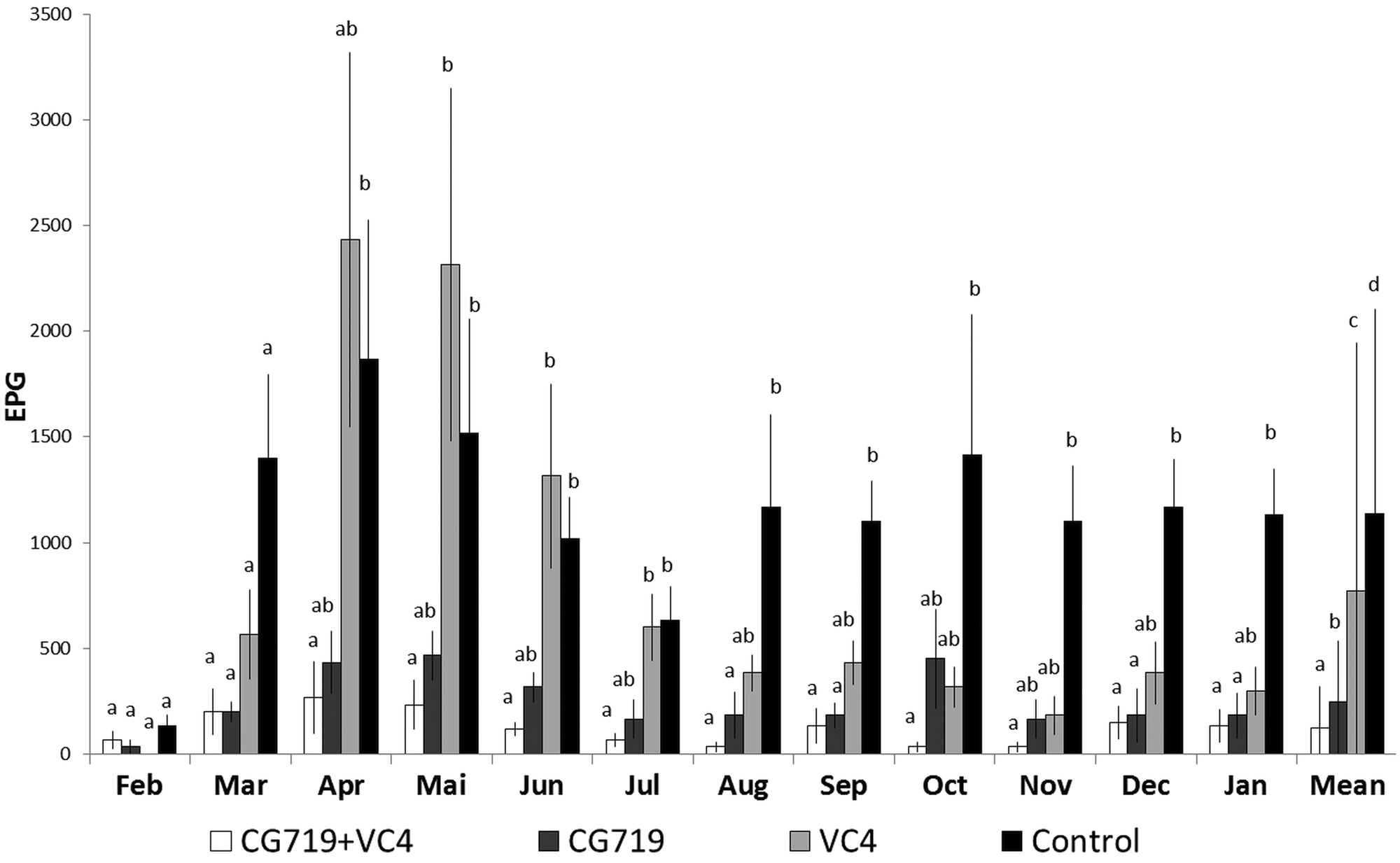
The monthly mean number of EPG of faeces in the three treated groups and the control group from February 2018 to January 2019 are shown in Fig. 1. In the first month of treatment (February 2018), the low number of EPG was the result of anthelmintic treatment given to animals prior to the beginning of the experiment. In the first two months, the EPG values showed no significant differences (P > 0.05) between the four groups.
Monthly means and standard error (bars) of number of EPG of faeces in groups treated with A. cladodes (CG719), P. chlamydosporia (VC4), the combination of A. cladodes and P. chlamydosporia (CG719 + VC4) and in the control group from February 2018 to January 2019, in Abre Campo, state of Minas Gerais, Brazil. The same letters in the same month indicate no significant difference (P > 0.05) between the data.

The mean values for EPG over the whole trial showed that each treatment group had a lower value than the control (P ⩽ 0.05). In addition, the EPG of the group treated with the combination of A. cladodes and P. chlamydosporia was lower than the EPG of either group treated with only one of these fungi (P ⩽ 0.05); and the annual mean EPG of the A. cladodes group was lower than the P. chlamydosporia group (P < 0.05). Specifically, the annual EPG means of the groups showed a reduction, compared with the control, of 89.3% in the fungal combination group, 78.3% in the A. cladodes group and 32.4% in the P. chlamydosporia group.
The monthly EPG values for the combination group were significantly lower than the control for every month from April onwards (P ⩽ 0.05) and the monthly EPG values for the A. cladodes group was significantly lower than the control group in August, September, December and January (P ⩽ 0.05). In the group treated with P. chlamydosporia the EPG values were numerically, but not significantly lower than in the control group from July 2018.
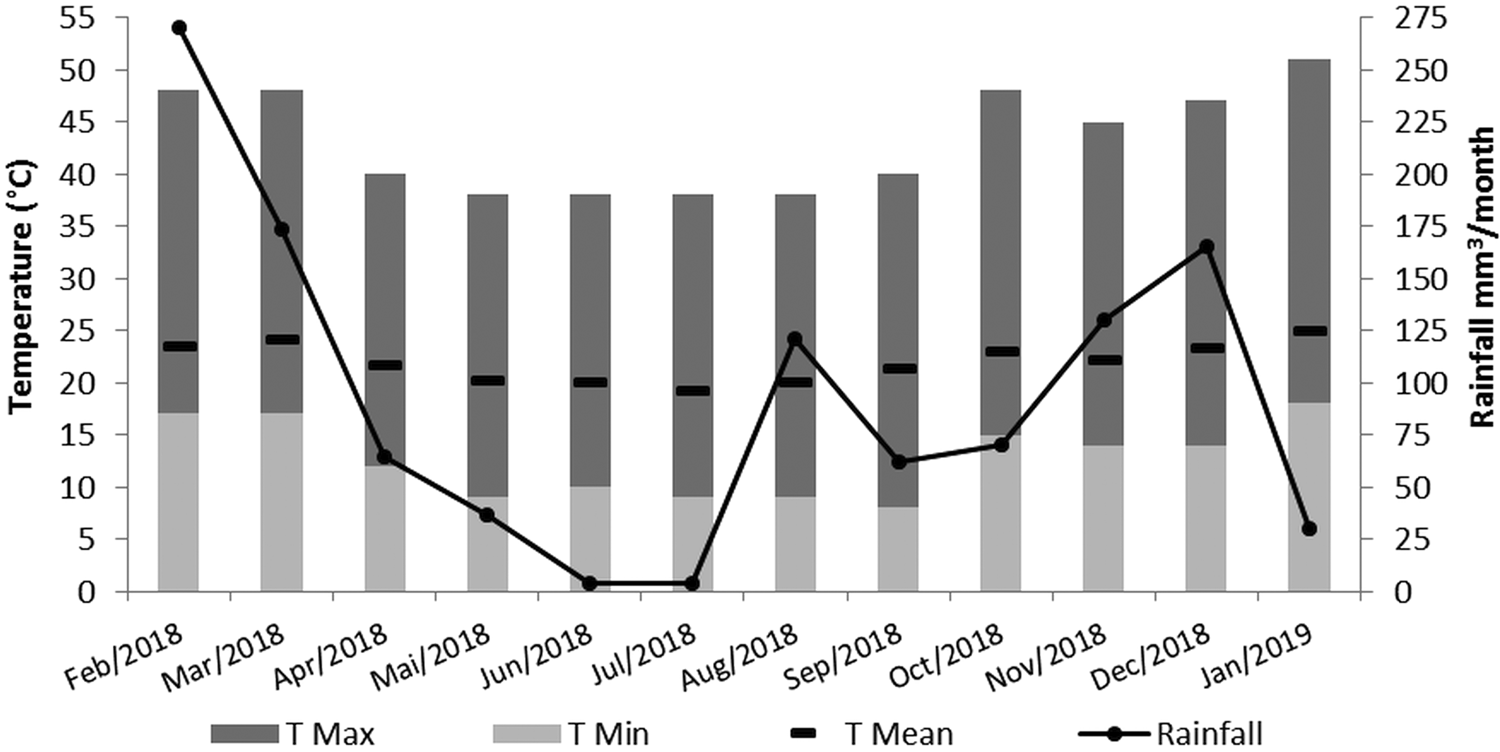
Climate data for monthly minimum, mean and maximum temperatures, as well as monthly rainfall during the experimental period in the city of Abre Campo, state of Minas Gerais, Brazil, are presented in Fig. 2. In February, March, October and December 2018 and January 2019, the mean environmental temperatures were higher than in the other months of the experimental period, and in February, March, November and December 2018 the highest rainfall occurred. The EPG count increased due to the influence of temperature and rainfall conditions, which were adequate for the development of bovine parasitic nematodes.
Minimum (T Min), mean (T Mean) and maximum (T Max) temperature as well as precipitation (mm3/month) from February 2018 to January 2019 in Abre Campo, state of Minas Gerais, Brazil.

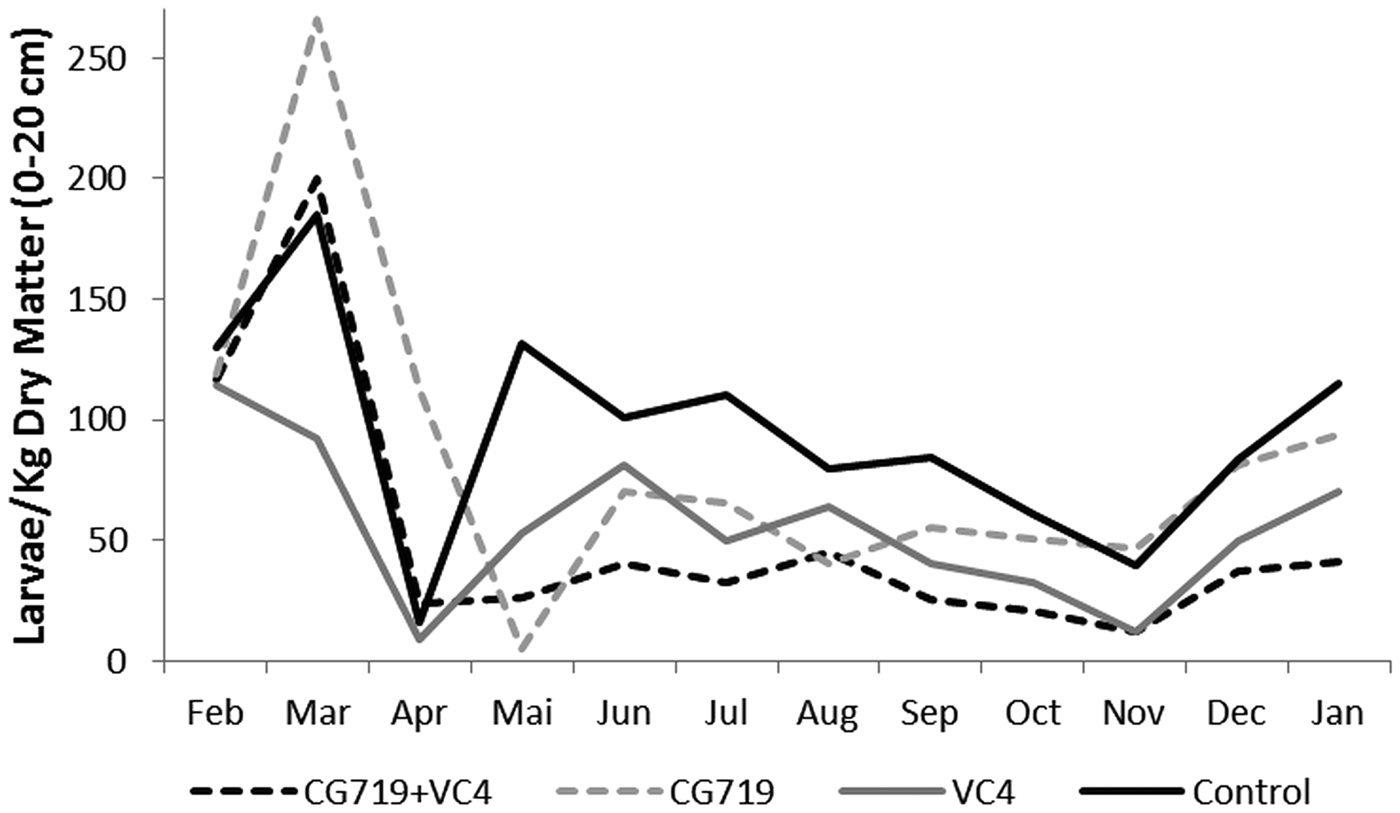
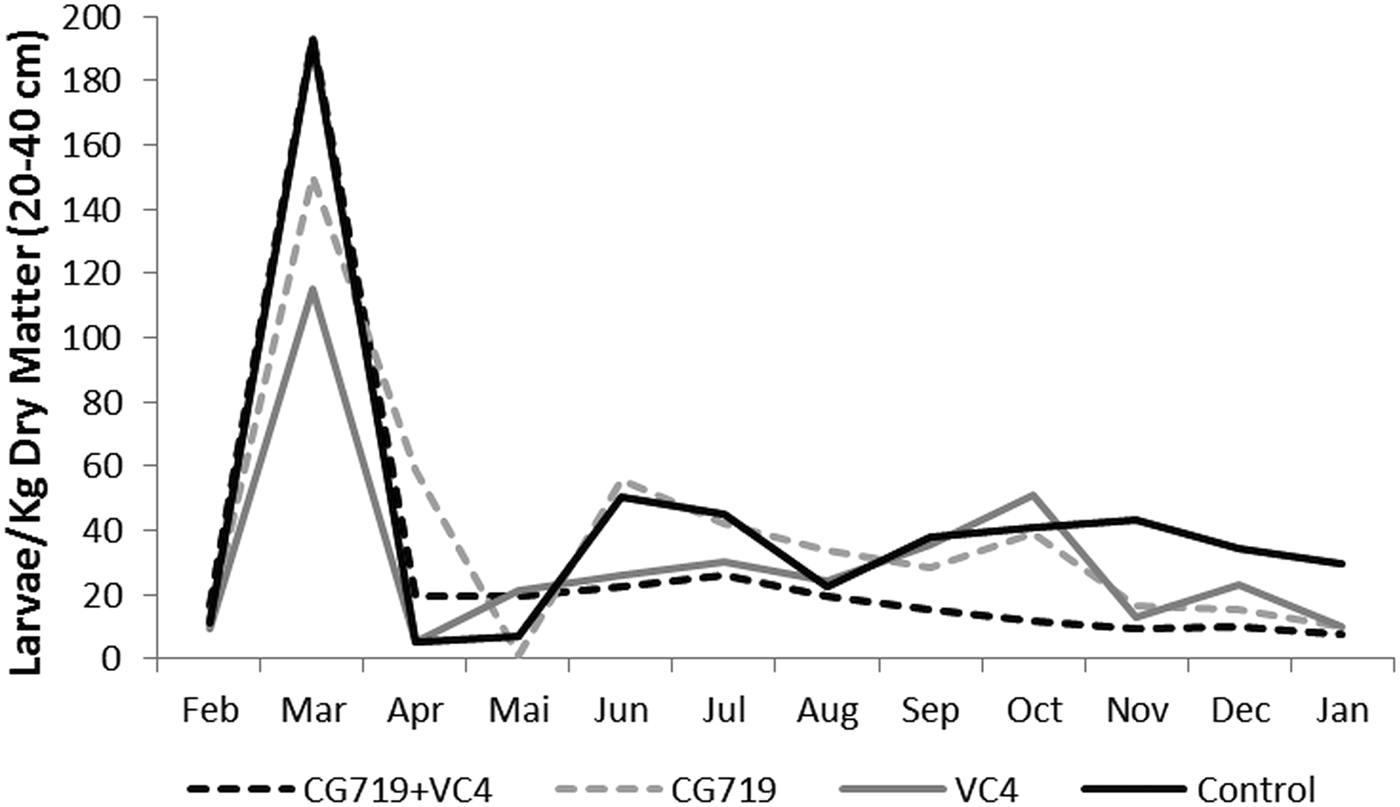
The monthly means of L3 recovered from pastures at 0–20 and 20–40 cm distances from the faecal pats are shown in Figs 3 and 4, respectively. From the fourth trial month onwards, the amount of L3 recovered at a distance of 0–20 cm from the faecal pats was numerically higher in the control group than in the nematophagous fungus-treated groups, except in November, when the group treated with A. cladodes presented higher number of recovered L3 than the control group. In the last experimental month, the group treated with the fungal combination had a numerically lower value of recovered L3 than the other groups, both at 0–20 and at 20–40 cm from the faecal pats. Pasture infestation peaks were observed in the months when environmental temperature and environmental precipitation increased. Although numerically different, there were no statistically significant differences between the annual L3 values recovered from the same faecal pats distance between the four groups during the experimental period.
Monthly means of infective larvae recovered per kilogram of dry matter at distance of 0–20 cm from the faecal pats in the groups treated with A. cladodes (CG719), P. chlamydosporia (VC4), the combination of A. cladodes and P. chlamydosporia (CG719 + VC4) and in the control group from February 2018 to January 2019, in Abre Campo, state of Minas Gerais, Brazil.

Monthly means of infective larvae recovered per kilogram of dry matter at a distance of 20–40 cm from the faecal pats in the groups treated with A. cladodes (CG719), P. chlamydosporia (VC4), the combination of A. cladodes and P. chlamydosporia (CG719 + VC4) and in the control group from February 2018 to January 2019, in Abre Campo, state of Minas Gerais, Brazil.

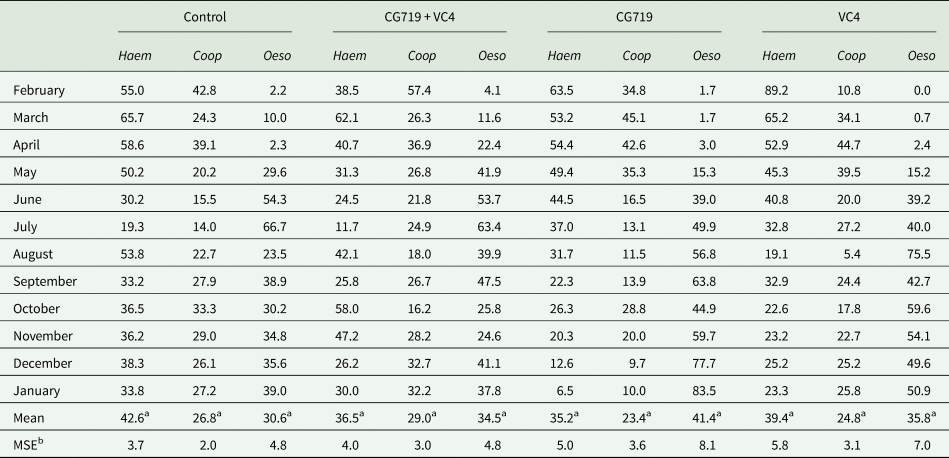
The percentage values of L3 genera recovered from coprocultures performed using the faeces of animals of the three treated groups and the control group are presented in Table 1. Among the four groups, the mean annual percentage of the genera Haemonchus, Cooperia and Oesophagostomum did not differ significantly (P > 0.05). However, in the first three months of the experiment, the percentage of the genus Oesophagostomum was lower than the percentages of Haemonchus and Cooperia.
Mean values of percentages of genera of Haemonchus (Haem), Cooperia (Coop) and Oesophagostomum (Oeso) infective larvae recovered from coprocultures of treated animal groups with A. cladodes (CG719), P. chlamydosporia (VC4), the combination of A. cladodes and P. chlamydosporia (CG719 + VC4) and in the control group from February 2018 to January 2019, in Abre Campo, state of Minas Gerais, Brazil

a Equal letters indicate no statistical difference (P > 0.05) between the data.
b Mean standard error.
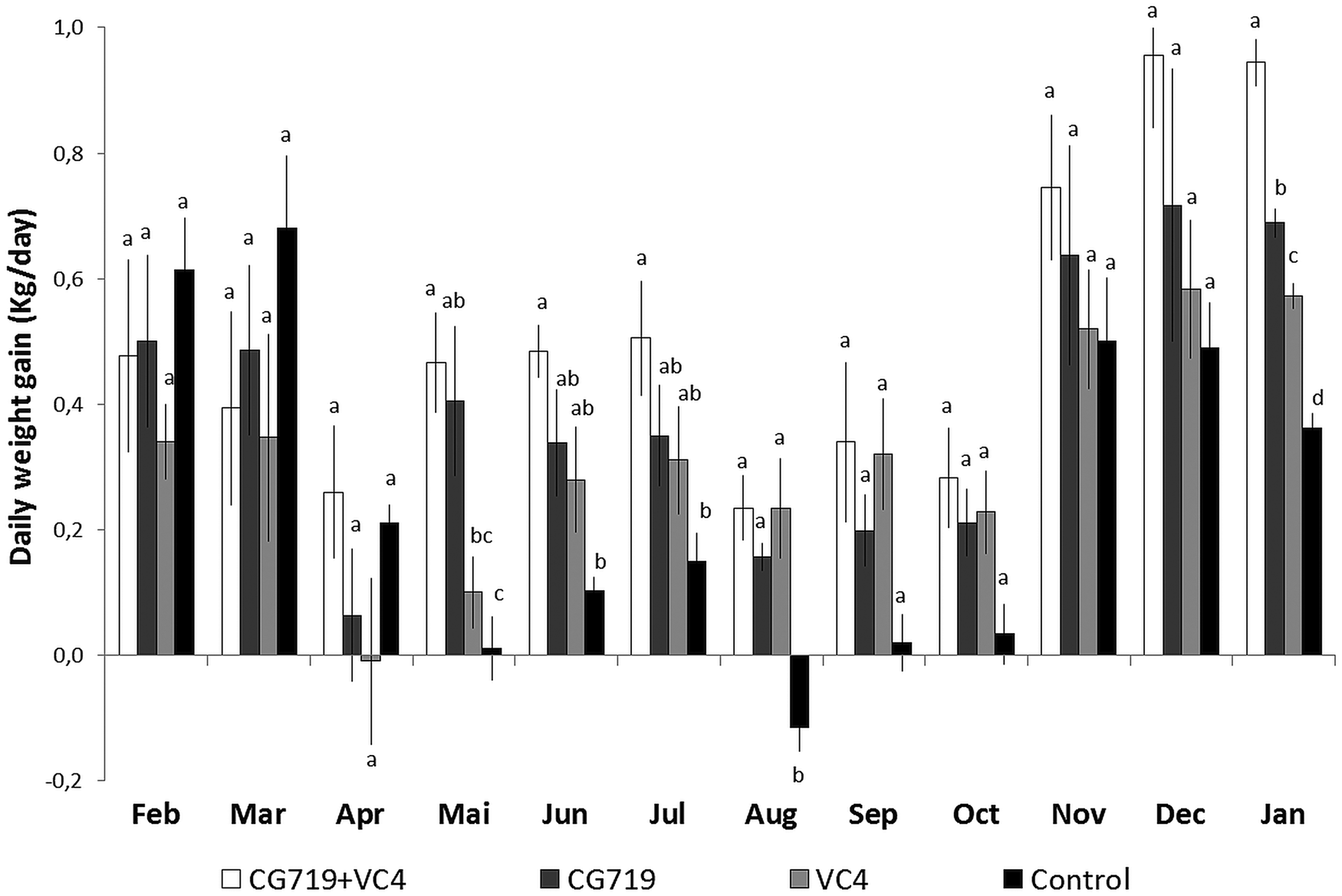
The weight gain (kg day−1) values of the three treated groups and the control group during the experimental period are presented in Fig. 5. The mean weights of each group were not significantly different at the start of the trial and in most months (February, March, April, September, October, November and December 2018) there was no significant difference between the weight gains of the animals in the four studied groups.
Mean weight gain (kg day−1) and standard error (bars) of the groups treated with A. cladodes (CG719), P. chlamydosporia (VC4), the combination of A. cladodes and P. chlamydosporia (CG719 + VC4) and the control group from February 2018 to January 2019, in Abre Campo, state of Minas Gerais, Brazil. The same letters in the same month indicate no significant difference (P > 0.05) between the data.

In May, the group treated only with A. cladodes and the group treated with the combination of A. cladodes and P. chlamydosporia showed greater weight gain than the control group. In June and July, only the group treated with the combination of A. cladodes and P. chlamydosporia showed greater weight gain than the control group. In August, the three treated groups showed greater weight gain than the control group, which showed a reduction in body weight.
In the last month of the experiment, all groups treated with nematophagous fungi showed greater weight gain than the control group (P ⩽ 0.05); the group treated with the combination of A. cladodes and P. chlamydosporia showed higher weight gain than the groups treated solely with A. cladodes or P. chlamydosporia.
Discussion
Ovicidal and predatory nematophagous fungi have distinct mechanisms of action, so when used in combination, they may have complementary and synergistic action in the biological control of nematodes. Vieira et al. (Reference Vieira, Oliveira, Campos and Araújo2019) reported that the combined use of the predatory fungus A. cladodes and the ovicidal fungus P. chlamydosporia showed 92.67% in vitro nematicidal activity on parasitic nematodes of cattle, while A. cladodes and P. chlamydosporia, used separately, showed in vitro nematicidal activities of 81.73 and 68.25%, respectively. In the present study, the efficacy of A. cladodes and P. chlamydosporia fungi in reducing the parasitic load of cattle was verified under natural conditions.
The nematophagous fungi used in our experiment were formulated into pelletized formulations of sodium alginate before being included in the cattle diet. Vieira (Reference Vieira2019) reported that pelleted sodium alginate formulations containing the combination of A. cladodes and P. chlamydosporia, as well as those containing A. cladodes or P. chlamydosporia alone, resisted passage through the bovine gastrointestinal tract and maintained viability for growth and nematicidal activity in vitro.
Studies evaluating the combined use of nematophagous fungi are scarce, and the present study was the first to evaluate the combined use of A. cladodes and P. chlamydosporia fungi in pelletized formulations of sodium alginate for the biological control of parasitic nematodes in cattle raised in an extensive system, whose main source of nutrients for animals is the pasture. The faecal egg count (EPG) observed in our study was significantly lower in the group treated with the combination of A. cladodes and P. chlamydosporia than in the control group from the third month of the experiment. In comparison, the group treated with A. cladodes showed a significant reduction of EPGs in the seventh and in the last two months of the experiment, while the group treated with P. chlamydosporia showed only a numerical reduction of EPGs compared to the control group starting in the sixth month of the experiment. Therefore, the combined use of these fungi seems to have an additive effect for reducing bovine gastrointestinal parasitic nematodes.
The fungus A. cladodes promotes the adhesion, penetration and destruction of nematode larvae (Oliveira et al., Reference Oliveira, Carvalho, Vieira, Campos, Freitas, Araujo, Braga and Araújo2018a). The fungus P. chlamydosporia parasitizes nematode eggs (Braga et al., Reference Braga, Araújo, Campos, Silva, Araujo, Carvalho, Corrêa and Pereira2008) and present larvicidal action on bovine gastrointestinal parasitic nematodes (Vieira et al., Reference Vieira, Oliveira, Campos and Araújo2019). Thus, the reduction of EPG counts in the treated groups was the result of the action of A. cladodes and P. chlamydosporia, which, acting on free nematode life, reduced pasture contamination and, consequently, the risk of reinfection of animals treated with the fungus.
This was the first study to evaluate the effects of P. chlamydosporia, used as the sole isolate in pelletized sodium alginate formulations, in the biological control of parasitic nematodes in cattle reared in an extensive system. Extracellular enzymes (proteases and chitinases) produced by P. chlamydosporia are considered responsible for the destruction of nematode eggs, and are capable of causing cuticle hydrolysis and death of nematode larvae (Yang et al., Reference Yang, Liang, Li and Zhang2013; Braga et al., Reference Braga, Freitas Soares, Araujo, Fonseca, Hiura and Garschagen Gava2014). Mukhtar and Pervaz (Reference Mukhtar and Pervaz2003) reported that, besides enzymes, the fungus P. chlamydosporia produces toxins with nematicidal action.
There are reports of other studies conducted under experimental conditions similar to the present study, evaluating nematophagous fungi in the biological control of gastrointestinal parasitic nematodes of cattle. Dias et al. (Reference Dias, Araújo, Campos, Braga and Fonseca2007) and Assis et al. (Reference Assis, Luns, Araújo and Braga2012) reported, respectively, that Duddingtonia flagrans was responsible for 31.0 and 56.7% reductions in faecal egg counts compared to the control group. Assis et al. (Reference Assis, Luns, Araújo, Braga, Assis, Marcelino, Freitas and Andrade2013) reported that D. flagrans and Monacrosporium thaumasium reduced EPG counts relative to the control group by 56.7 and 47.8%, respectively. Contrary to what was observed in the present study, Oliveira et al. (Reference Oliveira, Vieira, Carvalho, Campos, Freitas, Araujo, Braga and Araújo2018b) reported that A. cladodes-treated cattle did not show significantly lower EPG values than non-fungal-treated cattle.
The most common nematode genus in animal parasitism was Haemonchus, followed by Oesophagostomum and Cooperia. This result was also reported by Dias et al. (Reference Dias, Araújo, Campos, Braga and Fonseca2007). Tests performed with different nematophagous fungi by Araújo et al. (Reference Araújo, Guimarães, Campos, Sá, Sarti and Assis2004), Assis et al. (Reference Assis, Luns, Araújo and Braga2012, Reference Assis, Luns, Araújo, Braga, Assis, Marcelino, Freitas and Andrade2013, Reference Assis, Luns, Araújo, Braga, Assis, Marcelino, Freitas and Andrade2015) and Luns et al. (Reference Luns, Assis, Silva, Ferraz, Braga and Araújo2018) demonstrated that fungi are not selective for particular genera of nematodes, which was also confirmed for A. cladodes and P. chlamydosporia in the present study.
In the first months of the experiment, the percentage of the genus Oesophagostomum was lower than the percentages of Haemonchus and Cooperia. According to Taylor et al. (Reference Taylor, Coop and Wall2016), the pre-patent period of the genus Oesophagostomum is 35–49 days; thus, the fact that the animals received anthelmintic treatment prior to the beginning of the experiment made the Oesophagostomum percentages lower than those of Haemonchus (28 days pre-patent period) and Cooperia (14–21 days pre-patent period) in the first months of the experiment.
Considering that the activity site of nematophagous fungi used for biological control is the faecal pat deposited on pastures, environmental temperature variations and rainfall directly affect important characteristics such as the growth, chlamydospore production and nematicidal activity of these fungi. According to Vieira (Reference Vieira2019), A. cladodes and P. chlamydosporia present varying levels of mycelial growth, nematicidal activity and chlamydospore production at temperatures of 15, 20, 25, 30 and 35°C. Thus, during the experimental period of the present study, environmental temperature conditions were not unfavourable to the establishment in the environment and nematicidal activity of the nematophagous fungi A. cladodes and P. chlamydosporia.
Pasture infestation by L3 was numerically lower in the groups treated with nematophagous fungi, although no statistically significant differences were observed. Oliveira et al. (Reference Oliveira, Vieira, Carvalho, Campos, Freitas, Araujo, Braga and Araújo2018b) reported that the number of bovine parasitic nematode infecting larvae recovered from 0 to 20 cm and from 20 to 40 cm from faecal pats was lower in the A. cladodes group than in the control group, demonstrating the efficiency of this fungus in reducing pasture infestation.
Higher numbers of infective larvae were recovered at a distance of 0–20 cm from the faecal pats compared with the number of L3 recovered at a distance of 20–40 cm from the faecal pats. Of the total larvae recovered in the four groups, 66.2% came from pastures at a distance of 0–20 cm from the faecal pats. This result corroborates those of Dias et al. (Reference Dias, Araújo, Campos, Braga and Fonseca2007) and Assis et al. (Reference Assis, Luns, Araújo and Braga2012), who reported a larger number of larvae recovered in 0–20 cm samples, confirming that few larvae migrate to pasture beyond 20 cm of a faecal pat.
The fact that the weight gain of the animals did not present significant differences between the treated groups and the control group during most of the rainy season may have been due to the higher production and nutritive value of the pastures during this period, which minimized the negative effects of gastrointestinal parasites on animal performance. However, in months of lower rainfall, the weight gain of the treated groups was higher compared to the control group, possibly due to the nematicidal action of nematophagous fungi on pastures, especially in the group of animals treated with the combination of A. cladodes and P. chlamydosporia.
In the last month of the experiment, all treated groups had higher weight gain than the control group; this result is in agreement with those reported by Luns et al. (Reference Luns, Assis, Silva, Ferraz, Braga and Araújo2018). Dias et al. (Reference Dias, Araújo, Campos, Braga and Fonseca2007) and Assis et al. (Reference Assis, Luns, Araújo, Braga, Assis, Marcelino, Freitas and Andrade2013) also reported greater weight gain in cattle treated with nematophagous fungi compared to untreated animals. However, according to Oliveira et al. (Reference Oliveira, Vieira, Carvalho, Campos, Freitas, Araujo, Braga and Araújo2018b), the mean body weight of A. cladodes-treated cattle was not different from the control group mean.
The combined use of A. cladodes and P. chlamydosporia showed greater efficacy in the biological control of bovine gastrointestinal parasitic nematodes than the same fungi used separately. The parasite load was lower and the weight gain was higher in the groups of cattle treated with nematophagous fungi, which reflects better productive performance of the animals. Therefore, the use of A. cladodes and P. chlamydosporia is promising in the biological control of nematodiosis in cattle.
Financial support
The authors acknowledge ‘Coordenação de Aperfeiçoamento de Pessoal de Nível Superior’(CAPES), ‘Conselho Nacional de Desenvolvimento Científico e Tecnológico’ (CNPq) and ‘Fundação de Amparo à Pesquisa do Estado de Minas Gerais’ (FAPEMIG) for support in this study, in the form of a doctoral scholarship.
Conflict of interest
The authors declare no conflict of interest.
Ethical standards
This study was previously approved by the Animal Use Ethics Committee of the Federal University of Viçosa (protocol number 06/2017). The experimental test strictly followed all procedures recommended by the rules of conduct for the use of animals in teaching, research and extension of the Veterinary Department of the Federal University of Viçosa.