

Introduction
This article explores the roles that language and the visual body play in the iconization of cross-modal personae. Agha (Reference Agha2003, Reference Agha and Duranti2004) describes how culturally recognizable images of personhood are made relevant and legible through cross-modal icons, the emergence of iconicity that ideologically links language and other semiotic modalities (e.g. visual information) to personae with which they share a perceived quality. Focusing on a community of radical drag queens in San Francisco, I analyze the interplay of visual presentation and acoustic dimensions of /s/ in the construction of the fierce queen, a legible persona within queer communities of practice that embodies an extreme, larger-than-life, and anti-normative type of femininity.
The voiceless anterior sibilant /s/ is a highly salient sociolinguistic variable whose acoustic properties are imbued with various social meanings related to gender, sexuality, and extremity. Fronted /s/—the articulation of the sound farther forward in the mouth, which results in a higher acoustic frequency—has been indexically linked with femininity and queerness, both in speech production (e.g. Hazenberg Reference Hazenberg2012; Podesva & Van Hofwegen Reference Podesva and Van Hofwegen2014) and speech perception (e.g. Campbell-Kibler Reference Campbell-Kibler2011; Zimman Reference Zimman2013; Levon Reference Levon2014). /s/ duration has also been shown to correlate with speaker gender and sexual orientation in production studies (e.g. Linville Reference Linville1998). In addition, both frequency and intensity of /s/ have been linked with perceived qualities like ‘harshness’ and ‘sharpness’ in the linguistics literature (Kajino Reference Kajino2014) and in other fields like psychoacoustics (e.g. Fastl Reference Fastl and Blauert2005; Thorne Reference Thorne2007) and audio engineering (e.g. Schlette Reference Schlette2012; van den Belt Reference Van den Belt2013).
Taking data from transformations—conversations during which queens visually transform into their feminine drag personae using makeup, wigs, and other materials—I explore the effect of fluid visual presentation on the phonetic realization of /s/. Over the course of the transformation, SoMa (South of Market street) queens increase the intensity of /s/ tokens relative to other segments and maintain a comparatively front production of the variable relative to other speakers in the geographic region. In other words, as the queens embody an increasingly extreme visual femininity, they use amplitude to acoustically underscore the ideologically feminine fronted /s/. Over the course of the transformation, the linguistic and visual streams increasingly invoke qualia (see Gal Reference Gal2013; Harkness Reference Harkness2015) in which qualities like ‘harshness’ and ‘sharpness’ are situated. The emergence of qualia across modalities facilitates the construction and projection of fierceness, characterized by extremity and excess. The semiotic collaboration between linguistic performance and visual drag suggests that personae like the fierce queen can become iconized through rhematization (see Gal Reference Gal2013), a process in which qualic congruences are construed and constructed across multiple semiotic modalities.
Drag, gender performance, and fierceness
Butler's Gender trouble (Reference Butler1990) introduces the concept of gender performativity. She argues that ‘male’, ‘female’, and the expectations that come with those labels, are not biological givens, but rather social constructions built up over time and history, referenced and repeated, until the connections between types of bodies and types of behaviors, or performances, become not only conventional, but come to be seen as essential. Ethnographic studies in sociolinguistics and linguistic anthropology have illuminated too that gender is indirectly constructed and performed through linguistic practice. Speakers enact masculinity and femininity indirectly through the practices they engage in and the stances they take toward those practices. In Och's (Reference Ochs, Duranti and Goodwin1992) study of the mothering styles of Samoan and Western mothers, she argues that womanhood is accomplished through stances toward mothering involving differing accommodation strategies between the two groups. Similarly, Eckert (Reference Eckert1989) argued for a social construction of gender more complex than direct correlations between oppositional male/female categories and linguistic variables, showing that the use of features of the Northern Cities Shift by Detroit adolescent girls is mediated by membership in social groups. In addition, Bucholtz (Reference Bucholtz1999) illustrated the ways a young white man incorporated features of African-American English in his narratives to construct a type of urban masculinity. And Mendoza-Denton's (Reference Mendoza-Denton2008) ethnography of cholas in a California high school explored the construction of nonnormative ‘macha’ femininity through the use of language and visual semiotic resources like eyeliner, hair, and lipstick. Such work has proven instrumental in advancing the sociolinguistic understanding of gender beyond traditional variationist models that engage with gender only insofar as it is manifested through large-scale quantitative trends across broad speech communities. However, one of the central possibilities of Judith Butler's concept of gender performativity remains underexplored: that individuals can challenge binary gender roles themselves by performing their identities in ways that do not conform to the male-female dichotomy.
Butler argues that one of the vehicles through which this subversive performativity can manifest is through drag. Drag involves the implementation of gender performances that have come to be associated with a birth sex other than one's own. The drag queen—usually an individual assigned male gender at birth that implements visual and other performative resources to embody a feminine persona on stage (see Barrett Reference Barrett, Bucholtz, Liang and Sutton1999, Reference Barrett2017)—is a well-known manifestation of this. Drag queens use wigs, makeup, and shaping garments to achieve a visual presentation of femininity that is often characterized by extremity and excess. Wigs are large enough to make the head appear smaller, high heels are worn to elongate the legs and increase physical stature, and extreme makeup contouring is used to feminize the facial bone structure by exaggerating highlights and creating shadows. Oft repeated phrases in drag communities like ‘the higher the hair, the closer to God’ and ‘if you're not wearing heels, you're not doing drag’ emphasize a larger-than-life and over-the-top type of femininity many queens embody. Fierce is a word often used to characterize such femininity. If you are doing drag well, that is, if your drag persona is celebrated by your community of practice, you are fierce. Fierceness is an ‘intense’ and ‘powerful’ type of femininity (RuPaul's Drag Race Dictionary 2017) that contrasts with heteronormative ideals of modesty and submissiveness.
Needless to say, drag performances—and gender performances in general— involve visual resources that draw on connections between certain types of bodies and certain types of gender performances that have ideologically sedimented over time. Because of this, a sociolinguistic variable that has come to be ideologically associated with particular qualities related to gender and sexuality can be employed as a particular type of Butlerian gender performance. Gendered sociolinguistic variables are undoubtedly linguistic gender performances. And undoubtedly, linguistic gender performances must interact with visual presentations of the body to be actualized in particular ways. Individuals like drag queens explicitly employ particular kinds of gender performance across multiple semiotic modalities (i.e. language and the visual body, among other modalities) in order to embody a cross-modal persona that is both recognized and legible within their communities of practice. Thus, an analysis of the linguistic and embodied practices of drag queens uniquely facilitates an exploration of the collaboration between linguistic performance and visual presentation in the construction of legible cross-modal personae, in this case, the fierce queen.
Social meaning in acoustic dimensions of /s/
/s/ and indexicality: Femininity and queerness
While the drag artists analyzed in this study are stage performers, I am interested in analyzing Butlerian gender performance, rather than high or staged performance (e.g. Coupland Reference Coupland2007). For this purpose, I focus on fronted /s/ in off-stage conversation. I analyze /s/ as a linguistic gender performance for a number of reasons. First, as reviewed below, the fronting of /s/ has been linked with femininity in both speech production and perception in numerous studies. Second, while other linguistic features associated with gender may be influenced by biology (e.g. fundamental frequency; see Zimman Reference Zimman2017 for a review), variation in /s/ production results from differences in articulation rather than biologically governed differences (e.g. Flipsen, Shrilberg, Weismer, Karlsson, & McSweeny Reference Flipsen, Shrilberg, Weismer, Karlsson and McSweeny1999; Strand Reference Strand1999; Fuchs & Toda Reference Fuchs, Toda, Fuchs, Toda and Zygis2010; Zimman Reference Zimman2013). Finally, the salience of the feature and its relation to certain types of bodies arguably contributes to its accessibility as a performative and indexical resource that interacts with a subject's visual body, with fronted /s/ being frequently characterized as a ‘gay lisp’ when emerging from a male body (e.g. Van Borsel, De Bruyn, Lefebvre, Sokoloff, De Ley, & Baudonck Reference Van Borsel, De Bruyn, Lefebvre, Sokoloff, De Ley and Baudonck2009, Van Borsel & Van de Putte Reference Van Borsel and Van de Putte2014; also see Bowen Reference Bowen2002; Schulman Reference Schulman2015; and Thorpe's (Reference Thorpe2014) documentary Do I sound gay?).
Two acoustic measures that have been used to capture the fronted articulation of /s/ are center of gravity (COG) and spectral skew. COG represents the mean frequency at which the spectral energy of a fricative is focused, while spectral skew indicates whether the majority of spectral energy is concentrated at the higher or lower end of the fricative. Higher COG and lower spectral skew both correspond to a fronted articulation of /s/.
Both of these spectral measures have been shown to exhibit gendered patterns. While the spectral energy in /s/ occupies a high frequency range in general (above 4000 Hz in English, according to Shadle Reference Shadle, Hardcastle and Marchal1990, Reference Shadle1991), multiple studies have shown that women produce /s/ with higher COG than men (e.g. Fuchs & Toda Reference Fuchs, Toda, Fuchs, Toda and Zygis2010; Hazenberg Reference Hazenberg2012). A review by Flipsen and colleagues (Reference Flipsen, Shrilberg, Weismer, Karlsson and McSweeny1999) suggests that the COG range for /s/ produced by women is between 6500 and 8100 Hz, while for men the range is from 4000 to 7000 Hz. Though this acoustic difference has been shown robustly across multiple studies, it has been argued that /s/ production is socially rather than biologically conditioned (Strand Reference Strand1999; Stuart-Smith Reference Stuart-Smith, Cole and Hualde2007; Zimman Reference Zimman2013). Indeed, the acoustic realization of /s/ is determined by the size of the cavity between the tongue and the teeth (Shadle Reference Shadle1991), which is manipulated through articulation. The social conditioning of /s/ is further supported by Hazenberg's (Reference Hazenberg2012) study of transgender speakers in Ottawa, who pattern with members of their gender group rather than with members of the sex assigned to them at birth. Furthermore, Zimman's (Reference Zimman2012) longitudinal study of Bay Area trans men found that overall, trans men's /s/ COG decreased over a one-year period on testosterone. Production of /s/ has also been shown to correlate with sexual orientation, with gay men producing more fronted tokens than straight men in multiple studies (Munson, McDonald, DeBoe, & White Reference Munson, McDonald, DeBoe and White2006; Podesva & Van Hofwegen Reference Podesva, Van Hofwegen, Levon and Mendes2016).
In addition, fronted /s/ has been shown to be linked with femininity (or at least nonnormative masculinity) in numerous perception studies. A study by Strand (Reference Strand1999) asked participants to identify ambiguous auditory tokens as either /s/ or /∫/ (which has a lower frequency than /s/) and found that speakers placed the boundary between the segments at a higher frequency when they believed the speaker was female. In other words, listeners expected female voices to produce higher COG (and thus fronter) /s/ tokens than male voices. Finally, multiple perception studies have found that listeners rated male speakers as more gay-sounding and less heteronormatively masculine when they heard tokens with higher COG and more negative spectral skew (Munson Reference Munson2007; Campbell-Kibler Reference Campbell-Kibler2011; Zimman Reference Zimman2013).
In addition to COG, /s/ duration has been shown to pattern along lines of gender and sexuality, with gay men producing longer /s/ tokens than straight men (Linville Reference Linville1998; Rogers, Smyth, & Jacobs Reference Rogers, Smyth and Jacobs2000), trans speakers in California exhibiting gender-polarized production patterns (with trans men producing shorter /s/ and trans women producing longer /s/; Podesva & Van Hofwegen Reference Podesva, Van Hofwegen, Levon and Mendes2016), and /s/ duration contributing to the perception of gay-sounding speech (Levon Reference Levon2007).
Though fronted /s/ can index a range of possible social meanings related to femininity and queerness, perception studies have illuminated the importance of context in influencing the social meanings retrieved by fronted /s/. While Campbell-Kibler's (Reference Campbell-Kibler2011) study suggests that, among English-speaking men, fronted /s/ sounds ‘gay’ regardless of the linguistic style in which it is embedded, studies of fronted /s/ in Copenhagen Danish have found that linguistic style can condition the interpretation of the variable (Pharao, Maegaard, Møller, & Kristiansen Reference Pharao, Maegaard, Spindler Møller; and Kristiansen2014; Maegaard & Pharao Reference Maegaard, Pharao, Levon and Mendes2016). When situated in the voice of a white, cosmopolitan speaker of Copenhagen Danish, fronted /s/ is more likely to index gayness than when situated in the ‘street’ voice, a salient style linked with foreigners and gangsters in the Danish imagination. In addition, a study by Levon (Reference Levon2014) stressed the importance of listener uptake in the communication of social meaning, finding that listeners subscribing to more normative gender ideals are more likely to rate males with fronted /s/ as more gay-sounding and less masculine. Given the importance of context and listener uptake in the performative potential of fronted /s/, I view the visual body as a semiotic context in which /s/ is situated, a context that may influence both the variable's uptake and acoustic realization.
Given the robust ideological associations of /s/ with gender and sexual identities, it can be argued that fronted /s/ (and perhaps also lengthened /s/) is an emblem (Agha Reference Agha2007) for certain social types indexically linked to femininity, nonnormativity, and/or queerness. For Agha, an emblem is a type of indexical that represents a recognizable social type, or persona. Because an individual's identity ‘is only relevant to social life insofar as it is perceivable by others’ (Agha Reference Agha2007:234), emblems link identities to the social world as tangible and perceivable personae. Emblems have three components: a perceivable sign, a persona, and someone for whom the connection between the persona and the sign is legible. In the case of /s/, fronted variants can be linked to women, gay men, or fierce queens, depending on the communities they are situated in and the enregistered connections between forms and meanings in the communities that make them relevant.
In other words, the reading of an emblem—much like the indexical reading for other types of signs—is fluid and context-dependent. A diacritic, or the component of the emblem that is perceivable, ‘can yield different emblematic readings under different conditions’ (Agha Reference Agha2007:235; see also Eckert's (Reference Eckert2008) indexical field). Agha argues that the narrowing of potential readings of a diacritic is achieved through semiotic congruence of co-occuring signs. In the case of /s/, the body, a composite of visual signs indexing a range of gendered meanings, can narrow the field of possible readings for an emblem like fronted /s/, based on readings that are shared between the two semiotic modalities. One example of such a shared reading might be femininity. If the body is perceived as feminine, and a sound emerging from it is perceived as feminine, a semiotic congruence may be achieved. Following from that, if a subject changes the visual context their body comprises, manipulating the visual signs used to create such a context, they can manipulate the desired reading for an emblem situated in that context, like fronted /s/. In my work with SoMa drag queens, I have argued based on subjects’ experiences that performances of femininity like fronted /s/ are more likely to be ratified by interlocutors when subjects embody a feminine visual presentation than when they visually present as male (Calder Reference Calder2018a).
Given that the transformation of the body may enable semiotic congruence between the physical and the linguistic, the question remains whether or not this visual manipulation affects linguistic performance. If feminine linguistic signs are more interpretable in a visual context characterized by femininity, does this semiotic license result in a change in the performance of those linguistic signs in that visual context? Specifically, how does visual transformation from one gendered presentation to another affect the acoustic realization of a linguistic gender performance like /s/? And which acoustic qualities of /s/ are used to achieve semiotic congruence and project a desired persona?
/s/ and qualia: Harshness and sharpness
In addition to indexing femininity and queerness, /s/ is a sound that has been linked to a number of sensory qualities in the popular imagination, some of which at first glance seem at odds with normative ideas of femininity.
For instance, in the recording industry, sibilance is characterized as ‘harsh’ (Senior Reference Senior2009; Schlette Reference Schlette2012), ‘sharp’ (Lajoie Reference Lajoie2011; van den Belt Reference Van den Belt2013), and even ‘piercing’ (Record, Mix, & Master Reference Record2010). Audio engineers mitigate the perceived harshness of sibilance using a process called ‘de-essing’. This process targets the high frequency ranges sibilants occupy and reduces the gain (i.e. intensity) so that ‘strong’ and ‘sharp’ /s/ sounds are not ‘sticking out’ of the overall mix (Lajoie Reference Lajoie2011).
The effects of high acoustic frequency and intensity on the perception of ‘sharpness’ have also been described in psychoacoustics literature, where sharpness is described in terms of the concentration of high-frequency energy in a sound (Zwicker & Fastl Reference Zwicker and Fastl1990). Increased spectral energy in high-frequency ranges relative to lower-frequency ranges results in increased perceived sharpness (Thorne Reference Thorne2007). ‘Too much sharpness’ in an acoustic signal will result in the sound being perceived as unpleasant, harsh, or aggressive (Fastl Reference Fastl and Blauert2005:147). In linguistics, /s/ sharpness has been discussed in terms of the perceived loudness of the high-frequency ranges sibilants occupy (e.g. Kajino Reference Kajino2014). Kajino argues that sibilants with higher COG are more ‘sharp’ than those with lower COG and are perceived as louder than their lower COG counterparts. In Japan, a sharp, high-frequency /s/ in Osaka contributes to the perceived ‘harshness’ of Osakans in comparison to their Tokyo counterparts, who use a lower-frequency /s/ and are perceived as more ‘standard’.
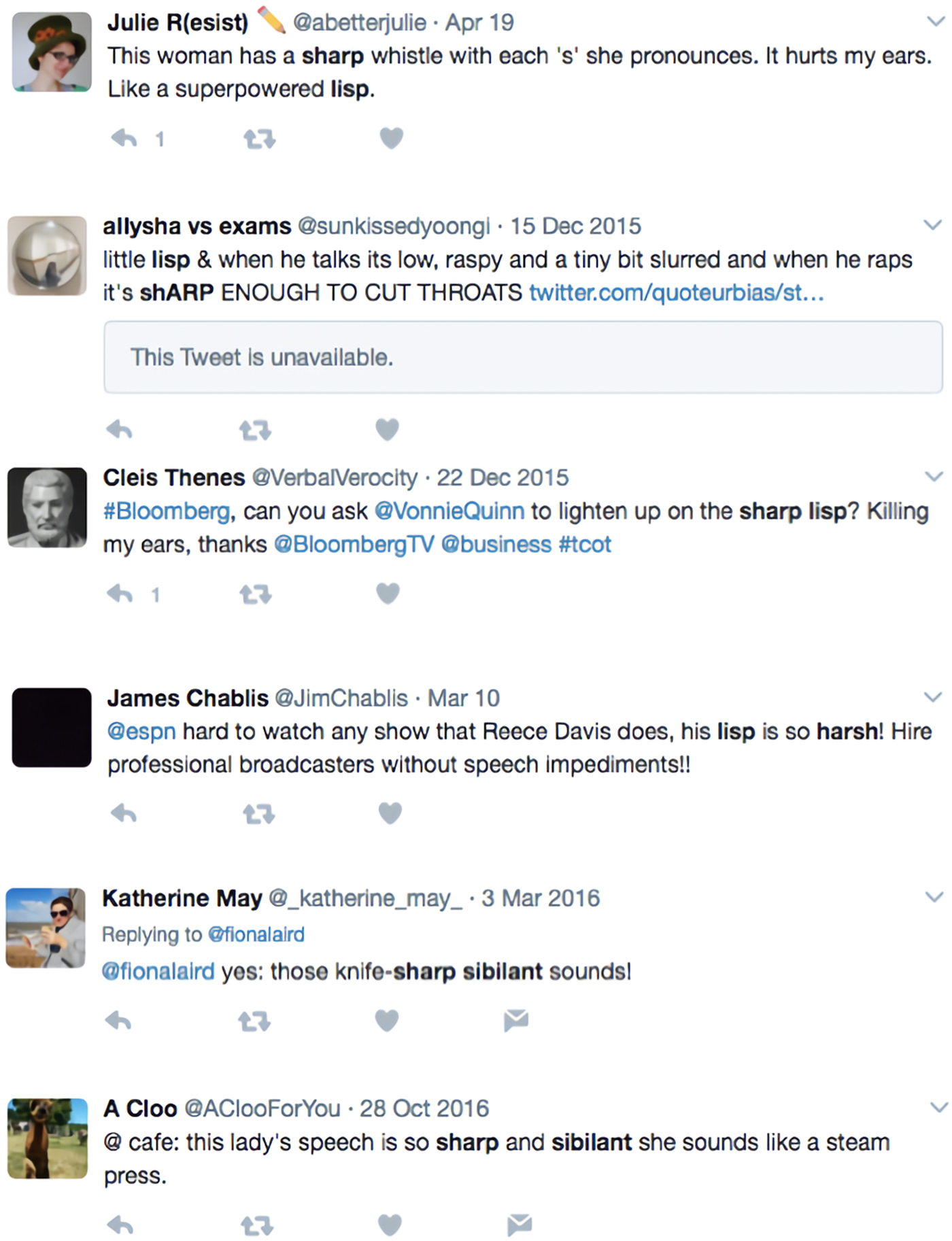
The link between /s/, ‘harshness’, and ‘sharpness’ is not restricted to linguists and recording industry professionals, but extends to novice audiophiles, listeners, and the general population for American English. Widely used social media platforms like discussion forums and Twitter provide a window into how various signs, and the qualities situated within them, are perceived and experienced by the general population. On various discussion forums, users have characterized /s/ as ‘sharp’, ‘harsh’, and ‘loud’ (e.g. JCook 2006; chp0001 2009; aussiesound 2011; icru3 l 2017), with the experience of sharpness and harshness increasing with increased volume (e.g. 94hondaprelude 2010; Eternal_One 2012; irwazr 2015). In addition, a twitter search of terms like lisp and sibilance—terms used in the popular imagination to describe fronted /s/—paired with qualities like ‘harsh’ and ‘sharp’ reveals the ideological connection between these qualities and fronted /s/ in the popular imagination (see Figure 1).
Tweets linking /s/ with harshness and sharpness.

Characterizations of fronted /s/ as ‘sharp enough to cut throats’, and ‘so sharp and sibilant she sounds like a steam press’ reveal how strongly these qualities are associated with the variant. Acoustic dimensions of /s/ in which qualities like harshness and sharpness are situated are examples of qualia in linguistic practice.
Qualia are experience-able manifestations of abstract sensuous qualities like size, textures, smells, and feelings (Chumley & Harkness Reference Chumley and Harkness2013; Gal Reference Gal2013). Qualities like bigness, roughness, stink, and anxiety can be conventionally linked to linguistic forms, and by extension the social types or personae that use them. For example, in Irvine's (Reference Irvine, Lutz and Abu-Lughod1990) study of Wolof speakers in Senegal, stereotyped ways of speaking (e.g. loud, fast, high-pitched vs. slow, soft, low-pitched) are linked with social classes and essentialize the lower-status ‘griots’ as excitable and emotional and the ‘nobles’ as calm and composed. In addition, signs of different modalities can be construed as the same if they share some abstract quality (Keane Reference Keane2003). This facilitates rhematization (e.g. Gal Reference Gal2013), a process by which a sign is taken to be an iconic representation of an object it shares some abstract quality with. For example, in late nineteenth-century Hungary, similarities between the ‘logical’ and ‘simple’ language of the Magyar people and the organized houses they inhabited were taken to be iconic of the Magyars’ calmness in contrast to the ‘excitable’ Italians whose language was characterized as ‘twisty and turny’ and whose houses were seen as ‘jutting… any which way’ (Gal Reference Gal2013). Similarly, Harkness (Reference Harkness2015:581) argues that qualia, and their congruence across modalities, ‘are central to drawing together multiple threads of activity into culturally recognized, enregistered forms of bodily conduct as integral “styles” ’. Qualia reveal how linguistic variation is part of a larger semiotic process in which forms from multiple modalities are imbued with sensuous and culturally significant effects.
Given that qualic and indexical congruences have been argued to contribute to the construction of legible cross-modal personae, I explore the interactions between the linguistic and visual modalities and their associated qualities in the construction of the fierce queen persona. Since the fierce queen is characterized by extreme and nonnormative femininity, I explore acoustic dimensions of /s/ that have been popularly associated with queerness, femininity, and extreme qualities like harshness and sharpness. I focus on how three measures change as SoMa queens get ‘into drag’: (i) COG, which carries social meanings related to gender and sexuality and also contributes to perceived sharpness and harshness; (ii) Duration, which has been shown to pattern with respect to gender and sexuality; and (iii) Intensity, which is the dimension targeted by audio engineers to mitigate the perceived harshness and sharpness of sibilants.
Methods
The ethnography
For three years, I participated as both a researcher and a performer in a community of drag queens and queer performance artists in the evolving SoMa neighborhood in San Francisco, California. The neighborhood is so-called for being located South of Market street, the city's main thoroughfare, which comprises the southern border of the financial district. Housing some of the city's oldest queer establishments (e.g. The Stud, established in 1966) and the country's largest and best-known BDSM festival, The Folsom Street Fair, SoMa has long been a site of counterculture in the city. The neighborhood's anti-normative bent is reflected in the community of drag queens and queer performance artists whose shocking and confrontational art can be seen in a number of nightlife venues. In one well-known performance, drag queen Severina collects tips from the audience and uses a staple gun to adhere them to her flesh. SoMa queens represent some of the queerest of the queer in San Francisco, striving to preserve the city's infamous weirdness in the face of rapid gentrification.
SoMa queens occupy an extreme position within gendered and economic oppositions, embodying a flagrant and nonnormative femininity that is becoming increasingly ideologically marked within the wider San Francisco context. In the shadow of encroaching tech giants like Twitter, AirBnb, and Reddit that monopolize San Francisco's financial landscape, SoMa queens embody an in-your-face, radical, and ‘punk-rock’ gender position that contrasts with the threat of increasing normativity that comes with the neighborhood's economic evolution.
The ideological contrasts between normativity and queerness, and the ability to embody either end of that axis, are intertwined with capital in San Francisco. Not unlike the SoMa gay leathermen in the 1970s context of impending urban redevelopment (see Rubin Reference Rubin and Thompson1991, Reference Rubin, Levine, Nardi and Gagnon1997, Reference Rubin, Brook, Carlsson and Peters1998), the drag scene in SoMa is a bastion of queer counterculture whose presence is threatened by the neighborhood's rapid gentrification and skyrocketing rents. The queer performance art community in SoMa today exists in spite of, and in response to, a second large tech boom surging in San Francisco (the first being the 1990s Dot-Com Boom) and its accompanying housing crisis as professionals flock to the city from all over the country to work at one of the many thriving start-ups and software giants located throughout the neighborhood, driving real estate supply down and prices up. SoMa, with its proximity to downtown, is an epicenter of intense economic and geographic competition, and the rising ideological tensions that come with it. Titles of articles in the local San Francisco press like ‘San Francisco's gay culture is dying’ (Allen Reference Allen2014), ‘Just enough money to pay for our eyelashes’ (Tveten Reference Tveten2017), ‘Is San Francisco losing its DNA?’ (Doucette Reference Doucette2017), and ‘San Francisco's famous weirdness isn't dead’ (Schuffman Reference Schuffman2017) illustrate the growing tensions between the tech industry and long-standing queer communities whose perspectives are seen by many to be uniquely San Franciscan. Recently this tension manifested in The Stud, whose doors were in danger of closing after the building's rent was tripled. In response, SoMa drag queens and enthusiasts formed a collective that gained the venue ‘Legacy status’ and kept its doors open. The collective now runs the bar as a co-operative (Kane Reference Kane2017).
The SoMa queens’ place in the San Francisco ideological landscape is representative of the larger cultural tensions between big business and grassroots, capitalism and art, normativity and queerness. The SoMa drag community occupies the sexual, political, economic, and ideological margins within a city that once occupied those same margins in the greater American context.
Data procedure: The transformation
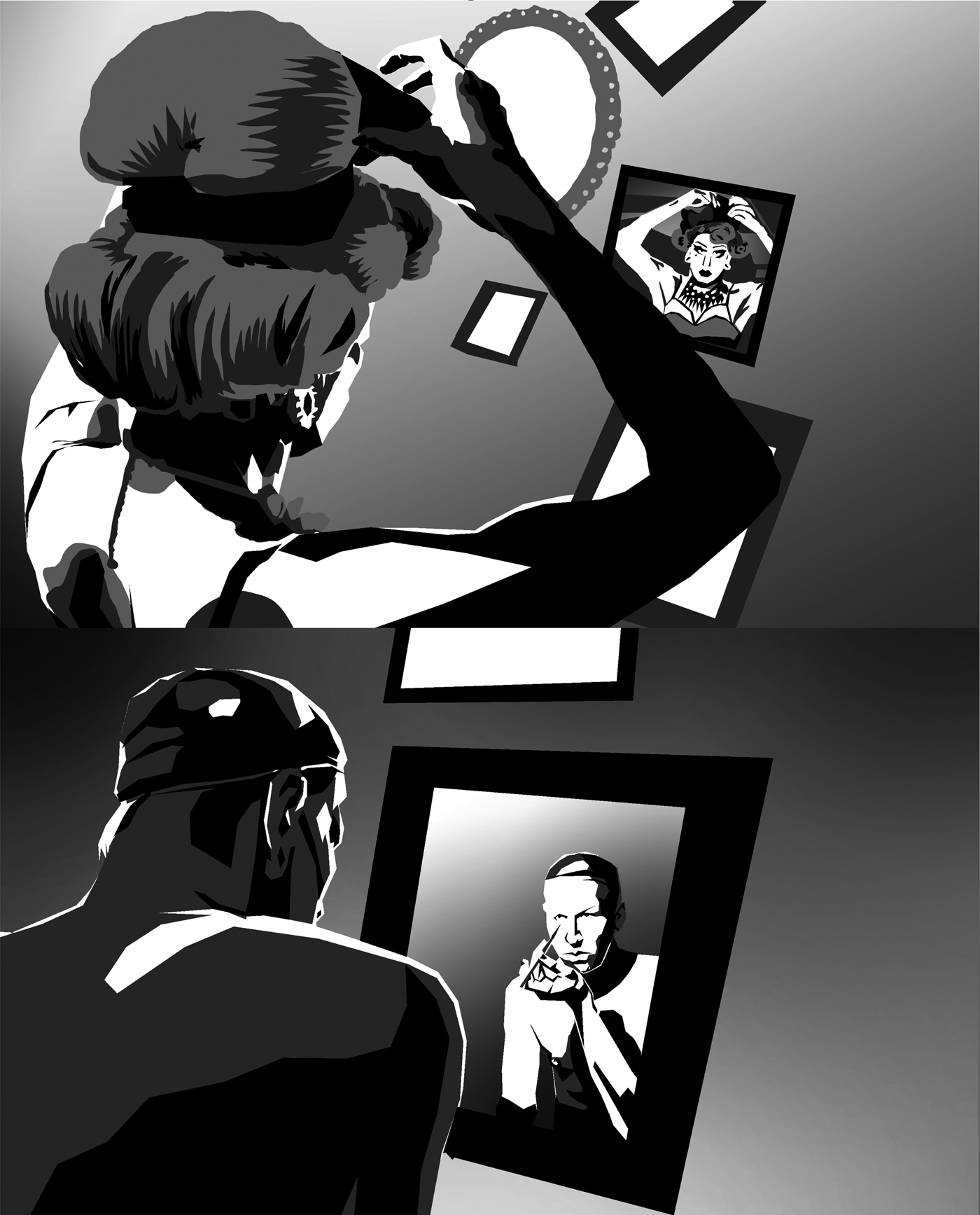
In order to facilitate an analysis of the relationship between visual presentation and linguistic performance, I video- and audio-recorded conversations with SoMa queens while they ‘got into drag’, or visually transformed using makeup, wigs, and other visual materials (see Figure 2). I chose subjects based on my familiarity with them, with the assumption that a conversation with someone I am familiar with would yield the most ‘natural’ speech. Each speaker is someone I had known and/or performed with for at least two years prior to the recording of the conversation. All of the transformations unfolded at the subjects’ homes, with subjects getting ready for a night out.
The visual transformation of the body involves visual materials like wigs (top) and makeup (bottom).

The conversations were not structured interviews with a set list of questions, but instead I tried to allow for a free-flowing, organic progression from one topic to the next, based on the responses of the subject. However, because I am interested in the relation between performance, style, community, and identity, there were a few topics I asked each queen about over the course of the transformation, including: how they described their own drag style and the styles of their peers, their gender identity and how that relates to their drag, how they view other performers in the community they are close with, and how they view SoMa within the greater San Francisco context. Although I touched on all of these topics in each conversation, the ordering of topics was not fixed, and many other topics came up in conversation as well.
In recording video and audio, I chose relatively small and unobtrusive equipment in order to minimize the Observer's Paradox (see Labov Reference Labov1972). Audio was recorded using a pocket-sized Olympus WS-823 at a 44.1 kHz sampling rate with an external Olympus ME-15 lapel microphone, attached near the speaker's chest. Video was recorded using a GoPro HERO 4 digital camcorder, placed in such a way to visually frame the subject's face and upper body. The conversations lasted for the duration of the participant getting into drag, ranging between two and four hours each. By the end of the conversation, each participant was in full drag.
Since I am interested in nonnormatively gendered personae and the relationship between the body and performance in actualizing them, I chose to focus on speakers assigned male gender at birth, as the feminine performances employed by the queens in SoMa are arguably read as the least normative when employed by male-assigned individuals. Therefore, I recorded conversations with eight male-assigned SoMa drag queens as they applied visual feminine drag.
The eight participants’ conversations were transcribed in their entirety using ELAN software (Wittenburg, Brugman, Russel, Klassman, & Sloetjes Reference Wittenburg, Brugman, Russel, Klassman and Sloetjes2006), and Praat (Boersma & Weenik Reference Boersma and Weenik2017) Textgrids were generated using the FAVE (Rosenfelder, Fruehwald, Evanini, & Yuan Reference Rosenfelder, Fruehwald, Evanini and Yuan2011) forced alignment package. A Praat script then automatically extracted tokens of /s/ from each .wav recording based on forced alignments.
I collected every eligible token of /s/ from the start to the finish of each conversation to explore any changes in acoustic realization throughout the transformation. While some sociophonetic studies exclude a portion of the beginning of the interview in order to restrict analysis to only the most natural speech (e.g. Podesva, Calder, Chen, D'Onofrio, Flores-Bayer, Kim, & Van Hofwegen Reference Podesva, Calder, Chen, D'Onofrio, Flores-Bayer, Kim and Van Hofwegen2013), I felt the time for the participants to acclimate to either the interviewer or the process of the recorded conversation was less of a worry in this case, since I had personally known each of the participants for a number of years prior to the conversations, and since each participant is a public performer who had been recorded in various contexts previously.
Following Podesva & Van Hofwegen (Reference Podesva and Van Hofwegen2014, Reference Podesva, Van Hofwegen, Levon and Mendes2016), due to the influence of phonological environment on exceedingly short segments, every token of /s/ shorter than 40 ms was excluded from analysis. In addition, tokens preceding and following either /s/ or /z/ were excluded, due to the ambiguity of the FAVE-generated boundary between the analyzed token and the preceding or following segment. In total, 14,085 tokens of /s/ were included among the eight speakers.
To facilitate an analysis of linguistic-internal effects, a number of phonological factors were coded for each token. Each token was coded for syllable position (onset vs. coda) using the Maximum Onset Principle (Pulgram Reference Pulgram1970; Selkirk Reference Selkirk, Moortgat, Van der Hulst and Hoestra1981). Using the syllable position information, each token was then coded for the stress of the syllable it belongs to (primary, secondary, or none), based on the ARPAbet transcriptions generated by the forced alignment. In addition, /s/ tokens were coded for phrase position. I operationalized phrase boundaries as breaks in the speech flow of at least 200 ms, given that the auditory threshold for the perception of pauses is 200–250 ms (Goldman-Eisler Reference Goldman-Eisler1968; Grosjean & Deschamps Reference Grosjean and Deschamps1975; Zellner Reference Zellner and Keller1994).
Finally, segments preceding and following the analyzed tokens were coded for the following factors, based on trends that emerged as significantly affecting /s/ production in preliminary analyses: whether the segment is a vowel or consonant, whether the segment is a sonorant or obstruent, and the segment's place of articulation.
Measurements
Three measurements were taken for each eligible token of /s/: COG (in Hz), Duration (in ms), and Relative Intensity (in dB). COG was chosen over spectral skew to allow for a greater number of comparisons to previous production studies.
Tokens were band-pass filtered to a 1000–22050 Hz bandwidth, filtering out frequencies too low to be within the range of /s/ frication. Using Praat scripts, COG was taken within a 40 ms Hamming window centered at the midpoint of the segment (following Podesva & Van Hofwegen Reference Podesva and Van Hofwegen2014) and segment durations were calculated based on FAVE-generated segment intervals. The mean intensity (in dB) was calculated for each /s/ token as well as the immediately following segment, with the difference between them being used as the value for Relative Intensity (since dB is a logarithmic value). This was done in order to control for differences in intensity resulting from factors other than linguistic performance (e.g. moving or turning towards or away from the microphone, etc.), as these movements usually happen on a greater durational scale than the transition from one segment to the next. Since Relative Intensity depends on the mean intensity of the following segment, phrase-final tokens (i.e. tokens preceding silence) were excluded from analysis for this variable (resulting in 12,499 total analyzed tokens for Relative Intensity, as opposed to the 14,085 tokens analyzed for each of the other three measures). Tokens were compared to following rather than preceding segments since excluding phrase-initial tokens would have resulted in a smaller data set.
Statistical modeling
For each of the acoustic measures, the data were fit to mixed-effects linear regression models using RStudio (2015). A number of linguistic effects were included in the models to control for the relative weights of linguistic-internal and social effects (i.e. the visual transformation) on the acoustic variables. Regression modeling was conducted in two phases. The preliminary phase searched for interactions between linguistic factors and patterns among preceding and following phonological segments in their effects on the acoustic realization of /s/. Based on patterns emerging from the preliminary models, the following factors were ultimately included in the final models: segment duration, syllable position, phrase position, syllable stress, preceding segment place of articulation, following segment place of articulation, whether the preceding segment is a sonorant or obstruent, whether the following segment is a sonorant or obstruent, whether the preceding segment is a vowel, whether the following segment is a vowel, and a factor I call StartNormed. StartNormed operationalizes the progress of the transformation by taking the timestamp in the conversation at which the token occurs and dividing it by the total length of the conversation, in order to normalize for different conversation lengths between speakers. For each model, Speaker and Word are included as random effects.
Results
Center of gravity
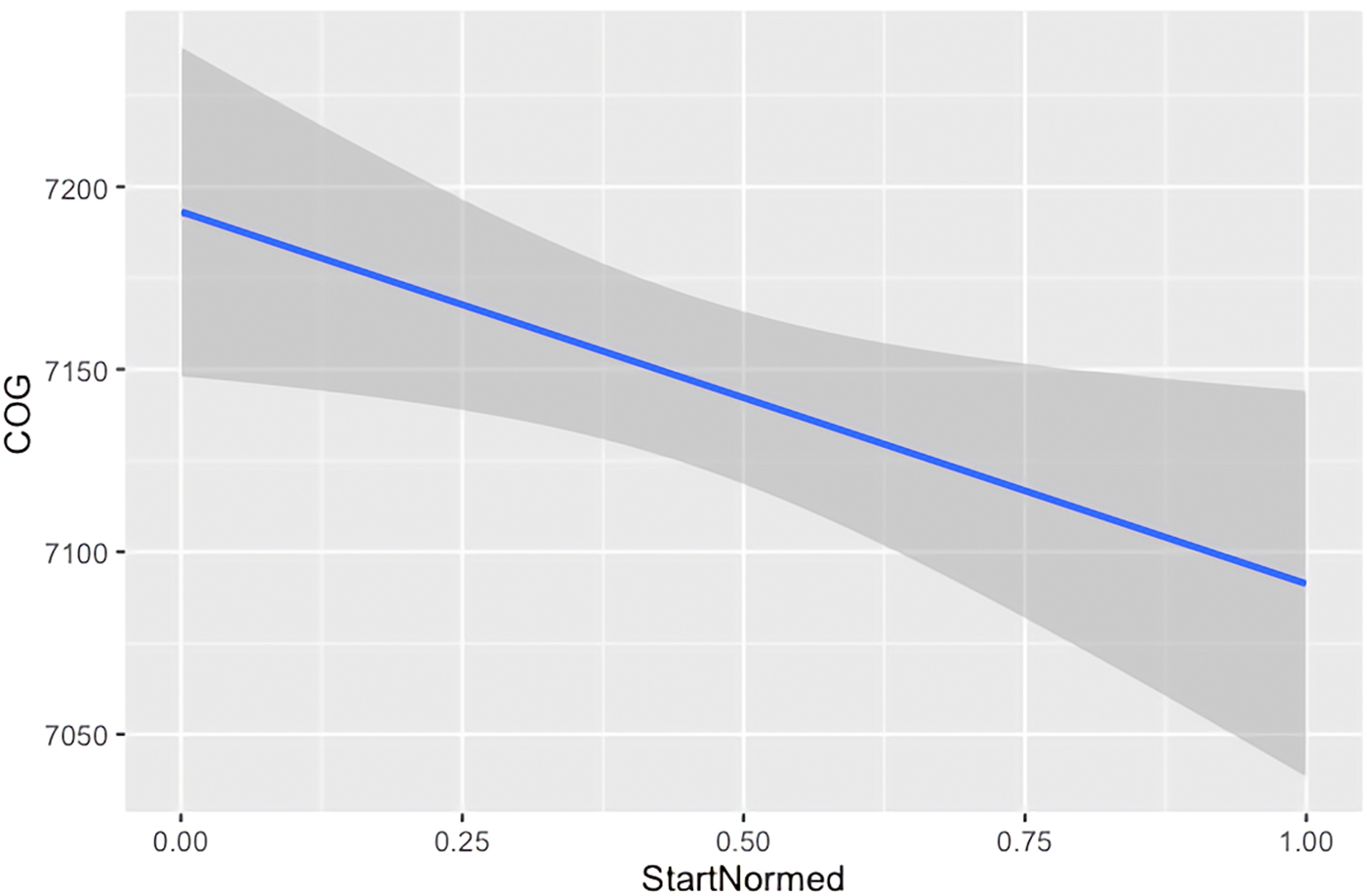
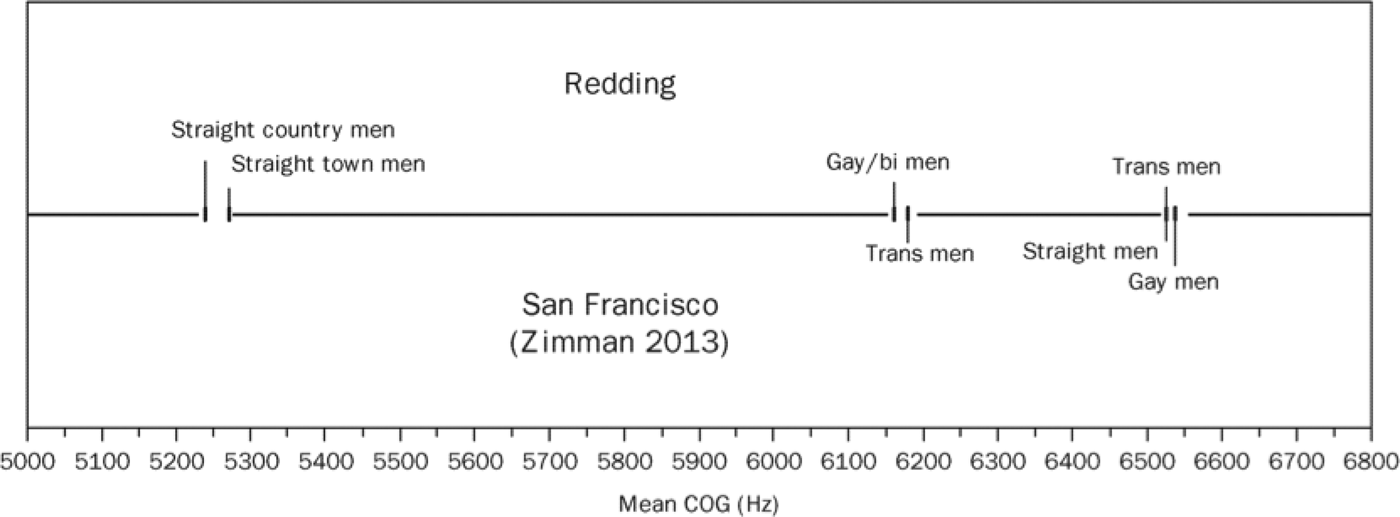
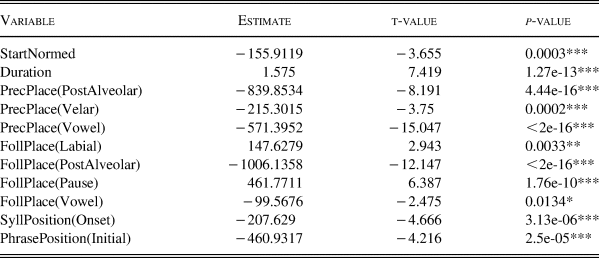
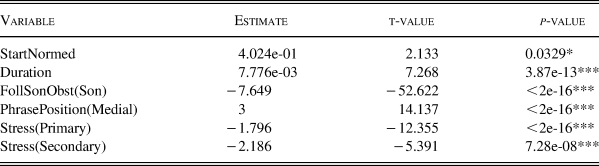
Table 1 summarizes the results of the mixed effects model for /s/ COG. StartNormed is a highly significant predictor with COG decreasing over the course of the transformation, as shown in Figure 3 below. However, even though COG decreases, on average SoMa queens still remain above 7000 Hz, with the wide envelope of variation suggested by the confidence interval shown in the figure not even approaching the frontest male-assigned speaker groups in previous studies of speakers in Northern California, who average around 6550 Hz (e.g. Zimman Reference Zimman2013; Podesva & Van Hofwegen Reference Podesva, Van Hofwegen, Levon and Mendes2016; see Figure 4). While production of /s/ retracts over the course of the transformation, SoMa queens maintain a very fronted articulation relative to other speakers in the geographical region.
COG (Hz) over the transformation.

COG values for male-assigned and male-identified speakers in Northern California (reproduced from Podesva & Van Hofwegen Reference Podesva, Van Hofwegen, Levon and Mendes2016).

Linear regression results for COG.

In addition, a number of linguistic effects emerge as highly significant predictors of COG. First, duration is highly significant, with longer tokens having higher COG. Preceding and following place of articulation are also highly significant, with /s/ tokens having a lower COG when adjacent to postalveolars and vowels. /s/ also has lower COG following velars and higher COG preceding dental/alveolar segments. These results suggest that /s/ production accommodates the articulation of adjacent segments, with neighboring consonants produced in the front of the vocal tract resulting in a fronter /s/ than neighboring consonants produced in the back of the vocal tract and vowels, which are produced with the mouth open.
Syllable and phrase position also emerge as highly significant predictors, with /s/ having lower COG in onsets than codas and lower COG in phrase-initial than phrase-final positions. The effect of phrase-finality is also reflected in /s/ having a higher COG when the following segment is a pause. That /s/ has lower COG in domain-initial positions (both syllable- and phrase-initial) is surprising when considering phonetic work on domain-initial strengthening (e.g. Keating, Cho, Fougeron, & Hsu Reference Keating, Cho, Fougeron, Hsu, Local, Ogden and Temple2003), which has found that lingual articulations are stronger among domain-initial consonants than final ones. Because the tongue would make greater contact with the alveolar ridge in an articulation of a domain-initial /s/, it might be expected that the resonating cavity between /s/ and the front teeth would be smaller, thus resulting in a higher COG for initial /s/ tokens. The patterns of the SoMa queens run contrary to this prediction.
Duration
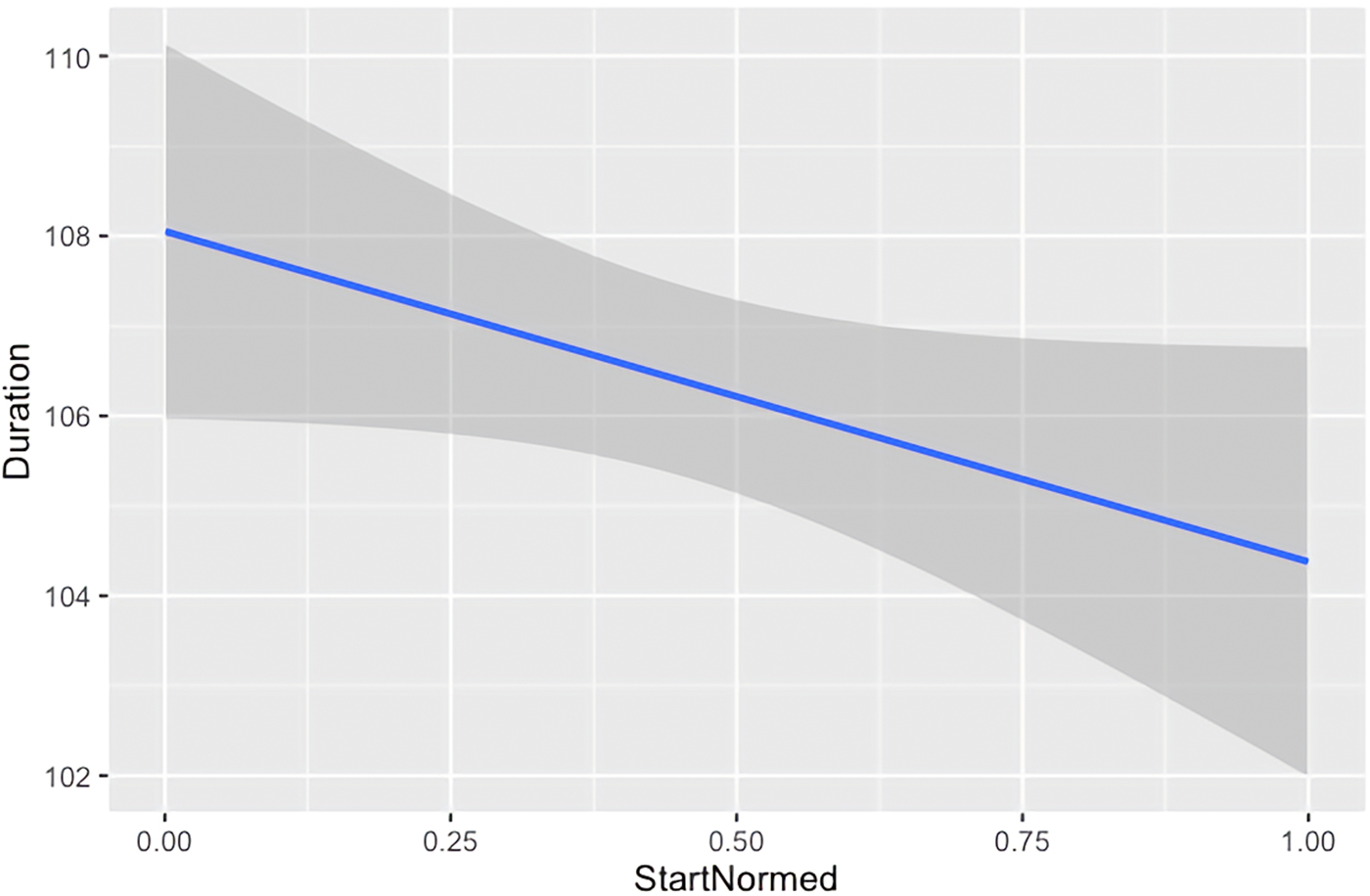
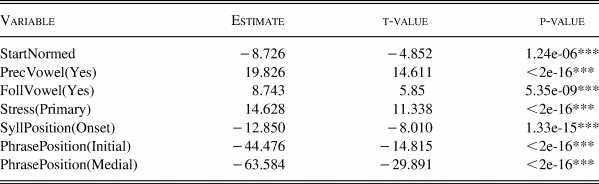
Table 2 presents the linear regression results for /s/ duration. As Figure 5 illustrates, StartNormed is once again a highly significant predictor, with /s/ tokens getting shorter over the course of the transformation. This finding suggests that SoMa queens speak faster as the transformation progresses. I empirically explored this possibility by performing a preliminary statistical analysis of speech rate including factors that may condition the duration of syllable nuclei. A mixed-effects regression with Speaker as a random effect and StartNormed and syllable stress as fixed effects reveals that StartNormed (Estimate = −2.688, t = −2.673, p = 0.0075, **), syllable primary stress (Estimate = 45.68, t = 77.67, p < 2e-16, ***), and syllable secondary stress (Estimate = 14.26, t = 7.701, p = 1.38e-14, ***) emerge as significant predictors of syllable nucleus duration. The significance of StartNormed in predicting syllable nucleus duration in a negative direction suggests that speech rate indeed increases as the queens get into drag. Since /s/ duration is strongly correlated with COG, the increased speech rate—contributing to a decrease in duration of /s/ tokens—provides a linguistic explanation for the decrease in COG over the transformation.
Duration (ms) over the transformation.

Linear regression results for Duration.

In addition to StartNormed, a number of linguistic effects emerge as significant predictors of /s/ duration. First, tokens preceding and following vowels are significantly longer than those following consonants. One explanation for this is that /s/ tokens adjacent to vowels may be more likely to comprise syllable onsets or codas on their own, while /s/ tokens adjacent to consonants may share onset or coda position with those other consonants, resulting in durational compression to facilitate isochrony between onsets and codas (see Pike Reference Pike1945). Syllable stress also emerges as significant, with /s/ tokens in primary-stress syllables being longer than those in unstressed syllables.
Finally, syllable and phrase position both emerged as highly significant, with tokens in onsets being shorter than codas and phrase-initial and phrase-medial tokens being shorter than phrase-final tokens. These findings support phonetic research on final lengthening, which has shown that final lengthening happens both at the phrase level (e.g. Klatt Reference Klatt1975; Byrd & Saltzman Reference Byrd and Saltzman2003; Byrd & Riggs Reference Byrd and Riggs2008) and smaller prosodic levels (e.g. Beckman & Edwards Reference Beckman, Edwards, Kingston and Beckman1990; Calder Reference Calder2018b).
Relative intensity
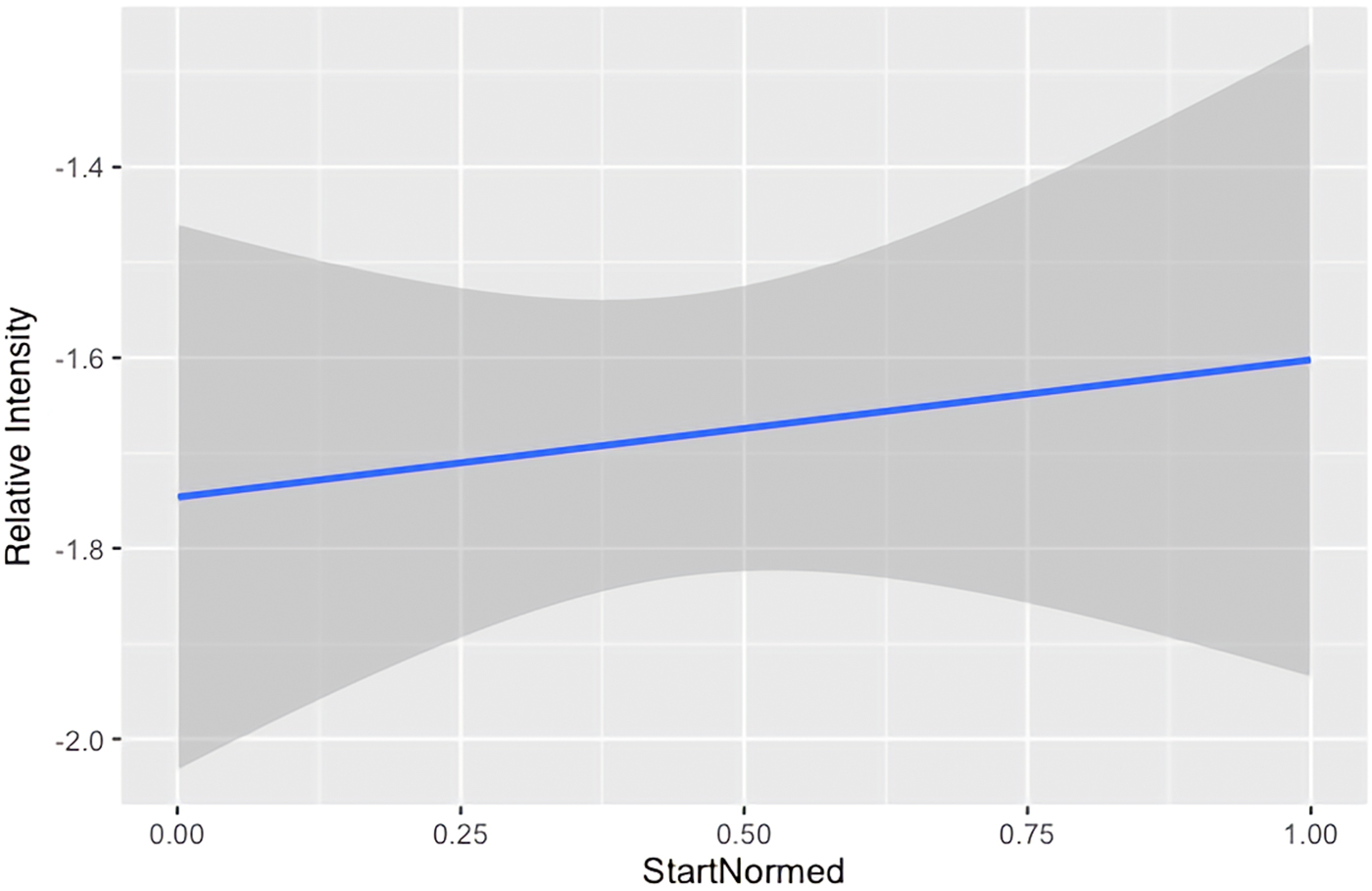
Table 3 summarizes the results of the mixed effects model for Relative Intensity. StartNormed again emerged as significant, with /s/ tokens getting louder over the course of the transformation, as shown in Figure 6. Duration also emerged as highly significant, with longer tokens of /s/ being louder than shorter tokens.
Relative Intensity (in dB) over the transformation.

Linear regression results for Relative Intensity.

While the size of the effect of StartNormed on Relative Intensity is small—with the measure only increasing by about 0.2 dB on average over the course of the transformation—the increase is nevertheless interesting in light of the fact that /s/ Duration decreases over the course of the transformation. The increase of Relative Intensity, however small, runs contrary to what might be predicted linguistically as Duration correlates inversely with Relative Intensity.
Sonorance of the following segment also emerged as a highly significant predictor of Relative Intensity, with /s/ tokens preceding sonorants having a lower Relative Intensity than those preceding obstruents. Given the obstruent status of /s/ and the fact that sonorants have a higher amplitude than obstruents, we would expect /s/ to have a lower intensity relative to a following sonorant segment. Furthermore, /s/ segments are louder on average than the obstruents they precede. Given the strength of frication in sibilant sounds like /s/ compared to other fricatives and the fact that following obstruents include plosives, which include a silent closure for a portion of their duration, this finding is expected.
Phrase position also emerges as highly significant, with phrase-medial tokens being louder relative to the following segment than phrase-initial segments. This finding may be explained by the declination in amplitude over the course of a phrase, which may affect sonorant sounds to a greater degree than obstruents like /s/, leaving the difference between /s/ and a following sonorant as larger over the course of a phrase. Also recall that phrase-final /s/ tokens were not included in the model.
Finally, syllable stress emerged as highly significant, with /s/ tokens in stressed syllables (both primary and secondary) having a lower Relative Intensity than /s/ tokens in unstressed syllables. Given that stressed nuclei are louder than unstressed nuclei, one possible explanation is that the difference between the intensity of /s/ and a following stressed nucleus would be much greater than the difference between the intensity of /s/ and a following unstressed nucleus, thus driving /s/ Relative Intensity down in stressed syllables.
Discussion
Tying together the linguistic-internal effects on various acoustic dimensions of /s/, some general trends emerge. First, among the SoMa queens, coda /s/ has higher COG and longer duration than onset /s/. Furthermore, phrase-final /s/ has higher COG and longer duration than phrase-initial and phrase-medial /s/. These findings suggest that prosodic finality is a locus for acoustic extremity among the SoMa queens. The fact that final positions facilitate more extreme acoustic manifestations is not particularly surprising when situated in the context of previous sociophonetic research on phrase-final lengthening. Among groups of speakers in Northern California, the lengthening of phrase-final syllables was shown to be greater among women compared to men, gay men when compared to straight men, and younger speakers when compared to older speakers (Calder, Eckert, Fine, & Podesva Reference Calder, Eckert, Fine and Podesva2013), suggesting that the phrase-final position is a prosodic locus for the expression of a type of style that may be employed to index femininity, youth, or queerness. Another study of drag queens on reality television program RuPaul's drag race (Calder Reference Calder2014) shows that queens lengthen phrase-final syllables in a highly performative ritual-insult speech act called ‘reading’ in order to differentiate it from less performative conversation in real-time. The fact that gay men in California and drag queens have been shown to employ phrase-final lengthening stylistically suggests that among the SoMa queens, phrase-final lengthening is a possible explanation for the greater duration of /s/ in final positions, which then opens up more durational real estate for the extreme stylization of other acoustic dimensions like COG.
By contrast, the linguistic constraints among the SoMa queens diverge from general trends established for speakers in other Northern California communities in interesting ways. In a forthcoming study of the production of /s/ among speakers in the politically conservative town of Redding in Northern California, speakers generally have higher COG in syllable onsets rather than codas (Robert Podesva, p.c.), which is what might be expected based on principles of domain-initial strengthening (see e.g. Keating et al. Reference Keating, Cho, Fougeron, Hsu, Local, Ogden and Temple2003). One explanation is that, since the majority of the speakers in the Redding sample are heterosexual and normatively gendered, the type of queerness the SoMa queens construct and reference, and the linguistic patterns that contribute to it, may not be ideologically available to the Redding speakers. Interestingly, in Redding, it is straight and country-oriented men who lengthen their /s/ tokens (which have a relatively backed pronunciation and therefore low COG), while gay men in the Redding sample have comparatively short /s/ (with COG significantly higher than their straight counterparts). Podesva & Van Hofwegen (Reference Podesva and Van Hofwegen2014, Reference Podesva, Van Hofwegen, Levon and Mendes2016) argue that queer speakers in the Redding sample are stylistically constrained by the conservatism and normative gender standards of their wider community. By contrast, the SoMa queens, exhibiting relatively long and front /s/ tokens in phrase-final positions, construct a nonnormative type of femininity that stands in the face of conservative gender standards. It could be argued that the frontness of /s/ betrays a speaker's queer identity, and while Redding queer individuals durationally mitigate this by shortening fronted /s/, SoMa queens flaunt their queerness by lengthening it in final positions. In the geographic and sociopolitical context of San Francisco, a politically liberal city, SoMa queens have the license to linguistically highlight their queer femininity (by lengthening fronted /s/ in certain prosodic contexts), much in the same way that straight, country-oriented men have the license to highlight their normative masculinity (by lengthening backed /s/) within the conservative climate of Redding.
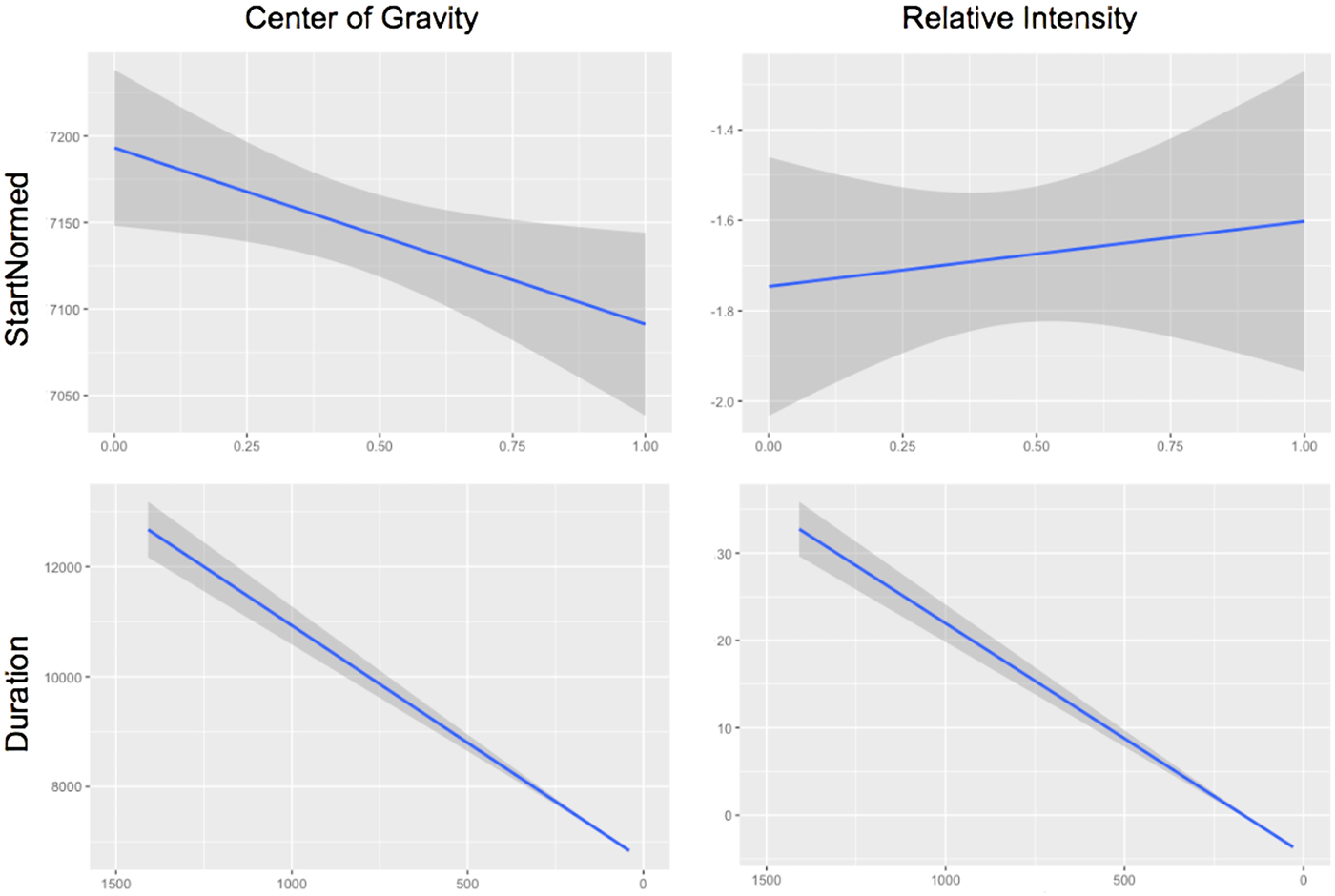
The importance of duration in the SoMa queens’ realization of /s/ is further evidenced in its strong significance in conditioning the realization of both COG and Relative Intensity. Since duration changes over the course of the transformation, the changes in the other two measures throughout the transformation may be explainable in terms of the influence of duration. Figure 7 compares the effects of Duration and StartNormed on COG and Relative Intensity.
Comparison of effects of StartNormed and Duration on COG and Relative Intensity.

Over the course of the transformation, COG decreases and Relative Intensity increases. Since we know that duration also decreases over the course of the transformation, we can compare the effects of duration to the effects of StartNormed, with the expectation that as duration decreases, the other two measures might change much in the way they progress with respect to StartNormed. We see that one of the measures patterns this way, with COG decreasing as duration decreases. Therefore, we can explain the decrease in COG over the course of the transformation in terms of the influence that the decrease in Duration over the course of the transformation has on it. However, Relative Intensity diverges from the predicted effects of Duration in an interesting way, with Relative Intensity of /s/ increasing over the course of the transformation despite the decrease in Duration, which would predict a decrease in Relative Intensity. This suggests that, while the change in COG over the course of the transformation can be explained in terms of the linguistic pressures governing it, the increase in Relative Intensity cannot solely be explained in terms of linguistic pressures.
One possible explanation for the divergence of Relative Intensity compared to the other acoustic dimensions is that the measures for Relative Intensity excluded phrase-final tokens, while the other measures were taken for the entire eligible dataset. However, re-running the regressions for the other two measures including only the subset of data that was measured for Relative Intensity shows the same patterns as for the entire data set: Duration still decreases over the transformation (t = −3.219, p = 0.0013, **) and COG still decreases (t = −3.941, p = 8.16e-05, ***). Therefore, we would still expect the same linguistic patterns over the course of the transformation for the smaller subset of data as for the entire eligible set.
I argue that over the course of the transformation, linguistic and social influences over the realization of the acoustic dimensions of /s/ compete, and the resolutions of these tensions between the linguistic and the social are largely accomplished to facilitate the qualic and indexical enterprise of projecting the fierce queen persona.
I focus first on COG over the course of the transformation. Since COG is largely influenced by duration, and duration decreases over the transformation, we would expect linguistic pressures to dictate that COG also decreases over the course of the transformation. By contrast, higher COG is indexically linked with femininity and queerness, and since the SoMa queens perform a type queer femininity, increasingly facilitated by the use of visual semiotic materials over the course of the transformation, we might expect a high COG to be maintained.
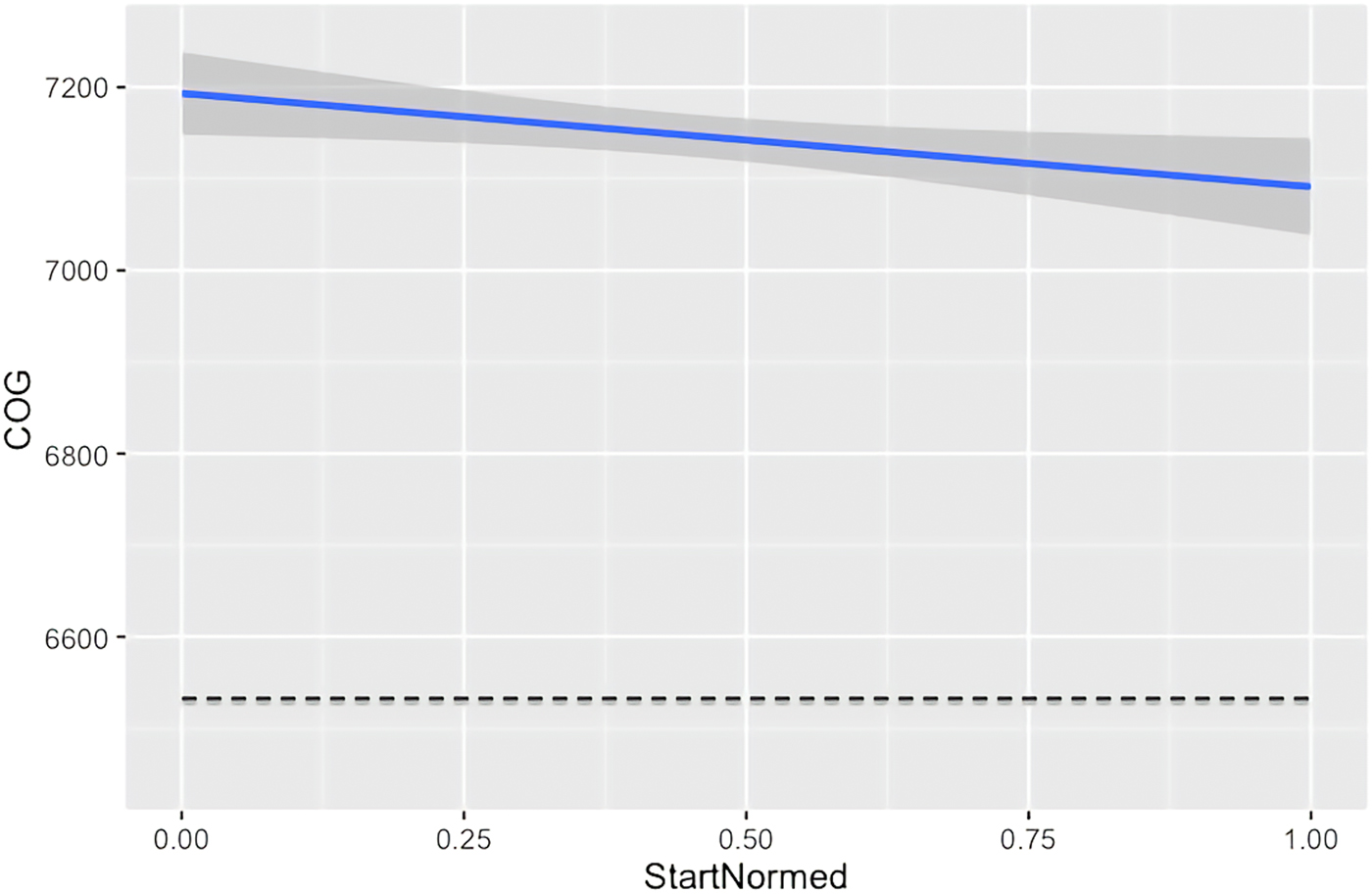
As previously discussed, while durational pressures do significantly condition the realization of COG over the course of the transformation, with COG decreasing as the transformation progresses, SoMa queens’ /s/ remains extremely fronted when compared with even the frontest groups of speakers from previous studies in Northern California. Figure 8 plots the COG decrease over the course of the transformation in relation to the frontest speaker group in previous Northern California production studies—gay men from Zimman's (Reference Zimman2013) study in San Francisco. When put into perspective, we see that even though the decrease in SoMa queens’ COG over the course of the transformation is highly significant (represented by the solid line), the magnitude of the overall decrease is not especially dramatic when compared to the difference between the average of SoMa queens and the average of other San Francisco gay men, who average around 6550 Hz (represented by the dotted line in the plot).
COG: SoMa queens vs. San Francisco gay men (Zimman Reference Zimman2013).

For COG, speakers resolve the tension between durational pressures and social projects by decreasing COG over the course of the transformation, but still remaining hyper-front relative to other speakers in the geographical region, contributing to the projection of queer femininity that differentiates them in the wider social landscape.
By contrast, the finding for Relative Intensity diverges from durational influence entirely. While the decrease in /s/ duration over the course of the transformation would predict that /s/ tokens would also decrease in intensity, SoMa queens instead employ louder /s/ over the course of the transformation. This is an interesting finding when considering that amplitude is the acoustic dimension targeted by de-essing in the recording industry in order to attenuate the experience of perceived qualities like ‘harshness’, ‘sharpness’, and ‘piercing’ sibilance. Despite durational pressures, SoMa queens acoustically underscore their fronted /s/ using the very acoustic dimension that is targeted by audio engineers as contributing to a sound quality that has been characterized as ‘unpleasant’ (Fastl Reference Fastl and Blauert2005) and ‘aggressive’ (Kajino Reference Kajino2014).
As previously discussed, the SoMa queens have an explicitly anti-normative orientation to gender, projecting a type of femininity that is arguably ideologically confrontational. Drag queen Crimson Monroe characterizes drag in this way.
(1) I guess there's a punk rock sensibility to drag. Which is by itself an act of resistance that has to be taken into account. You know? It's a way of actively combatting stereotypical ideals of masculinity.
The SoMa queens’ “resistant” and “combative” approach to drag draws upon extreme qualities not unlike those used to characterize their fronted /s/. These qualities manifest in their aesthetic choices as well. Maria Santeria, for example, references sharpness in relation to her “intimidating” drag persona.
(2) Cruella de Vil [is] actually one of my inspirations too. I've always felt like I would want to be her. It's very intimidating. Very sharp… everything's form fitting, so like the waist is small, the like hips are huge.
Maria uses shaping undergarments like corsets and hip pads to achieve an extreme and exaggerated hourglass figure, which she characterizes as “sharp”. She also references sharp objects when talking about her drag aesthetic.
(3) It's drag, but it's like all completely black, sharp objects, like very much like scary.
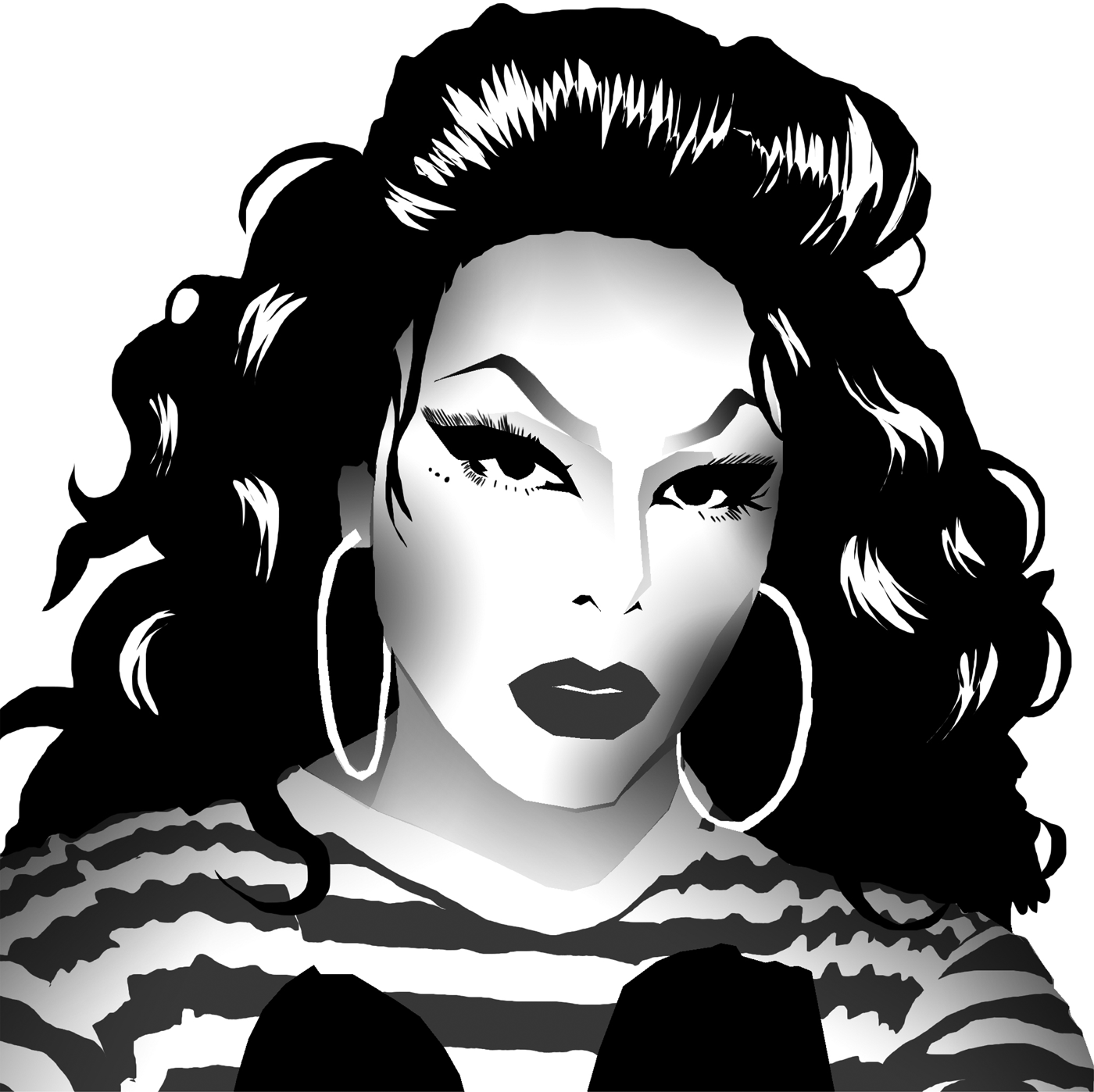
The connection between sharpness and Maria's visual presentation extends to the application of her eye makeup as well (see Figure 9). Her style of eyeliner and eyebrows, which she says are influenced by chola makeup, contribute to a drag persona she calls “powerful” and “dominant” (for more on the connections between chola makeup and tough femininity, see Mendoza-Denton Reference Mendoza-Denton1996).
(4) The way I paint, people are like somewhat intimidated by me. Which it feels powerful to have that… I like really sharp eyes… I put like duct tape here to make it a clean like sharp line.
Figure 9.Maria Santeria's sharp ‘chola’ eye makeup.


Sarah Tonin, a queen known for her dramatic black eyeliner and cut crease (an exaggerated eyelid crease, which is achieved through the use of eyeshadow; see Figure 10), also talks about sharpness as an aesthetic goal.
(5) I would just take [a ninety-five brush from Mac] and carve a crease, and you can actually carve an incredible crease with that… and it's super sharp.
Figure 10.Sarah Tonin's sharp cut crease and eyeliner.

The experience of extreme qualities situated in makeup is described by Hexadecimal as well, who talks about the “harshness” of her contour (Figure 11).
(6) [My contour is] a little harsh. I go from like ebony to ivory in like a two-inch space… I love a very harsh contour… where it's very like cut across the face.
Figure 11.Hexadecimal's ‘harsh’ contour.

The harshness and extremity of Hexadecimal's aesthetic is further embodied in her avant-garde personal style. At one event I recorded during my fieldwork in SoMa, Hexadecimal super-glued a large tire hubcap to her scalp, donning it as a fascinator for the entirety of the night.
Through the visual transformation, the SoMa queens use visual materials to achieve an extreme and exaggerated aesthetic in which qualities like harshness and sharpness are instantiated. At the same time, over the course of the transformation, /s/ Relative Intensity increases and COG remains comparatively very high, arguably increasing the experience of these very same qualities in their linguistic stream. Through the transformation, makeup, hair, and acoustic dimensions of /s/ are reconceptualized as qualia, pragmatic signals—sensuous ‘facts of firstness’ (see Harkness Reference Harkness2017)—through which culturally recognized qualities like harshness and sharpness are realized. The visual and linguistic modalities draw upon similar qualities in the construction of the multi-modal fierce queen persona that is both in-your-face and larger-than-life. The type of femininity the SoMa queens perform is not shrinking and demure, but rather fierce, radical, rebellious, sharp, and harsh. Just as the queens visually highlight their femininity using tools like tall wigs, sharp heels, and sharp eyeliner, they acoustically highlight their femininity by using the sharpness of Intensity to underscore their comparatively fronted /s/. In addition, the increase in speech rate arguably also contributes to this performance of bigness and extremity. In Pratt's (Reference Pratt2016) ethnographic study of embodied affective style in a Bay Area arts high school, she found that speech-rate differences reflected differences between two social groups, the chill kids and the loud kids. While the chill group embodied a low-key persona, characterized by smaller gestures, relaxed postures, and a slow speech rate, the persona of the loud kids involved larger gestures, taller and wider postures, and a faster speech rate. And in Irvine's (Reference Irvine, Lutz and Abu-Lughod1990) study of Wolof speakers, the griots’ fast speech contributed to a loud and boisterous persona that differentiated them from the slower speaking nobles. It is likely that SoMa drag queens, with their increased speech rate, are employing a similar semiotic arsenal as the loud kids and the griots, using increased speech rate in the construction of the loudness and bigness of the fierce queen persona, in addition to the loudness of /s/ and the loudness of their visual presentations.
In a multi-modal ‘rhematizing move’ (see Gal Reference Gal2013)—much like the rhematizing move that casts the Magyar people, their language, and their houses as iconic of the regularity they are said to embody—the qualic congruence between the visual and linguistic modalities of the SoMa queens facilitates iconization. The visual and acoustic extremity become iconic of the type of extreme, sharp femininity they project in the construction of their personae. The visual and linguistic manifestations of qualia align in a multi-modal project of nonnormative identity. This semiotic congruence facilitates the legibility of fronted /s/ as a linguistic emblem (Agha Reference Agha2007) of the fierce personae the queens project. (The iconization of fronted /s/ as a symbol of fierceness arguably extends beyond the drag community, with one entertainment magazine referencing the connection in their domain name, fierth.com.)
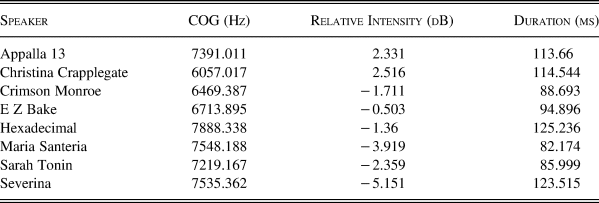
In SoMa, the connection between fierceness and extreme acoustic manifestations of /s/ is further suggested in the ways the SoMa queens characterize and evaluate one another. Interestingly, in the analyzed data, SoMa queens used the word fierce to describe three of their peers in particular. Maria Santeria was characterized as “fiercely painted and a great performer”, Hexadecimal's style was described in terms of a “fierce face and some body hair”, and Christina Crapplegate was described as serving “fierce mouth”. Maria Santeria, Hexadecimal, and Christina Crapplegate, interestingly, are also the most acoustically extreme with respect to acoustic dimensions of /s/ that contribute to perceived harshness and sharpness. Table 4 presents the means for each acoustic variable for each of the eight speakers. Hexadecimal and Maria Santeria are the two speakers with the highest COG means in the sample and Christina Crapplegate is the speaker with the highest Relative Intensity mean. (Additionally, Hexadecimal is the speaker with the highest mean for /s/ duration.) Though these facts might be thought of as statistically negligible, it is perhaps not coincidental that the three queens characterized as “fierce” by their peers are also the most extreme in their recruitment of qualia exhibiting sharpness and harshness. In addition, the three speakers occupy social and aesthetic extremes: in an anonymous survey in which SoMa queens rated each other with respect to a number of aesthetic styles, Maria Santeria was rated at the most ‘glamorous’ of the queens in the sample and Hexadecimal was rated as the most ‘avant garde’; in addition, Christina Crapplegate is seen as a house mother and community nucleus of sorts, founding and hosting the event Hen House, which spawned the events at which the remainder of the queens in the sample host and perform.
Speaker means for COG, Relative Intensity, and Duration of /s/.

It is not unprecedented that speakers embodying social extremes also exhibit linguistic extremes. It has been robustly established in various ethnographic studies that speakers occupying extreme social positions implement extreme articulations of socially meaningful linguistic variables that serve to project their personae within their communities. In Eckert's study in a Detroit high school (Reference Eckert2000), burnouts, social rebels who oriented to the city of Detroit, participated in the Northern Cities vowel shift to greater degrees than did jocks, who oriented to the institution of the suburban school. Judy, characterized by her peers as the “most burned-out” of the burnouts, was also the most extreme speaker in the sample with respect to the Northern Cities Shift. In addition, in Mendoza-Denton's study of Latina gang girls in California (Reference Mendoza-Denton2008), the most extreme gang members—community leaders who most iconically embodied the visual semiotic code of ‘chola’-ness, including dramatic winged eyeliner and particular colors of lipstick and clothing—were also the speakers who exhibited the highest degrees of /I/-raising, a feature that indexes Chicanx identity. Such findings support that phonetic features and the qualities situated therein create congruence with other semiotic modalities in the construction of iconic and legible cross-modal personae in various communities of practice.
Conclusion
Over the course of the visual transformation, SoMa queens forge qualic and indexical connections across multiple modalities in the construction of the fierce queen persona. As they increasingly embody a visual aesthetic characterized by an extreme and anti-normative femininity, their speech patterns reflect the enterprise of projecting the fierce persona. SoMa queens maintain a very fronted /s/ with respect to other speakers in the region, using the linguistic gender performance to index a queerness and femininity that differentiates them from their geographic counterparts. In addition, they use Intensity to acoustically underscore this salient variable. The indexical and qualic congruences established across visual and linguistic modalities facilitate the performance of a flagrant and radical gender position that contrasts with, and responds to, the threat of increasing normativity in SoMa that threatens their community's existence.
The socially meaningful changes in acoustic dimensions of /s/ over the course of the drag transformation suggest a strong connection between visual presentation and linguistic performance. That is, language is one element within a complex and interacting cross-modal web of semiotic projection. I argue that, through qualic congruence between harsh aesthetics and harsh acoustics, and through indexical congruence between feminine aesthetics and feminine performance, /s/ becomes legible as an emblem of the fierce femininity the SoMa queens iconically project. Makeup, hair, and acoustic dimensions of /s/ become sensuous facts of firstness through which the fierceness and extremity of the queen persona is realized and culturally transmitted. Bringing the linguistic and the visual into a semiotic bricolage, SoMa queens embody the emergent fierce queen persona to combat standards of gender normativity.