


Introduction
Cowpea Vigna unguiculata ssp. unguiculata (L.) Walp. is a very important crop in some areas of the semi-humid tropics, where it provides more than half of the plant protein in human diets (Rachie, Reference Rachie, Singh and Rachie1985). Nigeria is the world's leading producer of cowpea, accounting for 2,317,000 metric tonnes (2004 data) which is approximately 59% of the total world production (FAOSTAT, 2005).
A major constraint to cowpea production worldwide is the infestation by a number of insect pests at different stages of the crop growth, leading to very poor yields in the unprotected crop. Indeed, in Nigeria, it is generally recognized that cowpea must be protected by insecticide application during the reproductive phase (i.e. from the macroscopic flower bud production to podding stage) against a complex of insect pests in order to have a good yield. This is the stage at which 70% of yield loss attributable to insects occurs (Raheja, Reference Raheja1976).
The coreoid pod-sucking bugs, Anoplocnemis curvipes (Fabricius), Riptortus dentipes (Fabricius), Riptortus acantharis (Dallas), Mirperus jaculus (Thunberg), Clavigralla tomentosicollis Stål, and Clavigralla shadabi Dolling constitute an important complex among the insects infesting cowpea during the pod production phase and causing economic damage (Akingbohungbe, Reference Akingbohungbe1977, Reference Akingbohungbe1982; Mitchell, Reference Mitchell, Schaefer and Panizzi2000). Their piercing and sucking action causes shrivelling of developing pods, and seed malformation in mature pods (Singh et al., Reference Singh, Jackai, Dos Santos, Adalla and Singh1990). They also destroy seeds in very young pods (Dreyer & Baumgartner, Reference Dreyer and Baumgartner1995).
The control of coreoid pod-sucking bugs of cowpea in Nigeria has been achieved through insecticide application. Field screening of cowpea germplasm for resistant varieties has had little success because, as observed by Jackai (Reference Jackai1984), it is usually a species-mixture of the pod-sucking bugs that are involved at any given time at most locations. Some workers (e.g. Suh et al., Reference Suh, Jackai and Hammond1986) have reported that C. tomentosicollis is the most important pod-sucking bug on which by implication, efforts in sourcing for host plant resistance should be concentrated. However, this could be erroneous as A. curvipes and M. jaculus, even though not attaining so high a population density as C. tomentosicollis during the major cowpea growing season (August–December), could cause more severe damage than C. tomentosicollis. Thus, screening for cowpea pod-sucking bug resistance is best done under screen cage conditions where each species can be evaluated independently on different cowpea varieties. This, however, would require reliable quantitative data on damage to cowpea at different population levels of the pod-sucking bugs, and at different stages of cowpea pod development. Pitan & Odebiyi (Reference Pitan and Odebiyi2001), apparently in an effort to establish some economic thresholds for pod-sucking bugs on cowpea, were the first to provide quantitative data on damage done to cowpea at different population levels. They assessed the degree of damage resulting from infestation at varying levels per 10 cowpea plants in replicated screen cage trials involving adults of A. curvipes, M. jaculus, R. dentipes and Nezara viridula (Linnaeus) (Pentatomidae). The study showed that significant damage started to occur at two adult bugs per 10 plants in the case of A. curvipes while it occurred at 4 adults per 10 plants in the case of R. dentipes and M. jaculus, and at 6 adults per 10 plants in the case of N. viridula.
The present study reports on a quantitative assessment of the damage done by all the coreoid pod-sucking bugs associated with cowpea as pests in Nigeria (i.e. A. curvipes, C. tomentosicollis, C. shadabi, R. dentipes and M. jaculus). It was conducted with a view in particular to determining the appropriate infestation levels of adults and fourth instar nymphs, and the pod age category to use in screen cage evaluation of cowpea varieties for resistance to pod-sucking bugs.
Materials and methods
Plant and insect culture in the screenhouse
Cowpea (variety Ife Brown) was grown in 0.69 litre plastic cups at a density of one plant per cup. Cypermethrin formulated as Cymbush 10EC was applied on two occasions at the rate of 600 ppm to control infestation by the spiralling whitefly, Aleurodicus dispersus Russell (Homoptera: Aleyrodidae), during the vegetative growth stage of the plants. Pods from each plant were tagged and labelled immediately they started to develop to facilitate the determination of their age. Nymphs and adults of the pod-sucking bug species were collected from a field plot of Ife Brown cowpea specially established for that purpose. These were reared in the screenhouse at 33±2°C and 59±7% RH. Each species was maintained in separate cultures inside 90 cm×62 cm×62 cm wire-net rearing cages, and fed with fresh mature cowpea pods every other day. Freshly emerged fourth instar nymphs and adults of each species were removed and kept separately in another set of rearing cages till they were required for the experiments.
Feeding experiments
These involved a 5×3×3×2 factorial layout with the following as factors: (i) five different species of pod-sucking bugs: A. curvipes, C. shadabi, C. tomentosicollis, M. jaculus and R. dentipes; (ii) three stages of pod development: young (5 days old), mid-fill (8 days old), and mature (12 days old); (iii) three levels of infestation per pod (i.e. one bug per pod, two bugs per pod, three bugs per pod); (iv) two instars: fourth instar nymphs, and adults.
The stages of pod development and their characteristics are indicated in table 1. For the feeding experiments, fourth instar nymphs and adult bugs were isolated in separate cages and starved for at least 16 h before being used. The trials were conducted inside 90 cm×62 cm×62 cm wire-net cages, and involved introducing the insects on the pods at the appropriate stage and observing the feeding duration, associated symptoms of attack and damage. Five cages were used on each occasion and the insects were regularly observed till feeding was initiated and completed. Thereafter, all the exposed plants and test insects were removed and replaced by another batch. The trials were conducted over a period of 8 weeks using five replicates for each treatment. A treatment comprised each instar per pod at the appropriate age. A pod of appropriate age exposed to attack by one insect of the appropriate instar inside the cage, with feeding observed till it was discontinued, was regarded as a pod fed upon once. Similarly, a pod of appropriate age exposed to two or three insects was regarded as pod fed upon twice and thrice, respectively. Sucked pods were tagged, labelled and monitored daily till they were harvested. The following parameters were measured in each trial;
- FET:
time spent on feeding by the insects on each pod (minutes)
- PLT1:
initial length of pod at the beginning of each trial (cm)
- PLT2:
final length attained by each experimental pod at maturity (cm)
- RPE:
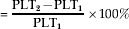
percent increase in length of sucked pods

- RPEc:
percent increase in length of healthy (5, 8 and 12 days old) pods. For an ith day, the pod length on that day is taken as PLT1 while the pod length at day 12 is taken as PLT2.
- RPL:
reduction in the rate of pod elongation
- GNO:
proportion of grains damaged in sucked pods
- GWT:
percent weight of grains damaged in sucked pods
- YLD:
average seed yield (g) of sucked pods
- YLDc:
average seed yield (g) in 20 healthy pods (i.e. pods not exposed to pod-sucking bugs).
- RYD1:
reduction in yield (g) due to damage by pod-sucking bugs
- RYD2:
percent reduction in yield due to damage by pod-sucking bugs





Data collected from the trials were subjected to analysis of variance and means were separated using the LSD test (SAS Institute, 2000).
Characteristics used for the identification of three age categories of Ife Brown cowpea pods.

Results
The combined analysis of variance performed on the feeding duration of the pod-sucking bugs on cowpea, and the concomitant feeding damage is shown in table 2. The duration of feeding was significantly different (P<0.01) between the fourth instar nymphs and the adults of the various pod-sucking bugs. Similarly, significant differences were observed among the species of pod-sucking bugs, levels of infestation per pod and the age of pods. Feeding damage (as measured by percentage reduction in pod length, proportion of damaged grains, percentage weight of damaged grains and percentage yield reduction) also differed significantly among the various pod-sucking bug species, and between the two instars (except percentage reduction in pod length). Significant differences were similarly observed among the ages of pods fed upon, and the levels of infestation per pod. Pod stage×infestation level and pod stage×coreoid species interactions were significant (P<0.01) for duration of feeding and yield parameters. Instar×pod stage interaction was similarly significant for yield parameters but not for duration of feeding. Thus, the cowpea pod-sucking bugs differed in their feeding duration and the effects on yield parameters of cowpea depending on the stages of pod development and the infestation level of each species; but the feeding duration did not differ significantly between the fourth instar nymph and the adult of each species irrespective of the age of pod.
Mean square values and significance levels for feeding duration and feeding damage on cowpea by five coreoid pod-sucking bug species.

* , ** Significant F-test at 0.05 and 0.01 levels of probability, respectively.
AGI, instar of insect (fourth instar nymph; adult); CV, coefficient of variability; FFE, level of coreoid bug infestation; PGE, age of pod; REP, replication; SPP, pod-sucking bug species; SV, source of variation.
Mean values of feeding duration and concomitant feeding damage due to the coreoid bugs are presented in table 3. The fourth instar nymphs of the various pod-sucking bug species had significantly shorter feeding periods than their respective adults. Anoplocnemis curvipes had significantly longer periods of feeding than any of the other pod-sucking bug species. It was followed by C. tomentosicollis and M. jaculus while C. shadabi had the shortest feeding duration. The pod-sucking bugs caused a generally high reduction in pod elongation ranging from 16.5 to 29.1%. The alydids, R. dentipes and M. jaculus, caused the highest reduction in pod length followed by A. curvipes, C. tomentosicollis and C. shadabi in descending order. There were no significant differences between the fourth instar nymphs and adults in their ability to cause reduction in cowpea pod length. The proportion of damaged grains due to feeding by the pod-sucking bugs was generally high ranging from 24.6 to 39.4% for the nymphs, and 23.2 to 36.6% for the adults. The corresponding percentage weight of damaged grains also ranged from 5.9 to 13.7% for the nymphs, and 5.0 to 11.5% for the adults. Anoplocnemis curvipes caused significantly higher grain damage than any of the other bug species, followed by R. dentipes, M. jaculus, C. tomentosicollis and C. shadabi in descending order. The fourth instar nymphs of each species also caused significantly greater damage to the grains than the adults. Yield reduction due to feeding by the pod-sucking bugs ranged from 12.9 to 23.6% for the nymphs, and from 9.2 to 21.1% for the adults. Anoplocnemis curvipes caused significantly higher reduction in yield both as nymphs and adults; and this was at least 1.8 times as high as the level observed for Clavigralla spp., and 1.3 times that of the alydids. The other bug species caused significantly higher reductions one from another in the descending order: R. dentipes>M. jaculus>C. tomentosicollis>C. shadabi. The fourth instar nymphs in each species exerted greater yield reduction than the adults. The pod-sucking bug species spent significantly longer times feeding on young and mid-fill pods than on mature pods (table 4).
Mean values for feeding duration and feeding damage on cowpea by five coreoid pod-sucking bug species.

+ For comparing the species; ++ for comparing the instars.
Mean values for feeding duration and feeding damage by five coreoid pod-sucking bug species on different age categories of cowpea pods.

Reduction in pod length, the proportion as well as the corresponding percentage weight of grains damaged were also significantly higher when the bugs fed on young pods than on mid-fill pods; and the latter in turn suffered a significantly higher level of damage compared to the mature pods. Similarly, yield reduction due to feeding on young pods was significantly higher than when feeding was on mid-fill pods which in turn also showed significantly greater yield reduction than when feeding was on mature pods. Generally, feeding on mature pods by the bugs led to very low yield reduction of about 3.2–3.7%.
Yield reduction resulting from three different levels of infestation of the coreoid species on young and mid-fill cowpea pods is presented in table 5. The magnitude of cowpea yield reduction depended on the age of pods that were fed upon; and fourth instar nymphs generally caused higher reduction in yield than the adults. A single fourth instar nymph of A. curvipes feeding on a young cowpea pod over an average period of 139 min was found to cause a yield reduction of 26.4%. Also, two fourth instar nymphs of each of the alydids (R. dentipes and M. jaculus) feeding once on separate young cowpea pods over an average period of 95 min were found to cause similar level of yield reduction ranging from 24.4 to 26.4% while the corresponding value of yield reduction by three fourth instar nymphs of the Clavigralla spp. feeding once on different young pods over an average period of 92 min ranged from 20.4 to 22.4%. When three fourth instar nymphs of each of the coreoid species were allowed to feed once on young pods (i.e. three feeding sessions per pod), a yield reduction of 51.7% was obtained for A. curvipes while 20.4 to 29.4% was obtained as the range for the other four species. In comparison, when two fourth instar nymphs were used, a yield reduction of 28.4% was obtained for A. curvipes and a range of 17.9 to 26.4% was recorded for the other four species. A similar trend was noticed in the case of the feeding by adult coreoid bugs on young cowpea pods where two feeding sessions of A. curvipes effected a more or less comparable level of yield reduction (25.9%) with that of three feeding sessions of the other four coreoid species (17.4–25.4%). In the same manner, two feeding sessions of fourth instar nymph of A. curvipes on mid-fill pods caused a yield reduction of 25.9% while the range due to three feeding sessions of fourth instar nymphs of the other four coreoid species was 18.4–25.4%. Corresponding values of yield reduction due to feeding by adult coreoid bugs on mid-fill pods are 24.4% and 12.9–22.9% for A. curvipes and the other four pod-sucking bug species, respectively.
Yield reduction resulting from three levels of infestation of fourth instar nymphs and adults of the coreoid species on young and mid-fill cowpea pods.

Means in a column followed by similar letters are not significantly different at P<0.05 (LSD).
The proportions of variation in duration of feeding and feeding damage accounted for by the various sources are shown in table 6. Age of pod had the greatest influence on pod length reduction (76.11%), number of grains damaged (53.36%), weight of grains damaged (50.52%) and yield reduction (60.70%) than any other factor. Also, species of pod-sucking bug contributed more to feeding duration and pod damage than the instar. Percentages due to ‘error’ are sizeable and worthy of consideration, contributing 9.42% to feeding duration and 19.94% to number of grains damaged.
Proportion (%) of total sums of squares accounted for by various sources of variation for feeding duration and feeding damage by five coreoid pod-sucking bug species on cowpea.

AGI, instar of insect (fourth instar nymph; adult); FFE, level of coreoid bug infestation; PGE, age of pod; REP, replication; SPP, pod-sucking bug species; SV, source of variation.
The reliability of the various indices of pod damage in the determination of yield reduction is shown in table 7. A similar pattern was shown in the values of correlation coefficient (r) and coefficient of determination (r2) with weight of grains damaged having the highest values followed in descending order by number of grains damaged, reduction in pod length and feeding duration. All the values were significant at P=0.01. Except for feeding duration, all the other three indices had values above 50%. However, a reversal was observed in the coefficient of variability (CV) values with weight of grains damaged having the least value of 31.1%, and feeding duration the highest value of 63.59%.
Coefficients of correlation and linear regression of feeding duration and indices of pod damage on yield reduction in cowpea subjected to infestation by five coreoid pod-sucking bug species.

** Significantly different from zero at 0.01 level of probability.
Discussion
The pod-sucking bugs showed a preference for feeding on young cowpea pods and spent longer periods feeding on them. The nature of the pod wall and accessibility of stylets to plant sap are probably factors responsible for this preference. Younger pods have less thickened cell walls that could be penetrated more easily and are believed to have more accessible sap. Pollard (Reference Pollard1973) noted that tissue hardness might hinder sucking insects by preventing easy access to feeding sites. Consequently, higher values of parameters of damage (proportion of grains damaged, percent weight of grains damaged and percent yield reduction) were recorded for young pods. Khaemba & Khamala (Reference Khaemba and Khamala1981) and Dreyer & Baumgartner (Reference Dreyer and Baumgartner1995) have also observed higher levels of yield reduction in young pods compared to older pods as a result of the feeding action of pod-sucking bug species. Young pods (⩽5 days old) being more susceptible than older pods should, therefore, be the ideal stage to use in screening cowpea varieties for resistance to pod-sucking bugs. Similarly, in order to have an accurate assessment, estimation of pod-sucking bug damage on cowpea during field screening trials for resistance should centre largely on the young pods.
The level of yield reduction observed in this study indicates that A. curvipes and the alydids (R. dentipes and M. jaculus) are serious pests at low densities. They are capable of causing significant yield losses at low population densities with A. curvipes having the greatest capacity to do so. This corroborates the findings of Pitan & Odebiyi (Reference Pitan and Odebiyi2001) where economic threshold values of 2 bugs per 10 plants and 4 bugs per 10 plants were suggested for A. curvipes and the alydids respectively. For Clavigralla spp. to cause an equivalent level of yield reduction, they must be present in considerably higher population densities. Hence, care must be taken in drawing conclusions from field studies such as that of Suh et al. (Reference Suh, Jackai and Hammond1986), which suggested that C. tomentosicollis is the most important of the pod-sucking bugs on cowpea because of its predominant numbers which, in any case usually occur at the mature pod stage of the crop life cycle.
From the results of the feeding trials, it could be inferred that when cowpea varieties are to be subjected to intensive screening for resistance to pod-sucking bugs in the screenhouse, the use of two nymphs per young pod should be adequate in the case of A. curvipes, while for the alydids and the Clavigralla spp., three nymphs per young pod should be used. These infestation levels and their respective feeding durations would be sufficient to classify different cowpea varieties as either susceptible or resistant. These would save time by allowing several varieties to be screened within a short period.
Instar of insect, age of pod, feeding frequency, species of pod-sucking bug and interactions among these sources of variation were observed to be very important in determining the extent of feeding duration and damage. However, age of pod was the most important factor as it accounted for over 50% of the total sums of squares of each parameter of damage. The highest correlation coefficient (r=0.9**) was recorded between weight of grains damaged and yield reduction. In addition to this, much of the variability in yield reduction was explained by the linear model for percent weight of damaged grains, the coefficient of determination (r2 -value) being 81.3%. This is an indication that, of all the measured parameters, percent weight of damaged grains is the best index of yield reduction. Low coefficient of variability (31.1%) obtained for this parameter is also an indication that its set of values are more reliable than those of others.


