Introduction
Anxiety is relatively frequent in community-dwelling older adults with prevalence rates ranging from 15% to 52% for anxiety symptoms and from 3% to 15% for anxiety disorders (Bryant et al., Reference Bryant, Jackson and Ames2008). Older adults with anxiety show increased disability, diminished quality of life and have a higher risk of mortality compared to non-anxious older adults (de Beurs et al., Reference de Beurs, Beekman, van Balkom, Deeg, van Dyck and van Tilburg1999; van Hout et al., Reference van Hout2004; Wetherell et al., Reference Wetherell, Thorp, Patterson, Golshan, Jeste and Gatz2004; Porensky et al., Reference Porensky2009). Despite the burden anxiety may entail in older adults, its study has been somewhat neglected compared to other fields of research like depression or cognitive disorders in late life (Beekman et al., Reference Beekman1998; Bouisson, Reference Bouisson2005; Flint, Reference Flint2005; Wetherell et al., Reference Wetherell, Maser and van Balkom2005). This lack of research may be partly attributable to the problem of measures of anxiety in older adults. Indeed, most of the tools designed to measure anxiety level such as the State-Trait Anxiety Inventory (STAI; Spielberger, Reference Spielberger1983; Spielberger et al., Reference Spielberger, Gorshu and Lushene1970), which is probably the most frequently used scale in health research (Keedwell and Snaith, Reference Keedwell and Snaith1996), have been initially developed in and for young adults. The STAI in particular is often used with older adults, even though very few proper norms have been established for the population of older adults. The STAI may be a relevant tool to study anxiety in older adults because it is less oriented toward somatic symptoms of anxiety (e.g. pain, difficulty in breathing, trembling) than other popular scales such as the Beck Anxiety Inventory and the Hamilton Anxiety Scale (Keedwell and Snaith, Reference Keedwell and Snaith1996; Morin et al., Reference Morin, Landreville, Colecchi, McDonald, Stone and Ling1999). The assessment of somatic symptoms of anxiety in older adults may be problematic since older adults have obviously a higher prevalence rate of somatic diseases than younger adults (Bonita et al., Reference Bonita, Solomon and Broad1997; Ellison and Wilkins, Reference Ellison and Wilkins2009). Another advantage of the use of the STAI in older adults is its easy administration. It is a self-report inventory comprising two 20-item scales measuring different aspects of anxiety, which takes approximately 15 to 20 minutes to complete. The “State scale” refers to a transitory emotional response involving unpleasant feelings of apprehension, tension, nervousness and worry whereas the “Trait scale” refers to relatively stable individual differences in anxiety-proneness, which is a measure of the tendency to perceive stressful situations as dangerous or threatening and to respond to such situations with elevations in the intensity of state anxiety (Spielberger, Reference Spielberger1983).
A revised version, the STAI-Y, has been proposed to improve the psychometric properties and to reduce the aspects of the scale somewhat related to depression (Spielberger, Reference Spielberger1983). The STAI-Y showed good internal consistency, test-retest reliability and construct validity in samples of healthy young adults (Spielberger, Reference Spielberger1983; Bruchon-Schweitzer and Paulhan, Reference Bruchon-Schweitzer and Paulhan1993; Gauthier and Bouchard, Reference Gauthier and Bouchard1993; Fountoulakis et al., Reference Fountoulakis2006). In older adults, the reliability and the validity of the STAI-Y are also satisfactory (Stanley et al., Reference Stanley, Beck and Zebb1996; Kabacoff et al., Reference Kabacoff, Segal, Hersen and Hasselt1997; Bouchard et al., Reference Bouchard, Ivers, Gauthier, Pelletier and Savard1998; Fuentes and Cox, Reference Fuentes and Cox2000; Stanley et al., Reference Stanley, Novy, Bourland, Beck and Averill2001). Good internal consistency was observed with samples of older adults from the community (Stanley et al., Reference Stanley, Beck and Zebb1996; Fuentes and Cox, Reference Fuentes and Cox2000) and daycare centers (Bouchard et al., Reference Bouchard, Ivers, Gauthier, Pelletier and Savard1998) as well as older adults with generalized anxiety disorders (Stanley et al., Reference Stanley, Novy, Bourland, Beck and Averill2001) or mixed psychiatric disorders (Kabacoff et al., Reference Kabacoff, Segal, Hersen and Hasselt1997). Test-retest reliability in older adults was also found to be good in participants of daycare centers (Bouchard et al., Reference Bouchard, Ivers, Gauthier, Pelletier and Savard1998). Finally, the STAI-Y displayed the same factorial structure in young adults (Spielberger, Reference Spielberger1983; Bruchon-Schweitzer and Paulhan, Reference Bruchon-Schweitzer and Paulhan1993) and in older adults (Bouchard et al., Reference Bouchard, Ivers, Gauthier, Pelletier and Savard1998; but see Kabacoff et al., Reference Kabacoff, Segal, Hersen and Hasselt1997).
Although the psychometric properties of the STAI-Y were found to be adequate in most studies with older adults, surprisingly very few norms are available for the population of older adults. Norms based on a large representative sample selected from the general population of older adults were produced only for the Trait scale of the initial version of the STAI (STAI-X; Himmelfarb and Murrell, Reference Himmelfarb and Murrell1984). Therefore, the distribution of STAI-Y scores in the population of older adults is unknown. Actually, to distinguish between older adults with or without significant anxiety, several cut-off scores were determined using various approaches with no real consensus (Himmelfarb and Murrell, Reference Himmelfarb and Murrell1984; Kvaal et al., Reference Kvaal, Macijauskiene, Engedal and Laake2001b; Reference Kvaal, Ulstein, Nordhus and Engedal2005; Voyer et al., Reference Voyer, Landreville, Moisan, Tousignant and Preville2005; Dennis et al., Reference Dennis, Boddington and Funnell2007).
Moreover, the factors that may modify the distribution of STAI-Y scores in older adults remain unclear. Many sociodemographic variables have been linked to STAI scores. Previous studies suggest that older women have higher scores on the STAI-Y (Fuentes and Cox, Reference Fuentes and Cox2000; Kvaal et al., Reference Kvaal, Laake and Engedal2001a) and on the Trait scale of the STAI-X (Himmelfarb and Murrell, Reference Himmelfarb and Murrell1984; Paterniti et al., Reference Paterniti, Alperovitch, Ducimetiere, Dealberto, Lepine and Bisserbe1999) compared to older men. Older elders were also found to have higher STAI-X trait scores than younger elders (Himmelfarb and Murrell, Reference Himmelfarb and Murrell1984; Teachman, Reference Teachman2006). However, other results did not find any influence of sex or age on STAI-Y scores of older adults recruited in daycare centers (Bouchard et al., Reference Bouchard, Ivers, Gauthier, Pelletier and Savard1998). Socioeconomic status, education and marital status were also reported as factors modifying STAI-X trait scores (Himmelfarb and Murrell, Reference Himmelfarb and Murrell1984; Teachman, Reference Teachman2006).
Multiple health-related variables were found to be associated with the STAI scale score. Individuals with poorer health, poorer subjective health, or taking prescribed drugs showed higher scores on both the State and Trait scales (Himmelfarb and Murrell, Reference Himmelfarb and Murrell1984; Kvaal et al., Reference Kvaal, Macijauskiene, Engedal and Laake2001b; Dennis et al., Reference Dennis, Boddington and Funnell2007). A study in older women indicated that STAI-Y State scores were correlated with social support, subjective sleep impairment, but not subjective memory functioning or adverse life events (Byrne et al., Reference Byrne, Pachana, Goncalves, Arnold, King and Khoo2010). Moreover, even though the Y version of the STAI was meant to remove the items of the scale that were linked to depression, significant correlation between the STAI-Y Trait scale and depression scales were reported in community-dwelling older adults (Fuentes and Cox, Reference Fuentes and Cox2000) and in older adults with generalized anxiety disorders (Hopko et al., Reference Hopko2000). Older adults with high scores on the Trait scale also have poorer cognitive performance on tasks assessing crystallized or fluid intelligence (Cohen et al., Reference Cohen, Eisdorfer, Vitaliano and Bloom1980), they also exhibit lower speed decision with preserved decision accuracy rates on a divided attention task (Hogan, Reference Hogan2003).
The general aim of the present study was to produce norms on the STAI-Y State scale for older adults based on a large sample selected from the general population. As underlined by Beck and Stanley (Reference Beck, Stanley, Antony, Orsillo and Roemer2002), anxiety and depression would be harder to assess separately in older adults than in younger adults since older adults have higher comorbidity rates. For this reason, the norms are presented separately for older adults with depressive symptomatology and those without depressive symptoms. We also explored the sociodemographic and health-related factors associated with STAI-Y State scores in our study sample. Based on previous studies, it was expected that a higher state anxiety level would be associated with female gender, participants aged over 80 years, depressive symptomatology, poorer subjective health, and the use of psychotropic drugs.
Methods
The PAQUID Study
Participants were those of the “Personnes âgées quid” (“What about the elderly?)” study – hereinafter called the PAQUID study – a population-based cohort of 3777 participants aged 65 years and older, randomly recruited and stratified by sex, age, and size of urban unit from two administrative areas in the south-west of France (Gironde and Dordogne). The detailed methodology has been previously described (Dartigues et al., Reference Dartigues1992). All participants gave their informed consent before the interview and the research procedures were previously reviewed and authorized by the ethics committee of the University Hospital of Bordeaux. Participants were evaluated at home by a trained psychologist who administered a questionnaire measuring sociodemographic variables, psychiatric symptoms, cognitive functioning, and health-related characteristics. The data used for the current study originate from first follow-up of the PAQUID study, which occurred in 1989, one year after the baseline interview.
Sociodemographic variables
Sociodemographic variables assessed were age, sex, education level, marital status, self-assessment of income sufficiency, proximity of relatives, and occupational status during active life. Age was dichotomized (66–79 years and 80 years and over) based on results from Teachman (Reference Teachman2006), which indicated that anxiety level increases in older adults of 80 years and over. Three categories of education (no diploma, primary, secondary/university) and two categories of marital status (having a spouse or not) were used. Information on income and proximity of relatives were collected during the baseline interview. The self-assessment of income sufficiency was evaluated by asking the participant whether he/she considered the family income was sufficient or not. Relatives were considered near if a family member was living within a distance of 15 minutes or less by car or public transport. Information on occupation during active life was classified in four categories according to the Institut National des Statistiques et Études Économiques classification (Institut National des Statistiques et Études Économiques, 1982): housewives, farm workers, craftsmen/shopkeepers/farm manager, intellectual occupations (teachers, managers, lecturers, executives, and professionals), and others.
Health-related variables
The 20 items of the French version of the STAI-Y State scale (Bruchon-Schweitzer and Paulhan, Reference Bruchon-Schweitzer and Paulhan1993) were administered by the psychologist who read aloud the instructions and asked the participant to indicate which answer best described his/her feelings (not at all, somewhat, moderately so, very much so) after reading aloud each item. The French version of the STAI-Y showed psychometric properties similar to the original version (Spielberger, Reference Spielberger1983). An adequate internal consistency was observed in young adults (0.77) and factorial analyses revealed a two-factor solution (“State” and “Trait”) in three different samples (students, adults, or hospitalized adults; Bruchon-Schweitzer and Paulhan, Reference Bruchon-Schweitzer and Paulhan1993). Depressive symptoms were measured by the Center for Epidemiologic Studies–Depression Scale (CES-D). Based on validated CES-D French cut-off scores (Fuhrer and Rouillon, Reference Fuhrer and Rouillon1989), we considered that participants presented depressive symptomatology if their score was higher than 16 for men and 22 for women. Subjective health status was evaluated by asking the participants to rate their health (very good/good/average vs poor/very poor). Subjective cognitive complaints were assessed by asking participants to rate their current cognitive difficulties and to specify whether they informed their physician about it. For each cognitive domain – forgetfulness in daily living, difficulties in learning new information, and word finding – a perceived subjective cognitive difficulty and its report to a physician were given the value of 1 and 2, respectively. Then, a subjective cognitive complaint score ranging from 0 to 6 was calculated. The presence of adverse life events was assessed for the period of 12 months preceding the interview using 14 items of the Louisville Older Person Events Scale (Murrell et al., Reference Murrell, Norris and Hutchins1984). The items chosen were among the most frequent adverse life events encountered in older adults and included items such as “self had a new illness or injury”, “less money to live on”, “spouse died”, and “child had new illness/injury”.
Functional status was assessed by the Katz basic activities of daily living (ADL) scale (Katz, Reference Katz1983) and the Lawton-Brody instrumental activities of daily living (IADL) scale (Lawton and Brody, Reference Lawton and Brody1969). Dependency for ADL and IADL were attributed to participants who had problems for one activity listed in these scales. IADL referring to laundry, food preparation, and housekeeping were not considered for functional status in men. The number of drugs used and psychotropic drugs use were obtained by interview and visual assessment of participants’ medicine chest for drugs regularly used during the preceding month. Dyspnea was assessed by asking the subject whether he/she felt out of breath in circumstances requiring minor effort (e.g. walking with other people of their own age on flat ground at a normal pace or during everyday activities such as dressing or undressing). The presence of chronic diseases was evaluated by self-report and included diabetes, stroke or cardiovascular disease. Hypertension was measured at baseline and was defined as systolic blood pressure of 140 mmHg or higher or diastolic blood pressure of 90 mmHg or higher. Cigarette consumption was categorized as non-use, low use or high use. A median split on the number of cigarettes consumed each day separated low and high use (median: six cigarettes per day).
The interview included neuropsychological assessments for various aspects of cognitive functioning: the Mini-mental State Examination (MMSE; Folstein et al., Reference Folstein, Folstein and McHugh1975) was used for assessing general cognitive functioning, Benton's Visual Retention test (BVRT; Benton, Reference Benton1965) for short-term visual memory, Isaacs Set test (Isaacs and Kennie, Reference Isaacs and Kennie1973) for semantic verbal fluency, Zazzo's Cancellation test (Zazzo, Reference Zazzo1974) for visuospatial attention, the Verbal Paired Associates test (Wechsler, Reference Wechsler1945) for episodic memory, the Digit Symbol Coding test for speed of information processing and visuomotor coordination, the Similarities test for conceptual knowledge, and Forward and Backward Digit Span for working memory (Wechsler, Reference Wechsler1981). For statistical analyses, neuropsychological test scores were used as continuous variables. After the evaluation, the psychologist filled a criteria checklist for dementia diagnosis according to the Diagnostic and Statistical Manual of Mental Disorders, 3rd edition, revised (DSM-III-R; American Psychiatric Association, 1987). Individuals who met these criteria were seen at home by a senior neurologist who confirmed or rejected the diagnosis. The diagnosis was reviewed by a panel of specialized neurologists who applied the following criteria for each etiology: National Institute of Neurological and Communication Disorders and Stroke/Alzheimer's Disease and Related Disorders Association criteria for Alzheimer's disease (McKhann et al., Reference McKhann, Drachman, Folstein, Katzman, Price and Stadlan1984), National Institute of Neurological Diseases and Stroke and Association Internationale pour la Recherche et l'Enseignement en Neurosciences criteria for vascular dementia (Román et al., Reference Román1993), standardized clinical criteria for frontotemporal dementia (Lund and Manchester Groups, 1994), Lewy body disease (McKeith et al., Reference McKeith1996), and a history of Parkinson's disease for Parkinson's dementia.
Study sample
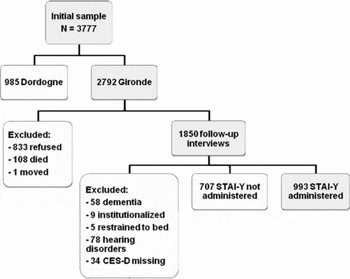
Figure 1 shows the flow chart of study enrollment and exclusion criteria. The first follow-up of the PAQUID study included participants from Gironde only (n = 2792). From the baseline sample, 833 subjects refused to take part in the follow-up, one moved, and 108 died before the follow-up. Participants who had dementia (n = 58), were institutionalized (n = 9), restrained to bed (n = 5) or had major hearing disorders (n = 78) were excluded from the present study. Moreover, 34 subjects were excluded because the CES-D was missing. Finally, from the 1700 participants available, the STAI-Y State was administered to a subsample of 993 individuals. For financial reasons a more extensive psychological and neuropsychological evaluation was only offered to the first 1000 participants in the first year of follow-up of the PAQUID cohort. Nine participants had one or two items of the STAI-Y missing and, as suggested by Spielberger (Reference Spielberger1983), these missing items were replaced by the mean of the remaining scale multiplied by 20 and rounded to the next higher whole number.
Flow chart of the study sample enrollment. Note: White and gray shapes represent exclusion and inclusion criteria, respectively.

Results
STAI-Y State norms
Differences between participants included in the study and those who were excluded because of non-administered STAI-Y State scale were tested using t-tests or χ2. Compared to excluded participants who were not evaluated with the STAI-Y, the participants included in this study were more educated (p < 0.001) and had higher subjective cognitive complaint scores (p = 0.006). However, they did not differ in terms of age (p = 0.467), sex (p = 0.122), psychotropic drugs use (p = 0.245), MMSE score (p = 0.717), depression (p = 0.950), and IADL dependence (p = 0.421). Most participants included in the present study were female (60.1%), aged below 80 years (75.4%), and had completed primary school (no diploma: 22.4%; primary: 47.1%; secondary/university: 30.5%); 9.6% had depressive symptomatology according to CES-D scores.
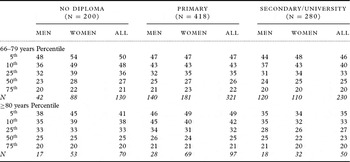
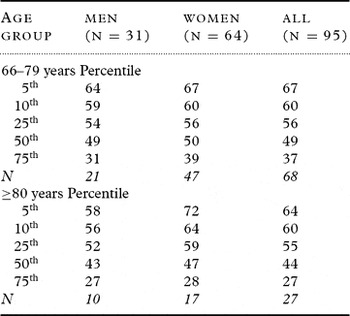
To produce the STAI-Y State norms, t-tests or ANOVAs tested whether age, sex, education, and depressive symptomatology influenced the STAI-Y score. Mean STAI-Y scores differ significantly according to categories of age (66–79 years: 30.47; 80 years and over: 28.77; p = 0.025), sex (women: 31.06; men: 28.54; p < 0.001), education level (no diploma: 31.13; primary: 30.57; secondary/university: 28.46; p = 0.007), and depressive symptomatology (depressed: 45.69; non-depressed: 28.40; p < 0.001). Therefore, norms were stratified by age, sex, and education and are shown separately for non-depressed (Table 1) and depressed (Table 2) older adults. Because of the small number of depressed subjects, norms for depressed participants were stratified according to age and sex only.
STAI-Y State scores of non-depressive older adults as a function of age, education level, and sex

STAI-Y State scores of older adults with depressive symptomatology as a function of age and sex

STAI-Y State associated factors
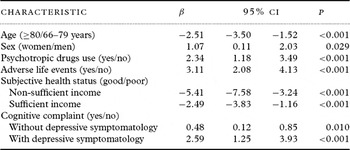
To explore the variables associated with the STAI-Y State score in the study sample, a stepwise (backward deletion) multiple regression was performed between the STAI-Y State score as the dependent variable and sociodemographic/health-related variables as independent variables using SAS software (version 9.1) with the α level set at 5%. Assumptions of the multiple regression were verified (linearity, multicollinearity, normality, homoscedasticity, and independence of errors). To reduce the number of independent variables, univariate regressions were first computed with each variable (i.e. age, education, marital status, proximity of relatives, self-assessment of income sufficiency, occupation during active life, depressive status, CES-D score, subjective health status, subjective cognitive complaints, presence of adverse life events, basic activities of daily living functioning, instrumental activities of daily living functioning, number of drugs used, use of psychotropic drugs, dyspnea, presence of chronic diseases, hypertension, cigarette consumption, general cognitive functioning, short-term visual memory, semantic verbal fluency, visuospatial attention, episodic memory, speed of information processing and visuomotor coordination, conceptual knowledge, and working memory) and only those with a p value below 25% were included in the multiple regression model. Among these variables, only marital status, basic activities of daily living functioning, hypertension, short-term visual memory, episodic memory, and general cognitive functioning did not have a p value below 25% and proximity of relatives, visuospatial attention, conceptual knowledge, and working memory were the only variables included with a p value higher than 5%. All interactions were tested among the selected independent variables. Because heteroscedasticity was observed in the residuals, the feasible generalized least squares method was used. The final model is presented in Table 3 and revealed that age, sex, psychotropic drugs use, and adverse life events were significantly associated with the STAI-Y State score as well as the interactions of subjective health-income sufficiency and subjective cognitive complaints-depression. In participants assessing their income as insufficient, those with a good subjective health had lower anxiety scores than those with poor subjective health. This effect was also observed in participants who assessed their income as sufficient, but at a lower magnitude. In non-depressed participants, those with cognitive complaints had higher anxiety scores compared to those without cognitive complaints. This was also the case in depressed participants, but the effect was much more pronounced than in non-depressed participants.
Multiple regression model of socio-demographic and health-related characteristics on STAI-Y State score

Adjusted R2: 0.294.
Discussion
Norms of the STAI-Y State anxiety inventory
The first aim of the present study was to produce norms for the STAI-Y State anxiety scale with a large sample of older adults selected from the general population. The selected participants were not demented, institutionalized, restrained to bed, nor had a major hearing disorder. Globally, women, younger participants, and lowly educated participants had higher STAI-Y State scores compared to men, older participants, and those with higher education level, respectively. As expected, depressed participants also had a higher anxiety level compared to non-depressed participants and separate norms were constructed for depressed and non-depressed older adults. In non-depressed older adults, a visual inspection of the STAI-Y State median scores confirmed that women had higher scores than men. This effect was especially obvious in participants aged 66–79 years, whereas in participants aged 80 years and over, the median scores in women were lower or equal to that in men. Moreover, in non-depressed participants, women aged 66–79 years with a low education level had the highest STAI-Y State score median while women aged 80 and over with a high education level had the lowest STAI-Y State score median. In the depressed participants, the influence of sex and age was also noticeable as women aged 66–79 years and men aged 80 years and over had the highest and lowest STAI-Y State median scores, respectively.
The present study is one of the very few providing norms for the STAI anxiety inventory in older adults and probably the first one for the latest version of the state scale, the STAI-Y, derived from a large sample of older adults from the general population. Compared to the norms of younger adults from the original version (Spielberger, Reference Spielberger1983) or the French version (Bruchon-Schweitzer and Paulhan, Reference Bruchon-Schweitzer and Paulhan1993) of the STAI-Y State, all categories of non-depressed participants in the present study had lower state median scores. However, all categories of depressed older adults had higher state anxiety median scores compared to these younger adult samples (Spielberger, Reference Spielberger1983; Bruchon-Schweitzer and Paulhan, Reference Bruchon-Schweitzer and Paulhan1993), indicating that depressive symptoms have a major impact on the STAI-Y State scores in older adults.
Factors associated with the STAI-Y State anxiety inventory
The second aim of the current study was to identify the sociodemographic and health-related variables associated with the STAI-Y State score. Multivariate statistics were used to identify the independent factors associated with the STAI-Y State score. Among the sociodemographic variables assessed, age, sex and self-assessment of income sufficiency were found to be significantly associated with state anxiety score. These results are consistent with previous work indicating that older women had higher state (Kvaal et al., Reference Kvaal, Laake and Engedal2001a) and trait (Himmelfarb and Murrell, Reference Himmelfarb and Murrell1984; Fuentes and Cox, Reference Fuentes and Cox2000) anxiety levels compared to older men. This discrepancy between men and women was also observed with anxiety scales other than the STAI (e.g. de Beurs et al., Reference de Beurs, Beekman, van Balkom, Deeg, van Dyck and van Tilburg1999; Morin et al., Reference Morin, Landreville, Colecchi, McDonald, Stone and Ling1999). Moreover, previous studies showed that trait anxiety scores were higher in older elders than in younger elders (Himmelfarb and Murrell, Reference Himmelfarb and Murrell1984; Teachman, Reference Teachman2006). Teachman (Reference Teachman2006) suggested that negative affect symptoms, such as anxiety and depression, follow a curvilinear relationship with age, decreasing from the age of 40 to 80 years but increasing over the age of 80. However, other studies observed that the prevalence of anxiety disorders decreases according to age in older adults (Larkin et al., Reference Larkin1992; Manela et al., Reference Manela, Katona and Livingston1996). The results of the present study indicated that anxiety level was lower in older adults aged 80 years and over compared to older adults aged 61–79 years. This discrepancy between our results and those of Teachman prolongs the existing controversial findings concerning the hypothesis of increased anxiety in old-old adulthood. Future studies are needed to clarify this relationship between affective symptoms and aging with regard to the emotion regulation theory (Carstensen et al., Reference Carstensen, Pasupathi, Mayr and Nesselroade2000) and the impact of health-related factors.
The current study demonstrated that among the various health-related variables assessed, psychotropic drugs use, adverse life events, subjective health status and cognitive complaints were independently linked with the STAI-Y State score. The finding that psychotropic drug use was associated with a higher anxiety score is not surprising since anxious older adults probably receive psychotropic drugs as a treatment for anxiety. Previous work revealed that the prevalence of psychotropic drug use increases according to the STAI-X Trait score (Paterniti et al., Reference Paterniti, Bisserbe and Alperovitch1998) and it may be similar for state anxiety. Moreover, the fact that the presence of adverse life events was linked to a higher state anxiety score conflicts with a recent study reporting that STAI-Y State scores were not correlated with adverse life events (Byrne et al., Reference Byrne, Pachana, Goncalves, Arnold, King and Khoo2010). In the latter study, participants were women aged between 60 and 79 years and adverse life events were measured using a list of 29 adverse life events. In contrast, our sample included men and had a wider age range. However, our results did not suggest that age or sex modify the relation between anxiety and adverse life events. Because the list of adverse life events used by Byrne et al. was not detailed, it is not possible to establish whether differences between their instruments and ours could account for the discrepancy of results. Nevertheless, other studies using other anxiety scales than the STAI found that a high anxiety level was linked with adverse life events (de Beurs et al., Reference de Beurs, Beekman, Deeg, Van Dyck and van Tilburg2000; Richardson et al., Reference Richardson, Simning, He and Conwell2010). One study (Richardson et al., Reference Richardson, Simning, He and Conwell2010), which used the Goldberg Anxiety Scale, observed this association after controlling for many variables including major depressive episode, medical conditions, sex, education, income, and pain. The results of Richardson et al. are consistent with those of the present study and both studies used similar measures of adverse life events based on items from the Louisville Older Person Events Scale. Furthermore, other previous work using the anxiety subscale of the Hospital Anxiety and Depression Scale indicated that, in older adults, the onset of a high anxiety level was associated with adverse life events, especially the death of a spouse and the illness of a spouse or relative which were included in the present study (de Beurs et al., Reference de Beurs, Beekman, Deeg, Van Dyck and van Tilburg2000). Overall, the present results confirmed previous work showing that anxiety is related to adverse life events.
Previous studies showed that the STAI-Y State score was correlated with general health perception (Dennis et al., Reference Dennis, Boddington and Funnell2007; Byrne et al., Reference Byrne, Pachana, Goncalves, Arnold, King and Khoo2010). The current results corroborate these findings, but also indicate that self-assessment of income sufficiency modified the association between subjective health status and state anxiety. Older adults with good subjective health had lower state anxiety scores than older adults with poor subjective health, but this effect was two times greater in older adults who evaluated their income as insufficient compared to older adults who evaluated their income as sufficient. Previous studies using either the STAI-X Trait (Himmelfarb and Murrell, Reference Himmelfarb and Murrell1984) or the Goldberg (Richardson et al., Reference Richardson, Simning, He and Conwell2010) anxiety scales reported that a lower anxiety level was associated with a lower income. However, after controlling for other factors such as age, major depression episode and adverse life events, Richardson et al. found that this association between income and anxiety was no longer significant. In the present study, the fact that self-assessment of income sufficiency was related to state anxiety may only reflect that anxiety is linked to feelings of financial insecurity rather than a true insufficiency of income. Nevertheless, this hypothesis would imply that high state anxiety is associated with poor subjective health, but especially in older adults with feelings of financial insecurity.
In agreement with results from previous studies (Weaver Cargin et al., Reference Weaver Cargin, Collie, Masters and Maruff2008; Ausen et al., Reference Ausen, Edman, Almkvist and Bogdanovic2009), subjective cognitive complaints were found to be associated with state anxiety whereas no association was found with cognitive performances in any of the various tests used. Weaver Cargin et al. observed that subjective cognitive complaints correlated with both state and trait scales of the STAI-X, while Ausen et al. (Reference Ausen, Edman, Almkvist and Bogdanovic2009) showed that older adults with subjective, but no objective, cognitive impairment had higher trait anxiety compared to older adults without subjective or objective cognitive impairment (see also Gallassi et al., Reference Gallassi, Bisulli, Oppi, Poda and Di Felice2008). However, these results and those of our own study conflict with those of Byrne et al. (Reference Byrne, Pachana, Goncalves, Arnold, King and Khoo2010) who did not observe a significant correlation between the STAI-Y State score and subjective memory impairment. The discrepancy of results between Byrne et al. and other studies could be due to differences in the assessment of subjective cognitive impairment; their measure considerably differs from the ones used in the other studies, including ours, because it assessed whether everyday memory function had changed since participants were in their 20s. While older adults may report that their memory has changed since they were young, they may still perceive to have good memory functioning for their age. Moreover, previous work established that subjective cognitive complaints are generally linked with depressive symptoms (Gagnon et al., Reference Gagnon1994; Derouesné et al., Reference Derouesné, Lacomblez, Thibault and LePoncin1999; Reid and Maclullich, Reference Reid and Maclullich2006; Amieva et al., Reference Amieva2008; Rouch et al., Reference Rouch2008; Weaver Cargin et al., Reference Weaver Cargin, Collie, Masters and Maruff2008). The current study revealed that in addition to being linked with state anxiety scores, the presence of depression modified the relation between subjective cognitive complaints and state anxiety. Older adults with cognitive complaints had higher STAI-Y state scores compared to older adults without cognitive complaints, but this effect was more than five times greater in depressed than in non-depressed older adults. A possible explanation for the relationship between anxiety symptomatology, depression symptomatology, and cognitive complaints is that these three conditions could be triggered or exacerbated by an endocrine dysfunction producing elevated cortisol levels (Wolf et al., Reference Wolf2005; Mantella et al., Reference Mantella2008; Beluche et al., Reference Beluche2009).
This study has many strengths and has made some original contributions. First, this study is one of the very few that provides norms in older adults for the STAI anxiety inventory. Second, these norms are probably the first norms for the STAI-Y State based on a large sample recruited from the general population of older adults. Third, the factors associated with the STAI-Y State score were assessed using many sociodemographic and health-related variables, allowing identification of the independent factors related to state anxiety.
This study also has some limitations. First, while potential selection biases were avoided by the use of a randomly recruited sample of older adults, the STAI-Y State scale was not available for all participants of the sample. These missing participants were more educated and had higher subjective cognitive complaint scores than those included in the study. However, they were comparable according to most sociodemographic and health-related characteristics as they did not differ in terms of age, sex, psychotropic drug use, MMSE score, depression, and IADL dependence. Second, the norms for the depressed older adults should be interpreted with caution since the number of depressed participants was limited. Low numbers of participants can be observed in the norms for depressed older adults, especially in the categories aged over 80 years. Third, the results of the present study originate from the PAQUID study data which were collected a considerable time ago. However, it does not negate the relevance of the present results since there is a lack of data on the STAI in older adults, and thus, it is unknown whether our participants have a different state anxiety score distribution than the current population of older adults.
In summary, this study provides norms for the STAI-Y State anxiety inventory in the older adult population. The analyses on the sociodemographic and health-related variables revealed that a high state anxiety was more likely to be observed in participants who were of younger age (61–79 years), were women, had a depressive symptomatology, poor subjective health, subjective cognitive complaints, perceived their income as insufficient, used psychotropic drugs, and had experienced the presence of an adverse life event in the last 12 months. Clinicians should take these variables into account in order to better understand state anxiety in older adults, its related factors, and its burden. These results provide valuable information on the mental health of older adults, particularly in the context of a growing interest in studying anxiety and its related features in older adults since this has been neglected compared to other fields of research in recent decades.
Conflict of interest
None.
Description of authors’ roles
Olivier Potvin wrote the paper. Valérie Bergua, Céline Meillon, Mélanie Le Goff, Jean Bouisson, and Jean-François Dartigues revised the paper and contributed to its content and to interpretation of data. Céline Meillon and Mélanie Le Goff performed the statistical analyses. Hélène Amieva supervised data interpretation and preparation of the paper. Jean-François Dartigues developed the research design.
Acknowledgments
This work was supported by ARMA (Bordeaux), Caisse Nationale d'Assurance Maladie des Travailleurs Salariés (CNAMTS), Conseil Général de la Dordogne, Conseil Général de la Gironde, Conseil Régional d'Aquitaine, Fondation de France; France Alzheimer (Paris), GIS Longévité, Institut National de la Santé et de la Recherche Médicale (INSERM), Mutuelle Générale de l'Éducation Nationale (MGEN), Mutualité Sociale Agricole (MSA), NOVARTIS Pharma (France), and SCOR Insurance (France). Olivier Potvin is supported by a postdoctoral trainee award from the Fonds de recherche en santé du Québec and Alzheimer Society of Canada Partnership Program.