Many adolescents are embedded in schools, neighborhoods, and homes where alcohol and drugs are commonly used. A nationally representative survey found that 60% percent of high school students and 32% of middle school students in the United States attend schools where students use or sell drugs on campus grounds; and 52% of high school students say they know of a place on or near school grounds where they can go to drink, smoke, or get high (National Center on Addiction and Substance Use at Columbia University, 2012). Nearly 16% of high school seniors also report that they witness drug sales in their neighborhoods “a few times per year,” and nearly 8% say that they see drug sales “almost every day” (Duncan, Palamar, & Williams, Reference Duncan, Palamar and Williams2014). Witnessing substance use at home is also common, as approximately 1 in 10 (or 7.5 million) children under the age of 18 in the United States live with a parent suffering from an alcohol use disorder (Substance Abuse and Mental Health Services Administration, 2013), and 1 in 5 adult Americans have grown up with a relative suffering from alcohol problems (American Academy of Child & Adolescent Psychiatry, 2011).
Youth who grow up in families and communities characterized by high levels of alcohol and drug use are at increased risk for a wide range of problems, such as emotional and behavioral problems during childhood and adolescence (Chassin, Rogosch, & Barrera, Reference Chassin, Rogosch and Barrera1991; Edwards, Eiden, Colder, & Leonard, Reference Edwards, Eiden, Colder and Leonard2006; Sher, Reference Sher1997), substance use during adolescence (Chassin, Pillow, Curran, Molina, & Barrera, Reference Chassin, Pillow, Curran, Molina and Barrera1993; Duncan et al., Reference Duncan, Palamar and Williams2014; National Center on Addiction and Substance Use at Columbia University, 2012), and substance use disorder, criminality, and mental health problems in adulthood (Anda et al., Reference Anda, Whitfield, Felitti, Chapman, Edwards and Dube2002; Harter, Reference Harter2000). Although being embedded in homes and communities characterized by high substance use is consistently associated with poor outcomes among adolescents, it is unclear whether being exposed to these substance-use contexts, per se, plays a causal role in predicting adolescents' poor outcomes. Moreover, much less is known about whether witnessing others' substance use influences young adolescents' behavior in the moment and whether these types of exposures are more strongly associated with problem behavior for some adolescents versus others.
In the current study, we examine how witnessing others using alcohol or drugs in daily life is associated with antisocial behavior among young adolescents (ages 11–15) growing up in high-risk families. Using ecological momentary assessment (EMA) via mobile phone surveys, we tested whether young adolescents were more likely to engage in antisocial behavior on days when they witnessed (vs. did not witness) others using substances, including alcohol and other drugs, in their homes, schools, and communities. We asked two specific questions.
-
Question 1: Are young adolescents more likely to engage in antisocial behavior on days when they witness others using substances?
-
Question 2: Is the daily association between witnessing substance use and engaging in antisocial behavior stronger for young adolescents with, versus without, the dopamine receptor D4 seven repeat (DRD4-7R) allele?
We provide background and rationale for each of these questions below.
Question 1
Many adolescents are exposed to peers, family members, and others in their community who are using alcohol and other drugs (Duncan et al., Reference Duncan, Palamar and Williams2014; Grant, Reference Grant2000; National Center on Addiction and Substance Use at Columbia University, 2012). This is especially true for adolescents living in low-income areas (Crum, Lillie-Blanton, & Anthony, Reference Crum, Lillie-Blanton and Anthony1996; Storr, Chen, & Anthony, Reference Storr, Chen and Anthony2004). Numerous studies have shown that growing up in high substance-use contexts is associated with antisocial behavior among children and adolescents (Chassin et al., Reference Chassin, Rogosch and Barrera1991; Hill & Muka, Reference Hill and Muka1996; Loukas, Zucker, Fitzgerald, & Krull, Reference Loukas, Zucker, Fitzgerald and Krull2003; Sher, Reference Sher1997; Sher, Walitzer, Wood, & Brent, Reference Sher, Walitzer, Wood and Brent1991). Youth with persistent and high levels of antisocial behavior tend to live in families with higher rates of substance use problems and dependency (Fergusson, Horwood, & Nagin, Reference Fergusson, Horwood and Nagin2000; Odgers et al., Reference Odgers, Moffitt, Broadbent, Dickson, Hancox and Harrington2008). They also tend to be embedded in peer groups and other settings where alcohol and drugs are readily available, and where witnessing others using substances is common (Dishion & Patterson, Reference Dishion, Patterson, Cicchetti and Cohen2006; Fergusson et al., Reference Fergusson, Horwood and Nagin2000).
For the most part, however, prior research has considered exposure to family members' or peers' substance use as a static risk marker for children's antisocial behavior, testing whether youth who are embedded in high substance-use contexts at one point in their lives show greater involvement in antisocial behavior, and/or other problems, later on (e.g., Anda et al., Reference Anda, Whitfield, Felitti, Chapman, Edwards and Dube2002; Chassin et al., Reference Chassin, Rogosch and Barrera1991). Fewer studies have tested for a more dynamic or proximal association between witnessing others' substance use and antisocial behavior in adolescents' daily lives, such as whether adolescents are more likely to engage in antisocial behavior on days when they do versus do not witness others using substances. These types of within-individual comparisons allow for stronger tests of the causal role of substance-use contexts on adolescent antisocial behavior because each adolescent is compared to himself or herself across “exposure” versus “nonexposure” days. These within-person dynamic tests of the association between witnessing substance use and adolescents' antisocial behavior are important because it is possible, and likely, that the preexisting characteristics of adolescents and their families, the effects of exposure contexts themselves, may drive these associations. For example, in the home, the association between witnessing substance use exposure contexts and adolescent antisocial behavior may be explained by familial or genetic confounding, a shared liability (genetic or otherwise) that predicts greater exposure (i.e., witnessing others' substance use more frequently) as well as more frequent involvement in antisocial behavior (for a review, see Jaffee, Strait, & Odgers, Reference Jaffee, Strait and Odgers2012). Genetically informative research designs have provided evidence of familial confounding, showing that at least part of the association between parental substance use problems and offspring antisocial behavior can be explained by a common genetic liability (see, e.g., Haber, Jacob, & Heath, Reference Haber, Jacob and Heath2005; Waldron, Martin, & Heath, Reference Waldron, Martin and Heath2009). Likewise, outside the home, studies of the association between deviant peer affiliation and adolescent antisocial behavior have shown that this association may be partially driven by a process known as social selection, whereby adolescents who are already prone to antisocial behavior selectively affiliate with peers who engage in deviant behaviors, including substance use and delinquency (Burt, McGue, & Iacono, Reference Burt, McGue and Iacono2009; Kendler, Jacobson, Myers, & Eaves, Reference Kendler, Jacobson, Myers and Eaves2008).
Despite prior evidence of familial confounding and social selection, evidence also shows that exposure to substance-use contexts may have environmentally mediated effects on adolescents' antisocial behavior. For example, a longitudinal study by Hussong, Huang, Curran, Chassin, and Zucker (Reference Hussong, Huang, Curran, Chassin and Zucker2010) provided evidence that within-person increases in fathers' alcohol-related problems were associated with within-person increases in children's externalizing behavior during the same interval of time (but only in maternal vs. paternal reports of children's externalizing behavior). Similarly, support for an environmental effect of peer deviance on child antisocial behavior has been documented across numerous studies that have used quasi-experimental designs and/or statistical innovations to facilitate causal inferences (see review by Jaffee et al., Reference Jaffee, Strait and Odgers2012).
To our knowledge, however, no research to date has tested whether witnessing others using alcohol and drugs in daily life influences adolescents' antisocial behavior and, more specifically, whether this type of exposure is associated with daily changes in young adolescents' behavior. There are a number of reasons to believe that being in the presence of others using substances, both outside and inside of the home, could trigger involvement in antisocial behavior among young adolescents. For example, given that adolescents spend the majority of their free time in unstructured activities, often with peers (Larson, Reference Larson2001), witnessing substance use outside the home (i.e., in the school or the neighborhood) may suggest that the adolescent is in the company of peers who may be engaging in substance use and other deviant or rule-breaking activities. Deviant peer affiliation is known to increase adolescents' likelihood of antisocial behavior through deviancy training processes, such as modeling of risk behavior, deviant talk and verbal rehearsal of deviant activities, and positive reinforcement of deviant behavior (e.g., Dishion, Reference Dishion2000; Dishion, McCord, & Poulin, Reference Dishion, McCord and Poulin1999; Dishion, Spracklen, Andrews, & Patterson, Reference Dishion, Spracklen, Andrews and Patterson1996). Moreover, evidence shows that simply being in the company of peers increases adolescents' propensity for engaging in risky activities (Gardner & Steinberg, Reference Gardner and Steinberg2005), which may include antisocial behaviors. In contrast, witnessing substance use inside the home may facilitate adolescent engagement in antisocial behavior and rule violation through lax parenting and family stress pathways (e.g., Chassin et al., Reference Chassin, Rogosch and Barrera1991, Reference Chassin, Pillow, Curran, Molina and Barrera1993). These processes may explain why substance use environments could trigger adolescents' engagement in antisocial behavior, and therefore motivate our tests of the association between witnessing substance use and adolescents' antisocial behavior at the daily level.
Question 2
For some adolescents, the risk associated with witnessing others' substance use will be greater than for others. There is substantial individual variation in the outcomes associated with parental alcoholism (Harter, Reference Harter2000) as well as the effects of peer substance use (e.g., Urberg, Luo, Pilgrim, & Degirmencioglu, Reference Urberg, Luo, Pilgrim and Degirmencioglu2003). Models of Person × Environment interaction, such as stress-vulnerability models of substance use (e.g., Sinha, Reference Sinha2001), the diathesis–stress model of psychopathology (Monroe & Simons, Reference Monroe and Simons1991), and differential susceptibility models of development (Ellis, Boyce, Belsky, Bakermans-Kranenburg, & van IJzendoorn, Reference Bakermans-Kranenburg and van IJzendoorn2011) suggest that this individual variation can be explained by a wide variety of individual-level characteristics, such as temperament, family history, early environment, and genetics. These characteristics are thought to confer vulnerability for environmental effects on developmental outcomes, such as antisocial behavior, by making some youth more sensitive to environmental influences on this behavior than others. With regard to antisocial behavior, there is replicated evidence that children's susceptibility to environmental influences on antisocial behavior is partly due to genetic influences (Byrd & Manuck, Reference Byrd and Manuck2014; Caspi et al., Reference Caspi, McClay, Moffitt, Mill, Martin and Craig2002; Rutter & Silberg, Reference Rutter and Silberg2002), findings described as Gene × Environment (G × E) interactions (see reviews by Belsky et al., Reference Belsky, Jonassaint, Pluess, Stanton, Brummett and Williams2009; Caspi & Moffitt, Reference Caspi and Moffitt2006; Dick, Reference Dick2011).
In the present study, we test for a G × E interaction in adolescents' daily lives by asking whether the presence of a specific genetic marker, the DRD4-7R gene, helps to explain some of the variation among adolescents in the daily coupling between witnessing substance use and engaging in antisocial behavior. Briefly, the DRD4 gene is located on chromosome 11 and is highly polymorphic, displaying a variable number of tandem repeats of a 48 base pair (bp) sequence located in exon 3 (Ding et al., Reference Ding, Chi, Grady, Morishima, Kidd and Kidd2002; Van Tol et al., Reference Van Tol, Wu, Guan, Ohara, Bunzow and Civelli1992). This 48-bp sequence ranges from 2 to 11 repeats, with the 4-repeat (4R) and the 7R versions being the most common (Ding et al., Reference Ding, Chi, Grady, Morishima, Kidd and Kidd2002). The 7R allele is neurobiologically associated with reduced gene expression (Schoots & Van Tol, Reference Schoots and Van Tol2003) and lowered intracellular signaling (Asghari et al., Reference Asghari, Sanyal, Buchwaldt, Paterson, Jovanovic and Van Tol1995). Although there is some debate in the literature surrounding the validity of associations between DRD4-7R and behavioral outcomes (see Lusher, Chandler, & Ball, Reference Lusher, Chandler and Ball2001), studies have shown that the DRD4-7R allele is associated with numerous externalizing spectrum outcomes, including novelty/sensation seeking (Benjamin et al., Reference Benjamin, Li, Patterson, Greenberg, Murphy and Hamer1996; Ebstein et al., Reference Ebstein, Novick, Umansky, Priel, Osher and Blaine1996; Laucht, Becker, El-Faddagh, Hohm, & Schmidt, Reference Laucht, Becker, El-Faddagh, Hohm and Schmidt2005), delinquency and anger (Dmitrieva, Chen, Greenberger, Ogunseitan, & Ding, Reference Dmitrieva, Chen, Greenberger, Ogunseitan and Ding2011), poor inhibitory control (Congdon, Lesch, & Canli, Reference Congdon, Lesch and Canli2008), and attention-deficit/hyperactivity disorder (ADHD; Faraone et al., Reference Faraone, Perlis, Doyle, Smoller, Goralnick and Holmgren2005). Recent neuroimaging research has also shown that the DRD4-7R allele is associated with increased reactivity in brain regions related to reward, such as the ventral striatum (Forbes et al., Reference Forbes, Brown, Kimak, Ferrell, Manuck and Hariri2009). The confluence of increased reward-related reactivity and impulsivity suggests that 7R carriers may be more reactive and impulsive during risky and exciting situations, such as those in which substance use and antisocial behavior is occurring, and may be more likely to engage in these activities as a result.
Research supports the hypothesis that youth with the DRD4-7R allele may be more susceptible to environmental effects on problem behavior, in a manner consistent with G × E interaction. Four streams of evidence across naturalistic and experimental research are especially compelling. First, meta-analytic evidence suggests that youth with versus without dopamine risk genes, including the DRD4-7R allele, may be more susceptible to their social environments, displaying higher levels of externalizing behavior when environments are risky and lower levels of externalizing behavior when environments are beneficial (Bakermans-Kranenburg & van IJzendoorn, Reference Bakermans-Kranenburg and van IJzendoorn2011). Second, findings from randomized intervention trials show that youth with versus without the DRD4-7R allele are more sensitive to interventions designed to reduce externalizing behavior and substance use, particularly if they experience high levels of parental warmth and positive discipline (Bakermans-Kranenburg, van IJzendoorn, Pijlman, Mesman, & Juffer, Reference Bakermans-Kranenburg, van IJzendoorn, Pijlman, Mesman and Juffer2008; Cleveland et al., Reference Cleveland, Schlomer, Vandenbergh, Feinberg, Greenberg and Spoth2015). Third, experimental studies suggest that individuals with the DRD4-7R allele may be more sensitive to contexts where substance use cues are present, and may be more likely to crave or use substances as a result (Hutchison, LaChance, Niaura, Bryan, & Smolen, Reference Hutchison, LaChance, Niaura, Bryan and Smolen2002; Hutchison, McGeary, Smolen, Bryan, & Swift, Reference Hutchison, McGeary, Smolen, Bryan and Swift2002). Fourth, and particularly important for the current study, experimental results show that young adults with the DRD4-7R allele were more likely to consume alcohol in the presence of heavy-drinking peers (Larsen et al., Reference Larsen, van der Zwaluw, Overbeek, Granic, Franke and Engels2010), providing evidence that individuals with the 7R allele may be more susceptible to social influence processes leading to problem behaviors in daily life. Taken together, these studies provide compelling reasons to believe that adolescents with DRD4-7R may be more susceptible to the environmental influences on problem behavior, and that these influences may include day-to-day exposures, such as witnessing others using substances in their immediate contexts.
In the present study, we expand on previous findings where youth with DRD4-7R have been shown to be more sensitive to environmental influences on problem behavior by testing for a G × E interaction in adolescents' daily lives. More specifically, we test whether adolescents with versus without the DRD4-7R allele were more likely to engage in antisocial behavior on days when they witnessed others using substances compared to when they did not witness substance use. Although prior research has tested for G × E interactions related to antisocial behavior (see meta-analyses by Bakermans-Kranenburg & van IJzendoorn, Reference Bakermans-Kranenburg and van IJzendoorn2011; Kim-Cohen et al., Reference Kim-Cohen, Caspi, Taylor, Williams, Newcombe and Craig2006), the majority of research in this area has relied on between-person comparisons, testing whether adolescents with both a risk genotype and a static environmental exposure show more antisocial behavior, on average, than adolescents who have only the risk genotype, the environmental exposure, or neither. Studies utilizing between-person comparisons in this way cannot test an important implication of Person × Environment interaction models: that “vulnerable” individuals (such those with the DRD4-7R allele) will be more reactive or responsive to high-risk environments as they experience them in their daily lives. That is, conceptualizations of Person × Environment interaction (e.g., Belsky & Pluess, Reference Belsky and Pluess2009; Boyce & Ellis, Reference Boyce and Ellis2005; Caspi & Moffitt, Reference Caspi and Moffitt2006; Ellis et al., Reference Ellis, Boyce, Belsky, Bakermans-Kranenburg and van IJzendoorn2011; Monroe & Simons, Reference Monroe and Simons1991; Sinha, Reference Sinha2001) implicitly cast the coupling between environmental risks and behavioral outcomes as a within-person, naturalistic processes, which describe how a person reacts or changes in response to changing environments. Therefore, research designs such as EMA, which can repeatedly measure the same individuals over time and in their natural contexts, are needed to (a) document these within-person processes and (b) test whether these within-person processes differ between those with vulnerability factors such as DRD4-7R and those without.
We apply EMA in the current study to leverage three important methodological strengths in our test of gene–environment interplay in daily life. First, the near real-time, naturalistic measurement of substance-use contexts and antisocial behaviors using mobile phone assessments allowed us to shorten the recall window from months/years to a single day for our adolescents, with the aim of enhancing ecological validity of exposure and behavioral measures as well as reducing recall biases (Bradburn, Rips, & Shevell, Reference Bradburn, Rips and Shevell1987; Shiffman, Reference Shiffman2009; Shiffman, Stone, & Hufford, Reference Shiffman, Stone and Hufford2008). Second, we were able to test whether the DRD4-7R allele functioned as a moderator of the within-person processes relating witnessing substance use and engaging in antisocial behavior, an approach that more closely maps onto theories of Person × Environment interaction than studies that do not directly measure within-person processes. Third, the within-person, EMA approach applied in this study offers a natural control for passive gene–environment correlation (rGE). Passive rGE suggests that genes may operate as third variables explaining associations between environments (witnessing substance use) and outcomes (antisocial behavior) through a common genetic liability to experience both (for discussions of rGE, see Jaffee & Price, Reference Jaffee and Price2007; Plomin, DeFries, & Loehlin, Reference Plomin, DeFries and Loehlin1977; Rutter, Moffitt, & Caspi, Reference Rutter, Moffitt and Caspi2006). By using each adolescent as his or her own “control” across time, the effects of all stable individual differences, including genetic liability, are held constant, thus ruling out passive rGE as an alternative explanation for G × E interaction findings. These methods do not, however, control for active rGE, which describes a process through which a person's genes or genetically influenced characteristics leads him or her to select into risky environments or evoke risky behavior from others (Jaffee & Price, Reference Jaffee and Price2007). In the present study, we test for active rGE by testing whether adolescents with versus without the DRD4-7R gene witnessed substance use from others more frequently across the study period.
This study takes a novel approach to research on exposure to substance-use contexts, antisocial behavior, and G × E interaction in adolescents' daily lives. Using mobile phone surveys in adolescents' natural contexts, we obtained ecologically valid measures of exposure contexts and antisocial behavior, and tested (a) whether young adolescents were more likely to engage in antisocial behavior on days when they witnessed others using substances, and (b) whether the daily association between witnessing substance use and engaging in antisocial behavior was stronger for young adolescents with, versus without, the DRD4-7R allele.
Method
Participants
The miLife Study used EMA via mobile phones to track daily experiences, behaviors, and emotions of young adolescents (N = 151) at heightened risk for both exposure to substance-use contexts and antisocial behavior. Adolescents were, on average, 13 years of age (with ages ranging from 11 to 15 years, SD = 0.91). Males and females were equally represented in the sample (48% female), and 43% of adolescents were identified as belonging to an ethnic minority group (non-White ethnicity). Parental reports (89% biological mother) were collected for 93% of the adolescents in the sample (n = 141). The University of California Irvine Institutional Review Board approved all measures and procedures in the study.
Procedures
Brief telephone screen
Adolescents from low socioeconomic status neighborhoods were recruited via telephone screening in collaboration with a team of recruitment specialists from the LA–Orange County Fieldworks office. The recruitment team made initial contact with potential study members by sampling from a large database containing families who resided in low-income neighborhoods and who were known to have adolescents between 12 and 14 years of age living in the household. Professionally trained recruitment specialists administered a brief screen with parents to determine their child's eligibility for the study. The recruitment strategy was designed to identify young adolescents who were at heightened risk for early exposure to substance use (witnessing or early use) and for engaging in antisocial behavior. More specifically, adolescents were invited to participate in the study if their parents reported that they had friends who were already using alcohol, had a family member living in the household with a substance use problem, had already experimented with alcohol or drugs, had one or more symptoms of ADHD, were frequently getting in trouble at home or in school, or were currently receiving failing grades in school. To be eligible to participate in the study, at least three of the six above risk factors had to be endorsed by the parent; over 70% of the adolescents in the study had four of the above six risk factors present. Adolescents' profiles of substance-exposure risk in their homes and peer groups, as well as their current levels of engagement in antisocial behavior, are described in more detail below.
Baseline assessment
Adolescents who were eligible to participate in the study were invited to attend an in-person assessment with at least one of their parents. During the visit, a description of the study procedures was provided, and parents and their children provided their consent/assent to participate in the study. In private interview rooms, both the parent and the adolescent completed a battery of self-report inventories on laptop computers.
The adolescent's baseline assessment gathered information on school performance and experiences, stressful life events, perceived socioeconomic status, substance use and exposure, mental health, connectedness with family and friends, and diet and exercise. The parent baseline assessment involved structured self-report inventories as well as a qualitative interview. Parents reported on the adolescents' substance use, mental health, pubertal development, sleep, diet, exercise, and behavior. Parents also provided information on financial hardships experienced by the family, educational and employment history, living conditions, family history of mental health problems, current and prior difficulties with substances, and neighborhood problems. Parents and adolescents each received a $20 gift card for their participation in the baseline component of the study.
The adolescents in the miLife study were embedded in family and peer contexts that were characterized by relatively high levels of risk for witnessing substance abuse. Parent baseline reports indicated that 65% of the adolescents had a biological mother, father, or biological grandparent with a history of alcohol or drug problems. Approximately 50% of parents reported that they or their partners had a binge drinking episode in the last month, and 27% of parents reported that their substance use or their partners' substance use had caused problems for their family in the past. Adolescent reports indicated that 50% of the adolescents currently had friends who engaged in substance use (including alcohol, tobacco, or marijuana), and 33% of adolescents reported that they had previously engaged in substance use themselves, at least once (alcohol, tobacco, marijuana, Ritalin, or sniffing glue or gas). The vast majority of adolescents (77%) reported the presence of at least one conduct disorder (CD) symptom, while 50% endorsed three or more symptoms of CD (the minimum number of symptoms required for a CD diagnosis), placing this sample well above a recent population-based estimate of CD prevalence in the United States, which is approximately 9.5% (males = 12.0%, females = 7.1%; Nock, Kazdin, Hiripi, & Kessler, Reference Nock, Kazdin, Hiripi and Kessler2006). In addition to a heightened risk for both witnessing substance use and engaging in antisocial behavior, one in three families in the sample “occasionally” or “often” had difficulty paying for food or other necessities, 40% reported difficulties paying for bills such as insurance or heating, and 8% reported that they were currently receiving government services or assistance.
30-day EMA field study
Following the baseline assessments, adolescents were provided with smart phones that were programmed to beep three times a day for 30 consecutive days. Alarms were individually programmed to be compatible with each adolescent's normal waking hours as well as school schedules and other activities. The morning survey was scheduled between the times of 7 a.m. and 10 a.m., and took approximately 2.3 min to complete. The afternoon survey was scheduled between the hours of 2 p.m. and 5 p.m., and took on average 3.8 min to complete. Finally, the p.m. survey was scheduled between the hours of 5 p.m. and midnight, and took on average 8.3 min to complete. Each study participant was assigned a case manager who monitored the incoming data, tracked response rates, and sent a text message reminder when adolescents had missed two or more sessions in a row. Adolescents provided reports three times daily across a period of 38 days on average (SD = 13.5). The average response rate across the mobile assessment period was 92%. Adolescents were paid $25 for each of the 4 study weeks that they completed.
Follow-up assessment
Approximately 18 months following the initial assessments, adolescents were again interviewed to assess mental health, behavior, and educational status. During this follow-up visit, adolescents were also asked to provide a saliva sample for the purpose of DNA extraction and genotyping of selected alleles, including the DRD4-7R allele. One-hundred forty-one adolescents (93% of the full sample) provided saliva samples either during this follow-up visit or via regular mail. Saliva samples were collected from adolescents using Oragene OG-500 collection tubes. Samples were stored at room temperature and transferred to a genomic facility for extraction and analysis. Genomic DNA was extracted from saliva samples using the prepIT L2P procedure (DNA Genotek). All samples were RNase treated for 15 min at 37 °C before DNA precipitation. The DNA precipitate was washed with 70% ethanol, then air dried. The DNA pellet was dissolved in nuclease-free distilled water (Qiagen). The DNA concentration was determined using a GE Nanovue Spectrophotometer.
Genotyping for the DRD4 exon 3 VNTR polymorphism was performed using polymerase chain reaction and band size analysis. The forward primer sequence is (5′-ACCGCGACTACGTGGTCTACTCGTC-3′) and the reverse (5′-CCCGCCCCTCAGGACAGGA-3′). This amplifies a 517-bp product for the 4R allele and a 661-bp product for the 7R allele. Polymerase chain reaction products were separated on 2% agarose gel supplemented with ethidium bromide and visualized by ultraviolet transillumination. Digital images of the gels were taken, and band size was determined based on comparisons to 100-bp ladder molecular weight standards (Hyperladder IV, Bioline). From these digital images, adolescents' DRD4 genotype was determined. Consistent with previous studies, we split adolescents into two groups: those who possessed at least one copy of the 7R allele on either chromosome versus those who did not possess a copy of the 7R allele on either chromosome. Among the 141 adolescents who provided saliva samples, 35% carried at least one copy of the 7R allele (n = 50). The prevalence of the 7R allele did not differ by gender (34.7% of males, 36.2% of females, χ2 = 0.04, p = .85) nor by ethnicity (39.0% of non-White adolescents, 32.9% of White adolescents, χ2 = 0.55, p = .46).
Measures
Witnessing substance use was measured in the evening diary at the end of each day, by asking whether adolescents saw anyone drinking or using drugs: 1= at home, 2 = in school, 3 = in their neighborhoods, or 4 = somewhere else (or Yes or No responses). A single indicator of witnessing substance use in any of these contexts on a given day was created by coding the day as Yes (=1) if exposure in any one of these contexts occurred, and No (=0) if substance exposure did not occur that day. Context-specific items were also created to test whether the effects of witnessing substance use differed when the exposure occurred at home, using the at home item only, versus outside the home, using a marker of whether the adolescent witnessed substance use in the neighborhood, at school, or “somewhere else.” Intraclass correlation coefficients (ICCs) were calculated using linear multilevel models with no predictors, which separate the variance of the dependent variable into between- and within-person components. The ICC for witnessing substance use in any of these contexts was 0.24, indicating that 24% of the variance in witnessing substance use is between adolescents, whereas the remaining 76% of the variance was within adolescents over time. The ICC for witnessing substance use at home was 0.23, and the ICC for witnessing substance use outside the home was 0.18.
Antisocial behavior was also measured in the evening diary at the end of each day using six Yes or No items. Antisocial behavior items included aggression (e.g., “Today did you hit or hurt someone?”), vandalism (e.g., “Today did you damage someone else's property?”), and theft (e.g., “Today did you steal something that did not belong to you?”). These six items were summed to create an antisocial behavior score for each day. This score was then dichotomized so that 1 meant that the adolescent engaged in at least one of these behaviors on that day, and 0 meant that the adolescent did not engage in any antisocial behavior on that day.Footnote 1 The ICC for the dichotomous antisocial behavior indicator was 0.27, indicating that 27% of the variance in antisocial behavior was between adolescents, whereas the remaining 73% of the variance was within adolescents over time.
Analytic strategy and statistical models
The current study included daily reports nested within adolescents. Therefore, multilevel models (Raudenbush & Bryk, Reference Raudenbush and Bryk2002) were used to account for this nesting and to capture effects at two levels of analysis. The first level of analysis was within adolescents (Level 1), where we tested whether adolescents were more likely to engage in antisocial behavior on days when they witnessed others using substances compared to themselves on days when they did not witness substance use. The second level of analysis was between adolescents (Level 2), where we tested whether the within-person association between witnessing substance use and antisocial behavior was greater for adolescents with versus without the DRD4-7R allele, as hypothesized. Models were specified according to each research question.
-
Question 1: Are young adolescents more likely to engage in antisocial behavior on days when they witness others using substances?
The following model was used to estimate whether adolescents were more likely to engage in antisocial behavior (ASB) on days when they witnessed others using substances, compared to themselves on days when they did not witness substance use (WSU):
 $$\eqalign{{\rm ASB}_{ij}&= {\rm \beta}_0 + {\rm \beta}_1 \lpar {{\rm WSU}\_{\rm day}_{ij}} \rpar + {\rm \beta}_2 \lpar {{\rm WSU}\_{\rm person}_i} \rpar \cr & \quad + u_{0i} + u_{1i} \lpar {{\rm WSU}\_{\rm day}_{ij}} \rpar.}$$
In this model, ASB ij is the log odds of antisocial behavior for adolescent i on day j. Because the ASB ij outcome was dichotomous, models were specified in SAS PROC GLIMMIX using a binomial distribution and a logit link. The WSU_day ij variable is a dichotomous marker of whether adolescent i reported witnessing substance use on day j, where 1 = witnessed substance use and 0 = did not witness substance use. Its slope coefficient (β1) is the sample average change in the log odds of antisocial behavior on days when adolescents witnessed versus did not witness substance use. The WSU_person i variable is average of the WSU_day ij variable, multiplied by 100, so that it represents the percentage of days that each adolescent witnessed substance use across all days of the study. When this variable is included in the model, it removes the between-person variation in the WSU_day ij slope, thereby allowing the estimation of a purely within-person association between WSU_day ij and antisocial behavior. The WSU_person i variable was centered on its sample mean (M = 9.29%).
Equation 1 includes two random effects at Level 2 (between person): a random intercept u0i and random slope for witnessing substance use u 1i (WSU_day). The random intercept captures random between-person variability in adolescents' average level of antisocial behavior, whereas the random slope captures random between-person variability in adolescents' daily associations between witnessing substance use and engaging in antisocial behavior. Random intercepts and slopes were allowed to covary.Footnote 2 Gender and ethnic differences in the effect of witnessing substance use were tested using two-way interactions in separate models. To test the effects of witnessing substance use in specific contexts (inside vs. outside home), we also ran two separate models following the form of the multilevel model outlined in Equation 1. The first of these models estimated the effect of witnessing substance use inside the home (0 = did not witness substance use at home, 1 = witnessed substance use at home); the second model estimated the effect of witnessing substance use outside the home (0 = did not witness substance use outside the home, 1 = witnessed substance use outside the home).
One-day lagged models were also estimated to test whether witnessing substance use on the previous day predicted greater antisocial behavior on the current day. To test the predictive effect, we added previous-day witnessing substance use to the model specified in Equation 1, as well as a control for previous-day antisocial behavior. We included previous-day antisocial behavior as a covariate because this allowed us to interpret the outcome as residualized change in antisocial behavior from the previous day to the current day (Kessler & Greenberg, Reference Kessler and Greenberg1981). The same-day association between witnessing substance use and antisocial behavior was left in the model, to ensure that the 1-day lagged effect predicted antisocial behavior above and beyond the same-day association. Like the same-day effect for witnessing substance use, the 1-day lagged effect for witnessing substance use was modeled as random and allowed to covary with the random intercept and the random effect for same-day witnessing substance use.
To obtain summaries of the total variance explained in our antisocial behavior outcome across models, pseudo-R 2 was calculated as the squared correlation between the binary antisocial behavior outcome and the model-predicted probabilities for antisocial behavior. This pseudo-R 2 approach to assessing variance explained is discussed in Singer and Willett (Reference Singer and Willett2003) with reference to multilevel models and in Pampel (Reference Pampel2000) with reference to logistic regression. Model R 2 statistics are presented as percentage of variance explained, and were calculated in two ways: using fixed effects only (R 2 f) and using both fixed and random effects (R 2 fr).
-
Question 2: Is the daily association between witnessing substance use and engaging in antisocial behavior stronger for young adolescents with, versus without, the DRD4-7R allele?
We used the following model to estimate whether the daily coupling between witnessing substance use and engaging in antisocial behavior was stronger for adolescents with versus without the DRD4-7R allele:
 $$\eqalign{{\rm ASB}_{ij} & = {\rm \beta}_0 + {\rm \beta}_1 \lpar {{\rm WSU}\_{\rm day}_{ij}} \rpar + {\rm \beta}_2 \lpar {DRD4 - 7{\rm R}_{i}} \rpar \cr & \quad + {\rm \beta} _3 \lpar DRD4 - 7{\rm R}_{i} \times {\rm WSU}\_{\rm day}_{ij} \rpar \cr & \quad + {\rm \beta}_4 \lpar {{\rm WSU}\_{\rm person}_i} \rpar + u_{0i} + u_{1i} \lpar {{\rm WSU}\_{\rm day}_{ij}} \rpar.}$$
This model adds two variables to Equation 1: the DRD4-7R i variable, a dichotomous marker of whether adolescent i carries at least one copy of the 7R allele; and the DRD4-7R i × WSU_day ij variable, which represents the G × E interaction testing whether the daily within-person association between witnessing substance use (WSU_day ij ) and antisocial behavior (ASB ij ) differs between adolescents with versus without the 7R allele. If the β3 coefficient is significant in Equation 2, this suggests that adolescents with versus without the DRD4-7R allele may be more behaviorally reactive to witnessing substance use in daily life, and supports our G × E interaction hypothesis. The WSU_person i variable, representing the percentage of days each adolescent witnessed substance use, was recentered on the sample mean for the 141 adolescents who provided genetic information (M = 9.25%).
Results
Weekend versus weekday effects
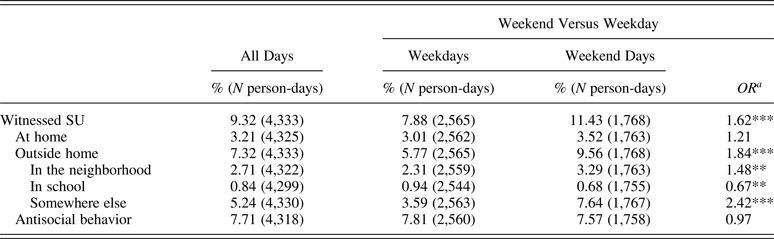
Table 1 provides the base rates for EMA reports of witnessing substance use and antisocial behavior (a) across all person-days and (b) separately by weekday (Monday–Thursday) versus weekend (Friday–Sunday). Table 1 presents three main findings. First, adolescents witnessed substance use with regularity in their daily lives (approximately 9% of study days). Most of these exposures occurred outside the home (7% of study days) versus inside the home (3% of study days). Second, adolescents reported engaging in at least one antisocial behavior on nearly 8% of study days. Third, witnessing substance use was significantly more common on weekend days (11%) versus weekdays (8%; OR [odds ratio] = 1.62, p < .001). A weekend–weekday difference was found for witnessing substance use outside the home (10% on weekends and 6% on weekdays, OR = 1.84, p < .001), but no weekend–weekday differences were found for witnessing substance use inside the home nor for adolescents' engagement in antisocial behavior. Given the strong weekend–weekday differences in adolescents' witnessing substance use, we included weekend versus weekday as a within-person covariate in our models.
-
Question 1: Are young adolescents more likely to engage in antisocial behavior on days when they witness others using substances?
Adolescent ecological momentary assessment reports of witnessing substance use (SU) and engaging in antisocial behavior, across all study days and separately by weekday versus weekend

Note: The table shows the overall percentage of days that adolescents reported each event during the ecological momentary assessment period, across all available person-days and separately by weekdays versus weekend days. Weekdays included Monday through Thursday; weekend days included Friday, Saturday, and Sunday.
a Odds ratios describing weekend–weekday comparisons from logistic multilevel models using SAS PROC GLIMMIX.
**p < .01. ***p < .001.
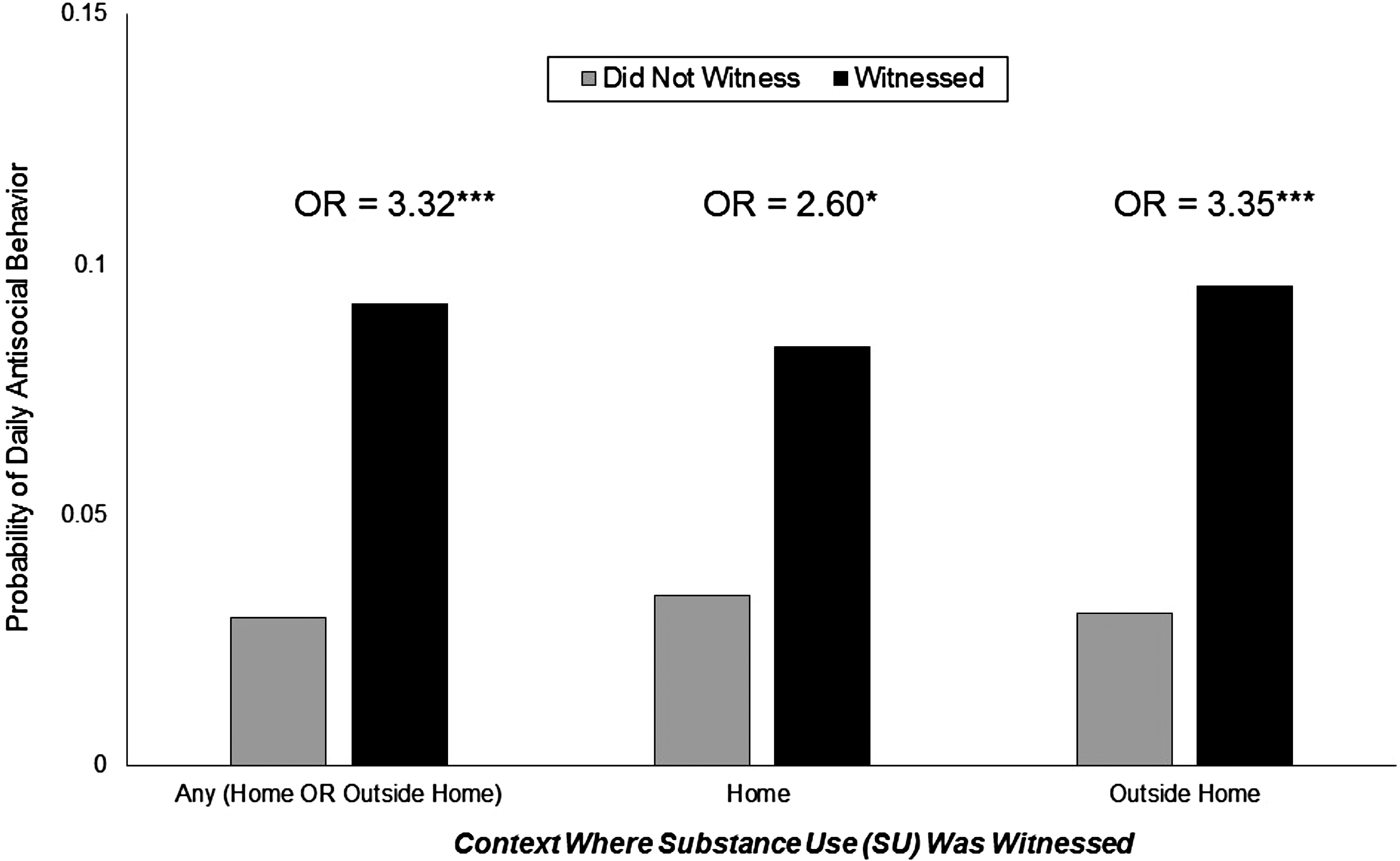
Compared to themselves on days when they did not witness substance use, adolescents were over three times more likely to engage in antisocial behavior on days when they witnessed others using substances (OR = 3.32, b = 1.20, SE = 0.21, p < .001, Model R 2 f = 7.66%, R 2 fr = 32.27%).Footnote 3 Predicted probabilities from this model suggested that adolescents engaged in antisocial behavior on 9.2% of the days when they witnessed others using substances, and engaged in antisocial behavior on only 3.0% of days when they did not witness others' substance use. In addition, we found a significant random slope for the within-person association between witnessing substance use and antisocial behavior, suggesting that the effect of witnessing substance use on antisocial behavior was significantly larger for some adolescents versus others (estimate = 1.42, SE = 0.56, p = .006). The daily association between witnessing substance use and antisocial behavior did not differ between males and females, nor between White versus non-White adolescents.
Figure 1 shows the predicted probabilities of antisocial behavior on days when adolescents witnessed versus did not witness others' substance use, along with estimates split by the context in which substance use was witnessed (in home vs. outside the home). Witnessing substance use inside the home (OR = 2.60, b = 0.96, SE = 0.40, p = .017, Model R 2 f = 2.47%, R 2 fr = 29.82%) as well as outside the home (OR = 3.35, b = 1.21, SE = 0.24, p < .001, Model R 2 f = 9.13%, R 2 fr = 32.36%) was associated with adolescent antisocial behavior. We found no differences in these effects between males and females, nor between White and non-White adolescents. Although the effect of witnessing substance use outside the home was larger than the effect of witnessing substance use inside the home, we found no significant difference between these two effects when we added them to the same model and compared them using a postestimation test (difference in b effects = 0.39, SE = 0.50, p = .44). Thus, it appeared that adolescents were more likely to engage in antisocial behavior on days when they witnessed others using substances, regardless of whether substance use was observed inside versus outside the home.
Within-person, same-day associations between witnessing substance use and adolescent antisocial behavior, across all contexts as well as by specific context (home vs. outside the home). *p < .05, ***p < .001.

Witnessing substance use 1-day lagged effects
We also tested whether witnessing substance use on the previous day predicted adolescents engaging in antisocial behavior on the current day. Lagged model results showed that although the 1-day lagged effect of witnessing substance use on antisocial behavior was in the hypothesized direction, it was not significant (OR = 1.24, b = 0.21, SE = 0.27, p = .42, Model R 2 f = 9.71%, R 2 fr = 36.43%). When examined by context (at home vs. outside home), we found that the 1-day lagged effect for witnessing substance use in the home was significant (OR = 2.61, b = 0.96, SE = 0.39, p = .015, Model R 2 f = 6.03%, R 2 fr = 32.00%), whereas the lagged effect for witnessing substance use outside the home was not significant (OR = 0.76, b = –0.28, SE = 0.35, p = .43, Model R 2 f = 11.39%, R 2 fr = 36.39%). When the lagged effects of witnessing substance use in the home and witnessing substance use outside the home were estimated in the same model and contrasted via a postestimation test, we found that witnessing substance use inside the home had a significantly stronger lagged effect on antisocial behavior than witnessing substance use outside the home (difference in next-day b effects = 1.38, SE = 0.64, p = .033). Overall, these lagged results suggest that witnessing substance use in the home may have longer lasting effects on adolescents' antisocial behavior than witnessing substance use outside the home, and may suggest that differential processes relate others' substance use to adolescents' antisocial behavior across inside versus outside home contexts.
-
Question 2: Is the daily association between witnessing substance use and engaging in antisocial behavior stronger for young adolescents with, versus without, the DRD4-7R allele?
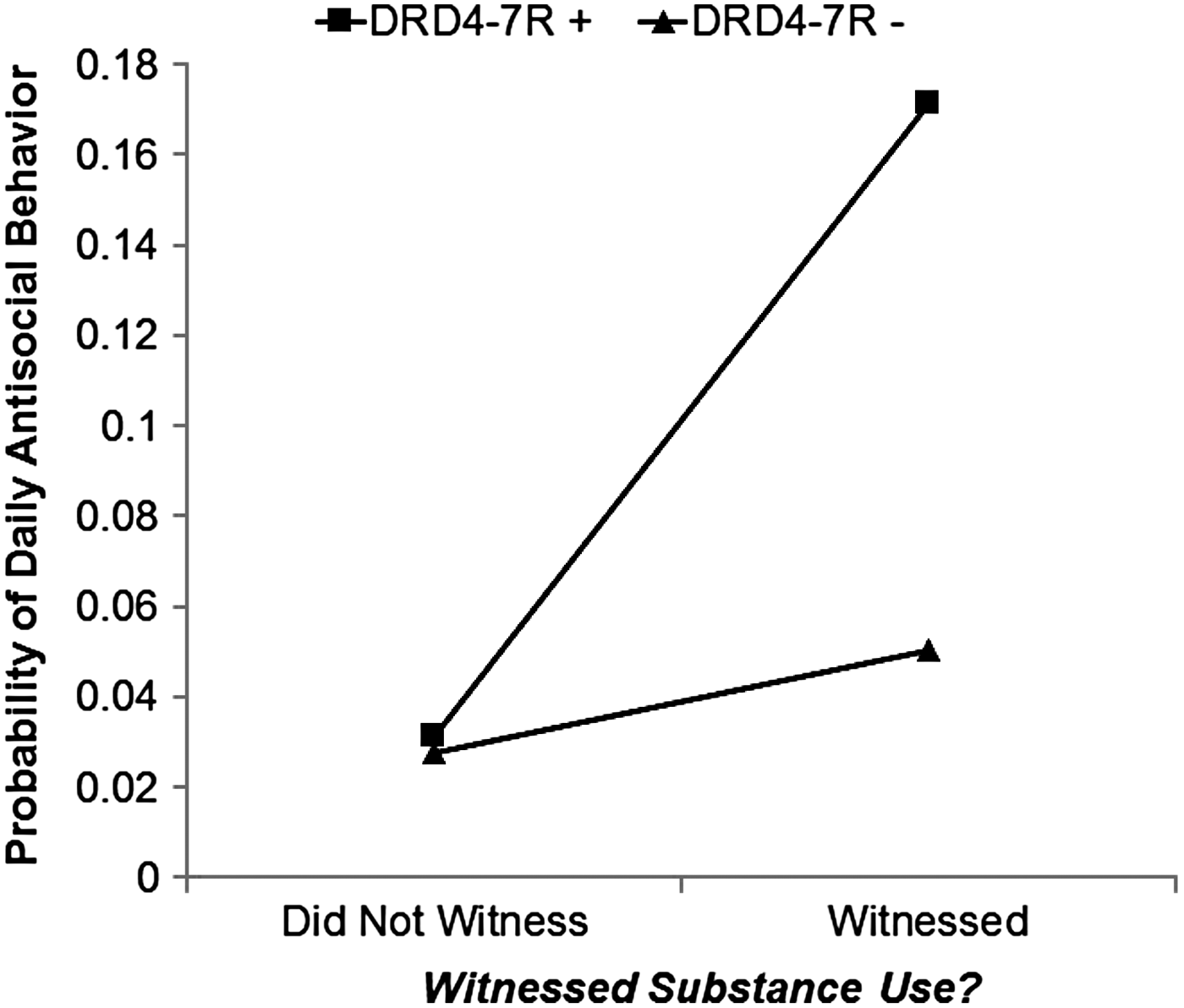
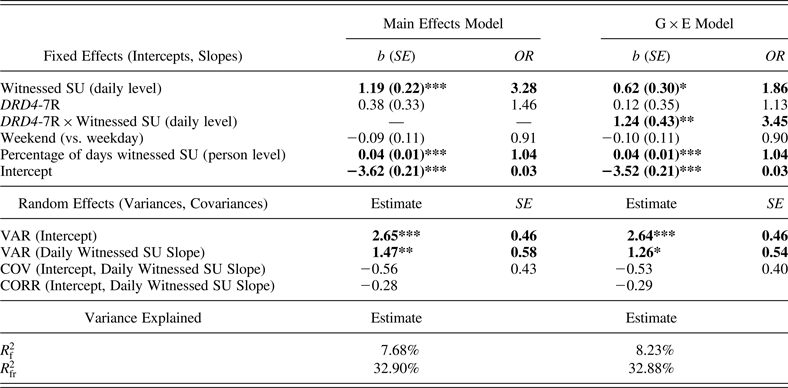
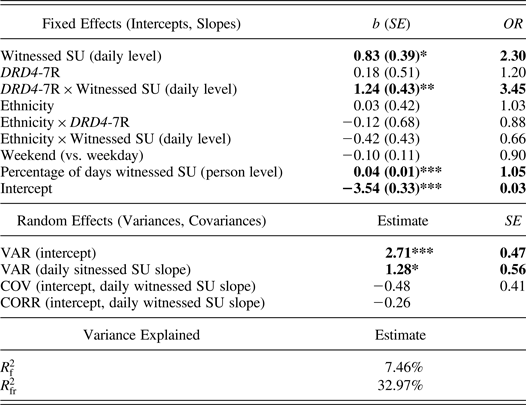
Table 2 shows results from two multilevel logistic models, the first testing the main effect of the DRD4 genotype (the main effects model), and the second testing whether adolescents with versus without the DRD4-7R allele showed larger increases in the odds of antisocial behavior across days when they witnessed versus did not witness substance use (the G × E interaction model). Table 2 illustrates three main findings. First, in the main effects model, the nonsignificant main effect of DRD4-7R suggests that adolescents with the DRD4-7R allele were not more likely to engage in antisocial behavior across the study period than adolescents without the 7R allele. Second, in the G × E interaction model, we observed a significant DRD4-7R × Daily Witnessing Substance interaction, which suggests that the within-person association between witnessing substance use and engaging in antisocial behavior differed by DRD4 genotype. Simple slopes estimation revealed that the same-day association between witnessing substance use and adolescents' antisocial behavior was considerably stronger for adolescents with the DRD4-7R allele (OR = 6.43, b = 1.86, SE = 0.31, p < .001) compared to adolescents without the 7R allele (OR = 1.86, b = 0.62, SE = 0.30, p = .041). This interaction effect is displayed in Figure 2. We found no evidence that the G × E interaction differed by gender or ethnicity.
Dopamine receptor D4 seven repeat gene (DRD4-7R) × Witnessing Substance Use interaction predicting antisocial behavior. DRD4-7R +, 7R allele present; DRD4-7R –, 7R allele absent. On days when adolescents were exposed to substance use, adolescents with the DRD4-7R allele show greater likelihood of antisocial behavior compared to adolescents without the 7R allele. N = 141.

Multilevel models testing DRD4-7R main effect and DRD4-7R × Witnessing Substance Use (SU) interaction effect on daily antisocial behavior (N =141)
Note: DRD4-7R, Dopamine receptor D4 seven repeat allele; OR, odds ratio from a multilevel logistic model; b, unstandardized logit regression coefficient; VAR, variance parameter; COV, covariance parameter; CORR, correlation; R 2 f, model R 2 using fixed effects only; R 2 fr, model R 2 using fixed and random effects. Significant estimates are in bold type.
*p < .05. **p < .01. ***p < .001.
Do young adolescents with the DRD4-7R allele witness substance use more often? A test of active rGE
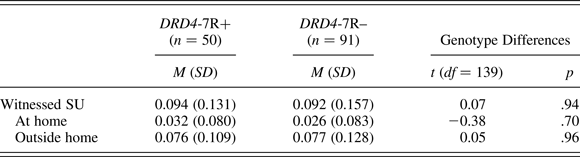
Table 3 shows the sample means of adolescent-specific proportions for witnessing substance use across EMA days, and tests differences in these proportions by genotype. We found no evidence that adolescents with versus without the DRD4-7R allele witnessed substance use on a higher proportion of study days, providing some evidence against the presence of an active rGE. This suggests that adolescents with versus without the DRD4-7R allele were no more likely to elicit or otherwise encounter contexts where others were using substances in their daily lives.
Do adolescents with versus without the DRD4-7R allele witness substance use (SU) more often?

Note: DRD4-7R, Dopamine receptor D4 seven repeat allele; DRD4-7R +, 7R present; DRD4-7R –, 7R absent; M, sample mean of adolescent-specific proportions for witnessing substance use across days; SD, standard deviation in these proportions.
Does population stratification confound our observed DRD4-7R × Witnessing Substance Use interactions?
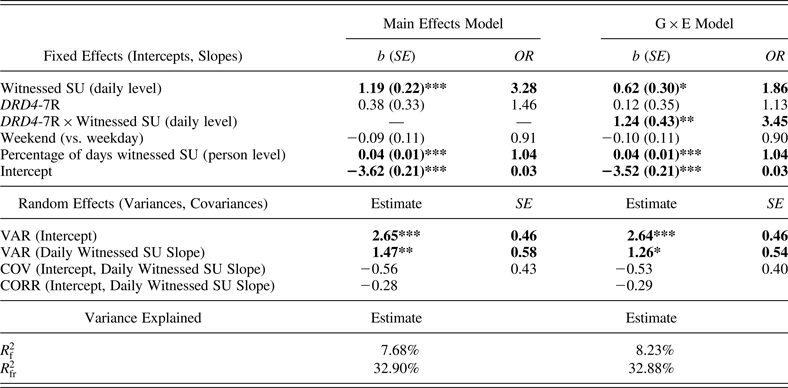
One concern when interpreting our G × E interaction finding is that the observed effects may be due to the ethnic or ancestral background of individuals, rather than their genotypes per se, a problem known as population stratification. Population stratification is essentially a problem of confounding, when ethnicity or ancestry serves as a third variable confounding observed associations among genes, environments, and behavior (Cardon & Palmer, Reference Cardon and Palmer2003; Wacholder, Rothman, & Caporaso, Reference Wacholder, Rothman and Caporaso2000). Population stratification may threaten the interpretation of our findings in two ways. First, ethnicity may confound the main effect of DRD4-7R on antisocial behavior if both the allele frequency and the antisocial behavior outcome differ between ethnic groups. Second, ethnicity may confound the G × E interaction effect, if the effect of DRD4-7R on antisocial behavior differs by ethnicity, or if ethnicity (as opposed to the DRD4-7R gene) is the “true” moderator of the within-person coupling between witnessing substance use and engagement in antisocial behavior. To test for these possibilities, we included interaction terms capturing Ethnicity × Genotype and Ethnicity × Witnessing Substance Use interactions in our models.
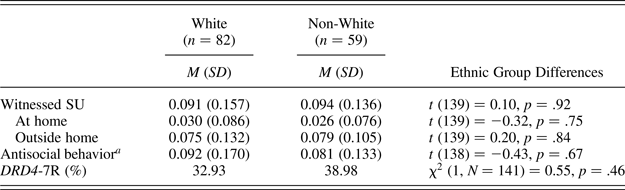
Table 4 shows comparisons across White (n = 82, 58.2% of sample) versus non-White adolescents (n = 59, 41.8% of sample) in the prevalence of DRD4-7R, as well as in the adolescent-specific proportions for witnessing substance use and engaging in antisocial behavior across EMA days. We found no evidence for differences in these measures by ethnicity. Table 5 shows the results of multilevel models that included the main effect of ethnicity, as well as Ethnicity × Witnessing Substance Use and Ethnicity × DRD4-7R interactions. Two findings in Table 5 are noteworthy. First, we found no evidence for a main effect of ethnicity on adolescents' daily involvement in antisocial behavior, nor did we find evidence for Ethnicity × DRD4-7R or Ethnicity × Witnessing Substance Use interaction effects. Second, even after including Ethnicity × Witnessing Substance Use and Ethnicity × DRD4-7R interactions in our models, our original G × E interaction effects remained significant. In short, we found no evidence for a population stratification confound in our G × E interaction results.
Ethnic group differences in witnessing substance use (SU), DRD4 genotype, and antisocial behavior in the genetic subsample (N =141)

Note: Ethnicity is a dichotomous marker of White (n = 82, 58.2% of sample) versus non-White (n = 59, 41.8% of sample). DRD4, Dopamine receptor D4 gene; M, sample mean of adolescent-specific proportions for witnessing substance use and engaging in antisocial behavior across days; SD, standard deviation in these proportions; DRD4-7R, DRD4 seven repeat allele.
a Tested using Satterthwaite's correction to account for unequal variances between groups.
Multilevel model testing DRD4-7R × Witnessed Substance Use (SU) interaction for antisocial behavior, with ethnicity controls (N = 141)

Note: Ethnicity is a dichotomous marker of White (n = 82, 58.2% of sample) versus non-White (n = 59, 41.8% of sample). DRD4-7R, dopamine receptor D4 seven repeat allele; OR, odds ratio from a multilevel logistic model; b, unstandardized logit regression coefficient; VAR, variance parameter; COV, covariance parameter; CORR, correlation. Significant estimates are in bold type.
*p < .05. **p < .01. ***p < .001.
Discussion
The current study used EMA via mobile phone surveys to address two questions. First, are young adolescents more likely to engage in antisocial behavior on days when they witness others using substances? Second, is the daily association between witnessing substance use and engaging in antisocial behavior stronger for young adolescents with, versus without, the DRD4-7R allele? Our results showed that adolescents were more likely to engage in antisocial behavior on days when they witnessed others using substances, compared to themselves on days when they did not witness others' substance use. This association was present when substance use was witnessed inside the home, as well as outside the home. We also found evidence for a Gene × Environment interaction in daily life: the daily coupling between witnessing others' substance use and engaging in antisocial behavior was significantly stronger for adolescents with versus without the DRD4-7R allele, because they showed larger increases in antisocial behavior across witnessing versus nonwitnessing days. It is important to note, however, that the high-risk nature of our sample limits the generalizability of these findings to the general population, so caution is warranted when extending these findings beyond young adolescents who are already at risk for exposure to substances and early behavioral problems.
Findings from this study add to our understanding of how exposure to substance-use contexts may affect adolescents' behavior in three ways. First, our findings provide clear evidence of a dynamic and proximal association between exposure to substance-use contexts and antisocial behavior in at-risk adolescents' daily lives. Prior research has documented high substance-use contexts (such as parental alcoholism and peer deviance) as static risk factors for child and adolescent antisocial behavior (Chassin et al., Reference Chassin, Rogosch and Barrera1991; Dodge, Coie, & Lynam, Reference Dodge, Coie, Lynam, Lerner and Damon2006; Loukas et al., Reference Loukas, Zucker, Fitzgerald and Krull2003), which is itself a well-known risk factor for adolescents' own substance use problems (Hawkins, Catalano, & Miller, Reference Hawkins, Catalano and Miller1992; Swadi, Reference Swadi1999). Here we demonstrate a dynamic and same-day association between witnessing others' substance use and adolescents' antisocial behavior, which cannot be explained away by stable covariates such as biological sex, ethnicity, or genetic/familial liability because each adolescent was used as his or her own “control” across days (Allison, Reference Allison2005). Moreover, we found no evidence that this effect differed between males and females or between White and non-White adolescents.
Second, our findings suggest that witnessing substance use may increase the likelihood of adolescents' same-day behavioral problems regardless of where exposure occurs. That is, we found that witnessing substance use inside the home, as well as outside the home, was associated with same-day increases in adolescents' antisocial behavior. Prior large-scale population-based studies have documented strong and environmentally mediated effects of peer deviance on adolescents' antisocial behavior (for a review, see Jaffee et al., Reference Jaffee, Strait and Odgers2012), while pointing primarily to selection factors and shared genetic risk to account for the correlation between parental substance use and adolescents' behavioral problems (see, e.g., Haber et al., Reference Haber, Bucholz, Jacob, Grant, Scherrer and Sartor2010; Waldron et al., Reference Waldron, Martin and Heath2009). Our finding that adolescents are more likely to act out on days that they witness others using substances outside the home is consistent with the idea that deviant behavior among peers is a robust, and environmentally mediated, predictor of adolescents' own behaviors (Dodge et al., Reference Dodge, Coie, Lynam, Lerner and Damon2006; Jaffee et al., Reference Jaffee, Strait and Odgers2012). Similarly, our finding that adolescents are also more likely to engage in antisocial behavior when they witness others using alcohol or drugs in their homes is consistent with evidence suggesting that substance exposure may have environmentally mediated effects on children's antisocial behavior (Hussong et al., Reference Hussong, Huang, Curran, Chassin and Zucker2010). It is noteworthy that witnessing substance use inside the home showed a longer lasting association (i.e., both a same-day and a 1-day lagged effect) on adolescents' antisocial behavior than witnessing substance use outside the home, which only showed a same-day association. The difference in the duration of these effects may suggest that differential mechanisms are driving the coupling between witnessing substance use and adolescent antisocial behavior across home versus outside home contexts. Future research should continue to explore the mechanisms linking substance-use contexts and antisocial behavior in adolescents' daily lives, with an eye to how these mechanisms might differ by context. For example, the association between witnessing substance use and adolescent antisocial behavior may be driven not only by lax parenting and family stress in the home context (Chassin et al., Reference Chassin, Rogosch and Barrera1991, Reference Chassin, Pillow, Curran, Molina and Barrera1993) but also by peer modeling, rehearsal, and reinforcement of deviant activities in outside home contexts (Dishion et al., Reference Dishion, Spracklen, Andrews and Patterson1996, Reference Dishion, McCord and Poulin1999, Reference Dishion2000). Each of these mechanisms may operate according to its own timescale, with some occurring more quickly and episodically (e.g., peer modeling and reinforcement of risky behavior), while others show slower but more sustained effects (e.g., lax parenting and family stress).
Third, we report what is, to our knowledge, the first evidence of a G × E interaction predicting antisocial behavior in the daily lives of adolescents. Our finding extends experimental results suggesting that adolescents with DRD4-7R allele are more sensitive to their environments by providing within-person evidence for this increased sensitivity in adolescents' daily lives. Specifically, we found that adolescents with versus without the DRD4-7R allele showed a stronger daily level association between witnessing others' substance use and engaging in antisocial behavior in their everyday, real-life contexts. These findings suggest that adolescents with the DRD4-7R allele may be more reactive to witnessing others using substances. Laboratory studies have shown that individuals' reactivity to substance-use contexts varies based on their DRD4 genotype, as individuals with DRD4 long alleles (seven or more repeats) show the greatest sensitivity to cigarette cues (Hutchison, LaChance, et al., Reference Hutchison, LaChance, Niaura, Bryan and Smolen2002) and priming doses of alcohol (Hutchison, McGeary, et al., Reference Hutchison, McGeary, Smolen, Bryan and Swift2002), and individuals with the DRD4-7R allele are more likely to drink heavily in response to experimental situations with heavy drinking peers (Larsen et al., Reference Larsen, van der Zwaluw, Overbeek, Granic, Franke and Engels2010). Our study extends these laboratory findings into adolescents' naturalistic environments, while using within-person comparisons to control for all stable and preexisting characteristics of adolescents and their families. Our G × E interaction findings also appear robust to common counterexplanations for G × E interaction results, such as rGE and population stratification.
How might the DRD4-7R allele increase sensitivity to contexts such as those in which youth witness others' substance use? Evidence suggests that the DRD4-7R allele is associated with both increased impulsivity and higher levels of reward-related reactivity. The DRD4 gene has been shown to be related to a number of impulsive phenotypes, including reduced inhibitory control (Congdon et al., Reference Congdon, Lesch and Canli2008), novelty seeking (Benjamin et al., Reference Benjamin, Li, Patterson, Greenberg, Murphy and Hamer1996; Ebstein et al., Reference Ebstein, Novick, Umansky, Priel, Osher and Blaine1996), and ADHD (Swanson et al., Reference Swanson, Deutsch, Cantwell, Posner, Kennedy and Barr2001). Laboratory evidence also suggests that youth with the DRD4-7R allele show greater ventral striatal reactivity in response to reward-related cues (Forbes et al., Reference Forbes, Brown, Kimak, Ferrell, Manuck and Hariri2009), which might suggest that these youth experience a higher drive for engaging in exciting and potentially reinforcing activities such as antisocial behavior. Thus, when confronted with contexts in which risky, exciting, and reinforcing behavior such as substance use is occurring, decreased impulse control and increased reward-related reactivity may combine to confer a “double whammy” of vulnerability for antisocial behavior among youth with the DRD4-7R allele. Future research that specifically examines DRD4-related vulnerability mechanisms explaining environmental effects on antisocial behavior is needed.
It is important to acknowledge the study's limitations. First, we present same-day and next-day associations between witnessing substance use and engaging in antisocial behavior, and therefore cannot fully account for the possibility that the link between environment and behavior occurs at a momentary, rather than a daily, timescale. Future research with more intensive within-day assessments is required to test for these potentially momentary associations. Second, it is possible that the EMA protocol may have led adolescents to modify their behavior, or their attention to substance-use contexts, as they went through their daily lives. Future research is required to test how reactive young adolescents may be to intensive reporting of these contexts and behaviors. Third, in the present study, we cannot be sure that reports of witnessing home substance use meant that adolescents witnessed parents using substances, and similarly, that witnessing outside home substance use (i.e., in the neighborhood, school, or “somewhere else”) meant that adolescents witnessed peers using substances. More information on the context in which substance use exposure occurs (e.g., specific locations, participants, and timing of exposure) is needed to understand exactly how these exposures influence adolescents' antisocial behavior in daily life. Fourth, exposure to substance-use contexts in adolescents' daily lives was naturally occurring, meaning we could not completely rule out selection effects or rGE in the same way that an experimental study with randomly assigned exposures could. We therefore echo the call of van IJzendoorn et al. (Reference van IJzendoorn, Bakermans-Kranenburg, Belsky, Beach, Brody and Dodge2011) for continued experimental studies of G × E interaction. Although we found no evidence that adolescents with versus without the DRD4-7R allele witnessed more substance use in their daily lives, suggesting the absence of a rGE, our study may have lacked the statistical power to detect it. Fifth, although the genetic moderation associated with the DRD4-7R allele appeared robust to population stratification, and was therefore unlikely to be due to ethnicity, we still cannot conclude that the DRD4-7R moderation effect is causal, because it may be due to related behavioral traits (e.g., sensation or novelty seeking) or other genetic polymorphisms in high linkage disequilibrium with DRD4-7R. Sixth, the current G × E interaction finding should be regarded as preliminary until it is replicated in an independent sample. Although our findings support and extend previous correlational and experimental work suggesting that individuals with the DRD4-7R allele may be more reactive or responsive to their surrounding contexts (e.g., Bakermans-Kranenburg & van IJzendoorn, Reference Bakermans-Kranenburg and van IJzendoorn2011; Larsen et al., Reference Larsen, van der Zwaluw, Overbeek, Granic, Franke and Engels2010), replication is nonetheless required. Seventh, and finally, the age range of the sample (ages 11–15) and the concomitant low base rate of daily substance use (less than 1% of observations) prevented us from separately examining the effects of witnessing substance use on adolescents' own substance use. The low use of substances among young adolescents offered the methodological advantage of examining the effects of witnessing substance use on antisocial behavior, separately from the adolescents' own use of substances. However, it is also possible that these adolescents underreported their own substance use throughout the study. Future work integrating objective measures of alcohol and drug use will be required to ensure that adolescent's own substance use is not influencing these results. In addition, future work with older adolescents, who are more likely to be using substances multiple times throughout the week or month (Johnston, O'Malley, Miech, Bachman, & Schulenberg, Reference Johnston, O'Malley, Miech, Bachman and Schulenberg2014), will be required to test how witnessing others using substances influenced adolescent's own substance use in daily life.
With these limitations in mind, the implications of our findings for theory and research can be noted. Our findings suggest that (a) the settings in which adolescents witness substance use may serve as “triggering contexts” for antisocial behavior in their daily lives, and (b) genetic factors (the DRD4-7R allele, in our study) might indicate which adolescents are likely to be more sensitive to the effects of exposure contexts on antisocial behavior. Our findings support and extend prior research and theory on the environmentally mediated effects of parental substance use and peer deviance on antisocial behavior (e.g., Dodge et al., Reference Dodge, Coie, Lynam, Lerner and Damon2006; Sher, Reference Sher1997), as well as theories of Person × Environment interaction, such as the diathesis–stress model of psychopathology (Monroe & Simons, Reference Monroe and Simons1991) and the stress–vulnerability models of substance use (Sinha, Reference Sinha2001), which suggest that individuals with genetic or dispositional vulnerabilities are more reactive to their contextual circumstances. Prior research in these areas has primarily used between-subjects designs, which cannot test well whether adolescents are more likely to engage in antisocial behavior when exposed to others' substance use in daily life, nor are they well positioned to evaluate whether adolescents' preexisting characteristics influence how strongly they will react to substance-use contexts as they experience them. By following adolescents intensively in their daily lives, using mobile devices, we find that daily experiences (e.g., witnessing others using substances) affect adolescents' behavior on a day-to-day level. Moreover, we see that for some young adolescents (e.g., those with the DRD4-7R allele), witnessing substance use carries greater risks for same-day antisocial behavior than for others. Taken together, these findings offer evidence that G × E interactions are present in young adolescents' daily lives, and may be potentially important for our understanding of antisocial behavior during this key developmental period.