





Introduction
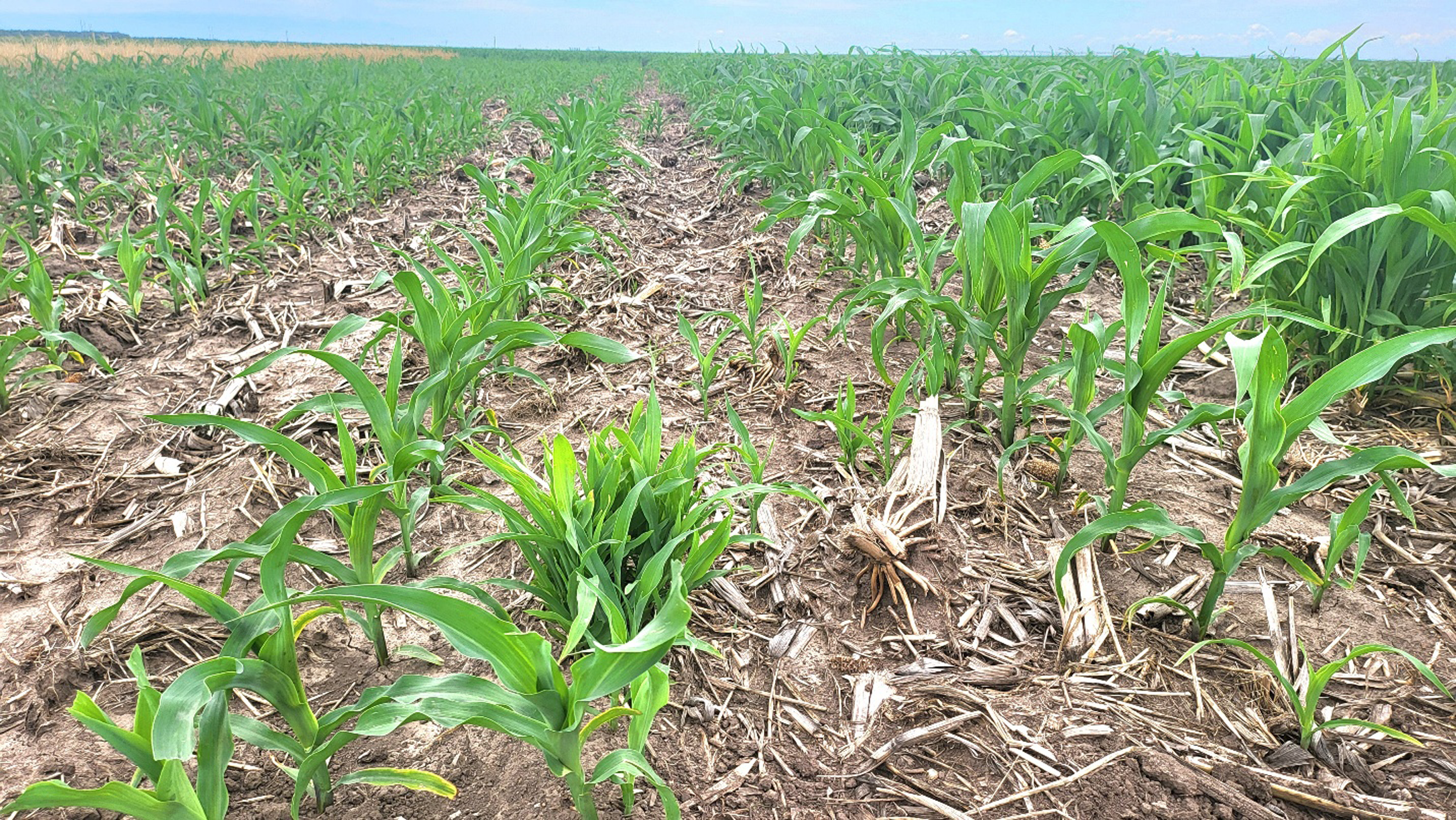
Volunteer corn emerges from overwintered seeds or intact cobs that remain in the field following the previous growing season because of late-season windstorms, hail damage, weak stalks, mechanical harvest losses, or other factors (Stephens et al. Reference Stephens, Kumar, Rees and Jhala2024). Favorable soil moisture and temperature in the subsequent growing season often promote emergence of volunteer corn, resulting in extended period of competition with the crop (Chahal et al. Reference Chahal, Jha, Jackson-Ziems, Wright, Jhala, Trevlos, Bilalis and Chachalis2016). Volunteer corn is a persistent and problematic weed where corn is grown continuously (Figure 1), particularly in U.S. midwestern states where corn dominates crop rotations (Chahal and Jhala Reference Chahal and Jhala2015; Striegel et al. Reference Striegel, Lawrence, Knezevic, Krumm, Hein and Jhala2020).
Volunteer corn in corn field in south central Nebraska in 2024 (Photo by Amit Jhala).

Volunteer corn may emerge as individual plants or as clumps, both of which compete with the crop for light, water, space, and nutrients (Singh et al. Reference Singh, Irmak, Kukal, Kumar, Lindquist, Knezevic, Pitla and Jhala2024). In addition to direct competition, volunteer corn can interfere with harvest efficiency and may complicate weed management due to herbicide resistance. Volunteer corn competition can result in significant corn yield losses (Chahal and Jhala Reference Chahal and Jhala2016). For example, Marquardt et al. (Reference Marquardt, Terry, Krupke and Johnson2012) reported 22% to 23% hybrid corn yield loss in Indiana at densities of 8.0 volunteer corn plants per square meter, whereas Alms et al. (Reference Alms, Moeching, Deneke and Vos2008) observed yield losses of up to 40% at 8.5 volunteer corn plants m−2 in field studies in South Dakota. Clumps of volunteer corn have been shown to be more competitive than individual plants, likely due to localized resource depletion; for example, Piasecki and Rizzardi (Reference Piasecki and Rizzardi2019) reported yield losses ranging from 3% to 34% with densities of 0.5 to 12 individual plants m−2 compared with 6% to 42% yield loss at the same densities when volunteer corn emerged in clumps of seven plants. In corn replant situations, volunteer corn can be especially problematic, with Shauck and Smeda (Reference Shauck and Smeda2014) documenting 44% to 58% corn yield loss at volunteer corn densities of 2 to 4 plants m−2, respectively.
In Nebraska, an average of 4.0 million ha of corn were planted annually between 2020 and 2024, exceeding soybean acreage by approximately 1.8 million ha, highlighting the widespread adoption of continuous corn cropping (USDA-NASS 2024). A similar trend was observed in Minnesota, where corn acreage (3.3 million ha) exceeded soybean acreage (3.0 million ha) during the same period (USDA-NASS 2024). In 2024, approximately 90% of corn grown in the United States contained herbicide-resistant traits (USDA-ERS 2024), reflecting the rapid adoption of genetically engineered corn to address weed and insect management challenges. Of this total, 7% exhibited herbicide resistance, while 83% carried stacked traits of both herbicide and insect resistance (USDA-ERS 2024). The prevalence of continuous corn production, coupled with widespread adoption of herbicide-resistant hybrids, has intensified challenges associated with volunteer corn management (Striegel et al. Reference Striegel, Lawrence, Knezevic, Krumm, Hein and Jhala2020). Moreover, the widespread adoption of no-till and conservation or reduced tillage practices (4.1 million ha under no-till and 2.1 million ha under conservation or reduced tillage in Nebraska in 2022 [USDA–NASS 2022]), has limited mechanical control options and increased reliance on herbicides for weed control (Jhala et al. Reference Jhala, Beckie, Peters, Culpepper and Norsworthy2021).
When only glufosinate-resistant or glyphosate-resistant corn hybrids were available, volunteer corn management strategies commonly relied on rotating these traits annually and applying glyphosate or glufosinate to control volunteer plants (Chahal and Jhala Reference Chahal and Jhala2016). However, the introduction and widespread adoption of hybrids that are resistant to both glufosinate and glyphosate rendered this strategy ineffective for managing glufosinate/glyphosate-resistant volunteer corn in corn (Jhala et al. Reference Jhala, Beckie, Peters, Culpepper and Norsworthy2021). Consequently, alternative postemergence herbicide options became necessary. In 2020, Enlist corn (Corteva Agriscience, Indianapolis, IN) was commercialized, providing quizalofop-p-ethyl (Assure II; AMVAC Chemical Corporation, Newport Beach, CA) as a selective postemergence herbicide for controlling glufosinate/glyphosate-resistant volunteer corn (AMVAC 2021). Enlist corn is resistant to quizalofop, 2,4-D, glufosinate, and glyphosate, allowing for flexible herbicide applications that target both grass and broadleaf weeds. Striegel et al. (Reference Striegel, Lawrence, Knezevic, Krumm, Hein and Jhala2020) reported 99% control of V5-stage glufosinate/glyphosate-resistant volunteer corn with quizalofop applied at 31 g ai ha−1 at 28 d after application (DAA) in Nebraska, demonstrating the utility of quizalofop to control volunteer corn growing among Enlist corn.
As of January 2026, quizalofop remains the only herbicide labeled for postemergence control of glufosinate/glyphosate-resistant volunteer corn in Enlist corn (AMVAC 2021), which limits flexibility in using it and raises concerns regarding herbicide stewardship and resistance management. In 2024, a premix of glufosinate and quizalofop (Zalo; AMVAC) was registered for use on glufosinate-resistant canola, cotton, and soybean (US EPA 2024). This formulation contains 274.4 g L−1 of glufosinate-ammonium and 27.6 g L−1 of quizalofop-p-ethyl ester (AMVAC 2024). The product is based on ProLease formulation technology that protects herbicide molecules from performance inhibitors, ensuring they reach the target weed and are released for consistent activity. It also helps prevent degradation, separation, and compatibility or mixing issues during storage and in spray tank mixtures (AMVAC 2024).
If registered for use on Enlist corn, this premix could provide an additional postemergence herbicide option for managing glufosinate/glyphosate-resistant volunteer corn while providing broad-spectrum weed control. Thus, the objectives of this study were to evaluate the efficacy of a glufosinate/quizalofop premix and to compare it with quizalofop (Assure II) for controlling glufosinate/glyphosate-resistant volunteer corn and to assess its effects on Enlist corn injury and yield. In addition, the interaction of these herbicide combinations with 2,4-D was evaluated because broadleaf herbicides are commonly included in a mixture to achieve broad-spectrum weed control in Enlist corn.
Materials and Methods
Experimental Site and Design
Field experiments were conducted at the University of Nebraska–Lincoln South-Central Agricultural Lab, near Clay Center (40.58°N, 98.14°W) in 2023 and 2024, and at the University of Minnesota Rosemount Research and Outreach Center (44.70°N, 93.08°W) in 2024. The Nebraska experimental site had silty loam texture (montmorillonitic, mesic, Pachic Argiustolls) with 17% sand, 58% silt, 25% clay, and 3.6% organic matter pH 6.8. The Minnesota experimental site had a silty clay loam texture with 9.9% sand, 52.6% silt, 37.5% clay, and 4.6% organic matter, pH 5.3.
A total of four field experiments were conducted during 2023 and 2024. In 2023, two field experiments were conducted in Nebraska: Experiment 1 had a high density of volunteer corn (150,000 seeds ha−1) and Experiment 2 had a low density of volunteer corn (50,000 seeds ha−1). In 2024, Experiment 3 with a high density of volunteer corn (150,000 seeds ha−1) was carried out in Nebraska and Experiment 4 with a high density of volunteer corn (162,500 seeds ha−1) was carried out in Minnesota (Table 1). The experimental fields were no-tilled in Nebraska and roto-tilled before planting in Minnesota. To simulate the volunteer corn, glufosinate-resistant and glyphosate-resistant corn (Dekalb DKC60-87RIB; Bayer CropScience, St. Louis, MO) seed harvested during the 2022 and 2023 harvest seasons was planted at a depth of 4.5 cm. These seeds were arranged in rows oriented perpendicular to the Enlist corn rows and spaced 0.76 m apart, ensuring a uniform and representative distribution of volunteer corn plants across the study area (Singh et al. Reference Singh, Kumar, Knezevic, Irmak, Lindquist, Pitla and Jhala2023). Information on volunteer corn and Enlist corn seeding rates, planting dates, and herbicide application dates appear in Table 1.
The experimental details of four field studies carried out to evaluate a premix of glufosinate/quizalofop to control volunteer corn growing among Enlist corn in 2023 and 2024.

Table 1. Long description
The table presents data from four field experiments conducted in Nebraska and Minnesota during 2023 and 2024. It includes details on volunteer corn seeding rates, Enlist corn seeding rates, and the dates of Enlist corn planting, V3-stage herbicide application, and V6-stage herbicide application. The table has five columns: Experiment, Location, year, Volunteer corn seeding rate, Enlist corn seeding rate, Date of Enlist corn planting, V3-stage application date, and V6-stage application date. Row 1: Experiment 1, Nebraska, 2023, Volunteer corn seeding rate 150,000 seeds ha^-1, Enlist corn seeding rate 87,500, Date of Enlist corn planting May 2, V3-stage application date May 29, V6-stage application date June 8. Row 2: Experiment 2, Nebraska, 2023, Volunteer corn seeding rate 50,000 seeds ha^-1, Enlist corn seeding rate 87,500, Date of Enlist corn planting May 2, V3-stage application date May 30, V6-stage application date June 12. Row 3: Experiment 3, Nebraska, 2024, Volunteer corn seeding rate 150,000 seeds ha^-1, Enlist corn seeding rate 87,500, Date of Enlist corn planting May 9, V3-stage application date June 3, V6-stage application date June 10. Row 4: Experiment 4, Minnesota, 2024, Volunteer corn seeding rate 162,500 seeds ha^-1, Enlist corn seeding rate 81,250, Date of Enlist corn planting May 10, V3-stage application date June 14, V6-stage application date June 25.
a Glufosinate/glyphosate-resistant seeds from the previous year were cross-planted to Enlist corn.
b Enlist corn hybrid B10Z78SXE (Brevant seeds, Indianapolis, IN) was planted in Experiments 1 and 2, hybrid 1005A449-82 (Pioneer seeds, Johnston, IA) was planted in Experiment 3, and hybrid B97T04SXE (Brevant seeds) was planted in Experiment 4.
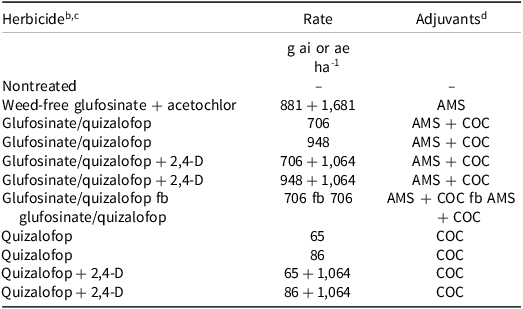
The field experiments were laid out in randomized, complete block split-plot design with herbicide application time (V3 or V6 growth stage of volunteer corn) as the main-plot factor and herbicide treatments as subplot factors. Each experiment was replicated four times. An individual experimental unit was a plot of 3 m by 9 m with four Enlist corn rows spaced 0.76 m apart. The herbicide treatments consisted of a premix of glufosinate and quizalofop (Zalo) applied at 706 and 948 g ai ha–1, quizalofop (Assure II) applied at 65 or 86 g ai ha–1, glufosinate/quizalofop, and quizalofop mixed with 2,4-D (Enlist ONE; Corteva) at 1,064 g ae ha–1 (Table 2). Nontreated and weed-free treatments were included for comparison.
Herbicide treatments, rates, products, and adjuvants used in the experiments. a

Table 2. Long description
The table compares herbicide treatments, rates, products, and adjuvants used in experiments. It has 12 rows and 3 columns. The columns are labeled ‘Herbicide’, ‘Rate’, and ‘Adjuvants’. The ‘Rate’ column is further divided into ‘g ai or ae ha⁻¹’. The ‘Herbicide’ column lists different treatments including nontreated, weed-free glufosinate + acetochlor, glufosinate/quizalofop, glufosinate, glufosinate/quizalofop + 2,4-D, glufosinate/quizalofop fb glufosinate/quizalofop, and quizalofop. The ‘Rate’ column provides the application rates for each treatment. The ‘Adjuvants’ column lists the adjuvants used with each treatment. Each row provides specific details for the corresponding herbicide treatment.
a Abbreviations: ae, acid equivalent; ai, active ingredient; AMS, ammonium sulfate; COC, crop oil concentrate; fb, followed by (10–14 d after the first application).
b Experimental sites received a preemergence application of atrazine/bicyclopyrone/mesotrione/S-metolachlor (2,891 g ai ha–1, Acuron; Syngenta Crop Protection, LLC, Greensboro, NC) to control a broad spectrum of weeds other than volunteer corn.
c Herbicide trade names and manufacturers: acetochlor (Warrant; Bayer Crop Science, St. Louis, MO); glufosinate (Liberty 280 SL; BASF, Research Triangle Park, NC); glufosinate/quizalofop (Zalo, AMVAC, Newport Beach, CA); quizalofop (Assure II; AMVAC); 2,4-D (Enlist ONE; Corteva AgriScience LLC, Indianapolis, IN).
d Adjuvant trade names and manufacturers: AMS (N-Pak AMS Liquid, 300 mL L−1; Winfield United, St. Paul, MN); COC (Agri-Dex, 100 mL L−1; Helena Chemical Co., Collierville, TN).
Agronomic Practices and Herbicide Applications
Enlist corn was cross planted at 87,500 seeds ha−1 in Experiments 1, 2, and 3 in Nebraska, and at 81,250 seeds ha−1 in Experiment 4 in Minesota (Table 1). Enlist corn hybrid B10Z78SXE (Brevant seeds, Indianapolis, IN) was planted in Experiments 1 and 2, the 1005A449-82 hybrid (Pioneer seeds, Johnston, IA) in Experiment 3 in Nebraska, and the B97T04SXE hybrid (Brevant) was planted in Experiment 4 in Minnesota. A blanket preemergence application of atrazine/bicyclopyrone/mesotrione/S-metolachlor (Acuron; Syngenta Crop Protection, Greensboro, NC) at 2,891 g ha–1 was applied on May 5 for Experiments 1 and 2, May 14 for Experiment 3, and May 13 for Experiment 4 for controlling weeds other than volunteer corn at the experimental sites. The preemergence herbicide in Experiment 3 site also included glyphosate (Roundup PowerMAX; Bayer Crop Science) at 1,260 g ai ha–1 + ammonium sulfate (300 mL L–1) plus crop oil concentrate (100 mL L–1) to control emerged weeds. Experimental sites 1 and 2 received an additional postemergence application of dicamba (DiFlexx; Bayer) at 350 g ae ha–1 plus acetochlor (Warrant; Bayer) at 1,681 g ai ha–1 on June 5, 2023, for in-season control of broadleaf and grass weeds. Weed-free treatments received an additional postemergence application of glufosinate (Liberty 280 SL; BASF Corporation, Research Triangle Park, NC) at 881 g ai ha–1 + quizalofop at 92 g ai ha–1 + acetochlor at 1,681 g ai ha–1 + liquid ammonium sulfate (300 mL L–1) + crop oil concentrate (100 mL L–1). A CO2-pressurized backpack sprayer was used to apply herbicides at all the sites. The backpack sprayer had five AIXR 11002 nozzles (TeeJet Technologies, Glendale Heights, IL) and was calibrated to deliver 140 L ha−1 at 276 kPa. Grain yield of Enlist corn was recorded by harvesting the middle two rows of each plot with a research-plot combine and then adjusting the grain yield to 15.5% moisture content. Due to an error in data recording during harvest, corn grain yield data from Experiments 1 and 2 in Nebraska were determined to be unreliable and were therefore excluded from the statistical analysis. All other measured variables from these experiments, as well as yield data from the remaining site-years, were retained and analyzed as planned.
Data Collection
Volunteer corn control was assessed visually at 14, 28, and 56 DAA on a scale of 0% (completely normal) to 100% (completely dead). Enlist corn injury was assessed at 14 and 28 DAA, on a similar scale. Volunteer corn plants were counted from a 1-m row at three random places in each plot 28 DAA. After volunteer corn density count, biomass was harvested from two 0.25-m2 quadrats in each plot, followed by oven-drying at 70 C to obtain constant weight to record dry biomass. The density and biomass data were taken from all sites except Experiment 4 and reported as a percent reduction (0% to 100%) relative to nontreated plots (Striegel et al. Reference Striegel, Lawrence, Knezevic, Krumm, Hein and Jhala2020). Density and biomass data were not collected in Experiment 4 (Minnesota) due to logistical constraints during the sampling period, which limited our ability to perform biomass measurements and density assessments at that site. The Colby equation was used to calculate the expected volunteer corn control and density/biomass reduction from herbicide mixture treatments (Colby Reference Colby1967):
 $E = \left( {X + Y} \right) - {{{\left( {XY} \right)}}\over{{100}}}$
where E is the expected volunteer corn control and density/biomass reduction from the A + B mixture, and X and Y represent the effects of herbicides A (glufosinate/quizalofop or quizalofop) and B (2,4-D; assumed 2% control) alone, respectively.
Data Analysis
Data were analyzed using R software (v. 4.2.2; R Core Team 2024). A split-plot ANOVA was calculated with the growth stage of volunteer corn (V3 or V6) as the main-plot factor and herbicide treatments as the subplot factor. Herbicide, volunteer corn growth stage, and their interaction were treated as fixed effects, and replication and replication × stage were treated as random effects. Interactions between experimental site-years were assessed for each response, and data were pooled for experiments when no significant interaction (α = 0.05) was detected. Treatments with no variability, such as weed-free and nontreated, were excluded from the analysis except for the crop yield data. The Shapiro-Wilk test was used to verify the normality of residuals. If the data met normality assumptions, linear mixed-effects models were fit using the lme4 package (Bates et al. Reference Bates, Maechler, Bolker, Walker, Christensen, Singmann, Dai, Scheipl, Grothendieck, Green, Fox, Bauer and Krivitsky2023); otherwise, generalized linear mixed models were applied via the glmmtb package (Brooks et al. Reference Brooks, Bolker, Kristensen, Maechler, Magnusson, McGillycuddy, Skaug, Nielsen, Berg, van Bentham, Sadat, Lüdecke, Lenth, O’Brien, Geyer, Jagan, Wiernik and Stouffer2023), using a beta distribution (link = logit) for percentage data, and a negative binomial distribution (link = log) for density data (Stroup Reference Stroup2015). Treatment means were compared using a Tukey multiple comparisons test at α = 0.05 through the emmeans package (Lenth et al. Reference Lenth, Buerkner, Giné-Vázquez, Herve, Jung, Love, Miguez, Riebl and Singmann2022). The observed and expected volunteer corn control and density/biomass reduction of herbicide mixtures were compared using a two-tailed t-test (de Sanctis and Jhala Reference de Sanctis and Jhala2021). Interactions were deemed antagonistic, synergistic, or additive when observed values were below, above, or not significantly different from expected, respectively.
Results and Discussion
Volunteer Corn Control
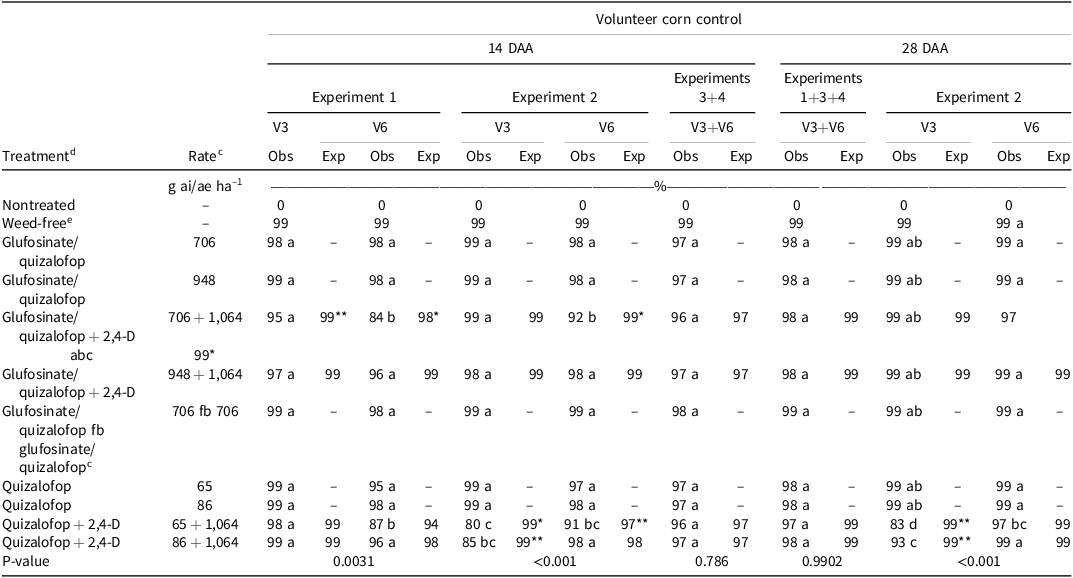
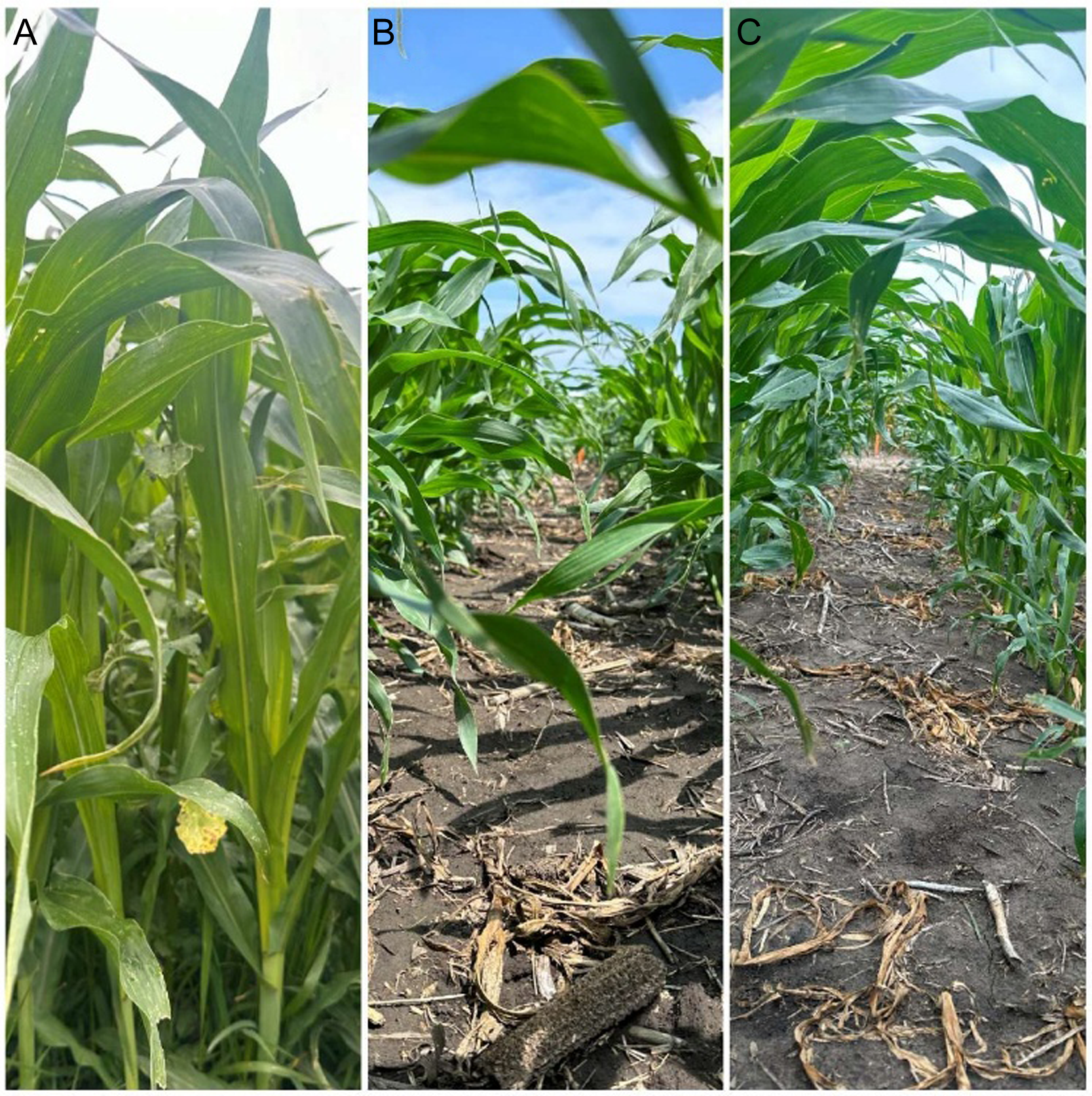
Volunteer corn control differed depending on the experimental site-year (Table 3). Glufosinate/quizalofop and quizalofop applied alone provided 95% to 99% control of glufosinate/glyphosate-resistant corn volunteers, regardless of growth stage at herbicide application, volunteer corn density, and herbicide rates used when assessed at 14 DAA (Figure 2). Quizalofop when applied at rates of 31 to 93 g ai ha–1 had been reported to control 88% to 99% of volunteer corn at the V3 to V7 stage when assessed at 14 DAA (Leise et al. Reference Leise, Singh, Cafaro La Menza, Knezevic and Jhala2025; Singh et al. Reference Singh, Kumar, Knezevic, Irmak, Lindquist, Pitla and Jhala2023; Striegel et al. Reference Striegel, Lawrence, Knezevic, Krumm, Hein and Jhala2020). Underwood et al. (Reference Underwood, Soltani, Hooker, Robinson, Vink, Swanton and Sikkema2016) reported that quizalofop applied at 24 and 30 g ai ha–1 provided 80% and 90% control, respectively, of volunteer corn at 14 DAA. In this study, glufosinate/quizalofop applied at 706 and 948 g ai ha–1 delivered similar rates of volunteer corn control (>97%) as when quizalofop was applied alone at 64 and 87 g ai ha–1(AMVAC 2024). Furthermore, quizalofop (24 or 46 g ai ha–1) mixed with glufosinate (500 or 656 g ai ha–1) had been reported to have an additive effect, providing ≥95% control of glufosinate/glyphosate-resistant corn volunteers (Duenk et al. Reference Duenk, Soltani, Miller, Hooker, Robinson and Sikkema2024; Singh et al. Reference Singh, Kumar, Knezevic, Irmak, Lindquist, Pitla and Jhala2023). Alms et al. (Reference Alms, Moechnig, Vos and Clay2016) reported 86% to 100% control of 15- to 91-cm-tall glyphosate-resistant volunteer corn when was applied glufosinate at 450 g ai ha–1 with quizalofop at 39 g ai ha–1.

Table 3. Long description
The table presents data on the effectiveness of various herbicides on volunteer corn control at 14 and 28 days after application (DAA). It includes columns for different experiments, growth stages (V3 and V6), and observed (Obs) and expected (Exp) control percentages. The table has 12 rows and 14 columns. Row labels include different herbicide treatments and their rates in grams of active ingredient per hectare (g ai/ha). Column headers include different experiments and days after application (14 DAA and 28 DAA). Notable trends include high control percentages for glufosinate/quizalofop and quizalofop applied alone, with percentages ranging from 95% to 99% at 14 DAA. The table also shows varying effectiveness of different herbicide combinations and rates at 28 DAA.
a Abbreviations: ai, active ingredient; ae, acid equivalent; DAA, days after application; Exp, expected; fb, followed by; Obs, observed; V3 and V6: growth stages of volunteer corn plants.
b Means presented within each column with no common letter or letters differ significantly according to a Tukey test at α = 0.05.
c Asterisks (*) mark data points where the t-test showed significant difference between observed and expected values, indicating antagonistic interactions. One asterisk indicates P < 0.05 and two asterisks indicate P < 0.001.
d All experimental sites (except the nontreated sites) received a preemergence application of atrazine/bicyclopyrone/mesotrione/S-metolachlor (2,891 g ha–1, Acuron; Syngenta Crop Protection, Greensboro, NC) to control a broad spectrum of weeds other than volunteer corn. In addition, the Experiment 3 site also received glyphosate (1,260 g ai ha–1, Roundup PowerMAX; Bayer Crop Science, St. Louis, MO) + ammonium sulfate (300 mL L–1) to control emerged weeds. Glufosinate/quizalofop treatments included ammonium sulfate (300 mL L–1) and crop oil concentrate (100 mL L–1), and quizalofop treatments included a crop oil concentrate (300 mL L–1).
e The weed-free treatment received an additional postemergence application of glufosinate (881 g ai ha–1, Liberty 280 SL; BASF Corporation, Research Triangle Park, NC) + quizalofop (92 g ai ha–1, Assure II; AMVAC Chemical Corporation, Newport Beach, CA) + acetochlor (1,681 g ai ha–1, Warrant; Bayer Crop Science, St. Louis, MO).
Volunteer corn in a nontreated control plot (A), volunteer corn controlled with glufosinate/quizalofop (948 g ai ha–1) applied to Enlist corn (B), and volunteer corn controlled with quizalofop applied (86 g ai ha–1) assessed at 14 d after application (C).

Glufosinate/quizalofop (706 g ai ha–1) mixed with 2,4-D (1,064 g ae ha–1) had 4% less than expected control (99%) of V3-stage volunteer corn and 14% less than expected control (98%) of V6-stage volunteer corn in Experiment 1. Similarly, the herbicide combination had 7% less than expected control (99%) of V6-stage volunteer corn in Experiment 2, suggesting antagonism. However, using the higher rate of glufosinate/quizalofop (948 g ai ha–1) with 2,4-D provided 96% to 98% control, similar to that when glufosinate/quizalofop was applied alone. Dicamba applied during the V3 and V6 stages, which is intended for controlling Palmer amaranth (Amaranthus palmeri S. Watson) and other broadleaf weeds, may have influenced some of the herbicide interactions observed in Experiments 1 and 2. In addition, the variation in seeding rate of volunteer corn in Experiments 1 and 2 might have influenced some herbicide interactions for controlling volunteer corn. Increasing the graminicide rate had been reported in literature to alleviate or minimize antagonism from broadleaf herbicides (Singh et al. Reference Singh, Kumar, Knezevic, Irmak, Lindquist, Pitla and Jhala2023; Underwood et al. Reference Underwood, Soltani, Hooker, Robinson, Vink, Swanton and Sikkema2016). Glufosinate/quizalofop (706 g ai ha–1) followed by glufosinate/quizalofop (706 g ai ha–1) was reported to provide ≥98% control of volunteer corn beginning 14 DAA, regardless of volunteer corn seeding rate or growth stage at the time of applying herbicides, and experimental site-year.
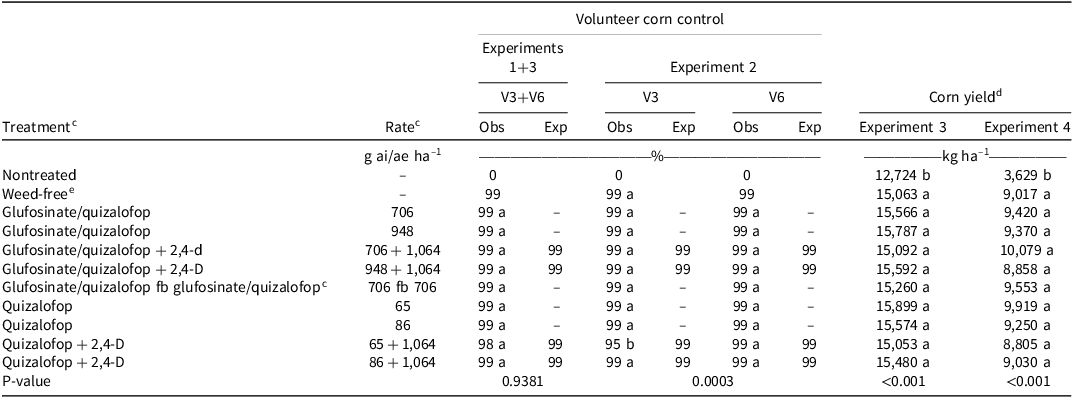
The lower rate of quizalofop (65 g ai ha–1) mixed with 2,4-D provided 91% control of V6 volunteer corn in Experiment 2, 6% less than expected (Table 3). The mixture provided 80% control of V3-stage volunteer corn, 19% less than expected in Experiment 2. When the higher rate of quizalofop (86 g ai ha–1) was mixed with 2,4-D, it improved volunteer corn control to 85%, but 14% less than expected. Further, lower and higher rates of quizalofop mixed with 2,4-D in Experiment 2 had 16% and 6% less than expected volunteer corn control (99%), respectively, by 28 DAA. However, herbicide interactions were additive by 56 DAA (Table 4). Duenk et al. (Reference Duenk, Soltani, Miller, Hooker, Robinson and Sikkema2024) reported 15% control of glufosinate/glyphosate-resistant volunteer corn 42 DAA with quizalofop (24 g ai ha–1) plus 2,4-D (817 g ae ha–1), which was 80% less than the expected control of 95%. However, the quizalofop rate used in that study (24 g ai ha–1) was nearly three times less than lower rate (65 g ai ha–1) used in current study.
Effect of herbicides on volunteer corn control 56 d after application and Enlist corn yield.a,b

Table 4. Long description
The table presents data on the effects of different herbicide treatments on volunteer corn control and corn yield. It includes columns for treatment types, rates, observed and expected control percentages at different growth stages (V3 and V6), and corn yield in kilograms per hectare for two experiments. The table has 12 rows and 10 columns. Column headers include Treatment, Rate, Experiments 1+3 (V3+V6), Experiment 2 (V3 and V6), and Corn yield (Experiment 3 and Experiment 4). Row labels include various herbicide treatments such as Nontreated, Weed-free, Glufosinate/quizalofop, Glufosinate/quizalofop + 2,4-D, Glufosinate/quizalofop fb glufosinate/quizalofop, Quizalofop, Quizalofop + 2,4-D, and their respective rates in grams ai/ae ha-1. The table also includes observed and expected control percentages and corn yield values for each treatment. Notable trends include varying levels of corn control and yield based on the type and rate of herbicide treatment.
a Abbreviations: ae, acid equivalent; ai, active ingredient; Exp, expected; fb, followed by; Obs, observed; V3 and V6, growth stage of volunteer corn plants.
b Means presented within each column with no common letter or letters differ significantly according to a Tukey test at α = 0.05.
c The entire experimental sites received a preemergence application of atrazine/bicyclopyrone/mesotrione/S-metolachlor (2,891 g ha–1, Acuron; Syngenta Crop Protection, LLC, Greensboro, NC) to control weeds other than volunteer corn. In addition, the Experiment 3 site also received glyphosate (1,260 g ai ha–1, Roundup PowerMAX; Bayer Crop Science, St. Louis, MO) + ammonium sulfate (300 mL L–1) to control emerged weeds. Glufosinate/quizalofop treatments included ammonium sulfate (300 mL L–1) and crop oil concentrate (300 mL L–1), and treatments with quizalofop included crop oil concentrate (100 mL L–1).
d Due to an error in data recording during harvest, corn grain yield data from Experiments 1 and 2 conducted in Nebraska in 2023 were determined to be unreliable and were therefore excluded from the statistical analysis.
e Weed-free treatment received an additional postemergence application of glufosinate (881 g ai ha–1, Liberty 280 SL; BASF Corporation, Research Triangle Park, NC) + quizalofop (92 g ai ha–1, Assure II; AMVAC Chemical Corporation, Newport Beach, CA) + acetochlor (1,681 g ai ha–1, Warrant; Bayer Crop Science, St. Louis, MO).
Volunteer Corn Density and Biomass
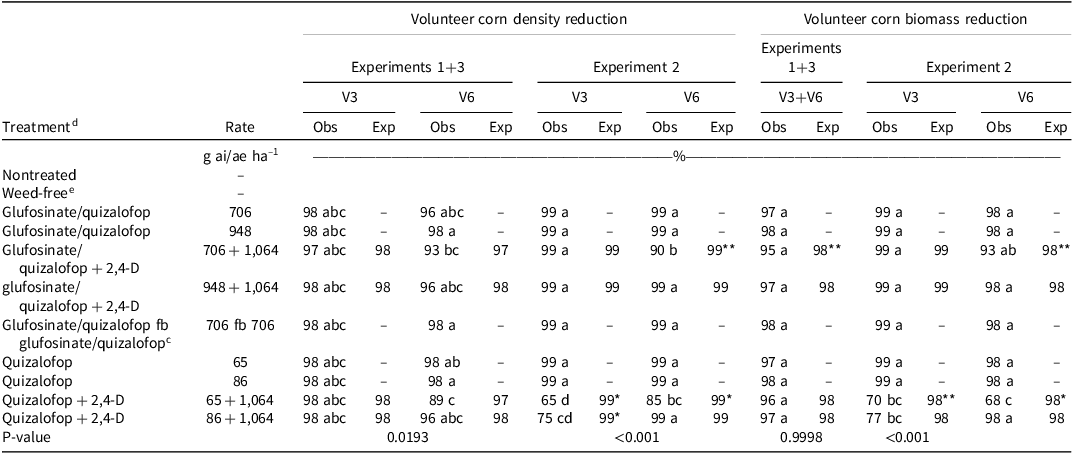
Volunteer corn density and biomass response varied with experimental site-year (Table 5). Volunteer corn density and biomass were reduced by 96% to 99% when glufosinate/quizalofop and quizalofop were applied, regardless of volunteer corn growth stage, planting density, and herbicide rates when assessed at 28 DAA (Figure 2). Duenk et al. (Reference Duenk, Soltani, Miller, Hooker, Robinson and Sikkema2024) reported a 90% reduction in volunteer corn density with applications of quizalofop (24 g ai ha–1) and quizalofop (24 g ai ha–1) + glufosinate (500 g ai ha–1) compared with density in nontreated control plots (1 vs. 10 plants m–2). The lower rates of glufosinate/quizalofop (706 g ai ha–1) and quizalofop (65 g ai ha–1) mixed with 2,4-D resulted in a slightly lower reduction of 89% to 93% for V6-stage volunteer corn density in Experiments 1 and 3. In Experiment 2, reduced 65% to 70% of The density and biomass of V3-stage volunteer corn were reduced by 65% to 70% with applications of quizalofop (65 g ai ha–1) + 2,4-D, which was 28% to 39% less than expected. This improved to 75% to 77% with applications of quizalofop (86 g ai ha–1) + 2,4-D. The difference in volunteer corn density and biomass reduction might also be attributed to the difference in volunteer corn planting density between Experiment 1 and Experiment 2 (Table 1). Duenk et al. (Reference Duenk, Soltani, Miller, Hooker, Robinson and Sikkema2024) reported 6 volunteer corn plants m–2 when quizalofop (24 g ai ha–1) + 2,4-D (817 g ae ha–1) was applied, whereas the expected density was only 1 plant m–2. Similarly, the density of V6-stage volunteer corn was reduced by 85% and biomass was reduced by 68% when quizalofop (65 g ai ha–1) + 2,4-D was applied, which was 14% and 30%, respectively, less than expected.
Effect of herbicides on volunteer corn density and biomass reduction 28 d after herbicide application.a–c

Table 5. Long description
The table presents data on the effect of various herbicide treatments on volunteer corn density and biomass reduction. It has 12 columns and 12 rows, including headers and treatments. The columns are labeled as follows: Treatment, Rate (g ai/ae ha^-1), Volunteer corn density reduction (Experiments 1+3 V3 Obs, Exp, V6 Obs, Exp, Experiment 2 V3 Obs, Exp, V6 Obs, Exp), and Volunteer corn biomass reduction (Experiments 1+3 V3+V6 Obs, Exp, Experiment 2 V3 Obs, Exp, V6 Obs, Exp). The rows list different herbicide treatments and their rates. Each cell contains percentage values representing observed and expected reductions in volunteer corn density and biomass. Notable trends include high reduction percentages across most treatments, with some variations between observed and expected values.
a Abbreviations: ae, acid equivalent; ai, active ingredient; Exp, expected; fb, followed by; Obs, observed; V3 and V6, growth stage of volunteer corn plants.
b Means presented within each column with no common letter or letters differ significantly according to a Tukey test at α = 0.05.
c Asterisks (*) mark data points where the t-test showed significant difference between observed and expected values, indicating antagonistic interactions. One asterisk indicates P < 0.05 and two asterisks indicate P < 0.001.
d The entire experimental sites received a preemergence application of atrazine/bicyclopyrone/mesotrione/S-metolachlor (2,891 g ha–1, Acuron; Syngenta Crop Protection, LLC, Greensboro, NC) to control a broad spectrum of weeds other than volunteer corn. In addition, the Experiment 3 site also received glyphosate (1,260 g ai ha–1, Roundup PowerMAX; Bayer Crop Science, St. Louis, MO) + ammonium sulfate (300 mL L–1) to control emerged weeds. Glufosinate/quizalofop treatments included ammonium sulfate (300 mL L–1) and crop oil concentrate (100 mL L–1), and quizalofop treatments included crop oil concentrate (100 mL L–1).
e The weed-free treatment received an additional postemergence application of glufosinate (881 g ai ha–1, Liberty 280 SL; BASF Corporation, Research Triangle Park, NC) + quizalofop (92 g ai ha–1, Assure II; AMVAC Chemical Corporation, Newport Beach, CA) + acetochlor (1,681 g ai ha–1, Warrant; Bayer Crop Science, St. Louis, MO).
Mixing the higher rate of quizalofop (86 g ai ha–1) with 2,4-D improved volunteer corn density and biomass reduction to 98% to 99%. Leise et al. (Reference Leise, Singh, Cafaro La Menza, Knezevic and Jhala2025) reported a 100% reduction in volunteer corn density at 28 DAA when the higher rate (77 g ai ha–1) of quizalofop was applied, whereas there was 1 plant m–2 when the lower rate (39 g ai ha–1) was mixed and applied with 2,4-D (1,064 g ae ha–1). The lower rate of glufosinate/quizalofop (706 g ai ha–1)+ 2,4-D provided 90% to 93% reductions in V6-volunteer corn density and biomass, which was 5% to 9% less than expected. However, the higher rate of glufosinate/quizalofop (948 g ai ha–1) when mixed with 2,4-D provided 98% to 99% reductions in volunteer corn density and biomass, which is comparable to the reductions that occurred with glufosinate/quizalofop, indicating the importance of increasing the quizalofop rate for effective control of volunteer corn when mixing with 2,4-D.
Enlist Corn Injury and Yield
No significant Enlist corn injury was observed from applications of quizalofop or glufosinate/quizalofop, when either applied alone or mixed with 2,4-D (mostly 0% to 3%; data not shown). Corn yield was measured in Experiments 3 and 4. Enlist corn yields after treatments that contained quizalofop and glufosinate/quizalofop were similar to those of the weed-free treatment in Experiment 3 (15,063 kg ha–1) and Experiment 4 (9,017 kg ha–1), owing to greater than 94% control of volunteer corn in the treatments (Table 4). The nontreated control yielded 12,724 kg ha–1 in Experiment 3 and 3,629 kg ha–1 in Experiment 4. This corresponds to 20% and 64% yield loss compared with the highest yielding treatment in Experiment 3 (15,899 kg ha–1) and Experiment 4 (10,079 kg ha–1), respectively. The differences in both baseline yield and yield loss between Experiment 3 and Experiment 4 likely reflect contrasting environmental conditions and crop competitiveness between sites. Experiment 3 (Nebraska) was carried out in favorable growing conditions and higher yield potential, supported by the availability of irrigation, whereas Experiment 4 (Minnesota) was conducted under rainfed conditions, contributing to lower productivity and increased stress. Under lower yield potential, crops are less able to compensate for interference, which can amplify relative yield losses. While the slightly higher volunteer corn density in Experiment 4 may have contributed to the larger yield loss, it was more likely driven by interacting factors, including environmental stress, reduced crop vigor, and potential differences in background weed pressure and soil conditions. Marquardt et al. (Reference Marquardt, Terry, Krupke and Johnson2012) reported 22% to 23% corn yield loss with 8 volunteer corn plants m–2, which could be compared with the 20% yield loss with 13 volunteer corn plants m–2 in Experiment 3. The initial antagonism observed when 2,4-D was mixed with glufosinate/quizalofop (Table 3) was not reflected in corn yield (Table 4) because the antagonistic effects were short-lived. Antagonism was evident only during the early evaluation period (up to 14 d after application), and volunteer corn was subsequently effectively controlled. As a result, early reductions in volunteer corn control did not persist long enough to influence corn yield.
Practical Implications
A premix of glufosinate/quizalofop (Zalo) was registered for use in 2024 to control emerged grass and broadleaf weeds in glufosinate-resistant canola, cotton, and soybean. This multisite, multiyear study evaluated the ability of the premix to control volunteer corn in Enlist corn. Results from this study demonstrated that glufosinate/quizalofop applied at 706 or 948 g ai ha−1 provided 98% to 99% control of glufosinate/glyphosate-resistant volunteer corn in Enlist corn at 28 DAA, which was comparable to the control achieved when quizalofop was applied alone at 65 or 86 g ai ha−1. When the lower rate of glufosinate/quizalofop (706 g ai ha−1) was mixed with 2,4-D (1,064 g ae ha−1), a reduction in control of 7% to 14% was observed in V6-stage volunteer corn at 14 DAA in 2 site-years. However, this antagonism was mitigated either by using the higher rate of glufosinate/quizalofop (948 g ai ha−1) or over time because control with the lower rate plus 2,4-D was comparable to that of glufosinate/quizalofop when assessed at 28 to 56 DAA.
Glufosinate/quizalofop is recommended for use on glufosinate-resistant soybean at 706 g ai ha−1 for volunteer corn plants ≤51 cm tall and at 948 g ai ha−1 for plants up to 76 cm tall (AMVAC 2024). The rate range of 706 to 948 g ai ha−1 listed on the product label allows a maximum of two applications per season, with a total annual maximum not exceeding 1,521 g ai ha−1 per calendar year to glufosinate-resistant soybean (AMVAC 2024). It is important to note that glufosinate/quizalofop (Zalo) is not currently registered for use on Enlist corn; therefore, quizalofop (Assure II) remains the only herbicide option labeled for postemergence control of glufosinate/glyphosate-resistant volunteer corn in Enlist corn (AMVAC 2021). Additionally, glufosinate/quizalofop does not control volunteer corn that is resistant to both glufosinate and quizalofop (i.e., Enlist corn volunteers). If Enlist volunteer corn emerges in subsequent growing seasons, planting soybean and applying alternative graminicides such as DIM herbicides (e.g., clethodim or sethoxydim) would be required for effective control. There is no selective herbicide available for control of Enlist volunteer corn in any type of corn planted in rotation with Enlist corn. If glufosinate/quizalofop (Zalo) is registered for use on Enlist corn, it will provide an opportunity to control volunteer corn and other weeds due to the presence of glufosinate over quizalofop (Assure II) applied alone; therefore, from the viewpoint of weed resistance management, a premix would provide broad-spectrum weed control.
Acknowledgments
We thank AMVAC for providing herbicides (Assure II and Zalo). We are thankful to Alex Chmielewski from the University of Nebraska-Lincoln for his help in conducting fieldwork for these projects.
Funding
Financial support for this research was provided by the U.S. Department of Agriculture–National Institute for Food and Agriculture through grant 2024-70006-43500, the Nebraska Extension Implementation Program.
Competing Interests
The authors declare they have no competing interests.


 Open access

