

1. Introduction
Cost–benefit analysis (CBA) is one of the most widely applied tools for assessing the feasibility of private and public investments in climate change adaptation (Markanday et al., Reference Markanday, Galarraga and Markandya2019). Able to compare various measures over time, CBA permits the evaluation of adaptation pathwaysFootnote 1 for reducing vulnerability, enhancing adaptive capacity and building resilience in the face of climate change. CBA works by measuring how efficient an investment is based on its net present value (NPV). If the NPV is positive, it means that the benefits of the investment outweigh its costs, and the investment is considered efficient (although that may not be sufficient for it to be acceptedFootnote 2). If the NPV is negative, it means that costs exceed benefits, and the investment is considered inefficient. This sets a monetary basis for justifying why a proposed policy or program should go ahead. CBA calculates the NPV by measuring the change in net benefits, that is benefits (B) minus costs (C), over time (t) relative to a no-project scenario when a discount rate is appliedFootnote 3 (r) (see Equation (1)).
 $$ \mathrm{NPV}=\sum_{t=1}^T\frac{\mathrm{B}-{\mathrm{C}}_t}{{\left(1+r\right)}^t} $$
The main attractiveness of CBA lies in its ability to weigh the costs and benefits of a decision, using one common metric – money. Using monetary terms as the sole unit of CBA has been argued to provide an objective assessment of whether public policies or programs will meet citizens’ needs (and at the same time fits well within budgetary processes). Assessing the performance of various measures over time can inform policy-makers about the expected success of adaptation programs and help them to allocate resources efficiently. At least on the cost side, the focus on monetary units makes it relatively easy and straightforward for users of CBA, and promotes transparency by requiring decision-makers to reveal all the assumptions and uncertainties underpinning analyses. CBA is often a preferred tool of economists and policy-makers who aim to get the most desirable results from the least amount of available resources.
Despite its advantages, many scientists have expressed concerns over CBA when it comes to valuing public investments with environmental and climate change implications (see e.g., Ackerman & Heinzerling, Reference Ackerman and Heinzerling2002; Hanley, Reference Hanley1992 for a critical review of CBA when dealing with environmental matters). Among the most contentious points, two particularly pertinent issues arise. The first relates to the measure of environmental and social benefits that are not traded in the market. CBA deals with this by using artificial prices to act as a proxy for non-market values (such as those concerning life, health, and nature). Popular methods for valuing non-market items include approaches such as the contingent valuation method, the avoided-cost approach, the travel-cost approach, and estimating opportunity costsFootnote 4. These methods arouse criticism from researchers who argue that due to the complexity and multifunctional nature of environmental resources, the aggregation of private values is far too simplistic a measure of benefit to human welfare (Kumar & Kumar, Reference Kumar and Kumar2008). On top of this, methodological differences in valuation approaches make the comparison of common item values across studies difficult. The reliance on artificial prices for non-market values also means that outdated values must be consistently updated to reflect current conditions (i.e., when resources are available to carry out new assessments) or replaced by (at times unsuitable) values transferred from other, supposedly similar, sites. The challenges of including non-market items into CBA means that often-times such values are misrepresented or excluded altogether from assessments. Disregarding critical non-market values in CBA is particularly problematic in the case of climate change adaptation, especially when valuing non-technical solutions (e.g., capacity building or ecosystem-based solutions) with high social or environmental benefits. Failure to capture true costs and benefits in these cases often results in such solutions being ranked lower or afforded less priority than other more verifiable solutions (Watkiss et al., Reference Watkiss, Hunt, Blyth and Dyszynski2015).
The second issue relates to how environmental costs and benefits are discounted over time. The often long-time horizons involved in environmental and climate change decision-making means that many environmental benefits (e.g., afforestation) will only accrue in the distant future – making the choice of discount rate an important factor in cost–benefit assessments (Chiabai et al., Reference Chiabai, Galarraga, Markandya and Pascual2012). Using high positive rates (e.g., market rates) can trivialize catastrophic events even in the medium term and run the risk of causing irreversible environmental and social harm since little importance is given to damages in the future. As Ackerman and Heinzerling (Reference Ackerman and Heinzerling2002) explain, using a discount rate of 5 % can make the death of a billion people 500 years from now seem less serious than the death of one person today. Different rates such as the market rate, the consumption rate of interest, the adjusted return in the private sector, and the social time preference rate have been proposed (Markanday et al., Reference Markanday, Galarraga, Chiabai, de Murieta, Lliso and Markandya2019), but notable environmental economists are calling for near-zero rates (Stern et al., Reference Stern, Peters, Bakhshi, Bowen, Cameron, Catovsky, Crane, Cruickshank, Dietz and Edmonson2006; Dasgupta, Reference Dasgupta2007; Weitzman, Reference Weitzman2009), or declining rates (Cropper & Laibson, Reference Cropper and Laibson1998; Philibert, Reference Cédric, Pannell and Schilizzi2006; Gollier, Reference Gollier2008; Groom, Reference Groom2014) to be used instead.
Scientific discourse on environmental CBA has predominantly centered around issues pertaining to non-market valuation and discounting. Less discussed is the ability of CBA to accurately reflect and meet societal needs and states. We will argue in this paper that there are three (often neglected) dimensions of CBA that require proper attention in the context of decision-making on climate change change adaptation. The first relates to the consideration of employment effects. Investments in adaptation could have direct and induced positive effects on the labor market by; for example, directly creating jobs, facilitating the creation of jobs, or improving labor supply. This is particularly important when considering economies with high levels of unemployment, wherein proposed climate policies or projects could lead to significant societal benefits or costs. CBA has difficulty capturing these employment effects, mainly because it tends to assume distortions in the labor market, such as involuntary unemployment, do not exist (Bartik, Reference Bartik2012; Masur & Posner, Reference Masur and Posner2012). This implies that any additional labor demand generated by investments would have to be met by moving people from other employment. Assuming that the value of foregone work (based on the marginal product of labor) and non-work (based on the subjective value of time) activities are both equal to the market wage, and the cost of project labor is also equal to the market wage, then workers would not gain from additional employment. The cost of project labor would have to be higher than the market wage for workers to derive any benefit from additional employment, which is not normally assumed to be the case. By calculating employment effects in this way, CBA cannot capture any positive effects on labor markets, since any benefits arising from additional employment would be offset by higher labor costs (Bartik, Reference Bartik2012). To address this issue, researchers have adopted various employment models within CBA, the outcomes of which tend to vary with changes in problem-context, research approach, and underlying model assumptions. While these differences lead to variations in benefit estimates across studies, the literature tends to indicate that when involuntary unemployment is high, benefits relating to increased employment also tend to be high (Ray, Reference Ray1984). Current discourse over the short-, medium-, and long-term impact of climate policy on jobs is complex. The shift from high-carbon to more labor intensive low-carbon activities is expected to lead to job creation in the short term, while medium-term impacts are likely to see an economy-wide ripple effect as jobs are created and lost across affected industries. In the long term, more dynamic employment effects are expected, as innovation and technological development create new opportunities for investment and growth (Fankhauser et al., Reference Fankhauser, Sehlleier and Stern2008). The potentially widespread political, economic, and social consequences of climate change decision-making on labor markets has made it an important discussion point for policy-makers. CBA for climate decision-making would benefit from better consideration of employment effects if it wants to ensure a more holistic understanding of the risks and opportunities associated with these structural changes.
Another equally overlooked aspect of CBA from an adaptation decision-making standpoint relates to the equitability of investments (i.e., how benefits and costs are distributed among those affected by the project). CBA deals with effects on well-being by parsing monetary equivalents, that is determining the amount individuals are willing to pay (WTP) for policies that benefit them or are willing to accept (WTA) for policies that disadvantage them. By focusing on aggregate benefit, CBA automatically favors policies with a positive sum of monetary equivalents, irrespective of how values are distributed throughout society. This becomes especially problematic when deciding between policies or programs that affect diverse income groups. Since the rich can afford to pay more for policies or programs that they prefer, the poor are almost always at a disadvantage. The bias generated by the efficiency objective is usually justified on the basis that it would ensure available resources yield the maximum increment in total national income and that governments can use fiscal devices to redistribute project-generated revenues in any desired direction (Squire & Van der Tak, Reference Squire and Van der Tak1975). But government capacity may be limited when it comes to redistributing income, especially in developing regions that may lack the necessary administrative and organizational structures for carrying out this objective. Taking into account the distributional consequences of climate-related decision-making is important since such decisions must consider both the spatial distribution of environmental impacts as well as the ensuing distributional consequences of political and social effects caused by those impacts (Murieta et al., Reference Sainz de Murieta, Galarraga, Markandya, Markandya, Galarraga and Sainz de Murieta2014). As it stands, climate change has a disproportionately adverse impact on lower-income countries and poor people in high-income countries, calling into question how best to tackle climate and social injustices arising from climate change and the measures taken to address it (Levy & Patz, Reference Levy and Patz2015). Adaptation decisions can achieve “equity in outcome” by recognizing who benefits or suffers from climate impacts or policy decisions (Adger et al., Reference Adger, Arnell and Tompkins2005). As it stands, environmental decision-making based on current investment assessment approaches has led to adaptation actions that reinforce existing inequalities and do little to relieve underlying vulnerabilities (Adger et al., Reference Adger, Huq, Brown, Conway and Hulme2003). Reactive adaptation in response to extreme climate events, in particular, has been found to exasperate vulnerabilities and reinforce social and economic inequalities (Glantz & Jamieson, Reference Glantz and Jamieson2000). Proper consideration of the distributional consequences of environmental decision-making will be vital for ensuring resilient futures in the face of climate change while also safeguarding fairness and equity objectives within climate change decision-making.
The final problematic area of CBA discussed in this paper concerns how risk preferences are integrated into decision-making. Economics tends to assume that people are both risk-averse and seek to maximize their expected utility. For example, individuals are willing to pay for insurance that limits their loss in the case of an unfavorable event (i.e., their home being flooded). This would mean that being exposed to certain risks represents a cost to risk-averse individuals who are willing to pay to reduce or eliminate their risk altogether. Despite this assumption, risk aversion is typically ignored in CBA, and as Kaufman (Reference Kaufman2014) explains, there are two potential reasons for this. The first is that the well-established literature on public economics suggests that governments should be risk-neutral (i.e., assume zero risk aversion) when it comes to risky public investments with uncertain costs and benefits, such as adaptation projects. This is justified on the basis that when populations are relatively large, risk premiums for small public investments with uncertain effects converge to zero because they can be “spread out” among members of society. But this rationale does not hold in cases of pre-existing environmental uncertainty. The arguments for risk neutrality are valid for projects with uncertain costs and benefits, but not for projects that reduce pre-existing uncertainty in the absence of environmental policy (commonly referred to as “baseline” or “business-as-usual” uncertainty) as one of their key features. Such environmental policies would provide risk-reducing benefits to all affected risk-averse individuals, and in no sense is the risk “spread out” across all those affected. Policy evaluations should account for risk aversion in situations where pre-existing uncertainty is significant. The second reason for not integrating risk-aversion into CBA stems from the inherent computational and theoretical difficulties involved in quantifying risk aversion, and thus in establishing an acceptable level of societal risk aversion. Assuming that individuals are risk-averse, then standard cost–benefit analysis underestimates benefits (in terms of avoided losses), because household WTP to avoid costs does not include WTP for reduced risk. From a theoretical point of view, this restricts the ability of CBA to adequately assess situations wherein societies might display high levels of risk aversion or to capture risk aversion relative to uneven spatial impacts, such as those caused by climate change. Proper inclusion of benefits related to the avoidance or reduction of climate change risks is likely to be an important determinant of net efficiency gains within CBA.
How to value effects of employment, equity, and risk aversion are three important considerations for CBA practitioners, especially given that policy-makers have been known to rank efficiency below other policy objectives such as equity and political acceptability (Hanley et al., Reference Hanley, Hallett and Moffatt1990). This paper will explore whether, and if so how much, integrating these aspects can affect the outcome of CBA, using a real adaptation project in Bilbao, Basque Country (Spain) as an example. The next section will describe the methodology used to integrate employment, equity, and risk aversion dimensions into CBA. After which, Section 3 will go on to discuss the main findings, before finishing with concluding remarks in Section 4.
2. Materials and methods
To demonstrate the sensitivity of climate change decision-making to considerations of employment, equity, and risk aversion, this study compares the economic efficiency of an adaptation project across four cost–benefit scenarios: (i) a standard CBA (considering capital costs and benefits in terms avoided damages); (ii) a standard CBA including employment effects; (iii) a standard CBA including employment effects and equity; and (iv) a standard CBA including employment effects, equity, and risk aversion. All values, unless otherwise stated, are given in 2015 prices.
2.1 Case study: an adaptation investment in Bilbao, Basque Country (Spain)
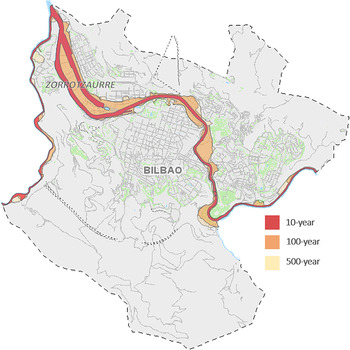
The city of Bilbao and its extended metropolitan area is home to over 850,000 people (EUSTAT, 2018). Due to its hilly terrain, steep valleys, high levels of rainfall, and densely urbanized low-lying areas, the city faces a high risk of flooding (Basque Government, 2007). Following a catastrophic flood event that hit the region in 1983, causing 37 deaths and €1.206 billion in economic damages (Olcina et al., Reference Olcina, Sauri, Hernández and Ribas2016), several infrastructure measures were put in place to protect the city from future flood events – but some risk still remains (Figure 1). In 2012, concerns were raised by the Basque Water Agency (URA) when plans to build a new urban district on the Zorrotzaure peninsula, an old industrial site at severe risk of flooding, were proposed. In light of this, the city suggested opening and widening the adjoining Deusto canal, turning Zorrotzaure into an island (Figure 2). The proposed measure was designed to improve the drainage capacity of the Bilbao Estuary by opening and widening the width of canal to 75 m, thereby significantly reducing the risk of flooding in the proposed district and neighboring areas further upstream. With an estimated cost to the city of €20.9 million and expectations to reduce the water level by up to 1.43 m in some areas, construction of the project began in 2014Footnote 5 (Climate-ADAPT, 2016). By the year 2080, considering a 100-year return period under climate change, the adaptation project is expected to reduce climate change–induced flood damages by between 67.4 % (lower bound estimate) and 65.9 % (upper bound estimate) with avoided damages expected to reach between €289 and €347 million (Basque Government, 2007; Osés-Eraso et al., Reference Osés-Eraso, Foudi and Galarraga2012), with corresponding benefits in the intervening years. These estimates represent lower and upper bounds, calculated as the difference in damages with and without the opening of the Deusto canal (Table 1)Footnote 6. See endnotes for an explanation on how these values were calculated.
Flood risk in the city of Bilbao from 10-year, 100-year, and 500-year flood events. Source: GeoEuskadi data portal.

The proposed urban island of Zorrotzaurre.

Expected annual damages for a 100-year flood event for the year 2080.

Damages are given for a base scenario, a reference scenario (considering socio-economic changes), and a climate change scenario (considering an increase in precipitation levels and a 25 % increase in flood risk) for the year 2080.
2.2 CBA scenarios
Scenario I: Standard CBA.
Under this scenario, the capital costs of the adaptation solution are considered alongside benefits, measured in terms of avoided damages. Estimated benefits do not take into account the effects of employment, equity, or risk aversion. The project is estimated to cost €20.9 million, distributed in equal annual sums of €5.225 million across the first 4 years while construction was underway (2014–2020). We assume that benefits only started accruing from the year 2018, once construction was complete and the adaptation functional. We estimate an annual benefit, consisting of a reduction in expected damages given a 1:100 year flood. The value stream of these benefits starts in 2018, but as we only have a damage estimate for 2080, it is necessary to work back to an expected damage for 2018 and subsequent years. This is done by considering the economic growth expected to take place in the region between 2018 and 2080. Economic growth rates for the European Union under SSP2Footnote 7 are applied to the years preceding 2080Footnote 8. These rates correspond to a growth of 2.5 % between 2018 and 2030, 2.01 % between 2031 and 2050, and 1.05 % between 2051 and 2080 (https://doi.org/10.1016/j.gloenvcha.2015.02.012, Reference Crespo Cuaresma2017; Leimbach et al., Reference Leimbach, Kriegler, Roming and Schwanitz2017; Riahi et al., Reference Riahi, van Vuuren, Kriegler, Edmonds, O’Neill, Fujimori and Bauer2017). This gives us an annual benefit value of €109.44 millionFootnote 9 for the year 2018. Benefits for subsequent years are then adjusted considering a discount rate of 3.5 % and the likelihood of a 100-year flood event occurring in any given year (1 %).
Scenario II: Standard CBA including employment.
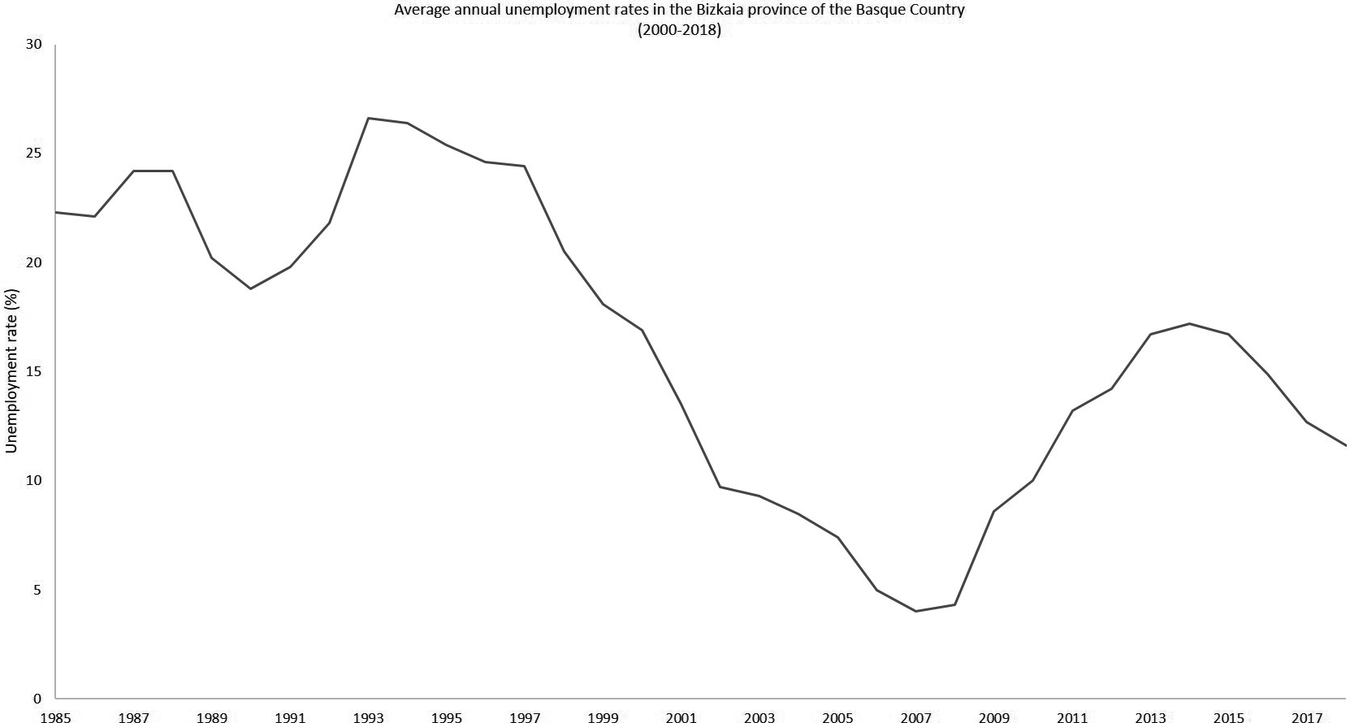
This scenario considers the same conditions as in scenario I but goes a step further to consider the effect that the adaptation would have on employment in the region. Employment effects within CBA are measured based on the shadow wage rate (SWR), (often synonymous with the social opportunity cost of labor). The SWR refers to the loss of other labor alternatives when one alternative is chosen. That is to say, it measures the difference in welfare (in economic terms) that occurs when reallocating workers from one job to an alternative job in the new project. As it stands, the literature on CBA offers different formulas for deriving the SWR (Lewis, Reference Lewis1954; Dasgupta & Pearce, Reference Dasgupta and Pearce1972; Marglin & Sen, Reference Marglin and Sen1972; Little & Mirrlees, Reference Little and Mirrlees1974; Roberts, Reference Roberts1982; Marchand et al., Reference Marchand, Mintz and Pestieau1984; Drèze & Stern, Reference Drèze, Stern, Auerbach and Feldstein1987; Brent, Reference Brent1991; Cowell & Gardiner, Reference Cowell and Gardiner2000; Johansson-Stenman, Reference Johansson-Stenman2005) based on different assumptions regarding labor (and sometimes capital and product) market conditions. Generally speaking, the literature on shadow wages tells us that when involuntary unemployment is high, the benefits of additional employment also tend to be high (Ray, Reference Ray1984). In this study, we use shadow wages derived by Del Bo et al. (Reference Bo, Chiara and Florio2011) for the Basque Country. In their study, the authors develop a simple framework based on well-established CBA theory, specifically a combination of the Little and Mirrlees (Reference Little and Mirrlees1974) and Drèze and Stern (Reference Drèze and Stern1990; 1987) frameworks to empirically compute shadow wages and conversion factors across European regions. Structural characteristics and labor market conditions are derived based on functions such as GDP per capita, short- and long-term unemployment, migration flows, and the role of agriculture in the regional economy. Regions are then grouped into one of four clusters (with differing labor market conditions): (i) fairly socially efficient; (ii) quasi-Keynesian unemployment; (iii) urban labor dualism; and (iv) rural labor dualism. The Basque region is classified as having a fairly socially efficient labor market with a relatively high-income level, positive net migration, and relatively low unemployment rates. Using the shadow wage rate, the authors estimate conversion factors for each cluster of regions. These can be applied to project costs to adjust for labor market conditions in the region. Del Bo et al. (Reference Bo, Chiara and Florio2011) estimate a conversion factor of 0.99 for the Basque Country and regions with similar labor characteristics. It is important to note, however, that the authors use 2007 data for the Basque Country in their analysis, when regional unemployment was its lowest (4 %) in recent history (Figure 3)Footnote 10. Following the 2007–2008 financial crisis, unemployment rates in the Basque Country rose substantially and did not start declining again until 2015. Considering this, we can expect that in reality the conversion factor for the Basque Country would be much lower.
Annual unemployment rates for the Bizkaia province of the Basque Country (1985–2018).

For this reason, we use the regression model and coefficients from Del Bo et al. (Reference Bo, Chiara and Florio2011) to adjust for more current employment conditions in Bilbao. Holding all else constant, if we assume the unemployment rate to be 11.6 % (the 2018 rate of unemployment in the province of Bizkaia) then the adjusted conversion factor would be 0.79. We adjust labor costs by applying this estimated conversion factor, which results in a reduction in total costs compared to the previous scenario. For a detatiled step-by-step guide on accounting for employment effects using shadow wages in CBA, see Annex I, Supplementary Information.
Scenario III: Standard CBA including employment and equity.
Scenario III adds a second dimension to the CBA, that is, it assesses whether the benefits of the adaptation are equitably distributed among those affected by the project. Monetary equivalents (of benefits) are adjusted by applying different distributional weights to reflect the relative incomes of those people receiving the benefits or bearing the costs of an investment. In this way, lower-income individuals are assigned greater weights to increase their relative importance within decision-making. This method for dealing with equity dates back to the 1960s when Weisbrod (Reference Weisbrod1968) started arguing the relevance of distributional impacts to policy-makers. While at the time, it was included in cost–benefit manuals (e.g., Squire & Van der Tak, Reference Squire and Van der Tak1975) its inclusion in CBA diminished by the 1990s when concerns about income distribution declined. Discussions on the application of CBA in climate change contexts, however, have sparked new interest in the ability of distributional weights to account for some of the intrinsic shortfalls of environmental CBA, that is moral concerns related to economic valuation and the aggregation of costs and damages in rich and poor countries (Kind et al., Reference Kind, Wouter Botzen and Aerts2017; Kolstad et al., Reference Kolstad, Urama, Broome, Bruvoll, CariñoOlvera, Edenhofer, Pichs-Madruga, Sokona, Farahani and Kadner2014; Fankhauser et al., Reference Fankhauser, Tol and Pearce1997; Schmidt et al., Reference Schmidt, Held, Kriegler and Lorenz2013; Stanton et al., Reference Stanton2011).
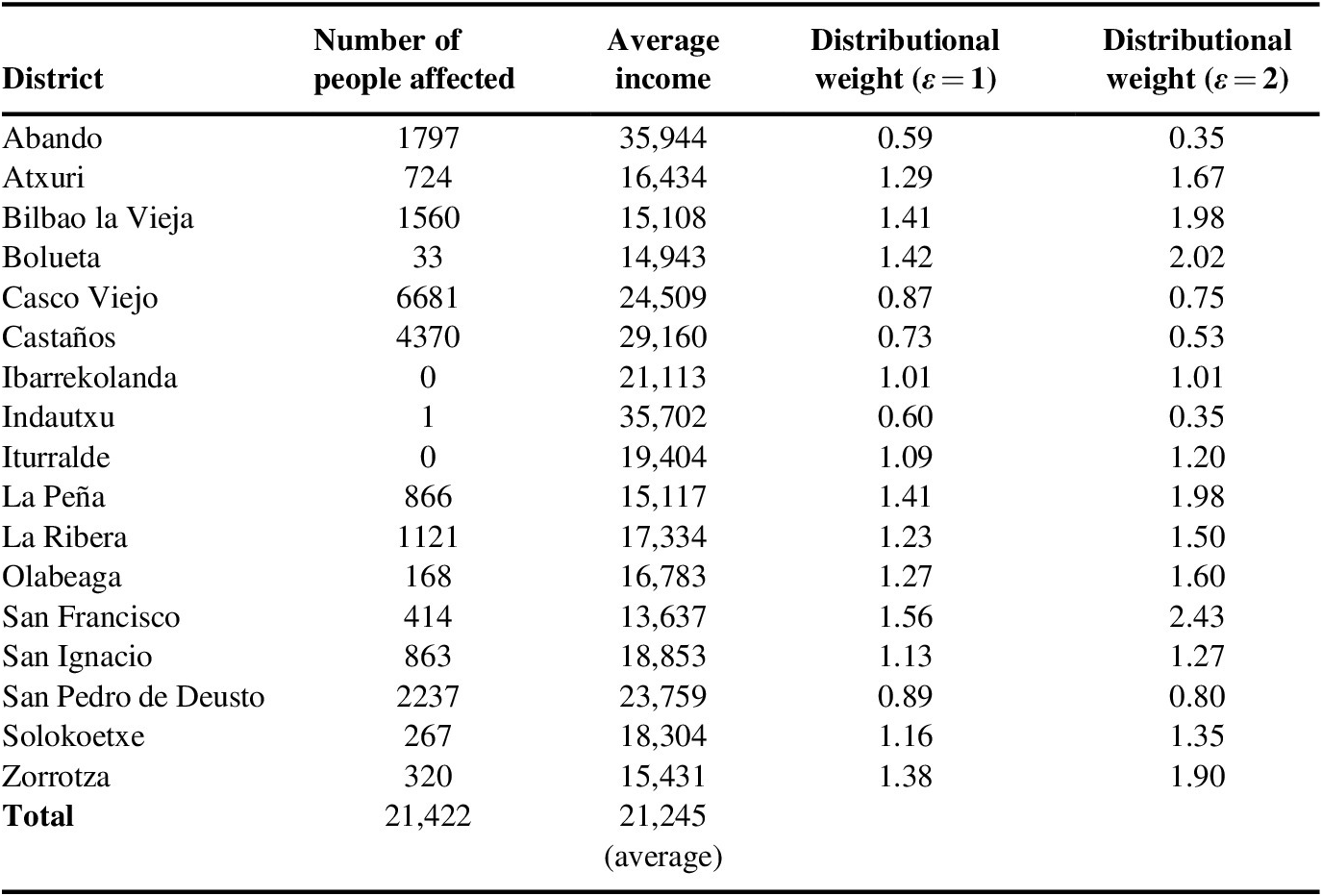
In this study, we used the social welfare function derived from Atkinson (Reference Atkinson1970) to estimate distributional weights for different neighborhoods with different income bands (Table 2).
Population, income and distributional weights by affected district.

The elasticity of social marginal utility of income
 $ \left(\varepsilon \right) $
reflects the curvature of the utility function, and can vary according to factors such as context, culture, and period (Kind et al., Reference Kind, Wouter Botzen and Aerts2017). We used two elasticities, of 1 and 2, based on typically proposed rates (Atkinson, Reference Atkinson1970; Stern, Reference Stern, Artis and Nobay1977; Young, Reference Young1990; Gouveia & Strauss, Reference Gouveia and Strauss1994; Lambert et al., Reference Lambert, Millimet and Slottje2003). This parameter measures the aversion to inequality in social welfare: the higher the value of the elasticity, the more averse is society assumed to be to inequality in incomes when determining social welfare. Overall the evidence suggests that an elasticity close to one. With that value, the social marginal utility of one additional Euro for someone earning €1000 is worth double that of someone earning €2000 (see Annex II, Table 5, Supplementary Information; HM Treasury, 2003). In general, we can expect higher elasticities to make a bigger adjustment for differences in the social marginal utility of income.
A conversion factor based on the ratio between the total expected weighted benefits and the total expected unweighted benefits was then used to adjust benefit values for each year in order to account for distributional effects. In this study, conversion factors of 0.952 (considering an elasticity of 1) and 0.973 (considering an elasticity of 2) have been estimated. Taking the year 2018 as an example, the weighted benefits adjusting for equity would be €1.04 million (with an elasticity of 1) and €1.07 million (with an elasticity of 2) compared to €1.09 million (unweighted). In this scenario, while costs would remain unchanged, the benefits of the project would decrease compared to scenario II. A detailed step-by-step guide on how to account for equity dimensions in CBA using distributional weights is provided in Annex II, Supplementary Information.
Scenario IV: Standard CBA including employment, equity and risk aversion.
Under scenario IV, all three dimensions of employment, equity, and risk aversion are considered on top of the standard CBA. The added-value of adaptation for a risk-averse society is accounted for by estimating the value of a “certainty effect,” that is, the added benefit of reducing external (environmental) uncertainty (for risk-averse individuals) by investing in protection. This approach follows the assumption that, even when expected values are the same, risk-averse individuals prefer certainty (e.g., receiving €10) over uncertainty (e.g., 50 % chance of receiving €0 and 50 % chance of receiving €20). Based on this, true WTP for reducing a risk or eliminating it completely would be equivalent to the expected damage (or reduction in the expected damage) plus a risk premium (or reduction in the risk premium). By estimating this certainty effect, we can generate a risk factor for each year based on the ratio between the expected cost of a flood event for a risk-averse versus a risk-neutral society.
Taking the year 2018 as an example, the risk-adjusted cost per person of the event accounting for the certainty effect is estimated to be €58.09Footnote
11 and the expected loss per person is €50.88 (estimated as loss per person times the probability of the event). The risk coefficient for this year would then be (
 $ \frac{58.09}{50.88} $
) and the adjusted benefits in 2018 accounting for risk aversion would be €1,244,307 instead of €1,090,000. This coefficient is calculated for each year and used to adjust expected benefits in subsequent years to demonstrate how the willingness of households to pay to avoid the event, including the WTP of risk averse individuals to reduce or avoid the risk completely might change when risk aversion is included in the analysis. This method for dealing with risk is based on the assumption that households at risk of flooding have not already taken out private insurance to limit their losses in the case of a flood event. We did not have such information available to us when conducting this analysis. If such data were available, then damage costs could be replaced by the sum of insurance payments plus expected uncovered damages. In such cases, a lower coefficient for risk aversion could apply. For a detailed step-by-step guide on how to account for risk aversion in CBA using the certainty effect, see Annex III, Supplementary Information.
We are aware of arguments that individuals do not act as rationally as such an approach to the treatment of risk would require. While this is undoubtedly true, it does not mean that societies should not act using such a rational approach. There remains, however, some doubt as to its suitability for such public decisions. While there are many ways of analysing risk in decision-making (Reeder & Ranger, Reference Reeder and Ranger2011; Kahneman & Tversky, Reference Kahneman and Tversky2013; Ranger et al., Reference Ranger, Reeder and Lowe2013), they do not fit into a CBA framework such as this. One alternative that could be applied is to estimate the risk premium using modern methods of choice experiments, where a selected sample of diverse individuals from the region are presented with a number of options, including the one with the present project design and one with the status quo and asked to choose one. The experiment can also include other project designs that reduce the risk differently to expand the choice set. In each case, a payment is attached to each option (reflecting a possible tax to pay for the project). From the analysis of the results of such an experiment, it is possible to estimate the risk premium that the current population attaches to the project. Of course we cannot do this for future periods as they are not present, but we can make some assumptions on how the premiums would evolve over time. For the use for choice experiments in the context of decisions involving risk see (OECD, 2018).
3. Results and discussion
The results of the CBA of the adaptation investment for the different scenarios are shown in Table 3. A negative NPV indicates that the costs of the project exceed its projected benefits, which means that the project results in a net loss and should not be implemented. Equally, an internal rate of return (IRR)Footnote 12 below the discount rate (in this case 3.5 %) means that the project should not be carried out.
Total present-value of costs, benefits, NPV, BCR, and IRR of the adaptation investment for 2016–2080 using a discount rate of 3.5 %. Values are in EUR millions.

Abbreviations: BCR, benefit–cost ratio; IRR, internal rate of return; NPV, net present value.
The results show that there are slight changes to the benefit–cost ratio (BCR) depending on the scenario considered. The base case scenario (I), which considers a simplistic assessment of costs (direct investment) and benefits (avoided damages), results in the lowest BCR of 1.97. If a discount rate anywhere above the IRR (6.5 %) is used, then the project would yield a negative NPV and the project would be considered inefficient. If the CBA was to consider the additional employment generated by the project (given labor market conditions and unemployment in the region) (scenario II), then the present value of project costs would fall from €19.19 million to €17.58 million, and the BCR of the adaptation would increase to 2.15. This is based on the premise that there are some workers in the region that are involuntarily unemployed, and those workers would not need added incentive in the form of higher wages to work on the project. The “benefit” of generating employment offsets the additional labor costs associated with incentivising those project workers. The extent of how much costs are reduced would depend on the extent of involuntary unemployment in the region. Generally speaking, we can expect that ceteris paribus, the greater the involuntary unemployment in the region, the greater the benefit associated with increased employment.
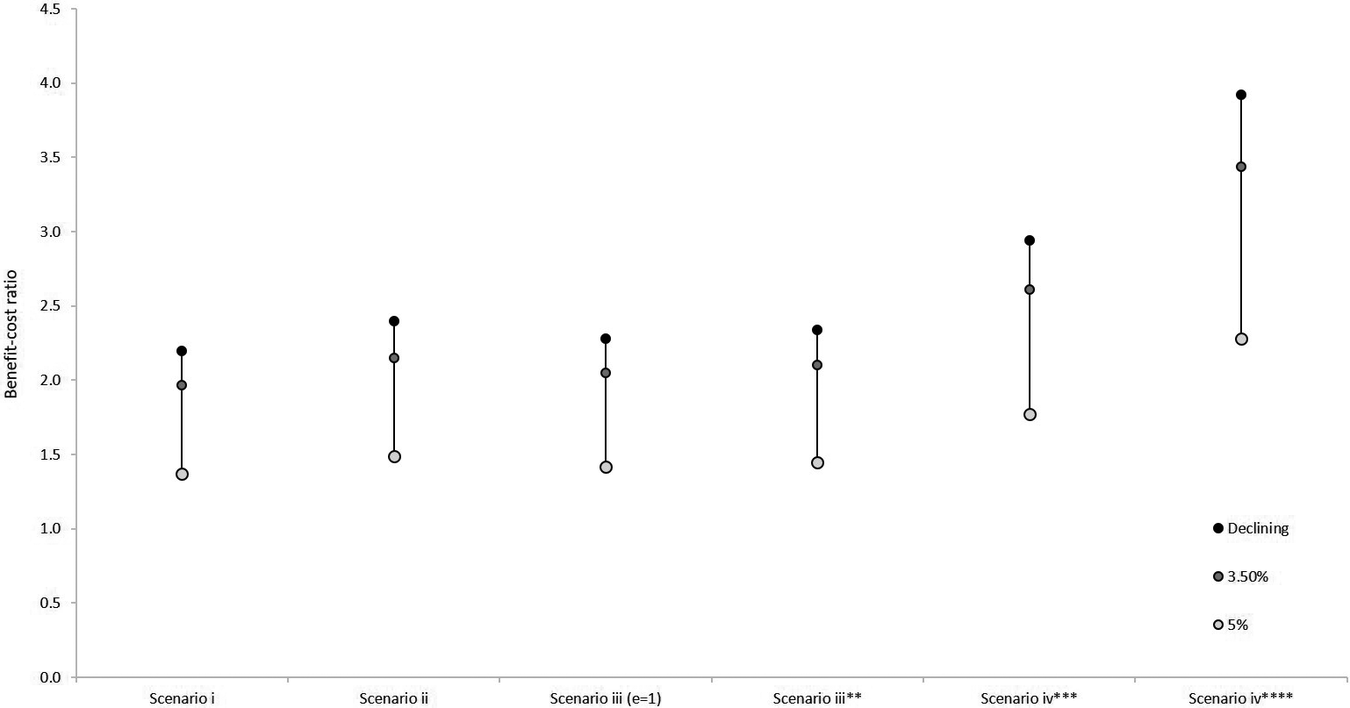
If we move one step further and consider how benefits are distributed among affected groups (scenario III), we observe that while costs stay the same, the present value of benefits would decrease by €1.83 million (from €37.89 million to €36.06 million). The reduction in benefits for this scenario is due to the fact that the implementation of the project would be most beneficial to individuals with incomes higher than the average wage for Bilbao. Indeed, while only five of the affected neighborhoods have incomes higher than the average of Bilbao, these districts are home to around 70 % of beneficiaries (Table 2). Since benefits are not equitably distributed among affected groups, the adaptation is considered less efficient as a result. In this case, investors might consider allocating funds to projects that are deemed more socially (or economically) desirable. Given the types of income groups considered, the BCR is not very sensitive to a change in the elasticity of income from 1 to 2 (Figure 4).
Sensitivity to discount rates (all scenarios), elasticity of income (scenario III), and extent of relative risk aversion (scenario IV). *
 $ \varepsilon $
= 1, **
 $ \varepsilon $
= 2, ***ɳ = 1, **** ɳ = 2.

It is important to acknowledge here the growing evidence-base that highlights the disproportionate impact that climate change has on poor and marginalized groups. This means that for many adaptations the consideration of equity within CBA would increase, rather than decrease, the expected benefits of protection. To illustrate this point, we assess how sensitive the BCR would be to changes in income under scenario III. Holding all else constant, if we set the wage of every affected person to that of the lowest affected income group,Footnote 13 then the BCR would increase from 2.05 to 3.36 (considering an elasticity of 1) (Table 4). In contrast, when we consider the highest affected income bandFootnote 14 the BCR would drop to 1.27. This test demonstrates that considering the types of income groups targeted by adaptation projects can be transparently integrated within CBA, and can either strengthen or weaken the case for action.
Sensitivity of scenario III when considering high versus low affected income bands (r = 3.5 %).

a Refer to Appendix I for a breakdown of beneficiaries and income groups affected by the adaptation project.
The biggest effect on the BCR comes from scenario IV, which considers all three dimensions of employment, equity, and risk aversion. In this scenario, we include the assumption that societies are risk-averse and therefore, we can expect them to place a higher value on protection than a risk-neutral society otherwise would. Including this value, which is essentially the difference in the expected utility of individuals that are risk-averse versus risk-neutral under a state of protection, raises the overall benefit of the adaptation to €45.98 million, resulting in a BCR of 2.61, and an IRR of 7.82 %. The BCR is highly sensitive to changes in risk aversion when changing the value of ɳ from 1 to 2, the BCR of the project increases to 3.44 (Figure 4). Hence, the more risk-averse society is, the greater the value placed on protection. This finding demonstrates that considering the risk aversion of society can be a very important supporting factor in CBA when making a case for climate change adaptation.
A sensitivity analysis was also conducted to test how variable the BCR is with respect to the discount rate. A discount rate of 5 % and a declining discount rate based on the HM Treasury Green Book guidelines (HM Treasury, 2018) were compared to the base discount rate of 3.5 % (Figure 4). The findings show us that the BCR is highly sensitive to changes in the discount rate across all scenarios, and in most cases (scenario’s I, II, and III) a discount rate above 7 % would result in a negative NPV, wherein the project would be considered inefficient (Table 3). Since all costs are distributed within the first 4 years of the project, the sensitivity to the discount rate is mostly contingent on the long-term benefits generated by the adaptation. Choosing the right discount rate in this context is of utmost importance for ensuring that the true value of the project is appropriately recognized. On top of this, the discount rate will also play a decisive role in policy development when deciding between long-term and short-term measures.
4 Conclusion
The long term sustainability of policies and measures when it comes to climate change will be of crucial importance to decision-makers since actions are likely to affect (often interconnected) economic, social, and environmental systems. CBA can be an important tool in this regard. Not only does it have the capacity to test the economic profitability of a measure or a set of measures over time, but CBA can also help to rank measures in accordance with other local development and social policy objectives. As demonstrated in this paper, accounting for aspects such as employment, equity, and risk aversion within CBA can help to provide a more holistic perspective on the long-term success of adaptations. Certainly, the efficiency of prospective adaptation investments is contingent on whether these aspects are considered within CBA. Our analysis has shown that introducing employment, equity, and risk aversion extensions to CBA can have important implications for decision-makers who must allocate resources effectively and according to various economic, environmental, and social objectives. Introducing these dimensions into CBA can both strengthen or weaken the case for action, and facilitate more robust and transparent decision processes when deciding between actions, reducing the risk of maladaptation in the future. Future research should explore these important extensions of CBA further, especially in the context of climate change, and in various political, environmental, and social settings, where choosing the right action may avoid potentially catastrophic and irreversible consequences in the future.
Supplementary Materials
To view supplementary material for this article, please visit http://dx.doi.org/10.1017/bca.2020.32.
Acknowledgments
The funding for this work was provided by the European Commission 7th Framework Programme ECONADAPT project on the “Economics of climate change adaptation in Europe” under the grant agreement No. 603906. This research is also supported by the Basque Government through the BERC 2018-2021 program and by Spanish Ministry of Economy and Competitiveness MINECO through BC3 María de Maeztu excellence accreditation MDM-2017-0714.