Introduction
Chronic disease morbidity and premature mortality related to unhealthy lifestyles are now a major threat to public health worldwide (Haslam and James, Reference Haslam and James2005; Hollander et al., Reference Hollander, de Hoeymans, Melse, van Oers and Polder2006; WHO, 2011). Indeed, non-communicable diseases, of which its most important behavioural risk factors are related to tobacco use, diet, physical activity and alcohol consumption, accounted for almost two-thirds of all deaths, as well as a large part of the burden of disease globally (WHO, 2011). Much evidence shows, however, that lifestyle interventions, for example, interventions aimed at smoking cessation, changing dietary behaviour and alcohol consumption or increasing physical activity, can be an effective and cost-effective strategy for counteracting such preventable morbidity, disability and mortality (e.g. Johansson and Sundquist, Reference Johansson and Sundquist1999; Dirkmaat et al., Reference Dirkmaat, van Genugten and de Wit2003; Avenell et al., Reference Avenell, Broom, Brown, Poobalan, Aucott, Steran, Smith, Jung, Campbell and Grant2004; Elley et al., Reference Elley, Kerse, Arroll, Swinburn, Ashton and Robinson2004; Feenstra et al., Reference Feenstra, Hamberg-van Reenen, Hoogenveen and Rutten-van Molken2005; Herman et al., Reference Herman, Hoerger, Brandle, Hicks, Sorensen, Zhang, Hamman, Ackermann, Engelgau and Ratner2005; Ronckers et al., Reference Ronckers, Groot and Ament2005; Vijgen et al., Reference Vijgen, Busch, de Wit, van Zoest and Schuit2005; Saha et al., Reference Saha, Gerdtham and Johansson2010). In fact, some authors even argue that up to 50% of all current disease burden can be avoided (Mackenbach, Reference Mackenbach2010), although it needs noting that, due to competing diseases, the burden of other diseases would subsequently increase (e.g. Van Baal et al., Reference van Baal, Polder, Hoogenveen, Engelfriet, Boshuizen, Feenstra, de Wit and Brouwer2008). In spite of the possible health gains and reduced time with disabilities from lifestyle interventions, spending on prevention constitutes only a relatively small share of total healthcare expenditures.Footnote 1 Apparently, prevention (still) does not receive much priority when allocating budgets.
Indeed, priority setting is inevitable in healthcare. Scarce healthcare resources and increasing medical expenditures force healthcare policy makers to make choices about allocating resources in order to preserve the (future) sustainability of healthcare systems (e.g. Mitton and Donaldson, Reference Mitton and Donaldson2004; Brouwer et al., Reference Brouwer, van Exel, van Baal and Polder2007). The inevitability of making such important choices suggests the need for a transparent, common decision-making framework. However, the design of such a decision-making framework, or put differently, the definition of the appropriate decision rule and its subsequent application in practice, have by no means proven to be a straightforward matter (Schreyögg et al., Reference Schreyögg, Stargardt, Velasco-Garrido and Busse2005). In fact, decisions on what interventions should be reimbursed from public money often rather seem to be the result of an implicit and inconsistent decision process, based on historical patterns or influenced by various stakeholders (Mitton and Donaldson, Reference Mitton and Donaldson2004; Schreyögg et al., Reference Schreyögg, Stargardt, Velasco-Garrido and Busse2005), than based on the systematic application of a transparent decision rule.
The Netherlands has a long tradition of thinking about a decision-making framework for the allocation of healthcare resources. The Health Care Insurance Board (CVZ), which is the primary advisor of the Dutch government regarding healthcare reimbursement decisions, has recently defined such a framework on the basis of previous initiatives (CVZ, 2006, 2009a).Footnote 2 This framework includes explicit decision criteria, most prominently ‘necessity’ and ‘cost-effectiveness’. Up until now, the decision-making framework has been infrequently applied and predominantly used in reimbursement decisions about pharmaceuticals. The intention of CVZ, however, is to extend its scope to all of the types of care that are eligible for inclusion in the basic benefits package covered under the Health Insurance Act. In other words, the ultimate aim is to create one comprehensive decision-making framework to facilitate decisions about which interventions – curative and preventive – should be reimbursed. This ambitious proposition raises a variety of questions, one of which is whether the use of such a common framework is likely to result in a higher priority for – and therefore more spending on – preventive interventions than is currently the case. Moreover, using the framework to evaluate preventive lifestyle interventions involves some important challenges regarding the operationalisation of the different decision criteria. It is important to investigate how preventive or lifestyle interventions will be evaluated using the proposed decision criteria within the Dutch context, especially since the (previous) Dutch government expressed the intention to dedicate more resources to prevention and especially lifestyle interventions (VWS, 2006).
In this paper, we focus on the main criteria used in the decision-making framework used in the Netherlands. With the decision-making framework, we mean here a set of important criteria and the decision rule based on those criteria. In particular, we highlight several important normative issues that need attention when operationalising the criteria used in the framework, which are especially relevant for lifestyle interventions. The remainder of this paper is structured as follows. First, we briefly discuss the proposed decision-making framework in the Netherlands. Then, we highlight some of the normative choices required to make the criteria ‘necessity’, ‘effectiveness’ and ‘cost-effectiveness’ fully operational. Then, we focus on how these choices may influence the evaluation of lifestyle interventions. We end the paper with a short conclusion.
The Dutch framework
The decision-making framework adopted in the Netherlands may be viewed as the result of a long-lasting process. The ‘Dunning Report (1992)’ of the Committee on Choices in Health Care – better known as the Dunning Committee – importantly spurred the debate in this area. The Dunning Committee proposed a framework, depicted as a funnel with sieves, consisting of four explicit selection criteria to be used in funding decisions: necessity, effectiveness, cost-effectiveness (or efficiency) and own responsibility/payment. The first three criteria of Dunning – necessity, effectiveness, cost-effectiveness – are still used as such by CVZ and constitute the central part of the first phase in the decision-making process: the assessment phase. The fourth criterion of the Dunning Committee, ‘own responsibility/payment’, appears to have a less-prominent role now but is incorporated, to some extent, in the ‘necessity’ criterion.
In the assessment phase, a quantitative evaluation on the basis of the three main decision criteria takes place. This addresses the question of whether an intervention should, in principle, be reimbursed (by uptake within the basic benefits package). Although the CVZ model does not include the fourth criterion of the Dunning Committee, it does include a different fourth criterion in the assessment phase – the so-called ‘feasibility criterion’. The feasibility criterion considers whether implementing an intervention is feasible in terms of available resources, accessibility, legal restrictions, moral restrictions, etc. It thus considers the current and future impact on the sustainability of the healthcare system. This criterion is clearly important, although, to date, it is less developed than the first three. One may view the criterion as, on the one hand, investigating whether an intervention would fit the legal, ethical, organisational and financial boundaries the healthcare sector is faced with. This can be viewed as (partially) preceding all other considerations. On the other hand, it also considers more practical issues related to the successful implementation of interventions. We do note that elements of feasibility can be particularly important, especially for lifestyle interventions. For instance, questions may be raised regarding the ‘medicalisation’ of health problems caused by unhealthy behaviour and regarding the desirability of having solidarity when healthcare expenditures are made because of ‘consciously chosen’ habits. Especially, as many of these considerations are intervention specific, and as the criterion of feasibility remains less developed, we focus here on the other criteria of necessity, effectiveness and cost-effectiveness. This choice is also motivated by the fact that the ‘decision rule’ used in the assessment phase, highlighted below, only includes these three criteria.
The assessment phase involves the collection and assessment of information on the four above-named criteria and culminates in a preliminary decision (based on effectiveness, cost-effectiveness and necessity) about whether the intervention should be included in the basic benefits package. This phase is followed by the so-called appraisal phase, where more qualitative arguments for or against reimbursement (including those related to feasibility) can be weighed against the preliminary conclusion reached in the assessment phase. We will now first highlight the three most prominent criteria in the assessment phase, after which we discuss the appraisal phase.
The assessment phase: three main decision criteria
First, the necessity criterion embodies the question whether the disease or required care justifies a claim on solidarity (CVZ, 2006, 2009a).Footnote 3 Within the Dutch context, necessity is commonly operationalised in terms of a particular definition of disease burden: proportional shortfall (Stolk et al., Reference Stolk, Brouwer and van Busschbach2002, Reference Stolk, van Donselaar, Brouwer and van Busschbach2004, Reference Stolk, Pickee, Ament and Busschbach2005; CVZ, 2006, 2009a; RVZ, 2006, 2007).Footnote 4 Proportional shortfall has been proposed as combining two important existing equity concepts: fair innings and prospective health. The fair innings approach argues that every individual is entitled to a certain amount of health over their entire lifespan (e.g. Williams, Reference Williams1997). Priority is given to people who are further away from achieving this ‘fair share’ of health. Prospective health, on the other hand, can be viewed as looking at the prospective health (gain or loss), rather than considering prior health consumption as well. Stolk et al. (Reference Stolk, Pickee, Ament and Busschbach2005) point out that “proportional shortfall has in common with fair innings that the size of the health gap is relevant, but it agrees with severity of illness that also the remaining no-treatment QALY expectation should be taken into account”. It must be noted that Stolk et al. (Reference Stolk, Pickee, Ament and Busschbach2005) use the term ‘severity of illness’ here rather than prospective health. Their definition of severity of illness is prospective health, which implies a narrower view of the concept severity of illness than proposed elsewhere (e.g. Nord, Reference Nord2005). In fact, in a broader definition, proportional shortfall can be seen as a severity of illness measure. For the current paper, such definitional issues are less important than the operationalisation of the necessity measure in practice. Proportional shortfall aims to prioritise on the basis of the fraction of remaining Quality Adjusted Life-Years (QALYs) or health in the normal lifespan that will be forgone if a condition remains untreated. In other words, proportional shortfall determines the worse-off not by looking at absolute health achievements, but rather by looking at health achievements in relative terms – see equation (1) (Johannesson, Reference Johannesson2001; Stolk et al., Reference Stolk, van Donselaar, Brouwer and van Busschbach2004, Reference Stolk, Pickee, Ament and Busschbach2005):

The nominator in equation (1) shows the loss of QALYs in case of no treatment (normal QALY expectancy minus QALY expectancy with disease but without treatment), whereas the denominator contains the remaining QALY expectation without the disease (usually based on gender and age-specific quality of life data). The range of proportional shortfall varies from 0 (no QALY loss) to 1 (total loss of remaining QALYs). For example, consider a 40-year-old man who suffers from acute heart failure, which will lead, without treatment, to immediate death. If without heart failure he would live until 80 years of age (for simplicity, all these years are lived in full health), he may lose all 40 remaining QALYs (healthy years). In this case, the proportional shortfall will be 100% or 1 (40 QALYs/40 QALYs). If instead he would suffer from a non-life-threatening illness, living until 80 years in a health state that is valued at 0.5 QALY so that each year counts for 0.5 QALY and therefore that 40 × 0.5 or 20 QALYs are lost, the proportional shortfall will be 0.5 (i.e. 20/40). By now, proportional shortfall has been calculated for numerous diseases (e.g. RVZ, 2006).
The other two criteria are effectiveness and cost-effectiveness, where the latter criterion comprises the former, obviously. Information on the (cost-)effectiveness of an intervention is usually acquired through a cost–utility analysis, a specific type of economic evaluation (Drummond et al., Reference Drummond, Sculpher, Torrance, O'Brian and Stoddart2005). The effectiveness criterion is the most accepted and explicitly applied criterion of the three main decision-making criteria. It is well accepted that an intervention should at least result in a desired effect. In other words, care should reduce a healthcare need or prevent it from increasing.Footnote 5 Within a cost-effectiveness study, effects are typically expressed in terms of QALYs. This is a quantitative utility measure, which captures both length and quality of life. Every lived life-year is weighted for the quality of life during that year. QALY scores usually range between 0 (death) and 1 (perfect health), although they may take negative values as well for very poor health states, which are evaluated to be ‘worse than dead’.
When the effects of an intervention, in terms of QALYs gained relative to some comparator, are established, they may subsequently be confronted with the costs of that intervention (again relative to the comparator). Cost-effectiveness is increasingly becoming an important and accepted decision criterion in healthcare decision making (e.g. Claxton et al., Reference Claxton, Sculpher and Drummond2002; Eichler et al., Reference Eichler, Kong, Gerth, Mavros and Jönsson2004; Stolk et al., Reference Stolk, de Bont, van Halteren, Bijlmer and Poley2009). Given the societal perspective advocated in the Netherlands, the costs should comprise all relevant societal costs, including for instance productivity costs and costs of informal care. Thus, an incremental cost-effectiveness ratio (ICER) is determined, which divides the QALYs gained by the incremental societal costs incurred.
The provisional decision
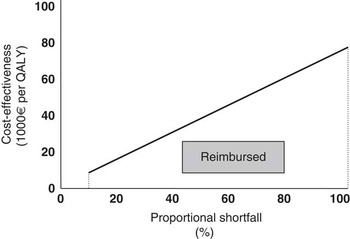
Once information on both the necessity and the cost-effectiveness of an intervention is gathered, this can be used to reach a (preliminary) decision on the desirability of the intervention to be included in the basic benefits package. The common decision rule used in this context is to evaluate the ICER in relation to some relevant threshold value of costs per QALY (e.g. Gravelle et al., Reference Gravelle, Brouwer, Niessen, Postma and Rutten2007; McCabe et al., Reference McCabe, Claxton and Culyer2008). This threshold is a much-debated topic. Not only is there discussion about what the threshold should represent (some social value of a QALY or rather the marginal cost-effectiveness of current spending in the healthcare sectorFootnote 6 – see Claxton et al., Reference Claxton, Paulden, Gravelle, Brouwer and Culyer2011) but also the height of the threshold (Rawlins and Culyer, Reference Rawlins and Culyer2004; Bobinac et al., Reference Bobinac, van Exel, Rutten and Brouwer2010, Reference Bobinac, van Exel, Rutten and Brouwer2011a). However, in the Dutch context, the threshold appears to represent the social value of a QALY (Brouwer, Reference Brouwer2009), the height and nature of the threshold is not yet clear. Often mentioned threshold values in the Dutch context were €18,000 and €20,000 per QALY. These values, however, lacked a proper foundation (Brouwer, Reference Brouwer2009). Moreover, increasingly it was acknowledged that having one threshold value for the costs per QALYs was incompatible with the full decision framework, which links the necessity criterion to that of cost-effectiveness. The final decision rule is based on the assumption that society might be willing to spend more per QALY in case of interventions that target a disease that imposes a higher disease burden. This implies that higher costs per QALY are accepted when the disease causes a higher burden, that is, has a higher proportional shortfall (see Figure 1). Stolk et al. (Reference Stolk, van Donselaar, Brouwer and van Busschbach2004) show that this equity-weighted cost-effectiveness threshold may better explain past reimbursement decisions than a fixed threshold value. They also provide normative arguments in favour of such a ‘flexible’ threshold.
The decision framework for the assessment phase: a shifting threshold according to necessity

To apply the decision framework and rule, CVZ and the Dutch Council for Public Health and Health Care Council (RVZ) tentatively argue that a maximum threshold value of €80,000 may be considered appropriate (RVZ, 2006; CVZ, 2009a). Moreover, they argue that for those illnesses where the disease burden may be considered minimal, a very low (or even zero) societal willingness to pay per QALY may be applicable (hence the dotted starting point of the threshold line in Figure 1). Nevertheless, there is no consensus on the exact form of the relationship between proportional shortfall and cost-effectiveness (here drawn as a linear line), as well as the starting point and end point of the line. The currently mentioned threshold values lack a sound empirical basis (Brouwer, Reference Brouwer2009).Footnote 7
The appraisal phase
Despite the importance of decision criteria, it is also increasingly recognised that strict adherence to a rational, non-contradictory set of criteria may not be feasible, as important normative, ‘unquantifiable’ judgments may then be disregarded. Therefore, the assessment phase is followed by an appraisal phase. The appraisal phase constitutes a societal verification of the preliminary decision reached in the assessment phase by an independent committee of experts with different societal roles. This committee reviews the material gathered in the assessment phase and then decides whether to include the technology in the basic benefits package, after taking the preliminary decision and other aspects (feasibility, ethical, societal, etc.) into consideration. The meetings are open to the public and the minutes of the meeting are available to all. The inclusion of this appraisal phase was intended to increase public support for conclusions about reimbursement drawn by CVZ. When this second phase is completed, advice regarding reimbursement of the intervention is presented by CVZ to the Minister of Health, Welfare and Sport.
The decision framework and lifestyle interventions
In this section, we will further address the different elements and phases in the decision-making framework in relation to lifestyle interventions.
Necessity
Two (underexplored) issues regarding the use of proportional shortfall as operationalisation of necessity may be of particular relevance to the measurement of proportional shortfall regarding lifestyle interventions: the (sub)group in which proportional shortfall is measured and the moment that the measurement of proportional shortfall begins.Footnote 8
Regarding the first issue, consider some preventive treatment for a group of 100 individuals who all have high cholesterol. Suppose now that only 10 of them will incur health losses when untreated and thus will benefit from this treatment. Two options for measuring proportional shortfall may be distinguished (Stolk et al., Reference Stolk, van Donselaar, Brouwer and van Busschbach2004). First, one may include only those people who would actually incur health losses as a consequence of high cholesterol (i.e. only 10 out of the 100 people) or, alternatively, one may include all individuals undergoing treatment, including the ones for whom treatment is unnecessary as they would not experience any health losses without prevention. Not surprisingly, average proportional shortfall will be much lower in the latter case, as 90 individuals will have a proportional shortfall of 0.
Stolk et al. (Reference Stolk, van Donselaar, Brouwer and van Busschbach2004) offer several arguments in favour of measuring the average proportional shortfall only in the subgroup that actually experiences the health losses for which treatment is considered. First, cost–utility analyses of preventive interventions include the costs of all individuals undergoing the preventive intervention, including the costs for those individuals who do not benefit from the treatment (as it is usually impossible to identify a priori only those people who actually benefit from the treatment). Although few will contest this practice, the logical result is a less-favourable cost–utility ratio (more costs but same effects). Doing the same when measuring proportional shortfall may be considered ‘double counting’, as the intervention is blamed twice for the same characteristic (i.e. lack of identification of individuals who actually benefit). Thus, individuals in need of this preventive intervention who already face a higher cost–utility ratio, would then also be confronted with their condition receiving a lower equity weight.
A second argument is that an equity measure is concerned with the worse-off, and therefore it is important to consider on what condition we base our assessment of the worse-off, that is, the specific health losses the treatment is trying to prevent. In our example, treatment is obviously aimed at avoiding health losses (in terms of quality of life or life-years) as a consequence of coronary heart disease and not high cholesterol itself. Stolk et al. (Reference Stolk, van Donselaar, Brouwer and van Busschbach2004) argue that it would be appropriate to perform the equity measurement only on those individuals who incur heart disease (instead of on all those who have high cholesterol). Then the equity measurement would be “independent of the prevalence of cardiovascular events in a particular group, and of diagnostic accuracy in identifying the patients at the highest risk” (Stolk et al., Reference Stolk, van Donselaar, Brouwer and van Busschbach2004). In other words, who we consider to be worse-off is then independent of the success, in terms of health gains, of a treatment.
A second important issue in measuring proportional shortfall is when to start calculating the shortfall. Think of a 40-year-old patient with high cholesterol who will die after heart failure at the age of 60 without preventive treatment (with treatment he would live in perfect health to become 80 years old). A first option is to measure proportional shortfall at the point when the preventive intervention is given (at age 40). Alternatively, measurement could start when the potentially prevented health problems would actually occur (at age 60). In case of the latter option, a shorter time frame is considered (20 years instead of 40 years), and therefore proportional shortfall will be higher (losing 20 years out of 20 years makes a proportional shortfall of 1, while losing 20 years out of 40 years makes 0.5). Stolk et al. (Reference Stolk, van Donselaar, Brouwer and van Busschbach2004) argue in favour of starting the measurement of proportional shortfall at the time of the treatment instead of the moment the illness actually occurs. This argument is based on the concept of urgency. People may prefer treatment among those in danger of imminent, severe health loss or immediate death, than treatment among those who face a similar fate in 20 years time (and now are still healthy; Jonson, Reference Jonson1986).
It is clear that the priority given to lifestyle interventions may be strongly affected by these inherently normative choices. In practice, both methodological choices mentioned above may indeed result in more than significant differences in outcome (Stolk et al., Reference Stolk, van Donselaar, Brouwer and van Busschbach2004). Stolk et al. (Reference Stolk, van Donselaar, Brouwer and van Busschbach2004) explicitly call for more debate and research in this area, stating that “…it is insufficient to scrutinise just the general ideas behind an equity concept and… just as much attention should be directed to the methodological choices in adopting each one of them”. To date, however, it remains unclear how necessity should be exactly operationalised, but still it is operationalised (when used at all) along the lines proposed by Stolk et al. (Reference Stolk, van Donselaar, Brouwer and van Busschbach2004).Footnote 9
Effectiveness
An important problem arising when applying the decision criteria in practice is that high-quality data or evidence on effectiveness is often lacking (CVZ, 2009a). For example, Stolk et al. (Reference Stolk, de Bont, van Halteren, Bijlmer and Poley2009) argue that for medical specialist care this problem often arises. This is also true for lifestyle interventions. When establishing the (cost-)effectiveness of an intervention, Randomised Controlled Trials (RCTs) are considered to be the state of the art, by CVZ. However, for preventive interventions, especially those aimed at lifestyle changes, such evidence may be hard to come by, also in pragmatic trials. There are several possible explanations why this is the case. First, a well-designed RCT requires a controlled setting in which possible confounding factors are neutralised so that any significant effects can be adequately ascribed to the intervention. As RCTs of lifestyle interventions are often pragmatic and situated in the ‘real world’, it may be more difficult to rule out confounding in investigating the effectiveness of such interventions (de Wit and Brouwer, Reference de Wit and Brouwer2004), especially when it is difficult to randomise. Second, long follow-ups are often required for the evaluation of lifestyle interventions as the effects will usually only show many years later. This is often problematic. Third, effectiveness of lifestyle interventions are often reported in intermediate health outcomes, such as weight loss (de Wit and Brouwer, Reference de Wit and Brouwer2004). Although such outcome measures may indeed result in increased health, and may have some clinical meaning themselves (Drummond et al., Reference Drummond, Sculpher, Torrance, O'Brian and Stoddart2005), policy makers in charge of allocating healthcare resources may be more interested in final health outcomes. Final outcomes may, among other things, increase the comparability of different types of treatment. Thus, when intermediate outcomes are used, a link needs to be made to final health outcomes using decision modelling based on epidemiological data (Drummond et al., Reference Drummond, Sculpher, Torrance, O'Brian and Stoddart2005). This is, however, not an easy task, nor may it always be considered as ‘high-quality evidence’. Finally, in contrast to, for instance, the pharmaceutical sector, it is unclear who will provide for and finance evidence regarding necessity and (cost-)effectiveness when applying for funding of an intervention in the context of the basic benefits package. Although pharmaceutical companies commonly have to provide the evidence themselves, funding for such research is often not (automatically) available in other areas.
In the area of lifestyle interventions, these difficulties regarding data collection may have important additional implications. Lifestyle interventions often consist of drugs, behavioural support (e.g. consultations) or a combination of both. The lack of data may lead to the impression that the behavioural or combined interventions are not (cost-)effective. The drug option might receive priority, although it may be the less-optimal solution. Hence, more effort is advocated to resolve the difficulties associated with gathering evidence for lifestyle interventions (CVZ, 2009a).
Cost-effectiveness
Three issues that may particularly influence the cost-effectiveness of lifestyle interventions are discussed next: the perspective of the analysis, the inclusion of unrelated medical costs in life-years gained and discounting of costs and effects. CVZ (CVZ, 2006) offers guidance on how to deal with these issues. Several methodological issues are, however, still subject of considerable debate in the international literature. Moreover, in some instances, the guidelines seem to lack a proper theoretical foundation.
The Dutch guidelines currently promote the use of a societal perspective in economic evaluations (CVZ, 2006). From a societal perspective, several cost categories can be distinguished: direct medical costs, direct non-medical costs, indirect non-medical costs and indirect medical costs (Brouwer et al., Reference Brouwer, Rutten and Koopmanschap2001). Direct medical costs are directly related to the intervention under study (e.g. costs of tests, medication, etc.). Direct non-medical costs are also directly related to the relevant intervention or condition, but do not fall within the formal healthcare sector. Examples are costs of informal care and patients’ travel costs and time costs. Indirect non-medical costs are predominantly related to the changes in the productivity of individuals as a consequence of an intervention (e.g. Koopmanschap et al., Reference Koopmanschap, Rutten, van Ineveld and van Roijen1995). Finally, indirect medical costs are medical expenditures in life-years gained because of a life-prolonging intervention. These costs refer to medical costs incurred in gained life-years and are usually further broken down into related and unrelated costs. The related indirect medical costs are related to the intervention (e.g. anti-rejection medication after a life-saving long transplant), whereas the unrelated indirect medical costs are not directly related to the life-prolonging treatment (e.g. costs of a hip surgery in life-years gained because of the life-saving long transplant).
Adopting the societal perspective implies that all relevant costs and benefits should be considered in an evaluation, regardless of where they fall. For example, if preventive lifestyle interventions involve activities in the education sector, the costs incurred there should not go unnoticed in an economic evaluation. Doing so would result in a misrepresentation of the cost-effectiveness of such an intervention.
Nevertheless, surprisingly, the Dutch guidelines for economic evaluation explicitly recommend the exclusion of one particular type of costs, that is, unrelated medical costs in gained life-years (CVZ, 2006). This is despite the fact that the literature appears to argue strongly in favour of inclusion of these costs for reasons of consistency and optimality (for a review, see Rappange et al., Reference Rappange, van Baal, van Exel, Feenstra, Rutten and Brouwer2008). It has been argued that it would be inconsistent to ignore these unrelated medical costs in life-years gained, as the denominator of the cost–utility ratio (i.e. the benefits side expressed in terms of QALYs) implicitly assumes normal care consumption in these life-years gained (Nyman, Reference Nyman2004). In addition, Meltzer (Reference Meltzer1997) argues that excluding these costs would lead to a non-optimal allocation of healthcare resources. The consideration of unrelated medical costs in life-years gained in the economic evaluation of healthcare interventions may have several important implications for cost-effectiveness results and subsequent decision making (van Baal et al., Reference van Baal, Feenstra, Hoogenveen, de Wit and Brouwer2007). Including these future costs worsens the cost-effectiveness of life-prolonging interventions relative to quality of life improving interventions, thus potentially re-allocating resources away from life-prolonging intervention towards quality of life improving interventions. Furthermore, van Baal et al. (Reference van Baal, Feenstra, Hoogenveen, de Wit and Brouwer2007) show that including these costs may favour interventions targeted at the young over those targeted at the elderly, as the former incur these future additional unrelated medical costs further in the future and are therefore discounted relatively more. Given that preventive lifestyle interventions may indeed importantly prolong life (e.g. smoking cessation), current guidelines result in biased cost-effectiveness results. This point is compounded by the fact that non-medical costs in added life-years are typically ignored as well, which reflect the considerable controversy around these costs in the international literature (e.g. Garber and Phelps, Reference Garber and Phelps1997; Meltzer and Johannesson, Reference Meltzer and Johannesson1999; Nyman, Reference Nyman2004; Feenstra et al., Reference Feenstra, van Baal, Gandjour and Brouwer2008; Lee, Reference Lee2008).
A final issue that may importantly affect the cost-effectiveness of lifestyle interventions is discounting. Applying discount rates for future costs and effects is widely accepted and a common practice in economic evaluations (Drummond et al., Reference Drummond, Sculpher, Torrance, O'Brian and Stoddart2005). However, more controversy exists on the height of the discount rates for costs and effects. Preventive interventions often incur immediate costs, yet yield health effects (far) in the future. Hence, applying higher discount rates will generally make the cost-effectiveness ratio of a preventive intervention less favourable, especially compared with curative interventions. Recently, arguments have been put forward in favour of differential discounting – using two distinct discount rates, one for costs and one for effects. The main argument for this is that if the social value of health increases over time (which seems uncontroversial but is not accounted for in common cost–utility analyses), this may be corrected for by using a lower discount rate for effects relative to that for costs (e.g. Gravelle and Smith, Reference Gravelle and Smith2001; Brouwer et al., Reference Brouwer, Niessen, Postma and Rutten2005; Gravelle et al., Reference Gravelle, Brouwer, Niessen, Postma and Rutten2007; Claxton et al., Reference Claxton, Paulden, Gravelle, Brouwer and Culyer2011). In the Netherlands, such differential discounting is currently prescribed: 4% for costs and 1.5% for health effects (CVZ, 2006). Opponents of differential discounting normally indicate that using two distinct discount rates would be inconsistent (e.g. Weinstein and Stason, Reference Weinstein and Stason1977) or would lead to infinite postponement of interventions, as postponing the intervention results in more favourable ICERs the longer the postponement lasts when the discount rate for costs is higher than that for effects (Keeler and Cretin, Reference Keeler and Cretin1983). However, these arguments have been countered in the literature (e.g. Brouwer et al., Reference Brouwer, Niessen, Postma and Rutten2005; Gravelle et al., Reference Gravelle, Brouwer, Niessen, Postma and Rutten2007) and it appears that it is increasingly accepted that there is no inherent need for equal discount rates for costs and effects (Claxton et al., Reference Claxton, Paulden, Gravelle, Brouwer and Culyer2011). More attention for the (intergenerational) equity aspects of discounting seems warranted as well. People may weight health gains in different generations differently for equity reasons, for instance, giving lower weight to gains in generations with a relatively high life expectancy (e.g. Bobinac et al., Reference Bobinac, Brouwer and van Exel2011b).
Using a lower discount rate for effects than for costs (as commonly advocated by proponents of differential discounting), which thus implicitly implies attaching more weight to future health benefits, may substantially lower – thus more favourable – ICERs for preventive interventions. Further, when judged against some (more or less) fixed threshold or compared with more curative interventions, the choices regarding discount rates may directly influence the chances of an intervention to be implemented. The issue of discounting is still subject of much debate, yet the current discount rules applied by CVZ in an international context are favourable for prevention.
Decision rule and appraisal phase
In terms of the decision rule, it is clear that the decision framework is not completely operational yet. There is no clear consensus regarding the appropriate threshold for costs per QALY or how that exactly should vary with severity of illness. The debate on appropriate thresholds is increasing, internationally as well. Both the nature of the threshold (what it should represent) and, related, the appropriate height of the threshold (in different contexts) are matters of debate and study (see e.g. Brouwer et al., Reference Brouwer, van Exel, van Baal and Polder2007; Bobinac et al., Reference Bobinac, van Exel, Rutten and Brouwer2010; Claxton et al., Reference Claxton, Paulden, Gravelle, Brouwer and Culyer2011). It will be crucial to further set appropriate thresholds in order to be able to use the framework in practice. In that sense, it is not only clear that internationally very little is known regarding the value of QALY gains (Hirth et al., Reference Hirth, Chernew, Miller, Fendrick and Weissert2000) and even less so about how this varies with specific disease contexts (Brouwer et al., Reference Brouwer, van Exel, Baker and Donaldson2008), but also that the underpinning of the currently proposed threshold range (from €10,000 to €80,000) is very weak (Brouwer, Reference Brouwer2009). It is important to have better justified thresholds for QALY gains if aiming to apply the decision-making framework in practice.
One of the interesting questions in this context is whether the thresholds should be equal for curative and preventive interventions. Especially for preventive interventions where it is unclear which person exactly benefits from the intervention (i.e. have a more anonymous, statistical nature), although beneficiaries of curative interventions are identifiable, it is interesting to note that it has been argued that the value of a statistical life is lower than that of an identifiable life. Like Dranove (Reference Dranove2003) noted: “There is no reason to expect that the value of a statistical life would equal the value of an identified life”. This obviously is rather relevant for evaluating preventive interventions. However, although this discrepancy in values may be observable in empirical studies, it is rather questionable whether a government would want to apply different thresholds for these situations. The normative grounds for this distinction are unclear. Moreover, when considering an example when choosing between a preventive action today that tomorrow will reduce the occurrence of an acute disease for which a curative intervention exists, the inconsistency of having two thresholds becomes obvious.
Nevertheless, even with better knowledge of the threshold, it is clear that besides an assessment phase, an appraisal phase remains necessary. Several considerations enter this phase that may be of particular interest in case of lifestyle interventions. One of these considerations concerns the culpability and own responsibility argument. This is related to the question whether a specific intervention should be paid from individuals’ own pocket (which was prominent in the fourth Dunning criterion). Clear criteria for when something can be left to an individuals’ own responsibility are lacking. Moreover, interventions targeting the consequences of (consciously) taking health risks (e.g. smoking, drinking and not exercising) may be viewed differently than those targeting illnesses that are not related to lifestyle. In case of the former, the degree of solidarity that society has with the involved individuals may be less than otherwise. It seems, however, that such arguments not only use a notion of responsibility that may be debatable (e.g. given the overrepresentation of smokers in low socio-economic groups), they are also not always used consistently. For instance, more emphasis seems to be placed on culpability in case of lifestyle interventions than in case of curative interventions (e.g. smoking vs lung cancer). Moreover, it is important to note that current Dutch law prohibits denying reimbursement on the grounds of culpability.
It is important to avoid arbitrariness in the appraisal phase and to make all considerations explicit and use them as consistently as possible. The fact that some arguments cannot be quantified should not result in inconsistencies in or lack of transparency of the appraisal phase.
Towards improved evaluation of preventive lifestyle interventions
The search for the decision criteria that should play a role in healthcare priority setting has been a longstanding process. Recently, as discussed, a healthcare decision-making framework was developed and proposed in which the criteria ‘necessity’ and ‘cost-effectiveness’ play a central role. Many normative choices, however, need to be made explicit to make these decision criteria, and thus the decision framework operational, transparent and legitimate. In this paper, we have indicated that this operationalisation process is by no means trivial and that many issues remain open.
The success of the decision-making framework will, to a large extent, also depend on whether the scope of applying the decision criteria can be extended to all types of healthcare interventions and technologies. An important barrier in this context regards the collection of evidence for interventions such as preventive lifestyle interventions. The question of how to deal with ‘lower’ levels of evidence for such interventions is important. Moreover, when considering necessity, the way in which the necessity score is being calculated requires more public attention than it received so far. The same holds for normative choices underlying the measurement of cost-effectiveness, for example, regarding discounting and the inclusion of controversial costs. It seems that many challenges remain before the decision-making framework and its criteria can be successfully applied in practice.
Moreover, it requires a consistent use of the framework itself. For instance, CVZ recently evaluated a smoking cessation programme, combining therapeutic and drug therapies, for uptake within the basic benefits package. Regarding the ‘necessity’ criterion, CVZ concluded that smoking results in a high disease burden (CVZ, 2009b). Interestingly, disease burden is expressed in Disability Adjusted Life Years instead of proportional shortfall, and thus, here, refers to an absolute measure of overall disease burden rather than severity of illness. The effectiveness of the combined smoking cessation treatment has been assessed before (success rates varying between 8% and 20%) and is anchored in a recently updated clinical guideline (CBO, 2009). The ICER was relatively favourable (compared with the current standard, i.e. only therapeutic therapy), that is, €19,000. This ICER did include the indirect medical costs (although guidelines advice not to) and adopted a discount rate of 4% for both costs and effects (whereas guidelines advice a 1.5% discount rate for effects). CVZ argues that the ICER would be much lower (reducing the ICER by some 50%) if a lower discount rate for effects would have been used. The cost-effectiveness study took a healthcare perspective rather than the prescribed societal perspective, and therefore excludes important costs such as those related to productivity changes (CVZ, 2009b). Therefore, it seems that CVZ currently does not strictly adhere to its own decision-making framework. Although there may be reasons for this, both general ones (e.g. the lack of clarity on the exact height and shape of the threshold line) and particular ones (e.g. availability of good studies taking the preferred societal perspective, etc.), attempting to be as consistent as possible in using the framework is crucial.
Therefore, to obtain sound evaluations of lifestyle interventions, it is important to both further develop and justify the current decision-making framework and examine its current operationalisation, as well as consider the specific aspects of interventions such as lifestyle interventions. These interventions need to be evaluated using the same decision-making framework in order to ensure consistency, but it needs to be ensured that the (operationalisation of the) framework is suitable for this purpose. Currently, the Dutch healthcare system is (still) characterised by relatively low investments in programmes promoting healthy behaviour. Clearly, current investments in such interventions are at variance with the increased impact of unhealthy behaviour on population health, that is, preventable disease burden. Whether spending more money on prevention is justified can only be determined by comparing interventions (curative and preventive) within a similar framework, which comprises all aspects considered relevant (Rappange et al., Reference Rappange, Brouwer, Rutten and van Baal2010). In this context, it is important to realise that choices on how to operationalise the decision criteria need not be made such as to promote prevention, but such as to arrive at an appropriate, consistent and transparent framework for setting priorities (Brouwer et al., Reference Brouwer, van Exel, van Baal and Polder2007; Rappange et al., Reference Rappange, Brouwer, Rutten and van Baal2010). This indeed should be high on the priority list.
Acknowledgements
We are grateful to Johan Mackenbach and Elly Stolk for useful comments on an earlier version of this paper. This study was part of the project ‘Living longer in good health’, which was financially supported by Netspar. The opinions expressed in the paper are those of the authors. The authors have no conflicts of interest that are directly relevant to the content of this article.