Introduction
The do-not-resuscitate (DNR) designation describes the decision made by a patient who wants to avoid receiving coronary pulmonary resuscitation (CPR) and other undesired treatment and resuscitation (Yuen et al., Reference Yuen, Reid and Fetters2011). A number of studies found that more than 60% of cancer patients with advanced or terminal stages signed DNR orders (Cheng et al., Reference Cheng2016; Wang et al., Reference Wang2016; Wen et al., Reference Wen2013), but, inconsistently, some studies found that fewer than 50% of cancer patients agreed to sign the DNR document (Azad et al., Reference Azad2014; Garrido et al., Reference Garrido2015; Leeflang Mariska et al., Reference Leeflang2015). The progression of cancer can be more easily predicted compared with non-cancer diseases (Yang et al., Reference Yang2016), but a greater delay in DNR designation occurs among cancer patients. For example, DNR orders were signed by cancer patients within the last 24 hours before death in 32.2% of cases, 1–2 days before death for 7.9%, 3–7 days before death for 37.6%, and >7 days before death for 22.3% (Bailey et al., Reference Bailey2012). When cancer patients are in poor condition before death, it is hard for them to complete the DNR document by themselves (Wang et al., Reference Wang2016). These data suggest the need for early intervention for cancer patients to enhance DNR designation.
The barriers to acceptance of DNR designation come from professionals and patients/families. Although professionals understand the importance of early DNR designation for advanced cancer patients, it remains a challenge for them to discuss with their patients (Dahlin et al., Reference Dahlin2010). Patients and families often misunderstand that the time to receive palliative care and need for a DNR designation is only when patients’ conditions are worsening and they are near to death (Perrin & Kazanowski, Reference Perrin and Kazanowski2015). Although a number of interventions have been developed to solve the barriers to DNR discussions and designation (Kao et al., Reference Kao2014; Stein et al., Reference Stein2013), there have been few systematic studies to evaluate their effects on DNR designation rates to develop intervention guidelines that help professionals provide better care and promote the DNR discussion and enhance designation rates for cancer patients (Osinski et al., Reference Osinski2017). Recently, one systematic review (Yang et al., Reference Yang2016) identified a total of 21 non-randomized studies to evaluate the effects of palliative consultative care on DNR designation rates among cancer patients at an acute inpatient unit. Nevertheless, in addition to palliative consultation care, a number of studies examined the effects of palliative care unit services and communication programs on DNR designation rates among cancer patients. Therefore, a comprehensive systematic review needs to include intervention studies of all aspects of DNR interventions.
The aims of this systematic review were to identify and explore the effects of the overall and the different types of interventions on the DNR designation and the time between DNR and death.
Method
Eligibility criteria
Studies were eligible for inclusion if they (1) were randomized controlled trials, quasi-experimental studies, or retrospective observational studies (such as a chart review study); (2) examined the effects of interventions on improving the DNR designation rate among cancer patients; and (3) used outcome indicators of DNR designation rates. Studies were excluded if they reported data without separating cancer patients from non-cancer patients or the mean ages of the participants were younger than 18 years. The screening and selection of studies was done independently by two reviewers, and different views of individual articles were resolved by discussion.
Information sources
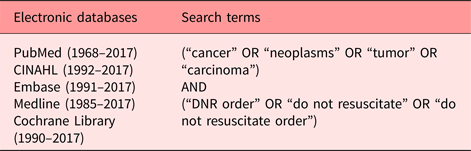
We conducted electronic database searches from online databases: PubMed, CINAHL, EMbase Medline, and Cochrane Library for articles published through 2 November 2017. Our search strategy was based on the problem/population, intervention, comparison, and outcome framework. The terms of cancer and DNR were included in the search to represent the participant-cancer patients and our primary outcome-DNR designation. Each term had multiple terms and they were combined using the Boolean operator OR. Search terms for the cancer patient included cancer, tumor, carcinoma, or neoplasm. Terms for the DNR designation included DNR order, do not resuscitate, or do not resuscitate order. Furthermore, two terms were combined using the Boolean operator AND. Table 1 indicated the electronic databases search and search terms used. All published articles in English and Chinese were included in the stage of screening the potential articles for this review.
Electronic databases search and search terms used

Study selection
The selected studies were initially screened for the relevance by reviewing the title and abstracts. The full texts of the potentially eligible articles were retrieved and reviewed independently by two reviewers. Any disagreement between the reviews was resolved by the discussions with the third expert.
Data collection process
The study extraction and synthesis were conducted by author LT and double-checked by coauthor FS. Two steps were involved: reviewing the title and abstracts for the initial screen for relevance, and examining the full contexts to confirm the eligibility to include in this review. Data extraction for review included (1) author, year, country; (2) aims and methods (design, characteristics of the participants, setting, the types of intervention, usual or standard care for control group, outcome measures); and (3) quantitative results.
Risk of bias in individual studies
We used the Effective Public Health Practice Project tool to assess the overall quality of included studies (Thomas et al., Reference Thomas2004). The domains of Effective Public Health Practice Project include selection bias, study design, confounders, blinding of outcome assessors and participants, reliability and validity of data collection methods, and withdrawals and dropout rates. For each domain, quality of the study was rated as weak, moderate, or strong. The quality of all studies was evaluated by two reviewers independently.
Summary measure
The differences in the percentages of the designation rates of DNR order before and after were calculated. The increases of the percentages after the intervention were identified as the effective intervention. The time between DNR and death was represented by the median days.
Synthesis of results
Heterogeneity of the study designs (e.g., quasi-experimental study, chart review, randomized controlled trial) and the statistical analysis among the included studies was the main reason of not allowing us to conduct meta-analysis. The heterogeneity was confirmed by the high score of I-square. Therefore, the findings of this review were summarized thematically for descriptive analysis.
Results
Study selection
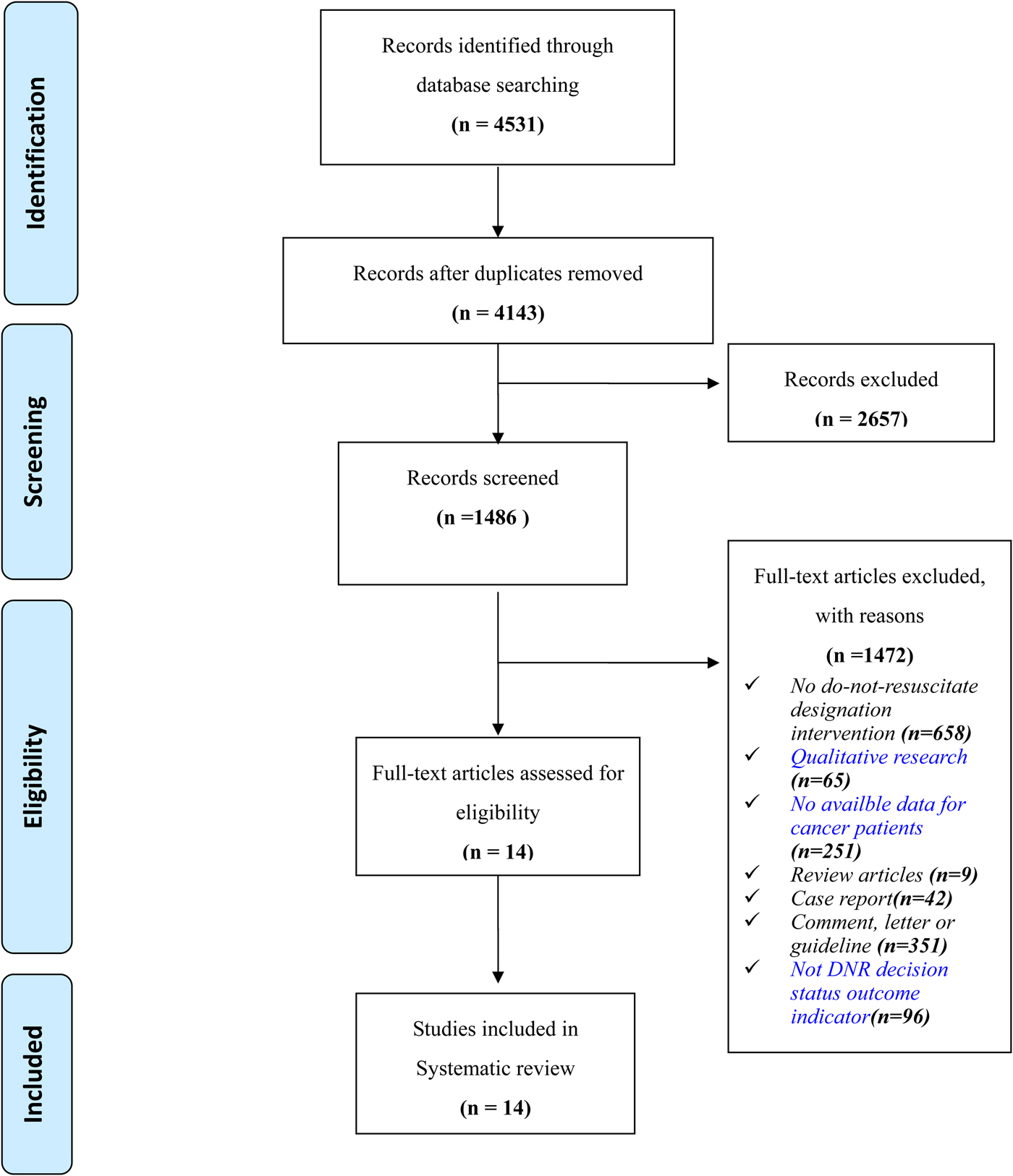
A diagram of the study selection process is included in Figure 1. At first, a total of 4,531 studies were screened, followed by the removal of 388 duplicate records and exclusion of 2,657 studies that did not meet the inclusion criteria based on title and abstract. Full text records for the remaining 1,486 studies were retrieved for data analysis. We further excluded 1,472 articles because there was no intervention developed to improve DNR decision status (n = 658), not quantitative research design (n = 467 including qualitative studies, n = 65; case study, n = 42; comment, letter, or guideline, n = 351; review article, n = 9), no available data for cancer patients (n = 251), and DNR decision status was not included as an outcome indicator (n = 96). Finally, a total of 14 articles were included for this review study.
Summary of study selection and exclusion.

Studies characteristics
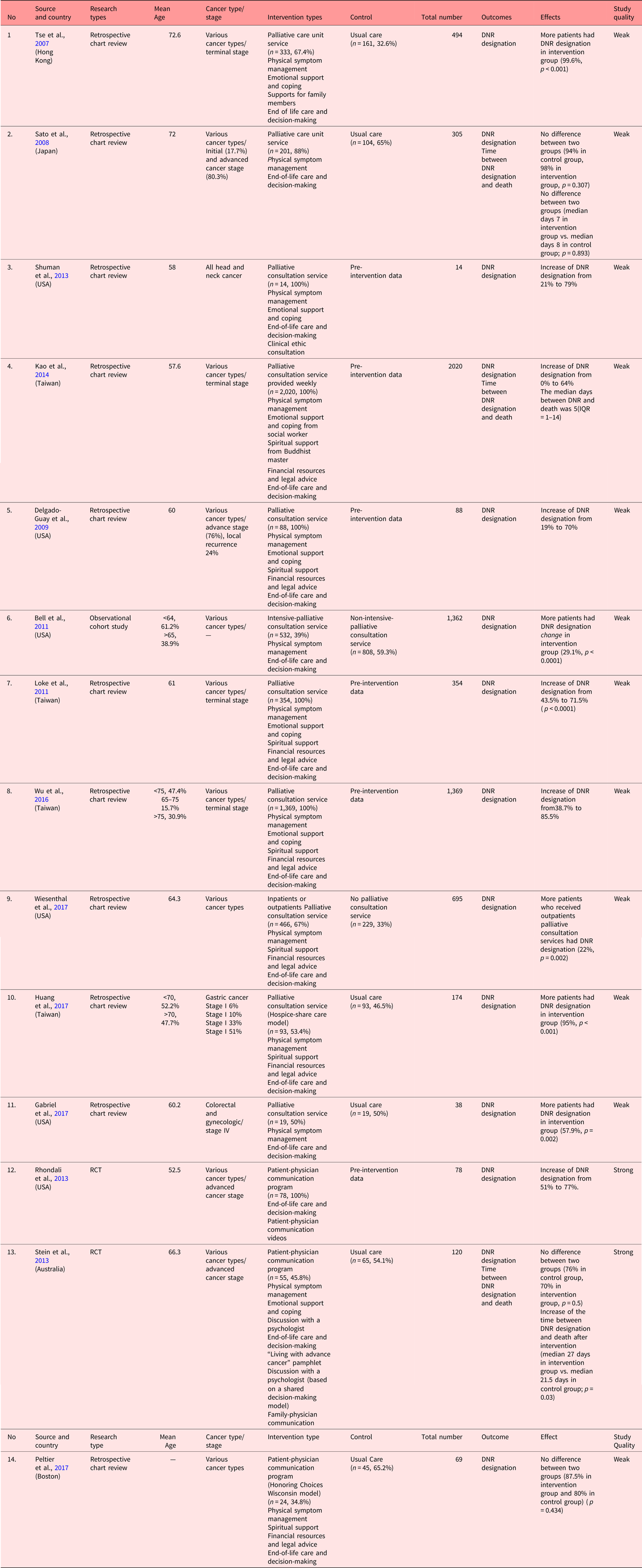
Table 2 describes the characteristics of the fourteen included studies. They were published between 2007 and 2017 in five countries: Hong Kong, China (Tse et al., Reference Tse2007), Japan (Sato et al., Reference Sato2008), United States (Bell et al., Reference Bell, Kuriya and Fischberg2011; Delgado-Guay et al., Reference Delgado-Guay2009; Gabriel et al., Reference Gabriel2017; Peltier et al., Reference Peltier2017; Rhondali et al., Reference Rhondali2013; Shuman et al., Reference Shuman2013; Wiesenthal et al., Reference Wiesenthal, Goldman and Korenstein2017), Australia (Stein et al., Reference Stein2013), and Taiwan (Huang et al., Reference Huang2017; Kao et al., Reference Kao2014; Loke et al., Reference Loke, Rau and Huang2011; Wu et al., Reference Wu2016). Of the 14 studies, two adopted randomized controlled trail designs and 12 used retrospective chart review designs.
Descriptions of the included studies by the intervention types

Risk of bias of across studies
As shown in Table 2, because only two of the 14 studies adopted a randomized controlled trial (RCT) design, the majority of studies were rated as weak in the domains of “blinding of outcome assessors and of participants,” “selection bias,” “study design,” and “identification and treatment of confounders.” The overall rating for quality assessment was 14.3% “strong” (two of 14 studies) and 85.7% “weak” (12 of 14 studies).
Results of individual studies
Participants
There were 7,180 participants in the 14 studies, and they were recruited from public hospitals (Bell et al., Reference Bell, Kuriya and Fischberg2011; Huang et al., Reference Huang2017; Kao et al., Reference Kao2014; Loke et al., Reference Loke, Rau and Huang2011; Peltier et al., Reference Pagis, Tal and Cadge2017Reference Pagis, Tal and Cadgeb18; Stein et al., Reference Stein2013; Tse et al., Reference Tse2007; Wu et al., Reference Wu2016) and cancer centers (Delgado-Guay et al., Reference Delgado-Guay2009; Gabriel et al., Reference Gabriel2017; Rhondali et al., Reference Rhondali2013; Sato et al., Reference Sato2008; Shuman et al., Reference Shuman2013; Wiesenthal et al., Reference Wiesenthal, Goldman and Korenstein2017). More participants were male cancer patients (57.8%), and a majority of participants were in advanced and terminal cancer stages. Types of cancer were head and neck, lung, breast, gastrointestinal, hepatobiliary and pancreatic, gynecologic, colorectal, genitourinary tract, and hematological. The mean age of all participants was 62.4 with a range from 22 to 87 years old. More than half (67.5%) of participants were married and less than half of participants (37.2%) had completed a university degree (Kao et al., Reference Kao2014; Rhondali et al., Reference Rhondali2013; Stein et al., Reference Stein2013). A majority of participants (83.7%) had religious beliefs (Kao et al., Reference Kao2014; Rhondali et al., Reference Rhondali2013).
Synthesis of DNR interventions delivered
As indicated in Table 2, three types of DNR interventions were identified in this review study: palliative care unit services (n = 2), palliative consultation services (n = 9), and patient-physician communication programs (n = 3). Based on the definition of palliative care (National Cancer Institute, 2016), three types of DNR interventions commonly included the five domains of care: (1) physical symptom management, (2) emotional support and coping, (3) financial resources and legal advice, (4) spiritual support, and (5) end-of-life care and decision-making. Nevertheless, there are the differences in the diverse ways to provide the palliative care and the different main focuses in the programs. For palliative care unit service, the comprehensive end-of-life care is directly provided at palliative care units, whereas for palliative consultation services, the consultation care is provided at non-palliative care units and this care model combined oncological treatments with hospice care mainly for DNR discussions. The patient-physician communication programs aimed to develop the different physician's communication styles and examine its effects on DNR decision status.
Palliative care unit service
Two retrospective chart review studies with a total of 799 terminal stage cancer patients aimed to compare the effects of palliative care unit service with the care provided at general oncology inpatient units, focusing on the frequencies of receiving CPR and designation of DNR orders. The care components of palliative care unit services consisted of “physical symptom management,” “emotional support and coping,” and “end of life care and decision-making.” These services were provided through inpatient care, home care, outpatient care, and clinic visits (Tse et al., Reference Tse2007). Sato et al. (Reference Sato2008) retrospective chart review study included 305 cancer patients from 2004 to 2006 at a regional cancer center in Japan. They investigated the patients’ DNR decision status in the palliative care unit compared with the patients in the general care unit.
Palliative consultation service
Nine retrospective chart review studies with a total of 6,114 cancer patients examined the effects of palliative consultation services (Bell et al., Reference Bell, Kuriya and Fischberg2011; Delgado-Guay et al., Reference Delgado-Guay2009; Gabriel et al., Reference Gabriel2017; Huang et al., Reference Huang2017; Kao et al., Reference Kao2014; Loke et al., Reference Loke, Rau and Huang2011; Shuman et al., Reference Shuman2013; Wiesenthal et al., Reference Wiesenthal, Goldman and Korenstein2017; Wu et al., Reference Wu2016). The palliative consultative services consisted of “physical symptom management,” “emotional support and coping,” “spiritual support,” “financial resources and legal advice,” and “end of life care and decision-making.” Delgado-Guay et al. (Reference Delgado-Guay2009) conducted a retrospective review of the DNR status among 88 cancer patients who received palliative care consultation services in the intensive care unit (ICU). The palliative consultation team consisted of a palliative care physician, palliative care and oncology fellows, advanced practice nurses, a social worker, a case manager, a child-life specialist, and a psychiatric nurse counselor. They provided medications to reduce symptom distress and non-pharmacologic care to empower patients and their families in making end-of-life decisions (Delgado-Guay et al., Reference Delgado-Guay2009). Loke et al. (Reference Loke, Rau and Huang2011) reported the effects of hospice consultation services for 354 terminal cancer patients at acute care units in 2009. The hospice consultation team members were a palliative care physician, a hospice-qualified nurse, social worker, and a chaplain. The care included symptom control, psychosocial care, support for families, and assistance in deciding and communicating goals of end-of-life care (Loke et al., Reference Loke, Rau and Huang2011).
Shuman et al. (Reference Shuman2013) examined the effects of clinical ethics consultations among 14 head and neck cancer patients between 2007 and 2011. The clinical ethics consultations consisted of providing information to clarify ethical issues of code status, assistance with withdrawal from life-sustaining treatment, and effective communications of code status between patients, families, and clinicians (Shuman et al., Reference Shuman2013). Kao et al. (Reference Kao2014) developed weekly palliative care consultation services (PCCS) provided to a total of 2,020 terminal stage cancer patients at a single medical center between 2006 and 2010. The PCCS team included a physician, a specialist nurse, a social worker, and a Buddhist master. The care included symptom management and providing information about disease progression and the DNR decision (Kao et al., Reference Kao2014). Similarly, Wu et al. (Reference Wu2016) conducted the retrospective chart review to analysis the effect of PCCS on DNR among the 1,369 terminal cancer patients at the medical center between 2007 and 2012. The multidiscipline professionals consisted of physicians, nurse specialists, social workers, psychologists and a chaplain. They provided the holistic care including symptom managements, the financial resources, family supports and spiritual care.
Bell et al. (Reference Bell, Kuriya and Fischberg2011) conducted an observational cohort study to examine the changes of the code status of DNR among 1,362 adult cancer patients. They also compared the different levels of intensity of palliative consultation care. In addition to symptom assessment and management, the intense palliative care consultation provided more discussions with patients, families, and medical team members to clarify goals of care and disposition or appropriate use of medical interventions (Bell et al., Reference Bell, Kuriya and Fischberg2011).
Recently, Wiesenthal et al. (Reference Wiesenthal, Goldman and Korenstein2017) conducted the retrospective chart review to compare the effects of inpatient and outpatient palliative consultation service on DNR designation rates within the 6 months before their final admission to the hospital between December 2012 and November 2014. Both the inpatient and outpatient consultation service provided the psychotherapeutic treatments including antidepressants. For inpatient consultation service, the interdisciplinary supports from the social work and chaplaincy were included to enhance quality of life at the end-of-life stage. Gabriel et al. (Reference Gabriel2017) evaluated the effects of the palliative consultation service among 38 cancer patients with stage IV at cancer institution. The consultation service included the surgery intervention for symptoms relief, pain management, nutrition support, and hospice cares. Moreover, they also followed the patients after discharge from the hospital and provided the end-of-life care and decision-making consultation in the outpatients setting. Huang et al. (Reference Huang2017) conducted a retrospective study and examined the effects of the palliative consultation service with hospice-shared care model on the medical behavior changes among 174 gastric cancer patients at the terminal stage. This shared care model consisted of multidiscipline palliative care specialties including physicians, nurses, social workers, and religious workers to provide the biological, psychological, social, and spiritual support.
Patient-physician communication program
One retrospective chat review study (Peltier et al., Reference Peltier2017) and two studies with RCT designs examined the effects of patient-physician communication programs among 267 advanced cancer patients (Rhondali et al., Reference Rhondali2013; Stein et al., Reference Stein2013). Communication programs consisted of “physical symptom management,” “emotional support and coping,” and “end of life care and decision-making.” Rhondali et al. (Reference Rhondali2013) examined the impacts of the physician's communication style on DNR decision status among 78 advanced cancer patients at the cancer center. Two different communication styles were identified from videos: the physician recommending DNR and the physician asking for the patient's code status preference. In Rhondali et al. (Reference Rhondali2013), each video included 5 minutes of code status discussion and the communication skills including breaking bad news in an empathic manner, eliciting patient preferences toward decision-making, and addressing patients concerns and information needs. In Stein et al. (Reference Stein2013), two programs were a “living with advanced cancer” pamphlet and shared decision-making model discussion among 120 advanced cancer patients. The pamphlet contained five sections: communications with the health care team, cancer treatments, symptom management, psychological care, and planning life priority for the future. The shared decision-making model was developed for patients and families to discuss with a psychologist and the doctor for managing symptoms and adverse side effects, end-of-life decision-making, and planning. In 2017, a program named “Honoring Choices Wisconsin” was developed to increase the education about advance care plan and to enhance a voluntary process of communication among patients, family members, and healthcare professionals (Peltier et al., Reference Peltier2017). This communication program was conducted by two physician champions, a clinical nurse specialist, a nurse coordinator, social worker, and two hospital chaplains. This program assessed the roles of patients or families in making healthcare decisions and advanced care planning and provided the communication skills about how to talk to the love one about the further healthcare needs and decisions.
Synthesis of results
DNR designation
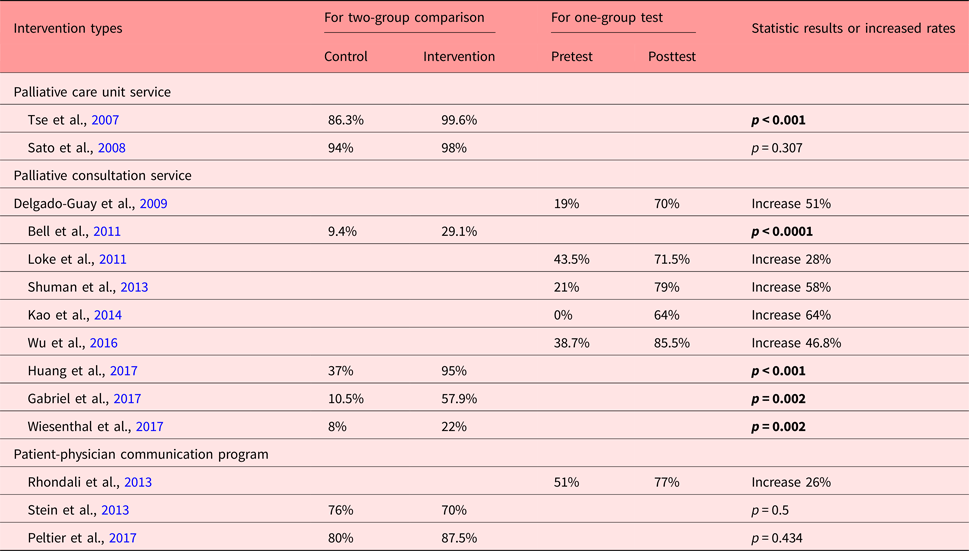
Table 3 indicated the effects of three types of DNR interventions on DNR designation. Five of the 14 studies indicated that there were the statistically significant effects on DNR designation rate (Bell et al., Reference Bell, Kuriya and Fischberg2011; Gabriel et al., Reference Gabriel2017; Huang et al., Reference Huang2017; Tse et al., Reference Tse2007; Wiesenthal et al., Reference Wiesenthal, Goldman and Korenstein2017) and six of the 14 studies showed the increases in the percentages of DNR after interventions (Delgado-Guay et al., Reference Delgado-Guay2009; Kao et al., Reference Kao2014; Loke et al., Reference Loke, Rau and Huang2011; Rhondali et al., Reference Rhondali2013; Shuman et al., Reference Shuman2013; Wu et al., Reference Wu2016). Overall, the three types of the interventions increased the rates of DNR designation; however, the studies for palliative care unit service and patient-physician communication program showed inconsistent results.
Effects of DNR interventions on DNR designation rate

p value in boldface indicates a statistically significant effect after DNR designation intervention (p < 0.05).
For the palliative care unit service, Tse et al. (Reference Tse2007) showed higher DNR designation rates in the intervention group (99.6%) than in the control group (86.3%) among terminal cancer patients (p < 0.001). However, the other study did not find significant changes in DNR decision status after palliative care unit service was provided (94% in control group, 98% in intervention group, p = 0.307) (Sato et al., Reference Sato2008).
All nine studies evaluating palliative consultation services showed improvements in DNR designation rates. Loke et al. (Reference Loke, Rau and Huang2011) indicated that the hospice consultation service increased DNR designation rates from 43.5% to 71.5% (p < 0.0001) among 354 terminal stage cancer patients. Shuman et al. (Reference Shuman2013) found that the ethics consultations increased the rates of DNR designation from 21% to 79% among 14 head and neck cancer patients. Similarly, Delgado-Guay et al. (Reference Delgado-Guay2009) found that, after palliative consultation, 70% of cancer patients in the ICU completed DNR designations and 51% showed the increases of DNR designation after intervention. Kao et al. (Reference Kao2014) evaluated 2,020 cancer patients at the terminal stage, which had not designated DNR at the beginning of the study. After weekly palliative care consultation services, 1,301 (64%) patients completed DNR designations. Wu et al.'s study (Reference Wu2016) showed that there were the significant increases of DNR designation rates from 38.7% to 85.5% after the palliative consultation was intervened for the terminal cancer patients.
Wiesenthal et al. (Reference Wiesenthal, Goldman and Korenstein2017) found that the patients who received the outpatient consultation services had more designation rates of DNR order than the patients who received inpatient consultation services and the patients who did not receive any consultation service within the 6 months before their final admission to the hospital (22% under outpatients consultation, 8% under inpatients consultation; p = 0.002). Gabriel et al. (Reference Gabriel2017) also showed that among the 38 patients with the stage IV colorectal and gynecologic cancers, those who received the palliative care service consultation had more DNR designations (57.9%) than the patients who received the usual care (10.5%) (p = 0.002). Similarly, Huang et al. (Reference Huang2017) found that compared with the control group (37%), the patients in the hospice-share care model group had higher DNR designation rates (95%) (p < 0.001).
Bell et al. (Reference Bell, Kuriya and Fischberg2011) is the first study examining the effects of the different levels of intensity of palliative consultation care. They found that, compared with general palliative consultation service (9.4%), more patients receiving the intensive levels of palliative consultation service changed the code to DNR (29.1%).
For the patient-physician communication program, Rhondali et al. (Reference Rhondali2013) found that there were similar effects of two types of communication program (the physician recommending DNR vs. the physician asking for the patient's code status preference) aimed at increasing DNR designation (72% in first type of intervention and 76% in second type of intervention). But after the two type communication interventions, the total participants DNR rates increased from 51% to 77%. This study also found that the physician's compassion attitudes (measured by compassion score) were significantly associated with DNR choice. The physician's attitudes could be more important than the style of the discussion program (Rhondali et al., Reference Rhondali2013). In contrast, Stein et al. (Reference Stein2013) found there were no significant effects on DNR status of the patient-physician communication program, which consisted of a pamphlet and discussion about DNR designation (70% in intervention group, 76% in control group, p = 0.5). Similarly, in Peltier et al.'s study (Reference Peltier2017), there were no significant differences in DNR designation rates between the patients who received the “Honoring Choices Wisconsin” communication program (87.5%) and the patients who received usual care (80%) (p = 0.434).
Time between DNR designation and death
Three of 14 studies examined the effects of the interventions on the time between DNR designation and death (Kao et al., Reference Kao2014; Sato et al., Reference Sato2008; Stein et al., Reference Stein2013). Only Stein et al. (Reference Stein2013) found that the “patient-physician communication program” significantly increased the time between DNR designation and death (median 27 days in intervention group vs. median 21.5 days in control group, p = 0.03). For the palliative care unit service and palliative consultation service, there were no significant effects on the time between DNR designation and death in the studies of Sato et al. (Reference Sato2008) (median 7 days in intervention group vs. median 8 days in control group, p = 0.893) and Kao et al. (Reference Kao2014) (median days of DNR designation to death = 5, interquartile range = 1–14).
Characteristic effect of the DNR designation
Rhondali et al. (Reference Rhondali2013) found that older ages (odd ratio = 1.016 per year, p = 0.01) and white race (odd ratio = 9.43, p = 0.004) were independent predictors of higher DNR designation rate, whereas Bell et al. (Reference Bell, Kuriya and Fischberg2011) found that ethnicity backgrounds were not significantly associated with DNR changes (p = 0.1). Kao et al. (Reference Kao2014) showed that male patients (p = 0.03) or patients with liver cancer (p = 0.042) were more significantly more likely to have designated DNR compared with female patients or patients with other types of cancer.
Discussion
Our systematic review aims to synthesize the research studies on the effects overall and of different types of interventions on the DNR designation rate for cancer patients. Only 14 studies (7,180 participants) met our inclusion criteria. The interventions commonly include one or more of the features of palliative care defined by the National Cancer Institute (2016): (1) physical symptom management, (2) emotional support and coping, (3) financial resources and legal advice, (4) spiritual support, and (5) end-of-life care and decision-making. Of these 14 studies, 78.6% (11 of 14) indicated that interventions could improve the DNR designation rate for cancer patients. In this review, three types of DNR intervention were identified: palliative care unit service (Sato et al., Reference Sato2008; Tse et al., Reference Tse2007), palliative consultation services (Bell et al., Reference Bell, Kuriya and Fischberg2011; Delgado-Guay et al., Reference Delgado-Guay2009; Gabriel et al., Reference Gabriel2017; Huang et al., Reference Huang2017; Kao et al., Reference Kao2014; Loke et al., Reference Loke, Rau and Huang2011; Shuman et al., Reference Shuman2013; Wiesenthal et al., Reference Wiesenthal, Goldman and Korenstein2017; Wu et al., Reference Wu2016), and patient-physician communication programs (Peltier et al., Reference Peltier2017; Rhondali et al., Reference Rhondali2013; Stein et al., Reference Stein2013). The studies on the palliative consultation services all indicated a positive outcome of increasing DNR designation. The significant increases of the time between DNR designation and death only occurred in patient-physician communication program.
For the type of palliative care unit service, the results found that increases in the DNR designation rate were greater in the patients who received palliative care unit services than those who received general care (96.3% vs. 86.3%, p < 0.001) (Tse et al., Reference Tse2007). In contrast, there were no significant findings in the study of Sato et al. (Reference Sato2008). The reasons were related to the high DNR designation rates in both groups (98% in the palliative care unit group, 94% in the general ward unit group, p = 0.307) and the contamination bias (24% patients in general ward units also received palliative care by the palliative professionals). The strengths of the palliative care unit service are effectiveness in the reductions of pain and providing continuing holistic care linking palliative care with the medical treatments of the oncology unit such as radiotherapy and chemotherapy (Tse et al., Reference Tse2007). The improvements in pain and other symptom distress helped the patients and their families accept the withdrawal of life-prolonging treatment and avoid CPR when the disease status was incurable (Tse et al., Reference Tse2007). The palliative care unit service provides a continuing care model by integrating care of inpatient, outpatient, and clinic with home care services. This continuing care model helps patients reduce unnecessary utilization of healthcare services (Perrin & Kazanowski, Reference Perrin and Kazanowski2015; Sato et al., Reference Sato2008).
All nine studies assessing palliative consultation services (Bell et al., Reference Bell, Kuriya and Fischberg2011; Delgado-Guay et al., Reference Delgado-Guay2009; Gabriel et al., Reference Gabriel2017; Huang et al., Reference Huang2017; Kao et al., Reference Kao2014; Loke et al., Reference Loke, Rau and Huang2011; Shuman et al., Reference Shuman2013; Wiesenthal et al., Reference Wiesenthal, Goldman and Korenstein2017; Wu et al., Reference Wu2016) found that intervention significantly increased DNR designation rates. The palliative consultation service is a new care model to meet the needs of cancer patients in non-palliative care units and to help health professionals without palliative care training in discussions with the patients about end-of-life decisions (Mori et al., Reference Mori2015; Osinski et al., Reference Osinski2017; Tse et al., Reference Tse2007). The strengths of the palliative consultation service model are increases of the patient's awareness of disease prognosis (Kao et al., Reference Kao2014) and successful withdrawal of life-sustaining treatments (Shuman et al., Reference Shuman2013). The care model includes multidisciplinary professional services from a Buddhist spiritual consultant, social worker, or nurse specialist, with the goal of solving interpersonal conflicts and facilitating surrogate decision-making (Bone et al., Reference Bone2016; Kao et al., Reference Kao2014). Similar to palliative care unit services, a previous study demonstrated that the palliative consultative service also could relieve the patients’ symptom distress (Friedrichsen et al., Reference Friedrichsen2017) and facilitate communications between professionals, patients, and their families (Yang et al., Reference Yang2016). Bell et al. (Reference Bell, Kuriya and Fischberg2011) examined the effects of different levels of palliative consultation services. They found that intensive palliative consultation, which provided more time for discussion with the patients or families about appropriate medical and care interventions, resulted in a higher rate of changing to a DNR code than palliative consultative services that focused on symptom management.
The patient-physician communication program was developed to solve the difficulty of physicians in discussing poor disease prognosis and DNR decision making (Mori et al., Reference Mori2015). Effective communications about end-of-life decisions between professionals and patients are regarded as an important factor in improving cancer patients’ end-of-life decision-making process (Hiraoka et al., Reference Hiraoka2016). The results of two studies with an RCT design (Rhondali et al., Reference Rhondali2013; Stein et al., Reference Stein2013) were inconsistent. The study by Rhondali et al. (Reference Rhondali2013) indicated there were significant increases in the DNR designation rate after intervention, whereas there were no significant changes in the study of Stein et al. (Reference Stein2013). They found the higher DNR designation rates in both groups and the reasons for no significant findings might be related to the higher proportion patients who died in the hospital in the control group. Rhondali et al. (Reference Rhondali2013) compared the different discussion styles among physicians. The results indicated that there was no significant difference between two discussion styles relative to DNR designation rates; however, they found that compassion scores were significantly associated with improvements in DNR designation rates. The results suggest that physician's compassion attitude was more important than the communication style in discussions about DNR decision-making.
In this review, there were three studies that examined the effects of interventions on the increases in the time between DNR designation and death. The significant effects only occurred in the type of communication program: 27 days in the intervention group and 21.5 days in the control group (Stein et al., Reference Stein2013), whereas the palliative consultation service and the palliative care unit services (Kao et al., Reference Kao2014; Sato et al., Reference Sato2008) did not have significant differences in time between DNR designation and death, with both services reporting less than 10 days. The increase in time between DNR designation and death seen for the communication program by Stein et al. (Reference Stein2013) might indicate that a shared decision-making model facilitates cancer patients to be more receptive to their prognosis and make early DNR designation easier (Stein et al., Reference Stein2013). The potential explanations for no significant effects of palliative care unit service and palliative consolation service are related to the delays in discussion DNR (Kao et al., Reference Kao2014) and the contamination bias for the patients in control group who also received palliative care (Sato et al., Reference Sato2008).
There were two studies comparing the utilizations of healthcare services in the ICU and the non-palliative care unit (Peltier et al., Reference Peltier2017; Tse et al., Reference Tse2007). The results of the study (Tse et al., Reference Tse2007) showed that, although there were similarity in the rates of DNR designation between palliative consultation services and palliative care unit services (99.6% vs. 96.5%), the utilization of transfers to the ICU were higher for patients receiving the palliative consultation service than the palliative care unit service (Tse et al., Reference Tse2007). For communication program, the study (Peltier et al., Reference Peltier2017) found that there is no significant effect but only shows a trend of decrease in ICU utilization. We hypothesis the continuing care model of the palliative care unit service might be the reasons for less utilization of healthcare services by cancer patients. In the continuing care model, health professionals could have more time to discuss DNR and provide more comprehensive symptom management (Sean et al., Reference Sean2009). The palliative care unit service improves the patients’ suffering from symptom distress and increases their knowledge about the DNR decision;, therefore, the utilization of health care services may be decreased (Perrin & Kazanowski, Reference Perrin and Kazanowski2015).
Family's denial of their ill family member's disease condition was the most common family-related barrier in DNR discussions (Syed et al., Reference Syed2016). In Western societies, the patient's autonomy is addressed in the DNR decision-making process (Yang et al., Reference Yang, Kwee and Krishna2012), whereas in Asia, family members play the main role in DNR decision-making and tend to seek aggressive treatment to prolong their ill family members’ lives, even when these treatments are unlikely to change the outcome (Syed et al., Reference Syed2016; Yang et al., Reference Yang, Kwee and Krishna2012). In our review, the rates of DNR designation were higher (94%–98%), but most DNR orders were documented by families (97%) and the time between signing DNR and death was short (median 7–8 days) (Sato et al., Reference Sato2008).
This review study found that the cancer patients who were older (odds ratio = 1.016 per year, p = 0.01) (Rhondali et al., Reference Rhondali2013), white (odd ratio = 9.43, p = 0.004) (Rhondali et al., Reference Rhondali2013), male (p = 0.03) (Kao et al., Reference Kao2014), and diagnosed with liver cancer (p = 0.042) (Kao et al., Reference Kao2014) were more likely to sign a DNR order. In our review, the patients who received palliative care unit services were older (mean age = 72.3; range, 72–72.6). Developing a DNR intervention program for younger cancer patients will be a future challenge. Most patients and families worry about financial issues and difficulty in understanding the legal issues about DNR (Schlairet & Cohen, Reference Schlairet and Cohen2013). Integration of the individual's religious beliefs in DNR intervention is also needed (Jaul et al., Reference Jaul, Zabari and Brodsky2014; Pagis et al., Reference Pagis, Tal and Cadge2017). In summary, the future program may focus on individual DNR intervention to address on the needs based on different sociodemographic background.
Limitations
There were some limitations in this review. First, our review only included articles that were published in the English language. Second, only two studies adopted RCT design, whereas most studies were retrospective chart review design.
Conclusion
Our systematic review synthesizes the findings of 14 studies (7,180 participants) on the effects of interventions on the DNR designation rate among cancer patients. Three types of DNR intervention were identified in this review study: palliative care unit services, palliative consultation services, and a patient-physician communication program. Overall, the interventions could increase the rates of DNR designation. However, the studies for palliative care unit service and patient-physician communication program showed inconsistent results. More studies with the rigor research design are required to examine their effects on DNR designation. The significant increases of the time between DNR designation and death only occurred when the intervention was the patient-physician communication program. Future research comparing the different types of DNR interventions is required. Moreover, the individualized DNR program needs to be developed according to different cancer stages and different demographic and cultural backgrounds.
Funding
This research was not funded by any public, commercial, or nonprofit agency. No competing financial interest exits. The author would like to specialist thank Hsien-Ho Lin, AP, MD (Institute of Epidemiology and Preventive Medicine, National Taiwan University, Taipei, Taiwan), for contributing time and expertise to this study.