Introduction
Helicoverpa armigera (Hübner) (Lepidoptera: Noctuidae) is a highly polyphagous and geographically widespread species (Zalucki et al. Reference Zalucki, Daghlish, Firempong and Twine1986; Guo Reference Guo1997; Czepak et al. Reference Czepak, Albernaz, Vivan, Oliveira and Carvalhais2013). More than 60 species of cultivated and wild plants from different families, including Solanaceae, Fabaceae, Malvaceae, Poaceae, and Asteraceae, are attacked by its larvae (Fitt Reference Fitt1989; Pogue Reference Pogue2004). Important crops such as fruit trees, cotton (Gossypium Linnaeus; Malvaceae), vegetables, and ornamental plants can be economically damaged by H. armigera larvae (Moral Garcia Reference Moral Garcia2006). Worldwide, annual control costs of this insect pest reach USD$5 billion (Lammers and MacLeod Reference Lammers and Macleod2007; Kuwar et al. Reference Kuwar, Pauchet, Vogel and Heckel2015).
Screening and identification of plant origin proteinase inhibitors that have high binding efficiency against midgut proteinases of phytophagous Insecta could be most effective to combat insects such as H. armigera (Tamhane et al. Reference Tamhane, Chougule, Giri, Dixit, Sainani and Gupta2005). Therefore, proteinase inhibitors are considered as candidates for the production of insect-resistant transgenic plants (Dunse et al. Reference Dunse, Stevens, Lay, Gaspar, Heath and Anderson2010b). Serine proteinases, particularly chymotrypsin and trypsin-like enzymes, have been reported previously as digestive proteinases in H. armigera (Patankar et al. Reference Patankar, Giri, Harsulkar, Sainani, Deshpande, Ranjekar and Gupta2001). In fact, serine proteinases are the main digestive proteases and contribute 95% of digestive activity in Lepidoptera (Kuwar et al. Reference Kuwar, Pauchet, Vogel and Heckel2015).
Many plants contain high levels of serine proteinase inhibitors in their seeds, flowers, leaves, and tubers that are induced by injuries as a defence response against insect attack (Garcia-Olmedo et al. Reference Garcia-Olmedo, Salcedo, Sanchez-Monge, Gornez and Carbonero1987; Ryan Reference Ryan1990; Mittal et al. Reference Mittal, Kansal, Kalia, Tripathi and Gupta2014). In fact, four major groups of serine proteinase inhibitors have been found in plants: Bowman-Birk, Kunitz, squash family, and wound inducible (Tanhane et al. Reference Tamhane, Chougule, Giri, Dixit, Sainani and Gupta2005). Proteinase inhibitors bind to digestive proteases and resulting in an amino acid deficiency, thereby proteinase inhibitors decrease various aspects of insect life history, such as survival, growth, fecundity, and development by reduction of the digestive ability of insect and inhibition of its midgut proteinases (Saadati and Bandani Reference Saadati and Bandani2011). Even so, there are different results regarding insect responses to proteinase inhibitors in combination with the artificial diet or expressed in transgenic crops. Even though many exposed insects have high mortality or grow slowly, others do not show any adverse effect (Saadati and Bandani Reference Saadati and Bandani2011; Kuwar et al. Reference Kuwar, Pauchet, Vogel and Heckel2015).
As a result of selection pressure, the insect population has gained adaptation potential to the host plant proteinase inhibitors when they encounter the proteinase inhibitors of their host plants (Jongsma and Bolter Reference Jongsma and Bolter1997). In view of the fact that the insects are not exposed to the nonhost plant proteinase inhibitors, such inhibitors may act as valuable source of proteinase inhibitors (Parde et al. Reference Parde, Sharma and Kachole2010).
Amaranthus retroflexus Linnaeus (Amaranthaceae) has high nutritional quality of proteins composed of lysine and sulphur amino acids (Valdes-Rodriguez et al. Reference Valdes-Rodriguez, Blanco-Labra, Gutierrez-Benicio, Boradenenko, Herrera-Estrella and Simpson1999). These enzyme inhibitors are present in seeds and have harmful effects on animals and also act in defence against plant pathogens and pests. Hence, these inhibitors have a double function acting against organism proteases and amylases (Valdes-Rodriguez et al. Reference Valdes-Rodriguez, Segura-Nieto, Chagolla-Lopez, Vargas-Cortina, Martinez-Callardo and Blanco-Labra1993).
Cuminum cyminum Linnaeus (Apiaceae) is an annual herbaceous plant that is mostly used in Asia, Africa, and Europe as conventional medicine with antimicrobial, anticarcinogenic, antidiabetic, and antioxidative properties (Siow and Gan Reference Siow and Gan2016). According to the previous studies, proteins obtained from C. cyminum seeds have anti-amylase properties (Siow and Gan Reference Siow and Gan2014). Therefore, protein extracted from plant seeds can be invaluable source of bioactive peptides.
Proteinase inhibitors have been isolated and recognised as chemical pesticides substitution and effective insecticide from a large variety of plant sources. In view of limited information regarding the effects of proteinase inhibitors extracted from Amaranthus retroflexus and Cuminum cyminum on digestive protease of insect pests, in this study, protein extracts of both plants are examined against digestive serine proteases of Helicoverpa armigera after semi-purification under in vivo condition. Also, demographic statistics of the insect affected by the proteinase inhibitors is evaluated.
Materials and methods
Insect cultures and diet
For bioassays, gut dissection, and demographic studies, Helicoverpa armigera were obtained from the Division of Entomology, Department of Plant Protection, College of Agriculture and Natural Resources, University of Tehran, Karaj, Iran. The insects were held in the growth chamber at the condition of 25 ± 1 ºC, 60–70% relative humidity with a 16-hour day length. Rearing diet was prepared according to Shorey and Hale (Reference Shorey and Hale1965) with modification. The insect diet composition for 850-mL distilled water was as follows: soaked lima (Phaseolus lunatus Linnaeus; Fabaceae) beans 205 g, wheat (Triticum Linnaeus; Poaceae) germ 30 g, dried brewer’s yeast 35 g, ascorbic acid 3.5 g, nipagin 2.2 g, sorbic acid 1.1 g, formaldehyde 2.5 mL, and sunflower (Helianthus Linnaeus; Asteraceae) oil 5 mL.
Chemicals
Ammonium sulphate, azocasein, Nα-Benzoyl-DL-arginine p-nitroanilide (BApNA), N-Succinyl-l-Ala-l-Ala-Pro-Phe p-nitroanilide (SAAPFpNA), trichloroacetic acid (TCA), dimethyl-sulfoxide (DMSO), bovine serum albumin (BSA), acrylamide, bis-acrylamide, N,N,N′,N′-tetramethylethylenediamine (TEMED), and ammonium persulphate were purchased from Sigma Chemical Company (St. Louis, Missouri, United States of America). All other general chemicals used were of highest purity grade commercially available.
Extraction of proteinase inhibitors
Protein extract of two plant seeds, Amaranthus retroflexus and Cuminum cyminum, was obtained according to the methods of Melo et al. (Reference Melo, Sales, Silva, Franco, Bloch and Ary1999) and Dastranj et al. (Reference Dastranj, Bandani and Mehrabadi2013). Based on the procedure, the seeds (30 g) were finely ground and mixed with a solution of 0.1 M NaCl. The mixture was stirred for two hours at 4 ºC. After centrifugation at 12 000 g for 30 minutes at 4 ºC, the supernatant was taken and heated at 70 ºC for 30 minutes to inactivate the endogenous enzymes. The supernatant was fractionated using ammonium sulphate saturations (20%, 40%, 60%, and 80%) sequentially. Finally, the 80% pellet with high amounts of protein used as proteinase inhibitor dissolved in 0.02 M phosphate buffer (pH 7) and dialysed overnight in the dialysis sac against the same buffer. The dialysed fractions were used as a source of proteinase inhibitors.
In vivo assay of digestive proteinases inhibition
In this section, 10 fourth-instar individuals were fed on cubes (1 cm3) containing proteinase inhibitors from both plants, separately. Insect larvae in control (no seed protein extract) treatment were fed just with diet cube. After 24 hours, the larvae (treatments and control) were dissected and their gut was eliminated. After homogenising, the blended guts were centrifuged at 15 000 g for 15 minutes at 4 °C and supernatant was used as enzyme source for the next experiments.
Protease assay using general substrate
Proteolysis using general substrate (Azocasein 2%) was assayed according to the Gatehouse et al. (Reference Gatehouse, Shannon, Burgess and Christeller1997) methods after some modification. In this manner, 10-µL enzyme extract and 50-µL azocasein 2% (substrate solution) were mixed into 40 µL of the 20-mM Tris–HCl buffer pH 8.0 and incubated for 60 minutes. Then, 100 µL of 30% TCA was added to the reaction and kept at 4 °C for 30 minutes. After that due to precipitation of nonhydrolysis substrate, the reaction was centrifuged at 15 000 g for 15 minutes at 4 °C. Finally, equal volume of the supernatant NaOH (1 N) was added, and the absorbance was measured at 405 nm.
Protease assay using specific substrate
Protease activity was measured according to Gatehouse et al. (Reference Gatehouse, Shannon, Burgess and Christeller1997) using specific substrate with some modifications. Trypsin-like and chymotrypsin-like activities were assayed using 1-mM BApNA (benzoyl-l-arginine-p-nitroanilide) and 1-mM SAAPFpNA (succinyl-l-Ala-l-Ala-l-Pro-Phe-p-nitroanilide), respectively. At first, substrates were dissolved in DMSO. Therefore, the final concentration of DMSO in buffer solution was less than 10%. The hydrolysis of substrates was counted at 410-nm at 30 °C, continuously.
Proteinase assay using gelatin/polyacrylamide gel electrophoresis (in gel assay)
Proteinase inhibition was qualitatively assayed using gelatin/polyacrylamide gel electrophoresis based on the procedures described by Laemmli (Reference Laemmli1970), Walker et al. (Reference Walker, Ford, Majerus, Geoghegan, Birch, Gatehouse and Gatehouse1998) and Saadati and Bandani (Reference Saadati and Bandani2011). The enzyme extracts of treatments and control were run on the polyacrylamide gel electrophoresis gel including 10% (w/v) separating gel co-polymerised with 0.1% gelatin and 4% stacking gel with 0.05% sodium dodecyl sulphate. The reaction mixtures were not boiled, and sample-loading buffer did not contain mercaptoethanol before loading. Electrophoresis was conducted at 4 °C until the blue dye (Bromophenol Blue) reached to 1 cm of end of the gel. Then, the gel was rinsed with distilled water and incubated in 2% (v/v) Triton X-100 for 60 minutes due to eluting sodium dodecyl sulphate from the gel followed by washing in Tris buffer (pH 8) for about six hours. The gel was stained with solution containing 40% methanol, 7% glacial acetic acid, and 0.05% coomassie Brilliant Blue R. After destaining, proteolytic activity was appeared as clear bands against a dark background.
Protein concentration
The protein concentration was calculated according to the Bradford (Reference Bradford1976) method. Bovine serum albumin (Bio-Rad, www.biorad.com) was used as a standard.
Effects of proteinase inhibitor on biological characteristics and demography
In accordance with the Jha et al. (Reference Jha, Chi and Tang2012) method, three groups containing of 100 eggs were used. Male and female adults collecting from colony were paired in plastic containers with 18 cm in diameter and 33 cm in height, lined with paper towel. A cotton ball soaked in a honey: water solution (10:90) was put into the containers for feeding the adults. After 24 hours, the eggs from the females were gathered in Petri dishes (8-cm diameter) and kept in growth chamber with the above-mentioned rearing condition. The experiment was composed of a control and two treatments, with 100 eggs for every group and each individual was recorded as one replicate (Chi and Yang Reference Chi and Yang2003; Rahmani and Bandani Reference Rahmani and Bandani2013). The eggs were checked every six hours and hatched larvae were transferred to new Petri dishes (8-cm diameter), separately. The fourth, fifth, and sixth instars were kept in an opaque can with 3 cm in diameter and 6-cm width. Each larva was considered as one experimental unit. The larvae were fed daily on a cube (1 cm3) of artificial food, containing 1% of each plant proteinase inhibitor in every treatment. Growth, development, body weight, and mortality were checked every 24 hours until the adults emerged. Newly emerged adults paired in the containers. The survival and the numbers of eggs laid were evaluated daily until the death of the last individual. If any male adult died, another individual would be supplied from the mass-reared colony. In addition to the life history parameters, the life table statistics including intrinsic rate of increase (r), net reproductive rate (R 0), mean generation time (T), and gross reproductive rate (GRR) were estimated.
Statistical analysis
Life history data and demographic parameters were evaluated according to the age-stage, two-sex life table theory (Chi and Liu Reference Chi and Liu1985), and the method described by Chi (Reference Chi1988) using the computer programme TWOSEX-MSChart (Chi Reference Chi2016). The life table parameters are described as below:
Intrinsic rate of increase (r):
 $$1 = \sum\limits_{x = 0}^\infty {{e^{ - r\left( {x + 1} \right)}}{\rm{lxmx}}} $$
Net reproductive rate (R0):
 $${{\rm{R}}_0} = \mathop {\sum\limits_{x = 0}^\infty {{\rm{lxmx}}} } $$
Mean generation time (T):
 $${\rm{T = ln }}{{\rm{R}}_{\rm{0}}}{\rm{/r}}$$
Gross reproductive rate (GRR):
 $${\rm{GRR}} = \sum\limits_{x = 0}^n {{\rm{mx}}} $$
The Euler–Lotka equation was used for estimation of the intrinsic rate of increase with age indexed from 0 (Goodman Reference Goodman1982). The means and standard errors of population parameters, as well as developmental time and fecundity of individuals in both experiments, were calculated by the bootstrap method using 100 000 bootstraps (Polat-Akköprü et al. Reference Polat-Akköprü, Atlihan, Okut and Chi2015). The results of treatments were compared using a paired bootstrap test based on the confidence interval of the treatment difference (Efron and Tibshirani Reference Efron and Tibshirani1993).
The life table figures were prepared by Sigma Plot version 10 (SysStat Software, Point Richmond, California, United States of America). General linear models (PROC GLM: SAS Institute 2003) were used for analysis of variance, and comparison of means was done using Tukey’s multiple range test at P ≤ 0.05 in order to determine the significant differences in enzyme assays.
Results
Effect of protein inhibitors on gut proteinase activity using general substrate
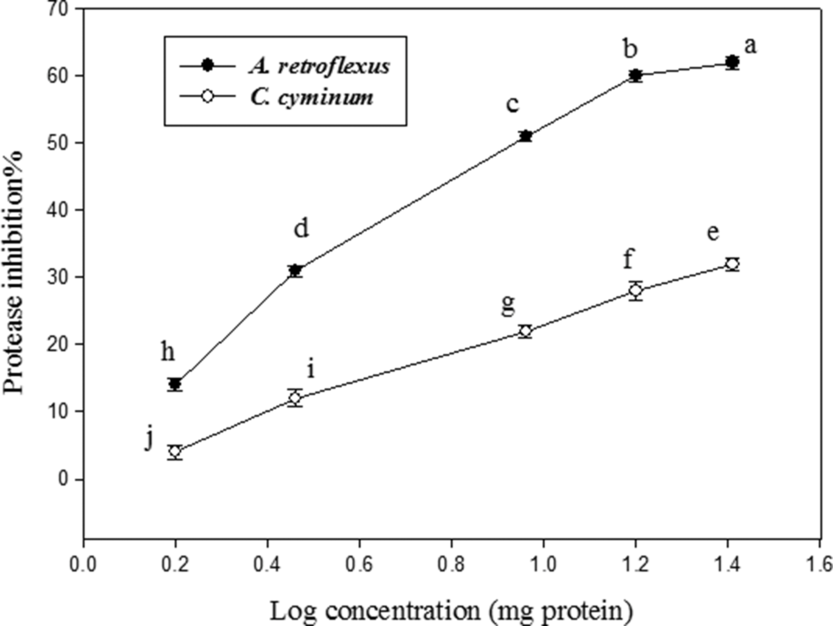
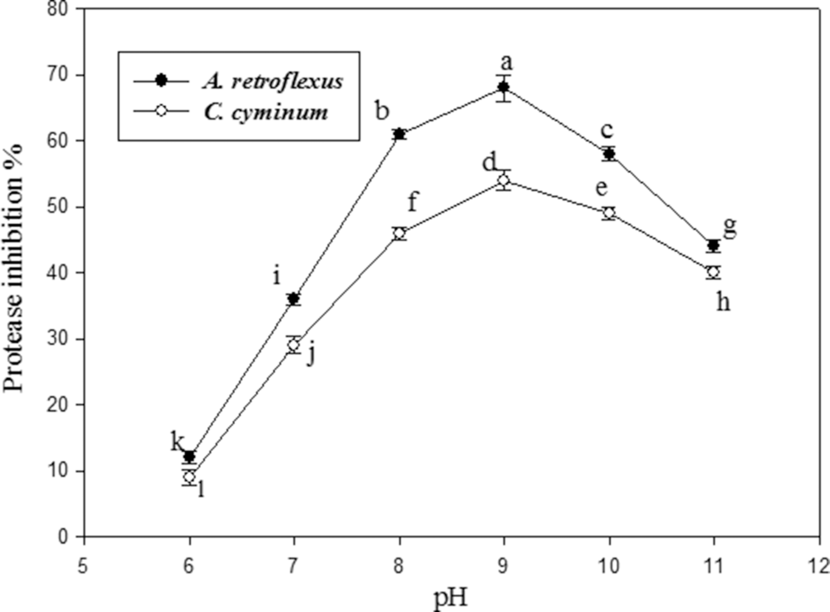
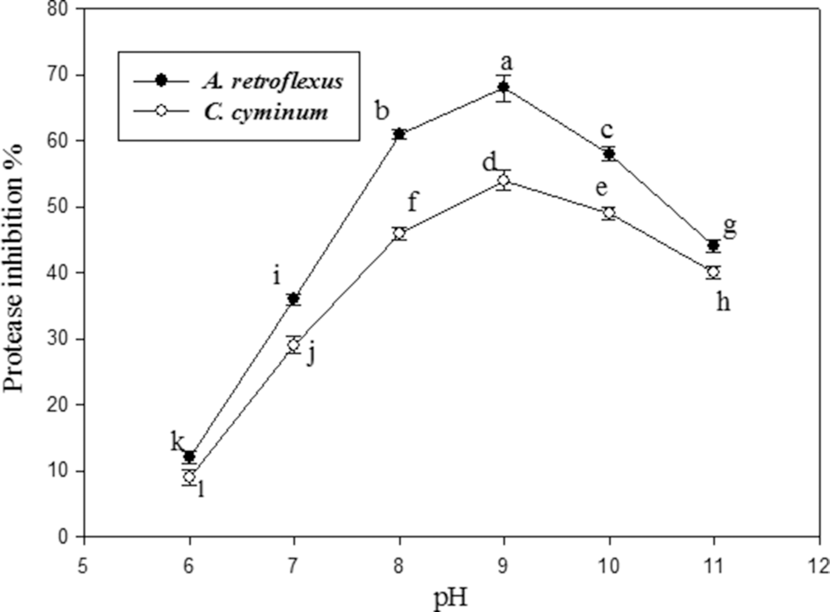
The results indicated that the effects of A. retroflexus and C. cyminum seeds protein extracts on protease enzyme were dose dependent (Fig. 1). Proteinase inhibition at the highest concentration of A. retrflexus and C. cyminum seed extract was 62% and 32%, respectively (df2,9, F = 50.32, P ≤ 0.0001). Moreover, the activity of inhibitors was tested at different pHs. The results showed that the optimum pH for proteinase enzyme activity was in the range of 8–10, and the maximum pH was observed at 9 (df2,9, F = 34.03, P ≤ 0.00001) (Fig. 2).
Effect of two proteinaceous seed extracts, Amaranthus retroflexus and Cuminum cyminum, on digestive proeinase inhibition of Helicoverpa armigera larvae. Bars with the same letters are not statistically different by Tukey’s multiple range test (at the P < 0.05 level).

Digestive proteinase inhibition of Helicoverpa armigera affected by different concentrations of Amaranthus retroflexus and Cuminum cyminum proteinaceous extracts in different pH values. Bars with the same letters are not statistically different by Tukey’s multiple range test (at the P < 0.05 level).
Effect of protein inhibitors on gut proteinase activity using SAAPFpNA and BApNA as specific substrates
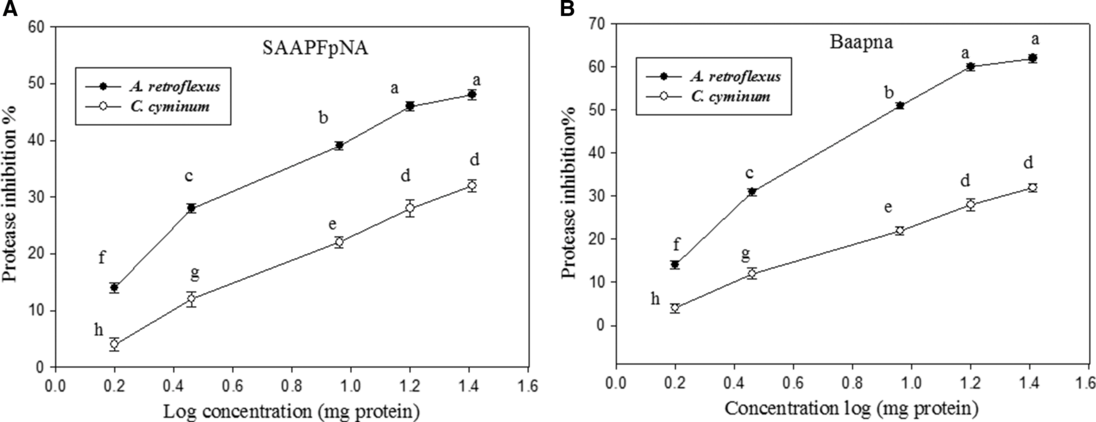
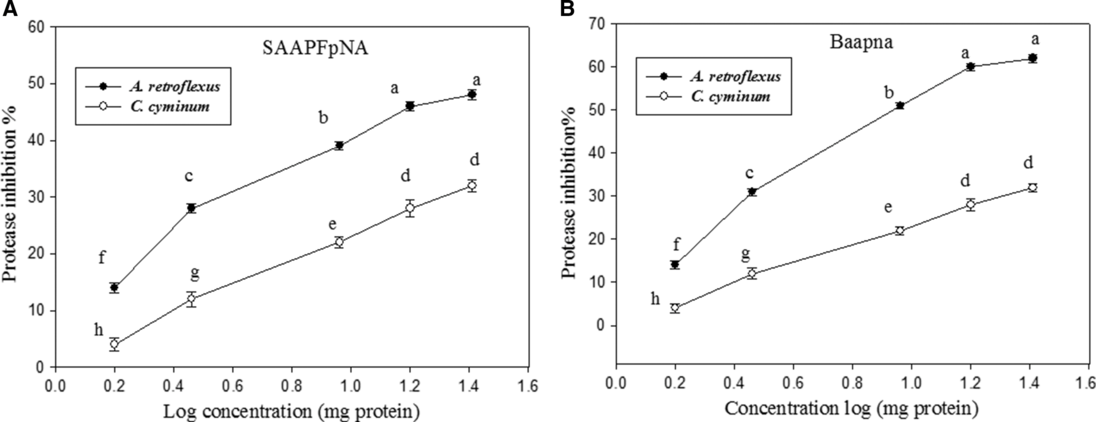
The gut proteinase activity of H. armigera larvae was determined by using SAAPFpNA and BApNA as specific substrates. When SAAPFpNA was applied as substrate, two seed extracts including A. retrflexus and C. cyminum at the highest concentration caused 45% and 31% inhibition, respectively (df1,9, F = 59.39, P ≤ 0.0001) (Fig. 3A). However, these extracts inhibited the insect proteinase 60.34% and 28%, respectively, when BApNA was used as substrate (df1,9, F = 49.06, P ≤ 0.0001) (Fig. 3B).
Effect of proteinaceous seeds extracted from Amaranthus retrflexus and Cuminum cyminum, on digestive proteinase inhibition of Helicoverpa armigera larvae. A, Using SAAPFpNA as substrate; B, using Baapna as substrate. Bars with the same letters are not statistically different by Tukey’s multiple range test (at the P < 0.05 level).
Assay of inhibition using gelatin in gel
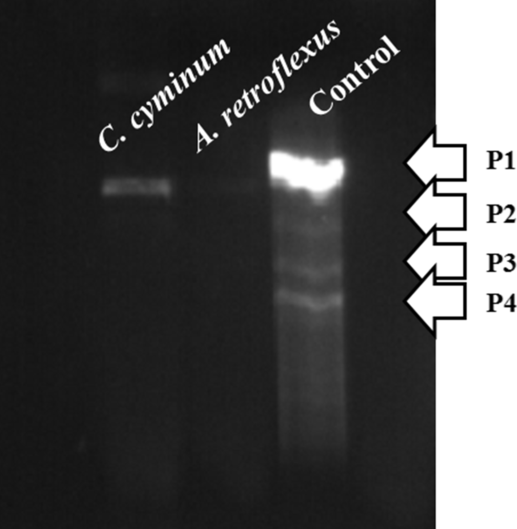
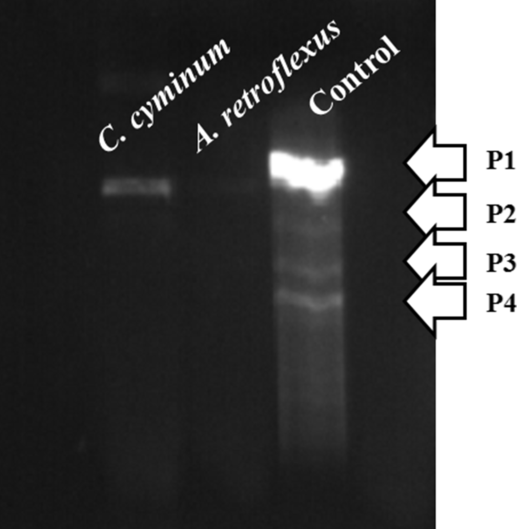
In gel assay, four obvious proteinase bands (P1, P2, P3, and P4) were observed in H. armigera larval gut as control (Fig. 4). However, in the larvae fed on diet including A. retroflexus seed extract, all bands were disappeared completely, and in the larvae that were fed on C. cyminum seed extracts, only one band (P1) was appeared (Fig. 4).
Native polyacrylamide gel electrophoresis and proteinase activity bands (P1, P2, P3, and P4) of Helicoverpa armigera larval gut, affected by Amaranthus retroflexus and Cuminum cyminum seed extracts in comparison with control.
Effects of proteinase inhibitors on biology and demography
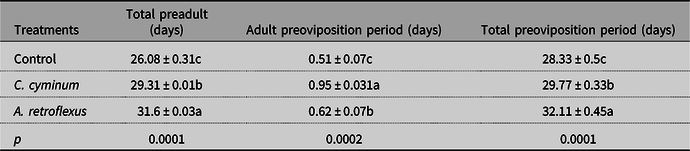
The effect of protein extract treatment was significant (P ≤ 0.05) on all biological parameters of H. armigera, and the mean comparison data were shown in Table 1. Larval mortality was affected significantly (df 2, 997, F = 13.24, P ≤ 0.0001) by treatments. Larval mortality in control was 12 ± 2.34% and it was 5.6 and 4.6 times less than those of larvae fed on A. retroflexus (56 ± 2.15%) and C. cyminum (68 ± 2.23%) seed extracts, respectively (df2,997, F = 13.24, P ≤ 0.0001). The larvae treated with A. retroflexus and C. cyminum seed extracts (35.1 ± 0.001 and 13.05 ± 0.001 μg, respectively) had lower weight than control treatment 44.02 ± 0.001 μg (df2, 997, F = 12.89, P ≤ 0.0001). The total preadult periods at all treatments were significantly longer than that of control. Also, the inhibitors affected the total preoviposition period and adult preoviposition period. Total preoviposition period and adult preoviposition period in insects fed on C. cyminum seed extracts showed 29.77 and 0.95 days, respectively, and in the individuals treated by A. retroflexus, seed extracts were 32.11 and 0.62 days, respectively. On the other hand, total preoviposition period and adult preoviposition period of the control were 28.33 and 0.51 days, respectively.
Life history traits (mean ± standard error) of Helicoverpa armigera feed on three different diets with (Amaranthus retroflexus or Cuminum cyminum) and without (control) proteinase inhibitor.
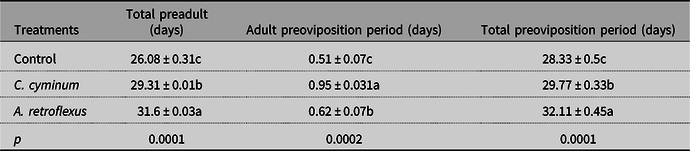
Means followed by the different letters, across columns, are significantly different from one another based on paired bootstraps (100 000 bootstraps P < 0.05).
The intrinsic rate of increase (r), gross reproductive rate (GRR), and net reproductive rate (R0) of individuals treated by inhibitors were significantly affected by protein seed extract treatment. There was no significant difference among the mean generation time (T) of treatments (P > 0.01). According to the life table data, the intrinsic rate of increase (r) in control, A. retroflexus, and C. cyminum treatments were 0.12, 0.076, and 0.10 per day, respectively. Gross reproductive rate in control, A. retroflexus, and C. cyminum seed extracts were 116.06, 24.98, and 60.80 offspring/individual, respectively. Also, net reproductive rate was estimated to be 80.85, 17.02, and 41.33 offspring/individual for the larvae fed on control, A. retroflexus and C. cyminum seed extracts (Table 2).
Life table parameters (mean ± standard error) of Helicoverpa armigera feeding by three different diets with (Amaranthus retroflexus or Cuminum cyminum) and without (control) proteinase inhibitor.

Means followed by the different letters, across columns, are significantly different from one another based on paired bootstraps (100 000 bootstraps P < 0.05).
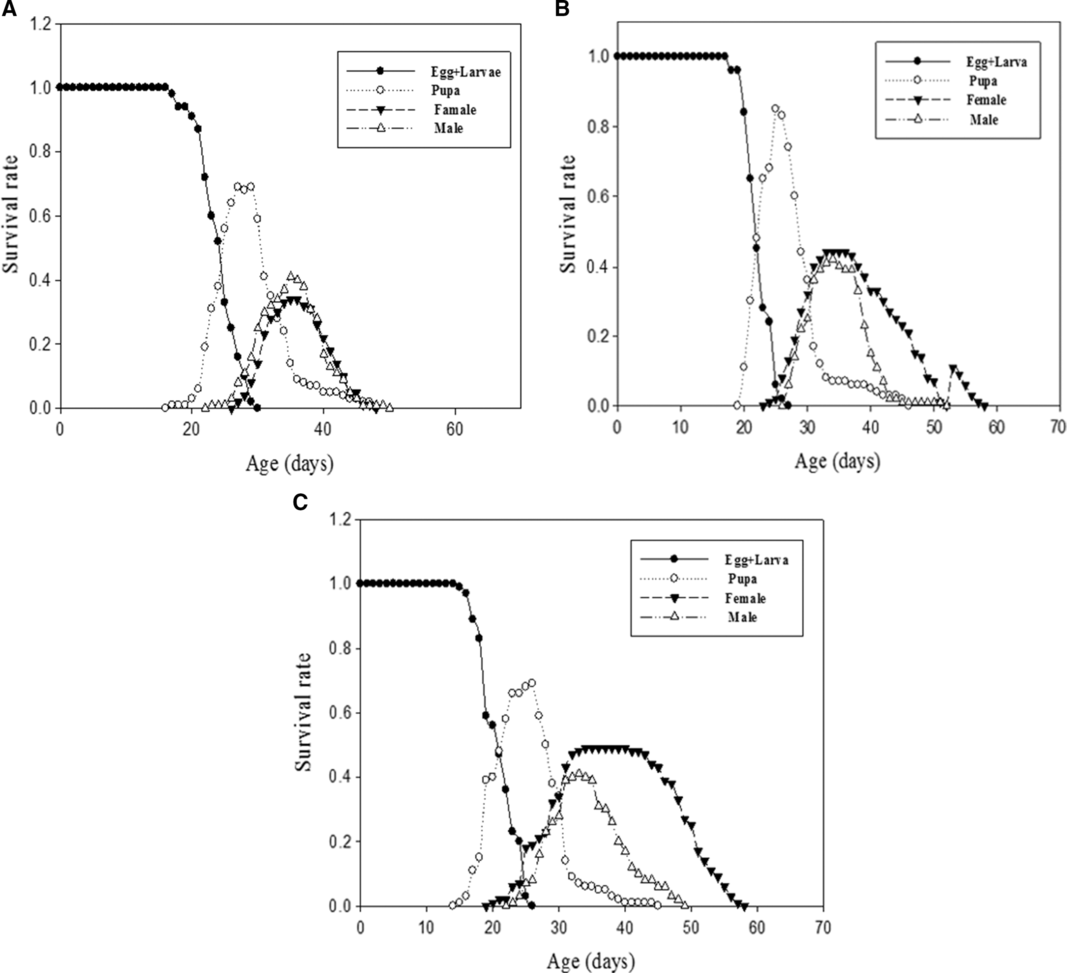
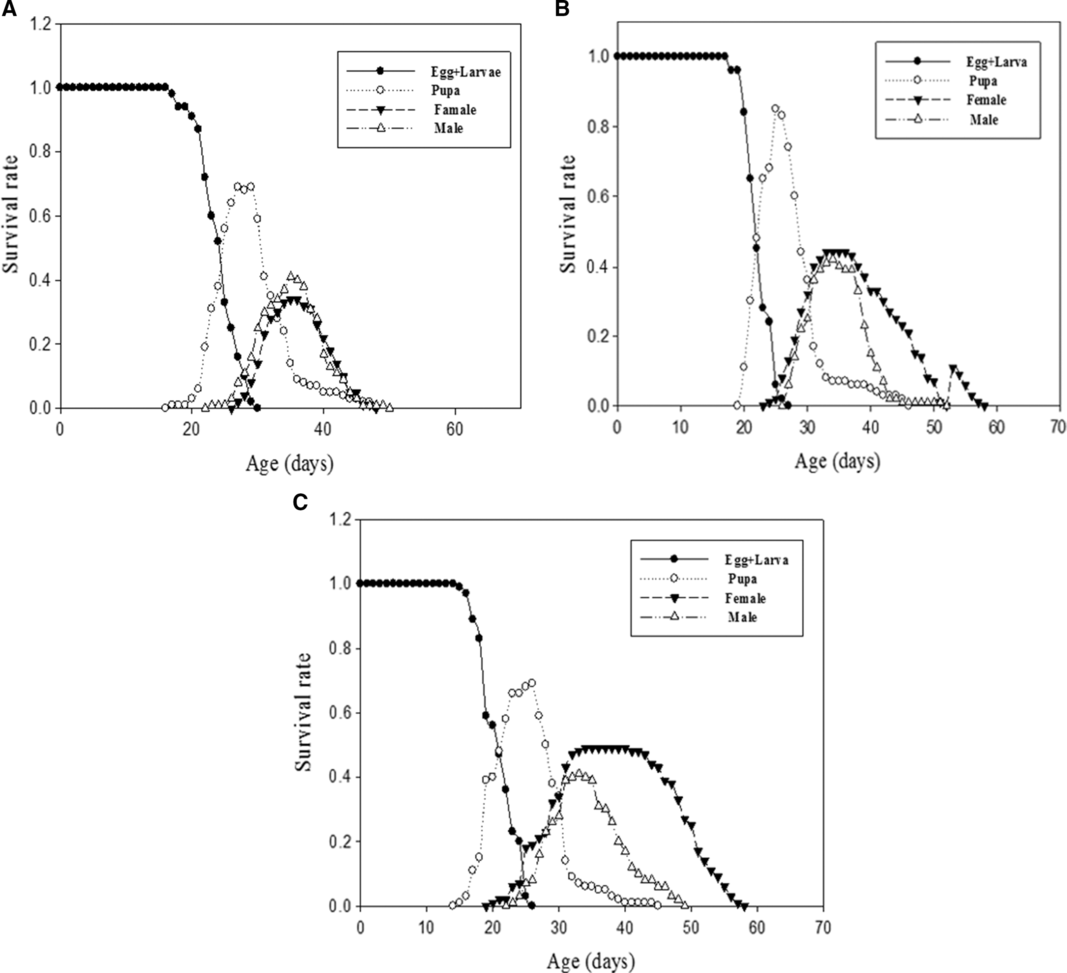
The age-stage survival rate (sxj) shows possibility that a newborn egg would survive to age x and stage j (Rahmani and Bandani Reference Rahmani and Bandani2013). Based on the age-stage and two-sex life table, there is considerable overlapping among the different stages due to the variable developmental rates among individuals (Fig. 5). In control and A. retroflexus treatment, female longevities (57 and 57 days, respectively) were more than those of male (48 and 52 days, respectively). But in C. cyminum treatment, male and female had slight longevity (49 days) (Fig. 5).
The age-stage survival rate (s xj) of Helicoverpa armigera. A, Affected by Cuminum cyminum; B, affected by Amaranthus retroflexus; C, affected by proteinaceous seed extracts in comparison with control.
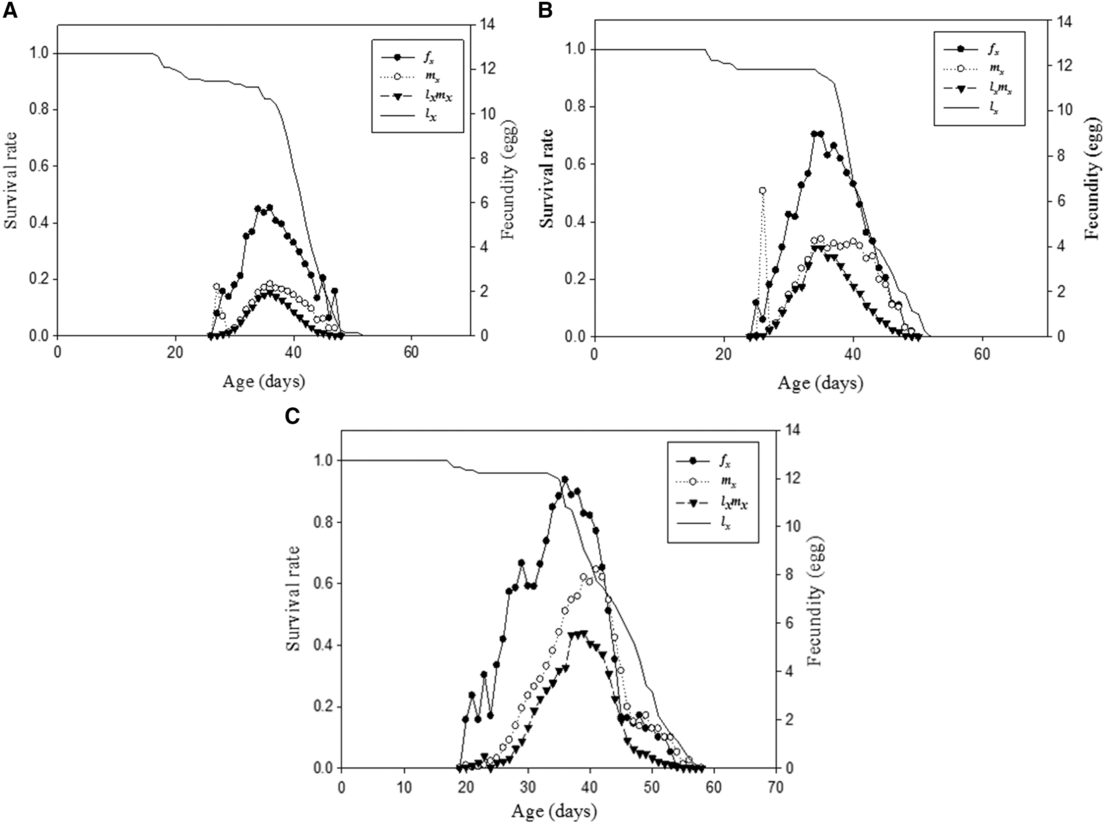
The age-specific survival rate of total cohort (lx) is simple form of sxj and shows how survivorship decline with time. In addition to the lx, female age-stage-specific fecundity (f xj), age-specific fecundity of the total population (mx), and age-specific maternity (lxmx) are shown in Fig. 6. The first highest peak of age-specific fecundity of the total population (mx) occurred at the days 41, 38, and 37 in control, A. retroflexus, and C. cyminum treatments, respectively. f xj and lxmx changed parallel to mx (Fig. 6).
The age-specific survival rate of total cohort (lx), female age-stage-specific fecundity (f xj), age-specific fecundity of the total population (mx), and age-specific maternity (lxmx) in Helicoverpa armigera. A, Affected by Cuminum cyminum; B, affected by Amaranthus retroflexus; C, affected by proteinaceous seed extracts in comparison with control.

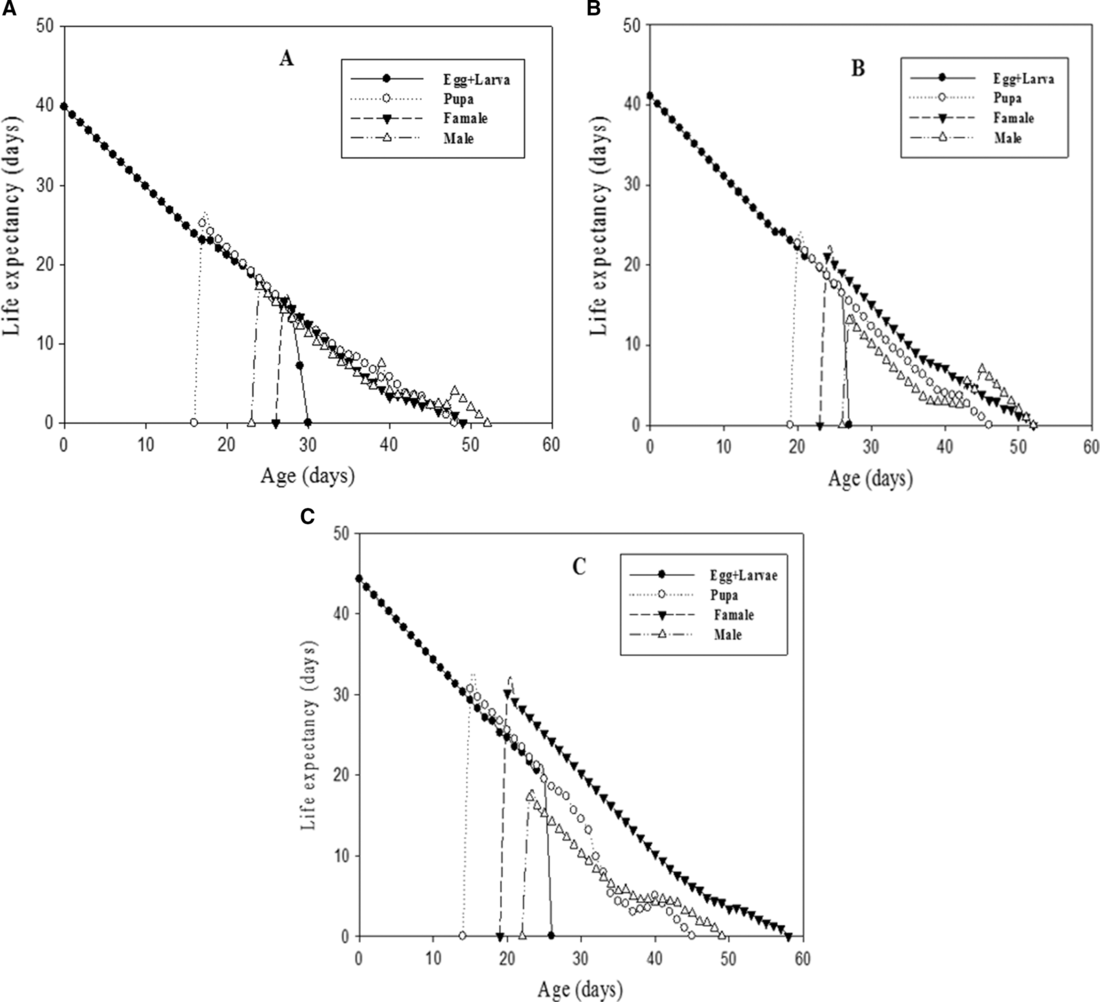
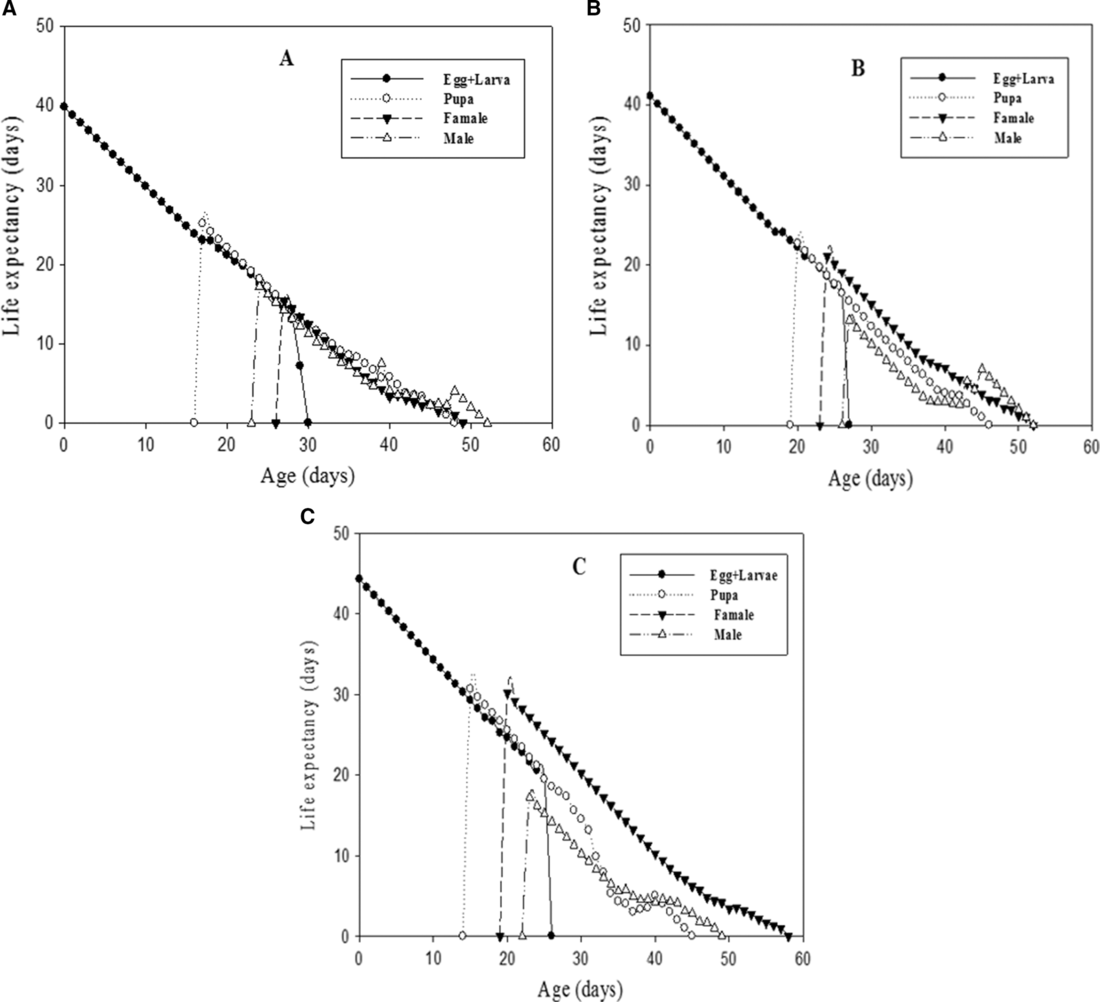
The life expectancy (e xj) explains the whole time that an individual of age x and stage j (Chi and Su Reference Chi and Su2006) is expected to live (Fig. 7). The life expectancy of a newborn female was estimated 30 days in control, which was longer than that of A. retroflexus and C. cyminum treatments with 22 and 15 days, respectively (Fig. 7).
The life expectancy (e xj) of Helicoverpa armigera. A, Affected by Cuminum cyminum; B, affected by Amaranthus retroflexus; C, affected by proteinaceous seed extracts in comparison with control.
Discussion
Proteinase inhibitors have adverse effects on growth and development of insect pests. They have attracted great interest in insect pest management due to the potential of applying for insect control in transgenic plants (Stevens et al. Reference Stevens, Dunse, Guarino, Barbeta, Evans, West and Anderson2013). This study sought to investigate inhibitory effect of two protein extracts from A. retrflexus and C. cyminum seeds on digestive proteases, biological characters, and demographic traits of H. armigera invivo condition. Generally, proteinase inhibitors are selected for their inhibitory activity against insect gut extracts in vitro using artificial food or transgenic plants and then tested in vivo. Sometimes, proteinase inhibitors do not show proper results against the enzyme in subsequent bioassays (Dunse et al. Reference Dunse, Kaas, Guarino, Barton, Craik and Anderson2010a). Therefore, in vivo experiments can provide better insights about the performance of plant proteinase inhibitors.
There are a wide variety of proteolytic enzymes in the Lepidopteran larval midgut including endopeptidase such as trypsins, chymotrypsins, cathepsin-B like proteases, elastases, and exopeptidases like aminopeptidases and carboxypeptidases, which are all responsible for protein digestion (Srinivasan et al. Reference Srinivasan, Giri and Gupta2006). On the other hand, serine proteases like trypsin and chymotrypsin are the principal protein digestion agents in Lepidopteran larvae and digestion of this order primarily depends on these enzymes (Srinivasan et al. Reference Srinivasan, Giri and Gupta2006). Most studies in the past only targeted serine proteases when they wanted to analyse protease inhibitors against H. armigera because they comprise maximum content of the larval gut proteases in this insect (Özgür et al. Reference Özgür, Yücel and Öktem2009). In addition, the number of serine proteases genes in H. armigera larval gut was the most (Chougule et al. Reference Chougule, Giri, Sainani and Gupta2005) and no mRNA of the cathepsin B-like cysteine proteinase (enzyme EC 3.4.22.1) was detected from the larval midgut (Terra and Ferreira Reference Terra and Ferreira1994; Zhao et al. Reference Zhao, Wang, Xu, Schmid and Wieczorek2002).
In current study, total digestive proteases of H. armigera larvae were inhibited 62% and 32% by inhibitors extracted from A. retrflexus and C. cyminum, respectively. However, Butea monosperma (Lamarck) Taubert (Fabaceae) protease inhibitor resulted in 90% reduction in activity of H. armigera larvae midgut proteases (Jamal et al. Reference Jamal, Pandey, Singh and Ahmed2015), and nonhost protease inhibitors from bitter gourd inhibited over 80% activity of H. armigera gut protease (Telang et al. Reference Telang, Srinivasan, Patankar, Harsulkar, Joshi and Damle2003).
Our results indicated that protein extracts were taken from both plant seeds, A. retrflexus and C. cyminum, had significantly negative effect on serine protease digestive enzymes of H. armigera. Serine endoproteases such as trypsins are among the most significant proteases in H. armigera due to their key roles in food digestion and activation of zymogens (Liu et al. Reference Liu, Sui, Wang and Zhao2009). The active enzyme isoforms existing in the midgut lumen have potential to active other digestive enzyme precursors or inactive enzyme isoforms (Parde et al. Reference Parde, Sharma and Kachole2010). Serine proteinase inhibitors may be used as defensive components in plants against invading organisms. However, the reactive site of the plant proteinase inhibitor should be well matched structurally with the binding site of the proteinases in the target organism (Parde et al. Reference Parde, Sharma and Kachole2010).
One of the critical parameters that influence effectiveness of proteinase inhibitor is pH. Plant protease inhibitors are noticed as potential pesticides in opposition to the several lepidopteran insect pests (Ryan Reference Ryan1990). Lepidopteran larvae midgut is extremely alkaline, and the optimal activity of digestive proteases has been reported at pH 10.0–11.0 (Johnston et al. Reference Johnston, Lee, Gatehouse and Anstee1991). In this study, both proteinase inhibitors were properly active in the pH range from 8.0 to 10.0 and the maximum pH was 9.0. Jamal et al. (Reference Jamal, Pandey, Singh and Ahmed2015) showed that over 80% pH stability of Butea monosperma protease inhibitor was between 5.0 and 10.0 and the maximum stability was determined at pH 8.0. The pigeon pea (Cajanus cajan (Linnaeus) Huth; Fabaceae) seeds trypsin inhibitor kept its activity completely, between pH 7.0 and 10.0. However, in acidic pH (3.0–5.0), 20% of the activity vanished (Godbole et al. Reference Godbole, Krishna and Bhatia1994). Whereas, the trypsin inhibitor extracted from jackfruit (Artocarpus heterophyllus Lamarck; Moraceae) seeds was stable at a wider range of pH from 3.0 to 12.0 (Annapurna et al. Reference Annapurna, Ramadoss and Prasad1991).
In this experiment, four obvious proteinase isoforms were found in H. armigera larval gut in gel electrophoresis, and these bands were disappeared entirely in the larvae fed on diet containing A. retroflexus seed extract. Nevertheless, in the C. cyminum treatment, only one isoform was gathered. The results of gel assay were parallel by quantitative assay in determining proteinase activity. Chougule et al. (Reference Chougule, Giri, Sainani and Gupta2005) isolated six isoforms from midgut proteinases of H. armigera, where three of them were major and the other bands were minor. Lomate and Hivrale (Reference Lomate and Hivrale2013) found 10 proteinase isoforms from H. armigera midgut in gel assay and showed reduction in the activity of isoforms in the larvae reared on diet containing phenylmethylsulfonyl fluoride as synthetic serine inhibitor and the combination of phenylmethylsulfonyl fluoride and Cry1Ac. Also, Hivrale et al. (Reference Hivrale, Lomate, Basaiyye and Kalve2013) detected 10 proteinase gut isoforms. They noticed that some of the isoforms could be induced in the larvae fed on diet containing Albizia lebbeck (Linnaeus) Bentham (Fabaceae) proteinase inhibitors due to the production of inhibitor-insensitive proteases in the presence of protease inhibitors in their diet. It was also observed that H. armigera larvae fed on two cultivars of soybean (Glycine max (Linnaeus) Merrill; Fabaceae), which contained serine protease inhibitors, produced chymotrypsin and elastase-like enzymes in higher level compared with the control (Naseri et al. Reference Naseri, Fathipour, Moharramipour, Hosseininaveh and Gatehouse2010). They also illustrated at least seven bands in the midgut protease activity from H. armigera larvae fed on different soybean cultivars using casein zymogram analysis. Therefore, H. armigera has potential to regulate its digestive proteinase levels in the gut against different types of protease inhibitors.
Larvae of H. armigera have complex and diverse types of proteolytic enzymes, which can be affected by the plants that feed them on (Naseri et al. Reference Naseri, Fathipour, Moharramipour, Hosseininaveh and Gatehouse2010). Helicoverpa armigera is one of the best examples of polyphagous insects that attack more than 180 plant species. Polyphagous insects can produce alternative proteinases for adaptation to the great varieties of protease inhibitors that they encounter during their feeding (Giri et al. Reference Giri, Harsulkar, Ku, Gupta, Deshpande, Ranjekar and Franceschi2003). Chougule et al. (Reference Chougule, Giri, Sainani and Gupta2005) categorised five trypsin-like and three chymotrypsin-like proteinases that were sensitive or insensitive to most of the proteinase inhibitors based on the expression analysis. Also, various expression levels of these genes were observed in different instars and relatively increased in older larvae (fourth and fifth instars). According to the previous reports, H. armigera chymotrypsin expression has increased in response to various proteinase inhibitors (Bown et al. Reference Bown, Wilkinson and Gatehouse1997; Gatehouse et al. Reference Gatehouse, Shannon, Burgess and Christeller1997). However, Chougule et al. (Reference Chougule, Giri, Sainani and Gupta2005) indicated that expression of chymotrypsin might be varied with diverse proteinase inhibitors.
We observed that several biological characters of both seed protein extracts treatments including survivorship, development, and weight were significantly affected. In addition, all of the demographic statistics except mean generation time (T) in the larvae fed on both nonhost inhibitors were meaningfully decreased. As data showed, developmental time of larvae was increased upon treatment with protease inhibitors. In fact, enhancement in the growth and developmental length is an indicator of the physiological stress resulting from presence of protease inhibitor incorporated to the insect diet (Jamal et al. Reference Jamal, Pandey, Singh and Ahmed2015). Most of the nonhost proteinase inhibitors incorporated to the artificial food significantly reduced the growth and development of insect, in comparison with control. In addition to the strong inhibitory potential, plant proteinase inhibitors should have stability against insect gut proteinases (Telang et al. Reference Telang, Srinivasan, Patankar, Harsulkar, Joshi and Damle2003; Chougule et al. Reference Chougule, Giri, Sainani and Gupta2005; Tamhane et al. Reference Tamhane, Chougule, Giri, Dixit, Sainani and Gupta2005; Hivrale et al. Reference Hivrale, Lomate, Basaiyye and Kalve2013).
Phytophagous insects for adaptation and survivorship should have the ability to overcome the effect of host plant proteinase inhibitors (Parde et al. Reference Parde, Sharma and Kachole2010). The nonhost plants might be as a possible source of successful inhibitors for the target insect pests because these organisms are not exposed to the inhibitors (Jongsma et al. Reference Jongsma, Bakker, Peters, Bosch and Stiekema1995). Transgenic crops expressing protease inhibitors of nonhost plants have been shown as valuable tools against many insect species (Lawrence and Koundal Reference Lawrence and Koundal2002). The nonhost plant protease inhibitors have two benefits, beside their action against the digestive proteinases of insect, they protect defensive proteins of host plants against proteolysis and also they give plants a potential to combat with insects (Parde et al. Reference Parde, Sharma and Kachole2010).
Giri et al. (Reference Giri, Harsulkar, Ku, Gupta, Deshpande, Ranjekar and Franceschi2003) found that after a wide selection of protease inhibitors from a number of host and nonhost plants, protease inhibitors from winged bean (Psophocarpus tetragonolobus (Linnaeus) Candolle; Fabaceae) seeds (four Kunitz type serine protease inhibitors and three Bowman–Birk type serine protease inhibitors) are potential candidates based on feeding assay and inhibition of gut proteinases of H. armigera. In another study, Chougule et al. (Reference Chougule, Giri, Sainani and Gupta2005) examined the inhibition effect of 36 pigeon pea cultivars seeds and 17 of its wild relatives and resulted that proteinase inhibitors of pigeon pea cultivars had moderate inhibition potential towards H. armigera gut proteinases. However, nearly all proteinase inhibitors of the wild relatives exhibited strong inhibition. Due to the high concentrations of Butea monosperma protease inhibitor in the H. armigera larvae food, the larval size decreased and caused several harmful effects during all developmental stages (Jamal et al. Reference Jamal, Pandey, Singh and Ahmed2015). Parde et al. (Reference Parde, Sharma and Kachole2010) examined in vivo inhibition of 22 different nonhost plant protease inhibitors on the activity of H. armigera gut pro-proteinase and indicated that growth and development of H. armigera larvae were significantly affected by feeding nonhosts protease inhibitors incorporated to the diet, thus larval growth and development were considerably reduced. Moreover, plant protease inhibitors could adversely affect protein ingestion by larvae leading to developmental abnormalities, decreasing in fertility and fecundity at the adult stage. Reduction in weight, growth limitation, and mortality were also observed when different insects ingested high doses of plant protease inhibitors (Murdock and Shade Reference Murdock and Shade2002; Tamhane et al. Reference Tamhane, Chougule, Giri, Dixit, Sainani and Gupta2005; Ramos et al. Reference Ramos, Ramírez, Sanpera, Jover and Ruiz2009; Dunse et al. Reference Dunse, Stevens, Lay, Gaspar, Heath and Anderson2010b). However, there are several other data that are different from the general results. Kuwar et al. (Reference Kuwar, Pauchet, Vogel and Heckel2015) found that H. armigera larval growth fed on diet mixed with soybean Kunitz trypsin inhibitor was poor, but the weight did not change significantly in comparison with the control.
One advantages of applying proteinase inhibitors is that they target a wide range of insect pests and also the other organisms such as Nematoda and Fungi so can improve the current Bacillus thuringiensis toxin technology. Zhu et al. (Reference Zhu, Abel and Chen2007) explained that the combination of proteinase inhibitors with a sub lethal-dose Bacillus thuringiensis Berliner (Bacillaceae) toxin had strong effect on the growth and development of insects.
Characterisations of biochemical interaction of protease inhibitors with the insect larvae gut proteinases lead us to find capable new candidates for management of H. armigera. In this study, applying in vivo protein extract of two nonhost plant seeds, A. retroflexus and C. cyminum, on the digestive proteinase of H. armigera larvae showed adverse effect of both inhibitors on mortality, growth, development, and fitness of the insect pest. Between both inhibitors, A. retroflexus was more effective and as an appropriate nonhost plant proteinase inhibitor could be set up in transgenic crops in the future for increasing the resistance to H. armigera.
Acknowledgements
The authors would like to thank the Biotechnology Development Council and Vice-Rector of Azarbaijan Shahid Madani University for providing the funds for this work (project 217/D/11345).