Introduction
Recent international reports have underlined suicide in older adults as an important public health issue. This tranche of the population accounts for the highest proportion of suicides in many countries (Värnik, Reference Värnik2012). Further, data collected worldwide from 2000 onwards, has shown increasing suicide rates with age in both older men and women, calling for age-specific factors associated with suicide in older populations (Shah et al., Reference Shah, Bhat, Zarate-Escudero, DeLeo and Erlangsen2016). In Canada, however, national age-specific suicide statistics have not shown a consistent increasing suicide rate with age within older adults (Statistics Canada, 2016).
Many studies on the risk of suicide in older adults have focused on the effect of the presence of both psychiatric and physical disorders (Fegg et al., Reference Fegg, Kraus, Graw and Bausewein2016). A recent systematic review including 65 studies in older adults across four continents showed that non-fatal and fatal suicidal behavior was associated with the loss of control and autonomy due to functional disability; as well as a number of specific physical diseases such as cancer, neurologic disorders, pain, chronic pulmonary disease (COPD), liver disease, arthritis, and male genital disorders (Fässberg et al., Reference Fässberg2016). Similarly, using data from a population based registry in Denmark, Erlangsen et al. (Reference Erlangsen, Stenager and Conwell2015) reported on the risk of suicide associated with 39 physical diseases in older adults (≥ 65 years) over a 20-year period and found a number of chronic illnesses associated with suicide after adjusting for psychiatric illness. Focusing on physical and mental co-morbidity and suicide a Danish nested-case control study showed a significant interaction between the presence of a physical and psychiatric illness on the risk of suicide and this was higher in females (Qin et al., Reference Qin, Hawton, Mortensen and Webb2014).
In older adults, for every suicide, there are four suicide attempts as compared to 25 in the general population (Drapeau and McIntosh, Reference Drapeau and McIntosh2015). Studies have underlined the importance of identifying suicidal ideation associated with physical disorders (Fässberg et al., Reference Fässberg2016) and a better co-ordination between primary and specialty mental healthcare (Qin et al., Reference Qin, Hawton, Mortensen and Webb2014) in the prevention of suicide in older adults. Among older adult healthcare users, only 43% and 23% had a mental health visit in the year and four weeks prior to suicide death, with females more likely to have consulted than males (Ahmedani et al., Reference Ahmedani2014). Further to this, a systematic review of the literature on the recognition of depression in the chronically ill has shown inconsistent results concluding that recognition of depression may be dependent on specific physical co-morbidity groups and gender (Menear et al., Reference Menear2015).
A question that arises from the present literature is whether health service use influences the association between psychiatric and physical co-morbidity and suicide risk. In a sample of older adults living in one of the provinces with the highest suicide rate and proportion of elderly in Canada, the aims of the current study were two-fold. First, to assess suicide risk as a function of the interaction between the presence of a physical and psychiatric illness by gender and age group. Given the literature review, we hypothesize that the effect of the presence of a psychiatric and physical illness will have a positive synergistic effect on suicide risk and that this effect will be different for males and females and by age group. Second, to test whether suicide is a function of the interaction between the presence of co-morbidity (at least one physical and psychiatric illness) and healthcare use independent of sex and age group. We hypothesize, that the association between the presence of co-morbidity and suicide risk will be mitigated (negative synergy) by the number of outpatient and inpatient visits. This study will further inform on whether increased access to health services, in a publicly funded healthcare system, reduces suicide risk for chronically ill patients with psychiatric illnesses.
Methods
Study sample
This population based case-control study of older adults (≥ 64 years) was based on data from two sources. Cases were suicides identified, between 2004 and 2007, from the Chief Coroner's database, which in Quebec has shown to be highly reliable and valid (St-Laurent and Bouchard, Reference St-Laurent and Bouchard2004). Access to suicide cases’ Régie de l'Assurance Maladie du Québec (RAMQ) (Quebec's medical insurance plan), medical and pharmaceutical services files was possible by using individual health insurance numbers or, in the case where this number was missing, using the name, sex, address, and month and year of birth. More information can be found elsewhere (Vasiliadis et al., Reference Vasiliadis, Ngamini-Ngui and Lesage2015). The control population included 2,494 older adults (≥ 64 years) participating in the Étude sur la Santé des Aînés (ESA) longitudinal study on older adults' health, conducted in the province of Quebec between 2004 and 2007. The controls could have died by suicide in the years following the study observation period. The ESA study included a probabilistic representative sample of French speaking older adults in the province who had given access to their RAMQ medical file on outpatient, inpatient, and pharmaceutical service use, with more details elsewhere (Préville et al., Reference Préville2008; Préville et al., Reference Préville2012). The linking of all RAMQ files and health survey data was authorized by the “Commission for Access to Information”. Data extraction from RAMQ databases were carried out from research personnel blinded to the study hypotheses. Ethics approval was granted by the ethics committee of the Research Centre – Hôpital Charles-Le Moyne.
Study variables
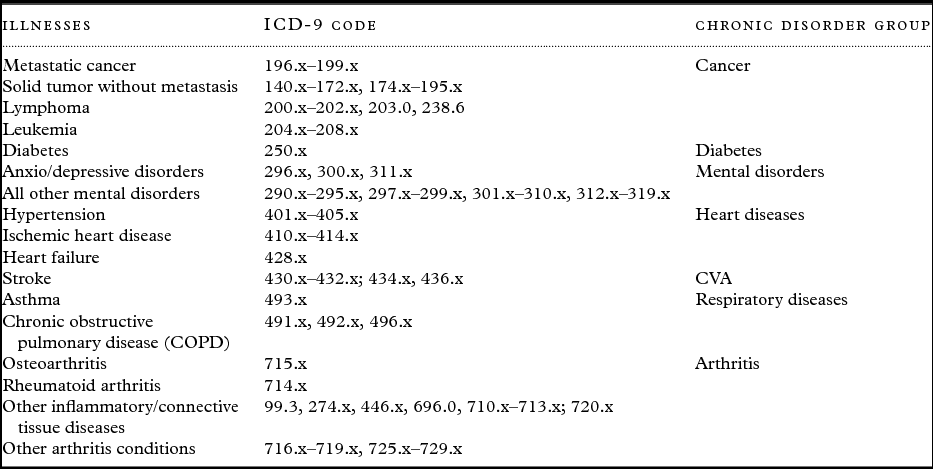
In this study, we considered the presence of a physical and psychiatric condition falling in one of the categories reported in the Chronic Disease Indicator Framework (Betancourt et al., Reference Betancourt, Roberts, Bennett, Driscoll, Jayaraman and Pelletier2014) and other Canadian agencies (Public Health Agency of Canada, 2014; Statistics Canada, 2016) as described in Table 1. Individual data from the RAMQ medical acts and consultations database, for physician fees paid out, were reviewed to ascertain the presence of at least one of the ICD-9 codes under study, in the 12 months prior to interview for controls in the ESA study and in the year prior to death in suicide decedents. Healthcare service use was assessed from data provided by the RAMQ on ambulatory visits and inpatient stays provided to all residents of Quebec. The RAMQ pharmaceutical register also holds information on all drugs dispensed to residents covered under the public drug plan. The RAMQ data also provided information on sex, age, and area of residence, which was dichotomized according to type of medical region (University versus peripheral, intermediate, and far or isolated) (Boulard and Dufour, Reference Boulard and Dufour1983).
Chronic physical and psychiatric illness groups

Analyses
Overall, gender and age specific multivariate logistic regression models were used to study suicide as a function of the presence of diabetes, respiratory diseases, heart disease, cancer, cerebrovascular accident, arthritis, anxio/depressive disorders, all other mental disorders; and this categorized as the presence of physical and psychiatric co-morbidity (no disorder/physical illness only/psychiatric illness only/both) controlling for socio-demographic characteristics and past year health service use. Further, we also tested the interaction between the presence of co-morbidity (both a psychiatric and physical illness) and health service use (outpatient health services (mental health and other); hospitalizations), restricted by gender and age. Odds ratios and 95% CI are presented. Analyses were carried out with the SAS 9.1 version.
Results
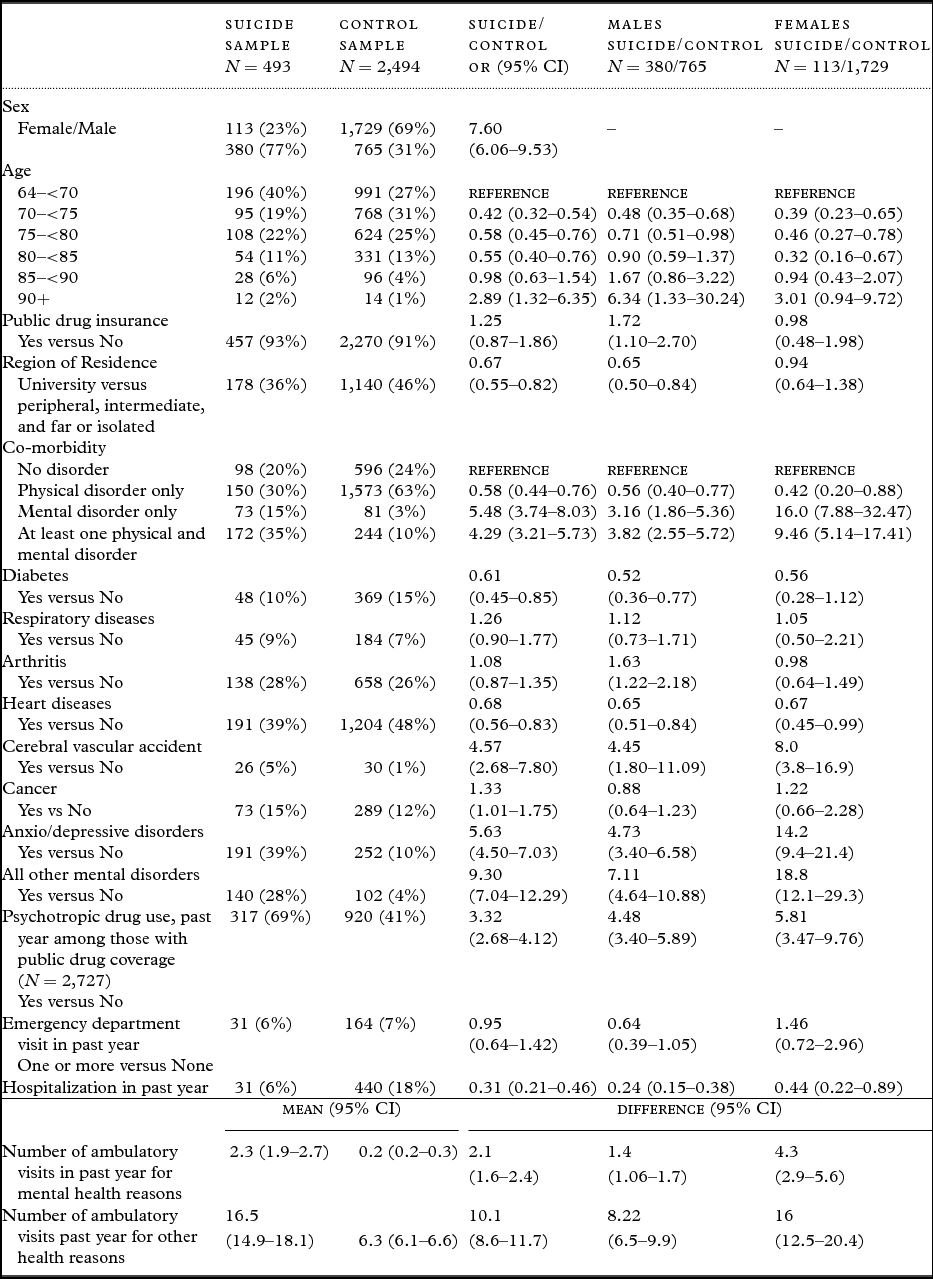
There were 493 suicides of older adults in the province of Quebec between the years 2004 and 2007. The characteristics of suicide decedents as compared to the general population based representative sample of community living older adults is presented in Table 2. As seen, in males, suicide decedents were more likely to be aged 90 years and over, covered under the provincial public drug insurance plan and less likely to live in a university medical region. Female suicide decedents were less likely to be aged 70 to 84 years as opposed to 64 to 69 years. Overall, the presence of a psychiatric illness with or without a physical illness was associated with an increased risk of suicide; whereas the presence of physical illness only was associated with a reduced risk of suicide, as opposed to those with no diagnosed disorder. With regards to specific illnesses, male suicide decedents were less likely to have a diagnosis of diabetes and heart disease, and more likely to have arthritis, a cerebrovascular accident, an anxio-depressive disorder, and a diagnosis in the group of all other mental disorders. Female suicide decedents were less likely to have been diagnosed with heart disease and more likely to have been diagnosed a cerebrovascular accident and any mental disorder. The results also showed that in the previous year, male and female suicide decedents had been dispensed a psychotropic drug, and were less likely to have been hospitalized. In males and females, suicide decedents had on average 1.4 and 4.3 and 8.2 and 16 higher outpatient visits for mental health and other reasons, respectively.
Characteristics of suicide and control study samples

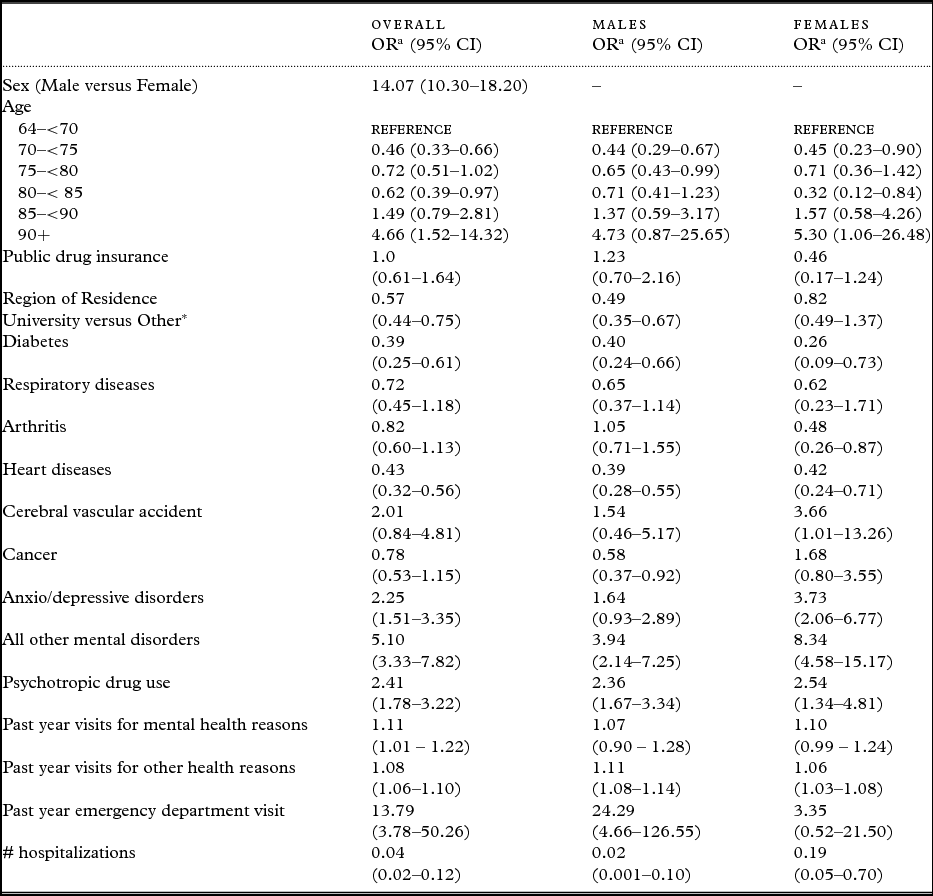
The multivariate analyses (Table 3) showed that overall suicide decedents as compared to the general population were less likely to have been diagnosed with diabetes and heart disease, and were more likely to have been diagnosed a psychiatric illness in the other category. Male suicide decedents were also less likely to have been diagnosed with cancer. Female suicide decedents were less likely to have been diagnosed with arthritis and more likely to have been diagnosed with a cerebral vascular accident and an anxio-depressive disorder. Suicide decedents were more likely to be males and more likely to be aged 90 years and over than all other age groups with the exception of the 85 to 89 years age group. Suicide decedents were also less likely to live in a university medical region and were less likely to have been hospitalized but more likely to have consulted on an outpatient basis and be dispensed a psychotropic drug.
Overall and Gender specific adjusted estimates of suicide associated with chronic illnesses in older adults

a OR Adjusted for sex, age, coverage under public drug insurance, region of residence, psychotropic drug use in past year, and number of ambulatory visits for mental health or other reasons, emergency department visit and hospitalizations, and all physical and psychiatric illnesses.
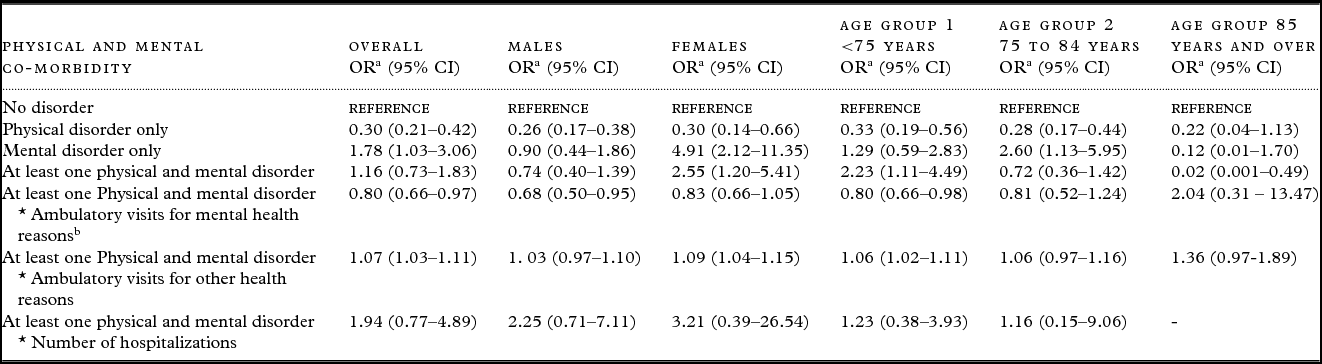
When looking specifically at the presence of physical and psychiatric co-morbidity (Table 4), the results showed that female suicide decedents were more likely to have been diagnosed with a psychiatric illness with (OR 2.55; 95% CI: 1.20–5.41) or without (OR 4.91; 95% CI: 2.12–11.35) a physical illness; and less likely to have been diagnosed with a physical illness only (OR 0.30; 95% CI: 0.14–0.66), as opposed to the general population. Additional analyses stratified by age group showed that suicide decedents aged less than 70 years, were more likely to be diagnosed with a physical and psychiatric illness (OR 2.23; 95% CI: 1.11–4.49) and less likely to be diagnosed with a physical illness only (OR 0.33; 95% CI: 0.19–0.56). Suicide decedents aged between 70 and 84 years were less likely to have been diagnosed with a physical illness only (OR 0.28; 95% CI: 0.17–0.44). Suicide decedents aged 85 years and over were less likely (OR 0.02; 95% CI: 0.001–0.49) to have been diagnosed with a psychiatric and physical illness in the year prior to death than controls. The results also showed in the overall sample a significant association between the presence of physical and psychiatric co-morbidity and the number of outpatient mental health and other health visits (p < 0.05) on suicide risk. The results showed a decreased likelihood of suicide with an increased number of mental health visits among those with co-morbidity (OR 0.84; 95% CI: 0.70–0.99).
Adjusted estimates of physical and psychiatric co-morbidity on suicide risk

a OR Adjusted for sex, age, coverage under public drug insurance, region of residence, psychotropic drug use in past year and number of ambulatory visits for mental health or other reasons, emergency department visit and hospitalizations.
Discussion
This population based case-control study of older adults in the province of Quebec, is one of the few reporting on age group and gender specific physical and psychiatric illnesses associated with suicide while controlling for drug insurance coverage, region of residence, and healthcare and psychotropic service use.
In this study, suicide, as opposed to those aged 64 to 69 years, was less likely in the 70 to 84 years age group; whereas more likely in the 90 years and over age group. Similar to Shah et al. (Reference Shah, Bhat, Zarate-Escudero, DeLeo and Erlangsen2016), data from Statistics Canada (2016) across all provinces, has shown for males, suicide rates increasing from 16.2 per 100,000 population in the 65 to 69 years age band to 24.2 per 100,000 population in the 85 to 89 years age band, but decreasing rates in females from 5.1 to 3.9 per 100,000 population. The differing results may in part be explained by the different populations studied, that vary across countries (Shah et al., Reference Shah, Bhat, Zarate-Escudero, DeLeo and Erlangsen2016) as well as the fact that our control group included community living older adults that may be healthier than the general older adult population that includes institutionalized patients.
As has been reported in many countries (Shah et al., Reference Shah, Bhat, Zarate-Escudero, DeLeo and Erlangsen2016), older adult males in our study were 14 times more likely to die by suicide than females. The results also showed that, compared to community living older adults, male suicide decedents were less likely to have been diagnosed with cancer, diabetes, and heart disease, and were more likely to have been diagnosed with either schizophrenia, paranoia, psychosis, or neurotic disorder. For females, suicide decedents were less likely to have been diagnosed with arthritis and diabetes and more likely to have been diagnosed with a cerebral vascular accident and either an anxio-depressive or other mental health disorder.
With regards to the presence of psychiatric illnesses, these results are consistent with those reported elsewhere (Voaklander et al., Reference Voaklander, Rowe, Dryden, Pahal, Saar and Kelly2008). With the exception of the observed increased risk associated with stroke, the results regarding physical illness, are not consistent with a recent population-based registry Danish study (Erlangsen et al., Reference Erlangsen, Stenager and Conwell2015), which showed in males and females, an increased risk of suicide associated with cancer, COPD, and arthritis. Apart from the fact that our comparison group included non-institutionalized participants, the differing results may in part be explained by the fact that our study population was a more recent one (2004–2007) and that diagnoses in an outpatient and inpatient setting were considered; whereas the Danish study included an observation period of over 20 years and the presence of a diagnosis during a hospitalization (indicating more severe cases). Another explanation is that our analyses controlled for a number of possible confounding factors such as drug insurance coverage and healthcare service use. Fässberg et al.'s (Reference Fässberg2016) recent systematic review, highlights the divergent results regarding suicide and the presence of physical illnesses from population registry studies, where in most studies, in multivariate analyses, no significant association is observed between suicide risk and heart disease, respiratory disease (COPD), diabetes, arthritis, and rheumatism. We also found that female suicide decedents were more likely to have been diagnosed with a cerebral vascular accident and this concords with a recent review suggesting that stroke increases suicide risk, especially among women (Pompili et al., Reference Pompili2015), due to the increased risk of depression and suicidal ideation and plans following a stroke.
Findings from these earlier studies however do not directly support the decreased association between suicide risk and diabetes and heart disease after controlling for the presence of psychiatric illness and healthcare service use. Closer to our results, is a matched population based case-control study in Canada, although not in older adults specifically, which showed a decreased risk associated with heart disease in men after controlling for all other psychiatric and physical disorders (Bolton et al., Reference Bolton, Walld, Chateau, Finlayson and Sareen2015). This finding also led us to examine different combinations of physical and psychiatric co-morbidity.
Our results showed that as opposed to those without any disorder, those with a mental disorder only had an increased risk of suicide in the overall sample, but not specifically in males. In females, as opposed to those without a disorder, those with a mental disorder only had close to five times whereas those with both a physical and mental disorder had a 2.5 times the risk of suicide. Qin et al's (Reference Qin, Hawton, Mortensen and Webb2014) study, when adjusting for socio-demographic factors, similarly showed that the presence of a psychiatric illness had a higher impact on suicide risk than the presence of a physical illness and this risk was increased by more than two-fold for females. In fact, an earlier small UK clinic based study showed that, as compared to females with no physical disorder, those with a major depression and physical disorder were less likely to have their depression detected by their family physician (Tylee et al., Reference Tylee, Freeling and Kerry1993). In contrast, others have also shown that older adults with heart disease are up to three times more likely to also have their depression detected, and this after controlling for socio-demographic and clinical factors as well as health service use (Bogner et al., Reference Bogner, Ford and Gallo2006).
When looking at the effect of co-morbidity by age group, the results showed an increased risk in those aged less than 70 years but a decreased risk in those aged 85 years and over and this after controlling for study variables. Previous studies have shown an association between increased social support and late onset depression compared to early onset depression (Sachs-Ericsson et al., Reference Sachs-Ericsson2013). These findings suggest that in population studies, social support may in fact delay the onset of depression and therefore the number of episodes and the severity of depression in much older age, which may in part explain the observed results. Future studies should focus on the potential differential mediating effect of social support by age group in suicide risk. Another important explanation of the decreased suicide risk with physical and psychiatric illnesses in the 85-year and over age group may be due to the fact that the control population included community living older adults whereas suicide decedents may have included a number of individuals institutionalized in long-term care or individuals not consulting in general medical services and less likely to be identified with physical and psychiatric illnesses and receiving appropriate mental healthcare.
We also tried to understand the data as a function of outpatient health service use by testing the interaction between physical and psychiatric co-morbidity and suicide. The results showed that an increased number of mental health visits in older adults with both physical and psychiatric co-morbidities was associated with a reduced risk of suicide. This supports the importance of mental health follow-up visits in vulnerable populations in reducing suicide risk. It is also interesting to note that the presence of hospitalizations was associated with a reduced risk of suicide in the multivariate analyses. This suggests the importance of inpatient care as part of the treatment process as well as the follow-up and continuity of mental healthcare that may be organized in discharged patients.
Finally, the results reported in this study need to be considered with a number of limitations in mind. First, the comparison group, although representative of older adults in the province of Quebec, included a higher proportion of females and excluded people who were institutionalized and northern regions, which may present with more complex clinical profiles as well as different health service use patterns and access to care. Second, the control population participating in the ESA study may have been healthier than the general population, under-representing those with increased risk of co-morbidity and mortality rates. This may have had an impact on the non-significant difference observed between suicide and the presence of some physical disorders. Third, the presence of physical and psychiatric disorders were assessed in the past year only and may have missed cases diagnosed in the previous year. This may have influenced the results if suicide decedents were less likely to be treated for their other physical disorders such as diabetes and heart disease if physicians were more likely to treat and code for psychiatric problems during the visit if suicidal ideation and acts for instance were present. This also brings to question, the possible under-reporting of psychiatric illnesses in control populations in favor of physical disorders. Fourth, the reliability of diagnoses captured in the RAMQ medical files may be subject to misclassification bias, nothing suggests however that this bias would be differential between comparison groups.
Conclusion
Overall, older adult suicide decedents are more likely to present with psychiatric disorders and less likely to present with physical disorders alone than controls. Females and younger older adult suicide decedents were also more likely to present with co-morbid physical and psychiatric disorders than controls. Attention should also be given to those with a psychiatric diagnosis alone, as they are at an increased risk of suicide. Further, improved mental health follow-up with an increased number of outpatient mental health visits in individuals with co-morbidities is associated with decreased suicide risk. This reiterates the importance of evaluating suicidal ideation and plans for suicide in older adults in primary care. As previously highlighted (Fässberg et al., Reference Fässberg2016), the need for more expertise in suicide prevention in medical care is needed.
Conflict of interest
This study was supported by two Quebec Health Research Fund (Fonds de Recherche en Santé du Québec (FRQ-S) operating grants # 16162 and # 22251. Dr Vasiliadis is a Senior Research Scholar with the FRQ-S. Ms Lamoureux-Lamarche holds an FRQ-S Doctoral bursary. Dr Gontijo Guerra holds a Canadian Institutes of Health Research Frederick Banting & Charles Best Doctoral Award.
Description of authors' roles
H-M Vasiliadis is PI and co-PI of the operating grants obtained, formulated the research question and design of the study and was responsible for the statistical analyses and writing of the paper. C Lamoureux-Lamarche formulated the research question and contributed to the interpretation of results and contributed to final version of the paper. S Gontijo Guerra was responsible for the definition of measures and contributed to the interpretation and writing of paper.
Acknowledgments
The FRQ-S grant # 16162 was held by Drs. Vasiliadis and A Lesage, E Latimer, M Seguin; and the FRQ-S grant # 22251 was held by Drs. M Preville and H-M Vasiliadis and the ESA committee. The authors thank Djamal Berbiche, Ph.D., for work on merging the administrative databases and data set preparation.