Introduction
Epistaxis is the most common acute presentation to ENT services in the UK, with around 25 000 acute presentations each year.1 Despite this high incidence, there are currently no nationally accepted guidelines for its management.Reference Hall, Blanchard, Chatrath and Hopkins2 A recent multi-centred pilot audit undertaken by INTEGRATE (The National ENT Trainee Research Network) demonstrated a wide variation in management practice.Reference Mehta, Williams, Smith, Hall, Hardman and Cheung3
This multidisciplinary consensus guideline aimed to develop agreed evidenced-based, multidisciplinary recommendations for the management of epistaxis. This guideline was subsequently utilised as the ‘gold standard’ for the national audit of epistaxis management.4
Materials and methods
Recommendations were developed using an Appraisal of Guidelines for Research and Evaluation (‘AGREE II’) framework,Reference Brouwers, Kho, Browman, Burgers, Cluzeau and Feder5 a method successfully utilised for the 2009 hereditary haemorrhagic telangiectasia guidelines.Reference Faughnan, Palda, Garcia-Tsao, Geisthoff, McDonald and Proctor6 Consensus member disagreement was managed using an adaptation of the method utilised within RAND Corporation/University of California Los Angeles (‘RAND/UCLA’) appropriateness studies.Reference Fitch, Bernstein, Aguilar, Burnand and LaCalle7 The use of established guideline generation methodology sought to provide rigour in development, despite an expected paucity in high-level evidence.
Scope and purpose
Representatives from the ENT-UK Clinical Audit and Practice Advisory Group and the British Rhinological Society approached INTEGRATE, highlighting the requirement for nationally accepted standards of care in epistaxis management. This guideline seeks to recommend evidence-based best practice for the hospital management of epistaxis cases, of all severity, occurring in adults, within the context of commonly associated co-morbidities known to affect outcome. Guidance on the management of epistaxis in paediatric patients, and in those with hereditary haemorrhagic telangiectasia and other specific haematological conditions, is beyond the scope of this document.
Stakeholder involvement
An organising committee was composed of eight junior clinicians, including a nominated chair and two executive senior members. The organising committee were responsible for developing the consensus methodology and co-ordinating a multifaceted systematic review of the relevant literature.
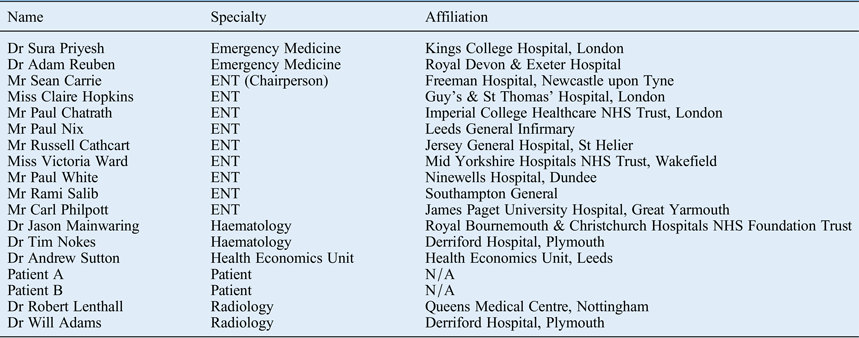
A separate multidisciplinary consensus panel was composed of patients, ENT surgeons and representative experts from allied specialties involved in epistaxis management from across the UK. An open invite was extended to all consultant members of the British Rhinological Society and ENT-UK to participate in the consensus panel as ENT representatives. Allied specialty consultants and patient representatives were invited individually following identification by the steering committee as appropriate experts in their fields. Individuals specialising in health economics, emergency medicine, haematology, interventional radiology, general ENT and rhinology all contributed to the guidelines (Table I).
Consensus panel members

N/A = not applicable
Rigour of development
For the purposes of this consensus, epistaxis management was divided by the steering committee into five domains: initial assessment, cautery, intranasal agents, haematological factors, and surgery and radiological intervention. Each domain was assigned co-authors from locations throughout the UK. Within the domains, a total of 15 systematic reviews were conducted,Reference Mcleod, Price, Williams, Smith, Smith and Owens8–Reference Swords, Patel, Smith, Williams, Kuhn and Hopkins12 with the support of the University of Cambridge, the University of Exeter and the Defence Military Library. A robust yet pragmatic methodology was followed, including validated assessment of bias,Reference Higgins, Altman, Gøtzsche, Juni, Moher and Oxman13, Reference Slim, Nini, Forestier, Kwiatkowski, Panis and Chipponi14 capturing all relevant published evidence of level 3 and above.
The data synthesis and full-text articles included were made available to the consensus panel members, prior to domain co-authors presenting their findings at a guidelines conference held in Leeds on 19 May 2016. A consensus panel discussion was held following each domain presentation, facilitated by the consensus panel chair, which sought to generate management recommendations. These discussions were digitally recorded and converted to a written consensus matrix by the steering committee. Each recommendation was then linked with: the level of evidence15 supporting each statement, and a Grading of Recommendations Assessment, Development and Evaluation (‘GRADE’) scoreReference Guyatt, Oxman, Vist, Kunz, Falck-Ytter and Alonso-Coello16 explaining the strength of recommendation in the context of the evidence plus the perceived harm and benefit. The draft matrix was then returned to the consensus panel electronically for two separate rounds of comments and subsequent adjustment.
Disagreement within the consensus panel was managed using an adaptation of the method utilised within RAND Corporation/University of California Los Angeles appropriateness studies.Reference Fitch, Bernstein, Aguilar, Burnand and LaCalle7 Following final consensus matrix adjustment, consensus panel members independently assigned an agreement rating from 0–10 for each recommendation. A rating of 0 represented complete disagreement with the statement and 10 represented absolute agreement. Panel members were asked to abstain from comment when the specific recommendation was felt to be outside their clinical remit. Recommendations achieving a median rating of less than 7 were excluded from the consensus matrix. Disagreement was defined as statements achieving a median rating of 7 or higher but with individual ratings of less than 4. In these cases, outlying panel members were given the opportunity to revise their score if desired. All retained statements were reported with their median consensus agreement rating, range of ratings and an asterisk annotated where ratings were revised following disagreement.
It is anticipated that the consensus recommendations will be updated following the completion of each cycle of the epistaxis management national audit.4
Recommendations
Initial assessment
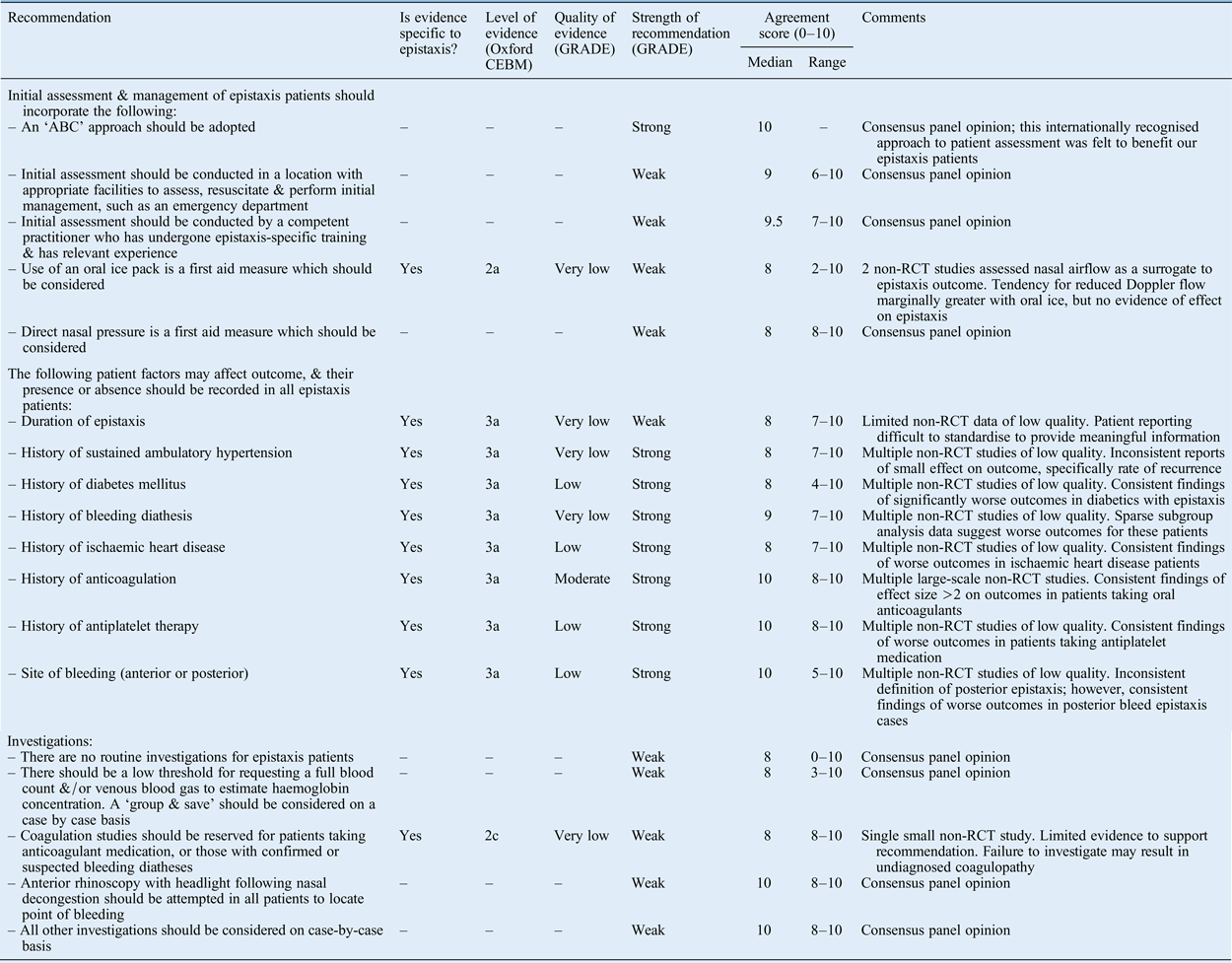
Despite low and very low quality of evidence, a number of strong recommendations were made (Table II). This was achieved because of the lack of perceived risk of recommendation versus consensus agreed benefit. Recommendations centred round the use of a structured airway, breathing and circulation (‘ABC’) approach to patient assessment and management, and the recording of key co-morbidities where there was evidence available to support their impact on patient outcome.
Initial assessment recommendations

Oxford CEBM = Oxford Centre for Evidence-Based Medicine; GRADE = Grading of Recommendations Assessment, Development and Evaluation; ABC = airway, breathing and circulation; RCT = randomised controlled trial
Very low quality or absent evidence limited the strength of recommendation regarding the use of well-established first aid techniques, and specific statements regarding the clinical examination methods and investigation of patients presenting with epistaxis. Despite these limitations, there were consistently high agreement rating levels, with minimal disagreement in the accepted recommendations.
Cautery
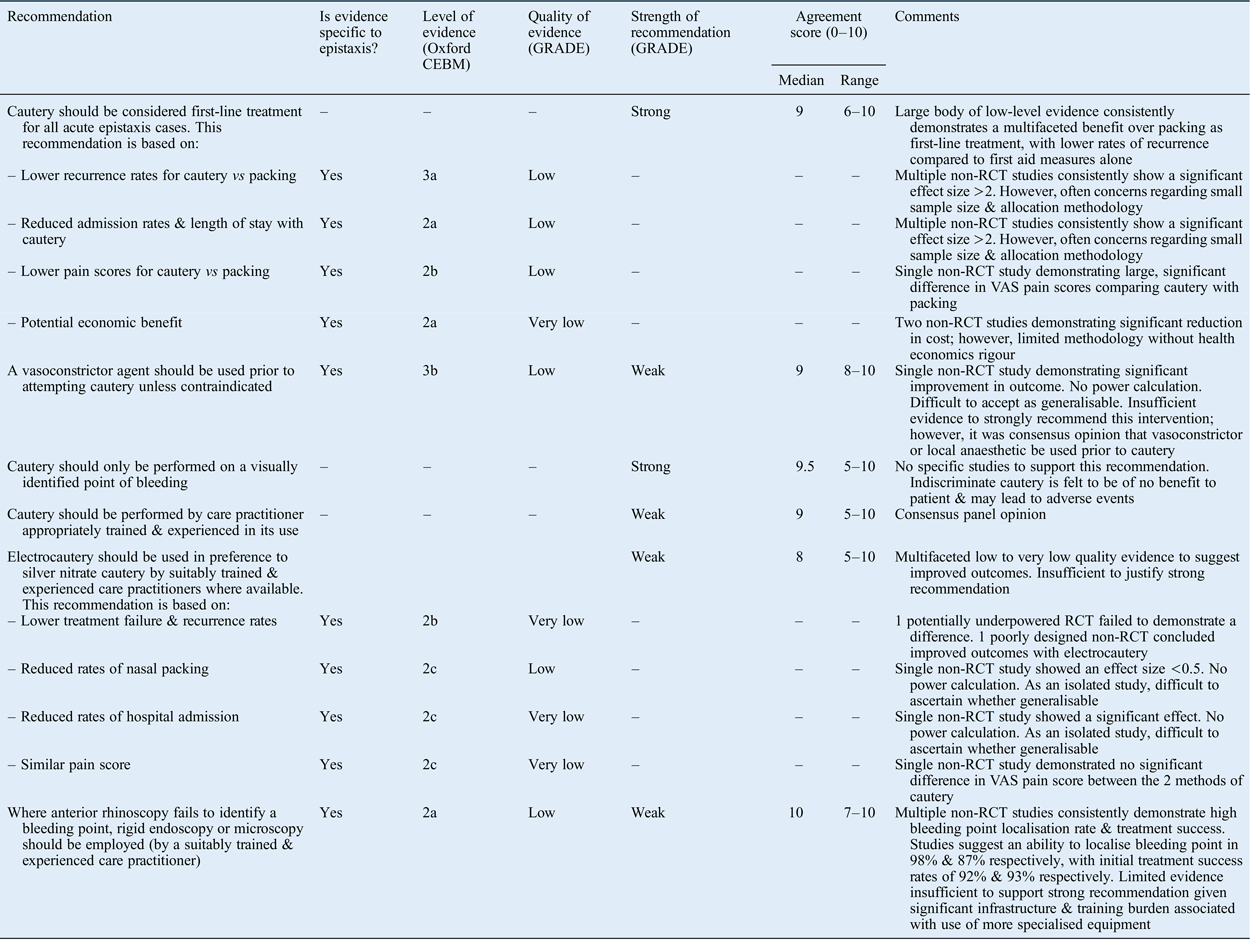
Low and very low quality evidence again limited the strength of recommendations made regarding intranasal cautery (Table III). Strong recommendations were made supporting cautery as a first-line treatment in all patients, on the basis that cautery should only be targeted at identified points of bleeding. Weak recommendations were made regarding: the need for specific cautery training, the use of topical vasoconstrictors, electrocautery in preference to chemical (silver nitrate) cautery, and advanced clinical examinations when a bleeding point cannot be identified with anterior rhinoscopy. There were high median agreement ratings for all statements, with no disagreement.
Cautery recommendations

Oxford CEBM = Oxford Centre for Evidence-Based Medicine; GRADE = Grading of Recommendations Assessment, Development and Evaluation; RCT = randomised controlled trial; VAS = visual analogue scale
Intranasal agents
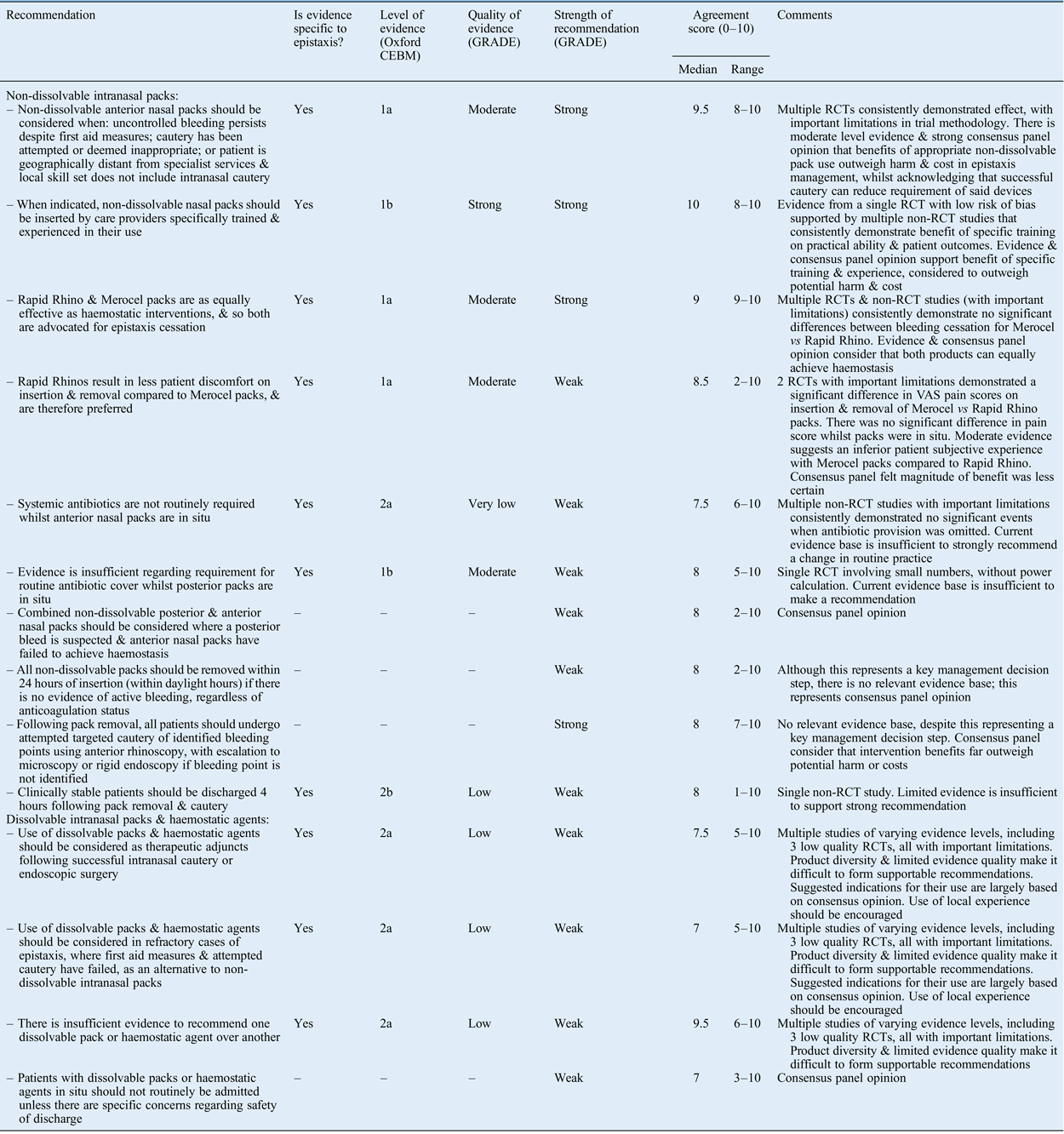
In contrast to other domains, this area of management was supported, in places, by moderate and high quality evidence (Table IV). This allowed the strong recommendation of non-dissolvable anterior nasal packs as an effective haemostatic intervention in stipulated clinical scenarios, when placed by individuals specifically trained in their use. Consensus opinion strongly supported the use of targeted cautery following the removal of non-dissolvable packs, despite no supporting evidence. This was based on a perceived significant benefit balanced against any potential harm or cost. The consensus panel weakly recommended the use of Rapid Rhino® packs over Merocel® packs as the non-dissolvable pack of choice, and made weak recommendations regarding the length of time a pack should remain in situ and how long patients should be observed following pack removal. Despite median agreement ratings largely between 8 and 9.5, there were several instances of disagreement.
Intranasal agent recommendations

Oxford CEBM = Oxford Centre for Evidence-Based Medicine; GRADE = Grading of Recommendations Assessment, Development and Evaluation; RCT = randomised controlled trial; VAS = visual analogue scale
Recommendations regarding the use of dissolvable packs and haemostatic agents were limited by: a paucity of high quality evidence, the diversity of available products and a lack of clarity regarding when to employ these products. Three of the four recommendations received low agreement ratings of 7 or 7.5, and there was a single instance of disagreement.
Antithrombotic therapy and haematological factors
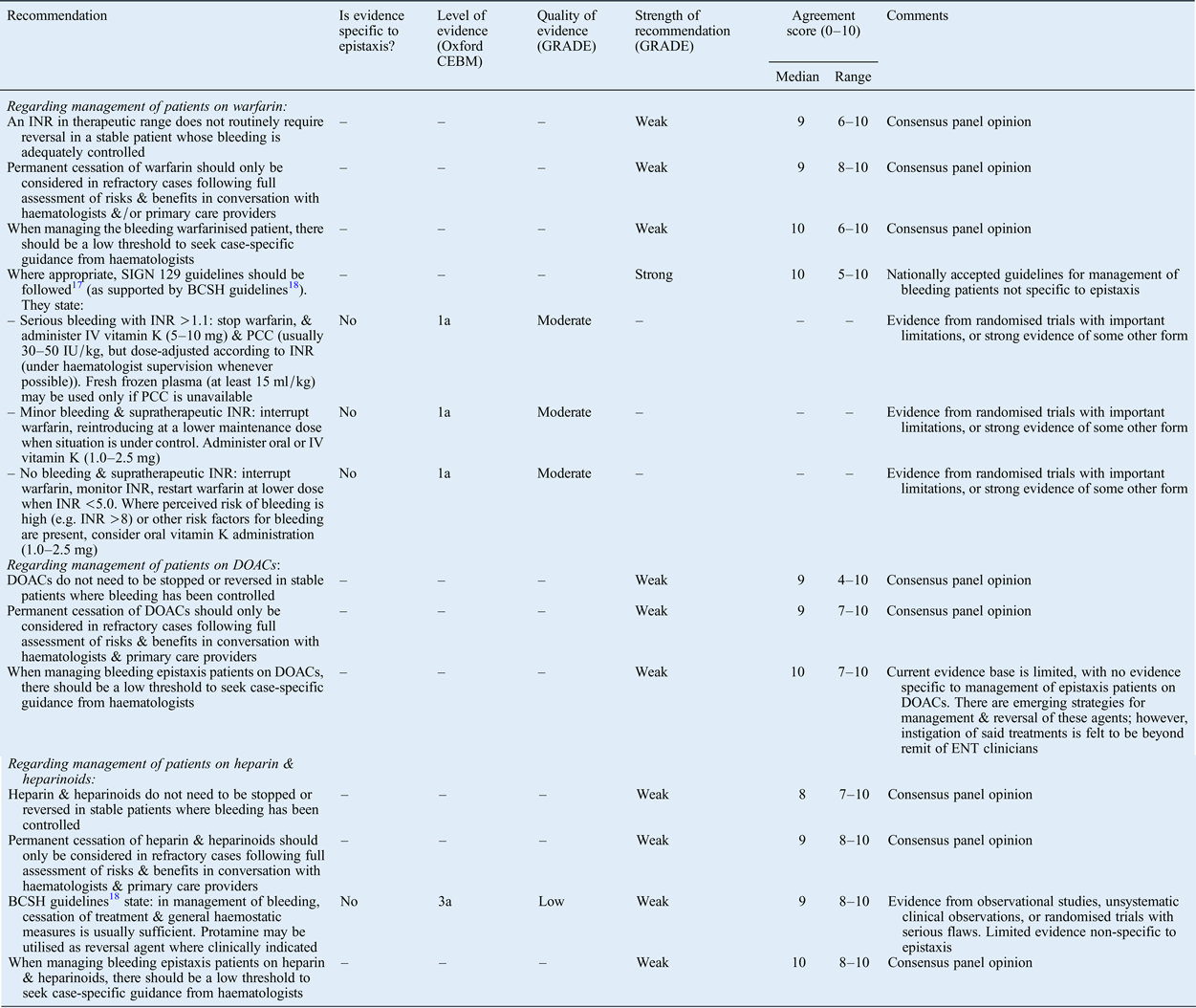
Despite no epistaxis-specific supporting evidence, several weak recommendations were made regarding the management of warfarin, direct oral anticoagulants and heparin (Table V).17, Reference Keeling, Baglin, Tait, Watson, Perry and Baglin18 These centred around the extrapolation of generic national guidelines and maintaining a low threshold for seeking case-specific haematological advice. Despite recommendations of weak strength, there were universally high levels of median agreement rating, with no instances of disagreement.
Antithrombotic therapy recommendations

Oxford CEBM = Oxford Centre for Evidence-Based Medicine; GRADE = Grading of Recommendations Assessment, Development and Evaluation; INR = international normalised ratio; SIGN = Scottish Intercollegiate Guidelines Network; BCSH = British Committee for Standards in Haematology; IV = intravenous; PCC = prothrombin complex concentrate; DOAC = direct oral anticoagulants
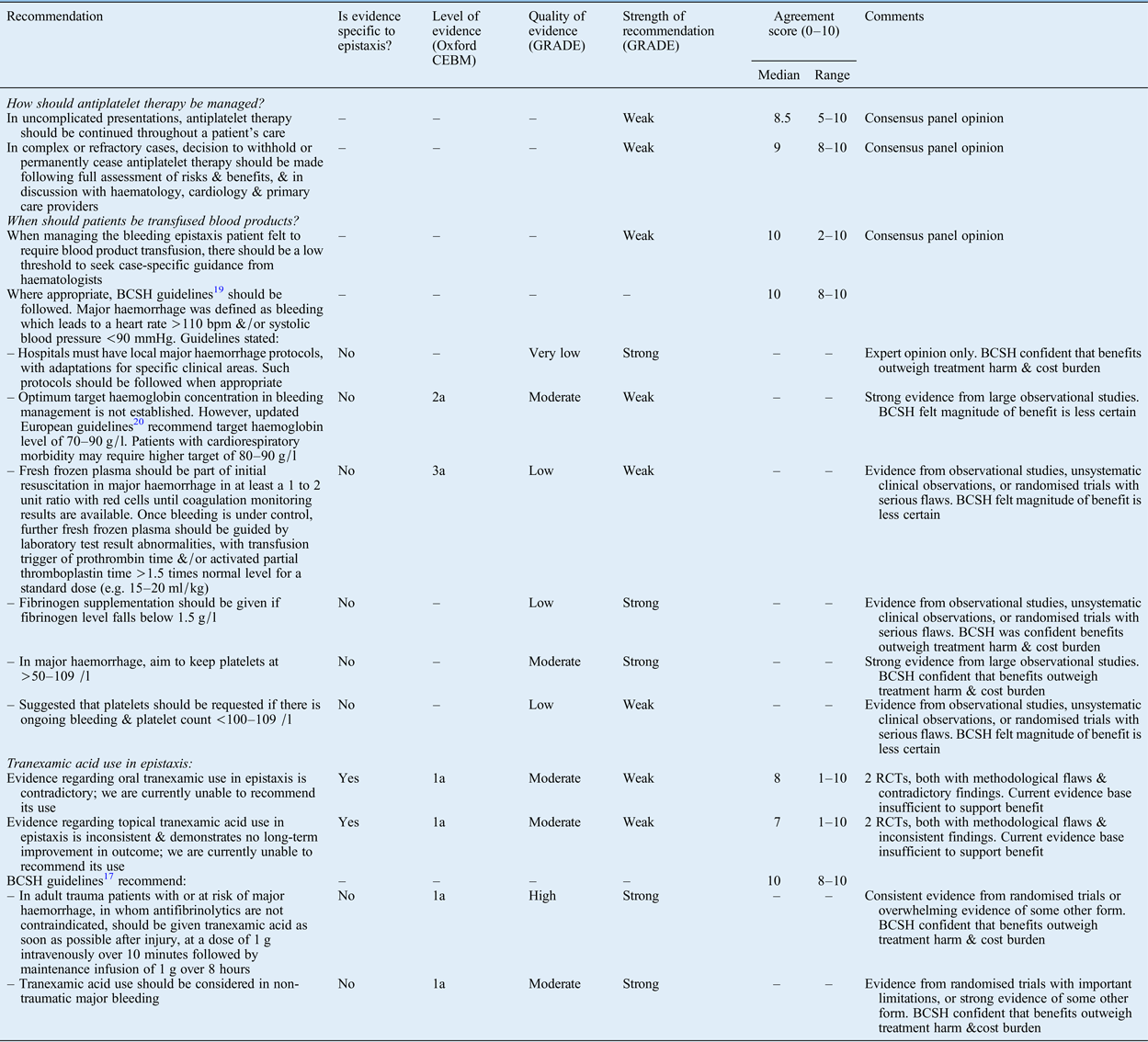
Similarly, there was no evidence to recommend an epistaxis-specific treatment strategy for the management of ongoing antiplatelet therapy (Table VI).Reference Hunt, Allard, Keeling, Norfolk, Stanworth and Pendry19, Reference Spahn, Bouillon, Cerny, Coats, Duranteau and Fernandez-Mondejar20 Consensus opinion recommended the continuation of such agents in uncomplicated cases, and the involvement of allied specialties in complex or refractory cases. Levels of agreement were high, with no disagreement.
Haematological factors recommendations

Oxford CEBM = Oxford Centre for Evidence-Based Medicine; GRADE = Grading of Recommendations Assessment, Development and Evaluation; BCSH = British Committee for Standards in Haematology; RCT = randomised controlled trial
Transfusion strategies for epistaxis were again based on evidence unrelated to the condition. Despite this, a number of strong recommendations were made for the use of elements of the British Committee for Standards in Haematology guidelines for the management of major haemorrhage.Reference Hunt, Allard, Keeling, Norfolk, Stanworth and Pendry19 Median agreement ratings were 10 for recommendations, with one instance of disagreement.
Tranexamic acid use in epistaxis benefited from moderate quality evidence; however, findings were inconsistent. As a result, weak recommendations for its use were made, with median rater agreement of 7 and 8, with disagreement in both epistaxis-specific statements. National guidelines exist for the use of tranexamic acid in defined major haemorrhage; it was strongly recommended that this guidance be followed when relevant, with a median agreement rating of 10 without disagreement.
Surgery and radiological intervention
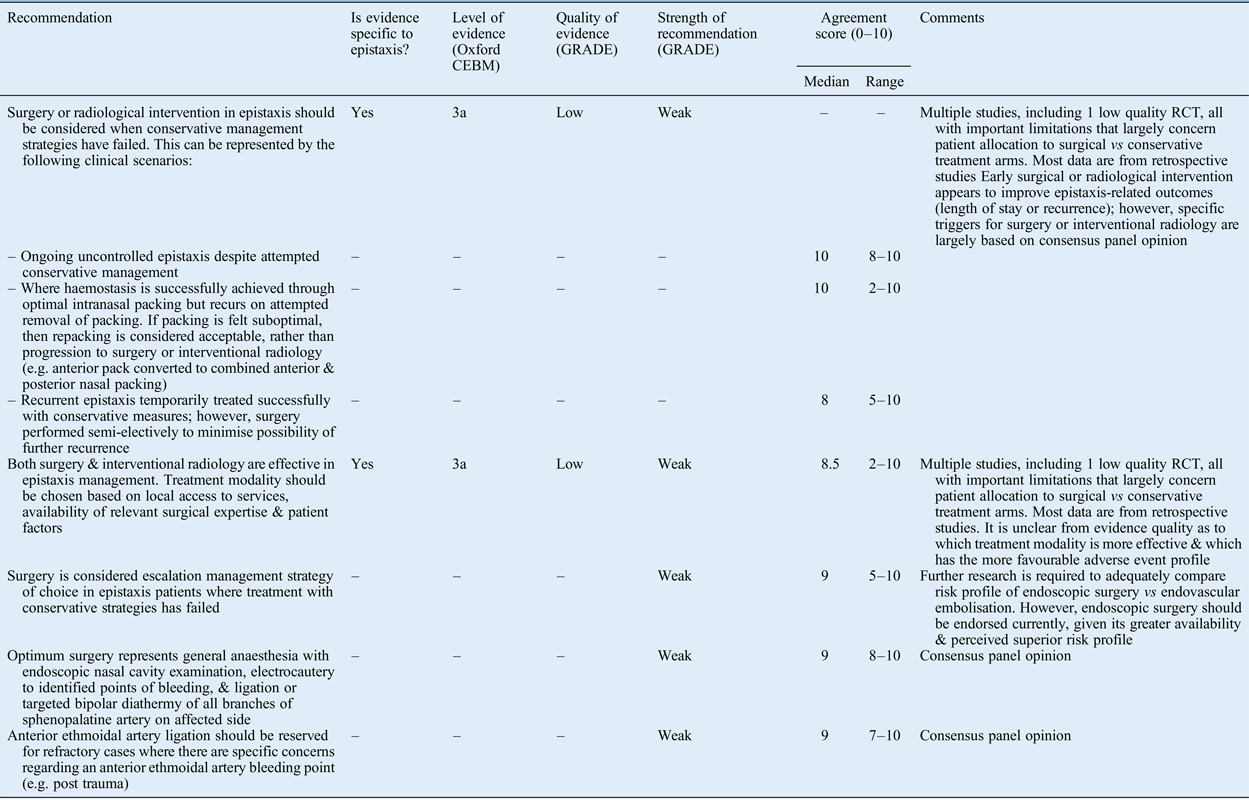
Weak strength recommendations were made regarding the role of surgical and radiological intervention in epistaxis (Table VII). Recommendations were limited by the lack of quality evidence in this area. Despite this, consensus agreement was high for the identified clinical scenarios requiring treatment escalation, and regarding the recommendation for surgery over radiological intervention. However, interventional radiologists were outnumbered by ENT surgeons on the consensus panel, which may have biased the median agreement rating.
Surgery and interventional radiology recommendations

Oxford CEBM = Oxford Centre for Evidence-Based Medicine; GRADE = Grading of Recommendations Assessment, Development and Evaluation; RCT = randomised controlled trial
• Cautery should be attempted as a first-line treatment in all patients, targeted at identified points of bleeding
• Non-dissolvable anterior nasal packs should be considered in certain circumstances For instance, when uncontrolled bleeding persists despite first aid, cautery is inappropriate or ineffective, or patient lives far from specialist services
• An international normalised ratio in therapeutic range does not routinely require reversal in a stable patient whose bleeding is controlled
• In uncomplicated presentations, antiplatelet therapy should be continued throughout a patient's care
• Surgery is recommended for escalation of management (over interventional radiology) when conservative treatment fails
Conclusion
These consensus recommendations are based on a wide-ranging review of the relevant literature, and on the use of established and rigorous methods of guideline generation. Hence, the findings should be of use to all hospital clinicians managing acute epistaxis. Readers should remain cognisant that the evidence identified to support this guideline is largely of low or very low quality, and expert consensus opinion was often required to reach recommendations. Whilst this should not undermine the utility of the document, caution should be used when implementing these findings. These recommendations will continue to be updated as new evidence comes to light.
Acknowledgement
This national audit was funded by ENT-UK. The funding body had no influence over content.
Authorship and participation
The steering committee consists of: M Ellis, A Hall, J Hardman, N Mehta, P Nankivell, N Sharma, M E Smith and R J Williams (lead author and steering committee chair).
The executive committee consists of: S Carrie and C Hopkins.
The consensus panel members are: W Adams, S Carrie (consensus panel chair), R Cathcart, P Chatrath, C Hopkins, R Lenthall, J Mainwaring, P Nix, T Nokes, C Philpott, A Reuben, R Salib, P Sura, A Sutton, V Ward and P White.
This article was written by the following individuals: W Adams, Department of Radiology, Derriford Hospital, Plymouth; S Carrie, Department of ENT, Freeman Hospital, Newcastle upon Tyne; R Cathcart, Department of ENT, Jersey General Hospital, St Helier; P Chatrath, Department of ENT, Charing Cross Hospital and Imperial College Healthcare NHS Trust; M Ellis, Department of ENT, Freeman Hospital, Newcastle upon Tyne; A Hall, Department of ENT, Royal National Throat, Nose and Ear Hospital, London; J Hardiman, Department of ENT, St Mary's Hospital, London; C Hopkins, Department of ENT, Guy's and St Thomas’ Hospital, London; R Lenthall, Department of Radiology, Queens Medical Centre, Nottingham; J Mainwaring, Department of Haematology, Royal Bournemouth and Christchurch Hospitals NHS Foundation Trust; N Mehta, Department of ENT, Royal National Throat, Nose and Ear Hospital, London; P Nankivell, Department of ENT, University Hospital Birmingham; T J C Nokes, Department of Haematology, Derriford Hospital, Plymouth; P Nix, Department of ENT, Leeds General Infirmary; C Philpott, Department of ENT, James Paget University Hospital, Great Yarmouth; A Reuben, Emergency Department, Royal Devon and Exeter Hospital; R J Salib, Department of ENT, Southampton General Hospital; N Sharma, Department of ENT, University Hospital Birmingham; M E Smith, Department of ENT, Addenbrooke's Hospital, Cambridge; P Sura, Emergency Department, Kings College Hospital, London; A Sutton, Health Economics Unit, Leeds Institute of Health Sciences; V M M Ward, Department of ENT, Mid Yorkshire Hospitals NHS Trust, Wakefield; P White, Department of ENT, Ninewells Hospital, Dundee; and R Williams, Institute of Naval Medicine, Gosport.