CHDs are the most common defects at birth, affecting nearly 1% of all live births per year worldwide. Atrial septal defect is the third most common CHD with an incidence of 56 in 100,000 live births. The secundum type of atrial septal defect is located in the fossa ovalis of the atrial septum and occurs in 75% of children with atrial septal defect.Reference Hoffman, Kaplan and Liberthson 1 Larger atrial septal defects cause a significant left-to-right shunt with subsequent volume overload of the right atrium and ventricle and, less commonly, myocardial cell injury with development of myocardial fibrosis and altered pump function.Reference Sugimoto, Kuwata and Kurishima 2 – Reference Hoffman, Rudolph and Heymann 4 Pulmonary hypertension is uncommon but may develop especially in elderly or in young children with comorbidities.Reference Campbell 3
Today almost 6% of all children born in Sweden are born prematurely, that is, before gestational age of 37 weeks.Reference Morken, Kallen, Hagberg and Jacobsson 5 Important advances in perinatal care over the past decades have led to significant improvements in survival and quality of life. However, premature birth remains an important risk factor for death and diverse morbidity, such as bronchopulmonary dysplasia, necrotising enterocolitis, neurological insults, and patent ductus arteriosus.Reference Fellman, Hellstrom-Westas and Norman 6 CHDs are present in 12.5 per 1000 preterm-born children, which are almost twice as common compared to term children.Reference Tanner, Sabrine and Wren 7 There are currently few studies that address the incidence of atrial septal defect among preterm children. Present data indicate fivefold higher incidence of atrial septal shunts (due to both atrial septal defect and persistent foramen ovale) in very preterm children compared to term children.Reference Polito, Piga and Cogo 8 In a recently published study of all paediatric cases treated with percutaneous device closure of atrial septal defect in Lund over a 15-year period, 18% were children born preterm.Reference Tanghöj, Naumburg and Liuba 9 Both surgical and percutaneous device closure of atrial septal defects in preterm children can be beneficial.Reference Lee, Jeng and Tsao 10 , Reference Zaqout, De Baets and Schelstraete 11
Recent studies of the anatomy of the preterm child’s heart indicate irreversible morphological changes, global structural differences, as well as functional alterations compared to term children.Reference Bensley, Stacy and De Matteo 12 – Reference Lewandowski, Augustine and Lamata 15 Echocardiographic studies have suggested that bi-ventricular morphology (myocardial mass, ventricular volume, and geometry) and function (ejection fraction, functional area of change, and left-ventricular longitudinal strain) are impaired or altered in preterm children even after the neonatal period.Reference Broadhouse, Finnemore and Price 13 – Reference Mohlkert, Hallberg and Broberg 18 .
Elective closure of a hemodynamically significant atrial septal defect with enlargement of right side heart structures is typically advised from the age of 3 years.Reference Feltes, Bacha and Beekman 19 Symptomatic atrial septal defect may be, however, closed earlier, but there is still no consensus regarding the optimal treatment timing in these cohorts, particularly in those with non-cardiac comorbidities such as prematurity. Both surgical and percutaneous device closure of atrial septal defect are considered safe and effective, though percutaneous closure is associated with lower event rates and shorter hospital stay. Surgery is still an excellent alternative treatment in anatomically complex and large atrial septal defect or in those associated with other CHDs requiring surgery.Reference Du, Hijazi and Kleinman 20
We hypothesised that preterm children are more prone to adverse events following atrial septal defect closure (surgical and percutaneous device closure) compared to term children, due to the complex comorbidity and cardiac remodelling.
The aim of this study was to assess adverse events within 1 month and between 1 month and 1 year after surgical or percutaneous device closure of atrial septal defects among children born prematurely.
Materials and methods
This is a retrospective cohort study including children born in Sweden who were treated before the age of 18 years for atrial septal defect, either by surgery or by percutaneous device closure, between January 2000 and December 2014 at the Skåne University Hospital in Lund and at the Astrid Lindgren Children’s Hospital at Karolinska University Hospital in Stockholm. These two centres perform two-thirds of all percutaneous device closure; half of all paediatric heart surgeries in Sweden are performed in Lund according to a recent annual report from the Swedish Registry of Congenital Heart Disease.Reference Thilén, Jeremiasen and Björkhem 21
Children born prior to 37 completed gestational weeks were included in the preterm cohort. Children born at 37 completed gestational weeks or later were included in the term cohort. Preterm children were grouped as late premature (32–< 37 weeks), very premature (28–< 32 weeks), and extreme premature (< 28 weeks) according to the World Health Organization’s definition.
Demographic data were retrieved from medical records and the Swedish National Birth Register.Reference Karin Gottvall and Källén 22 Gestational age was retrieved from the Swedish National Birth Register.
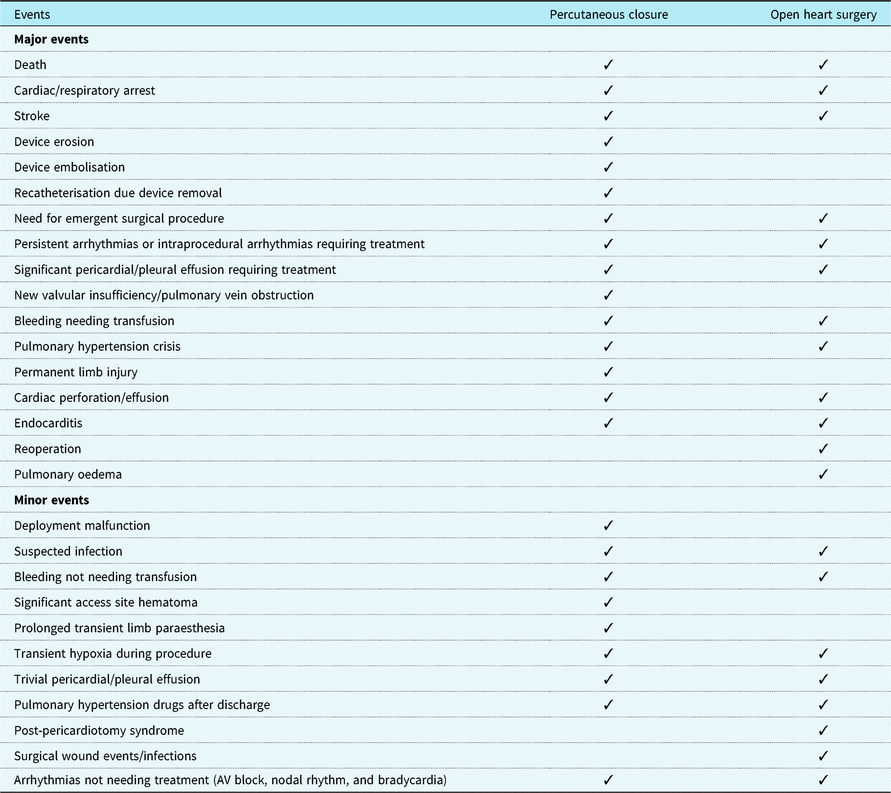
All adverse events occurring within 1 month after atrial septal defect closure and between 1 month and 1 year after atrial septal defect closure were recorded and classified into defined time intervals and event types (major or minor); the latter classified according to Bartakin et alReference Bartakian, Fagan and Schaffer 23 , Reference Butera, Carminati and Chessa 24 (Table 1). The type of event and the time to an event were primarily retrieved from medical records and for percutaneous device closure from both medical records and the Swedish Registry of Congenital Heart Disease (SWEDCON), (www.ucr.uu.se/swedcon).
Classification of events.

Echocardiography
Echocardiographic data were obtained from stored videotapes (between 1994 and 2007) or from digital examinations (between 2008 and 2015) recorded at the time of closure. The largest diameter of the atrial septal defect was estimated from the transoesophageal echocardiography images and expressed in millimetres. Data on atrial septal defect size were manually retrieved from these digitally stored echocardiographic examinations. All measurements were made by two investigators with intra-observer and inter-observer variability of 3.0 and 2.7%, respectively.
Statistical analyses
All data are presented as mean (std.), median (range), or percentage (%) depending on the type and distribution of the data. Continuous data were tested for normality using the Shapiro–Wilks test, and the comparisons between the cohorts were analysed using the Student’s t-test (unpaired two-sided) for parametrically distributed variables, Mann–Whitney U-test for non-parametric distributed variables, and Person’s χ 2 for categorical data, with p < 0.05 set as statistically significant.
Event data were analysed using the Kaplan–Meier survival curve for each cohort according to defined time intervals. Analyses were made for events within 1 month and between 1 month and 1 year. IBM SPSS Statistics Version 23 software (IBM Corporation, New York, United States of America) was used to fit the Kaplan–Meier survival curves. For patients with recurring events, these were analysed using a generalised model with both zero-inflated Poisson distribution and survival curves using Gary-Anderson’s method for atrial septal defect closure (surgical and percutaneous device closure together).
Results
Study population
Initially, 511 children with atrial septal defect closure performed at our centres were identified. Of these, 98 children were excluded, due to invalid identification number (n = 8), being born abroad (n = 57), or due to declined consent to participate (n = 33). Thus 413 children were included in the study population (Fig 1). Of these, 19 children were lost to follow up and were therefore not included in the Kaplan–Meier survival curves, Gary-Andersońs method, and zero-inflated Poisson distributions tests, but were included in all other analyses (Fig 1).
Study group.

Of the total study population of 413 children, 15% were late premature, 4% were very premature, and 4% were extreme premature, which in total amounted to 93 children born prematurely.
Atrial septal defect closure
In 41 children, a catheterisation was initially performed with aim to close the atrial septal defect, but due to unfavourable cardiac anatomy or vascular access, the procedure was converted to surgery. Therefore, these children were included in the surgical group. In six children, a percutaneous device closure was performed with release of the device. Later (range 1–46 days), these children required a transition to surgery and device removal due to persistent arrhythmias (n = 4), device embolisation (n = 1), and significant residual shunt (n = 1). These children were included in both the percutaneous device closure groups where this event was recorded and then the surgical group. Thus, of the 419 patients included in the study, 266 had percutaneous device closure and 153 had surgical repair (Fig 1).
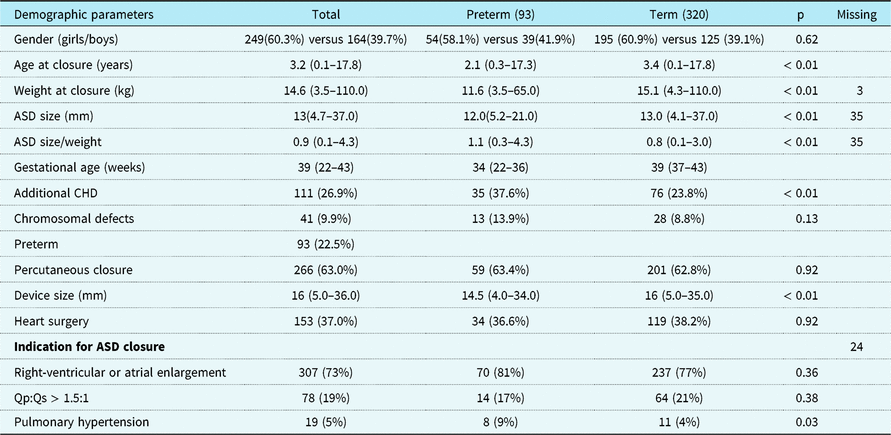
The median age at closure for all children was 3.2 (range 0.1–17.8) years and the median weight was 14.6 (range 3.5–110.0) kg. The median atrial septal defect size was 13.0 (range 4.7–37) mm.
The preterm cohort was younger (2.1 versus 3.4 years, p < 0.01), lighter (11.6 versus 15.1 kg, p < 0.01), had smaller atrial septal defect (12.0 versus 13.0 mm, p < 0.01), and a larger atrial septal defect size to weight ratio (1.1 versus 0.8, p < 0.01) compared to the term cohort. Atrial septal defect sizes in the preterm cohort were 12.2 (6.0–24) mm in late preterm, 10.0 (7.5–20.0) mm in very preterm, and 9.6 (5.2–22.0) mm in extreme preterm.
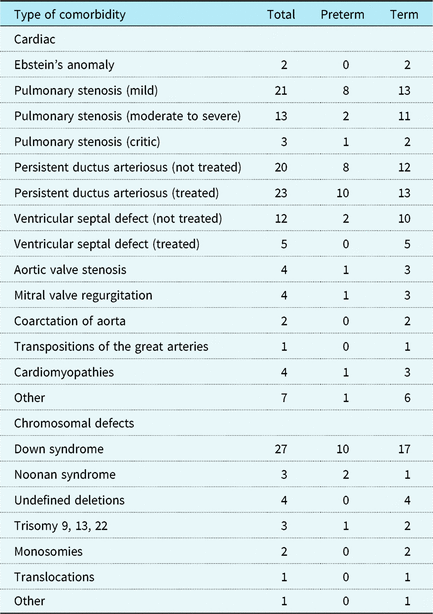
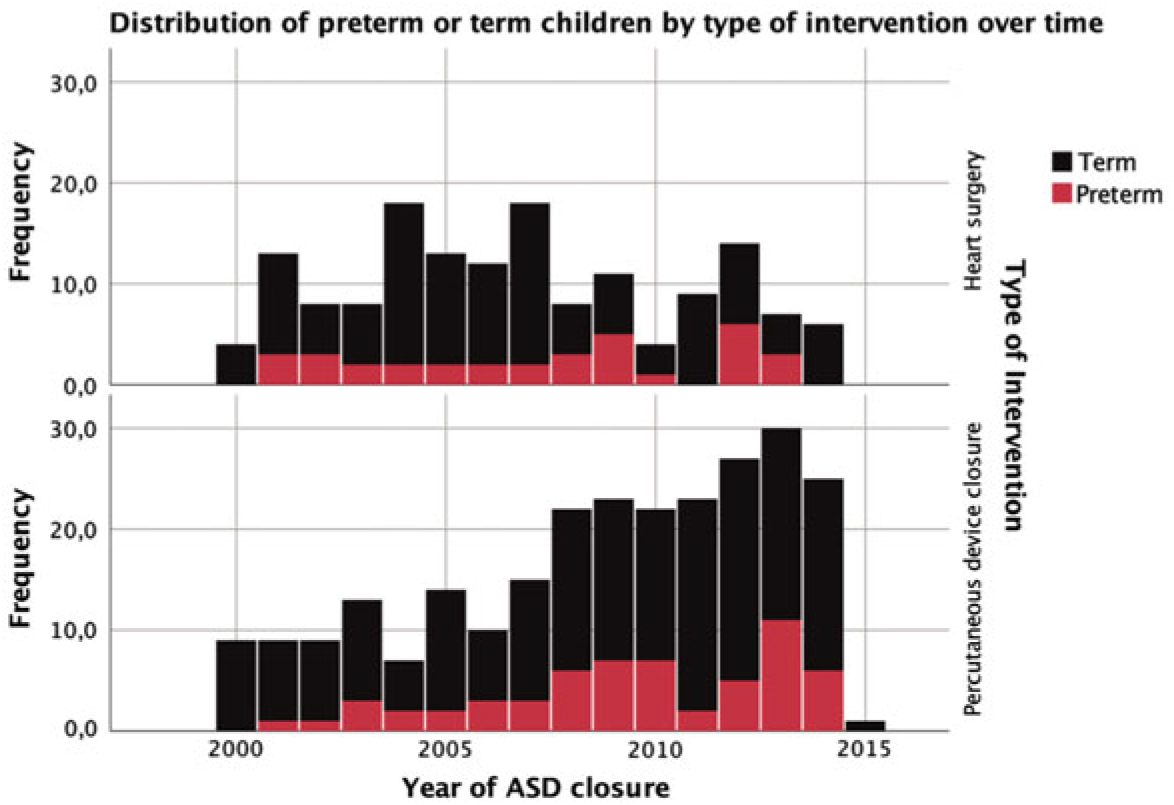
Overall, 111 (26.9%) children had an additional cardiac comorbidity, which was more common in the preterm cohort (n = 13 (13.9%)) than in the term cohort (n = 28 (8.8%)) (Table 2). Chromosomal abnormalities were present in 41 (9.9%) children, equally distributed between the two cohorts (Table 2). Percutaneous device closure was more often used (n = 266 (63.0%)) than surgery, being similarly distributed in both cohorts (Table 3 and Fig 2).
Chromosomal and cardiac comorbidities.

Demographic parameters in the study population.

ASD = Atrial septal defect.
Qp:Qs = Pulmonary versus systemic blood flow
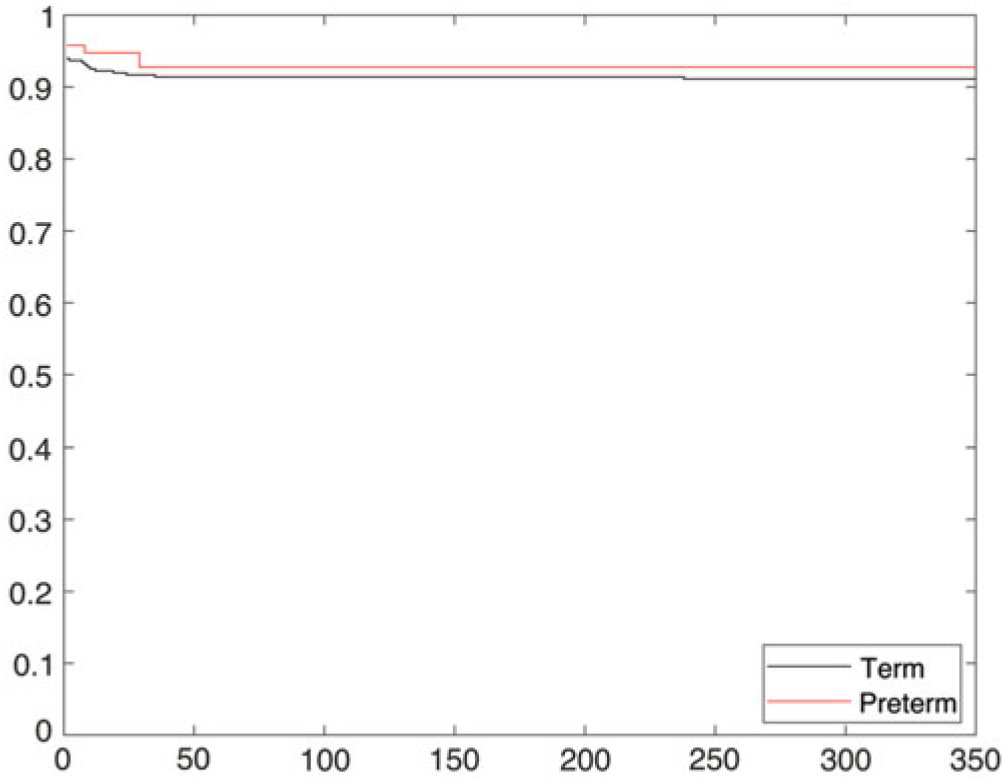
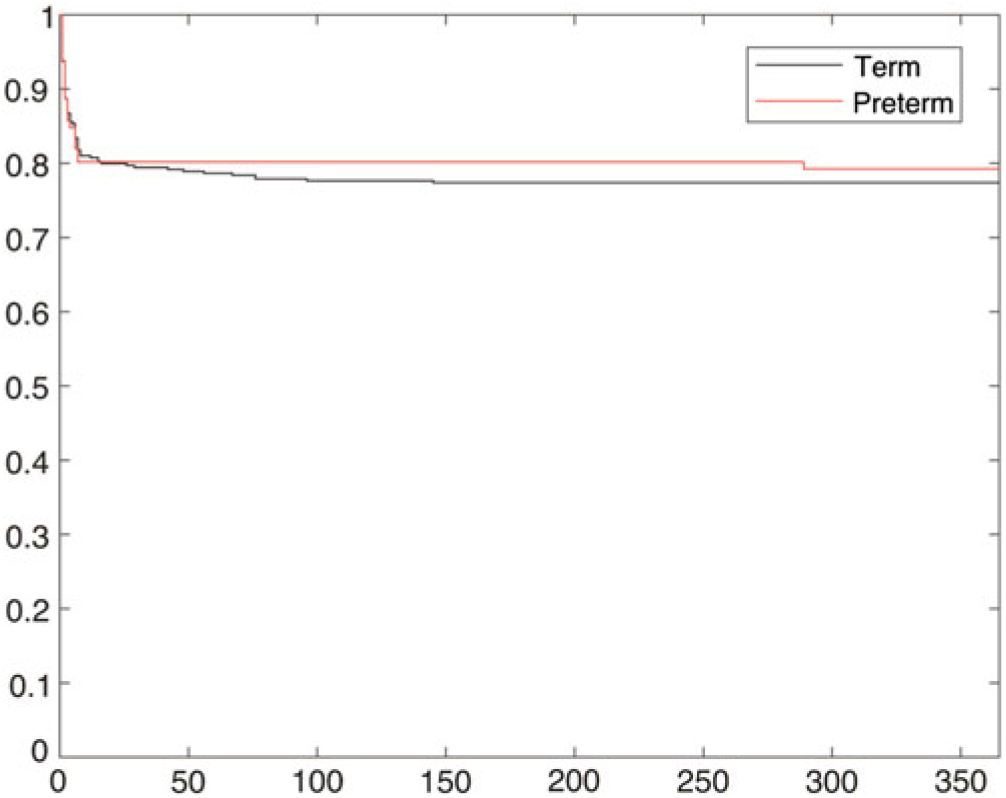
Distribution of ASD closure over time. Survival curves for multiple recurring events in all ASD closures. ASD=Atrial septal defect.

All (intervention) major events. Recurring events.

All (intervention) minor events. Recurring events.

The majority (n = 385; 92%) of the atrial septal defect closures were performed due to signs of significant atrial septal defect shunt (right-ventricular enlargement on echocardiography in 307 (73%) and Qp:Qs ≥ 1.5:1 using other non-invasive or invasive shunt assessment method in 78 (19%)). Pulmonary hypertension, which was defined as mean pulmonary pressure ≥ 25 mmHg during catheterisation or as tricuspid valve leak velocity ≥ 3 m/second on echocardiography, was indication to close in 19 (5%) children. The latter indication of atrial septal defect closure differed between the preterm and the term cohort with regard to pulmonary hypertension (p = 0.03) (Table 3).
Adverse events after atrial septal defect closure
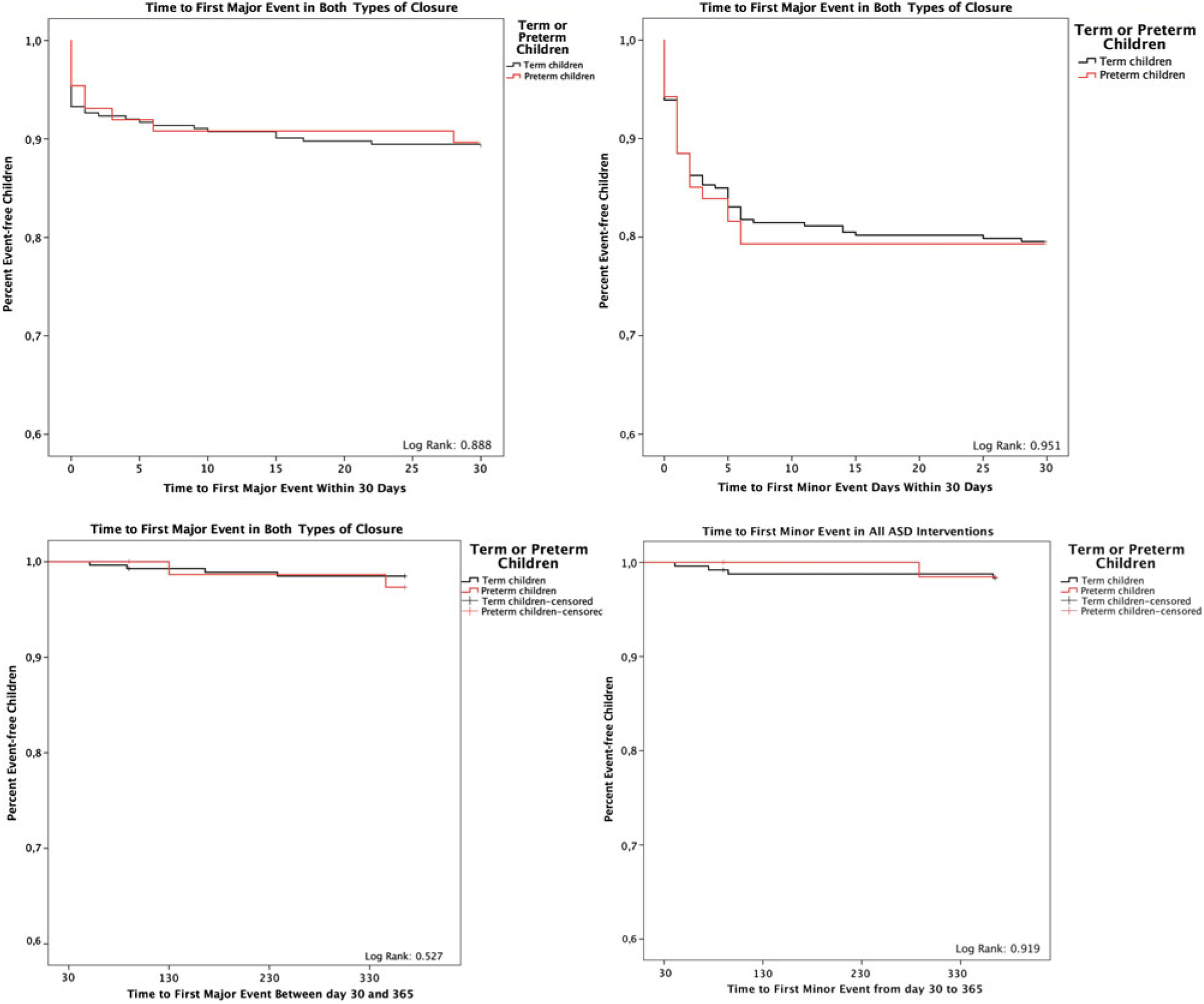
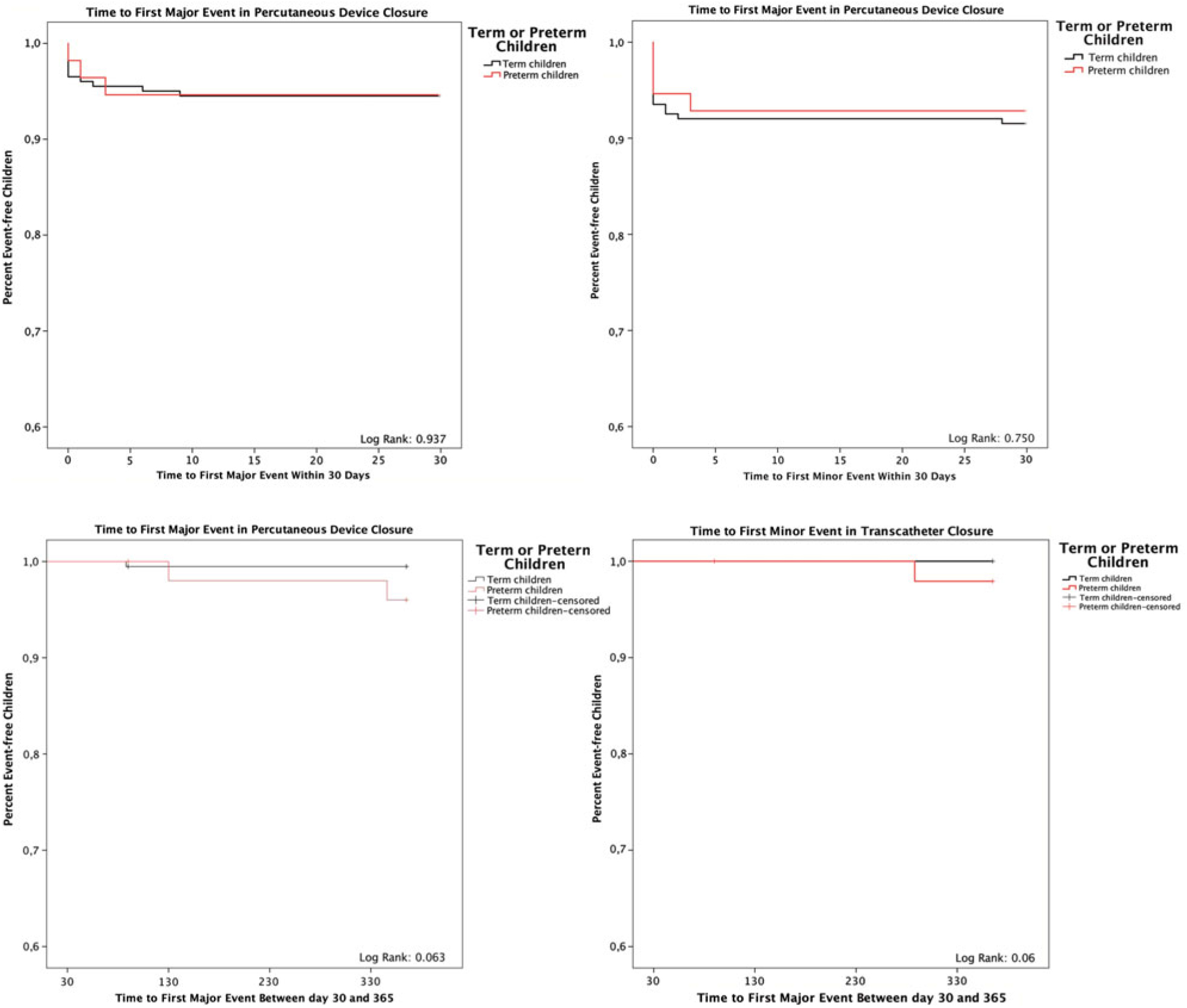
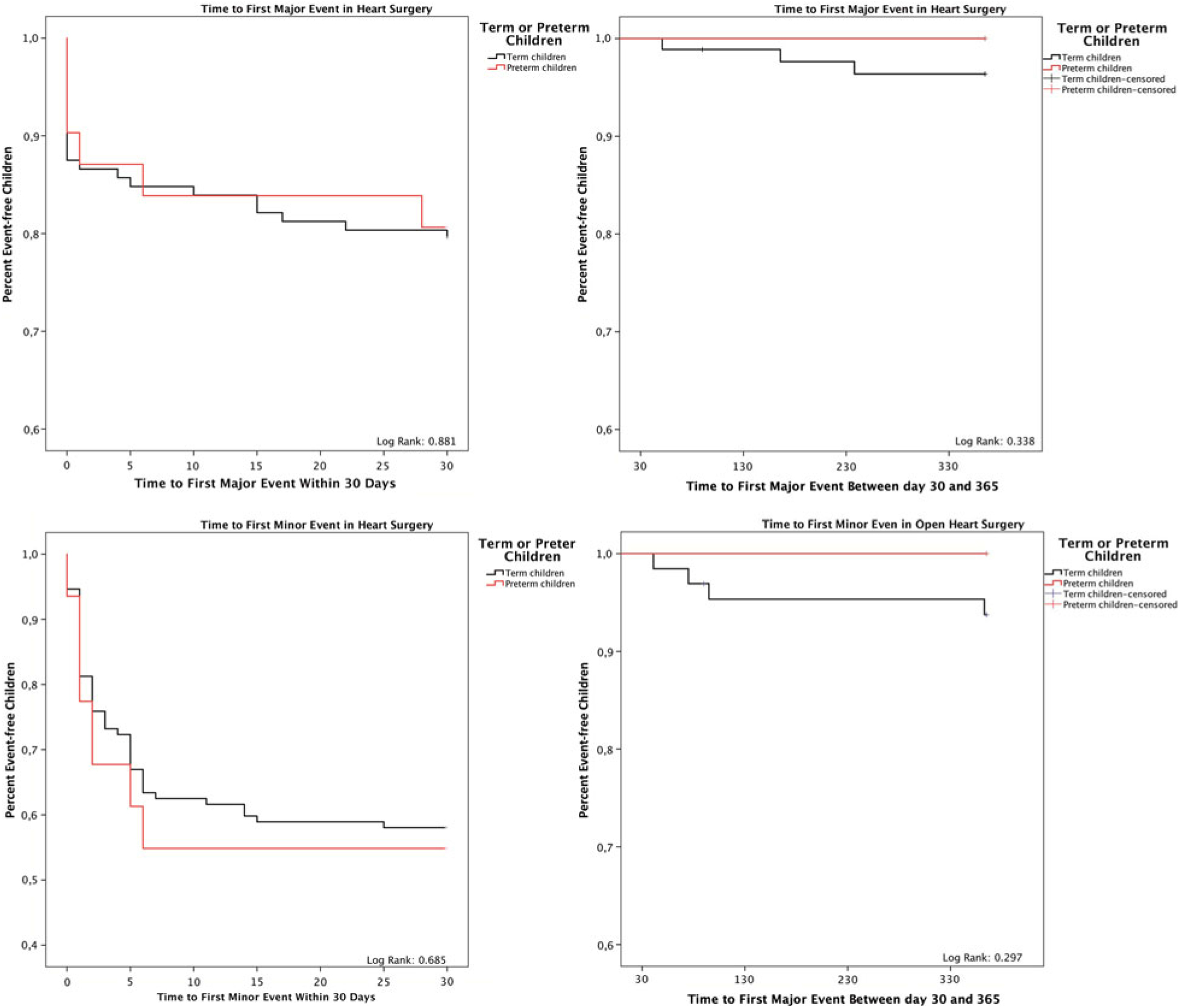
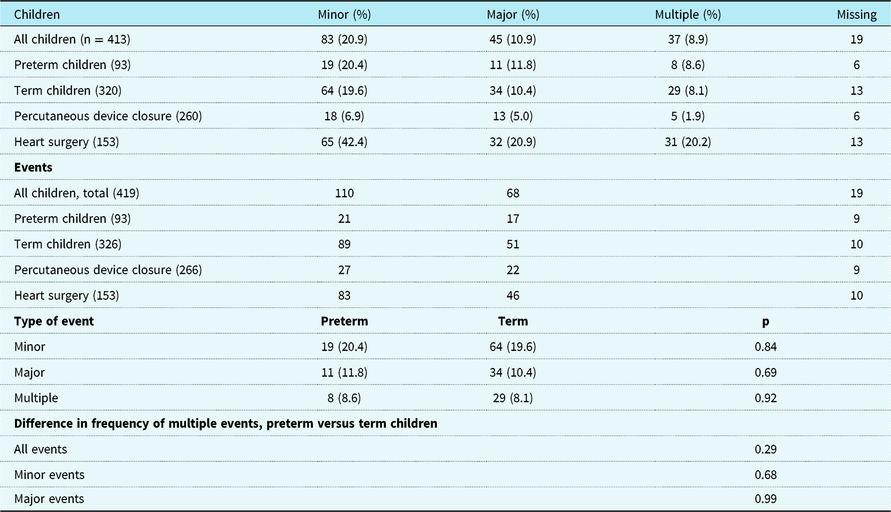
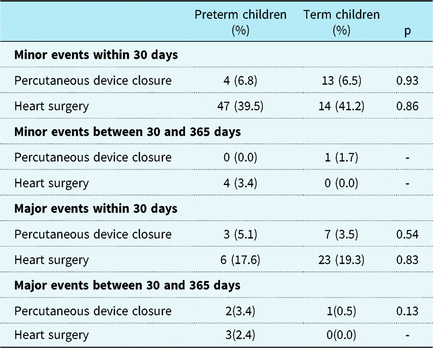
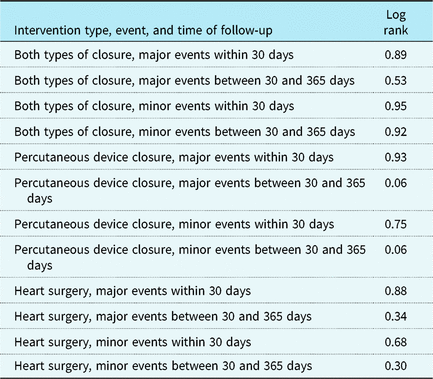
Following atrial septal defect closure, 110 minor events and 68 major events were recorded. In the preterm cohort, 31 (33.3%) children suffered from adverse events, and 94 (30.6%) children in the term cohort suffered from adverse events, with no statistical difference between the cohorts (p = 0.62). There were no differences in the number, frequencies of adverse events, and time to event between the two cohorts. Nor was there a difference in types of adverse event between the two cohorts. The type of atrial septal defect closure had no influence on these results (Tables 4–6 and Figs 5–7). When analysing recurring events, there were no differences between the two cohorts (Tables 4–6 and Figs 3 and 4).
Kaplan–Meier survival curves; time to first minor and major event in all ASD closures. ASD = Atrial septal defect.

Kaplan–Meier survival curves; time to first minor and major event in percutaneous device closure.

Kaplan–Meier survival curves; time to first minor and major event in heart surgery.

Overall events within the first year.

Distribution of events between preterm and term children.

Kaplan–Meier survival curves with log rank.

Three children from the term cohort (1%) and one in the preterm cohort (1%) died following atrial septal defect closure. In the term cohort, one teenager at the age of 17 years underwent an electrophysiological ablation due to supraventricular tachycardia 1 day prior to the atrial septal defect closure with a 27-mm Amplatzer septal occluder. Pericardial effusion and cardiac arrest occurred on the 5th day after atrial septal defect closure. Another child from the same cohort of term children had surgical atrial septal defect closure at the age of 13 months and died from ventricular arrhythmia 237 days after surgery. A third child in the term cohort, aged 12 months, had a cardiac morbidity of hypertrophy cardiomyopathy and died 166 days after surgery. The cause of death was suggested to be septic shock. In the preterm cohort, one child born at a gestational age of 22 weeks had surgical atrial septal defect closure at the age of 6 months and died 27 days after surgery due to pulmonary hypertension crisis and multiple organ failure.
Discussion
The aim of this study was to assess adverse events during the first year after surgical or percutaneous device atrial septal defect closure in preterm children compared to term children, over a 15-year period at two out of the three Swedish paediatric cardiac centres.
The present findings indicate that preterm- and term-born children appear to have a comparable rate and type of early adverse events following an atrial septal defect closure, with no significant change in these variables within the percutaneous and the surgical groups. The adverse events rate of 11.9% after percutaneous device closure in our study is in line with or slightly higher than other studies.Reference Sadiq, Kazmi and Rehman 25 – Reference Shimpo, Hojo and Ryo 27 We have used a definition of adverse events applicable to a previous study, which facilitates comparison between studies.Reference Bartakian, Fagan and Schaffer 23 The definition of adverse events is wider in ours and in the study by Bartakin et al than is generally applied, which may explain the slightly increased frequency of adverse events following percutaneous closure compared to some other studies.Reference Du, Hijazi and Kleinman 20 , Reference Butera, Carminati and Chessa 24 The mere size of small children’s hearts and veins could impose technical challenges in the percutaneous closure of an atrial septal defect. The risk of potential adverse events related to cardiac and vascular damage, with the subsequent risk of hematoma, retroperitoneal bleeding, cardiac tamponade, and arrhythmias can be linked to small children’s hearts.Reference Wyss, Quandt and Weber 28 – Reference Wood, Holzer and Texter 30 None of these types of events, except arrhythmias, occurred in the preterm cohort in our study. The number of events related to arrhythmias in the preterm cohort did not differ from the term cohort.
One of the predominant minor events in our study was suspected infection, which accounted for 40% of all minor events, and affected 38 (8.0%) of all children. One previous study reports a much lower incident of infections (0.01%).Reference Nykanen, Forbes and Du 31 As our study was retrospective and based on medical records, the accuracy of a suspected infection may be difficult to validate, and the number of minor events may thus have been overestimated in our study.
Preterm children are described to have an immature immune function, as reviewed by A. Collins et al.Reference Collins, Weitkamp and Wynn 32 However, there was no difference in post-procedural infection between the preterm cohort and the term cohort. In our study, the preterm cohort included a wide age span that ranged from less than 4 months of age and up to 17 years, which could have outweighed the effect of immature immune function among premature-born children.
Persistent arrhythmias, potential lethal arrhythmias, and intra-procedural arrhythmias requiring treatment occurred in 25 children in our study; 3 (3.2%) in the preterm cohort and 22 (6.8%) in the term cohort, (p = 0.17). These types of events accounted for 37% of all major events. In other studies, 2–16% children reportedly had arrhythmias following atrial septal defect closure. This is described as one of the most common long-term adverse events.Reference Butera, Carminati and Chessa 24 , Reference Cuypers, Opic and Menting 33 Children born preterm have alterations of cardiac morphology and function, as well as a QT interval in the upper limit of the normal range, which persists into young adulthood.Reference Broadhouse, Finnemore and Price 13 – Reference Lewandowski, Bradlow and Augustine 17 , Reference Bassareo, Fanos and Puddu 34 These cardiac alterations may contribute to an increased risk of post-interventional arrhythmias. However, in our study, there were no differences in intra- and post-procedural arrhythmias requiring treatment between preterm- and term-born children in our study. This may be explained by the wide age span in the preterm cohort, with reduced sensitivity to arrhythmias as the preterm children grow older. Thus, preterm children may not be as prone to arrhythmias as has previously been described. Further statistical analysis on adverse events related to late, very, and extreme premature birth was not possible due to the small number of affected children.
Deaths following atrial septal closure are uncommon.Reference Butera, Carminati and Chessa 24 In our study, four deaths occurred within the following year after closure. In one child (age 17 at atrial septal defect closure), the cause of death was due to device erosion, which is a well-described though very rare severe complication.Reference Feltes, Bacha and Beekman 19 , Reference Sadiq, Kazmi and Rehman 25
Two deaths occurred late: at 8 months and at 5 and a half months, respectively, after the atrial septal defect closure. The link between these deaths and the atrial septal defect closure is not fully established. However, in some studies, arrhythmias, which were stated to cause of death in one of these cases, have been reported to be a common major adverse event in long-term follow-up.Reference Butera, Carminati and Chessa 24 , Reference Cuypers, Opic and Menting 33 One extremely preterm child died from pulmonary hypertension crisis after surgery. Children with pulmonary hypertension may be at risk for adverse events and guidelines recommends assessment of pulmonary vascular resistance and pressure, which were all meet prior to the atrial septal closure in this case.Reference Feltes, Bacha and Beekman 19 The possible additive overall premature morbidity, with altered myocardium and impaired vascular pulmonary bed, may have had an impact on this child’s death. One can speculate that present guidelines do not apply to the special morbidity these patients carry.
The current guidelines recommend that hemodynamically significant atrial septal defect with enlarged right side heart structures should be closed electively.Reference Feltes, Bacha and Beekman 19 At the two centres included in our study, asymptomatic children with significant atrial septal defects are typically referred for closure at the age of 3–4 years. Preterm children with atrial septal defect may have additional comorbidities, such as CHD, bronchopulmonary dysplasia, and arterial pulmonary hypertension, which in turn support early atrial septal defect closure.Reference Bishnoi, Everett and Ringel 29 We found that preterm children were younger, had a lower body weight, and had a larger atrial septal defect size to weight ratio than term children at the time of atrial septal defect closure. The atrial septal defect overall symptomatology was not evaluated for either cohorts in this study. However, pulmonary hypertension was stated twice as common among preterm children as a primary indication for atrial septal defect closure. However, the clinical indications for percutaneous device closure in preterm children are not clearly defined, and the therapeutic efficacy remains debatable. Especially extreme preterm infants with atrial septal defects are often very ill due to associated respiratory disease. In these patients, many institutions including ours tend to have a lower threshold to close the atrial septal defect percutaneously whenever this is deemed suitable. One study suggested that children with comorbidities combined with large atrial shunts may worsen in clinical status, and thus may benefit from an early atrial septal defect closure.Reference Lee, Lim and Kim 35
Atrial shunts due to atrial septal defect and persistent foramen ovale are present in 40% of children with very low birth weights and are five times more common among very preterm- than term-born children.Reference Lee, Lim and Kim 35 The clinical impact and natural course of atrial shunts in children born prematurely remain unclear. The majority of smaller atrial septal defects in children will spontaneously close within 1 year after diagnosis.Reference Hanslik, Pospisil and Salzer-Muhar 36 Delayed spontaneous atrial septal defect closure in prematurely born children has been described.Reference Hanslik, Pospisil and Salzer-Muhar 36 , Reference Riggs, Sharp and Batton 37 In Sweden, 6% of children are born preterm.Reference Morken, Kallen, Hagberg and Jacobsson 5 In our study of atrial septal defect closure, prematurely born children were four times as common as in the general Swedish population. There is an association between an earlier birth and more severe morbidity. In our study, 4% of the study population were very preterm and 4% were extreme preterm. This proportion of very and extreme preterm children was 4 times and 40 times as common as in the general Swedish population, indicating that atrial septal defect and the need for closure may be part of the overall morbidity in this group.
Preterm morbidity including chronic lung disease, feeding problems, and frequent respiratory tract infections may mimic the symptoms and some of the indications for closure of a significant atrial septal defect.Reference Beck, Wojdyla and Say 38 , Reference Geva, Martins and Wald 39 Echocardiographic signs caused by an atrial septal defect over circulation, such as enlarged right ventricle and atrium, may be signs of other conditions common among preterm-born children, such as pulmonary hypertension and bronchopulmonary dysplasia.Reference Joshi, Wilson and Kotecha 40 Clinicians may thus misinterpret the symptoms and signs and suggest an atrial septal defect closure that may be unnecessary.Reference Jobe and Bancalari 41 , Reference Koestenberger, Nagel and Ravekes 42 On the other hand, a significant atrial septal defect combined with the preterm morbidity may have a synergistic aggravating effect on right-ventricular function and pulmonary capillary bed maturation, and thus an early atrial septal defect closure at a younger age may be potentially beneficial.Reference Polito, Piga and Cogo 8 , Reference Lee, Jeng and Tsao 10 , Reference Bishnoi, Everett and Ringel 29 Our study indicates that closure of atrial septal defect in preterm children does not carry an increased risk of adverse events following closure, compared to term-born children. However, preterm children are a heterogeneous group with yet a partially unknown cardiac and vascular morbidity. Our study only included 93 premature-born children, with a wide spectrum of gestational age at birth and additional neonatal morbidity. The main aim of this study was to assess the overall risk of adverse events following atrial septal defect closure, and statistical subgroup analysis on adverse events for each premature group was not possible due to small numbers.
Study limitations: The main limitation of this study resides in the retrospective design, which poses an inherent risk of selection and recall bias. Some children (n = 19 (2%), of whom six (6%) were in the preterm cohort) were lost to follow up after atrial septal defect closure. We believe the risk of introduction of selection bias and invalid results must be regarded small as few children were lost to follow up. The risk of missing data due to incomplete registration in medical records and registers must be regarded as small, as we used both medical records and registries for events as well as for demographic data (Tables 2 and 4). Registries used in our study have been validated and with a good coherence between data in the registries and medical records.Reference Cnattingius, Ericson, Gunnarskog and Kallen 43 , Reference Bordell, Bjorkhem and Thilén 44 To reduce selection bias and difference in treatment evaluation, techniques, and skills, data from two out of three Swedish paediatric heart centres were collected.
Furthermore, the included number of children is substantial, increasing its validity.
Conclusion
There was no difference in the incidence of minor and major events following atrial septal defect closure, irrespective of the technique used for closure, between preterm and term children, despite the fact that the preterm children were younger and had lower weights at the time of atrial septal defect closure. Further prospective addressing the benefit-risk outcome particularly in extreme preterm patients with and without atrial septal defect closure during infancy is warranted.
Author ORCIDs
Gustaf Tanghöj 0000-0002-8785-3318
Acknowledgements
We would like thank the SWEDCON`s steering committee for sharing data, and all the paediatric cardiologists and cardiology nurses and doctors in Sweden for their contributions to the registry. We also thank Annica Maxedius, Skåne University Lund Hospital, for her substantial support in retrieving medical journals.
Financial support
This study was funded by the Unit of Research, Education and Development, Östersund Hospital, Region Jämtland Härjedalen.
Conflict of interest
All authors have no conflict of interest to declare.
Ethical standards
The authors assert that all procedures contributing to this work comply with the ethical standards of the Helsinki Declaration of 1975, as revised in 2008, and has been approved by the Ethics Committee for Human Research at Umeå University (D-nr 2015-10-31M allteration 2015-88-32M), and informed consent was obtained by everyone in the study population or each guardian of the included children.