1. Introduction
The 21st century began with a rapid rise in commodity prices, including metal prices. This period has been described in the literature as the commodities ‘super cycle’ (Radetzki et al., Reference Radetzki, Eggert, Lagos, Lima and Tilton2008; Erten and Ocampo, Reference Erten and Ocampo2013). In Chile, the metal prices super cycle boosted local mining economies (de Solminihac et al., Reference de Solminihac, Gonzales and Cerda2018), raising unskilled employment (Pellandra, Reference Pellandra2015) and, over time, unskilled wages (Corvalán and Pazzona, Reference Corvalán and Pazzona2019). As a consequence of diminished expected returns to schooling, many teenagers dropped out of school and engaged in the labour market (Pérez-Trujillo and Rodríguez-Puello, Reference Pérez-Trujillo and Rodríguez-Puello2022). From 2011 onwards, Chilean mining economies contracted due to the fall in metal prices, local labour markets shrank and many unskilled, including young dropouts, contributed to greater unemployment in metal-mining communities (Pérez-Trujillo and Rodríguez-Puello, Reference Pérez-Trujillo and Rodríguez-Puello2022). Economic contraction and rising unemployment are drivers of increased property crime (Raphael and Winter-Ebmer, Reference Raphael and Winter-Ebmer2001; Edmark, Reference Edmark2005). Therefore, there is a possible connection between booming metal prices and property crime rates in Chilean mining municipalities that unfolds over the super cycle. Previous research found no long-run relationship between copper prices and property crime rates in Chilean copper-mining areas (Corvalán and Pazzona, Reference Corvalán and Pazzona2019). However, that study covered only the initial years of the price downturn and overlooked the mediating role of school abandonment, which, as this research demonstrates, contributed to higher property crime rates over time.
This article adds to the growing literature on macroeconomic shocks and criminal activity by analysing the relationship between metal prices and property crime rates during a super cycle in resource-rich communities. We use Chile, the world’s leading copper producer, as a case study. The main contributions are: (i) to provide a medium-term analysis of the effects of booming metal prices on property crime rates in Chilean metal-mining communities, (ii) to identify the transmission channels that mediate the link between metal prices and property crime rates during the metals super cycle and (iii) to test these channels using regression models of simultaneous equations. The cumulative effects of metal prices over time are more likely to be observed fully by examining both the expansion and contraction phases of the metals super cycle. Our analysis spans the period 2006–2017, capturing the expansion (2006–2011) and, unlike previous research, the entire contraction phase of the metals super cycle (2011–2017). We show, first, that metal prices exert a positive cumulative effect on property crime rates in Chilean mining municipalities over the course of the commodity super cycle. And second, that the transmission channels identified in the literature linking booming commodity prices and crime rates over time hold in Chile, and are specific to metal-mining economies and to property crimes during the metals super cycle. The cumulative effect of metal prices on property crime rates in Chilean mining municipalities, estimated with structural models that include hypothetical mediating variables, largely matches the reduced-form estimates.
This research also relates to a broader literature examining how commodity-price shocks and natural resource booms affect local crime dynamics. Previous studies show that resource windfalls can influence crime through multiple channels, including changes in labour markets (Dube and Vargas, Reference Dube and Vargas2013; Dix-Carneiro et al., Reference Dix-Carneiro, Soares and Ulyssea2018; Pérez-Trujillo and Rodríguez-Puello, Reference Pérez-Trujillo and Rodríguez-Puello2022; Rodríguez-Puello, Reference Rodríguez-Puello2025), migration and compositional changes (Street, Reference Street2025) and local institutional responses (Caselli and Michaels, Reference Caselli and Michaels2013; Axbard et al., Reference Axbard, Benshaul-tolonen and Poulsen2021; Ferraz et al., Reference Ferraz, Soares and Vargas2021). While the direction of these effects varies across contexts, the literature consistently highlights the importance of transmission mechanisms whose effects depend on local conditions. We contribute to this literature in three ways. First, we provide evidence from Chile, a major mining economy characterized by strong dependence on metal exports but limited local autonomy. Second, by covering both the expansion and contraction phases of the metals super cycle, we are able to examine how crime effects accumulate over time and materialize during the downturn. Third, we explicitly test a set of labour-market and educational mechanisms – particularly those involving school dropout and unskilled unemployment – that have received limited empirical attention in studies of commodity-price shocks and crime. In doing so, our analysis complements previous contributions by offering a mechanism-based and medium-term perspective on how commodity booms shape local crime dynamics.
The case of Chilean metal-mining municipalities is of general interest because of the reliance of the Chilean economy, and particularly of several regional economies, on mining. Chile is the main copper producer worldwide, and mining alone accounts for around 7.5 per cent of Chile’s GDP, provides around 284,000 direct jobs and accounts for around 57 per cent of total Chilean exports (US$56.5 k MM FOB). Mining operations, however, are clustered in Chile, which leads to regional economies being dependent on the activity to varying degrees. For example, mining amounts to 74.5 per cent of the GDP and 17.6 per cent of total employment in the Region of Antofagasta (north of Chile), which is ten times the share of mining in the national product and seven times that in national employment. The GDP and exports data above are from the Central Bank of Chile (https://si3.bcentral.cl/siete), while the employment data and mining data are from the Chilean National Institute of Statistics (https://www.ine.gob.cl/estadisticas/sociales/mercado-laboral/ocupacion-y-desocupacion).
Recent work by Rodríguez-Puello (Reference Rodríguez-Puello2025) shows that international commodity price shocks significantly affected socio-economic well-being in Chile, underscoring the broader societal relevance of these shocks. Our analysis complements his findings by focusing on crime outcomes. In addition, this study is also of interest because the metal prices super cycle offers a natural experiment that is particularly suitable for identifying the consequences of commodity booms on property crimes over time (Corvalán and Pazzona, Reference Corvalán and Pazzona2019): an exogenous price shock (Aqeel, Reference Aqeel2024) unfolded across mining economies that are mostly peripheral and have few uncorrelated activities (Hernández et al., Reference Hernández, Atienza and Modrego2022) that might buffer shocks to international metal markets.
The Chilean case offers several lessons for decision-makers concerned with local development and crime deterrence in mining areas. First, property crimes in metal-mining communities are sensitive to metal price cycles: while booming prices may improve economic conditions and thus help reduce property crime in the short term, they may also contribute to higher crime rates over time. This phenomenon is partly due to disinvestment in human capital during mining booms and the economic contractions that accompany the fall of volatile prices. Second, transmission channels of metal price shocks are context-specific. A better understanding of this specificity can help anticipate their local consequences and inform place-tailored policies that can buffer their negative impacts, especially as their effects accumulate over time. The results of this research point to the importance of keeping young people in school during periods of unskilled labour market expansion that accompany the rise in metal prices.
The remainder of this paper is organized as follows. Section 2 develops the theoretical framework describing the impact of metal price shocks on crime and the transmission channels mediating the two. Section 3 presents the empirical framework to test for relationships between metal prices and municipal property crime rates in Chilean municipalities during the commodity super cycle, together with the proposed transmission channels. Section 4 presents and discusses the results. Section 5 concludes.
2. Theoretical framework
2.1. Macroeconomic shocks and criminal activity: opportunity costs, rapacity and structural determinants
Empirical work has examined the crime effects of macroeconomic shocks across diverse contexts. Andrews and Deza (Reference Andrews and Deza2018) show that oil price fluctuations in Texas significantly increased robbery and larceny, highlighting the crime consequences of resource-driven income shocks. James and Smith (Reference James and Smith2017) find that shale-rich U.S. counties experienced increases in crime during the fracking boom, consistent with rapid economic and demographic changes. Historical evidence also points in the same direction: Couttenier et al. (Reference Couttenier, Grosjean and Sangnier2017) document that mineral resource abundance in the U.S. ‘Wild West’ fostered persistently higher homicide rates. Together, this evidence underscores that resource-driven crime dynamics are not confined to specific places or periods, but represent a broader pattern whereby commodity booms can generate both short- and long-term effects on crime.
The analysis of the crime impacts of macroeconomic shocks has usually been framed in the opportunity cost–rapacity dichotomy (Dube and Vargas, Reference Dube and Vargas2013; Ferraz et al., Reference Ferraz, Soares and Vargas2021). The opportunity cost hypothesis holds that income increases triggered by positive economic shocks – such as rising commodity prices and resource windfalls – raise the cost of engaging in crime by increasing foregone legal earnings and the burden of incarceration, thereby discouraging criminal activity (Becker, Reference Becker1968; Lochner, Reference Lochner2004). The Becker–Ehrlich model in economics conceptualizes criminal activity as an outcome of economic rationality (Becker, Reference Becker1968; Ehrlich, Reference Ehrlich1973). Individuals allocate their time between legal and illegal activities by comparing expected returns and risks in both markets. This framework is particularly suited for analysing property crimes, as it links criminal behaviour to labour market incentives rather than to purely psychological factors. In equilibrium, the interaction between the supply of offences and the demand for enforcement determines the prevailing level of crime in society.
Labour market performance – strongly shaped by commodity price windfalls in resource-dependent economies – plays a key role in this process by affecting the opportunity cost of engaging in crime. During periods of rising mineral prices, labour demand expands in mining-exposed municipalities, improving income opportunities and raising the relative attractiveness of legal activities. Conversely, when the boom ends and employment contracts, the reduction in legal earnings opportunities may push some individuals towards the illegal market as an alternative source of income. Supporting this view, Street (Reference Street2025) shows that the U.S. fracking boom reduced crime among local residents by expanding local economic opportunities. In contrast, the rapacity hypothesis argues that resource booms may increase crime by generating opportunities for rent appropriation and predation, insofar as the expected returns to crime rise alongside household wealth (Dube and Vargas, Reference Dube and Vargas2013). This effect is particularly pronounced in contexts of high inequality (Ferraz et al., Reference Ferraz, Soares and Vargas2021).
Yet, the empirical evidence for the opportunity cost–rapacity debate is inconclusive, suggesting that the net effect of economic shocks on crime depends on aspects such as the type of crime (Mustard, Reference Mustard, Benson and Zimmerman2010), type of market subject to the shock (Dube and Vargas, Reference Dube and Vargas2013) or period of analysis (Corvalán and Pazzona, Reference Corvalán and Pazzona2019). Concerning the type of crime, empirical evidence shows that economic shocks tend to increase mainly property crimes (Raphael and Winter-Ebmer, Reference Raphael and Winter-Ebmer2001; Mustard, Reference Mustard, Benson and Zimmerman2010; Corvalán and Pazzona, Reference Corvalán and Pazzona2019) as they would be motivated by a desire for economic gain, while violent crimes would be mostly triggered by non-economic motives (Ehrlich, Reference Ehrlich1973). Yet, in certain contexts, positive economic shocks also lead to increases in violent crimes (Couttenier et al., Reference Couttenier, Grosjean and Sangnier2017; James and Smith, Reference James and Smith2017), while enhanced economic opportunities might reduce them in others (Street, Reference Street2025). Regarding the type of market, when shocks affect labour-intensive activities that may have broad labour market effects, opportunity cost effects would predominate. Instead, shocks to non-labour-intensive activities (such as mining in Chile) that benefit disproportionately small groups would fuel rapacity (Dube and Vargas, Reference Dube and Vargas2013). Regarding the period of analysis, economic shocks usually have observable effects on crime in the short run. However, such effects might fade as long as economies readjust in the longer term (Dix-Carneiro et al., Reference Dix-Carneiro, Soares and Ulyssea2018; Corvalán and Pazzona, Reference Corvalán and Pazzona2019).
The mixed empirical evidence regarding opportunity cost–rapacity effects might also be related to the fact that crime is mostly determined by deeper structural determinants, such as socio-economic differences (Ehrlich, Reference Ehrlich1973; Freeman, Reference Freeman1996), demographic factors (Raphael and Winter-Ebmer, Reference Raphael and Winter-Ebmer2001; Lochner, Reference Lochner2004; Street, Reference Street2025), law enforcement capacity (Ferraz et al., Reference Ferraz, Soares and Vargas2021) or broader social interactions that shape criminal behaviour (Zimmerman and Messner, Reference Zimmerman and Messner2010). Moreover, regional heterogeneity determines different degrees of exposure and distinct impacts of common economic shocks (Pellandra, Reference Pellandra2015; Álvarez et al., Reference Álvarez, García-marín and Ilabaca2021). Such differences also condition the channels through which shocks are transmitted to criminal activity (Axbard et al., Reference Axbard, Benshaul-tolonen and Poulsen2021; Street, Reference Street2025). In particular, local institutional conditions play a key role. The political economy literature highlights that resource windfalls do not necessarily translate into improved local conditions. For example, Caselli and Michaels (Reference Caselli and Michaels2013) find that oil-rich Brazilian municipalities reported increased public spending without corresponding improvements in service provision or living standards. Their evidence underscores that resource wealth may fail to strengthen local capacities to channel rents into effective public goods, especially in peripheral mining areas where local governments perform poorly – engaging in behaviours such as corruption, rent seeking and clientelism – when receiving additional income from rising mineral prices (Vásquez-Quesada and Oyarzo, Reference Vásquez-Quesada and Oyarzo2024). This weakness may also undermine other dimensions of governmental management, such as crime prevention and control.
For all these reasons, the relationships between economic shocks and criminal activity are highly context-specific. For example, Ferraz et al. (Reference Ferraz, Soares and Vargas2021) proposed a framework in which the effect of price shocks on local criminal activity depends on: (i) the source of the shock (illegal or legal activity), (ii) how lootable the shock source is and (iii) the structural characteristics that influence crime (as discussed above). In the case of Chilean metal-mining municipalities, metals are commodities whose production is concentrated in remote and sparsely populated areas (Atienza et al., Reference Atienza, Fleming-muñoz and Aroca2021). In addition, the price shock unfolded across mining communities that tend to display high levels of inequality, as documented by Loayza and Rigolini (Reference Loayza and Rigolini2016) for Peru. In Chile, these communities were also subject to rapid and disorganized urban growth and constrained by weak local capacities resulting from excessive centralization (Atienza et al., Reference Atienza, Fleming-muñoz and Aroca2021). Considering these conditions, higher metal prices should lead to greater crime rates; however, the metal price shock affected a legal good that has well-defined and enforceable property rights in Chile (Taylor, Reference Taylor1998). In addition, it directly affected an industry that is by far the main economic activity in mining regions, with sizeable regional linkages (Aroca, Reference Aroca2001), and that fuels the growth of other regional economic sectors (Valdés, Reference Valdés2021). In such conditions, rising metal prices could lead to lower criminal activity.
Finally, a shock to metal prices may end up having a somewhat neutral effect on crime, particularly in the medium to long term. This could occur if conditions that increase opportunity costs and those that foster rapacity offset each other, and/or if the structural drivers of crime are not affected by the shock over time (Corvalán and Pazzona, Reference Corvalán and Pazzona2019). Overall, the theory and empirical evidence indicate that crime dynamics during and after macroeconomic shocks are highly dependent on context conditions. Section 2.2 describes the changes triggered by mining expansion in Chilean metal-mining municipalities, leading to the hypothesis that rising metal prices increased property crime rates over time.
2.2. Changes in Chilean metal-mining communities during the metals ‘super cycle’
Starting in 2003, metal prices entered a sustained upward trend that lasted until 2011, with a temporary dip in 2008 amid the global financial crisis, which affected Latin America broadly and Chile in particular (Radetzki et al., Reference Radetzki, Eggert, Lagos, Lima and Tilton2008; Erten and Ocampo, Reference Erten and Ocampo2013). This trend is observable across the five main metals exported by Chile – copper, molybdenum, silver, gold and iron – during this period (see Figure 1). The prices of copper and gold increased approximately fivefold between 2003 and 2011, while that of silver rose nearly sevenfold. After 2011, the prices of gold and silver declined until 2015, and that of copper until 2016. As an illustrative example, the price of copper reached a low in 2016 equivalent to about 56 per cent of its 2011 value.
Average annual real price of the five main metals produced in Chile, 1998–2017 (base 2003 = 100).

The rise of international metal prices had broad, large and spatially uneven effects, with metal-mining communities being the most affected (Pérez-Trujillo and Rodríguez-Puello, Reference Pérez-Trujillo and Rodríguez-Puello2022; Rodríguez-Puello et al., Reference Rodríguez-Puello, Chávez and Pérez-Trujillo2022). Figure 2 shows the location of metal-mining municipalities.Footnote 1 Rising metal prices boosted mining investments in Chile, with such investments growing eightfold between 2000 and 2017 (de Solminihac et al., Reference de Solminihac, Gonzales and Cerda2018). The growth of the mining sector and its attendant commercial and service activities increased the demand for unskilled labour in metal-mining municipalities (Pellandra, Reference Pellandra2015; Corvalán and Pazzona, Reference Corvalán and Pazzona2019). Much of the unskilled labour market effects of mining growth triggered by the rise of metal prices had to do with the expansion of local non-mining activities that were stimulated by activities directly linked to a booming mining sector (Valdés, Reference Valdés2021; Rodríguez-Puello et al., Reference Rodríguez-Puello, Chávez and Pérez-Trujillo2022). Mining expansion strengthened regional economic linkages, particularly production linkages during the investment phase of mining projects and consumption linkages during the operation phase, as described by previous research (Aroca, Reference Aroca2001). Through both, mining expansion also boosted the growth of local non-mining activities (Valdés, Reference Valdés2021), especially urban activities supporting the basic export-oriented mining sector, such as retail, construction and other non-tradable services (Rodríguez-Puello et al., Reference Rodríguez-Puello, Chávez and Pérez-Trujillo2022). The growth of such activities increased the demand for labour – especially unskilled labour – and relative unskilled wages, as studies in both Chile (Pellandra, Reference Pellandra2015; Pérez-Trujillo and Rodríguez-Puello, Reference Pérez-Trujillo and Rodríguez-Puello2022) and in other countries (Orihuela and Gamarra-echenique, Reference Orihuela and Gamarra-echenique2020) show. Men benefited the most from the mining-led expansion of local markets, experiencing the largest declines in unemployment (Rodríguez-Puello, Reference Rodríguez-Puello2025).
Chilean metal-mining municipalities.

Figure 2 Long description
The map of Chile distinguishes between metal-mining municipalities (MM) and non-metal-mining municipalities (NMM). MM areas are shaded, while NMM areas are unshaded. The map includes a scale bar indicating distances of 0, 100 and 200 kilometers. A compass rose at the bottom left shows cardinal directions. MM regions are scattered throughout the country, with notable concentrations in the northern and central parts. NMM regions are more prevalent in the southern areas.
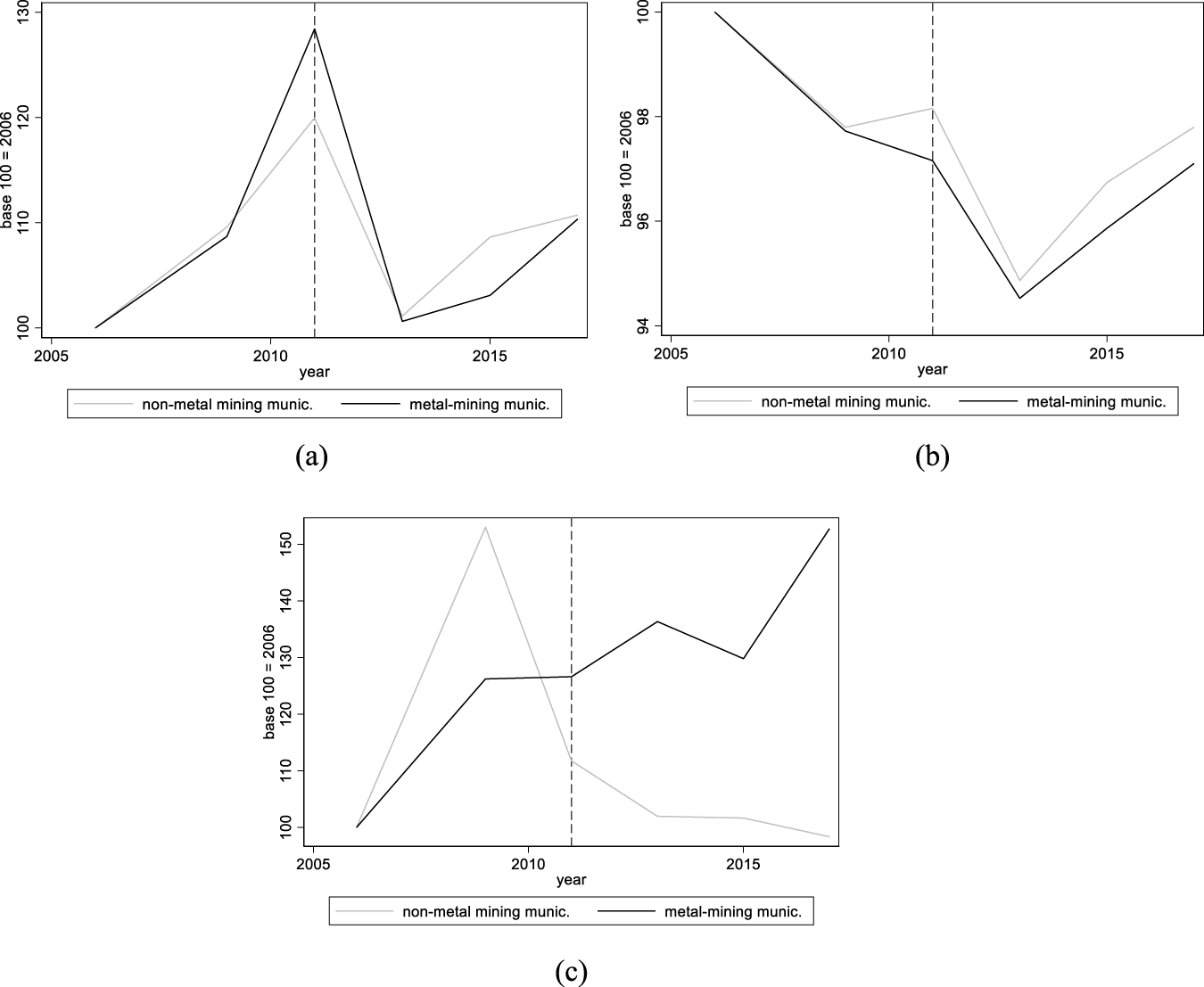
Figure 3a shows the evolution of unskilled wages in metal-mining and non-metal mining municipalities. Unskilled wages grew during the expansion phase of the super cycle, but a divergence between metal-mining and non-metal-mining municipalities emerged only towards the end of the expansion. One likely explanation for the delayed effects of rising metal prices on unskilled wages of metal-mining municipalities is that the higher demand for unskilled labour was eventually met by an outward-shifting supply curve as the expectations of potential workers adjusted to new information (Pellandra, Reference Pellandra2015; Corvalán and Pazzona, Reference Corvalán and Pazzona2019). This adjustment involved a reallocation of labour across sectors and regions, as also seen in other contexts (Aqeel, Reference Aqeel2024). Many unskilled workers in mining regions switched to activities such as mining and construction, and many in non-mining regions migrated to booming mining areas (Pellandra, Reference Pellandra2015).
(a) Real unskilled wages, (b) school attendance rates and (c) unskilled unemployment, 2006–2017.

Figure 3 Long description
A line graph labeled, real unskilled wages, with two lines and a legend listing, non metal mining munic. and, metal mining munic. The horizontal axis label is, year, with tick labels 2005, 2010, 2015 and the plotted years extend to 2017. The vertical axis label is, base 100 equals 2006, with tick labels 100, 110, 120, 130. A vertical dashed line is drawn at year 2011. The metal mining munic. line passes through approximately 100 at 2006, about 109 at 2009, about 128 at 2011, about 100 at 2013, about 103 at 2015 and about 110 at 2017. The non metal mining munic. line passes through approximately 100 at 2006, about 109 at 2009, about 120 at 2011, about 100 at 2013, about 108 at 2015 and about 110 at 2017. From 2006 to 2011 both lines rise and from 2011 to 2013 both lines drop to about 100, followed by increases to 2017. The image B showing a line graph labeled, school attendance rates, with two lines and a legend listing, non metal mining munic. and, metal mining munic. The horizontal axis label is, year, with tick labels 2005, 2010, 2015 and the plotted years extend to 2017. The vertical axis label is, base 100 equals 2006, with tick labels 94, 96, 98, 100. A vertical dashed line is drawn at year 2011. The metal mining munic. line is at about 100 at 2006, about 98 at 2009, about 97 at 2011, about 94.5 at 2013, about 96 at 2015 and about 97 at 2017. The non metal mining munic. line is at about 100 at 2006, about 98 at 2009, about 98 at 2011, about 95 at 2013, about 96.8 at 2015 and about 98 at 2017. From 2006 to 2013 both lines decline, then both lines rise from 2013 to 2017. The image C showing a line graph labeled, unskilled unemployment, with two lines and a legend listing, non metal mining munic. and, metal mining munic. The horizontal axis label is, year, with tick labels 2005, 2010, 2015 and the plotted years extend to 2017. The vertical axis label is, base 100 equals 2006, with tick labels 100, 110, 120, 130, 140, 150. A vertical dashed line is drawn at year 2011. The metal mining munic. line is at about 100 at 2006, about 125 at 2009, about 125 at 2011, about 135 at 2013, about 130 at 2015 and about 155 at 2017. The non metal mining munic. line is at about 100 at 2006, about 152 at 2009, about 112 at 2011, about 102 at 2013, about 101 at 2015 and about 98 at 2017. From 2006 to 2009 both lines rise, then from 2009 to 2017 the metal mining munic. line rises overall while the non metal mining munic. line declines overall. Across all three graphs, the same two legend categories, non metal mining munic. and metal mining munic., are compared over year and each graph includes a vertical dashed line at year 2011.
By 2011, however, rising metal prices and the accompanying mining expansion eventually led to relatively higher unskilled wages in mining areas. This occurred around the same time that the mining expansion began to noticeably affect the local cost of living (Corvalán and Pazzona, Reference Corvalán and Pazzona2019). Rising costs of living require greater compensation to local workers and deter immigration (Pellandra, Reference Pellandra2015), both of which would explain, as a spatial equilibrium outcome, the eventual increase in local unskilled wages in mining areas. Between 2013 and 2017, during the contraction period, unskilled wages rose again in both groups of municipalities, initially faster in non-metal-mining areas, likely reflecting the sharp increase in the statutory minimum wage, which nearly tripled in nominal terms.Footnote 2 The literature shows that rising minimum wages tend to raise unskilled wages and narrow the skilled–unskilled wage gap (Chao et al., Reference Chao, Ee, Nguyen and Yu2022).
The rise in unskilled wages due to mining expansion had several repercussions on metal-mining municipalities. One first consequence was that higher unskilled wages reduced the expected returns to schooling (Pellandra, Reference Pellandra2015; Pérez-Trujillo and Rodríguez-Puello, Reference Pérez-Trujillo and Rodríguez-Puello2022), increasing the labour participation of the young and, consequently, school dropout rates in metal-mining municipalities (Pérez-Trujillo and Rodríguez-Puello, Reference Pérez-Trujillo and Rodríguez-Puello2022; Rodríguez-Puello et al., Reference Rodríguez-Puello, Chávez and Pérez-Trujillo2022). Figure 3b shows that school attendance rates were generally countercyclical during the super cycle. However, a gap in relative school attendance rates between metal-mining and non-metal-mining municipalities emerged between 2009 and 2011 – the period in which differences in relative unskilled wages were the largest (Figure 3a). Both observations suggest that rising unskilled wages sent a strong signal to young individuals to drop out of school and engage in the expanding labour markets of metal-mining areas. Dropping out of school was a ‘rational’ choice for the young (who have, on average, high intertemporal discount rates; Loewenstein and Thaler, Reference Loewenstein and Thaler1989), especially for those in public schools who, in Chile, belong mostly to disadvantaged households (Valenzuela et al., Reference Valenzuela, Bellei and Ríos2014).
Higher expected unskilled wages in the short run offset the likely loss of expected incomes from higher human capital in the longer term. Corvalán and Pazzona (Reference Corvalán and Pazzona2019) report that metal prices relate negatively with average levels of schooling in Chilean mining municipalities, although the relationship was, again, observable years after metal prices started to increase, approximately at the end of the expansion phase when mining expansion led to a detectable increase in unskilled wages in mining areas. Notably, the subsequent decline in unskilled wages during the first years of the contraction (2011–2013) did not immediately reverse the earlier fall in attendance rates, which only began to recover around 2013. Such lagged adjustment in attendance rates is consistent with the notion that agents might initially perceive negative shocks as transitory (Duryea et al., Reference Duryea, Lam and Levison2007). Still, as the labour market contraction persisted in metal-mining areas, the young and their households eventually internalized the eroded incentives to drop out of school, and attendance rates increased.
A second consequence of rising metal prices in metal-mining communities was increased school dropout rates and increased labour market participation among young people (Pérez-Trujillo and Rodríguez-Puello, Reference Pérez-Trujillo and Rodríguez-Puello2022). Data from the Chilean National Socioeconomic Characterization Survey show that between 2003 and 2009, labour force participation among the population aged 15–24 rose from 33.9 to 35.8 per cent in metal-mining municipalities, while it remained stable at around 36.5 per cent in non-metal-mining municipalities. The increase in metal-mining municipalities was mainly driven by the youngest age group (15–18 years old), whose labour force participation rose from 10.4 to 13.6 per cent between 2003 and 2009, while participation among those aged 18–24 remained more or less constant at around 46.5 per cent.
A third consequence of rising metal prices in metal-mining communities was greater unemployment during the subsequent period of contraction. Figure 3c shows that unskilled unemployment rose steadily relative to 2006 levels throughout the period in metal-mining municipalities, while it declined in non-metal-mining municipalities from 2009 onwards. In particular, during the contraction phase, the unskilled unemployment rate rose from 7.1 per cent in 2011 to 8.3 per cent in 2017, eventually surpassing the level observed in non-metal-mining municipalities (7.9 per cent). Rising unemployment between 2011 and 2017 reflects persistent effects of the decline in metal prices that was specific to metal-mining areas. Contracting local labour markets, coupled with a sharp increase in the statutory minimum wage, prevented unskilled wages from adjusting to their equilibrium levels and thus from removing unemployment during the contraction period in metal-mining areas (see Chao et al., Reference Chao, Ee, Nguyen and Yu2022). Rodríguez-Puello (Reference Rodríguez-Puello2025) also shows that unemployment rates in Chile’s mining areas rose sharply during the first years of the contraction, while they declined considerably in non-mining areas.
Higher school dropout rates contributed – and perhaps in a relatively short period – to unskilled unemployment in metal-mining municipalities during the contraction (Rodríguez-Puello et al., Reference Rodríguez-Puello, Chávez and Pérez-Trujillo2022). By the time the effects of rising metal prices on unskilled wages and dropout rates were detectable in the data (around 2011, after the global financial crisis), the demand for unskilled labour was already falling and continued to do so during the mining contraction period (Rodríguez-Puello et al., Reference Rodríguez-Puello, Chávez and Pérez-Trujillo2022). By that time, most capital formation planned by the expanding mining sector had already taken place, and the direct employment in such investments was largely ending. Many early school leavers did not find employment immediately, and most did not return to schooling when employment opportunities began to contract (see Card and Lemieux, Reference Card, Lemieux and Gruber2001). Rising participation by the young in labour markets coupled with greater unskilled unemployment is a likely outcome if wages are downward-rigid (Harris and Todaro, Reference Harris and Todaro1970). And it is known that teenage dropouts with little educational attainment and reduced employability in the short and the long term are particularly affected by economic slowdowns and contractions (Rumberger, Reference Rumberger1987). Contracting labour markets coinciding with falling school attendance rates in Chilean metal-mining municipalities between 2011 and 2013 resemble the classical phenomenon of rural–urban migration with increasing urban unemployment due to above-market-clearing urban minimum wages, a phenomenon that is well explained in the development economics literature (Harris and Todaro, Reference Harris and Todaro1970).
Finally, increased school dropout and greater unskilled unemployment likely contributed to greater property crime rates in metal-mining municipalities. On the one hand, schooling has a direct deterring effect on crime, as it ‘incapacitates’ youth by keeping them in the classroom (Jacob and Lefgren, Reference Jacob and Lefgren2003) and instils citizenship in pupils. Hernández et al. (Reference Hernández, Chávez and Rodríguez-Puello2024) show that, in Chile, higher education levels within a locality increase wages and employment opportunities, raise the opportunity cost of engaging in crime and reduce the time available for criminal activities through higher school attendance. However, crime might be an appealing option for young people seeking pecuniary rewards (Freeman, Reference Freeman1996). On the other hand, lower levels of schooling due to school abandonment may have increased crime indirectly through the increased likelihood of unemployment. Unemployment fuels crime because it reduces the probability of finding a job, increasing the expected returns of crime relative to legal work (Gould et al., Reference Gould, Weinberg and Mustard2002; Edmark, Reference Edmark2005). This is especially true for school dropouts, who are vulnerable to engaging in crime when faced with unemployment (Raphael and Winter-Ebmer, Reference Raphael and Winter-Ebmer2001; Mustard, Reference Mustard, Benson and Zimmerman2010). Moreover, there is a well-known ratcheting effect in the labour economics literature: once young people drop out of school, they are unlikely to return (Card and Lemieux, Reference Card, Lemieux and Gruber2001). In Chilean mining municipalities, increased unskilled unemployment during the last part of the expansion phase and especially during the contraction phase of the metal price super cycle might have induced some of the unemployed, especially dropouts lacking strong safety nets, to undertake informal entrepreneurial activities, including crimes against property.
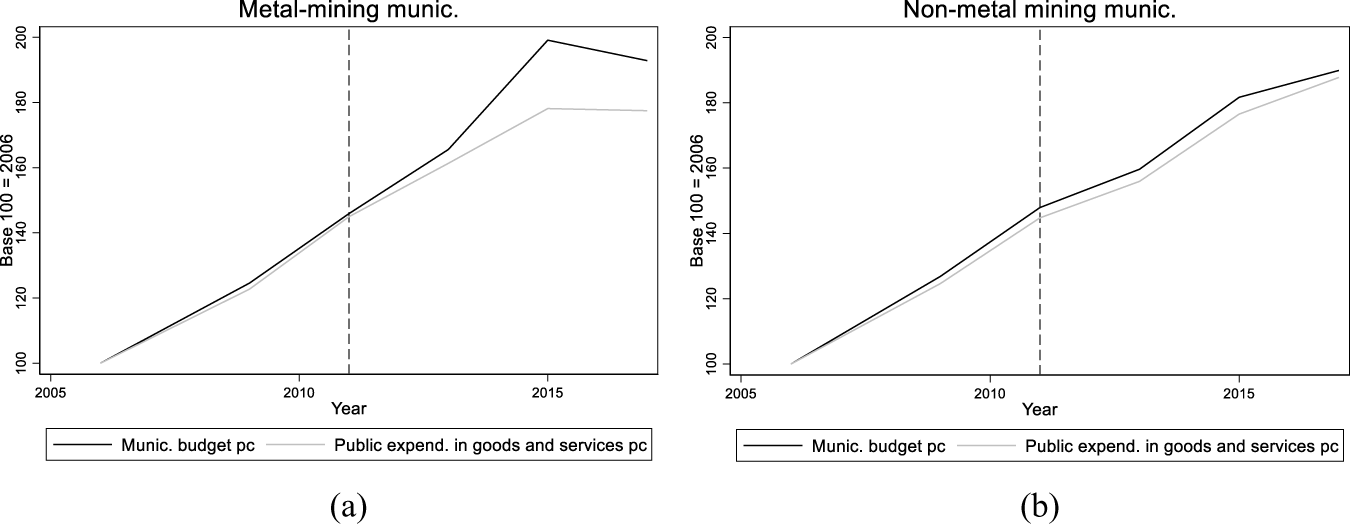
In the context of resource booms, when municipal governments are able to capture part of the rents, resource windfalls can potentially be transformed into stronger crime deterrence and control systems, which have been shown to reduce crime (Costantini et al., Reference Costantini, Meco and Paradiso2018). This is less likely, however, in weak institutional settings such as Chile’s, where rent capture by local governments is relatively low (Atienza et al., Reference Atienza, Fleming-muñoz and Aroca2021) and where local authorities have limited responsibilities in crime prevention (Alberti et al., Reference Alberti, Díaz-rioseco and Visconti2023), especially when additional fiscal resources are misallocated. As shown in Figure 4, the per capita municipal budget of Chilean metal-mining municipalities increased sharply during the boom period but stagnated around 2015. Nevertheless, this expansion of fiscal resources during the boom and the early contraction years was not accompanied by a comparable rise in per capita municipal spending in metal-mining municipalities since 2013. In contrast, non-metal-mining municipalities experienced growth in their public budgets that was matched by similar increases in the provision of public goods and services. These contrasting trends align with Caselli and Michaels (Reference Caselli and Michaels2013) and suggest that the limited institutional capacity of local governments to manage budgetary windfalls – combined with their restricted attributions (Atienza et al., Reference Atienza, Fleming-muñoz and Aroca2021) – may have constrained the effective use of additional fiscal resources in metal-mining municipalities. This makes our hypothesis of cumulative effects of rising metal prices on property crime even more plausible.
Growth of real municipal budget and public expenditure on goods and services per capita in (a) metal and (b) non-metal mining municipalities, 2006–2017.

Corvalán and Pazzona (Reference Corvalán and Pazzona2019) analysed the relationships between copper prices and municipal crime rates between 2003 and 2013 in Chile. The authors found, first, that only property crimes (but not violent crimes) were linked to copper price variations in Chilean mining municipalities; second, that there was a negative relationship between copper prices and property crime rates in the short run; and third, and most importantly, that the effects of copper price variations were transient only. The explanation provided for this latter result was that copper prices exerted no long-term influence on local structural determinants of crime, such as income, poverty, inequality or municipal budgets.
However, Corvalán and Pazzona (Reference Corvalán and Pazzona2019) only observed the first years of the phase of declining prices, which started around 2011. During the last part of the expansion phase – after the financial crisis of 2008 – but in particular during the contraction phase of the super cycle, labour markets, especially unskilled labour markets, first slowed and then contracted, and economic conditions deteriorated significantly in Chilean metal-mining communities (Pérez-Trujillo and Rodríguez-Puello, Reference Pérez-Trujillo and Rodríguez-Puello2022; Rodríguez-Puello et al., Reference Rodríguez-Puello, Chávez and Pérez-Trujillo2022). In the period of falling metal prices, the cumulative effects of changes triggered by the metal price boom were likely to manifest fully. One key transmission channel, not sufficiently addressed in previous research, is school dropout (Pérez-Trujillo and Rodríguez-Puello, Reference Pérez-Trujillo and Rodríguez-Puello2022), and its eventual effect on unemployment (Rodríguez-Puello et al., Reference Rodríguez-Puello, Chávez and Pérez-Trujillo2022) and, ultimately, on crime (Raphael and Winter-Ebmer, Reference Raphael and Winter-Ebmer2001; Gould et al., Reference Gould, Weinberg and Mustard2002).
To summarize, the literature suggests that the effect of the shock to metal prices on property crime rates occurred through the following transmission channels, which, although rather universal, seem particularly discernible in Chilean metal-mining municipalities during the metal price super cycle: (i) an increase in metal prices increased unskilled wages in metal-mining municipalities; (ii) higher expected unskilled wages increased school dropout rates; (iii) greater school dropout rates increased unskilled unemployment and (iv) rising unskilled unemployment increased property crime rates. According to the literature reviewed, channel (i) manifested after several years, from 2003 to around 2009–2011, whereas channels (ii), (iii) and (iv) responded relatively quickly once rising metal prices translated into higher unskilled wages (from around 2011 onwards). Taken together, these four hypothetical channels point to a positive cumulative relationship between metal prices and local property crime rates in Chilean mining municipalities over time. Although not the only plausible explanation for any effect of shocks to metal prices on crime rates in metal-mining municipalities, increased school abandonment is a potentially relevant channel, with profound social and policy implications, that has not been empirically tested in this context before.
3. Method
3.1. Data
Annual prices of five main metals produced in Chile (copper, molybdenum, iron ore, silver and gold) were obtained for the period 2005–2018 from Rodríguez-Puello et al. (Reference Rodríguez-Puello, Chávez and Pérez-Trujillo2022). To capture the intensity of the price shock and the different exposures of mining municipalities to the effects of the shock, we use a price index of Rodríguez-Puello et al. (Reference Rodríguez-Puello, Chávez and Pérez-Trujillo2022) and Pérez-Trujillo and Rodríguez-Puello (Reference Pérez-Trujillo and Rodríguez-Puello2022). The index is a weighted average of annual percentage changes in the prices of these five metals, where the weights are the share of each metal in the total production of region m to which municipality i belongs. The details are given in online Appendix A.
Municipality-level data on crime reports were taken from the Chilean Centre of Studies and Analysis of Delinquency (Centro de Estudios y Análisis del Delito) of the Chilean Ministry of Interior for the period 2006–2017. We focus on property crimes, which have been shown to be significantly affected by economic shocks both internationally (Mustard, Reference Mustard, Benson and Zimmerman2010) and in Chile (Corvalán and Pazzona, Reference Corvalán and Pazzona2019). Property crimes include burglary, larceny theft, motor vehicle theft and cattle rustling. However, we also test for the effect of metal prices on violent crime rates, and the results confirm Corvalán and Pazzona’s (Reference Corvalán and Pazzona2019) findings that there is no significant relationship (see online Appendix F).
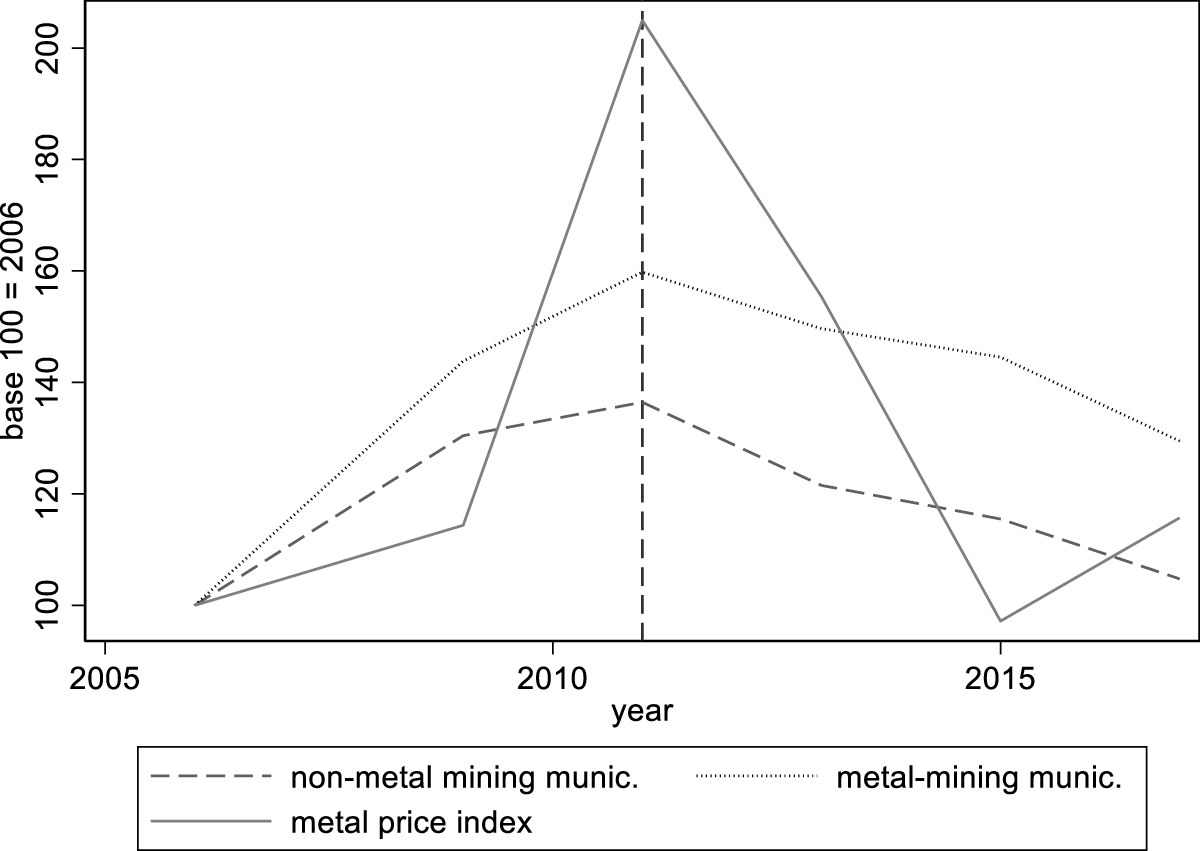
Figure 5 shows the evolution of the metal prices index (dashed line) and property crime rates for both metal-mining (solid black) and non-metal-mining municipalities (solid grey). Until 2015, property crime rates were synchronized with metal prices, increasing rapidly from 2006 to 2011 (the period of rising metal prices) and then decreasing. However, property crimes increased more rapidly in metal-mining municipalities. In 2011, average property crimes were 36 per cent higher than those of 2006 in non-metal-mining municipalities, but around 60 per cent higher in metal-mining municipalities. Overall, the dynamics of property crime, at least until 2015, seem consistent with rapacity effects, as observed in other contexts (Dube and Vargas, Reference Dube and Vargas2013). Between 2011 and 2015, when metal prices fell, property crimes decreased, but unlike in non-metal-mining municipalities, property crime rates in 2017 remained around 30 per cent higher than the 2006 rates in metal-mining municipalities.
Metal prices index and property crime rates, 2006–2017.

The review of the literature points to unskilled wages, school dropout rates and unskilled unemployment as plausible transmission channels of the metal price shock. Data on unskilled wages and unskilled unemployment in Chilean municipalities were obtained from the National Survey of Socioeconomic Characterization (CASEN) of the Chilean Ministry of Social Development and Family.Footnote 3 We used all available rounds for the period of analysis (2006, 2009, 2011, 2013, 2015 and 2017). Consistent with our focus on school dropouts, we define the unskilled as those who did not complete high school. Data on attendance rates of municipal (public) schools were taken from the National System of Municipal Information (SINIM) of the Undersecretary of Regional Development of the Chilean Ministry of Interior. Finally, our econometric estimates include municipality-level covariates to control our equations for several sources of municipal heterogeneity. The sources and the descriptive statistics by period are provided in the online Appendix B.
Table 1 reports descriptive statistics for metal-mining and non-metal-mining municipalities (averages over the period). Average crime rates and unskilled unemployment rates do not differ significantly between the two groups over the period. By contrast, and in line with the proposed mechanisms, metal-mining municipalities display higher unskilled wages and lower school attendance rates. They also exhibit a higher unskilled relative to skilled employment, yet higher average years of schooling. Household incomes are higher and poverty rates lower in metal-mining municipalities. In addition, they host a larger share of international migrants, but a smaller share of internal migrants. Finally, metal-mining municipalities are less rural on average and have larger available budgets per capita, although the number of municipal schools per capita does not differ significantly.
Descriptive statistics

Table 1 Long description
Descriptive statistics compare averages and variability for 276 metal-mining municipalities versus 1,650 non-metal-mining municipalities across crime, labor, education, demographics, and municipal finance. Property crime averages are close (12.0 vs 11.4 per 1,000 inhabitants) and violent crime is also similar (9.3 vs 9.5 per 1,000). Unskilled unemployment is identical at 7.0 per cent in both groups, and school attendance is slightly lower in mining areas (87.9 vs 88.7 per cent). Mining municipalities show higher average real unskilled wages (32.3 vs 27.0 in CLP units per 10,000) and higher per-capita household income (40.8 vs 34.2), alongside lower poverty (13.2 vs 17.9 per cent). The metal price index is much higher in mining municipalities (369.6 vs 154.7), and the skilled-to-unskilled employment ratio is lower on average (0.2 vs 0.3) but with much greater spread in non-mining areas. Mining municipalities are less rural on average (28.1 vs 35.1 per cent) and have a higher share of international migrants (1.6 vs 0.8 per cent), while internal migration is slightly lower (6.5 vs 7.3 per cent). Inequality is similar (Gini about 40 in both), and municipal available budget per capita is higher and far more variable in mining areas (37.6 vs 24.6). Values are summary averages with standard deviations, so they describe typical levels and dispersion but do not by themselves establish causal effects.
Note: inh: inhabitants. Averages for 2006, 2009, 2011, 2013, 2015 and 2017.
3.2. Reduced-form model
Our first hypothesis is that there is a positive relationship between metal prices and property crime rates in Chilean mining municipalities, unfolding over the course of the metals super cycle. To test it, we first estimate a reduced-form model linking the metal prices index and municipal property crime rates directly. This first model is a distributed-lags (DL) specification:
 \begin{align}crim{e_{it}} &= a + \mathop \sum \limits_{k = 0}^K {\beta _k}Ln\left( {{P_{t - k,m}}} \right) + \gamma meta{l_i} + {\text{ }}\mathop \sum \limits_{k = 0}^K {\delta _k}Ln\left( {{P_{t - k,m}}} \right) \times meta{l_i}\nonumber\\
& \quad+ \mathop \sum \limits_{l = 1}^L {\pi _l}{x_{lit}} + {\text{ }}{\gamma _t} + {e_{it}}.\end{align}
In Equation (1), 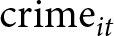 ${\text{crim}}{{\text{e}}_{it}}$ are property crimes per 1,000 inhabitants in municipality
 $i$ at year
 $t$,
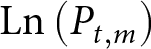 ${\text{Ln}}\left( {{P_{t,m}}} \right)$ is the natural logarithm of the metal prices index,
 $meta{l_i}{\text{ }}$is a dummy variable indicating a mining municipality,
 $x$ are additional municipality-level covariates,
 $\gamma $ are year dummies and
 $e$ is the error term.Footnote 4 Vector
 ${x_{{\text{lit}}}}$ includes the share of young males in the total population, the average real household income per capita, the average years of schooling, the poverty rate, the share of rural population, the share of international migrants and the share of internal migrants, the Gini index of per capita household incomes and the available municipal budget per capita. Average household income is a standard control in criminal activity regressions because property crimes tend to be higher where there is more wealth to steal (Gould et al., Reference Gould, Weinberg and Mustard2002). In addition, the share of young males is included because young males are more prone to commit crimes (Cornwell and Trumbull, Reference Cornwell and Trumbull1994). Average schooling is included due to human capital externalities that increase workers’ productivity and wages (Moretti, Reference Moretti, Henderson and Thisse2004). Poverty is included as a well-known economic determinant of crime (Freeman, Reference Freeman1996), as well as income inequality (captured by the Gini index), which typically rises in mining areas during booms (Loayza and Rigolini, Reference Loayza and Rigolini2016). The share of rural population is included due to greater community cohesion and social control in rural areas (Deller and Deller, Reference Deller and Deller2010). The share of international migrants is included because of greater unemployment among migrants (Uhlendorff and Zimmermann, Reference Uhlendorff and Zimmermann2014), who, lacking networks and support, might be pushed into crime. Finally, available municipal budget per capita is included as a control of crime prevention and control capacities of municipal governments (McPheters and Stronge, Reference McPheters and Stronge1974).
Sub-index  $k$ indicates the lag, and
 $K$ is the maximum lag included, in our case, three (i.e., up to 6 years). We are principally interested in the coefficients of the interaction variables (
 ${\delta _k}$), which estimate the effect of the shock to metal prices in mining municipalities relative to non-mining municipalities. The identifying assumption is that, in the absence of the exogenous price shock, property crime rates in both types of municipalities would have followed similar trends. The coefficient capturing the effect of metal prices on crime in metal-mining municipalities, accumulated over time, is
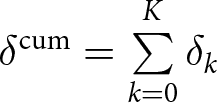 ${\delta ^{{\text{cum}}}} = \mathop {{{\sum}}}\limits_{k = 0}^K {\delta _k}$. Consistent with our main hypothesis, we expect
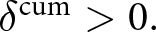 ${\delta ^{{\text{cum}}}} \gt 0.$ Model (1) is estimated using a raw panel of 1,926 municipality-year observations, corresponding to 321 municipalities observed in six CASEN waves (2006, 2009, 2011, 2013, 2015 and 2017). However, because the preferred specification includes three lags of the metal price index (DL(3)), the effective estimation sample is reduced to 963 observations. The earliest survey waves are used to construct the distributed lags of metal prices and therefore do not contribute dependent-variable observations to the estimation sample. Importantly, this does not imply that the expansion phase is excluded from the analysis. On the contrary, price changes occurring during the expansion period enter the model through the distributed lags of the metal price index. The model was estimated using feasible generalized least squares (FGLS), which permits an arbitrary correlation structure of errors. In this case, we allow for heteroscedasticity and AR(1) errors, an autocorrelation that is specific to each panel and that is warranted due to the inclusion of lagged regressors and due to the inertia of the series.
3.3. Simultaneous-equations model
To test for the proposed transmission channels of the shock to metal prices to property crime rates, we estimate a model comprising four simultaneous equations, which is largely motivated by Rodríguez-Puello et al. (Reference Rodríguez-Puello, Chávez and Pérez-Trujillo2022):
 \begin{align}
u\_{w_{{\text{it}}}} = \beta _0^w &+ \sum\nolimits_{\left( {k = 0} \right)}^K {{\beta _k}{\text{Ln}}\left( {{P_{t - k,m}}} \right) + \gamma {\text{meta}}{{\text{l}}_i} + \sum\nolimits_{k = 0}^k {{\delta _k}{\text{Ln}}\left( {{P_{t - k,m}}} \right) \times {\text{meta}}{{\text{l}}_i}} } \hfill \nonumber\\
&+ \sum\nolimits_{l = 1}^{L1} {\pi _l^wx_{{\text{lti}}}^w + \gamma _t^w + e_{{\text{it}}}^w} \hfill \nonumber\\
{\text{school}}\_{\text{at}}{{\text{t}}_{{\text{it}}}} &= \beta _0^{{\text{sch}}} + \beta _1^{{\text{sch}}}u\_{{\text{W}}_{{\text{it}}}}\sum\nolimits_{l = 2}^{L2} {\pi _l^{{\text{sch}}}x_{{\text{lti}}}^{{\text{sch}}} + \gamma _t^{{\text{sch}}} + e_{{\text{it}}}^{{\text{sch}}}} \hfill \nonumber\\
{\text{u}}\_{\text{unem}}{{\text{p}}_{{\text{it}}}} &= \beta _0^c + \beta _1^c\;{\text{school}}\_{\text{at}}{{\text{t}}_{{\text{it}}}} + \sum\nolimits_{l = 1}^{L3} {\pi _l^ux_{{\text{lti}}}^u + \gamma _t^u + e_{{\text{it}}}^u} \hfill \nonumber\\
{\text{crim}}{{\text{e}}_{{\text{it}}}} &= \beta _0^c + \beta _1^c{\text{u}}\_{\text{unem}}{{\text{p}}_{{\text{it}}}} + \sum\nolimits_{l = 1}^{L4} {\pi _l^cx_{{\text{lti}}}^c + \gamma _t^c + e_{{\text{it}}}^c.} \hfill
\end{align}
The first equation models real unskilled wages ( $u\_{w_{{\text{it}}}}$) as a function of the metal prices index and the
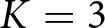 $K = 3$ distributed lags (i.e., up to 6 years), the dummy of mining municipalities, the interaction between the two and the distributed lags of the interaction (main right-hand-side variables of this equation). The equation also includes as covariates (vector xw) the average years of schooling in the municipality, and the ratio between skilled and unskilled employment.Footnote 5 The ratio between skilled and unskilled employment is included as a proxy for the likelihood that a skilled worker, rather than an unskilled one, will be employed (Pérez-Trujillo and Rodríguez-Puello, Reference Pérez-Trujillo and Rodríguez-Puello2022). The inclusion of endogenous unskilled wages is a feedback mechanism grounded in observations leading to the Phillips curve in the macroeconomics literature.
 $\gamma $ are year dummies, and
 $e$ is the error term, which is assumed to have zero expectation and to be correlated across equations.
The second equation poses school attendance rates ( $s{\text{chool\_at}}{{\text{t}}_{{\text{it}}}}{\text{)}}$ as a function of unskilled wages. It also includes as right-hand-side variables (vector x sch) the endogenous property crime rates, the share of rural population in the municipality, municipal poverty rates and the number of municipal schools per 1,000 inhabitants. The share of rural population is included to control for the main relationship for the well-documented rural–urban differences in school attendance (Qian and Smyth, Reference Qian and Smyth2008). Municipal poverty rates are included as poor households struggle to afford the costs (including direct and opportunity costs) of keeping children in school (Yi et al., Reference Yi, Zhang, Luo, Shi, Mo, Chen, Brinton and Rozelle2012). The density of municipal schools is added as a proxy of municipal accessibility to schools. Municipal property crime rates are included because of possible peer effects in local communities subject to greater criminality that could push young people to drop out of school and undertake illegal activities (Zimmerman and Messner, Reference Zimmerman and Messner2010).
The third equation casts unskilled unemployment 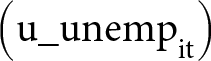 $\left( {{\text{u\_unem}}{{\text{p}}_{{\text{it}}}}} \right)$ as a function of school attendance rates. As additional regressors (vector xu), we include unskilled wages, the share of migrants and municipal poverty rates. The share of migrants is warranted in light of a typically higher unemployment among migrants (e.g., Uhlendorff and Zimmermann, Reference Uhlendorff and Zimmermann2014). Poverty rates are included since poverty is a shifter of the supply of unskilled labour (Loayza and Raddatz, Reference Loayza and Raddatz2010).
The fourth equation is the property crime rates equation 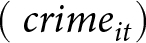 $\left( {{\text{ }}crim{e_{it}}} \right)$, which includes as the main regressor the unskilled unemployment rate. It also includes (vector xc) school attendance rates, the household average income, the share of young males in the municipality and the Gini index of per capita household incomes. School attendance rates are also included in the crime equation under the hypothesis that dropout rates could directly affect crime rates (Jacob and Lefgren, Reference Jacob and Lefgren2003).Footnote 6
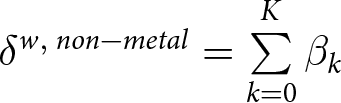
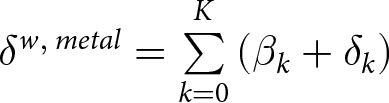
System (2) is the structural counterpart of the reduced-form model (1). The system includes dynamic effects through the distributed lags of the metal prices index and interaction terms, which capture the cumulative effects of metal prices on unskilled wages (see Section 2.2). It also considers feedback effects as two-way dependencies among some of the endogenous variables. As discussed in Section 2.2, the transmission channels activated by higher unskilled wages - the second, third, and fourth equations of system (2) - operate ‘contemporaneously’, i.e., within the 2-year window in which the data are observed. System (2) was estimated by full information maximum likelihood, using the structural equations modelling suite of Stata 17.Footnote 7 The proposed transmission channels of the price shock imply: (i) 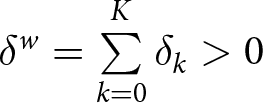 ${\delta ^w} = \mathop \sum \limits_{k = 0}^K {\delta _k} \gt 0$ (the cumulative effect of metal prices on unskilled wages in metal-mining municipalities is positive), (ii)
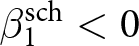 $\beta _1^{{\text{sch}}} \lt 0$ (greater unskilled wages relate negatively to school attendance rates), (iii)
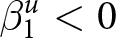 $\beta _1^u \lt 0$ (greater school attendance relates negatively to unskilled unemployment) and (iv)
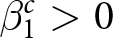 $\beta _1^c \gt 0$ (greater unskilled unemployment relates positively to municipal crime rates).
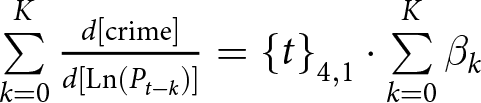
Taken together, hypotheses (i)–(iv) identify transmission channels through which metal price shocks might translate into a positive cumulative effect on property crime rates. From the reduced form of system (2), the estimated cumulative marginal effect of metal prices on crime rates in metal-mining municipalities (relative to non-mining municipalities) is now:
 \begin{equation}
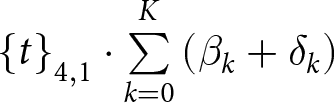
{\delta ^{{\text{cum}}}} = \mathop { \sum }\limits_{k = 0}^K \frac{{d\left[ {{\text{crime}}} \right]}}{{d\left[ {{\text{Ln}}\left( {{P_{t - k}}} \right) \times {\text{metal}}} \right]}} = {\left\{ t \right\}_{4,1}} \cdot \mathop {{{\sum }}}\limits_{k = 0}^K {\delta _k},
\end{equation}
where  ${\left\{ t \right\}_{4,1}}$ is the (4,1) element of matrix
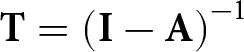 ${\mathbf{T}} = {\left( {{\mathbf{I}} - {\mathbf{A}}} \right)^{ - 1}}$, with
 ${\mathbf{A}}$ being the matrix of coefficients of the endogenous variables and I being an identity matrix. The comparison of the estimate of
 ${\delta ^{{\text{cum}}}}$ obtained with the reduced-form model (1) and that obtained with the structural model (2) is a demanding test of the proposed transmission channels linking metal prices and local crime rates in Chilean mining municipalities through their cumulative effects.
4. Results
4.1. Reduced-form estimates
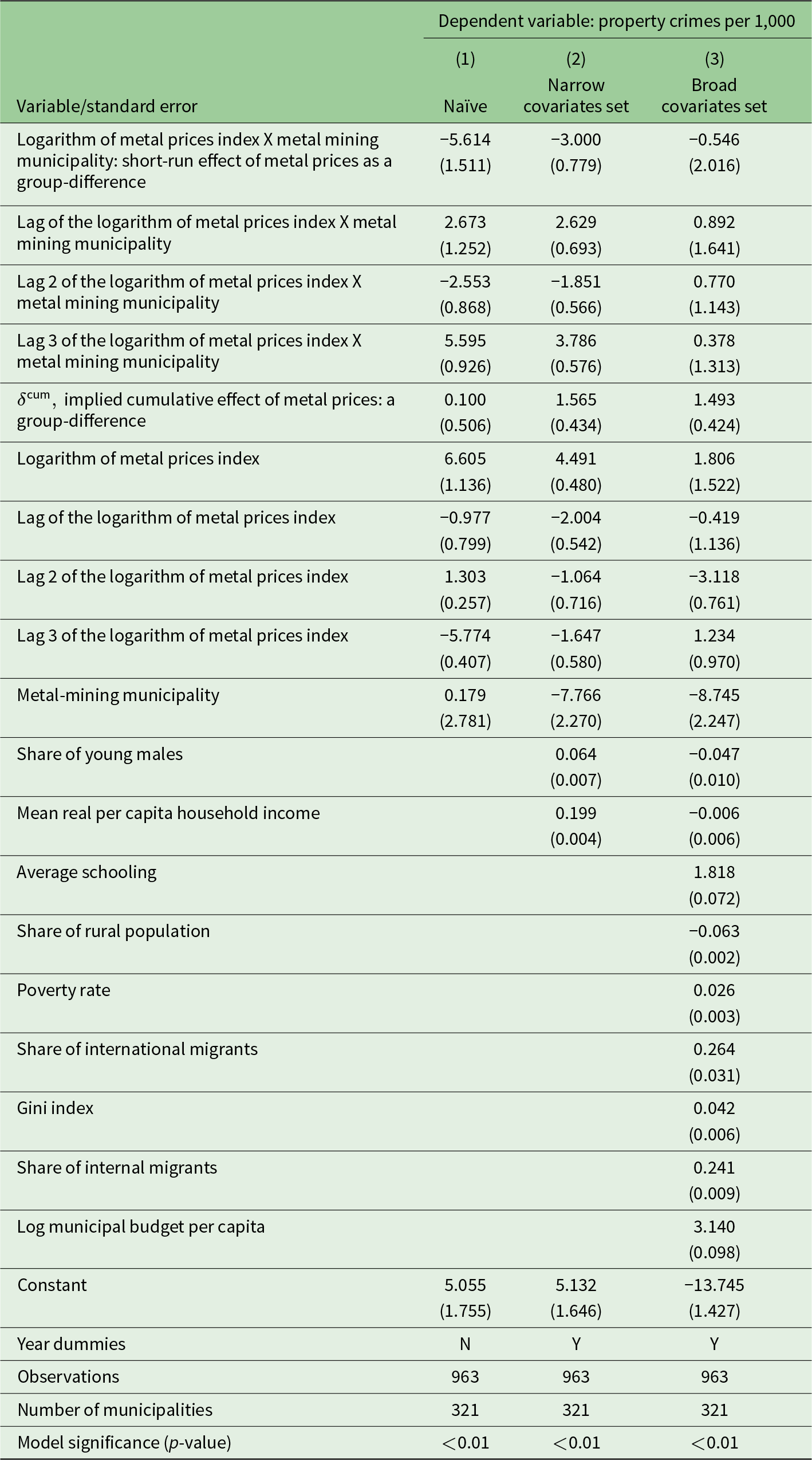
Table 2 shows the estimation output of our reduced-form model (model 1). We present the results of three different specifications. The first includes only distributed lags of the metal prices index and their interactions with the metal-mining municipality variable (naïve model). The second includes a narrow set of covariates (including year dummies), and the third includes a broad set. Consistent with Corvalán and Pazzona (Reference Corvalán and Pazzona2019), the estimates show a negative and significant short-run relationship between metal prices and municipal property crime rates in two of the three specifications. Estimates in Table 2, columns (1) and (2) indicate a decrease of around 0.30–0.56 property crimes per 1,000 inhabitants relative to non-metal-mining municipalities per 10 per cent increase in the metal prices index. This result aligns with observations of increased criminality in the short run in regions exposed to negative economic shocks in Brazil (Dix-Carneiro et al., Reference Dix-Carneiro, Soares and Ulyssea2018) and supports the idea that the positive price shock reduced criminality in metal-mining municipalities in the short run due to the increased opportunity costs of crime. However, once the broad set of controls is included, the contemporaneous interaction coefficient turns not significant. More generally, the individual coefficients of the metal prices index, its lags and their interactions with the metal-mining dummy are often large, not significant at times and usually switch signs. This instability reflects the high collinearity of the metal price index with its lagged values; therefore, we refrain from drawing strong inferences from individual coefficients of prices and their interactions, and instead focus on the cumulative effects over time (their sum), which are our main interest.
Reduced-form model estimates
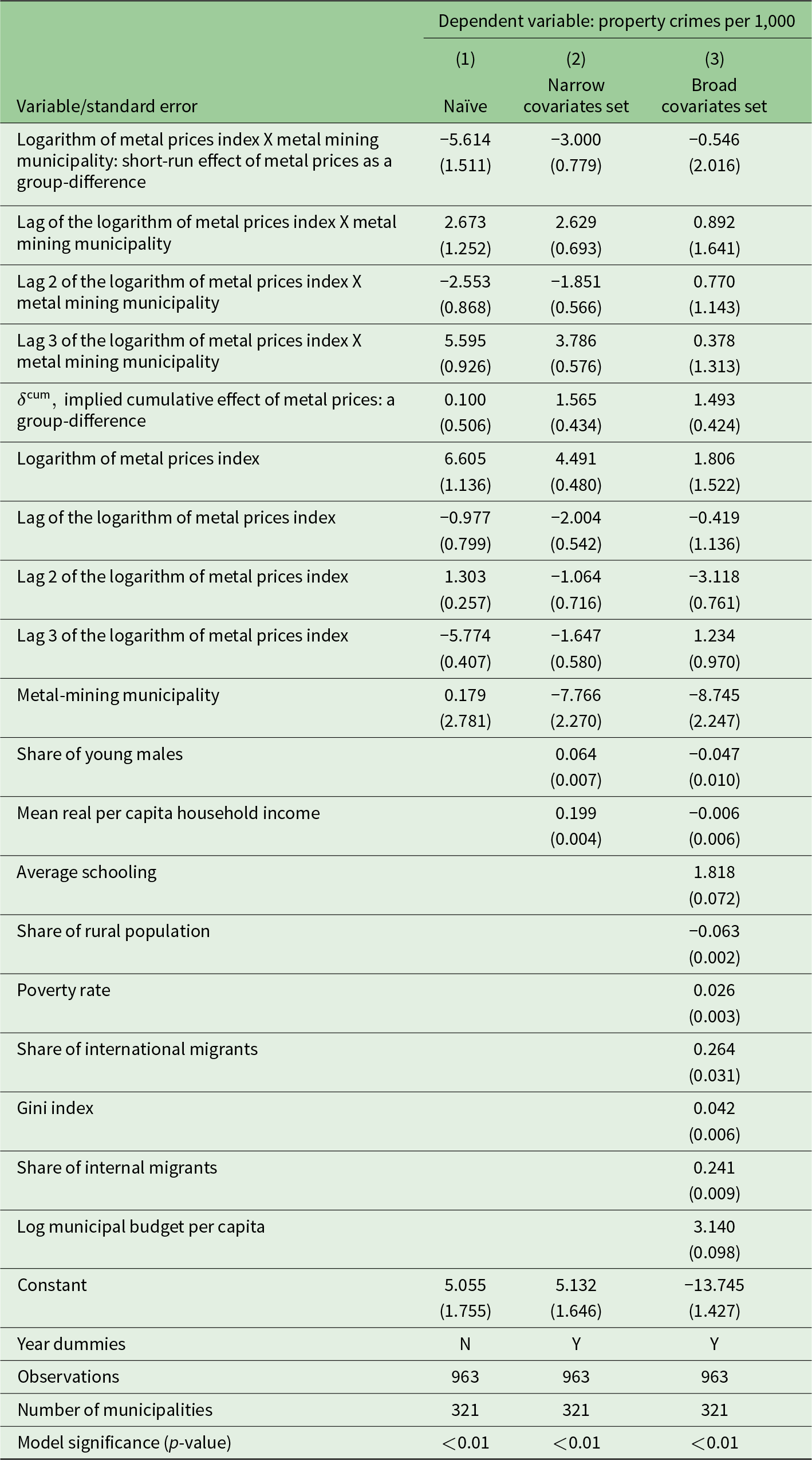
Table 2 Long description
Reduced-form regressions estimate how property crimes per 1,000 residents relate to metal prices and whether effects differ in metal-mining municipalities, reported for three specifications: naive, narrow covariates, and broad covariates. The short-run interaction between metal prices and mining status is negative in all three models, shrinking from about minus 5.6 in the naive model to about minus 0.5 in the broad model, with standard errors indicating substantial uncertainty. The lagged interaction terms change sign across lags and specifications, suggesting no stable dynamic pattern. The implied cumulative interaction effect is small: about 0.10 in the naive model and about 1.6 and 1.5 in the narrow and broad models, each with standard errors around 0.4 to 0.5. Main effects of metal prices (not interacted with mining status) vary by lag and specification, including positive contemporaneous estimates and mixed lag estimates. In the broad covariates model, several socioeconomic controls are included; for example, average schooling and municipal budget per capita are positively associated with property crime, while rural population share is negatively associated. All models use 963 observations from 321 municipalities, include year dummies in models 2 and 3, and are jointly significant at conventional levels, but individual coefficients should be interpreted cautiously given the reported standard errors.
Notes: (1) Standard errors in parentheses. (2) GLS estimates consider heteroscedasticity and AR(1) autocorrelation of errors.
When municipal heterogeneity in crime determinants and period effects are controlled (columns (2) and (3)), the estimated cumulative effect of metal prices is positive and significant. Corvalán and Pazzona (Reference Corvalán and Pazzona2019) found that there was no long-run relationship between copper prices and crime rates in Chilean copper-mining municipalities. In contrast, the coefficients in Table 2 indicate that the implied cumulative coefficient is around 0.15–0.16 more property crimes per 1,000 inhabitants in metal-mining municipalities for each 10 per cent increase in the metal prices index.Footnote 8 Considering the observed metal price variations (Figure 1) and municipal rates of 11.5 property crimes per 1,000 as an average for 2006–2017, this estimate is both credible and significant also in practical terms. Our results concur with Andrews and Deza (Reference Andrews and Deza2018), who find statistically and economically significant effects of oil price shocks on robbery and larceny in Texas. Our results also echo evidence from the U.S. fracking boom, where James and Smith (Reference James and Smith2017) find that resource-driven expansions increased property crime. The results thus confirm the intuition that when the entire contraction period is considered, the cumulative effects of price increases during the expansion phase of the metals super cycle on property crime rates manifest fully.Footnote 9
4.2. Simultaneous-equations estimates
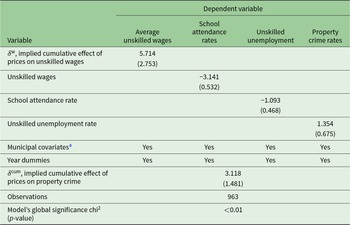
Table 3 reports a summary of the estimation results of the simultaneous-equations model (model (2)), focusing on the coefficients associated with our specific hypotheses (i)–(iv) above. The complete estimation output is available in the supplementary material file. The results broadly support the proposed transmission channels of the shock to metal prices to municipal property crime rates. The first equation yields an estimated cumulative effect of metal prices on unskilled wages  $\left( {{\delta ^w}} \right)$ that is positive and significant at standard levels, although the coefficients of the distributed lags are not significant individually. The implied cumulative coefficient estimates an increase of around CLP$5,714 (around US$6.4) in real average monthly unskilled wages in metal-mining municipalities relative to non-metal-mining municipalities per 10 per cent increase in the metal prices index. Overall, the absolute cumulative effect of the metal prices is not significant for non-metal-mining municipalities (−1.90, p-value = 0.234), whereas it is positive and significant for metal-mining municipalities (3.82, p-value = 0.029).Footnote 10 The results concur with the unskilled wage effects of mining expansion reported by previous research in Chile (Pellandra, Reference Pellandra2015; Corvalán and Pazzona, Reference Corvalán and Pazzona2019) and other countries (Baatarzorig et al., Reference Baatarzorig, Galindev and Maisonnave2018).
Simultaneous-equations model estimates, summary results
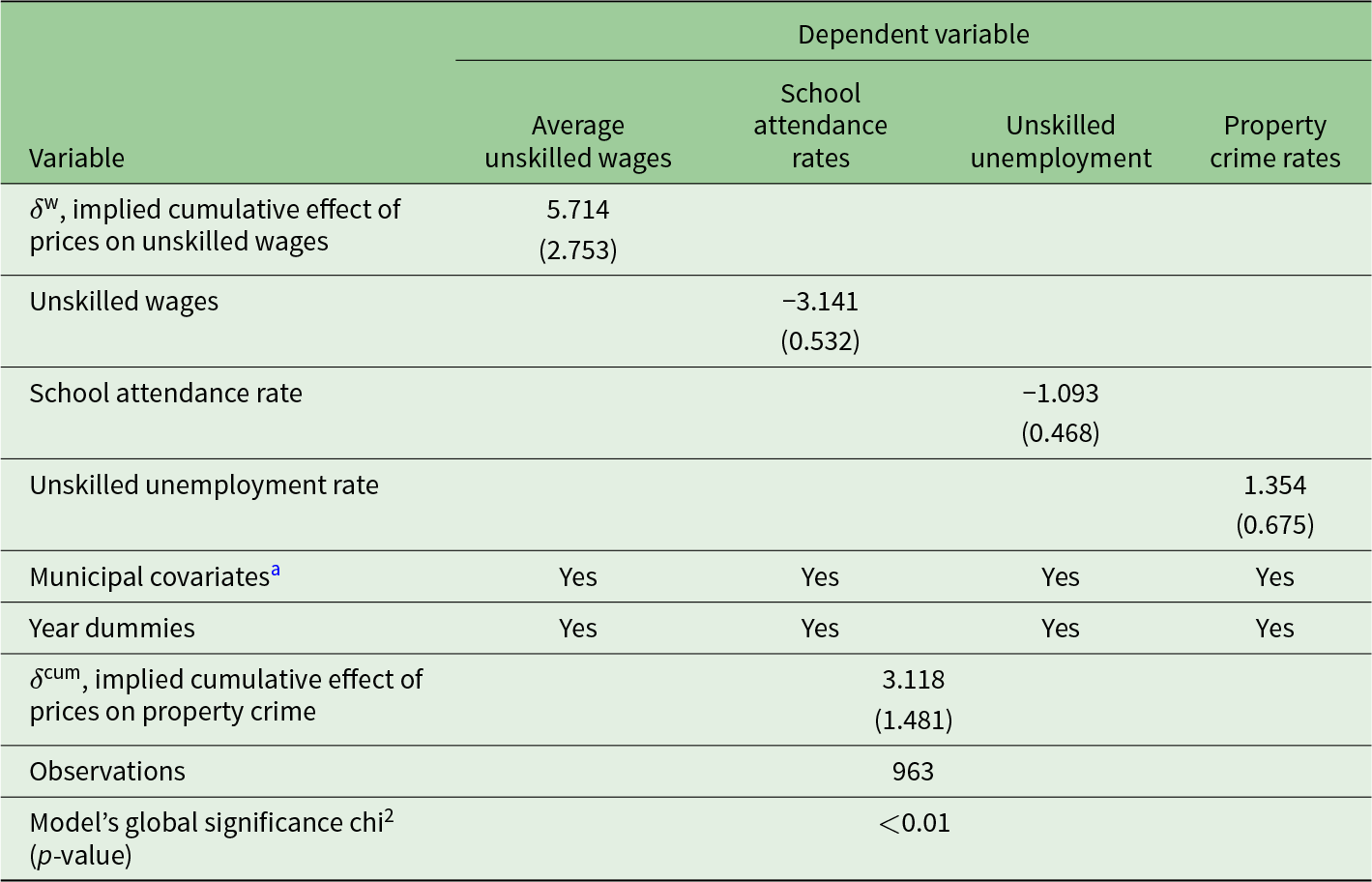
Table 3 Long description
Simultaneous-equations estimates link unskilled wages, school attendance, unskilled unemployment, and property crime, with one coefficient reported per equation and standard errors in parentheses. A higher unskilled wage level is associated with a lower school attendance rate (estimate minus 3.141, standard error 0.532). A higher school attendance rate is associated with lower unskilled unemployment (estimate minus 1.093, standard error 0.468). Higher unskilled unemployment is associated with higher property crime (estimate 1.354, standard error 0.675). Prices have a positive implied cumulative effect on unskilled wages (estimate 5.714, standard error 2.753) and a positive implied cumulative effect on crime (estimate 3.118, standard error 1.481). All equations include municipal covariates and year indicators, based on 963 observations, and the model is globally significant with a p-value below 0.01. Interpret coefficients as conditional associations within the specified system, with uncertainty indicated by the reported standard errors.
Note: Standard errors adjusted for intra-panel correlation in parentheses.
a Municipal covariates in each equation are explained in the description of model (2).
The estimates for the second equation also support the relationship between unskilled wages and school dropout rates. The estimated coefficient of the unskilled wage variable indicates that an increase in average monthly unskilled wages translates into a decrease in attendance rates, ceteris paribus. The estimated coefficient is significant even at the 1 per cent level. Our results confirm findings on the negative effects of positive shocks to commodity markets on schooling (Black et al., Reference Black, McKinnish and Sanders2005). Our results are also in line with those of Rodríguez-Puello et al. (Reference Rodríguez-Puello, Chávez and Pérez-Trujillo2022) that decreased expected returns to schooling due to higher unskilled wages during mining expansion led to reductions in school attendance rates in Chile. The estimated unskilled unemployment equation also confirms the channel running from school attendance to unskilled unemployment, the estimated coefficient being significant at the 5 per cent significance level. The estimated coefficient concurs with literature indicating that the human capital disinvestment negatively affects the employability of school leavers. For example, Rumberger (Reference Rumberger1987) reports unemployment rates for school leavers that are twice as high as those of school graduates even in the year following school dropout. In addition, our estimated negative coefficient is, although larger, consistent with that of Rodríguez-Puello et al. (Reference Rodríguez-Puello, Chávez and Pérez-Trujillo2022).
Finally, the results of the property crimes equation also verify the link between unskilled unemployment and property crime rates. The estimated coefficient, significant at the 5 per cent level, indicates that a one-percentage-point increase in unskilled unemployment is related to an increase of around 1.4 property crimes per 1,000. The link between unemployment and criminal activity has been previously documented in the U.S. (Gould et al., Reference Gould, Weinberg and Mustard2002) and Sweden (Edmark, Reference Edmark2005). Notably, the results also indicate a direct effect of schooling on crime, as evidenced by a negative and statistically significant coefficient of the school attendance variable in the crime equation, which is of similar magnitude to that of the unemployment variable (−1.156; see the supplementary material). The deterrent effects of schooling on crime also have vast empirical support (e.g., Lochner and Moretti, Reference Lochner and Moretti2004).
Combined, the estimated coefficients confirm the expected positive effect of metal prices on property crime rates in metal-mining municipalities over time. Table 3 reports the implied cumulative coefficient estimated with Equation (3). This coefficient accounts for dynamic effects through the distributed lags of metal prices and feedback among the endogenous variables. The estimated coefficient indicates that a 10 per cent increase in the metal prices index leads to around 0.32 more property crimes per 1,000 in metal-mining municipalities relative to non-metal-mining municipalities, a relationship that is significant at the 5 per cent level. The simultaneous-equations estimate is slightly larger but of the order of magnitude of the reduced-form estimates including municipal covariates (Table 2, columns (2) and (3)). Furthermore, its 95 per cent confidence interval contains the values obtained with both the narrow and broad sets of covariates (1.5 and 1.6). Overall, the absolute implied cumulative effect of metal prices is not statistically different from zero for non-metal-mining municipalities (−1.04, p-value = 0.249), and it is positive and significant for metal-mining municipalities (2.08, p-value = 0.018).Footnote 11
To conclude, we conducted several sensitivity checks: first, alternative lag structures fitting DL(2) and DL(1) versions of system (2); second, a model including lagged effects of attendance rates; third, a model fitted using samples filtered of small municipalities; fourth, a model of violent crime rates (a ‘placebo outcome’ test); fifth, a model including spatial spillovers; sixth, two ‘placebo population’ tests; seventh, a model considering a continuous variable of municipal dependence on metal-mining; and eighth, a model estimated using a sample matched based on pre-super cycle municipal variables. The results of these robustness checks are presented and discussed in the online Appendices C to K. Altogether, they broadly support the main findings, pointing to effects of metal prices that are cumulative over time, robust to alternative specifications and specific to metal-mining municipalities and to property crime rates.
5. Conclusions
This research confirmed a positive cumulative relationship between international metal prices and property crime rates in Chilean mining municipalities over the metals super cycle of the early 2000s. It also tested plausible transmission channels linking the two. Increased metal prices boosted mining expansion, which raised the demand for unskilled labour and, in time, unskilled wages in metal-mining municipalities. Higher unskilled wages induced young people to abandon school, and the resulting increase in dropout rates led to greater unskilled unemployment during the period of mining contraction, ultimately contributing to higher property crime rates. It is worth noting that although our estimates cover only up to 6 years of price variation, the implications may extend well beyond that horizon. Early school dropout cohorts may face longer-term disadvantages in the labour market, which could perpetuate the link between economic shocks and crime beyond the medium-term effects we are able to capture empirically.
While our results support the proposed transmission channels as plausible explanations of the cumulative effects of the metal price boom on property crime in Chilean mining municipalities, other, non-mutually exclusive, mechanisms may also have been at play. For instance, inflows of people from outside the region during the unskilled labour market expansion might have contributed to greater crime rates once mining activity contracted. Newcomers with fewer social ties, limited support and a weaker sense of community are more likely to engage in crime – a pattern documented in research on social disruption in boomtowns (Carrington et al., Reference Carrington, Hogg and McIntosh2011; James and Smith, Reference James and Smith2017). Our reduced-form regressions confirm a positive association between property crime rates and the share of recent interregional (internal) migrants, suggesting that further research into this mechanism in the Chilean context is warranted. More generally, further research explicitly testing alternative pathways linking commodity booms and crime would greatly enrich our understanding of crime dynamics in mining communities in Chile and other resource-dependent regions, both in developed and less-developed countries.
Our results illustrate the local specificity of shocks to metal prices and the locally uneven unfolding of transmission channels. The estimations show that the mechanisms linking metal prices and property crime rates in Chile operate differently in metal-mining and non-metal-mining economies, and, therefore, that both are differently affected by the external shock. Both theory development and more empirical evidence are needed in order to generalize these findings. For policymakers, our results underscore the importance of better understanding the spatially uneven transmission channels of shocks to metal prices, in order to anticipate their regionally disparate consequences and design place-tailored policies that can buffer their negative impacts, especially as these effects accumulate over time. Regarding property crime, our results also have implications for a country where delinquency is the main social anxiety, according to current opinion polls, particularly in mining regions that now face challenges amid uncertain international metal prices. Decision-makers concerned with controlling crime in mining regions should pay greater attention to the macroeconomic cycle to anticipate drivers of criminal activity, which may have enduring effects. Regarding prevention strategies, our results highlight the importance of keeping young people in school, especially in periods of mining booms, when unskilled jobs are plentiful and the incentives to drop out of school are strong. Finally, policymakers would benefit from assessments of social costs of crime increases stemming from shocks to metal markets, in order to evaluate crime deterrence and control efforts. Although this is far beyond the scope of this research, the effects calculated here suggest that such costs could be significant from a practical point of view, especially for local authorities that in Chile usually have limited resources and competencies due to excessive centralization.
Supplementary material
The supplementary material for this article can be found at https://doi.org/10.1017/S1355770X26100722.
Acknowledgements
The authors are grateful to the Environment and Development Economics Editor, Professor Carlos Chávez, and to three anonymous reviewers for their insightful comments and suggestions. The authors also thank William Foster and Alejandro Corvalán for their feedback. Martín Gallardo and William Núñez provided excellent research assistance. Any error is the authors’ responsibility. During the preparation of this work, the authors used ChatGPT-5.5 (OpenAI) to proofread the manuscript and improve language clarity. After using this tool, the authors reviewed, edited and approved the resulting text as needed and take full responsibility for the final content of the manuscript.
Funding statement
Modrego wishes to express thanks for the support from the Millennium Scientific Initiative of the Chilean Ministry of Economy, Development and Tourism (Grant: NCS2022_013).
Competing interests
The authors declare none.