Introduction
Over the past several decades, studies have shown that a disturbed intrauterine environment has long-term effects on organ structure and function in adulthood. This prenatal programming leads to altered postnatal metabolism to achieve postnatal survival under adverse conditions.Reference Eriksson 1 Disturbances in the intrauterine environment by maternal dietary manipulation during pregnancy result in long-lasting cardiovascular and metabolic alterations in the offspring.Reference Chavatte-Palmer, Tarrade and Rousseau-Ralliard 2 Through this adaptation, known as developmental plasticity, one genotype can give rise to many different physiological or morphological phenotypes in response to different environmental conditions during development.Reference Lea, Tung, Archie and Alberts 3
One striking example of prenatal programming is that disturbed kidney organogenesis in utero has long-lasting effects in adulthood, with increased risks of kidney disease and hypertension.Reference Kett and Denton 4 , Reference Paixao and Alexander 5 The renin–angiotensin system (RAS) can also be altered by the fetal environment contributing to the development of prenatal-programmed hypertension.Reference Grigore, Ojeda and Robertson 6 Compelling evidence for the involvement of RAS in hypertension programmed by maternal protein restriction includes normalization of blood pressure levels in hypertensive offspring by angiotensin-I converting enzyme inhibition and angiotensin II (Ang II) type 1 (AT1) receptor antagonism, but not L-type calcium channel blockade.Reference Sherman and Langley-Evans 7 The adverse effects of RAS overactivity are associated with increased oxidative stress and up-regulation of proinflammatory cytokines and chemokines.Reference Nguyen Dinh Cat, Montezano, Burger and Touyz 8 – 10 Ang II also participates in the inflammatory response by stimulating immune cell recruitment.Reference Kintscher, Wakino and Kim 11 , Reference Jurewicz, McDermott and Sechler 12 Ang II increases the expression of adhesion molecules including ICAM-1 and VCAM-1.Reference Pastore, Tessitore and Martinotti 13 , Reference Pueyo, Gonzalez and Nicoletti 14 Immune cells, in turn, provide a mobile angiotensin-generating system that may be important in regulating and perpetuating local inflammatory responses and tissue injury.Reference Hoch, Guzik and Chen 15 Given that several RAS components play critical roles in the prenatal programming of hypertension, we investigated the possible effects of a maternal low-protein diet on proinflammatory cytokines, reactive oxygen species (ROS) and RAS components in kidney samples isolated from adult male offspring. In addition, we hypothesized that post-weaning losartan treatment would have beneficial effects on RAS activity and inflammatory and oxidative stress markers in these animals.
Materials and methods
Animals
All experimental procedures were performed in accordance with the Ethical Principles in Animal Research followed by the Brazilian College of Animal Experimentation and in strict accordance with the Guide for Care and Use of Laboratory Animals of the US National Institutes of Health. The Ethics Committee in Animal Research of the Federal University of São Paulo approved this study (Protocol Number: 0480/07). Animals were held under temperature-controlled conditions on a 12-h light–dark cycle. The animals had ad libitum access to food and water during all experimental procedures. Maternal protein restriction was carried out by administering an isocaloric low-protein diet containing only 6% protein (Purina Mills Test Diets, Richmond, IN, USA). In brief, virgin female Sprague–Dawley rats were mated at weights between 200 and 250 g. Upon confirmation of mating, the females were individually housed in standard cages and randomly divided into one of two groups: control group (CT, n=8), which were fed a control diet (20% casein) (Purina Mills Test Diets), and the low-protein group (LP, n=16), which were fed an LP diet (6% casein) (Purina Mills Test Diets). The dams were allowed to spontaneously deliver the pups. No premature deliveries or immediate postnatal abnormalities in the pups were observed. After birth, all dams were on a control diet (20% casein) and allowed to nurse their own offspring until weaning at 21 days of age. All pups were weighed immediately after they were born. To prevent any alterations in neonatal growth, the litter size was standardized to eight pups, and the sex ratio was kept as close as possible to 1:1. In cases of more than eight pups per dam, additional pups were sacrificed by cervical dislocation by a trained technician in accordance with the guidelines for the Ethical Conduct in the Care and use of Animals established by Brazilian Society of Laboratorial Animal Science (SBCAL/COBEA). At 21 days of age, only male offspring in the LP group (n=16) were randomly assigned into two experimental groups: LP-untreated (n=8) and LP-losartan (n=8) treated with AT1 receptor blocking agent dissolved in drinking water at a dose of 10 mg/kg/day until 20 weeks of age. The total water intake was measured daily. Body weight was recorded weekly to adjust for drug dilution and attain the desired dose. To avoid litter effects, only one male rat from each LP litter was chosen for each experimental group.
Arterial blood pressure evaluation
At 20 weeks of age, resting systolic blood pressure was non-invasively measured by the tail-cuff method using a photoelectric sensor system (AD Instruments, Dunedin, New Zealand). After a conditioning procedure for the tail-cuff system, rats were acclimatized to the restraint and cuff for 3 days. Blood pressure was measured on the 4th day. Four to six readings were recorded for each rat.
Tissue kidney collection
After blood pressure evaluation under anaesthesia by injection of ketamine (90 mg/kg) and xylazine (10 mg/kg) administered intraperitoneally, kidneys were quickly harvested and cleaned to remove the residual blood with cold saline and then weighed and processed for biochemical and morphological studies.
Histological and immunohistochemical analysis
Kidneys were collected and fixed in 4% paraformaldehyde overnight and processed for paraffin embedment. Histological sections (4–5 µm) were stained with Masson’s trichrome and examined by light microscopy (Carl Zeiss Axioskop 40, Eching, Germany) to analyze the proximal tubule interstitial area (20 fields of 0.087 mm2/section) and collagen content (20 fields of 0.087 mm2/section) in the cortex region. The results were expressed as a percentage of total cross-sectional area. Immunohistochemical assays were performed using an avidin-biotin-peroxidase method (Vector Laboratories, Burlingame, CA, USA). The number of infiltrated T-cells, macrophages and proliferating cell nuclear antigen (PCNA)-positive cells in the cortex region was determined in all fields of the kidney sections using polyclonal rabbit anti-CD3 antibody (Cat No. A0452; Dako, Denmark), monoclonal mouse anti-CD68 antibody (Cat No. ab31630; Abcam, UK) and monoclonal mouse antibody to PCNA (Clone PC10 – Cat No. M0879; Dako), respectively. The results were expressed in cell/mm2. Quantification of α-actin (20 fields of 0.087 mm2/section) was performed using monoclonal mouse antibody to α smooth muscle actin (Cat No. CBL171; EMD Millipore, USA), as previously described.Reference Ingert, Grima, Coquard, Barthelmebs and Imbs 19 The results were expressed as a percentage of the total cross-sectional area.
Quantification of proinflammatory cytokines and ROS in the kidney
Kidney samples were homogenized in ice-cold PBS containing a protease inhibitor cocktail (Roche Applied Science, Basel, Switzerland). Homogenates were centrifuged (15,000× g , 30 min, 4°C) and the supernatant was collected and maintained at −80°C until analysis. Proinflammatory cytokines [interleukin (IL)-1β, IL-6 and tumour necrosis factor (TNF)-α] levels were measured using Luminex xMAP technology (EMD Millipore) and ROS content was determined by enzyme-linked immunosorbent assay (Bluegene Biotech, Shanghai, China) according to the manufacturer’s instructions.
Assessment of RAS proteins and peptides
Angiotensinogen expression was evaluated by Western blotting. In brief, total protein was isolated from kidney samples by homogenization in ice-cold HEPES buffer containing protease inhibitors cocktail (Roche Applied Science). Aliquots of 50 µg of protein and 5×Laemmli sample buffer were combined and subjected to electrophoresis. The separated proteins were transferred to nitrocellulose membranes, probed overnight with rabbit monoclonal anti-angiotensinogen antibody (EPR20599 – Cat No. ab213705, Abcam) and incubated with secondary antibody (horseradish peroxidase-conjugated donkey anti-rabbit IgG; GE Healthcare Life Sciences, Little Chalfont, UK). The bands were visualized by chemiluminescence (Amersham ECL Select Western blotting detection reagent; GE Healthcare Life Sciences) according to the manufacturers’ recommendations. β-Actin was used as an internal control for Western blotting in this study. Angiotensin-I (Ang I) and Ang II levels were determined by high-performance liquid chromatography. Kidney samples were homogenized in 100 mm sodium phosphate buffer, pH 7.2, 240 mm sucrose and 300 mm NaCl, containing protease inhibitors cocktail (Roche Applied Science), and centrifuged at 15,000 rpm for 20 min. Sample clean-up was carried out by solid-phase extraction using Oasis HLB cartridge columns (Waters Corporation, Milford, MA, USA). Peptides were separated using an Aquapore ODS-300 column (PerkinElmer, Inc.), which had been previously calibrated with synthetic standards. The results were expressed as pmol/g of tissue.
Statistical analysis
All data are expressed as the means±s.e.m. Statistical comparisons between two groups were performed by Student’s t-test and between multiple groups by analysis of variance with Tukey’s post-test. Statistical analysis was performed using GraphPad Prism 5.0 software (GraphPad Software, Inc., La Jolla, CA, USA). A P value of <0.05 was considered statistically significant.
Results
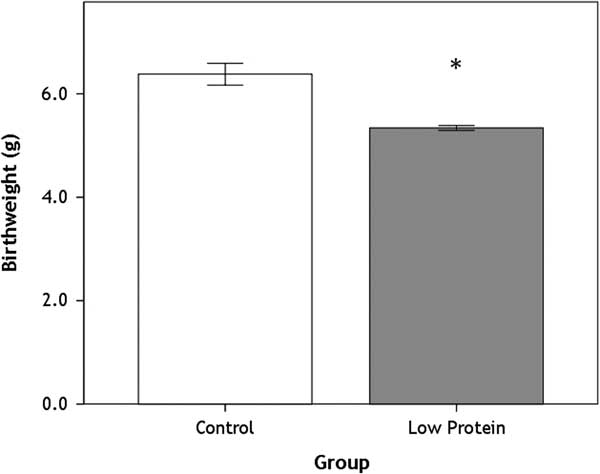
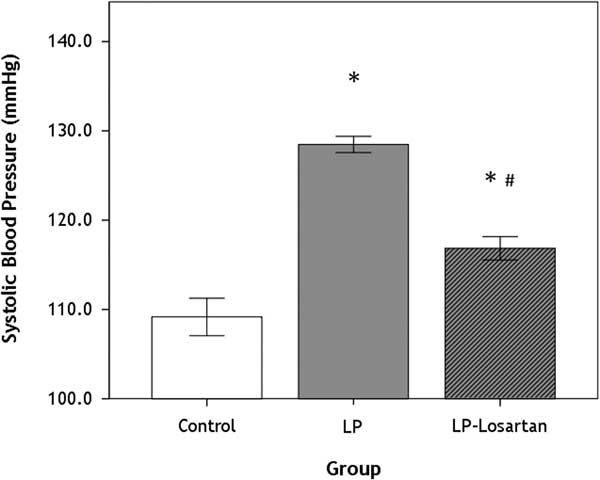
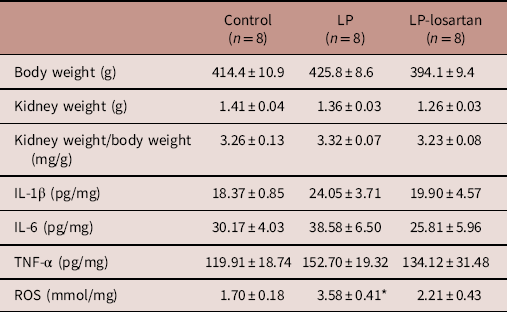
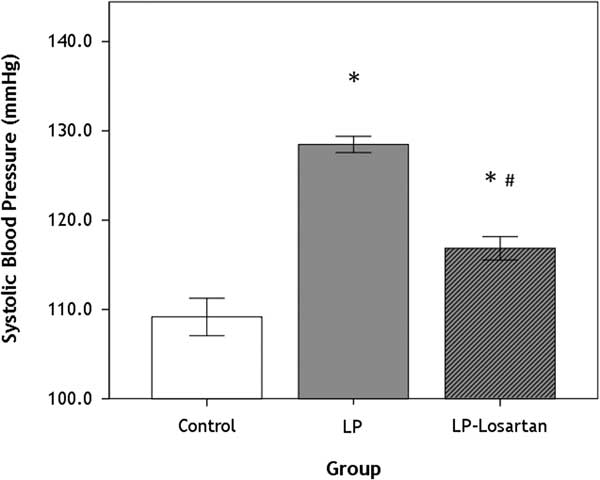
The offspring of LP dams had ~20% lower birth weights than the control offspring (Fig. 1). The initial difference in body weight disappeared in adult life, indicating that LP animals underwent postnatal growth to compensate for the disturbances during intrauterine life by maternal dietary manipulation during pregnancy (Table 1). Moreover, we found similar kidney weights and kidney weight/body weight ratios between all experimental groups (Table 1). Haemodynamic profiling indicated that the LP diet during pregnancy led to increased blood pressure levels of the offspring in adult life. LP rats presented greater systolic blood pressure levels (129±1 mmHg) compared with the control group (109±2 mmHg) (Fig. 2). Long-term treatment with AT1 blocker, which was initiated after weaning, successfully maintained systolic blood pressure at normal blood pressure levels (117±1 mmHg).
Effect of low-protein diet during pregnancy on birth weight of offspring of control group (20% protein diet) and low-protein diet group (LP: 6% protein diet). LP offspring presented 20%-reduced birth weight compared with control offspring (*P<0.05).

Blood pressure levels of adult male offspring of control (n=8), low-protein diet (LP) (n=8) and LP-losartan (n=8) groups. *P<0.05 v. control group and # P<0.05 v. LP group.
At 20 weeks of age, data regarding body weight, kidney weight, kidney weight/body weight ratio, proinflammatory cytokines, reactive oxygen species (ROS) and nitric oxide production by nitrite/nitrate levels

LP, low-protein diet; IL, interleukin; TNF, tumour necrosis factor.
Data are given as mean±s.e.m.
*P<0.05 LP v. control group.
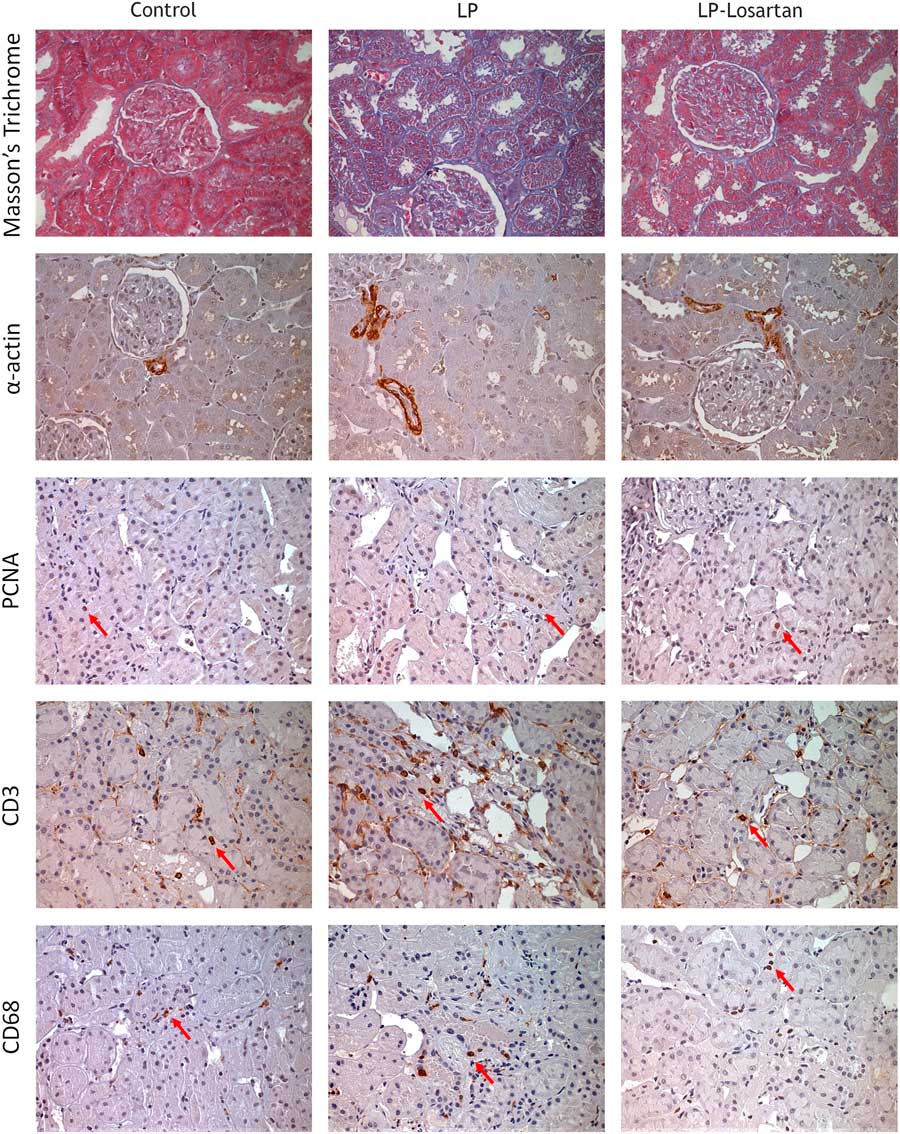
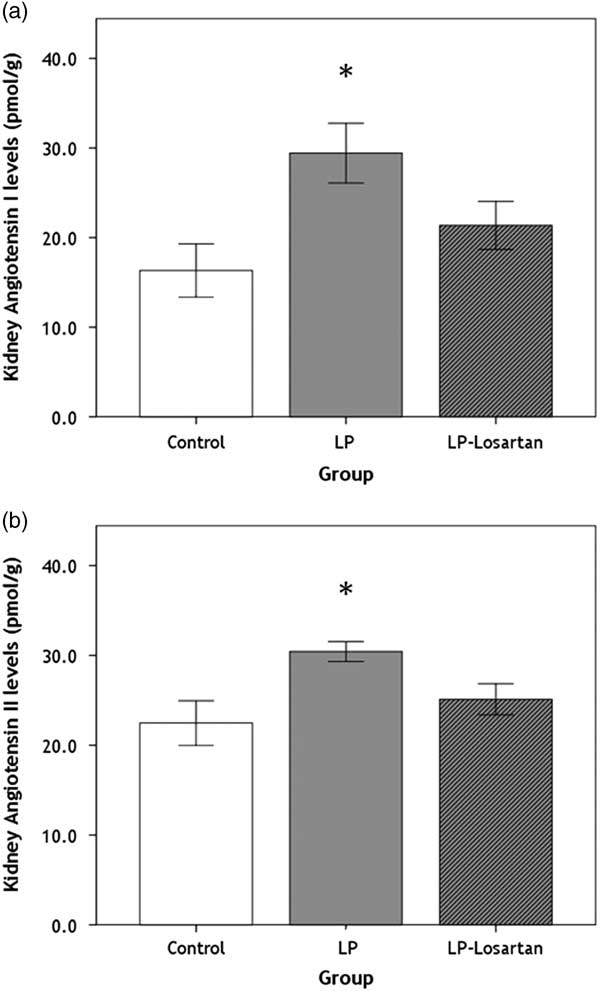
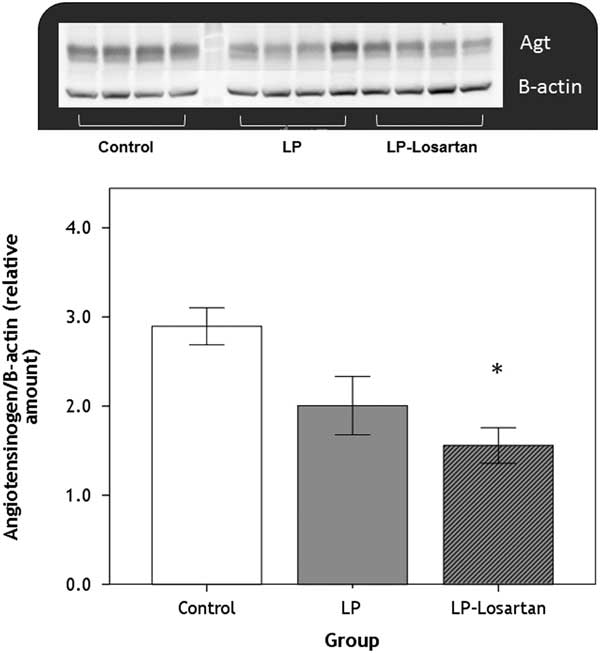
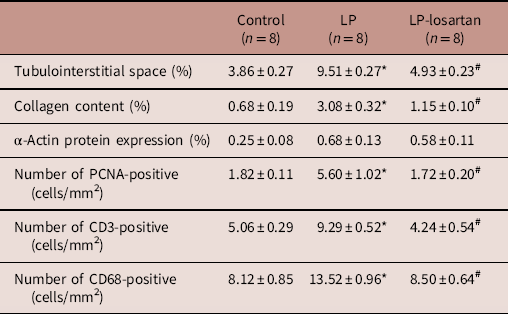
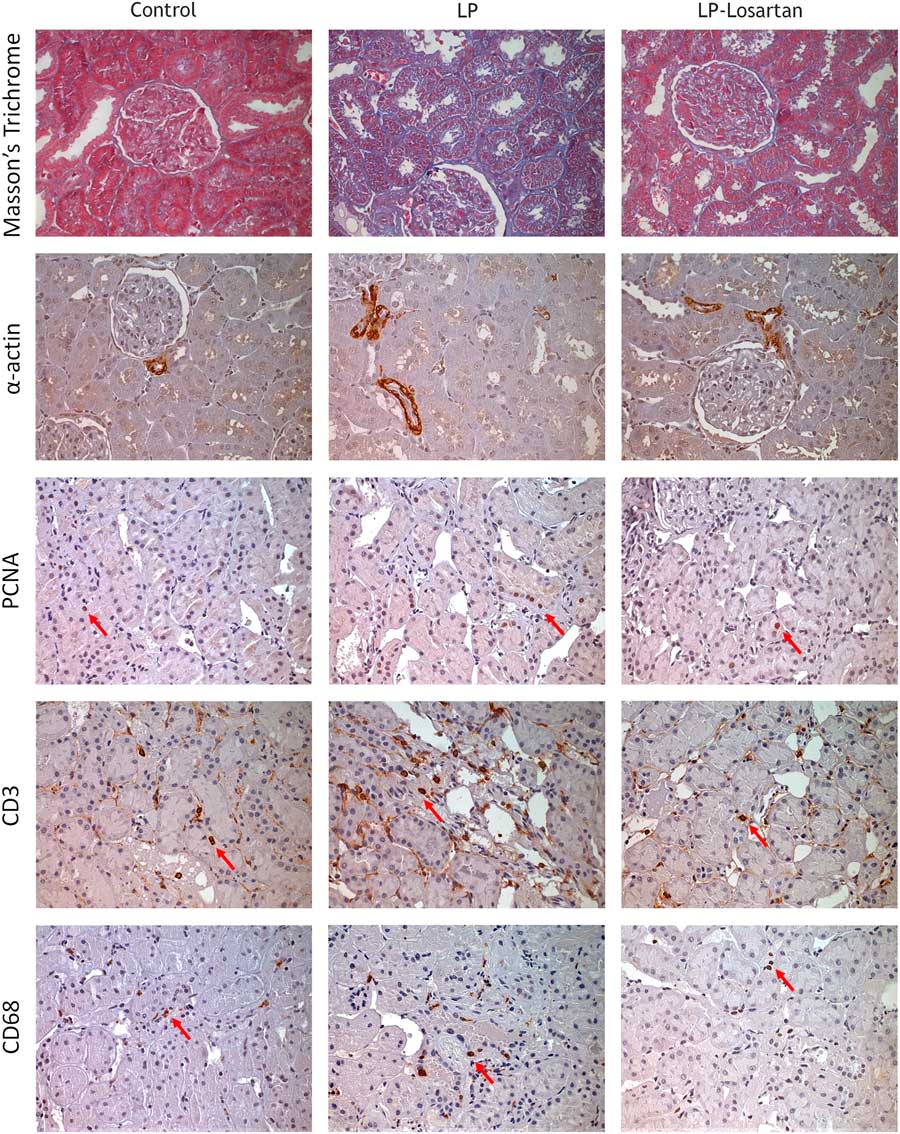
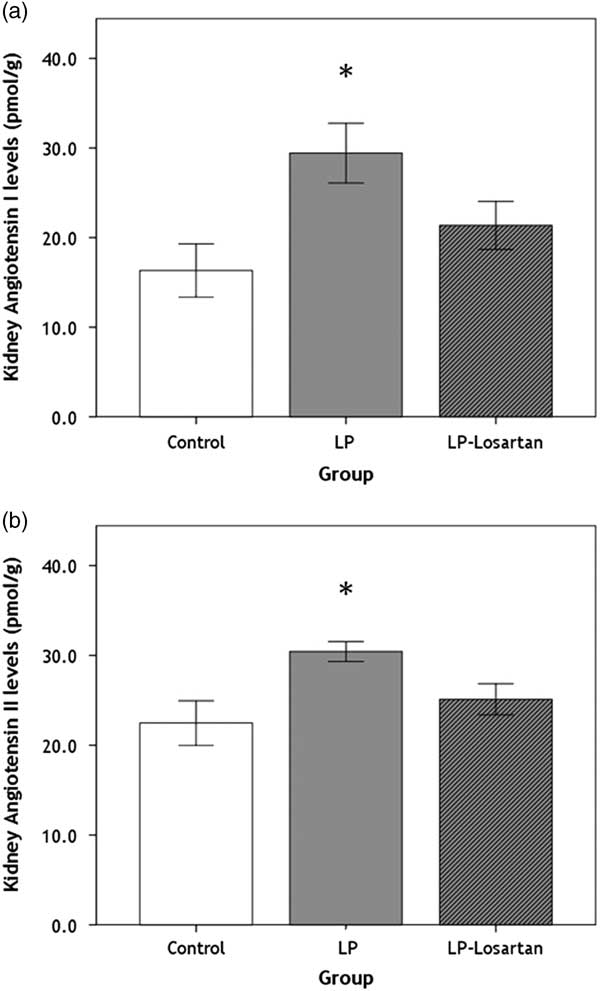
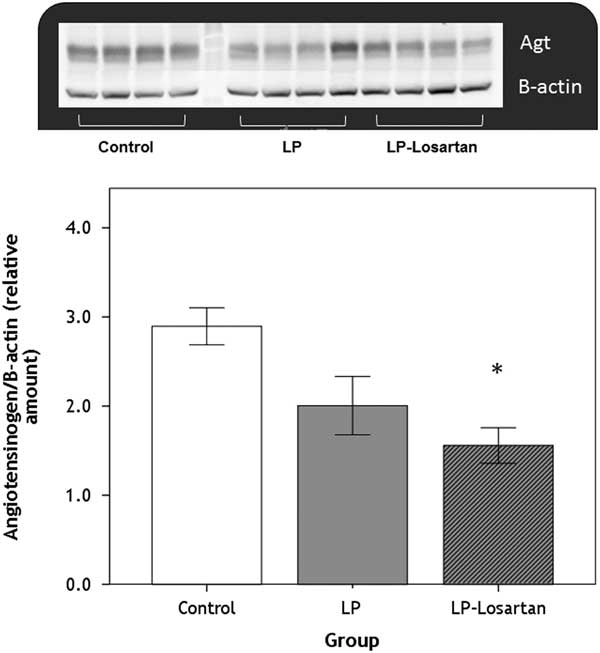
Adverse effects caused by the LP diet were also observed in the kidney, in which elevated levels of proinflammatory cytokines associated with higher ROS concentrations were also observed (Table 1). The LP group showed two-fold higher levels of ROS, indicating an imbalance in renal redox status. Abnormal infiltration of T cell and macrophages in the kidney of untreated LP animals (Fig. 3) was followed by increases in the levels of IL-1β, IL-6 and TNF-α (Table 2). In addition, other histological alterations were observed in the kidney of LP rats, including a two-fold increase in the proximal tubule interstitial area, four-fold increase in collagen expression and three-fold larger number of PCNA-positive cells compared with in the control group (Fig. 3). AT1 receptor blockade successfully prevented alterations in kidney structure and abrogated the recruitment of proinflammatory cells and imbalanced redox status in the kidney. All adverse effects caused by the maternal LP diet in the offspring kidney were followed by up-regulation of renal RAS activity (Fig. 4). We observed an increased concentration of Ang II and its main precursor Ang I in the LP group, indicating activation of the Ang II axis, known as the proinflammatory RAS axis. This augmentation of Ang I and Ang II concentrations was not observed in the losartan-treated LP group, which showed decreased protein expression of the Ang I precursor (angiotensinogen) by 50% at 20 weeks of age (Fig. 5).
Histological and immunohistochemical analysis in kidney isolated of adult male offspring of control (n=8), low-protein diet (LP) (n=8) and LP-losartan (n=8) groups. LP rats presented increased proximal tubule interstitial area, collagen expression, number of proliferating cell nuclear antigen-positive cells, CD3-positive cells (leucocytes) and CD68-positive cells (macrophages) compared with control group (P<0.05). Post-weaning losartan treatment was able to prevent these renal histological alterations in LP rats (P<0.05).
(a) Levels of angiotensin-I (Ang I) and (b) angiotensin II (Ang II) in the kidney of adult male offspring of control (n=8), low-protein diet (LP) (n=8) and LP-losartan (n=8) groups. *P<0.05 v. control group.
Abundance of angiotensinogen (Agt) protein relative to β-actin protein expression determined by semi-quantitative immunoblotting in kidneys of adult male offspring of control (n=4), low-protein diet (LP) (n=4) and LP-losartan (n=4) groups. *P<0.05 v. control group.
At 20 weeks of age, data regarding histological and immunohistochemical analysis

LP, low-protein diet; PCNA, proliferating cell nuclear antigen.
Data are given as mean±s.e.m.
*P<0.05 LP v. control group; # P<0.05 LP-losartan v. LP.
Discussion
A variety of nutritional alterations during pregnancy can be experimentally applied for prenatal programming of hypertension. In general, the magnitude of intrauterine restriction to affect blood pressure levels of the offspring in adulthood depends on the severity of the restriction. LP rats showed an increase of 15–20 mmHg compared with the control group. Other studies reported similar results, with increases of 5–40 mmHg.Reference Vehaskari, Aviles and Manning 16 , Reference Woods, Weeks and Rasch 17 In our study, inhibition of RAS partially reduced blood pressure levels of the LP group. Previous studies have shown that the intrarenal RAS can regulate blood pressure.Reference Carey 18 In fact, the concentration of Ang II in the kidney is much greater than can be explained by the concentration delivered by arterial blood flow.Reference Ingert, Grima, Coquard, Barthelmebs and Imbs 19 High levels of Ang II and its precursor indicate activation of the local RAS in the kidney of LP offspring. Increased production of angiotensins at 20 weeks of age likely occurs in resident cells and infiltrated immune cells. Ang II may promote the accumulation of immune cells through its haemodynamic actions by promoting the synthesis of chemokines and adhesion molecules and by directly affecting resident and infiltrating cells. In non-immune renal diseases, including diabetes and hypertension, immunocompetent cells are particularly conspicuous in areas of active tubule interstitial injury. In this regard, Ang II can recruit inflammatory cells, including monocytes, T-cells, natural killer cells and dendritic cells.Reference Kintscher, Wakino and Kim 11 , Reference Jurewicz, McDermott and Sechler 12 Untreated LP animals showed a 60% increase in macrophages and 80% increase in T-cells compared with the control group. Hoch et al. showed that lymphocytes possess an endogenous RAS that modulates T cell proliferation and migration, NADPH activity and ROS production.Reference Hoch, Guzik and Chen 15 During inflammation, the Ang II/AT1R interaction stimulates cytoskeletal rearrangements in T-cells and triggers the release of cytokines and chemokines, favouring T cell recruitment to inflammation sites.Reference Jurewicz, McDermott and Sechler 12 , Reference Crowley, Frey and Gould 20 Stewart et al.Reference Stewart, Jung, Manning and Vehaskari 21 also observed intense infiltration of inflammatory cells in a similar model of intrauterine restriction of growth at 8 weeks of age, which was abrogated by immunosuppressive drug therapy.
As observed with immunosuppressive treatment, we found that AT1 receptor blockade abolished immune cell infiltration and up-regulation of renal RAS, abrogating renal morphological alterations observed in the untreated group, such as increased proximal tubule interstitial area followed by augmentation of collagen expression and a larger number of PCNA-positive cells. Infusion of Ang II in mice lacking T and B cells did not cause hypertension.Reference Guzik, Hoch and Brown 22 T cell function appears to be regulated by an endogenous RAS, which affects NADPH activity.Reference Hoch, Guzik and Chen 15 In addition, T-cells possess components of the RAS and produce Ang II, which then exerts autocrine action to stimulate the production of superoxide.Reference Jurewicz, McDermott and Sechler 12 A final pathway in most injuries leading to chronic kidney damage results in a self-perpetuating cycle of activation of RAS, generation of ROS, and recruitment and activation of macrophages and lymphocytes.Reference McMaster, Kirabo, Madhur and Harrison 23
Increased oxidative stress was observed in the kidney of untreated programmed animals, which showed a two-fold higher ROS concentration than the control group. Once immune cell infiltration was abolished by RAS inhibition, the redox status was no longer imbalanced in the kidney. It has been hypothesized based on clinical and experimental data that a chronically high ROS concentrations in the kidney lead to hypertension.Reference Araujo and Wilcox 24 Stewart et al.Reference Stewart, Jung, Manning and Vehaskari 21 found that during the pre-hypertensive stage, at 4 weeks of age, LP diet pups exhibited an increase in kidney nitrotyrosine content and number of immune cells, both of which persisted in untreated animals after hypertension was established at 8 weeks of age. Mycophenolate mofetil and tempol treatment prevented immune cell infiltration, increased kidney nitrotyrosine levels and hypertension development.
Conclusions
Post-weaning losartan treatment completely abolished the infiltration of immune cells and activation of intrarenal RAS in the kidney of LP animals. The prevention of augmented Ang II concentration abolished inflammatory and fibrotic events, indicating that Ang II via the AT1 receptor is essential for initiating this pathological condition. Despite numerous studies on essential hypertension, its pathogenesis remains unclear. Our results suggest that prenatal programming hypertension is dependent on up-regulation of local RAS and the presence of immune cells in the kidney.
Financial Support
This research was supported by Grant from the FAPESP (Fundação de Amparo à Pesquisa do Estado de São Paulo, Brazil) (Project Number: 2009/14006-5).
Conflicts of Interest
None.
Ethical Standards
All procedures were approved by Ethical Committee for Animal Research at Federal University of São Paulo, and are in accordance with guidelines for ethical conduct in the care and use of animals proposed by Brazilian Society of Laboratorial Animal Science (SBCAL/COBEA).