Autism spectrum disorder (ASD) is characterized by deficits in social communication and interactions along with repetitive or restricted range of behaviors or interests that appear in early childhood and lead to significant lifelong functional impairment (American Psychiatric Association, 2013). The prevalence rate of ASD in Australia has been estimated to be between 0.2% and 0.8% of individuals, with approximately 80% being male (Barbaro & Dissanayake, Reference Barbaro and Dissanayake2010; Williams et al., Reference Williams, MacDermott, Ridley, Glasson and Wray2008), which is slightly lower than the estimated worldwide rate of 1% to 2% (Centers for Disease Control and Prevention, 2015). Finally, the rates of ASD in Australia have increased in recent years (Australian Institute of Health and Welfare, 2017).
It is well established that genetics plays a large role in the risk for ASD (Buxbaum, Reference Buxbaum2009; Mehta & Geschwind, Reference Mehta and Geschwind2014), with heritability rates ranging from 20% to 95% (Huguet & Bourgeron, Reference Huguet and Bourgeron2016). Among other genes believed to be involved in the etiology of ASD, the 5-HTTLPR polymorphism of the serotonin transporter has been shown to play a role, possibly due to its role in decreasing the amount of serotonin in the brain, particularly in individuals with the long-long (LL) genotype who have an overabundance of the substance (Rose'Meyer, Reference Rose'Meyer2013). Gadow and colleagues (Reference Gadow, DeVincent, Siegal, Olvet, Kibria, Kirsch and Hatchwell2013) showed that children carrying two L alleles on the 5-HTTLPR polymorphism of the serotonin transporter gene were rated as having more severe ASD traits compared with children carrying the short-long (SL) or short-short (SS) genotypes. However, other reports suggest a larger role for the SS genotype (Cook Jr. et al., Reference Cook, Courchesne, Lord, Cox, Yan, Lincoln and Leventhal1997), or suggest that the long and short alleles are associated with different aspects of ASD (Brune et al., Reference Brune, Kim, Salt, Leventhal, Lord and Cook2006; Kistner-Griffin et al., Reference Kistner-Griffin, Brune, Davis, Sutcliffe, Cox and Cook2011). While these and other familial and/or twin studies (Hu, Reference Hu2013; Mehta & Geschwind, Reference Mehta and Geschwind2014) clearly demonstrate the role that genetics plays in the development of ASD, the lack of perfect heritability indicates that environmental factors play a role in determining which genetically susceptible individuals develop ASD (Walder et al., Reference Walder, Laplante, Sousa-Pires, Veru, Brunet and King2014).
The non-genetic factor that is the focus of the present study is in utero exposure to a natural disaster. In a seminal paper on the topic, Kinney and colleagues (Reference Kinney, Miller, Crowley, Huang and Gerber2008) demonstrated a dose-response relationship between in utero exposure to hurricanes or tropical storms of various magnitudes and rates of autistic disorder (AD). Using data obtained from the National Center for Health Statistics and Louisiana Department of Health and Hospitals (birth dates, sex, birth counties, and AD diagnoses) and the National Weather Service (dates, locations, severity on hurricanes, tropical storms, or floods in Louisiana between 1980 and 1995), these authors reported that the prevalence of AD increased in a dose-response relationship to the severity of the disaster with the highest prevalence rates observed in children calculated to have been exposed in utero during mid- or very late gestation and born to mothers in the counties that were the most affected by the disasters. However, no direct measurement of the women's level of psychological distress was possible. More recently, it has been reported that in utero exposure to high levels of maternal objective hardship and subjective distress resulting from a major ice storm in Canada were associated with a greater number of ASD traits, especially in children exposed early in gestation (Walder et al., Reference Walder, Laplante, Sousa-Pires, Veru, Brunet and King2014). Furthermore, prevalence rates of autistic behaviors were higher than worldwide estimates in 3-year-old children whose mothers were pregnant during the 2010 Haiti earthquake and were traumatized by the disaster (Blanc, Antoine, & Mouchenik, Reference Blanc, Antoine and Mouchenik2015). However, to date, no study has explored the potential interactive effect of genotype and disaster-related prenatal maternal stress (PNMS) in predicting later ASD traits during childhood.
The 2011 Queensland flood provides the independent major stressor in the present study. In early January 2011, a series of severe floods devastated the state of Queensland, Australia. The vast majority of the area was declared a disaster zone, incurring over $1 billion in damages. In addition, 2,100 streets were evacuated, 20,000 homes were flooded, and approximately 40 deaths were attributed to the flood. Shortly after the flooding, 230 women who were pregnant during the disaster were recruited into the QF2011 Queensland flood study and were assessed to determine their objective hardship, their level of subjective stress, and their cognitive appraisal of the overall impact of the event. As such, three components of the women's flood experience were assessed. Maternal ratings of their children's autistic-like traits and saliva for genotyping were collected on a subsample of the participants’ children when they were 30 months of age.
The goal of the present study was to determine whether genetic susceptibility interacted with in utero exposure to various aspects of natural disaster-related maternal stress (objective hardship, subjective distress, and/or cognitive appraisal) to produce heightened expression of ASD traits. It was expected that higher levels of maternal objective hardship or subjective distress or a negative maternal appraisal of the flooding would be associated with more ASD traits in the exposed children. Moreover, we hypothesized that the highest levels of ASD traits would be observed in children carrying the LL alleles on the 5-HTTLPR polymorphism of the serotonin transporter gene and whose mothers experienced the highest PNMS levels. Furthermore, because ASD traits are more often observed in boys, we anticipated the effects to be more pronounced in boys.
Methods
A more detailed description of the sample composition and development of the flood-related PNMS variables can be found in King et al. (Reference King, Kildea, Austin, Brunet, Cobham, Dawson and Yong Ping2015). The protocol was approved by the Institutional Review Board of the Mater Research Institute in Queensland, Australia. All mothers provided informed written consent.
Participants
All women in the study were pregnant with a singleton on January 10, 2011, the date of the peak flooding in Brisbane, and were 18 years old or older at study entry. Recruitment began on April 4, 2011, and continued through mid-January 2012. Initially, 230 women completed a survey about their flood experiences, demographic data, and mental health at recruitment into the study (M = 5.25 months post-flood, SD = 1.71) and/or 12 months post-flood (M = 11.22 months post-flood, SD = 0.51). A total of 39 families withdrew from the study prior to the 16-month assessment, and an additional 7 families withdrew from the study prior to the 30-month assessment. Of the remaining 184 families, 9 families indicated that they did not want to attend the 30-month assessment but were willing to be contacted at a later date. Of the remaining 175 families, only 134 mothers completed the 15-item Autism Spectrum Rating Scales (ASRS) – Short Form (Goldstein & Naglieri, Reference Goldstein and Naglieri2009) questionnaire, even though they provided information about their current psychological functioning.
Of the 134 dyads, PNMS, ASD, and genetic data were available for 108 children (59 boys and 49 girls). Approximately 35% of these children were exposed in utero to the effects of the flooding during the first trimester of pregnancy, 40% during the second trimester, and 25% during the third trimester. The data from three participants, all girls, were not included in the analyses because these girls were born preterm (< 37 weeks). Thus, the analyses were conducted using the data of 105 children (59 boys and 46 girls).
Prenatal maternal stress variables
Slightly more than half (54.3%) of the women completed a hardcopy of the recruitment questionnaire and mailed it to our research office. The remaining women completed the recruitment questionnaire online. At 30 months, 73.1% of the mothers completed the questionnaire online. The remainder completed a hardcopy of the questionnaire and mailed it to our research office.
Objective hardship
At recruitment, the women's objective hardship due to the flooding was assessed with a series of questions that reflected their objective flood-related experiences related to four categories of exposure: threat, loss, scope, and change (Bromet & Dew, Reference Bromet and Dew1995). Each category was allotted up to 50 points with a maximum overall hardship score of 200. See King et al. (Reference King, Kildea, Austin, Brunet, Cobham, Dawson and Yong Ping2015) for a complete description of the scale and scoring.
Cognitive appraisal
The women's cognitive appraisal was assessed using a single item in the questionnaire package about their flood exposure experiences: Overall, what were the consequences of the flood on you and your family? Response options were on a 5-point scale of Very negative (1), Negative (2), Neutral (3), Positive (4), and Very positive (5). This item was dichotomized into Negative and Neutral/Positive due to the narrow range of responses on the scale.
Posttraumatic stress disorder (PTSD)-like symptoms
The women's PTSD-like symptoms at recruitment were assessed using the 22-item Impact of Events Scale – Revised (Weiss & Marmar, Reference Weiss, Marmar, Wilson and Keane1997). This scale yields a total score as well as scores for three categories of PTSD symptoms: intrusive thoughts, avoidance, and hyperarousal.
Peritraumatic experiences
The women's peritraumatic distress, that is, their level of distress at the time of the flood as recalled at recruitment, was assessed using the 13-item Peritraumatic Distress Inventory (PDI) (Brunet et al., Reference Brunet, Weiss, Metzler, Best, Neylan, Rogers and Marmar2001). Finally, the women's peritraumatic dissociation was assessed using the 10-item Peritraumatic Dissociative Experiences Questionnaire (PDEQ) (Marmar, Weiss, & Metzler, Reference Marmar, Weiss, Metzler, Wilson and Keane1997).
Composite subjective stress score
A composite subjective stress score was calculated to reduce the number of predictor variables in the regression analyses. The Composite Score for Mothers’ Subjective Stress (COSMOSS) was computed using the principal component analysis (PCA) on the total scores of the three traumatic stress measures (IES-R, PDI, and PDEQ) for all of the women (N = 230) who provided PNMS data when recruited into QF2011. The PCA resulted in one factor explaining 76.36% of the overall subjective stress variance. The PCA-derived algorithm that was used to create the COSMOSS variable for QF2011 is COSMOSS = 0.358 × IESR + 0.397 × PDI + 0.387 × PDEQ. The composite subjective stress score is a standardized score with a mean of 0, such that positive and negative scores represent levels of subjective distress that are higher or lower than the mean, respectively.
In utero exposure
The timing of in utero flood exposure was defined as the number of days between the estimated date of conception and January 10, 2011, the date at which the flooding was recorded to peak; higher flood exposure days indicated flood exposure later in pregnancy. To calculate the estimated date of conception, we subtracted 280 days (40 weeks) from each woman's due date, which was first calculated using the baby's gestational age at birth and date at delivery.
Other maternal and child variables
Maternal factors
Maternal anxiety at recruitment was assessed using the state scale of the State-Trait Anxiety Inventory (Spielberger et al., Reference Spielberger, Gorsuch, Lushene, Vagg and Jacobs1983). Maternal anxiety (when the children were 30 months of age) was assessed using the 21-item Depression Anxiety Stress Scales (Crawford & Henry, Reference Crawford and Henry2003). Maternal positive mental health was assessed using the 14-item Mental Health Continuum – Short Form (Keyes, Reference Keyes2006). Maternal empathy was assessed using the 40-item Empathy Quotient Scale (Baron-Cohen & Wheelwright, Reference Baron-Cohen and Wheelwright2004). The socioeconomic status (SES), based on Australian postal codes, was calculated using the Socio-Economic Indexes for Areas (M = 1,000, SD = 100) at recruitment: higher scores indicate relative social advantage. The children's birth outcomes (i.e., gestational age, birth weight, and length) were obtained from hospital records.
Saliva collection and DNA genotyping
The saliva collection kits (Oragene DNA OG-500) were made available to all participants either at the 30-month laboratory assessment or by mail at the same age. However, not all mothers agreed to allow us to obtain samples from their children (n = 18); two sample kits were not returned, 4 children refused to provide a sample, and another two samples were of insufficient volume for analysis, so saliva samples were available for 108 (59 boys, 49 girls) of the 134 children. DNA was extracted from the saliva sample using PrepIT-L2P kit (DNA Genotek Inc.) according to the manufacturer's instructions. Polymerase chain reaction (PCR) was performed to span the central portion of the repeats in the 5-HTTLPR, and genotyping was conducted using agarose gel analysis of the PCR product. In the present analyses, the effect of the LL genotype on ASD traits was compared with the combined effects of the LS and SS genotypes.
Outcome variable
Mothers rated their children's autism-like symptoms using the 15-item ASRS – Short Form (Goldstein & Naglieri, Reference Goldstein and Naglieri2009) when their children were 30 months of age (M = 30.4 months, SD = 1.3 months). Mothers rated a series of child behaviors using a 5-point Likert scale ranging from Never to Very frequently. The 2- to 5-year version of this scale has excellent internal consistency (Cronbach alpha = 0.97) and test-retest reliability (r = 0.90). The scale also has excellent discriminative validity (sensitivity = 93.9%; specificity = 94.5%). The total score (ranging from 1 to 34) was used in the analyses. Scores ranging from 0 to 6 are classified as being low risk for developing ASD. Scores ranging from 7 to 20 are classified as being average risk for developing ASD. Scores ranging from 21 to 25 are classified as being slightly elevated risk for developing ASD. Scores ranging from 26 to 30 are classified as being elevated risk for developing ASD. Finally, scores ranging 31 and greater are classified as being very elevated risk for developing ASD.
Statistical analyses
Descriptive analyses were conducted for the outcome and predictor variables. Comparisons were conducted between the predictor variables for participating and non-participating families. Correlations were conducted between all variables.
Hierarchical linear regression analyses were conducted. First, maternal pregnancy status (not pregnant or pregnant) at the time of the completion of the recruitment questionnaire was entered into the model to control for any recall bias of the women's flood experiences. Maternal and child factors that were significantly associated with the outcome measure were then entered into the model. PNMS variables (i.e., objective hardship, cognitive appraisal, composite subjective stress score), child's sex, timing of exposure, child genotypes, and, finally, interaction terms were entered into the model in subsequent steps. The objective level of hardship was controlled for models that included either cognitive appraisal or subjective stress.
For any model containing a significant main-effect of composite subject stress or significant interaction term containing composite subjective distress, the analyses were re-run using the three components of our composite subjective distress measure (i.e., PTSD-like symptoms, peritraumatic distress, and peritraumatic dissociation) in separate analyses. The results of these analyses are presented in the Supplemental appendix.
All significant three-way interactions were explored by splitting the sample by the child's sex and conducting the same hierarchical linear regression analyses, except the child's sex and its relevant interaction terms, which were removed from these analyses.
All analyses (except as indicated) were conducted using SPSS, version 20. All significant interactions were explored using the PROCESS module for SPSS (Hayes, Reference Hayes2013).
Results
Descriptive statistics
Mothers were 32.3 years of age (SD = 4.9 years), on average, when their child was born. Although over 90% of the mothers in this sample came from the two highest Australian socioeconomic brackets, this distribution mirrors that of the overall population that was affected by the flooding. Approximately 10% of the mothers reported subjective stress levels that were indicative of potential PTSD.
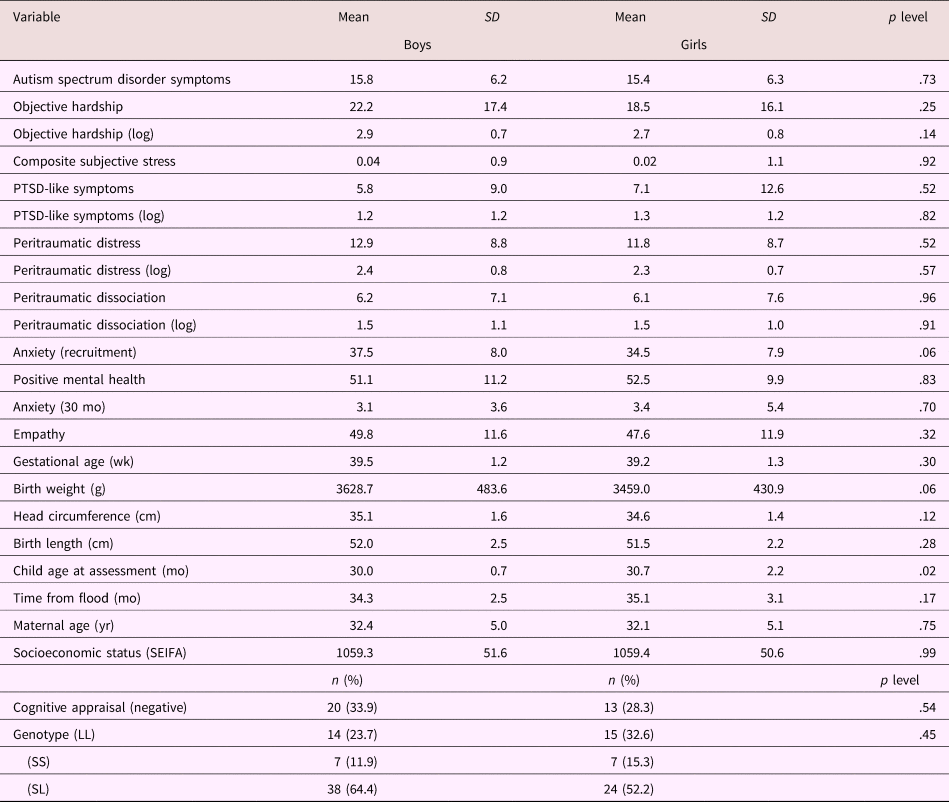
Means and standard deviations of the ASRS and predictor variables, as a function of the child's sex, can be found in Table 1. Boys and girls did not differ in their mean ASRS scores. Four (3.8%) children scored in the low (0-6) range, 79 (75.2%) in the average (7-20) range, 16 (15.2%) in the slightly elevated (21-25) range, 5 (4.8%) in the elevated (26–30) range, and 1 (1.0%) in the very elevated (31 +) range.
Mean and standard deviations (p level) for the continuous outcome and predictor variables and percentage (p levels) for the discrete predictor variables, as a function of the child’ sex

LL = long-long (genotype); PTSD = posttraumatic stress disorder; SL = short-long; SS = short-short.
The women's objective hardship and composite subjective distress levels did not differ as a function of the sex of their child. Girls were older at the time of the assessment (p = .02). Mothers of boys indicated that they experienced higher levels of anxiety at the time of recruitment (p = .06). Finally, boys tended to be heavier than girls at birth (p = .06).
When comparing the characteristics of the 105 participating families to all families who were initially enrolled in the study but who are not included in the present analyses (i.e., did not attend the assessment, or attended the assessment but genetic data were not available for the child), no differences were observed in the levels of objective hardship or composite subjective distress, recruitment or 30-month maternal anxiety, maternal empathy at 30 months, or child birth outcomes. However, participating mothers did report higher levels of positive mental health at recruitment compared with non-participating mothers.
Correlations between the outcome variable and predictor variables
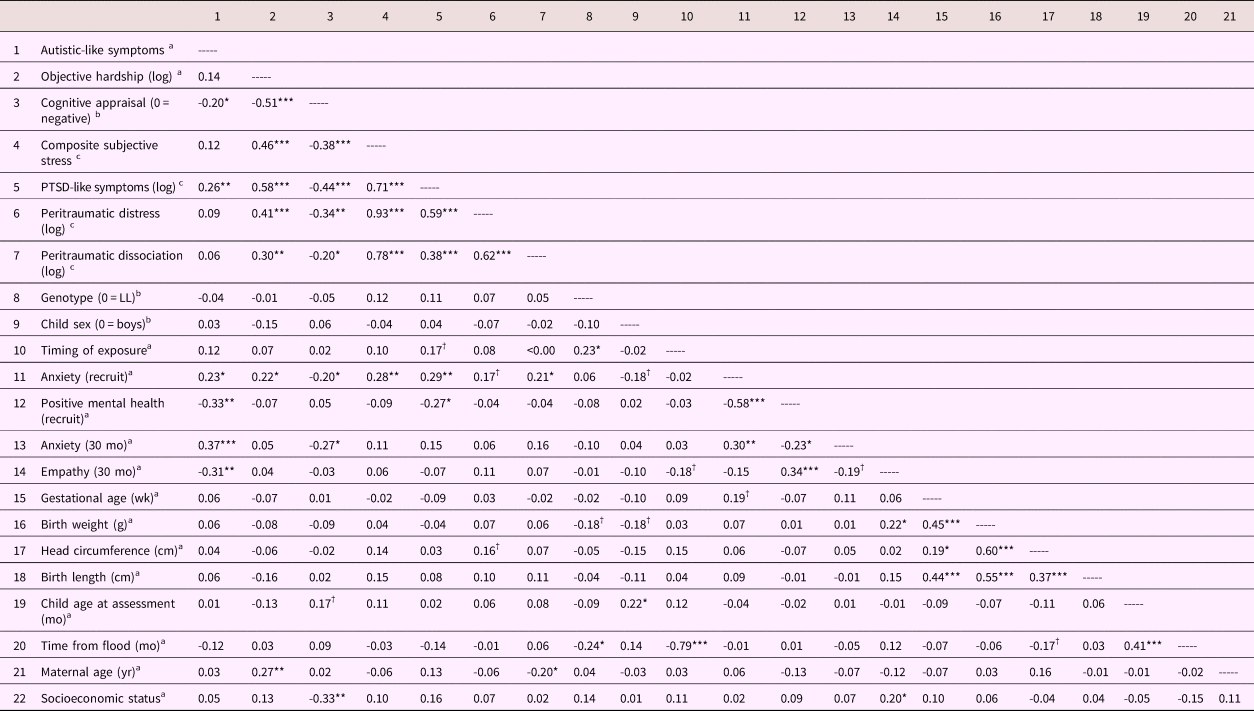
Correlations among the outcome and predictor variables are presented in Table 2. Lower levels of maternal positive mental health at recruitment and maternal empathy at 30 months were associated with higher ASRS scores in the children. Higher levels of maternal PTSD-like symptoms at recruitment and anxiety at recruitment at 30 months were associated with higher ASRS scores in the children. Negative maternal cognitive appraisal of the flood was related to higher ASRS scores. As expected, the values of the PNMS variables were highly interrelated, as were the children's birth outcome measures. The level of the mothers’ anxiety at recruitment was positively related to their objective hardship levels, composite subjective stress scores, as well as the three factors, and was negatively related to their cognitive appraisal of the flood. The level of the mothers’ positive mental health at recruitment was positively related to their level of empathy at 30 months and negatively related to their PTSD-like symptoms and 30-month anxiety levels. Finally, a higher SES was related to higher levels of objective hardship, but a lower SES was related to higher composite subjective stress levels.
Correlation coefficients between the outcome and predictor variables

a Pearson Product-Moment Correlations (r); b Point Biserial Correlations (r pb); c Spearman Rank Correlations (rho);
† p < .1; * p < .05; ** p < .01; ***p < .005.
Multivariate associations between predictor variables, 5-HTTLPR genotype, child's sex, and ASRS scores
Because the final models of all of the analyses were similar, only the results for the model with objective hardship as the sole PNMS predictor variable will be described in detail. For models containing cognitive appraisal and the composite subjective stress score, only the additional amount of variance accounted for by these variables and their interaction terms will be described.
Objective hardship
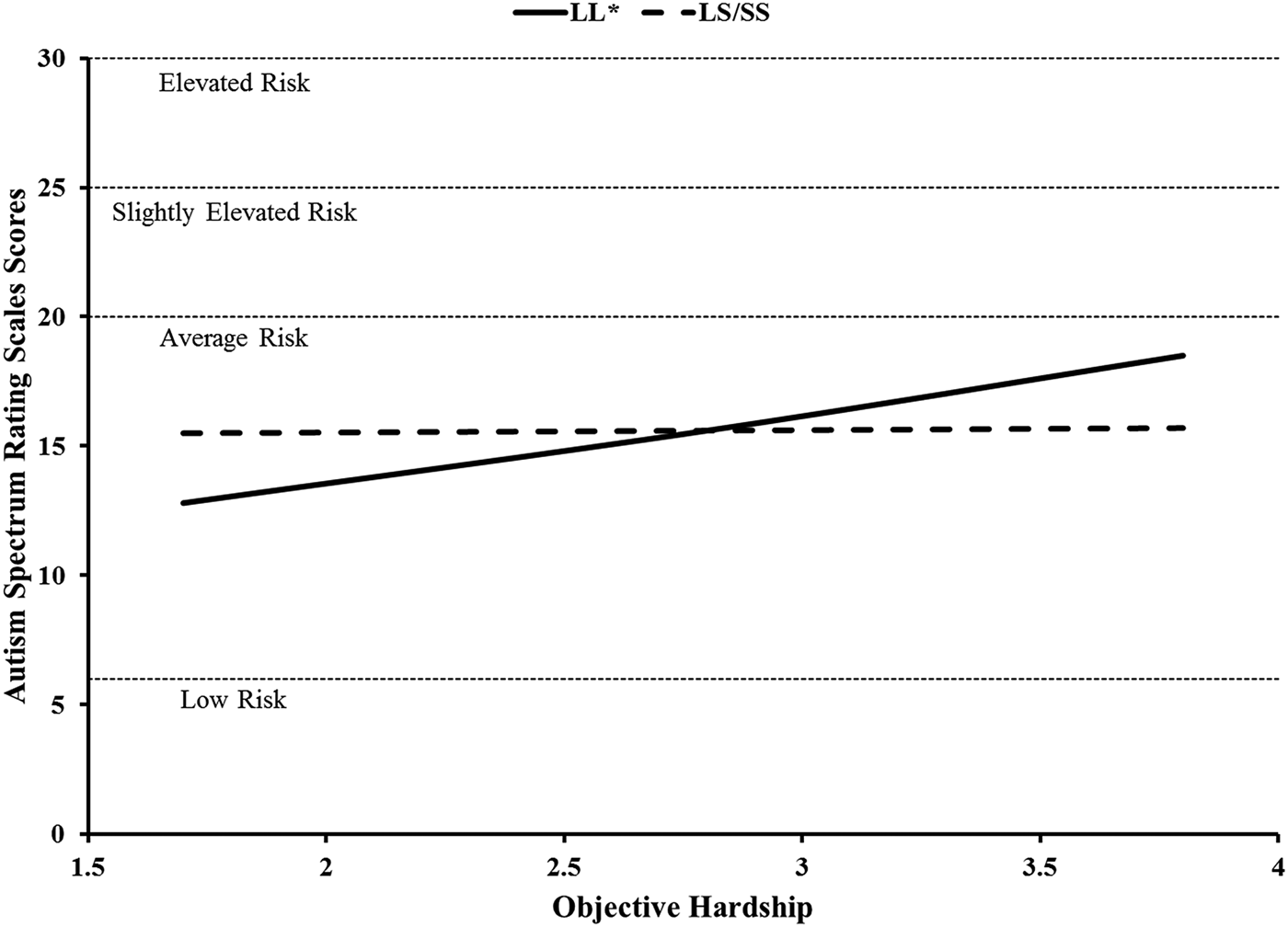
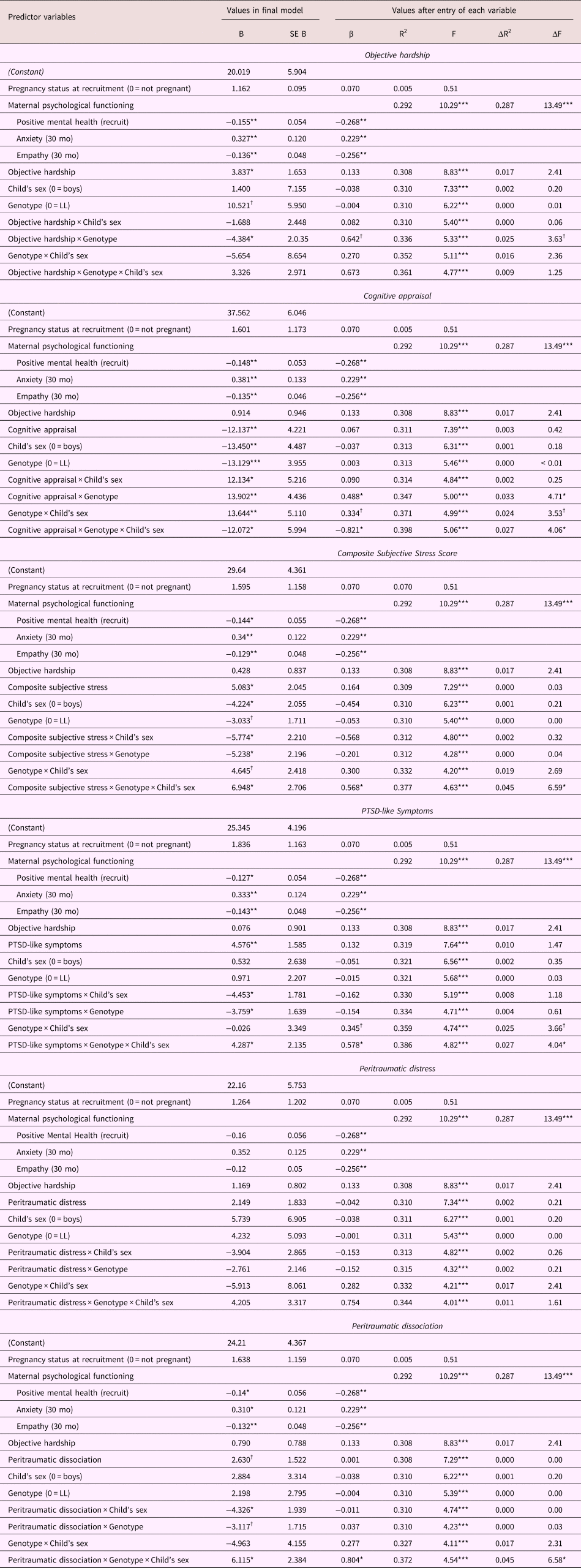
As presented in Table 3, maternal pregnancy status at the time of the completion of the recruitment questionnaire was unrelated to the children's ASRS scores. Maternal positive mental health at recruitment, current maternal empathy, and anxiety were significantly related to the children's ASRS score, accounting for an increase of 28.7% in explained variance: lower current maternal empathy and positive mental health levels at recruitment, as well as higher current maternal anxiety levels, were associated with higher ASRS scores. Maternal objective hardship levels, child's sex, genotype (LL vs. LS/SS), the objective hardship × child's sex interaction, and the genotype × child's sex were not significantly related to the children's ASRS scores. However, the maternal objective hardship × genotype interaction tended to be related to the children's ASRS scores, suggesting that higher levels of objective hardship were related to higher ASRS scores only in children with the LL genotype (Figure 1). Finally, the objective hardship × genotype × child's sex interaction did not explain significant additional amounts of variance in ASRS scores.
For the full sample, the slope of the LL genotype was significant (*) with ASRS scores increasing with increasing maternal objective hardship levels.

Multivariate associations between control variables, PNMS variables, 5-HTTLPR genotype, child's sex, and ASD scores

†p < .10; *p < .05; **p < .01; ***p < .001.
Cognitive appraisal
As presented in Table 3, cognitive appraisal, child's sex, genotype (LL vs. LS/SS), and the cognitive appraisal × child's sex and interaction were not significantly related to the children's ASRS scores. The genotype × child's sex interaction tended to be related to the children's ASRS scores. However, the maternal cognitive appraisal × genotype interaction was significantly related to the children's ASRS scores, accounting for an additional 3.3% of the variance: a combination of negative cognitive appraisal and the LL genotype were related to higher ASRS scores. Finally, the cognitive appraisal × genotype × child's sex interaction also was significantly related to the children's ASRS scores, accounting for an additional 2.7% of the variance. The final model accounted for 39.8% of the variance in the children's ASRS scores.
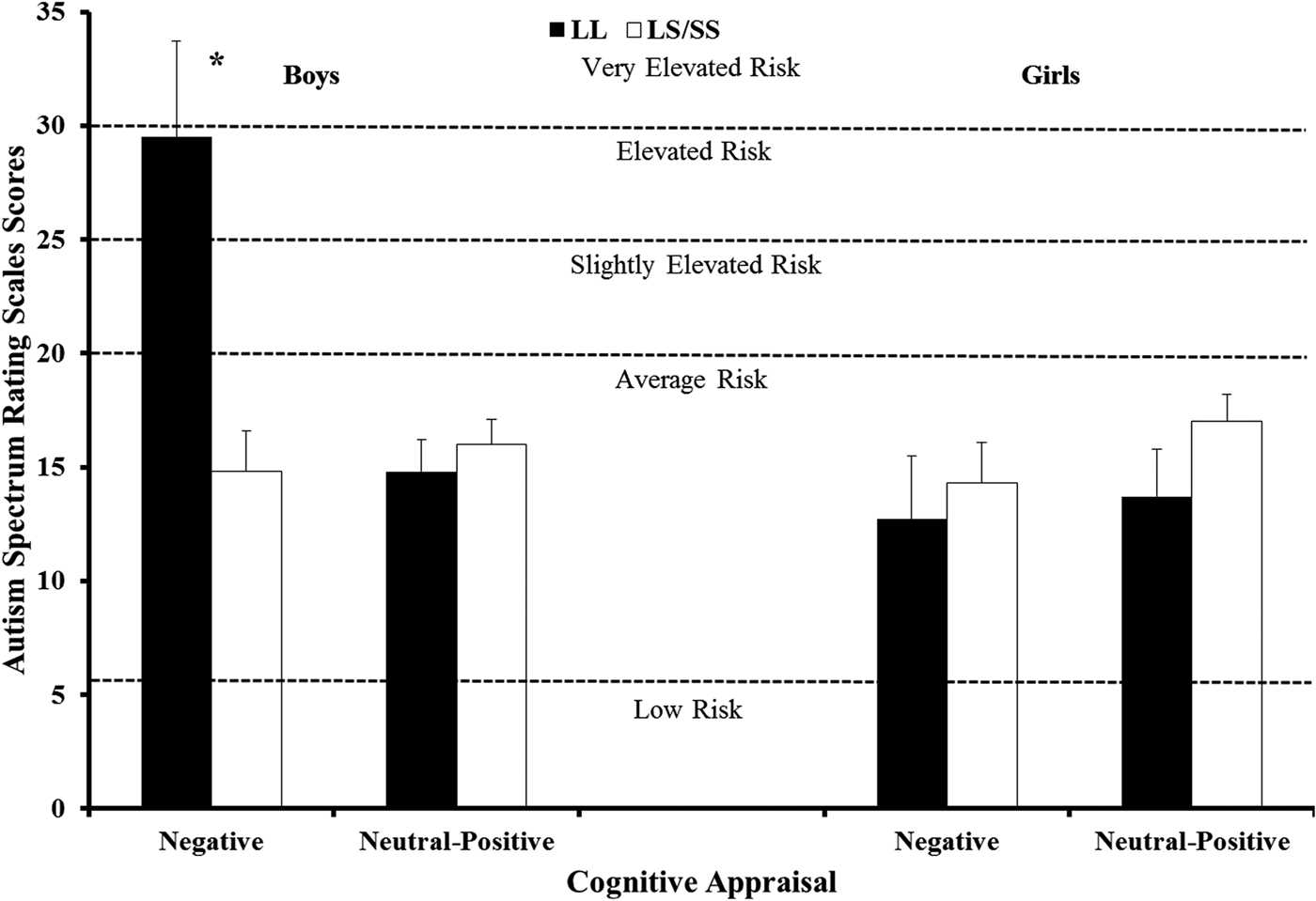
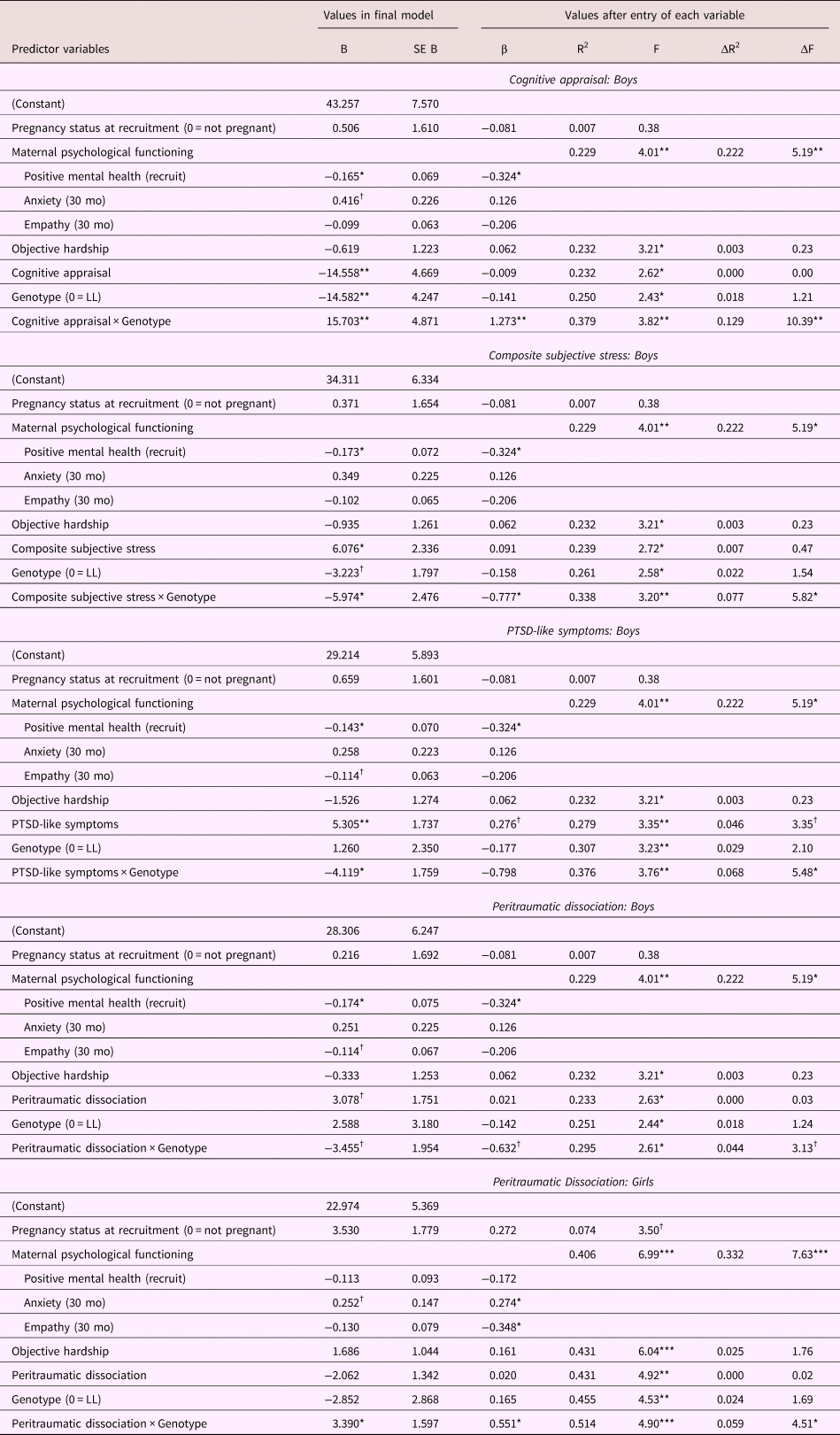
The analyses conducted to explore the three-way cognitive appraisal × genotype × child's sex interaction are presented in Table 4. In boys, maternal pregnancy status was unrelated to their ASRS scores. Maternal positive mental health at recruitment and current maternal empathy and anxiety collectively accounted for 22.2% of the variance: lower positive maternal mental health, lower maternal empathy, and higher maternal anxiety were associated with higher ASRS scores. Maternal objective hardship levels, cognitive appraisal, and genotype (LL vs. LS/SS) were not significantly related to the boys’ ASRS scores. However, the maternal cognitive appraisal × genotype interaction was significantly related to the boys’ ASRS scores, accounting for an additional 12.9% of the variance: only in boys exposed to negative maternal cognitive appraisal was the LL genotype related to higher ASRS scores than in the LS/SS group (Figure 2); the average ASRS scores for LL boys with negative maternal cognitive appraisal were at the high end of the elevated risk range. The final model accounted for 37.9% of the variance in the boys’ ASRS scores.
Boys with the LL genotype and who were exposed to negative maternal cognitive appraisal had higher ASRS scores relative to boys with negative maternal cognitive appraisal and the LL genotype, and relative to all boys with the LS/SS genotype.

Multivariate associations between predictor variables, 5-HTTLPR genotype, and ASD scores, as a function of a child's sex: Exploring the three-way interactions

†p < .10; *p < .05; **p < .01; ***p < .001.
In girls, maternal pregnancy status at time of completion of the recruitment questionnaire tended to be related to the ASRS scores (p = .068), accounting for 7.4% of the variance: mothers who were still pregnant when they completed the recruitment questionnaire tended to rate their girls higher on this scale. The three covariates (maternal positive mental health at recruitment, and current levels of maternal empathy and anxiety) collectively were related to the ASRS scores, accounting for an additional 33.2% of the variance: lower empathy (p = .018 at entry; p = .051 in final model), higher anxiety (p = .040 at entry; p = .045 in final model), and higher maternal positive mental health (p = .229 at entry; p = .179 in final model) scores were associated with higher ASRS scores (data not shown). Neither maternal objective hardship levels, cognitive appraisal, genotype (LL vs. LS/SS), nor the cognitive appraisal × genotype interaction were significantly related to the girls’ ASRS scores. The final model explained 36.7% of variance in ASRS scores.
Composite subjective stress score
As presented in Table 3, the composite subjective stress score, child's sex, genotype (LL vs. LS/SS), composite subjective stress × child's sex interaction, composite subjective stress × genotype interaction, and genotype × child's sex interaction were not significantly related to the children's ASRS scores. However, the composite subjective stress × genotype × child's sex interaction was significantly related to the children's ASRS scores, accounting for an additional 4.5% of the variance. The final model explained 37.7% of the variance in the children's ASRS scores.
The significant results of the analyses conducted to explore the three-way composite subjective stress × genotype × child's sex interaction are presented in Table 4. In boys, maternal pregnancy status at the completion of the recruitment questionnaire was unrelated to the ASRS scores. The three covariates (maternal positive mental health at recruitment, current maternal empathy, and anxiety) collectively accounted for an additional 22.2% of the variance: lower positive maternal mental health, lower maternal empathy, and higher maternal anxiety were associated with higher ASRS scores. Maternal objective hardship levels, composite subjective stress, and genotype (LL vs. LS/SS) were not significantly related to the boys’ ASRS scores. However, the maternal composite subjective stress × genotype interaction was significantly related to the boys’ ASRS scores, accounting for an additional 7.7% of the variance. The final model accounted for 33.8% of the variance in the children's ASRS scores.
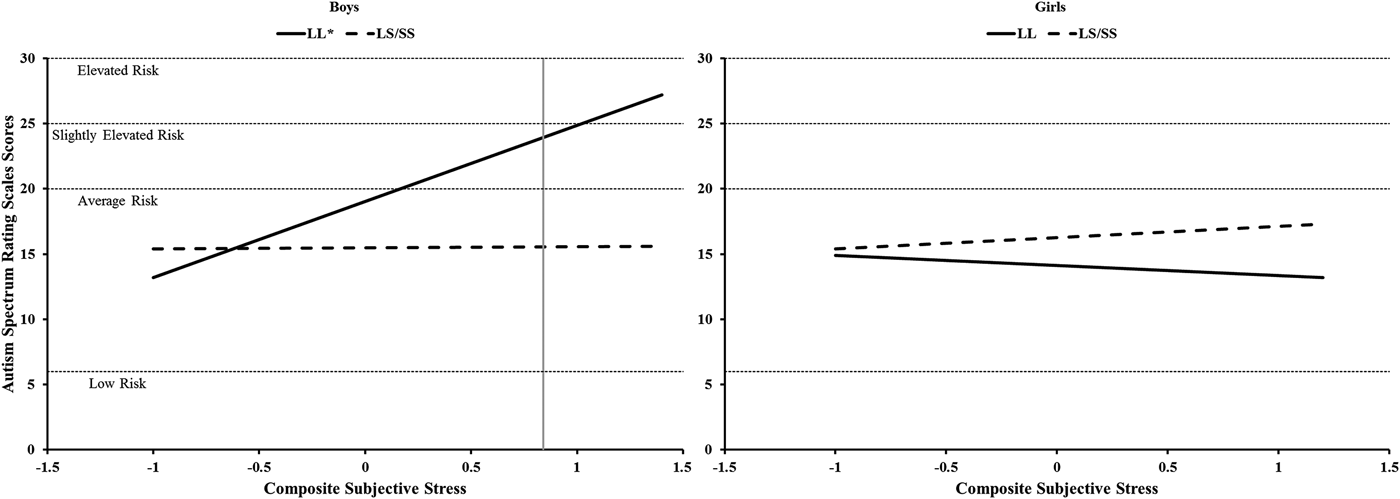
Pos hoc exploration of the interaction involving subjective stress in boys using PROCESS (Hayes, Reference Hayes2013) revealed that only the slope for the LL genotype was significant (p = .012) with ASRS scores increasing with increasing composite subjective stress values (Figure 3). The slope for the LS/SS genotype was not significant (p = .914). Finally, when the composite subjective stress value was 0.83 and greater, ASRS scores were significantly higher in boys with the LL genotype (with the average in the elevated risk range) than those with the LS/SS genotype (averaging in the average risk range).
For boys, the slope for the LL genotype was significant (*) with ASRS scores increasing with increasing maternal composite subjective stress levels; when maternal composite subjective stress scores were higher than 0.84, the difference in ASRS scores between the two genotypes was statistically significant. In girls, neither the slope for the LS/SS or LL genotypes was statistically significant.

Exploring the composite subjective stress × genotype × child's sex interaction in girls revealed that maternal pregnancy status at time of completion of the recruitment questionnaire tended to be related to the ASRS scores (p = .068), accounting for 7.4% of the variance: mothers who were still pregnant when they completed the recruitment questionnaire tended to rate their girls higher on this scale. The three covariates (maternal positive mental health at recruitment, and current levels of maternal empathy and anxiety) collectively were related to the ASRS scores, accounting for an additional 33.2% of the variance: lower empathy (p = .018 at entry; p = .079 in final model), higher anxiety (p = .040 at entry; p = .088 in final model), and lower maternal positive mental health (p = .229 at entry; p = .250 in final model) scores were associated with higher ASRS scores (data not shown). Neither maternal objective hardship levels, composite subjective stress, genotype (LL vs. LS/SS), nor the composite subjective stress × genotype interaction were significantly related to the girls’ ASRS scores.
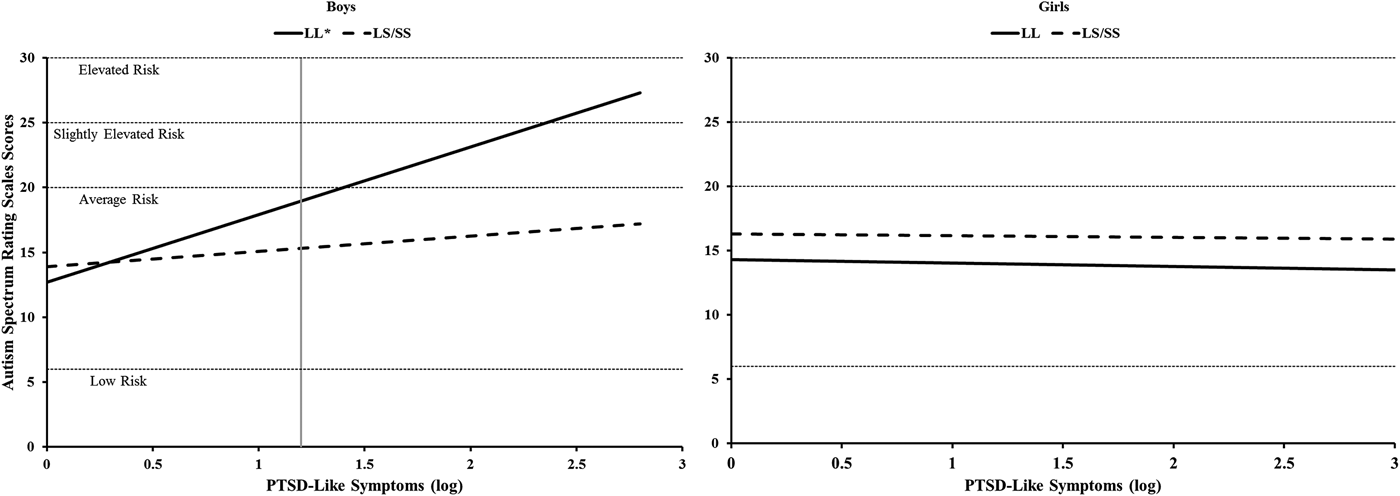
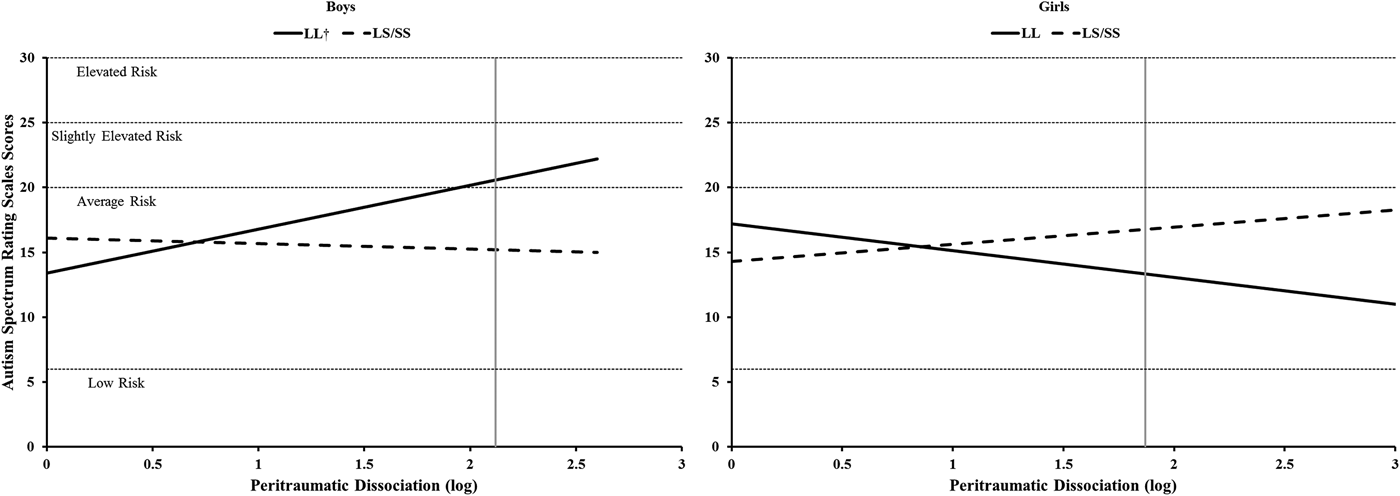
To determine which aspect(s) of the composite subjective stress score was related to the children's ASRS scores, separate analyses were conducted for PTSD-like symptoms, peritraumatic distress, and peritraumatic dissociation. The results of these secondary analyses are presented in Tables 3 and 4. A complete description of these results can be found in the Supplemental appendix. The results suggest that, for boys, the LL genotype was sensitive to maternal PTSD-like symptoms (Figure 4) and to peritraumatic dissociation (Figure 5), with the combinations resulting in higher ASRS scores for the LL genotype, whereas for girls, the LL genotype was sensitive to maternal peritraumatic dissociative experiences with the combination resulting in lower ASRS scores (see Figure 5).
For boys, the slope for the LL genotype was significant (*) with ASRS scores increasing with increasing maternal PTSD-like levels; when the log of PTSD-like symptoms was 1.2 or higher (equivalent to a raw IES-R score of 2.4), boys with the LL genotype had significantly higher ASRS scores than those with LS/SS. In girls, the slopes for the LS/SS and LL genotypes were not statistically different from zero.

For boys, the slope for the LL genotype tended to be significant (†) with ASRS scores increasing with increasingly severe maternal peritraumatic dissociation levels; when the log of the peritraumatic dissociation scores was 2.1 or greater (equivalent to a PDEQ score of 7.2), boys with the LL genotype had significantly higher ASRS scores than those with the LS/SS genotype. In girls, neither the slope for the LS/SS or LL genotypes was statistically significant, although when the log of the PDEQ was greater than 1.9 (equivalent to a PDEQ score of 5.3), girls with the LS/SS genotype had significantly greater ASRS scores.

Discussion
The purpose of the present study was to determine whether disaster-related PNMS, 5-HTTLPR genotype, a child's sex, and the interactions among these factors, individually or together, predicted the level of ASD traits in a non-clinical sample of toddlers, after controlling for additional maternal characteristics at recruitment and at the time of their child's ratings. These maternal characteristics, including positive mental health scores at recruitment and maternal anxiety and empathy at 30 months, explained 29.2% of the variance in children's scores.
In the total sample of boys and girls combined, there were also several three-way interactions that highlighted sex-differences in the PNMS-by-Genotype interactions. The results indicated that the interactions between the 5-HTTLPR LL genotype and four aspects of the mothers’ PNMS (maternal cognitive appraisal of the flooding, composite subjective distress, and its components of PTSD-like symptoms and peritraumatic dissociation) explained significant amounts of variance in the boys’ ASD traits, after controlling for levels of maternal positive mental health at recruitment and current levels of maternal anxiety and empathy. In all cases, it was the LL genotype that appeared to be most vulnerable to PNMS for boys. In girls, although neither genotype was significantly associated with a change in ASRS scores as a function of their level of in utero exposure to PNMS, girls with the LS/SS genotype of the 5-HTTLPR gene had higher ASRS scores relative to girls with the LL genotype of the 5-HTTLPR gene, after controlling for maternal positive mental health at recruitment and current levels of maternal empathy and anxiety.
The findings of the current study provide additional support for the roles of both genetics and the prenatal environment in the etiology of ASD traits in young children, with some differences by the child's sex. Similar to previous reports with clinical samples (Buxbaum, Reference Buxbaum2009; Gadow et al., Reference Gadow, DeVincent, Siegal, Olvet, Kibria, Kirsch and Hatchwell2013; Hu, Reference Hu2013; Mehta & Geschwind, Reference Mehta and Geschwind2014), the current study suggests that, at least in males, non-clinical levels of ASD traits are greatest in individuals who had the genetic susceptibility and who were exposed in utero to either high levels of maternal stress or whose mothers appraised their overall flood experiences to have been negative in nature, rather than neutral or positive. We found no overall sex difference in ASD traits in our sample. The vulnerability of boys to exhibit more severe ASD traits than girls following in utero exposure to prenatal life events (such as divorce or a residential move) has been reported in one prior study (Ronald, Pennell, & Whitehouse, Reference Ronald, Pennell and Whitehouse2011); however, no direct assessment of maternal stress × sex interactions was conducted. Although reports indicate that a disruption of the serotonin system is observed in approximately 25% of children (Muller, Anacker, & Veenstra-VanderWeele, Reference Muller, Anacker and Veenstra-VanderWeele2016), the present findings suggest that this genetic susceptibility alone cannot explain the ASD phenotype, because the main effect of the children's genotype was not associated with ASD traits in the current sample. Indeed, when studying the total sample, ASD traits were greatest in the children who had the LL genotype and who were exposed to high levels of PNMS. Interestingly, the LL genotype coupled with high levels of maternal subjective distress was associated with higher ASD traits in boys, whereas the LS/SS genotype in combination with high levels of maternal dissociative symptoms was associated with higher ASD traits in girls; this might suggest that the amount of serotonin available for boys and girls may play a role in the development of ASD with boys being more susceptible to lower serotonin and girls possibly to higher levels. While previous research has demonstrated that the LL and LS/SS genotypes were associated with different ASD characteristics (Brune et al., Reference Brune, Kim, Salt, Leventhal, Lord and Cook2006), the sex-specific effects observed in the present study have not been reported before. Unfortunately, our use of the short version of the ASRS did not permit more detailed analyses into which ASD characteristics were associated with the specific 5-HTTLPR genotype.
Furthermore, the study design enabled differentiation of the maternal stress experience during the flood into objective, cognitive and subjective components, and investigation as to how each contributed to children's ASD traits. For all children, genotype tended to moderate the effects of maternal objective hardship (i.e., levels of threat, loss, change, and scope) on their ASD traits: for the LL genotype, greater maternal objective hardship was marginally associated with higher ASRS scores while there was no effect of maternal hardship for children with LS/SS genotypes. For the cognitive and subjective aspects of PNMS, however, the gene-by-environment interactions differed by the child's sex. The finding here was that boys with the LL genotype showed increases in ASD symptomology with a negative appraisal of the impact of the flood and with higher levels of two aspects of the mothers’ subjective stress response (PTSD-like symptoms and peritraumatic dissociation). Similar findings were observed in girls with the LS/SS genotype in combination with their mothers’ peritraumatic dissociation. It is interesting that peritraumatic dissociation, and not peritraumatic distress, was associated with poorer outcomes in the exposed children. This suggests that even low levels of dissociation following a traumatic event may result in worse outcomes not only for the individuals themselves, as shown in other studies (Ronald et al., Reference Ronald, Pennell and Whitehouse2011; Walder et al., Reference Walder, Laplante, Sousa-Pires, Veru, Brunet and King2014), but also for the exposed fetus – possibly because the dissociation at the time of the event renders the individuals less likely to be able to put into place strategies to lower their stress levels. Thus, even these relatively low levels of subjective stress, compared with levels experienced following the 2010 Haitian earthquake (Cénat & Derivois, Reference Cénat and Derivois2014), may endure longer and thus may lengthen the time that the fetus is affected.
Our results differ from those of Project Ice Storm (Walder et al., Reference Walder, Laplante, Sousa-Pires, Veru, Brunet and King2014), which showed that both maternal objective hardship and subjective distress were related to ASD symptomology in 6½-year-old children; however, genotype was not included in the Project Ice Storm paper, and data from the QF2011 flood children at 6½ years old are not available. Whether these between-study differences arose due to the nature of the two disasters, the age of the children at assessment, and/or the assessment tools used to assess ASD traits could be investigated when the children in the present QF2011 cohort are older by assessing ASD traits with both the ASRS (used in the present study) and the Autism Spectrum Screening Questionnaire (Ehlers, Gillberg, & Wing, Reference Ehlers, Gillberg and Wing1999) that was used by Walder et al. (Reference Walder, Laplante, Sousa-Pires, Veru, Brunet and King2014).
The present study is not without its limitations. First, no control group exists, so comparisons between toddlers who were in utero during a major natural disaster and those whose mothers experienced no major stressors during their pregnancies could not be conducted; QF2011 is purely a dose-response study that includes mothers with very low to very high objective exposures and subjective stress. Second, the sample was highly skewed toward the upper socioeconomic levels, which limits the generalization of the findings to the general population. Third, the sample size was relatively small, and, therefore, caution must be used when interpreting the three-way interactions; as well, because of the sample size, we were unable to test any potential interactions involving timing of in utero exposure. Fourth, the current study only investigated the PNMS-genotype interaction using only one gene known to be associated with ASD, ignoring the potential gene-by-environment interactions that may exist with other genes that are known to play a role in the development of ASD. Unfortunately, the 5-HTTLPR genotype is the only genotype known to be associated with ASD presently that is available for this cohort.
Regardless of these limitations, the present study demonstrated that, even in a socioeconomically advantaged sample, pregnant women's disaster experiences, in conjunction with the toddlers’ genetic vulnerability, explained significant amounts of variance in the toddlers’ ASD traits, after controlling for other maternal characteristics. These results suggest that in utero exposure to PNMS in the presence of genetic susceptibility appears to program the exposed fetus toward developing traits associated with a major debilitating childhood disorder. As such, these results provide preliminary evidence that in utero exposure to varying levels of PNMS, particularly subjective distress coupled with one aspect of genetic susceptibility, is sufficient to explain variance in levels of ASD symptomology in a non-clinical sample. These findings demonstrate the need to further explore the PNMS-genotype using a larger number of ASD-related genes or an ASD-related genetic risk score.
Supplementary material
The supplementary material for this article can be found at https://doi.org/10.1017/S0954579418000871
Acknowledgements
We extend our sincere thanks to the QF2011 families who participated in this research. Thanks also to Laura Shoo for her input into survey design and data collection, and to Donna Amaraddio for administration and participant recruitment and retention.
Financial support
Funding for this research was provided by the Canadian Institutes of Health Research (CHIR grant # MOP-1150067) as well as by the Mater Foundation, Mater Health, and Mater Research.