





1. Introduction
The subject of lying raises significant ethical and legal questions and evokes strong reactions in debates over political rhetoric, legal testimony, and everyday life. This debate likewise extends to economic markets and institutions. For instance, in his seminal work, Akerlof (Reference Akerlof1970) emphasizes the central role of dishonesty in markets with asymmetric information. Specifically, he shows that dishonesty imposes social costs: direct losses borne by deceived parties and indirect costs, notably the erosion of incentives to supply high-quality goods.
Recently, there has been a significant increase in interest in lying and dishonesty (Abeler et al., Reference Abeler, Nosenzo and Raymond2019). Since lying is inherently social, prosocial preferences, central to models of other-regarding behavior, can influence individuals’ willingness to lie. Evidence on lying has shown that, despite the presence of monetary incentives, the frequency of lying among people in the population is moderate (Abeler et al., Reference Abeler, Nosenzo and Raymond2019). This moderate level of dishonesty can be explained if some individuals exhibit aversion to lying. Theoretical models typically capture lying aversion through a psychological cost term. Psychological costs reflect the disutility from violating internal moral norms of honesty or from a desire to appear honest to others. At the same time, prosocial preferences generate a positive utility whenever a lie produces a benefit for another party (e.g., Charness & Rabin, Reference Charness and Rabin2002; Fehr & Schmidt, Reference Fehr and Schmidt1999; Wiltermuth, Reference Wiltermuth2011). When a dishonest act benefits another person, such as a partner or group member, this utility gain may partially offset the psychological cost of lying. The more individuals value the benefit their lie generates for others, the more the prosocial benefit offsets the psychological cost of lying, thereby inducing a larger share of individuals to lie.
This paper examines how prosocial preferences shape lying in a strategic setting. The central question is whether the benefit that a lie generates for another person offsets the psychological cost of lying. The strategic environment introduces an additional consideration. When lies are strategic substitutes, so that one person’s lie secures the benefit for both, an individual can obtain the benefit without lying by relying on the partner to lie. I refer to this possibility as cost avoidance: avoiding the psychological cost of lying by leaving the lie to the partner.
The paper therefore asks two related questions. First, do individuals exploit the opportunity for cost avoidance when the partner can lie on their behalf? Second, do people lie more frequently when their lies create positive externalities? The two questions are closely connected: relying on the partner is attractive precisely because the partner’s monetary and prosocial incentives make them more likely to lie. The experimental treatments address these questions in the same order: they first remove the opportunity for cost avoidance and then remove the positive externality.
To illustrate the interaction between lying aversion and prosocial preferences, consider a car broker selling a used car on behalf of an owner in exchange for a commission. The broker has an incentive to misrepresent the car’s quality to increase the sale price and earn a higher commission, but doing so imposes a psychological cost. However, because the lie also benefits the car owner, the broker may experience less guilt, reducing the overall disutility of lying. The strategic element arises when multiple individuals can tell the same lie. Consider a sales team that receives a bonus if the group reports reaching a performance threshold. A single misreport by any team member secures the bonus for the entire team, so each member faces a choice between lying and relying on a colleague to do so. A representative who remains honest still receives the bonus, while avoiding the psychological cost of lying, whenever a colleague misreports. This dynamic is present across a range of everyday settings: a taxpayer who misreports income to increase family benefits; an underage drinker who lies to obtain alcohol for themselves and their friends; or a job reference who embellishes a candidate’s qualifications. In general, when a lie benefits others, two opposing forces shape behavior: lying aversion imposes a psychological cost (Abeler et al., Reference Abeler, Nosenzo and Raymond2019; Dufwenberg & Dufwenberg, Reference Dufwenberg and Dufwenberg2018; Gneezy et al., Reference Gneezy, Kajackaite and Sobel2018; Khalmetski & Sliwka, Reference Khalmetski and Sliwka2019), while prosocial preferences generate positive utility.
To address these questions, I develop a theoretical framework that incorporates lying costs and prosocial preferences into individuals’ utility. The model yields three predictions that map directly onto the hypotheses tested below. First, misreporting increases when the lie benefits the partner, because the prosocial benefit offsets part of the psychological cost of lying (Hypothesis 2). Second, when lies are strategic substitutes, individuals lie less when the partner can lie on their behalf, because they can avoid the psychological cost by leaving the lie to the partner (Hypothesis 1, cost avoidance). Third, the prosocial offset operates through the pivotality of one’s report: it is strongest when individuals know that their report determines the partner’s payoff and weaker when the partner may secure the payoff independently, so that the effect of one’s report on the partner’s payoff is uncertain at the time of reporting (Hypothesis 3).
The experimental design involves a two-player game in which participants first mentally selected one color from a set of five, and then drew one color at random from a deck of cards. The probability of a match between the mentally selected and the drawn color was fixed at 0.2, regardless of the color chosen. Participants then reported whether their mentally selected color matched the one drawn. The random draw was known only to each individual and did not affect monetary rewards, which depended solely on participants’ reports. Participants earn a higher payoff if at least one member of the pair reports a match, so individuals must trade off their aversion to lying against both their own monetary payoff and the benefit their lie generates for their partner.
Four treatment conditions allow for isolating the effects of prosocial lies and cost avoidance. Specifically, the four treatments are designed as follows: (1) Sequential, where participants report their outcomes sequentially, enabling the second mover to condition their report on the first mover’s decision; (2) Sequential-Computer, where the second mover’s report is generated by a computer that always reports truthfully, while a human still bears the consequences of the decisions, thereby removing the first mover’s opportunity for cost avoidance; (3) Sequential-NoExternality, where the first mover’s report does not affect the second mover’s payoff, removing the prosocial externality associated with reporting a match; and (4) Simultaneous, where participants report outcomes simultaneously, introducing strategic uncertainty about the partner’s reporting behavior.
The results are as follows. Contrary to Hypothesis 1, first movers’ misreporting rates are statistically indistinguishable between Sequential and Sequential-Computer, indicating that first movers did not exploit the opportunity for cost avoidance. The model accounts for this null result when heterogeneity in lying costs is large relative to the monetary and prosocial stakes. Consistent with Hypothesis 2, first movers were about 12 percentage points more likely to report a match when the report also benefited the partner than when it benefited only themselves. With respect to Hypothesis 3, lying was not more frequent in Simultaneous than in Sequential, a pattern consistent with the model’s pivotality mechanism, under which the prosocial motive lowers the psychological cost of lying only when the lie demonstrably determines the partner’s payoff. Nevertheless, lying aversion remains an important determinant of behavior, as more than half of the participants told the truth in every treatment.
This paper contributes to the literature on the psychological costs of lying (Abeler et al., Reference Abeler, Nosenzo and Raymond2019; Dufwenberg & Dufwenberg, Reference Dufwenberg and Dufwenberg2018; Gneezy et al., Reference Gneezy, Kajackaite and Sobel2018; Kajackaite & Gneezy, Reference Kajackaite and Gneezy2017; Khalmetski & Sliwka, Reference Khalmetski and Sliwka2019). These models explain why lying remains far from universal despite monetary incentives, but they focus on individual decision-making and abstract from the social consequences of lying. I extend this framework by incorporating lying costs and prosocial preferences into a strategic reporting game that allows the two motives to be disentangled.
A second strand of the literature studies collaborative lying, in which group members must coordinate their lies to increase collective earnings (e.g. Conrads et al., Reference Conrads, Irlenbusch, Rilke and Walkowitz2013; Kocher et al., Reference Kocher, Schudy and Spantig2018; Muehlheusser et al., Reference Muehlheusser, Roider and Wallmeier2015; Rilke et al., Reference Rilke, Danilov, Weisel, Shalvi and Irlenbusch2021; Weisel & Shalvi, Reference Weisel and Shalvi2015); see Leib et al. (Reference Leib, Köbis, Soraperra, Weisel and Shalvi2021) for a survey. In these settings, lies are strategic complements, so no group member can remain honest without destroying the collective gain. I instead study the opposite strategic environment, in which lies are strategic substitutes: a single lie suffices, and individuals can remain honest by relying on the partner’s dishonesty. The relevant social preference is therefore prosociality rather than cooperation.
Finally, this paper relates to the literature showing that people are more likely to lie when their dishonesty benefits others (Biziou-van Pol et al., Reference Biziou-van Pol, Haenen, Novaro, Liberman and Capraro2015; Erat & Gneezy, Reference Erat and Gneezy2011; Hurkens and Kartik, Reference Hurkens and Kartik2009; Kerschbamer et al., Reference Kerschbamer, Neururer and Gruber2019; Levine & Schweitzer, Reference Levine and Schweitzer2015; Wiltermuth, Reference Wiltermuth2011). Compared with this literature, my experimental design varies the externality and the opportunity for cost avoidance within a single game while holding the liar’s monetary incentive constant, allowing me to identify the conditions under which prosocial motives affect lying.
The paper proceeds as follows. Section 2 presents a theoretical model of lying with psychological lying costs and prosociality. It also introduces four experimental treatments designed to disentangle lying aversion from prosocial motives, along with their respective hypotheses. Section 3 explains the details of the online experiment and its procedures. Section 4 presents experimental evidence that tests the model’s hypotheses and interprets the findings through the lens of the benchmark model. Section 5 concludes.
2. Theoretical framework, experimental design, and hypotheses
Understanding behavior in contexts where lying yields Pareto improvements necessitates extending existing models of lying behavior. Standard models of lying behavior exhibit significant limitations when applied to strategic environments involving other-regarding preferences. Pure lying cost models (Abeler et al., Reference Abeler, Nosenzo and Raymond2019; Dufwenberg & Dufwenberg, Reference Dufwenberg and Dufwenberg2018; Gneezy et al., Reference Gneezy, Kajackaite and Sobel2018; Khalmetski & Sliwka, Reference Khalmetski and Sliwka2019) successfully explain limited lying behavior when psychological costs are sufficiently high. However, these models cannot explain why lying rates decrease when both the liar and another party benefit. These models focus on individual decision-making and abstract away from strategic interaction that may shape lying behavior. For instance, Gneezy et al. (Reference Gneezy, Kajackaite and Sobel2018)’s model assumes that lying costs depend solely on individual-specific fixed and outcome-based components, but it does not account for contexts in which lying may generate benefits for others, as it omits prosocial intent. Similarly, Abeler et al. (Reference Abeler, Nosenzo and Raymond2019) emphasize truth-telling preferences driven by intrinsic honesty and reputation concerns; nonetheless, their framework does not directly capture settings in which individuals may lie to generate positive externalities.
On the other hand, standard social preference models (Bolton & Ockenfels, Reference Bolton and Ockenfels2000; Charness & Rabin, Reference Charness and Rabin2002; Fehr & Schmidt, Reference Fehr and Schmidt1999) can partially rationalize increased lying when it produces positive externalities for others, but they do not account for lying aversion. It is worth emphasizing at the outset that purely distributional preference models have no explanatory power in the environment studied here: by design, a successful report yields the same monetary payoff for both players in every treatment, so lying never creates monetary inequality between them.Footnote 1 Consequently, in this setting, distribution-based preferences over monetary payoffs reduce to own-payoff maximization, and any role for other-regarding concerns must operate either through the psychological costs of lying or through a direct concern for the level of the partner’s payoff; the latter is equivalent to the counterfactual-pivotality variant discussed in footnote 11. For instance, Fehr and Schmidt (Reference Fehr and Schmidt1999) model agents as inequity-averse, meaning they dislike both advantageous and disadvantageous inequality, typically with a stronger aversion to the latter. Because a lie in this design increases both players’ monetary payoffs by the same amount, it creates no inequity, and the model predicts that all agents lie.Footnote 2 Thus, explaining the empirically observed pattern of partial lying in Pareto-improving contexts requires incorporating an explicit lying cost alongside social preferences.Footnote 3
A key omission in existing frameworks is the interaction between prosocial motivations and lying costs in strategic settings. When lying generates positive externalities, individuals face a trade-off between lying aversion and prosocial concerns. Moreover, in strategic contexts, reliance on others’ prosocial lies introduces a coordination problem absent from existing models. Understanding behavior in such settings requires a framework that integrates three elements: psychological lying costs, prosocial motivations, and strategic reasoning about others’ actions.
Previous studies, such as Kerschbamer et al. (Reference Kerschbamer, Neururer and Gruber2019) and Hurkens and Kartik (Reference Hurkens and Kartik2009), measured social preferences and lying aversion in separate experimental tasks. More recent work shows that this approach may introduce measurement error because both constructs are endogenous, potentially biasing estimates of their effects (Gillen et al., Reference Gillen, Snowberg and Yariv2019; Van Veldhuizen, Reference Van Veldhuizen2022). By contrast, the model and experimental design developed in this section separate the two motives within a single reporting game: the treatments vary the opportunity for cost avoidance and the presence of the externality independently while holding the reporting task fixed.
2.1. Individual’s preferences
The present model can be viewed as an extension of the lying-aversion framework of Gneezy et al. (Reference Gneezy, Kajackaite and Sobel2018) by explicitly incorporating prosocial motivations into the structure of intrinsic lying costs. Specifically, whereas Gneezy et al. (Reference Gneezy, Kajackaite and Sobel2018) model intrinsic lying costs as functions of individual-specific fixed and outcome-contingent components, the present framework allows these costs to be partially offset when lying generates positive externalities. The analysis focuses on environments in which individuals interact in dyads. Throughout the paper,  $P_i$, where
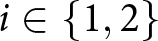 $i \in \{1,2\}$, denotes the player occupying role
 $i$ in the dyad. When the role is irrelevant, I refer simply to a generic individual
 $i$.
The experiment employs a binary lying game.Footnote 4 Each player 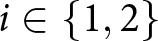 $i \in \{1,2\}$ privately draws a state
 $x_i \in \{0,1\}$, with
 $\Pr(x_i = 1) = 0.2$, and sends a report
 $r_i \in \{0,1\}$. Their payoffs are interdependent, with both players receiving the monetary payoff:
 \begin{equation*}
v(r_i, r_j) \;=\;
\begin{cases}
v_h & \text{if } r_i + r_j \geq 1,\\[2pt]
v_l & \text{if } r_i + r_j = 0,
\end{cases}
\qquad \text{with } v_h \gt v_l \geq 0.
\end{equation*}
Because the payoff function is identical for both players and symmetric in the reports, it is written without a player index. The only exception is treatment Sequential-NoExternality, introduced in Section 2.2.3, where  $P_2$’s payoff depends only on their own draw, and the payoff function is indexed accordingly. In this context, lies are characterized as Pareto White Lies (Erat & Gneezy, Reference Erat and Gneezy2011) because they benefit both the liar and others.
Individuals’ preferences depend on three elements that determine the willingness to lie or tell the truth. First, they get utility from the monetary payoff  $v_i \in \{v_h, v_l\}$ that depends on their report. All else equal, they have extrinsic incentives to report 1 regardless of their actual random draw
 $x_i$. Second, individuals dislike lying. Lying aversion is represented by some psychological costs (
 $c_i$) that they incur when they misreport their random draw, following the standard lying models by Gneezy et al. (Reference Gneezy, Kajackaite and Sobel2018), Abeler et al. (Reference Abeler, Nosenzo and Raymond2019), and Khalmetski and Sliwka (Reference Khalmetski and Sliwka2019).Footnote 5 Let these costs, represented by
 $c_i$, be distributed among the population according to
 $c_i \sim U[0, \bar{c}]$. Hence, the cumulative density function of
 $c_i$ is
 $F(c_i) = \frac{c_i}{\bar{c}}$. The heterogeneity in the psychological lying costs captures the fact that some people are more morally inclined than others and follows the convention introduced by Gneezy et al. (Reference Gneezy, Kajackaite and Sobel2018), Abeler et al. (Reference Abeler, Nosenzo and Raymond2019), and Khalmetski and Sliwka (Reference Khalmetski and Sliwka2019).
Third, I incorporate prosociality into the utility function, drawing on insights from Wiltermuth (Reference Wiltermuth2011), Levine and Schweitzer (Reference Levine and Schweitzer2015), and Janezic (Reference Janezic2020). To capture the heterogeneity in prosocial motivations observed in real populations, I assume that individuals derive utility  $\theta_i$ when they benefit another agent with their report, that is, when they generate a positive externality. The prosocial parameter
 $\theta_i$ is distributed among the population according to
 \begin{equation*}
\theta_i \sim U[0, \bar{\theta}].
\end{equation*}
This heterogeneity reflects agents’ varying concern for others’ welfare, analogous to heterogeneity in agents’ intrinsic lying costs. I adopt the taxonomy introduced by Sobel (Reference Sobel2020), which distinguishes among lying (making a statement one believes to be false), deception (inducing the receiver to form incorrect beliefs), and damage (the harm inflicted on the receiver by the falsehood). Under this taxonomy, the lies studied here involve neither deception regarding payoff-relevant states of the receiver nor damage: a misreport can only increase the partner’s monetary payoff. The central behavioral assumption of the model is that such non-damaging lies entail a lower moral cost: when an agent’s misreport increases the partner’s payoff, the prosocial benefit,  $\theta_i$, partially offsets the intrinsic moral cost of lying. This offsetting is an assumption, not an implication of the taxonomy; its role and testable implications are discussed below and in Section 2.2.
The parameter  $\theta_i$ is related to, but distinct from, altruistic preferences in the tradition of Andreoni (Reference Andreoni1990) and Charness and Rabin (Reference Charness and Rabin2002). Under pure altruism, an agent’s utility is increasing in the partner’s material payoff regardless of how that payoff comes about. Here, by contrast,
 $\theta_i$ never enters utility as a stand-alone benefit from the partner’s payoff: as equation (1) below makes precise, it operates only inside the lying-cost term, reducing the moral cost of a misreport when that misreport is what generates the partner’s gain. An agent with
 $\theta_i \gt 0$ derives no utility from the partner’s payoff when it is produced by the partner’s own report, whereas a pure altruist would. In this sense the model belongs to the family of moral-justification approaches to dishonesty (Shalvi et al., Reference Shalvi, Dana, Handgraaf and De Dreu2011; Shalvi et al., Reference Shalvi, Gino, Barkan and Ayal2015), in which features of the environment attenuate the psychological cost of lying, rather than to the family of outcome-based social preference models.
For simplicity, I abstract from the possibility that individuals are prosocial toward the experimenter. Although this paper focuses exclusively on positive externalities, where prosociality serves only to reduce the net cost of lying, the framework can be readily extended to allow  $\theta_i \lt 0$, thereby capturing settings in which a lie harms others and increases the net psychological cost of deception (as in Gneezy and Kajackaite, Reference Gneezy and Kajackaite2020; Kerschbamer et al., Reference Kerschbamer, Neururer and Gruber2019).
I impose  $\bar{\theta} \geq 0$, thereby restricting attention to positive externalities. No upper bound on
 $\bar{\theta}$ is required for any of the results: the support condition
 $v_h - v_l + \bar{\theta} \lt \bar{c}$, introduced below, alone guarantees that all lying-cost thresholds derived in Propositions 1–5 are interior, and the treatment rankings in those propositions and in Corollaries 1–2 require only
 $\bar{\theta} \gt 0$ together with that condition. The parameter values affect the magnitudes of the predicted differences, but not their signs.
A remaining modeling choice concerns when the offset applies: does an agent experience moral relief from any lie that could, in principle, benefit the partner, or only from a lie that actually delivers that benefit? Models of warm-glow giving (Andreoni, Reference Andreoni1990) attach utility to the act of giving itself, independently of its consequences, whereas models of pure altruism attach utility to the partner’s realized outcome regardless of who produced it. I adopt a third position, tailored to the moral-justification interpretation of the offset: a misreport is morally discounted only insofar as it is the action that secures the partner’s gain. A lie told when the partner’s high payoff is already secured, or is being secured by the partner at the same moment, provides no moral justification and therefore no moral relief.Footnote 6
To formalize this idea while accommodating treatment-specific information structures, I introduce a justification indicator  $I_i \in [0,1]$: the probability, given the agent’s information at the moment of reporting, that their misreport guarantees the partner the high payoff without the partner’s own report having already secured it or securing it simultaneously. A first mover’s lie in a sequential protocol carries full weight,
 $I_i = 1$, because it settles the joint outcome before the partner acts; a lie submitted simultaneously with the partner’s report carries weight
 $1 - b$, where
 $b$ is the probability that the partner reports 1, because with probability
 $b$ the partner secures the payoff independently; and a lie that cannot affect the partner’s payoff carries no weight. The value of
 $I_i$ for each treatment is specified in the corresponding subsection. It is worth emphasizing that the model does not assume outcome-based social preferences of the form
 $U_i = \text{payoff}_i + \alpha \cdot \text{payoff}_j$; the externality enters only by offsetting the intrinsic cost of lying. With these three elements in place, individuals’ preferences are represented by the following utility function:
 \begin{equation}
U_i(x_i, r_i, r_j) = v(r_i, r_j) - \mathbf{1}_{x_i \neq r_i}(c_i - \theta_i \cdot I_i)
\end{equation}
where  $v(r_i, r_j) = v_h$ if
 $r_i + r_j \geq 1$, and
 $v_l$ otherwise.
 $I_i$ captures whether lying has prosocial intent and varies by treatment as specified in the following sections. For algebraic clarity in the subsequent proofs, I normalize the low payoff such that
 $ v_{l} = 0.$ The high payoff
 $v_{h}$ then represents the net monetary gain from a successful outcome. This normalization is standard and does not affect the model’s qualitative predictions, as all results can be generalized by substituting
 $\,v_{h} - v_{l}\,$ for
 $v_{h}$ where necessary.
Before introducing the treatments, it is useful to be explicit about what the offset  $\theta_i I_i$ does and does not capture. A reduction in the net cost of lying when the lie benefits the partner is consistent with two distinct motives: a genuine other-regarding concern for the partner’s payoff, or a self-serving use of the positive externality as a justification for a lie the agent is materially tempted to tell anyway (Shalvi et al., Reference Shalvi, Dana, Handgraaf and De Dreu2011; Shalvi et al., Reference Shalvi, Gino, Barkan and Ayal2015). The model deliberately remains agnostic about which motive generates the offset, and the experimental treatments do not distinguish between them: they identify whether, and under what strategic conditions, a positive externality causally increases lying, but not the underlying mechanism. All hypotheses below, and the interpretation of the results, should be read with this scope in mind. Disentangling genuine prosociality from self-serving justification would require additional treatments, for example, varying the magnitude of the externality independently of the liar’s own monetary stake, and is left for future work.
2.2. Treatments
2.2.1. Treatment 1: Sequential
In the main treatment, Sequential, I study a two-stage lying game where players’ lies are substitutes.  $P_1$ draws
 $x_1 \in \mathcal{X}$ and sends a report
 $r_1 \in \mathcal{X}$ to
 $P_2$. After observing
 $r_1$,
 $P_2$ draws
 $x_2 \in \mathcal{X}$ and sends a report
 $r_2 \in \mathcal{X}$. Note that
 $x_i$ is known only to
 $P_i$, not to the other player.
In this treatment, the justification indicator is:
 \begin{equation}
I_i = \begin{cases}
r_i & \text{for } P_1 \\
r_i \cdot \mathbf{1}_{r_1 = 0} & \text{for } P_2
\end{cases}
\end{equation}
I apply backward induction to analyze the game’s strategic environment. Importantly, in this game, there is no downward lying in equilibrium. An individual who draws  $x_i = 1$ and reports
 $r_i = 0$ incurs the lying cost without receiving either the monetary payoff or the benefit of a positive externality. Thus, in equilibrium individuals only lie if they draw
 $x_i=0$ by reporting
 $r_i=1$.
Proposition 1. (P2’s Best Response in Sequential)
After observing  $r_1$,
 $P_2$’s best response is:
• If
 $r_1 = 1$:
$P_2$ reports
$r_2 = 1$ if
$x_2 = 1$, and
$r_2 = 0$ if
$x_2 = 0$
• If
$r_1 = 0$:
$P_2$ reports
$r_2 = 1$ if
$c_2 \lt v_h + \theta_2$


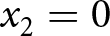


Proof. Recall that I have normalized the low payoff to zero,  $v_{l}=0$.
Case 1:  $r_{1}=1$. If
 $x_{2}=0$ and
 $P_{2}$ reports truthfully (
 $r_{2}=0$), their payoff is
 \begin{equation*}
U_{2}
= v(r_{1}=1, r_{2}=0)
= v_{h}.
\end{equation*}
If instead they lie ( $r_{2}=1$), since
 $I_{2}=0$ there is no prosocial benefit, so
 \begin{equation*}
U_{2} = v_{h} \;-\; c_{2}.
\end{equation*}
Because  $c_{2} \gt 0$, truth-telling (
 $r_{2}=0$) strictly dominates lying when
 $r_{1}=1$.
Case 2:  $r_{1}=0$ and
 $x_{2}=0$. Then
 \begin{equation*}
U_{2}(r_{2}=0) = v_{l} = 0,
\qquad
U_{2}(r_{2}=1) = v_{h} - \bigl(c_{2}-\theta_{2}\bigr)
= v_{h} - c_{2} + \theta_{2}.
\end{equation*}
Hence  $P_{2}$ will lie (report
 $r_{2}=1$) if and only if
 \begin{equation*}
v_{h} - c_{2} + \theta_{2} \gt 0
\quad\Longleftrightarrow\quad
c_{2} \lt v_{h} + \theta_{2}.
\end{equation*}
Let  $\hat{c}_i(\theta_i)$ be the lying cost threshold where individuals with prosociality
 $\theta_i$ are indifferent between lying and telling the truth. For
 $P_2$, when
 $P_1$ reports 0, I have
 $\hat{c}_2(\theta_2, r_1 = 0) = v_h + \theta_2$. Hence, the probability that
 $P_2$ lies after
 $P_1$ reports 0, conditional on prosociality level
 $\theta_2$, is:
 \begin{equation}
\Pr({P_2 lies}|r_1 = 0, \theta_2) = F(\hat{c}_2(\theta_2, r_1 = 0)) = \frac{v_h + \theta_2}{\bar{c}}
\end{equation}
To state  $P_1$’s problem, let
 $b_0$ denote
 $P_1$’s belief that
 $P_2$ reports 1 after observing
 $r_1 = 0$. In equilibrium, this belief is determined by Proposition 1: after
 $r_1 = 0$,
 $P_2$ reports 1 truthfully when
 $x_2 = 1$ and lies whenever
 $c_2 \lt v_h + \theta_2$, so
 \begin{equation*}
b_0 \;=\; 0.2 + 0.8 \, \frac{v_h + \bar{\theta}/2}{\bar{c}} .
\end{equation*}
For convenience, define
 \begin{equation*}
\lambda \equiv \frac{v_h + \bar{\theta}/2}{\bar{c}} \in (0,1),
\end{equation*}
so that  $b_0 = 0.2 + 0.8\lambda$.
Proposition 2. (P1’s equilibrium strategy in Sequential)
 $P_1$ lies (reports
 $r_1 = 1$ when
 $x_1 = 0$) if and only if their lying cost
 $c_1$ is below the threshold
 \begin{equation}\widehat c_1^{\,seq}(\theta_1)\;=\;\theta_1+0.8\,v_h\left(1-\frac{v_h+\overline\theta/2}{\overline c}\right).\end{equation}
Proof.  $P_1$ anticipates
 $P_2$’s equilibrium strategy characterized in Proposition 1. If
 $P_1$ reports truthfully (
 $r_1 = 0$), the joint payoff is
 $v_h$ whenever
 $P_2$ reports 1, which occurs with probability
 $b_0$, so
 \begin{equation*}
\mathbb{E}[U_1 \mid r_1 = 0] = b_0 v_h.
\end{equation*}
If  $P_1$ lies, the joint payoff is
 $v_h$ with certainty, incurring the lying cost
 $c_1$, and the justification weight is
 $I_1 = 1$, since the lie determines the joint outcome before
 $P_2$ acts. Hence,
 \begin{equation*}
\mathbb{E}[U_1 \mid r_1 = 1] = v_h - c_1 + \theta_1.
\end{equation*}
Therefore,  $P_1$ lies if and only if
 \begin{equation*}
v_h - c_1 + \theta_1 \; \gt \; b_0 v_h
\quad\Longleftrightarrow\quad
c_1 \; \lt \; \theta_1 + (1 - b_0)\, v_h,
\end{equation*}
and substituting  $1 - b_0 = 0.8(1 - \lambda)$ yields equation 4.
2.2.2. Treatment 2: Sequential-Computer
In a second treatment, Sequential-Computer, I remove  $P_1$’s ability to rely on
 $P_2$’s possibility of lying by imposing
 $x_2 = r_2$. To do so, in Sequential-Computer, participants in the role of
 $P_2$ do not have the opportunity to report their draw, but the computer observes the draw and submits the report on their behalf. This procedure is common knowledge among participants. The payoff structure is the same as in Sequential. Even though the computer submits the report, the human participant bears the resulting payoff consequences. Thus, this procedure ensures that
 $P_1$ faces an objective probability distribution over
 $r_2$. This feature implies that
 $b_0 = 0.2$.
In Sequential-Computer, the justification indicator for  $P_1$ is simply
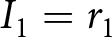 $I_1 = r_1$ since lying always has the potential to help
 $P_2$.
Proposition 3. (P1’s equilibrium in Sequential-Computer)
P1 lies if and only if
 \begin{equation}
c_1 \; \lt \; \theta_1 + 0.8\, v_h .
\end{equation}
Proof. P1 faces the objective probability  $\Pr(r_2 = 1) = 0.2$. Truth-telling yields
 $\mathbb{E}[U_1 \mid r_1 = 0] = 0.2\, v_h$. Lying secures
 $v_h$ with certainty and carries full justification weight,
 $I_1 = 1$, since P1’s report settles the joint outcome before the automated report is made:
 $\mathbb{E}[U_1 \mid r_1 = 1] = v_h - c_1 + \theta_1$. P1 lies if and only if
 $v_h - c_1 + \theta_1 \gt 0.2\, v_h$, that is,
 $c_1 \lt \theta_1 + 0.8\,
v_h$.
Comparing the thresholds in equations (4) and (5) shows that a larger proportion of  $P_1$ participants lie when they cannot rely on
 $P_2$’s willingness to lie. The difference between the thresholds equals
 $0.8\,v_h\lambda = 0.8\,v_h(v_h + \bar{\theta}/2)/\bar{c}$, is the same for every
 $\theta_1$, and is positive because
 $b_0 \gt 0.2$: in Sequential,
 $P_2$’s propensity to misreport after observing a No increases the expected payoff from truth-telling, thereby weakening
 $P_1$’s incentive to lie. This result motivates Hypothesis 1.
Hypothesis 1. (Cost avoidance)
In Sequential-Computer, the proportion of  $P_1$ participants who lie is higher than in Sequential.
Hypothesis 1 tests whether  $P_1$ participants exploit the opportunity to avoid lying costs afforded by Sequential. In Sequential,
 $P_1$ can leave the lie, and the associated psychological cost, to
 $P_2$, an option that is removed by design in Sequential-Computer, where
 $P_2$’s report is truthful by construction. If the data do not support this hypothesis, it would suggest that, within this setup and for the payoff parameters implemented here, intrinsic lying costs are small relative to the value of the externality, so that the incentive to secure the joint payoff dominates the incentive to avoid lying costs. This alternative prediction, characterized by equal lying rates across treatments, can be rationalized within the model under the particular parameter configuration described below.
Corollary 1. (Convergence under large cost heterogeneity)
Let  $c_i \sim U[0, \bar{c}]$. As the upper bound
 $\bar{c}$ becomes large relative to the sum of the monetary upside and the average value of the externality,
 \begin{equation*}
\frac{\bar{c}}{\,v_h + \bar{\theta}/2\,} \longrightarrow \infty,
\end{equation*}
the difference between the two lying-cost thresholds,
 \begin{equation*}\widehat c_1^{\,seq-comp}(\theta_1)-\widehat c_1^{\,seq}(\theta_1)\;=\;0.8\,v_h\,\frac{v_h+\overline\theta/2}{\overline c},\end{equation*}
tends to zero. Consequently, the predicted lying rates in the two treatments converge and coincide in the limit. The proof is given in Appendix B.
Corollary 1 highlights that under a uniform distribution  $U[0,\bar c]$, increasing
 $\bar c$ does more than raise the upper bound of potential lying costs—it broadens the support of
 $c_i$, thereby increasing heterogeneity across individuals. As
 $\bar{c}$ becomes large, only a vanishingly small fraction of participants find it optimal to exploit the strategic opportunity for cost avoidance, regardless of their
 $\theta_1$. The threshold gap equals
 $0.8\,v_h(v_h + \bar{\theta}/2)/\bar{c}$, so the rate of convergence depends on the payoff parameters. Higher values of
 $v_h$ or
 $\bar{\theta}$ slow convergence, whereas greater cost heterogeneity
 $\bar{c}$ accelerates it.
Finally, my framework is based on substitute, rather than complementary, lies, unlike the collaborative lying games surveyed by Leib et al. (Reference Leib, Köbis, Soraperra, Weisel and Shalvi2021). Appendix D analyzes a conjunctive variant of the game in which both players must report 1 to secure  $v_h$, as in Weisel and Shalvi (Reference Weisel and Shalvi2015). Requiring both reports changes the first mover’s incentives in two opposing ways. The monetary return to lying becomes
 $\beta v_h$ instead of
 $(1 - \beta)v_h$, where
 $\beta$ is the probability that the partner reports 1 after observing a Yes. Without the first mover’s report, the low payoff is certain, so the free-riding option disappears, which raises the return to lying whenever
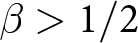 $\beta \gt 1/2$. At the same time, the justification benefit is diluted from
 $\theta_1$ to
 $\beta\theta_1$, because the first mover’s lie helps the partner only when the partner completes it. As Appendix D shows, first movers lie more in the collaborative game than in Sequential only when
 $\beta \gt 1/2$ and their
 $\theta_1$ is sufficiently small; for strongly prosocial types, the ranking reverses. The model therefore attributes high dishonesty in collaborative settings to the removal of the free-riding option rather than to a uniform moral sanction against coordination.
2.2.3. Treatment 3: Sequential-NoExternality
In a third treatment, I investigate the role of positive externalities in  $P_1$’s decision-making. I use the same structure as in Sequential-Computer, but modify the payoff scheme to eliminate benefits to others. As a result, lies in this treatment are no longer Pareto white lies but instead constitute purely selfish lies. I keep
 $P_1$’s monetary payoffs identical to those in Sequential-Computer, but make
 $P_2$’s payoffs depend solely on their own draw: specifically, in Sequential-NoExternality,
 $P_2$ receives a payoff of
 $v_h$ if
 $x_2 = 1$ and
 $v_l$ otherwise. This variation implies that, in the utility function,
 $I_1 = 0$, since lying no longer generates any benefit for others. Conceptually, this treatment approximates a setting akin to Gneezy et al. (Reference Gneezy, Kajackaite and Sobel2018), in which the value of prosocial lying is zero.
Proposition 4. (P1’s equilibrium in Sequential-NoExternality)
P1 lies if and only if  $c_1 \lt 0.8\, v_h$.
Proof. With  $I_1 = 0$, the justification term vanishes. A
 $P_1$ with
 $x_1 = 0$ compares
 $\mathbb{E}[U_1 \mid r_1 = 0] = 0.2\, v_h$ with
 $\mathbb{E}[U_1 \mid r_1 = 1] = v_h - c_1$, and lies if and only if
 $v_h - c_1 \gt 0.2\, v_h$, that is,
 $c_1 \lt 0.8\, v_h$.
Corollary 2. (Sequential-Computer vs. Sequential-NoExternality)
The proportion of P1 participants who lie in Sequential-Computer exceeds that in Sequential-NoExternality.
Proof. From the two thresholds,  $\widehat c_1^{\,seq-comp}(\theta_1)=\theta_1+0.8\,v_h$ and
 $\widehat c_1^{\,seq-noext}=0.8\,v_h$, it follows that
 $\widehat c_1^{\,seq-comp}(\theta_1)\ge\widehat c_1^{\,seq-noext}$ for any
 $\theta_1 \gt 0$. Since
 $\theta_1 \sim U[0, \bar{\theta}]$ with
 $\bar{\theta} \gt 0$, a positive mass of players satisfies
 $\theta_1 \gt 0$, so aggregate lying is strictly higher in Sequential-Computer.
Hypothesis 2. (Positive Externality)
In Sequential-NoExternality, the proportion of  $P_1$ participants who lie is lower than in Sequential-Computer.
Treatment Sequential-NoExternality isolates prosocial motives. Hypothesis 2 therefore predicts a lower misreporting rate in Sequential-NoExternality, because this treatment removes the prosocial channel. If the data support this hypothesis, it would indicate that participants are more willing to misreport when doing so raises a counterpart’s payoff. Conversely, failure to support the hypothesis would suggest that prosocial considerations exert little influence on misreporting behavior.
While I do not directly compare Sequential and Sequential-NoExternality in my empirical analysis, the theoretical comparison is instructive. The prediction is ambiguous and depends on an individual’s specific prosociality  $\theta_i$. The lying threshold in Sequential is higher than in Sequential-NoExternality if and only if
 \begin{equation*}
\theta_1 \; \gt \; \kappa \;\equiv\;
0.8\,v_h\,\frac{v_h + \bar{\theta}/2}{\bar{c}}.
\end{equation*}
For individuals with  $\theta_1 \gt \kappa$, the justification channel more than offsets the incentive to rely on
 $P_2$’s lie. For individuals with
 $\theta_1 \lt \kappa$, the strategic incentive to free-ride dominates the justification effect, so they lie less than in the purely selfish Sequential-NoExternality context. The cutoff
 $\kappa$ reappears in the comparison between Sequential and Simultaneous in Section 2.2.4.
Until now I have introduced the main treatments for disentangling lying aversion and prosocial motives. In Sequential-Computer,  $P_2$’s report is fixed at 0.2, whereas in Sequential it is subjective, granting
 $P_1$ greater opportunity to avoid lying costs, while maintaining a prosocial incentive. If lying rates are identical across these two conditions, cost-avoidance effects must be negligible and prosocial motives must fully account for behavior. In Sequential-NoExternality, the prosocial benefit vanishes (
 $I_1 = 0$), isolating self-interested lying. Hence, if lying is more frequent in Sequential than in Sequential-NoExternality, positive externalities must be amplifying dishonesty; if it is less frequent, strategic cost avoidance must dominate; and if the rates coincide, the two forces exactly counterbalance. The three sequential treatments therefore differ in exactly two components of the model: the probability that P2 reports 1 after observing
 $r_1 = 0$,
 $b_0 = 0.2 + 0.8\,(v_h + \bar{\theta}/2)/\bar{c}$ in Sequential, versus the exogenous value of
 $0.2$ in Sequential-Computer and Sequential-NoExternality, and the presence of the externality, which is active in Sequential and Sequential-Computer but absent (
 $I_1 = 0$) in Sequential-NoExternality. Table 1 summarizes the treatments and indicates which component is isolated by each pairwise comparison.
2.2.4. Treatment 4: Simultaneous
The final treatment, Simultaneous, preserves the payoff structure of the Sequential treatment while eliminating  $P_1$’s first-mover advantage. In particular, both players simultaneously choose their report
 $r_i$, unaware of the other’s decision. As in Sequential, a lie can generate a positive externality only if it changes the joint outcome, but now each player is uncertain whether their misreport will be “effective,” that is, change the joint outcome. That is, it depends on whether the partner would otherwise have reported 0. To capture this, I set
 \begin{equation*}
I_i \;=\; r_i\;\Pr(r_j=0\mid r_i)\;=\;r_i\,(1-b),
\end{equation*}
where  $b$ denotes the (symmetric) equilibrium probability that the other player reports 1.
Proposition 5. (Symmetric equilibrium in Simultaneous)
The game has a unique symmetric equilibrium in cutoff strategies. In it, each player  $i$ with
 $x_i = 0$ lies if and only if
 \begin{equation*}
c_i \; \lt \; (1 - p^{*}) \left( v_h + \theta_i \right),
\end{equation*}
where the equilibrium probability that a player reports 1 is
 \begin{equation*}
p^{*} \;=\; \frac{0.2 + 0.8\lambda}{1 + 0.8\lambda}
\;\in\; (0.2,\, 1),
\qquad \lambda = \frac{v_h + \bar{\theta}/2}{\bar{c}} ,
\end{equation*}
and  $p^{*}$ is increasing in
 $\lambda$. The proof is in Appendix B.
Intuitively, each player anticipates that the partner reports 1 with probability  $p^{*}$, and this single probability attenuates both incentives to lie by the same factor: the monetary return to a lie is
 $(1 - p^{*})v_h$, because with probability
 $p^{*}$ the partner secures the payoff anyway, and the justification weight is
 $I_i = 1 - p^{*}$, because a lie provides moral cover only when the partner does not independently deliver the benefit.
The comparison with Sequential is immediate. Subtracting the two thresholds gives
 \begin{equation*}\widehat c_1^{\,seq}(\theta_1)-\widehat c_1^{\,sim}(\theta_1)\;=\;p^\ast\left(\theta_1-\kappa\right),\qquad\kappa=0.8\,v_h\,\frac{v_h+\overline\theta/2}{\overline c},\end{equation*}
so an individual lies more in Sequential than in Simultaneous if and only if  $\theta_1 \gt \kappa$, the same cutoff that governs the comparison between Sequential and Sequential-NoExternality. Averaging over types, aggregate lying is higher in Sequential than in Simultaneous if and only if
 $\bar{\theta}/2 \gt \kappa$. This is the precise sense in which Hypothesis 3 is directionally ambiguous: the ranking depends on whether the population’s average justification value exceeds
 $\kappa$.
Hypothesis 3. (Strategic uncertainty)
Conditional on the population’s average justification value, lying is more frequent in Simultaneous than in Sequential if  $\bar{\theta}/2 \lt \kappa$, and less frequent if
 $\bar{\theta}/2 \gt \kappa$.
If the lying rate is higher in Simultaneous, this indicates either (i) that participants misreport primarily out of self-interest, seeking to secure the payoff while avoiding reliance on the partner, or (ii) that the lying-cost offset takes a warm-glow form, attaching to the act of reporting 1 itself rather than to its consequence for the partner, so that strategic uncertainty in Simultaneous does not attenuate the offset.
Table 1 summarizes, for each of the four treatments, the decision nodes, the corresponding payoff structure, and the theoretical predictions. Finally, note that direct treatment comparisons that isolate a single factor are possible only for the following pairs: Sequential vs. Sequential-Computer, Sequential vs. Simultaneous, and Sequential-Computer vs. Sequential-NoExternality. By contrast, in the comparisons Sequential vs. Sequential-NoExternality, Sequential-Computer vs. Simultaneous, and Sequential-NoExternality vs. Simultaneous, multiple factors vary simultaneously, preventing the clean identification of individual causal effects.
Summary of actions, payoffs, and predictions in each treatment

Table 1 Long description
Four treatments are listed with columns for Treatment, Player 1 action, Player 2 action, Payoffs, Prediction, and Isolates comparison. In Sequential, Player 1 reports r1, then Player 2 learns r1 and reports r2; payoffs depend on whether both reports are zero, and the prediction and isolates comparison are both baseline. In Seq-Compa, Player 1 reports r1, then Player 2 learns r1 but the computer makes the report; payoffs follow the same both zero versus otherwise structure, the prediction says Player 1 lies more than in Sequential, and the isolates comparison is cost avoidance versus Sequential by removing reliance on Player 2s lie. In Seq-NoExtb, Player 1 reports r1, then Player 2 learns r1 but the computer makes the report; payoffs are listed separately for Player 1 using the both zero versus otherwise structure and for Player 2 based on whether r2 is zero or one, the prediction says Player 1 lies less than in Seq-Compa, and the isolates comparison is positive externality versus Seq-Compa. In Simultaneous, both players report at the same time; payoffs again depend on whether both reports are zero, the prediction is ambiguous relative to Sequential, and the isolates comparison is strategic uncertainty about the partners report versus Sequential.
aSequential-Computer; bSequential-NoExternality. The isolating comparison for Sequential-NoExternality is with Sequential-Computer, not with the baseline.
3. The mind-cheating game
3.1. Overview and design
The game used in the experiment is called the mind-cheating gameFootnote 7 in which participants choose one color out of five in their minds (see colors in Figure 1). The colors were chosen such that individuals with color vision deficiencies can distinguish them. Then, they draw a color from a deck of cards displayed on their computer screens. The deck of cards contains two cards for each one of the colors. Participants then report whether the color they drew from the deck is the same as their mentally chosen color. If participants want to report that the colors match, they report Yes; otherwise, they report No. Thus, in this game, Yes represents  $x_i=1$ and No represents
 $x_i=0$. For the payoffs, the reward structure assigns payoffs of
 $v_h=\unicode{x00A3} 2.5$ and
 $v_l = \unicode{x00A3} 0.3$. In this study, the state of nature is in participants’ minds, so I can only compare distributions of groups based on the known theoretical distribution. However, individual-level cheating cannot be directly observed.Footnote 8 A key advantage of the mind-cheating game is that, regardless of the color a participant mentally selects, the probability of a match remains constant and follows a binomial distribution with a known parameter
 $p=0.2$.
Colors used in mind game

In the experiment, I use the treatments presented in Table 1. Specifically, in Sequential,  $P_1$ reports to
 $P_2$ whether the colors match or not. Once
 $P_2$ learns
 $r_1$, they follow the same sequence of decisions: think a color, draw a color from a deck of cards, and report whether the colors match. In Sequential-Computer, the procedure for
 $P_1$ is identical. For
 $P_2$, however, instead of choosing a card mentally, participants select one from a list displayed on their screens and then draw a card from a deck. The computer then truthfully compares the selected color with the drawn color and reports whether they match. Participants know that the computer’s report will always be truthful. In Sequential-NoExternality, decisions are identical to Sequential-Computer, and the variation is that
 $P_2$’s payoffs only depend on whether their selected color and their drawn color match regardless of
 $P_1$’s payoffs. Finally, in Simultaneous, both participants think of a color, draw a color, and report at the same time whether the colors match.
While  $P_2$ is reporting, I elicit
 $P_1$’s beliefs about
 $P_2$’s report. I use a mechanism proposed by Karni (Reference Karni2009) and implemented experimentally first by Mobius et al. (Reference Mobius, Niederle, Niehaus and Rosenblat2011) which allows eliciting probabilities in an incentive-compatible way. Specifically, I use a similar implementation as the one proposed by Coffman (Reference Coffman2011). Participants are asked to predict whether
 $P_2$ reports Yes or No and are then asked how likely they think their prediction is to be correct. This procedure allows me to elicit the probability of
 $P_2$ reporting Yes. Participants are told that they do not need to read the instructions about the mechanism or understand it if they do not want to. The concern that complex mechanisms may increase participant attrition is supported by Danz et al. (Reference Danz, Vesterlund and Wilson2022); Danz et al. (Reference Danz, Vesterlund and Wilson2024). To reduce this risk, I use this option. Participants can, however, click a button to view a detailed explanation.Footnote 9
Specifically, the elicitation mechanism is based on robots that can guess on behalf of the participants. There are 100 robots, each with integer probability between 1 and 100 of correctly guessing  $P_2$’s report. A robot from this interval is drawn randomly, and it can guess on the participant’s behalf with an accuracy level determined by its number. Robot 1 is accurate 1% of the time; robot 2 is accurate 2% of the time, all the way up to the robot that is accurate 100% of the time. The reported likelihood of their guess being correct is used as an “accuracy threshold.” That is, if the robot has an accuracy greater than or equal to the threshold, the robot guesses
 $r_2$ for
 $P_1$. If the robot has an accuracy less than the threshold,
 $P_1$’s guess is submitted. If the guess is correct, whether it is the participant’s or the robot’s, it gives a payoff of
 $\unicode{x00A3} 0.3$.
3.2. Procedures
I pre-registered the experiment in AEA RCT Registry under the number AEARCTR-0007214. I calculated the power of the target sample size using computer simulations. I used a minimum detectable effect size of 0.15 percentage points from people reporting Yes. The power reached with a sample size of 140 observations by treatment is about 0.8 when simulating 1500 Fisher tests. The experiment was conducted online on Prolific (Palan & Schitter, Reference Palan and Schitter2018) in February 2021. The experiment was programmed in oTree (Chen et al., Reference Chen, Schonger and Wickens2016). A total of 992 people participated in four sessions.Footnote 10 I did not run the whole experiment in one session to avoid overloading the server and minimize the probability of technical issues. Table E.1 in the Appendix presents the number of observations for people on the role of  $P_1$ in each session. The computer program assigned a treatment to each participant. Participants participated only in one treatment, and the game was played only one time. Among the participants, 54.71% identified themselves as male, 44.60% as female, 0.30% as other, and 0.40% preferred not to report it. The average age of participants was 26.25, and 47.28% were students. Participants spent about 7 minutes on average to complete the experiment. In addition to the mind-cheating game earnings and the guessing task, participants received a fixed payment of £1.15 through Prolific. Across the four main sessions, average total compensation was £3.43.
4. Results
Theoretically, the random draw follows a binomial distribution with a  $0.2$ probability of the high-paying state. Therefore, I will use this theoretical distribution as a benchmark under truth-telling. Table 2 presents the mean and standard deviation of the main outcome variables.
 $P_1$’s report is the report by the first mover that can be either
 $0$ or
 $1$. Yes is more likely is a binary variable that takes a value of
 $1$ when the reported belief of
 $P_2$ reporting
 $1$ is higher than
 $0.5$, which would mean that the participant thought that their partner is more likely to report
 $1$ than
 $0$. Belief about
 $Pr(r_2=1)$ is the subjective probability reported by
 $P_1$ that
 $P_2$ reports
 $1$. Times clicked in info is the number of times a participant clicked the info button in the belief elicitation task. Finally, Time Spent Reporting is the time in seconds a participant took to report whether their colors match.
Summary statistics of main variables in the mind game

Table 2 Long description
Summary statistics are reported for five variables across four conditions: Sequential, Seq Comp a, Seq NoExt b, and Simultaneous, with standard deviations shown in parentheses. For, P1 report 1, means are 0.514 in Sequential, 0.518 in Seq Comp a, 0.393 in Seq NoExt b, and 0.418 in Simultaneous, with standard deviations 0.502, 0.501, 0.490, and 0.495. For, Belief about Pr r2 1, means are 53.148, 46.809, 42.843, and 59.144, with standard deviations 24.353, 24.138, 23.370, and 24.835. For, Times clicked info, means are 0.338, 0.376, 0.371, and 0.329, with standard deviations 0.504, 0.515, 0.514, and 0.527. For, Time spent reporting, means are 15.796, 16.823, 18.957, and 9.473, with standard deviations 11.423, 9.821, 25.469, and 6.952. Observations are 142 for Sequential, 141 for Seq Comp a, 140 for Seq NoExt b, and 146 for Simultaneous.
Notes: Standard deviations in parentheses. The table reports summary statistics for participants in the role of P 1 only. For the Simultaneous treatment, all participants are included since roles are not differentiated in that condition. aSequential-Computer; bSequential-NoExternality.
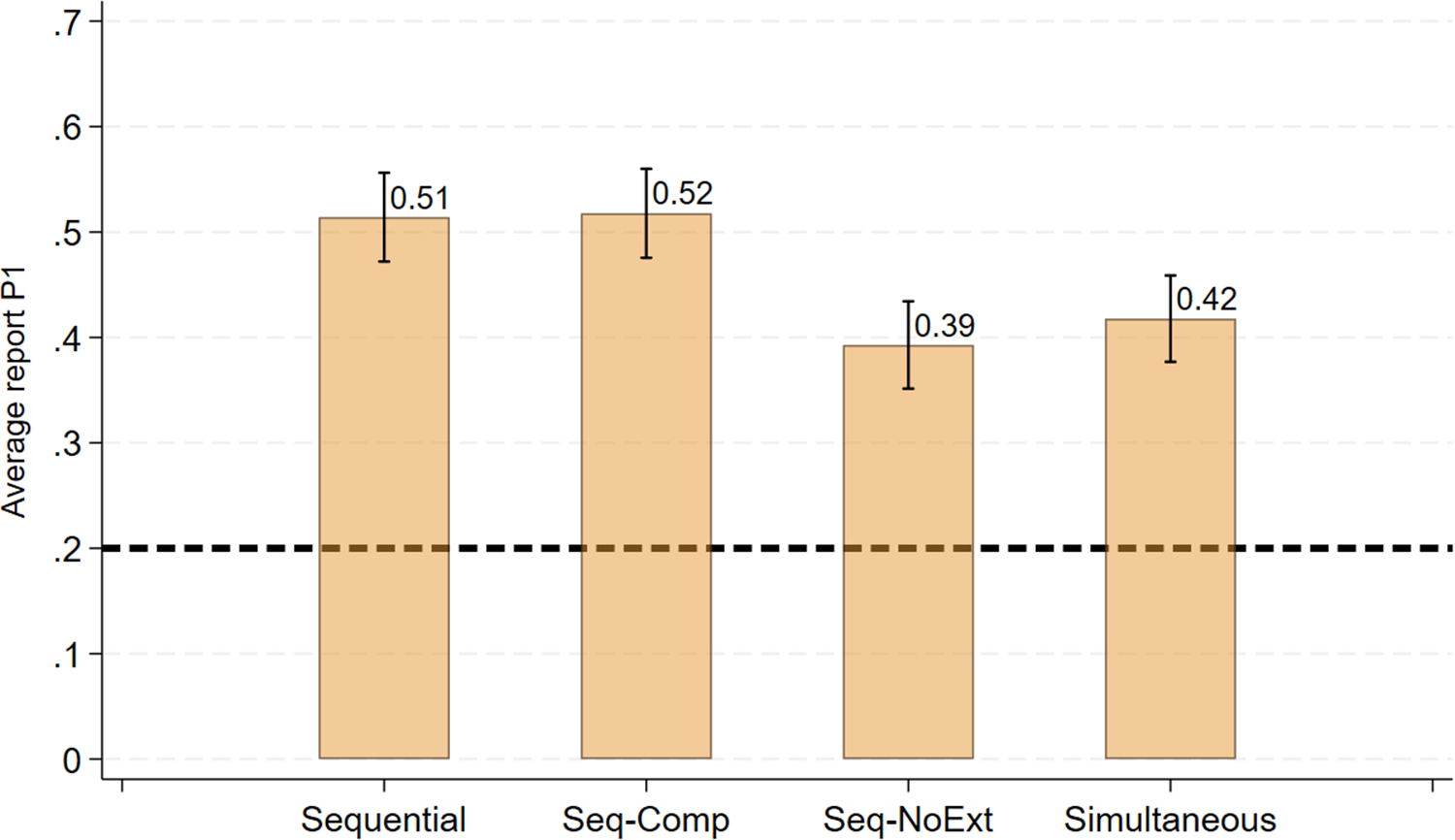
A visual representation of the  $P_1$’s report is presented in Figure 2. This Figure shows the proportion of those participants with the role
 $P_1$ that reported Yes. Using the Binomial test, I confirmed that all treatments’ actual reports are statistically different from those expected under full honesty. I calculate the expected lying rates of the reports in Figure 2 by taking the average of the reports, then subtracting 0.2 (the expected proportion of people actually matching colors), and finally, I divide the result over 0.8. This transformation nets out the truthful Yes reports, so the lying rate estimates the share of participants with
 $x_i = 0$ who misreport, which is the quantity the model’s thresholds characterize; all statistical tests are conducted on the reports themselves. The resulting expected lying rates are 39.26% in Sequential, 39.72% in Sequential-Computer, 24.11% in Sequential-NoExternality, and 27.23% in Simultaneous. The pairwise comparisons using one-sided Fisher Exact test show that the difference between Sequential and Sequential-Computer is not significant (
 $p=0.523$), the difference between Sequential-Computer and Sequential-NoExternality is significant (
 $p=0.024$), and the difference between Sequential and Simultaneous is not significant (
 $p=0.064$).
 $P_1$’s Yes reports across treatments

I use a Linear Probability Model to assess the treatment effects, allowing me to control for demographic characteristics. In columns 1 and 2 of Table 3, I present two regressions with  $r_1$ as the dependent variable. The regressors are the treatment dummies and some demographic variables, including gender, age, number of experiments in which they have participated, and their student status. Table 3 also reports the mean of
 $r_1$ for the Sequential treatment in the row labeled Sequential mean. This information makes it easier to interpret the coefficients of the treatment variables. Additionally, in the row Sequential-Computer vs. Sequential-NoExternality, Table 3 reports the p-value from a Chi-square test evaluating the equality of coefficients of Sequential-Computer and Sequential-NoExternality. This test was performed post-estimation because, as explained before, a direct comparison between Sequential and Sequential-NoExternality is not clean. The regressions Report
 $P_1$ 1 and Report
 $P_1$ 2 confirm that there is no difference in lying between Sequential and Sequential-Computer, as shown in Figure 2, leading to Result 1.
(Related to Hypothesis 1)
 $P_1$ lying behavior is not different in Sequential than in Sequential-Computer.
I hypothesized that most of the participants assigned the role of  $P_1$ in the treatment Sequential would try to avoid incurring their lying costs and pass the burden to
 $P_2$. However, Result 1 showed similar lying rates in Sequential and Sequential-Computer. This finding was contrary to our hypothesis and suggested that either
 $P_1$ in Sequential expected
 $P_2$ to be honest and secured the highest payoff, or they valued the prosocial lie enough to lie.
Regressions testing the differences across treatments

Table 3 Long description
Regression coefficients are reported for three models: Report P1 1, Report P1 2, and Report P2 Seqa. For Report P1 1, Seq Compb is 0.004 with standard error 0.060, Seq NoExtc is minus 0.121 with two stars and standard error 0.059, and Simultaneous is minus 0.096 with standard error 0.059. For Report P1 2, Seq Compb is 0.001 with standard error 0.061, Seq NoExtc is minus 0.127 with two stars and standard error 0.060, and Simultaneous is minus 0.102 with one star and standard error 0.060. In Report P2 Seqa, the row P1s report 1 is minus 0.242 with three stars and standard error 0.081. The row Sequential mean is 0.514 for Report P1 1 and 0.511 for Report P1 2. The row Seq Comp vs. Seq NoExt is 0.035 for Report P1 1 and 0.032 for Report P1 2. Demographic controls are No for Report P1 1 and Yes for Report P1 2 and Report P2 Seqa; R squared values are 0.013, 0.031, and 0.091; observations are 569, 567, and 142.
Note: Regressions Report P 1 1, Report P 1 2, Report P 2 are Linear Probability models. Report P 1 1 and Report P 1 2 use data from all the treatments; Sequential is the omitted benchmark category, so the treatment coefficients measure differences relative to Sequential, whose mean report is shown in the row Sequential mean. Report P 2 Sequential uses data from P 2 in Sequential; the omitted category is P1’s report = 0; the mean of the dependent variable is 0.373. Heteroskedasticity-robust standard errors are presented in parentheses. * P <0.1, ** P <0.05,P <0.01. aSequential; bSequential-Computer; cSequential-NoExternality.
One might ask whether the similar misreporting rates in the Sequential and Sequential-Computer treatments point to social motives more complex than the baseline model captures. For instance, if  $P_1$ chooses not to report a match, might this provoke negative reciprocity from
 $P_2$, who could reason, “Why should I misreport on our behalf if you will not?” While such retaliation is plausible, three pieces of evidence suggest it is not the dominant force at play. First, the belief-elicitation data reveal no systematic downward revision of
 $P_1$’s expected honesty when they forgo the misreport, indicating that
 $P_2$s were not anticipating punitive behavior. Second,
 $P_2$’s own misreporting frequency actually increases, rather than decreases, after observing a No report from
 $P_1$, which is inconsistent with simple negative reciprocity. Third, as shown in Corollary 1, the baseline model already accounts for the absence of a treatment difference when prosocial benefits vary sufficiently, obviating the need for additional parameters.
The row Sequential-Computer vs. Sequential-NoExternality reports the p-value from a post-estimation test comparing these two conditions. I use this post-estimation test because Sequential-NoExternality and Sequential-Computer differ only in the presence of the externality: in both treatments,  $P_2$’s report is truthful by construction and equals 1 with probability 0.2. By contrast, comparing Sequential-NoExternality with Sequential would simultaneously vary both the externality and
 $P_2$’s reporting probability, so the estimated difference could not be attributed to either factor. These p-values reveal that
 $P_1$ lying is lower in Sequential-NoExternality than in Sequential-Computer, which is consistent with hypothesis 2. Specifically, participants are approximately 12 percentage points less likely to report a color match when reporting
 $1$ yields no benefit to a third party. These results support prosociality as a driver of increased lying in the presence of external beneficiaries.
(Related to Hypothesis 2)
 $P_1$ lies less in Sequential-NoExternality than in Sequential-Computer.
A third finding reported in Table 3 concerns the Simultaneous treatment. In regression Report P1 1, the coefficient on Simultaneous is not statistically significant. With demographic controls (Report  $P_1$ 2), the point estimate is
 $-0.10$, but the effect remains statistically insignificant (
 $p = 0.09$). Although this point estimate is consistent with the belief–behavior patterns reported in Appendix Table E.3, I do not use those specifications to refine the interpretation of this comparison, for the reasons discussed in Section 4.1. I therefore interpret the evidence as indicating no robust difference between Sequential and Simultaneous, which is what Result 3 states.
(Related to Hypothesis 3)
 $P_1$ does not lie less in Sequential than in Simultaneous.
Thus, the paper’s key insight is that prosociality can offset lying costs for lying-averse individuals if their lies benefit both themselves and others. As a result, they are more likely to lie in such situations. This finding extends prior results by Wiltermuth (Reference Wiltermuth2011), Hurkens and Kartik (Reference Hurkens and Kartik2009), Levine and Schweitzer (Reference Levine and Schweitzer2015), Biziou-van Pol et al. (Reference Biziou-van Pol, Haenen, Novaro, Liberman and Capraro2015), and Kerschbamer et al. (Reference Kerschbamer, Neururer and Gruber2019) by showing that individuals are more willing to lie when doing so creates a positive externality, and that this motive is sufficiently strong to induce dishonesty even among those with high lying aversion. The evidence from the Simultaneous treatment is more limited. Its distinguishing feature is that the effect of a lie on the partner’s payoff is uncertain at the moment of reporting, which, according to the model, attenuates the externality offset (Proposition 5). The data are consistent with this prediction, the point estimates for Simultaneous are negative in every specification, but do not provide conclusive evidence for it. The treatment was not designed to identify the pivotality channel, and the belief–behavior patterns reported in Appendix E, if taken at face value, are also consistent with a consensus-effect interpretation that the design cannot rule out. Nevertheless, the joint pattern, similar lying rates in Sequential and Sequential-Computer, together with no increase in Simultaneous, is inconsistent with a warm-glow specification in which any lie with the potential to help carries the full offset, since that specification predicts strictly more lying in Simultaneous than in Sequential.Footnote 11
Besides the results concerning  $P_1$’s reports, Table 3 also presents important evidence regarding
 $P_2$’s reports. Column Report
 $P_2$ presents the relationship between
 $r_1$ and
 $r_2$. This regression includes only data from the Sequential treatment, as it is the only condition in which
 $P_2$ can lie after observing
 $P_1$’s report. The coefficient on
 $P_1$’s report
 ${}=1$ indicates that
 $P_2$ was significantly less likely to report Yes when
 $P_1$ reported Yes than when
 $P_1$ reported No (
 $-0.242$, robust s.e.
 $0.081$). The share of
 $P_2$ participants reporting Yes is
 $0.49$ after observing a No and
 $0.26$ after observing a Yes. This pattern is consistent with the prediction of Proposition 1, under which
 $P_2$ has no incentive to misreport once
 $P_1$’s Yes has already secured the joint payoff. The mean of the dependent variable in this sample is 0.373, which contextualizes the magnitude of the estimated effect. Using the Bayesian method proposed by Hugh-Jones (Reference Hugh-Jones2018), I estimate
 $P_2$’s lying rates conditional on
 $r_1$. This estimate is an empirical quantity rather than a model prediction: it recovers the lying rate implied by the observed distribution of reports given the known match probability of
 $0.2$. The estimated lying rate when
 $P_2$ observed
 $r_1 = \text{\textit{Yes}}$ is 9.39%, compared to 36.63% when
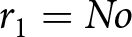 $r_1 = \text{\textit{No}}$. The former is close to the zero predicted by Proposition 1 and is about a quarter of the latter, and the remaining misreporting is small enough to be consistent with noise, inattention, or a few participants who did not recognize that the joint payoff had already been secured.
 $P_2$ is significantly more likely to lie after observing that
 $P_1$ reported No than after observing that
 $P_1$ reported Yes.
From the perspective of my theoretical framework, the joint pattern of Results 1 and 2 is informative about the distribution of lying costs. Corollary 1 shows that the absence of a difference between Sequential and Sequential-Computer arises when the dispersion of lying costs,  $\bar{c}$, is large relative to the monetary and externality stakes. In this parameter region, the strategic value of shifting the lie to
 $P_2$ is too small to affect aggregate behavior. The absence of a treatment difference in Result 1 is therefore consistent with substantial heterogeneity in lying costs, rather than implying that lying costs are high for all participants. By contrast, the externality channel does affect behavior (Result 2), and the estimates for Simultaneous are consistent with the model’s attenuation prediction: lying is, if anything, less frequent when the benefit of a lie to the partner is uncertain. As discussed above, however, this pattern is only suggestive, and its interpretation depends on beliefs, so it should not be viewed as a sharp test of the model.
4.1. Beliefs
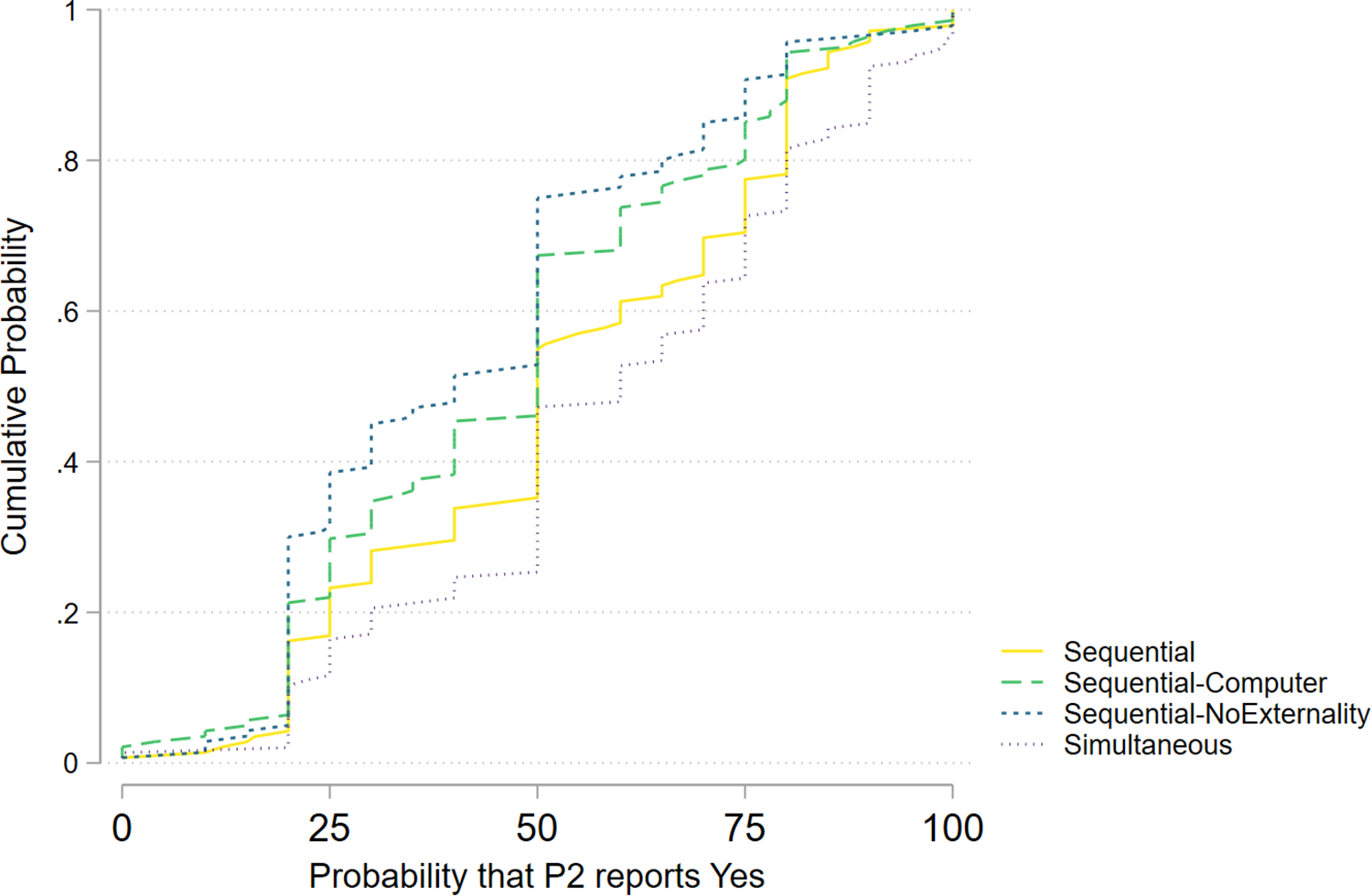
Another outcome of the experiment was the elicited beliefs about  $P_2$’s report. Figure 3 presents the cumulative distribution functions of the implied probabilities that
 $P_2$ reports Yes in each treatment.Footnote 12 More informative than the level of beliefs is whether elicited beliefs help explain
 $P_1$’s reporting behavior. To examine this question, Appendix E reports linear probability models relating
 $P_1$’s report to elicited beliefs (Table E.3).
Two patterns emerge. First, elicited beliefs are positively associated with reporting behavior: a participant who assigns a higher probability to  $P_2$ reporting Yes is more likely to report Yes themselves. Second, and more importantly, this association is concentrated precisely in the treatments where
 $P_2$’s report is strategically uncertain. It is strongest in Simultaneous and present in Sequential, while it is essentially absent in Sequential-Computer and Sequential-NoExternality, where the distribution of
 $P_2$’s reports is objectively determined and common knowledge. The fact that elicited beliefs predict reporting behavior only when the partner’s action is uncertain, and not when it is mechanically determined by the experimental design, suggests that the elicited beliefs capture meaningful expectations rather than random noise.
Cumulative Density Function of  $P_1$’s subjective probability that
 $P_2$ reports Yes

I interpret these associations as suggestive evidence rather than as a test of the model’s belief-based mechanisms. Because beliefs were elicited after  $P_1$’s report, they are potentially endogenous to the reporting behavior under study: the positive association is equally consistent with participants who misreport projecting their own willingness to lie onto their partners. More generally, elicited beliefs are participant-generated variables rather than experimentally manipulated treatments and are imperfect proxies subject to measurement error. Conditioning on them therefore does not reliably identify the corresponding mechanism and may itself affect inference (see, e.g.,
Gillen et al., Reference Gillen, Snowberg and Yariv2019; Van Veldhuizen, Reference Van Veldhuizen2022). I therefore relegate this analysis to the appendix and do not use it to qualify the main treatment comparisons.
5. Conclusions
Does prosocial lying make people more likely to lie? In this paper, I found evidence that it does, even for some people with high lying costs. Gneezy et al. (Reference Gneezy, Kajackaite and Sobel2018), Abeler et al. (Reference Abeler, Nosenzo and Raymond2019), and Khalmetski and Sliwka (Reference Khalmetski and Sliwka2019) suggested that psychological lying cost explains why people do not lie to maximize their monetary payoff. However, it is unclear whether this effect holds in group settings where prosocial lying enters the picture. For instance, lying to get an individual bonus from a CEO is different from lying to reach a threshold that gives the bonus to a team. A similar dilemma arises when people use intermediaries for tasks such as completing tax declarations, selling a car, or selling a house. In these contexts, the intermediary has a higher utility if they lie. Therefore, when individuals lie to benefit both others and themselves, there are two competing motivators: lying aversion and prosociality.
This paper introduced a unified framework that embeds intrinsic lying costs and prosocial motivations into a strategic reporting environment. Building on a model that predicts how strategic substitution and positive externalities alter equilibrium lying, I tested three core hypotheses across four treatments. My experimental evidence shows that prosocial incentives can substantially offset psychological lying costs: subjects lie significantly more when their dishonesty benefits others, even when they could avoid lying by free-riding on a partner’s lie.
The pattern of results is consistent with a specific structure of the lying-cost offset. In the theoretical model, the offset operates only when individuals’ actions are pivotal to the outcomes they bring about, and the treatment comparisons are consistent with this pivotality mechanism. This is compatible with moral justification for lying depending on whether the lie is effective in helping others, but, as discussed in Section 2.1, the design cannot determine whether the offset reflects genuine concern for the partner’s payoff or a self-serving justification for a lie the individual is tempted to tell anyway, and the experiment was not designed to test this distinction directly. Another issue not addressed in this study was whether the timing of the belief elicitation changed participants’ guesses and their willingness to avoid their lying costs. Beliefs were elicited after  $P_1$ had reported their random draw. Therefore, beliefs might have been influenced by participants’ reports. Testing whether participants would be more prone to avoid lying costs in Sequential when beliefs were elicited before reporting was beyond this paper’s scope.
In spite of the mentioned limitations, the study adds to the understanding of the role of prosocial lies on dishonesty. Although prosocial lying may seem trivial, it is, in fact, crucial in terms of today’s concern over tax evasion and corruption. In practical terms, it suggests that anti-fraud measures should reduce reliance on intermediaries or collective reporting procedures. Second, organizations designing team-based incentives must account for the fact that prosocial motives may encourage dishonesty when group gains are salient. Individual reporting should always be preferred over creating dependencies between people’s reports.
These findings yield novel insights into dishonesty and prosociality; yet several open questions remain. First, it is essential to disentangle the two motives that the offset admits: whether lies that benefit others reflect genuine prosocial concern or a self-serving justification for dishonesty. As noted in Section 2.1, separating these motives would require additional treatments, for example, varying the magnitude of the externality independently of the liar’s own monetary stake. Second, future research should examine fairness-based retaliation in sequential reporting settings. In our Sequential treatment, the first mover can free-ride on the second mover’s willingness to misreport, effectively behaving as a moral free rider. However, such free-riding may itself be perceived as a norm violation: the second mover might interpret the first mover’s reluctance to bear lying costs as opportunistic unfairness and retaliate by withholding cooperation or even punishing the free rider. Isolating this dynamic, where reciprocity and fairness concerns trigger retaliatory responses, could illuminate the interplay between intrinsic lying costs, social preferences, and strategic punishment in dyadic settings. Third, future work might explore how the timing of belief elicitation influences strategic lying avoidance.
Supplementary material
The supplementary material for this article can be found at https://doi.org/10.1017/eec.2026.10061
Replication package
Replication materials are available at the Open Science Framework (OSF): https://doi.org/10.17605/OSF.IO/X5VNP.
Acknowledgements
I am grateful to Kai Barron, Tilman Fries, Uri Gneezy, Johann Graf Lambsdorff, Jeanne Hagenbach, Agne Kajackaite, Johannes Leutgeb, Cesar Mantilla, Robert Stüber, Christian Traxler, Roel van Veldhuizen, Yuliet Verbel, and audiences at WZB, BEBES, BEEC 2022, the 2021 ESA Global Online Meetings, the Rady School of Management, ASFEE 2022, and ESA Europe Bologna 2022 for helpful comments. This research used generic funds provided by the WZB Berlin Social Science Center. The usual disclaimer applies.
Competing interests
This project was jointly funded by the WZB Berlin Social Science Center, which covered the experimental costs, and the Pontificia Universidad Javeriana, which supported the researcher’s time to finalize the manuscript. The author has no relevant material or financial interests related to this paper.
Use of Artificial Intelligence (AI) Tools
Prior to submitting the first and second revisions, the author used Claude (Anthropic) to verify mathematical derivations and improve the clarity of selected passages, and ChatGPT (OpenAI), including the custom GPT “Proofreader Pal,” to proofread the manuscript. These tools were not used to generate substantive content, analyze data, or produce figures. The author reviewed all outputs and assumes full responsibility for the manuscript’s content.








 Open access

