

The increasing number of students with disabilities in mainstream educational settings has provided a range of challenges to which schools are responding by employing teachers’ aides (TAs). Researchers report that many TAs find it difficult to establish exactly what is expected of them (Bedford, Jackson, & Wilson, Reference Bedford, Jackson and Wilson2008; Devlin, Reference Devlin2008; Egilson & Traustadottir, Reference Egilson and Traustadottir2009; Giangreco & Doyle, Reference Giangreco and Doyle2002; Howard & Ford, Reference Howard and Ford2007; Takala, Reference Takala2007). These studies reveal that practising TAs report that their roles and responsibilities varied widely from school to school and across communities. Four key themes emerging from the literature reveal a level of concern for both teachers and TAs. These themes comprise: (a) inclusion in the school community, (b) curriculum, (c) student support, and (d) classroom management (Bedford et al., Reference Bedford, Jackson and Wilson2008; Blatchford, Russell, Bassett, Brown, & Martin, Reference Blatchford, Russell, Bassett, Brown and Martin2007; Egilson & Traustadottir, Reference Egilson and Traustadottir2009; Forlin, Keen, & Barrett, Reference Forlin, Keen and Barrett2008; Howard & Ford, Reference Howard and Ford2007; Mansaray, Reference Mansaray2006; Sikes, Lawson, & Parker, Reference Sikes, Lawson and Parker2007; Takala, Reference Takala2007; Webster et al., Reference Webster, Blatchford, Bassett, Brown, Martin and Russell2010).
Inclusion of TAs in the School Community
In this study the theme of inclusion relates to the inclusion of TAs in the school community. In many schools, providing TAs to support students with disabilities has become the primary method for implementing inclusive education (Giangreco & Doyle, Reference Giangreco and Doyle2002). Bedford et al. (Reference Bedford, Jackson and Wilson2008) reported that TAs have ‘undertaken a range of tasks [that are] vital to the efficiency of the school community’ (p. 8). However, Sikes et al. (Reference Sikes, Lawson and Parker2007) reported that there is tension between the systematic and personal elements of inclusion, with the personal interpretations and day-to-day operations of teachers and TAs affecting inclusive practices in the school environment. Similarly, Egilson and Traustadottir (Reference Egilson and Traustadottir2009) found that for a variety of reasons not all teachers are comfortable with having another person in the classroom. Giangreco (Reference Giangreco2010) observed that TAs are considered to be caring, hard-working assets in their schools; however, their potential for misuse and overuse often creates misunderstandings within the school community. TAs can often bear the blame of questionable support practices that can result in a general questioning of their inclusion in the school. Although the pragmatic reasons for employing TAs are evident, the effects of the presence of TAs on student independence, social interactions, behaviour, and academic achievement are still issues for many within the school community. Researchers (e.g., Devecchi, Dettori, Doveston, Sedgwick, & Jament, Reference Devecchi, Dettori, Doveston, Sedgwick and Jament2012; Giangreco & Broer, Reference Giangreco and Broer2005) have commented that the impact of the presence of TAs has been mainly focused on student attainment and to a limited extent on the TAs themselves, or their perceptions of their role. Balshaw (Reference Balshaw2010) and Fletcher-Campbell (Reference Fletcher-Campbell2010) also contend that focusing only on student attainment fails to take into account how the TA is included, supported, and deployed within the school. Such findings suggest that issues related to the perceived role of TAs may affect the degree to which TAs are included as a member of the school community. Clearly, further research is warranted that specifically explores these issues as perceived by the TAs themselves. In the context of this study the focus is on whether teachers and TAs perceive TAs to be an included member of the school community in supporting students with disabilities.
Curriculum
In this study curriculum relates to the TAs’ role in the planning of curriculum, access to lesson plans, and involvement in developing learning objectives. Research has shown that the cooperation and division of work between the teacher and the TA varies, and can cause misunderstanding and demarcation in the school environment if guidelines are not provided to differentiate the types of roles (Takala, Reference Takala2007). This may be linked to the differences in training between teachers and TAs. Although teachers require a formal level of training, as prescribed by their governing body, most TAs receive on-the-job training (Carroll, Reference Carroll2001). Teachers have the responsibility of planning for and managing the instructional environment and setting student goals. In contrast, French (Reference French2003) reported that some TAs perceive their role as maintaining responsibility for all aspects of the student's education, including creating all modifications and adaptations for the student. Many of these tasks overlap with those of the classroom teacher and may engender a sense of confusion for both TAs and teachers (Howard & Ford, Reference Howard and Ford2007). Furthermore, the impact of assigning pedagogical roles to TAs remains questionable. In the largest study of TAs across primary and secondary schools in the UK (the Deployment and Impact of Support Staff [DISS] project), Webster et al. (Reference Webster, Blatchford, Bassett, Brown, Martin and Russell2010) reported that TA support has a negative impact on the academic progress of students with disabilities. In addition, they reported that the interaction between the classroom teacher and the student with disability is reduced by the presence of a TA. This raises questions about the way that TAs are used in the UK. It appears from these findings that the role of a TA in relation to design, support, and teaching of the curriculum remains unclear. In addition, further investigation is needed that explores the TA's role in the understanding of, and the knowledge and skills needed to support, the educational program within the Australian context.
Classroom Management
An additional theme that is evident in research on TAs relates to the challenge of understanding their role in the management of students in the classroom. In this study classroom management refers to the TA's role in supporting the student with disabilities to access their learning within the classroom. This includes the TA managing their role in pedagogy, managing the students’ access to learning, and managing student behaviours. Many teachers consider the use of TAs to support students with disabilities as essential, as students with special needs often require more attention and individual assistance within the classroom environment than the classroom teacher has time to provide (French, Reference French2003; Giangreco & Broer, Reference Giangreco and Broer2007; Ward, Reference Ward2011). For example, from the DISS project, Webster et al. (Reference Webster, Blatchford, Bassett, Brown, Martin and Russell2011) reported that TAs had a positive effect in reducing off-task behaviour and disruption in mainstream classrooms. Researchers have also reported that in the classroom the TA is often responsible for a range of tasks that include making sure the student learns the curriculum, facilitating social interactions between students, teaching appropriate behaviour and communication skills, and interacting with the teacher to understand and support the student in achieving their goals. Although the presence of the TA can be beneficial in supporting the student in the classroom, it also may create a potential barrier to communication between the teacher and the student, and in some instances their classmates (Blatchford et al., Reference Blatchford, Russell, Bassett, Brown and Martin2007; Carroll, Reference Carroll2001; Forlin et al., Reference Forlin, Keen and Barrett2008; French, Reference French2003; Mansaray, Reference Mansaray2006; Takala, Reference Takala2007). As early as 1997, and in subsequent studies, Giangreco, Yuan, McKenzie, Cameron, and Fialka (Reference Giangreco, Yuan, McKenzie, Cameron and Fialka2005) raised concern regarding the TA's proximity getting in the way of students’ learning and social interaction. Nearly 10 years later, Rutherford (Reference Rutherford2012) reported similar findings from her research in New Zealand: that teachers’ reluctance to engage with students with disabilities resulted in TAs assuming the primary responsibility for the student. Forlin et al. (Reference Forlin, Keen and Barrett2008) and Blatchford et al. (Reference Blatchford, Russell, Bassett, Brown and Martin2007) found that some teachers supported the use of TAs as a method of overcoming their perceived difficulty in monitoring and effectively teaching other students when attending to the students with disabilities in their class, who, in many instances, demanded a disproportionate amount of the teacher's time. The role of the TA inherently involves working in the classroom alongside students and teachers; however, through misunderstanding or misdirection their responsibilities in the classroom can be divisive. In the present study, we investigated the perceptions of teachers and TAs in understanding the classroom management responsibilities of TAs working within the regular classroom in a secondary school in Victoria, Australia.
Student Support
The final theme that was evident within the literature relates to the differing views regarding the level of support from TAs for students with disabilities. In the context of this study student support is concerned with the level of TA support provided to students in the classroom. TAs work in close proximity to the student with disabilities they are supporting to provide personal care, ensure safety, or provide instructional support (Giangreco & Doyle, Reference Giangreco and Doyle2002; Howard & Ford, Reference Howard and Ford2007). The work of TAs can also extend to other contexts that can indirectly have a significant impact on student support. For example, TAs often take on roles such as providing background or contextual information on students with disabilities, or facilitating social interactions between students (Carroll, Reference Carroll2001; Mansaray, Reference Mansaray2006). The DISS project authors (Webster et al., Reference Webster, Blatchford, Bassett, Brown, Martin and Russell2010) reported, from systematic observations of students interacting with teachers and TAs, that students were 9 times more likely to have sustained interaction with TAs than with teachers. However, these interactions were reported to be of a lower quality, with TAs more likely to offer inaccurate or confusing explanations as compared to teachers, who explained concepts and promoted student thinking and task engagement. Similarly, the TAs’ perceptions of their support role can affect the goal of encouraging student independence. This has been reported by a number of researchers who have noted that teachers reported problems arising when the proximity is excessive or unnecessary; concerns such as separation from classmates, interference with peer interaction, dependence on adults, and loss of personal control were included (Giangreco & Broer, Reference Giangreco and Broer2007; Takala, Reference Takala2007).
From a range of studies it can be seen that there is a lack of consensus on the roles and responsibilities of TAs, and to what extent and in what circumstances they should be used. The studies have identified difficulties concerning the boundaries between teaching and nonteaching roles, and the existence of situations in which role definition was often unclear (Blatchford et al., Reference Blatchford, Russell, Bassett, Brown and Martin2007; Howard & Ford, Reference Howard and Ford2007; Mansaray, Reference Mansaray2006; Takala, Reference Takala2007).
In this study we explored perceptions of the roles of TAs in a secondary state school environment. While undertaking the research, the initial expectation of working with two participant groups altered because the results indicated that there were three participant groups who responded to the questionnaire in the research data: teachers, TAs, and teachers/teachers’ aides (T/TAs). The T/TAs group included people who had been employed in both careers. This afforded the opportunity to examine and reflect on three groups of participants and their understanding of the role of TAs in the secondary school setting.
Method
The research presented is a small-scale study that took place in a secondary state school located in the outer south-eastern suburbs of Melbourne, Victoria, Australia. The school is a Year 7–12 (12–18 years) nonselective secondary government school. The student population was 1,126 at the time of data collection. Of these students, 80 were classed as needing support, 24 of whom were funded through the Program for Students with Disabilities (Department of Education and Early Childhood Development, 2012, 2013). This school was selected because it employed 90 teachers and 15 TAs. The school does not have in-house special education teachers. Students with disabilities are serviced through the Visiting (itinerant) Teacher Service for physical, visual, and hearing impaired support. The school outsources additional services (e.g., speech therapy) on an individual student needs basis.
The majority of the TAs work daily from 8.30 am to 3.15 pm when the students attend school. The TAs in this school are employed to support individual students in the general classroom or in small withdrawal sessions. The TAs may be timetabled to support one student across that student's allotted time or they may be timetabled to support a number of different students throughout the week.
Quantitative and qualitative data were collected using an anonymous questionnaire. Quantitative data were collected via the nominal items in the questionnaire to provide a deductive analysis of the participants’ initial responses. Qualitative data were collected from the open-ended ‘comments’ sections of the questionnaire.
Participants
Ethics permission was obtained from the Victorian Department of Education and Early Childhood Development prior to undertaking this study. After approval was received from the school's acting principal, prospective teacher participants were made aware of the research and were invited to participate during a regular weekly staff meeting. It was anticipated that copies of the anonymous questionnaire would be distributed to the staff during a regular timetabled meeting; however, due to timing constraints this option was discarded. Instead, questionnaires were distributed to individual staff pigeonholes in the main school staffroom to all staff for voluntary and anonymous completion. The TAs’ questionnaires were distributed at their weekly coordinators meeting for voluntary and anonymous completion. All participants were given 2 weeks to complete and return their questionnaires.
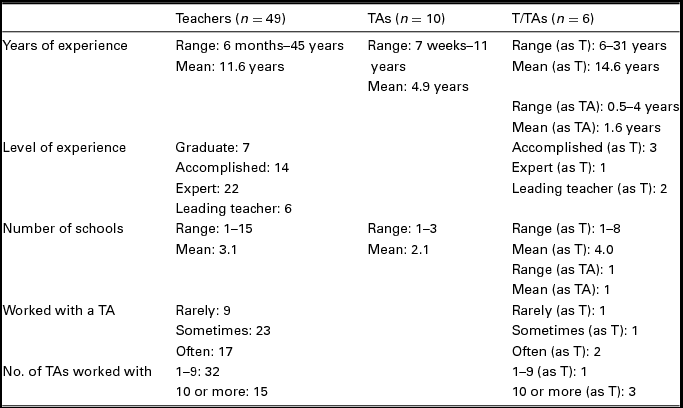
Of the 105 questionnaires distributed, 65 (62%) were returned completed. The respondents fell into three main groups: (a) teachers (n = 49, 75%), (b) TAs (n = 10, 15%), and (c) T/TAs (n = 6, 10%). Of the six participants in the T/TAs group, four were currently employed as teachers. These four teachers had previously worked as TAs. Their average time of working as a TA was over 1 year (M = 1.6 years). Their average time working as a teacher was 13 years. The other two participants of the T/TAs group were currently working as TAs. Their average time of working as a TA was 3 years. They had previously been employed as trained teachers. One participant had been a teacher for 6 years; the other participant had been a teacher for 31 years. There was no ‘administration staff’ or ‘other’ staff who completed and returned the questionnaire. Table 1 presents the participants’ responses regarding their experience, number of schools worked in, and data relating to working with TAs.
Participants’ School Demographics

Note. TAs = teachers’ aides; T = teacher. The level of experience uses the descriptors of four professional career stages — graduate, accomplished, expert, and leading teacher — as described by the Department of Education and Early Childhood Development classifications (2010).
Data Collection: Questionnaire
The questionnaire items were informed by four themes identified in a review of the literature on the roles of TAs in inclusive school settings. These themes are (a) inclusion, (b) curriculum, (c) classroom management, and (d) student support.
The theme of inclusion is centred on the level of involvement of TAs in the school community (see Egilson & Traustadottir, Reference Egilson and Traustadottir2009; Forlin et al., Reference Forlin, Keen and Barrett2008; Giangreco, Reference Giangreco2010; Sikes et al., Reference Sikes, Lawson and Parker2007). The curriculum theme relates to the teachers’ and TAs’ perspectives on designing, supporting, and teaching the curriculum (see Bedford et al., Reference Bedford, Jackson and Wilson2008; Blatchford et al., Reference Blatchford, Russell, Bassett, Brown and Martin2007; Howard & Ford, Reference Howard and Ford2007). The theme of classroom management focuses on the role of TAs within the classroom and is guided by the research by Mansaray (Reference Mansaray2006), Blatchford et al. (Reference Blatchford, Russell, Bassett, Brown and Martin2007), and Howard and Ford (Reference Howard and Ford2007). The final theme of student support relates to TAs’ views in relation to student independence and is guided by research from Egilson and Traustadottir (Reference Egilson and Traustadottir2009), Howard and Ford (Reference Howard and Ford2007), and Takala (Reference Takala2007).
A range of item types were included in the questionnaire. Among these were items that sought to reveal the specific characteristics of the respondent in relation to teaching and experience; nominal response items using a 5-point Likert scale ranging from strongly agree to strongly disagree; and open response items in the form of a comment space to enable the respondent to offer further responses to the questions (Connell, Reference Connell, Connell, Campbell, Vickers, Welch, Foley and Bagnall2007).
The questionnaire featured 25 items. Items 1 to 4 were designed to gather background information, including the respondent's role, years of experience, number of schools the respondent had worked in, and whether the responding teacher had worked as a TA or the responding TA as a teacher.
Items 5 to 25 were statements related to the four identified themes. There were three items related to the theme of inclusion, seven items related to the theme of curriculum, six items related to classroom management, and five items for the theme of student support. The statements were designed for respondents to nominate strongly agree to strongly disagree across a 5-point Likert scale. Each statement had an open-ended comment section to allow respondents to offer qualitative comments to add to or clarify their initial response. The final item of the questionnaire was an open-ended comment section for any additional comments or clarification from the participants regarding their perception of the role of TAs working in a state secondary school in Victoria.
Data Analysis
Once the data were collected, they were scrutinised and the quantitative data were entered into an SPSS Version 21 database. For each of the four themes, participants’ responses to the specific items in that section were combined to create an overall measure. For example, in the student support theme there were five items and the responses were added together to create a total score and overall measure of perceived student support. Scores for each section were scaled so that each theme had a maximum score of 100. This measure was used to see if there was a variance between the three groups of participants across each theme. By using this variance across the three groups, the researchers were able to compare the three groups’ overall perceptions of their roles in this secondary school. Differences in the measure for each group indicated differing perceptions within the four identified themes. The three groups (teachers, TAs, and T/TAs) were compared using a Kruskal–Wallis analysis of variance. This nonparametric statistical tool is appropriate for small samples that are unequal in size. The open-ended comments section provided more in-depth qualitative information relating to the role of a TA as perceived by teachers and TAs in this state secondary school. These comments were scrutinised and coded to identify emerging themes.
Results
For each of the four themes, participants’ responses to the specific items in that section were combined to create an overall measure, taking into account the positive or negative direction of the item. As there were different numbers of items in each section, scores for each section were scaled so that all four themes had a maximum score of 100. Results are presented for each of the themes of the questionnaire. Comparison between the groups of professionals are presented first, followed by the analysis of the qualitative data.
Inclusion of TAs in the School Community
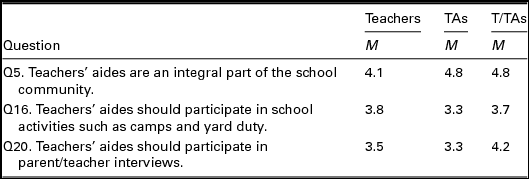
In the interests of brevity, the term inclusion will be used to refer to the theme of inclusion of TAs in the school community. The participants were asked three questions in the inclusion section. Table 2 presents each item and the mean scores for each group of participants.
Mean Scores on Individual Questions in the Inclusion of TAs in the School Community Section of the Questionnaire

Note. Likert scale key: 1 = strongly disagree; 2 = disagree; 3 = neutral; 4 = agree; 5 = strongly agree.
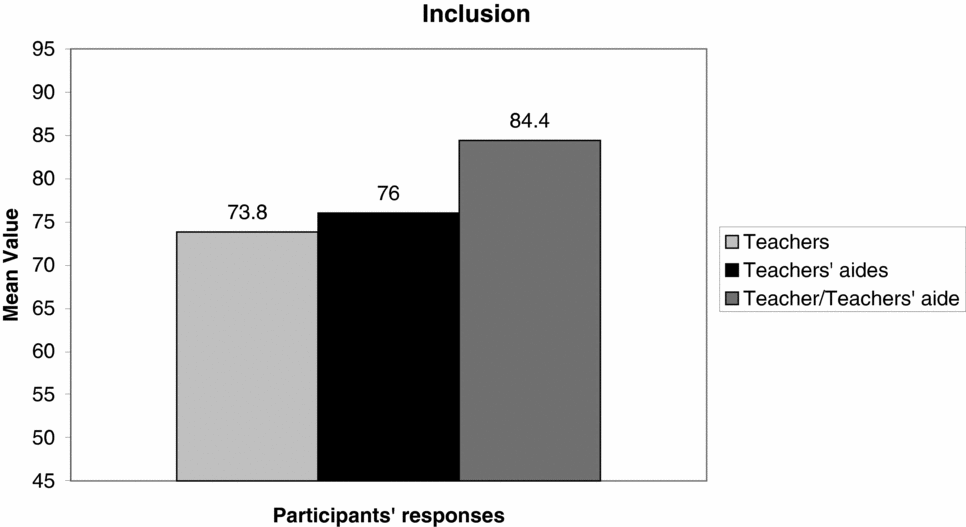
Responses on these three questions were combined to produce an Inclusion score that represented the participants’ perceptions to the items. These scores were then scaled so that that maximum Inclusion score was 100. The mean Inclusion score for each group of professionals is presented in Figure 1.
The Mean Perceived Inclusion of TAs in the School Community Score for Each Group of Participants.
A Kruskal–Wallis test was used to compare levels of Inclusion across the three groups of professionals. No significant differences between groups were found, X2(2) = 2.147, p = .323, NS. This suggests that there was no significant difference between the teachers, TAs, and T/TAs groups in their perceptions of the way that TAs were included in the school community.
Analysis of Qualitative Data Relating to Inclusion of TAs in the School Community
The items in this section related to TAs as included members of the school community. Responses indicate that the majority of teachers were in agreement that TAs were an integral part of the school; however, the issue of the role of the TA was questioned by others, such as T43, who stated that it ‘depends on the aide and what they believe their role is’, and T48, who wrote, ‘as long as the student is taught to eventually work independently’.
The participants were asked to respond to the statement ‘teachers’ aides should participate in school activities such as camps and yard duty’. In retrospect, this question was problematic because this item made reference to two separate issues (camps and yard duty), which resulted in the responses being confounded. However, it is still interesting to note the participants’ perspectives regarding TAs’ participation in these activities in the school. The majority of teachers maintained that the TAs should participate in school camps. Most teachers commented that TAs should not participate in yard duty because of the legal issues involved.
TAs also considered they were an integral part of the school community. TA3 stated ‘it appears that every year more and more students are requiring assistance in class. Students often need support to help improve confidence and self-esteem as well as academic’. TAs considered they should participate in school activities such as camps but not yard duty. As commented by TA3, ‘yard duty — no legal responsibility, other activities — yes because the aide is not solely responsible’.
The T/TAs group had similar responses to the teacher group and TAs regarding whether TAs were an integral part of the school community. T/TA6 strongly agreed and reported that TAs ‘help to get teachers work load a bit less [sic]’. T/TA5 agreed and commented that ‘at times I feel that students could become more independent without a teachers’ aide. But more use could be made of an aide in helping the teacher instead of the student’. In response to the item regarding TAs’ participation in school activities, the T/TAs agreed stating that ‘camps are an essential way for kids to get to know staff better’ (T/TA1), and yard duty ‘helps develop relationships with other students’ (T/TA4).
Curriculum
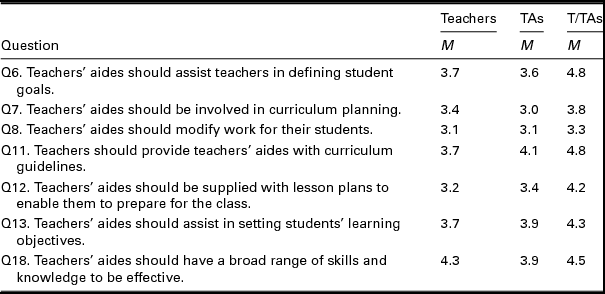
The participants were asked to respond to seven items related to the theme of curriculum. Table 3 presents each item and the mean scores for each group of participants.
Mean Scores on Individual Questions in the Curriculum Section of the Questionnaire
Note. Likert scale key: 1 = strongly disagree; 2 = disagree; 3 = neutral; 4 = agree; 5 = strongly agree.
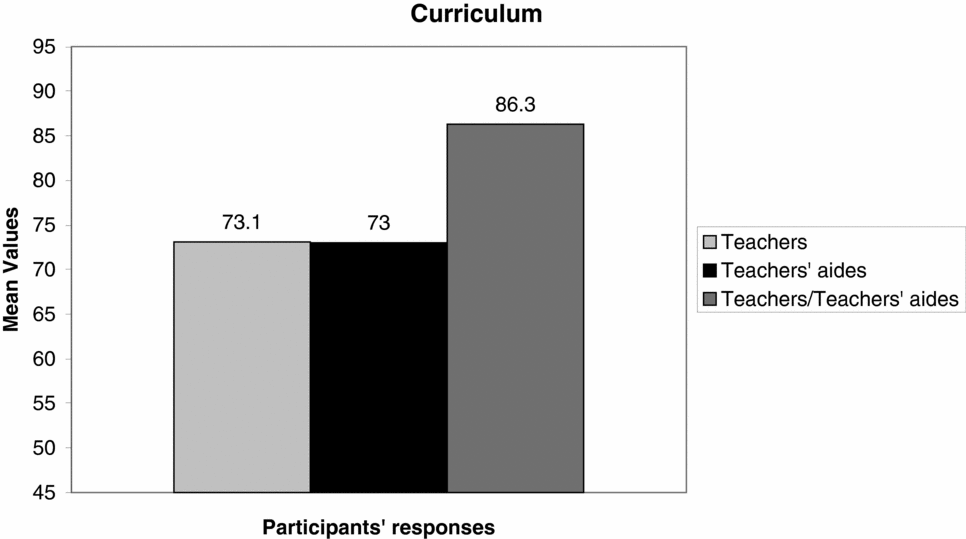
Responses to the seven items were combined to produce a Curriculum score and then scaled so that that maximum score was 100. The purpose of combining the items was to enable a comparison of the three groups’ perceptions of the TA's role in the area of curriculum. The mean Curriculum score for each group of professionals is presented in Figure 2.
The Mean Perceived Curriculum Score for Each Group of Participants.
A Kruskal–Wallis test was used to compare levels of TA involvement in curriculum across the three groups of professionals. Results indicate that there was a significant difference in the means on the Curriculum measure, X2(2) = 7.51, p = .023. Post hoc analysis showed that the T/TAs group scored significantly higher than the teacher or the TAs groups. This suggests that the T/TAs group perceived the role of the TAs differently in the area of curriculum. The analysis of the qualitative data in relation to curriculum helps to elaborate this finding.
Analysis of Qualitative Data Relating to Curriculum
This theme related to the TAs’ role in curriculum comprising goal setting and learning objectives, access to curriculum guidelines, provision of lesson plans, and modification of work. Teachers expressed mixed views about the degree to which TAs should be involved in curriculum-related tasks. In responding to the item regarding student goals, most teachers agreed that TAs should assist teachers in defining student goals and in setting students’ learning objectives. T15 explained that ‘teachers’ aides have understanding and knowledge of individual student's needs’. Some teachers reported that TAs should work in consultation with the teachers in setting student goals. Other teachers commented that TAs should be involved in curriculum planning ‘only for the student involved’ (T18); T16 wrote, ‘yes — if their knowledge of a student is needed to develop a program that is inclusive’. Some teachers raised the issue of time constraints when discussing curriculum consultation issues. There were mixed views regarding access to curriculum guidelines; however, the majority of teachers agreed they should provide TAs with lesson plans. For example, T3 stated, ‘a summary/outline of what is going to be covered would be an advantage’ and T35 stated, ‘definitely, as they need to know’. Although T6 agreed with these views, they added that ‘this assumes that they will understand that [sic] aims the teacher is driving at’. Overall, these findings suggest that teachers are equivocal in their views on the role of TAs in the curriculum-related tasks.
The TA group also expressed diverse opinions regarding the TA's role in curriculum-related tasks. In commenting on student goals and student learning objectives, the TAs concurred with the teacher group regarding the understanding and knowledge they have of individual students, which could assist in setting student goals and learning objectives. For example, TA9 wrote that ‘a lot of the time the aide knows the student's diagnosis better than the teacher and their abilities’. TAs, in responding to the question about curriculum guidelines, considered that they should be informed about the curriculum but were concerned about the time and planning required for this to occur. In regard to teachers providing lesson plans, TAs agreed that it would be ideal but not always possible. In general, the teacher group and TAs expressed agreement in relation to the items within the theme of curriculum.
In contrast, the T/TAs group differed in their responses to the curriculum-related items. The majority of T/TAs reported that TAs should be involved in defining student goals and student learning objectives. T/TA4 explained that ‘being aware of the student's disability is an advantage that could/should help us define what goals are able to be achieved by our students’ and ‘it could help the students and teachers to have some input in setting learning objectives’. Relating to TAs’ knowledge of curriculum guidelines, T/TA4, who had previously been a teacher, wrote, ‘if we knew what was expected we could help them more’. The T/TAs strongly endorsed the provision of lesson plans, as they would help them to prepare for class. T/TA4 commented that ‘as aides we are not in the same classroom with one student all the time therefore it would help us understand what is/was going to happen in the lesson.’
It is worth noting that the T/TAs group were mixed in their responses to TAs’ role in modifying work for the students they support. Two T/TAs agreed and two T/TAs disagreed. For example, T/TA1, who works as a teacher, stated, ‘this is not what we are paid for’, and T/TA4 wrote, ‘aides should/could help the teacher modify work for the student because of report writing, the teacher should be the person that is accountable for modifying work’.
Classroom Management
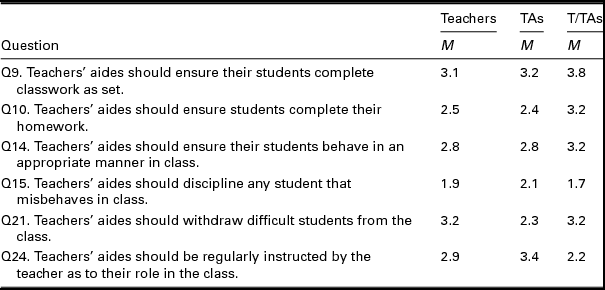
The participants were asked to respond to six nominal items related to the theme of classroom management. Table 4 presents each item and the mean scores for each group of participants.
Mean Scores on Individual Questions in the Classroom Management Section of the Questionnaire
Note. Likert scale key: 1 = strongly disagree; 2 = disagree; 3 = neutral; 4 = agree; 5 = strongly agree.
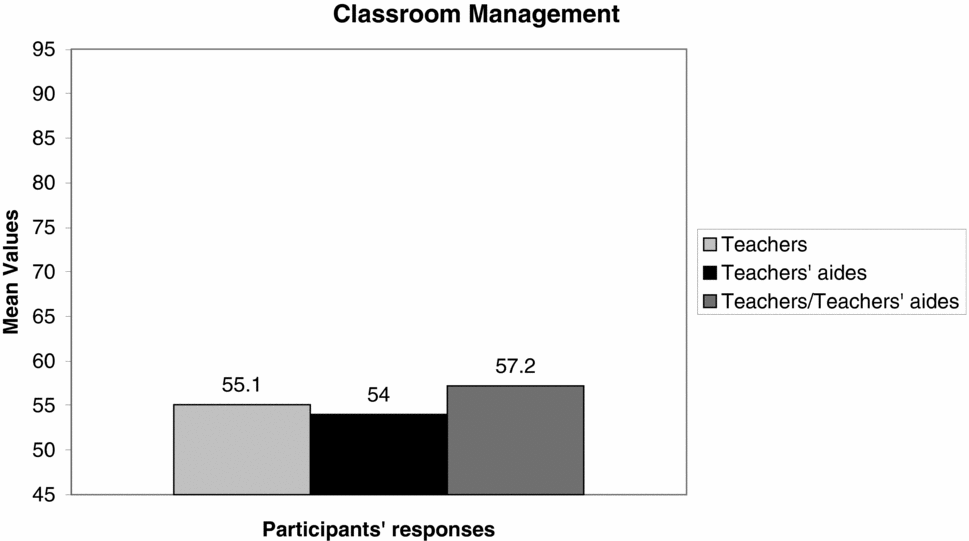
Responses on these three items were combined to produce a Classroom Management score that represented the participants’ perceptions. These scores were then added and scaled so that the maximum Classroom Management score was 100. The mean Classroom Management score for each group of professionals is presented in Figure 3.
The Mean Perceived Classroom Management Score for Each Group of Participants.
A Kruskal–Wallis test was used to compare levels of perceived support for classroom management across the three groups of professionals. No significant differences between groups were found, X2(2) = 0.644, p = .725, NS. The results suggest that there was no significant difference among the teachers, TAs, and T/TAs groups in their perceptions of the role of TAs in relation to classroom management.
Analysis of Qualitative Data Relating to Classroom Management
The participants were asked to comment on items relating to classroom management that included TAs’ responsibility in ensuring students complete work, behavioural issues, and teacher instructions to TAs. The teacher group agreed that it was the teachers’ responsibility to ensure students completed classwork as set. For example, T1 stated, ‘it is primarily the classroom teacher's responsibility to do that’.
The teacher group also responded that it was the teachers’ responsibility to deal with the classroom management issue of behaviour. T1 commented that ‘it is primarily the classroom teacher's role to discipline’, and T21 stated that ‘aides do this anyway (sometimes) but it is not part of their responsibility’. Six members of the teacher group responded that the teacher and TAs should work together when managing student behaviours. For example, T37 stated that TAs should assist ‘only to compliment [sic] the teacher if they are disciplining the student’. Two of the teachers commented that behavioural issues could be managed with a team approach between the ‘classroom teacher and aide’ (T1). In response to the item ‘teachers’ aides should withdraw their difficult students from the class’, four teachers commented that TAs should withdraw students from class under direction from the teacher. Three teachers, however, commented on the issue of integration when continually withdrawing students from their classes. For example, T6 stated, ‘that is not their job nor are they encouraging integration if they do so’ and T3 and T15 agreed that withdrawal should only happen ‘if necessary’. In general, teachers did not see withdrawal of a student from the class as a preferred behavioural outcome, or as a TA's responsibility.
TAs concurred with the teachers when commenting on their role in ensuring students complete classwork and homework, with the majority noting that it was not their responsibility but rather that of the teachers and parents. However, TA3’s response represented the responses of some members of the TAs group by noting that ‘personally I feel responsible to follow up the student's work’.
TAs were in accord with the teacher group regarding behavioural issues. For example, TA7 stated that ‘we have not been trained to deal with discipline’, but should encourage appropriate behaviour. Likewise, when commenting on student withdrawal from class, the majority of TAs agreed with the teacher group regarding withdrawing students with behavioural issues from the class but clarified their comments with ‘it depends on the situation’ (TA1, TA2, TA3, TA7). T/TAs also concurred with the other two groups about behaviour and withdrawal.
The T/TAs group had similar views to the other two groups concerning classwork. T/TA4 agreed stating that ‘it is the teacher's responsibility’, with T/TA4 adding that TAs should ‘always encourage or try to make sure our students complete their work’. However, like TA3, T/TA6 stated that ‘I feel it is part of the job’.
Student Support
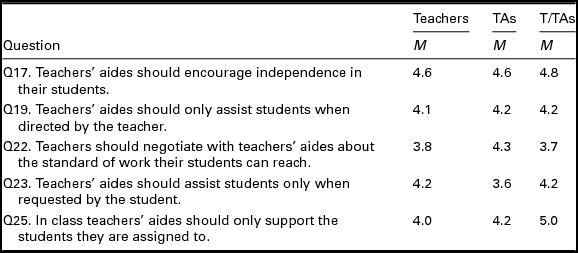
Table 5 presents the responses for each group of participants to the five items that relate to the theme of student support.
Mean Scores on Individual Questions in the Student Support Section of the Questionnaire
Note. Likert scale key: 1 = strongly disagree; 2 = disagree; 3 = neutral; 4 = agree; 5 = strongly agree.
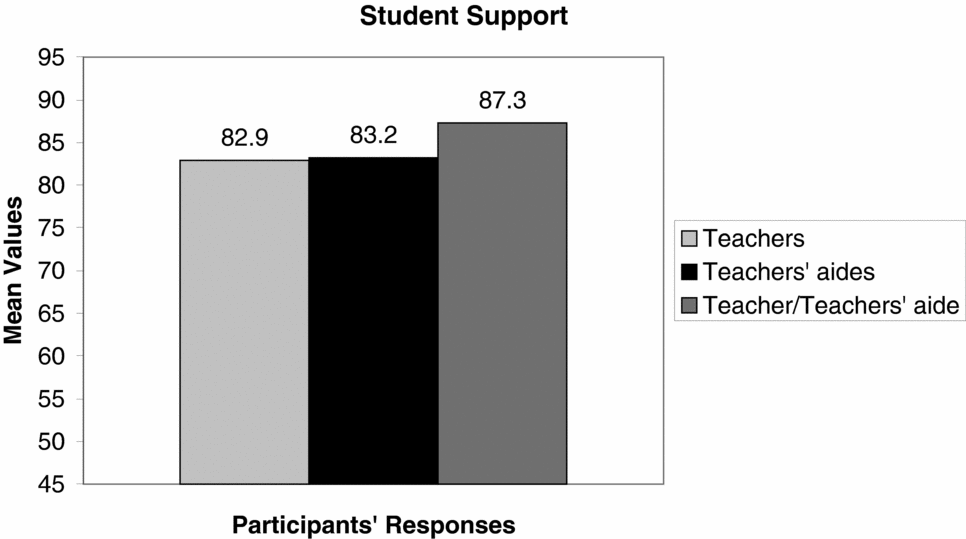
A mean Student Support score that represented the participants’ perceptions was created for each participant by summing their responses to the five student support items. Mean scores on this Student Support measure are shown in Figure 4.
The Mean Perceived Student Support Score for Each Group of Participants.
A Kruskal–Wallis test was used to compare levels of perceived TA student support across the three groups of professionals. No significant differences between groups were found, X2(2) = 0.729, p = .672, NS. The results suggest that there was no significant difference among the teachers, TAs, and T/TAs groups in their understandings of the role of TAs in relation to student support.
Analysis of Qualitative Data Relating to Student Support
We collected data for this part of the research that related to the TA's perceived role in supporting students, including student independence and assisting students in class. In response to the items related to student independence, teachers expressed concern that students can become dependent on TAs, as evidenced by T33’s statement that ‘some students rely on aides, when lazy’. In general, the teacher group considered that there should be negotiations with TAs about the students’ standard of work.
In commenting on items regarding assisting students, teachers generally disagreed with the view that TAs should assist students only when directed by a teacher. Teachers commented that ‘initiative’ is important (T1, T4, T15) and that ‘aides should use their knowledge of a student to decide what is best’ (T16). Similarly, teachers disagreed with the item regarding whether TAs should assist students only when requested by the student. T29 stated that ‘if this was the case some students would take advantage of this and never do anything’. However, T49 considered that ‘it depends on the student. Some students, especially autistic [sic] students work better on their own’.
The teacher group also disagreed that TAs should support only those students they are assigned to. T49 stated that ‘if their student doesn't need help for a particular task the aide is free to help others’ (T49). Two of the teachers commented that by working with all students who needed assistance in the class it may lessen the stigma attached to the student who is supported by the TA.
In responding to the issue of encouraging independence in the students, the TAs and T/TAs had similar responses that focused on the areas of independence and responsibility. For example, T/TA4 wrote: ‘we need to focus on doing ourselves out of a job. Make our students as independent as possible’, and TA7 commented that ‘students need to be responsible for themselves’. The TAs and T/TAs also had similar perspectives, with TA3 stating that ‘aides are generally capable to [sic] understand when a student requires assistance’. The TA and T/TAs groups also subscribed to the same view as the teacher group about working only with the students to whom they are assigned. TA3 wrote, ‘I believe students don't want to stand out and may prefer to lay low’. Overall, the three groups supported the view that TAs should assist other students in addition to those they are assigned to.
Discussion
In this study we examined the perceptions of teachers and TAs regarding the roles of TAs in a Victorian state secondary school. From a review of the literature, four main themes were identified as areas of concern regarding the role of the TAs: (a) inclusion, (b) curriculum, (c) classroom management, and (d) student support. The demographic data gathered from the anonymous questionnaire revealed three groups of participants: (a) teachers, (b) TAs, and (c) T/TAs.
Inclusion of TAs in the School Community
We found that there was no significant difference between the three groups in their responses to the questionnaire items related to the theme of inclusion; however, caution should be exercised as the responses to this theme are based on only three items and within the context of one secondary school. The findings showed that TAs perceived themselves to be an integral part of the school community, not only in providing support to enable students with disabilities to become active members of a mainstream school environment but also as participating members of the school community. These results support the findings from a study by Devecchi and Rouse (Reference Devecchi and Rouse2010) that showed that by including TAs and encouraging collaboration, TAs became an important resource for the benefit of all members of the school community. However, researchers (e.g., Egilson & Traustadottir, Reference Egilson and Traustadottir2009; Howard & Ford, Reference Howard and Ford2007), in reporting on the increase in numbers of students with disabilities entering mainstream schools, emphasise that the role of the TA in supporting these students was still poorly defined, resulting in different perceptions of the TA's role by the teachers and TAs in the school. These inconsistencies can create discord among the staff within the school that can impact the TA's perception of their acceptance as a member of the school community.
Participation in school activities provides a means for TAs to further integrate into the school community through such activities as camps, yard duty, and parent–teacher interviews. However, legal implications, as reported by many participants, limit the roles they can undertake and therefore may impact on the level of inclusion in the school community for TAs. The general consensus from this study supported TAs’ participation in school camps, where teachers were present to be legally responsible, but not for yard duty, as TAs were not legally covered within that particular environment. The study found that the relationship-building aspects of participating in camps was seen as a positive outcome by both teachers and TAs.
Although the number of TAs in schools has increased, many studies have highlighted inadequacies in defining the roles of TAs in an inclusive environment (Egilson & Traustadottir, Reference Egilson and Traustadottir2009; Forlin et al., Reference Forlin, Keen and Barrett2008; Sikes et al., Reference Sikes, Lawson and Parker2007). By defining the role of the TAs, schools may create an environment of understanding and cooperation that enables the TAs to perceive themselves as valued members of the community.
Curriculum
Findings from the questionnaire showed a significant difference between the groups with regard to curriculum. The teacher group and TAs had similar mean scores across the seven items (M = 3.6). The T/TAs group's mean score was significantly higher (M = 4.2), showing a stronger agreement with the curriculum items. Through their experiences in working as both a teacher and a TA, T/TAs may have more curriculum knowledge and more insight into the need to support student learning, which may have impacted their perception of their role regarding the curriculum.
Teachers and TAs expressed ambiguous views about the role of the TA in curriculum-related tasks such as access to lesson plans, setting student learning objectives, and modifying work. For example, several of the teachers commented that goal setting was the responsibility of the teacher, and that TAs could participate in goal setting if requested by the teacher for the specific students they support. TAs thought this could help them work more efficiently in their role of supporting their students in the classroom. This finding is similar to that reported by Takala (Reference Takala2007). In the present study, both teachers and TAs raised the conundrum about the issue of extending TAs’ curriculum involvement beyond their expertise. In contrast, the majority of T/TAs indicated they would like, and feel capable of providing, input into curriculum-related tasks. This suggests that perhaps their teacher education training and experience of both roles may affect the capacity of TAs to contribute to curriculum.
Teachers and TAs reported that a lack of time impacted on the role of TAs in their involvement in curriculum-related tasks. Similar findings were reported by the authors of the DISS project, who noted that TAs often felt underprepared for the tasks they were given as there was little or no time to liaise with teachers prior to lessons (Webster et al., Reference Webster, Blatchford, Bassett, Brown, Martin and Russell2010). Likewise, Bedford et al. (Reference Bedford, Jackson and Wilson2008) noted that teachers recommended that paid time in school for liaison and lesson planning would be beneficial to enable teachers and TAs to collaborate in preparing and supporting curriculum matters.
With regard to the provision of lesson plans and access to curriculum guidelines for TAs, there were mixed views expressed by the teacher and TA groups. In contrast, the T/TAs group exhibited a high level of support for the provision of lesson plans. Teachers supported the idea of providing TAs with lesson plans, but some questioned the TAs’ capacity to interpret the aims of the lesson. TAs stated that they valued the idea of being provided with lesson plans but recognised that time constraints made this unrealistic. T/TAs strongly endorsed the provision of lesson plans being particularly helpful when TAs work across a variety of classrooms and subject areas. These findings highlight the lack of clarity around the involvement of TAs in curriculum tasks.
Classroom Management
The findings of this study showed there was no significant difference between the three groups in their responses to the questionnaire items within the theme of classroom management. Regarding TAs ensuring that students complete their classwork, responses were mixed among the groups, indicating that there are differences in the perceptions of the roles of TAs within and across the groups. Although many TAs have been reported as feeling that their main responsibility is to provide direct instruction to the students (e.g., Giangreco & Broer, Reference Giangreco and Broer2007), in this study we found that many teachers considered it to be their job, but that the TAs should work together with their students in encouraging them to complete the work. The T/TAs were more definite in their belief that this was part of their role. Although T/TAs may consider they have the knowledge through their teacher status to assist students to complete their classwork, the issue arises as to whether TAs are supporting learning to enable students to complete their classwork, or whether they have taken on the pedagogical role of instructing the student in the subject matter. Recent research in the UK has reported that support from TAs had a negative effect on student learning in any subject or for any year group (Webster et al., Reference Webster, Blatchford, Bassett, Brown, Martin and Russell2011). However, TAs should not be held accountable for learning outcomes when TAs are seen to address the ‘problem’ of students with disabilities, thereby ‘allowing teachers more time to teach’ (Fletcher-Campbell, Reference Fletcher-Campbell2010, p. 23). The onus of ensuring positive student achievement outcomes should be placed on the teachers. These findings prompt questions regarding who is essentially responsible for teaching a student with a disability in classes where TAs are present. In this study, we found that teachers considered it was their role to teach students with disabilities in their classrooms and not the role of the TAs.
Findings also showed that there were a range of views across all three groups in relation to behaviour. The teacher group, TAs, and T/TAs responded similarly, with around half agreeing and half disagreeing with the statement that ‘teachers’ aides should ensure that their students behave in an appropriate manner in class’. Some TAs believed it was part of their job, whereas others stated that they were not trained to deal with discipline problems. Some teachers believed that TAs should ensure their students understand appropriate classroom behaviour; others stated it was the teacher's responsibility. The response to whether TAs should discipline any student who misbehaves in class was similar across all the groups. Nearly all of the participants indicated that they did not believe this to be part of the role of the TA. In contrast, Howard and Ford (Reference Howard and Ford2007) reported that TAs were expected to be responsible for the behaviour management of the student they support. These findings suggest the strong need for clarity regarding the role of TAs in supporting students with disabilities.
The item regarding the role of the TAs in withdrawing difficult students from the class again prompted a wide mix of responses across the groups, showing further diversity in the perceived role of the TAs. There were a range of comments about withdrawing students, with the majority of TAs stating that it depended on the situation. The teachers commented that the students with disabilities should not be treated any differently from any other student, and stressed the term ‘integration’. Howard and Ford (Reference Howard and Ford2007) noted that many TAs taught their students by withdrawing them from the class, and Mansaray (Reference Mansaray2006) also pointed out that decisions about who to withdraw were often based on behavioural criteria. Such findings strengthen the argument for clearer understandings and more transparent guidelines regarding the roles of TAs working in secondary schools in Victoria.
Student Support
Student support included items related to student independence, assisting students, and student support. We found that there was broad agreement between the three groups regarding student support. The overwhelming majority of participants agreed that TAs should encourage independence in their students, noting that that part of the role of TAs was to aim to make the students as independent as possible. Although Egilson and Traustadottir (Reference Egilson and Traustadottir2009) commented on students’ unhealthy dependencies on TAs in their research, this issue was not evident in the current study. Education is not just about academic learning; it encompasses educational, social, and emotional learning. It can enable a student with disabilities to be a positive contributing member of the community. It is incumbent on schools to understand that some students with disabilities may need more support in some areas of learning than others to develop independence. Based on the findings in this study, we suggest that there is some common understanding between the groups in relation to the appropriate level of support, and all groups appear to have an end goal of developing student independence.
Findings within the theme of student support also showed that the majority of participants had similar views regarding the role of the TA in relation to assisting students. All groups disagreed that the TAs should assist the students only when directed by a teacher. TAs are in class to support the student with a disability, but some studies have shown that some of those students actively resist the support because of peer-group labelling and stigmatisation (Howard & Ford, Reference Howard and Ford2007; Mansaray, Reference Mansaray2006). Similarly, Takala (Reference Takala2007) observed that some TAs assisted the student only when requested to do so by the student. However, the results from this study revealed that the majority of participants disagreed with the notion that TAs should assist the student only when requested by that student. Takala (Reference Takala2007) also reported that TAs were often expected to support other members of the class if required, which supports the findings of this study where participants agreed that TAs should assist students in addition to those they are assigned to.
Limitations
This study was exploratory rather than exhaustive. We relied on a sample of participants at one secondary school in outer Melbourne, Victoria. Further, because of the small sample size, the overall findings cannot be extrapolated to all secondary schools that employ TAs in an inclusive setting.
Conclusion
The role of the TA in the secondary state school environment is diverse and is influenced by the expectations of the teachers and TAs within that environment. This study aimed to ascertain whether, and in what ways, the perceptions of the roles of TAs differed between the teachers and TAs. The findings from this small-scale study indicate that there are inconsistencies in the perceived roles of the TAs in the school by teachers, TAs, and T/TAs. Although there was agreement on some issues, there was ambiguity in others, both within and across the four themes investigated. These differences in three of the themes were of little significance in the quantitative questionnaire items, but there were apparent differences in the qualitative data. The qualitative data revealed individual differences both within and among the participant groups, showing that even with consensus in understanding of the role of TAs, ambiguity remains in the implementation of the role by the individuals involved and within the working environment of the classroom.
The results from the T/TAs group were significantly different to the other two groups in the curriculum section of the questionnaire. Although the number was small, indications show that the experience of having worked as a teacher and a TA appears to provide greater insight into the role of the TA in relation to curriculum. Further research with this group would provide clarification in understanding the role of TAs. Currently, the lack of consistency in understanding the role of the TAs among the participants could lead to misunderstandings and mismanagement of the TAs as a resource within the school environment. As Giangreco and Doyle (Reference Giangreco and Doyle2002) stated, whether TAs ‘are or are not effective depends on what they are intended to accomplish’ (p. 3). It may be beneficial for stakeholders to define and publish the role of the TA within the school. Defining the role of the TA would provide a forum for constructive collaboration within schools to encourage effective practice and utilisation of a valuable resource to the benefit of all stakeholders.