Introduction
The English East India Company (hereafter the EIC or the Company) established a series of factories in Japan, Bantam, Siam, Cambodia, and Tonkin in the seventeenth century to compete with European rivals in securing markets in East Asia. Tonkin and Cochinchina (nowadays Vietnam) were attractive trading sites for EIC's commercial ambitions as they allowed English traders access to markets in China, Japan and maritime Southeast Asia. The seventeenth century was a ‘remarkable period’ in the history of Anglo–Vietnamese relations. The first encounters between EIC representatives and the Trịnh (Tonkin) and Nguyễn (Cochinchina) rulers established the diplomatic and trade protocols that came to define relations between British representatives and the Vietnamese kingdoms. While scholarships of Ma Yi Yi, Lamb Alastair and Hoang Anh Tuan have focused on trading issues that defined Anglo–Vietnamese relations, scant attention has been given to diplomatic protocols and institutions established in the initial Anglo–Vietnamese encounters.Footnote 2 This article attempts to rectify this omission in scholarship.
Cued by recently developments in Diplomatic History, this article revises the conventional understanding that the first British diplomatic initiatives in Vietnam were little more than ‘a system of gifts, perquisites and exactions’ as previous studies have argued.Footnote 3 This article challenges the interpretation by highlighting how British diplomacy in Vietnam changed and evolved from 1614 to 1705. Special attention is paid to the variance in diplomatic protocols and institutions between the EIC representatives and Tonkin and Cochinchina. The argument made is that likewise the EIC in other Asian countries, English agents in Vietnam considered diplomacy, especially exchange of gifts as a key role in allowing English traders access to the Courts of Tonkin and Cochinchina although the two kingdoms had different viewpoints in relations with the Company representatives. They therefore responded differently to EIC diplomatic overtures. While the Trịnh rulers paid scant attention to an English presence, the southern Nguyễn Lords welcomed the opportunity to broker trade with the EIC. However, until the early eighteenth century, the EIC withdrew from both the two kingdoms as they found little trading success in Tonkin and faced a military disaster in Cochinchina. Therefore, via the case of Vietnam this paper provides noticeable examples of the English diplomatic situations in Asia as it reflected both a variety of the EIC's diplomatic changing models and their results (Figure 1).
Timeline of the EIC activities in Vietnam (1614–1705).

Recent scholarship in diplomatic history has expanded the focus of investigation to account for the role played by non-state or sub-state actors, such as individual Asian brokers and Chartered Companies, in establishing diplomatic norms and practices between European nations and Asian and African rulers.Footnote 4 In these initial encounters, diplomacy was a site of cultural-exchange and gift-giving was an integral component of this process. The act of giving gifts signalled that the actors involved were invested in trade and peaceful negotiation.Footnote 5 Gift-giving was a well-established form of diplomacy both within Europe and also between European countries and distant, far off rulers in Asia and helped to ‘promote an idea of mutually beneficial trade’.Footnote 6
India and the Spice Islands were the main EIC trading target in the seventeenth century. The historiography of Anglo–Mughal relations revels that early English diplomacy with Mughal rulers followed local customs and conventions, where English men interacted as subordinates to local rulers.Footnote 7 The Mughal Empire was a vast, powerful and wealthy entity and English representatives constituted one of many foreign envoys bearing tribute. Meersbergen illustrates that the EIC utilized six diplomatic modes of exchange with Mughal rulers, including sending royal ambassadors and letters, using the Company's officials as diplomatic envoys, petitioning for an audience with the court, using native brokers, and engaging in provincial and local diplomacy.Footnote 8 Moreover, the Mughal diplomatic protocol entailed British representatives entering into a subordinate relation with the Mughal Court.Footnote 9 This means performing acts of acquiescence in which gift-exchanges (including annual (tax) payment, customary nature, periodic presentations and congratulatory nature) played a key role.Footnote 10
In tandem with royal letters of introduction from the King of England, EIC agents also conducted gift-giving diplomacy in their first encounters with Southeast Asian rulers in Bantam, Siam, Vietnam, Ternate, St. Helena.Footnote 11 English gifts included crafted weapons, luxury materials from Europe and India. The gifts were offered to facilitate trade. However, the diplomatic overtures of EIC agents were not always successful. The primary reasons seem to be because they failed to decode the symbolic power of gift exchange because of their unfamiliarity with regional customs and politics.Footnote 12 For example, the EIC was successful in establishing diplomatic relations with Siam in the 1610s, but they faced a war there in 1687. Gallop's study shows that Indonesian rulers sent thousands of letters to the EIC, many of which refused trading and diplomatic relations with the EIC representatives.Footnote 13 Yet, there were also instances where regional rulers sent embassies to England to seek support in their trade disputes with the VOC.Footnote 14
The main objective of English diplomacy in East Asia was trade with China, Japan and Taiwan. Anglo–Chinese relations fitted into extensive and well-developed tributary system where trade and diplomacy were said to occur at the benevolence of the Chinese Emperor.Footnote 15 Klekar has argued that the EIC's diplomatic gifts to the Chinese Emperor were obligatory, a ritual act of subordination and symbolic act of recognition pertaining to the Emperor's munificence. Gift-giving was also the first important step in establishing friendship and profitable relations with Chinese dignitaries. However, until Macartney's mission in 1793, the EIC was still failed in gift-giving diplomacy in China.Footnote 16 The EIC also sent John Saris as a representative to Japan in 1613 to settle a diplomatic exchange with the Tokugawa government together with establishing a trading factory there. In Taiwan, the English was forced to present gifts if they wanted to have trading permission.Footnote 17 However, East Asian governments recognized English agents as merchants rather than diplomatic envoys and therefore their diplomatic and gift returns were kind, respectful, and unequal, but not obligatory.
Diplomacy, particularly gift-giving was formal approach the EIC applied in early modern period to establish good relations with Asian countries. One of the challenges that the EIC however, faced in trying to establish diplomatic and trade relations with Asian rulers was their ignorance of the cultural and social obligations that came with gift-giving diplomacy. On occasions, gift-giving diplomacy proved successful for EIC, but there were also many instances where it failed to bear fruit. The English diplomatic activities in Vietnam are testimony to this fact. For example, the EIC relations with the Tonkin's Court was as a subordinate entity due to the strong influence the Chinese tribute system had on the kingdom. However, in relations with Cochinchina, the EIC was seen as a welcomed ally in the state's drive to extend its commercial and military reach. The case of Vietnam thus reflects how the EIC adapted with different environments in Asia to perform diplomacy and their various results created by inconsistent responses of regional rulers.
This article predominately draws upon on British primary materials to paint a picture of early Anglo–Vietnamese relations due to the paucity of Vietnamese primary documents. A characteristic of Vietnamese historical sources is that they mostly focus on the internal affairs court, with little details on diplomatic relations. Surviving Vietnamese documents such as ‘The Complete Book of the Historical Records of Great Viet’, ‘Vertitable Records of the Nguyen Dynasty’ or ‘Annals of the Laws and Institutions of Successive Dynasties’ chronicle the political life of dynasties. Issues and policies concerning to relations with Europeans were rarely documented, and no distinction was made between English traders and other Europeans merchants. Secondly, because Vietnam was in political crisis from the sixteenth to late eighteenth centuries, native historians focused more on the struggles between political clans or the change of dynasties rather than relations with foreign entities. Thirdly, due to the Trinh–Nguyen civil war (1627–1672), many primary documents in this period were destroyed and scant evidence on the Anglo–Vietnamese relations has survived. For the above reasons, British primary documents are the main source for this research. Private accounts and journals of Europeans adventurers were utilised to provide further context on the activities of European charter trading companies in Vietnam. Dutch primary documents were also consulted for supplementary evidence on the early British efforts to establish foreign relations with the Vietnamese rulers.
The EIC first connections with Cochinchina in the 1610s
The EIC was established in 1600 to obtain trading profits from Asia for spices, pepper and other luxury commodities and to compete with its chief rival, the Dutch Company (VOC).Footnote 18 Lacking access to credit from Asian brokers, the EIC needed silver to cover its East Asian trade. Initially, Japan was considered the main trading target besides Bantam and the Spices Islands as it was the main source of silver in East and Southeast Asia. Recognising that Japanese trade was one branch of a wider intra-Asian trade network, the English voyaged to Siam, Cochinchina and Tonkin as red seal trade intermediaries to exchange Japanese silver for Chinese goods and Southeast Asian commodities.Footnote 19
The first Anglo–Cochinchinese encounter occurred in 1614 when Richard Cocks, the head of the EIC factory in Hirado (Japan), sent an envoy to Cochinchina with two English merchants: Tempest Peacock and Walter Carwarden. As other Asian rulers, Cochinchina's King (the Lord Nguyễn Phúc Nguyên) received a royal letter from the King of England, James I and some gifts as the English regular diplomacy.Footnote 20 However, this envoy ended as a disaster; Peacock and Carwarden died en route, and the cargo they were accompanying was lost.Footnote 21
Cocks decided to send a second mission to Cochinchina in 1617. Edmund Sayers and William Nealson set sail on the junk Gift of God for Cochinchina on 23 March. On 3 May 1617, they announced themselves to the Cochinchina Court bearing luxury items and English commodities of broadcloth, amber, and looking glasses. The gifts were a sign of respect and a sample of the commodities the English were hoping to sell to the kingdom. In return, the Nguyễn Lord ‘was very glad that Einglishe mene ware Come agane into his Contreye, and that we [the English] should bee very welkome when soeuere anye of our shepinge didd come to his Contreye and with all had sent vs his goushene, …’.Footnote 22 The Nguyễn Lord confirmed that he knew nothing and had no connection with the death of English men in 1614, and he promised to investigate this disaster soon. His cordial response reflected the fact Cochinchina was looking for allies to develop its military and economic might. In history Vietnamese dynasties, only Nguyễn Lords allowed Chinese and Japanese merchants to become high-level officials and for European traders to serve in government.Footnote 23 As a fledgling state, Cochinchina needed to develop its economy, to prepare for conflicts and wars with its neighbours, and to protect its shores from pirates.Footnote 24 Trade relations with Europeans were not a question of access to luxury goods wealth, but of Cochinchinese political survival.Footnote 25 As a result, this kingdom quickly granted the EIC an ‘unlimited’ trading licence and unrestricted access to markets there. The English were promised that by serving ‘much a pece of ordnance of brase’, they could trade in Cochinchina without paying tax.Footnote 26 As such, Anglo–Cochinchinese relations in 1617 were quite successful with English gift-giving diplomacy and Cochinchina's promising policy.
Tonkin's unpleasant policies towards foreigners in the seventeenth century
The EIC connected indirectly with Tonkin via a voyage of an English-free merchant in Japan, William Adams, in 1619 as the EIC factory in Japan was abandoned to trade southwards in the red-seal system. The English sent the King of Tonkin presents and enquired about the purchase of local silks in bulk. However, the Tonkin rulers only saw Adams as a merchant and he received no advantageous trade agreement. After 3 months, with the appearance of Chinese traders, the Tonkin Court decreed that there was no silk available for trade with the English. This episode shows that Tonkin was still closed to Europeans as the kingdom was embedded in the diplomatic and trading mores of a China centric tributary system and had no need of European military or financial support. Moreover, Tonkin was a strong state in mainland Southeast Asia and it therefore had little interest in relations with far off European powers. Due to this closed policy, the English only came back to Tonkin in 1672 as the Trịnh–Nguyễn war was put on paused after 50 years (1627–1672) of ongoing conflict. Tonkin had slightly opened the country during that war, but after 1672 the Trịnh Lord again performed harsh policies to Europeans and the English faced difficulty in establishing a relationship with Tonkin.
Tonkin was deeply influenced by the Chinese tribute system and formal letters and presents were thus key components in initiating formal diplomatic channels.Footnote 27 All faraway newcomers who arrived in Tonkin were deemed barbarians and obliged to follow existing regional diplomatic norms. Tributary diplomacy was widespread in Southeast Asia and all foreign agents were expected to offer gifts when establishing relations with regional governments.Footnote 28 ‘The King was King of Tonkin before wee [the English] came and would be after we were gone and that this country hath now neede of any forreigne thing’.Footnote 29 Although Tonkin was not as vast and strong as the Chinese or Mughal Empires, the Tonkinese Court was unimpressed by the appearance of Europeans who had no knowledge of proper diplomatic etiquette, which they took as a mark of their inferiority. Moreover, as Tonkin focused on developing agriculture to serve domestic demand, this kingdom had had little need for trade with Western merchants for luxury products. From both political and economic viewpoints, Tonkin had scant interest in English appearance and the EIC was forced to follow Tonkin's diplomatic protocol.
The EIC recognised the peripheral presence of European merchants in the region via their interactions with Tonkinese Mandarins and from observation of how the Portuguese and Dutch traders were treated by regional leaders in the form of gift-giving. For example, in 1663, when the Dutch presented Trịnh Tạc with two cannons, diplomatic relations were cordial and productive. However, when the VOC reduced the number of gifts to be presented in the early 1680s, the Trịnh Lords threatened to cut off trade relations.Footnote 30 In 1689, the gifts by VOC agents did not meet the expectations of Trịnh Căn rulers and accordingly, diplomatic relation quickly soured. Via the Governor Lê Đình Kiên (namely Unggia Thuoc in English documents, who controlled Phố Hiến where the English resided from 1672 to 1683), the EIC understood Tonkin's difficult policies towards foreigners which required English men to apply flexible models of diplomacy to gain the same privileges as other Europeans.Footnote 31 He said that ‘the Dutch valued noe charge to accomplish theire designe, for at theire first comeing they spent soe high that they made nothing of their first ships cargoe and had likewise a great loss yearly for 3 or 4 years together.’Footnote 32 Likewise Indian rulers or Chinese Emperors, Trinh Lords in Tonkin had their own powers and self-considered in a central position in relations with the EIC and new foreigners had to follow existing regional diplomatic system.Footnote 33 Learning from that fact, in 1674, William Gyfford, the head of the EIC factory in Tonkin, ensured that the English ‘paid att a dearer rate than the Dutch and bee esteemed as other straingers not receiving ye privilege of Dutch till we settle as they have done.’Footnote 34 He repeated the order in 1675 stating that ‘when we served him [Tren TTe] as the Dutch do, we should have the same privileges as they have.’Footnote 35 Gift-giving diplomacy was therefore not only the EIC formal activity as in other Asian countries but it was also conducted by specific requirements in Tonkin under the influence of tribute system and native political condition.
The English diplomacy in Tonkin (1672–1697) and its results
The EIC wanted to use European diplomatic protocols to facilitate trade in Tonkin but they had also to adjust to gift-diplomacy under the Confucian system there. They tried to conform closely to the Tonkin Court's expectation that trade and diplomacy were tribute and they were happy to perform ritual of subordination to the Court, high ranking court officials and lower secretaries. The EIC performed three types of gift-giving diplomacy in Tonkin: as a form of entry-fee to gain access to the royal court or high ranking officials, as tri-annual tribute offered up in the New Year festival, the King's birthday, and the Mid-Autumn festival; and gifts that act as a lobby-fee or bribe to maintain residence in the capital, Thăng Long.
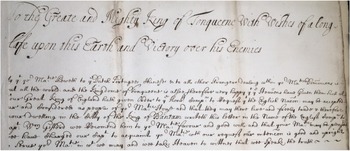
In general, the EIC relied on official letters of introduction and gift-giving to establish diplomatic and trade relations with Asian rulers. The English paid entry-fee and gifts when they first arrived in Tonkin in July 1672, and in subsequent English voyages to this kingdom. For Tonkin rulers, receiving gifts from foreign envoys was a form of customary payment. Foreigners were expected to offer gifts as a gesture of friendly behaviour and then providing officials with a list of commodities to pay tax or set amount of silver as a form of duty for doing trade.Footnote 36 In 1672, two letters from Bantam agents were sent to the King and Crown Prince of Tonkin requesting friendship and peaceful trade. They entreated the Tonkin Court to accept an EIC trading mission and prayed for the health and happiness of the Tonkin King and successful Anglo–Tonkinese trade. Presents to the Tonkin Court included products that the English hoped to trade and rare luxury goods such as rose water, looking glasses, and broadcloths (Figure 2).Footnote 37
Letter of the EIC to the King of Tonkin in July 1672.
Source: IOR/E/3/33, East India Company Original Correspondence 1672–73, No. 3643

In 1672, the EIC's gift-diplomacy intensified. EIC representatives presented gifts eleven times to the King, nine which fell in July, and to various members of the royal family, Governors of Phố Hiến and Thăng Long (the two most important Tonkinese officials to overseas merchants), Ungia Thay, and Ungja Deduckluck (the King and Prince's Dispatchdores – who were responsible for overseeing Tonkin's overseas trade).Footnote 38 Intriguingly, Tonkinese low-ranking officials and soldiers too ‘self-asked and required’ miscellaneous presents for assisting English merchants in the safe transport and storage of their goods. The King was always recipient of the most expensive gifts, which included such items as broad cloth, guns, amber and rose water. The Crown Prince (Trịnh Căn) received the same gifts as the King but less in number.Footnote 39 Gifts to Tonkinese officials were novel products from Europe and India alongside a considerable amount of broadcloth. Remarkably, the English did not give money as gifts as they did in Mughal India, although the Trịnh Court required silver when any foreigner arrived at court.
From 1676 English ships presented entry-gifts, intended for the King and Crown Prince, when they arrived in Tonkin waters to trade. However, the quantity and quality of gifts changed every year depending on Anglo–Tonkinese relations and situation of English trade there. For example, in 1676 the English presented the King with two pieces of fine broad cloth, two pieces perpetuana, twenty amber hafted knives and one chest of rosewater. The Crown Prince received the same gifts but half the number as were given to the King.Footnote 40 In 1677, a big canon valued at £574 was sent as a gift to the Trịnh Tạc. In 1679 the King received three pieces of broadcloth, three ambers and eight Indian moorees as entry-gift. In 1682, the entry-gift was three broadcloths, two caties of Chinese silk, one perpetuana and two lanthozous.Footnote 41
Following the diplomatic protocol established by EIC agents with other Asian countries, annual-gifts were offered to the Tonkin Court as a gambit to maintain cordial relations with the King. Firstly, the recipients of gifts were people identified by EIC agents as being vital for trade in Tonkin. In theory, the King was the most important person, but EIC agents quicky realised they needed to have the Dispatchdores on their side in order to have their trading proposals approved, and for their petitions for trading and diplomatic privileges to be heard at Court. The Governor of Phố Hiến was significant because the English traded and resided under his power in 11 years (1672–1683) and all English ships had to call at Phố Hiến before their cargo could be transported the capital. Therefore, for EIC agents, success entailed establishing good relations with these officials, even if the price of institutionalized gift-giving sometimes tipped English trade with Tonkin into the red. Local and lower officials also demanded miscellaneous gifts and money from foreign traders, which added to the EIC's costs of trading with Tonkin and ate into their profit.Footnote 42 Formal times for annual-gifts were New Year festival, the King's birthday and the Mid-Autumn festival. The King was the only formal recipient of gifts in those times, but the EIC frequently had to present favours to officials in the capital before for their gifts to reach the King. Interestingly, the English learnt from local customs to perform personal visits to officials involved in rituals involving annual gift-exchange. Sometimes, provincial officials and Dispatchdores came to English factory to talk and dine; and these meetings always finished with some forms of gift exchange. In return, the English too carried presents in their visits to local mandarins' houses for conversation, listening to music, or eating.
Interestingly, the amount of gifts presented by EIC agents decreased over time as the Trịnh Court looked unfavourably on English broadcloth.Footnote 43 For instance, in 1676 the English still gave gifts to many Tonkinese officials such as Ungja Thay, Ungja Comy, the King's Dispatchdores, the two Governors of the capital, and other Mandarins. In the following year however, the English limited their gift-giving to high ranked Mandarins. The gifts however, were more valuable and included items such as a cannon, guns, and Chinese silks. In 1679, EIC agents only offered the King and Prince two pieces perpetuana each, while Dispatchdores were presented with five scarlet broad cloths, and five silver knives.Footnote 44 Over time, the EIC began to present the Tonkin Court more Chinese products. In 1682, the English sold all broadcloth to buy some pieces of Chinese silks to give the King and Crown Prince.Footnote 45 The VOC records show that from 1683 to 1692, EIC factories still engaged in gift-giving diplomacy and they regularly paid from eleven to fourteen taels of silver to buy a piece of Chinese silk (and twenty or twenty-two taels for the best-valuable products) as presents for the Tonkin Court.Footnote 46 In the last 5 years (1693–1697), the EIC considered abandoning the Tonkin factory; and therefore annual gifts were intermittent. When gifts were presented, the number of recipients was significantly reduced. For example, in 1693, the English presented gifts only to the King and Crown Prince.Footnote 47
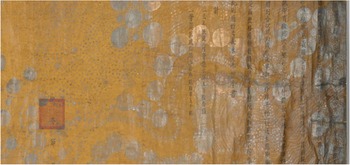
The position of this article is that EIC agents established cordial relations with the King of Tonkin but failed to gain any special treatment. Because Tonkin deemed EIC agents to be merchants, not as diplomatic envoys, any trading privileges they gained were both symbolic and fragile. In the first-year arrival, the English were awarded 50,000 [Tonkin] coins, some provisions, four jars of arrack, a small bullock as a formal gift-exchange.Footnote 48 Although there was no English ship coming to Tonkin in 3 years 1673–1675, they still achieved a trading licence and maintained the third rank of foreign merchants (after the Dutch and Chinese) (Figure 3).
Letter from Trịnh Tạc to the EIC (approximate in winter 1673).
Source: British Library, MS 3460: Letter from the Trịnh Lord to the English East India Company (open access).

Moreover, it seems that Trịnh Lords were not interested in establishing formal diplomatic relations with the English. There was no formal diplomatic letter sent from them to the EIC in London or English Crown, but two trading mails in 1673 and 1677.Footnote 49 In 1673 Trịnh Tạc sent a letter to the EIC thanking them for the gifts of friendship presented to the Court the previous year, and then proceeds to list the items he hoped EIC ships would bring as trade the following year. This letter did not mention any desire by the Tonkin ruler to establish Vietnamese–Anglo diplomatic relations. This trade letter was accompanied by the return of two broken bronze cannons – gifts to Trịnh Tạc and 560 taels of raw silk in exchange for the set of English products received in 1672. He also placed an order for fifty big sized pieces of amber and 5,000 stringed amber, and a set of iron or bronze cannons as a way of circumnavigate the VOC's regional monopoly of such items.Footnote 50 The content and language of the letter was very different in tone from exchanges the Trịnh Lords engaged with the VOC in the mid-seventeenth century, in which they actively sought diplomatic relations with VOC officials in Batavia. The reason is that from 1672, Trịnh Tạc no longer needed overseas military support and he returned to harsh policies towards Europeans.
Returned gifts from Trịnh Lords demonstrated the hierarchy of Anglo–Tonkinese relations as they considered themselves as central position and the English as inferior who had to pay tribute. While the Tonkin Court received gifts regularly, Trịnh Lords sometimes sent native silks to the EIC but the quantity gradually reduced. For example, in 1676 the English received 7,000 tales of silks from the Tonkin Court, in 1678 it was 350 catties (around 5,600 tales) but in 1682 it was decreased to just 150 tales.Footnote 51 Interestingly, while the EIC considered those silks as returned gifts, Trịnh Lords saw them as exchanges (with low price) for English goods they received. In 1677 Trịnh Tạc decided to prevent providing silks for the EIC and VOC and in the 1680s there was no record of Tonkin Court's exchanged silks.
As the English situation in other Asian countries in the seventeenth century, gift-giving diplomacy could not help them to avoid Tonkin's negative policies.Footnote 52 They still faced a harassment of Tonkinese Mandarins, in both trading and diplomacy. In 1672, as Tonkin King was absent due to war, his Dispatchadores forced the English to sail up to dangerously shallow river and even threatened to chop the EIC chief factor's head off.Footnote 53 Lower officials and secretaries often asked for miscellaneous gifts when they accompanied high-level Mandarins to the English factory or checked the English commodities or worked as intermediary to transfer the EIC petition. In 1693, the EIC faced a big problem as the King forbade all Tonkinese people working for foreigners (including the English) to go abroad in their ships affected their trade negatively.Footnote 54 The Governor of Hien, who regularly supported the English, annoyed them several times, especially in 1694 with a religious issue. He burned the English flag in August 1694 because it had a similar symbol of the Christianity.Footnote 55 In fact, both the Portuguese and French faced similarly religious troubles but this episode was the first time for the English after residing there 22 years.Footnote 56 Trịnh Lords' requirements and their officials' harassment towards the Portuguese, VOC (in the 1680s and 1691 – Trịnh Căn wanted to close the Dutch factory) and then EIC in 1693–1694 were signals of Tonkin's harsh policies towards Europeans although they conducted gift-giving diplomacy. As a result, the English and other Europeans decided to withdraw their appearance and trade in Tonkin in the late seventeenth century.
Anglo–Tonkinese relations around building the EIC factory in Thăng Long
The EIC-Tonkinese relations were also noticeable during the process the English applied different diplomatic models (asking an audience with the King, petitioning, personal visiting, using brokers of native Mandarins) together with gift-giving and even lobbied and bribed to obtain a residing permission in Thăng Long. All Europeans including the English wanted to build a factory in capitals of Asian countries to keep a good relation with royal courts. Thăng Long was the most attractive city in Tonkin, one of the most crowded cities in Southeast Asia and all foreigners wanted to stay there when they worked in Tonkin.Footnote 57 From 1672, the English were forced to live firstly in Phố Hiến, a small town with mostly farmers and quite far from the capital.Footnote 58 It was a local market for natives and an intermediary point for overseas merchants with about 10,000 households in the late seventeenth century.Footnote 59 Since almost Tonkinese officials, domestic salesmen, rich people, the Chinese and the Dutch lived in Thăng Long, the location of Phố Hiến was unsatisfactory and problematic for English trade and diplomacy. During the period 1672–1683, the English from Phố Hiến went to Thăng Long forty-nine times, and stayed there average 27 days each time for trading, collecting debt and especially diplomatic exchanges.Footnote 60
The Tonkin Court faced difficult to balance country's security and traditional policies to consider allowing foreigners to live in the capital. They wanted to cooperate with newcomers for supporting finance and weapons but worried when more foreigners resided in Thăng Long. As a result, the Trịnh Court decided that foreigners had to live at appointed places, at villages near Thăng Long as Thanh Trì, Khuyến Lương.Footnote 61 The VOC records state that Phố Hiến was an assignable place for all foreigners to live as they came to trade and the Dutch were allowed to maintain only a few factors in the capital from the 1640s.Footnote 62 From 1658, power of Dispatchadores was increased in order to cooperate with the Governor of Phố Hiến (Lê Đình Kiên) to command overseas people.Footnote 63 Kiên advised the King to issue the 1669 order to oblige all non-natives to stay in Phố Hiến.Footnote 64 The Portuguese therefore had to stay at Phố Hiến with a large and convenient ground for residence.Footnote 65 In 1682 and 1691 Trịnh Căn intimidated to expel the Dutch from Thăng Long as their relations went down.Footnote 66 Actually, during the English factory's existence, Trịnh Căn issued two orders to prevent all foreigners from living Thăng Long in 1687 and 1696.Footnote 67 Those policies therefore made the EIC a lot of attempts, money and gifts to have a permission to stay in the capital which indicated clearly the English subordinate position in the relation with Tonkin.
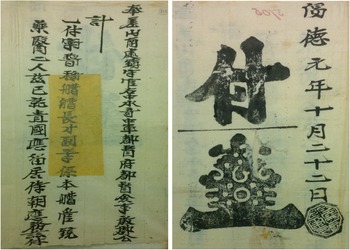
In 1672 the English had a failed attempt to find support from the Capon (a small secretary of the King's Dispatchadores) for a trading permission and a convenient ground in or near the capital.Footnote 68 In July 1672, they presented the Crown Prince to ask for a place in Thăng Long but he only allowed the EIC to stay at Phố Hiến with a convenient site. From October 1672, the English could trade in the capital, but there was no residing permission there.Footnote 69 As Figure 4, in 1673 English agents had to stay outside Thăng Long at night before a convention with Trịnh Tạc in the following day or after finishing all trade.
Tonkin's licence allowing the English to stay outside Thăng Long for waiting to meet Trịnh Tac in 1673.
Source: IOR/E/3/33, East India Company Original Correspondence 1672–1673, pp. 218–19.

From 1673 to 1683, different diplomatic models together with gift-giving were conducted to serve the EIC aims of residing in Tonkin's capital. This progress was difficult and enduring due to differences between Trịnh Lords' concerns and the Company's thoughts. Trịnh Lords did not need silver, gold or any presents in exchange for resident allowance in Thăng Long because they mainly concerned their political power and state's security. Establishing a power in Tonkin via political struggles and civil wars, Trịnh Lords thus focused on improving military strength than developing a relationship with faraway newcomers. In China and Japan, due to political crisis the governments even issued maritime ban to prevent overseas trade in some port-cities or closed the country to protect their security in the mid-seventeenth century. Trịnh Lords' policies of limiting Europeans to live in the capital was therefore normal in a general situation of East Asia. Moreover, since English merchants were at lower rank in comparison with the Chinese and Dutch, they would not receive a land in the capital. The EIC seemed to misunderstand this fact and thought that they just needed to provide more gifts for their aim. However, they were failed to satisfy Trịnh Lords in presenting weapons, especially cannons in 1672 and 1678 and therefore lost Tonkin Court's belief. Exploiting the English misunderstanding of local customs and failure in creating a good relation with Trịnh Lords, Tonkinese officials made their own benefit by harsh requirements.
English attempts to have a place in the capital in 1677 were unsuccessful as English representatives were willing to lobby only 200 tales of silver while the King's Dispatchdores wanted much more money, 2,000 tales.Footnote 70 In the following negotiations, the English increased their payment to 500 tales and 1,000 tales respectively together with a gift of a big cannon for the King.Footnote 71 London again supported the idea of applying gift-giving and lobby by sending 5,000 rials of eight to Tonkin (expectation of using 3,000 rials).Footnote 72 However, the English gift-cannon broke in a trial and no licence was issued. The English could only rent a place in Thăng Long as a warehouse to keep their commodities.Footnote 73 Failing in negotiations with Dispatchdores, the EIC attempted to bribe one of the King's wives by giving her four tales of gold. However the lady was scared to propose the English desire to Trịnh Tạc, and only promised to sell the English a good land with a nice price.Footnote 74 When Trịnh Căn ascended the throne in 1682 and performed new policies however, this issue became softly. The English paid total 1,200 pounds to new King's Dispatchadores, Ungia Tho and Ungia Three.Footnote 75 On 10 March 1683, the English petition was submitted, and they received a place near the Red River and the VOC's factory. A licence to build a warehouse in May ended 11 years of English gift-giving diplomacy to obtain a living permission in Thăng Long.Footnote 76 It was one of English successes to improve their position in Tonkin although it took them times, money and lot of attempts. However, the English only got this permission as Trịnh Căn replaced Trịnh Tạc and he needed more benefit from foreigners and his concern about state's security was decreased.
The English–Cochinchinese diplomatic relations (1695–1705)
This section argues that the Anglo–Cochinchinese relations in the period 1695–1705 was different from what happened between the English and this kingdom in the 1610s and Tonkin in the 1670s and 1680s. It was the first time the English sent a diplomatic mission to Cochinchina officially to discover its political, economic and social situations and to prepare for establishing a formal relation. With their own and satisfactory knowledge about diplomacy in the region, the English practiced a same diplomatic formula in Cochinchina as they did in other Asian countries. The English translated the ‘introduced letter’ of English agent in Madras, N. Higginson to Portuguese and Cochinchinese before sending to Cochinchina King (Nguyễn Phúc Chu) in November 1695. In this letter, Higginson presented his high-profile role as the EIC President on the Coast of Coromandel, Bay of Bengal, Sumatra and South Seas who had power to address all English issues in East Asia to create an equal position with the King of Cochinchina.Footnote 77 Some types of presents were also carried together with that letter in the diplomatic protocol.
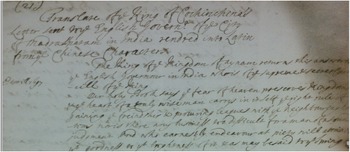
Interestingly, although Bowyear was the EIC merchant, Nguyễn Lord considered his envoy as a diplomatic embassy, treated him very well and wanted to establish a relation with the English which was completely different from Tonkin Court's previous behaviours towards the English. No convention between Cochinchina King and the EIC's embassy happened but the English received advantageous privileges. Firstly, they received 3,000 local coins as returned-gifts and their goods were protected carefully in the ‘custom house.’ On 2 November 1695, they again received gifts of 10,000 coins, a hog, two bags of rice, two jars of salt fish, and two jars of wine from the King.Footnote 78 Secondly, they were issued a free trading licence.Footnote 79 Thirdly and most importantly, the EIC in Madras received a diplomatic letter and returned-gifts from Cochinchina King. The Nguyễn Lord felt satisfied with Englishmen in the mission and described Bowyear's activities in glowing terms of ‘the piety, the behaviour, the fidelity, and the truly solid justice.’Footnote 80 He expected for a further trade with presents and samples of commodities such as calambac, gold, silk and wood.Footnote 81 These responses reflected both the Nguyễn Lord's respect and kindness to the English embassy and those in Madras and Cochinchinese desire of establishing Anglo–Cochinchinese diplomatic and trading relations. They were completely different from what the EIC passed in Bantam (was kicked out in 1682), Taiwan (closed in 1685), Siam (war in 1687) and Tonkin (preventing in the 1690s) and even China. While Tonkinese mandarins required gifts and fees for trading and residing permissions, Cochinchinese officials willingly welcomed and helped foreigners. While Tonkin focused on the agricultural economy and prevented newcomers, Cochinchina acknowledged the necessity and importance of overseas people in both political and trade issues.Footnote 82 Tonkin's harsh policies were an example of Confucian countries' treatment to Europeans, while Cochinchina with more influence from Southeast Asian political models welcomed the EIC (Figure 5).
The letter of the King of Cochinchina to the English Madras Council.
Source: IOR/G/40/18, Translate of the King of Cochinchina Letter sent to English Governor of the city of Madras in India, 2 April 1696, p. 21.

However, Anglo–Cochinchinese relations were also faced trouble when the English tried to obtain more territorial privileges rather than performing a peaceful diplomacy. As a result, Cochinchina King also changed their responses towards English extreme demand. In detail, on 27 December 1695, Bowyear proposed ‘a piece of ground to build a factory in ye most convenient place,’ including Faifo, a famous trading-port and Sinoa, the capital (now Huế province). The English wanted to judge ‘all matters wherein Englishmen are concerned, either with English or natives,’ and no native Mandarins or other people could enter the English factory in a violent manner for any reason.Footnote 83 It was English wish and ambition of a ‘separate area’ or a fortification which strongly occurred from the 1680s as the EIC Director, Sir Josiah Child believed that the English needed territories independent in Asia.Footnote 84 It was the first time for the English to require those privileges in Cochinchina and for Nguyễn Court to deal with such demand from Europeans. As it was over normal diplomatic protocol, Cochinchina certainly could not accept. Nguyễn Phúc Chu only replied to the English commercial requisites and agreed to provide an acceptable place to build a trading factory or a dock to repair English ships. In the next negotiations on 10 January, 27 January, 24 February and 24 March 1696, Cochinchinese officials did not mention any English territorial privilege.Footnote 85 In brief, Nguyễn Court's response was friendly when the English respected Cochinchinese diplomatic customs and they quickly performed defend policy as the EIC tried to demand further territorial privileges.
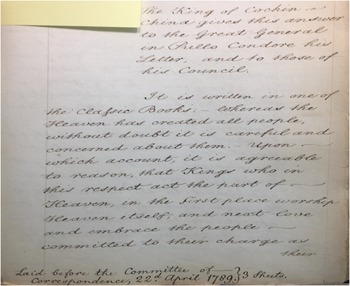
In the early eighteenth century, Anglo–Cochnichinese relations completely changed as the English neglected gift-giving diplomacy and used military method to build a fortification in Pulo-Condore islands (nowadays Côn Đảo).Footnote 86 Previous scholarship argued that the late seventeenth and early eighteenth centuries were transformational points in the EIC strategy in Asia.Footnote 87 Instead of using peaceful commercial and diplomatic methods, the English applied aggressive approach to expand their influence and power in Asia. The New EIC with shareholders experiencing with British American colonies and desiring to expand British influence in Asia chose forceful way to connect with Asian countries. The way English agents did in Pulo-Condore was therefore an example of the EIC transformation from peaceful and diplomatic trade to aggressive expansion. They sent no diplomatic mission to Cochinchina as previous periods, and built a fortification in Pulo-Condore without permission. In 1702 twenty seamen, including officers, artisans and carpenters from the Chusan factory (China) moved to this island and a Council was quickly created. More English officers, soldiers and workers were ordered to support this place.Footnote 88 Vietnamese primary materials recorded this event as following: ‘in August 1702, eight ships of overseas enemy namely Man A Liet [English] arrived in the Pulo-Condore island,… more than 200 people built their garrion with canons to save goods’.Footnote 89 As such, Cochinchina changed its viewpoint about the English presence and they were considered as an enemy, a group of pirates. However, Nguyễn Lord's still desired to establish a friendly Anglo–Cochinchinese relation to secure his political power and state's territories. Recognising the English military strength, and demanding an alliance to fight against her neighbours (Tonkin, Champa, Siam) and pirates, Cochinchina tried to treat the English kindly and respectfully. In 1703, Nguyễn Phúc Chu sent the English a letter to order a cooperation and amity with three main points of (1) his complaint about the English unrespectful action as they resided in Pulo-Condore without permission; (2) his forgiveness if the English would conduct diplomatic behaviour; and (3) his wish to create the Anglo–Cochinchinese alliance.Footnote 90 This letter was a noticeable example of Cochinchinese skillful diplomacy in relations with the English and Europeans to serve their own strategic targets. Being a new kingdom with both internal and external troubles, Cochinchina needed the English as a friend and if possible an alliance. Moreover, he English fortification in Pulo-Condore did not affect directly the central court in Hue in short-time because this place was quite far from the mainland. It was also hard for Cochinchina to fight against the English and many other enemies in the same time. Therfore, Cochinchina tried to keep a peaceful relation with the English in 1702–1703 (Figure 6).
Letter from King of Cochinchina to the EIC in Pulo-Condore in 1703.
Source: IOR/H/628, King of Cochinchina to the Great General in Pulo-Condore, 2 August 1703, p. 469.

Regrettably, the EIC, with different viewpoint and approach, ignored Cochinchinese wish and no English member from Pulo-Condore went to Hue in 1703, and gifts were sent indirectly to the Nguyễn Lord via a Chinese merchant which was completely unrespectful in Asian culture. They chose a military and impolite approach rather than friendly diplomacy after Nguyễn Lord sent a letter to the English there and therefore, the Anglo–Cochinchinese friendship broke up. There was no reason for Cochinchina to keep a friendly response towards the EIC in Pulo-Condore, especially after the English connected with Cambodian who was on war with Cochinchina. After the rebellion of Macassarese people in Pulo-Condore in 1705, Cochinchinese soldiers attacked and destroyed English fortification there.Footnote 91 On 2–3 March 1705, Macassarese people burned English garrison, killed Catchpoole and most of English people there. Few days later, around 200 Cochinchinese soldiers arrived to the island on four galleys, caught the rest of Englishmen and destroyed their fortification.Footnote 92 Actually, the English was safe there in nearly 4 years although they performed unrespectful policies towards the Nguyễn Lord. When they tried to contact with Cambodia, Cochinchina worried about the future Anglo–Cambodian alliance and decided to attack the English in Pulo-Condore. As a result, the Anglo–Vietnamese relations changed from diplomatic to military perspective and finally it ended with a disaster.
Conclusion
Diplomacy, especially gift-giving were compulsory in establishing relations between European and Asian rulers in the early modern period and the EIC applied well those approaches to connect with both Tonkin and Cochinchina. Gift-exchange, different types of diplomacy became necessary requirements of both European institutions and Asian rulers in establishing relations. Depending on various conditions in Asian countries, the English conducted different diplomatic models for productive targets although Tonkin and Cochinchina were states in Asia. From the early trading voyages in the 1610s to the Tonkin factory (1672–1697) and the mission in 1695–1696, diplomacy and gift-giving became main keys for the English to settle a diplomatic relationship with Vietnam. Diplomacy and gift-exchange were fundamental activities for the English to have further privileges of trade, residence and connections with local people. The EIC gradually changed their policies in the late seventeenth and early eighteenth centuries – a transformation period – with the appearance of a new Director and the New Company. In that period, instead of seeking a peaceful trade, the English required a territorial influence and attempted forcefully to build a garrison. They therefore changed from diplomatic method to military one in relations with Cochinchina and the results was different in comparison with the seventeenth century Anglo–Cochinchinese relations.
Via the case of Vietnam, the article illustrates the variety of Asian responses to the English and other Europeans in early modern period. While Tonkin was an example of treatments of a Confucian country under the Chinese influence and tribute system, Cochinchina showed a case of small Southeast Asian states that needed foreigners for trade, military and financial supports in the age of commerce. From the 1610s to the eve of the English disaster in 1705, the Nguyễn Lords always welcomed the English and supported them in both trade and diplomacy. Cochinchina needed final and military supports to maintain the young kingdom and they opened the country for all overseas merchants, brokers. However, to secure their state's security and territory, Nguyễn Lords were willing to practise hard policies towards the English as their policies were beyond formal and normal diplomacy. In the whole seventeenth century, they treated well the English to invite them for trade and residence, but in 1705, they sent soldiers to Pulo-Condore islands to destroy their fortification after failing in attempts of settling a peaceful relation with the EIC there. By contrast, the Tonkin Court paid scant attention to the English presence and desire of trade and diplomacy due to both domestic policies and influence of Confucian system. Anglo–Tonkinese relations were quite limited due to hard policies of Trịnh Lords. They allowed the English to trade in difficult conditions and abandoned them to reside and build a factory in Thăng Long during the first half time of the Tonkin factory. The King of Tonkin, high-profile mandarins and small soldiers harassed the English for various troubles and in different times although Tonkin was not a powerful empire as India or China. Tonkin's policies to the English were therefore a remarkable example of policies of Confucian countries which tended to close the country to respond European commercial expansion in early modern period. As such, the two states of Vietnam had two very different policies towards the English in the seventeenth century due to their differences of political system, domestic demands and their developing trends. This fact created opposite results of the relations between the EIC and Tonkin and Cochinchina in the period 1614–1705.