Introduction
Parkinson’s disease (PD) is a common neurodegenerative disease with the second highest incidence (after Alzheimer’s disease), affecting 1% of people over the age of 60 (Abbas et al., Reference Abbas, Xu and Tan2018; Tysnes & Storstein, Reference Tysnes and Storstein2017). It is characterized with a tetrad of movement slowness, resting tremor, rigidity, and postural instability. Dopamine replacement therapy considerably reduces motor handicap; however, its therapeutic effects decrease over time and motor fluctuations associated with dopaminergic treatment can compound disease progression (Berghuis et al., Reference Berghuis, VanHarten, VanKesteren-Biegstraaten, Rutgers and Verwey2018; Schrag & Quinn, Reference Schrag and Quinn2000; You et al., Reference You, Mariani, Mangone, Le Febvre de Nailly, Charbonnier-Beaupel and Corvol2018). In this context, nonpharmacological methods have been sought, including deep brain stimulation (DBS) (Antonini & Obeso, Reference Antonini and Obeso2018; de Almeida Marcelino et al., Reference de Almeida Marcelino, Horn, Krause, Kühn and Neumann2019; Hanna et al., Reference Hanna, Scullen, Kahn, Mathkour, Gouveia, Garces and Smith2018), repetitive transcranial magnetic stimulation (rTMS) (Flamez et al., Reference Flamez, Wiels, Van Schuerbeek, De Mey, De Keyser and Baeken2019; Mi et al., Reference Mi, Garg, Ba, Liu, Wu, Gao and McKeown2019; Toyoda et al., Reference Toyoda, Ikeda, Sakai, Omoto, Iguchi, Kimura and Abo2018), and whole-body vibration (WBV) (Alashram et al., Reference Alashram, Padua and Annino2019). DBS is a highly invasive treatment which requires brain surgery, and rTMS is largely under experimental investigation. In contrast, WBV seems to be practical with validated safety and commercial availability.
Vibration stimulus was first recommended as a treatment method for PD by Jean Martin Charcot in 1892. WBV is usually delivered through a vibrating platform, which induces muscle contraction by stimulating muscle spindles and alpha motor neurons (Delecluse et al., Reference Delecluse, Roelants and Verschueren2003). Previous studies have shown that symptoms, including rigidity, tremor, and postural instability, are relieved following a single WBV session (Haas et al., Reference Haas, Turbanski, Kessler and Schmidtbleicher2006a; King et al., Reference King, Almeida and Ahonen2009; Turbanski et al., Reference Turbanski, Haas, Schmidtbleicher, Friedrich and Duisberg2005). Furthermore, WBV sessions provided for a given frequency over a number of weeks have been shown to improve motor function, balance, and gait in patients with PD several days to weeks post intervention (Arias et al., Reference Arias, Chouza, Vivas and Cudeiro2009; Ebersbach et al., Reference Ebersbach, Edler, Kaufhold and Wissel2008; Gaßner et al., Reference Gaßner, Janzen, Schwirtz and Jansen2014). However, controversy exists as to whether WBV has benefits over placebo vibration or conventional physical therapy.
Two systematic reviews (Sharififar et al., Reference Sharififar, Coronado, Romero, Azari and Thigpen2014; Sitjà Rabert et al., Reference SitjàRabert, Rigau Comas, Fort Vanmeerhaeghe, Santoyo Medina, Roqué i Figuls, Romero-Rodríguez and Bonfill Cosp2012) have evaluated this topic; however, these have included the literature published prior to 2012 only. One review (Sharififar et al., Reference Sharififar, Coronado, Romero, Azari and Thigpen2014) presented mixed results of literature with no conclusion on the effect of WBV given no data synthesis was performed, while the other (Sitjà Rabert et al., Reference SitjàRabert, Rigau Comas, Fort Vanmeerhaeghe, Santoyo Medina, Roqué i Figuls, Romero-Rodríguez and Bonfill Cosp2012) suggested a favorable effect of WBV on gait as measured by Time Up and Go test but not by unified Parkinson’s disease rating scale (UPDRS). However, Sitjà Rabert et al. included only two trials with 45 subjects in the pooled analysis for each outcome, which leads to statistical bias with insufficient sample size. Moreover, it has been 7 years since the Cochrane review (Sitjà Rabert et al., Reference SitjàRabert, Rigau Comas, Fort Vanmeerhaeghe, Santoyo Medina, Roqué i Figuls, Romero-Rodríguez and Bonfill Cosp2012) was published and updated studies may contribute to a more robust pooled effect of WBV on PD. Further, the previous review examined the effects of WBV on overall symptoms and function in patients with PD while the present study aimed to determine the effects on motor function specifically. Hence, the present systematic review and meta-analysis sought to elucidate the effect of WBV on motor function in PD with a comprehensive update literature search.
Materials and methods
Data sources
A review of the existing literature was performed according to the Preferred Reporting Items for Systematic Reviews and Meta-Analyses (PRISMA) guidelines (see PRISMA checklist). A comprehensive search was conducted up to July 31, 2019, in PubMed/MEDLINE, Embase, PEDro, Web of Science, Cochrane, CINAHL, psycINFO, and clinicaltrials.gov. Search strategy is attached in supplementary material S1. No language restrictions were applied.
Study selection
Inclusion criteria: (1) randomized clinical trials and quasi-randomized clinical trials comparing WBV with no vibration or conventional physical therapy for patients with PD and (2) studies reporting at least one continuous outcome from the motor section of the unified Parkinson’s disease rating scale (UPDRS-III) and other measures of motor function and balance at baseline and the end of treatment (EOT). No language requirements were applied. Excluded were studies involving participants without a clear diagnosis of PD. So were studies with cross-over design as they often confounded the treatment effects with carry-over and learning effects (Yang et al., Reference Yang, Zhou, Chung, Li-Tsang and Fong2013).
Data extraction
Two independent investigators performed study selection and data extraction while a third investigator intervened and resolved any disagreements following a discussion. The following data were extracted from each selected study: the number of participants, treatment duration, length of follow-up, vibration parameters, and outcome measures (mean and standard deviation [SD]), including UPDRS-III (Movement Disorder Society Task Force on Rating Scales for Parkinson’s Disease, 2003), Time Up and Go test (Podsiadlo & Richardson, Reference Podsiadlo and Richardson1991), balance test scores, and walking velocity at EOT in both experimental and control groups. Study authors were contacted when mean and/or SD were missing from the articles.
Assessment of risk of bias
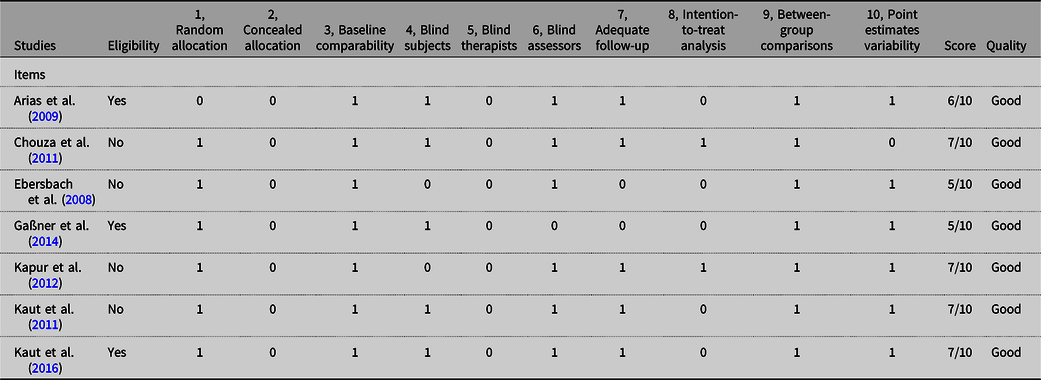
Two independent reviewers evaluated all eligible papers for bias, according to the Physiotherapy Evidence Database (PEDro) scale (de Morton, Reference de Morton2009). The PEDro scale is an 11-item scale with a maximal score of 10 designed for rating methodological quality of clinical studies. Studies with a score of 4 or higher were considered to be of moderate to high quality (van Duijnhoven et al., Reference vanDuijnhoven, Heeren, Peters, Veerbeek, Kwakkel, Geurts and Weerdesteyn2016).
Quantitative data synthesis
We conducted a comparison between WBV and control participants. Outcome measures were analyzed as continuous variables. A random-effects model (DerSimonian-Laird method) was adopted to adequately account for the variability between studies. Overall estimates for the difference between WBV and control group at EOT were calculated using weighted mean difference (WMD) with a 95% CI when assessment scales were identical (Higgins & Green, Reference Higgins and Green2011). In situations where the assessment scales or measurement methods differed, a standardized mean difference (SMD) was adopted. Between-study heterogeneity was performed using the Cochrane Q and I2 tests (Higgins et al., Reference Higgins, Thompson, Deeks and Altman2003). Predetermined sensitivity analysis was conducted to assess the stability of results by deleting one single study each time to reflect the impact of the individual to overall. The Begg’s funnel plot and Egger linear regression test were applied to evaluate publication bias (Egger et al., Reference Egger, Davey Smith, Schneider and Minder1997). All p-values were calculated using a two-sided test, and p < 0.05 was considered statistically significant. Data analysis was performed using STATA 12.0 (StataCorp LP, College Station, TX).
Results
Study selection and quality appraisal
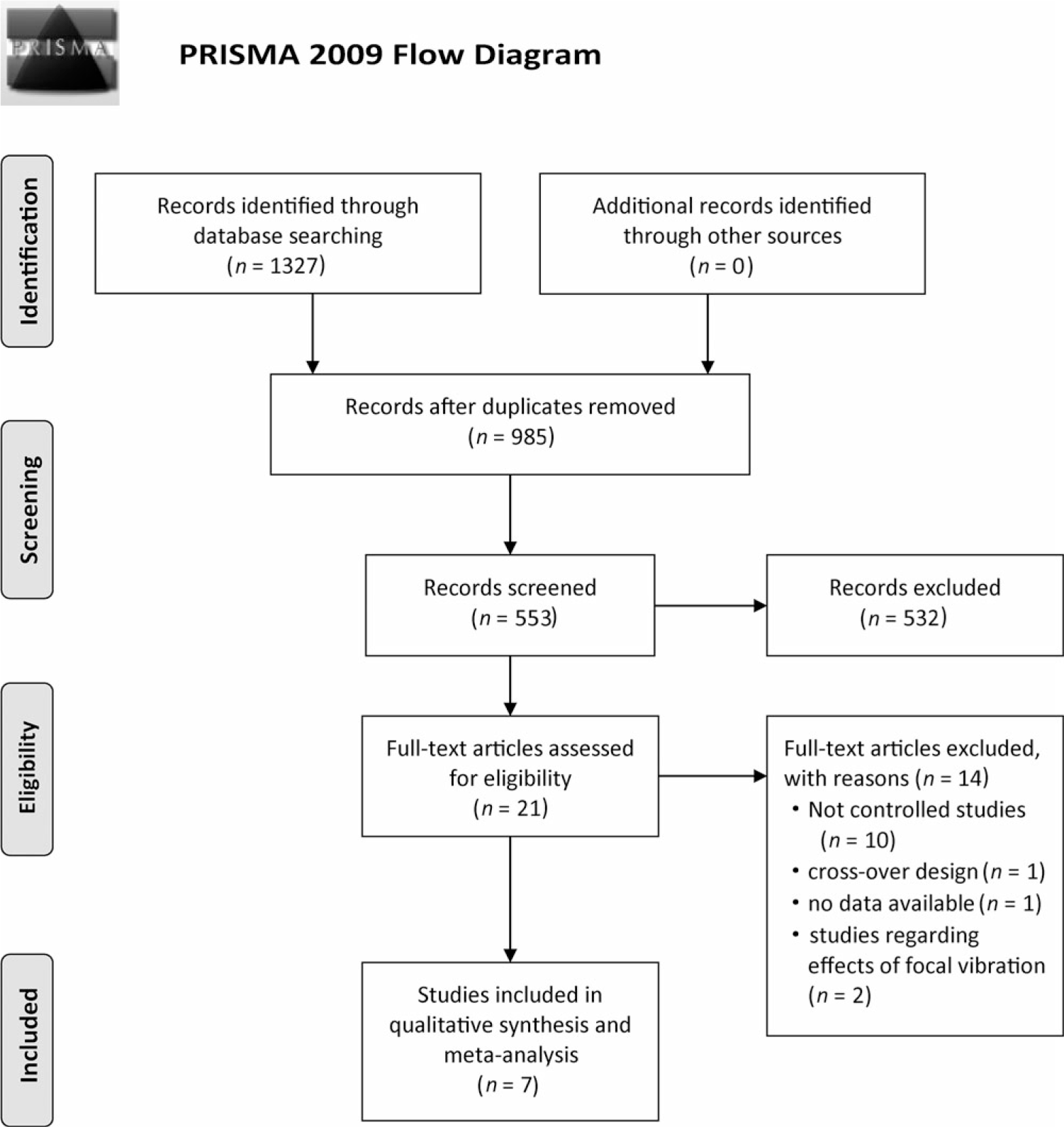
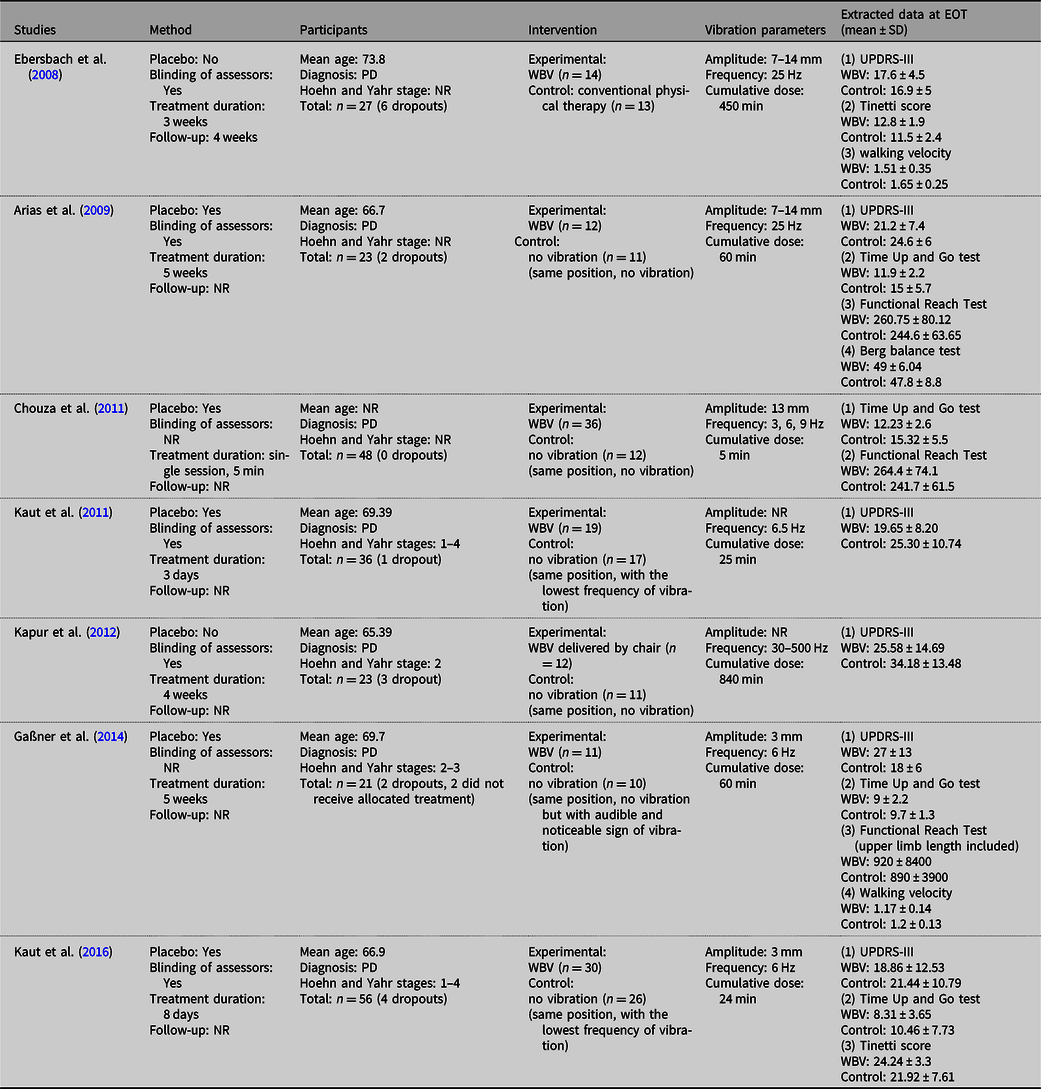
A total of 1327 eligible studies were identified and seven studies (Arias et al., Reference Arias, Chouza, Vivas and Cudeiro2009; Chouza et al., Reference Chouza, Arias, Viñas and Cudeiro2011; Ebersbach et al., Reference Ebersbach, Edler, Kaufhold and Wissel2008; Gaßner et al., Reference Gaßner, Janzen, Schwirtz and Jansen2014; Kapur et al., Reference Kapur, Stebbins and Goetz2012; Kaut et al., Reference Kaut, Allert, Coch, Paus, Grzeska, Minnerop and Wüllner2011, Reference Kaut, Brenig, Marek, Allert and Wüllner2016) (196 patients) satisfied the inclusion criteria (Fig. 1). The characteristics of the selected studies are presented in Table 1. Out of the seven studies with available data, one study (Ebersbach et al., Reference Ebersbach, Edler, Kaufhold and Wissel2008) compared the effect of WBV vs. conventional physical therapy while the other compared WBV with a non-vibration control. One study (Kapur et al., Reference Kapur, Stebbins and Goetz2012) delivered vibration stimulus by a physioacoustic chair, while the other studies required a vibrational platform. Disease severity as defined by Hoehn and Yahr stage was reported in four studies (Gaßner et al., Reference Gaßner, Janzen, Schwirtz and Jansen2014; Kapur et al., Reference Kapur, Stebbins and Goetz2012; Kaut et al., Reference Kaut, Allert, Coch, Paus, Grzeska, Minnerop and Wüllner2011, Reference Kaut, Brenig, Marek, Allert and Wüllner2016). The Hoehn and Yahr scale, a gold-standard staging assessment that evaluates the severity of PD based on bilateral motor dysfunction and the compromise of gait and balance. It ranges from 1 to 5 with 1 being mild symptoms and 5 being the most severe cases bound to wheelchair (Zhao et al., Reference Zhao, Wee, Chan, Seah, Au, Lau and Tan2010). The baseline evaluation on Hoehn and Yahr stage of PD patients was 1–4 in two studies (Kaut et al., Reference Kaut, Allert, Coch, Paus, Grzeska, Minnerop and Wüllner2011, Reference Kaut, Brenig, Marek, Allert and Wüllner2016), 2–3 in one study (Gaßner et al., Reference Gaßner, Janzen, Schwirtz and Jansen2014), and 2 in Kapur’s study. All selected studies with available data scored 5 or higher on PEDro scale (Table 2).
PRISMA 2009 flow diagram.

Profiles of Included Studies

NR, not reported.
Supplementary Materials

Synthesis of results
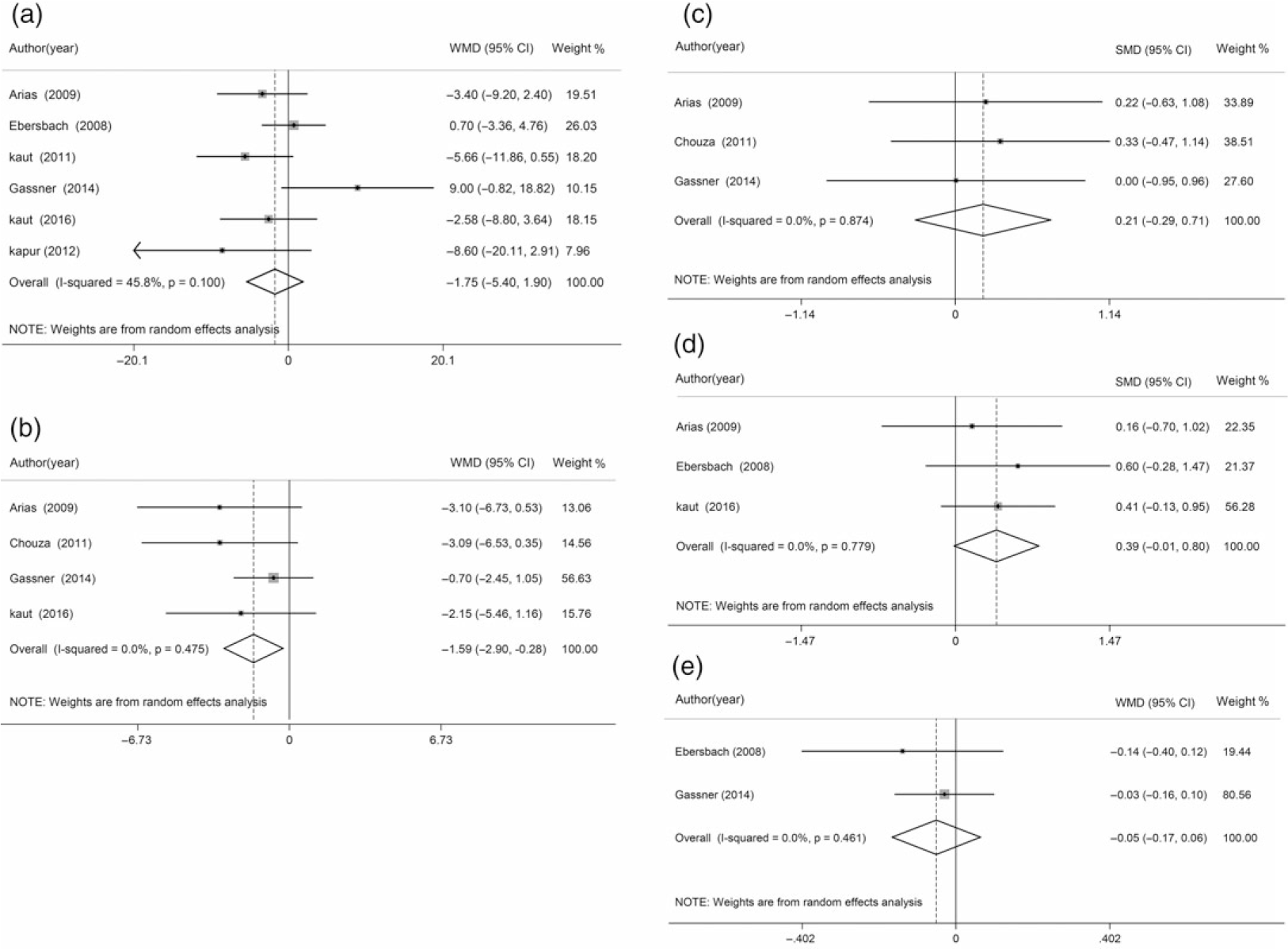
Six trials, which included 172 participants, investigated the effect of WBV on UPDRS-III at EOT. The pooled mean difference of six trials with 172 patients was −1.75 with 95% CI [−5.40, 1.90], while no significant heterogeneity was detected (p = 0.10; I2 = 45.8%). As shown in Fig. 2(a), the synthesis result from the UPDRS-III indicated that WBV was not significantly better than placebo or conventional physical therapy at alleviating symptoms of PD.
Forest plots of outcome measures at EOT for comparing WBV vs. control in PD patients; (a) UPDRS-III; (b) Time Up and Go test; (c) Functional Reach Test; (d) Berg balance test and Tinetti score; (e) walking velocity.

Five studies reported data concerning balance; three of these studies (Arias et al., Reference Arias, Chouza, Vivas and Cudeiro2009; Chouza et al., Reference Chouza, Arias, Viñas and Cudeiro2011; Gaßner et al., Reference Gaßner, Janzen, Schwirtz and Jansen2014) used functional reach test, two (Ebersbach et al., Reference Ebersbach, Edler, Kaufhold and Wissel2008; Kaut et al., Reference Kaut, Brenig, Marek, Allert and Wüllner2016) used the Tinetti test, and one (Arias et al., Reference Arias, Chouza, Vivas and Cudeiro2009) used the Berg balance scale. Given these scales were established with different measures, data analysis was conducted separately concerning functional reach test and other balance scales. Gaßner et al. (Reference Gaßner, Janzen, Schwirtz and Jansen2014) modified the functional reach test with participants reaching forward to grasp a pen, while Arias et al. (Reference Arias, Chouza, Vivas and Cudeiro2009) and Chouza et al. (Reference Chouza, Arias, Viñas and Cudeiro2011) had patients displace a movable stick attached to the anthropometer. It should be noted that the values of functional reach test in Gaßner et al. (Reference Gaßner, Janzen, Schwirtz and Jansen2014) as seen in Table 1 were much higher as it included the length of upper limb. Therefore, standardized mean difference was calculated on functional reach test and no statistical difference was detected (SMD = 0.21, 95% CI, −0.29, 0.71) (Fig. 2(c)). Pooled data on Berg balance scale and Tinetti score from three studies, including 96 patients, indicated that there was no significant difference in balance scores between WBV and control groups (SMD = 0.39, 95% CI, −0.01, 0.80) (Fig. 2(d)). The test for heterogeneity showed that these data were largely homogeneous (I 2 = 0%, Fig. 2(c) and (d)).
As shown in Fig. 2(b), the pooled analysis from four studies on the Time Up and Go test showed favorable results for WBV (WMD = −1.59, 95% CI, −2.90, 0.28; I 2 = 0%). In comparison, pooled data from two studies with 38 patients showed no benefits for WBV on walking velocity (Fig. 2(e), WMD = −0.05, 95% CI [−0.17, 0.06]). The Cochrane Q test and I 2 revealed that the data had no significant heterogeneity (p = 0.46, I 2 = 0%). Taken together, these data show that WBV did not contribute any additional benefits to alleviating the balance and walking velocity symptoms of PD when compared with placebo or conventional physical therapy. However, the pooled analysis of four studies, including 116 patients, assessing Time Up and Go test showed favorable results for WBV. No side effects and falls were reported in the selected studies.
Sensitivity analyses and publication bias
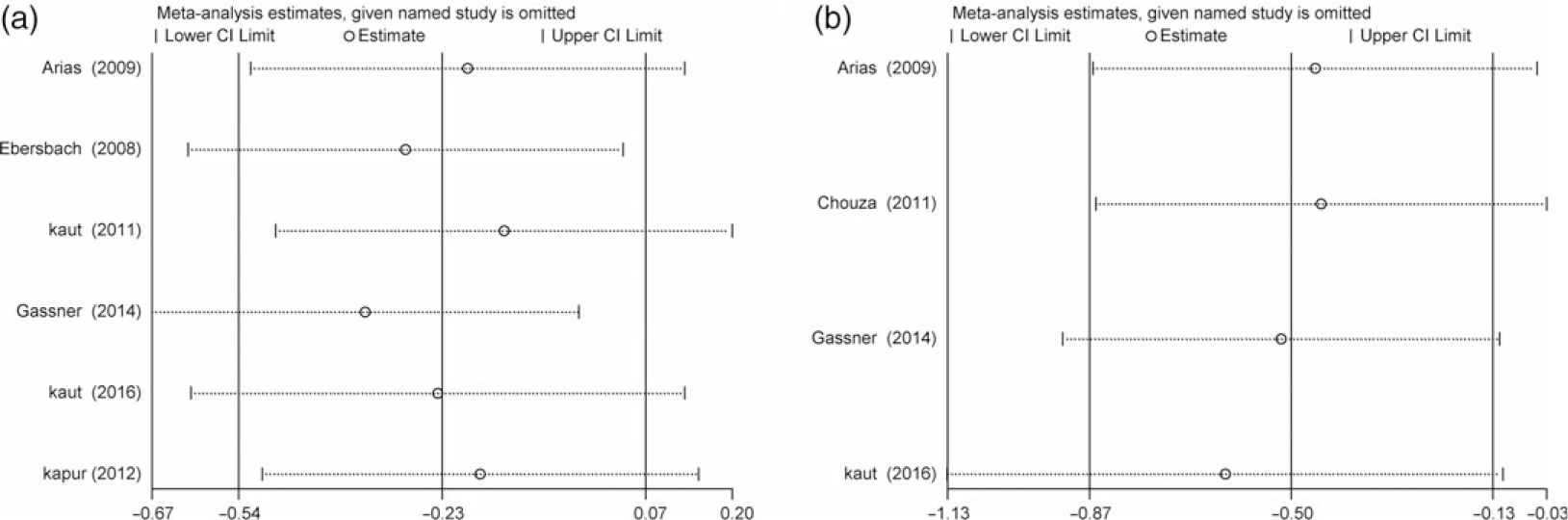
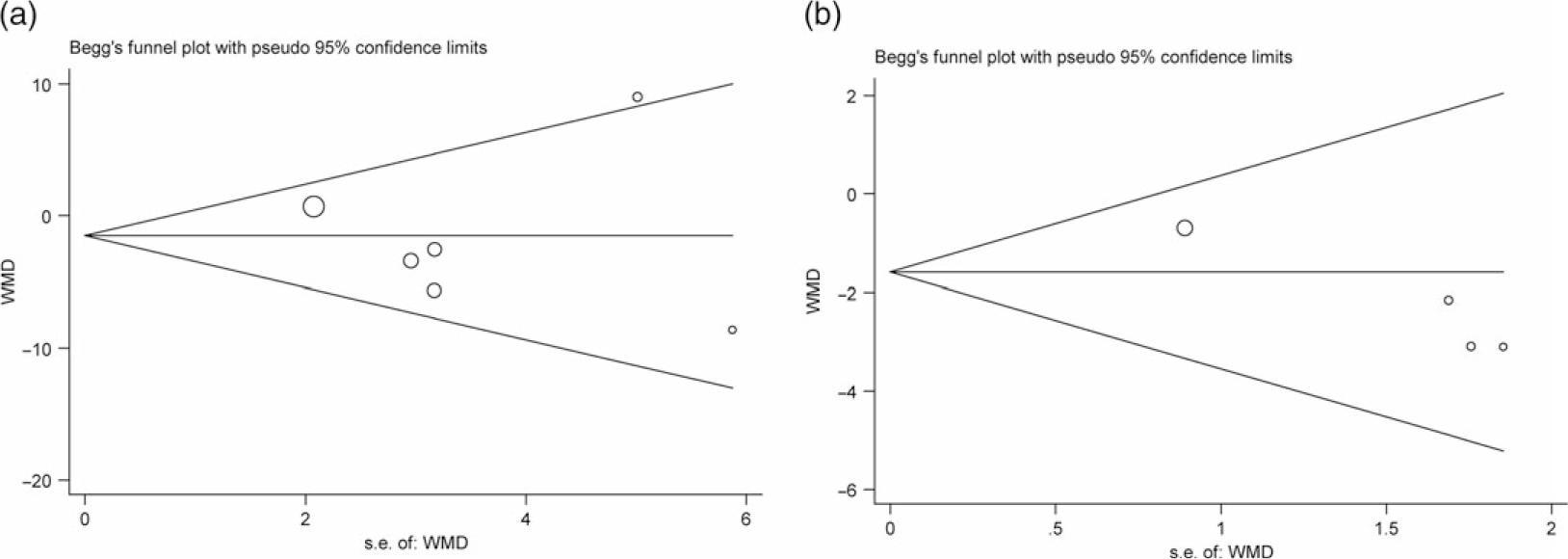
Our results revealed that no single study statistically influenced the pooled WMD and 95% CIs (Fig. 3(a) and (b)). The p values of Begg’s test and Egger’s test were greater than 0.05, suggesting no publication bias in the present study (Fig. 4(a) and (b)). In other words, our results were comparatively credible and stable.
Sensitivity analysis of each included study. (a) UPDRS-III for individual studies; (b) Time Up and Go test for individual studies.

Begg’s funnel plots of the publication bias. (a) UPDRS-III for individual studies; (b) Time Up and Go test for individual studies.

Discussion
The present systematic review and meta-analysis identified seven clinical trials that included 196 patients, which compared WBV with placebo vibration or conventional physical therapy. The results of this review indicated that WBV may not be beneficial at alleviating UPDRS motor, balance, and walking velocity scores when compared placebo vibration or conventional physical therapy. Previous systematic reviews (Sharififar et al., Reference Sharififar, Coronado, Romero, Azari and Thigpen2014; Sitjà Rabert et al., Reference SitjàRabert, Rigau Comas, Fort Vanmeerhaeghe, Santoyo Medina, Roqué i Figuls, Romero-Rodríguez and Bonfill Cosp2012) have shown consistent results concerning the effect of WBV on these outcomes. Within group effects have been observed on motor scores in the UPDRS and balance for patients with PD in groups treated with WBV; therefore, this is likely a result of nonspecific placebo effects. In contrast, our pooled analysis yielded robust and consistent findings in favor of WBV on Time Up and Go test scores. The results are consistent across studies despite the fact that these studies differed in treatment duration, vibration frequency, and cumulative dose. The Time Up and Go test involves a sequence of activities that requires participants to start in a sitting position, stand, walk for 3 m, then turn around, and walk back to sit (Podsiadlo & Richardson, Reference Podsiadlo and Richardson1991). Our results indicated that WBV had favorable results on Time Up and Go test scores; however, no significant difference in walking velocity was detected. One plausible explanation for this is that WBV might have a positive effect on sit-to-stand transition or turning. This could be something worth research attention since previous studies showed that 50% of PD patients had difficulty turning and thereby increased risk of falls (Cheng et al., Reference Cheng, Yang, Wang, Wu, Cheng, Wang and Wang2014; Stack et al., Reference Stack, Jupp and Ashburn2004). However, the underlying mechanisms of WBV on patients with PD are poorly understood. It has been hypothesized that exercise training promotes neuroplasticity and neurorepair in patients with PD (Petzinger et al., Reference Petzinger, Fisher, McEwen, Beeler, Walsh and Jakowec2013). Studies using animal models have demonstrated that exercise can restore glutamate receptor expression (Van Leeuwen et al., Reference VanLeeuwen, Petzinger, Walsh, Akopian, Vuckovic and Jakowec2010), increase dendritic spine density in certain regions (Stranahan et al., Reference Stranahan, Khalil and Gould2007), and enhance hippocampal cerebral blood flow (Villar-Cheda et al., Reference Villar-Cheda, Sousa-Ribeiro, Rodriguez-Pallares, Rodriguez-Perez, Guerra and Labandeira-Garcia2009). By stimulating muscle contraction, WBV may elicit a similar mechanism to exercise training. A preliminary fMRI study also showed activation of basal ganglia in healthy individuals after WBV training, indicating the neuromodulative role of WBV (Kaut et al., Reference Kaut, Brenig, Marek, Allert and Wüllner2016). Besides, patients with PD often have trouble in postural transitions such as sit-to-stand and turning as they tend to trigger freezing (inability to move despite intention) compared to straight-ahead gait (Jacobs et al., Reference Jacobs, Lou, Kraakevik and Horak2009). This was attributed to impaired anticipatory postural adjustments (APAs), a stabilizing phase engaging postural control prior to step initiation (de Souza Fortaleza et al., Reference de Souza Fortaleza, Mancini, Carlson-Kuhta, King, Nutt, Chagas, Freitas Junior and Horak2017; Mezzarobba et al., Reference Mezzarobba, Grassi, Valentini and Bernardis2018). On the other hand, clinical studies have shown that WBV may contribute to better postural control in patients with PD (Kaut et al., Reference Kaut, Brenig, Marek, Allert and Wüllner2016; Turbanski et al., Reference Turbanski, Haas, Schmidtbleicher, Friedrich and Duisberg2005). The potential positive effect of WBV on sit-to-stand transition or turning could be a result of enhanced postural control in patients with PD.
Compared with the previous Cochrane review (Sitjà Rabert et al., Reference SitjàRabert, Rigau Comas, Fort Vanmeerhaeghe, Santoyo Medina, Roqué i Figuls, Romero-Rodríguez and Bonfill Cosp2012), we identified four additional RCTs and seven trials were included for meta-analysis. As the present review aimed to investigate the effect of WBV on motor function in PD, a study previously identified in the review was excluded as it examined the effects of WBV on proprioceptive performance (Haas et al., Reference Haas, Buhlmann, Turbanski and Schmidtbleicher2006b). The Cochrane review also included one study (Haas et al., Reference Haas, Turbanski, Kessler and Schmidtbleicher2006a) that adopted cross-over design without a wash-out period, which we set to avoid in the protocol. In this context, pooled analysis was conducted based on relatively rigorous design. However, these data should be interpreted with caution due to several limitations of the present study. The first limitation is that these findings are based on studies that have potential bias despite the relatively high score on PEDro scale. Most of the selected studies have an unclear risk of bias on random sequence generation and allocation concealment. Moreover, the trial conducted by Arias et al. (Reference Arias, Chouza, Vivas and Cudeiro2009) showed a high risk of selection bias because they performed a group distribution using individual patient orders to assess the gait test. In addition, six out of seven studies compared WBV with placebo vibration, while half the studies showed a high risk for performance bias. Gaßner et al. (Reference Gaßner, Janzen, Schwirtz and Jansen2014) used a placebo group that included participants in the same position as the vibration group while audible and noticeable signs of vibration were delivered. By contrast, Kaut et al. (2011, Reference Kaut, Brenig, Marek, Allert and Wüllner2016) administered participants in the placebo group with the lowest frequency of vibration. In three studies (Arias et al., Reference Arias, Chouza, Vivas and Cudeiro2009; Chouza et al., Reference Chouza, Arias, Viñas and Cudeiro2011; Kapur et al., Reference Kapur, Stebbins and Goetz2012), participants were required to use the same position as the experimental group while no vibration was administered, which compromised the blinding. Second, the number of studies included in the present review was too small to identify subgroups concerning the effect of WBV on patients with PD. Furthermore, few studies have examined the long-term effect of WBV on patients with PD.
The most robust finding to emerge from this study is that WBV may not improve motor scores of the UPDRS, balance, or walking velocity. However, WBV improved Time Up and Go test scores when compared with placebo vibration according to consistent pooled data. This result suggests that WBV might have favorable effects on sit-to-stand transition and/or turning, which awaits confirmation from clinical studies. The long-term effects of WBV and optimal parameters also call for further work.
Financial support
This study was supported by the Introduced Project of Suzhou Clinical Medical Expert Team (SZYJTD201725).
Conflicts of interest
CH has no conflicts of interest to disclose. CS has no conflicts of interest to disclose. WZ has no conflicts of interest to disclose. QW has no conflicts of interest to disclose.
Ethical standards
The authors assert that all procedures contributing to this work comply with the ethical standards of the relevant national and institutional committees on human experimentation and with the Helsinki Declaration of 1975, as revised in 2008.