

Introduction
Meteorites in glaciers have been reported in both Hemispheres (e.g. Floss et al. Reference Floss, Crozaz, McKay, Mikouchi and Killgore2003, Keil Reference Keil2012). Besides, large extra-terrestrial dust horizons in East Antarctica are also known (e.g. Misawa et al. Reference Misawa, Kohno, Tomiyama, Noguchi, Nakamura, Nagao, Mikouchi and Nishizumi2010). Ice-rafted debris (IRD) may therefore be a potential material to search for meteorites in Antarctica.
During the study of Plio-Pleistocene sediments recovered during Integrated Ocean Drilling Program (IODP) Expedition 318 off the coast of Terre Adélie in East Antarctica (IODP Site U1359) (Fig. 1) (Escutia et al. Reference Escutia, Brinkhuis and Klaus2011), four small rock fragments (c. 100–200 µm) with typical igneous texture were recovered. The examined sediment sequence represents a time interval spread over c. 2 million years. In this study, detailed mineralogical and geochemical characterization is presented to suggest the possible extra-terrestrial nature of these rock fragments. Identification of the terrestrial or extra-terrestrial nature of grains has significance for the provenance, depositional model of sediments, and geology of the ice-covered Antarctic continent.
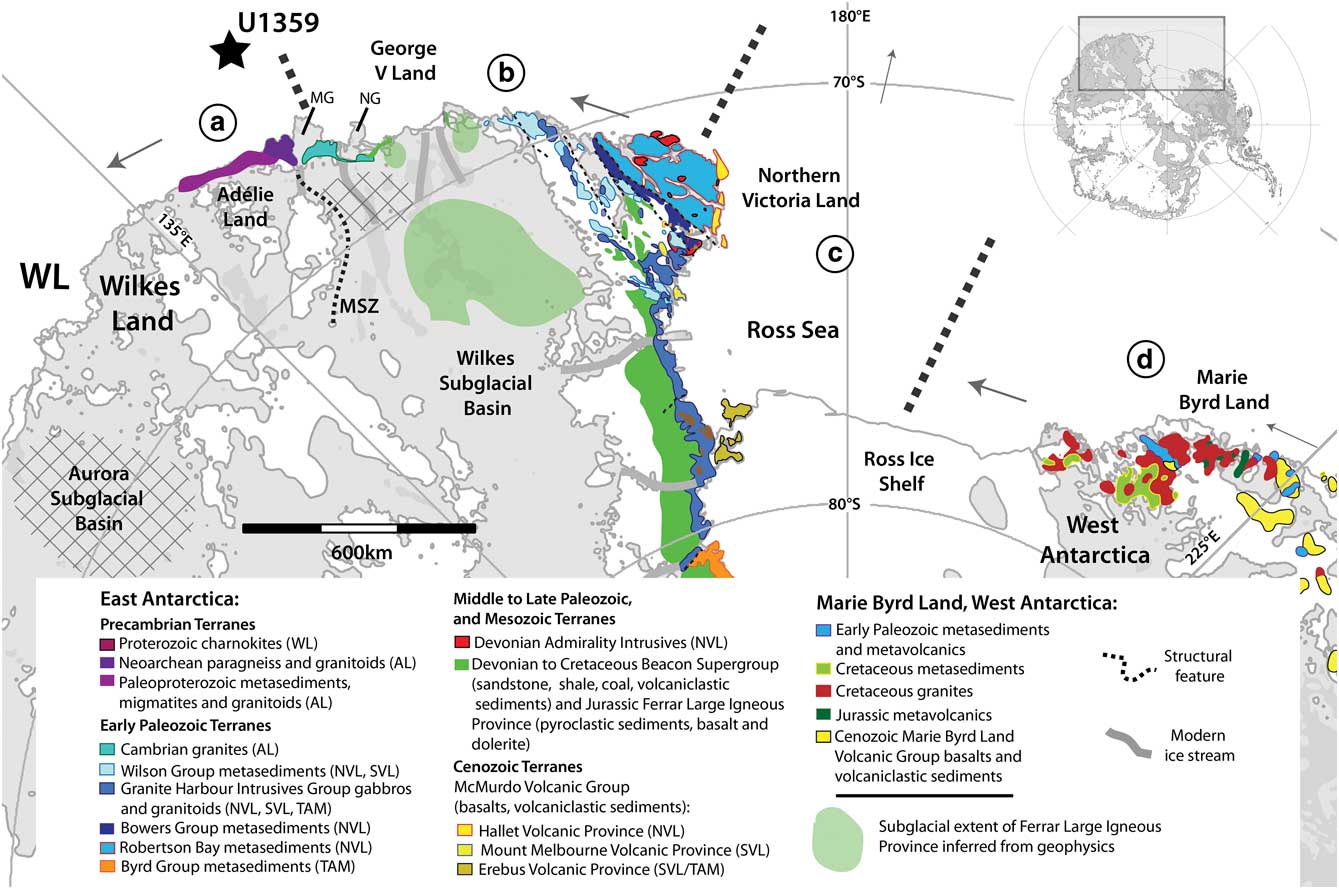
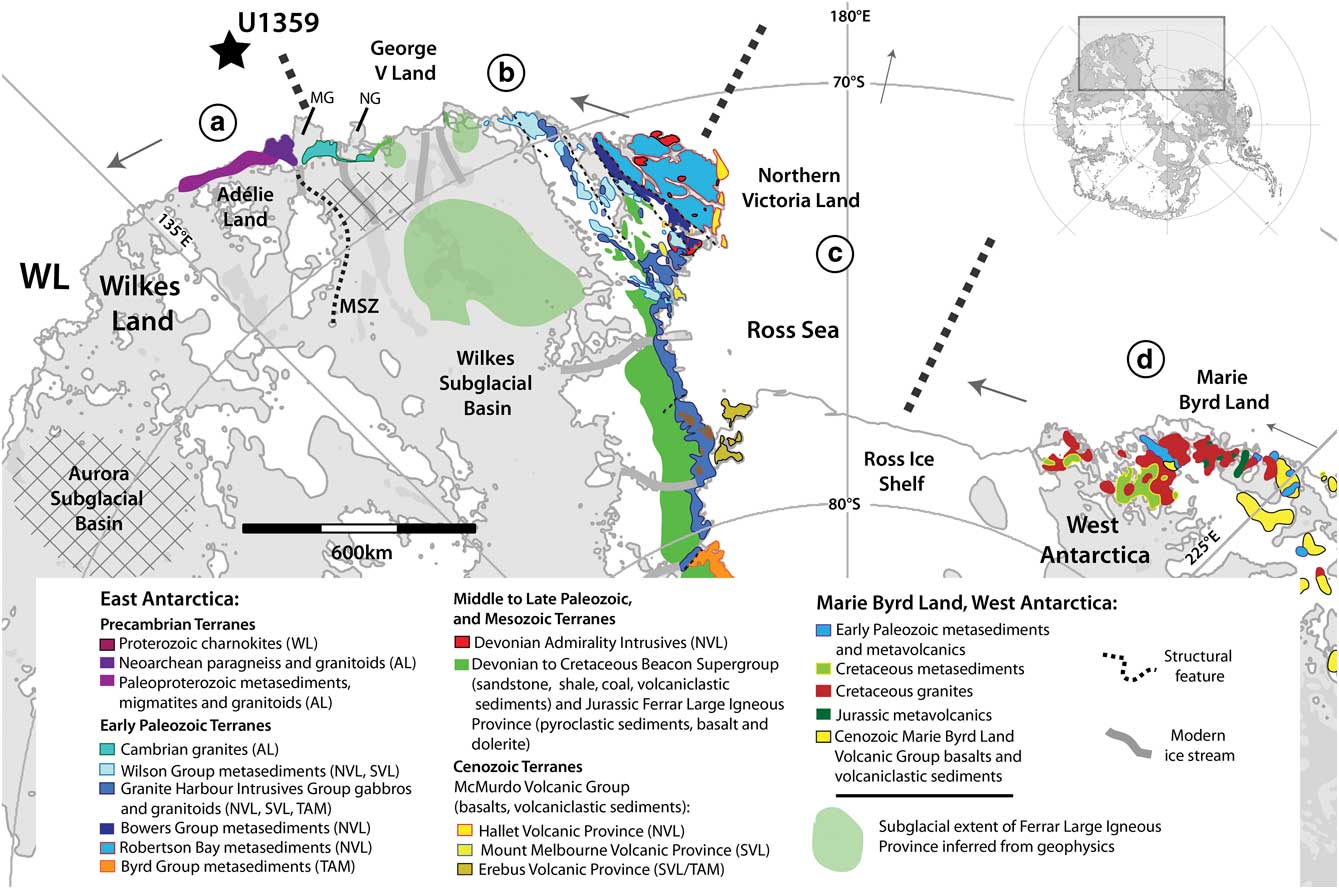
Geological map of East Antarctica and Marie Byrd Land, modified from Goodge & Fanning (Reference Goodge and Fanning2010). The figure shows the outcrops of known bedrock terranes and inferred subglacial geology. The base map is from BEDMAP-2, with grey areas below sea level (Fretwell et al. Reference Fretwell, Pritchard and Vaughan2013), modified using ARCGIS software. Four different provenance sectors, delimited by dashed bold lines, could supply IRD to the studied sediments: a. Terre Adélie, b. George V Land and the Wilkes Subglacial Basin, c. Ross Sea, and d. West Antarctica. Arrows offshore show the direction of iceberg-transport in a counter-clockwise direction. NG: Ninnis Glacier Tongue, MG: Mertz Glacier Tongue, MSZ: Mertz Shear Zone.
Materials
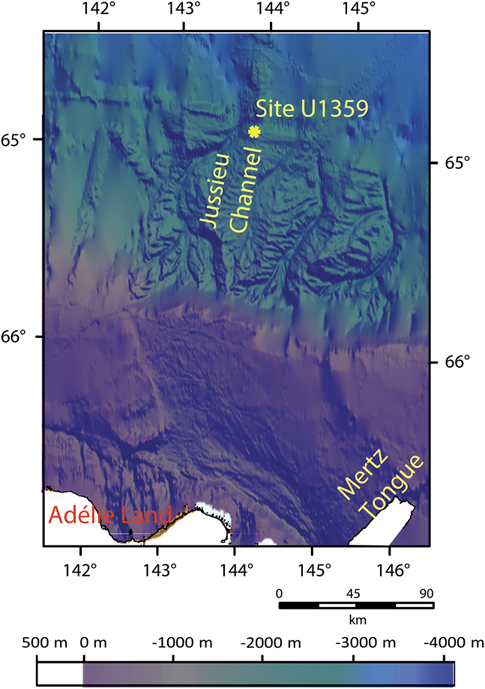
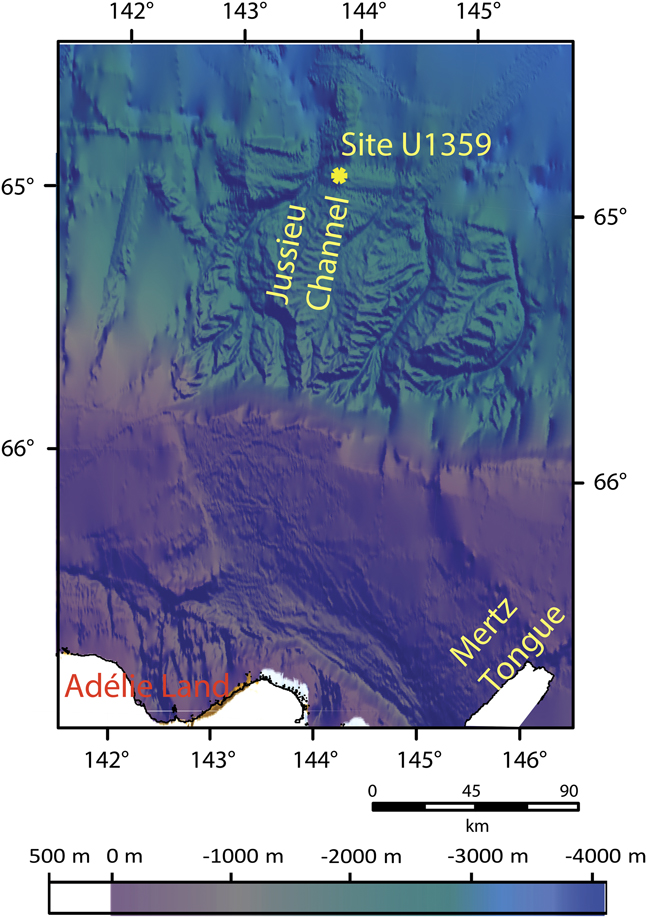
IODP Site U1359 (64°54'S, 143°57'E) was drilled at 4003 m of water depth on the eastern levee of the Jussieu submarine channel, c. 270 km from the Terre Adélie margin (East Antarctica) (Figs 1 & 2) (Escutia et al. Reference Escutia, Brinkhuis and Klaus2011). Four adjacent cores were collected at Site U1359, from which a composite 'spliced' complete record of the upper 200 m was obtained, with depths reported here in metres composite depth (mcd). Sediments in this interval are mainly composed of interbedded pelagic diatom-rich muds and terrigenous clays and silts (Fig. 3) (Tauxe et al. Reference Tauxe, Stickley and Sugisaki2012, Patterson et al. Reference Patterson, McKay and Naish2014). Natural gamma radiation (NGR) shows cyclic variations and points to a well-preserved palaeoenvironmental record forced by millennial orbital oscillations, as described in nearby sites (Patterson et al. Reference Patterson, McKay and Naish2014). Magneto-biostratigraphy indicates that the oldest sediments in this section are c. 6.5 Ma in age (Escutia et al. Reference Escutia, Brinkhuis and Klaus2011, Tauxe et al. Reference Tauxe, Stickley and Sugisaki2012). Currently, sediments are supplied to the Terre Adélie margin by hemipelagic deposition, downslope processes, ocean currents and ice-rafting.
Bathymetric map of the Adélie Coast continental margin, showing the topography of the shelf, slope and rise, the main canyons crossing the area, and the location of IODP Site U1359.
Composite lithology, natural gamma radiation (NGR), polarity, geomagnetic polarity time scale (GPTS) and age plot for IODP Site U1359. Diatom rich mud is represented by green shading with chevrons, and terrigenous clays by brown shading with dashed lines. The presence of basaltic fragments is indicated by red vertical bars. Note the presence of basaltic fragments on both sides of the sedimentary hiatus.

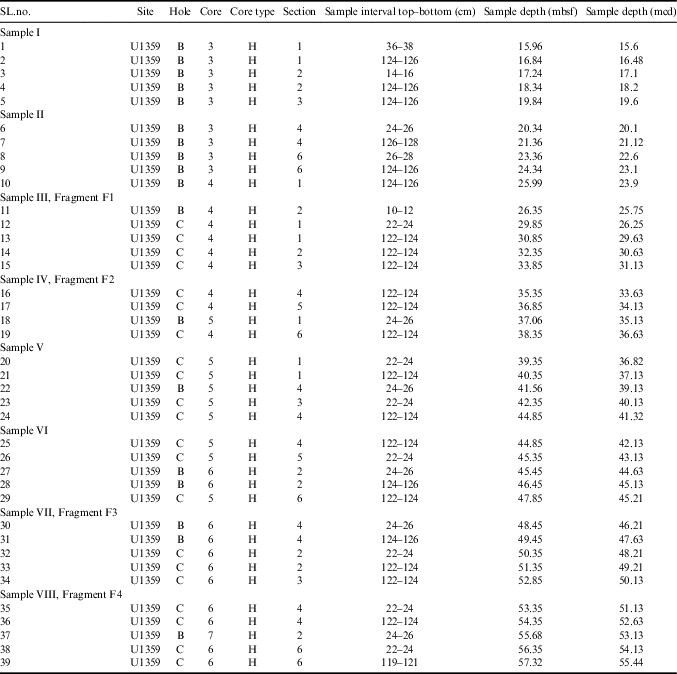
Initial studies on sediments from Site U1359 aimed to characterize the contents and composition of ice-rafted heavy minerals. For this purpose, sampling was carried out at c. 1 m intervals throughout the upper 200 m of the cores. However, in this study, given the low quantities of minerals recovered in individual intervals, samples were combined to obtain statistically robust amounts of material. A total of 32 combined samples were created, each one representing c. 3–8 m bins. During subsequent analysis, basaltic fragments (F) were collected from four of these binned sedimentary intervals. Fragment F1 was recovered from a sample representing 31.13–25.75 mcd, F2 at 36.63–33.63 mcd, F3 at 50.13–46.21 mcd, and F4 at 55.44–51.13 mcd (Table I). These four basaltic fragments with high Al–Ti diopside–hedenbergite were not found elsewhere in the core section (Fig. 3). The interval corresponding to the deepest recovered fragment was deposited at c. 2.7 Ma (Middle Pliocene), and the two shallowest intervals were deposited between c. 2.15 and c. 1.01 Ma (Plio-Pleistocene), with one depositional hiatus of c. 0.6 Ma (Tauxe et al. Reference Tauxe, Stickley and Sugisaki2012).
Stratigraphic information of sediments studied at IODP site U1359.

Methods
Heavy mineral separation and major element analyses
Detrital fractions >150 µm were subjected to mineral separation using bromoform heavy liquid. The heavy mineral fractions were then mounted on a glass slide with cold-fixing epoxy (araldite), polished and analysed using a scanning electron microscope (SEM) and electron probe microanalyser (EPMA). The SEM analyses were carried out at the Department of Geology, University of Delhi (India), using a Zeiss SEM equipped with a Cambridge energy dispersive spectrometer (EDS). The EPMA analyses were performed at the Geological Survey of India, Faridabad, using a CAMECA SX100 EPMA equipped with four spectrometers. The operating conditions were 15 kV accelerating voltage, 10 nA beam current and 1 µm beam diameter. Major element compositions of minerals and glass are presented in Tables II, III and IV.
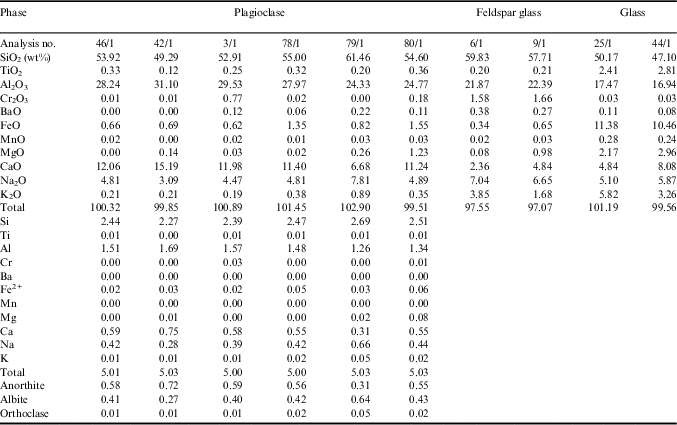
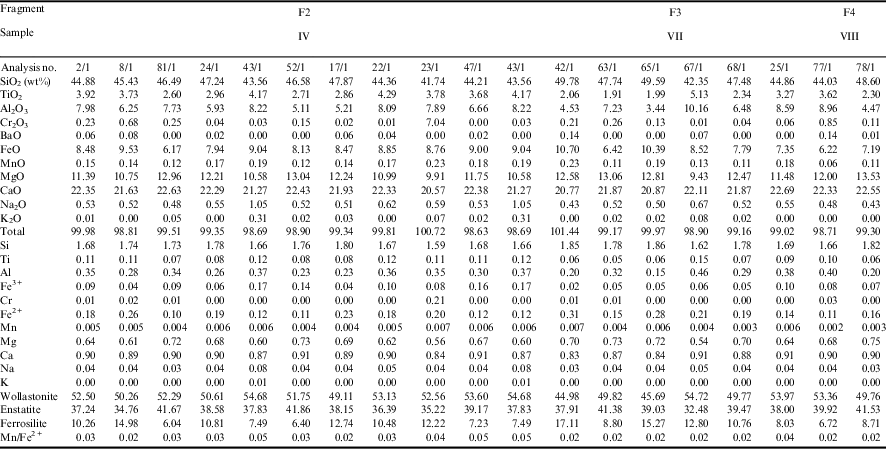
Major element analyses of plagioclase and glass in basaltic fragment F2 (Sample IV) from IODP site U1359.
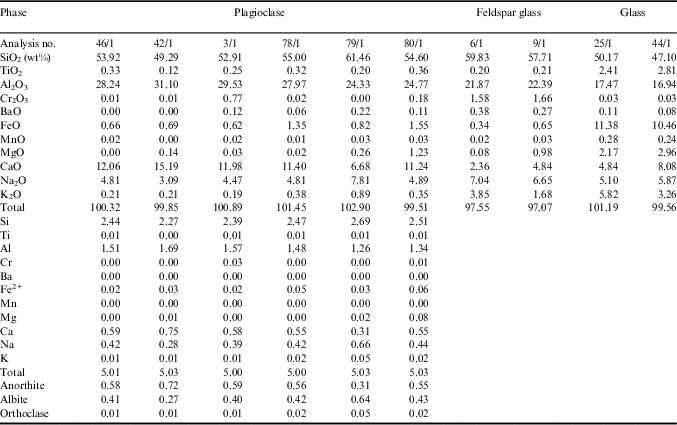
Cations calculated based on 8 oxygens
Major element analyses of clinopyroxene in basaltic fragments chondrite normalized (normalizing values from Sun & McDonough Reference Sun and McDonough1989).

Cations calculated based on 6 oxygens
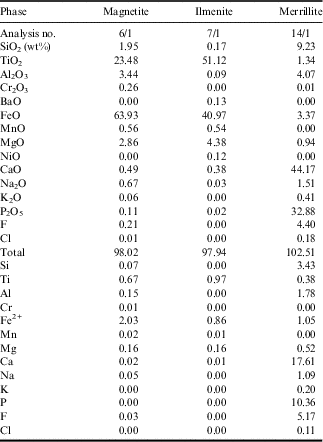
Major element analyses of titaniferous magnetite, ilmenite and merrillite in basaltic fragment F3 (Sample VII) from IODP site U1359.

Cations calculated on 4 and 3 oxygen basis for magnetite and ilmenite, respectively
LA–ICP–MS analyses of clinopyroxene
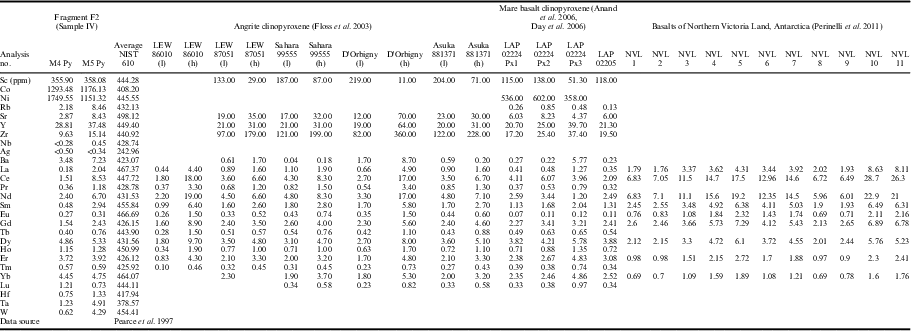
Trace element abundances of clinopyroxene within basaltic fragment F2 (Table V) were analysed by laser ablation–inductively coupled plasma–mass spectrometry (LA–ICP–MS) at the Department of Geology and Geophysics, Indian Institute of Technology, Kharagpur, using a Cetac 213 nm Nd YAG laser ablation system connected to a Varian 820 (now Bruker) quadrupole ICP–MS. Sites were ablated in thin sections at 5 Hz pulse frequency, 12 µm spot size, and 730 V energy. Analyses were done in peak hopping mode and each analysis consisted of 20s background measurement and 40s peak signal measurement. Calibration was done using the National Institute of Standards and Technology 610 glass, and data were treated using the Glitter© software, considering 44Ca from EPMA analyses as the internal standard. Typical uncertainties are in the range of 5–15% (1σ) for most elements.
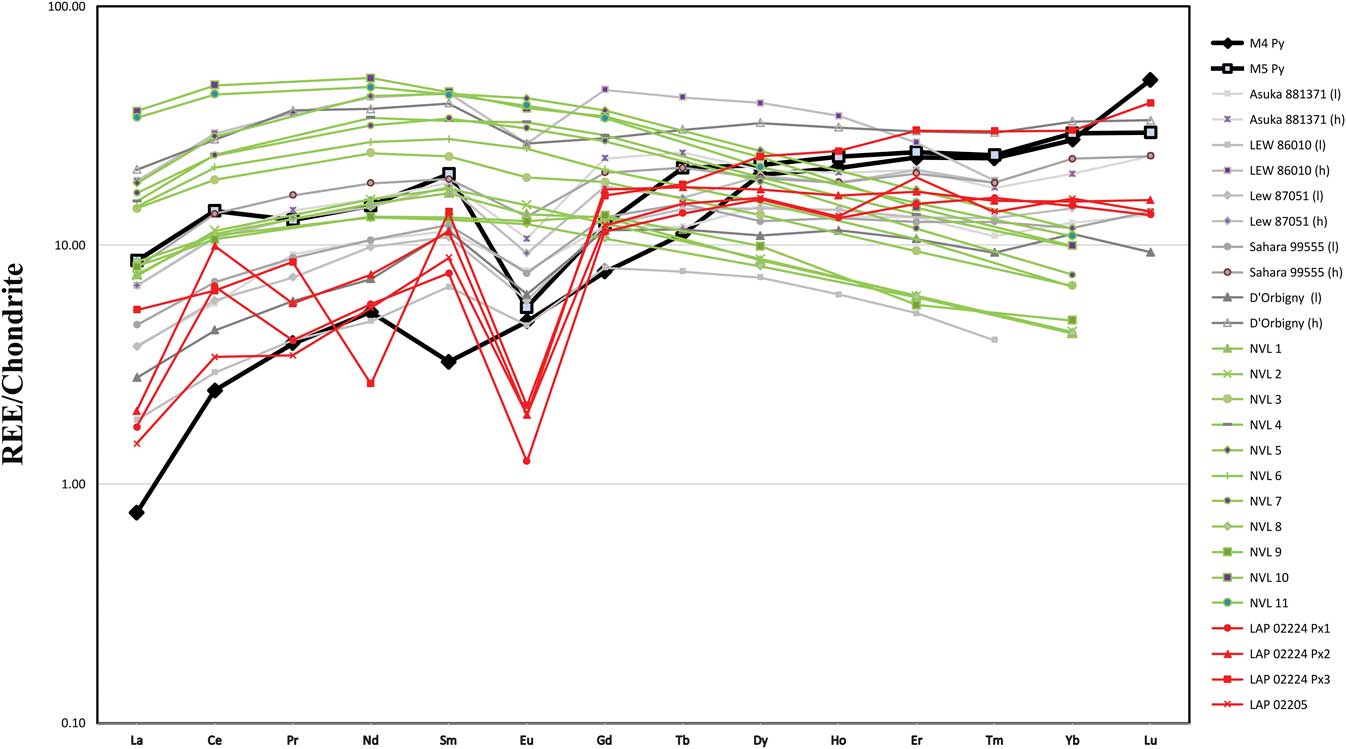
Trace element analyses of clinopyroxene in meteorite fragment F2 (M4 Py and M5 Py) and NIST 610 standard Pearce et al. Reference Pearce, Perkins, Westgate, Gorton, Jackson, Neal and Chenery1997), compared to clinopyroxene compositions in different angrites.

Oxygen isotope analyses
Oxygen isotopic measurements were performed on clinopyroxene grains by in situ analysis using the JAMSTEC NanoSIMS 50L at Kochi Institute for Core Sample Research following the technique described by Ito and Messenger (Reference Ito and Messenger2008). A focused primary Cs+ beam of c. 2.5 pA was rastered over 8 × 8 or 10 × 10 µm areas on the fragment F4, with San Carlos olivine as an analytical standard. Negative secondary ions of 16O, 17O, 18O, 28Si, 26Mg16O and 27Al16O were measured by six electron multipliers in multidetection mode at a high mass resolution of M/∆M=~9500, which is sufficient to separate interfering 16OH from17O. The interference was always negligible (typically<0.1‰) in the δ17O notation. A normal-incident electron gun was utilized for charge compensation of the analysis area. Each imaging run repeatedly scanned (20–30 times) the same area, with individual images consisting of 256 × 256 pixels, having a dwell time of 1000 µs per pixel. The total acquisition time ranged from 20 to 30 minutes. Each run was started after stabilization of the secondary ion beam following 5 minutes of pre-sputtering. Data were corrected for SEM dead time (44 ns) and quasi-simultaneous arrival effect using Interactive Data Language-based NASA Johnson Space Center imaging software for NanoSIMS (Ito & Messenger Reference Ito and Messenger2008). The measurement conditions, the instrumental mass fractionation for isotopic ratios, and the precision (c. 2.5‰ for δ17O and c. 1.2‰ for δ18O) and accuracy for O isotopic measurement were evaluated through analyses of San Carlos olivine as a terrestrial standard. Results of oxygen isotopic analyses are in Table VI.
Oxygen isotopic analyses of meteorite fragment F4 (Sample VIII) from IODP site U1359.

Raman spectroscopy
To identify mineral phases in fragment F4, a laser Raman confocal microscope (NanoPhoton RAMAN Touch) at the NanoPhoton Company (Japan) was used. Excitation was effected using the 532 nm of a Nd-YAG laser with a nominal power of 1.1 mW, and spectra were recorded by 3–30 accumulations (40 s per exposure) with a microscope objective of 100× from an optical footprint of c. 0.5 µm diameter. Spectra were obtained with a 600 mm grating and 500 mm focal length spectrometer, giving a spectral resolution of c. 4 cm-1.
Results
Four basaltic rock fragments were collected from composite heavy fractions recovered from depths of 26–56 mcd (F1–F4, Fig. 3, Table I). Fragments have sub-rounded to sub-angular shapes and sizes between c. 150 μm and 400 μm. All fragments were analysed by electron microscopy. Because of reduced sample amounts, different types of analyses were performed in each fragment. The most representative results are presented here. Major element composition of clinopyroxenes was measured at fragments F2, F3 and F4. Sample F2 was selected for rare earth element (REE) analysis of clinopyroxenes and major element measurements in plagioclase and glass; sample F3 for analyses of major elements in titaniferous magnetite, ilmenite and merrillite, as well as Raman spectroscopy; and sample F4 for oxygen isotope analysis.
Petrography of basalt fragments and major and trace element compositions of minerals and glass
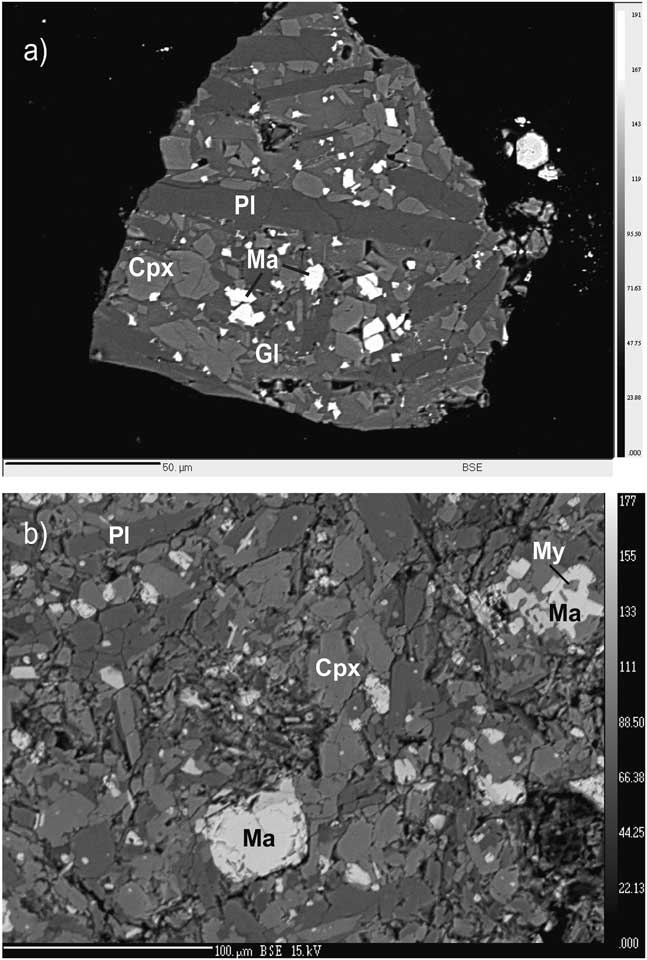
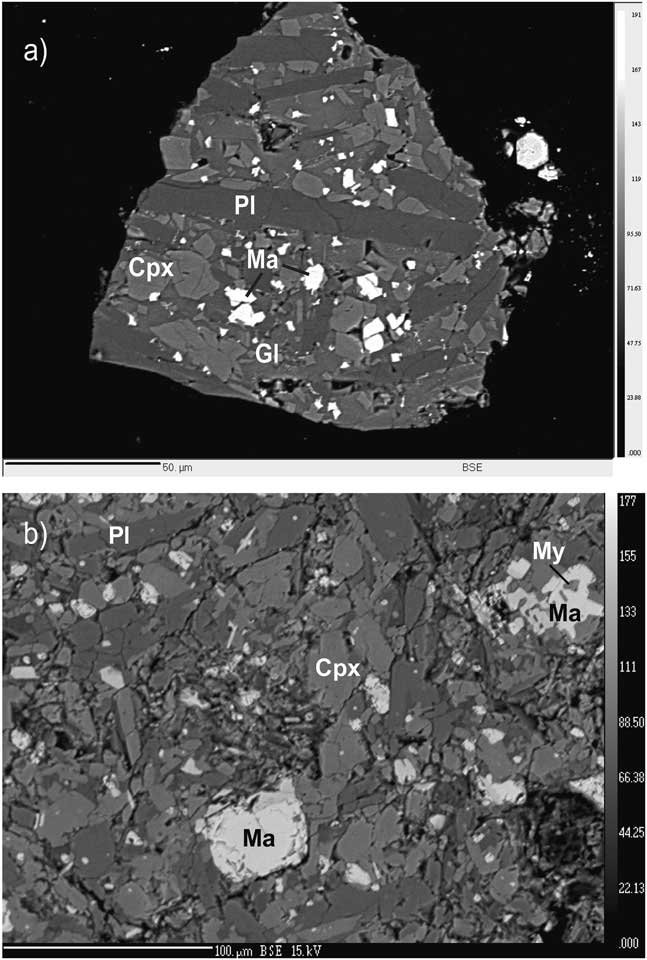
Optical microscopy of basaltic grains was not possible because of the small size and the nature of grain mounts. The petrological description is therefore based on scanning electron microscopy. The fragments have intergranular texture, and backscattered electron (BSE) imaging for fragments F2 and F3 revealed four distinct grey tone areas (Fig. 4). The darkest tone corresponds to subhedral–euhedral laths (up to 120 μm long) of plagioclase, constituting c. 40% of the rock (Fig. 4). The major mafic phase consists of prismatic to stocky, subhedral grains of clinopyroxene (light grey) up to 30 μm in diameter, constituting 25–30% of the rock. In addition, the rock fragments contain a significant amount of glass/melt fraction (c. 20%), with the glass having a diffused and spotted appearance and a variable composition (Table II), represented by a grey tone intermediate between that of plagioclase and clinopyroxene (Fig. 4a). Analysis indicates the range of glass composition, from high silica to relatively low silica (Table II). Opaque phases (oxides, mainly ilmenite and titaniferous magnetite) constitute the remaining 10–15% of the mineral assemblage. In one fragment, a merrillite grain is included in magnetite (Fig. 4b).
a. Back-scattered electron (BSE) image of basaltic fragment F3 from Site U1359. Note euhedral to subhedral laths of plagioclase (Pl) of variable size, glass (Gl) in the matrix (spotted), and subhedral clinopyroxene (Cpx). Plagioclase and clinopyroxene appear unzoned in the BSE image. b. BSE image of basaltic fragment from Site U1359. Note inclusion of a merrillite grain (My) in magnetite (Ma).
Plagioclase components within the basalt grains are generally calcium-rich (An55-72) but show a significant compositional variation, with some grains having high Na content (up to Ab65, Table II).
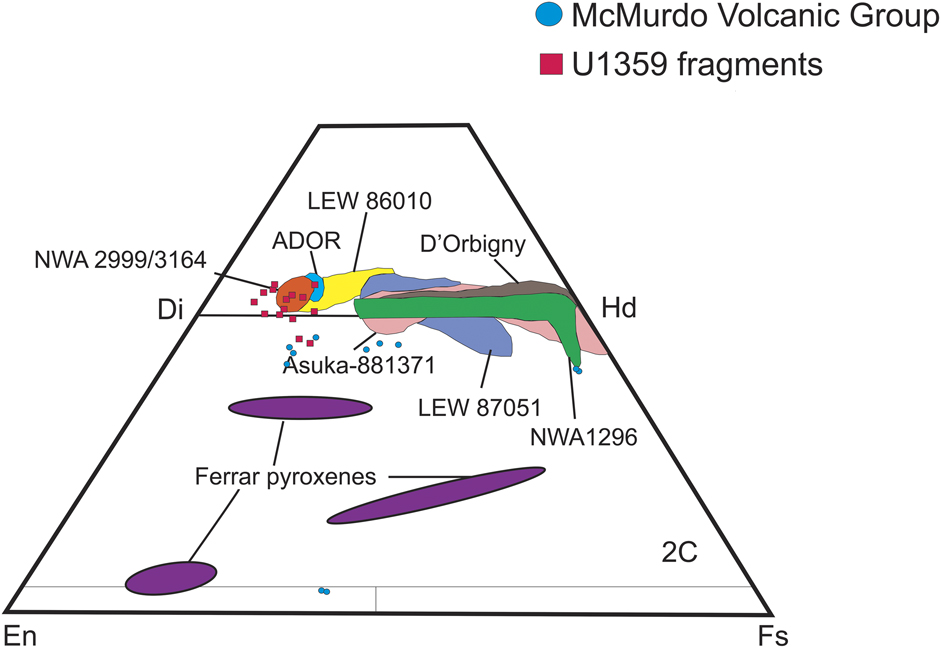
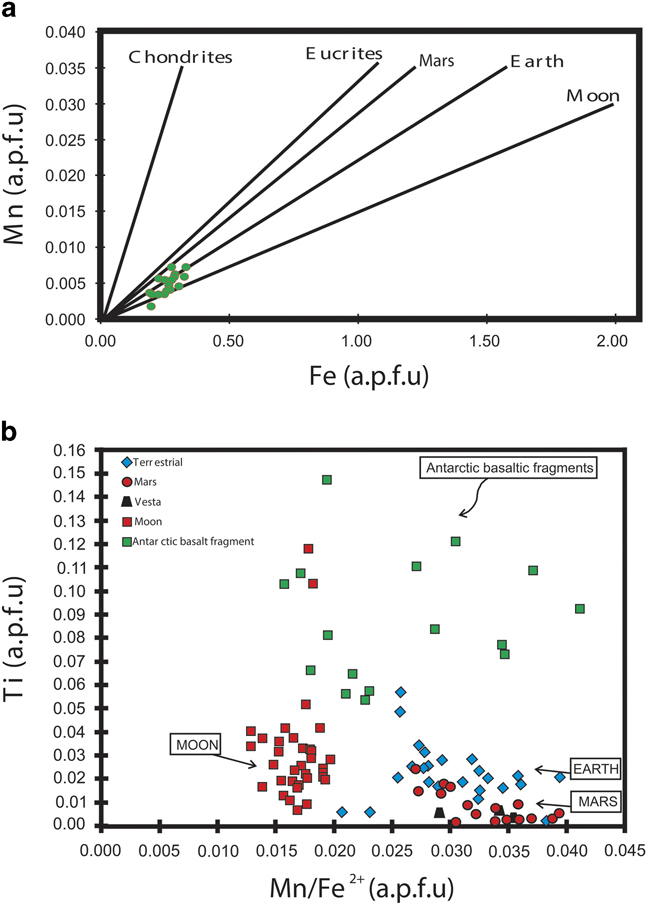
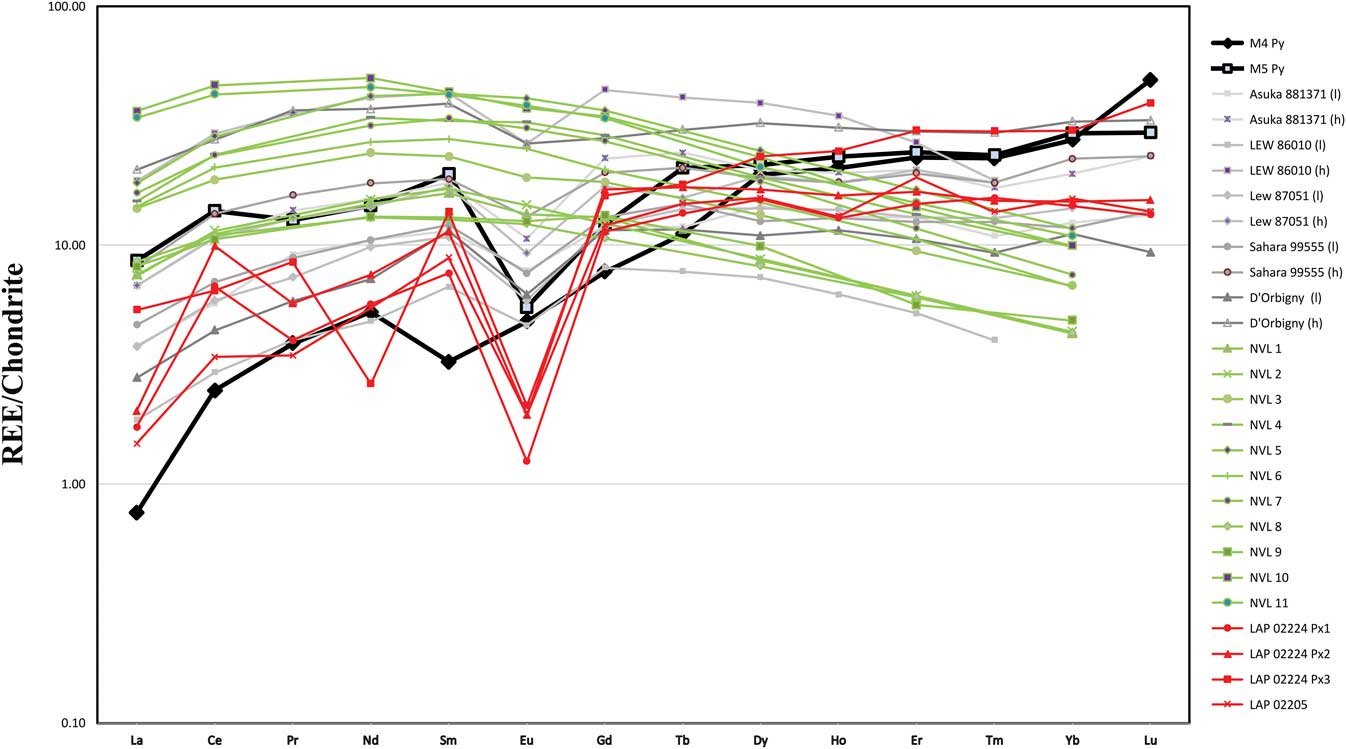
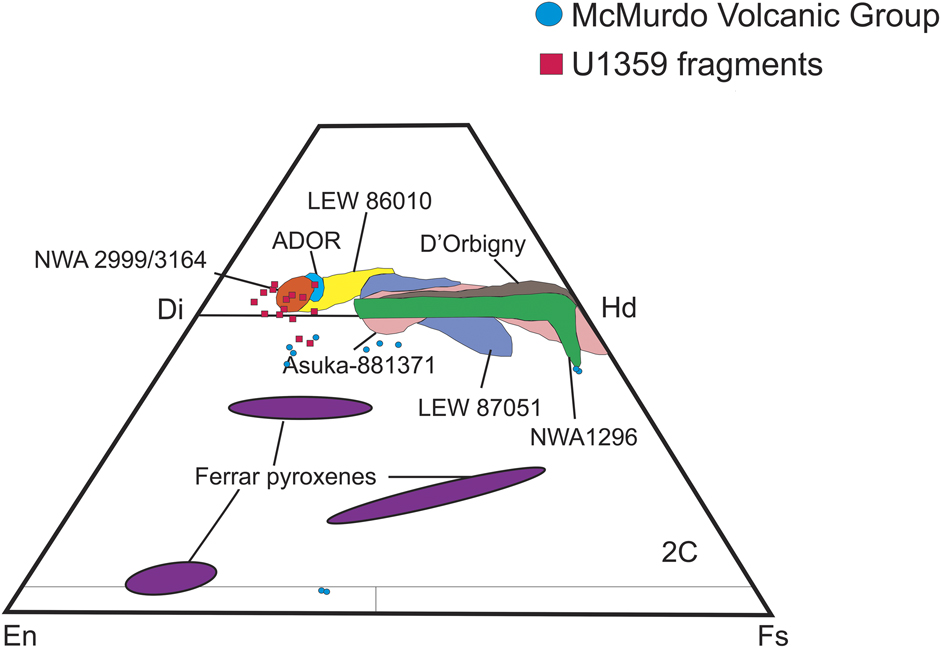
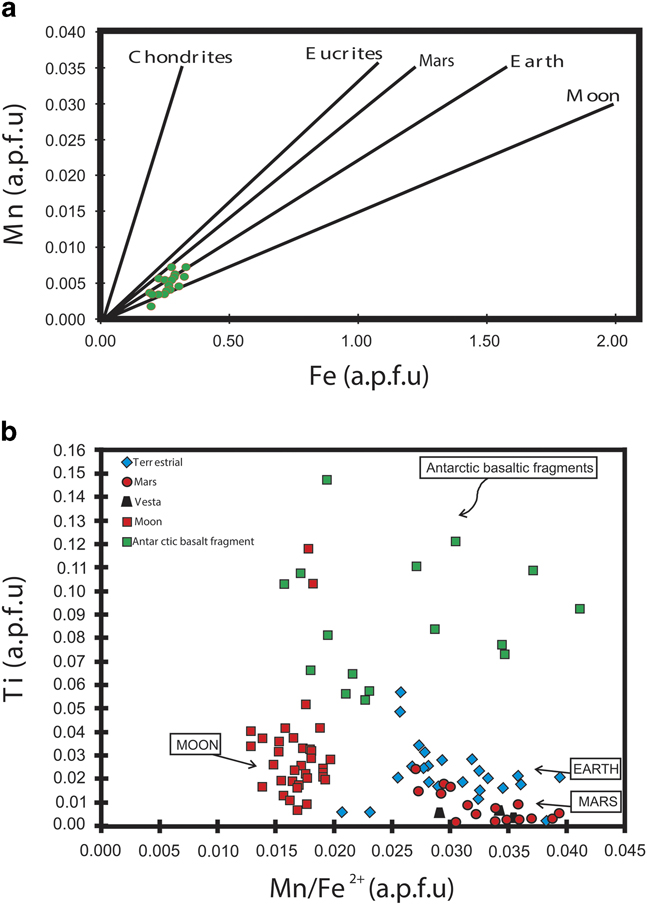
Clinopyroxene compositions are variable, but generally have high AlIV (0.15–0.46 atoms per formula unit (a.p.f.u. on 6 oxygen basis)) and low Na (0.03–0.08 a.p.f.u) (Table III).The Ca content varies from 0.83 to 0.91 a.p.f.u., and the Ti content from 0.05 to 0.15 a.p.f.u. These high AlIV, Ti and Ca concentrations imply pyroxene compositions close to the high Al–Ti diopside–hedenbergite end member (Fig. 5). Similar clinopyroxene compositions are common in angrites, a relatively rare achondrite meteorite. Fields of high Al–Ti diopside–hedenbergite from several angrites are also plotted in this figure. High Ca–Al–Ti clinopyroxene is also reported from the McMurdo Volcanic Group (MVG), but the MVG clinopyroxenes have lower Ti and Ca, and the compositional distinction is evident in Fig. 5. The concentrations of Fe2+ (0.11–0.31 a.p.f.u.), Mn (< 0.01 a.p.f.u.) (Fig. 6a) and Fe3+ (0.04–0.17 a.p.f.u.) (Table III) are generally low, whereas Ti (0.05–0.15 a.p.f.u.) is relatively high (Fig. 6b), values chondrite normalized. REE patterns of two analyses show that the clinopyroxene are fractionated (LaN/YbN=0.03–0.29) and display prominent negative europium anomalies (Eu/Eu*=0.35–0.78) (Fig. 7). These REE profiles are convex upward with depletion of light rare earth elements (LREE) (LaN=0.48–5.55) and relative enrichment of heavy rare earth elements (HREE) (YbN=18–19). For comparison, trace and REE analyses of terrestrial (green curves in Fig. 7, Northern Victoria Land) and extra-terrestrial pyroxene (clinopyroxenes of angrites represented by grey curves in Fig. 7, and Mare basalt shown as red curves) are also plotted in this figure and listed in Table V. The REE data of clinopyroxene from U1359 are represented by bold black lines in Fig. 7. The extra-terrestrial and terrestrial clinopyroxenes are distinguished by more depleted LREE, presence of europium anomaly and enriched HREE in the former. Plots of clinopyroxenes of U1359 show affinity to the extra-terrestrial patterns (Fig. 7).
Major element composition of clinopyroxene in basaltic fragments F2, F3 and F4 from Site U1359 plotted (red squares) in the pyroxene classification diagram (En: enstatite, Fs: ferrosilite, Di: diopside, Hd: hedenbergite). Al–Ti diopside–hedenbergite compositions from plutonic and volcanic angrites (Keil Reference Keil2012) and terrestrial clinopyroxenes from Ferrar volcanic rocks (Elliot et al. Reference Elliot, Fleming, Haban and Siders1995) are shown for comparison. High Ca-clinopyroxenes from the McMurdo Volcanic Group (blue circles, data from Nardini et al. Reference Nardini, Armienti, Rocchi and Burgess2003) are also shown.
Plots of a. Fe2+ vs Mn and b. Mn/Fe2+ vs Ti (in a.p.f.u.), for high Al–Ti diopside–hedenbergite from basaltic fragments F2, F3 and F4 from Site U1359. The regression lines in a for various clinopyroxene sources, as well as comparative data in b, are after Papike (Reference Papike1998).
Rare earth element concentrations in high Al–Ti diopside–hedenbergite from basaltic fragment F2 from Site U1359 (M4 Py and M5 Py) compared to clinopyroxene compositions in various angrites.
Feldspars and matrix glass have highly variable compositions (SiO2 c. 47–60 wt.%, Al2O3 c. 17–22 wt.%, Na2O + K2O c. 8–11 wt.% and CaO c. 2–8 wt.%, Table II). The FeO and MgO concentrations are up to c. 11 wt.% and 3 wt.%, respectively.
The opaque minerals are mostly magnesian ilmenite and Mg- and Al-bearing titaniferous magnetite (Table IV). A phosphate mineral identified as merrillite is present as an inclusion in magnetite. Although the merrillite grain is >5 µm and the beam diameter for analysis was kept at 1 µm, there is a possibility of error due to matrix effect because of the volume of interaction of the beam generally being significantly larger than the beam size. The idealized formula of merrillite is Ca9NaMg(PO4)7 and it is a common phosphate mineral in meteorites. The fluorine content of analysed merrillite is high (5.17 a.p.f.u. on 56 oxygen basis, Table IV). The Si abundance (3.43 a.p.f.u.) is also high, supporting solid solution involving PO4-SiO4. The Na content (1.09 a.p.f.u) is typical of merrillite composition (see discussion).
Oxygen isotopic compositions (F4) and Raman spectroscopy (F3)
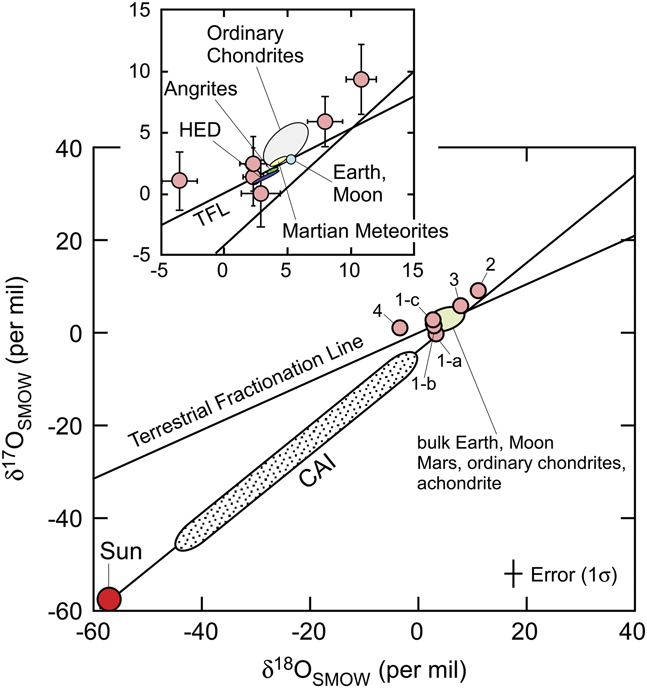
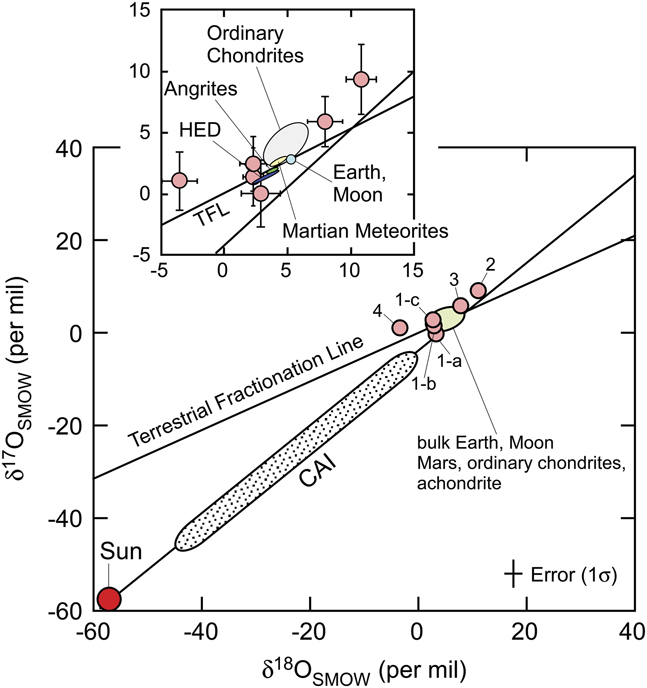
A total of six oxygen three-isotope analyses were performed in four different clinopyroxene grains in the fragment F4. Compared to SMOW (Standard Mean Ocean Water), δ17O ranges from 0 to 9‰ and δ18O from -4 to 11‰ (Table VI). Analysis numbers of 1a, 1b and 1c are all measurements of the same clinopyroxene grain from the fragment F4. Other analyses (2–4) are different clinopyroxene grains in the fragment F4. These values of δ17O and δ18O are similar within analytical error to those of bulk Earth, Moon, Mars, ordinary chondrites and differentiated meteorite (e.g. howardite–eucrite–diogenite, HED) groups, and plot nearly parallel to the terrestrial fractionation line (Fig. 8). The U1359 fragment is much more homogeneous in terms of oxygen isotopes than Ca–Al-rich inclusions (CAI) in chondrites (Fig. 8).
Oxygen three-isotope plot of basaltic fragments analysed in this study (small circles) and representative compositions of major primary components of solar system materials (CAIs from carbonaceous chondrites, bulk Earth, Mars, ordinary chondrites, achondrites and the Sun) (Clayton Reference Clayton2003). HED stands for howardite–eucrite–diogenite meteorites. Representative1σ mean error bars are shown.
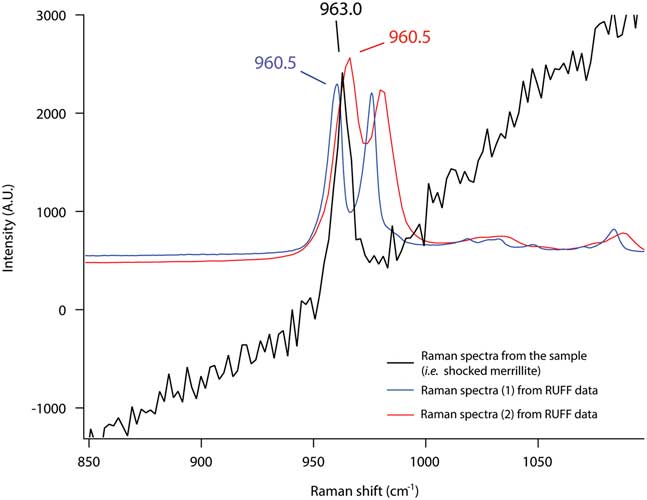
In the fragment F3 a single strong peak at 963 cm-1 (error margin of ± 1 cm-1) was observed in the grain, provisionally identified as a phosphate having composition similar to merrillite (Fig. 9). The Raman spectra corroborate identification as merrillite, as whitlockite has a strong laser Raman peak at 967 cm-1, which is not present in the examined grain.
Raman spectra of the sample from this study compared with spectra from the RRUFF database (http://rruff.info).

Discussion
Evidence for a meteorite or unprecedented mantelic origin of basalt fragments
In terrestrial mafic rocks, Al–Ti diopside–hedenbergite pyroxene, similar to grains in U1359 fragments (Fig. 5), is not commonly reported, except for very rare grains of metamorphic or secondary high-temperature "deuteric" origin in calcareous and calc-silicate metamorphic rocks (e.g. Hirokazu Reference Hirokazu2005), or phenocryst and matrix clinopyroxene in alkaline basalts (e.g. Ngounouno et al. Reference Ngounouno, Déruelle, Demaiffe and Montigny2003). The basaltic fragments recovered from IODP Site U1359 have typical intergranular igneous textures (Fig. 4) and their clinopyroxenes do not exhibit secondary alteration features. Hence, the high Al–Ti diopside–hedenbergite pyroxenes in these rocks are of igneous origin. These minerals are also compositionally distinct from those in the local bedrock basalts of the Ferrar Large Igneous Province (Elliot et al. Reference Elliot, Fleming, Haban and Siders1995). Pyroxenes from the Ferrar basalts cluster towards the enstatite and augite fields, whereas the Ca–Al–Ti pyroxenes of the U1359 basaltic fragments plot close to and above the diopside field (Fig. 5). Although uncommon in terrestrial basalts, Al–Ti diopside–hedenbergite pyroxenes have been widely reported in meteorites (e.g. Srinivasan et al. Reference Srinivasan, Huss and Wasserburg2000). In summary, described basalts could represent part of metasomatized crust xenoliths linked with extensive magmatic rocks of Ferrar Large Igneous Province, in a process similar to that described in the India Ridge (Seyler et al. Reference Seyler, Lorand and Gaston2004), but in this case the clinopyroxene composition (rich in Ti and Al) is not described in any previous metasomatized mantelic basalts.
The Ti–Mn/Fe2+and Mn versus Fe2+plots of clinopyroxenes in U1359 basalt fragments can assist in distinguishing terrestrial and non-terrestrial pyroxenes (Fig. 6). Mn–Fe2+compositions of some of the clinopyroxenes indicate similarities with pyroxene from lunar rocks, although there is some overlap with terrestrial clinopyroxenes (Fig. 6a), and suggest a source more depleted in volatile elements compared to the Earth. The Ti–Mn/Fe2+ plot shows wide scatter but, significantly, none of the analysis plots within the field of terrestrial clinopyroxenes (Fig. 6b). Moreover, the REE patterns of clinopyroxenes in F2 closely match those of the angrite group of achondritic meteorites recovered from Antarctica and other locations (Fig. 7) (Floss et al. Reference Floss, Crozaz, McKay, Mikouchi and Killgore2003, Keil Reference Keil2012).
Opaque minerals in one basaltic fragment contain merrillite (Fig. 4b), a common phosphate mineral in meteorites (Xie et al. Reference Xie, Yang, Gu and Downs2015), an anhydrous Ca-phosphate. The high fluorine content of analysed merrillite is likely to be incorporated as part of the PO4 tetrahedra replacing oxygen (Gnos et al. Reference Gnos, Hofmann, Franchi, Al-Kathiri, Hauser and Mauser2002) or as part of solid solution with SiO4 type of structures similar to that suggested by Moore (Reference Moore1983) for whitlockite related solid solutions. Occasionally, significant fluorine content (> 1weight %) is reported in merrillite which is generally a volatile free extraterrestrial phosphate such as from shergottite group gabbroic meteorites (Gnos et al. Reference Gnos, Hofmann, Franchi, Al-Kathiri, Hauser and Mauser2002). The Na content is also typical of merrillite composition (McCubben et al. Reference McCubben, Shearer, Burger, Hauri, Wang, Elardo and Papike2014). This merrillite grain has Fe and Mg concentrations similar to lunar meteorites (LAP022xx Group 3 meteorite, Sun & McDonough Reference Sun and McDonough1989, Zeigler et al. Reference Zeigler, Korotev, Jolliff and Haskin2005, Jolliff et al. Reference Jolliff, Hughes, Reeman and Zeigler2006), whereas its Na content is closer to that of Martian meteorites (Jolliff et al. Reference Jolliff, Hughes, Reeman and Zeigler2006). In the Shergotty meteorite, apatite and merrillite occur together, and compositional distinction between the two mainly consists of higher Fe, Mg and Na in merrillite (McCubben et al. Reference McCubben, Shearer, Burger, Hauri, Wang, Elardo and Papike2014). Nevertheless, apatite and merrillite differ in terms of OH content (McCubben et al. Reference McCubben, Shearer, Burger, Hauri, Wang, Elardo and Papike2014), as merrillite is nominally anhydrous and apatite has significant OH abundance up to equivalent 8600 ppm H2O. The absence of apatite in the U1359 meteorite may indicate magmatic conditions characterized by relatively low hydrogen fugacity and high temperature. The analysed grain also contains high Fe and Na, as well as Mg, and thus apatite can be ruled out. Laser Raman spectra of merrillite provide interesting data. With a single strong peak at 963 cm-1 (± 1 cm-1) and no peak at 967 cm-1, merrillite can be confirmed, and the presence of whitlockite excluded. Nevertheless, typical laser Raman spectra of merrillite have double peaks (Fig. 9), but experimental and natural sample studies of Suizhou meteorite have shown that double peaks of merrillite transform to a single peak as a result of shock metamorphism (Xie et al. Reference Xie, Minitti, Chen, Mao, Wang, Shu and Fei2002). Xie et al. (Reference Xie, Zhai, Chen and Yang2013), working on the same meteorite, reported the presence of chlorapatite as an original phase that transformed to merrillite with a single peak Raman spectrum. This may also explain the presence of fluorine in the merrillite grain studied here. A single peak in merrillite also has been described in lunar meteorites (Jolliff et al. Reference Jolliff, Hughes, Reeman and Zeigler2006). Shock metamorphism could also have resulted in the formation of matrix glass with highly variable composition (Table II).
The absence of olivine in these rock fragments is difficult to explain, but plagioclase- and pyroxene-bearing ungrouped achondrites almost without olivine have been reported (e.g. NWA 011 and NWA2400) (Floss et al. Reference Floss, Taylor, Promprated and Rumble III2005). The differentiated achondrites can also have low Ca plagioclases (Hutchison Reference Hutchison2004). Considering their mineralogical and geochemical features, it is proposed that the basaltic fragments in Site U1359 sediments were sourced from achondritic meteorite. This source was probably similar to the angrite group with intergranular texture, mostly formed by Al–Ti–diopside–hedenbergite-rich pyroxene, olivine and calcic plagioclase (Mittlefehldt & Lindstrom Reference Mittlefehldt and Lindstrom1990, Yanai Reference Yanai1994), and derived from one or more unidentified asteroidal sources (Greenwood et al. Reference Greenwood, Franchi, Jambon and Buchanan2005). The plagioclase compositions of the identified basalt fragments are generally less calcic and richer in potassium than those in normal angrite (Table II), possibly due to subsolidus metasomatic changes through interaction with KREEP-like components. Similar compositions have been reported in lunar crustal rocks and have been ascribed to incompatible element enrichment during the evolution of the lunar magma ocean (Meyer & Hubbard Reference Meyer and Hubbard1970). However, although metasomatism is reported in angrites, its origin is currently unclear. The presence of potassium in plagioclase (Table II), and of anhydrous fluorine-rich Ca–Na phosphate merrillite (Fig. 4b, Table IV), supports that the parental magma of these fragments was similar to the enriched components in the lunar magma ocean. The sodium content of plagioclase is enigmatic.
O isotopic compositions in the clinopyroxene grain of the fragment F4 are consistent with differentiated meteorites (HED and angrites), and marginally overlap with those of ordinary chondrites (Table VI, Fig. 8). On the other hand, O isotopic compositions of the other three grains (2–4) of the fragment F4 are scattered along or plot slightly above the terrestrial fractionation line, and are not compatible with any meteorite (Table VI, Fig. 8). This trend may be an effect of local equilibration of O isotopes with seawater/ice in sediments, or an effect of snow on O isotopic composition (Misawa et al. Reference Misawa, Kohno, Tomiyama, Noguchi, Nakamura, Nagao, Mikouchi and Nishizumi2010). It is possible a very small amount of (sea) water could have been introduced through the micro fracture in the fragment during a long period in the sediment under low temperature. Results are compatible with an extra-terrestrial origin affected by diagenesis or terrestrial fluids, but O isotopic results are inconclusive because of uncertainty.
Taken together, all the aforementioned compositional features support a non-terrestrial origin of the basalt fragments incorporated in the material drilled at Site U1359, and corroborate that marine sediments offshore of Terre Adélie were supplied with extra-terrestrial material during the Middle Pliocene to Plio-Pleistocene, or that reported basaltic fragments were eroded and transported in this margin during this period.
Ice-rafted origin of U1359 basalt fragments
It is highly probable that the basaltic fragments studied here and associated sediments were transported as IRD, given the overriding influence of the East Antarctic Ice Sheet on sedimentation in this region. Recent studies have demonstrated that the supply of most coarse sand grains to this continental rise site occurred by ice rafting (Patterson et al. Reference Patterson, McKay and Naish2014).
The lithologies of rock fragments and the petrology of heavy minerals in associated sediments are suggestive of a poly-metamorphosed bedrock source, constituted by low- to medium-grade metamorphic components generated at the amphibolite–granulite transition (Pant et al. Reference Pant, Biswas, Shrivastava, Bhattacharya, Verma and Pandey2013). Additional sediment-sourcing from the Ferrar Large Igneous Province, or another mafic igneous source of the Ross Orogen, is suggested by the Ordovician–Silurian age of monazite and xenotime grains dated using chemical geochronology (Pant et al. Reference Pant, Biswas, Shrivastava, Bhattacharya, Verma and Pandey2013). Additional sources for locally deposited IRD include the Transantarctic Mountains in Victoria Land, and Marie Byrd Land in West Antarctica (Fig. 1, sector d; Cook et al. Reference Cook, van De Flierdt and Williams2013, Pant et al. Reference Pant, Biswas, Shrivastava, Bhattacharya, Verma and Pandey2013).
In the case that the obtained fragments were triggered by turbiditic currents along the Jussieu channel (Fig. 2), their source could have been even more proximal, and the fragments delivered from the near continental shelf. In any case, Early Palaeozoic bedrocks near the proximal Ninnis Glacier (Fig. 1, sector b) may have been a particularly important source for the studied site.
Conclusions
Four basaltic fragments, F1 to F4, have been analysed and identified as potential fragments of meteorites sourced from a rare achondrite differentiated meteorite. Major and trace element compositions of pyroxene grains (F2) and oxygen isotopes (F4) also point to a supply of extra-terrestrial material at IODP Site U1359. These basalt fragments have been recovered at various depths in marine sediments deposited between c. 2.7 and c. 1.01 Ma, suggesting they were supplied as IRD. Provenance studies on contemporaneous IRD suggest a range of potential West and East Antarctic sources, probably in the vicinity of the proximal Ninnis Glacier. Confirmation of the nature of the meteorite or unprecedented mantle paragenesis requires support from similar studies on the Plio-Pleistocene sediments in the vicinity of Site U1359.
Acknowledgements
This research used samples and data provided by the Integrated Ocean Drilling Program (IODP). The IODP is sponsored by the U.S. National Science Foundation (NSF), MEXT and participating countries under the management of Joint Oceanographic Institutions. The authors are indebted to Dr Atkins as editor, Dr Panter as reviewer, one anonymous reviewer, and Dr Akira Yamaguchi for their invaluable comments. NCP and PB acknowledge support from the National Centre for Antarctic and Ocean Research (NCAOR). We thank Nanophoton Corporation for providing Raman spectra analysis. Support for this study was provided to CE and FJE by the Spanish Ministry of Science and Innovation Grant CTM-2011-24079 and MEXT-Japan. RMK acknowledges funding from the Royal Society of New Zealand Rutherford Discovery Fellowship scheme (RDF-13-VUW-003). CM’s research is supported by a Ramón y Cajal Fellowship (RYC-2012-11314). TvDF acknowledges funding from NERC (Grant NE/H014144/1) and the European Commission (Grant IRG 230828). MI acknowledges support by a JSPS Grant-in-Aid for Scientific Research (B), Grant Number 26287142, and by the JSPS Strategic Fund for Strengthening Leading Edge Research and Development to JAMSTEC.
Author contributions
NCP and FJJE designed the research; NCP, PB, DU and PKS performed the identification of the heavy mineral and meteorite fragments, FJJE was responsible for trace element analysis, and RM and CE carried out sedimentological description; CPC, NCP and TvDF performed the provenance and sources identification; MI, KS, JK, FJJE, YT, RS and KS performed platinum group, osmium isotopic and oxygen isotopic analysis; NCP, PB, DU and CM performed petrologic description. All authors contributed to the interpretation of the data. NCP, FJJE and CPC wrote the paper, with input from all authors.