Excessive alcohol use is one of the leading causes of preventable death in the United States and many other countries, and alcohol use disorders (AUD) place a substantial burden on the global population every year (GBD 2015 Risk Factors Collaborators, 2016; Odlaug et al., Reference Odlaug, Gual, DeCourcy, Perry, Pike, Heron and Rehm2016; Rehm & Imtiaz, Reference Rehm and Imtiaz2016). The common onset of AUD in young adulthood (Grant et al., Reference Grant, Dawson, Stinson, Chou, Dufour and Pickering2004) and the negative sequelae of health and social problems point to the importance of targeted efforts to prevent the onset of AUD by identifying its modifiable predictors (Guo, Hawkins, Hill, & Abbott, Reference Guo, Hawkins, Hill and Abbott2001). A relatively large body of literature has shown that such predictors are of developmental nature, deeply rooted in childhood and adolescence (Windle & Zucker, Reference Windle and Zucker2010). Parenting and other family environment factors (Guo et al., Reference Guo, Hawkins, Hill and Abbott2001; Hawkins, Catalano, & Miller, Reference Hawkins, Catalano and Miller1992; Kendler, Ohlsson, Edwards, Sundquist, & Sundquist, Reference Kendler, Ohlsson, Edwards, Sundquist and Sundquist2016; King & Chassin, Reference King and Chassin2004) and school performance (Crum, Ensminger, Ro, & McCord, Reference Crum, Ensminger, Ro and McCord1998; Crum et al., Reference Crum, Juon, Green, Robertson, Fothergill and Ensminger2006; Kendler, Ohlsson, Edwards, Sundquist, et al., Reference Kendler, Ohlsson, Edwards, Sundquist and Sundquist2016) have been highlighted as potential intervention targets early in the life course. A paucity of appropriate longitudinal data resources spanning childhood to adulthood has limited our knowledge of the etiology of AUD from a broad developmental context. In this study, we investigate how early exposure to parental risk factors (here, externalizing behaviors, including alcohol and drug use disorders and criminal behaviors; Chassin, Pitts, DeLucia, & Todd, Reference Chassin, Pitts, DeLucia and Todd1999; Edwards et al., Reference Edwards, Lönn, Karriker-Jaffe, Sundquist, Kendler and Sundquist2017; Hicks, Foster, Iacono, & McGue, Reference Hicks, Foster, Iacono and McGue2013) is followed by subsequent engagement in modifiable risk factors for AUD in adolescence (prior to age 18), emerging adulthood (between ages 18 and 25), and into young adulthood (from ages 26 to 30). We use national data from the Swedish Conscript Register, building on prior work with these data, such as studies highlighting the importance of both genetic and environmental factors, as well as externalizing behaviors of young men, in the development of AUD by middle adulthood (Kendler, Ohlsson, Bacanu, Sundquist, & Sundquist, Reference Kendler, Ohlsson, Bacanu, Sundquist and Sundquist2018; Kendler, Ohlsson, Edwards, Sundquist, et al., Reference Kendler, Ohlsson, Edwards, Sundquist and Sundquist2016).
Developmental Cascade Models
Early exposure to parental externalizing behaviors (EB) impacts many developmental outcomes of affected children, and developmental cascade theories offer a useful framework for understanding the different pathways from these early exposures to adult outcomes. These theories suggest that protective factors (or, conversely, risk behaviors) in early developmental phases influence adaptation in later phases in a progressive cascade, or chain reaction (Masten et al., Reference Masten, Roisman, Long, Burt, Obradovic, Riley and Tellegen2005; Obradovic, Burt, & Masten, Reference Obradovic, Burt and Masten2010). Competence, defined developmentally as the capabilities or outcomes pertaining to effective performance in salient developmental tasks for a given age period (Masten & Obradovic, Reference Masten and Obradovic2006; Roisman, Masten, Coatsworth, & Tellegen, Reference Roisman, Masten, Coatsworth and Tellegen2004), has been a strong focus in this paradigm. Competence in one developmental period is probabilistically associated with adaptation in the next, as the skills formed in one period of development become the tools for achieving success in the next period; conversely, failures in major domains of competence also may spill over to influence other domains of function later in the life course (Obradovic et al., Reference Obradovic, Burt and Masten2010; Roisman et al., Reference Roisman, Masten, Coatsworth and Tellegen2004). Of importance here, effects of childhood variables on later outcomes have been found to be largely mediated by competence during adolescence and emerging adulthood (Masten et al., Reference Masten, Burt, Roisman, Obradovic, Long and Tellegen2004).
While developmental connections between childhood risk factors and problem drinking in young adulthood have been studied in this paradigm (Masten, Faden, Zucker, & Spear, Reference Masten, Faden, Zucker and Spear2008, Reference Masten, Faden, Zucker and Spear2009; Schulenberg & Maggs, Reference Schulenberg and Maggs2002), relatively few longitudinal studies have examined how competencies (and failures) in prior developmental phases specifically and uniquely predict AUD in young adulthood. The current study examines cumulative cascades from competence in age-salient developmental tasks in the earlier developmental phases to AUD in young adulthood.
We focus on competence in three domains: academic, conduct, and work. Along with social competence, academic achievement and conduct competence are core developmental task domains in all developmental phases (Masten et al., Reference Masten, Burt, Roisman, Obradovic, Long and Tellegen2004; Masten, Desjardins, McCormick, Kuo, & Long, Reference Masten, Desjardins, McCormick, Kuo and Long2010). Work competence becomes more salient with the transition to adulthood (Masten et al., Reference Masten, Burt, Roisman, Obradovic, Long and Tellegen2004, Reference Masten, Desjardins, McCormick, Kuo and Long2010), although establishing social, academic, and behavioral competencies can be considered the “work” of childhood and adolescence, given the long-term benefits of such achievements (Stepp, Pardini, Loeber, & Morris, Reference Stepp, Pardini, Loeber and Morris2011). Academic and conduct competence in childhood and adolescence have been explored in past research as precursors of adult AUD. For example, behavioral undercontrol and other EB in childhood and early adolescence are important predictors of educational attainment (Stepp et al., Reference Stepp, Pardini, Loeber and Morris2011), as well as AUD in young adulthood (Dubow, Boxer, & Huesmann, Reference Dubow, Boxer and Huesmann2008; Guo et al., Reference Guo, Hawkins, Hill and Abbott2001; Kendler, Gardner, & Prescott, Reference Kendler, Gardner and Prescott2011). School performance is another predictor of young adult AUD (Crum et al., Reference Crum, Juon, Green, Robertson, Fothergill and Ensminger2006; Kendler, Ohlsson, Bacanu, et al., Reference Kendler, Ohlsson, Bacanu, Sundquist and Sundquist2018), as is psychological functioning and resilience (Long et al., Reference Long, Lonn, Ji, Lichtenstein, Sundquist, Sundquist and Kendler2017). However, integrative approaches to examine competence in multiple domains throughout many developmental phases to better understand diverse pathways to AUD are relatively rare. The current study takes such an approach.
Special attention is given to work competence in emerging adulthood as a potential developmental precursor to AUD in young adulthood and beyond. The transition from school to full-time work is one defining feature of the transition to adulthood, with its concomitant changes in responsibilities (Schulenberg & Maggs, Reference Schulenberg and Maggs2002). With past research on predictors of young adulthood drinking centering on childhood risk factors or educational attainment in emerging adulthood, relatively little research has reported on implications of work competence for AUD in emerging and young adulthood. Young people may take different school-to-work pathways. One route involves heavy investment in postsecondary education, often delaying workforce entry but heightening prospects for eventual economic returns and other elements of occupational success; another involves early entry in a career trajectory involving relatively stable full-time employment (Masten et al., Reference Masten, Desjardins, McCormick, Kuo and Long2010; Mortimer, Vuolo, Staff, Wakefield, & Xie, Reference Mortimer, Vuolo, Staff, Wakefield and Xie2008). The third path involves “floundering,” referring to young people's difficulties successfully navigating the transition from school to work, as manifested by frequent movement between jobs, entries and exits from the labor force, and attempts at further education. This third path indicates ineffective work competence, which does not result in better employment in the long run (Vuolo, Mortimer, & Staff, Reference Vuolo, Mortimer and Staff2014). In the absence of college education, stable gainful employment may be an important marker of successful adaptation to and performance in the work domain in emerging adulthood, but little is known about the implications of these diverse paths for AUD in young adulthood and beyond. As such, we examine the effects of these three diverse paths on AUD in young adulthood. We hypothesize that academic achievement and rule-governed conduct in childhood and adolescence predicts resilience and subsequent competence in work, as well as in these two domains, during emerging adulthood, which, in turn, predict AUD in young adulthood.
In addition to the important history of accomplishment of similar tasks earlier in the life course, success in developmental tasks over time also may be due to core resources that represent fundamental human and social capital for child development (Masten et al., Reference Masten, Desjardins, McCormick, Kuo and Long2010). At the individual level, resilience factors also may provide important protection from early risks. Resilience refers to an individual's ability to cope adaptively with adversity during the developmental process (Luthar, Cicchetti, & Becker, Reference Luthar, Cicchetti and Becker2000; Wingo, Ressler, & Bradley, Reference Wingo, Ressler and Bradley2014). It largely comprises personality traits (including ego strength, hardiness, positive emotions, optimism, spirituality/faith, adaptive coping styles, or cognitive flexibility) and environmental factors (such as strong role models, close and nurturing family bonds, and access to quality or supportive relationships; Wingo et al., Reference Wingo, Ressler and Bradley2014), but it has also been conceptualized as a developmental process wherein the individual utilizes resources to adapt to challenges, drawing on outcomes of successfully overcoming obstacles as a critical foundation to prepare for future challenges (Rudzinski, McDonough, Gartner, & Strike, Reference Rudzinski, McDonough, Gartner and Strike2017; Sheerin, Stratton, Amstadter, VA Mid-Atlantic Mental Illness Research, Education, Clinical Center (MIRECC) Workgroup, & McDonald, Reference Sheerin, Stratton, Amstadter and McDonald2018). Though not competence per se, resilience represents similar capabilities to adaptively cope with adversity. Past research has found resilience to be protective against alcohol misuse and AUD (Green, Beckham, Youssef, & Elbogen, Reference Green, Beckham, Youssef and Elbogen2014; Long et al., Reference Long, Lonn, Ji, Lichtenstein, Sundquist, Sundquist and Kendler2017; Wingo et al., Reference Wingo, Ressler and Bradley2014), perhaps through effective emotional regulation, tolerance of negative affect, or active seeking of supportive or nurturing relationships (Wingo et al., Reference Wingo, Ressler and Bradley2014).
Family socioeconomic status (SES) may serve as a resource that moderates effects of childhood adversities (Masten et al., Reference Masten, Burt, Roisman, Obradovic, Long and Tellegen2004, Reference Masten, Roisman, Long, Burt, Obradovic, Riley and Tellegen2005), with parental education being an important protective factor for many adolescent and young adult outcomes. Parents of higher SES may be able to provide additional support that youth and even emerging adults may draw upon in navigating their developmental tasks to help them recover from unsuccessful performances or to buffer them from the potentially detrimental effects of earlier difficulties. Disadvantaged children with lower SES are generally less competent and more likely to be disruptive in school at a given stress level than more-advantaged children (Masten et al., Reference Masten, Coatsworth, Neemann, Gest, Tellegen and Garmezy1995), and children with lower competence levels who come from more disadvantaged families are at higher risk of developing externalizing disorders (Kendler, Ohlsson, Keefe, Sundquist, & Sundquist, Reference Kendler, Ohlsson, Keefe, Sundquist and Sundquist2018). Thus, we also examine the moderation of developmental cascades by parental SES, providing a unique perspective on possible buffering effects that could inform targeted intervention to prevent the early development of AUD.
Study Aims
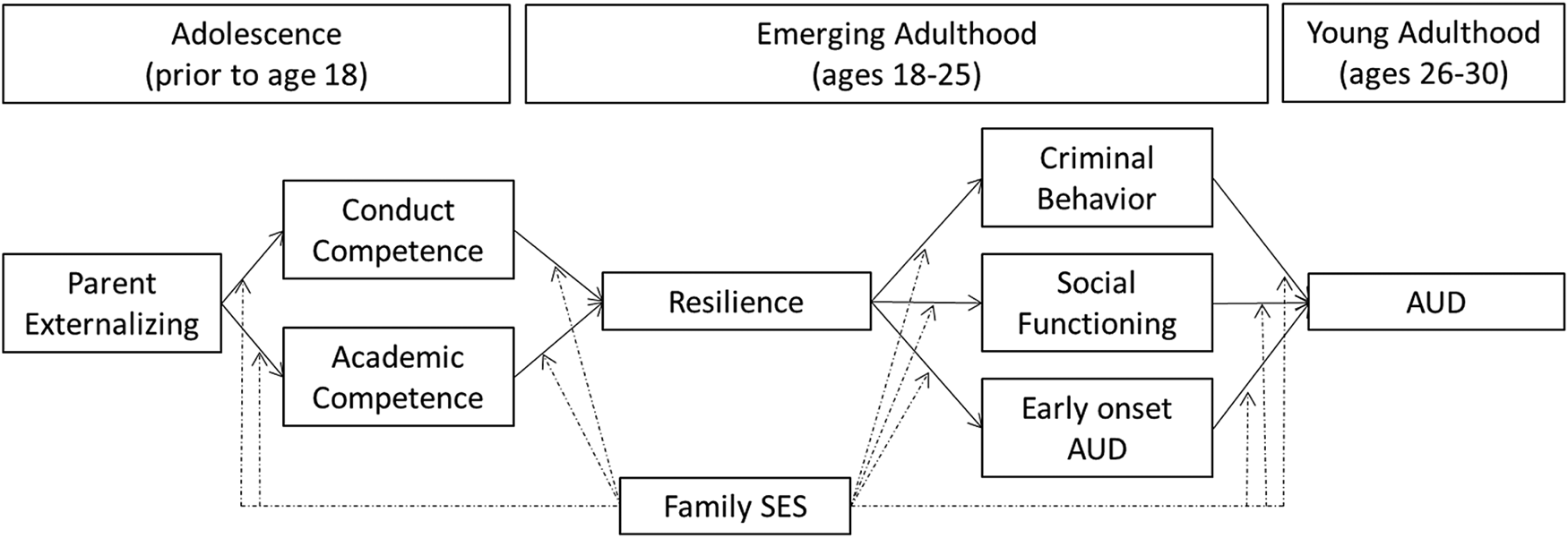
By considering competence in several domains in successive developmental phases, we aim to better understand various ways in which youth exposed to parental EB might flounder in salient developmental tasks during childhood and adolescence and subsequently develop AUD in young adulthood. Our study encompasses several competence domains in multiple developmental stages to explore diverse pathways to AUD in young adulthood. See Figure 1 for our conceptual model delineating the hypothesized pathways from early exposure to parental EB through academic, conduct, and work competencies during adolescence (prior to age 18) and emerging adulthood (ages 18–25) to AUD in young adulthood (ages 26–30). Possible moderating effects of family SES are denoted with dashed lines.
Conceptual model.

Method
Data sources
We linked Swedish National Registers by the unique identification number assigned at birth or upon immigration to all Swedish inhabitants. The identification number was replaced by a pseudonymized serial number to assure each individual's integrity. Ethical approval for this study was secured from the Regional Ethical Review Board of Lund University.
The following national data sources were used to construct the analysis data set: the Multi-Generation Register, linking individuals born after 1932 to their parents; the Swedish Census, containing information on household income and education every 5 years from 1960 to 1990; the Longitudinal Integration Database for Health Insurance and Labor Market Studies, including annual information on income, unemployment, social welfare recipients, and education from 1990 to 2012; the Swedish Hospital Discharge Register, containing hospitalizations for Swedish inhabitants from 1964 to 2012; the Swedish Outpatient Register, covering medical diagnosis in open care clinics from 2001 to 2012; the Swedish Prescribed Drug Register for prescriptions picked up at pharmacies by patients from July 2005 to March 2014; the Swedish Crime Register, covering all convictions in lower courts from 1973 to 2012; the Suspicion Register, identifying individuals strongly suspected of a crime from 1995 to 2012; the Swedish Mortality Register from 1973 to April 2014, containing causes and timing of death; the National School Register, which contained information on average grades from Grade 9, the last year of compulsory school, between 1988 and 2013; and the Swedish Conscript Register, including measures on social function from 1997 to 2010. Further details about each measure derived from these diverse sources are provided below.
Sample
We include Swedish-born males (n = 451,054) born between 1972 and 1982, with at least one of the biological parents registered, an assessment of school achievement, and a valid assessment of resilience in the conscript register. Until 2007, conscription was mandatory for all Swedish men, although some were not called for military service. At age 15, 70.9% of the young men lived with both parents, 22.1% lived with their mother only, and 5.8% with their fathers only; thus, 98.8% lived with at least one biological parent.
Measures
Alcohol use disorder (AUD) was derived from the medical registers using the following International Classification of Disease (ICD) codes for alcohol abuse (excluding acute intoxication) and alcohol-related somatic diagnoses: ICD-8 codes 571.0, 291, 303, and 980; ICD-9 codes V79B, 305A, 357F, 571A, 571B, 571C, 571D, 425F, 535D, 291, 303, and 980; and ICD-10 codes E244, G312, G621, G721, I426, K292, K700, K701, K702, K703, K704, K709, K852, K860, O354, T510, T512, T511, T513, T518, T519, F101, F102, F103, F104, F105, F106, F107, F108, and F109. In addition, we identified individuals with at least two convictions for or suspicions (that did not lead to conviction) of drunk driving or being drunk while in charge of a maritime vessel (by law 1951:649, paragraphs 4 and 4A, and law 1994:1009, paragraphs 4 and 5; or suspicion codes 3005 and 3201). We also identified cases of AUD for individuals who had retrieved disulfiram (Anatomical Therapeutic Chemical Classification System, N07BB01), acamprosate (N07BB03), and/or naltrexone (N07BB04) from the Prescribed Drug Registry. There is high concordance across the different case ascertainment registers (Kendler et al., Reference Kendler, Ji, Edwards, Ohlsson, Sundquist and Sundquist2015), and registration for AUD is strongly related to familial risk (Kendler, Ohlsson, Edwards, Karriker-Jaffe, et al., Reference Kendler, Ohlsson, Edwards, Karriker-Jaffe, Sundquist and Sundquist2016). AUD during emerging adulthood was assessed between the ages of 19 and 25 (1.7% of sample), and the principal outcome variable was AUD during young adulthood (ages 26 to 30; 1.6% of sample). Fewer than 0.5% of the young men had AUD registrations during both periods. These rates of early AUD are similar to those seen in other studies of different (older) cohorts of Swedish men based on the conscript register, including one that noted approximately 2.3% of men conscripted into military service in 1969–70 had a registration for AUD prior to age 25 (Kendler, Ohlsson, Edwards, Sundquist, et al., Reference Kendler, Ohlsson, Edwards, Sundquist and Sundquist2016).
Criminal behavior (CB) was defined from convictions in lower courts using the Swedish crime register. We included convictions for aggravated assault; illegal threats, intimidation, and coercion; threats or violence against a police officer; aggravated robbery; murder, manslaughter, or filicide; kidnapping; arson; sexual crimes (excluding prostitution and the buying of sexual services, but including child pornography); fraud, forgery, and embezzlement; and property crimes (theft, vandalism, vandalism causing danger to the public, and trespassing). For the exact law chapters and paragraphs see Kendler, Lönn, Maes, et al. (Reference Kendler, Lonn, Maes, Lichtenstein, Sundquist and Sundquist2016). We observed CB during two age periods, from age 15 (age at which one is legally able to be held criminally responsible in Sweden) to 18 (10.6% of sample) and from 19 to 25 (7.9% of sample). A small minority of the young men (3.1%) engaged in these behaviors during both developmental periods.
Academic competence during adolescence was defined using grades from the National School Registry, which provides average educational achievement for all students at the end of Grade 9 (usually at age 16). These grades are considered to be important and culturally relevant, as they are used when applying to upper secondary school. The average grades were standardized by year for all young males to have mean 0 and standard deviation 1, with numbers greater than 0 indicating grades above average (Karriker-Jaffe, Lönn, Cook, Kendler, & Sundquist, Reference Karriker-Jaffe, Lönn, Cook, Kendler and Sundquist2018; Kendler, Lonn, Maes, et al., Reference Kendler, Lonn, Maes, Lichtenstein, Sundquist and Sundquist2016).
Resilience during emerging adulthood was defined using a measure from the conscript register (typically assessed at ages 18 to 19) designed to assess the ability to cope with psychologically stressful situations, including combat. The assessment covers home, work, and school, as well as emotional maturity, and it is administered by a trained psychologist as a semistructured interview (20–25 min in duration). The interview is coded in five domains (social maturity, interest, psychological energy, emotional control, and home environment), which are scored on a 1 to 9 graded scale, corresponding to a categorized normal distribution centered at 5 (SD = 1.8). Analysis of different cohorts of Swedish conscripts suggests a 1-point increase on the resilience scale is associated with a 29% reduction in AUD (Long et al., Reference Long, Lonn, Ji, Lichtenstein, Sundquist, Sundquist and Kendler2017). For a more detailed description of this measure, see prior studies using these registries (Kendler, Lonn, Lichtenstein, Sundquist, & Sundquist, Reference Kendler, Lonn, Lichtenstein, Sundquist and Sundquist2016; Long et al., Reference Long, Lonn, Ji, Lichtenstein, Sundquist, Sundquist and Kendler2017).
Social functioning during emerging adulthood was defined by a dichotomous measure representing work competence (at least 2 years of employment during the 7 years between 19 and 25; 68.6%) or academic competence (going to university; 34.3%). Most men (85.6%) achieved at least one of these competency milestones. These indicators of social integration also were examined separately.
Parent EB was defined as lifetime AUD (ascertained as for the primary outcome), criminal behavior (CB, ascertained as above), or drug abuse (DA) in either of the biological parents (Edwards et al., Reference Edwards, Lönn, Karriker-Jaffe, Sundquist, Kendler and Sundquist2017). DA is identified based on medical diagnoses, convictions, and suspicions of drug crimes, and prescribed medications for treatment of drug use disorders (as described in Kendler et al., Reference Kendler, Sundquist, Ohlsson, Palmer, Maes, Winkleby and Sundquist2012). Almost one-quarter (23.3%) of the sample had at least one parent positive for EB, with 12.7% having a parent with a history of AUD or DA (or both), and 16.3% having a parent with a history of CB.
Parent education was defined as the highest education achieved by either biological parent. It was categorized into low (compulsory schooling only; 9.8%), middle (more than compulsory schooling, but no university studies; 45.1%), and high (university studies; 45.1%). For most analyses, parent education was dichotomized into university studies versus lower levels of schooling. Compulsory schooling was 6 years prior to 1972, when it was increased to 9 years of required education. The middle level of education includes 10–12 years of schooling, or a high school education. Approximately one-third of parents (33% of mothers and 30% of fathers) attained a university degree (high level of education).
Statistical analyses
To assess direct and indirect effects of family background and factors during adolescence and emerging adulthood on AUD in young adulthood, we used structural equation models. We include predictors from three developmental periods: adolescence, when we assess academic competence and early CB; early emerging adulthood, when we assess resilience; and later emerging adulthood, when we assess social integration and take into account persistent CB and early onset AUD. We included paths from variables in an earlier period to the variables in the succeeding period and allowed for correlations between variables in the same period. The family factors (parental EB and lower parental education) are included as background variables and have paths to all later variables. In the next step, we allowed for different path coefficients for the two parental education groups by using the grouping command. The paths in the two groups were compared by constraining all paths using the model constraint command. We conducted the modeling using Mplus version 7.31 (Muthén & Muthén, Reference Muthén and Muthén2015) using a probit link and the WLSMV (mean- and variance-adjusted weighted least square) estimator. To evaluate credibility of the models, we checked indices reflecting explanatory power and parsimony, using the Tucker–Lewis index, comparative fit index, and the root mean square error of approximation, in combination with the size, signs, and significance of the path estimates.
Results
Descriptive statistics
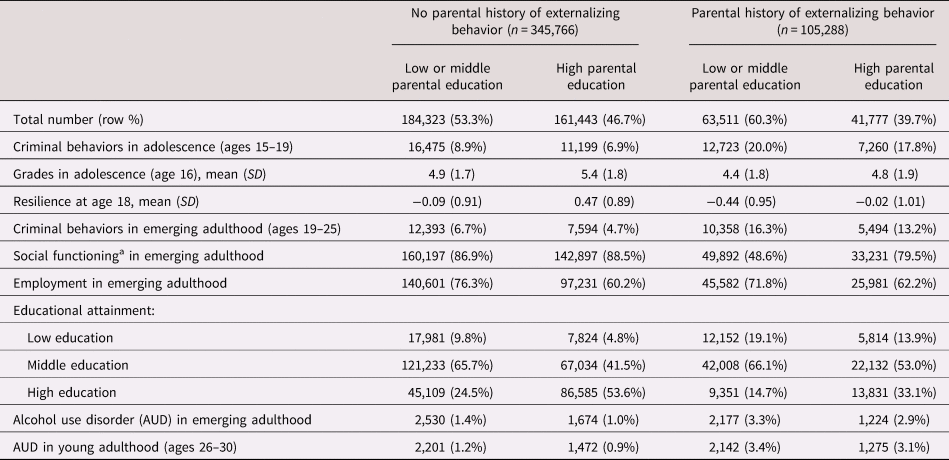
Table 1 presents sample characteristics for groups defined by parental EB and family SES (based on parent education level). The young men with a parental history of EB showed on average 0.5 SD lower grades in adolescence and more than twice the risk of CB during adolescence and emerging adulthood, in addition to lower resilience at age 18, lower rates of social functioning in emerging adulthood (driven by lower educational attainment, in particular), and a two- to three-fold risk of AUD in both emerging and young adulthood compared to their counterparts without this family risk factor. Within these two groups, indicators of competence varied according to family SES, with patterns suggesting higher SES might be protective in the context of parental EB. Although all groups showed increases in competence from adolescence into emerging young adulthood, improvements varied according to family risk factors. For example, the proportion engaged in CB declined by almost one-third (from 6.9% to 4.7%) in the lowest risk group (those with no history of parental EB and with high levels of parental education) but only by one-fifth (from 20.0% to 16.3%) in the highest risk group (history of parental EB and lower parental education). Across developmental periods, the highest risk group had consistently lower competence (the lowest grades, lowest resilience scores, and lowest rates of social functioning), as well as highest rates of CB and AUD, while the lowest risk group consistently showed the opposite pattern in the competencies and AUD outcomes.
Sample characteristics for Swedish males in conscript registry (N = 451,054)

a Employment during at least 2 years or university studies.
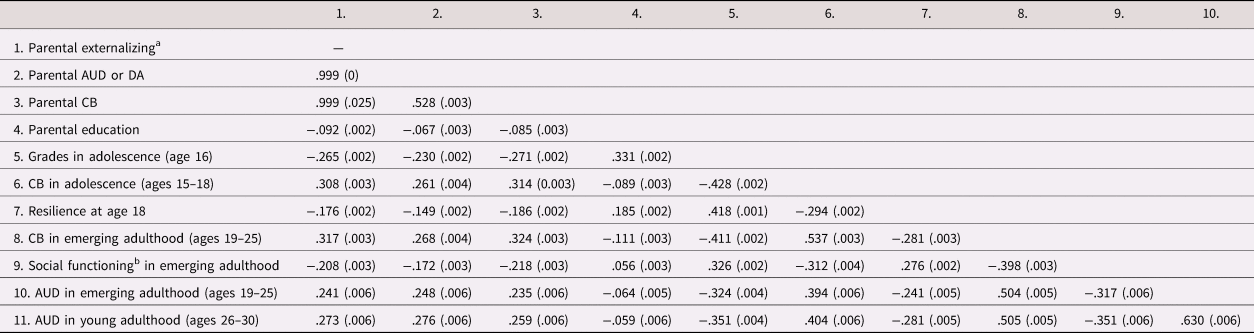
Table 2 shows correlations among the key constructs during the different developmental periods. Correlations between the competence domains were of similar magnitude in adolescence (such as the associations of grades at age 16 with CB in adolescence, r = –.43, and with resilience at age 18, r = .42) as in emerging adulthood (such as social functioning with CB, r = –.40). Correlations of parental EB with AUD were moderate across the different measures (any parental EB, parental AUD or DA, parental CB; range: r = .24 to .28). CB during adolescence was less strongly associated with the AUD outcomes (r = .39 and .40 for emerging and young adulthood, respectively) than was CB during emerging adulthood (r = .50 and .51, respectively). Grades in adolescence and social functioning in emerging adulthood showed comparable correlations with the AUD outcomes (range: r = –.32 to –.35), and these correlations were a little stronger than those between resilience at age 18 and the AUD outcomes (r = –.24 and –.28).
Correlations between key constructs in each developmental period

Note: Standard errors (SE) in parentheses. aExternalizing behaviors include alcohol use disorders (AUD), drug abuse (DA), and criminal behaviors (CB). bSocial functioning includes employment during at least 2 years or university studies between ages 19 and 25.
Path models
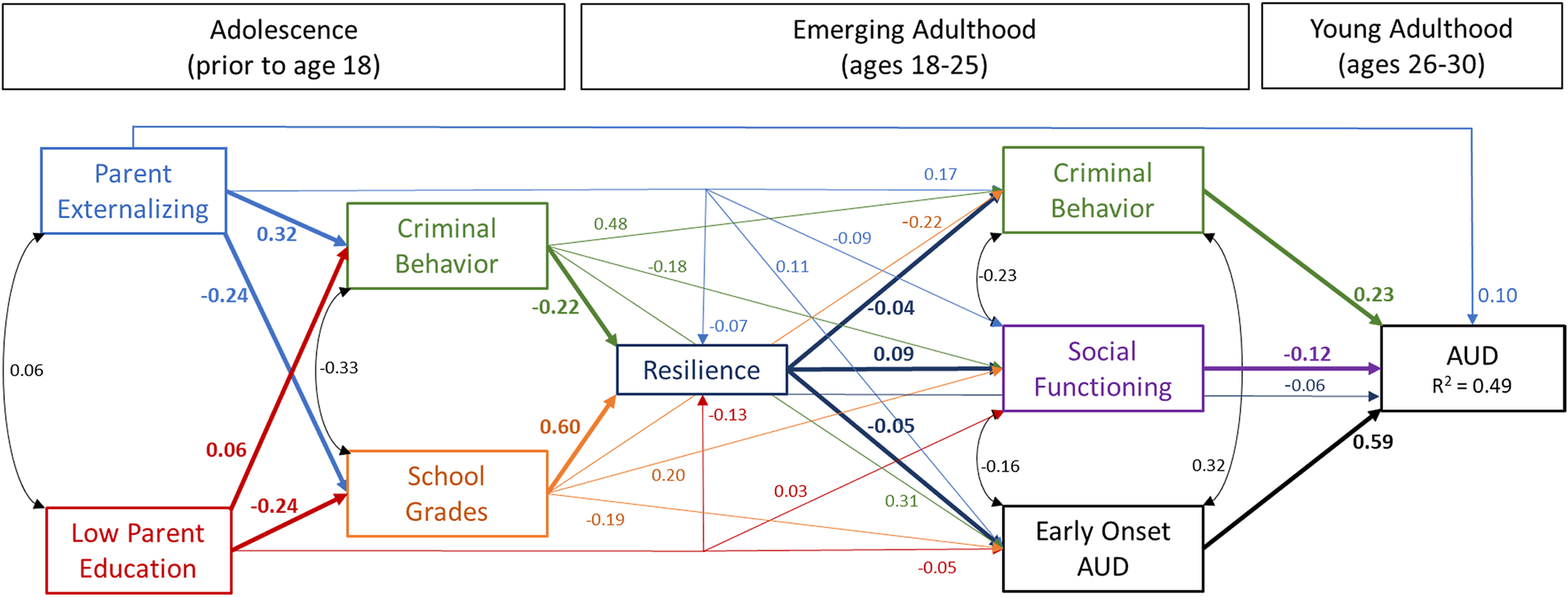
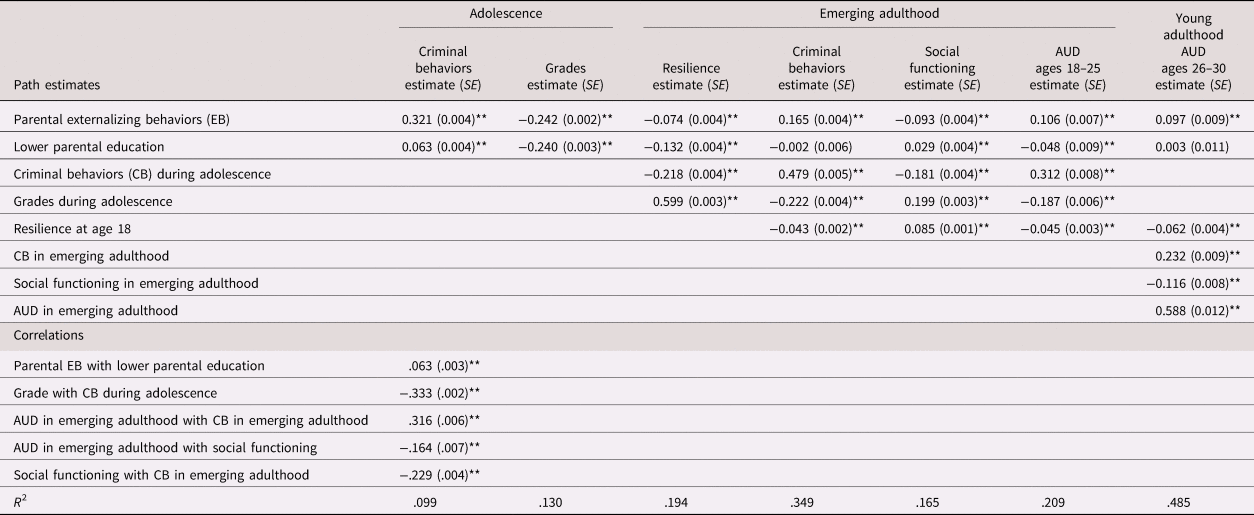
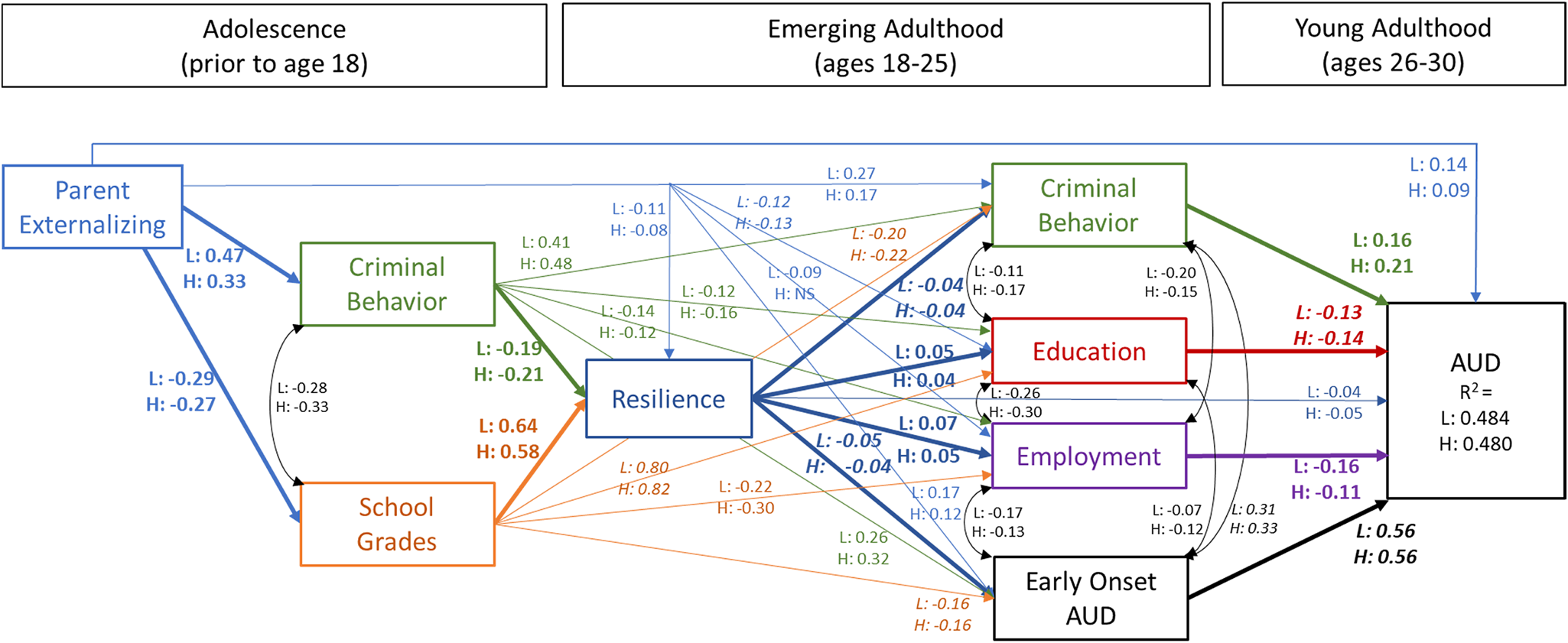
The overall path model fit the data well (measures of model fit: root mean square error of approximation [95% confidence interval] = .014 [.012, .016]; comparative fit index = .999; Tucker–Lewis index = .990), and it explained a substantial proportion of the variance in AUD during young adulthood (R 2 = .485). As shown in Table 3 and Figure 2, both of the early family factors (parental EB and lower parental education) were associated with increased conduct problems and lower grades during adolescence, and these adolescent competencies were associated with outcomes in emerging adulthood, including lower resilience, more criminal behaviors, reduced social functioning, and early onset AUD. The emerging adulthood competencies were associated, in turn, with AUD in young adulthood, with all relationships in the hypothesized direction. The path from early onset AUD was the most predictive for AUD in young adulthood, and the magnitude of this relationship did not differ between the two family SES groups.
Standardized estimates from path model for the full sample. Correlations are denoted with curved double-headed arrows. Primary mediation pathways are indicated with bold lines. Additional nonsignificant pathways and standard errors are reported in Table 3. Degrees of freedom = 2; model fit: root mean square error of approximation [95% confidence interval] = .014 [.012, .016]; comparative fit index = .999; Tucker–Lewis index = .990. For all paths shown, p < .001.

Standardized estimates from the path model for the full sample of Swedish males in conscript registry (N = 451,054)

Note: Degrees of freedom (df) = 2. Measures of model fit: root mean square error of approximation [95% confidence interval] = .014 [.012, .016]; comparative fit index = .999; Tucker–Lewis index = .990. **p < .001.
In sensitivity analyses, we reran the full model using two alternative operationalizations for parental externalizing: The first included only parental substance use (AUD or DA; see Supplemental Table S.1), and the second focused on parental criminal behaviors (CB; see Supplemental Table S.2). Both of those models had very similar fit indices, R 2 values and coefficients as in the parental EB models reported here, although most relationships were slightly weaker when using only parental substance use as the indicator of parental externalizing.
Using the combined indicator of parental EB, the multiple groups analysis used to test for moderation effects showed different magnitudes of the path coefficients for men from families with lower (lower or middle) levels of education compared to men from families with high levels of education (university degree), and constraining all paths between these two family SES groups (lower and higher parental education) gave a worse model fit, χ2 (df = 26) = 756.695, p < .0001; full results not shown.
When we separated social competence into its two constituent parts (see Supplemental Table S.3), the path model explained much more of the variance in educational status in emerging adulthood (R 2 = .503) than employment status in the same period (R 2 = .074); these values contrast with the proportion of the variance of the combined indicator of social functioning that was explained in the overall model (R 2 = .165; Table 3). Parental EB was a stronger predictor of educational attainment than employment during emerging adulthood (path estimate = –0.104 [SE = 0.003] and –0.023 [SE = 0.003], respectively). Employment was more strongly negatively correlated with both CB (–0.193 [SE = 0.004]) and AUD (–0.164 [SE = 0.007]) in emerging adulthood than was education (–0.141 [SE = 0.004] and –0.093 [SE = 0.006], respectively), but both education and employment were of similar magnitude as protective factors associated with a reduced likelihood of AUD in young adulthood (path estimate = –0.149 [SE = 0.008] and –0.150 [SE = 0.010], respectively).
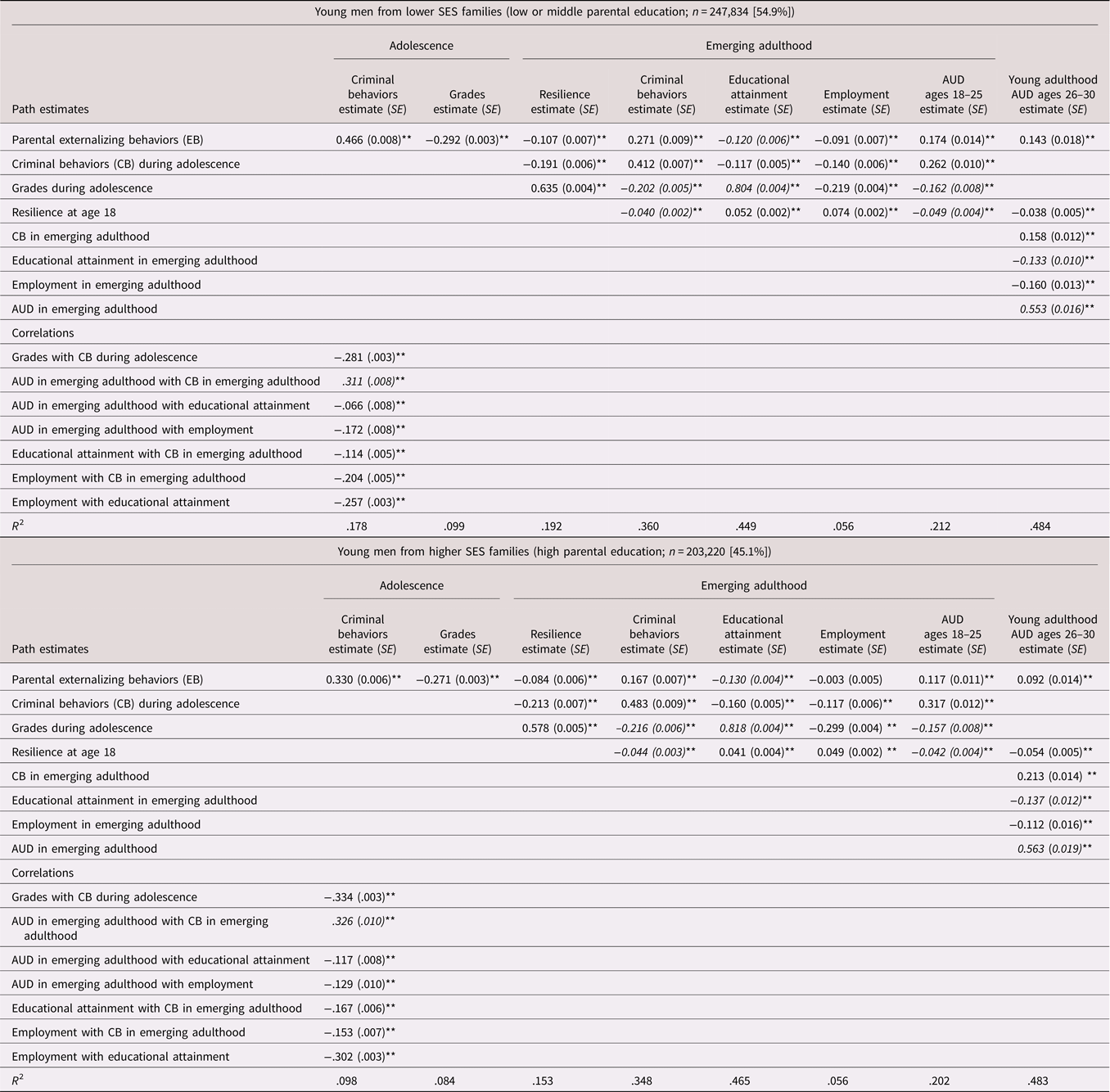
Table 4 and Figure 3 present results from the multiple-groups analysis using the two separate indicators of social functioning; constraining all paths between the two family SES groups (lower and higher parental education) again gave a considerably worse model fit, χ2 (df = 34) = 2740.677, p < .0001. Most of the early pathways were different for young men from low-SES families compared to high-SES families. In particular, relationships of parental EB with conduct problems in adolescence (lower education: 0.466 [SE = 0.008]; high education: (0.330 [SE = 0.006]) and with CB in emerging adulthood (lower education: 0.271 [SE = 0.009]; high education: (0.167 [SE = 0.007]) were more pronounced for young men in families with lower levels of parental education, suggesting a buffering effect of higher SES. Further, although the direct effect of parental EB on grades and resilience differed only slightly between the two parental education groups, higher grades during adolescence were more predictive of a high resilience score for men from the lower parental education group (lower education: 0.635 [SE = 0.004]; high education: (0.578 [SE = 0.005]). Counter to our hypotheses, the relationships between conduct problems in adolescence and AUD in emerging adulthood (lower education: 0.262 [SE = 0.010]; high education: (0.317 [SE = 0.012]) and between CB in emerging adulthood and AUD in young adulthood (lower education: 0.158 [SE = 0.012]; high education: (0.213 [SE = 0.014]) were stronger for young men from families with high levels of parental education.
Standardized estimates from the multiple groups path model comparing lower and high levels of parent education, using separate indicators of social functioning (education and employment) in emerging adulthood. Correlations are denoted with curved double-headed arrows. Primary mediation pathways are indicated with bold lines. Paths that do not differ by level of parent education (low = L; high = H) are indicated in italics. Additional nonsignificant pathways and standard errors are reported in Table 4. Degrees of freedom = 5; model fit: root mean square error of approximation [95% confidence interval] = .026 [.025, .028]; comparative fit index = .997; Tucker–Lewis index = .969. For all paths shown, p < .001.

Standardized estimates from the multiple groups path model using separate indicators of social functioning

Note: Path coefficients in italics do not differ between the two family SES groups. Degrees of freedom (df) = 5. Measures of model fit: root mean square error of approximation [95% CI] = .026 [.024, .028]; comparative fit index = .998; Tucker–Lewis index = .978. **p < .001.
There was an association between parental EB and employment during emerging adulthood for young men from families with lower levels of parental education (–0.091 [SE = 0.007]), but for young men from families with higher levels of parental education, the association was not present (–0.003 [SE = 0.005]). Similarly, there were somewhat stronger relationships between conduct problems in adolescence and later employment status (lower education: –0.140 [SE = 0.006]; high education: (–0.117 [SE = 0.006]) and between resilience at age 18 and later employment status (lower education: 0.074 [SE = 0.002]; high education: (0.049 [SE = 0.002]) for young men from families with lower levels of parental education compared to young men from families with higher levels of parental education. Conversely, there were stronger relationships between conduct problems in adolescence and later educational attainment (lower education: –0.117 [SE = 0.005]; high education: (–0.160 [SE = 0.005]) and between grades at age 16 and later employment status (lower education: –0.219 [SE = 0.004]; high education: (–0.299 [SE = 0.004]) for young men from families with higher levels of parental education. Finally, employment status in emerging adulthood was more protective against AUD in young adulthood for young men from families with lower levels of parental education (–0.161 [SE = 0.013]) compared to young men from families with higher levels of parental education (–0.112 [SE = 0.016]).
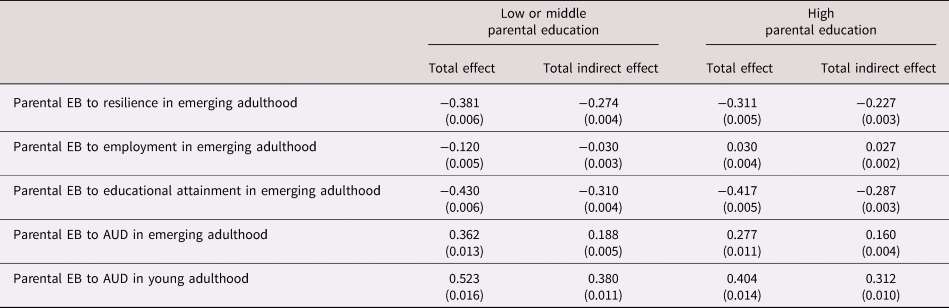
Table 5 presents the total and indirect effects for the pathways from parental EB to the competency domains in emerging adulthood and to the AUD outcomes for the two groups defined by parental education. The total effect of parental EB on AUD in young adulthood via the pathways included in Figure 1 was stronger in families with lower levels of parental education (estimate = 0.523) than in families with higher levels of parental education (estimate = 0.404), indicating a modest buffering effect of higher SES. Less than half of the association of parental EB with AUD in young adulthood was a direct effect. Instead, the risk was transferred through a chain of competencies during adolescence and emerging adulthood.
Total and indirect effects from parental externalizing behaviors (EB) through competencies in emerging adulthood to alcohol use disorder (AUD) outcomes from the multiple groups path model using separate indicators of social functioning

Note: Variables on the pathway from parental EB included academic competence (school grades at age 16) and conduct competence (criminal behaviors) in adolescence.
Discussion
In this population of Swedish young men, a history of parental EB was associated with the youth's academic and behavioral problems during adolescence, as well as with reduced resilience, greater CB, and reduced social integration during emerging adulthood. These pathways led to elevated rates of AUD in both emerging adulthood and young adulthood. As hypothesized, most of the indirect pathways from parental EB to AUD were present but buffered by higher levels of parental education, with results suggesting that early life experiences and competencies matter more for young men from lower SES families than from higher SES families. Although all of the groups of young men showed evidence of increasing competence over time, the improvement was smaller for those from high-risk families. Longitudinal data from the United States also suggest that socially disadvantaged youth are less likely than their more advantaged peers to rise above prior academic failures and behavior problems to achieve higher levels of education (Albrecht & Albrecht, Reference Albrecht and Albrecht2010). Future work should evaluate whether educational attainment of a parent with EB is a sufficient buffering factor, or whether it is educational attainment of a co-parent (who may or may not exhibit EB) or some other aspect of SES that provides essential resources for children in the family, as studies have shown AUD is associated with subsequently reduced income and employment and increased reliance on social assistance in midlife (Kendler, Ohlsson, Karriker-Jaffe, Sundquist, & Sundquist, Reference Kendler, Ohlsson, Karriker-Jaffe, Sundquist and Sundquist2017). Severity of parental EB also may vary across levels of parental education, and this may impact the negative effects of these parental behaviors on children as well. Finally, severity of parental EB also may impact family structure, which we were not able to account for in our analyses. Subsequent studies in this area should incorporate details about nonbiological co-parents to assess whether and how their presence modifies risk posed by parental EB in a biological parent.
One exception to the buffering effects was the finding that relationships between indicators of conduct competence (here, CB in adolescence and emerging adulthood) and AUD were stronger for young men from higher SES families, compared to young men from lower SES families. Early CB also was more detrimental for later educational outcomes for the young men from higher SES families. In this case, rather than family SES buffering negative ramifications of early behavior problems on later outcomes, it may be that, because these behavioral problems are less normative in high-education families, they are more indicative of a problem behavior trajectory in this group than in the group of young men with parents with lower levels of education. Prior research has shown that falling short of the potential level of competence expected based on family characteristics, such as academic competence or intelligence quotient, is an indicator of risk for psychiatric problems later in life (Kendler, Ohlsson, Keefe, et al., Reference Kendler, Ohlsson, Keefe, Sundquist and Sundquist2018), and screening during adolescence may identify youth at elevated risk of later problems who would benefit from focused intervention. Future studies should examine risk factors for conduct problems during adolescence and emerging adulthood for youth from lower SES families; reduction of environmental risk factors, such as affiliations with deviant peers or residence in high-crime neighborhoods, may be important prevention targets.
We found a clear stability in competence in the same domain during the two consecutive developmental periods. That is, grades in adolescence were predictive of educational attainment in emerging adulthood, and, likewise, rule-breaking behavior in adolescence was predictive of criminal conduct in emerging adulthood. In addition, success (or failure) in one competence domain was associated with success (or failure) in other domains during the same developmental period, and these also led to successful (or unsuccessful) adaptations in other domains over time. For example, rule-breaking behavior in adolescence was inversely associated with grades in adolescence, as well as with educational attainment and stable employment in emerging adulthood; similarly, academic performance in adolescence also was inversely associated with criminal conduct in emerging adulthood. Overall, our findings are consistent with past developmental cascade studies including those using adult outcomes other than AUD, such as attaining a successful career (Masten et al., Reference Masten, Coatsworth, Neemann, Gest, Tellegen and Garmezy1995, Reference Masten, Desjardins, McCormick, Kuo and Long2010).
Educational and occupational competencies
Our findings support the key thesis of developmental cascade theories that positive adaptation (or competence) in age-salient tasks in one developmental phase leads to adaptive functioning in the next phase in a way that results in long-term success. As hypothesized, academic achievement and rule-governed conduct in childhood and adolescence were predictive of resilience and adaptive functioning in all three competence domains in emerging adulthood (as demonstrated here by educational attainment, stable employment, and the absence of CB), which, in turn, were protective from AUD in young adulthood.
Our findings also suggest that both educational attainment and stable employment may be markers of successful transition from adolescence to adulthood that are protective from AUD. The prolonged transition to adulthood that involves an investment in postsecondary education for future acquisition of more lucrative and prestigious careers may be a pathway favored by socioeconomically advantaged emerging adults, whereas early entry into the workforce to maintain stable employment may be a path chosen by those who do not (or cannot afford to, particularly in countries without free higher education) choose a career path involving a college degree (Arnett, Reference Arnett2000; Mortimer et al., Reference Mortimer, Vuolo, Staff, Wakefield and Xie2008; Staff & Mortimer, Reference Staff and Mortimer2003). While educational attainment has been a key focus of research on AUD in young adulthood and beyond (Crum et al., Reference Crum, Ensminger, Ro and McCord1998, Reference Crum, Juon, Green, Robertson, Fothergill and Ensminger2006; Schulenberg & Maggs, Reference Schulenberg and Maggs2002), employment is an overlooked marker of transition to adulthood (Mortimer et al., Reference Mortimer, Vuolo, Staff, Wakefield and Xie2008), particularly in the literature on AUD. In shedding light on diverse pathways to adulthood and their effects on AUD, this study meaningfully contributes to the literature. Our model did not explain much of the variance in occupational competence between the ages of 18 and 25, however. Future research should examine other competencies in childhood and adolescence that promote a successful transition to employment during emerging adulthood. Our results suggest these protective factors may be different than those that predict attainment of high levels of education.
Of note, the protective effect of stable employment depended upon parental SES. The protective effect of stable employment on later AUD was greater for individuals who had parents with lower or middle levels of education than for those with highly educated parents, suggesting that employment is an important competency domain for youth from lower SES families. The protective effect of academic competence did not depend on parental SES, as protective effects of education on later AUD did not differ for the two SES groups. This held for academic competence measured both as grades during adolescence (in relation to AUD in emerging adulthood) and as educational attainment in emerging adulthood (in relation to AUD in young adulthood). In addition to educational support, occupational support programs targeting youth from lower SES families may be important for the prevention of AUD.
Strengths and limitations
This unique population register-based longitudinal study of Swedish men has several distinct strengths. The large sample size (more than 450,000 young men) and lengthy coverage period (approximately 15 years) are uncommon in studies of developmental precursors to AUD. These design features allowed for detailed mediation analyses to test variation in the hypothesized pathways for two groups defined by family SES. Inclusion of competence measures from different domains in multiple developmental periods also is an innovative feature of our study.
Our results should be interpreted with a few limitations in mind, however. The primary AUD outcomes were ascertained based on inpatient and outpatient services registries (as well as legal registries of CB). A strength of this method is that it does not rely on respondent recall or accurate reporting of alcohol-related problems. A drawback is that the identified cases are likely to be more severe than those that would be seen in a general population survey sample. The register-based methods also contribute to the low prevalence of AUD in the young men studied here (ranging from 1% to 4% across sample subgroups), which contrasts somewhat with survey-based estimates from Europe (averaging 5%; Rehm, Room, van den Brink, & Jacobi, Reference Rehm, Room, van den Brink and Jacobi2005). A US survey-based population study of young adults (ages 18–25) estimated 4% of young men reported legal problems due to alcohol and 4%–5% reported continuing to drink despite social/interpersonal, physical health or psychological problems due to alcohol (Slutske, Reference Slutske2005). As these are symptoms of AUD most similar to the problems captured by the Swedish medical and crime registers, our sample likely includes some false negatives. However, the alcohol control policies in Sweden are stronger than those in most of the United States (World Health Organization, 2018), and overall levels of alcohol consumption are lower in Sweden (World Health Organization, 2018), which may help prevent the onset of AUD among young adults. Similar to the limitations of the register-based AUD outcomes, conduct problems and CB during emerging adulthood also were drawn from legal records, biasing our findings to the most severe cases that receive this level of intervention. However, this register-identified group is an important and clinically relevant subset of the general population that is in need of targeted intervention to minimize the long-term negative consequences of these early competency failures, and future intervention studies should consider including outreach to court-involved youth and their families.
In this study, the national sample of young men was chosen due to the extensive data collected at conscription, and comparable data are not available for young women. Our findings should be replicated in other samples—using data from young women, as well—including a variety of measures to assess the relationships between parental EB, youth competencies, and alcohol problems in young adults. It also would be valuable to extend the follow-up period into middle and later adulthood to assess longer term impacts of these early experiences. Genetically informative designs also would be helpful for understanding the shared genetic and environmental contributions of early exposure to parental EB. Finally, replication using data from other national contexts, such as the United States, would shed light on the generalizability of our findings in other populations and ethnic groups and in other policy contexts.
Conclusions
Developmental competencies in the domains of school, conduct, and work are important precursors to the development of AUD by young adulthood. Lower competence in these domains is more prevalent for young men who have a parental history of EB, and this family risk factor is further exacerbated by low family SES, particularly for resilience and competence outcomes during adolescence and emerging adulthood. Occupational success may be an overlooked source of resilience for young men from low-SES families.
Supplementary material
The supplementary material for this article can be found at https://doi.org/10.1017/S0954579419001640.
Financial support
Funding for this study was provided by the US National Institute on Alcohol Abuse and Alcoholism (R01AA023534, M-PIs K. S. Kendler & K. Sundquist), ALF Skåne (K. Sundquist) and Forte, the Swedish Research Council for Health, Working Life & Welfare (Reg.nr: 2013–1836 to K. Sundquist). The funders had no role in the study design; collection, analysis, or interpretation of the data; writing of the manuscript; or the decision to submit the article for publication.
Conflicts of Interest
None.