Introduction
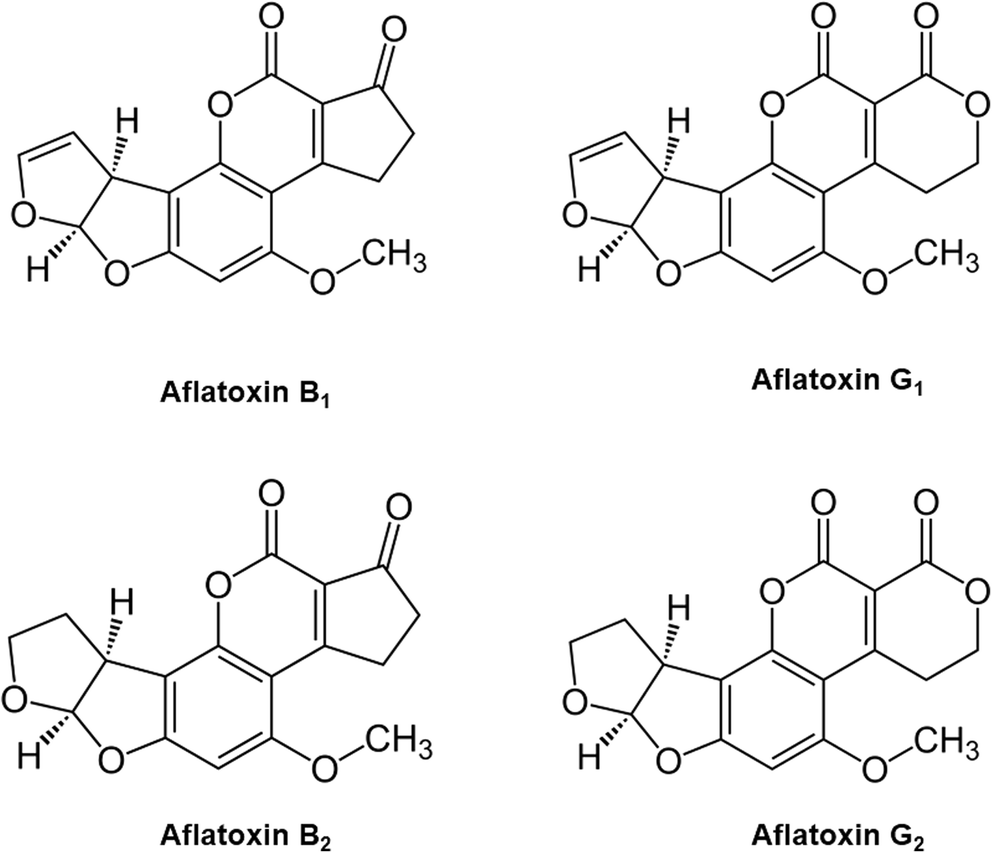
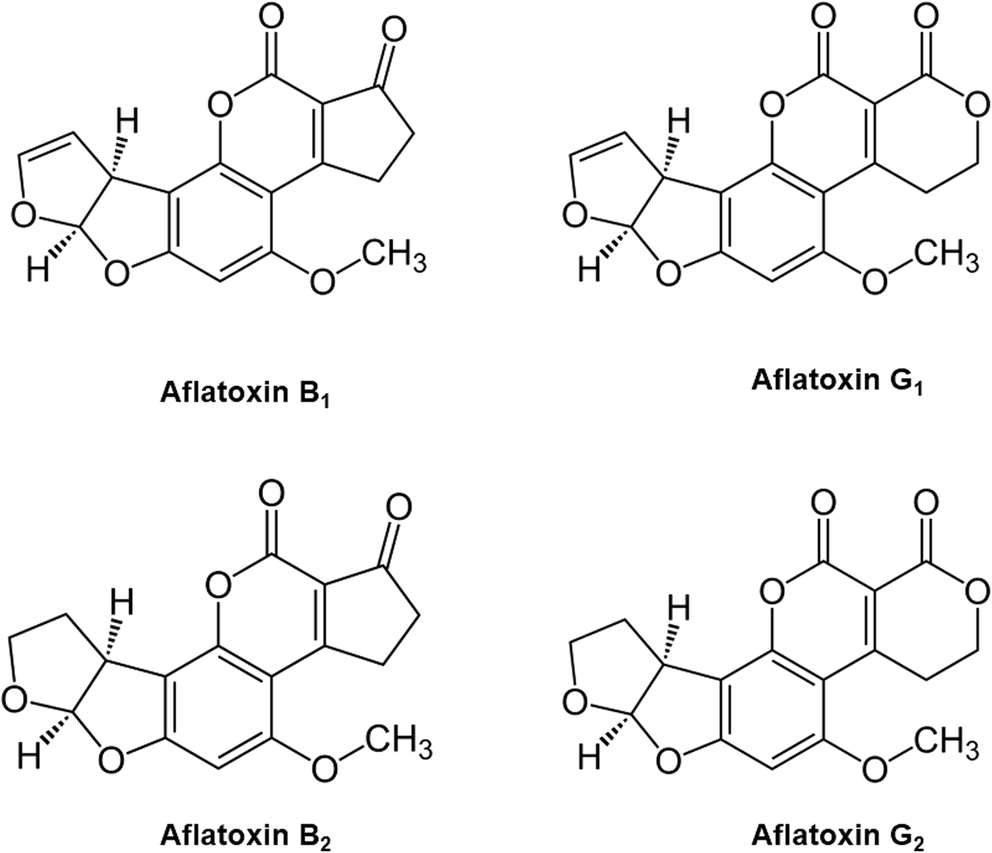
The bioavailability of Aflatoxins (AF) (Fig. 1) poses significant risks to human and animal health, so innovative strategies have been developed to diminish these risks by mitigating exposure through contaminated food and feed. Based on the extant scientific literature, some of these approaches are already in the stages of clinical intervention and translation. Studies describing materials that adsorb AF tightly onto internal and/or external surfaces interfering with toxin uptake and bioavailability have been reviewed recently (Kensler et al., Reference Kensler, Egner, Wang, Zhu, Zhang, Lu, Chen, Qian, Kuang, Jackson, Gangge, Jacobson, Munoz and Groopman2004; Miller et al., Reference Miller, Schaafsma, Bhatnagar, Bondy, Carbone, Harris, Harrison, Munkvold, Oswald, Pestka, Sharpe, Sumarah, Tittlemier and Zhou2014). Extensive studies with Ca-montmorillonite (NovaSil, or NS) and dietary chlorophyllin in humans and animals indicate that these interventions are approaching implementation, but still require further clinical evaluation in the field to delineate the effects of dose and time on efficacy and safety as well as acceptability (Phillips et al., Reference Phillips, Lemke and Grant2002; Wild & Turner, Reference Wild and Turner2002). Other AF-sequestering materials with limited evidence of efficacy will require preclinical trials in animals to confirm safety, followed by clinical intervention trials in humans prior to implementation. Before full-scale implementation, all of these products should be evaluated rigorously in vitro and in vivo, and should meet the following criteria: (1) favorable thermodynamic characteristics of aflatoxin sorption; (2) tolerable levels of potential hazardous contaminants; (3) safety and efficacy in multiple animal species; (4) safety and efficacy in long-term studies; and (5) negligible interactions with vitamins, iron, zinc, and other micronutrients. Based on these criteria, NS clay is one of the most thoroughly characterized sorbent materials and its development has led to the only aflatoxin/clay intervention trials in humans. The use of NS clay has demonstrated potential application for the mitigation of AF exposure in animals and humans, and this is the focus of the present review.
Chemical structures of the four naturally occurring aflatoxins: B1, B2, G1, and G2
Consumption of Clay
The concept of eating clay falls under the scientific term geophagy and is practiced by humans and animals alike. For centuries, people have used clays in food preparation, for the treatment of diarrhea, for toxin removal, in condiments or spices, or in food during famine (Callahan, Reference Callahan2003). Clay consumption is also practiced during pregnancy, especially in sub-Saharan African populations (Callahan, Reference Callahan2003). Aflatoxin binding to NS and the reduction of toxin exposure from contaminated diets was discovered in pioneering work by T.D. Phillips (Phillips et al., Reference Phillips, Kubena, Harvey, Taylor and Heidelbaugh1987, Reference Phillips, Kubena, Harvey, Taylor and Heidelbaugh1988), in which the efficacy of NS to decrease the negative health effects of AF exposure in multiple animal species was reported. The observation that populations at high risk of exposure to AFs commonly engage in geophagy led to the investigation of the toxin-binding properties of clays. Furthermore, isothermal analyses, thermodynamics, and molecular modeling techniques have been employed to characterize and validate NS for the ‘enterosorption’ (tight binding in the stomach and intestines) of AF.
Clay Minerals
Clay minerals are structurally and chemically diverse. Many are ineffective as sorbents and some could be hazardous, e.g. kaolinites containing dioxins. Research has demonstrated that NS clay has a notable preference and binding capacity for AFB1 (which is the most toxic and carcinogenic form of AF) due to the structural and chemical compositions of the NS and aflatoxin. Similar clays (including Na-montmorillonite and bentonite) can also bind aflatoxins, with variable affinities and capacities. The solid particles of soil are classified into three categories based on their sizes: sand (0.05–2 mm), silt (0.002–0.05 mm), and clay (<2 μm). The relative contribution of each type of particle to a particular soil determines its physical attributes (e.g. texture) and is used to name soil classes. The soil-mineral classes are divided based on the density of the dominant anionic group with silicates making up the largest class. Ca-montmorillonite falls under the phyllosilicate class. The functionality of this class of minerals is a result of the distinctive structural and chemical properties of the silicate layers containing both tetrahedral and octahedral sheets. The tetrahedral sheets are composed of SiO4 tetrahedra linked together, each sharing three O2− ions with adjacent tetrahedra. Together, this forms a plane of basal oxygens. The fourth O2− of each tetrahedron is referred to as the apical oxygen and is free to bind to other structural elements. The octahedral sheet consists of two planes of apical O2− (from the tetrahedral sheets) combined with OH− groups that form a hexagonal close-packing arrangement. In the case of montmorillonites (like NS), Al3+ fills two of every three octahedral sites to counter the negative charge of this structure and to produce a dioctahedral arrangement. With this structure, the apical oxygens from the tetrahedral sheet coordinate with Al3+ to link the octahedral and tetrahedral sheets in a 2:1 layer structure in which an octahedral sheet is bound on either side by a tetrahedral sheet. Frequently, cations in either the tetrahedral or octahedral sheets are missing or have been replaced through isomorphic substitution with another cation of lesser charge, resulting in a permanent negative charge. Thus, NS attracts Ca2+ (and other ions) into the region between the layers (i.e. the interlayer space) (Schulze, Reference Schulze1989).
Mechanisms
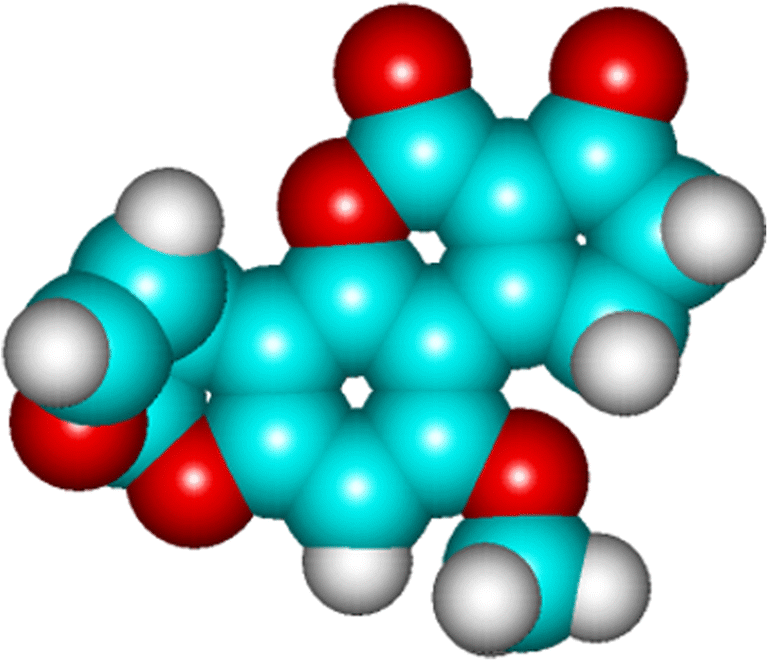
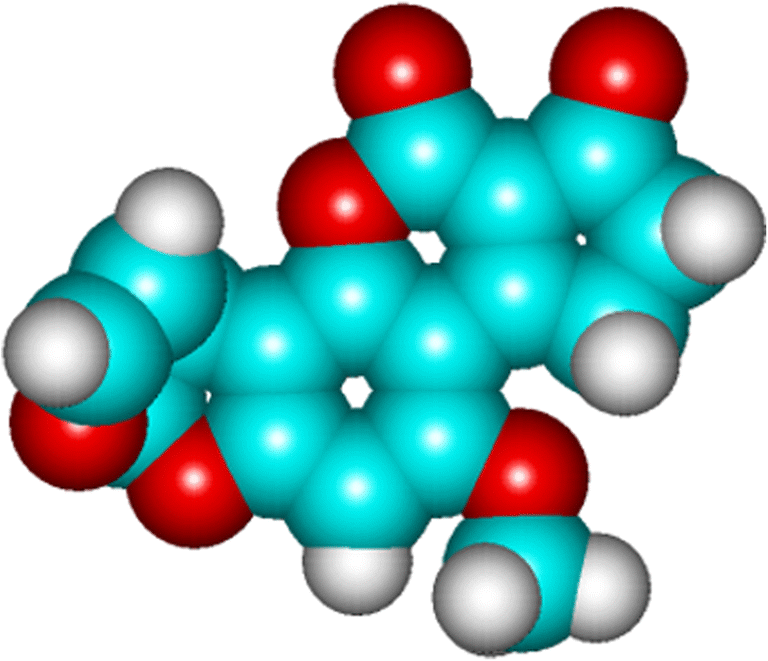
Due to the overall negative charge on NS clay layers, compounds with positive charge can be attracted to these areas. The most toxic and carcinogenic congener of the aflatoxins is AFB1. The dicarbonyl system and the planarity of the AFB1 ring (with the exception of the terminal furan) have been shown to be essential in the adsorption process (Fig. 2). Data suggest that AFB1/NS binding in the interlayer of the NS is probably the result of a chemisorptive mechanism with high enthalpy (Grant & Phillips, Reference Grant and Phillips1998; Phillips, Reference Phillips1999; Phillips et al., Reference Phillips, Lemke and Grant2002; Deng et al., Reference Deng, Velazquez, Billes and Dixon2010). Early work demonstrated the importance of spatial orientation of AFB1 on NS surfaces. In isothermal adsorption studies, data were fitted to multiple equations (Grant & Phillips, Reference Grant and Phillips1998; Kinniburgh, Reference Kinniburgh1986). The shapes of the plots were given classifications that describe the types of binding that occur (Giles et al., Reference Giles, Macewan, Nakhwa and Smith1960; Reference Giles, D'Silva and Easton1974a, Reference Giles, Smith and Huitson1974b). More specifically, the isotherm of AFB1 adsorption onto NS is categorized as an L2 plot that is reaching a plateau of adsorption, suggesting a saturable binding site on the clay. The maximum amount of AFB1 adsorbed onto NS was 0.336 mol/kg, which equates to 72.9% of the binding capacity (Q max) derived from fitting the Langmuir model to the data. The Langmuir model was also used to estimate the Q max at various temperatures and to calculate individual Kd values for the calculation of enthalpy of adsorption. These results confirmed the presence of multiple sites with different thermodynamic properties. The interlayer surfaces of NS were involved in a chemisorption mechanism because the enthalpy was −40 kJ/mol. The isothermal evidence combined with molecular modeling suggested that AF may react at multiple sites on NS clay particles with the interlayer region being the major site of chemisorption of AFB1 (Grant & Phillips, Reference Grant and Phillips1998). The importance of the interlayer space in the sorption of AF was further demonstrated by the decreased binding after heat-collapsing the clay and performing isothermal analyses. Results indicated that stereochemical differences in AF analogs affected significantly the tightness of binding; therefore, the adsorption of AFB1 onto NS may favor the furan alignment away from the surface. Based on the correlation between the magnitude of partial positive charge on carbons C11 and C1 of the AF dicarbonyl system and the strength of adsorption of planar analogs and derivatives of AFB1, an electron donor acceptor mechanism was postulated for the AFB1 sorption mechanism. Different humidity and exchange cations shifted adsorbed aflatoxin infrared bands, suggesting that aflatoxins were adsorbed through direct ion–dipole interactions and coordination between exchange cations and the carbonyl oxygens at low humidity and H-bonding at high humidity (Deng et al., Reference Deng, Velazquez, Billes and Dixon2010). Another hypothesis on binding of AF to clay is an electron donor-acceptor mechanism; others are possible. Recent characterizations have indicated similar binding capacity (Q max) and affinity (Kd) of a refined form of NS, marketed as Uniform Particle Size NovaSil (UPSN) (Marroquin-Cardona et al., Reference Marroquin-Cardona, Deng, Garcia-Mazcorro, Johnson, Mitchell, Tang, Robinson, Taylor, Wang and Phillips2010).
Spatial model of the aflatoxin B1 showing the furan rings connected to a coumarin ring with a cyclopentenone ring to the right. The outer furan ring is kinked in the cis configuration away from the planar structure
Animal Studies
Animal studies have confirmed that NS clay successfully binds AFB1 and protects animals against exposure to toxic levels. Importantly, the clay does not interfere with the utilization of essential vitamins and micronutrients in the diets. Initially, NS was sold as an anticaking additive for animal feeds and was identified as a mitigating agent due to its ‘GRAS’ (Generally Recognized as Safe) classification. Previous radiolabeled studies using [14C]AFB1 in chicks demonstrated markedly diminished radioactivity in the blood and hepatic tissues of animals dosed with either 0.1 or 0.5% NS w/w (weight of clay/weight of feed), suggesting that NS decreased AF bioavailability in vivo (Davidson et al., Reference Davidson, Babish, Delaney, Taylor and Phillips1987). Furthermore, the addition of 0.5% NS in the diet rescued broiler and leghorn chicks from the toxic effects of 7.5 ppm AF (Phillips et al., Reference Phillips, Kubena, Harvey, Taylor and Heidelbaugh1988, Reference Phillips, Afriyie-Gyawu, Wang, Williams, Huebner and Barug2006). Though the levels in these early USDA studies were exceedingly high, they suggested the possibility of NS being used during seasonal drought, disasters, and acute-outbreak emergencies (Phillips et al., Reference Phillips, Kubena, Harvey, Taylor and Heidelbaugh1988). Following these initial studies, the efficacy of NS for AF protection has been confirmed in multiple animal species including pregnant rodents (Mayura et al., Reference Mayura, Abdel-Wahhab, McKenzie, Sarr, Edwards, Naguib and Phillips1998), chickens (Kubena et al., Reference Kubena, Harvey, Huff, Corrier and Phillips1990a, Reference Kubena, Harvey, Phillips, Corrier and Huff1990b; Phillips et al., Reference Phillips, Kubena, Harvey, Taylor and Heidelbaugh1988; Pimpukdee et al., Reference Pimpukdee, Kubena, Bailey, Huebner, Afriyie-Gyawu and Phillips2004), turkeys (Kubena et al., Reference Kubena, Huff, Harvey, Yersin, Elissalde, Witzel, Giroir, Phillips and Petersen1991), swine (Lindemann et al., Reference Lindemann, Blodgett, Kornegay and Schurig1993), and lambs (Harvey et al., Reference Harvey, Kubena, Phillips, Corrier, Elissalde and Huff1991a, Reference Harvey, Phillips, Ellis, Kubena, Huff and Petersen1991b). These studies show that NS is a preferential enterosorbent for AF when included in the diet from 0.25 to 0.5% (w/w) in animals (Phillips et al., Reference Phillips, Lemke and Grant2002). More recently, a study in which Sprague-Dawley rats ingested NS clay at dietary concentrations as high as 2% throughout pregnancy showed neither maternal nor fetal toxicity, and showed no significant trace-metal bioavailability in a variety of tissues (Wiles et al., Reference Wiles, Huebner, Afriyie-Gyawu, Taylor, Bratton and Phillips2004). A large volume of scientific literature indicates that dietary inclusion of NS clay is effective for reducing AF exposure. Also, NS rescued chicks with diminished levels of vitamin A after AFB1 exposure (Pimpukdee et al., Reference Pimpukdee, Kubena, Bailey, Huebner, Afriyie-Gyawu and Phillips2004), and reduced the effects of AFB1 on serum concentrations of cholesterol, albumin, triglycerides, calcium, glucose, and total protein (Abo-Norag et al., Reference Abo-Norag, Edrington, Kubena, Harvey and Phillips1995; Kubena et al., Reference Kubena, Harvey, Huff, Corrier and Phillips1990a, Reference Kubena, Harvey, Phillips, Corrier and Huff1990b, Reference Kubena, Harvey, Huff, Elissalde, Yersin, Phillips and Rottinghaus1993). No observable adverse effects were reported following ingestion of NS clay in any of these short-term animal studies (Phillips et al., Reference Phillips, Lemke and Grant2002). Importantly, the minimal effective dose (MED) that was determined to significantly reduce aflatoxicosis was 0.25% w/w (Phillips et al., Reference Phillips, Clement, Kubena and Harvey1990, Reference Phillips, Sarr and Grant1995). In the early 1990s, urinary and milk AFM1 biomarkers were employed in safety and efficacy studies in cows. AFM1 is a hydroxylated metabolite of AFB1 that can be produced in milk and urine, facilitating its use as a short-term biomarker of aflatoxin exposure. These studies demonstrated reduced bioavailability of AFM1 when aflatoxin was added to the ration for cows. Inclusion of 1% NS clay reduced excretion of AFM1 in the milk of dairy cows and goats by 44% and 51.9%, respectively (Harvey et al., Reference Harvey, Kubena, Phillips, Corrier, Elissalde and Huff1991a, Reference Harvey, Phillips, Ellis, Kubena, Huff and Petersen1991b; Maki et al., Reference Maki, Monteiro, Elmore, Tao, Bernard, Harvey, Romoser and Phillips2016a, Reference Maki, Thomas, Elmore, Romoser, Harvey, Ramirez-Ramirez and Phillips2016b, Reference Maki, Allen, Wang, Ward, Rude, Bailey, Harvey and Phillips2017; Smith et al., Reference Smith, Phillips, Ellis, Harvey, Kubena, Thompson and Newton1994). Urinary AFM1 measurements revealed reductions of 48.4% in dogs (Bingham et al., Reference Bingham, Huebner, Phillips and Bauer2004) and of >90% in rats (Sarr et al., Reference Sarr, Mayura, Kubena, Harvey and Phillips1995).
Long-Term Exposure in Rodents (Pre-Clinical Trial)
To determine the potential toxicity of long-term dietary exposure to NS, 5–6-week-old male and female Sprague Dawley rats were fed rations containing 0, 0.25, 0.5, 1.0, or 2.0% (w/w) levels of refined NS for 28 weeks (Afriyie-Gyawu et al., Reference Afriyie-Gyawu, Mackie, Dash, Wiles, Taylor, Huebner, Tang, Guan, Wang and Phillips2005). Uniform particle size NS (UPSN) was produced by Texas EnteroSorbents, Inc., to increase the overall uniformity of the product and to make the product more palatable and reproducible. The parameters measured during the study included body-weight gain, feed-conversion efficiency, relative organ weights, gross and histological appearance of major organs, hematological and serum biochemistry parameters, and essential nutrient levels, including vitamins A and E, and Zn. Very few statistically significant differences were noted between rats consuming treated vs. untreated diets. Overall, the study concluded that ingestion of up to 2% NS was safe in a sub-chronic protocol. Notably, serum and hepatic vitamins A and E levels were slightly increased in the 1% NS-females compared to untreated female rats. In addition, dioxin and furan levels in NS were measured and showed negligible levels below the PTDI (Provisional Tolerable Daily Intake). In another study in rodents dosed for 3 months, no overall toxicity was observed for UPSN (Marroquin-Cardona et al., Reference Marroquin-Cardona, Deng, Garcia-Mazcorro, Johnson, Mitchell, Tang, Robinson, Taylor, Wang and Phillips2010). No changes were observed for most of the blood and serum biochemical parameters; increased serum Na, Ca, vitamin E, and Na/K ratio and the reduction of serum K and Zn were reported in males with all parameters within the normal clinical ranges for rats and no trends of dose dependency. The authors have concluded that the ingestion of low levels of UPSN does not present a health risk.
Initial NS Dosimetry Study in Human Participants
As a result of the extensive safety data in animal models, it was hypothesized that NS may be safe and beneficial to humans. A randomized and double-blinded phase I clinical trial was conducted to evaluate the safety and tolerance of NS and to establish dosimetry protocols for long-term efficacy studies (Wang et al., Reference Wang, Luo, Billam, Wang, Guan, Tang, Goldston, Afriyie-Gyawu, Lovett, Griswold, Brattin, Taylor, Huebner and Phillips2005). The doses used for this study were extrapolated from dosimetry data in animal models (Phillips, Reference Phillips1999; Phillips et al., Reference Phillips, Lemke and Grant2002). The high dose (3 g/day) was selected based on findings that no toxic effects were demonstrated in animals dosed at levels approximately ten times greater (Afriyie-Gyawu et al., Reference Afriyie-Gyawu, Mackie, Dash, Wiles, Taylor, Huebner, Tang, Guan, Wang and Phillips2005). The low dose (1.5 g/day) was equivalent to the minimal effective concentration (minimal effective dose; MED) that reduced the effects of AF in animals. The NS clay used was tested for levels of environmental contaminants, including dioxins and heavy metals, in order to comply with federal (US) and international standards. The NS capsules were manufactured in the same color and size under sterile conditions using FDA-regulated (Food & Drug Administration, USA) Good Manufacturing Practices (Texas EnteroSorbents, Inc., Bastrop, Texas, USA). Following the treatment of 50 healthy adult volunteers for 2 weeks, no significant differences in, or adverse effects related to, hematology, liver and kidney function, electrolytes, vitamins A and E, and minerals were observed between the two randomized dosage groups. The only symptoms reported were gastrointestinal in nature and included abdominal pain (6%, 3/50), bloating (4%, 2/50), constipation (2%, 1/50), diarrhea (2%, 1/50), and flatulence (8%, 4/50). The results from this study demonstrated the relative safety of NS clay in human subjects and served as a basis for long-term human trials in populations at high risk of aflatoxicosis.
Phase II Study in Ghana (Delivery of Clay in Capsules)
The NS was then investigated for safety, tolerance, and aflatoxin-sorption efficacy in a 3-month double-blind and placebo-controlled, phase IIa clinical trial in the Ejura-Sekyedumase district of the Ashanti region of Ghana (Afriyie-Gyawu et al., Reference Afriyie-Gyawu, Wang, Ankrah, Xu, Johnson, Tang, Guan, Huebner, Jolly, Ellis, Taylor, Brattin, Ofori-Adjei, Williams, Wang and Phillips2008; Wang et al., Reference Wang, Afriyie-Gyawu, Tang, Johnson, Xu, Tang, Huebner, Ankrah, Ofori-Adjei, Ellis, Jolly, Williams, Wang and Phillips2008). This region was chosen as the intervention study site based on a report that AFB1-alb adducts and AFM1 metabolites were detected in 100% of 140 sera samples and in 91.2% of 91 urine samples collected from study participants in the area (Jolly et al., Reference Jolly, Jiang, Ellis, Awuah, Nnedu, Phillips, Wang, Afriyie-Gyawu, Tang, Person, Williams and Jolly2006), consistent with reports of 75–100% incidence of exposure in people of East and West Africa (Wild & Turner, Reference Wild and Turner2002; Wild et al., Reference Wild, Hudson, Sabbioni, Chapot, Hall, Wogan, Whittle, Montesano and Groopman1992). The NS dosimetry protocol was the same as reported by Wang et al. (Reference Wang, Luo, Billam, Wang, Guan, Tang, Goldston, Afriyie-Gyawu, Lovett, Griswold, Brattin, Taylor, Huebner and Phillips2005). Individuals who qualified as study subjects met the following criteria: healthy status based on physical examination results, age 18–58 years, intake of corn and/or groundnut-based foods at least four times per week, blood AFB1-alb adduct levels >0.5 pmol AFB1 per mg of alb adducts (Fig. 3), no history of chronic disease(s), no use of prescribed medications for chronic or acute illness, non-pregnant and/or non-breastfeeding females, normal ranges of hematological parameters, liver and renal function indicators (blood and urine parameters), and they submitted a signed consent form. The subjects who met the recruitment criteria were divided randomly into three study groups with 60 per group: high-dose (HD), low-dose (LD), and placebo-control (PL) based on serum AFB1-alb adduct levels to avoid selection bias. Importantly, this study employed the use of well-trained study monitors who delivered the capsules daily, witnessed ingestions, and recorded any symptoms that subjects might have experienced; NS was delivered before meals via capsule. Urine and blood samples from each participant were collected at the baseline and after 1, 2, and 3 months of treatment followed by a treatment follow-up sample at month 4. Overall, 92% of participants completed the study and compliance was >97%. Similar to the safety study, adverse events were minimal and no significant differences were shown in hematology, liver and kidney function, or electrolytes in the three treatment groups, nor did treatment interfere with the levels of serum vitamins A and E, Fe, or Zn (Afriyie-Gyawu et al., Reference Afriyie-Gyawu, Wang, Ankrah, Xu, Johnson, Tang, Guan, Huebner, Jolly, Ellis, Taylor, Brattin, Ofori-Adjei, Williams, Wang and Phillips2008). Importantly, levels of AFB1-alb adduct were decreased significantly (>40% reduction) in the HD and LD groups by month 3. Similarly, levels of AFM1 in urine samples were decreased by up to 58% in the median level of AFM1 in samples collected at 3 months in the HD group as compared to the PL group. The study demonstrated that NS clay capsules can be used effectively to reduce the bioavailability of dietary AF, thus confirming earlier work in animal models. Samples from the study were later analyzed to evaluate the ability of NS clay to reduce urinary FB1 (Fumonisin B1). 56% of the samples had detectable levels of FB1 and > 90% of the median urinary FB1 was decreased significantly in the high-dose NS group (2% w/w) (Robinson et al., Reference Robinson, Johnson, Strey, Taylor, Marroquin-Cardona, Mitchell, Afriyie-Gyawu, Ankrah, Williams, Wang, Jolly, Nachman and Phillips2012). This same study demonstrated a significant decrease in FB1 after treatment with 2% clay by 20% at 24 h post-gavage and 50% at 48 h post-gavage.
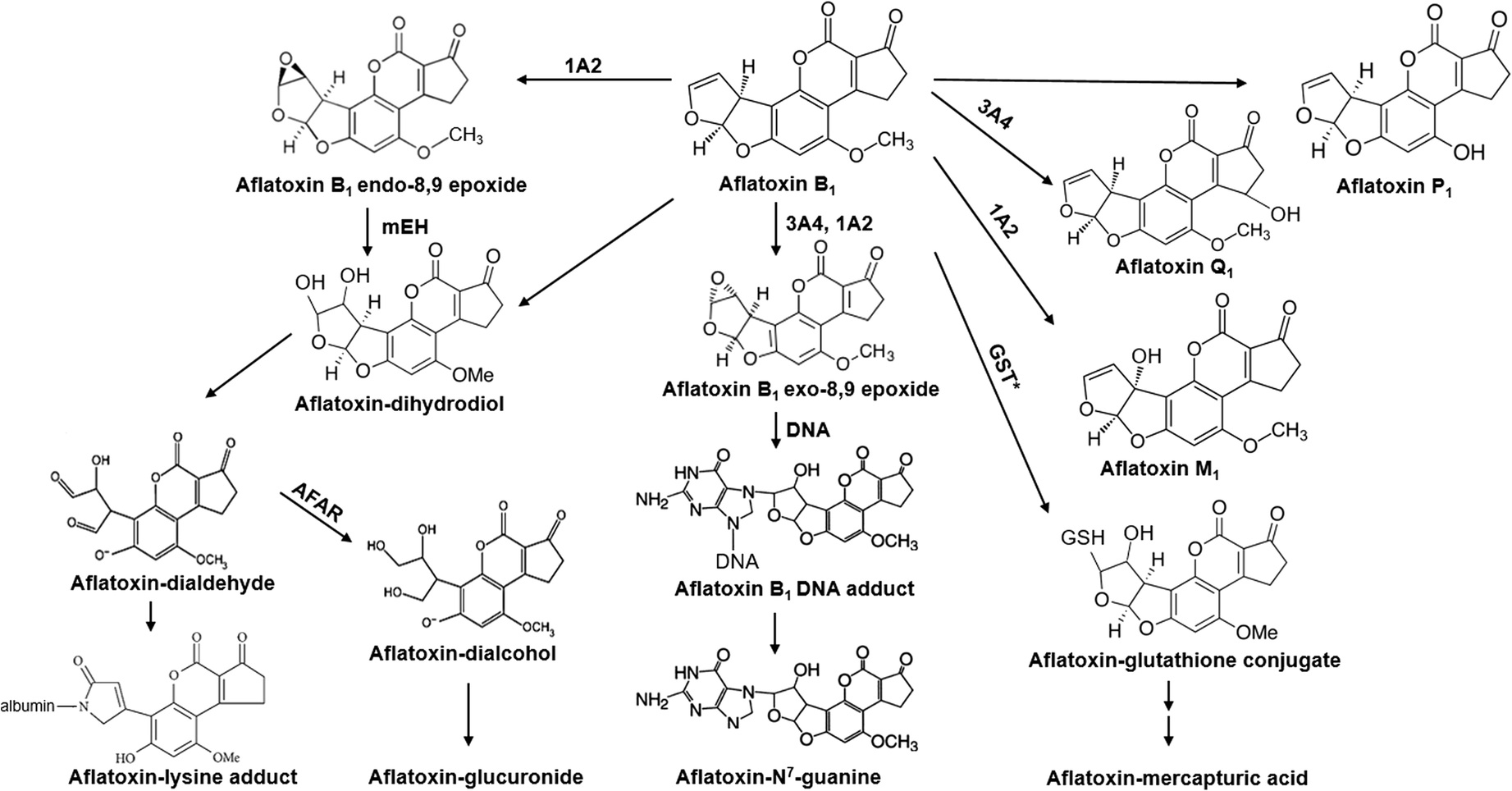
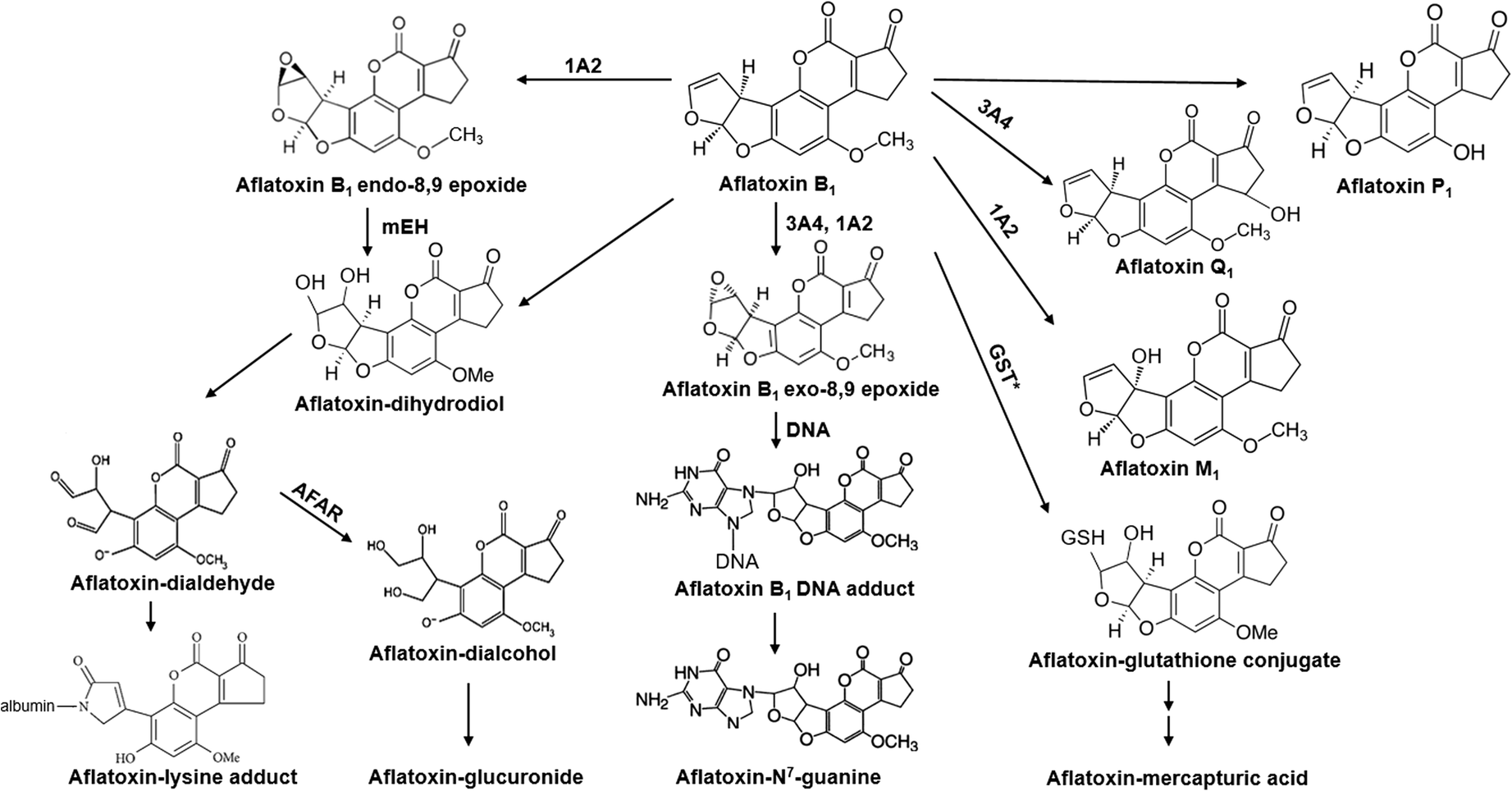
Metabolism of aflatoxin B1 by phase I and phase II enzymes. Phase I enzymes include CYP3A4 and 1A2 (after Wild & Turner, Reference Wild and Turner2002)
Crossover Trials in Ghana (Clay Added to Food)
Implementation of refined NS as a food additive was investigated in a 2010 human crossover trial in the same region of Ghana. In that study, either UPSN or placebo was included in the prepared foods at 0.25% (w/w) for 2 weeks (Mitchell et al., Reference Mitchell, Kumi, Johnson, Dotse, Marroquin-Cardona, Wang, Jolly, Ankrah and Phillips2013a, Reference Mitchell, Xue, Lin, Marroquin-Cardona, Brown, Elmore, Tang, Romoser, Gelderblom, Wang and Phillips2013b). Participants exhibited significantly decreased levels of urinary AFM1 compared to placebo groups (55% reduction) and reported no adverse reactions. This study indicated that UPSN can reduce AF exposure safely and effectively when included in food. Utilization of the clay as a food additive could allow for reduced cost of production, decreased impact on subjects’ daily lives (i.e. eliminate the routine of taking pills), and improved sustainability.
Children’s Clinical Trial (Clay Added to Food)
The results of the phase I and II clinical trials, in addition to the extensive safety testing in animals, demonstrate that ingestion of NS up to 3 g/day in adults is safe for up to 3 months. Based on these detailed studies, ingestion of UPSN at levels efficacious for reducing AFB1 biomarkers was determined to be safe in children. A phase I clinical intervention in children aged 3–9 was completed in the Ejura-Sykedumase district of Ghana. The study followed a double-blind, placebo-controlled trial design for 2 weeks (Mitchell et al., Reference Mitchell, Kumi, Aleser, Elmore, Rychlik, Zychowski, Romoser, Phillips and Ankrah2014). The three treatment arms consisted of: a placebo group, which received 0.75 g of calcium carbonate twice daily; a low-dose group which received 0.375 g of UPSN twice daily; and a high-dose group, which received 0.75 g of UPSN twice daily. (The high dose was twice that of the low dose.) The results indicated a significant reduction of AFM1 biomarkers, with serum biochemical and hematological parameters within the normal range for all groups. The study demonstrated, for the first time, that UPSN is a safe and effective product in children.
Phase II Study in San Antonio, Texas (Delivery of Clay by Capsules)
South Texas currently has the highest incidence of hepatocellular carcinoma (HCC) in the United States, a disease that disproportionately affects Latino populations in the region. AFB1 has been detected in a variety of foods in the United States, including corn and corn products. Importantly, it is a dietary risk factor contributing to a greater incidence of HCC in populations which consume AFB1-contaminated diets frequently. In a randomized double-blind placebo controlled trial, the effects of a 3-month administration of ACCS100 (purified UPSN) were evaluated. Serum AFB1–lysine adduct (AFB-Lys) level and serum biochemistry were tested in 234 healthy men and women residing in Bexar and Medina counties, Texas. Participants recruited from 2012 to 2014 received either a placebo, 1.5 g, or 3 g of ACCS100 each day for 3 months, and no treatment during the fourth month. Adverse event rates were similar across treatment groups and no significant differences were observed for serum biochemistry or hematology parameters. Differences in levels of AFB-Lys at 1, 3, and 4 months were compared between placebo and active treatment groups. Although serum AFB-Lys levels were decreased by month 3 for both treatment groups, the low dose was the only treatment with significant reduction (p = 0.0005). Possible reasons for this finding may include: (1) overall lower AF exposures in the US, making detection of substantial reductions difficult over the course of the study; (2) limitations in recruitment methods for large communities; (3) uneven distribution of participants at randomization and completion of the study; and (4) sub-optimal subject adherence. In conclusion, the observed effect in the low-dose treatment group suggests that the use of ACCS100 may be a viable strategy to reduce dietary AFB1 bioavailability during aflatoxin outbreaks and potentially in populations chronically exposed to this carcinogen.
Crossover Study in Kenya (Clay Added to Water)
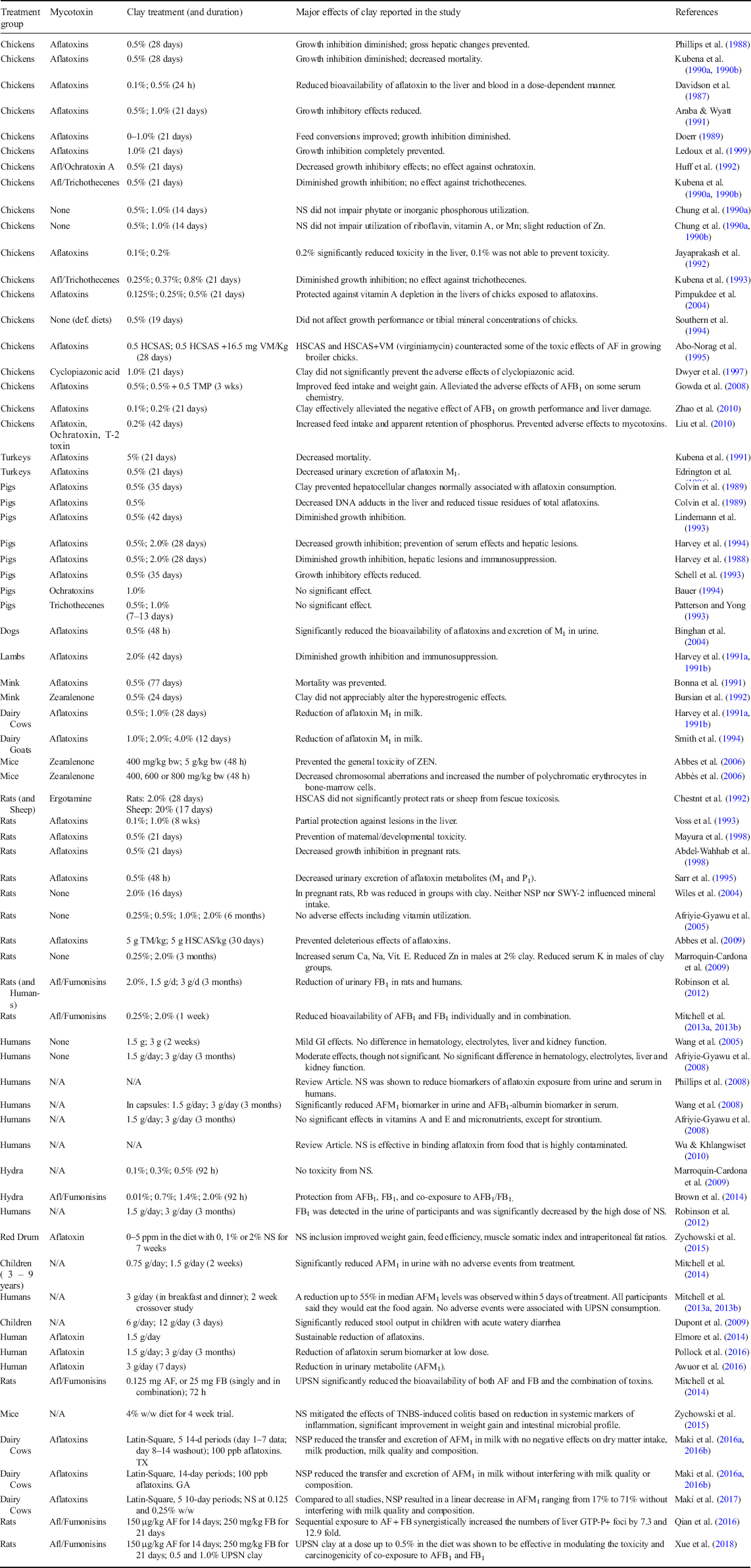
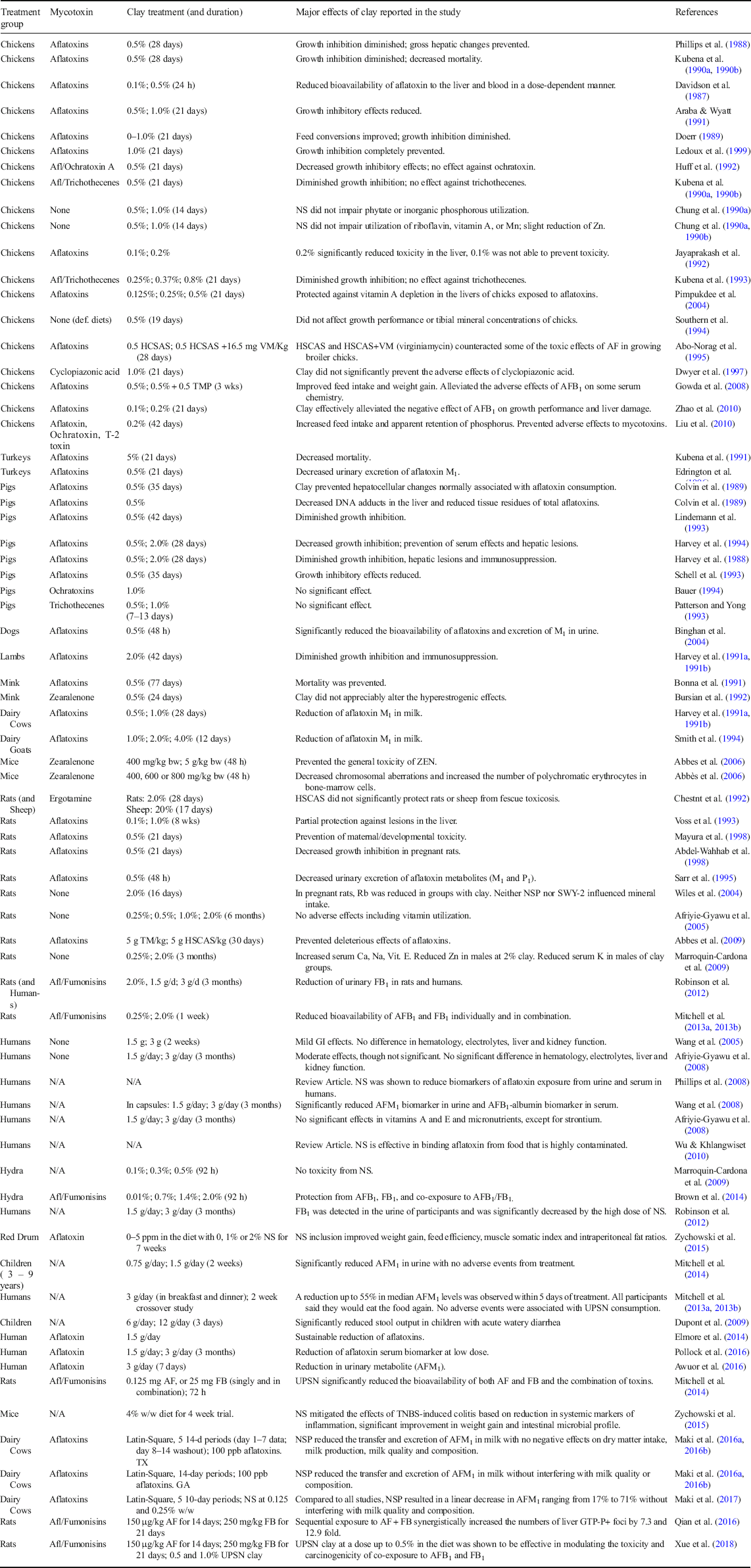
Aflatoxicosis fatality rates have been documented to be as high as 40% in Kenya. The inclusion in the diet of ACCS100 reduced aflatoxin bioavailability, thus potentially decreasing the risk of aflatoxicosis. That study investigated the efficacy, acceptability, and palatability of ACCS100 in a population in Kenya with recurring aflatoxicosis outbreaks. Healthy adult participants were enrolled in a double-blinded, crossover clinical trial in 2014. Following informed consent, participants (n = 50) were randomized to receive either ACCS100 (3 g/day) or placebo (3 g/day) for 7 days. Treatments were switched following a 5-day washout period. Urine samples were collected on a daily basis and assessed for urinary aflatoxin M1 (AFM1). Blood samples were collected at the beginning and end of the trial and assessed for aflatoxin B1-lysine adducts from serum albumin (AFB1-lys). AFM1 concentrations in urine were reduced significantly while taking ACCS100 compared with the calcium carbonate placebo (β = 0.49, 95% confidence limit = 0.32–0.75). The 20-day interval included both the placebo and ACCS100 treatments as well as a washout period. No statistically significant differences were shown in reported taste, aftertaste, appearance, color, or texture by treatment. No statistically significant differences were shown in self-reported adverse events by treatment. Most participants were reported to be willing to take ACCS100 (98%) and to give it to their children (98%). ACCS100 was effective, acceptable, and palatable. More work is needed to test ACCS100 among vulnerable populations and to determine if it remains effective at the levels of aflatoxin exposure that induce aflatoxicosis. A summary of animal and human studies with NS and similar clays is presented in Table 1.
Animal and human studies with NS and similar clays: 1988–2018
Summary
Based on multiple animal and human studies, NovaSil and refined clays have been confirmed to be safe for animal and human consumption and to be effective at aflatoxin adsorption, with significant binding capacity, affinity, and enthalpy. Recent spinoffs from these studies have also resulted in the development of field-practical and cost-effective sorbents for the mitigation of environmental chemicals and microbes. People and animals can be exposed unintentionally to mixtures of environmental chemicals and microbes following natural and man-made disasters through contaminated water and food. The Phillips Laboratory has worked at amending and functionalizing NS clays with natural products to change the clay surfaces. In addition, a new sorbent has been developed from parent NS using patentable techniques. Based on in vitro isothermal analyses along with in vivo assays, these newly developed sorbents have significantly increased binding capacity, affinity, and enthalpy for environmental chemicals (e.g. pentachlorophenol, benzo[a]pyrene, lindane, diazinon, aldicarb, and linuron) and microbes (E. coli) compared to parent clays. Besides increased adsorption of individual toxins, these sorbents also have shown protection against complex chemical mixtures in contaminated water samples collected after Hurricane Harvey in Houston (Texas, USA), for example. The extensive work with NovaSil and processed and amended clays by Phillips will facilitate the global translation of clay-based therapies for aflatoxins (and other mycotoxins) and decrease toxin exposures to humans and animals from contaminated water and food.
Acknowledgments
The present work was supported by funding through the National Institute of Health (NIH) 1RO1MD005819-01, and the Superfund Hazardous Substance Research and Training Program (NIEHS) P42 ES0277704.