Introduction
Weaning is a critical stage of pig production and is associated with profound changes in the structure and function of the gastrointestinal tract (Pluske et al., Reference Pluske, Hampson and Williams1997). Furthermore, weaning introduces a number of stress factors that may negatively affect the immune function and intestinal microflora of pigs (Barnett et al., Reference Barnett, Kornegay, Risley, Lindemann and Schurig1989; Montagne et al., Reference Montagne, Cavaney, Hampson, Lalles and Pluske2004). These disturbances increase the risk of enteric disorders, particularly post-weaning colibacillosis (PWC), which is caused primarily by the proliferation of enterotoxigenic Escherichia coli (ETEC).
Traditionally the risk of enteric disorders in newly weaned pigs has been mitigated through the use of in-feed antimicrobial growth promoters (AGP). However, their use has been recently withdrawn within the EU, at least partly in recognition of the growing problem of antibiotic resistance of pathogens such as ETEC (Barton, Reference Barton1999). Consequently, the weaned pig will be at greater risk from PWC and there is a growing need to find alternative, non-pharmaceutical, strategies to combat such infections. Manipulation of dietary protein supply, in order to decrease protein availability to ETEC in the distal small intestine, and the consequent production of harmful fermentation by-products, such as amines, is one way in which this could be achieved (Prohászka and Baron, Reference Prohászka and Baron1980; Nyachoti et al., Reference Nyachoti, Omogbenigun, Rademacher and Blank2006; Wellock et al., Reference Wellock, Fortomaris, Houdijk and Kyriazakis2006). Increasing weaning age may also decrease sensitivity to PWC, due to the establishment of the regular intake of solid feed, resulting in a more mature and stabilised gut morphology and physiology reducing the colonisation of ETEC (Nabuurs et al., Reference Nabuurs, Hoogendoorn and van Zijderveld-van Bemmel1996; Pluske et al., Reference Pluske, Hampson and Williams1997).
The objective of the current experiment was to investigate the effects of post-weaning dietary protein supply and weaning age on ETEC shedding and enteric health of newly weaned pigs exposed to an experimental ETEC challenge. An analysis of the data regarding the effect of experimental treatment on post-weaning performance is reported separately (Wellock et al., 2008). It was hypothesised that reducing protein availability in the distal small intestine, through reducing dietary protein content and/or substitution of existing ingredients, mainly soya, with the more digestible dried skimmed milk powder (DSMP), and increasing weaning age would reduce ETEC proliferation and improve the enteric health of the newly weaned pig.
Material and methods
Animals and housing
A total of 104 pigs (Large white × Landrace) of both sexes weaned at either 4 (28.2 ± 1.20 days) or 6 (40.8 ± 1.31 days) weeks of age (mean ± s.d.) and weighing 8.0 (±0.98) and 13.0 (±1.94) kg, respectively, were used in the experiment. Pigs were derived from 10 litters, with five litters weaned at 4 weeks and five litters weaned at 6 weeks of age. At weaning (day 0), pigs were removed from the sow and individually housed in one of six rooms, each containing eight pens per room. The pens (2 × 1 m) had a 0.2 m deep transparent plastic partitioning along their length to enable visual contact between adjacent pens. Each pen was bedded with sawdust and equipped with a feeder and a nipple drinker. The environmental temperature was maintained at 25.6 ± 1.20 and 22.6 ± 0.60°C for the 4- and 6-week-weaned pigs, respectively, for the first 3 days after weaning and then decreased by 2°C/week for the remainder of the experiment. Fresh feed and water was available ad libitum throughout the experiment.
Diets and feeding
All pigs had access to a standard creep (16.0 MJ DE/kg and 230 g crude protein (CP)/kg) feed free from AGP during the last 14 days of suckling to allow animals to have experience of solid feed before weaning. At weaning, pigs were given ad libitum access to one of four experimental diets for 2 weeks: a high protein (H, 230 g/kg CP) and a low protein (L, 130 g/kg CP) both with DSMP (H-DSMP and L-DSMP, respectively); a high protein where DSMP was replaced with soyabean meal (H-SOYA) and H-DSMP with ZnO (3100 mg/kg), Cu (170 mg/kg) and avilamycin (Maxus G200, Elanco Animal Health Ltd, UK; 40 mg/kg) (H-AGP). For further details of the experimental diets, see Wellock et al. (2008). On day 14 post-weaning, a standard grower ration was fed to all animals until 10 weeks of age.
Experimental design
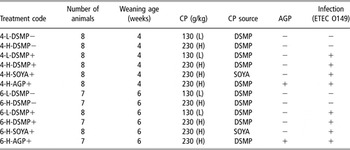
The experiment was conducted over two rounds with one weaning age represented in each round. It consisted of a complete 2 × 2 × 2 factorial combination of weaning age (4 v. 6 weeks), dietary protein content (H v. L) and experimental ETEC challenge (infected, + v. sham, −). An additional four treatments were added to allow the effect of protein source (DSMP v. SOYA) and AGP inclusion (yes v. no) to be investigated in challenged pigs of both weaning ages. This resulted in six treatments per weaning age. The experimental design and numbers of pigs in each of the 12 treatment groups are shown in Table 1. Pigs were assigned to the six treatment groups per weaning age, taking into account body weight (BW) and sex, as far as possible, with littermates equally divided across treatments. Treatments were assigned to pens with each of the six treatments per weaning age being represented in each of the six experimental rooms. It was ensured that all uninfected animals were housed in pens adjacent to other uninfected animals in order to minimise the risk of contamination between pens.
The experimental design used and numbers of pigs per treatment

DSMP = dried skimmed milk powder; ETEC = enterotoxigenic Escherichia coli; SOYA = soybean meal; AGP = antimicrobial growth promoters; ZnO = 3100 mg/kg, CuSO4 = 170 mg/kg and avilamycin (Maxus G200) = 40 mg/kg.
Four pigs per treatment on day 6 and an additional six pigs per weaning age on day 0 were euthanased to assess enteric health. Performance of the remaining animals was monitored until 10 weeks of age (see Wellock et al., 2008). The Animal Experiments Committee of the Scottish Agricultural College approved the protocol used in the study (ED AE 20/2003) for consistency with UK Home Office regulations (PPL 60/3205).
Experimental infection
The pigs were infected with 109 colony-forming units (cfu) of ETEC (E. coli O149 239/03) suspended in 10 ml phosphate buffer solution (PBS) on day 3 post weaning to induce sub-clinical PWC, according to the methodology of Houdijk et al. (Reference Houdijk, Anderson and Kyriazakis2005). The infective dose was given on this day in order to ensure that pigs were eating a sufficient quantity of solid feed before being exposed to ETEC. The ETEC used were derived from clinical cases of PWC (Veterinary Laboratories Agency, Surrey, UK) and had been characterised as having the required virulence factors to induce PWC (Adhesion factors K91, K88 (F4)). The infection was administered per os, using a stomach tube with an additional 10 ml PBS for rinsing. PBS was used in order to increase bacterial survival in the stomach and to aid safe transfer of the inoculum into the small intestine. Non-infected animals were given 20 ml of PBS as a sham infection.
Sampling collection and measurements
Health status and faecal sampling
Individual faecal scored (FS), cleanliness scores (CS) and health scores (HS) were recorded each morning throughout the experiment, and every 2 h for a period of 24 h post infection using a subjective four-point scale (1 to 4) (see Wellock et al., Reference Wellock, Fortomaris, Houdijk and Kyriazakis2006 for further details). Briefly, an increasing score represents increasing fluidity of faeces, increasing faecal contamination and deteriorating health for FS, CS and HS, respectively. Trained individuals with no prior knowledge of the treatment allocation recorded all scores. Fresh faecal samples from all animals were collected directly from the rectum on days 0, 3 (immediately before infection), 4, 6, 9 and 14 to assess ETEC shedding.
Post mortem sampling procedures and measurements
The six pigs per weaning age taken directly from the sow (day 0) and four pigs per treatment on day 6 were euthanased by intracardiac injection of Euthatal (Merial Animal Health Ltd, Harlow, Essex, UK; 0.7 ml/kg) and exsanguinated. The abdomen was then opened from the sternum to the pubis, and the gastrointestinal tract removed. Upon removal the gastrointestinal tract was divided into five sections: stomach (ST), small intestine (SI), caecum (CM), proximal colon (PC) and distal colon (DC). Pieces of intestinal tissue, approximately 5 cm in length, were immediately taken at three different locations of the SI: a site located about 5 cm after the gastric pylorus (proximal small intestine), at the mid point between the gastric pylorus and ileocaecal junction (mid small intestine) and at a site 5 cm proximal to the ileocaecal junction (distal small intestine). These samples were tied at either end with cotton, filled by injecting formalin and conserved in formalin until analysis of villous height and crypt depth (see below). The pH of the digesta from the ileum (IL), CM, PC and DC was measured upon collection by inserting the electrode of a portable pH meter (Testo 230; Testo Ltd, Alton, UK) into the collected sample. Digesta samples from the IL and PC were assessed for the lactobacilli to coliform ratio (L : C) and ETEC concentration (IL only).
Microbiology
Inoculum
A bead of the E. coli O149 239/03 strain was taken from storage at −80°C, reconstituted onto a sheep blood agar plate (E&O Laboratories Ltd, UK) and incubated overnight at 37°C. A number of formed colonies were removed from the plate, seeded into nutrient broth (Oxoid Ltd, Cambridge, UK) and incubated at 37°C for 24 h while being shaken at 200 rpm. Bacteria were harvested by centrifugation, twice washed with PBS and re-suspended at a concentration of 1 × 10⁸ cfu/ml. The number of cfu’s per ml was checked before being used for oral inoculation of the pigs through standard enumeration techniques.
Detection and enumeration of ETEC O149
Approximately 1 g of each sample (IL and faecal) was serially diluted to 10−9 in sterile PBS, and 100 μl aliquots were plated on sheep blood agar (E&O Laboratories Ltd, Stirlingshire, UK). The number of ETEC colonies was counted after 24 h incubation (39°C) under aerobic conditions. Randomly picked colonies were identified and confirmed as the infective strain by slide agglutination with a specific antiserum (K91 and K88; Mast Group Ltd, Bootle, UK).
Lactobacillus and coliform counts
Approximately 1 g of each sample (IL and PC) was serially diluted to 10−8 in maximum recovery diluent, and 100 μl aliqouts were plated in MacConkey agar (E&O Laboratories Ltd, UK) for coliforms and in MRS agar (E&O Laboratories Ltd, UK) for lactobacilli. Coliform colonies were counted after 24 h incubation (39°C) under aerobic conditions and lactobacilli colonies were counted after 48 h incubation (39°C) under anaerobic conditions (Reid and Hillman, Reference Reid and Hillman1999).
Villous height and crypt depth measurement
For histological analysis, tissue samples of the proximal, mid and distal small intestine were cut in order to form a ring-shaped length of tissue. These sections were then dehydrated before being embedded in paraffin wax. Sections were cut (4 μm) and stained with haematoxylin and eosin. From the stained sections, villous height and crypt depths were determined manually. One slide per piglet was used for each of the sites and the average value taken for a minimum of four villi and crypts per slide. The villous/crypt ratio was calculated as the villous height divided by the crypt depth.
Calculations and statistical analysis
The data were analysed as three separate factorial designs; a 2 × 2 × 2 analysis of weaning age (4 v. 6 weeks), protein content (H v. L) and infection (+ v. −); a 2 × 2 analysis of weaning age (4 v. 6 weeks) and protein source (DSMP v. SOYA); and a 2 × 2 analysis of weaning age (4 v. 6 weeks) and AGP inclusion (yes v. no). In addition, a one-way ANOVA was performed to determine the effect of weaning age on indicators of enteric health on day 0. The effects of the main factors, along with any interactions, in each of the three analyses were performed by restricted maximum likelihood (REML) to account for unbalanced data caused by missing pigs in four of the treatments (see Table 1) and the removal of one pig from the trial (see below). BW at 4 weeks of age was used as a covariate in all analyses. The individual pig was used as the experimental unit and litter as a random factor. Effects of sex and experimental room were found not to be significant and not included in the model. All statistical analyses were performed by Genstat 5 for Windows (2001) (release 4.2, service pack 2; Lawes Agricultural Trust, Rothamsted, Hertfordshire, UK). Individual FS, CS and HS were averaged over the four time periods (days 0 to 3, 3 to 6, 0 to 14 and 14 to 28) and ETEC, lactobacillus and coliform counts were log10 transformed before analysis and calculation of L : C. Because the effect of weaning age was investigated in each of the three separate statistical analyses, three P values for each of the factors were determined. As these were not always identical, the largest P value is presented in order to prevent over-interpretation of the results.
Results
Faecal, cleanliness and health scores
None of the animals suffered from clinical PWC or had to be removed from the experiment due to illness. However, one animal in the treatment group 6-H-AGP+ was not infected due to poor feed intake (<50 g/day), and was consequently removed from the experiment.
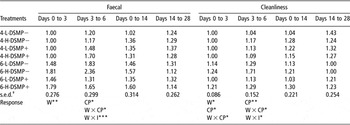
Table 2 shows the effect of weaning age, protein content and infection on the mean FS and CS throughout the trial period. There were no significant effects of infection on FS, CS or HS, although infected 4-week-weaned pigs tended to have increased FS values post infection compared with their non-infected counterparts, especially in the first 24-h post-infection period (P = 0.092). Throughout the experiment, the 6-week-weaned pigs had higher FS and CS than their 4-week-weaned counterparts. However, this was significant only in the pre-infection period (days 0 to 3). There was a significant weaning age by infection interaction for FS and CS over the period immediately post infection (days 3 to 6). This was because infection increased FS and CS of pigs weaned at 4 weeks of age but not those weaned at 6 weeks when compared with their non-infected counterparts.
Effect of weaning age (4 v. 6 weeks), crude protein level (H v. L), and experimental enterotoxigenic Escherichia coli infection (− v. +) on mean faecal and cleanliness scores throughout the trial period

4 = 4 week weaned; 6 = 6 week weaned; W = Weaning age (6 v. 4 week); I = infection (− v. +); CP = crude protein content (H-DSMP v. L-DSMP); H = 230 g CP/kg; L = 130 g CP/kg; DSMP = dried skimmed milk powder; +/− represents presence of absence respectively of infection with enterotoxigenic Escherichia coli.
†s.e.d. for the W × CP × I interaction.
*P < 0.05, **P < 0.01, ***P < 0.001.
There was a significant improvement in both FS and CS in the 3- to 6-day period with a decrease in the CP content of the diet. The mean ± s.e. FS and CS for this period were 1.70 ± 0.09 and 1.30 ± 0.05 for the H-DSMP diet and 1.45 ± 0.07 and 1.14 ± 0.03 for the L-DSMP diet, respectively. There was also a significant weaning age by CP level interaction in the 3- to 6-day period for both FS and CS, with pigs weaned at 6 weeks showing a larger increase in FS and CS with an increase in CP than those weaned at 4 weeks.
There was no effect of protein source on FS, CS or HS. There was a significant (P < 0.05) decrease in FS in the 3- to 6-day and 0- to 14-day periods with the inclusion of AGP (day 0 to 14; H-DSMP = 1.41 v. H-AGP = 1.06; P = 0.044). The inclusion of AGP also decreased CS and HS throughout the experimental period, but this was not significant.
ETEC excretion
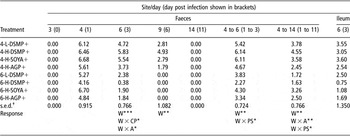
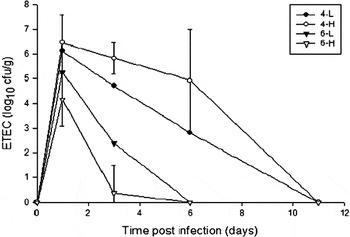
Neither the infection strain nor any other ETEC was detected in the animals prior to the challenge, nor in any of the uninfected groups post infection. The number of ETEC colonies recovered from the faeces throughout the experimental period for the eight experimentally challenged treatment groups is shown in Table 3. The number of ETEC shed was significantly (P = 0.003) greater and persisted longer in the 4-week-weaned pigs than those weaned at 6 weeks (Figure 1). By day 9 (day 6 post infection) no 6-week-weaned animals were excreting detectable numbers of ETEC (⩾1 × 10³ cfu/g), whereas the average excretion of the infected 4-week-weaned animals was 3.87 log10 cfu/g. Detectable numbers of ETEC were not recovered from 4-week-weaned animals on day 14 (day 11 post infection). There was no significant effect of CP level on the number of ETEC shed in the faeces post infection, although numbers of ETEC shed tended to be higher on the H-DSMP diet compared with the L-DSMP diet, especially in the 4-week-weaned pigs (day 1 to 11 post infection; H = 4.55 v. L = 3.78 log10 cfu/g; P = 0.093) (see Figure 1).
Effect of weaning age (4 v. 6 weeks), crude protein level (H v. L), protein source (DSMP v. SOYA) and antimicrobial growth promoter inclusion (H-DSMP v. H-AGP) on the number of enterotoxigenic Escherichia coli recovered (log10 cfu/g) post infection (infected treatment groups only)

4 = 4 week weaned; 6 = 6 week weaned; W = Weaning age (6 v. 4 week); CP = crude protein content (H-DSMP v. L-DSMP); PS = protein source (H-DSMP+ v. H-SOYA+); A = antimicrobials (H-AGP+ v. H-DSMP+); H = 230 g CP/kg; L = 130 g CP/kg; DSMP = dried skimmed milk powder; SOYA = soybean meal; AGP = antimicrobial growth promoters; + = infection with enterotoxigenic Escherichia coli.
†s.e.d. for the W × CP interaction.
*P < 0.05, **P < 0.01, ***P < 0.001.
Effect of weaning age (4 v. 6 week) and crude protein level (H v. L) on faecal enterotoxigenic E. coli shedding post infection. Standard error bars showed only for 4-H and 6-H.

There was no effect of protein source on the number of ETEC shed (day 1 to 11 post infection; SOYA = 3.44 v. DSMP = 3.09 log10 cfu/g;. P = 0.522), but there was a significant weaning age by protein source interaction for the average number of ETEC shed over days 1 to 3 post infection. While there was little difference in the number of ETEC shed between the protein sources in the 4-week-weaned pigs, the 6-week-weaned pigs on the H-SOYA diet excreted a larger number of ETEC than those on the corresponding H-DSMP diet (see Table 3). There were no significant effects of AGP inclusion on ETEC shedding, although the 4-week-weaned pigs on the H-AGP diet shed approximately 50% less than pigs fed the H-DSMP diet. There was a significant weaning age by AGP inclusion interaction on day 3 post infection and over the 1- to 11-day post-infection period. This arose from the 6-week-weaned animals on the H-AGP diet, which showed an increase in the number of ETEC shed compared with those on the H-DSMP diet.
There were no significant effects on the number of ETEC recovered from the IL at slaughter on day 6. Although there were numerically higher numbers recovered from pigs weaned at 4 weeks compared with those weaned at 6 weeks, with an average ± s.e. of 2.12 ± 0.42) and 1.00 ± 0.35 log10 cfu/g recovered, respectively, this was not significant (P = 0.207).
Post mortem
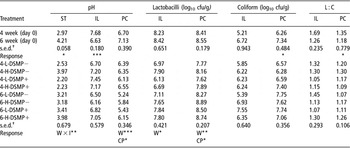
Table 4 shows the effect of weaning age, protein level and experimental infection on the pH and L : C ratio of digesta samples taken from various sites of the gastrointestinal tract on days 0 and 6. Pigs weaned at 6 weeks had a significantly lower pH in the IL and higher pH in the ST on day 0 than pigs weaned at 4 weeks. The L : C ratio was higher in the 4 than 6-week-weaned pigs on day 0 in the PC (P = 0.025), mainly due to a decrease in the number of coliforms (P = 0.021).
Effect of weaning age (4 v. 6 weeks), crude protein level (H v. L), and experimental enterotoxigenic E. coli infection (− v. +) on pH values of the stomach (ST), ileum (IL) and proximal colon (PC) and lactobacillus to coliform ratios (L:C) from samples taken on days 0 and 6

4 = 4 week weaned; 6 = 6 week weaned; W = Weaning age (6 v. 4 week); I = Infection (− v. +); CP = crude protein content (H-DSMP v. L-DSMP); H = 230 g CP/kg; L = 130 g CP/kg; DSMP = dried skimmed milk powder; +/− represents presence of absence respectively of infection with enterotoxigenic Escherichia coli.
†s.e.d. for the W × CP × I interaction.
*P < 0.05, **P < 0.01, ***P < 0.001.
There was no effect of infection on the pH of the different gastrointestinal sites, although the pH of the IL and PC contents tended to be higher in challenged pigs than their non-infected counterparts. For example, the mean ± s.e. pH of the IL digesta of the challenged and non-challenged pigs was 7.12 ± 0.16 and 6.64 ± 0.17 (P = 0.070), respectively. The pH of the IL and PC contents were higher in pigs weaned at 4 weeks compared with those weaned at 6 weeks (7.13 v. 6.63, P = 0.078) and (6.35 v. 5.66, P < 0.001), respectively, while tending to be lower in the ST (2.65 v. 3.45, P = 0.099). There was a tendency for an increase in pH with an increase in CP content but this was only significant in the PC (H-DSMP = 6.22 v. L-DSMP = 5.80, P = 0.012). There was a weaning age by infection interaction on the pH of ST contents, with infection decreasing pH of the 4-week-weaned pigs and increasing pH in the 6-week-weaned pigs.
There was no effect of weaning age or infection on the L : C ratio of samples taken from the IL and PC at slaughter on day 6, although non-infected animals had a higher ratio than infected animals. Increasing weaning age led to a significant increase in the number of lactobacilli in both the IL and PC (4 week = 7.47 v. 6 week = 8.25 log10 cfu/g, P = 0.002). There was no significant effect of CP level on the L : C ratio. A decrease in CP level led to a decrease (P = 0.021) in the number of lactobacilli in the PC, 8.44 ± 0.11 and 8.02 ± 0.12 log10 cfu/g for the H-DSMP and L-DSMP diets, respectively. There was no effect of CP level on coliform numbers.
There was no effect of protein source on gastrointestinal pH, but there was a significant increase in the pH of the IL (H-DSMP = 7.18 v. H-AGP = 7.57; P = 0.044) and PC (H-DSMP = 6.14 v. H-AGP = 6.67; P = 0.006) digesta with the inclusion of AGP. There was no significant effect of protein source or AGP on the L : C ratio, although there was significant reduction in the number of coliforms (H-DSMP = 7.19 v. H-AGP = 5.85; P < 0.001) and lactobacilli (H-DSMP = 8.03 v. H-AGP = 6.38; P < 0.001) with the inclusion of AGP.
Villous height and crypt depth
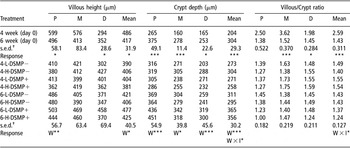
Table 5 shows the effect of weaning age, protein level and experimental infection on the villous heights and crypt depths for three sites of the small intestine on days 0 and 6. In all, 4-week-weaned pigs had significantly increased villous heights, decreased crypt depths and increased villous height to crypt depth ratio (V : C) compared with 6-week-weaned pigs on day 0, although this was not significant for villous height at the proximal site (P = 0.077) and V : C at the distal site of the small intestine (P = 0.062).
Effect of weaning age (4 v. 6 weeks), crude protein level (H v. L), and experimental enterotoxigenic E. coli infection (− v. +) on villous height and crypt depth of the proximal (P), mid (M) and distal (D) small intestine from samples taken on days 0 and 6

4 = 4 week weaned; 6 = 6 week weaned; W = Weaning age (6 v. 4 week); I = Infection (− v. +); CP = crude protein content (H-DSMP v. L-DSMP); H = 230 g CP/kg; L = 130 g CP/kg; DSMP = dried skimmed milk powder; +/− represents presence of absence respectively of infection with experimental enterotoxigenic Escherichia coli.
†s.e.d. for the W × CP × I interaction.
*P < 0.05, **P < 0.01, ***P < 0.001.
There was no effect of infection on villous height, crypt depth or the V : C ratio at any of the sites of the small intestine. There was a significant effect of weaning age on villous height and crypt depth in most of the sites, with 6-week-weaned animals having larger villous and deeper crypts than those weaned at 4 weeks (see Table 5). This led to smaller V : C ratios in all 3 sites for the 6-week-weaned pigs, although this was not significant (P = 0.301). There was a significant weaning age by infection interaction for mean crypt depth and mean V : C ratio. Infected 4-week-weaned pigs had lower crypt depth and higher V : C ratio than non-infected counterparts while the reverse was true for the 6-week-weaned pigs.
There was no effect of protein level on small intestine morphology. Pigs fed the H-SOYA diet tended to have increased villous height and V : C ratio than those on the H-DSMP diet, although this was significant only for the villous height at the proximal site (H-SOYA = 449 μm v. H-DSMP = 403 μm; P < 0.001). The only significant effect of AGP on villous height or crypt depths was on crypt depth in the distal small intestine, with pigs fed AGP having shallower crypts than those on the H-DSMP diet (H-DSMP = 276 μm v. H-AGP = 235 μm; P = 0.021).
Discussion
The oral challenge of pigs with pathogenic E. coli has been widely used as a model of PWC (Sarmiento et al., Reference Sarmiento, Casey and Moon1988; Nollet et al., Reference Nollet, Deprez, Van Driessche and Muylle1999; Madec et al., Reference Madec, Bridoux, Bounaix, Cariolet, Duval-Iflah, Hampson and Jestin2000; Van Dijk et al., Reference Van Dijk, Enthoven, Van den Hoven, Van Laarhoven, Niewold, Nabuurs and Beyen2002; Kiers et al., Reference Kiers, Meller, Nout, Rombouts, Nabuurs and Van der Meulen2003; Montagne et al., Reference Montagne, Cavaney, Hampson, Lalles and Pluske2004). The experimental model used here produced prolonged faecal ETEC excretion in all challenged pigs post infection. No pigs died and/or showed signs of clinical PWC, although feed intake and growth rate were temporarily impaired (see Wellock et al., 2008). This suggests that the aim of inducing sub-clinical PWC was successfully achieved. There was a rapid initial increase in ETEC shedding in the faeces of challenged pigs immediately post infection followed by a gradual decrease. Others have reported the same pattern over a similar time period (Nabuurs et al., Reference Nabuurs, van Zijderveld and de Leeuw1993; Kiers et al., Reference Kiers, Meller, Nout, Rombouts, Nabuurs and Van der Meulen2003).
Experimental infection had a greater impact and persisted longer in the 4-week-weaned pigs than those weaned at 6 weeks, with greater numbers of ETEC being shed immediately post infection and for a longer period of time. All challenged 6-week-weaned pigs in the trial stopped shedding detectable numbers of ETEC by day 6 post infection, while 50% of the challenged 4-week-weaned pigs were still shedding more than 105 cfu/g faeces. One reason as to why 4-week-weaned pigs may have been affected to a greater extent than the 6-week-weaned pigs may be due to the greater gut maturity and better immunological status of the older pigs, allowing them to better combat the infection (Vega-López et al., Reference Vega-López, Bailey, Telemo and Stokes1995). Alternatively, it may be a consequence of using the same experimental dose for both weaning ages, rather than making this weight dependent. However, as there was no significant correlation between BW on day of infection and average daily gain as a percentage BW over the immediate post-infection period (days 3 to 6) (see Wellock et al., 2008 for details); this suggests that BW at infection was less important than weaning age.
After weaning, villous height is generally reduced and crypt depth increased (Miller et al., Reference Miller, Newby, Stokes and Bourne1984; Pluske et al., Reference Pluske, Williams and Aherne1996; Vente-Spreeuwenberg et al., Reference Vente-Spreeuwenberg, Verdonk, Bakker, Beyen and Verstegen2003), which may be associated with increased occurrence of diarrhoea (Nabuurs et al., Reference Nabuurs, van Zijderveld and de Leeuw1993). These changes in gut morphology are primarily related to the low feed intake post-weaning (Kelly et al., Reference Kelly, Smyth and McCracken1991; Pluske et al., Reference Pluske, Williams and Aherne1996), being lowest around day 4 before recovering to pre-weaning values between days 11 and 14 (Nabuurs et al., Reference Nabuurs, van Zijderveld and de Leeuw1993). Older pigs therefore may be expected to show less of a decrease in villous height due to a greater feed intake. This was observed here with pigs weaned at 4 weeks of age demonstrating a much larger decrease in villous height and V : C ratio from days 0 to 6 than pigs weaned at 6 weeks of age. The fact that infection had little impact on villi atrophy, a common feature associated with clinical PWC (Kenworthy, Reference Kenworthy1976; Nabuurs et al., Reference Nabuurs, van Zijderveld and de Leeuw1993; McDonald et al., Reference McDonald, Pethick, Mullan, Pluske and Hampson2001), supports the view that sub-clinical rather than clinical PWC was induced. Infection had a greater detrimental effect on the enteric health, as indicated by a higher pH, lower L : C ratio of the PC contents and lower villous heights at all three sites of the small intestine, of pigs weaned at 4 weeks than those weaned at 6 weeks of age.
Infection had a rapid and short-lived effect on FS and CS. Within 12 h post infection, 15% of infected pigs were displaying FS of 2.5 or higher from an initial score of 1. By day 6 post infection, however, most scores had returned to normal. Similar results were seen by Madec et al. (Reference Madec, Bridoux, Bounaix, Cariolet, Duval-Iflah, Hampson and Jestin2000) who reported transient diarrhoea in 50% of inoculated pigs soon after the challenge, accompanied by signs of depression and low weight gain. No diarrhoea was observed here in the non-challenged 4-week-weaned pigs, although this was not the case for those weaned at 6 weeks, who had increased FS compared with the 4-week-weaned pigs, especially in the first 3 days of the experiment. This may have been related to their achieved feed intake immediately post weaning. While it has been suggested that a high creep intake before weaning favours immune tolerance (Hampson, Reference Hampson1987), others have reported an increased incidence of diarrhoea post weaning with an increased consumption of dry food prior to weaning (Barnett et al., Reference Barnett, Kornegay, Risley, Lindemann and Schurig1989).
It was hypothesised that decreasing the amount of protein in the diet would decrease the amount of substrate available in the distal small intestine and hence decrease the rate of ETEC proliferation. This was previously observed by Prohászka and Baron (Reference Prohászka and Baron1980) who reported an increased number of haemolytic E. coli in the small intestine of pigs fed 210 g CP/kg opposed to those receiving 130 g CP/kg. Here, challenged pigs on the H-DSMP diet excreted greater numbers of ETEC than pigs on the L-DSMP diet, particularly those weaned at 4 weeks. However, this was not significant, most likely due to the amount of variation between the numbers of ETEC shed by individual pigs. Decreasing dietary CP level also led to a significant reduction in the pH and increase in the L : C ratio of PC digesta, both used as indicators of enteric health. An improvement in similar measures of enteric health with a decrease in protein level was previously reported by Wellock et al. (Reference Wellock, Fortomaris, Houdijk and Kyriazakis2006) and Nyachoti et al. (Reference Nyachoti, Omogbenigun, Rademacher and Blank2006) in experiments using non-challenged pigs. Lowering CP level appeared to have greater beneficial effect on reducing ETEC proliferation in pigs weaned at 4 weeks than those weaned at 6 weeks. Consequently, the effect of lowering CP may be more beneficial in younger pigs and particularly when they are in less-favourable conditions, such as on commercial farms with suboptimal conditions. A more marked positive effect of lowering CP content on ETEC proliferation and the consequences of PWC might be expected when a higher ETEC infection pressure is present.
It was also hypothesised that it would be possible to limit the extent of ETEC proliferation by using a more digestible protein source, i.e. changing from SOYA to DSMP, by decreasing protein availability in the distal small intestine. Shimizu and Terashima (Reference Shimizu and Terashima1982) reported increased severity of diarrhoea and appearance of ETEC in 3-week-old pigs when changing from DSMP to soyabean and maize-based diets. However, there was no difference between the number of ETEC excreted in the faeces or in the IL on day 3 post infection of pigs offered the H-DSMP and H-SOYA diets. Similar results have been reported by Montagne et al. (Reference Montagne, Cavaney, Hampson, Lalles and Pluske2004) who found no significant effect on the proliferation of ETEC when animal protein was replaced with plant protein in a rice-based diet. Several studies have shown a decrease in villous height in newly weaned pigs fed a diet with a high level of soya instead of DSMP (Li et al., Reference Li, Nelssen, Reddy, Blecha, Klemm and Goodband1991; Makinde et al., Reference Makinde, Umapathy, Akingbemi, Mandisodza and Skadhauge1996), while others have failed to do so (McCracken et al., Reference McCracken, Spurlock, Roos, Zuckermann and Gaskins1999; Jiang et al., Reference Jiang, Chang, Stoll, Fan, Arthington, Weaver, Campbell and Burrin2000). The fact that pigs fed the DSMP diets ate significantly more than those fed the SOYA diets (see Wellock et al., 2008), and that DSMP constituted only 25% of total protein in the DSMP diets, may explain why there was no significant effect of protein source on ETEC shedding or measures of enteric health.
The inclusion of AGP in the diet decreased the numbers of ETEC shed in the faeces in the 4-week-weaned pigs by approximately 50% but not in the 6-week-weaned pigs. Only 25% pigs of the challenged 4-week-weaned pigs on the AGP diet were excreting any ETEC on day 6 post infection compared with 75% of those on the equivalent non-AGP diet (H-DSMP). The addition of AGP also led to a decrease in FS, suggesting a decreased severity of PWC (McDonald et al., Reference McDonald, Pethick, Mullan, Pluske and Hampson2001) and risk of spread from one piglet to another when in a group situation. AGP inclusion had no effect on enteric health in terms of the gastrointestinal pH or L : C ratio, but as reported elsewhere (Broom et al., Reference Broom, Miller, Kerr and Toplis2003; Wellock et al., Reference Wellock, Fortomaris, Houdijk and Kyriazakis2006) there was a significant decrease in total lactobacilli and coliform numbers.
Conclusion
The results suggest that, in the absence of in-feed AGP, increasing weaning age and decreasing dietary protein supply may help to maintain enteric health and minimise the risk and of spread of PWC by reducing ETEC proliferation and faecal ETEC shedding. Decreasing the dietary CP content may be especially important in earlier weaned animals, and particularly in environments that are challenging to the health of pigs.
Acknowledgements
This research was financially supported by ABN Ltd, Frank Wright Ltd, Home-Grown Cereals Authority, Meat and Livestock Commission/British Pig Executive, Primary Diets Ltd and Provimi Ltd with match funding from Defra, through the Sustainable Livestock Production LINK programme. The authors would like to acknowledge Paul Toplis of Primary Diets Ltd, UK, for the formulation and manufacture of the experimental diets, Biomathematics and Statistics Scotland for help with the statistical analysis, Terry McHale, Dave Anderson, Lesley Deans, Kostantios Zaralis, Richard Slade and Siobhan Carroll for technical assistance and Kevin Hillman for the L : C analysis.