Introduction
Governments across Europe make considerable efforts to prolong active participation in working life to tackle population ageing and the increasing pressures on social systems that this entails. The European Commission (2010) and the Organisation for Economic Co-operation and Development (OECD, 2006) call for a greater involvement of older workers in the labour market to support labour force growth. While most European countries have implemented pension reforms to prolong working lives, labour force participation is still too low in pre-retirement age and progress too limited (European Commission, 2012). These trends are accompanied by globalisation and accelerated economic and technological change, leading to increasing tensions between the demands from technological advancements at the workplace and the existing qualification structure of workers in terms of vocational, technological and professional skills (Blossfeld et al., Reference Blossfeld, Buchholz and Kurz2011).
Adaptability to the new demands set by longer working lives and changing skills needs largely depends on the ability to take up education and training at different points of time over the course of an individual's life (Blossfeld et al., Reference Blossfeld, Buchholz and Kurz2011). The importance of adult learning in enhancing employability before retirement age (after the age of 50) and access to quality jobs, not to mention enhancing wages and firm profits, has been recognised by governments across Europe and beyond (Mayhew and Rijkers, Reference Mayhew and Rijkers2004; OECD, 2006; Council of the European Union, 2012). The underlying view is that inadequate education is an important cause for early retirement because it increases the risk of an individual becoming unemployed and decreases their chances of receiving job offers (Stenberg et al., Reference Stenberg, Luna and Westerlund2010).
While the importance of learning throughout life has been recognised, the take-up of learning among people aged 55–64 differs considerably across countries (Cedefop, 2015). One of the reasons for these differences may lie in the differing institutional set-up between these countries. There is some empirical evidence suggesting that policies that raise retirement age also have the effect of increasing investments in human capital before retirement age as the horizon for labour market exit moves further away (Fouarge and Schils, Reference Fouarge and Schils2009; Montizaan et al., Reference Montizaan, Cörvers and De Grip2010; Battistin et al., Reference Battistin, Brunello, Comi and Sonedda2013; Brunello and Comi, Reference Brunello and Comi2015; Bauer and Eichenberger, Reference Bauer and Eichenberger2017). Also, highly generous (early) retirement schemes increase the probability of retirement and, hence, reduce motivation to invest in skills after the age of 45 by employers and employees alike (Bassanini et al., Reference Bassanini, Booth, Brunello, De Paola and Leuven2005; Fouarge and Schils, Reference Fouarge and Schils2009).
However, so far, there are some major research gaps when it comes to analysing interactions between retirement policies and training participation in older age groups. In particular, research has only provided limited coverage of European countries, focusing only on Western European countries. For instance, the new European Union (EU) countries have completely been excluded from such research. Moreover, the research has completely ignored the issue of gender differences in retirement pathways. According to the Mutual Information System on Social Protection (MISSOC), there were still considerable gender differences in retirement age as well as the replacement rate of pensions in 2011. Also, gender differences exist in learning participation that need to be considered (for a longer discussion, see Wozny and Schneider, Reference Wozny and Schneider2014).
Finally, some empirical evidence suggests that the effect of accumulation of education (i.e. those with higher educational attainment tend to participate more in learning as adults) does not hold after the age of 45 because higher educational level no longer gives an advantage in access to learning (Fouarge and Schils, Reference Fouarge and Schils2009). Moreover, postponing retirement age has a higher positive effect on the training participation of employees with a low level of education (based on Dutch male public-sector employees; Montizaan et al., Reference Montizaan, Cörvers and De Grip2010). This implies that cross-country variations in retirement age may have a different effect on people with various levels of educational attainment.
Considering the research gaps outlined above, the current paper relates participation in non-formal learning among the employed population in pre-retirement age (50–64) with institutional features of the retirement systems in European countries: statutory retirement age and replacement rate of pensions. Learning includes participation in any type of course, workshop or seminar, taking private lessons, or instructed learning at the workplace.
In order to take into account the gender differences in retirement policies, separate models for employed men and women have been analysed. Special attention is paid to the interaction between retirement age and education level in order to explore empirically the expected differences in educational effects. The empirical evidence is based on micro-data from the second wave of the 2011 Adult Education Survey (AES), including information on 26 European countries. This makes the data from the survey the largest comparative data-set on adult education in terms of the number of European countries covered. As a result, new European Member States have been included in the analysis to widen the coverage of countries compared to earlier research.
The AES is a cross-sectional survey, meaning that participation in learning is tested at a single point in time. This means we are not able to differentiate age effect (consequences of growing older), cohort effects (being born at different times) and period effects (context and institutional background also changes through time) (Winship and Harding, Reference Winship and Harding2008). Hence, it is important to keep in mind that the results are not about how individual learning participation changes through time, but rather a comparison of people, born in different years, at different points of their lifecycle (Paccagnella, Reference Paccagnella2016). Therefore, the results are a combination of age, cohort and period effects.
The analysis relies on multi-level logistic regression models – a technique enabling the modelling of individual and contextual variables simultaneously and thus avoiding biased standard errors compared to single-level modelling (Kreft and Leeuw, Reference Kreft and Leeuw2007). Furthermore, multi-level models provide additional evidence by quantifying the effect of individual and structural variables in cross-country variations.
Theoretical framework
Participation in learning in old age
It has been widely recognised that participation in learning declines with age (OECD, 2003; Desjardins et al., Reference Desjardins, Rubenson and Milana2006; Carmichael and Ercolani, Reference Carmichael and Ercolani2014; Cedefop, 2015). The theoretical foundations of explaining this pattern lie in the human capital theory (Becker, Reference Becker1964). According to this theory, participation in education and training is seen as an investment to increase human capital. A decision to invest in training is based upon a comparison of the net present value of costs (i.e. direct training costs and lower wages while in training) and the net present value of benefits (i.e. higher marginal product and higher wages) of such an investment. Accordingly, human capital theory predicts that, as retirement age approaches, participation in training declines as the associated costs outweigh the benefits. There are several reasons put forth to explain this phenomenon, including economic barriers (because of the approaching retirement, the payback period to balance out the investment shortens), attitudinal barriers (negative stereotypes about the effectiveness of training older workers), barriers related to learning supply (procedures and practices that do not meet the specific needs of older learners) and cross-country institutional differences. The current paper focuses on the latter, exploring the effect of institutional features of the retirement systems on training participation in the 50–64 age group.
Institutional influences
However, cross-country comparison shows that the pace of decline in learning participation with age differs across countries. There is a remarkable cross-country variability in the difference in participation rates between older and younger age groups (e.g. Cedefop, 2015). This suggests that participation in learning is not merely an individual decision, but a process that takes place within a particular institutional context which shapes the potential choices and actions of individuals. Individual agency is affected by and interacts with the prevailing structural conditions that are binding for a given individual and therefore should not be treated in isolation (Desjardins and Rubenson, Reference Desjardins and Rubenson2013). Hence, institutional and public policy frameworks have the power to condition the provision and take-up of adult education (Desjardins and Rubenson, Reference Desjardins and Rubenson2013).
In the face of the severe demographic ageing among European societies, governments are making considerable efforts to prolong working lives (Blossfeld et al., Reference Blossfeld, Buchholz and Kurz2011). Reforms have been implemented all across Europe to raise statutory retirement ages, retrench early retirement benefits and reduce incentives to exit working lives (Carmichael and Ercolani, Reference Carmichael and Ercolani2014). However, longer working lives also mean there is a need to prolong the employability of older workers and maintain their productivity (Blossfeld et al., Reference Blossfeld, Buchholz and Kurz2011; Carmichael and Ercolani, Reference Carmichael and Ercolani2014). One way to fulfil this need is to invest in the training of people approaching retirement age to support their job prospects. This practice has raised research interest in the interaction between training participation in old age and retirement policies, which will be pursued further in the current paper. In particular, based on earlier literature in the field, two characteristics of retirement policies are expected to shape cross-country differences in learning participation in old age: the timing of labour market exit and the generosity of the pension system. The respective mechanisms and the current empirical evidence are described in more detail below.
Timing of labour market exit
Following the human capital theory, retirement policies determine the timing of labour market exit, which sets the horizon for the payback period of training investments. Hence, with a higher retirement age, individuals and employers are more motivated to invest in the human capital of older workers because there is more time to recoup the investment. However, the empirical evidence is not extensive.
Relying on a natural experiment in the Dutch public sector, Montizaan et al. (Reference Montizaan, Cörvers and De Grip2010) found that a pension reform that diminished pension rights postponed the expected time of retirement and increased participation in training courses among older employees born in 1950. The researchers suggest that postponing retirement by one year can lead to 1.3 per cent higher training participation (Montizaan et al., Reference Montizaan, Cörvers and De Grip2010: 244).
Battistin et al. (Reference Battistin, Brunello, Comi and Sonedda2013) and Brunello and Comi (Reference Brunello and Comi2015) have explored the effects of the Italian pension reforms in the 1990s on training participation among employed men. They concluded that the increase in minimum retirement age contributed to reducing retirement and to increasing training incidence among employed men in their forties and fifties. Adding one year to the minimum retirement age increased training incidence by about 9 per cent among private-sector employees aged 40–54 (Brunello and Comi, Reference Brunello and Comi2015). In the Italian case, it was found that increases in retirement age were more effective in raising participation among older age groups than ‘traditional’ training policies because an increase in training subsidies did not have a significant effect among older age groups (Battistin et al., Reference Battistin, Brunello, Comi and Sonedda2013; Brunello and Comi, Reference Brunello and Comi2015).
Based on the Italian case, Berton et al. (Reference Berton, Guarascio and Ricci2017) found that pension reforms reducing the availability of early retirement and raising the retirement age also affected the training behaviour of companies. The shift in retirement policy has led to a higher share of trained employees and in larger monetary investments in training, provided that the related costs are funded through external resources (Berton et al., Reference Berton, Guarascio and Ricci2017). However, based on their research design and data, it is not possible to differentiate the age groups that are most affected by the reforms.
Bauer and Eichenberger (Reference Bauer and Eichenberger2017) show that after the 1997 pension reform in Switzerland raising women's retirement age from 63 to 64, training participation among the women affected by the reforms increased by 5–14 per cent.
Empirical research on this topic covering a wider set of countries is even more limited. Based on a sample of 12 European countries, the OECD (2006) has shown that among men, there is a positive and statistically significant correlation across countries between the incidence of training for older workers aged 55–64 relative to younger workers aged 25–34 and the average effective age of retirement (i.e. the age at which persons aged 40 and over left the labour force during 1999–2004). Hence, the relative incidence of training for workers aged 55–64 tends to be higher in those countries where workers withdraw from the labour market at an older age (OECD, 2006: 73).
Fouarge and Schils (Reference Fouarge and Schils2009) analysed a sample of 13 European countries for the period 1994–2001. They found that in countries where workers had more freedom of choice as to the age at which to retire (i.e. early retirement schemes were flexible), older workers (especially those aged between 45 and 54) were more likely to participate in training (Fouarge and Schils, Reference Fouarge and Schils2009).
Based on the available empirical evidence, it is expected in the current analysis that:
• Hypothesis 1: Training participation in older age groups (50–64) is higher in those countries where retirement age is higher.
There is no research evidence on the potential difference in these effects by gender. However, women's retirement age is still considerably lower than that of men's in the analysed time period. Based on the theoretical and empirical foundations outlined above, training participation in the 50–64 age group should differ by gender as the horizon of the payback period of training investments differs for men and women. Furthermore, research evidence suggests that learning patterns differ by gender. Some empirical evidence suggests men participate more in non-formal adult learning compared to women (Dieckhoff and Steiber, Reference Dieckhoff and Steiber2011). Other evidence suggests a reverse training gap for an advantage by women (Dämmrich et al., Reference Dämmrich, Vono de Vilhena, Reichart, Blossfeld, Kilpi-Jakonen, Vono de Vilhena and Buccholz2014; Wozny and Schneider, Reference Wozny and Schneider2014). Hence, the different training patterns among men and women can either reduce the training gap due to a different retirement period or further reinforce those differences. To explore how gender interacts with different retirement contexts, the institutional effects are analysed separately for men and women in the current paper.
Previous research has widely recognised the Matthew effect in education and training; that is, those with higher educational attainment tend to participate more in learning as adults (Dämmrich et al., Reference Dämmrich, Vono de Vilhena, Reichart, Blossfeld, Kilpi-Jakonen, Vono de Vilhena and Buccholz2014; OECD, 2014; Kramer and Tamm, Reference Kramer and Tamm2016). However, some authors suggest this effect is not so straightforward in older age groups. For instance, Fouarge and Schils (Reference Fouarge and Schils2009) found that the accumulation effect held particularly in young age, whereas for workers over 45, having a higher educational level did not give an advantage in participating in learning compared to those with an average educational level. Montizaan et al. (Reference Montizaan, Cörvers and De Grip2010) found, based on the pension reforms in the Dutch public sector, that more highly educated workers had a high training propensity due to their stronger motivation to invest in their human capital, irrespective of the duration of their remaining work life. At the same time, less-educated individuals were more impacted by changes in retirement age because workers who were initially less inclined to train were now forced to participate in training courses to keep up their productivity during their extended work life (Montizaan et al., Reference Montizaan, Cörvers and De Grip2010). This suggests that:
• Hypothesis 2: Training participation among highly educated workers aged 50–64 is less dependent on the retirement age in the country than is the case among less-educated workers in the same age group.
Financial attractiveness of retirement
Another aspect of the retirement policies considered in connection with training participation is that of the generosity of pensions. In particular, highly generous (early) retirement schemes increase the retirement probability and, hence, reduce motivation of employers and employees alike to invest in the skills of workers approaching retirement age (Fouarge and Schils, Reference Fouarge and Schils2009). Available empirical evidence supports this assumption. Fouarge and Schils (Reference Fouarge and Schils2009), for instance, found this effect to be strongest for the oldest age group (55–64). Based on a sample of 13 European countries, they concluded that the generosity of early retirement schemes was a strong incentive for pulling older workers out of the labour market and thus reduced motivation to invest in training (Fouarge and Schils, Reference Fouarge and Schils2009).
Similarly, Bassanini et al. (Reference Bassanini, Booth, Brunello, De Paola and Leuven2005) found, based on a sample of 13 European countries, that the interaction of age and the implicit tax on continued work was negative. Therefore, the training participation in the 50–59 age group was reduced by the expectation of better retirement benefits (Bassanini et al., Reference Bassanini, Booth, Brunello, De Paola and Leuven2005). Based on this empirical evidence, it is expected in the current paper that:
• Hypothesis 3: Generous pension schemes are related to lower training participation in older age groups (50–64).
Due to differences in replacement rates, these effects will be analysed separately for men and women.
Data and method
For the analysis, various data-sets are combined to enable inclusion of variables at the individual as well as the country level. For the individual-level variables, the AES by Eurostat is used. The AES in one of the main data sources for EU lifelong learning statistics, offering comparative data on adults’ participation in education and training for 12 months prior to the survey. Analysis is based on the second AES data collection that took place in 2011 and 2012; the reference year is set at 2011. Data of 26 countries are included in the analysis, out of a total 30 countries in the data-set. Four countries were excluded from the initial data-set due to data quality issues and missing data across the variables included in the analysis.Footnote 1 The target population of the AES consists of individuals who live in private households and are aged 25–64 years. Due to the focus of the research question on participation patterns in the pre-retirement period, the analysis is limited to the age group of 50–64. Only the employed population is analysed in order to eliminate the effects of different employment and retirement patterns in late career life (including differences in employment rates and inactivity) across European countries on participation in learning. After excluding cases with missing data on the variables analysed, a total sample of 18,411 men and 16,347 women is included in the analysis.
As the dependent variable, participation in non-formal learning is analysed. The outcome variable takes the binary values of 1 when a person has participated in non-formal training during the 12 months prior to survey and 0 when there have been no participation episodes during the past year. Non-formal learning is defined as participation in any type of course, workshop or seminar; instructed learning at the workplace; or instructed private lessons. Learning towards acquiring a qualification (formal education) is excluded from the analysis, being of marginal importance at the 50+ age group.
The following control variables at the individual level are also included in the models: age (continuous variable), occupation and educational attainment.Footnote 2 Gender is also accounted for, and different models for men and women are analysed in order to take into account the different retirement policy frameworks for men and women in many European countries.
The variable of occupation is divided into three categories: (a) highly skilled white-collar workers (managers, professionals, technicians and associate professionals, International Standard Classification of Occupations (ISCO-08) 1–3); (b) low-skilled white-collar workers (clerical support workers and service and sales workers, ISCO-08 4 and 5); (c) blue-collar workers (skilled agriculture, forestry and fishing workers, craft and related trades workers, plant and machine operators, assemblers, and elementary occupations, ISCO-08 6–9). Educational attainment is analysed as a binary variable, being 1 in the case of tertiary education (International Standard Classification of Education (ISCED) 5 and 6) and 0 in the case of lower educational attainment (up to ISCED 4).
In order to analyse the role of retirement policies on learning participation, additional cross-country data-sets have been used. Retirement policies are analysed through two indicators.
Statutory retirement age, as regulated by respective national legislation as at 1 January 2011, is measured by gender. For interpretation purposes, data are coded as 1 when the country's retirement age is at 65 years or above and 0 when retirement age is lower than 65. The legal retirement age for men and women is considered separately.
The data source is the MISSOC, a database on social protection systems established in 1990 and constructed in close co-operation between the European Commission and national correspondents. The database is published electronically and updated on a biannual basis.
Aggregate replacement ratio is measured as the ratio of income from pensions for persons aged between 65 and 74 years and income from the work of persons aged between 50 and 59 years by gender in 2011. For the analysis, the indicator is centred around the grand mean, meaning that across all the countries in the analysis, the replacement ratio has a mean of 0 and the indicator for each country shows a difference from this mean.
The data source is the European Union Statistics on Income and Living Conditions (EU-SILC) from Eurostat, a cross-country data-set on income, poverty, social exclusion and living conditions anchored in the European Statistical System. EU-SILC is thus a European-wide comparative data-set updated on a regular basis. While data are also disseminated as micro-data, for the purposes of the current analysis, data are drawn from an online table (Eurostat online reference: ilc_pnp3).
As the research question is focused around the role of national-level policies in shaping individual-level decisions, the research design is hierarchically structured. This structure also applies with the data used in the analysis – individuals are nested within countries, which are characterised by different policy indicators. Thus, the dependence among observations resulting from this nested structure needs to be considered in the analysis (Snijders and Bosker, Reference Snijders and Bosker2012). In order to account for this hierarchical data structure, multi-level logistic regression is used. This method allows the modelling of individual and contextual determinants simultaneously and, compared to single-level regression models, avoids biased standard errors at each level of analysis (Kreft and Leeuw, Reference Kreft and Leeuw2007). Furthermore, multi-level models enable quantification of how much country-level variation in training probabilities is explained by institutional indicators in the analysis and how much by differences in the characteristics of individuals within each country. Thus, multi-level models provide additional evidence on the impact of institutional indicators (in this case, retirement policies) on training participation in old age.
The analysis of multi-level models starts from an ‘empty model’, that is, a model with no covariates. This serves as a benchmark to test the explanatory power of covariates when included in the model. Next, step-by-step individual and contextual variables are added to the model. This approach enables differentiating between the role of individual and contextual factors in shaping cross-country variation in learning participation. For each model, an intra-class correlation coefficient (ICC) is calculated, representing the between-country variation in the total variation. In other words, it is possible to differentiate the share of variance in learning participation explained by between-country differences and the share explained by differences within countries.
In the final models, a random slope is added to the models, allowing the effect of one of the covariates (in this case, education) to vary across countries and adding a cross-level interaction effect between education and retirement policy indicators. This way, it is possible to raise the question of the differing effect of education on learning across countries with differing retirement policies.
Results
Descriptive data
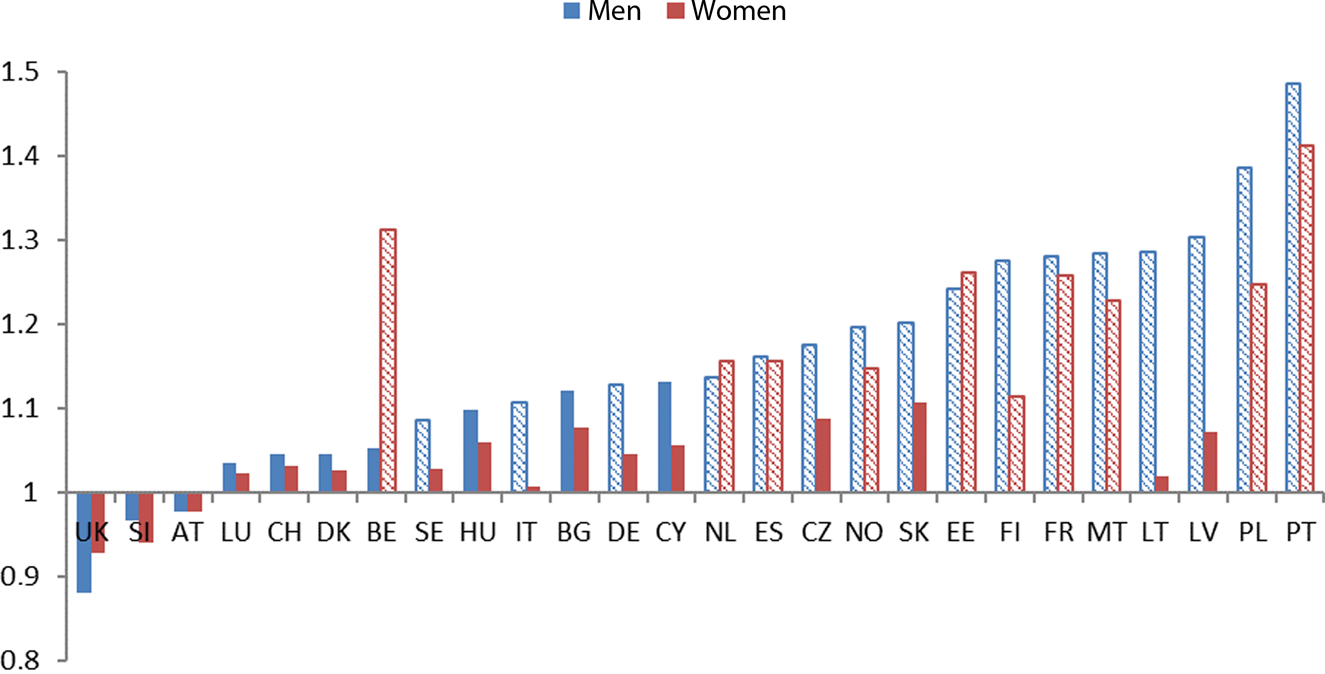
Participation in learning declines with age. This is true for most countries analysed as seen in Figure 1, where values above 1 indicate a higher learning participation in the 25–49 age group compared to those over 50. Participation in learning declines the most with age in Poland and Portugal, among both men and women, while there are countries where the decline in learning participation with age is different for men and women (e.g. Finland or Belgium). Thus, the change that occurs in learning participation with age does not follow a uniform pattern across countries or between sexes, which presents a reason to look into the determinants of learning in the 50+ age group by gender.
Relative age difference in non-formal training participation among the employed population, 25–49 year olds compared to 50–64 year olds by gender, 2011.
Notes: For the country codes, see Table 1. Columns with patterns indicate a statistically significant difference in participation rates between the 25–49 and 50–64 age groups at the 95 per cent confidence level.
Source: Adult Education Survey, 2011, author's calculations.

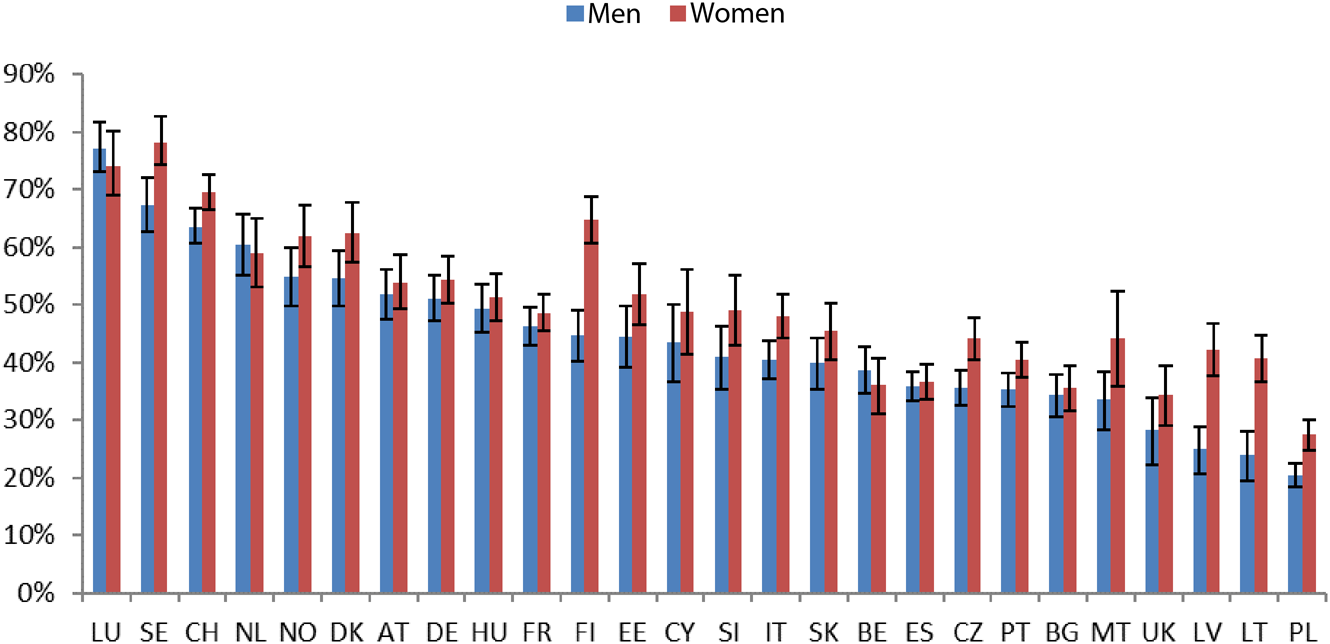
Figure 2 shows that participation in non-formal training among the 50–64 year-old employed population varies across European countries among both men and women. On average, the share of people who have participated in non-formal training at the age of 50 or more ranges from 76 per cent in Luxembourg to 24 per cent in Poland. The best-performing countries in learning participation are among the Scandinavian countries (together with Switzerland and Luxembourg), while Southern and Eastern European countries tend to fall behind. This generally coincides with research on learning participation among European countries in general, indicating that the Nordic countries have offered the strongest policy framework supporting participation in adult learning since the early 1990s (Desjardins, Reference Desjardins2017).
Share of participants in non-formal training in European countries in the 50–64 age group by gender, with 95 per cent confidence intervals, 2011.
Note: For the country codes, see Table 1.
Source: Adult Education Survey, 2011, author's calculations.
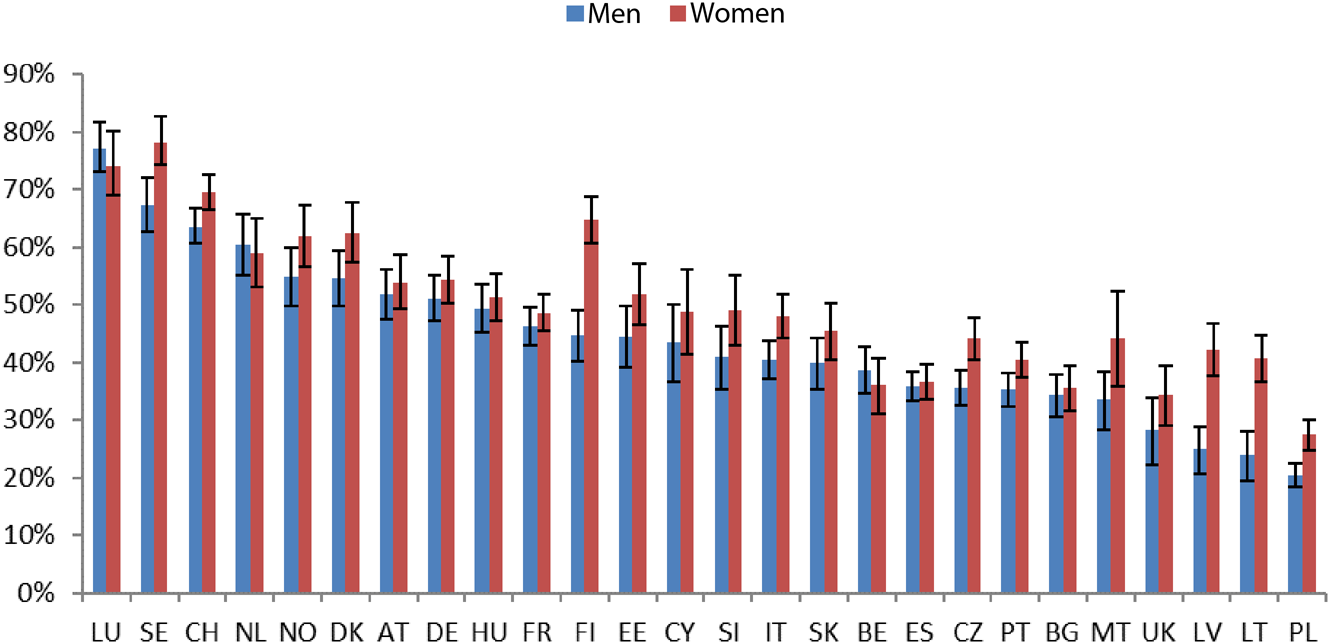
There are no significant gender differences in learning participation after the age of 50 in most countries analysed, while some countries nevertheless stand out with particularly large gender differences (e.g. Finland, Sweden, Latvia and Lithuania).
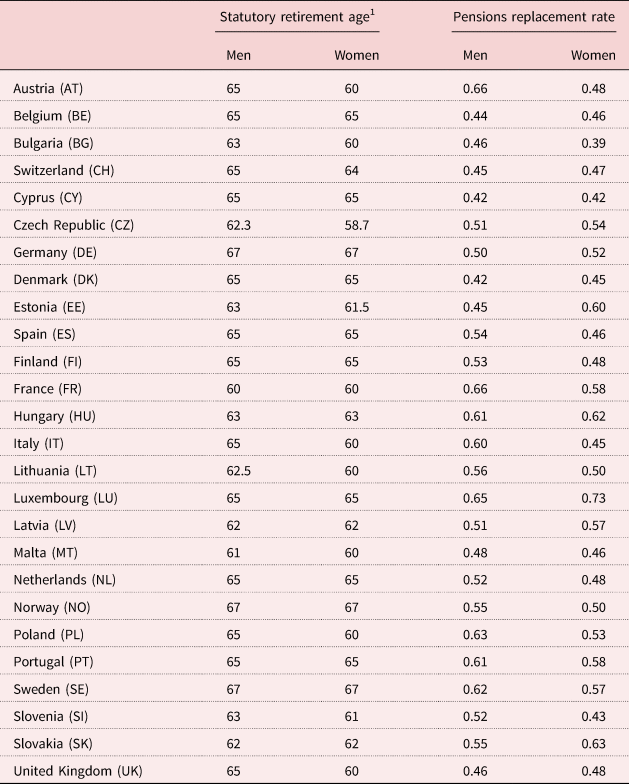
As at 2011, statutory retirement remains different for men and women in many European countries (Table 1). The median retirement age for men was 65 years and between 62 and 63 years for women. By 2011, 16 countries out of 26 had raised their retirement age to 65 or above among men compared to 11 countries among women. Thus, there is a different policy context for men and women in terms of timing of retirement in many European countries.
Statutory retirement age and replacement ratio of pensions by gender, 2011

Note: 1. On 1 January 2011.
Source: Mutual Information System on Social Protection (MISSOC) database; Eurostat (European Union Statistics on Income and Living Conditions; EU-SILC).
Due to differences in incomes, the replacement ratio of pensions (i.e. the ratio of income from pensions for people aged 65–74 and income from work for people aged 50–59) also differs for men and women in most countries analysed. However, replacement rates of pensions vary among countries with a similar retirement age. For instance, in countries with a statutory retirement at age 65 or above, replacement rates from pensions vary from as low as 42 per cent of the previous average wage in Denmark and Cyprus to 66 per cent in Austria among men. Among women, the differences fall between 42 per cent in Cyprus to as high as 73 per cent in Luxembourg. Thus, we can ask which is more influential in affecting learning participation after the age of 50: is it the timing of retirement or the generosity of the pensions?
Multi-level analysis
Next, the role that individual and contextual characteristics have in explaining cross-country variations in learning participation among the 50+ age group are analysed based on a series of multi-level logistic regression models. Separate models are estimated for men and women in order to account for gender differences in the policy context, as shown in Table 1.
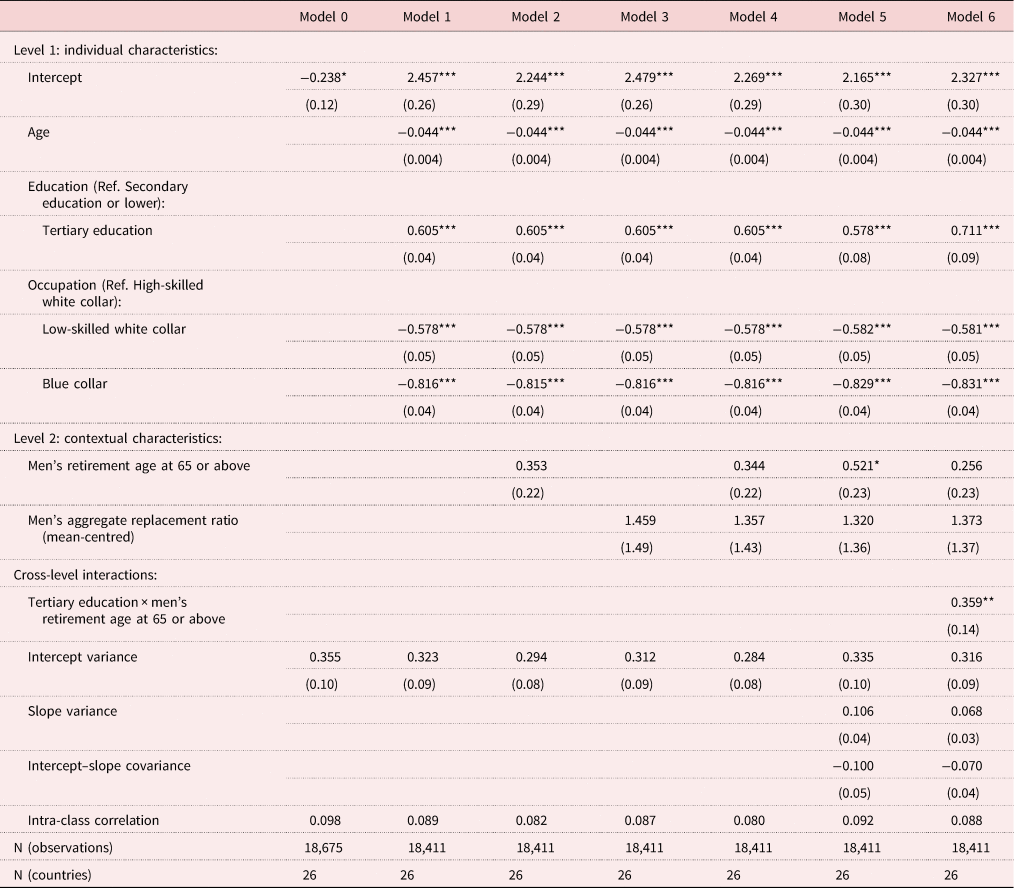
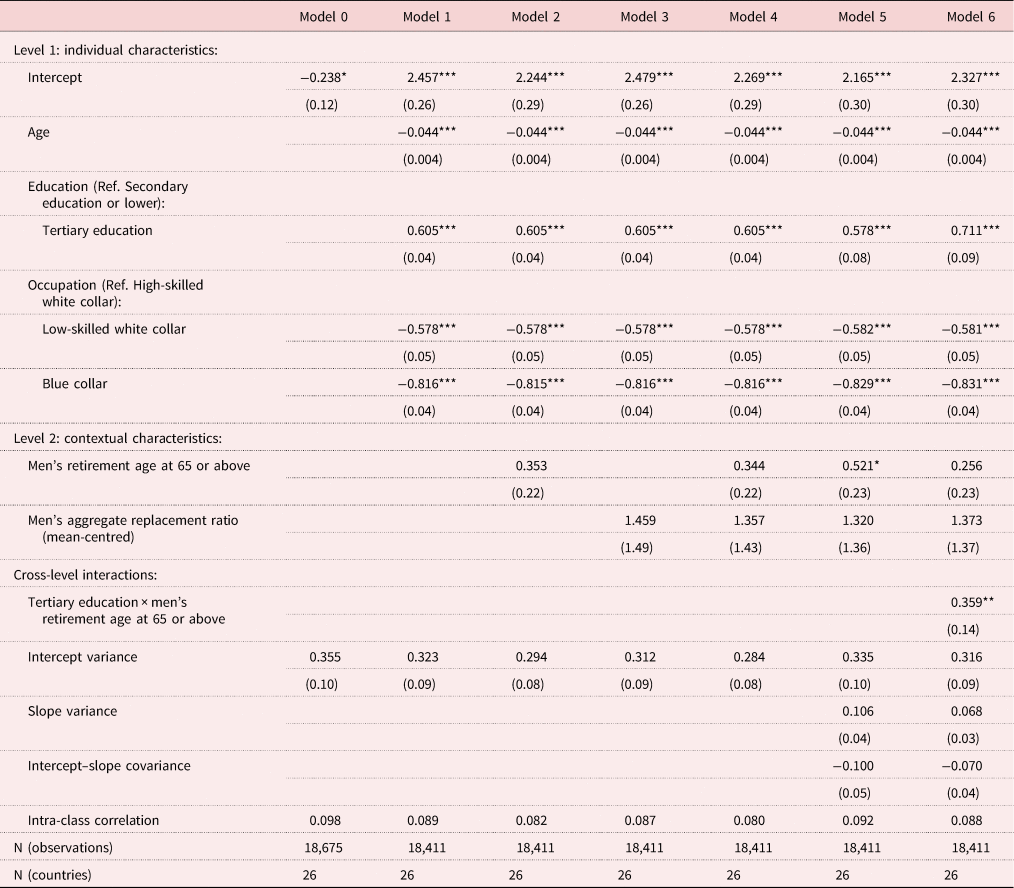
First, non-formal learning participation among men after the age of 50 is analysed (Table 2). A null-model is estimated with no covariates, giving a baseline for estimating further models. Based on this first model, in an ‘average’ country, the likelihood of participating in learning for men in the 50+ age group is lower than not participating, shown by a negative regression coefficient (b = −0.24, p < 0.05). The ICC measures the share of variation in the dependent variable attributable to unobserved country-level characteristics. In the null-model with no covariates, the ICC amounts to 0.10. Thus, about 10 per cent of the variation in men's propensity to participate in non-formal learning after the age of 50 can be attributed to systematic differences between countries, while the rest of the variation is due to differences between individuals within each country.
Multi-level logistic regression coefficients, participation in non-formal learning among men aged 50–64
Note: Ref.: reference category.
Source: Adult Education Survey, 2011; Mutual Information System on Social Protection (MISSOC) database; Eurostat (European Union Statistics on Income and Living Conditions; EU-SILC), author's calculations.
Significance levels : * p < 0.05, ** p < 0.01, *** p < 0.001.
The next model (Model 1) takes individual-level explanatory variables into account. The effects of individual-level coefficients are to be expected. As age increases, participation in learning decreases. Tertiary education increases participation probability among men as compared to all lower educational levels. Participation in learning is higher among highly skilled white-collar workers compared to all other occupational groups and the lowest among blue-collar workers. Compared to the baseline model, the ICC is hardly affected, standing at 0.089 – a 9 per cent reduction. This marginal change indicates that the individual-level variables that are included in the model do not explain much of the between-country differences. Thus, there is strong support for taking the country-level characteristics into account to investigate their impact on explaining cross-country variation in non-formal education participation.
The next two models add contextual factors. Neither statutory retirement age (Model 2; p = 0.11) nor replacement ratio of pensions (Model 3; p = 0.33) are significant at the 95 per cent confidence level in explaining learning participation. Nevertheless, after accounting for all the individual variables and retirement age in the model (Model 2), ICC is reduced to 0.082, indicating a 16 per cent reduction compared to the baseline model. Thus, the individual variables and statutory retirement age together explain about one-fifth of the cross-country variance in non-formal learning participation. The replacement ratio of pensions plays a notably smaller role in explaining cross-country variations as ICC remains nearly unchanged compared to Model 1, where only individual-level variables have been accounted for.
To check the robustness of the results among the models for both women and men, different definitions of retirement age threshold, including mean-centred retirement age, and different levels of retirement age categories were tested. In general, these alterations did not change the conclusions, thus giving support to the relative robustness of the research results.
Model 4 includes all individual and contextual variables in one model. When simultaneously accounting for variables in the model, about 8 per cent of the cross-country variation remains to be explained by unobserved differences between countries. Compared to the baseline model, retirement policy characteristics and individual variables in the model together explain about 18 per cent of the cross-country variance in learning participation among men.
Previous research suggests less-educated individuals are more affected by changes in retirement age thresholds because workers who were initially less inclined to train are forced to participate in training courses to keep up their productivity during the extended work life (Montizaan et al., Reference Montizaan, Cörvers and De Grip2010). Hence, differences in retirement age thresholds should have a particularly large effect among individuals with a lower level of education. In order to account for these differences, a further set of models is estimated, where the effect of education is allowed to vary across countries (random slope model).
Model 5 includes all individual and contextual variables and a random slope for education. In the model, the effect of retirement age becomes statistically significant, indicating that in countries with a retirement age threshold at 65 or above, participation in learning is higher compared to those with lower retirement thresholds (b = 0.52, p < 0.05). Comparing the random slope model (Model 5) against the full model with no random slope (Model 4) with a likelihood ratio test confirms that the effect of education indeed varies across countries (p < 0.001). The negative covariance estimate between the intercepts and slopes indicates that countries with a high intercept (higher-than-average likelihood of participation in learning) tend also to have below-average effects of education; that is, there is less of an education gradient when learning uptake is higher. Based on Model 5, between-community variance is estimated as 0.335 in the case of secondary education or lower and 0.241 in the case of tertiary education. This refers to a fanning-in effect; that is, cross-country differences are somewhat larger at lower educational levels and decrease for levels of higher education.
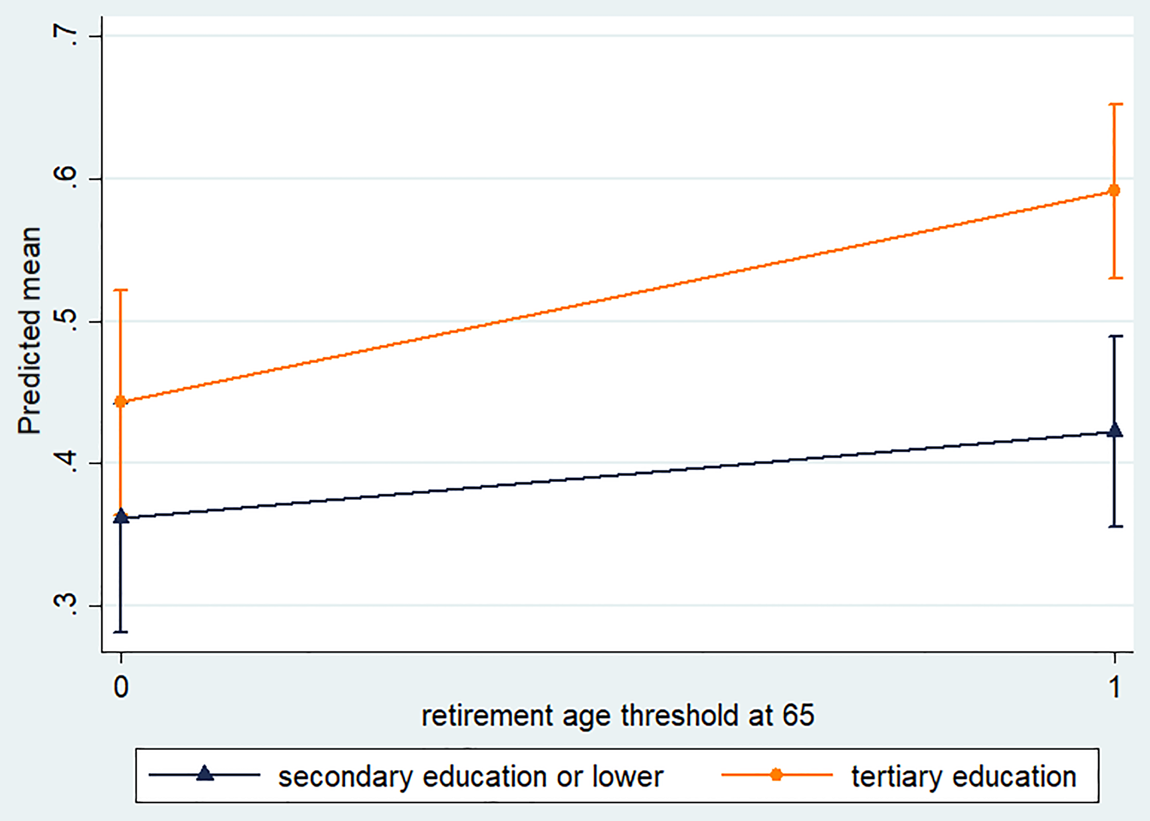
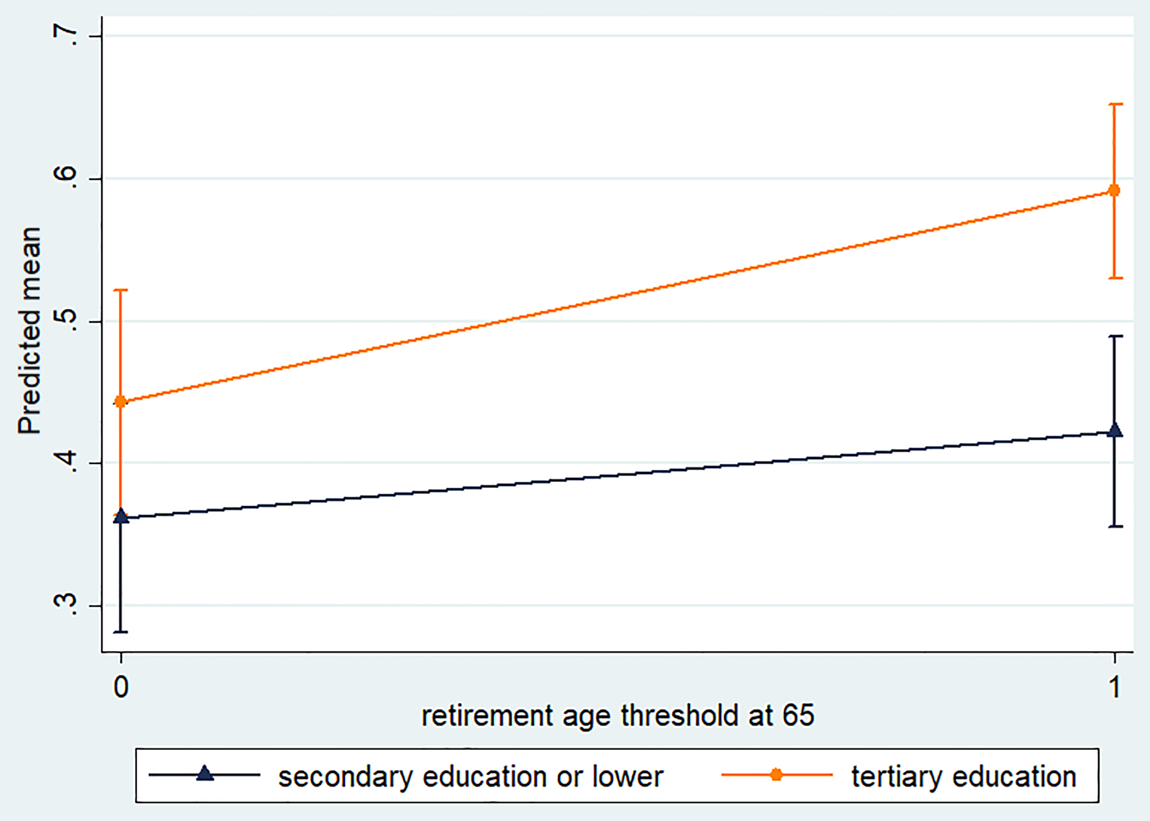
Model 5 confirms the different effect of education across countries. In the final model, a question is raised about whether the effect of education depends on the statutory retirement age of men in the country. For this purpose, a cross-level interaction term is introduced. The interaction term returns are significant (p = 0.008). The effect is visualised in Figure 3. If all other variables are kept constant, men with tertiary education gain the most from increasing retirement age because increase in participation probability is steeper than for men with lower education levels. The difference in probability of learning participation in countries with retirement age at 65 or above and below this threshold is 15 percentage points for men with tertiary education (p = 0.003) and 6 percentage points for men with lower educational level (p = 0.27).
Predicted probability of participating in non-formal learning for men aged 50+ by education and country's statutory retirement age, with 95 per cent confidence intervals.
Source: Adult Education Survey, 2011; Mutual Information System on Social Protection (MISSOC) database; Eurostat (European Union Statistics on Income and Living Conditions; EU-SILC), author's calculations.
The second set of models focuses on learning participation among women after the age of 50 (Table 3). Based on the first model, women have an equal chance of being among participants or non-participants as the regression coefficient is positive but insignificant (p = 0.67). When no covariates are added to the model, the ICC amounts to 0.08, indicating that about 8 per cent of the cross-country variance in non-formal learning participation in the 50+ age group can be attributed to differences at the country level.
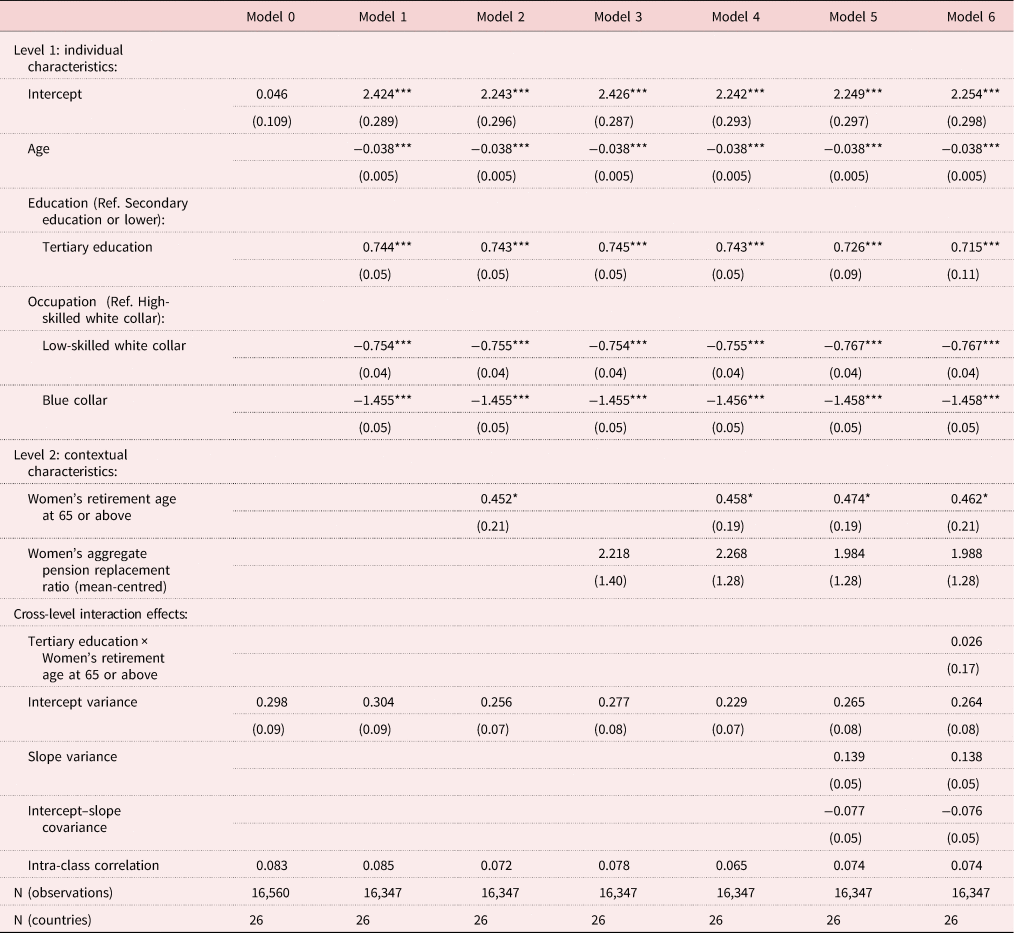
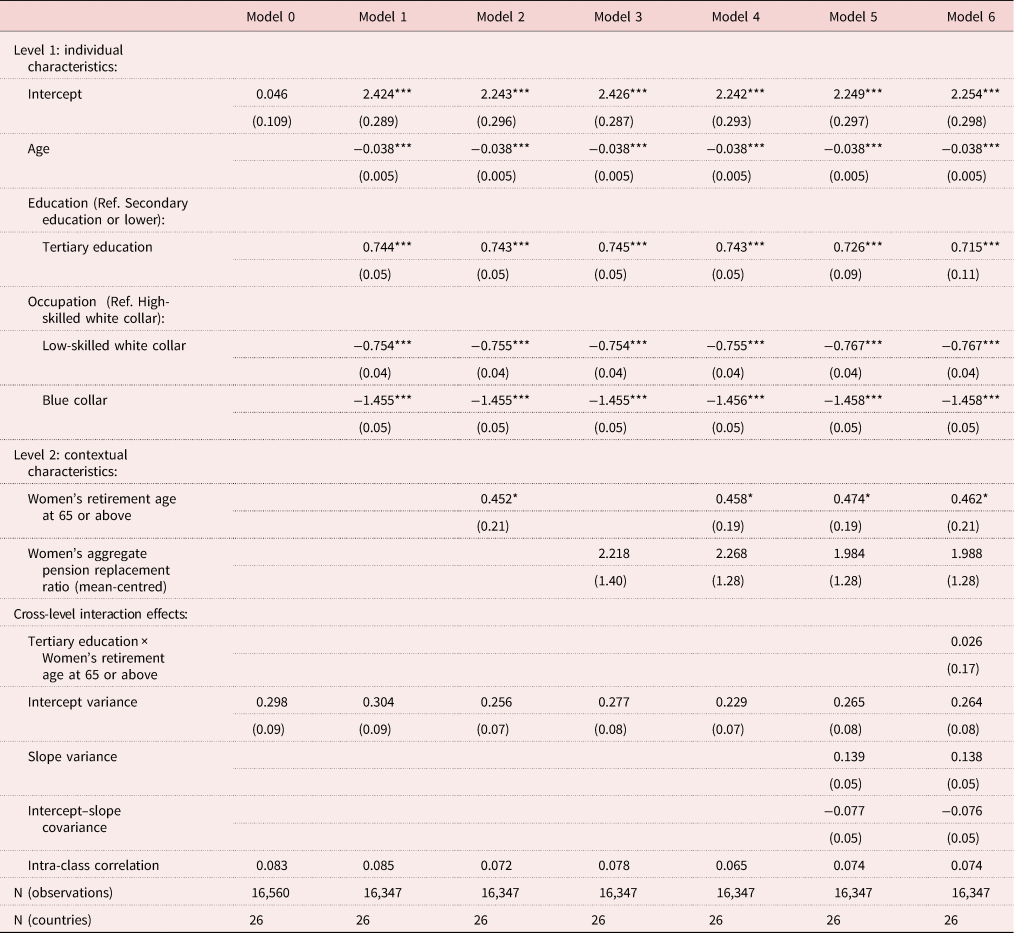
Multi-level logistic regression coefficients, institutional deteminants of participation in non-formal learning of women aged 50–64
Note: Ref.: reference category.
Source: Adult Education Survey, 2011; Mutual Information System on Social Protection (MISSOC) database; Eurostat (European Union Statistics on Income and Living Conditions; EU-SILC), author's calculations.
Significance levels : * p < 0.05, *** p < 0.001.
The effects of individual-level coefficients (Model 1) are in line with those observed for men. Participation in non-formal learning decreases with age (coefficient = −0.04), tertiary education increases the probability of participation in learning as compared to all lower educational levels (coefficient = 0.74) and participation decreases with each consecutive occupational group.
Models 2 and 3 add contextual factors: the country-level retirement age and replacement rate for women, respectively. Retirement age is a significant predictor of women's participation in learning because women in countries with higher retirement age thresholds (at 65 or above) are more likely to participate in non-formal learning than those in countries with lower retirement age thresholds (b = 0.452, p = 0.03). After accounting for all the individual-level variables and retirement age in the model, ICC is reduced to 0.072 – a 13 per cent reduction compared to the baseline model. Thus, retirement age accounts for a slightly lower share of the cross-country variation than in the models for men. Similarly to men, pension replacement rates are not a significant predictor of learning after the age of 50 for women (Model 3; p = 0.11) and the variance explained remains accordingly low (6% reduction in ICC compared to Model 0).
When accounting for all individual and contextual variables simultaneously in one model (Model 4), 6.5 per cent of the cross-country variation remains to be explained by unobserved differences between the countries analysed. Thus, retirement age policies manage to explain a larger part of the variation in learning participation among women than is the case with men. Accordingly, the individual and contextual variables in the model explain about 22 per cent of the cross-country variance in learning participation compared to the baseline model, being 4 percentage points higher than in the models for men.
Similarly to men, the paper further explores the effect of education in a series of random slope models. In Model 5, a random slope is added to the full model. Comparing the models with (Model 5) and without the random slope (Model 4) with a likelihood ratio test confirms that the effect of education indeed varies across countries (p < 0.001). Like among men, the covariance estimate between the intercepts and slopes is negative, indicating that in the case of higher probability of participation in learning, education effects tend to be lower. Based on Model 5, the between-community variance estimate stands at 0.265 for secondary education or lower and 0.25 for tertiary education. Thus, while there is a difference in cross-country variations by education level, the differences are very small compared to that among men. The same conclusion is supported by Model 5 with a cross-level interaction between education and women's retirement age. The interaction term for women remains insignificant (p = 0.88), thus suggesting that the effect of retirement age on learning participation does not differ by education level at the 95 per cent confidence level.
Discussion and conclusions
This paper is focused on the analysis of participation in non-formal learning in the 50+ age group and its interactions with retirement policies in a sample of 26 European countries. Making use of a unique data-set combining micro-data from the 2011 AES from Eurostat with data on retirement policies from the MISSOC and EU-SILC from Eurostat, it is possible to analyse learning participation in late career stages based on the largest available data-set in European countries on adult learning. As a result, it has been possible to widen the scope of analysis to countries that have acceded to the EU since 2004. For the first time, gender differences in the conditions of retirement are considered. Further evidence is provided on the differentiating effects of educational attainment on learning participation in different retirement policy contexts.
Participation in learning declines with age among the employed population in most European countries. However, there are considerable differences in this decline across countries as well as within countries between men and women. This suggests there are institutional differences that may play a role in shaping learning participation after the age of 50. Based on the human capital theory, it is argued that the motivation to invest in education and training declines as retirement and expected exit from the labour market approaches and the period for balancing out the investments shortens (Fouarge and Schils, Reference Fouarge and Schils2009).
Previous research finds, based on evidence collected from the Netherlands, Italy, Switzerland and a smaller selection of European countries (13) with higher retirement age, that learning participation among older age groups is also higher (Fouarge and Schils, Reference Fouarge and Schils2009; Montizaan et al., Reference Montizaan, Cörvers and De Grip2010; Battistin et al., Reference Battistin, Brunello, Comi and Sonedda2013; Brunello and Comi, Reference Brunello and Comi2015; Bauer and Eichenberger, Reference Bauer and Eichenberger2017). However, earlier research has not discussed the gender differences for these effects. Based on multi-level logistic regression models on a sample of 26 European countries, the results from this study suggest that the statutory retirement age plays a different role in shaping learning participation between women and men. For women, retirement age is indeed a significant factor explaining learning participation in the 50+ age group. As expected, probability of women's participation in learning is higher in those countries where the retirement age threshold is higher (at 65 or above). However, contrary to the earlier findings outlined above, for men, retirement age alone is not a statistically significant factor explaining learning participation among employed men in the 50+ age group. Only when we take into account the differing effects by educational attainment does retirement age become significant. For women, education does not play a differing role in various retirement policy contexts.
The results imply that the probability of men's participation in learning does not differ by retirement age for those with a lower educational attainment (secondary education or lower). However, the probability of men taking up learning later in life is higher in countries with a higher retirement age threshold (at age 65 or above) only for those with tertiary education. This effect is opposite to that suggested by findings based on male employees in the Dutch public sector, where larger implications were found for people with a lower educational attainment (Montizaan et al., Reference Montizaan, Cörvers and De Grip2010). These apparent differences compared to earlier research may be due to several reasons. First, compared to earlier research, a larger sample of countries is included in the analysis with more variety in learning patterns among men. It needs to be kept in mind that learning participation in the Netherlands is relatively high compared to other European countries (e.g. Cedefop, 2015), meaning that workers with a low level of education may be more prone to adjusting their learning behaviour as well depending on the expected length of employment. Also, less-educated employees in the public sector are likely to have better access to learning compared to less-educated employees in the private sector, as suggested by high learning participation in public-sector domains (Cedefop, 2015).
Second, compared to earlier research, the policy context has changed. Men's statutory retirement age has been increasing faster compared to women's. The results reflected in this paper may be a result of the shifting retirement policy context, which has not been accompanied by a comparable increase in learning participation. One hypothesis may be raised that an increase in less-educated men's learning participation has not been able to keep up the pace compared to the increase in retirement age. As the research is based on cross-sectional survey data, exploring this hypothesis further needs longer data timelines on learning participation, which could be a subject for further research. However, the results of the models including cross-level interactions need to be treated with some reservations as the sample of countries sufficient for these more complicated models is higher than for models with no random slopes or cross-level interactions (Stegmueller, Reference Stegmueller2013).
Finally, the effect of generosity of pension schemes in shaping learning participation in late career stages was analysed. The results imply no significant effect of the replacement ratio of pensions on the probability of participation in non-formal learning for men or women. This finding does not confirm the hypothesis raised based on previous research, which found a significant effect for generosity of pensions on training participation (Bassanini et al., Reference Bassanini, Booth, Brunello, De Paola and Leuven2005; Fouarge and Schils, Reference Fouarge and Schils2009). Rather, this result may suggest that the effect is not significant in a larger sample of countries, while there can be individual differences within some countries. Adding more variables, particularly household income, to the analysis may also have an impact on this result. It was not possible to pursue this hypothesis further in the current research due to the large number of missing data on the income variable. Therefore, this topic could be subject to further research.
The current research reflects some important implications. First, excluding gender from analysing participation in learning in the 50+ age group may lead to misleading results in terms of the effects of institutional conditions. In particular, men and women have been impacted by a different institutional context in terms of retirement in many countries, and their take-up of learning differs considerably. This paper provides, for the first time, empirical evidence that the role of retirement age in shaping learning participation differs for women and men.
Second, it is equally important to consider the effect of prior educational attainment. As shown empirically, it is particularly highly educated men who benefit from higher retirement age in terms of higher participation in learning, while there seems to be no significant effect among those with lower educational attainment. This finding implies that highly educated workers are more motivated to invest in their human capital to maintain employability for the remainder of their expected working career. At the same time, for less-educated workers, the motivation is not higher in the case of longer working careers.
There are also considerable policy implications. In particular, it is important not to overestimate the role of increasing retirement age as a lifelong learning measure for motivating investments in the human capital of older workers. It has been implied that increases in minimum retirement age may be a much more effective tool to promote the training of older workers than ‘proper’ traditional training policies, which consist of subsidising workers and firms (Battistin et al., Reference Battistin, Brunello, Comi and Sonedda2013). Research results in the current paper show that taking into account individual-level variables (education, age and occupation) and retirement policy indicators (statutory retirement age and replacement ratio of pensions) accounts for 22 and 18 per cent of cross-country variance in learning participation among women and men, respectively. Hence, retirement policies explain only part of cross-country variations in learning participation. This implies that other policy areas need to be considered as well in order to understand differences in taking up learning in late career stages. Hence, future research should take into account the confounding effects of various policy areas in motivating investments in human capital of older workers by employees themselves as well as by employers, like education and training systems, and labour market and welfare systems (Saar et al., Reference Saar, Ure and Desjardins2013).
The results of the current paper also refer to important emerging inequalities in old age. The results show that highly educated men, in particular, reap the benefits of higher retirement age in terms of participation in training. Hence, while women and highly educated men indeed have higher participation in learning in countries where the retirement age is set at a higher threshold, less-educated men tend to be left behind in these developments. This can lead to earlier labour market exits and higher unemployment among older men with low educational attainment. Hence, it is important to keep in mind that the particular challenges and barriers to learning are addressed for all potential participants in learning, enabling equal access to education and training as retirement age is increasing and working careers become longer.
Although several results in the current paper are contrary to that expected based on previous research, this outcome should not imply that assumptions made based on earlier research are no longer valid. The current research benefits from a sample of countries larger than in any previous research in the field. However, this also means certain generalisations need to be made. It is equally important to consider the policy effects and institutional set of each country in order to understand fully the institutional effects on learning participation in old age. Previous research evidence and the results from the current paper together imply that the effects of ageing on learning participation differ across European countries depending on their different contextual and institutional set-up. Thus, the current paper is a valuable addition to previous knowledge and demonstrates that access to learning in late careers is experienced differently depending on the mix of individual factors, such as gender and education, and the different institutional contexts across Europe.