The prenatal diagnosis of CHD creates a clinical and psychosocial paradox. Pregnancy management radically changes, grief for the loss of a “normal” pregnancy and “normal” child ensues, and social and financial stresses are placed upon the entire family.Reference Rychik, Donaghue and Levy 1 All this occurs for the goal of improving care of the child. Delivery represents a peaking of the conflict between infant well-being and maternal psychosocial support. Typically, pregnancy is considered “high risk,” and delivery occurs in a medically intensive environment, with greater monitoring, fewer family members, and more medical personnel present, and a greater likelihood of induction or Caesarean delivery.Reference Dadlez, Brubaker, Simpson, Yilmaz and Williams 2 Immediately after birth, the infant is handed to a waiting resuscitation team and often progresses very quickly to an ICU environment – potentially in a different hospital – after minimal physical contact with the parents. Once in the ICU, intravenous access is established, prostaglandins are started if necessary, and opportunities for parental–child bonding become even more limited.
This tremendous and well-intentioned effort stands in contradiction to the natural history of neonatal CHD.Reference Bonchek, Starr, Sunderland and Menashe 3 – Reference Schultz, Localio, Clark, Ravishankar, Videon and Kimmel 7 With relatively rare exceptions, newborns with CHD will not manifest haemodynamic instability immediately after birth.Reference Bonchek, Starr, Sunderland and Menashe 3 , Reference Morris, Outcalt and Menashe 4 , Reference Schultz, Localio, Clark, Ravishankar, Videon and Kimmel 7 The ductus arteriosus maintains patency for hours after delivery,Reference Popat and Kluckow 5 , Reference Reller, Ziegler, Rice, Solin and McDonald 6 which supports the recommendation to perform pulse oximetry screening at 24 hours after birth to minimise false-positive results.Reference de-Wahl Granelli, Wennergren and Sandberg 8 – Reference Ewer, Middleton and Furmston 11 For the mother, immediate bonding after birth increases attachment and decreases maternal anxiety,Reference Feldman, Rosenthal and Eidelman 12 whereas infants demonstrate greater temperature and cardiorespiratory regulation.Reference Moore, Anderson, Bergman and Dowswell 13 Successful breastfeeding is also more likely to occur.Reference Moore, Anderson, Bergman and Dowswell 13 , Reference Jaafar, Ho and Lee 14 Most critically for infants both with and without CHD, all of these benefits occur within an “early sensitive period.”
The concept of an “early sensitive period” has been demonstrated both in human and animal studies,Reference Feldman, Rosenthal and Eidelman 12 , Reference Moore, Anderson, Bergman and Dowswell 13 and in humans it corresponds to a 2-hour window after birth of increased infant alertness and vocalisation that prime reciprocal interaction.Reference Moore, Anderson, Bergman and Dowswell 13 Efforts to bolster this early sensitive period with early maternal–infant skin-to-skin contact and early breastfeeding improves both infant and mother long-term outcomesReference Feldman, Rosenthal and Eidelman 12 , whereas poor early bonding leads to worse later bonding up to 1 year of age.Reference O’Higgins, Roberts, Glover and Taylor 15 These benefits are lost if maternal–infant bonding does not occur during this “early sensitive period” even if mother and infant are reunited later,Reference Bystrova, Ivanova and Edhborg 16 which is the scenario created by any urgent transfer of an infant with CHD to an ICU environment. Fortunately this “early sensitive period” corresponds with the same period during which ductal patency has been demonstrated to be preserved.
Knowledge of the natural history of CHD and the ductus arteriosus, coupled with knowledge of the benefits of maternal–infant bonding, thus raises an important question: Is the rapid intensification of newborn medical care, which limits maternal–child interaction, successfully treating the infant, or instead palliating the anxiety of the medical team? Or asked another way: Is current medical practice interfering with an even more critical intervention for the health of the infant and mother, namely the opportunity for early bonding, immediate skin-to-skin contact, and early breastfeeding?
As a first step towards answering this question, this single-centre observational study evaluated the impact of initiating a formalised maternal–infant bonding programme on the safety and early outcomes of infants with prenatally diagnosed CHD.
Methods
Bonding algorithm
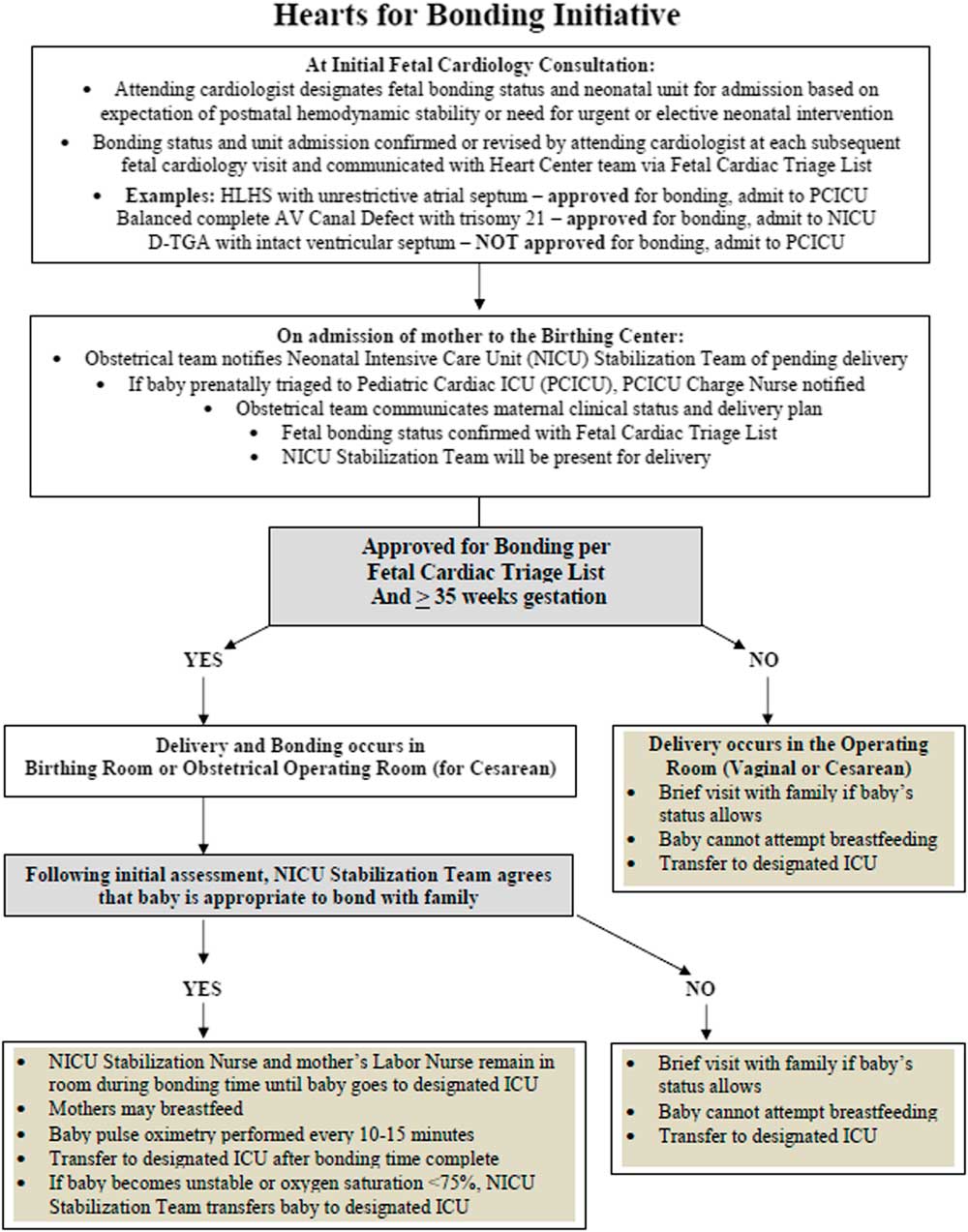
The Duke “Hearts for Bonding” algorithm was developed in collaboration among Advanced Practice Nursing, Pediatric Cardiology, Maternal-Fetal Medicine, Neonatology, Pediatric Cardiothoracic Surgery, and Pediatric Critical Care (Fig 1). In the algorithm, bonding duration is targeted to be 30 minutes beyond the time of initial resuscitation, with an ICU nurse always present in case of patient deterioration and to check infant oxygen saturation every 10–15 minutes during maternal–infant contact. Fetuses are designated as either “approved” or “not approved” for bonding by the attending cardiologist at the time of the initial fetal cardiology consultation based on the expectation for postnatal haemodynamic instability and need for elective or urgent neonatal intervention. In addition, the ICU for neonatal admission (pediatric cardiac ICU versus neonatal ICU) is designated at the initial Fetal Cardiology consultation based on similar expectations and the presence of additional non-cardiac diagnoses. Bonding status and ICU admission location are confirmed or revised by the attending cardiologist at each subsequent Fetal Cardiology visit, and these designations are communicated to all the provider teams via a fetal cardiac triage list.
Bonding algorithm.

Designation of bonding status
On the basis of natural history data, an infant in whom haemodynamic stability is expected for several hours after birth, with or without ductal patency, is approved for bonding immediately after delivery. In contrast, infants expected to be immediately unstable, regardless of ductal status, are not approved to bond and are transported directly to an ICU after neonatal resuscitation. Although it is not possible to provide a truly comprehensive list of diagnoses that are “approved” or “not approved” for bonding, examples of diagnoses “approved” for bonding include hypoplastic left heart syndrome or other forms of functional single ventricle without atrial septal restriction (admitted to pediatric cardiac ICU), tetralogy of Fallot in almost all of its variations (unit admission determined by expected degree of pulmonary stenosis), or balanced atrioventricular canal defect with trisomy 21 (admitted to neonatal ICU). Examples of diagnoses “not approved” to bond include D-transposition of the great arteries with intact ventricular septum, tetralogy of Fallot with absent pulmonary valve, severe Ebstein’s anomaly of the tricuspid valve, total anomalous pulmonary venous connection (all types), complete heart block, intractable fetal arrhythmia, heart disease of any type associated with hydrops fetalis, or infants with critical non-cardiac abnormalities such as congenital diaphragmatic hernia, open neural tube defect, or craniofacial abnormalities at risk for immediate airway compromise.
Deferral of approved bonding
The algorithm includes strict criteria for making a decision at the time of delivery to defer bonding even when prenatally approved and planned. Examples of delivery scenarios in which the leader of the neonatal resuscitation team decides that approved bonding should not occur include respiratory distress associated with meconium aspiration, neonatal depression, prematurity (<35 weeks’ gestation), growth restriction (<2 kg at delivery), or significant hypoxaemia. The neonatal resuscitation team is in attendance at all fetal cardiac deliveries.
Data collection
Retrospective review of the institutional Fetal Cardiology Quality Improvement Database was performed to identify all patients who had a fetal echocardiogram from January, 2011 to December, 2013. The study was approved by the Duke University Institutional Review Board with waiver of informed consent. Inclusion criteria were any structural heart disease, arrhythmia, cardiac dysfunction, or hydrops fetalis. Exclusion criteria included in utero fetal demise, termination of pregnancy, delivery at another facility, planned palliative care, or absence of heart disease on postnatal assessment. For patients determined to have absence of heart disease – for example, potential coarctation of the aorta on fetal imaging, with normal aortic arch on postnatal assessment – the final diagnosis selected for analysis was based upon the last echocardiogram performed before neonatal discharge. Data collected included the fetal cardiac diagnosis, whether bonding was approved or not, if bonding occurred as planned, or reason why bonding did not occur despite being planned. We also collected data on gestational age at delivery, birth weight, date and time of delivery, method of delivery, and non-cardiac diagnoses. Complications attributable to bonding were assessed by review of delivery room, infant admission and discharge notes, and surrogate markers of instability. These markers included Apgar scores, whether cardiac intervention – surgery or catheterisation – was required before hospital discharge, need for non-elective intubation, number of days requiring mechanical ventilation, need for inotropic support before cardiac intervention, ICU and hospital lengths of stay, and survival to discharge. Bonding assignments were not changed for perinatal co-morbidities that could not be reliably anticipated – prematurity, low birth weight, and so on – leaving bonding management to be determined by algorithm criteria.
Bonding classification
Patients were divided into three groups based on the Fetal Cardiology bonding plan and whether or not bonding successfully occurred – Group I: bonding both approved and occurred after delivery; Group II: bonding approved but did not occur owing to the infant being deemed not suitable for bonding at the time of delivery; Group III: not approved for postnatal bonding because of anticipated neonatal instability and/or expected need for emergency intervention. For analysis purposes, to be considered to have bonded the infant must have remained with the mother with an opportunity for skin-to-skin contact and breastfeeding for at least 10 minutes beyond the time spent for neonatal resuscitation, evaluation, and intermittent pulse oximetry.
Statistical methods
We used standard summary statistics including counts (percentages) and medians (25th and 75th percentiles) to describe all categorical and continuous variables. The primary analysis compared patients who underwent successful bonding with those in whom bonding was planned but did not occur (Group I versus Group II). We performed separate secondary analyses comparing (1) patients who successfully bonded with those who did not, regardless of prior bonding plan (Group I versus Groups II and III), and (2) patients in whom bonding was planned but did not occur with those who were deemed prenatally not to be candidates for bonding (Group II versus Group III). We then repeated primary and secondary analyses in a cohort of patients with cyanotic and single-ventricle lesions. We used Wilcoxon rank sum, Kruskal–Wallis, Fisher’s exact, and χ2 tests of association to compare the distribution of study variables across groups as appropriate.
Finally, we performed multi-variable logistic regression to evaluate the association between bonding and the occurrence of non-elective intubation or inotropic support, controlling for the following a priori determined covariates: type of heart disease (categorical variable), gestational age in weeks (continuous variable), birth weight in kg (continuous variable), method of delivery (categorical variable), and 5-minute Apgar (categorical variable). We performed all analyses in Stata 14.1 (StataCorp, College Station, Texas, United States of America) and considered p<0.05 to be statistically significant.
Results
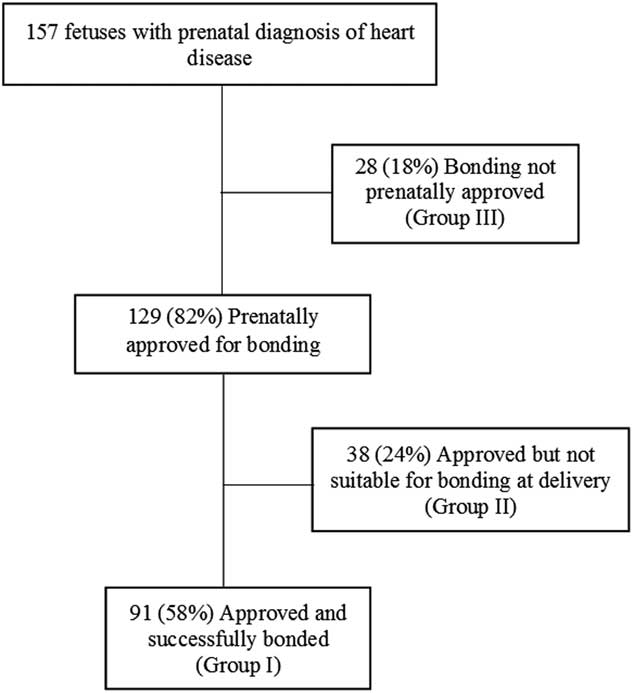
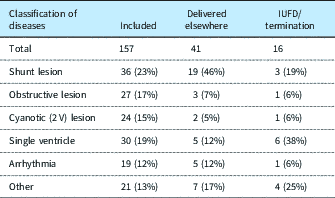
We identified 227 abnormal fetal echocardiograms in 226 pregnancies, with one set of twins who both had CHD (Table 1). A total of 70 patients were excluded owing to delivery at another facility (41); in utero demise (eight); termination of pregnancy (eight); planned palliative care (two); and absence of heart disease on postnatal assessment (11). Fetal diagnoses in which in utero demise occurred included atrioventricular canal defect, hypoplastic left heart syndrome or its variants, fetal cardiac rhabdomyomas with maternal tuberous sclerosis, hydrops fetalis associated with a large hepatic arteriovenous malformation, and fetal complete heart block. Elective termination was chosen for fetal diagnoses of hypoplastic left heart syndrome or its variants, unbalanced atrioventricular canal defect, or chromosomal abnormalities (trisomy 21 or trisomy 18). Postnatal palliative care was chosen for one fetus with severe cardiomyopathy and one fetus with in utero hepatitis A infection. Of the 11 fetuses without heart disease on postnatal assessment, four were suspected of having small-to-moderate-sized ventricular septal defects, five were considered at risk for coarctation of the aorta, and two had frequent premature atrial contractions that resolved before delivery. A total of 157 infants were therefore included for analysis (Fig 2).
Subject selection.

Summary cohort data.

IUFD = intrauterine fetal demiseClassification of heart disease:
∙ Shunt lesions: ventricular septal defects, atrial septal defects, or balanced atrioventricular septal defects
∙ Obstructive lesions: amenable to a two-ventricle repair, including aortic stenosis, pulmonary stenosis, or aortic arch obstruction
∙ Cyanotic lesions: amenable to a two-ventricle repair, including tetralogy of Fallot and all its variations, D-transposition of the great arteries
∙ Single ventricle: all defects requiring single-ventricle palliation
∙ Arrhythmias: persistent and frequent atrial or ventricular ectopy, tachyarrhythmias, and complete heart block.
∙ Other heart disease: cardiomyopathy (all types including non-compaction and complications of twin–twin transfusion syndrome), Ebstein’s anomaly of the tricuspid valve, congenital mitral insufficiency, vascular ring, cardiac tumour, non-immune hydrops fetalis, and ectopia cordis
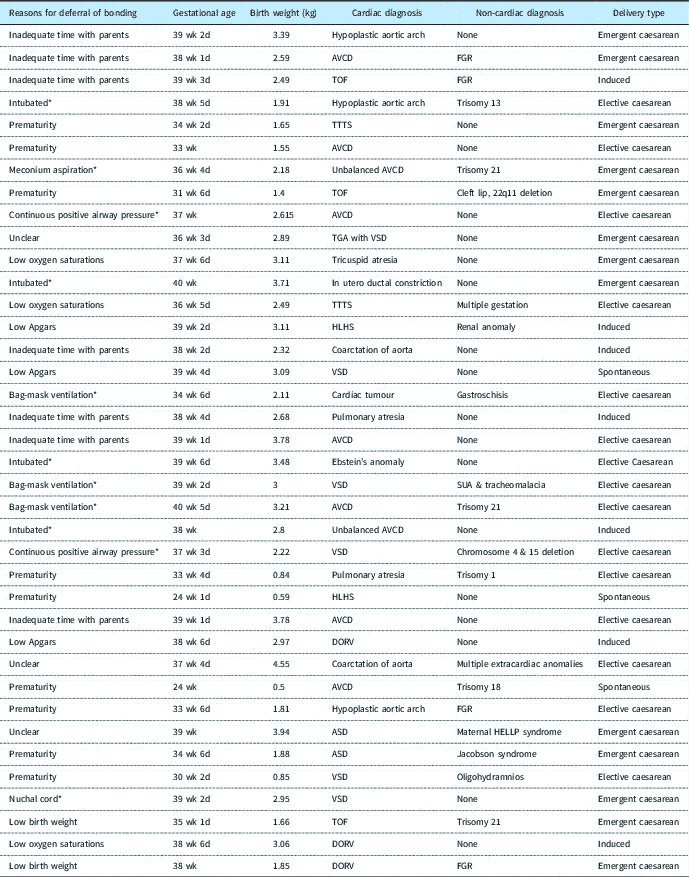
There were 91 infants (58%) in Group I (bonding planned and occurred), 38 infants (24%) in Group II (bonding planned but did not occur), and 28 infants (18%) in Group III (bonding not approved). Data for Group II infants are presented in Table 2. Reasons why bonding did not occur despite being planned in this group included respiratory distress requiring positive pressure ventilation (11), prematurity with gestational age <35 weeks (nine), persistently low oxygen saturations (below 70%) without distress (three), low 5-minute Apgar score without distress (three), and birth weight <2 kg (two). Choice of age and weight limits for prematurity and growth restriction as reasons for deferral of bonding were defined a priori as described in the “Methods” section owing to Neonatology concerns for lung disease or other abnormalities secondary to prematurity, or inadequate temperature/glucose regulation in the setting of growth restriction. Reason for deferral of bonding was unclear in 10 infants, with bonding time documented at <10 minutes without any instability in the patient or other documented rationale for failure to follow protocol. In all patients in whom bonding was planned but did not occur, the decision to forgo bonding was made during the initial infant assessment and stabilisation period, and these infants were transferred to the ICU within 10 minutes of birth. No mother requested to forego bonding for infants prenatally approved for bonding.
Group II characteristics.

ASD=atrial septal defect; AVCD=atrioventricular canal defect; d=days; DORV=double outlet right ventricle; FRG=fetal growth restriction; HELLP=haemolysis elevated liver enzymes low platelets; SUA=single umbilical artery; TGA=transposition of great arteries; TOF=tetralogy of Fallot; TTTS=twin–twin transfusion syndrome; VSD=ventricular septal defect; wk=weeks
Inadequate time with parents is the documentation of <10 minutes bonding time; unclear is no indication documented in in medical record of why bonding was deferred.
* Respiratory distress
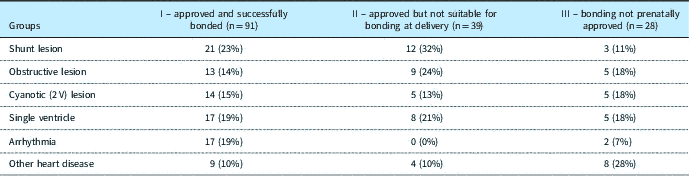
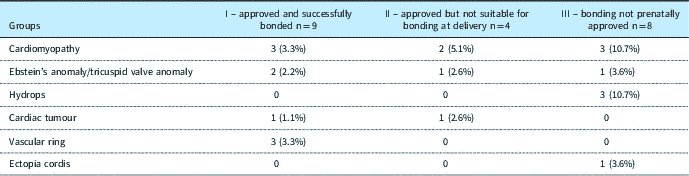
Types of heart diseases statistically differed when compared across the three groups (Table 3a) (p=0.039). Arrhythmias were more frequent in the group that bonded, whereas diagnosis of “other heart diseases” (Table 3b) was more common in the group in which bonding was not approved. When analysis was performed comparing infants who bonded successfully with those in whom bonding was approved but did not occur owing to the infant being deemed not suitable for bonding at delivery (Groups I versus II), there was no significant difference in type of heart disease (p=0.093). When Group I was compared with both II and III combined together, type of heart disease approached but did not reach statistical significance (p=0.055).
Heart disease and bonding outcome.

Other heart disease and bonding outcome.

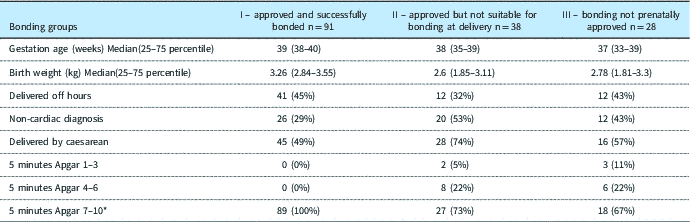
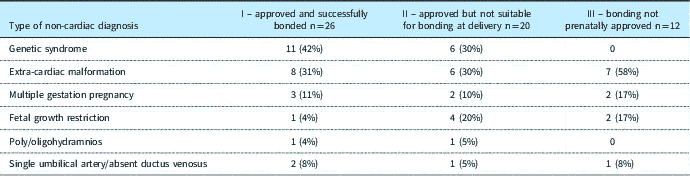
Several birth characteristics were different between the groups (Table 4). Infants who successfully bonded were at older gestation (median Group I=39 weeks, II=38 weeks, p<0.001) and higher birth weight than those who did not bond (median Group I=3.26 kg, II=2.6 kg, p<0.001). Infants who bonded were less likely to be delivered by Caesarean section (Group I=49%, II=74%, p=0.011), but there was no significant difference between the groups in time of delivery – that is, during routine daytime hours or off hours (evenings, nights, and weekends). Infants who successfully bonded were less likely to have an additional non-cardiac diagnosis compared with those who were deemed not suitable for bonding after birth (Group I=29%, II=53%, p=0.014), but the types of non-cardiac diagnoses were not significantly different between the three groups (Table 5). Infants who successfully bonded had higher Apgar scores at 5 minutes (p<0.001). When comparing Group II with Group III, there were no statistically significant differences in these variables.
Birth characteristics and bonding.

Data shown are counts (%) unless otherwise indicated
* Apgar data were not documented for two patients in Group I, and one each in Groups II and III
Non-cardiac diagnoses and bonding outcome.

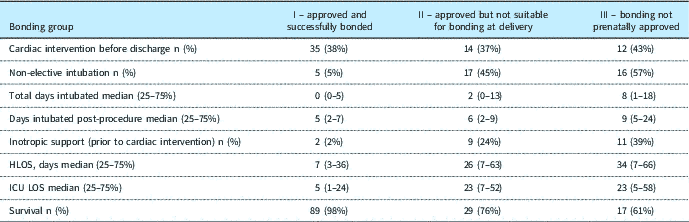
No complications attributable to maternal–infant bonding occurred in the group that successfully bonded. Surrogate markers for instability were also favourable for infants who successfully bonded (Table 6). Infants who successfully bonded (Group I) were less likely to need inotropic support before cardiac intervention (2 versus 24%, p<0.001), or require non-elective intubation (5 versus 45%, p<0.001), and had shorter ICU (median 5 versus 23 days, p=0.002) and hospital lengths of stay (median 7 versus 26 days, p=0.02) compared with infants who were deemed not suitable to bond at the time of delivery (Group II). However, the need for cardiac intervention before hospital discharge was not different between the groups. The group that bonded (Group I) had a higher survival compared with Group II (98 versus 76%, p<0.001), with both deaths in Group I occurring after cardiac intervention. One death was due to elective withdrawal of care after Stage I palliation in an infant with hypoplastic left heart syndrome with late diagnosis of trisomy 13 and one death was in a patient with unbalanced atrioventricular septal defect who had severe postoperative atrioventricular valve regurgitation requiring ECMO support and died from multi-organ failure at day of life 53. For Group II, two of the nine deaths were after cardiac intervention, as were four of the 11 deaths in the group not approved for bonding (Group III). There were no statistically significant differences in outcome measures between those in whom bonding was planned but did not occur (Group II) and those in whom bonding was not approved (Group III).
Surrogate markers for instability and bonding.

HLOS=hospital length of stay
When only cyanotic and single-ventricle infants were compared, infants who bonded (Group I) remained less likely to need inotropic support before cardiac intervention (3 versus 31%, p=0.009), or require non-elective intubation (6 versus 54%, p<0.001), and had a higher survival (94 versus 69%, p=0.032) compared with Group II. Differences in ICU (median 15 days versus 30 days) and hospital lengths of stay (median 30 versus 44 days) were no longer significantly different. In this sub-group analysis, there were no statistically significant differences between Groups II and III.
In multivariate analysis, the group that was deemed not suitable to bond at delivery remained more likely to require non-elective intubation or preoperative inotropic support when compared with the group that successfully bonded (odds ratio 3.47, 95% confidence interval 1.01, 11.92).
Discussion
This study highlights three important findings. First, immediate postnatal bonding between mothers and infants with prenatally selected types of CHD does not place those infants at higher risk of perinatal instability or short-term complications. Second and reflective of this first finding, fetal echocardiography can successfully identify which infants can safely bond after delivery, assuming the absence of complications such as prematurity, growth restriction, respiratory distress due to meconium aspiration, or neonatal depression. For the cases in which bonding was approved but did not occur due to the infant being deemed not suitable for bonding at the time of delivery, the reasons were not related to the cardiac disease. Instead, decisions to defer bonding were typically secondary to non-cardiac problems, such as prematurity, respiratory distress due to meconium aspiration, and so on. A component of the choice to defer planned bonding also probably reflected provider discomfort with the initial implementation of the bonding algorithm. This is best and most specifically represented by one instance of an infant not being allowed to bond owing to the documented reluctance of the Pediatric House Officer attending the delivery despite all bonding criteria being met. Third, infants who successfully bond are of greater gestational age at delivery, have a higher birth weight, less likelihood of Caesarean delivery, higher Apgar scores, and less escalation of care before intervention or discharge.
The primary finding that postnatal bonding did not result in perinatal instability is not surprising given the natural history of the neonatal ductus arteriosus. In a study examining echocardiograms performed within 4 hours of delivery (median 3 hours 22 minutes), a patent ductus arteriosus was present in all healthy term infants.Reference Popat and Kluckow 5 A second study reviewed serial echocardiograms in infants divided into three groups by gestational age at delivery (30–33 weeks, 34–37 weeks, term). Only one ductus was found to be closed in each group on the first echo, performed at a mean 7.7 hours after delivery, with subsequent ductus closure rates of 50–58% (mean 31 hours), 81–88% (55 hours), and 99% (80 hours), and no difference in closure rates based on gestational age at delivery in these three cohorts.Reference Reller, Ziegler, Rice, Solin and McDonald 6
The natural history of neonatal CHD is well established and has been incorporated into fetal echocardiography standards used to stratify perinatal risk and to direct speciality care.Reference Donofrio, Levy and Schuette 17 – Reference Punn and Silverman 21 Hypoplastic left heart syndrome with restrictive atrial septal defect, D-transposition of the great arteries with intact ventricular septum, tetralogy of Fallot with absent pulmonary valve, Ebstein’s anomaly of the tricuspid valve, persistent arrhythmias, and heart disease causing hydrops fetalis are all high-risk lesions that reliably produce haemodynamic instability; however, most other CHDs do not present immediately at birth. In a study reporting the prevalence of hypoplastic left heart syndrome in Oregon from 1979 to 1986, the median age at development of symptoms was 1 day, the median age at diagnosis was 4.1 days, and the greatest risk of death was at 3 days.Reference Morris, Outcalt and Menashe 4 A similar study on the natural history of tetralogy of Fallot recorded that 68% of infants were visibly acyanotic at birth, 5% had intermittent or mild cyanosis, and 19% had severe cyanosis.Reference Bonchek, Starr, Sunderland and Menashe 3 This natural history is incorporated into the current pulse oximetry screening protocols for CHD, with the optimal timing for detection and minimising false positives being approximately 24 hours after delivery.Reference de-Wahl Granelli, Wennergren and Sandberg 8 – Reference Thangaratinam, Brown, Zamora, Khan and Ewer 10 , Reference Frank, Bradshaw, Beekman, Mahle and Martin 22
Prenatal diagnosis of CHD has been demonstrated to create maternal stress, depression, and anxiety.Reference Rychik, Donaghue and Levy 1 , Reference Brosig, Whitstone, Frommelt, Frisbee and Leuthner 23 , Reference Sklansky, Tang and Levy 24 Prenatal stress can produce elevated maternal cortisol levels, which overwhelm placental compensatory mechanisms and lead to elevated fetal/amniotic cortisol levels.Reference Buitelaar, Huizink, Mulder, de Medina and Visser 25 , Reference Sarkar, Bergman, Fisk, O’Connor and Glover 26 Animals exposed to prenatal stress display increased fetal mortality and decreased birth weight, structural brain abnormalities, and cognitive impairments in offspring.Reference Chapillon, Patin, Roy, Vincent and Caston 27 , Reference Coe, Lulbach and Schneider 28 In humans, increased maternal cortisol levels have correlated with delayed motor and mental development in infancy,Reference Buitelaar, Huizink, Mulder, de Medina and Visser 25 which when coupled with the delayed brain maturation seen in fetuses with CHD may create a negatively synergistic impact on neurodevelopment.Reference Limperopoulos, Tworetzky and McElhinney 29 – Reference Miller, McQuillen and Hamrick 31
Postnatally, the process of normal maternal–infant bonding is at risk for infants with CHD, regardless of whether or not prenatal diagnosis occurred. Mothers of infants with CHD experience short- and long-term depression and anxiety.Reference Solberg, Dale, Holmstrom, Eskedal, Landolt and Vollrath 32 – Reference Gronning Dale, Solberg, Holmstrom, Landolt, Eskedal and Vollrath 34 This maternal depression may interfere with normal early bonding, and bonding problems may persist to 1 year.Reference O’Higgins, Roberts, Glover and Taylor 15 Maternal psychological stress is exacerbated in the setting of infants with severe CHD, with mothers more likely depressed at 6 months post-partum and the infants exhibiting maladaptive behaviours that may increase maternal depression and negate caretaking efforts, creating a cycle of maternal–child distraction.Reference Solberg, Dale, Holmstrom, Eskedal, Landolt and Vollrath 35
Implementation of a perinatal bonding programme creates an opportunity to favourably offset the negative factors associated with the prenatal diagnosis of CHD and improve outcome beyond the perinatal period. Early skin-to-skin contact in premature infants has been associated with increased maternal attachment, decreased maternal anxiety, and improved autonomic functioning, cognitive development, sleep organisation, stress response, and executive function in children persisting up to 10 years of age.Reference Feldman, Rosenthal and Eidelman 12 Mothers who experience early skin-to-skin contact with their full-term infants have increased oxytocin release, and decreased cortisol levels, perceived pain after surgical delivery, bleeding time, and time to placental expulsion. The infants also cried less, had slightly higher temperatures, and slightly slower heart and respiratory rates, consistent with a safe experience for both mother and child.Reference Moore, Anderson, Bergman and Dowswell 13 In a similar meta-analysis, exclusive breastfeeding was more likely to occur when mothers and infants were maintained in the same room as opposed to being separated.Reference Jaafar, Ho and Lee 14 , Reference Jaafar, Lee and Ho 36
It is notable but not unexpected that infants in whom bonding was approved and successfully occurred were delivered at later gestational age with greater birth weight, and subsequently better perinatal and hospitalisation outcomes, compared with the higher mortality in those who did not bond. This indicates the increase in risk when CHD is combined with prematurity,Reference Chu, Li, Kosinski, Hornik and Hill 37 low birth weight,Reference Anderson, Smith and Corey 38 or additional non-cardiac diagnoses. There has been an evolving trend in fetal cardiac management towards later delivery with less inductions or surgical deliveries,Reference Dadlez, Brubaker, Simpson, Yilmaz and Williams 2 with our practice following this trend during the study period. The importance of later gestational delivery is supported by registry data documenting worse outcomes for infants with CHD delivered before 39 weeks’ gestation, and even worse with delivery before 36 weeks.Reference Costello, Polito and Brown 39 , Reference Costello, Pasquali and Jacobs 40 Although associated non-cardiac defects did drive earlier deliveries in this study, severity of fetal heart disease (cyanotic versus single ventricle or need for postnatal intervention) by itself did not drive earlier deliveries, and was not associated with bonding success or overall outcome. Choice of ICU admission also was not related to bonding selection or success, but instead reflective of institutional architecture and care-team logistics.
Limitations of this study include the retrospective and single-centre observation design limiting the sample sizes of each group, and the selection bias inherent to the assignment of bonding status, with 10 out of 39 infants not having clear reasons for failure to bond. Although bonding duration was targeted for 30 minutes beyond neonatal resuscitation from the first use of the bonding algorithm, a bonding duration of at least 10 minutes beyond neonatal resuscitation was accepted for data analysis owing to the challenges faced with initial provider comfort with implementing this new approach to perinatal care. It is therefore theoretically possible that the outcome data may be confounded in the group of infants bonding for >10 minutes but <30 minutes, or for the 10 infants with unclear reasons for not being allowed to bond after delivery despite prenatal approval. Reassuringly, the absence of complications has persisted with the acceptance of a 30-minute duration for bonding as institutional standard of care. Similarly, while the intermittent assessment of infant oxygen saturation poses a risk for disruption of bonding, this assessment was performed with the infant in the mother’s care and only for the time needed to obtain an accurate reading.
Statistical analyses were also chosen primarily to assess the predictors and risks of successful bonding. The retrospective design limited documentation of specific complications; however, this time period was selected for review as it coincided with the initial years of the Hearts for Bonding programme. Heterogeneity of cardiac disease and small numbers of specific cardiac diagnoses prevented more detailed analysis of the trend seen in comparing type of heart disease between Group I and Groups II and III combined. Anecdotally, this trend is likely to reflect the critical granularity that exists between cardiac diagnoses, for example, the cyanotic heart disease category encompassing both D-transposition of the great arteries with intact ventricular septum versus D-transposition of the great arteries with ventricular septal defect, that is difficult to analyse in a single-centre study. While the prenatal assignment of bonding status created a selection bias favouring infants expected to be well after delivery, the expectations of postnatal stability are consistent with current Fetal Cardiology consensus, and the option to defer bonding based on the resuscitation team’s judgement provided a maximal amount of safety. Last, the decision to exclude infants with suspected heart disease on fetal imaging but who were found not to have heart disease on postnatal assessment was made to minimise any bias favouring safety of bonding. Important future steps should include extension of the maternal–infant bonding period from 30 minutes to the full 2 hours of the “early sensitive period,” cessation of intermittent pulse oximetry, use of an established bonding scale,Reference Taylor, Atkins, Kumar, Adams and Glover 41 and connection of a prospective cohort to longer-term neurodevelopmental follow-up.
Conclusion
Maternal–child bonding immediately after delivery can occur safely and without haemodynamic instability in appropriately selected infants with prenatally diagnosed CHD. This supports greater normalisation of perinatal care for both mother and infant, and has the potential to improve infant and maternal physical, psychosocial, and neurodevelopmental status.
Financial Support
Dr Hornik receives salary support for research from National Institute for Child Health and Human Development (NICHD) (1K23HD090239) and the United States government for his work in paediatric and neonatal clinical pharmacology (Government Contract HHSN267200700051C, PI: Benjamin under the Best Pharmaceuticals for Children Act).
Conflicts of Interest
None.
Ethical Standards
The authors assert that all procedures contributing to this work comply with the ethical standards of the relevant national guidelines on human experimentation and with the Helsinki Declaration of 1975, as revised in 2008, and was approved by the Duke University Institutional Review Board with waiver of informed consent.
Acknowledgements
The authors acknowledge the following for their important roles in this project: Hope Smith, RN, for her development of the “Hearts for Bonding Initiative” and her tireless efforts to implement it at Duke University Medical Center; Madden Brewster, who assisted with the literature review and preliminary data analysis; and the physicians, nurses, sonographers, and staff of the Duke Intensive Care Nursery, Maternal-Fetal Medicine, Pediatric Cardiac Intensive Care Unit, and Pediatric Cardiology divisions.