Introduction
Background
Infectious diseases in livestock result in high economic losses in Europe and worldwide. They also have potentially major impacts on the safety of European animal products, especially for food safety, animal welfare and public perception of livestock production industries. Further, due to the impacts of globalisation, i.e. increased movement of people and products, and climate change, new disease threats continue to emerge (Foresight Project, 2006). Hence, the management of infectious disease is of critical importance to the European livestock sector and is the subject of considerable ongoing research.
Disease control strategies include both prevention and cure, and may comprise decisions affecting the animal (e.g. vaccination, culling diseased animals, selection of resistant animals), the pathogen (e.g. chemotherapy) or the environment (e.g. biosecurity, sanitation). With the recent development of extensive high-throughput genomic tools that enable dissection of host responses to infection and comprehensive descriptions of host genetic variation, research efforts have increasingly turned to quantifying the genetic control of the host–pathogen interaction. Much is promised in terms of identifying critical host genes that may lead to either vaccine targets or possibilities for breeding animals for ‘disease resistance’; however, these promises do need to be critically evaluated. This paper concentrates primarily on host genetic variation in disease resistance, and then evaluates the opportunities to dissect and potentially exploit such variation.
The use of host genetic variation to help control disease should always be considered as part of a larger disease management strategy. Whilst it will be a valuable tool for some diseases, for other diseases it may be of low priority in relation to other disease control strategies, or maybe not even appropriate. A framework is required to determine when breeding for disease resistance is appropriate, and for which diseases it is possible to obtain the necessary genetic information to achieve this. A procedure is required that defines and ranks the importance of the major pathogens and infectious diseases of livestock species, and then overlays this with knowledge of host genetic control of resistance to each disease and the opportunities to use genomic tools to obtain such information. To our knowledge, such a procedure or summary does not exist.
This review aims to fill this gap. It briefly reviews the biology and evidence for host genetic variation in resistance to a variety of important infectious pathogens and livestock diseases, including those with the potential for causing food safety issues. The considered diseases were chosen based on their overall importance to livestock production industries in Europe and their likely amenability for host genetics research. It should be noted that the diseases covered vary greatly in their impact and also in the production systems within which they are found. For example, the parasitic diseases are generally only found in extensively managed populations, whereas some of the bacterial and viral diseases discussed are a feature of intensive livestock production systems. For this reason, the relative importance of different diseases may change if production systems change, e.g. if extensive organic production systems become more widespread.
Transmissible spongiform encephalopathies are excluded from this review, as they have been adequately addressed elsewhere. Diseases that previously have not been of widespread importance in Europe, but have or may become so with climate change, have been omitted in this review. These include Trypanosomiasis and Theileria, for which host genetic variation is well established, and Blue Tongue, a disease of current and growing concern, which has not yet been studied from a host genetic perspective.
Host species include poultry, cattle, pig, sheep and Atlantic salmon. A description of each disease, and its impacts, has been sourced from current reviews in the field (European Food Safety Authority (EFSA), 2005 and 2006), from scientific publications and from industry opinion. Further, and critically, this review provides a method to rank diseases according to their overall importance. An overall score is then assigned to each disease, defined as an ‘operational genomics’ or OG score, which ranks the amenability of that particular disease to genomic studies aiming to elucidate host genetic control of resistance. These scores can be compared both within and between species, and they can be updated as more information or better genomic tools become available. It is important to realise that these scores are not precise: they are somewhat subjective and will change with changing circumstances, priorities and tools.
Scoring criteria and ranking process for each pathogen or disease
Due to the varying impacts of different diseases (mortality, welfare, food safety risks, public perception and trade barriers), it is not obvious how to devise an objective system for ranking the importance of contrasting diseases. However, subjective ranking systems based on published data and expert opinion may be used for this purpose (e.g. Perry et al., Reference Perry, McDermott, Randolph, Sones and Thornton2002), with subjectively assigned scores then combined across assessment criteria. Six disease-based assessment criteria were defined:
1. The industry concern was established through direct contact with the livestock industry, specifically with breeding associations and pharmaceutical companies, and reflected the importance of the disease risks/problems at the present time, including perceived risk of emerging diseases.
2. The economic impact reflected figures for actual losses, where figures were not available, the industry views were used.
3. The public concern was centred upon present scares/worries and press coverage.
4. The threat to food safety/zoonotic potential was based upon numbers of reported disease cases as well as the potential for some pathogens to become zoonotic.
5. The impact on animal welfare was based upon the overall impact on the animal (e.g. clinical signs and long-term effects on immune system).
6. The threat to international trade barriers was centred on the effect a disease may have on international trade and on possible resulting trade barriers.
For each category, a subjective score (1, 2 or 3) was assigned to each disease according to the relative strength of evidence, impact, concern or threat posed by that particular disease. Where no evidence or impact could be ascertained, no score was given. The total disease score (7), which reflected the overall importance of the disease, was then defined as the sum of the score numbers assigned to each pathogen, for scoring criteria 1 to 6.
The disease-based scores were then combined with data describing host genetic effects and genomic resources. The evidence for genetic variation (8) was subjectively also scored, and determined from available published data, including breed comparison, heritability studies, QTL studies, evidence of candidate genes with significant effects, data on pathogen sequence and on host gene expression analyses. The OG ranking ‘within species’ (9) was calculated as the disease score, divided by the number of scoring criteria, plus the genetic variation score; this provided a measure of the overall suitability of the pathogen or disease for genomics studies with a strong applied perspective. However, different host species currently differ in the quality and quantity of the available genomic resources, making disease rankings between species difficult. Therefore, a second ranking was created to allow comparison of pathogens and diseases across host species. This ranking was called OG ranking ‘across species’ (10) and was calculated as the OG ranking ‘within species’ (9) plus a genome tool score, which took into account the current status of host genomic tools (see the following section) available for each host species. For poultry and cattle the genome tool score was three, for pigs and sheep it was two and for salmon it was one.
Current status of host genomic tools
For the above-described ranking process and especially to assign a genome tool score to the host species, two types of information, both of them dependent on the annotation of the genome sequence, were considered:
(i) Transcript profiling arrays (expression arrays), which enable one to have a detailed description of expression pattern and cascades of genes differentially regulated in different physiological conditions, e.g. after infection or disease, and
(ii) High-density single-nucleotide polymorphism (SNP) arrays, which provide robust marker sets for the construction of high-density linkage disequilibrium maps and for haplotype determination. SNP-based genome scans allow to perform association analyses for relevant phenotypic traits at the genome-wide level, e.g. to identify quantitative trait loci (QTL) related to disease resistance.
Poultry
A web database specific for poultry resources is readily accessible (GBrowse; Schmidt et al., Reference Schmidt, Romanov, Ryder, Magrini, Hickenbotham, Glasscock, McGrath, Mardis and Stein2008) and more than 3 million SNPs are already deposited in GenBank. As a consequence, several medium-density SNP genotyping microarrays (the largest containing 20K SNPs, Illumina Infinium platform) are available for the scientific community. At least five commercial expression arrays (Schmidt et al., Reference Schmidt, Romanov, Ryder, Magrini, Hickenbotham, Glasscock, McGrath, Mardis and Stein2008) are currently used; additionally, research groups have developed arrays for specific studies (e.g. low-density chicken immune system microarray; Brisbin et al., Reference Brisbin, Zhou, Gong, Sabour, Akbari, Haghighi, Yu, Clarke, Sarson and Sharif2008). The most dense chicken whole-genome expression array contains 44K features (Afonso et al., 2007).
Cattle
The situation in cattle is similar to chicken and several commercial microarrays are available, with some research groups developing their own cell-specific microarrays (e.g. 5K macrophage specific array; Jensen et al., Reference Jensen, Talbot, Paxton, Waddington and Glass2006). Extensive datasets with more than 115K SNP exist and are available at the National Animal Genome Research Program (NAGRP, 2007) webpage. Platforms have developed targeted SNP arrays; Affymetrix one including 10K SNPs representing 10 different breeds and another with 25K SNPs, which are informative in more than 15 different beef and dairy breeds. Illumina have made available a third array, the largest, with 50K SNPs.
Pig
To date, about 75% of the swine genome is undergoing sequencing or is in the pipeline by the International Swine Sequencing Consortium (SGSC, 2007); realistic previsions indicate that a good coverage sequence (>3×) will be likely completed at the beginning of 2009. A large number of functional genomic studies have been conducted (reviewed by Tuggle et al., Reference Tuggle, Wang and Couture2007), mostly using two commercial expression arrays, the largest containing 24K transcripts from Affymetrix. A 7.6K iSelect custom SNP array has been recently produced and successfully used at the Centre for Integrative Genetics (CIGENE), while a 50K is currently under manufacture and should be commercially available by December 2008 (Groenen MA, personal communication).
Sheep
Sequencing of the sheep genome is not yet available; however, a whole-genome BAC physical map and a virtual sheep genome were recently made accessible from the Commonwealth Scientific and Industrial Research Organisation (CSIRO, 2007).
Projects for the development of 20K and 60K SNP arrays, which should be available in mid-2008, are ongoing and coordinated by the International Sheep Genomics Consortium (ISG, 2007). Commercial expression arrays for sheep are not available. However, recent studies report the successful development of a 20K bovine expression array used to study transcriptional profiles of sheep resistant and susceptible to gastrointestinal (GI) nematodes (Keane et al., Reference Keane, Zadissa, Wilson, Hyndman, Greer, Baird, McCulloch, Crawford and McEwan2006), and other successful examples of cross-species hybridisation of sheep samples on bovine arrays (Diez-Tascon et al., Reference Diez-Tascon, Keane, Wilson, Zadissa, Hyndman, Baird, McEwan and Crawford2005; Cao et al., Reference Cao, Kabaroff, You, Rodriguez, Boermans and Karrow2006).
Salmon
Large-scale resources for salmon are available from the Salmon Genome Project (Adzhubei et al., Reference Adzhubei, Vlasova, Hagen-Larsen, Ruden, Laerdahl and Høyheim2007; SGP, 2007); however, they are incomplete due to the lack of genomic knowledge (e.g. the localisation of the SNPs in the genome is mainly unknown). For genomic studies on salmon, expression arrays with differing numbers of features (3.5, 4, 16 and 17K) have been used (Rise et al., Reference Rise, von Schalburg, Brown, Mawer, Devlin, Kuipers, Busby, Beetz-Sargent, Alberto, Gibbs, Hunt, Shukin, Zeznik, Nelson, Jones, Smailus, Jones, Schein, Marra, Butterfield, Stott, Ng, Davidson and Koop2004; Ewart et al., Reference Ewart, Belanger, Williams, Karakach, Penny, Tsoi, Richards and Douglas2005; von Schalburg et al., Reference Von Schalburg, Rise, Cooper, Brown, Gibbs, Nelson, Davidson and Koop2005; Martin et al., Reference Martin, Taggart, Seear, Bron, Talbot, Teale, Sweeney, Hoyheim, Houlihan, Tocher, Zou and Secombes2007). A first 60K whole-genome array is expected to be available from late 2008 by CIGENE. Whilst many SNPs have already been detected and validated (Hayes et al., Reference Hayes, Nilsen, Berg, Grindflek and Lien2007), mapping of SNPs to genome locations remains problematic due to widespread duplication of the salmon genome.
Major infectious pathogens and diseases of poultry
Ascaridia galli
Ascaridia galli is one of the most common round worms that infect poultry. Ascaridia is predominantly a problem of free-range poultry. Heavily infected birds may show droopiness, emaciation and diarrhoea. Initial damage is reduced feed utilisation efficiency, yet severe infection can cause death. Anthelmintic treatment removes adult parasites, but it is the immature stage that causes severe damage. Breed differences have been observed in response to Ascaridia infection; faecal egg counts have been reported to differ between modern breeds (Permin and Ranvig, Reference Permin and Ranvig2001; Gauly et al., Reference Gauly, Bauer, Preisinger and Erhardt2002; Schou et al., Reference Schou, Permin, Roepstorff, Sorensen and Kjaer2003), and these differences have been shown to be both repeatable and heritable (Gauly et al., Reference Gauly, Bauer, Preisinger and Erhardt2002).
As Ascaridia is mainly a problem to free-range poultry, general industry concern is not great. However, given that free-range production promotes a natural environment to the public, routine anthelmintic treatment somewhat compromises this ‘natural’ environment. Moreover, the possibility of associated drug residues in foodstuff may increase public concern and the need for alternative control measures. When this situation is considered along with the level of genomic information now available and the evidence for genetic variation described above, Ascaridia becomes a good candidate for an OG study.
Avian infectious bronchitis
Avian infectious bronchitis is a coronavirus infection of chickens, which exhibits much antigenic variation. Infection is spread rapidly by contact through the conjunctiva or the upper respiratory tract. Birds can maintain a carrier status up to 49 days post infection. Industry concern is caused by the rapid emergence of new strains, resulting in serious economic loss. Predisposing factors to an outbreak are poor ventilation and high stocking density. There is a vaccine available but this offers approximately 3 weeks of protection. At present much is known about the genomics of the infectious bronchitis virus (IBV, for an exhaustive example see Jackwood et al., Reference Jackwood, Hilt, Lee, Kwon, Callison, Moore, Moscoso, Sellers and Thayer2005); however, only a few reports, indicating a role for IL-6 in IBV-induced nephritis (Asif et al., Reference Asif, Lowenthal, Ford, Schat, Kimpton and Bean2007) and for the Mannan-binding lectin in innate immunity against IBV (Juul-Madsen et al., Reference Juul-Madsen, Norup, Handberg and Jørgensen2007) have been published on host genetics and resistance. With present knowledge, this is not a high-ranking OG potential pathogen; however, given that knowledge of the viral genome is available, if further host genomic information became available, this conclusion could change.
Avian influenza
Avian influenza, commonly known as bird or Avian flu, is a highly contagious viral disease affecting the respiratory, digestive and/or nervous system of many species of birds. The virus is enzootic in poultry in several countries in Asia and it is present in more than 50 countries worldwide. Typically the disease presents suddenly with affected birds showing oedema of the head, cyanosis of the comb and wattles, dullness, lack of appetite, respiratory distress, diarrhoea and a drop in egg production. Transmission is via direct contact with secretions from infected birds, contaminated feed, water and equipment. Apart from current concerns, the most recent serious outbreak in Europe occurred in 2003 in the Netherlands, Belgium and Germany, and caused 28 million poultry to be slaughtered. The latest large-scale outbreak, which also spread to the European Union (EU), occurred in late 2005 in China and south East Asia and has resulted in a number of human deaths.
Avian influenza is therefore a potential zoonosis (for a review of the zoonotic risk, see Van Reeth, Reference Van Reeth2007) although human infection appears to occur only by direct exposure to infected birds or carcasses. Even though much is known on the genetics and molecular characteristics of the virus, with a recent study showing that a mutation in the NS1 gene affects the pathogenicity of different avian influenza strains (Jiao et al., Reference Jiao, Tian, Li, Deng, Jiang, Liu, Liu, Bu, Kawaoka and Chen2008), there is little known of the genetics and immunological factors underlying the host response. Due to the major concern both to the industry and the public and to the current potential increase of zoonotic threat, avian flu could become a candidate for OG research. However, such research is more likely to be driven by vaccine requirements than breeding opportunities.
Avian leucosis
Avian leukosis (AL) is a viral disease that causes cancer-like disease and other production problems. The viral subgroup J avian leucosis has been a major economic problem for poultry breeding companies, as vertical transmission is common. However, eradication strategies are in use; these involve testing hens and removing infected hens, and this disease has now been eradicated from all primary breeders of layers and broilers.
The major histocompatibility complex (MHC) B alleles have been found to play a major role in resistance to AL viraemia and tumour development (Bacon, Reference Bacon1987). A link between MHC genotype and the risk of becoming a virus shredder has also been reported (Yoo and Sheldon, Reference Yoo and Sheldon1992). Bumstead (Reference Bumstead1998a) described how resistance to some strains of ALv are inherited as a single dominant gene and this gene has been identified and its function determined as coding for the viral receptor (Young et al., Reference Young, Bates and Varmus1993). However, the exact chromosomal location of this gene is yet to be determined. Recent studies confirm the effect of B haplotypes on response to infection and also report line differences explained by other genetic factors that appear to have a stronger influence (Williams et al., Reference Williams, Reed, Bacon and Fadly2004; Mays et al., Reference Mays, Bacon, Pandiri and Fadly2005). Although much evidence for host genetic variation has been described, at present this is not a potential pathogen for an OG study as industry concern is reasonably low and there is no zoonotic risk.
Campylobacter spp.
Campylobacters are a significant cause of enteritis in humans; in 2004 183 961 and in 2005 197 363 recorded cases of campylobacteriosis were reported from 21 and 22 EU member states, respectively (EFSA, 2005 and 2006). The majority of these cases came from consumption of infected poultry products. The most common species to cause human infection was Campylobacter jejuni followed by C. coli. C. jejuni infection is not pathogenic in poultry and exists in a carrier state in the hindgut, and bacteria is then shed via the faeces. As a result of birds showing no clinical signs, campylobacter infection is often left untreated in production animals, thus providing a reservoir from which campylobacter can then enter the food chain. However, it may be possible to reduce the number of bacteria within this reservoir using host genetics. Boyd et al. (Reference Boyd, Herbert, Marston, Jones and Barrow2005) observed a 10- to 100-fold difference between four inbred lines in the number of C. jejuni organisms present in the cloaca or in the caeca, with the greatest differences detected between lines that carried relatively high bacterial levels and those that carried relatively low numbers of bacteria. This implicates a genetic component controlling the proliferation of these bacteria, suggesting that it may be possible to manipulate host genetics such that the bacterial load decreases. Hence, the resulting transmission to humans should also decrease. Therefore, Campylobacter could be a potential candidate pathogen for an OG study.
Coccidiosis
Coccidiosis is an economically important intestinal parasitic disease of poultry caused by Eimeria infection. The cost of coccidial infection in the UK (circa 780 million broilers) is at least £42 million per annum (Williams, Reference Williams1999). 74% of this cost is due to the sub-clinical effects on weight gain and feed conversion efficiency and 24% is due to the cost of prophylaxis and therapy of infected birds. Eimeria infection is generally controlled by prophylactic in-feed medication; however, in Europe this control method may be lost due to the withdrawal of coccidial drugs and rising levels of drug resistance. Thus alternative efficient strategies are needed.
Chickens can be infected by seven species of the intracellular apicomplexan protozoan parasite Eimeria. Genetic differences in resistance observed in inbred lines have been reported for all seven species (Bumstead and Millard, Reference Bumstead and Millard1992). Differences were also reported between IAH light Sussex chickens and the same inbred lines (Smith et al., Reference Smith, Hesketh, Archer and Shirley2002). Large differences have also been reported in outbred populations both for resistance to infection and for the impact of infection on production traits (Pinard-van der Laan et al., Reference Pinard-van der Laan, Monvoisin, Pery, Hamet and Thomas1998). A QTL has been identified that is associated with oocyst shedding (Zhu et al., Reference Zhu, Lillehoj, Allen, Van Tassell, Sonstegard, Cheng, Pollock, Sadjadi, Min and Emara2003). Coccidiosis has OG potential, as alternative controlling strategies are required in the near future. Therefore this requirement, combined with the depth of genomic information available for poultry, provides a strong basis for an OG approach.
Dysbacteriosis
Dysbacteriosis is a poorly defined, non-specific bacterial enteritis, which is mainly seen in rapidly growing broilers. There appears to be no single bacterium responsible and it appears that the condition is caused by a disruption of the normal gut flora. This condition causes inflammation of the small intestine and results in wet litter, which then leads to footpad lesions (pododermatitis). In severe outbreaks prophylactic anti-microbial treatment may be necessary. The economic loss is as a result of the drop in growth rate. There is no published evidence on the genetics of the underlying host response, and although this is of serious concern to industry and a significant welfare issue, it is not a potential disease for an OG study.
Escherichia coli
In 2004, 4143 and in 2005 3217 cases of E. coli infection in humans were reported in 17 and 18 EU member states, respectively, from various types of livestock (EFSA, 2005 and 2006). Various strains of E. coli bacteria infect poultry. In general, E. coli infection has a direct effect on the mortality and morbidity of the birds. Some strains that infect poultry are potentially zoonotic and may cause food poisoning in humans; however, infection with these strains is relatively uncommon. The strains that are most pathogenic to humans are generally not found in poultry products.
Some success has been reported in finding genetic markers associated with E. coli antibody response, associations have been found within the MHC complex (Lavi et al., Reference Lavi, Cahaner, Pleban and Pitcovski2005) and also throughout the genome (Yunis et al., Reference Yunis, Heller, Hillel and Cahaner2002). This pathogen has some potential for an OG approach; however, the low risk to public health from E. coli in poultry suggests that this pathogen may be better studied using OG in a different host species.
Infectious bursal disease
Infectious bursal disease (IBD) is an immunosuppressive viral disease of poultry, which manifests with clinical signs in birds over 2 weeks of age. Morbidity can be up to 100% and mortality between 0% and 50%. The clinical disease is highly contagious with an incubation period of 2–3 days; affected birds can excrete the virus for 2 weeks post infection. The virus is highly resistant and can survive in housing and faeces for several months. This disease has direct economic effects through production losses, and also long-term losses due to damaged immune systems. The severity of the damage is linked to the age at which the damage occurred, with the most severe damage occurring in younger birds. There is no specific treatment; however, antibiotics may be used to combat secondary infections.
Line differences in mortality have been observed, which were suggestive of genes with major impacts on resistance (Bumstead et al., Reference Bumstead, Reece and Cook1993). It was also shown that MHC alleles were associated with vaccine response and disease severity in previously vaccinated birds. Large breed differences have been reported in mortality rate following challenge with the acute clinical form (vvIBDV) of this pathogen (Hassan et al., Reference Hassan, Afify and Aly2004). IBD has some potential for OG due to the evidence of genetic variation and the depth of poultry genomic information available. However, as it does not cause major concern to industry and has no zoonotic risk, it is not an OG priority.
Marek’s disease
Marek’s disease (MD) is a lymphoproliferative disease of chickens and turkeys caused by the MD virus, an oncogenic α-herpes virus. It is characterised by immunosuppression and the development of tumours in various organs. Morbidity within an infected flock is between 10% and 50% with mortality up to 100%. Once infected, birds remain viraemic for life. The route of infection is generally respiratory and the virus is highly contagious. There is no treatment for MD and prevention strategies involve vaccination when 1-day old with a combination of vaccines to offer broader protection. However, throughout the 1980s and 1990s, highly virulent strains have become problematic in Europe and North America and alternative control strategies are now sought as the vaccines are becoming less effective. MD is the most serious chronic disease in the poultry industry and it has a huge economic impact, with losses caused by mortality, reduced egg production and meat contamination. Even 20 years ago, MD-associated costs were estimated at close to $1 billion (Purchase, Reference Purchase1985).
Evidence for genetic differences in resistance to MD was first published by Cole (Reference Cole1968) and later reviewed by Gavora and Spencer (Reference Gavora and Spencer1979). Involvement of the MHC locus and specifically the discovery that chickens heterozygous or homozygous for the B 21 allele were resistant to MD infection were also major findings in the research on this pathogen and also in animal disease genetics (Briles et al., Reference Briles, Stone and Cole1977; Longenecker et al., Reference Longenecker, Pazderka, Gavora, Spencer, Stephens, Witter and Ruth1977). Genetic management of MD is well established in intensive poultry systems with selection on response to infection (Friars et al., Reference Friars, Chambers, Kennedy and Smith1972) and specific B alleles within the MHC (Bacon, Reference Bacon1987). However, concurrent vaccination strategies, whilst enabling poultry production to continue, have most probably generated more pathogenic strains of MDv following each new vaccine (Witter, Reference Witter1998). QTL associated with resistance to MD, including proliferation of tumours, survival and viraemia, have now been identified (Bumstead, Reference Bumstead1998b; Vallejo et al., Reference Vallejo, Bacon, Liu, Witter, Groenen, Hillel and Cheng1998; Yonash et al., Reference Yonash, Bacon, Witter and Cheng1999). Cheng (Reference Cheng2005) identified QTL in commercial populations and found indications of QTL that were common across populations. This group has also reported several novel host–pathogen interactions, with the identification of the growth hormone gene as a candidate MD resistance gene. At present MD is the best example in poultry where disease control strategies can utilise host genetics, with tools provided through the application of OG.
Mycoplasma spp.
Mycoplasmas are the smallest self-replicating organisms known. Mycoplasma gallisepticum and M. synoviae are important pathogens that cause respiratory disease in poultry and wild birds. There is some industry concern at present as these pathogens are becoming endemic in free-range layers, due to exposure to infected wild birds. These pathogens have a major economic impact, particularly when infection is concurrent with other respiratory diseases. For both pathogens, infection is via the conjunctiva or upper respiratory tract. M. gallisepticum causes slow-onset chronic respiratory disease in layers and severe sinusitis in turkeys. Birds may appear to recover; however, they will remain infected for life and stress may cause recurrence of the disease. M. synoviae affects chickens and turkeys and causes synovitis and air sacculitis. The disease spreads rapidly and is a significant problem in commercial layer flocks; however, mortality is usually less than 10% and the morbidity is between 2% and 15% (The Merck Veterinary Manual, 2005). Unlike M. gallisepticum, birds can recover and previously infected birds develop some immunity.
Both of the infections described respond to antibiotic treatment; however, again this increases the risk of drug residues in food products. At present, there is no published evidence regarding the genetic control of host response to Mycoplasma spp. infection, although information has been published on the pathogen genomics and on molecular mechanisms of phenotypic variation in pathogenesis (Noormohammadi, Reference Noormohammadi2007). At present, this is not a target pathogen for OG.
Necrotic enteritis
Necrotic enteritis is an acute or chronic enterotoxaemia seen in chickens, turkeys and ducks worldwide. Necrotic enteritis can cause significant mortality in broilers in their rapid growth phase. This condition is caused by infection with Clostridium perfringens and is characterised by fibrinonecrotic enteritis, usually of the mid-small intestine. Clinical signs include depression, inappetance, immobility and diarrhoea. Treatment is usually with antibiotics; however, management practices can involve the addition of penicillin to foodstuffs as a preventive measure, which will increase the risk of drug residues in poultry-derived food products.
At present there is no published evidence of host genetic variation in resistance to this disease. Necrotic enteritis is of decreasing importance to industry, and at present is not of significant industry concern. The decrease in concern, combined with the lack of genomic information, suggests that necrotic enteritis is a poor candidate for OG studies.
Newcastle disease
Newcastle disease (ND) is a highly contagious and fatal virus affecting all species of birds; however, currently it is not endemic in Europe. For more than 30 years it has been known that variation exists between birds in their ability to cope with infection, specifically in their mortality post infection (Gordon et al., Reference Gordon, Beard, Hopkins and Siegel1971). Evidence for genetic variation for antibody response to ND vaccines in turkeys has also been reported, with a heritability greater than 0.3 (Sacco et al., Reference Sacco, Nestor, Saif, Tsai, Anthony and Patterson1994). Tsai et al. (Reference Tsai, Saif, Nestor, Emmerson and Patterson1992) demonstrated differences in ND mortality in turkey lines selected for performance traits, where meat production was adversely correlated with survival. Large breed differences in mortality have been observed following NDv challenge (Hassan et al., Reference Hassan, Afify and Aly2004) and a QTL associated with antibody response has been identified (Yonash et al., Reference Yonash, Cheng, Hillel, Heller and Cahaner2001).
ND is not a major problem in Europe; however, outbreaks may still occur and work in this disease is important, as it is still endemic in many countries. In the UK, birds are not routinely vaccinated against ND; therefore a major outbreak would have serious economic implications. Although evidence for genetic variation has been described and ND potentially poses serious risks, it is not a good OG candidate from a European perspective, as outbreaks are rare.
Red mite
Red mite is an external parasitic infection of chickens and turkeys caused by the mite Dermanyssus gallinae. These are blood-sucking parasites that can cause anaemia and death in young birds; however, the major economic loss is through infection of layers and broiler breeders. In adult birds red mites cause a loss of condition and a drop in egg production. Red mite is treatable with topical insecticides and environmental control. A further risk from red mite infection is the potential to transfer other diseases between birds. At present there is no published evidence for host genetic variation in resistance to these parasites, and although of major economic concern, this is currently not a good candidate for an OG approach.
Rous sarcoma
Rous sarcoma (RS) is a chicken cancer caused by a retrovirus. Whilst this disease is of no great economic importance, the study of this virus has made major contributions to cancer genetics and may be useful for further studies in other poultry viral diseases. The possibility of selecting for RS resistance was first reported by Gyles and Brown (Reference Gyles and Brown1971); lines were developed in which tumours progressed or regressed, thus demonstrating that the genetic effect is not on resistance but on the ability to control the effects of infection. MHC B alleles have again been linked to RS (Bacon et al., Reference Bacon, Crittenden, Witter, Fadly and Motta1981; Hala et al., Reference Hala, Moore, Plachy, Kaspers, Bock and Hofmann1998; Kaufman and Venugopal, Reference Kaufman and Venugopal1998) as with other viral-induced poultry tumours. Young et al. (Reference Young, Bates and Varmus1993) indicated a gene associated with resistance and Pinard-van der Laan et al. (Reference Pinard-van der Laan, Soubieux, Merat, Bouret, Luneau, Dambrine and Thoraval2004) described divergent selection for tumour progression in populations homozygous for the B19 MHC allele. This virus was included in this review as an example of animal disease research contributing to progress made in human diseases. Research carried out on this disease may provide useful methods and tools for use in implementing OG in livestock diseases.
Salmonella spp.
In 2004, 192 703 and in 2005, 176 395 cases of human Salmonella infection were reported in the EU. The majority of these infections can be attributed to Salmonella enteritidis and S. typhimurium (from various host species) (EFSA, 2005 and 2006). S. enteritidis infections are commonly associated with consumption of broiler meat and eggs, and S. typhimurium with affected meat products. In the past 5 years, Salmonellosis caused by poultry products has increased significantly in US (Callaway et al., Reference Callaway, Edrington, Anderson, Byrd and Nisbet2008). Salmonella infection occasionally causes clinical signs in poultry, such as diarrhoea and loss of appetite, but sub-clinical infections are very common, where the bacteria is present in a carrier state within the intestine and consequently is shed with the faeces. S. pullorum and S. gallinarum can cause mortality in poultry; however, they are rarely found in commercial systems. Salmonella infections in poultry are usually treated with antibiotics and vaccination programmes (reviewed by Barrow, Reference Barrow2007); however, the development of antibiotic resistance and also concern regarding drug residues in food have led to the need for alternative control strategies.
Research has shown genetic differences in resistance, particularly resistance to S. enteritidis, and also to other serovars. Line differences in resistance to infection are well documented (Bumstead and Barrow, Reference Bumstead and Barrow1993; Barrow et al., Reference Barrow, Bumstead, Marston, Lovell and Wigley2004) and QTLs have been identified for resistance or antibody response (Mariani et al., Reference Mariani, Barrow, Cheng, Groenen, Negrini and Bumstead2001; Yunis et al., Reference Yunis, Heller, Hillel and Cahaner2002; Tilquin et al., Reference Tilquin, Barrow, Marly, Pitel, Plisson-Petit, Velge, Vignal, Baret, Bumstead and Beaumont2005). Associations have also been reported with a variety of candidate genes (Kramer et al., Reference Kramer, Malek and Lamont2003; Malek et al., Reference Malek, Hasenstein and Lamont2004), which include MHC polymorphisms (Liu et al., Reference Liu, Miller and Lamont2002) and NRAMP (Hu et al., Reference Hu, Bumstead, Barrow, Sebastiani, Olien, Morgan and Malo1997; Lamont et al., Reference Lamont, Kaiser and Liu2002; Liu et al., Reference Liu, Kaiser and Lamont2003). Gene expression differences in response to the bacteria have been found (Van Hemert et al., Reference Van Hemert, Hoekman, Smits and Rebel2006 and Reference Van Hemert, Hoekman, Smits and Rebel2007), as well as significant changes in cytokine expression (Kaiser et al., Reference Kaiser, Cheeseman, Kaiser and Lamont2006) and in common processes in the chicken intestine (Van Hemert et al., Reference Van Hemert, Hoekman, Smits and Rebel2007). Clearly, host genetic variations to Salmonella infections in poultry are being studied extensively and, given the developed state of chicken genomic tools, Salmonella is a high-priority candidate for OG studies.
Summary
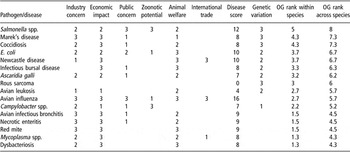
Table 1 shows a summary of the 16 poultry pathogens and diseases, ranked as previously described. The top-ranking diseases from an OG perspective are infections caused by Salmonella spp., MD and Coccidiosis. MD is currently the best example of a disease that has been subjected to an OG approach, and Coccidiosis has arguably been under-researched, particularly as it is economically very important, and strong evidence of genetic variation has been reported.
List and scoresFootnote 1 of infectious poultry disease

OG = operational genomics.
1 The scores (1, 2 or 3) indicate the relative strength of evidence, impact, concern or threat posed by each disease, with an absence of evidence indicated by no assigned value.
Major infectious pathogens and diseases of cattle
Bacterial pneumonia (Mannheimia haemolytica)
Bacterial pneumonia has several causative agents; however, it is most commonly caused by the Gram-negative bacteria M. haemolytica. M. hemolytica produces two key virulence factors, leukotoxin (LKT) and lipopolysaccharide (LPS), which are known to be essential in inducing the pathological changes. The disease manifests as a fever, mucopurulent nasal discharge, coughing, with breathing that is rapid and shallow. Pleurisy may develop in severe cases. Infected animals exhibit poor body condition and associated economic loss, due to unthriftiness post infection. This disease can be treated with antibiotics, which again raises public concern due to the risk of drug residues entering the food chain.
There is some evidence for genetic effects on resistance as a study by Muggli-Cockett et al. (Reference Muggli-Cockett, Cundiff and Gregory1992) observed breed differences in susceptibility to several respiratory diseases caused by viruses and bacteria. More recently, heritable variation in resistance to bovine respiratory diseases, i.e. any bacterial and viral respiratory infection, has been demonstrated in feedlot cattle (Snowder et al., Reference Snowder, Van Vleck, Cundiff and Bennett2005 and Reference Snowder, Van Vleck, Cundiff and Bennett2006). Specifically for M. hemolytica, recent research efforts have determined 90% of the genome sequence of a virulent serotype of the pathogen (Roehrig et al., Reference Roehrig, Tran, Spehr, Gunkel, Selzer and Ullrich2007), identified host upregulated genes in response to infection (e.g. TAP, NFKB, IL8, ICAM1; Caverly et al., Reference Caverly, Diamond, Gallup, Brogden, Dixon and Ackermann2003) and elucidated the pathway by which LKT induce apoptosis of BL-3 cells (Atapattu and Czuprynski, Reference Atapattu and Czuprynski2005). Furthermore, it has been found that the functional receptor for M. haemolytica LKT is the CD18 subunit of beta(2)-integrins (Dassanayake et al., Reference Dassanayake, Maheswaran and Srikumaran2007) and that the I-EGF-3 domain of CD18 is essential in conferring species-specific susceptibility to M. haemolytica (Dileepan et al., Reference Dileepan, Kannan, Walcheck and Maheswaran2007). This disease may become a strong candidate for an OG approach, but currently little is known about the underlying host genetics.
Bovine leukaemia
Bovine leukaemia is a viral disease of cattle caused by an exogenous retrovirus that is closely linked to human T cell leukaemia viruses. When the virus is present, not all cattle in the herd become infected and, of those that do, only 2–5% go on to develop tumours. Tumours are commonly found in the uterus, abomasum, heart and external lymph nodes. Transmission of this disease is via infected blood, and vertical transmission can occur to the foetus and also to calves via infected milk. At present there is no zoonotic threat from this virus.
There is some evidence for host genetic influence as associations have been reported between resistance to this disease and MHC alleles, particularly DRB3 alleles (Mirsky et al., Reference Mirsky, Olmstead, Da and Lewin1998; Udina, 2007). Although evidence for genetic variation in the host response has been reported for Bovine leukaemia infection, this is not a high-priority candidate for OG as industry concern is lower than for many other diseases, due to the relatively low morbidity of this condition.
Bovine tuberculosis
Bovine tuberculosis (TB) is a chronic infectious and contagious disease of cattle caused by the Mycobacterium bovis. It is characterised by the development of tubercles in any organ of the body. Clinical signs include weakness, loss of condition, inappetance, swelling of lymph nodes, persistent coughing and respiratory distress. Aerosol exposure is the main route of infection, and wildlife reservoirs of infection are often implicated in the disease epidemiology. Economic loss occurs due, firstly, to a loss of stock and, secondly, to the cost of replacement animals. Bovine TB is zoonotic and may be transmitted to humans through unpasteurised milk and dairy products. At present, control is through routine skin testing of all cattle and immediate culling of any animal exhibiting a positive reaction. The total number of human cases of TB (119) due to M. bovis reported in 2005 increased by ca. 25% compared to 2004 (EFSA, 2005 and 2006). However, vaccinations have significantly reduced human infections and the risk of contracting the disease from domestic animals has also decreased in recent years. As yet there is little evidence of genetic variation in the host response to TB in cattle, although substantial evidence exists in deer (Mackintosh et al., Reference Mackintosh, Qureshi, Waldrup, Labes, Dodds and Griffin2000) and humans. However, one study has reported an involvement of the NRAMP1 gene in the modulation of the cattle immune response to M. bovis (Zanotti et al., 2002). Although much work has been done on vaccine development none are commercially available and are not likely to become available in the near future. Bovine TB therefore is a good candidate disease for an OG study as it causes considerable economic loss, it is a public health risk and is of major concern to industry, and there is likely to be host genetic variation in resistance.
Bovine viral diarrhoea
Bovine viral diarrhoea (BVD) is a widespread viral disease of cattle, which can cause considerable economic loss. The most common signs of BVD are fever, sudden drop in milk yield and diarrhoea. The virus is shed by infected animals via nasal discharge, faeces, urine, semen and saliva, and infection is by direct contact. This virus can be transmitted from mother to foetus, and these infected calves become major sources of infection as they remain infected for life and continually shed the virus. Although infection with this pathogen causes mild clinical signs and very rarely death, it is the period of time post infection that is important. Following infection with BVD, animals undergo a period of immunosuppression during which they are highly susceptible to other pathogens, e.g. mastitis, pneumonia, calf scours, and usually these develop into severe illness. In some cases BVD causes infertility, which contributes to economic losses along with a drop in milk yield and secondary infections. Also, recent evidences indicate that BVD abrogates respiratory innate immune responses and predisposes to bacterial pneumonia in cattle (Al-Haddawi et al., Reference Al-Haddawi, Mitchell, Clark, Wood and Caswell2007). A vaccine is available and the virus poses no zoonotic risk. At present no genetic variation has been reported for BVD resistance, and as a result BVD is not an appropriate disease for an OG study.
Brucellosis
Brucellosis, described as ‘contagious abortion’, is caused by the bacterium Brucella abortus, which can infect both cattle and humans. In 2004 and 2005, respectively, 1337 and 1218 cases of Brucellosis were reported in humans from the EU member states (EFSA, 2005 and 2006). In herds where this disease is endemic, a cow will abort with the first infection yet subsequent gestations appear normal. The aborted or premature foetus and placenta are highly infective and can infect other stock by direct contact. B. abortus is also excreted in the milk, which can infect the calf and also humans if unpasteurised milk is consumed.
Brucellosis was eradicated from the UK in 1979; however, it is still present in many EU member states and sporadic outbreaks occur from imported stock. Because this disease is a serious zoonosis, it is important that it is brought under strict control in all EU member states in order to decrease the number of cases seen in humans. This disease is not a good candidate for OG as there are already control and surveillance techniques implemented in many countries. However, it remains a threat to public health.
E. coli
E. coli is present in the intestines of all cattle. There are many strains of E. coli that are pathogenic and zoonotic, and the most problematic strain from a zoonotic perspective is E. coli 0157. E. coli 0157 causes food poisoning in humans that is potentially life threatening; clinical signs include diarrhoea, haemorrhagic colitis and haemolytica-uremia syndrome. Cattle are the most important source of E. coli 0157; infection in cattle is sub-clinical and the duration of bacterial shedding is variable and intermittent.
E. coli 0157 is a worldwide threat to public health and the bacterium has been the subject of many studies. However, as yet there are no published studies on the genetics of resistance of the host animal. Although E. coli may become a potential candidate for an OG approach, currently there is insufficient evidence of host genetic effects to give it a high ranking.
Foot and mouth disease
Foot and mouth disease (FMD) is an acute infectious viral disease that affects cattle, pigs, sheep, goats and deer. For brevity it will be described in this section and the following sections on other species will refer back to this description. FMD typically causes fever and blisters, chiefly in mouth and on feet. As a result of these blisters, animals become reluctant to eat and become progressively lame. FMD virus is extremely infectious and spreads rapidly if uncontrolled. In the EU it is a notifiable disease and control measures involve immediate slaughter of all livestock on infected premises. During an FMD outbreak animal movement is restricted to prevent further spread of disease. The virus can be spread by blister fluid, saliva, milk, faeces and can travel airborne for several miles. Also, recovered animals can develop a carrier status that lasts for up to two and a half years.
FMD outbreaks cause great economic loss through stock being destroyed and also through disruption of international trade. There is no readily available published work on genetic variation in FMD resistance at present. In the EU it is not a disease that is treated; however, in other parts of the world where FMD is endemic, it is conceivable that such studies will be carried out in future. This is not a potential pathogen for an OG study as it is not endemic within the EU, outbreaks are sporadic and control is through slaughter of infected stock.
Gastrointestinal parasites
Ruminant GI parasitism is perhaps the most important livestock disease on a global basis (Perry et al., Reference Perry, McDermott, Randolph, Sones and Thornton2002) and it affects all pasture-based production systems. The predominant GI parasite of cattle in temperate regions is Ostertagia ostertagi. The economic consequences of GI parasitism arise through loss of production as GI parasites damage the intestinal tract, resulting in reduced nutrient uptake and retention. Traditional management of this problem is with anthelmintic compounds. However, routine anthelmintic usage is expensive, increases the risk of drug residues in foodstuffs and is comprised by the development of anthelmintic resistance.
Faecal egg count of cattle, an indicator of relative infestation levels, is under genetic control, with reported heritabilities close to 0.3 in temperate (Gasbarre et al., Reference Gasbarre, Leighton and Sonstegard2001) and sub-tropical cattle (MacKinnon et al., Reference MacKinnon, Meyer and Hetzel1991). QTL studies of nematode resistance are advanced (Sonstegard and Gasbarre, Reference Sonstegard and Gasbarre2001); however, evidence from sheep suggests that resistance is polygenic and QTL accounting for large proportions of the variation may be difficult to find. GI parasitic infection has the potential to be suitable for an OG study as there is significant evidence for some genetic variation, it is of concern to industry and alternative control measures are needed in the near future due to the reduced efficacy of anthelmintics. These factors, along with the advanced level of bovine genomic information now available, make GI parasitic infection a potential OG candidate.
Infectious bovine rhinotracheitis
Infectious bovine rhinotracheitis (IBR) is a highly infectious respiratory disease caused by bovine herpes virus-1 (BHV1). There are various strains of BHV1 that exhibit different levels of virulence. Morbidity from IBR can be 100%; however, mortality is generally low, between 2% and 12%. The disease manifests with a sudden onset of fever and anorexia, followed by nasal legions, nasal discharge, coughing and conjunctivitis. IBR can be fatal in newborn calves as it causes encephalitis. The disease is spread through aerosol infection via nasal discharges and coughing. Economic losses occur whilst animals are infected, due to poor growth, aborted calves and rapid decreases in milk production. However, there is no zoonotic risk from this pathogen.
Vaccines are available, but again drug-based disease solutions are not ideal in the present climate of consumer concern over drug residues in food products. There is reported evidence of genetic variation, as this virus was one of a group of respiratory disease causing pathogens studied by Muggli-Cockett et al. (Reference Muggli-Cockett, Cundiff and Gregory1992), which reported breed differences were in susceptibility to these respiratory pathogens. However, IBR is currently not an OG candidate disease as not enough is known about the underlying genetics of the host response. If stronger evidence is published in the future then this may change, as it is a disease of significant industry concern.
Leptospirosis
Leptospirosis is an acute bacterial infection of cattle. Most commonly in cattle it is caused by two species of Leptospira, which manifest in dairy cattle as a drop in milk yield, poor fertility and abortions and in beef cattle as poor fertility and an increase in abortions. Infection is via infected urine either by direct contact or through contaminated water or pasture. Infected animals may be carriers for life; however, there is a vaccine available. Leptospira infection is zoonotic and it is therefore a public health hazard. It causes flu-like clinical signs in humans with a persistent headache, fatalities are rare but do occur. Transmission can be via direct contact with infected animals or via infected watercourses. Unlike in cattle infections, there is currently no vaccine available for use in humans. No figures were available on incidence and cost of this disease at the time of writing. Also, no evidence of genetic variation in response to this infection has been reported; thus this is not a suitable pathogen for an OG approach.
Mastitis
Mastitis is an infectious disease causing major economic losses to the dairy industry. It is characterised by a mild, sub-clinical or acute (clinical) inflammation of the mammary gland, which in its severe form causes visibly abnormal milk (e.g., colour, fibrin clots) and, as inflammation increases, changes in the udder (swelling, heat, pain and redness). Mastitis in cattle is usually caused by bacterial organisms such as Staphylococcus spp., Streptococcus spp., Pseudomonas spp., Mycoplasma spp. and various coliforms such as E. coli. Mastitis incidence in the dairy industry has been estimated at 30% of cows per year, and each case has been estimated to cost between 150 and 300 euros per diseased cow.
At present, selection to reduce the incidence of mastitis is carried out using udder conformation, somatic cell count (SCC) and mastitis infection history, with the latter two having low heritabilities in the range 0.05 to 0.15. Mastitis incidence is positively correlated with both SCC (ca. 0.7; Carlén et al., Reference Carlén, Strandberg and Roth2004; Heringstad et al., Reference Heringstad, Gianola, Chang, Odegard and Klemetsdal2006) and aspects of udder conformation (up to 0.37; Van Dorp et al., Reference Van Dorp, Dekkers, Martin and Noordhuizen1998). This suggests that mastitis resistance may be due not only to immune responses but also to structural attributes of the udder or teat. Many QTL associated with mastitis resistance traits have been reported on almost all of the 29 bovine chromosomes (see reviews: Khatkar et al., Reference Khatkar, Thomson, Tammen and Raadsma2004; Rupp and Boichard, Reference Rupp and Boichard2003). Joint analyses of three Nordic cattle populations confirmed QTL affecting clinical mastitis or SCS, or both, on chromosomes 9, 11, 14 and 18 (Lund et al., Reference Lund, Sahana, Andersson-Eklund, Hastings, Fernandez, Schulman, Thomsen, Viitala, Williams, Sabry, Viinalass and Vilkki2007). QTL have been detected in a variety of breeds including US, German and Dutch Holsteins, Finnish Ayrshire, Swedish Red and White, Danish Red and Norwegian Cattle and have been identified close to various plausible candidate loci, including MHC and interferons. Considerable ongoing work addresses the genetic analysis of field data, identification of loci associated with resistance, host transcriptomic and proteomic responses to infection, and the definition of new and more precise phenotypic indicators of infection and immune activation (e.g. neutrophil activity). Therefore mastitis is, and will remain to be, a high-priority disease for OG studies.
Paratuberculosis (Johne’s disease)
Paratuberculosis, also known as Johne’s disease, is a bacterial infection of the GI tract and is characterised by chronic diarrhoea, persistent weight loss, decreased milk production and eventually death. The disease is not treatable and vaccinations do not prevent infection; therefore, economic loss is substantial in both the dairy and beef industries. Conflicting opinions have been published that indicate a potential link between the causative agent (Mycobacterium avium subspecies paratuberculosis) and Crohn’s disease in humans, via the consumption of infected dairy products (Chiodini and Rossiter, Reference Chiodini and Rossiter1996; Bakker et al., Reference Bakker, Willemsen and van Zijderveld2000). Crohn’s disease is a severe inflammatory bowel disease for which there is no cure. Hence, Paratuberculosis is potentially a serious zoonotic risk and further investigation into this link is essential.
Studies of infection status of cattle have indicated that susceptibility to M. avium sub. paratuberculosis infection is heritable, with heritability estimates ranging from 0.06 to 0.18 (Koets et al., Reference Koets, Adugna, Janss, van Weering, Kalis, Wentink, Rutten and Schukken2000; Mortensen et al., Reference Mortensen, Nielsen and Berg2004; Gonda et al., Reference Gonda, Chang, Shook, Collins and Kirkpatrick2006). Evidence of genetic variation in host response to this disease has been reported and a QTL affecting susceptibility has been mapped recently in US Holsteins to BTA20 (Gonda et al., Reference Gonda, Kirkpatrick, Shook and Collins2007). Because the diagnosis of infected animals represents a major problem, paratuberculosis is not a good candidate for an OG approach; however, this may change if new diagnostic tests become available, which more easily enable the quantification of host genetic variation.
Salmonella spp.
Salmonellosis of cattle is commonly caused by one of three Salmonella serovars, S. typhimurium, S. Dublin or S. Newport. Salmonella is usually endemic within an infected herd as a sub-clinical infection with sporadic outbreaks occurring. During these outbreaks affected animals develop acute enteritis. Treatment is difficult as use of anti-microbial can disrupt the gut flora and cause more problems. Also, Salmonella exhibits multi-drug resistance in both cattle and humans. Salmonella is a public health hazard as it is a food-borne zoonosis that causes food poisoning in humans, typically fever, vomiting and diarrhoea. There is no published evidence at present for genetic variation in resistance to Salmonella in cattle. Therefore, although it is not yet ready for an OG approach, this may change in the future if further data become available.
Summary
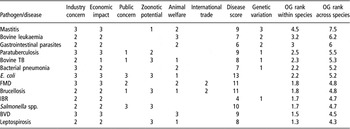
Table 2 shows a summary of the 13 cattle pathogens and diseases, ranked as previously described. The highest priority disease highlighted by this approach is mastitis. Although mastitis causes major economic loss to the dairy industry, has major welfare implications and is a complex disorder for which host genetic variation is being extensively investigated, it has a low impact on public concern. Next in the rankings are bovine leukaemia and GI parasites, which are also diseases of low public concern. The diseases that score most highly in terms of disease impact in this ranking, i.e. E. coli, FMD and Brucellosis, are not considered amenable to an OG approach, either through a lack of knowledge of host genetic factors or because disease control is better achieved by other means. In general, however, the major endemic cattle diseases are strong candidates for OG due to the developed state of cattle genomic tools.
List and scoresFootnote 1 of infectious cattle diseases

OG = operational genomics; TB = tuberculosis; FMD = foot and mouth disease; IBR = Infectious bovine rhinotracheitis; BVD = bovine viral diarrhoea.
1 The scores (1, 2 or 3) indicate the relative strength of evidence, impact, concern or threat posed by each disease, with an absence of evidence indicated by no assigned value.
Major infectious pathogens and diseases of pigs
Atrophic rhinitis
Atrophic rhinitis (AR) is a very common condition in its mild non-progressive form, leading to inflammation of tissues inside the nasal passages in young pigs and rarely causing clinical disease in mature animals. However, progressive atrophic rhinitis (PAR) is a serious condition of sucking and growing pigs, caused by infection with Pasteurella multocidia. This infection causes continual and progressive inflammation and atrophy of the nose and tissues, which can result in distortion of the face. Other clinical signs include sneezing, nasal discharge, conjunctivitis, poor body condition, difficulty in eating, increased risk of respiratory diseases and pneumonia. Economic loss occurs as a result of poorly growing pigs. Only few studies have reported breed differences and genetic variation (i.e. heritability estimates) in the host response of growing pigs for resistance to AR (e.g. Lundeheim, Reference Lundeheim1979 and Reference Lundeheim1988); hence AR is not considered to have OG potential at the present time.
Aujeszky’s disease
Aujeszky’s disease (AD) is an economically important pig disease caused by an alpha herpesvirus (Pseudorabies virus). At present, industry concern is due to the virus affecting reproductive performance. The virus can remain dormant within the nervous system for long periods and then become reactivated; thus once a herd becomes infected, the virus remains present in a carrier status. Transmission of the virus can be via several routes, e.g. aerosol, airborne (3 km), infected slurry and artificial insemination with infected semen. AD manifests in sows as coughing, fever, nervous signs and impaired reproductive function, and the virus can be passed from sow to foetus. In piglets, clinical signs are sneezing, coughing, nervous signs and in-coordination. A high mortality rate is often seen in piglets; however, mortality is lower in older pigs.
Reiner et al. (Reference Reiner, Melchinger, Kramarova, Pfaff, Büttner, Saalmüller and Geldermann2002) reported breed differences between Large White and Meishan animals deliberately infected with Pseudorabies virus. This study also identified QTL for the presence/absence of neurological clinical signs and rectal temperature post infection. It has also been observed that the presence of porcine reproductive and respiratory syndrome (PRRS) or Leptospira can increase the severity of AD. Thus it is important to study these diseases and also to further investigate the interactions occurring between different infectious agents. Although there is some evidence for genetic variation in response to AD and some research groups are doing microarray studies on the interaction between AD and porcine cells (Flori et al., Reference Flori, Rogel-Gaillard, Cochet, Lemonnier, Hugot, Chardon, Robin and Lefèvre2008), not enough is known yet to rank this disease highly for an OG approach.
E. coli
E. coli is a bacteria found naturally in the gut; however, pathogenic strains can cause diarrhoea in young piglets. Infection usually occurs between birth and 5 days of age. E. coli is an important cause of diarrhoea in piglets, and can cause high morbidity and mortality of up to 50%. It is possible to vaccinate sows, particularly gilts, in order to protect the piglets; however, this may be costly and is also increasing the use of drugs in food-producing animals, which is a matter of public concern.
Evidence for genetic control of resistance to E. coli has been known for many years (Sellwood et al., Reference Sellwood, Gibbons, Jones and Rutter1975). Gibbons et al. (Reference Gibbons, Sellwood, Burrows and Hunter1977) published evidence that susceptibility to E. coli F4ac adhesion is dominantly inherited in the host. This is characterised by the presence or absence of specific receptors on the brush borders of enterocytes in the small intestine; homozygous recessive animals lack the K88 receptor, which enables coliforms to adhere to the gut, causing diarrhoea. Python et al. (Reference Python, Jörg, Neuenschwander, Hagger, Stricker, Bürgi, Bertschinger, Stranzinger and Vögeli2002) suggested that this is under the control of one gene, F4bcR, which was localised on chromosome 13. Recent studies identified two candidate genes (Mucin 4, Peng et al., Reference Peng, Ren, Yan, Huang, Tang, Wang, Zhang and Huang2007; Mucin 13, Zhang et al., Reference Zhang, Ren, Yan, Huang, Ji, Peng, Zhang and Huang2008) coding for the specific F4ab/ac receptor; mutations in these genes were strongly associated with F4ab/ac adhesion phenotypes. A DNA marker-based test has been also developed to allow genotyping for enterotoxogenic (ETEC) F4ab/ac resistance and susceptibility (Jørgensen et al., 2004). Resistance to E. coli is strain specific and much of the published work has been associated with E. coli F18, a major cause of post-weaning diarrhoea. The gene controlling expression of the E. coli F18 receptor (ECF18R) has been mapped on chromosome 6 (Vögeli et al., Reference Vögeli, Bertschinger, Stamm, Stricker, Hagger, Fries, Rapacz and Stranzinger1996) and a polymorphism at nucleotide 307 in the FUT1 gene (Meijerink et al., Reference Meijerink, Fries, Vögeli, Masabanda, Wigger, Stricker, Neuenschwander, Bertschinger and Stranzinger1997) has been shown by several studies to be responsible for susceptibility to E. coli F18 infection. This polymorphism can be utilised as a predictor of susceptibility to diarrhoea caused by E. coli F18; F18 susceptibility selection is now part of a commercial marker-assisted selection scheme.
However, all of the studies mentioned above involved ETEC serotypes of E. coli and much of the ongoing research on E. coli infection of pigs involves enterohaemorrhagic (EHEC) serotypes. Therefore, although the evidence of variation in host resistance to E. coli indicates that there may be considerable opportunities to apply an OG approach to this pathogen, further research into evidence of genetic variation associated with infection with EHEC serotypes is also needed. Notwithstanding, E. coli infections in pigs remain strong candidates for OG studies.
Enzootic pneumonia
Enzootic pneumonia (EP) is caused by the bacterium Mycoplasma hyopneumoniae. This highly contagious and chronic disease is widespread among pig populations worldwide. M. hyopneumoniae is present in almost every pig herd (Minion et al., Reference Minion, Lefkowitz, Madsen, Cleary, Swartzell and Mahairas2004); however, infection with EP alone is normally uncomplicated and economically not important. Hence, the EP bacterium can be considered as a primary pathogen and it is its combination with other infections that may lead to severe illness. If, for example, PRRS or Pasteurella are present, the resulting pneumonia can be very serious. Clinical signs of EP can include pneumonia, dehydration, coughing, heavy breathing, respiratory distress, fever and high mortality. Treatment of EP is limited to antibiotics that are currently ineffective as they do not completely remove the infection. Vaccines reduce the severity but do not prevent the disease from occurring in infected pigs (Haesebrouck et al., Reference Haesebrouck, Pasmans, Chiers, Maes, Ducatelle and Decostere2004). Ruiz et al. (Reference Ruiz, Galina and Pijoan2002) investigated half-sib family differences to EP and the results suggested a possible genetic effect. Besides this, little is known regarding the underlying genetics of host resistance to this disease. When more is known, it may be possible to use OG to investigate these interactions.
Foot and mouth disease
Please refer to the cattle section for a description of FMD. Although FMD has similar effects in different species, the scores assigned to FMD vary between species.
Porcine influenza
Porcine influenza (flu) is caused by a number of closely related influenza A viruses that are noted for their ability to change their antigenic structure and create new strains. As a result, different strains of porcine flu exhibit differing levels of pathogenicity. The disease may become endemic in large herds with intermittent bouts of disease and resulting infertility. The disease is characterised by rapid explosive outbreaks of inappetance and clinically very ill animals. Clinical signs include coughing, pneumonia and fever. The effects on reproductive function follow the sudden onset of respiratory disease. If combined with other infections (e.g. EP or porcine reproductive and respiratory syndrome virus (PRRSV)), an intractable chronic respiratory disease can develop. Secondary infections can be treated with antibiotics, although again this is increasing the risk of drug residues in food products.
Although the genetics of the virus have been extensively studied, few studies have been published on host genetic effects. To date, the only readily available information is a report of a 11-bp naturally occurring deletion variant in the MX1 gene that has been shown to be implicated in susceptibility to the influenza virus (Nakajima et al., Reference Nakajima, Morozumi, Tsukamoto, Watanabe, Plastow and Mitsuhashi2007). Currently, this pathogen is not a strong candidate for OG studies, although independent verification of the MX1 gene effect would alter this conclusion.
Porcine reproductive and respiratory syndrome
PRRS is a viral infection of pigs that causes major economic loss and is currently of major concern to the industry. Once this virus has entered a herd it tends to remain present and active indefinitely. Transmission can be via several routes, nasal secretions, saliva, faces and urine from infected animals, airborne transmission and artificial insemination. Initially the virus destroys alveolar macrophages, thus leaving infected animals more susceptible to respiratory infections such as EP. PRRS manifests in various forms in pigs of different ages. In sows, PRRS can cause late-term abortions, prolonged anoestrus, an increase in stillbirths and mummified piglets, coughing and respiratory problems. Piglets, from infected sows, are often weak and slow to develop. Piglets that become infected with PRRS develop diarrhoea and are highly susceptible to respiratory infections. Pigs infected at the grower stage often develop pneumonia and suffer inappetance and wasting. Boars exhibit a loss of libido, lethargy, inappetance and lowered fertility. Hence it is a disease that causes considerable economic loss, being probably the most costly disease to pig industries of Europe and North America.
PRRS is a complex disease and evidence for the genetic basis of resistance is growing. Breed differences have been reported (Halbur et al., Reference Halbur, Rothschild, Thacker, Meng, Paul and Bruna1998; Petry et al., Reference Petry, Holl, Weber, Doster, Osorio and Johnson2005 and Reference Petry, Lunney, Boyd, Kuhar, Blankenship and Johnson2007; Vincent et al., Reference Vincent, Thacker, Halbur, Rothschild and Thacker2005 and Reference Vincent, Thacker, Halbur, Rothschild and Thacker2006; Ait-Ali et al., Reference Ait-Ali, Wilson, Wescott, Clapperton, Mellencamp, Drew, Bishop and Archibald2007) as summarised by Lewis et al. (Reference Lewis, Ait-Ali, Clapperton, Archibald and Bishop2007), within-breed variation in apparent tolerance of this disease is now becoming available (Lewis et al., 2008). From a research perspective, PRRS has some advantages. Firstly, good in vitro models of infection exist, and these enable quantification of host transcriptomic responses (Genini et al., 2008) as well as breed-level genetic differences (Vincent et al., Reference Vincent, Thacker, Halbur, Rothschild and Thacker2005; Ait-Ali et al., Reference Ait-Ali, Wilson, Wescott, Clapperton, Mellencamp, Drew, Bishop and Archibald2007). Secondly, indicators of the impacts of infection are relatively easily collected in herds undergoing outbreaks, e.g. the numbers of mummified piglets, and these indicators will enable genetic effects to be relatively easily quantified (see Lewis et al., 2008). Although this is a disease that still requires much more fundamental research, it is rapidly becoming an interesting target for an OG approach.
Post-weaning multisystemic wasting syndrome
Post-weaning multisystemic wasting syndrome (PMWS) is a multifactorial disease that has recently become a major source of economic loss to the pig industry. This disease is present in all major pig-producing countries, and in the EU the cost of PMWS may be as high as €900 million per year. The epidemiology and immunology of the syndrome are largely unknown and much of the available information is circumstantial. PMWS causes wasting and depression and usually appears between 6 and 14 weeks of age, although once a herd is infected clinical cases may continue to appear for several months, usually peaking between 6 and 12 months. The syndrome appears to manifest as a response to multiple viral infections. It is known that the PCV2 virus is a necessary agent; however, this alone does not cause disease and most clinical cases present PCV2 as well as another virus. It is estimated that 90% of pigs have been exposed to PCV2, which is transferred via oro-nasal transmission, yet the onset of disease and resulting mortality can be strongly affected by the pathogens already endemic within the herd. Mortality can be as high as 80%.
The control of this syndrome is critical to the industry; however, standard biosecurity measures have failed to work and it is now essential to define the epidemiology and immunology of this condition. It is also important to investigate the apparent interactions between PCV2 and other viral infections. As so many aspects of PMWS are as yet unknown, it is difficult to perform deliberate infection experiments and thus difficult to explore the underlying mechanisms. Some breeds have exhibited greater resistance than others (Opriessnig et al., Reference Opriessnig, Fenaux, Thomas, Hoogland, Rothschild, Meng and Halbur2006), but again this is mostly circumstantial and difficult to quantify. Therefore although this is a very important disease, at present there is no published evidence of genetic variation in the incidence or severity of PMWS and it is not yet a candidate disease for OG.
Salmonella spp.
Salmonella incidence figures in humans (EFSA, 2005 and 2006) are described in the poultry section of this report; unfortunately, the total numbers of cases are not split into species from which the infection originated. The most relevant Salmonella serovar affecting pigs is S. typhimurium; however, the swine-specific serovar S. choleraesuis also plays an important role. Salmonella is usually seen in young growing pigs, 12–14 weeks of age, and infects the gut, causing diarrhoea. This infection is of industry and public health concern as it is a food-borne zoonosis that can cause food poisoning in humans. Infection can also be sub-clinical in the pig; hence if the infection is not treated, the risk of passing the infection to humans is increased. Sub-clinical infection also causes general production losses.
Evidence for genetic variation in response to Salmonella between lines was reported by Van Diemen et al. (Reference Van Diemen, Kreukniet, Galina, Bumstead and Wallis2002). Also, several recent gene expression studies using microarrays (Niewold et al., Reference Niewold, Veldhuizen, van der Meulen, Haagsman, de Wit, Smits, Tersteeg and Hulst2007; Uthe et al., Reference Uthe, Royaee, Lunney, Stabel, Zhao, Tuggle and Bearson2007; Wang et al., Reference Wang, Qu, Uthe, Bearson, Kuhar, Lunney, Couture, Nettleton, Dekkers and Tuggle2007) and the SSH technology (Uthe et al., Reference Uthe, Stabel, Zhao, Tuggle and Bearson2006) revealed important genes involved in the host immune response against both S. typhimurium and S. choleraesuis. Due to these advances, swine Salmonella is a good OG candidate pathogen.
Summary
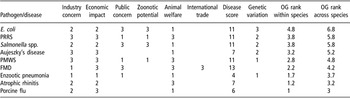
Table 3 shows a summary of the nine pig pathogens and diseases, ranked as previously described. The highest priority diseases or pathogens highlighted by this approach are E. coli, PRRS and Salmonella, broadly reflecting ongoing research efforts in Europe and North America. Once again FMD is top ranking from a disease perspective, but it is not a good candidate for an OG approach. From an industry perspective, PRRS and PMWS are probably the most important health issues, but in both cases considerable further research is required to define the biology of the disease. It is predicted that the relative rankings assigned to these diseases will increase as ongoing research yields further insights, as also as the pig genome sequence becomes available.
List and scores1 of infectious pig diseases

OG = operational genomics; PRRS = porcine reproductive and respiratory syndrome; PMWS = post weaning multisystemic wasting syndrome; FMD = foot and mouth disease.
1 The scores (1, 2 or 3) indicate the relative strength of evidence, impact, concern or threat posed by each disease, with an absence of evidence indicated by no assigned value.
Major infectious pathogens and diseases of sheep
Caseous lymphadenitis
Caseous lymphadenitis (CLA) is a bacterial disease caused by infection with Carynebacterium pseudotuberculosis. It manifests as caseous abscessation of the lymph nodes and internal organs. CLA is a chronic recurring disease and some animals may exhibit a carrier status. Initially abscesses develop at the point of entry of the bacterium, or on local lymph nodes, the infection then spreads to internal organs and other lymph nodes. Economic losses occur as a result of reduced weight gain, reproductive efficiency, and milk and wool production. Treatment of CLA is not usually attempted as affected carcasses are condemned. Prevention is based on reducing transmission to healthy stock via isolation and selective culling. CLA is not suitable for an OG study as there is no knowledge at present of the underlying host genetic control.
Chlamydial abortion
Chlamydial abortion is caused by the bacteria Chlamydia psittaci. It manifests as either abortion in late gestation or an increase in stillborn lambs in an infected flock. Surviving lambs are often weak. Control is by isolation of infected ewes and lambs and antibiotic treatment; however, ewes seldom abort from Chlamydial abortion more than once. Congenital infection can occur and infected ewe lambs will abort the first pregnancy. This disease causes significant economic loss; the estimated annual cost in GB is £20 million, excluding the cost to human health (Bennett and Ijpelaar, 2003). This disease also presents a public health hazard as it is zoonotic; it can cause flu-like symptoms and abortion in humans. However, no evidence for host genetic variation in susceptibility has been reported and currently this condition is not suitable for an OG approach.
Contagious ovine digital dermatitis
Contagious ovine digital dermatitis (CODD) is a bacterial infection that causes severe lameness, with per-animal costs being similar to those for footrot (see below). Ulcerative lesions form on the hoof, which, in severe cases, can lead to detachment of the hoof. Although appearing similar to classic footrot, CODD differs in the site of the lesions and no inter-digital damage occurs. Treatment requires specific antibiotics. At present no single bacterium has been identified as the causative agent of CODD. However, several bacteria have been identified from clinical cases; these include Spirochaetes, similar to organisms causing digital dermatitis in cattle, and Dichelobacter nodosus, a causative agent for ovine footrot. At present, the causative agent is yet to be defined and there is no evidence for genetic variation in resistance to CODD. Therefore, CODD is not a potential disease for an OG study.
Foot and mouth disease
Please refer to the cattle section for a description of FMD. Although FMD has similar effects in different species, the scores assigned to FMD vary between species.
Footrot
Footrot is a specific, chronic, necrotising disease of the epidermis of the inter-digital skin and hoof matrix, which causes lameness in sheep. It has two causative bacterial agents, Fusobacteria necrophorum and Dichelobacter (Bacteroides) nodosus, which act synergistically. Footrot is contagious and moist soil conditions contribute greatly to the cause and spread. In an infected flock, morbidity may reach 100%. Footrot causes significant economic loss and the estimated annual cost of footrot in GB is £24 million (Nieuwhof and Bishop, Reference Nieuwhof and Bishop2005). Treatment of footrot is normally with antibiotics or topical soaking (footbath) with detergents. However, evidence of heritable genetic variation has been reported (Raadsma et al., Reference Raadsma, Egerton, Wood, Kristo and Nicholas1994; Nieuwhof et al., 2008), and associations have been observed with MHC class II genes, in particular the DQA2 gene. This gene is used in New Zealand as a marker for footrot resistance, and is now commercially available (Hickford et al., Reference Hickford, Zhou, Slow and Fang2004). Due to the high prevalence, easy diagnosis and availability of host genetic data, Footrot is a potentially suitable candidate for an OG study.
Gastrointestinal parasites
GI parasites infect all grazing sheep and cause a loss of production through damage to the GI tract, which results in reduced nutrient uptake and retention. In GB the estimated annual cost of GI parasites is £84 million (Nieuwhof and Bishop, Reference Nieuwhof and Bishop2005). Throughout the EU member states different GI parasites (predominantly nematodes) will be prevalent depending on climatic factors; however, all cause significant production losses. Management of GI parasites is normally through anthelmintic treatment; however, anthelmintic resistance is a worldwide problem and resistance has now been reported to every commercially available group of anthelmintics. Routine use of anthelmintics also raises consumer concern as whole flocks are treated at regular intervals, regardless of infection status, thus increasing the risk of drug residues in food products.
Many studies have reported evidence of genetic variation to parasite resistance (see reviews by Dominik, Reference Dominik2005; Davies et al., Reference Davies, Stear, Benothman, Abuagob, Kerr, Mitchell and Bishop2006; Bishop and Morris, Reference Bishop and Morris2007). Breed differences exist and considerable within-breed genetic variation has been reported, although the work reported involves a diverse range of parasites in many different breeds in differing production systems. Several QTL have now been identified, some within the MHC region, which provide evidence to suggest that it may be possible to increase resistance to parasites by using selective breeding protocols, such as marker-assisted selection or genomic selection. GI parasitic infections are a suitable condition for an OG study as there is strong evidence for genetic variation, relative levels of resistance are easily assessed and there is a growing concern within industry to find alternative control strategies.
Maedi visna
Maedi visna (MV) is a chronic viral disease that occurs in most sheep-producing countries. Clinical signs include pneumonia, wasting, arthritis, chronic mastitis and progressive paralysis. MV has a long incubation period, is highly contagious, difficult to diagnose and at present no treatment is available. In an affected flock, mortality can reach 20% and the incidence of arthritis and premature births increases along with reduced conception rates. Breed differences for susceptibility and resistance to MV have been reported (Cutlip et al., Reference Cutlip, Lehmkuhl, Brogden and Sacks1986); however, much of the evidence appeared to be anecdotal and few published studies were found. Thus MV is not a suitable candidate for an OG study at the present time.
Mastitis
Please refer to the cattle section for a disease description of mastitis. The most common bacteria causing mastitis in sheep are Staphylococcus spp., E. coli and M. haemolytica; Streptococcus spp. and Carynebacterium pyogenes are other relevant causative organisms. Mastitis is an economically important disease in dairy sheep with an incidence >2%. In meat sheep it can cause depressed weaning weights due to a drop in milk production and altered suckling behaviour (Gougoulis et al., Reference Gougoulis, Kyriazakis, Papaioannou, Papadopoulos, Taitzoglou and Fthenakis2008), with lamb mortality from starvation in extreme cases. Mastitis can be treated with antibiotics; however, this increases public concern regarding drug use in animal production.
SCC, an indicator of sub-clinical infections, has been shown to be heritable (normally 0.1 to 0.2) in many studies. Recent results demonstrate that there is genetic variation in sheep susceptibility to the disease (Fragkou et al., Reference Fragkou, Skoufos, Cripps, Kyriazakis, Papaioannou, Boscos, Tzora and Fthenakis2007) and that teeth disorders clearly favour mastitis inflammation in ewes (Mavrogianni and Fthenakis, Reference Mavrogianni and Fthenakis2007). QTL have been identified in traits that are known to influence mastitis susceptibility and resistance (Barillet et al., Reference Barillet, Arranz and Carta2005). Also, genetic parameters and correlations indicated that udders with good shape are less prone to sub-clinical mastitis (Legarra and Ugarte, Reference Legarra and Ugarte2005). This is a candidate disease for OG studies, as evidence of genetic variation has been reported and the phenotypes associated with the disease are well described.
Pneumonia
Pneumonia is a major cause of mortality in lambs. It is predominantly caused by infection with M. haemolytica, a weakly haemolytic, Gram-negative coccobacillus. Clinical signs include fever, increased respiratory rate, failure to feed and if left untreated it can cause death. Susceptibility to pneumonia is increased with a lack of colostrum and infected lambs appear sick and unthrifty. Antibiotic treatment is available; however, this must be administered as early as possible for maximum chance of recovery. It is often common practice to treat all lambs exposed to an infected animal. This raises public concern regarding drug use and also animal welfare issues regarding therapeutic prophylactic treatment. At present there is no published evidence for genetic variation for resistance to pneumonia, and it is not a suitable disease for an OG study.
Sheep scab
Sheep scab is an infectious skin condition caused by an infestation of Psoroptes ovis mites. Infection with sheep scab manifests as large, scaly, crusted lesions that progress to intense pruritus, due to biting and scratching. If left untreated, animals become emaciated and anaemic with associated production losses. This condition may be treated and controlled by the use of acaricidal dips or the use of broad-spectrum avermectins, but again this raises issues of increasing the risk of drug residues in animal products. Sheep scab causes significant economic loss and the estimated annual cost in GB is £8.3 million (Nieuwhof and Bishop, Reference Nieuwhof and Bishop2005). As yet no genetic variation has been reported in resistance to Psoroptes mite; thus this is not a suitable condition for OG.
Toxoplasmosis
Toxoplasmosis is caused by infection with a protozoan parasite, Toxoplasma gondii. This parasite causes abortion; ewes infected in early gestation may exhibit resorption and mummification of foetuses, whereas infection in late gestation results in abortion or perinatal death. Infected ewes do not appear to be ill and once infected develop lifelong immunity. Economic losses are due to reduced reproductive efficiency and aborted and weak lambs. The estimated annual cost of Toxoplasmosis in GB is £12 million (Bennett and Ijpelaar, 2003). This disease is of public health concern as T. gondii is zoonotic and may cause flu-like clinical signs and abortion in humans. A total of 1736 human cases of toxoplasmosis were reported in 2004 (EFSA, 2005). No evidence for host genetic variation associated with resistance to this parasite has been published; therefore Toxoplasmosis is not a suitable candidate disease for OG.
Summary
Table 4 shows a summary of the 11 sheep pathogens and diseases, ranked as previously described. The highest-ranking diseases were mastitis (dairy sheep) and GI parasites, largely reflecting ongoing research activities, although footrot and mastitis in meat sheep also offer good opportunities. Sheep are characterised by a number of diseases of major importance to the industry, for which evidence of host genetic effects is lacking. This is not to say that such variation does not exist; rather, it has yet to be quantified. Once again FMD ranks highest in terms of disease issues.
List and scoresFootnote 1 of infectious sheep diseases

OG = operational genomics; GI = gastrointestinal; FMD = foot and mouth disease; CLA = caseous lymphadenitis; CODD = contagious ovine digital dermatitis.
1 The scores (1, 2 or 3) indicate the relative strength of evidence, impact, concern or threat posed by each disease, with an absence of evidence indicated by no assigned value.
Major infectious pathogens and diseases of Atlantic salmon
Infectious pancreatic necrosis
Infectious pancreatic necrosis (IPN) is the most economically important disease at present in Atlantic salmon. IPN is endemic in the North Atlantic, as survivors can become carriers, shedding the virus with faeces. This viral disease causes major economic loss with current costs estimated at £41 million/year in Norway and £2 million/year in Shetland. Fish become infected between 6 and 12 weeks post transfer to the sea environment and mortality is typically up to 30%. This disease, however, has no zoonotic potential and is of no risk to human health.
There is now strong evidence for genetic variation in IPN resistance in salmon (Guy et al., Reference Guy, Bishop, Brotherstone, Hamilton, Roberts, McAndrew and Woolliams2006; Wetten et al., Reference Wetten, Aasmundstad, Kjøglum and Storset2007) and QTL have been successfully mapped for IPN resistance (Houston et al., Reference Houston, Haley, Hamilton, Guy, Tinch, Taggart, McAndrew and Bishop2008). The viral genome has also been sequenced for a couple of strains and all IPN virus isolates appear to be genetically similar. However, the underlying mechanisms of the carrier state are as yet unknown. IPN is clearly a suitable disease for an OG study, hindered only by the underdeveloped salmon genome tools.
Infectious salmon anaemia
Infectious salmon anaemia (ISA) is an infectious viral disease of Atlantic salmon. It has been a major problem to the salmon industry in recent years but is now less prevalent than IPN. Salmon are the only species to exhibit clinical signs of disease, yet a carrier status has been observed in trout. There is no zoonotic risk with this virus and thus no threat to food safety. Clinical signs are lethargy, haemorrhagic eyes, pale gills and abdominal distension. Mortality rates vary with outbreak although can reach 90%. This disease is now less of a concern to industry as good biosecurity and regular removal of dead fish have brought about a level of control.
Evidence of genetic variation has been reported, with several QTL associated with this condition identified (Moen et al., Reference Moen, Fjalestad, Munck and Gomez-Raya2004). This condition may be a potential candidate for an OG approach; however, industry concern has lessened as control measures have become more successful.
Salmon pancreatic disease
Salmon pancreatic disease (SPD) is an emerging economically important viral disease of farmed salmon. This disease, caused by the first alphavirus reported in fish, was first seen in the UK in 1984, but is now present in salmon across Europe. It causes loss of weight, emaciation, poor growth and an increase in mortality. Much research has been carried out on the virus, however, as yet not on the host response. Because nothing appears to be published on the host genetics underlying the response to this disease, SPD is not an OG candidate at present.
Summary
Table 5 shows a summary of the three Atlantic salmon pathogens and diseases, ranked as previously described. IPN is clearly a strong OG candidate, and this is reflected by a large body of research under way in the UK and Norway, as well as practical breeding programmes that aim to increase population-level resistance to this disease. But for decreasing industry concern, ISA would also have been a high-ranking disease.
List and scoresFootnote 1 of infectious Atlantic salmon disease

OG = operational genomics; IPN = infectious pancreatic necrosis; ISA = infectious salmon anaemia.
1 The scores (1, 2 or 3) indicate the relative strength of evidence, impact, concern or threat posed by each disease, with an absence of evidence indicated by no assigned value.
Discussion
This paper has presented a method of comparing the impacts of different infectious diseases, using previously suggested methodology, and shown how it may be combined with additional information on host genetics in order to rank diseases in terms of their importance and amenability to research. It should be appreciated that the method is somewhat subjective and based on expert opinion as well as published data; therefore precise scores may be debated. However, we believe that the approach is robust, provided that the scores allocated to diseases are updated as further information becomes available or new resources are developed. Further, the list of diseases, whilst extensive, is not comprehensive and additional diseases may be added to the list.
This methodology has been developed, and case studies presented, from the perspective of dissecting host genetic variation in resistance. Alternative perspectives could also be applied, for example elucidation of host–pathogen interactions with the aim of developing vaccine targets. If this were done, the relative disease rankings would change. Also, it is the dissection of host genetic variation that has been considered, and not the application of such information to disease control. The role of host genetics in managing diseases will depend upon the other available control options, and this perspective may well reduce the ranking of some diseases, particularly in cases where adequate and cost-effective vaccines exist.
A further dimension that has not been considered is the ease with which disease data may be collected on sufficient animals to do genetic studies. This will clearly differ between species and diseases, generally being easiest for endemic diseases. However, it is evident that large-scale data collection will usually be easier, quicker and cheaper in smaller host species, especially in Atlantic salmon where several thousand individuals can be measured in one experiment, than in larger host species. Even in the comparison between cattle and sheep, it is much quicker and easier to generate adequate datasets describing GI parasite resistance in sheep than in cattle.
The highest scored pathogen or disease, from an overall OG perspective, was Salmonella in poultry, closely followed by bovine mastitis and MD and coccidiosis in poultry. Although we identified high-ranking diseases in all host species, it should be noted that high-ranking diseases were dominated by poultry diseases. Two reasons can be identified for this, firstly the advanced state of poultry genomic tools and, possibly more importantly, the relative ease of large-scale disease data collection in poultry. If genomic tools for sheep were to improve to become equivalent to those for cattle and poultry, then several sheep diseases would be amongst the most amenable disease to OG studies. Disease genetics research in Atlantic salmon is still in its infancy, and strong conclusions are difficult to draw.
An interesting new application of genome tools is genome-wide selection. The principle is that individual animal phenotypes are correlated with several thousand SNP genotypes, using a high-density SNP array. The results are then used to predict the trait genotype of these individuals or their relatives (e.g. progeny) without the need for further phenotypic information. This clearly has a role in two disease scenarios, for widespread or predictable endemic diseases, and for epidemics where DNA can be obtained from disease and control animals. This will open new opportunities for the dissection and utilisation of host genetic variation in disease resistance, giving particular attention to endemic diseases.
To conclude, we have developed and presented a classification system for ranking infectious disease of livestock, from the host genetic perspective. The obtained list reflects the situation at present and, with some exceptions, the rankings obtained do largely reflect ongoing research efforts. However, this is a dynamic process that can change as more information becomes available will augment. The ranking process reported here and the criteria used may represent an interesting tool for other similar comparative studies. Indeed, the reported results and classification methodology might be a basic source of information that is valuable to many groups. For example, it may help researchers prioritise diseases for future studies, also it should be a useful tool for funding agencies when evaluating and prioritising specific projects for their funding decisions.
Acknowledgements
This study was financed by the project European Animal Disease Genomics Network of Excellence (EADGENE). EADGENE is a Network of Excellence supported by funding under the Sixth Research Framework Programme of the European Union European Commission. EU Contract no. FOOD-CT-2004-506416. We wish to thank many industry representatives from all the host species described in this paper for their expert opinion and comments on this text.